The Star Wars Prequels (cont’d)

Isn’t it always this way? I just get finished with a long review of the Star Wars prequels, and I realize I left some stuff out. Not only that, I notice that I made some technical errors as well. Ah well, I suppose its the burden of Star Wars geekdom – anal-retentiveness and a total weakness for details. And if all these Star Wars reviews have proven nothing else to me, it’s that I’m a total geek! So here we go…

1. Anakin is NINE in the original movie: That’s right, nine. Not ten, as I originally said. Boy, I’m splitting hairs even mentioning this, but I don’t want someone noticing it and thinking I’m not up on my Star Wars trivia. Why, to a fellow geek, something like that might just stick in their craw!

2. Good acting: Looking back on my three reviews of the Phantom, Clones and Revenge I realized there was something I neglected to mention. The fact that there was actually some good acting throughout. Liam Neeson, for example. He’s always good, but as Qui Gon he was actually quite capable and had a good presence. Samuel L. Jackson, though his lines were heavy-handed as hell, nevertheless managed to bring some much needed bad-assery to this painful trilogy. And how could I have possibly forgotten Ian McDiarmid? The man who brought The Emperor to life in the originals was back again for more in this trilogy! I honestly think that his character was the only one that was faithfully executed in every one of his scenes. He was certainly the only one who had consistently decent one-liners, and that’s in spite of Lucas’ weak writing! I tell ya, it’s that voice. The man could make dish water sound cool and menacing! And the way he transitions so easily from a prissy, overly-cultured Senator to an evil blood-curdling Sith Lord… masterful!

3. Racial Caricatures: In drawing out Lucas’ use of racial stereotypes, there was one key characteristic I failed to mention. Watto, who is an obvious Jewish caricature, had several characteristics that gave him away. The ones I mentioned were his love of money, yamaka-style hat, and exploitative personality. But I forgot to mention the hooked nose! That above all else was a dead giveaway that Lucas had antiquated prejudices on the brain when he wrote this! I also could have mentioned that he combines several Italian stereotypes into his character as well: the stubbly face, the paunchy belly, the thick, raspy accent, the tank top, the hand gestures and phrases like “whaddyaknow?” In fact, that’s what I thought he was until the Shylock-like parallels were pointed out to me, then I was even more offended. Two stereotypes in one, good job Lucas! *Cough* Racist!

4. Hard-ass Jedi: In my first review, I mentioned how the Jedi were portrayed as needlessly harsh teachers for the way they told Anakin that his fear for his mother was a bad thing. I even mentioned that this would come up again later, by which I was referring to the third movie. And wouldn’t you know it, I totally spaced on it! Which is nuts because it was pretty damn intrinsic to the plot. To recap, the Jedi Council tells a nine year old Anakin (nine, not ten!) that he must forget about his mother because his fear of losing her will lead him to the Dark Side. Of course I thought that was total BS! I mean, who tells a kid this kind of stuff and expects it to go over well? Not only that, but it seems like such a stretch. “You’re afraid of losing your mom? Why, that’s the gateway to evil!” No, telling a kid he has to forget about his mom and sit back while she’s MURDERED is the gateway to evil! Not that they’d notice, these guys can’t sense evil when it’s three feet in front of them and in the form of a Sith Lord!

But as if that wasn’t enough, Yoda is at it once again in the third movie. When told that Anakin is having premonitory dreams where someone he loves dies, he simply tells him to let it go. Apparently, his love for this person and fear of losing them is also a bad thing! “Attachment leads to jealousy. The shadow of greed that is,” says Yoda. Not only that, he’s told he should be happy that this person is dying! “Rejoice for those around you who transform into the Force.” What the hell kind of advice is this?! Has Yoda forgotten what Anakin did the last time they told him to just let go? Apparently he has because it never once came up again! So not only is he not allowed to have any romantic attachments, he can’t have any attachments period! Seriously, was Lucas so desperate to make Anakin’s fall to the Dark Side seem justified that he had to pitch the Jedi as a bunch of unfeeling jagoffs? Personally, I’d be telling Yoda and the entire Council to get bent and then march straight on home to nail my wife! Them and their whole order of ascetic virgins can kiss my ass! Bunch of self-righteous fops, you ask me!

4. Selling out: Last time around, I lamented Lucas’ selling out but hoped he might take the hint and get back to his base. Alas, I was already too late! Seems that in the last few years, he’s released two more special editions of his movies! Yes, as if the original box set, the THX box set, the Gold Edition box set, and the prequel box set weren’t enough, now we have “Star Wars: the Force”, and “Star Wars: The Complete Saga”, both of which are full volumes of all six movies. Both contain all the usual bonus feature crap and behind-the-scenes documentaries, but the Force edition is apparently a directors cut that includes all the deleted scenes. Yeah, I’m kind of intrigued by the idea of bonus scenes too, but Jesus Christ Lucas, how many new versions of Star Wars do we need?! You got alimony to pay or a dozen bastard children we don’t know about? Stephen Spielberg got something on you that you gotta pay to keep under wraps? Why else would you feel the need to re-merchandize the most merchandized franchise of all time? You know, I think this might just be his way of sticking it to all those people who laughed at him when he said he wanted to retain the merchandizing rights!

Well, that about covers it for now. As usual, reflecting on the path Star Wars has taken since my younger days has left me feeling bitter and jaded. I suppose its all in how you look at it. On the one hand, I could be happy that Lucas, who started as a humble purveyor of sci-fi (like me!), became a man with the power to shape several generations worth of popular culture. Or I could be pissed that the man who created something that helped shape my and many other people’s childhood went on to rape it! Tough call man…

Updated Review List

Hello, and welcome to my updated review list. After many, many reviews and plenty of change-ups in the lineup, I decided it was time to revise my master playlist. I do this mainly for the sake of being succinct, seeing as how I put up three in the last two months. The first was dedicated to initial ideas for reviews, the second to all the ones I forgot, and a third for animes that I realized were being neglected. There was also the constant need to go back and alter these lists so that I could indicate which reviews were covered and when. So to simplify things, here is my new master list, with the titles that have already been covered listed first with the date of their review provided. As usual, I will try to stick to this lineup, but some of the later ones might be brought forward if it seems like its taking too long to get to them.

Enjoy! Oh, and fyi, suggestion are still welcome!

1. Terminator: Salvation – July 7th
2. Independence Day – July 9th
3. Blade Runner – July 10th
4. Alien franchise (movies 1 through 4) – July 10th, July 11th…
5. Dune (1984, and the 2000 miniseries) – July 14th, 16th, and 18th
6. 2001: A Space Odyssey – July 21st
10. Starship Troopers – July 28th
11. Akira – Aug. 2nd
12. The Terminator franchise (movies 1 through 3) – Aug. 7th, Aug. 13th…
13. Equilibrium – Aug. 14th
14. The Star Wars prequels – Aug. 24th and 25th
15. The Matrix Trilogy – Sept. 4th, 11th, and 17th
16. Strange Days – Oct. 18th
17. Ghost in the Shell
18. V for Vendetta – Oct. 21st
19. Avatar – Sept. 29th
20. District 9
21. I, Robot – Sept. 27th
22. Eternal Sunshine of the Spotless Mind
23. 28 Days Later – Oct. 28th
24. Ninja Scroll
25. A Clockwork Orange
26. Predator franchise (1, 2, and Predators)
27. Screamers (first in the Philip K Dick lineup)
28. Impostor
29. Paycheck
30. A Scanner Darkly
31. The Adjustment Bureau (finishing off the PKD segment)
32. Lord of the Rings (like I said, some fantasy will slip in, and allowances must be made for such classics!)
33. Willow (another fantasy honorable mention)
34. Solaris (the original and the Soderberg remake) – thanks to Tom Sharp for the suggestion!
35. Inception
36. Metropolis
37. Princess Mononoke
38. Vampire Hunter D.
39. Sunshine
40. Children of Men
41. The Watchmen – Oct. 12th
42. Tron (original, and Legacy)
43. Wall-E
44. Twelve Monkeys
45. Iron Man

Star Wars Episode III: Last Chance…

Last time, I believe I left off with a passing mention of how the Clone Wars weren’t exactly given their due in Lucas’ prequels. Correct me if I’m wrong, but it was my understanding that that was what they were supposed to address, and with a name like Attack of the Clones, I don’t think that would be an unrealistic expectation. But Lucas seemed more concerned with addressing the back-story of Anakin’s fall to the dark side and the love story between him and Padme/Amidala. Everything else was pushed to the side or parceled out between obligatory scenes of (ahem) romance and Anakin bitching about how angry he was and unfair his life is. The end result was a movie that hopped all over the place, moving along with a sense of duty rather than an intriguing story that took its time to build, and with dialogue and character development that was basically info-dumping and pure exposition.

In short, it sucked! But between movies two and three, Lucas appeared to sit up and take notice. Whereas Phantom Menace and Clones were chock full of indications that Lucas held the fan’s feelings in contempt, Revenge of the Sith seemed to contain within it a feeling of humility. It was as if Lucas saw the writing on the wall and realized that if the third movie was to be a critical flop, the Star Wars franchise might forever be ruined. That, I think, was enough to get him to realize that he was still mortal.

Still, the final entry in the franchise suffered from the same weaknesses as the rest. Nobody missed Jar Jar Binks, the cheesy romantic element was toned down (somewhat), the action was a lot better and more relevant, and the motivation was a lot more believable. But the same basic problems of duty, pacing and rushing were there all around. About the best thing you could say about it was that it was salvageable. Not great, but enough to ensure that the whole trilogy didn’t totally suck. But I’m getting ahead of myself here…

Star Wars Episode III: Revenge of the Sith
Prior to the movie’s release, Lucas did his usual round of interviews and gave the fans a bit of an inside look at the plot and his process. In the course of this, he admitted that he had to force himself to commit to writing every day, eight hours at a stretch, in order to get the script banged out on time. Now that’s not something you EVER want to admit to as a writer! Automatically it makes people think that what they are about to see is a second-rate effort, done out of a sense of obligation and devoid of any heart. And yet, it was better than the first two, even if it managed to retain their weaknesses.

The War: As I said in the last review, the war happens between movies. We catch the very beginning of it in Clones and the tail end of it in this one, but that’s it. Despite the fact that they are of extreme importance to the story, the war (or wars) are really more of a backdrop against which the main story – Anakin’s fall to the Dark Side, takes place. That only drives home the point of how the prequels are dominated by a sense of duty, meant to explain rather than tell their own story. If anything, it should have been the other way around. The war happens, it is the means through which Palpatine seizes power, and in the course of it, Anakin becomes a great hero, falls in love with Padme/Amidala, and then succumbs to temptation. It’d be a lot more fun, more subtle, and more entertaining that way.

Anakin and Dooku, take two: Here was a fight scene that was due, and it was enjoyable to see Anakin take down Dooku. But it was pretty much a total rehash of the first time these two fought, sans the ridiculous walk-on by Yoda. As predicted, Dooku has to take out Obi Wan in order for him and Anakin to duke it out between themselves. And its perfectly contrived, the way he tossed him aside with the Force and uses a gangplank to pin him down. It’s also perfectly contrived that Obi Wan would thusly be unconscious and totally unaware of how Anakin kills Dooku. That was another problem I had with this fight scene. After cutting off Dooku’s hands, Anakin is told by Palpatine to execute him. This is in keeping with the whole Sith thing: “you beat my apprentice, now take his place”. But what is so stupid about it is how Anakin beheads him with barely a second thought.
It’s like “You know, I really shouldn’t…”. “Do it, Anakin! He’s too dangerous.” “Okay!” Slit! “Gee, That felt wrong.” “It’s okay Anakin, he had it coming!” And then, barely another word on the subject. As if to remind us how this has happened before, Palpatine brings up how Anakin wiped out all those Sandpeople. Once again, it seems like the Jedi have no clue and Anakin has got away with cold-blooded murder.

The Love Story: We’re fortunate not to get an earful of awful, cheesy dialogue between Anakin and Padme in this one, but there’s still enough to bring the bile to the edge of your throat. For what its worth, the two seem to have a little more chemistry in this one, but it still feels forced. “You are so beautiful” says Anakin. “That’s because I’m so much in love,” she replies. Ugh!

Grievous: Here is a character who is not bad, as far as conceptuals go. But the fact that he’s introduced in this last movie where he then dies, that’s kind of weak. You can’t expect to introduce characters who are central to the plot in the third act and expect people to develop some kind of attachment to them. What’s more, in this movie, Grievous sounded oafish and really wasn’t that threatening. In the Clone Wars cartoon (the original by Genndy Tartakovsky, not the crappy Lucas remake!) Grievous was a frightening, bad-ass mutha who took down multiple Jedis at once. His voice was deep, cold, and metallic, and he had some truly bone-chilling lines! “Run, Jedi run! You have only prolonged the inevitable. But I will give you the honor of a warrior’s death.” Did I mention he’s also a master of psychological warfare?

Yes, that’s what’s wrong here! Between the cartoon and the third movie, Grievous goes from being an unstoppable malevolent force to a veritable heel! This was the guy who cut his way through clone troopers and Jedi alike and even managed to kidnap Palpatine in his own capitol building. And yet, we’re to believe that Obi Wan is able to take him down all by himself. There’s even a joke that fans made about this: Right before their big fight, Grievous turns to Obi Wan and says “It’s a good thing this is the movie and not the cartoon version, otherwise you’d be right fucked!” Ha! It’s funny because it’s true.

Anakin kills kids: Okay, really? I mean I know Lucas is trying to establish that Anakin’s turned evil, but are we seriously to believe that he’s gone from being conflicted and afraid about joining Palpatine to murdering children? How exactly does the Force work? Do one bad thing and BOOM! You’re an evil psychopath? If it’s that easy a transition, no wonder the Jedi are so pedantic. What’s more, I loved Padme’s reaction when she finds out about his crime. “No! Not Anakin! He couldn’t…” she says. What, this surprises you? You barely batted an eye when he told you that he slaughtered women and children, now you’re surprised he murdered some Jedi younglings? A more fitting reaction would be, “Not again! Christ, that boy’s incorrigible!” Not saying I approve, but if you’re going to have such a casual attitude the first time your hubby commits mass murder, you kind of forfeit the right to be surprised when he does it again. Or is Lucas trying to say indiscriminate murder is okay when it’s Sandpeople? Dude… that’s racist!

Anakin and Obi Wan’s big fight: Now, it’s been well-established at this point that Anakin is a better swordsman than Obi Wan, right? I mean, Dooku kicked Obi Wan’s ass twice with little effort, and Anakin kicked Dooku’s ass with energy to spare. So… how is it that Obi Wan was able to stand toe-to-toe with Anakin for like ten minutes straight and then beat him? Seriously, this fight scene makes no sense! Just like with his one-on-one with Grievous, Obi Wan, who’s been a bumbling dope up until this point, seems to suddenly acquire some mad fighting skills and saves the day. What’s more, this fight scene drags on forever! The choreography is beautiful, like watching fire dancers do their thing, but there’s no real tension. Not like there was between Vader and Luke in Empire. That fight scene went on for awhile, but it was well-paced and punctuated by terror. You could see how Vader was slowly beating Luke down and you feared for him. This time around, it was just a lot of visuals with little to no emotional content. And the fact that we knew ahead of time that Obi Wan would win removed any sense of anxiety from it.

“Nooooo!”: Now I know for a fact that few among us thought Hayden Christensen could possibly fill Vader’s shoes. The whiny, bitchy stride he struck in movies two and three hardly seemed consistent with the Darth’s deep voice or malevolent nature. Still, that scene at the end, where Anakin/Vader asks the whereabouts of Padme and then emits a pained shriek when Palpatine tells him she’s dead… painful! Not to mention kind of dumb. It goes without saying that if Anakin is truly going to cross over, Palpatine needs to make him sever all ties to his past. But telling him he killed his own love, strange, but I’d think that’d have the opposite effect. The whole reason he sided with Palpatine was to save her. Now that she’s dead, there’s really nothing to hold them together. Not only that, but in light of Padme’s death, all the sacrifices he’s made to earn Palpatine’s help would seem like they were done in vain. Personally, I’d be pissed! Rather than commit wholeheartedly to Palpatine’s plan, I’d want to kill Palpatine and take his whole plan apart piece by piece! Or, in keeping with the whole Sith thing, kill Palpatine and take over the whole operation myself. That’d make way more sense than serving him like a slave, “I must obey my master,” and all that. Really, what’s he done for you Darth?

Well, that about covers it. To be fair, I’d like to point out that there were some things I actually liked in this movie. Unlike the others, it wasn’t saved merely by its action. No, this one actually had a little depth that managed to justify the expense of seeing it. The fact that Anakin’s fall was born of fear, that he did it because of the promise of powers that would make him what he wanted to be (powerful enough to prevent death) actually made sense. Knowing that Lucas had to force himself to get this script out didn’t help things much, I knew in the back of my head as I saw it that he kind of pulled it out of his ass. But like most critics, I was willing to forgive this. It seemed like we were all pulling for him because we didn’t want to see Star Wars fail. After growing up with it and spending so much time and money on the toys, books, etc, we just weren’t prepared to abandon ship!

However, I personally feel that enough time has passed so that we might finally able to put the prequel trilogy and everything else Lucas has done in perspective. Despite his weaknesses as a writer/director, Lucas has an undeniable talent for borrowing elements from different genres and combining them in just the right way with some classical mythology and history to create an enjoyable experience. The original movies called to mind all kinds of things that the audience could relate to. The Battle of Hoth was like Dunkirk, the (first) assault on the Death Star like the Doolittle raid, and I don’t think anyone wasn’t on the edge of their seat with the final battle! Luke’s journey to find himself and learn the truth of his ancestry was like the Odyssey, the redemption and sacrifice his father made like something out of Greek tragedy.

It’s ironic then that Lucas himself would succumb to the temptation and allure of money, fame and power. In the end, they led him to believe that he was the master of Star Wars and that he alone knew what it was all about and what made it great. He was wrong, of course. One of the most enduring powers of Star Wars was its mass-appeal, how it could snatch up the youth and adult vote in one swoop. By snubbing advice and letting his age-old fans know that he didn’t care what they thought, he ended up churning out two movies that were almost universally panned and nearly cost him his legacy. It was only in listening to the critics and accepting his limitations that he was able to create a passable third and thereby “redeem” the franchise before it was too late. Yeah… irony!

But alas, Lucas appears to be up to his old tricks again. No sooner had Tartakovsky’s Star Wars: Clone Wars begin to garner critical acclaim that he snatched it up and began making his own version. It seemed that he was perfectly happy to let someone else tell the story of the Clone Wars until they began to do a better job of it than him. Then, I’m guessing ego or greed got the better of him and he came out with a cartoon movie and a series! And of course, they are just like his first two prequels – kiddy, cheesy, and razor thin in terms of plot. And it seems as though he isn’t finished just yet. Word is, he’s thinking of making sequels; that is, movies that pick up where the originals left off! If so, I’d say he has an opportunity on his hands to do what all the fans want – i.e. get back to what made the originals great and stop churning out the kind of crass, commercial crap that’s been spewing from Lucasarts for so many years.

So on behalf of all fans everywhere, I’d like to make a plea to Lucas. Dear Sir, I urge you to consider the lesson of the prequels and incorporate it into your future work. First, check your ego at the door. You created Star Wars, but that doesn’t mean you’re infallible. Second, ditch the adulators who are keeping you from hearing the truth. It’s always a true friend who’ll tell you what you need to hear even if you don’t want to hear it. Those who tell you flattering things with shit-eating grins plastered on their faces will only bring you down. Third, your foresight to retain the merchandising rights may have made you filthy-fucking-rich, but it’s also what’s been polluting your mind. There are things more important than money, merchandise, spin-offs, re-releases, and digital remastered editions! In the end, it should be about the story, not the returns. Fourth, get back to your fan base and really try to connect with them. I know, who are they to question you, right? Simple, they’re the ones who grew up watching Star Wars and made it the success that it was. Had they not paid their hard-earned money to see your movies and buy your paraphernalia, you’d have spent the last thirty years writing fan fiction and paperback space opera out of a studio apartment in downtown LA. Whether you like it or not, the franchise does in part belong to them. As its creator you can make it good, but only they can make it great! Without your fans, there is no phenomenon, so take what they say seriously.

That’s all! And as cheesy finish, let me just say “May the Force be with you” and not worry about reprisals ;)!

Star Wars Episode III: Revenge of the Sith
Entertainment Value: 6/10
Plot: 5/10
Direction: 7/10
Total: 7/10

Star Wars, Episode II: Send in the Clowns!

Yeah, that’s not the most original parody of this movie’s title, but it sums up my feelings pretty well. In my last review, I addressed the first movie in the Star Wars prequel lineup, the absurdly named The Phantom Menace. In sum, it was a movie with some signs of quality, but which suffered from a technocratic plot and a whole lot of childish content. Overall, sort of a C+. Okay, not great! In addition, I tried to tackle the two big questions that are constantly asked about the Star Wars franchise. Number one: why were the originals so enduring and influential in their time? And two: what the hell happened with the prequels? The originals were enduring classics that combined gun slinging, swashbuckling adventure with space opera and mythology. The prequels… well, they were entertaining in places. Annoying, insulting, generally inexplicable, but still entertaining.

And now, onto the second movie in the Star Wars prequel trilogy, the even more absurdly named Attack of the Clones! As you can tell from the title of this posting, I did NOT like this movie; and in that, I am hardly alone. According to critics and fans alike, it was even worse than the first – a complete 180 of what happened with the first trilogy where the sequel outstripped the original. And the reasons were obvious: For the most part, Phantom Menace was an critical flop because it was simultaneously kiddy, technocratic and suffered from an obvious sense of duty. The second movie suffered from the same ailment, but added some new elements that brought it down even further. But I could not hope to address them all in one paragraph so let me break it down succinctly. As C3P0 would say (in the originals!) “Here we go again…”

Star Wars, Episode II: Attack of the Clones
As I’m sure I mentioned in the previous post, Lucas spoke of what this movie would be about long before it aired… to the disappointment of fans everywhere. Whereas most of us were hoping that the second movie would depart from the childish tone struck by the first, Lucas dashed all that by saying it would be a love story and aimed squarely at kids. And of course, it would explain how the “Clone Wars” happened. On top of that, he had to give the audience some preview of Anakin’s fall to the Dark Side. A tall order, to be sure, but Lucas managed to mangle it pretty good! Here’s what went wrong:

Forced Chemistry: Lucas is known for writing dialogue that nobody can say, but in this movie, he really outdid himself! Those “romantic” scenes between Christensen and Portman, they’re PAINFUL! Not only does nobody speak like that, Portman and Christensen manage to go through these scenes without exhibiting the slightest trace of romantic chemistry! In fact, we’re given every indication to suggest that what’s really going on is a case of creepy stalker syndrome! Remember that back and forth from early on in the movie, “Please don’t look at me like that,” says Portman. “Why not?” asks Christensen. “It makes me uncomfortable.” Sound like love? Nope! As if that wasn’t bad enough, there’s the part where Anakin says he’s been dreaming about her for ten years straight, and that just being around her again is “intoxicating”. Ick! Can you say “obsessive”? And last, there’s the part where she totally disses him in front of people on Naboo. “Anakin is just a padawan,” she says. He objects to this sluff off, but she totally puts him in his place. Clear enough? She don’t like ya, kid. Move on or face a restraining order! And yet, we’re supposed to believe these two somehow fall in love a few scenes later? The only reason we’re supposed to believe it is because we already know it happens! Otherwise, it is wholly unbelievable and totally cringe-worthy!

Forced Rivalry: Oh, and let’s not forget the totally forced animosity that exists between Anakin and Obi Wan. It’s obvious from the way Anakin back-talks him and complains about him behind his back that he’s got some animosity for the man. It’s already predictable due to the fact that we know in advance that Anakin will turn bad and betray him, but it doesn’t help that the dialogue and the delivery feel totally fake and wooden. And lets not forget how insistent Lucas was with the whole odd couple dynamic! In fact, the back and forth between Anakin and Obi Wan and their complaints about each other are so overdone that Obi Wan just comes off as a nagging shrew and Anakin as a total bitch! Yes, we know what’s going to happen and its necessary to preview how, but Jesus-Allah-Buddah, a little subtlety please!

Infodumping: Which brings me to my next point. Lucas, you can’t have your characters just announce their feelings! It’s unsubtle, insulting to the audience, and drives home the whole dutiful nature of these awful movies even more! From the very outset, we learn that Anakin is in love with Padme/Amidala. Why? Because he says so. We learn shortly thereafter that Anakin resents Obi Wan. Why? Because he says so. We learn that Anakin is arrogant on a count of his abilities? Why? Obi Wan says so! On and on this goes throughout the movie. Lucas seems to think that the best way to establish something is to have his characters announce it openly, as opposed to say establishing it slowly through bits of dialogue and acting! And of course, its all because he feels obliged to cover his bases and explain how everything happened. This is why I hate prequels, you know.

Hayden Christensen: To be fair, the boy was up against it dealing with Lucas’ awful script writing, but that didn’t prevent him from being the most whiny, annoying bitch I’ve ever seen on camera. Seriously, even Shia LaBeouf was less annoying by comparison, and that was with Michael Bay writing his lines! And this is the guy who’s supposed to turn into Darth Vader? I would think that a war hero who got tempted by evil and became the universe’s most notorious bad-ass would be… oh, I don’t know, like Gary Cooper. The strong silent type! Not some whiny little kid who does nothing but lament about unrequited love and bitch about how he’s not being treated like an adult by his master. Exposition ruined what should have been the perfect character!

Jump-around Plot: Ostensibly, this movie was supposed to be about the Clone Wars. But on top of that, Anakin and Padme are supposed to fall in love, and then there’s the added duty of previewing Anakin’s fall to the dark side. As a result, we get a whole first hour in which the main characters are just running around like chickens with their heads cut off. Anakin brings Padme to Naboo to protect her (her home planet? Really? An assassin wouldn’t think to look for her there?), and the scenery works its magic and they fall in love. But then, Anakin has to rush off to Tatooine, totally unrelated to the plot, to find his mother. Once there, he finds out she’s been taken by sand people and she dies as soon as he finds her. Anakin responds by wiping out the whole village of sand-people, and somehow, nobody seems to care. That little act of genocide is forgotten as they have to rush back into the fray to rescue Obi Wan because he’s been taken prisoner. The only one who appears to be sticking to the plan is Obi Wan, who was busy at work the whole time investigating the clone plot. On its own, that part wasn’t bad, but its so diluted by the other crap that you almost don’t notice it. In fact, were it not for all the other crap, we might have actually gotten into the war!

Genocide? No biggie!: Speaking of the massacre Anakin committed, I’m sure everyone noticed how little the other characters seemed to care about that. Yoda senses the massacre through the Force, but it never comes up again. Even worse, Padme seems totally unphased when he tells her that he slaughtered women and children. She even goes as far as to say “To be angry is to be human.” WHAAAAAT? The boy wipes out an entire village of people, women and children included, and the best you can say is “no biggie?” What kind of person are you?! Equally odd, when Anakin returns to the Jedi, no one so much as mentions it. Yoda knew something was up, but its like he either forgot or stopped caring. Little wonder why this kid turned evil, he’s got no boundaries!

More Re-Used Characters: Like I said about the first movie, Lucas seemed to think that he had to introduce ALL the characters from the first movie, even if he was hard-pressed to do so. In this movie, we get the back-story of Boba Fett, who as it turns out, is a clone! Yes, the bad-ass bounty hunter extraordinaire from the first trilogy is actually the clone of a bounty hunter named JANGO Fett. That seemed kinda forced, but the introduction of Owen and Beru, who are apparently Anakin’s step-brother and step-sister-in-law? That was just plain stupid! Did he expect the audience to go “ah-hah!” every time he did that? Honestly, I think people just rolled their eyes and sighed whenever it happened.

Final Fight Scene: One thing that always seems to redeem Lucas’ movies is the action scenes. That awesome fight scene from the first one was enough to justify admission, but this time around, Lucas screwed the pooch on that one too! The big scene at the end, which apparently was inspired by Roman-style executions in the Coliseum, was not too bad, but it was long and drawn out. And holy hell, the fight scene that ensues between Dooku, Anakin, Obi Wan, and then Yoda? It was totally unrealistic, and punctuated by some of the worst dialogue ever! First, he takes down Anakin by hurling him into a wall just so he can fight Obi Wan one on one. Then he manages to defeat Obi Wan without inflicting any real harm, mainly so he and Anakin can go at it mono a mono. After he takes off Anakin’s arm, fulfilling yet another plot element, him and Yoda go at it. “I can see we are not going to resolve this with our knowledge of the force, but our skills with a lightsaber.” Do I even need to say it? Nobody talks like that! Yeah, the fight scene is entertaining, sure, but otherwise nothing but theatrics and zero substance!

Clueless Jedi: In the first movie, the Jedi seemed just a little slow on the uptake. I mean I know I have the benefit of knowing exactly who the bad guy is, but between the first and second movie, a full ten years have passed! You’d think they’d have done some digging and learned a thing or two about who Darth Maul was and who he might have been taking his orders from. And this time around, they’re even more clueless. And it seems almost necessary in order to explain how Palpatine could have seized power without the Jedi getting wise to him. I admit, that was a tough thing to tackle. But Yoda’s explanation, how the “dark side clouds everything. Impossible to see the future is,” etc etc, falls pretty flat. Apparently, the Jedi’s have a diminished capacity to use the Force now, and rather than tell anyone, they keep it hush hush because Yoda doesn’t want their enemies getting any ideas. Pretty contrived explanations, man! A simple line of dialogue, like how Palpatine has mastered a technique that allows him to mask his presence in the Force, that might’ve worked. It might even make sense in the context of how, at times, Yoda and the others get suspicious of him. He can mask his dark Force energies from detection, but once in awhile, something slips through. Oy! I feel so geeky!

And that about covers this bad-boy. Overall, it was pretty bad, pretty rushed, pretty forced, and suffered from a sense of duty even more than the first. It was not enough that it had to explain major plot elements, it also had to forecast a number of developments that the audience knew would happen later on. And that was its downfall. When it comes to prequels, the potential for excitement comes in the form of developing things that have been hinted at, but for which the audience is seriously short on the details. In this case, the Clone Wars. Only once did it come up in the first trilogy, when Luke spoke to Obi Wan about what his father did. And several passing mentions were made in other areas of the franchise, including comics, novels and video games. But always, the details were in
short supply because the master (George) never left any notes.

So really, that’s what this movie needed to do but failed to deliver on. Explain the war, get into it, and sure, throw in some stuff cataloging Palpatine’s rise to power. That’s it! Instead, we get a whole lot of set-up designed to explain how the war is GOING to happen, an awful romance story, a rushed and forced prelude of Anakin’s fall, and a quick scene showing how Palpatine used the war crisis to become a tyrant. This last part felt like a technocratic holdover from the first movie – Parliamentary procedure leading to the emergence of dictatorship, yadda yadda. But the point is, we missed out on all the real action when that’s all the fans really wanted in the first place! In fact, the final scene where Clone Troopers are boarding their vessels and going off to war is the closest we get to seeing the war at all in this movie. Sure, the big battle on Geonosis kinda counted as part of the war, but it was really more of a prelude, not the actual thing! And with a name like “Attack of the Clones”, you’d think we’d see more, you know, attacking! Instead, the war is something that happened between movies, to be covered later by another producer (Genndy Tartakovsky) and then commandeered by Lucas when he realized it was profitable. But more on that later! Up next, the salvageable finale to the Star Wars prequel trilogy, Revenge of the Sith!

Star Wars Episode II: Attack of the Clones
Entertainment Value: 6/10
Plot: 2/10
Direction: 7/10
Total: 5/10

The Star Wars Prequels…

If only I get my hands on a big, rolling intro the way Lucas did! Man, would THAT come in handy here! Weren’t they just so great? I can remember watching them as a kid, pre-teen, post-teen, and young adult. Those inros and the music that preceded them, they always had a way of getting me into the mood for another Star Wars movie marathon. And weren’t they just the thing for a movie party? Yes, the Star Wars franchise was a masterpiece of pop-culture gold, something we who saw it when we were children could still enjoy years later. Hell, people of my parents generation found them equally appealing, both when they first hit theaters and years after their release. During the 80’s and early 90’s, there was scarcely anyone who wasn’t affected by the Star Wars phenomena. And today, those who haven’t seen the originals tend to get funny looks when they make that admission. I myself have been known to say “Didn’t you grow up in this country” whenever someone admitted it to me!

Sounds a little crass when I hear myself say it now, but you have to admit, I had a point! In fact, Star Wars has been so influential that pop culture experts, cultural historians and media gurus have been pouring over it for decades, trying to ascertain exactly why this ought to be. I mean think about it: a franchise that had a limited budget, an inexperienced director, weak writing/dialogue, newby actors and actresses (with the exception of Sir Alec Guinness), and production problems from day one somehow became a rip-roaring success at the box office and spawned two sequels that did even better. In fact, Star Wars: The Empire Strikes Back was one of those rare sequels that was considered better than the first, right up there with the Godfather Part II, Mad Max, and T2.

Now why is that? Why is the Star Wars franchise so enduringly influential and popular? There is no single answer, but the general consensus seems to be that they were just good at capturing a certain Zeitgeist. In addition to its accessible theme of the hero’s journey and the idealist fighters battling against an evil empire, there was also the classical themes of The Fall, the Redemption, dynastic struggle between father and son, the ties that bind, the hero’s fate, and countless elements borrowed from other popular genres, such as gun-slinging spaghetti westerns and swashbuckling samurai movies. All this came together to create something that some thought was brilliant, others thought was a guilty pleasure. But that all could agree, it worked! People liked it and wanted more!

So it begs the question, how and where did things go wrong? I’ve say how and where at the expense of why because I feel that one is obvious: right around the summer of 1999, when Star Wars Episode 1: The Phantom Menace was released. That’s pretty much when things went wrong! From then on, things got steadily worse, with an even-worse sequel and a salvageable third. Fans of the franchise were left sore and dumbfounded, having spent their money to see them, but generally feeling betrayed and confused. From a critical and a popular standpoint, the Star Wars prequels did not hold a candle to the originals, leaving many people to wonder what could have happened.

Star Wars Episode I: The Phantom Menace
Naturally, when it was announced that prequels were coming out – movies that would cover the Clone Wars, show the origins of the Empire, and the fall of Anakin Skywalker/rise of Darth Vader – fans were excited. I know I was! Like most men my age, I had grown up on the franchise and lived in a world saturated by Star Wars toys, books, magazines, lunchboxes, figurines, and even novels. So it goes without saying that I wanted to see how Lucas would fill in the back-story. But like most fans, I left the movie theater a little daunted. It was only a few minutes in when I first came to realize who the target audience was, and like most people my age, I wasn’t too happy about it. Sure, the lightsaber fight scene and podrace were both worth the price of admission, but something needed to be done about the rest of it. There were just too many weaknesses that were glaringly obvious. Let me see if I can break them down succinctly:

Weak Plot: It’s a rare thing when a movie can be both technocratic and childish at the same time, but this movie pulled it off! First, we have a plot where the “greedy Trade Federation” is blockading a planet because they’re unhappy about taxes. And we get a big earful about how the Republic is deadlocked and ineffective due to the stumbling blocks of parliamentary procedure. Really? This is how the big, huge saga begins? I know were supposed to be getting a preview of how the Republic became a tyranny due to corruption and inefficiency, but it could have been done in a way that wasn’t so heavy-handed and dull. In fact, nothing about this plot seems realistic or even interesting. A great big civil war and slide into despotism began with taxes on trade routes??? Let’s not forget how the Trade Federation has all these ships and battle droids. When was the last time a Merchant Marine was ever allowed to do that, stockpile weapons and blockade planets? Who the hell is running the Republic that this sort of thing was allowed to take place? And if they really wanted to stir things up, why blockade some backwater place like Naboo (kiddy name if ever I heard one!)? Why not a hub, like Coruscant or Alderaan or something like that? Oh, and Palpatine, the evil Sith Master who will overthrow the Republic and become Emperor, he’s actually FROM there? I’d think a master of the dark side would be better suited coming from somewhere a little less remote, don’t you? I know, I know! Sarah Palin wasn’t exactly from a major hub either. But she’s aint President… yet (gulp!)

Racial Caricatures: Let’s not forget the borderline racist junk that made it into this movie. First, the “greedy” Trade Federation representatives, whom Qui Gon Jinn referred to as “cowards”, clearly a bunch of Japanese businessmen. Why is the Trade Federation run by this one race, for that matter? Aren’t they supposed to be like a guild or something? The fact that they all look and sound the same only deepens this racist impression. Then there’s Jar Jar, a creature so annoying he made most of us want to hurl a whiskey bottle at the screen! He has big flappy ears, is clumsy as hell, has a ridiculous accent and speaks pinyin. Put on a big fro and you got Buckwheat, racist without the folksy! Next, there’s Watto, who might as well be called Shylock for all the obviousness of his character. One, he’s greedy and cares only about money; two, he wears a yamaka-type headpiece; and three, he’s an obvious scam artist. So in essence, Lucas caricatured Black people, Asians and Jews in one fell swoop with this movie. I know he likes to draw parallels to the past, but Victorian-era bigotry is not something any smart man should want to associate with.

Virgin Birth: The original Star Wars movies made obvious use of Judea-Christian mythology, but this movie went above and beyond. Having Anakin be the result of an immaculate conception, where the Force (or midi-chlorians as they call them in this movie) willed him into being, was just plain pushing it! I mean, I know Anakin was supposed to be special, but this whole “Chosen One” thing was too much. The fact that there was a prophecy associated with his existence had potential, and I kind of liked where they went with it in later movies, but in this particular one, it made me want to gag.

Midi-Chlorians: Didn’t you just know I was going to bring them up next? Yes, as someone who grew up with The Force, I can tell you that one of its greatest selling points was its mystery. The way Obi Wan explained it to Luke, the Force sounded very much like an allegory for destiny, history, or the unfolding of a divine plan. No one quite understood it, no one knew with any certainty what course it would take. But in the end it seemed to unfold in such a way that balance was restored and those who tried to control it ended up being screwed. What better allegory is there for Karma, the Divine, or universal justice? You can’t get more mythological and Judea-Christian than that! And how and why some people are more sensitive to it than others was something that was also a mystery. So you can imagine how it might seem disappointing or dumb when Lucas decided to reduce it to microscopic bacteria that exist in your bloodstream! Why not just say there’s a F gene or something? With one stroke of the pen, we went from deep mythology to pulp sci-fi!

Re-use of Characters: Prequels are supposed to use many of the same characters, but that doesn’t mean that EVERY SINGLE ONE needs to be accounted for, or that they have to be part of the same plot. For starters, Anakin build C3PO? And R2D2 knew him as a kid? What they didn’t have other service droids in the past, you gotta re-use the same ones for over thirty years? And if so, why the hell didn’t this come up in the originals? Sure, Lucas did a last minute explanation for that in the third movie, but that didn’t change the fact that this was just weak. And it happened again and again in the second and third movie, as if Lucas was getting a bonus every time he managed to write a character from the original movies into the new ones. You know, the universe is a big place. People’s paths may cross, but not all the freaking time!

Forget your mom, kid: One of the things I heard people complain about a lot with this movie was the way Anakin was being pressured to cut all ties to his mother. In essence, he’s pulled away from her, told that his fear of losing her is a bad thing, and how this could lead him to the dark side. “Fear leads to anger. Anger leads to hate. Hate leads to suffering…” as Yoda put it. So what then? He’s just supposed to turn his back on her and become an emotional ascetic? He’s freaking ten! And with lessons as pedantic and cold as this one, its no wonder the boy turned to the dark side! And really, one can draw a straight line like that through anything! Watch! “Fun leads to enjoyment. Enjoyment leads to fondness. Fondness leads to obsession. Obsession leads to destruction. Destruction leads to suffering…” Or how about discipline? Jedis love discipline. Watch me connect to it the dark side! “Discipline leads to perfection. Perfection leads to arrogance. Arrogance leads to foolishness. Foolishness leads to error. Error leads to anger…” and so on. See? Not hard! It’s like playing “Six degrees of Dark Side”. And the prequels are full of this kind of needlessly harsh reasoning, stuff you’d never expect to hear out of a Jedi. I mean, I know they’re supposed to be disciplined, but isn’t compassion also supposed to be their thing? More on that later…

The Kid: As if Jar Jar wasn’t annoying enough, we got to suffer through all the bad one-liners and atrocious acting of that kid who played Anakin. Another obvious ploy to court the kiddy vote, as was all the podracing and dog-fighting he did, stuff no ten year old would ever do! The former was bad enough, but did Lucas really have to include that horrid dogfight scene at the end where he basically saved the day through sheer luck? I already checked my brain at the door, but I still felt my intelligence being insulted with that scene! Speaking of which, where is that kid now? I don’t recall seeing him in anything after this movie came out. But given the sheer exploitation, odds are good he either turned to drugs or became a petty criminal in order to channel his outrage of being in such a film! Hell, if I were him I’d be suing the bastard for raping my youth!

Okay, so it was a bad movie. However, I remember being soothed by rumors that this first installment was just a first salvo that was meant to get the kids hooked and that the later movies would be aimed more at the adults. Lucas was even rumored to have reported that his second installment would be darker, and since the subject matter was supposed to be how the Clone Wars began, I figured it had to be true. Lord knew, we who were now adults, who had grown up enjoying Star Wars as kids, expecting something from the man. But I learned a lesson from all this, check your sources, and don’t expect nothing from men like Lucas! Sometimes, the fan community makes up stories and puts them in place of real fact. And Lucas, it seemed, had no intention from deviating from the course he set. In fact, he even went on the record as saying that Star Wars was always meant to be a “Saturday Morning serial for kids”. Translation: screw you grown-up fans! I don’t need you anymore!

And it was about that time that I discovered why Lucas was going down this road in the first place. Contrary to what some people had said, he had not gone crazy, or mad with power. In truth, Lucas was never a very good writer or director. The only difference now was that he seemed to think he had overcome these limitations. A few years into the release of the prequels, critics had formed a chorus that could be heard chanting the seminal words of Harrison Ford: “George, you can type this shit, but you sure as hell can’t say it!” These words, which were just a heartfelt complaint at the time, have come to be synonymous with everything Lucas did wrong. Apparently, when he was making the first Star Wars, he had a lot of trouble adapting his script to the screen. More than one cast member, aside from Ford, had asked themselves “Who talks like this?” when reading it. But, knowing his limits at the time, Lucas sought the help of others during the making A New Hope and had full-time writing and directorial assistance when making Empire and Return of the Jedi. But after years of success and adulation, Lucas appeared to think that he knew best and didn’t require any help from anyone anymore. In fact, it was rumored that he now did all his writing on the Skywalker Ranch, surrounded by sycophants and yes-men who told him what he wanted to hear and kept the negative reviews from his ears. It was not until the second installment got panned that he seemed to sit up and take notice. But more on that in my next installment…

Star Wars Episode I: The Phantom Menace
Entertainment Value: 7/10
Plot: 6/10
Direction: 7/10
Total: 6.5/10

Of Plot Holes and Oversights…

Hello again. Today I thought I’d break with the norm and do another “best of” post. Thing is, this time around I didn’t want to do one dedicated to “best lines” or anything like that. No, today I thought I’d tackle some of the worst moments in movie history. And if there’s one thing I’ve noticed plenty of in my collection of bad reviews, it’s plot holes! Those rare moments that make you stop and say “Uh… what?” Or the kind that make you want to reach out, grab the director by the ears and say “That makes no f@!%@%$ sense! What the hell were you thinking?” Not literally, of course. That’d be creepy, Kathy Bates in Misery creepy.

So, with that in mind, and inspired by all the moments that have made me – and I’m sure others – want to pull out my hair, here’s a list of some of the worst plot holes and oversights I have ever seen. Yep, its a veritable “best of the worst”! And who knows? This might just become a regular thing. There’s certainly no shortage of material. And on the chopping block for today: Independence Day, Terminator: Salvation!, and Equilibrium!

Independence Day:
As far as plots go, this movie was a doozy. In fact, it was lot more enjoyable if you checked your brain at the door and didn’t ask too many questions. But, inevitably, at some point you had to pick your brain up, reinstall it, and deal with all the logical inconsistencies it was sure to raise. Here were the one’s that came to my mind:

The Signal: Remember how Jeff Goldblum, a cable man, picked up on that alien signal, the binary code that was being transmitted using Earth’s satellites? Remember how NO ONE ELSE noticed the same thing? That’s right, the guy who installs your HBO noticed something that all the cryptologist and covert brains at the CIA, NSA, and NASA did not. But of course, Director/Writer Roland Emmerich had that one covered. Apparently, the signal was “subtle!”

Backdraft: This is a minor point, but it was still insulting! During the aliens’ assault on LA, Vivica A Fox, her son, and their dog Boomer were all trapped in a freeway tunnel. Whereas most people were consumed by the fire, they survived by hiding in a workman’s shed. Only problem with this is, the fireball went right by the open doorway and left them untouched. Funny, I always thought fire expanded to fill empty spaces. Forgot about the shed exception!

Small World: Remember how Will Smith managed to fly a commandeered helicopter into LA after the aliens leveled it to retrieve Vivica A Fox and her son? Yeah, how did he find them exactly? And what the hell happened to all those alien ships that were shooting down anything that flew? More importantly, how did Vivica A Fox manage to find the First Lady and the downed White House helicopter? Come to think of it, this movie was full of these kind of unlikely reunions! Why, for example, did Will Smith decide to wander to Area 51, hundreds of miles away from his airbase and where he got shot down? Was it just because the president and several other main characters happened to be there? And how is it that the big caravan of mobile homes, with Quaid and his family in it, manage to meet up with him in the middle of the desert? How small is LA? Or the Nevada Desert for that matter?

The Plan: Remember how Goldblum came up with the big world-saving plan towards the end? The one that involved planting a computer virus in the mother ship, yadda yadda yadda… Yeah, how did he manage to figure out how to crack the alien’s technology? We’re talking about a race with vastly superior technology. So not only was a cable man able to detect an alien signal that the best minds at NASA, the CIA and NSA could not, he was also the only one who could figure out how to bring them down. Oh yeah, and how does Will Smith know how to fly an alien ship? He saw one in combat… I’ve seen fighter jets in combat, does that mean I can fly one of those? I’d like to think so! Emmerich raised the holes in this one too, but he dismissed them by putting them in the mouth of a douche bag character who we weren’t likely to listen to! Seriously, by the time he was done bitching about the logical inconsistencies of this plan, we were ALL hoping he’d be fired. And then he was… yay!

The Mother Ships: Remember those big alien ships that had shields that could withstand nukes? Remember how when they went down, the US airforce started ripping one to shit with their missiles? Same with the alien fighters, they blew right up when hit with mere bullets. Seems odd… you’d think solid metal hulls that are capable of withstanding the intense pressure and heat of space flight and atmospheric entry would be able to withstand bullets and air to air missiles. Granted they DID say they weren’t doing ENOUGH damage, but the fact that they were doing much at all was a bit of a surprise. But that wasn’t nearly as odd as the stunt Randy Quaid pulled. Remember how the big alien ships had those big alien ray guns, the ones that could level entire cities? Yeah, turns out that if you fly a single jet into the barrel of one, the entire ship will explode… How the hell does that work?! Does putting your finger in the barrel of a gun make the gun explode? No, it makes your finger explode as the bullet rips through it and anything else in the way! And this was with a freaking city-leveling laser! In short, Randy Quaid’s plane should have exploded harmlessly beneath the gun, not blown the whole ship up! But that would have been way less heroic… Funnier, but less heroic.

Man that was a stupid movie! Fun, but stupid!

Terminator: Salvation:
Here was a movie that started off good but got real messed up towards the end! Yep, as soon as they dropped the hammer and revealed everything, you got to see how little sense this sequel really made. I tell ya, it had so many holes, you’d think a Terminator took a gatling gun to it!

The List: So the machines made a hit list in this movie with Kyle Reese’s name at the top and Conner’s not far behind, right? And they also created a man-machine hybrid in the form of Marcus, right? And their plot all along was to have him help them kill Reese and Conner so they would win the war, right? Right! So… why the hell didn’t he just kill them? What was the point of delivering Reese and Conner into their lair if the goal was to kill them all along? That’s like the long-movie equivalent of a villain putting James Bond into some complicated death machine instead of just shooting him! It’s like, if you want him dead, why put him in a situation he can actually get out of? You’re life not challenging enough as it is? Especially with Reese, Marcus had him at gunpoint twice within the first thirty minutes! First time when he stole his shotgun, second time when he was showing him how to hold said shotgun. Boom! Movie’s done! But instead, we get a big convoluted plot where they end up being captured, apparently thanks to Marcus, when it seemed like all he was doing from the beginning was try to help them!

“That was our plan all along!”: Marcus spent the first portion of the movie wandering from the desert to the ruins of LA. There, he met (totally by coincidence) Kyle Reese. Reese and his little friend were captured IN SPITE of Marcus’ efforts to protect them, not because of them. Marcus then found John Conner (again, purely by coincidence), and convinced him to let him go to Skynet’s base so he could save them. John then went to that base to save Reese as well because the resistance was planning on attacking it. So really… how was Skynet orchestrating all this from the beginning? Seems to me that everything that happened up until this point was well beyond its control. Contrived? Hell yes! But saying that this all be part of some master plan doesn’t make it any less so. If anything, it’s just a weak-ass attempt at justifying these contrivances by tying them all together.

The Future: How did Skynet know that Conner would somehow come to defeat it? How did it know that Reese was his father? Finally, how his did it know that it had failed repeatedly to “get John Conner” in the past? The only way Skynet could have known how the future would work out is if someone told it, just like how Conner knew about the future because his mother told him (and she was told by Kyle Reese). In short, someone who has actually been there needs to come back and tell you. And that bits ruled out by the fact that all three Terminators that came from the future were destroyed. So really, how does Skynet know a thing about this whole temporal thing? It got a crystal ball, some kind of device that can see the future? Nuh-uh!

Chip in the neck: If Skynet wanted to control Marcus, which apparently they were doing all along (though he didn’t know it and it really didn’t seem like they were), why do it through a chip he could easily remove? Why put the damn chip in his neck? Why not his brain? Just like with the whole delivering Reese and Conner to them, this seemed like an easily fixable situation. Rip, rip! Problem solved! Remember how Skynet said to Marcus, “You cannot save John Conner”? Well… yeah, actually he could! And thanks to Skynet’s stupid, convoluted planning, that was exactly what he did!

The Machine HQ: Did you notice how at the end of the movie, the Resistance people just show up and pull Conner, Reese and Marcus out of the base? Didn’t that seem remarkably easy? What about those gun towers and other defenses we just saw? What happened to those? Were they just for show? And if it was this easy, why couldn’t they have done it way back when and shaved a couple years off the war?

Temporal Paradox thingy: We know from the first and second movie that Conner exists because Reese went back in time and had sex his mother. We also know that he didn’t go back in time until after they broke into the machine HQ, presumably in 2029, destroyed Skynet and discovered the time machine. But in this alternate future, where Judgement Day happened later and the Resistance destroyed Skynet sooner (2018), there was no time travel to speak of. Sure they shamelessly and senselessly said that the war was still on because Skynet’s “global network” was still out there, but if Skynet is gone before it built its time machine, wouldn’t that mean that no time travel ever took place, and John Conner therefore wouldn’t exist? Think about it! Conner exists because Reese had sex with his mom, but if Skynet was destroyed 11 years before he was supposed to go back in time, then it would never have built the time machine, Reese would never have gone back, and Sarah Conner would never have gotten pregnant with him. Come to think of it, the same holds true of the Terminators and even Judgement Day! No time machine, no Terminators going back, no basis for Skynet’s creation… Whoa! I just went cross-eyed!

Wow, that’s a lot of holes. Am I being too harsh? I mean, I wanted to like this movie. Really, I did! But it made it just so damned hard!

Equilibrium:
Worst for last! This movie had holes so big a truck could pass through them! Seriously, by the end, you were taking stock of them all and realizing that they essentially rendered the entire premise moot. Where to begin…

Cleric Extraordinaire: So the movie starts with us being told that Bale’s character is like the prodigal son of Grammaton Clerics (not too subtle reference to the movie’s religious tone here!). Way he puts it, he’s always been able to get inside “sense offenders” (sex offenders!) heads and know how they think. And yet, this guy not only failed to notice his wife was an offender, but his children too! Turns out, she was loving him in secret for years, and the kids stopped taking their Prozium after she was hauled off to be incinerated. So really, that means he was living in a house full of offenders for years and didn’t even notice! If he’s the best they got its little wonder why they lost to the Underground!

“Don’t lie to me!”: There are countless examples of people who are supposed to be emotionless showing emotion in this movie. Taye Diggs does much of that with his constant smiling, but by far the worst was Angus MacFadyen’s huge outburst. Seriously, how did Bale’s character not notice that? I know, truth was he was never taking his Prozium, but that’s not supposed to be common knowledge. You’d think he’d be a bit more subtle than to slam his fist down on a table and yell at someone. Especially a man who is specially trained to seek out and kill the kinds of people who do that. But then again, this is the same guy who didn’t notice that his wife and kids were offenders, and they were doing it for years. Yeah, he’s safe!

Gun Switch: Ah, yes! The scene where Bale switches guns with Diggs, and then frames him for the murder he already committed by using his gun to do it. Wait, what? Yeah, that’s how it played out in the movie. Bale framed Diggs for the murder of several officers of the state by (apparently) using his gun to do it. Problem is, he didn’t swap guns with him until AFTER the event. Only way this would make sense was if he already switched them, committed the murders, and was just giving him his own weapon back at this point. That would have worked just fine. All that would be needed is an added scene or a flashback showing Bale how stole his gun beforehand. The other way, the way it happened in the movie, makes no damned sense! Sloppy stuff like that makes the audience think someone in the editing booth was either asleep at the wheel or high! Maybe they had the right idea!

“We planned this”: By the end, Bale is about to meet “The Father”, but realizes he’s been had. Turns out, his nemesis Diggs is alive, his whole mission to find the Underground was a ruse, and he himself was selected because apparently they thought he was a latent sense offender and just hadn’t realized it yet. Uh… how did they know this exactly? I mean yes, he did BECOME a sense offender, but that was the result of an accident! He somehow forgot to stock up on Prozium, broke his last vial, and the damn pharmacy was closed! That’s how it all began, the result of an unlikely, totally implausible accident. So really, how could they have foreseen this and planned it all out? Man, its just like what Terminator: Salvation did, except Wimmer did it sooner! Note to all writers and directors out there, DON’T IMITATE KURT WIMMER! I don’t know if you’ve noticed, but his movies aren’t exactly getting nominated for most original screenplay!

“I Feel!”: By the very end, we learn that MacFadyen, the true leader of Libria, is himself a sense offender. Makes sense in a “we ripped off” 1984 kind of way, the leaders are hypocrites who don’t follow their own rules. But really, this means that the head of this dystopian state has been breaking the rules all along and no one seemed to have noticed. Either that or all his colleagues in government were doing the same, how else could he have gotten away with it? With all the Clerics, informants and surveillance devices they have out there monitoring for offenders, wouldn’t it have been really easy to spot a public figure exhibiting emotion? Am I over-thinking the bit? Probably. At this point, the movie is over anyway so who the hell cares?

Man that was a stupid movie. No, no addendums to that statement – like it was still fun, so long as you checked your brain at the door. It was just a stupid, stupid movie!

Well, that’s all for now. I could go on, but I’m already in a bad mood just thinking about all these plot f$@*-ups! Quite frankly, I’d like to get back to reviewing books or movies that I actually enjoyed. And seeing as how I finally got my hands on a copy of Idoru, I think I’ll do just that. Stay tuned!

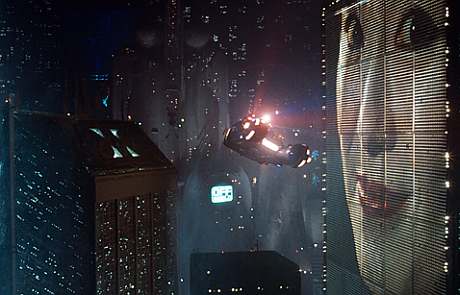
Cityspeak (Blade Runner)

bladerunner“That gibberish he talked was Cityspeak, gutter talk, a mishmash of Japanese, Spanish, German, what have you. I didn’t really need a translator. I knew the lingo, every good cop did. But I wasn’t going to make it easier for him.” – Rick Deckard (Harrison Ford), Voiceover

That’s how Ridley Scott explained it in his adaptation of Blade Runner. Well, technically Ford did the explaining through the character of Deckard, but that’s neither here nor there. Point is, Cityspeak was something that did not appear in the novel version of Blade Runner/Do Androids Dream of Electric Sheep?. It was instead an original creation, designed to give the future-noire city of LA some subtext and a more gritty, realistic feel.

I mean, let’s face it. Overcrowded cities have a way of spawning their own lingo, and in a mega-city that is congested with millions of people, hundreds of cultures and dozens of languages, something like this would be sure to emerge. It was simply a matter of predicting which major languages would be involved, and writing the script in the 80’s, it was only natural that the languages of the most populous and wealthiest nations would do.

English was and still is the trade language of the world, Japanese was quickly becoming another one, Spanish was already spoken by millions in California and all over the South-Western US, Germany was next to Japan as being the world’s strongest economies, and Chinese… well, there were over a billion speakers of Chinese even back then. So really, Cityspeak was a legitimate sci-fi concept.

But here’s an interesting fact: turns out Edward James Olmos – who played the character of Gaff, the only one who spoke Cityspeak – was the man chiefly responsible for its creation. Relying on his diverse ethnic background and some in-depth research, he managed to come up with all the lines his character spoke in the course of that opening scene where it makes it debut.

Not only did he rely on his own Hungarian background, he took some night courses and studied inner-city youth lingo, relying even on his own experiences of living in the Philippines. As he recalled, Filipino cab drivers had their own lingo, a combination Spanish, Tagalog and the occasional English words which they would insert into their speech. One can see this in the lines of dialogue he composed, which were diverse and had several words in English for which no translation would be found.

Here’s the conversation as it appeared in the movie in full:

Gaff: Monsieur, azonnal kövessen engem, bitte!
Sushi Master: He say you under arrest, Mister Deckard.
Deckard: Got the wrong guy, pal.
Gaff: Lófaszt! Nehogy már! Te vagy a Blade, Blade Runner!
Sushi Master: He say you blade runner.
Deckard: Tell him I’m eating.
Gaff: Captain Bryant toka. Meni-o mae-yo.
Deckard: Bryant, huh?

The first section breaks down as follows:
Monsieur (French): Sir
azonnal kövessen engem (Hungarian): follow me immediately
bitte (German): please

The second, however, was entirely in Hungarian:
Lòfàszt!: Bullshit! (Or horse dick, depending on how literal you want to get!)
Nehogy már!: Do it!
Te vagy a Blade, Blade Runner!: You are the Blade, Blade Runner!

The last sentence… Well, it stumped me! Yep, not even a few full-on Google searches or several rounds with Google Translate and Babel Fish could crack this code! And I tried everything they listed, Japanese, Chinese, German, even Hungarian. But luckily, the Blade Runner crew had already provided a translation, it’s just that there was no mention of which languages were used. It reads as follows:
“Captain Bryant toka. Meni-o mae-yo” (Captain Bryant ordered me to escort you to him).

And that’s Cityspeak for you, something Ridley Scott and his Blade Runner adaptation was famous for, but which was mainly the creation of Edward James Olmos. I guess he’s not just a pretty face, or the man that played Adama and won the love of countless Battlestar Galactic nerds…

Equilibrium

Equilibrium

And we’re back! I tell ya, I’m mentally burnt from reviewing so many classics that I actually enjoyed! But I guess that’s to be expected. Somehow, its just easier to burn and mock bad movies, as opposed to dissecting and delving into movies with real themes, plots, memorable characters and complex messages. And I have covered a few movies in the last while that I had mostly good things to say about. So its about time I got back to bashing something worthy of it! Yeah, that seems about right. Here’s Equilibrium!

Now I already know that I’m stepping on some toes just by implying that this movie was fluff. As it turns out, Equilibrium is a cult-classic with its own dedicated fansite. That’s right, people actually came together and created a website strictly for fans of this 1984-ripoff. Go check it out, its actually pretty respectable: Equilibrium Fans

That shouldn’t come as a big surprise, people love an underdog after all! And considering the bashing it took and how little money it made, its little wonder why its fans would be so dedicated…

(Background—>)
Yes, as already noted, this movie did very poorly at the box office, grossing just over five million dollars, which was roughly a quarter of the movie’s budget. And it was generally panned by critics, earning only 37 percent on Rotten Tomatoes and a metascore of only 33 out of 100 on Metacritic. Little surprise. The general consensus amongst critics was that the movie was a rip-off, a “reheated mishmash of other sci-fi movies” as one review put it. Or, as the NY Times claimed, that it borrowed heavily from such classics as Fahrenheit 451, Nineteen Eighty-Four, Brave New World, and other science-fiction classics. Roger Ebert was the only one to be gentle, giving the film 3 out of 4 stars and saying that “Equilibrium would be a mindless action picture, except that it has a mind. It doesn’t do a lot of deep thinking, but unlike many futuristic combos of sf and f/x, it does make a statement”.

On the other hand, the movie did manage to attract a cult following that saw all this “borrowing” as signs of quality, who enjoyed the combination of action and sci-fi/satirical elements. But regardless of whether it was seen as a weakness or a sign of quality, the fact remains: Equilibrium borrowed HEAVILY from many sci-fi classics, particularly 1984, and tried to repackage them into an action movie riddled with plot holes, contrivances and topped off with a happy ending. You either loved it or hated it, and I personally thought it was pretty damn funny!

(Content—>)
So the movie opens with scenes of destruction and debacle, telling us that humanity was brought to the brink of annihilation by what was clearly WWIII. In response, a new order was formed, this one dedicated to creating a perfect society through the eradication of human emotion. Hmm, interesting spin on the 1984 concept (not to mention F451 and Brave New World!) So apparently, the civilized people live in a walled city called Libria (obvious reference to the movies title and their value system), the rest live in the “Nethers” where emotion is still practiced. The people of Libria take a drug named Prozium which “eliminates the highs and lows” of emotion (thinking they just mashed the words Prozac and Valium together) and the law is enforced by people called “Grammaton Clerics” who go out and arrest “sense offenders”. Oh, and the religious/political leader of this world is known as the “Father”. He’s the guy who founded the Librian philosophy and leads the state through the “Tetragrammaton Council”, even thought no one sees him except on big huge TV screens making his famous speeches.

Okay, first impressions… Obvious! For one, we have some clear satire on the culture of pharmaceuticals, the pills people pop when they are manic or depressed. Except here, you pop one to cure it all! Echoes of Soma, hello Brave New World! Then we have the Grammaton Clerics who go out and arrest “sense offenders”… They ARE the Thought Police, “sense offense” IS thought crime, and the way they burn the people’s houses and possessions out in the Nethers is every bit what happens in F451. Oh yeah, and the Father is totally Big Brother, and its already pretty clear he doesn’t even exist! And the religious angle is also very clear. The name Tetragrammaton for example, which is Greek for “a word having four letters, is clearly a reference to the Hebrew name of the God of Israel (YHWH). And the Grammaton Clerics, need I say more? Essentially, what they are trying to say is that the philosophy of unemotion has been elevated to the status of holy canon, making it unquestionable and the state’s authority total.

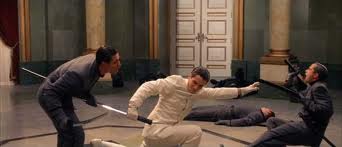
But the action is still pretty cool. For example, in the opening sequence after the intro, we see John Preston (Christian Bale) – cleric extraordinaire – go into a Nether compound. There, he shoots up an entire room of people after jump-kicking the door down and sliding into a room full of gunmen. Seems this is an example of what’s called the “Gun Kata” (or as some people called it “Gun Fu”), where clerics get into the middle of a crowd of hostiles and do a gun dance, inflicting maximum damage on the maximum amount of targets. After clearing this place out, they uncover a cache of art (sense offense materials) and burn them. We also see his partner, Errol Partridge (Sean Bean), steals a book from the scene by WB Yeats and claims he’s turning it in to be destroyed. But you totally know he isn’t! The man is clearly a “sense offender” (dammit, that sounds like sex offender when you say it fast!). Preston quickly realizes this and meets up with him in an abandoned church in the Nethers. There, they have a chat about why he’s chosen to break the law, forsake his career, and condemn himself to death. Bean claims that the price of emotion is a “cost I would pay gladly”. Not sure where that quote is from. Closest thing I could find was “I’ll gladly pay you Tuesday for a hamburger today” by Wimpy, the hamburger addict from Popeye.

Then, in a move that isn’t totally contrived, Preston accidentally breaks his last vial of Prozium and the clinic is closed so he can’t restock. That’s right, an elite cleric lets his stock of mind-altering drugs run out and the factory just happened to be closed so… yeah, he’s screwed until they open again! Then, wouldn’t you know it, he begins to experience emotions and finds the awakening quite appealing (and disturbing because he now feels remorse for killing his ex-partner!) Alas, he has to hide his emotions now because he gets a new partner, some career-minded dude named Brandt who is clearly gunning for the spot of top cleric. Preston’s kids, like something out of children of the corn, are also pretty suspicious (echoes of the Spies from ’84), so he has to be careful at home as well. Only place that’s totally private and safe is the few inches that lay inside his head (’84!)

Oh yeah, we also learn a few things in the course of this that also make little sense. One, Preston had a wife that was arrested and incinerated because SHE was a sense offender. When he meets with Dupont (Angus MacFadyen), the head of the Council under the Father, he is asked how this could have happened. How does an elite cleric, best in the business, NOT notice sense offense in his own home? He replies that he himself has never been able to figure that out. Well, that makes all of us! That and the death of his partner clearly tell us that he’s going rogue real soon! Oh yeah, we also learn that there’s an Underground apparently that operates within Libria. But unlike in 1984, this resistance ACTUALLY exists and literally lives underground. Its now Preston’s job, with his new partner, to find this group and eliminate them.

They then do a mission together where they find a new batch of people in the Nethers, one of them the enigmatic Mary O’Brien (Emily Watson) who has a cache of classical music and antiques. After saving her life, Preston goes through her stuff and has a deep, emotional moment as he listens to some Mozart. This is right out of ’84 again, where Winston found an antique shop in London and was totally enamored by everything he saw in the place. Preston than commits the same act that Partridge did in the beginning, pocketing a book and claiming he was going to get rid of it himself. He then rescues a dog because (holy evil Batman!) dogs are illegal and are have to be put down. He tries to let the dog loose at the edge of town, but that ends badly when a bunch of police show up and he’s forced to kill them using some of funky, acrobatic, Gun Kata moves! Also, in the course of interrogating O’Brien, he finds himself falling in love with her. We learn in the course of things that this lovely red-headed “sense offender” knew Partridge and led him down the path of sense offense in the first place. She’s slated to die now, and he’s obviously not too happy about it.

Shortly thereafter, Dupont summons him again to talk to him about his suspicious behavior. Convinced that Preston is not telling him the truth, he slams his fist down on the table and yells “DON’T LIE TO ME!” Uh, hello? Isn’t emotion supposed to not exist for these people? And this is just the first instance of this kind of plot oversight. Afterward, while practicing what appears to be truncheon Kata, Brandt comes in and starts fighting with Preston and he lets a lot of emotions fly. For one, he keeps smiling! Second, he taunts him by telling him that since some cops turned up dead (his work), there’s going to be a big offensive in the Nethers and all sense offenders will be wiped out on site. No more arrests are processing! Last, he seems disappointed when he looses their match. And these people are suspicious of HIM? No wonder he never suspected his wife, the man’s been surrounded by sense offenders all this time and he can’t even tell! (Still sounds like sex offenders to me!)

So he rides along on one such assault, sees lots of people die and feels bad about it. Then he tries to rescue some hideaways, but Brandt finds him and orders him to kill them. He even hands him his gun to do it. He says “no, you do it”, and hands him his gun back. As if Brandt’s suspicions weren’t already confirmed, he then catches him as he runs out of the “processing center” (where O’Brien has just been incinerated) where he breaks down and start to cry right there in the street. Arrested, Preston has his ass dragged before Dupont (again!) where Brandt tells on him and says that he’s the one who shot those officers. Strangely, Preston doesn’t seem too afraid because, you see, forensics can match bullets to a specific gun. Turns out, the gun used to kill those officers was Brandt’s! We then get a quick flashback to where Preston was handing Brandt back his gun while they were together in the Nethers. Brandt is then hauled off, claiming (screaming, in fact) that he has no feelings. Okay, two things here: One, that whole gun switcheroo happened AFTER he killed those cops. How could he have shot them with Brandt’s gun if he didn’t even have his hands on it yet? This is a major plothole! How could it have gone unnoticed?! Second, Brandt once again is blatantly demonstrating emotion. How is no one noticing this?

Regardless, Preston now seems to have gained Dupont’s trust, so he’s sent on a special mission to infiltrate the Underground. Seems right up his alley, since he’s already decided to become an offender himself. But before that can happen, he must rush home and get rid of the cache of Prozium that he hasn’t been taking. He gets home and rips off the bathroom mirror (he’s been hiding them inside the wall) and is confronted by his son who tells him he needs to do a better job of stashing his vials. His son then smiles! Turns out, his kids are sense offenders too, have been ever since their mother was incinerated! How sweet… Whoa, hang on here! You’re telling me that this guy’s KIDS have been offenders for years now and HE NEVER NOTICED?! What kind of cleric is this guy? First his wife, then his kids, then his partner??? Didn’t he say near the beginning that the key to his success as a cleric was being able to get inside the head of sense offenders? How can he be suspected of being a sense offender when he’s the only one in Libria who HASN’T been sense offending this whole time?

After this close shave, he goes to the Underground and begins plotting with them. Seems they have a plan: they will stage their surrender, Preston will get the credit for the arrest and, as a reward, a chance to meet the Father. He will assassinate him while their people attack the Prozium factory. With the shipments shut down, the people will experience emotions again and rise up against the system. Ah, but there’s a snag! Turns out, as he gets there, that the Tetrarchy have other plans. They sit him down, hook him to a polygraph, and then reveal that he’s been had! Brandt is alive, it seems, and it was all a set-up! And then a video of the Father, which suddenly turns into Dupont, comes on to address him lets him in on the double-cross. The Father (like we didn’t already know) has been dead for years and Dupont has been the real head of state since that time. Oh, and that whole thing of sending him to find the Underground? Part of the set-up! You see, they could tell he was a potential offender, and figured they could use him to locate the resistance and get their hands on them. Letting him beat Brandt was just a ruse so he would feel comfortable and able to fulfill his purpose.

Yeah, this isn’t totally contrived either! According to Dupont, they were looking for an infiltrator to get into the Underground, someone who could think and feel like they did, but who wasn’t aware of it yet. Now how the hell is that supposed to work? This guy couldn’t even spot his own wife and children, and he’s supposed to be an elite cleric AND a latent sense offender? Second of all… what are they, psychic? If he was the perfect candidate for knowing how sense offenders worked, why screw him over? Last, but certainly not least, the only reason he started offending was an unlikely accident! Remember, he broke his last vial and the Prozium factory was closed? Or did they set that up too? Once again, we have a climax where the bad guys somehow foresaw everything, how everything proceeded based on their designs, even though there’s no way they could have planned this without being psychic. Whatever, it’s not supposed to make sense, it’s just supposed to tie everything up into a nice little package!

In any case, Dupont tells him to surrender without incident, but Preston isn’t about to! His polygraph levels go flat, he breaks out the sleeve-guns, and starts blowing everyone away! Yeah, this is another pretty cool action scene, but that doesn’t prevent it from being totally stupid too! I mean, how did he get those guns past the guards? Also, he makes such short work of them that the fight isn’t even suspenseful. A few bullets, a few cuts with his Katana, and everyone’s dead. His ultra-fast fight with Brandt is especially bad; not once did their swords even cross! It was just, swipe, swipe, swipe, and Brandt’s face falls off! No joke! He then takes down Dupont in a Gun Kata fight, but not before Dupont begs for his life, confessing that he himself is a sense offender (he “feels” he says). But Preston kills him anyway, quoting that killing him is “a cost I would gladly pay”. So even Dupont is a sense offender, huh? No surprises there, he’s done enough emoting to put William Shatner to shame! But I guess this was meant to be in keeping with the whole 1984 motif, where the rulers are total hypocrites who don’t follow their own rules.

Anyway, the Underground then attacks the Prozium factory, killing all the guards with ridiculous ease, and then proceeds to blow the place up. The movie then ends with a closeup of Preston’s eye as he sheds a single tear. And that’s not the only piece of blatant symbolism before the movie ends. There’s also the part where Preston wipes his bloody fingers on one of the TV’s boasting the Father’s image, right before he blows this and every other screen in the building away (somehow, this shuts down every screen in the city). So between that and the destruction of the Prozium factory, the system is now in ruins and the people of Libria free to feel. Yaaaay, the sense offenders won! (STILL sounds like sex offenders!)

(Synopsis—>)
I think I better start with what I actually liked about this movie since that is a much shorter list. Yes, some of the action scenes were cool, but Kurt Wimmer (who wrote AND directed this movie) has a thing for action sequences where people die way too quickly. Again and again, we see people sprayed with bullets, tons of dust flying, and dozens of people dropping in the same second. The scene at the end where the Underground is storming the government buildings is the worst of the lot, entire squads of guards drop in seconds as untrained resistance fighters shoot at them. What kind of guards are these? Whoops, supposed to be covering the good stuff here… Okay, the classic sci-fi bits were also cool at times – like how people in the Nethers stockpile whatever emotional materials they can (art, literature, music), and how the clerics are required by law to confiscate and burn them. But here too, things get unbelievably hokey! At the beginning, for example, it turns out that the rogue house was keeping priceless pieces of objets d’art hidden in the floor, which included the (REAL) Mona Lisa! Are you kidding me?

Damn it, did it again! Okay, uh… the shooting locations, which included the Olympic Stadium in Berlin and the subway station under the Reichstag building. Yeah, the way they worked their sets into these locations, that was pretty cool. And the direction wasn’t bad. The camera work, casting and acting weren’t bad either… except for Taye Diggs, who smiles way too much (you’re supposed to be emotionless, dude!) The Gun Kata was neat, and the whole “sense offender” rating system (EC-10, which has to do with the MPAA’s emotional content rating system) was kind of clever as well. Last, there was the clerical/religious angle, which was kind of cool and ironic since the state is supposed to be a society of pure reason, free of emotion, and these terms can’t help but make one think of faith – something inherently irrational.

But other than THAT, this movie sucked! The plot was totally contrived, it was riddled with plot holes, some of them glaring (i.e. the gun switch), and the ending was so totally over the top it was ridiculous! Sure, some of us were encouraged that the good guys won, unlike in the real 1984, but that didn’t make it any more believable or respectable. In fact, it really just felt like Wimmer ripped off some respectable sci-fi classics, splashed them together with a cheesy action plot and called it a movie. I’m reminded of Demolition Man, and the less said about his other flop, Ultraviolet, the better! Uh oh, I’m sensing more bad reviews to come… Equilibrium, folks! Not bad if you’re looking for a guilty pleasure, check your brain at the door!

Equilibrium:
Entertainment Value: 7/10
Plot: 3/10
Direction: 6/10
Total: 5.5/10

T2!

Normally, if I do a review, I try to re-familiarize myself with the material before writing about it. That way I’ll be sure not miss anything. It’s only been on occasion that I’ve done one strictly from memory, and that’s assuming it’s still fresh. That was certainly the case with Independence Day and Terminator: Salvation, the latter I had seen just a few weeks before, and the former I’d seen so many times that I really didn’t need to see it again! However, this was not the case with The Terminator. Here was a movie I had not seen in years. Make that MANY years, and yet I penned my review almost entirely from what I could remember of it. Not smart! Even less smart to watch it immediately thereafter and realize all the points I missed! Luckily, I still have two more movies to do in the franchise, and most of what I noticed applies directly to the sequel!

First off, James Cameron was guilty of recycling actors even more than I thought. Michael Beihn, Bill Paxton, and Jennette Goldstein all played prominent roles in Aliens (Hicks, Hudson and Vasquez) and were around for either T1 or T2, in some cases, both. But I forgot about Lance Henrikson, the man who played Bishop in Aliens. Turns out, he played one of the LA detectives in the first movie who got his ass shot off when evil Arny came knocking! Wish I hadn’t glossed over those guys in my T1 review, turns out they were actually pretty important. In any case, that makes four actors whom he used for both franchises, and I’m betting there were more in the background somewhere…

On top of that, I came to see just how many action sequences were reused in T2. I don’t want to get too specific just yet, but let’s say that action scenes involving motor bikes, big-rigs, car jumping and pile ups were also reused from the first movie. The only real difference was the budget, and of course Arny was now a protagonist instead of a force of pure malevolence. And there was also one all-important theme that made it into both Aliens and T2, and that was the theme of reconciliation between man and woman and humans and machines! But more on that later. Having just watched the movie and it still fresh in my mind, let’s get to the specifics of T2, one of the biggest and most successful sequels of all time!

(Background—>)
T2 was generally lauded by critics, all of whom thought that Arny did a great job reprising the role that complimented his particular brand of talents (his natural grandeur and presence, for example). Cameron’s gift for action direction was also seen as a big plus, and with three successful movies under his belt (T1, Aliens, and The Abyss), he now had a bigger budget and a degree of creative freedom he did not have with the before. And as I said in my first Terminator review, T2 also did better at the box office, not proportionally speaking, but certainly in terms of overall gross. And according to some, it was one of those rare movies that was believed to be better than the original. I’m not one of them, but I can certainly see why others might think so. On the whole, T2 was bigger, glitzier, and a lot more fun than the first. It’s mass appeal, made possible by its awesome action sequences, intense pace, and cutting-edge special effects which involved the use of CGI (something brand-new at the time) were sure to please. It also did a good job of wrapping up the temporal paradox presented in the first movie, and offered a way out of said paradox that was both believable and consistent with it. It may not have been as gritty, realistic or smart as the original, but that was to be expected. Originals are meant to set the tone and establish the parameters, sequels to expand on them. And in that respect, T2 was a fitting follow-up to the first, superior in some respects but certainly not better.

(Content—>)
The movie opens with scenes from modern day LA, moving from traffic jams and pedestrian crossings to a playground with children at play. This is clearly a “before” scene, where the music is foreboding and things suddenly slow down, with the sound of children laughing in the background. And then, the big white out. If this isn’t indication enough that something terrible has happened, we immediately cut to the “after” scene – a blackened ruin littered with skeletons and rubble. We are told that is what Los Angeles looks like in 2029, cold, dark, and dead. Linda Hamilton’s voice over then reminds us of the relevant facts, how billions died on Aug. 29th 1997 (“Judgement Day”), and those who survived lived only to face a worse horror… the war against the machines. We then get a moment of pure symbolism as a machine foot crushes a human skull, followed immediately thereafter by one of pure action porn!

All over the post-apocalyptic landscape, machines are attacking, purple tracers fill the sky, and human resistance fighters mobilize to fight back. This sequence was certainly superior to the ones in the first movie. There, the post-apocalyptic battle scenes involved just a few people and models, fighting in a limited fashion that gave the impression of guerrilla-warfare rather than an epic confrontation. In T2, there were literally hundreds of people and models being used, and the pace and scale was faster and bigger. The humans aren’t hiding here, they are out in full force, fighting, dying, shooting and killing. This gives the impression of a genuine war: ugly, awesome, and epic! Naturally, this was due to budgets, but that doesn’t change the fact that T2’s opening action sequence was far more kick-ass! We even get a shot of John Conner, the future version. He’s grizzly, determined, and surveying the field while his mother continues to let us in on things: Years back, a Terminator was sent back in time to kill her before she could give birth to this illustrious man – who is looking mighty heroic right now – and failed. Now, another one is on the way, hoping to strike at Conner himself. But the resistance has sent another warrior, and only time will tell which one reaches him first…

And, much like in the first movie, we cut back and forth between three points of view: Arny, the T1000 (played by Robert Patrick), and the main protagonists – in this case, John and Sarah. She’s in an insane asylum. The character of Doctor Silberman (Earl Boen), who in the first movie pronounced Kyle Reese insane, is back and saying the same thing about her. John is in foster care, is clearly disillusioned over the fact that his mother is locked up, and chooses to take it out on his foster parents. That’s an immediate selling point to this movie: the idea that anyone who knew the future would be a Cassandra, shouting to the wilderness and being totally ignored by the people (or in this case, committed). Conner’s delinquency is also a realistic touch. We know he will grow up to a hero someday, but right now, he’s a pissed-off adolescent who’s confused and bewildered. On the one hand, he hates his mother for apparently lying to him for so many years, and on the other he obviously misses her. Remember that photo he gave Kyle Reese, the one she had taken of herself at the end of the first movie? Well, turns out he’s kept it. Must be some embers still left in that hearth, huh?

Anyway, Arny has his scene where he wanders into a biker bar naked and wrecks the place up in order to get his hands on some badass looking clothes and a Harley. This is of course a retake from the first movie, but unlike the first where the evil Arny killed to get them, the good Arny in this one merely brutalizes a few people. Yep, this is the good guy… baby-steps I guess! And just like in the first movie, the bad guy has an easier time, simply killing a police officer and then commandeering his vehicle. Turns out when you’ve got liquid metal for skin, you don’t need clothes. You just morph your surface layer and boom, you’re good to go! But alas, the T1000 (as Arny explains later) cannot form complex machines, so he still needs the policeman’s car and weapons.

The three finally meet and, just like in the first, we get a tense, climactic moment with slow-motion and intense music. John sees Arny as he pulls his shotgun out of a box of roses (product placement, Guns and Roses did the theme music!) and thinks he’s out to kill him. But those fears are generally allayed when Arny levels the gun and yells his famous tagline, “Get down!”, and shoots the T1000 behind him. A gun fight ensues, followed by a wrestling match, followed by a big-ass car chase. Again, elements of the first are at work here again. In T1, Arny was chasing Sarah and Kyle on a Harley, followed shortly thereafter by a truck. Much like in the first, it all ends with the truck crashing and exploding. This is not to say that it wasn’t awesome this time around though. As usual, Cameron’s flare for action-direction makes the scene tense and beautiful, and the way Arny keeps flipping that gun around to reload it? You look me in the eye and tell me you didn’t think that was badass the first time you saw it! And of course, the sequence ends with the T1000 walking from the fiery wreckage unharmed, provided by some of those cutting-edge digital effects I mentioned!

John then has a chat with Arny about what’s going on. Some funny lines here: “Don’t take this the wrong way but… you’re a Terminator, right?” Keen grasp of the obvious. “Okay… And you’re not here to kill me! I figured that part out for myself!” Well he did save your as several times in just the last few minutes so… duh! What makes this funny is that while freaked out, John clearly has a framework in place for understanding what’s going on. In spite of the fact that he’s spent the last few years thinking his mom was crazy, he still remembers everything she taught and what he’s just witnessed just confirmed it. Sure he’s freaked out by all the violence and near-death, but one he’s not is shocked. He doesn’t even get that phased when Arny tells him that it was HIM – John Conner – who sent him; his future self, that is. Somehow, it all just makes sense given his upbringing. And of course, Arny takes the time to explain the particulars of their enemy. Let me see if I can condense it all into a few bullet points here:
> T1000, advanced prototype, liquid metal, here to kill you.
> Can’t form weapons beyond knives and stabbing tools.
> Can also morph into things, but only things of equal size
> Can impersonate other people and knows where you will go
> Oh yeah, and its not known if he can be destroyed or not

Yikes! That’s another thing that I enjoyed about this movie. At first, it seems like Arny can defeat the T1000 as he manages to save John Conner from his repeated murderous attempts. However, as more confrontations ensue and Arny is forced to go toe to toe with him, the T1000 begins to show his superiority. Not only does he managed to take Arny’s arm off, he even manages to take Arny out. Well, temporarily deactivate, but you get the idea. In the end, Anry’s only able to win by outsmarting him, and relying on the help of John and Sarah.

But getting back to the storyline, Arny soon confirms that the T1000 has already killed John’s foster parents and warns him that his mother could be next. But not before John has an expository scene where he expresses all his angst over how his mother taught him everything he knew, only to be taken away from him and declared a delusional psychotic. And now, it appears she was right all along, so naturally he wants to find her. But no, Arny reminds him, the T1000 would have anticipated that, and will try to impersonate her and will kill her in the process. John freaks, a ruckus ensues, and it ends with John realizing that Arny must obey his orders. So naturally, he orders Arny to help him save his mother (Oh, and not to kill anyone, on a count of he almost killed two people during that ruckus).

They then get to the asylum where Sarah is attempting to make her escape. Seems people told her that a dead-ringer for the man that shot up a police station and killed 17 officers in 84′ was spotted at a local mall. Thus why she needs to escape tonight. If things are happening again, she needs to make sure her son is safe! She does this smashing the face of the guy who’s been physically and sexually abusing her for the last few months and taking Dr. Silberman hostage. Naturally, we don’t feel sorry for either of these people, since the attendee is a dick and Dr. Silberman is a cynical douche! John and Arny are simultaneously breaking in, which begins with Arny knee-capping the guard at the front (he said he wouldn’t kill, wasn’t nothing in there about knee-capping!) They meet up inside as Arny steps off the elevator right in front of her, and a slow-motion scene ensues where Sarah recognizes him and becomes so terrified that she runs back in the direction of the guards she eluded not a moment previous. Arny saves her and issues one the tag-lines from the first movie: “Come with me if you want to live”. John is also there and lets just her know that Arny’s cool, right before the T1000 shows up right behind them and tries to kill them. Dr. Silberman witnesses all this, and is no doubt going to need therapy himself!

Another chase scene ensues. Arny and Sarah protect John, steal a police car, and start driving backwards while shooting. The T1000, for his part, sprouts swords and crowbars from his arms and pursues them. Here too we see a scene being rehashed from the first movie, where the evil Terminator jumps on their car and starts smashing through the window, trying to get his hands on his target and almost succeeding. But in the nick of time, they manage to shake him with some keen maneuvering and shotgun blasts. This time around, its Arny who does the rescuing, blowing off one of the T1000’s limbs and sending him flying off the back end of their car. Having made it away for the second time, the three of them start make their way out of town in great haste.

While in the desert, we get some pacing scenes as Arny, Sarah Conner, and John get to talking, and in the course things, learn some things about each other. For example, Sarah wants to know how Judgement Day happened, how Skynet was created and who’s responsible. Arny reveals that a man named Mr. Miles Dyson is responsible for the breakthroughs that led to Skynet’s creation, and that the key developments are happening pretty much as they speak. We already know from a rather telling scene earlier that Mr. Dyson, over at Cyberdyne systems, was the recipient of the remains of the first Terminator and is working on a big AI-related breakthrough. Seems that Conner was right, that someone conspired to remove them from the factory where Sarah left them, and made sure they got into the “right” hands. Sounds… conspiratorial! In any case, it was the first Terminator’s broken CPU and remaining arm, which came from the future, that ended up being the basis for Dyson’s research, and hence Skynet’s creation… The temporal paradox strikes again!

There are echoes of Alien and Aliens here. In those movies, the megacorp Weylan-Yutani kept screwing over its own people in order to get their hands on the alien specimen. Here, however, we are getting it more in the form of the dark future/cautionary tale, where networked, intelligent computers are responsible for nearly wiping out humanity, largely because we made the mistake of trusting our fate to them. But unlike the first movie, T2 introduces us to the human side of that equation, how it was human avarice that led to Skynet’s creation, and how Skynet decided to kill humanity because they tried to pull the plug on it. Doesn’t make Skynet any nicer, but it was a nice touch, as is the humanizing of the people responsible which follows later on. But at the moment, Sarah is obviously perturbed by this information, and we can tell she’s going to do something about it very soon…

Also, there’s a very important scene in all this that didn’t make it into the original movie but came with the director’s cut. This is the scene where Arny reveals that all Terminators have their CPU’s set to “read-only” when they are sent out, a provision against them exercising too much independent thought. While they are held up in an abandoned garage and nursing their wounds, John proposes that they remove Arny’s chip and switch this fail-safe off so he can be of more use to them. After removing it, Sarah tries to smash the chip with a hammer but John stops her. She tells him this could be their last chance to be “it”, and that John doesn’t understand this because he’s never had to kill one of them. But John insists that they need Arny, that “it” is a “he”, and that if he’s to be a great leader someday, his mom ought to start taking his ideas seriously. She decides to go with him, although just barely, and lets Arny live. This scene is important because it establishes that in spite of the fact that the good Arny saved them, Sarah still doesn’t trust him and is willing to kill him as soon as the opportunity arose. One would expect this considering what the first Arny bot put her through.

There’s also the amusing scene where John tries to teach Arny to smile. This is just one of many where John is trying to teach him how to “be more human”. Most of these are pretty cheesy, consisting of one-liners and hand gestures, but this one was actually funny and even made sense in the overall context of the movie. Later, we see Arny pulling facial expressions, and the more anal-retentive critic would surely want to point out that this is supposed to impossible. Cyborg’s don’t feel emotion, hence they don’t smile, smirk, or shrug. The subtleties of facial expressions and how they convey emotions would surely be beyond them. But, if they knew someone was teaching them what faces to pull and when, they just might find it realistic and shut the hell up!

Anyhoo, John, Arny and Sarah show up at Enrique’s hideout. This would be the former Green Beret gun-running dude John mentioned with earlier, one of several dude’s she shacked up with while he was growing up. While at Enrique’s hideout, they start stockpiling guns and getting some new vehicles together. Arny gives us a preview of things to come when he hoists up the mini-gun and smirks at John. “It’s you, definitely,” John says. And in the course of things, Sarah watches her son and the Terminator talking and carrying on and has a revelation. Turns out that of all the father figures that had come and gone, the Terminator is actually the most ideal father figure for John. He’d never neglect him, never abuse him, and would die to protect him. We see at last a reconciliation between humanity and technology with this, not unlike the one that took place in Aliens between Bishop and Ripley. Once again, James Cameron is showing his fondness for certain themes. Still, it works here. After all the paranoia and hatred Sarah has been living with over the years, she finds herself finally able to trust her enemy – a killing machine – with John’s life. Irony!

But then, Sarah has another one of her apocalyptic dreams, and this one is particularly graphic! She even sees an alternate version of herself playing with a baby. This is a particularly symbolic moment, we get the impression is seeing what she’d look like if history had worked out just a little different. And like everyone in the playground, she doesn’t appear to be able to hear Sarah as she screams at them to run. In any case, they are all vaporized when a nuke goes off in the distance, graphically! I tell ya, that shot scared me when I first saw it. I believe it was the first case of the effects of a nuclear blast being caught on film. Sarah then wakes up with a start and she sees the words that she herself carved in the picnic table not a moment earlier. “No Fate”, which paraphrases what John told Reese to tell her: “The future is not set, there is no fate but what we make for ourselves.” Ironic, given the temporal nature of the story, but it certainly convinces Sarah that its time she acts. She grabs her guns, a truck, and tells John and Arny she will meet them later. It doesn’t take long for them to figure out what she’s got in mind (killing Dyson) and they head off to intercept her. Arny warns John that this is bad strategy, that the T1000 could anticipate this move, and that Dyson’s death might actually prevent Judgement Day. But of course, John tells him they have to. It’s a human thing!

They arrive at Dyson’s just in time to find that Sarah has shot up the place, put a bullet through Dyson’s shoulder and just about to deliver the coup de grace. But alas, she couldn’t. He’s still human, and she’s not a monster. So instead, they decide to fill him in on things and give him the benefit of the knowing everything his work will lead to. Arny starts by pealing the flesh off his arm and letting his robot innards tell the story. Dyson immediately recognizes the arm, since he’s got an identical one at his office. We get the distinct impression that some pretty messed up possibilities are going through his mind. In any case, Arny has his full attention now and he tells him to “listen to me very carefully.” Sarah’s voice-over fills in the rest and says that Arny told him everything – about Skynet, Judgement Day, and the war – as we cut to what is clearly several hours later. Naturally, he’s shocked and professes that he never intended for any of that to happen, but Sarah is naturally unconvinced. Seems “men like him” are the reason the hydrogen bomb exists. They think themselves creative, but only know how to create death and destruction, so fuck em, they’re evil! Uh, remind me now, who shot up who’s place here in a homicidal attempt? But alas, because he didn’t know, and maybe to prove he’s not a bad guy, he agrees to help them, which includes destroying the lab and also the remains of the first Terminator. Hello! This is the first time those remains have even been publicly acknowledged. Everyone is surprised, except Sarah who is both feels both angry and vindicated. She’s known all along that there was some kind of cover-up and nobody believed her. Now, she’s hearing from the horses mouth that she right. Still, right or no, she still gotta feel pissed!

What follows is another tense series of scenes as they rush to Cyberdyne, commandeer the facility, and begin laying explosives. Meanwhile, the police show up, thinking they got the man who shot up the police station back in 84′, and cordon off the building. Sarah’s voiceover and a shot of them driving up a dark highway convey the significance of these scenes perfectly before they actually unfold. Essentially, after years of trying to ensure that the machine’s didn’t alter the future, they are now trying to do the same. Whereas they were just players before, doing what was required of them, they are now free-agents who have the power to change history. Arny has his scene with the minigun too where he levels all the cop cars out front, firing a couple thousand rounds and a handful of grenades into the police cruisers to gives Sarah, John and Dyson the time they need to finish rigging the place to blow. But, as promised, does so without hurting or killing a single person. Not bad, Arny! Way to respect human life! Of course, the police are pissed and start firing back at him, and their SWAT team goes on in with blood on their minds.

There’s also what appears to be a sort of reconciliation taking place between Sarah and Dyson now, paralleling once again what Ripley experienced in Aliens. Obviously, Sarah had become embittered towards her male counterparts after years of being ignored and condemned by them. After losing Reese, she wasn’t able to find a single stable father figure for John, not one who would stick around after she told him the truth at any rate. Then there were all those who condemned her and put her in an insane asylum. On top of that, there’s men like Dyson who were responsible for Skynet’s creation in the first place. But now, she and Dyson appear to be coming together thanks to their common cause. There’s even a symbolic moment where Sarah passes him the detonator and we get a close-up of it changes hands. This reconciliation is cut short however when about a dozen SWAT team members comes breaking in and fills Dyson full of holes! But once they realize the place is totally rigged, they pull back! And the three protagonists managed to make it out right before the bomb goes off and levels Cyberdyne! But the front door is still blocked and there’s no way they can make it out without some shooting. That’s when Arny issues his famous tag-line from the first movie: “I’ll be back”! He gets about a hundred bullets to his face before knee-capping and pelting all the SWAT team members with their own tear gas canisters. He then steals the SWAT van and drives it through the front foyer, thus ensuring their escape. Meanwhile, the T1000 has shown up and steals a helicopter, much as Arny stole that 18-wheeler in movie one, and is even sure to include the “get out!” tag-line to its driver.

Which brings us to chase number three! This time, the good guys are in a SWAT van and the bad guy in a helicopter. True to the first movie, there’s a change-up when the bad guy is shmucked and has to switch vehicles. Having lost his helicopter, he commandeers (what else?) an 18-wheeler and chases them into a Foundry. Really? They have Foundries in LA? Right beside of the highway to boot? Just asking… Point is, more action porn follows: Arny delivers his “Hasta la Vista, Baby” line and shatters the T1000 with a bullet. This was after he forced him to crash his truck that was apparently carrying liquid nitrogen (…really?). The bits begin to melt because there’s hot metal all around (Foundry, remember?), and the three protagonists are forced to flee again. But with nowhere to run, they have to fight it out inside the Foundry, and get pretty beat up in the process! As a climactic scene, this was quite effective, being in such a hostile environment and everyone already being wounded. You can feel the tension and danger, which is made all the more palatable since it’s clear that there is no chance of escape. With Sarah already reeling from a gunshot wound in her thigh, and Arny twisted up from the crash, it really seems like they might not make it.

And yet, they do! And I don’t think I’ll ever forget the last scene where Linda Hamilton empties a whole shotgun into the T1000’s body, one-handed! Or how Arny shows up at the last second and pops a rocket propelled grenade into his belly that blows him in half! The T1000 then falls to his death in a bath of molten metal (how’s that for irony, liquid metal man!) and things end tidily when John realizes that the metal will make a perfect disposal spot for the remains of the first Terminator. But alas, Arny realizes that he too much go into the cauldron. As long as any evidence of the future remains in the past, there will always be a chance that Skynet could still be created and Judgement Day still happen. And so the movie ends with Arny being heroically lowered into the molten metal and giving John the thumbs up before disappearing beneath the surface (John taught him how to do that, which makes it all the more sad!)

Then, there’s the very last scene, which is kind of a controversial issue for me! In the original movie, it took the form of them driving along the dark highway again, a clear metaphor for the future, with Sarah giving jer final voice-over that wraps things up nicely. She says she is finally able to face the future with hope because, as she says, “If a machine – a Terminator – can learn the value of human life, maybe we can too…” Cue music and roll credits! I get tingly just thinking about it. But in the director’s cut, the last scene was altogether different. Instead of the still uncertain but hopeful future, we get to see the picture of that future, and its totally disappointing! Apparently, its 2030 or so, Judgment Day came and went without incident, and Sarah is making another recording where she explains how she got drunk and celebrated the fact that it never came. Everyday thereafter was a gift (a line that would make it into T3). And now, she’s sitting on a park bench and watching John play with her grand daughter in that same old playground. The background shows LA of the future, a skyline that looks like something out of a bad sci-fi movie or a rerun of Star Trek (the original version). Oh, and apparently John is not the grizzled leader here, but a Congressman who fights the good fight on the floor’s of Congress.

Where do I begin? Well, for starters, this whole franchise was gritty and dark and never did more than it had to. So ending it with a scene that lays things on way too thick just seems inappropriate. There’s also the fact that its totally sappy! John becomes a peacenik Senator and everybody lived happily ever after? C’mon people! This is supposed to be a movie about post-apocalyptic nightmares and murderous machines! I can understand wanting to end it on a happy note after all the darkness and extended horror shows, but this was ridiculous! But luckily, this scene never made it in to the original. Clearly, someone felt that it would be better to let the movie end on the same note it had maintained throughout. Thus, they went with the highway ending which was best: succinct, serious, symbolic, yet still hopeful. And it wrapped up everything from the first and second movie nicely, with no wasted effort or needless screen time. Last thing you want after tying up all the loose ends is to drop a fresh load of crap on the audience! It brings the whole production down!

(Synopsis—>)
This time around, I think I’d like to start by mentioning what was weak about the film. For starters, the themes that were present in Aliens that had a way of making it into this movie too. The theme of redemption, be it between man and woman and man and machine, was present in both. As was the theme of the evil corporation working behind the scenes so it could get its hands on something dangerous, and in so doing, condemning people to death. It was only recently that I even noticed this, and it kind of brought the movie down in my estimation. However, I am hard-pressed to argue this point too finely. These themes worked too well for them to be considered weaknesses, in my estimation. It was good and fitting to see Sarah find common ground with her fellow man after so much time of being at odds with them. It was also cool and ironic that a Terminator was capable of learning the value of human life and was ultimately the greatest protector/father figure that John Conner would ever have.

And of course the action scenes that were re-hashed from the first movie. Like I said, one could take the position that this was somehow lazy or uncreative, but I’d be hard-pressed to argue that as well. Mostly, they felt like homages, inside references to stuff the audience already saw and would instantly recognize. Those are desirable in a movie, they are like punch lines that make the audience go “Ahaaaa!” And done properly, they are also amusing and entertaining. And they certainly were in this movie. Arny’s big one-liners, “Come with me if you want to live” and “I’ll be back” were both deliberate references to the first movie and they worked. The way they zoomed in on Arny’s face and that intense expression as he said the latter; everyone in the audience knew it was painfully significant!

As for the other weaknesses. These mainly took the form of the extended and deleted scenes. For the most part, they kinda sucked. The alternate ending, where Sarah and John are alive decades down the road and the world is peaceful. SUCKED! The scene where we see Dyson at home explaining his work to his wife, how he’s creating the basis for AI… that one was a tad obvious. We already get that his work is revolutionary and will pave the way towards machines that will be able to think and become self-aware. No need to come out and say it. The ones I mentioned, where they switch Arny’s CPU from read-only mode and John teaches Arny facial expressions, those were good and should have been included in my mind. There were also a few from the Foundry where we see the T1000 having some problems re-resolving after being frozen and shattered, which were also good. But of course, running-time is a factor and that’s why we have director’s cuts.

Last, but certainly not least, there’s that one big, possible plot hole in the movie. Essentially, we are told from the get-go that the machines have once again sent back a Terminator and the resistance has once again sent back a fighter of their own. Now didn’t Kyle Reese say in the first movie that they found the Terminator’s time machine when they trashed Skynet’s HQ and only one Terminator had gone in? Didn’t he also say that he was the only other one to go through and they destroyed the machine immediately thereafter? Well sure! So theoretically, John should have been safe from then on. All of this meant that the future would unfold as promised, Judgement Day would happen, and John Conner would grow up to lead the resistance to victory over the machines. There’s simply no way the machines would have known that they had failed, they don’t have a crystal ball that shows them the past or how alternate time lines are unfolding. So its not like they could just say, “Woop! We missed! Send another one!” The very act of sending Arny back was a desperate act, they’d just have to expect that however things were unfolding for them in the future was the direct result.

But, this can be explained away easily enough. For example, how could Kyle know for sure that they destroyed the time machine after he left? For all he knew, they found out that the machines had actually sent two Terminators back in time, one T101 Arny bot and one T1000 advanced prototype. The first one was sent to take out the mother, the second to take out John should the first one fail. The resistance could then say “Oh crap! We need to send another fighter of our own to deal with the second one too! Any ideas?” They looked around, saw another Arny bot, figured it would have a better shot of protecting John from a T1000, decided to reprogram it, and sent it on its merry way. THEN they destroyed the machine! Okay, that works, more or less. Only problem is… you can’t keep doing it! A third batch of Terminators would just make things stupid!

Okay, now the strengths! The movie’s action scenes were awesome! Cameron has shown again and again that he has an eye for making destruction, shoot-em-ups and car chases beautiful! Its little wonder then why he’s a renowned action director. His ideas tend to be old fashioned, but they work in the context of classic sci-fi and his directorial style brings a sense of grandeur and epicness to his work. And of course Arny, a man who embodies those traits, was well suited to what he had to offer. Not the best actor in the world, but he’s nothing if not grand and epic. And this time around, he went beyond those simple attributes to bring some heart and humanity to the Terminator, which is ultimately what makes him him. He’s Arny, the action hero with a heart of gold and a keen sense of humor!

T2 also had a very good plot. Aside from the one possible plot hole which I don’t think anyone cares about anyway, it was virtually seamless. The future that Reese knew and told Sarah about was the direct result of everything they did together in the past. The Terminators exist because the wreckage of the first one was found, John Conner exists because Reese and Sarah had sex, and so on. Kyle Reese told Sarah in the first that he was from the future, but that it was one possible future, maybe… He didn’t know. But alas, we do! It was all foretold thanks to a temporal paradox where the future influenced the past and vice versa. But this time around, they found the fulcrum of this would-be future and removed it. Anal retentive critics might say “Well, if they destroyed all of Cyberdyne’s research, wouldn’t that mean that Skynet would never exist?” Well, good point actually. Once Cyberdyne was destroyed, shouldn’t Arny and the T1000 just have disappeared? Ah, but they had that one covered! You see, as long as the T1000 and Arny were alive and in the past, there was still the chance that Skynet would be created. Hell, for all we knew, that was HOW it got created in the first place. So technically, the future could not be altered til both the T1000 and Arny were destroyed and there was no chance whatsoever that their wreckage would fall into the wrong hands… again!

Another thing worth mentioning was that this movie was made in 1991, a full seven years after the first movie and five after Aliens. In between, he did the Abyss in 1989, but that was it, and had already begun working on Aliens back in 84 when he was shooting The Terminator. So really, he and his people had years to work out the script for T2, and it really showed. I can remember seeing it when it first came out and being blown away, in part because it had such a big feel! This was the long-anticipated sequel to the first movie and just about everyone agreed that it was fun, cool, and awesomely good. Like I said, Cameron already had a reputation for being a sci-fi director after Aliens and T2 really cemented that for him. The use of cutting-edge special effects, the big-budget action scenes, the way the plot really came together; he really topped off the Terminator franchise big time with this movie. The only downside would be if someone got the bright idea to do a third movie. Worse yet, that they’d shoot it sometime after August 29th 1997, when Judgement Day was supposed to have happened! Why, then they’d have to come up with some contrived explanation for why it didn’t happen on schedule, or why the Terminators were still being sent back in time! And that would be just downright nutty…

Terminator 2:
Entertainment Value: 9/10!
Plot: 8/10
Direction: 8/10
Total: 8.5/10

Da Terminator!

Back in 1984, a budding director named James Cameron was working on two projects almost simultaneously, both of which would go on to become some of the most successful sci-fi franchises in history. These were the time-traveling cyber-thriller The Terminator and the long awaited sequel known as Aliens. And not only were they well received at the box office, both went on to become classics in their own right, earning a cult following and spawning even more sequels. Yep, the guy could write and direct back in the day, before success and fame went to his head and he got all… Titanicy! Fans of said movie might disagree, but I think it just went downhill from there! I mean, Avatar? C’mon people, that was just a rehashing of Titanic and Aliens with a whole lot of Pocahontas ripped off and plastered on.

But that’s neither here nor there (I’m so gonna trash that movie later!). Right now, I wanna talk about the movie that started it for James and turned Arny from a champion body builder and B-list actor into an A-list movie star (Which reminds me, at some point I got to review Conan, his other break-out hit!) And a warning, you can’t get into this movie without talking about Arny, a lot! So plenty of biopic info will be coming up throughout the course of this review, be warned! So without further ado, let’s get to reviewing this baddest of bad-boys!

(Background—>)
In truth, Arny was first approached by the studio to play the role of Kyle Reese. However, after reading the script, he said he would rather play the role of the murdering cyborg. After meeting with Schwarzenegger, whom he had no intention of casting in the role, Cameron became convinced. And it worked! Anry’s presence, his bad-guy face, and his imposing demeanor sold people on the Terminator. Even his accent, which was still pretty thick, seemed believable coming from a synthetic human. And while it got mixed reviews at first because of its violence, many critics saw unmistakable quality in it, hailing its tense pace, its cool action, and its storyline. In time, these positive reviews would become the general consensus, and Cameron was inspired to make the sequel. T2 did better at the box office, but compared to The Terminator‘s modest budget and overall gross, the original’s performance was far more impressive. He would NOT be involved in the later movies, which was good for him. They did not hold a candle to his original creations!

(Content—>)
The movie opens with a brief intro showing us the post-apocalyptic world of Judgement Day, explaining that there’s been a nuclear holocaust and that machines are waging a war on all those humans who still remain. Its just a taste of things to come, nothing long or drawn out. And then, we move to modern-day LA. There’s a big burst of light, and Arny standing naked in the street. He has a run in with some thugs, the leader of whom is Bill Paxton (or Hudson, as he was known in Aliens), and deprives them of their clothes. He even brutally kills one of them just to make his point: don’t mess with evil-Terminator Arny! Simultaneously, Kyle Reese (Michael Biehn, Hicks from Aliens. Holy recycling actors Batman!) shows up and is going through the same motions. Like Arny, he is in a rush to find clothes, weapons, and the whereabouts on one Sarah Connor. Yet somehow, Reese seems to be having a harder time of it. Funny how being a cybernetic powerhouse who’s not afraid to brutally kill makes life easier! In fact, after visiting a gun store and making only one gaff about plasma cannons, Arny ups his body count to two! But seriously, what was up with that line: “phased plasma cannon in the 40 watt range”. Really? Wouldn’t a Terminator be programmed with what weapons were available in 1984; them detailed files Arny mentioned in the second movie? Ah well, comic relief before he blew the unsuspected store owner away, I guess.

We also get to see Sarah Conner (Linda Hamilton), who for all intents and purposes seems like a regular, run of the mill lady. Naturally, we are wondering why Arny is out to kill her, and what Reese wants with her. But one thing we are sure of, Arny DEFINITELY wants to kill her. The way he is tracking down and murdering anyone named Sarah Conner in the greater LA area would seem to indicate that. As for Reese, his intentions become abundantly clear when the three of them – him, Sarah and Arny – finally come together in a barroom shootout. I can attest to the fact that this scene is one of the most tense in the entire movie. Arny comes in, Kyle shoves his way through the crowd as soon as he sees him, Arny levels his gun at Sarah’s head, she is frozen with terror, and Reese brings his gun to bear. The sound is faint for much of this… but when Reese fires, the sound returns! BOOM, BOOM, BOOM… and Arny drops! Naturally, he doesn’t stay down, and Reese has to unload what’s left of his ammo into him before he can reveal his true purpose. He makes this abundantly clear when he bends down to grab hold of Sarah’s arm and says the classic line: “Come with me if you want to live!” Naturally, she does. And in the course of fleeing from Arny, Reese fills her in on the whole situation.

In short, on Aug. 29th, 1997, a nuclear holocaust will take the lives of 3 billion people, in an event known (appropriately) as Judgement Day. The culprit is a machine known as Skynet, an AI created by humans that turned on them and spawned an entire race of machines that were designed to hunt down and destroy all human life. They are known (also appropriately!) as Terminators. Most survivors were herded into camps for what Reese refers to as “orderly disposal”, echoes of the holocaust. But one man rallied them turned them into the Resistance. His name: John Connor, Sarah’s unborn son. Shortly before Reese traveled back in time, the Resistance had broken into the machine HQ and destroyed Skynet. Hence, the machines sent a Terminator back in time to kill John Conner before he ever existed. What makes this semi-believable is the fact that at first, Sarah doesn’t believe him and tries to flee. There’s none of this “you saved my life and your we have obvious chemistry… so sure, I’ll go with you” crap. But Reese’s insistence plus the sheer unbelievability of his story manages to convince her. Cyborgs created a time machine so they could travel back in time, from the post-apocalyptic future, and kill the woman who will give birth to the boy who will lead humanity to victory over them. Hell, you can’t make shit like that up! Unless you’re James Cameron… The fact that he’s protecting her while a homicidal Arny will stop at nothing to kill her might have been an added push.

What follows in some more tense scenes where Reese and Connor attempt to flee from the Arny bot. Both he and Reese are wounded in one exchange, forcing Arny to cut out one of his synthetic eyes and wear shades. The look was born! But then Reese and Sarah Conner are arrested, Reese is charged with kidnapping, and Sarah is told that he’s a psycho, and not to listen to him! The chief also tries to allay her fears with what immediately becomes some famous last words: “There are thirty cops in this building. You’re safe.” Arny of course find them, enters and gives HIS famous words to the clerk who tells him visiting hours are over: “I’ll be back!” And boy was he ever! After driving his car through the front doors, he whoops out the artillery and proceeds to murder seventeen officers. That’s ballsy for any bad guy, lord knows the only policemen who are allowed to die in an action movie are the ones who are three days to retirement! But in the carnage, Reese manages to escape and pulls Sarah Connor out. They both then double-time it out of town.

Then, with a little privacy and some trust established, we get to see the relationship that’s taking root between Reese and Connor. Cameron also takes this opportunity to give us additional glimpses of the future. Up until this point, this was done through Reese having flashbacks and nightmares. At this point, it takes the form of Reese conveying everything John Connor told him to share with her, which includes anecdotes about the war. This is important since she will give birth to the future commander of the resistance and he needs to be prepped! Some cool temporal paradox stuff happening here. But wait, it get’s better! Eventually, Reese confesses that he always loved Sarah – well, not so much her, but the idea of her. Her picture is something he’s kept, its a little worse for wear, but still manages to capture her determination and beauty (keep this in mind, it comes up later!). Then, they have sex, and Sarah gets pregnant with – drumroll! – the future John Connor! Yes, as it turns out, Reese is Connor’s father due to this same temporal paradox, whom he will meet and become the protege of in the future. So in addition to this being a post-apocalyptic, time-travelling sci-fi thriller, it comes complete with a big twist! And not just one…

Back to Arny, who must get creative in order to find Connor again. This he does by finding her mother and takes her call when she does the obligatory good daughter thing and calls just to let her know she’s all right. He then gets the address of the hotel where they’re staying. Luckily, Connor and Reese are on top of things. Like good soldiers, they were ready to mobilize, even did some shopping so they could build some homemade plastic explosives. Another car chase ensues, Reese gets severely wounded this time, and Arny gets unseated from his motor bike, hit by an 18-wheeler, and has more of his face ripped off. The look evolves! We also get famous one-liner number two when Arny commandeers the 18-wheeler. After tossing the driver, he turns to the passenger with a half-revealed cyborg face and says… “Get out!” Of course, the guy does! When a killer cyborg steps into your vehicle with half his face missing and tells you to move it, you don’t say no! Shortly thereafter, the 18-wheeler crashes and they think Arny is dead. But no! The fully revealed Terminator crawls from the flames (symbolism moment here, harking back to the intro!) and advances on them.

And of course, Reese sacrifices himself to blow the thing in two, but Sarah is forced to deliver the finishing blow by crushing it in an hydraulic press! But before she does, she gives her own big one-liner: “YOU’RE TERMINATED, MOTHERFUCKER!” Hey, Arny can’t get em all! The movie then cuts to several months later, with Sarah, now pregnant, driving through Mexico. She’s making a recording for her John, and a small boy comes and snaps her picture. Remember that photo Reese had of her, the one that made her fall in love with him? Yep, this is it! And as we will learn in the movie that’s to come, the remains of the Arny bot were recovered… the seeds of Skynet’s creation have been sowed. The paradox is complete! And Sarah drives off into a coming storm, which is both literal and metaphorical. Yep, good line to end it on. “There’s a storms coming,” says the Mexican man. “I know,” says Connor. Cue apocalyptic music and roll credits!

(Synopsis—>)
All throughout this movie, there is a tension that in undeniable. Whether its Reese’s painful flashbacks, the Terminators constant pursuit, or the fact that the police are pursuing them as well, there’s a pace and a tempo that never lets up. It’s downright uncomfortable, the feeling of danger and impending death always there. Though the sequel was arguably more fun and a lot more impressive in terms of effects, the original was a lot grittier and emotionally honest. In a way, it kinds of like Alien and its sequel, the former being packed full of terror and claustrophobia, the latter being a big-ass thriller that relied more on action. Unfortunate that Cameron was only involved in the creation of the latter, otherwise you could say there was a clear pattern. The original sets up the plot and has a deliberately harsh tone, the latter finishes it off and is entertaining in the process. And while the latter might have overshadowed the former in terms of box office gross and overall impact, the former remains the more critically acclaimed cult-hit because its arguably smarter, if less flashy. Not to mention that from top to bottom, the feel, music and direction of the original are faithful to its central themes. One really gets the feeling throughout that this is a movie about the apocalypse and a horrific war that is yet to come. Not only that, but the time travel stuff is intriguing and thoughtful. As Sarah says at one point to Reese: “You keep speaking about things I haven’t done yet, past tense!” She is abundantly clear on the fact that she’s not comfortable with how Reese and people from his time see her, as some kind of hero. But in the end, she has to find the strength to become what she needs to be, something which she passes on to John Connor, a sense of terrible purpose.

In any case, it made for a good movie. But the real points came in the form of the plot, which was a compelling story about fate and free-will. The future is happening because of what happens in the past. They are trying to prevent the machines from altering the future, but in the process, they end up creating it. Cool, and virtually seamless. Because, as I’m sure I said in my Terminator: Salvation review, the good guys not only ensured the birth of John Connor (and hence their eventual victory over the machines), they also ensured the existence of the machines in the first place. Funny how that works, temporal tampering has the power to give and the power to take away. The real genius of it, and the thing that always bakes my noodle, is the notion that the future we know is the result of all our actions. That might seem like fatalism, but its actually far more complex. Fate implies that the future is set, when in fact, things don’t happen in spite of what you do, but because of it. Oy, I just went cross-eyed! These plot twists also set up the plot for a sequel very nicely. Now that John Connor’s existence is assured, he must prepared for the future. At the same time, he and Sarah must see what they can do to prevent it. And of course, with the war still on the horizon and the rise of the machines still to come, we can bet our bottom dollar that they will make another attempt to kill Connor before they lose the war.

And like I said, this movie set Arny and Cameron up FOR LIFE. Cameron would go on to make Aliens before directing his big-budget action-packed sequel, and Arny would land role after role in the big action line-up of the 1980’s. Funny too how that worked out. Arny had all kinds of difficulty getting work at first because of his accent and, amazingly, his name! Director’s initially thought it was too long and hard to pronounce, and that his speech would always be a stumbling block. But thanks to The Terminator, Arny went on to be famous and all those agents and producers who doubted him were left eating crow! And of course, when it came time to make the sequel, Cameron would bring Arny back and give him a chance to reprise his role, this time as the good guy, which was in keeping with Arny’s true character. Linda Hamilton would be back too, reprising her role as Sarah Conner and raising the stakes by becoming the ultimate female bad-ass!

More on that in my review, T2! Like Arny, I too will be back! (Sorry, I had to!)

The Terminator:
Entertainment Value: 8/10
Plot: 9/10
Direction: 9/10
Total: 8.5/10