Of Planetkillers!

What is it about doomsday devices that make them simultaneously scary and freakishly cool? Oh, I don’t know. Maybe it’s the fact that they can turn an entire planet into glass, render it completely uninhabitable, or just plain blow it to smithereens? If none of these things do it for you, I suggest you stop reading now, this is what the whole post is about!

Where these ideas come from is a source of debate, but it goes without saying that apocalypticism is part of our collective unconscious. The very concept of the end of the world has worked its way into every world religion and is as intrinsic to our beliefs as creation. And I suppose that it goes without saying that since humanity began to develop weapons that could actually level entire cities, depopulate entire countrysides, or even raze whole continents, that this obsession with the end of days has expanded beyond the spiritual world and has become an everyday preoccupation.

So it’s little wonder then why science fiction writers have taken it upon themselves to come up with concepts of machines that can destroy and sterilize entire worlds. It just seems like the next logical step after anthrax and thermonuclear weapons doesn’t it? And in the course of this, some pretty cool concepts have been thought up. Here are some examples from various popular sci-fi franchises:

The Death Star:
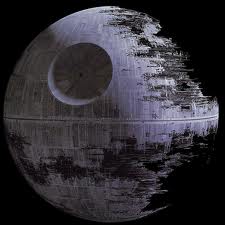
Without a doubt, this planet killer is the best known in the business. Making its first appearance in A New Hope where it destroyed the planet Alderaan, the Death Star was a massive space station that was created to inspire fear and silence all dissent to the Emperor’s rule. At the center of this force of unrivaled terror was a massive, high-powered laser that resembled a huge eye or a massive crater on the station’s surface. A single beam from this weapon was capable of breaking planets apart and obliterating all life on the surface.

Granted, this same station was then destroyed by a ragtag group of Rebel pilots, guys in tiny fighters who knew about a tiny exhaust vent in the side. But its replacement was even more badass! The second Death Star, which appeared in Return of the Jedi boasted a laser that was capable of recharging more quickly between shots and was accurate enough to take out large vessels as well. Before being destroyed by the Rebels at the Battle of Endor, the new Death Star managed to destroy two Mon Calamari cruisers with ease.

But alas, this weapon’s fatal flaw lay in its design. Being so big, small craft were capable of penetrating its defenses and attacking its vulnerable points. In the case of the first incarnation, this involved firing torpedoes into an exhaust port which would then reach the main reactor. In the second version, there were to be no exhaust ports so the station would have no outward vulnerability. But as long as it was still under construction, the station was vulnerable and hence open to attack. And given it’s sheer size and the time it would take to complete just one, that’s a pretty big window! I guess it’s true what they say: the bigger they are…

The Vorlon/Shadow Planet Killers:
In the B5 universe, a few different types of planet killers existed, both of which were the property of the oldest races. Given the amount of energy that would be required to destroy an entire planet, it was reasoned that only ancient races like the Shadows and Vorlons would be capable of constructing such a thing. However, the younger races had their own means of leveling a planet, if not destroying it completely. This involved mass drivers, which the Centauri used in season two to hurl asteroids into the surface of the Narn homeworld, causing massive destruction and forcing the Narn to surrender. But that’s another matter. Here are what the proper examples of planet killers in the B5 universe looked like:
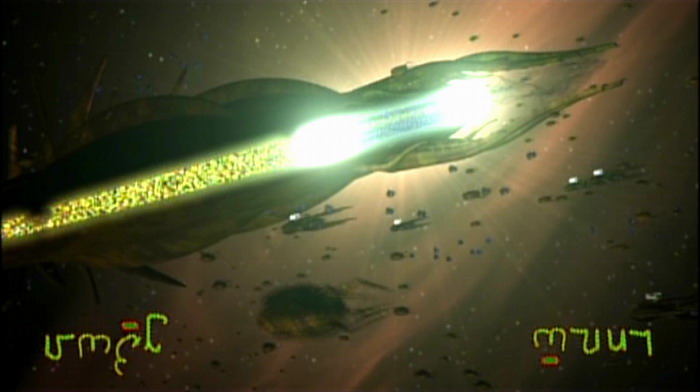
The Vorlon planetkiller was essentially just a massive gun that was built into a ship. The long, flattened spheroid with plenty of tentacle like things would be escorted through space, fly into position around the enemy planet, and then fire a massive energy discharge that would obliterate the entire thing. By comparison, the Shadow’s planetkiller was much more complex, not to mention insidious!
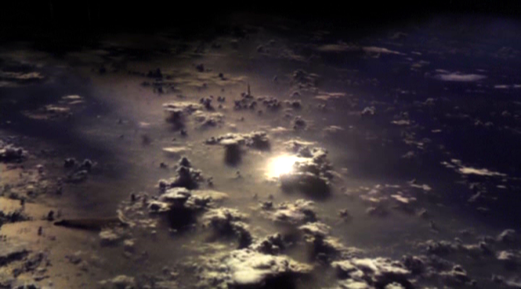
In what appeared to be a massive, black cloud, a Shadows Shroud held a massive buckminsterfullerene-like assembly that would move into position around a planet and then enclose itself around it. The assembly would then unleash a massive swarm of missiles which would bore into the surface and then detonate, releasing a massive thermonuclear payload near the core of the planet which would trigger tectonic activity that would rip the planet apart.

The former planet killer got its fair share of attention in the series proper, where the combined forces of Sheridan and Delenn’s alliance managed to destroy one only by calling in the help of the First Ones. Between all their races, only they possessed the kind of firepower that was needed in order to destroy a ship of that size. Some attention is also given to the Shadow’s Shrouds, but it wasn’t until the TV movie “A Call to Arms” came out that any in-depth explanations of how they worked or how they could be beat ever came up. In this movie, we see for the first time what the internal structure of the Shroud looks like and how the device could be defeated by attacking its nerve center. This alone would not destroy it, but would prematurely trigger it, causing it to unleash all its missiles, which would then impact and destroy the assembly itself.

The Behemoth:
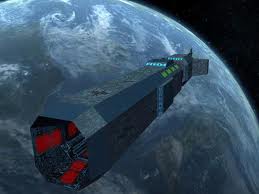
This planet killer comes to us courtesy of the Wing Commander videogame and made its appearance in the third installment in the series. Much like the Vorlon planet killer, the Behemoth was essentially a big gun that was designed to blow up planets by firing a single, concentrated beam directly into its surface. Simple, and effective, were it not for the fact that the weapon suffered from some congenital defects, which included gaps in the shielding array and the fact that it had no defensive mounts anywhere along the hull.

However, given the fact that the Terran Confederation (the good guys in the story) were losing to the Kilrathi Empire (the bad guys), the weapon had to be pressed into service before it was complete. Its intended purpose was to destroy the Kilrathi homeworld, a move which they believed was the only way to win the war outright at that point. Naturally, the vessel was destroyed due to a combination of its weaknesses and high-level treason. However, the good guys still won in the end due to alternate plans and daring-do, so don’t fret!

Unicron:
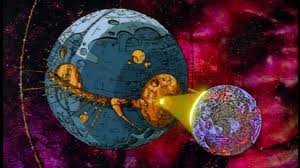
The Transformers franchise was something I enjoyed for many years as a kid. And were it not for Michael Bay, I might have enjoyed it again as a result! But whatever… In the course of telling the story of machines that could transform to hide their true identities, one robot in particular truly stands out. Mainly because of his size! His name is Unicron, a massive machine that can transform from a robot to a planet-sized sphere, and which preys on smaller planets. A pretty cool concept, really, especially for a children’s cartoon! Unlike other planet killer devices though, Unicron was unique in that he was a sentient being, and not a simple machine that was under the control of others. His first and only appearance was in Transformers: The Movie, where he was also destroyed. He did not appear again in the course of the original series, but was mentioned several times, particularly in the CGI-animated spinoff, Beast Wars.

The Doomsday Machine:
Gene Roddenberry weighed in on the planet killer thing back in the late 60’s with his own version of a doomsday weapon. It was known simply as the Doomsday Machine, a massive, lamprey-like device that was capable of consuming entire planets into its massive maw. In the course of the episode where it makes its appearance (episode 35, of the same name), the crew of the Enterprise learns that the machine is drawn to populated worlds which it then destroys and converts into fuel so that it can keep going. The process is entirely automated, the ship itself having destroyed its masters and sterilized its own region of the universe a long time ago.

Airing in the late 60’s, the Doomsday Machine was clearly a commentary on the Cold War and the creation on doomsday weapons which were intended for use as a “deterrent”. In fact, at one point Captain Kirk theorizes that the machine was never intended for use, merely to serve as a instrument to inspire fear in an enemy. However, once it was activated, it ran amok and destroyed its enemies and those who created it. In the end, the crew manages to destroy it by (ironically) letting it ingest a ship which they rig to go thermonuclear once its inside.

Halo Array:
Gamers are no doubt familiar with this one! In the Halo universe, much of the focus is on alien artifacts which were built by a race known as the Forerunners. The Covenant, the alien antagonists in the game, believe them to be holy, particularly the Halo devices which are central to the plot. These devices, it turns out, are “weapons of last resort” which the Forerunners built to sterilize all worlds of sentient life that are within range. Their reason for this have to do with a hostile organism known as the Flood, a parasitic life form that infects sentient organisms and turns them into zombie-like creatures.

Unfortunately, the Forerunners died off shortly after concluding their war with the Flood, leaving the Halos and several other artifacts behind. In time, these were stumbled upon by the Covenant who began to reverse-engineer the devices and used them to advance significantly. In time, the Convenant came to believe that the artifacts had been left behind by a holy race and built a religion and even a theocracy around this belief.

The Halo is apparently the crowning piece of the Convent faith. They believe that activating them will lead them on the “Great Journey” (aka. entrance into the hereafter). However, the main characters in the story quickly learn that this would actually cause the destruction of Earth and every inhabited planet in the sector. Inspired by Larry Niven’s Ringworld series, the concept of the Halo devices and the thematic elements which drive the story (i.e. blind faith, theocracy, evolution and ancient alien artifacts) are all prime examples of classic science fiction. Nice to see that they make their way into the gaming world once in awhile!

The Necromongers:
The Chronicles of Riddick is yet another example of theocracy, apocalypticism, and doomsday devices. Within the context of the story, we have a faction of hostile force known as Necromongers, a faction of humanity that worships death and believes that better world (known as Underverse) lies at the edge of the known universe. Leading them is a man known as the High Marshall, a person who apparently traveled to Underverse and returned half-man, half… something else. No kidding, this is how he’s described in the movie, verbatim!

In any case, in their drive to reach the edge of the universe, the Necromongers conquer, pillage and convert every planet in their path. The final step in this process, before moving on, is the use of a planet-killing device of their own, one which leaves the planet itself intact, but destroys all remaining life on the surface. In short, after they replenish their ranks and bring in fresh converts from the conquered populace, they commit whats called the “Final Protocol” before dusting off. Basically, it involves a series of ships standing up on end and releasing payloads into the air which then explode, unleashing a massive shock wave that kills everything in its path. This process gives literal meaning to the words: “Convert, or fall forever!”

The Inhibitors:
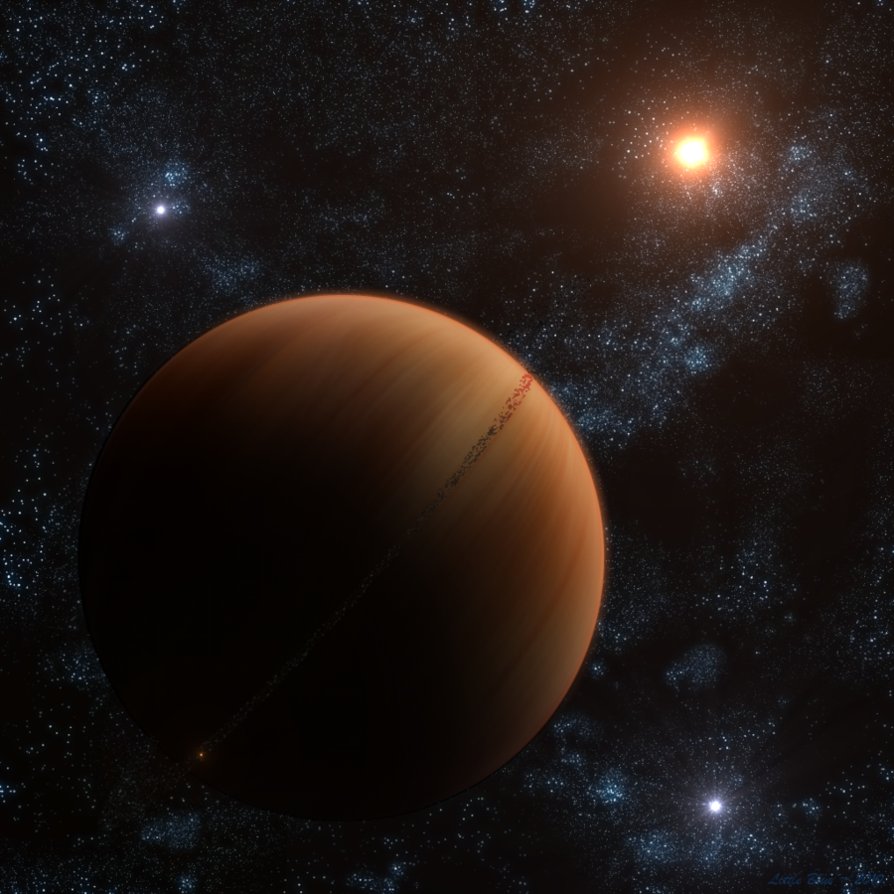
As I final example, I have included one of my personal favorites: the hostile alien species known as the Inhibitors, which come to us from Alastair Reynolds’ Revelation Space universe. According to the first novel in the series, the Inhibitors are all that remains of several ancient alien races which went extinct long ago. These machines, which are semi-intelligent and automated, are programmed to seek out and destroy sentient life.

The reason for their existence apparently has to do with a series of terrible events that are collectively known as the Dawn War. This war was apparently fought by all the earliest sentient races in the Milky Way Galaxy which began shortly after they discovered each other, but which lasted for eons. Finally, what was left of the various races decided to merge their consciousness with a series of specialized machines which they then programmed to ensure that no such wars ever happened again. These machines take the form of tiny black boxes which are capable of multiplying, replicating and seem next to impossible to kill.

Ostensibly, these machines were designed to nip the development of sentient life in the bud by sterilizing any planet that supported a potentially star-faring race. In short, they were meant to inhibit the growth of sentient life, hence their name. However, in books II and III, their motivations are explained further. In addition to wanting to prevent another major war from taking place, the Inhibitors were also concerned about the eventual galactic collision which is scheduled to take place between the Andromeda and Milky Way Galaxies several million years from now. When that happens, our two galaxies will merge, but the consequences for any lifeforms living within either of them will be disastrous.

The only way to prevent this, it is said, is to either ensure the development of a single race that has the requisite technological development to resist the destruction brought on by the collision, or to inhibit the growth of any sentient species until after the collision takes place. Once the collision is complete and the galaxy returns to a state of gravitational equilibrium, life can resume, but not before. Sounds crass, but the way they see it, they are doing sentient beings a favor by making sure they don’t get off the ground, rather than letting them die by the billions when the stars all come crashing together!

In the end, these machines destroy planets through various means. In fact, much attention is given to how the Inhibitors employ a great deal of creativity in designing ways to sterilize worlds. Instead of just parking a giant gun in orbit around a planet or covering with a toxic blanket, they will use the system’s natural resources to construct tools and weapons which they will then use to take planet’s or suns apart, bit by bit. The process can take years, even centuries for them. But they plan ahead, and are very patient…

Ultimately, the Inhibitors are not defeated in the Revelation Space universe, but are beaten back, pushed to the fringes of known space where humanity fights an ongoing fight with them that lasts beyond the final novel in the series. They do this by incorporating technology from other extinct races as well as one’s that have developed extremely clever ways to survive. And like with everything else in Reynold’s universe, it all comes down to technology that is both plausible and fascinating to read about!

Well, that’s about all the planet killing I can stand for now. Sure, there are plenty more examples in the realm of sci-fi, but these are the ones that stand out for me. Plus, if I were to take the time to research and list them all, we’d both be stuck on this one post forever. Remember, it takes longer to write than it does to read! So in keeping with the theme of this post, let me leave you with some words of advice:

No matter what you’ve done, its not the end of the world. Unless it is, in which case, it probably didn’t matter anyway 😉
Of Galactic Empires

Galaxy1Hello again, fellow sci-fi fans! Today, I thought I’d write about something conceptual, something that is intrinsic to so much science fiction and keeps popping up in various forms. It’s something that has appeared in countless serials, novels, tv shows, movies, and RPG’s. I am referring, of course, to the concept of the Galactic Empire, a science fiction trope that has seen many incarnations, but revolves around a singular theme of a political entity that spans the known universe.

Whether it’s a loose federation of humans and aliens spanning many different star systems, or a despotism made up of millions of worlds, all populated by human beings, or something somewhere in the middle, this trope has proven to be one of the most enduring ideas of classic science fiction.

But where exactly did this idea come from? Who was the first to come up with a futuristic, galaxy-spanning polity where millions of star systems and quadrillions of sentient beings all found themselves living underneath one roof?

Asimov’s Foundation Series:

An artists rendering of Trantor

Isaac Asimov is arguably the first science fiction author to use the concept of a galaxy-spanning empire in his literature. Known simply as the Galactic Empire, this organization was the centerpiece of his Foundation series. As fans of the books know, the entire series was built around the idea of the imminent collapse of said empire and how a small band of scientists (led by Hari Seldon) were dedicated to ensuring that the collective knowledge of the universe would be preserved in its absence. The books were based heavily on Gibbon’s History of The Decline and Fall of the Roman Empire, a compendium which explored the various reasons for the collapse of Rome and the resulting Dark Ages.

The universe of the Galactic Empire centered on a planet named Trantor. Based on his descriptions, the planet was covered by a massive urban landscape, every habitable area having been built over in order to accommodate the planet’s huge population. In addition to being the capitol of the Empire, it was also its administrative head, cultural hub, and economic epicenter. Much like Rome of antiquity, it depended heavily on the surrounding territories for food and raw materials in order to sustain itself, and was terribly hit when the Empire began to decline.

However, beyond some passing descriptions of its size, centrality and the problems facing its encapsulated population, not much is said about Trantor or many other worlds of the Galactic Empire. In fact, not much is said about the Empire itself, other than the fact that it has endured for millennia and is on the verge of collapsing. Mainly, the focus in Asimov’s Foundation is on the events that precipitated its fall and the work of the Foundation once that was complete; how they went about the process of restoring civilization in the absence of a central authority. However, the subsequent Foundation novels, which included some prequels, helped to flesh out the Empire further, providing details on member worlds and the events which preceded the development of Hari Seldon’s “psychohistory”.

Frank Herbert’s Dune:

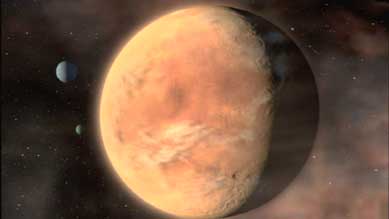
Arrakis (aka. Dune), the main setting of the story

One of the greatest examples of a galactic empire in my opinion. In the first installment of the Dune series, we are made immediately aware that humanity now inhabits the entire galaxy and are ruled from a world called Kaitan by a sovereign known as the Padishah Emperor. However, it is also made clear that while the emperor is the supreme leader, power is shared in a quasi-feudal arrangement between the noble houses (the Landstraad), a corporate entity that controls all economic affairs (CHOAM), and the various guilds (of which the Spacing Guild is arguably the most powerful). In this universe, much attention is given to the breakdown of power, the history of how it came to be, and the various member worlds and houses.

For starters, there is House Corrino, the ruling dynasty of the empire that is centered on Kaitan. Their house once ruled from a planet known as Selusa Secundus, but which has since been reduced to ashes from a nuclear attack and now serves as the emperor’s prison planet (where his elite armies are trained). More important, and central to the story, is House Atreides, the family which rules from an ocean planet named Caladan, but come to inherit the desert planet Arrakis (aka. Dune). Passing attention is also given to Geidi Prime, the industrial world run by House Harkonnen, the nominal villains of the story.

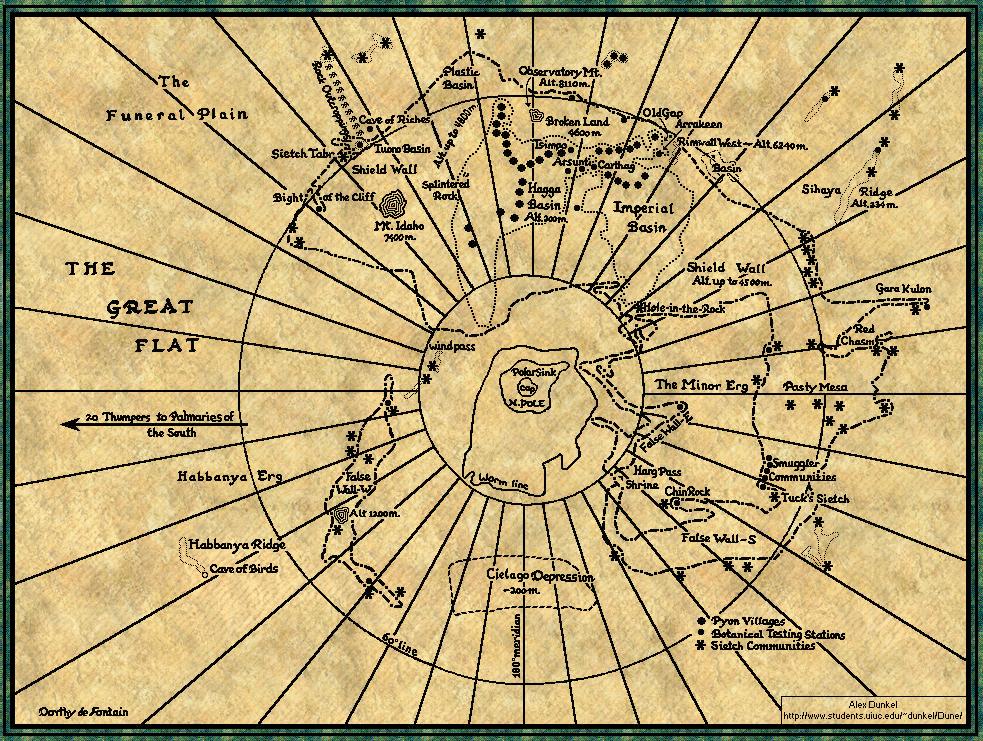
Dune_MapBut by far, the most detailed and developed descriptions are that of the planet Arrakis, where most of the story takes place. Throughout the first novel, the planet’s ecology, native species, and inhabitants (the Fremen) are richly detailed. Given that it is the only world where the spice (an awareness drug the entire universe depends on) is mined, the world is understandably the focal point of the Dune universe. Clearly analogous to oil, the spice is a metaphor for human dependence on a single resource, and the consequences thereof. By taking control of the planet at story’s end and threatening to destroy the spice, Paul Atreides effectively becomes the universe’s new ruler. For as the sayings go: “He who controls the spice, controls the universe”, and “He who can destroy a thing controls that thing.”

Frank Herbert cited a number of influences for his galactic empire. Like Asimov, he relied a great deal on history, particularly that of the Middle East, the Crusades, and a number of feudal societies. At the same time, Herbert became fascinated with ecology, a result of his living in Florence, Oregon where the US Department of Agriculture was using poverty grasses to stabilize the expanding Oregon dunes. The article which he wrote about them, entitled “They Stopped the Moving Sands”  was never completed and only appeared decades later in The Road to Dune. Nevertheless, it was from this combination of real history and ecology, how the living environment affects its inhabitants and shapes history, that the universe of Dune emerged.

Star Wars:

Coruscant, capitol of the Old Republic and Empire

Perhaps the best known example of a galactic empire, which in turn emerged from what Lucas called the Old Republic. When asked about his inspirations, George Lucas claimed that he wanted to create an empire that was as aesthetically and thematically similar to Nazi Germany as possible. This is made abundantly clear when one looks into the back story of how the Empire emerged, how its malevolent dictator (Palpatine, a Sith Lord) rose to power and began launching campaigns to eliminate anyone who stood in his way. In addition, the use of Storm Troopers, the uniforms of the imperial officers, and the appearance of Darth Vader also add visual representation to this.

However, a great deal of antiquity works its way into the Star Wars universe as well. Much like Herbert and Asimov, there is a parallel between the past and the future. The incorporation of royalty, swordfights between Bushido-like warriors, gun-toting smugglers, cantinas, dangerous towns in the middle of the desert, and all the allusions to the “Republic” and “Galactic Senate”, fair and noble institutions which ruled the galaxy before the dark times – all of these are themes taken from ancient Greece, Rome, feudal Japan, medieval Europe, and the Wild West.

Urban sprawl on Coruscant

In any case, at the center of Lucas’ galactic empire lies Coruscant, a planet that was clearly inspired by Trantor. Whereas in the original series, the planet was not shown or even mentioned, it receives a great deal of attention in the Star Wars novelizations, comics, and prequel movies. Much like Trantor, it is a planet that is completely dominated by urban sprawl, literally every corner of it is covered by massive sky-scrapers and multi-leveled buildings.

According to the Star Wars Wiki (Wookiepedia), roughly a trillion humans and aliens live on its surface, which is another detail that is noteworthy about Lucas’ universe. Unlike Foundation or Dune, in Star Wars, the galactic empire includes countless sentient races, though humans do appear to be the dominant species. This racial aspect is something else that is akin to World War II and Nazi Germany.

Whereas the Rebellion is made up of humans and aliens who are struggling for freedom and tolerance, the Empire is composed entirely of humans who believe in their own racial superiority. However, in a tribute to Lucas’ more creative days, not much is said about this divide, the audience is instead left to infer it from the outward appearances and behavior of the characters on screen. However, the idea receives much development in the novelizations, particularly Timothy Zhan’s Thrawn Trilogy.

Star Trek:

Star Fleet Command, in orbit above Earth

Yet another take on the concept of a galactic polity: Gene Roddenberry’s United Federation of Planets. Much like the Empire of Lucas’ own universe, the Federation is made up of hundreds of member worlds and any number of races. But unlike its peers in the Foundation, Dune or Star Wars universes, the Federation only encompasses a small portion of the galaxy – between ten and fifteen percent, depending on where you look in the storyline.

Beyond their range of influence lie several competing or cooperative empires – the Klingons, the Romulans, the Cardasians, the Dominion, and the Borg. Each of these empires represent a threat to the Federation at one time or another in the story, largely because their ideologies are in direct conflict with the Federations policy of peace, multiculturalism and understanding.

This may sound a tad tongue-in-cheek, but it is the main vehicle for the story. In Star Trek, like many other sci-fi franchises, Gene Roddenberry uses alien races as mirrors for the human condition. Whereas in his vision of the future humanity has evolved to overcome the scourges of war, poverty, disease, intolerance and oppression, other races are either less advanced or openly embrace these things.

Negh'varThe Klingons, for example, were the enemies of the Federation because of their commitment to warrior politics. The Romulans are locked  in an ongoing cold war with them because of their belief in their own racial superiority. The Dominion seeks dominance over all “solid” life forms because, as shape shifters, they fear being controlled themselves. And the Borg are an extremely advanced cybernetic race that seeks to “perfect” organic life by merging it – by force, if necessary – with the synthetic. The metaphors are so thick, you could cut them with a knife!

Yes, subtlety was never Roddenberry’s greatest attribute, but the franchise was an open and inclusive one, borrowing freely from other franchises and sci-fi concepts, and incorporating a great deal of fan writing into the actual show itself. And whereas other franchises had firm back-stories and ongoing plots, Star Trek has always been an evolving, ad hoc thing by comparison.

Roddenberry and the producers and writers that took over after his death never did seem to plan that far ahead, and the back story was never hammered out with that much precision. This has allowed for a degree of flexibility, but also comes with the painstaking task of explaining how and why humanity became a utopian society in the first place. But for the most part, the franchise leaves that one vague, arguing that space travel, technology and contact with other sentient races allowed for all of this to happen over time.

Babylon 5:b5-eps3One of my favorite franchises of all time! And possibly one of the most detailed examples of a galactic empire, due largely to the fact that it took shape in the course of the show, instead of just being there in the background from the beginning. Here too, we see a trade off between other franchises, the most similar being Star Trek. In this universe, there is no single galactic empire, but rather a series races that exist is a web of alliances, rivalries and a loose framework of relations.

But as time goes on, many of them come together to form an alliance that is reminiscent of the Federation, though arguably more detailed and pluralistic in its composition. When the show opens, we see that humanity is merely one of many races in the cosmic arena, most of whom are more advanced and older than we are.

The Earth Alliance, as its called, controls only a few colonies, but commands a fair degree of influence thanks to the construction of an important space station in neutral territory. This station (namesake of the show) is known as Babylon 5, aptly named because it is a place of trade, commerce, and the intermixing of peoples and cultures. And much like its namesake, it can be a dangerous and chaotic place, but is nevertheless the focal point of the known universe.

B5_destroyerAccording to the back story, which is explored in depth in the prequel movie “In the Beginning”, the station began as a way of preventing wars based on cultural misunderstandings. Such a war took place between the human race and the Mimbari, a race that is central to the story, ten years prior to the show. After four abortive attempts, the station finally went online and was given the designation of five because it was the fifth incarnation of the project.

Once completed, all major races in the area sent representatives there in order to make sure their interests and concerns were being represented. Chief amongst them was Earth, the Mimbari, the Narns, the Centauri and the Vorlons, who together made up the stations executive council. Beyond them was the “League of Non-Aligned Worlds”, a group made up of fifteen sentient races who were all smaller powers, but together exercise a fair degree of influence over policy.

The Centauri, who were based on the late-period Roman Empire, are a declining power, the once proud rulers of most of the quadrant who have since regressed and are looking to reverse their fortunes. The Narns are their chief rival, a younger race that was previously occupied and brutalized by the Centauri, but who have emerged to become one of the most powerful forces in the quadrant.

B5_season2Based heavily on various revisionists powers of history, they are essentially a race that is familiar with suffering and freely conquers and subjugates others now to ensure that such a thing never happens to them again. The Mimbari, an older and somewhat reclusive race, is nominally committed to peace. But as the war demonstrated, they can easily become a force to be reckoned with given the right provocation. And then there are the Vorlons, a very old and very reclusive race that no one seems to know anything about, but who nevertheless are always there in the background, just watching and waiting…

As the show progresses, we come to see that B5 will actually serve a purpose that is far greater than anyone could have foreseen. It seems that an ancient race, known only as the Shadows, are returning to the known universe. Before they can to invade, however, they must recruit from the younger races and encourage them to make war on their rivals and neighbors. This will sow the seeds of chaos and ensure that their eventual advance will be met with less resistance.

The Vorlons and the Mimbari ambassadors (Kosh and Delenn) are aware of this threat, since their people have faced it before, and begin recruiting the station’s two human commanders (Jeffrey Sinclair and John Sheridan) to help. This proves difficult, as the Shadows appear to have contacts on Earth as well and are backing the power play of Vice President Clarke, an ambitious man who wants to be a dictator. They are also ensuring that the Centauri and Narn go to war with each other as a way of keeping all the other member races preoccupied.

B5_shadow_warHowever, using the station as a rallying point, Sheridan, Sinclair, Delenn and Kosh eventually manage to organize the younger races into a cohesive fighting force to turn back the Shadows. Things become more complicated when they realize that the Vorlons are also the enemy, being involved in a power struggle with the Shadows that goes back eons. However, with the help of other First Ones (very old races) and a commitment to stand on their own, they manage to force both sides to leave the known universe.
In the wake of the war, a new spirit of cooperation and cohesion is formed amongst the younger races, which eventually gives rise to the Interstellar Alliance. This organization is essentially an expanded version of the League, but where members are fully aligned economically and politically and committed to defending each other. This comes in handy when the allies of the Shadows, younger races who are armed with all their old mentors’ gear, come out of hiding and begin to make trouble!

Naturally, the full story is much more complex and I’m not doing it justice, but this is the bare bones of it. Relying on historic examples and countless classic science fiction themes, J. Michael Straczynski establishes a detailed universe where multiple races and political entities eventually come together to form a government that rules the known universe and stands the test of time.

Battletech:

mechwarrior_1Here we have a franchise that had multiple inspirations, according to the creators. The focal point of the franchise is on massive war machines, known as battlemechs, which were apparently inspired by Macross and other anime. However, the creators also came to incorporate a back story that was very European in its outlook, which revolved around the concept of an ongoing war between feudal states.

One could make the case that the Shogunate period of Japan, a time of ongoing civil war, was also a source of inspiration for this story. However, upon familiarizing myself with the background of the series, I couldn’t help but feel that the whole thing had a predominantly Russian feel to it. In addition to the heroic characters being named Alexandr and Nicholas Kerensky, something about the constant feudal warfare and the morally ambiguous nature of humanity in the story seemed analogous to much of Russia’s troubled history.

To break it down succinctly, the story takes place in the 31st century, a time marked by incessant warfare between different clans and worlds, all of which are populated by humans.Terra (as Earth is now called) was once the center of a grand empire known as the Star League. After centuries of conflict, in what is known as the “Succession Wars”, Earth and many its immediate neighbors were rendered damaged or completely uninhabitable.

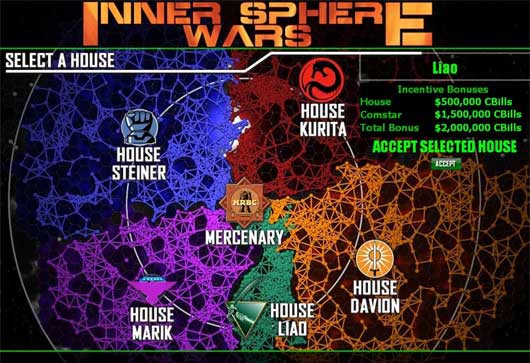
inner_sphere_wars_battletech_01As a result, the focal point of the universe resides within the Inner Sphere, a region that is 500 light years away from Earth and dominated by five Great Houses. The leader of each house claims to be the rightful successor of the Star League, and hence the houses are all known as the Successor States. Outside the Inner Sphere lies the Periphery, a large ring of independent star systems that predate the League and the Successor States, but are inferior to them in terms of technology. Though nominally independent, none of these regions have the ability to stand against the houses of the Inner Sphere, and thus avoid conflict with them whenever possible.

A key feature of the Battletech universe is the absence of sentient species outside of the human race. This serves to make the ongoing warfare more realistic, as well as establishing how the current state of war is a direct extension of earlier rivalries (some dating all the way back to the 20th century). Another interesting feature about this franchise is the fact that humanity has not evolved very far beyond its current state, in spite of the lengthy passage of time.

Again, the constant state of warfare has much to do with this, which has had a slowing and even reversing effect on the technological development of many worlds. In short, the franchise is gritty, realistic, and has a pretty dim view of humanity. In addition, there is a palatable sense that humanity’s best years are behind it, and that barring the appearance of some external threat, humanity will war itself into extinction.

Key Features:
A couple of things stand out about each of these examples of a galactic empire. And for anyone interesting in creating their own, they are considerations which have to be taken into account. All of the previous creators, from Isaac Asimov to Weisman and Babcock, either took a singular approach on these issues, or adopted a combined one. Here they are, as I see them:

Humans and Aliens: This is arguably the most important consideration when developing a sci-fi franchise, especially one where a galactic empire is concerned. The creator must decide, is this going to be a universe where humans and aliens coexist with one another, or is it going to be strictly human? Both options open up a range of possibilities; for example, are humans and aliens living together in harmony in this story, is one subjugated to another, or something else entirely? What’s more, what role will the aliens play? Are they to be the benign, enlightened aliens who teach us “flawed humans” how to be better, or will we be the the species that’s got things figured out and they be allegorical representations of our past, flawed selves? Inevitably, aliens serve as a sort of mirror for the human condition or as examples of past human societies, in any story. There’s simply no way around it, not if we want them to be familiar and relateable.

Utopian/Dystopian: Another very important decision to make when creating a universe is the hue its going to have. In short, is it going to be a bright place or a dark place? Would humanity advance as a result of technology and space exploration, or regress because improved weapons and tools merely meant we could do more harm? Both visions serve their purpose, the one eliciting hope for the future and offering potential solutions to contemporary problems, the other making the point that the human condition is permanent and certain behaviors will never be overcome. However, in my opinion, the most respectable approach is to take the middle road on this. Sci-fi franchises, like those of Straczynski and Alastair Reynolds (creator of the Revelation Space universe) did their best to present humanity as being morally ambiguous. We were neither perfect nor unsalvageable. We simply did our best and tried to make a difference, but would always have our share of flaws.

Space Travel: Almost all galactic empires are agreed on this one front. When it comes to creating a extra-solar empire, one that encompasses hundreds or even thousands of star systems, one needs to be able to travel faster than the speed of light. It might mean contravening the laws of physics (causing Einstein to roll over in his grave!) but you can’t really do it otherwise. Whether it’s by the Alcubierre drive, hyperspace, warp, jump gates, or folding space, all of the aforementioned franchises incorporated some kind of FTL. Without it, humanity would require thousands or even millions of years in order to expand to encompass the known universe, at which point, we’d probably have evolved to the point where we were no longer even human! In addition, the problems of subjective time and perspective would wreak havoc with story lines, continuity, and the like. Better and easier to just say “Here (zoom!) Now there!”

Technology: Following on the heels of FTL is the issue of how technology in general is treated within the universe in question. Will it be the source of man’s betterment and salvation, of their downfall, or something in between? Star Trek is a perfect example of the former approach, set in a future where all hunger, disease, poverty and inequality have been eliminated through the application of technology. Despite the obvious utopianism of this view, the franchise really isn’t that far off if you think about it. If we did have matter replicators, machines that could manufacture food, materials and consumer goods out of simple trace elements, then money, precious metals and other artificial means of measuring wealth would become obsolete. In addition, there’d be no more food shortages or distribution problems to speak of, not as long as everyone had access to this technology. And if fusion power and warp technology were available, then energy would be cheap and abundant and commerce would be rapid and efficient.

However, Roddenberry would often show the downside of this equation by portraying societies in which technology had been allowed to run amok. A good example is an episode in Star Trek TNG where the Enterprise comes upon a planet that is run by an advanced machine named Custodian. The people of the planet have grown entirely dependent on the machine and have long since forgotten how to run and maintain. As a result, they have become sterile due to radiation poisoning and are slowly dying off. Another perfect example is the Borg, a race of cybernetic beings that are constantly expanding and assimilating anything in their path. In terms of aesthetics, they are dark, ugly and sterile, traveling around in ships that look like giant cubes that were slapped together out of toxin-spewing industrial junk. Is there a more perfect metaphor for the seemingly unstoppable march of technological progress, in all its darker aspects?

Asimov’s Foundation series also had a pretty benign view of technology. In his universe, the people of Terminus and other Foundation worlds distinguished themselves from their neighbors through their possession of superior technology and even used it to their advantage wherever possible. In the first novel, for instance, the Foundation’s scientists began to travel to neighboring worlds, places that had the use of nuclear power and began teaching them how to rebuild it. Over time, they became a sort of priestly caste who commanded reverential respect from the locals thanks to all the improvements their inventions brought to their daily lives. When in the first book a warlord from the neighboring planet of Anacreon tries to conquer them, they then respond by cutting off all power to the planet and their forces, and use their status as religious leaders to foment rebellion against him.

However, other franchises have a different take on technology and where it will take us. For example, Battletech tends to look at technology in a darker perspective. In this future, the focus of technological development is overwhelmingly on battlemechs and weapons of war. In addition, the ongoing war in the series has had a negative effect on the development of other forms of technology, particularly the kinds that are beneficial to society as a whole. In short, technology has not corrected for mankind’s flaws because it has failed to remove the greatest cause of war and suffering – i.e. ambition!

Frank Herbert, on the other hand, took what could be construed as a mixed view. Whereas in his universe, instantaneous space travel is possible, energy shields, laser guns and nuclear power are all in existence, the overall effect on humanity has not been progressive. In the first Dune novel, we learn that humanity fought a holy war against thinking machines and automation over ten thousands years prior to the main story (the Butlerian Jihad). The target of the jihad was apparently a machine mentality as much as the machines themselves, and the result was a sort of compact whereby future generations promised never to develop a machine that could take the place of a human being. That, in addition to the invention of energy shields, led to the development of a feudal society where nobles and merchant princes were once again responsible for controlling planetary resources, and where armies went to war using swords and daggers in addition to lasers, slug throwers and missiles.

In subsequent novels, this was developed even further to present a sort of twofold perspective on technology. On the one hand, it is shown as being potentially harmful, where a machine mentality and a society built on unrestricted production of material goods can lead to social chaos and anarchy. Not necessarily because it can be harmful in and of itself, but because it can lead to a situation where humans feel so alienated from themselves and each other that they are willing to regress to something simpler and less free. On the other hand, advanced technology is also shown to have a potentially retrogressive effect as well, forcing people to look backwards for solutions instead of forwards. One can see genuine parallels with history, like how industrial civilization, in spite of all its benefits, led to the rise of fascism and communism because of its atomizing and alienating effects on society. Or how the Japanese of the post-Shogunate period deliberately regressed by destroying their stores of muskets and cannons because they feared that the “coward weapons” were detrimental to the Bushido.

Personally, I thought Herbert’s perspective on things was by far the most brilliant and speculative, packed full of social commentary and irony. It was therefore a source of great disappointment that his successors (Brian Herbert and KJA) chose to present things in a far more myopic light. In the prequels to Dune, particularly the Legends of Dune series, the jihad is shown to be a struggle between advanced machines that have enslaved the human race and the few free human worlds that are locked in a life and death struggle to defeat them. However, in twist that is more contradiction than irony, they find the solution to their problem by using nukes to level every machine planet. The fact that the “free worlds” relied on slave labor to compensate for the loss of automation was somewhat interesting, but would have been far more effective if the enemy machines were not portrayed as purely evil and the protagonists as selfless heroes.

Final Thoughts:
The concept of a galactic empire is something that has a long history and many, many incarnations. But as always, the purpose of it seems to be to expand the focus of the commentary so that as many possible aspects of the human condition can be explored. By placing human beings on hundreds or thousands of planets, authors generally seek to show how different places can give rise to different cultures. This is as true of different parts on the globe as it is for different planets in the universe. In addition, the incorporation of aliens also gives us a chance to explore some of the deeper sociological questions, things that arise out of how we interact with different cultures around the world today. For in the end, all science fiction is really about history and the period in which it is conceived, regardless of it being set in the future. Like all other genres, the real aim is to serve as a vehicle for speculation and investigation, answering questions about who we are and what makes us us.

Whew! I think I got a little tongue and cheek there myself! In any case, I enjoy delving into this conceptual stuff, so I think I’m going to do it more often here. Next time, something a bit lighter and more specific. I was thinking about something along the lines of PLANETKILLERS! Stay tuned!

A Clash of Kings (A Song of Fire and Ice, book II)

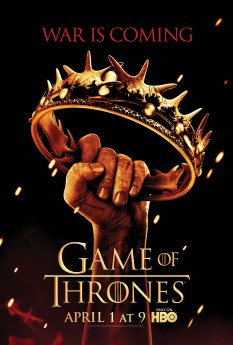
As I’m sure I said in my last post, George R.R. Martin is known to his contemporaries as the “American Tolkien”. This is a fitting comparison for me seeing as how Game of Thrones was something I had no real interest in until after I saw it adapted to screen. It was only after I saw the whole first season, which is book I in the series, that I decided to start reading it and get informed! I’m now on book four in the series and like all GOT geeks, am eagerly awaiting season two which premiers April 1st (This better not be some kind of prank!) But anyway, here is book II in the Song of Fire and Ice series, which is appropriately named:

A Clash of Kings:
As with Lord of the Rings series, I decided to read the second book first, mainly so I could get a head start on all the material that was to come. However, since the series is ongoing, I did not dare wait til I read to the end before going back to cover the original. And I can honestly say that book II improves upon the first, bringing more action, more intrigue, and more fantasy-fiction to the fore. I tell ya, its a rare thing when a sequel actually surpasses the first in a series, but that was to be expected here. Whereas Game Of Thrones set the scene, introducing the major plot threads and building up the action, Clash of Kings incites it all and brings it all to an explosive semi-climax. The most important element of which is the battle at Kings Landing, which I cannot wait to see adapted to the screen!

Plot Synopsis:
The book opens with a celestial event. A red comet, which goes by various names, has entered the heavens and seems to mean different things to different people. To some, its a portent of evil, but to others, its a sign of impending victory. Picking up where the first book left off, the realm of Westeros finds itself divided between five powers who are now in a state of civil war. In the south, power is divided between Kings Landing, where the Lannisters rule through Joffrey, and Robert Baratheons two brothers – Renly and Stannis. The former now controls the southern area of Highgarden while the latter controls the island Dragonstone. While a Baratheon alliance would surely defeat the Lannisters, the brothers are divided because both are determined to sit the Iron Throne.

While Stannis, the elder, has the better claim to the throne, Renly is the more charismatic of the two. He is just as determined and has a much larger army, but Stannis has a secret weapon which he has yet to unveil: a sorceress named Melisandre, a priestess of Asshai who worships the fire god R’hllor. The cult of R’hllor, which is monotheistic in focus, is quite popular in the East but relatively unheard of in Westeros. To many, her backing of Stannis, whom she sees as the Azor Ahai (prophet of R’hllor) reborn, is merely a power play, a means to introduce her religion to the Seven Kingdom should be triumph in the war. But according to Melisandre, the civil war is merely a prelude to a much greater war against a dark force that has been coming for some time…

Meanwhile, to the north Robb Stark has been crowned King of the North by his bannermen and continues in his long campaign south. Though they are outnumbered by the Lannisters, they win victory after victory, and soon even Tywin Lannister is forced to move the bulk of his forces south when they hear that King’s Landing is threatened. For the wolf, victory seems possible, but a there are a few complications to his plans. For one, King Joffrey and the Lannisters are still holding Sansa Stark hostage and Arya Stark is still missing (in truth, she and the Night’s Watch recruiter who saved her are moving north with a band of convicts and recruits). The only thing keeping Sansa safe is the fact that Jaime Lannister is in their custody, but he’s proving to be a tricky hostage…

What’s more, the Iron Isles, where Theon Greyjoy hails from, are up in arms. With the wolf marching south and civil war dividing the realm, his father seems intent on carving out his own kingdom in north as well. His daughter is chief amongst his Captains, a fact which annoys Theon to no end. Determined to upstage her, he leads an attack on Winterfell and takes it. In time, Bran Stark and his newfound friends from the Riverlands, who’ve convinced him he’s having prescient dreams, decide to escape to The Wall. Something is up there, it seems, that is calling to Bran. When he flees, Theon decides to stage their murder to avoid the inevitable embarrassment of having lost them.

To the far north, Jon Snow has taken up with the Nights Watch and is with them as they begin a large-scale reconnaissance north of The Wall. Apparently, the Wildlings have been abandoning their villages in droves, moving to a large encampment where a man named Mance Rayder. Apparently, he has declared himself “King-beyond-the-Wall” and plans to lead a united army of Wildlings south to take the lands they have been historically cut off from. In time, it becomes clear that he himself is fleeing something, they very thing that Jon Snow and the Watch have been worrying about. It seems the White Walkers have been getting around, and just about everyone in their path is looking to flee…

To the east, Dany and her host travel across the desert to the great city of Qarth. Once there, Dany becomes the focus of much attention and fascination, given that she travels with three dragons. Despite this, she is unable to raise an army because the only coin she has to barter with is her dragons, which she refuses to give up. When she goes into the House of the Undying, where the warlocks of Qarth reside, she is told that her life is threatened and that she will be betrayed three times. When the warlocks try to attack her, her dragon burns the House down, sparking emnity between her and the Qartheen. An attempt is made on her life at the city harbor, but she is saved by two men – an old warrior named Arstan Whitebeard and a mercenary named Strong Belwas. They were sent by Illyrio, the man who sheltered her and her brother, and join her host. Together, they begin to plot where to travel to next to find her an army.

After a failed meeting between Renly and Stannis, which Catelyn Stark travelled south to host, Renly was killed by a “shadow”. It becomes clear that Stannis’ priestess was involved, because all those who oppose Stannis have a way of winding up dead. As a result, Renly’s former bannermen declare fealty to Stannis and add to his power, and Catelyn is forced to flee north with one of Renly’s staunchest supporters. A woman named Brienne of Tarth, a formidable fighter whom Renly made a knight. They return to Riverrun, the domain of her brother, where Robb is rallying his forces and her father lies dying. Upon her return, she learns of what happened to Winterfell and her two youngest sons and is heartbroken. Between Ned, her ailing father, and now her two boys, it seems everyone she loves is dying.

Back to King’s Landing, Tyrion has taken up the role as Hand of the King. Before him is the challenge of defending the capitol from Stannish Baratheon, who is quickly approaching by land and sea with his combined armies and navy. At the same time, he must cover his ass seeing as how his sister will stop at nothing to do him in. A game of chess ensues, with both sides employing bribes and whatever blackmail and threats they can to gain leverage over the other. For a time, Tyrion seems to have the upper hand, but soon, battle comes to their doorstep, and he must forgo all that to lead the defense of the city.

Meanwhile, Arya is captured while traveling north by men loyal to the Lannisters. The survivors are taken to Harrenhal, a major castle that is currently in Lannister hands, where she is forced to serve as a peasant girl. Her identity remains a secret, but she is forced to endure all kinds of abuse as a serving girl. However, one of the captives who was part of their caravan comes to her and tells her that he owes her three lives for saving him and the lives of his companions. Instead, she uses him to help free a bunch of Stark men who then seize the castle. However, her fortunes do not change much, as she is then forced to act as cup bearer to Roose Bolton who comes to occupy the castle. She escapes shortly thereafter with her old companions and continues north.

Tyrion’s preparations pay off in the end. At sea, the large chain link he had constructed is used to close off the river once Stannis’ fleet enters it. In addition, their forces use a their vast stores of Wildfire he had prepared to set them ablaze once they are trapped. On land, things go a little more poorly, but Tyrion manages to lead a successful defense of the gates and is eventually saved by his father, Tywin. It seems that he travelled to Highgarden before the conflict and enlisted the help of many of Renly’s former bannermen. At just the right time, they perform a flanking maneuver which routs Stannis’ forces and saves King’s Landing. Sensing that he will not die in battle, one of Cersei’s assassins attacks and nearly kills Tyrion. When he wakes up in bed, he finds that Cersei has gained the upper hand on him by preying on their father’s good graces.

North of the Wall, the Black Brothers find a base amongst a ruined tower and begin sending recon forces further north. Jon is part of a force dispatched to the Skirling Pass, where they find the bulk of Rayner’s army massing. In addition to thousands of Wildlings, they see giants, mammoths, and wargs complimenting their force. In time, the Wildlings fall upon them and they are forced to flee. Before they are captured, Qorin asks Jon to betray him when the time comes so that he may infiltrate the Wildling camp and learn their secrets. Jon reluctantly agrees, and when they are cornered, Qorin fights him and lets him win. Jon is now a prisoner of the Wildlings and is reunited with a young Wildling woman that he met and set free earlier. She convinces Rayner to take Jon in, as he himself was once a Black Brother who defected.

Back in Winterfell, Theon finds himself with his back to the wall when Robb dispatches one of his bannermen and an army to remove the Iron Men from Winterfell. All hope seems lost to him, when a new force enters the field and saves his butt. It seems that one of the sellswords who joined him earlier was in fact the Bastard of Bolton, a usurper who fell into disfavor with Robb’s men and was imprisoned in Winterfell. When Theon set him free, he returned to his home, took up the cities army, and returned to save him. However, he quickly betrays Theon, kills him, and orders Winterfell razed…

Strengths/Weaknesses:
As I said before, this book packs some serious action into its binding! After much build-up in the first, the climactic battle of King’s Landing takes place, and it was quite unclear how things were going to go… In fact, much of the book is unpredictable. One gets the impression that the Lannisters are bound to lose well up until the battle finally takes place. In addition, the fate of House Stark is something which is tenuous at best. As always, one can’t get too emotionally attached where the characters of George R.R. Martin is concerned. They tend to die suddenly and haphazardly. However, unlike in book I, none of the major characters die off, just the supporting cast. This I would consider a strength considering that I tend to get sour when people I like get killed!

That being said, there were a number of inexplicable plot twists in this book, so many that it began to feel a little contrived after awhile. For starters, the battle of King’s Landing suddenly turns when all hope seems lost. In itself, that was a pretty good twist, but there were many like it. When it came to the rivalry between Renly and Stannis, it seemed apparent that Renly was destined to win, but then he’s suddenly killed by Melisandre’s shadow, thus completely turning the tide. And then there’s the part where Theon Greyjoy is defending Winterfell. Everything seems said and done when at the last moment, he is saved by the intervention of the Bastard of Bolton, only to then be killed! That’s three major plot twists in one book, and the last one was like a… a compound twist! Kind of grows thin after awhile.

In addition, like all the books in the series, the story can become drawn out and emotionally taxing. It seems that despite whatever hopes the reader might have for a satisfactory resolution, the plot threads just seem destined to go on and on. Whether its Tyrion, Arya, Sansa, Robb, Catelyn, or John, it seems that they are just destined to suffer and endure more and more in the way of bad news. Unless of course the character dies suddenly, but that too is emotionally taxing for the reader! Just once, I would have liked for a character who I sympathize with to be able to put their feet up and say, “Whew! That was tough, but we got through it! Time to relax…”

However, this makes for a more respectable and realistic read all around. More than anything, the book conveys a genuine sense of desperation and discomfort, which is fitting since its about a civil war. These things are not comfortable, especially in a medieval setting! They are dirty, painful, bloody and festering, and the innocent constantly suffer. In all fairness, my feelings on this last note could be the result of the fact that I’m still reading the series, and after four books, all the war and death can get exhausting. However, this does not take away from this particular novel. It’s still awesome, and a very good follow-up to the first. My advice, check it out and then catch the miniseries. That way, you’ll have a frame of reference!

Check out the trailer:
GOT Season 2 Teaser Trailer (Youtube)