The Future of Medicine: 3D Printing and Bionic Organs!

biomedicineThere’s just no shortage of breakthroughs in the field of biomedicine these days. Whether it’s 3D bioprinting, bionics, nanotechnology or mind-controlled prosthetics, every passing week seems to bring more in the way of amazing developments. And given the rate of progress, its likely going to be just a few years before mortality itself will be considered a treatable condition.

Consider the most recent breakthrough in 3D printing technology, which comes to us from the J.B Speed School of Engineering at the University of Louisville where researchers used a printed model of a child’s hear to help a team of doctors prepare for open heart surgery. Thanks to these printer-assisted measures, the doctors were able to save the life of a 14-year old child.

3d_printed_heartPhilip Dydysnki, Chief of Radiology at Kosair Children’s Hospital, decided to approach the school when he and his medical team were looking at ways of treating Roland Lian Cung Bawi, a boy born with four heart defects. Using images taken from a CT scan, researchers from the school’s Rapid Prototyping Center were able to create and print a 3D model of Roland’s heart that was 1.5 times its actual size.

Built in three pieces using a flexible filament, the printing reportedly took around 20 hours and cost US$600. Cardiothoracic surgeon Erle Austin III then used the model to devise a surgical plan, ultimately resulting in the repairing of the heart’s defects in just one operation. As Austin said, “I found the model to be a game changer in planning to do surgery on a complex congenital heart defect.”

Roland has since been released from hospital and is said to be in good health. In the future, this type of rapid prototyping could become a mainstay for medical training and practice surgery, giving surgeons the options of testing out their strategies beforehand. And be sure to check out this video of the procedure from the University of Louisville:


And in another story, improvements made in the field of bionics are making a big difference for people suffering from diabetes. For people living with type 1 diabetes, the constant need to extract blood and monitor it can be quite the hassle. Hence why medical researchers are looking for new and non-invasive ways to monitor and adjust sugar levels.

Solutions range from laser blood-monitors to glucose-sensitive nanodust, but the field of bionics also offer solutions. Consider the bionic pancreas that was recently trialled among 30 adults, and has also been approved by the US Food and Drug Administration (FDA) for three transitional outpatient studies over the next 18 months.

bionic-pancreasThe device comprises a sensor inserted under the skin that relays hormone level data to a monitoring device, which in turn sends the information wirelessly to an app on the user’s smartphone. Based on the data, which is provided every five minutes, the app calculates required dosages of insulin or glucagon and communicates the information to two hormone infusion pumps worn by the patient.

The bionic pancreas has been developed by associate professor of biomedical engineering at Boston University Dr. Edward Damiano, and assistant professor at Harvard Medical School Dr. Steven Russell. To date, it has been trialled with diabetic pigs and in three hospital-based feasibility studies amongst adults and adolescents over 24-48 hour periods.
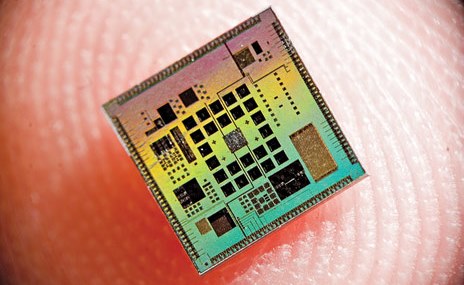
bionic_pancreasThe upcoming studies will allow the device to be tested by participants in real-world scenarios with decreasing amounts of supervision. The first will test the device’s performance for five continuous days involving twenty adults with type 1 diabetes. The results will then be compared to a corresponding five-day period during which time the participants will be at home under their own care and without the device.

A second study will be carried out using 16 boys and 16 girls with type 1 diabetes, testing the device’s performance for six days against a further six days of the participants’ usual care routine. The third and final study will be carried out amongst 50 to 60 further participants with type 1 diabetes who are also medical professionals.

bionic_pancreas_technologyShould the transitional trials be successful, a more developed version of the bionic pancreas, based on results and feedback from the previous trials, will be put through trials in 2015. If all goes well, Prof. Damiano hopes that the bionic pancreas will gain FDA approval and be rolled out by 2017, when his son, who has type 1 diabetes, is expected to start higher education.

With this latest development, we are seeing how smart technology and non-invasive methods are merging to assist people living with chronic health issues. In addition to “smart tattoos” and embedded monitors, it is leading to an age where our health is increasingly in our own hands, and preventative medicine takes precedence over corrective.

Sources: gizmag.com, (2)

The Future of Medicine: Non-Invasive Nerve Repair

neuronsRepairing severed nerves remains one of the most challenging aspects of modern medicine. In addition to being common, due to spinal injuries, pressure or stretching, the severing or damaging of nerves can lead to a loss of mobility as well as sensation. And up until recently, doctors hoping to repair the damage have been heavily reliant on long-term methods that can be expensive and invasive.

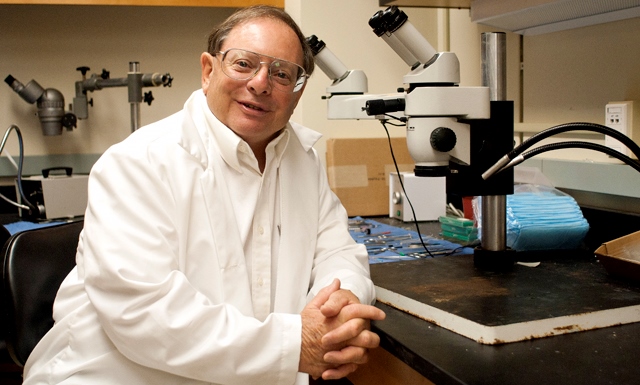
However, Professor George Bittner and his colleagues at the University of Texas at Austin Center for Neuroscience have developed a new and inexpensive procedure to quickly repair severed peripheral nerves. Taking advantage of a mechanism similar to that which permits many invertebrates to regenerate and repair damaged nerves, the new procedure involves applying healing compounds directly to the severed nerve ends.

nerveTrauma to peripheral nerves, which connect the central nervous system to the muscles and sensory organs, is quite common, and is usually the result of excessive pressure or stretching. In most cases, this means that the axon of a nerve – the central bundle of cylindrical sheaths that contains individual nerve cells – is separated from the nerve fiber, leaving the nerve intact but disconnected from the muscle.

Afterward, the nerve cell slowly begins to regrow, and can form a twisted ball of nerve fiber at the cut in the axon. Such nerve scars are called neuroma, and in current medical practice, they are repaired by using microsutures to reconnect the cut ends of the axon and provide a continuous axon to guide the regrowth of the nerve fiber. However, this procedure is extremely delicate, and recovery can take months or even years.

george_bittner1Bittner and his colleagues’ new method involve using a natural healing process to aid in repair and recovery. Already, his team discovered that when a plasma membrane in a cell is damaged, a calcium-mediated healing mechanism begins to draw vesicles (small sacks of lipid membranes) towards the site of the injury. These provide the raw material needed to repair the site.

However, when these vesicles are attracted to the site of a severed axon, both ends of the axon are sealed off by this repair mechanism, preventing regrowth of the nerve. To avoid this problem, the first step of the Texas group’s nerve repair procedure is to bathe the area of the severed nerve with a calcium-free saline solution, thus preventing and even reversing premature healing of the axon ends.

nerve_rootThe damaged axons remain open, and can more easily be reattached. This is then done by pulling the severed ends to within a micron of each other, whereupon a small amount of a solution containing polyethylene glycol (PEG) is injected. The PEG removes water from the axonal membranes, allowing the plasma membranes to merge together, thereby healing the axon.

At the same time, the nerve fibers are brought into close enough proximity that they receive chemical messengers from each other, making them believe they are still whole and preventing the death of the disconnected nerve fiber. The severed nerve fibers can then grow together in a short period of time and with relatively good fidelity to the original connectivity of the nerve fibers.

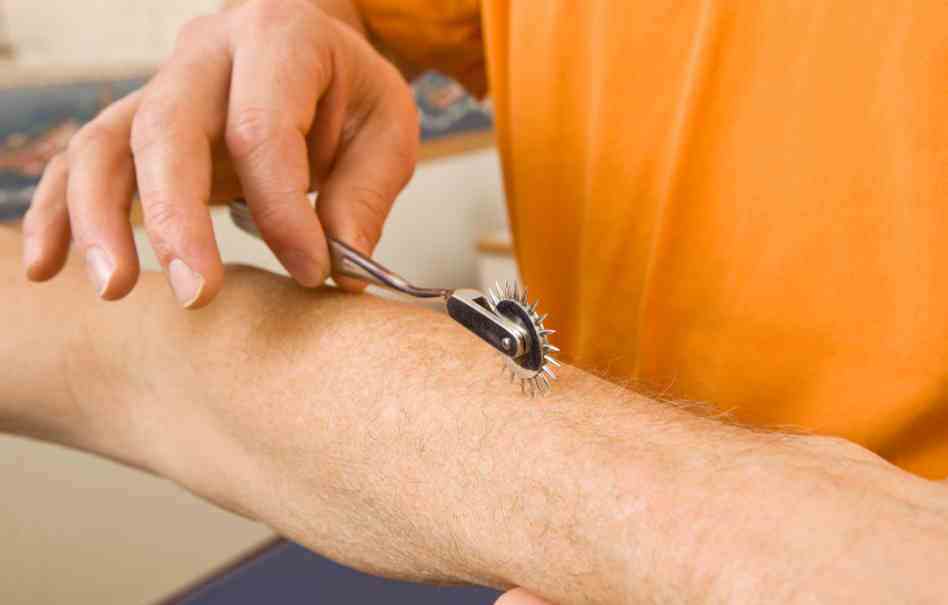
nerves_pinwheeltestThe final step of the procedure is to inject the area with a calcium-rich saline solution, which restarts the vesicle-based repair mechanism, thereby repairing any residual damage to the axonal membrane. At this point, the nerve is structurally repaired, and use of the affected area begins to return within a few hours instead of months.

To test the procedure, Bittner and his colleges experimented on a series of rats that had had their sciatic nerves severed, resulting in paralysis of the affected limb. In each case, once the rats awoke, they were able to move the limbs containing the severed nerves within moments. Normal function was partially restored within a few days,  nd 80-90% of the pre-injury function was restored within two to four weeks.

mouseThe chemicals used in Bittner’s procedure are common and well understood in interaction with the human body. Because of this, there is no clear obstacle to beginning human clinical trials of the procedure, and teams at Harvard Medical School and Vanderbilt Medical School and Hospitals are currently conducting studies aimed at gaining approval for such trials.

While the procedure developed by Bittner’s group will not apply to the central nervous system or spinal cord injuries, the procedure offers hope to people whose futures include accidents involving damaged nerves. In the past, such people would have to undergo surgery, followed by months or years of physiotherapy (often with inconclusive results).

Now they can look forward to a full recovery that could take as little as a few weeks and cost them comparatively very little. And we, as human beings, would be one step closer to eliminating the term “permanent injury” from our vocabulary!

Sources: gizmag.com, newscientist.com, sciencedaily.com

The Future of Medicine: Brain Scan Databanks

AI_picCloud computing and the internet are having a profound effect on the field of medicine. As more and more patients have their records digitized and posted in online medical sources, doctor’s are able to better track patient histories, conduct referrals, and make speedier diagnoses. And now, doctors at John Hopkins University are working on a cloud-computing project specifically for children’s brain scans.

By collecting and categorizing thousands of MRI scans from kids with normal and abnormal brains, they say the resulting database will give physicians a sophisticated, “Google-like” search system to help find similar scans as well as the medical records of those children. Such a system could help not only enhance the diagnosis of brain disorders, but the treatment as well, maybe even before clinical symptoms are obvious to the naked eye.

Miller_JohnHopkinsMichael I. Miller, a lead investigator on the project who also heads up the university’s Center for Imaging Science, said in a news release:

If doctors aren’t sure which disease is causing a child’s condition, they could search the data bank for images that closely match their patient’s most recent scan. If a diagnosis is already attached to an image from the data bank, that could steer the physician in the right direction. Also, the scans in our library may help a physician identify a change in the shape of a brain structure that occurs very early in the course of a disease, even before clinical symptoms appear. That could allow the physician to get an early start on the treatment.

Susumu Mori, a radiology professor at the Johns Hopkins School of Medicine and co-lead investigator on what he calls the “biobank,” says that a collection of brain scans of this size will also help neuroradiologists and physicians identify specific malformations far faster than is currently possible.

brain-activityMori has spent the past four-plus years working on a clinical database of more than 5,000 whole brain MRI scans of children who’ve come through Johns Hopkins. This project involved indexing anatomical data on 1,000 structural measurements in 250 brain regions that were ultimately sorted into 22 brain disease categories, including infections, psychiatric disorders, epilepsy, and chromosomal abnormalities.

The project, which was made possible by a three-year $600,000 grant from the National Institutes of Health, is still in its pilot stage and available only to physicians and patients within the Johns Hopkins medical system. But the researchers say it could open up and expand to other networks in the coming years. Such an expansion would presumably benefit not only other physicians and patients, but the database itself.

brainscansResearchers are also working on a similar project to collect scans of elderly patients to focus on age-related diseases and neurological disorders. Combined with the pediatric databank, this new brain scan archive will not only help recognize established neurological disorders, but could even possibly help identify and classify new ones as well.

But one of the key words here in anonymous. While cloud computing and patient files may raise the specter of privacy for many, the current project maintains patient confidentially. And one can further assume that voluntary compliance will be maintained as databases like these expand. After all, one does not need to know a patient’s name in order to examine what anomalies their brains exhibit.

And in the meantime, be sure to check out this video of Michael Miller explaining the new brain scan project and computational anatomy in greater detail:


Source:
news.cnet.com

News from Space: Biggest Lunar Explosion Ever Seen!

moon-asteroid-impact-1600Back in September of 2013, something truly amazing happened on the surface of the Moon. Granted, small objects impact with Earth’s only satellite all the time, hence its cratered surface. But this time around, Earth-based instruments observed an impact that was caused by an object the size of a small car, ten times bigger than any previously-recorded impacts.

The burst occurred on Sept. 11, 2013, at about 20:07 GMT in a area on the moon known as Mare Nubium, producing a flash that would have been visible from Earth. It was caused by a meteor that is believed to measure between 0.6- and 1.4-meters wide, weighed some 400 kg (880 pounds) and generated a crater with a diameter of about 40 meters.

Mars_impact_craterJudging from the explosion and the crater it left behind, scientists estimate that the rock hit Mare Nubium at a speed of 61,000 kph (38,000 mph), generating an explosion equivalent to roughly 15 tons of TNT. This beats the previous record, which occurred in March 2013 when a 40 kg meteoroid 0.3 or 0.4 meters wide struck the moon at about 90,000 km/hr (56,000 mph) and caused an explosion equivalent to 5 tons of TNT.

These findings appeared in the February issue of Monthly Notices of the Royal Astronomical Society (MNRAS), in a paper entitled “A large lunar impact blast on 2013 September 11”. According to the paper’s authors – Jose M. Madiedo, from the University of Huelva and Jose L. Ortiz, from the Institute of Astrophysics of Andalusia – the impact was the longest and brightest impact ever observed, as the “afterglow” remained visible for 8 seconds.

moonIn a subsequent press release, Madiedo and Ortiz said that:

Our telescopes will continue observing the Moon as our meteor cameras monitor the Earth’s atmosphere. In this way we expect to identify clusters of rocks that could give rise to common impact events on both planetary bodies. We also want to find out where the impacting bodies come from.

Knowing how often such collisions happen on the moon could be important for future lunar explorers, one reason why NASA has set up a specific program – Lunar Impacts, working out of the Marshall Space Flight Center – to study them. This campaign started in 2005 and has already proved that lunar impacts happen about 10 times more frequently than scientists previously expected.

Russian_meteorBecause the moon is our next-door neighbor, and a place where human beings may someday live in large numbers, knowing the frequency and severity of meteoric impacts is certainly important. These latest findings also suggests that the Earth might get hit more often than we previously thought by objects of a similar size. And given the damage associated with such impacts, knowing all we can is certainly prudent.

In the meantime, check out this outreach video provided by J.M. Madiedo (co-author of the MNRAS paper) that discusses this record-breaking lunar impact:


Source:
universetoday.com, wired.com, nasa.gov

Video Short: Batman Vs. The Terminator

batman vs. terminatorIt’s the kind of question philosophers have pondered over for millennia. Who would win in a fight: Batman in  a powered exosuit, or Skynet with it’s army of Terminators? This is the question that is explored in this new animated short by Mitchell Hammond. Set in the year 2029, we see Bruce Wayne, who has survived Judgement Day of ’97, fighting alongside the resistance against Skynet and its machine army.

Given Christian Bale’s involvement in both franchises, a crossover of this nature was inevitable. But I can honestly say that this five minute short was way better than watching Terminator: Salvation! Nothing cooler than Batman with all his high-tech gear kicking Terminator ass! Not to mention taking the fight directly to Skynet. Sorry, John Conner, ol’ Batsy beat you to it!

Check it out and enjoy the show. And be sure to comment and join me in demanding a sequel!

The Walking Dead – Season 4, Episode 11

The-Walking-Dead-season-4-wallpapers-7Episode three of season 4.5 is here! And since I don’t want to drag things out with a long intro, let me just recap what happened last week as quickly as possible. Maggie and her group find the bus and all people aboard it are dead, but find no trace of Glenn. Tyreese and the girls are found by Carol, Judith is still alive and with them. They find out about a safe haven named Terminus and go looking for it.

Glenn finds Tara and sets out, and is found by Abraham, Rosita and Eugene, some new blood who got guns and a big honking army truck. And that’s what happened last week. Here’s what happened this week!

Claimed:
WD4_11_0The episode opens with Tara in the back of the army truck, taking notes on where her new “friends” are taking her. They stop to dispatch a group of Walkers, and Tara witnesses Abraham singlehandedly kill three. She notes how he did it all with a grin on his face and a sense of humor, to which he replies that he’s “the luckiest man in the world”.

Glenn wakes up in the back of the truck, demands that Abraham pull over and tries to leave. Abraham stops him, tells him that they are on a mission which may decide the fate of the human race, and introductions follow. They are Sgt. Abraham Ford, Rosita Espinosa and Doctor Eugene Porter; and apparently, Porter knows what caused the mess and needs to get to Washington DC.

WD4_11_2He reveals that Eugene was talking to people in Washington on a satellite phone, but for the past few weeks, no one has been responding. He asks for Glenn and Tara’s help since they know how to deal with Walkers, but Glenn is intransigent. Tara tells him she’s been keeping track of their route since they got picked up, and that she can get them back to the bus.

Abraham tries to convince him by telling him his wife is surely dead, and Glenn responds by slugging him. A fight ensues, which Tara and Rosita try to break up. But they only stop when Walkers are approaching and Eugene starts clumsily shooting at them. The others join in and take out the herd, but the truck is damaged and begins leaking fuel. Glenn and Tara depart yet again, and the others decide to follow.

WD4_11_1At the house, Michonne and Carl are having breakfast; they laugh, until the subject turns to Judith. They go out in search of more food, leaving Rick to rest and watch the house. Rick confides that he’s happy to have Michonne around, since Carl is in need of friends. While out, Michonne and Carl bond by speaking about her past, which includes how she lost her son, Andre Anthony.

While searching one house, Michonne finds her way into a child’s bedroom and discovers the bodies of the entire family laid out on the beds, having all died in a suicide pact. When Carl comes, she closes the door quickly. When he asks if there is a baby in the room, she lies and tells him it’s a dead dog. Carl responds by opening up about Judith’s death, saying he hopes she and Andre are somewhere together.

WD4_11_3Back at the house, Rick begins to hear voices and realizes he is not alone. When a armed man appears, he sneaks under the bed and hides. The man comes in to inspect the room and ends up taking the bed, leaving Rick underneath. Another man comes in soon thereafter and they begin fighting over the bed. One is killed by the other, and looks Rick in the eye before he is strangled to death.

Rick eventually slips out and hides in another room just as the intruders begin to gather back on the ground floor. He hides in a bathroom and comes face to face with one of them, and is forced to kill him. Taking his weapon, he sneaks out the window and finds his way outside the house just as Michonne and Carl are returning. He runs to them and they begin to run off together.

wd4_11_4On the road together, Abraham tries to appeal to Tara’s sense of reason by espousing their importance of their mission. They come to an agreement of sorts that they are all doing what they think is right because they are good people. Elsewhere, along the railroad tracks, Rick, Michonne and Carl come upon a map indicating the location of Terminus and decide to head there too.

Summary:
First off, let me say that I enjoy what they are doing with the show at this point. This is to be expected thanks to the introduction of Abraham, Rosita and Eugene, and the rather appropriate casting choices for them. Michael Cudlitz, Christian Serratos and Josh McDermitt manage to look the part of these characters very well, and so far, the character they are striking seems pretty accurate too.

Also, the way they have introduced these characters and their plot element at this point, though it does diverge from the comic book somewhat, works when paired with the other character’s trying to find their way in the wilderness. And the way they’ve inserted bands of marauders is akin to other elements in the post-prison part of the comic.

For one, it adds some sense of urgency, showing how people are being pulled in different directions. And now, it seems likely that everyone is going to converge on Terminus, and I think I know what they will find there. On the one hand, they might choose to go with something out of Volume 11: Fear the Hunters (which the roving band of armed men in this episode made me think of).

On other hand, they might choose to fast forward and go directly to Volume 12: Life Among Them which deals with the groups discovery of a working safe zone where they hope to build a new life. However, this seems unlikely at this point, as there is plenty of material that this would circumvent – good material that all took place between the prison being overrun and the entire group heading together to Washington.

I shall say no more on that front, as it would risk getting into major spoiler territory. Suffice it to say, at this point the show seems more like an open canvas. In the first half of season four, it seemed like the show was duty bound to deal with all the changes they had made in season three (i.e. the Governor surviving, the attack on the prison failing, etc.)

Now, it seems like they are back on track and free to experiment with a wealth of material, which – for me, at any rate, and I imagine other fans of the comics – has made the show exciting again. So I am interested to see how the second half of season four turns out, and hope that they don’t do something terribly off-script with the whole Terminus thing…

Drone Wars: Bigger, Badder, and Deadlier

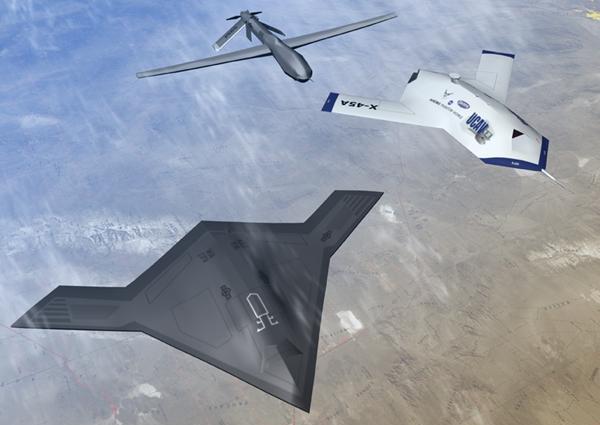
UAVsIn their quest to “unman the front the lines”, and maintain drone superiority over other states, the US armed forces have been working on a series of designs that will one day replace their air fleet of Raptors and Predators. Given that potential rivals, like Iran and China, are actively imitating aspects of these designs in an added incentive, forcing military planners to think bigger and bolder.

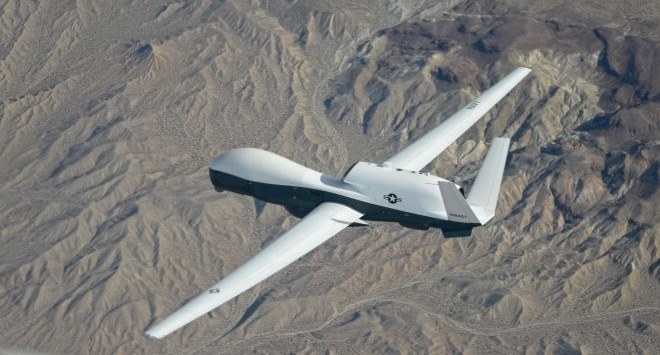
Consider the MQ-4C Triton Unmanned Aerial System (UAS), a jet-powered drone that is the size of a Boeing 757 passenger jet. Developed by Northrop Grumman and measuring some 40 meters (130 feet) from wingtip to wingtip, this “super drone” is intended to replace the US Navy’s fleet of RQ-4 Global Hawks, a series of unmanned aerial vehicles that have been in service since the late 90’s.

Triton_droneThanks to a sensor suite that supplies a 360-degree view at a radius of over 3700 kms (2,300 miles), the Triton can provide high-altitude, real-time intelligence, surveillance and reconnaissance (ISR) at heights and distances in excess of any of its competitors. In addition, the drone possess unique de-icing and lightning protection capabilities, allowing to plunge through the clouds to get a closer view at surface ships.

And although Triton has a higher degree of autonomy than the most autonomous drones, operators on the ground are still relied upon to obtain high-resolution imagery, use radar for target detection and provide information-sharing capabilities to other military units. Thus far, Triton has completed flights up to 9.4 hours at altitudes of 15,250 meters (50,000 feet) at the company’s manufacturing facility in Palmdale, California.

?????????????????????????????????Mike Mackey, Northrop Grumman’s Triton UAS program director, had the following to say in a statement:

During surveillance missions using Triton, Navy operators may spot a target of interest and order the aircraft to a lower altitude to make positive identification. The wing’s strength allows the aircraft to safely descend, sometimes through weather patterns, to complete this maneuver.

Under an initial contract of $1.16 billion in 2008, the Navy has ordered 68 of the MQ-4C Triton drones with expected delivery in 2017. Check out the video of the Triton during its most recent test flight below:


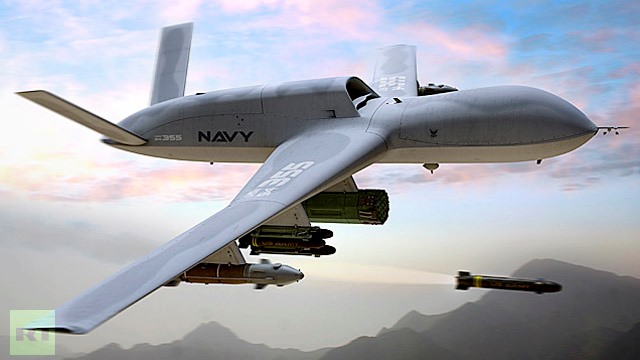
But of course, this jetliner-sized customer is just one of many enhancements the US armed forces is planning on making to its drone army. Another is the jet-powered, long-range attack drone that is a planned replacement for the aging MQ-1 Predator system. It’s known as the Avenger (alternately the MQ-1 Predator C), a next-generation unmanned aerial vehicle that has a range of close to 3000 kms (1800 miles).

Designed by General Atomics, the Avenger is designed with Afghanistan in mind; or rather, the planned US withdrawal by the end 0f 2014. Given the ongoing CIA anti-terrorism operations in neighboring Pakistan are expected to continue, and airstrips in Afghanistan will no longer be available, the drones they use will need to have significant range.

(c) Kollected Pty Ltd.

The Avenger prototype made its first test flight in 2009, and after a new round of tests completed last month, is now operationally ready. Based on the company’s more well-known MQ-9 Reaper drone, Avenger is designed to perform high-speed, long-endurance surveillance or strike missions, flying up to 800 kms (500 mph) at a maximum of 15,250 meters (50,000 feet) for as long as 18 hours.

Compared to its earlier prototype, the Avenger’s fuselage has been increased by four feet to accommodate larger payloads and more fuel, allowing for extended missions. It can carry up to 1000 kilograms (3,500 pounds) internally, and its wingspan is capable of carrying weapons as large as a 2,000-pound Joint Direct Attack Munition (JDAM) and a full-compliment of Hellfire missiles.

Avenger_drone1Switching from propeller-driven drones to jets will allow the CIA to continue its Pakistan strikes from a more distant base if the U.S. is forced to withdraw entirely from neighboring Afghanistan. And according to a recent Los Angeles Times report, the Obama administration is actively making contingency plans to maintain surveillance and attacks in northwest Pakistan as part of its security agreement with Afghanistan.

The opportunity to close the gap between the need to act quickly and operating from a further distance with technology isn’t lost on the US military, or the company behind the Avenger. Frank Pace, president of the Aircraft Systems Group at General Atomics, said in a recent statement:

Avenger provides the right capabilities for the right cost at the right time and is operationally ready today. This aircraft offers unique advantages in terms of performance, cost, timescale, and adaptability that are unmatched by any other UAS in its class.

??????????????????????????????What’s more, one can tell by simply looking at the streamlined fuselage and softer contours that stealth is part of the package. By reducing the drone’s radar cross-section (RCS) and applying radar-absorbing materials, next-generation drone fleets will also be mimicking fifth-generation fighter craft. Perhaps we can expect aerial duels between remotely-controlled fighters to follow not long after…

And of course, there’s the General Atomic’s Avenger concept video to enjoy:


Sources:
wired.com, (2)

News from Space: First Detailed Map of Ganymede

ganymedeLast week, researchers released the first-ever geological map of Ganymede, Jupiter’s largest moon and the largest planetary satellite in the Solar System. Led by Geoffrey Collins of Wheaton College, these scientists produced the first global geologic map that combines the best images obtained by NASA’s Voyager 1 and 2 spacecraft (1979) and the Galileo orbiter (1995 to 2003).

The information of these probes was pieced together as a mosaic image of the planet, giving us our first complete image of the geological features of the world. This image has now been published by the U. S. Geological Survey as a global planar map. The 2D version of the planet surface illustrates the varied geologic character of Ganymede and is the first global, geologic map of the icy, outer-planet moon.

ganymede_mapAnd its about time too! As Robert Pappalardo of NASA’s Jet Propulsion Laboratory in Pasadena, California put it:

This map illustrates the incredible variety of geological features on Ganymede and helps to make order from the apparent chaos of its complex surface. This map is helping planetary scientists to decipher the evolution of this icy world and will aid in upcoming spacecraft observations.

Since its discovery in January 1610 by Galileo Galilee, Ganymede has been the focus of repeated observation; first by Earth-based telescopes, and later by the flybys and orbiting spacecraft. These studies depict a complex, icy world whose surface is characterized by the striking contrast between the dark, very old, highly cratered regions, and the lighter, somewhat younger regions marked with an extensive array of grooves and ridges.

Ganymede-JupiterMoon-GeologicMap-SIM3237-20140211The map isn’t just aesthetically pleasing; it also informs our understanding of Ganymede’s geological history. Researchers have identified three geological periods – one involving heavy impact cratering, followed by tectonic upheaval, and then a decline in geological activity. The more detailed images let them study the ridges and groves, and have revealed that the formation of cryovolcanos is rare on Ganymede.

Baerbel Lucchitta, scientist emeritus at the U.S. Geological Survey in Flagstaff, Ariz., who has been involved with geologic mapping of Ganymede since 1980, had this to say:

The highly detailed, colorful map confirmed a number of outstanding scientific hypotheses regarding Ganymede’s geologic history, and also disproved others. For example, the more detailed Galileo images showed that cryovolcanism, or the creation of volcanoes that erupt water and ice, is very rare on Ganymede.

ganymede_ridges_craters_600According to the Jet Propulsion Laboratory, Ganymede is an especially valuable body to study because it is an ice moon with a richly varied geology and a surface area that is more than half as large as all the land area on Earth. The Ganymede map will also enable researchers to compare the geologic characters of other icy satellite moons, since most features found on other icy satellites have a similar feature somewhere on Ganymede.

Laszlo Kestay, the director of the United States Geological Survey (USGS) Astrogeology Science Center, explained the implications of this in a statement:

After Mars, the interiors of icy satellites of Jupiter are considered the best candidates for habitable environments for life in our solar system. This geologic map will be the basis for many decisions by NASA and partners regarding future U.S. missions under consideration to explore these worlds.

The project was funded by NASA through its Outer Planets Research and Planetary Geology and Geophysics Programs, and the images can all be downloaded by going to the Jet Propulsion Laboratory’s website at the California Institute of Technology (Caltech). And be sure to check out the animated version of the Ganymede planetary map below:


Sources:
IO9.com, (2), jpl.nasa.gov, space.com

Papa Zulu – Ready and Available, Finally!

papa_zuluWell, after about a week of tinkering, complaining, and demanding that Amazon, Kindle and Createspace get their act together, Papa Zulu is now available in all formats, and all in one place! This was a bit of a bugger last week, when I was finally finished with the tedious editing and submission process, only to find that it wasn’t even showing up in the right places.

To recap, Papa Zulu was made available through Amazon.com as of last Monday, but it did not appear with the rest of my books. So for the untrained consumer (i.e. anyone who doesn’t know me already), the book’s relation to Whiskey Delta would have been unclear. In addition, the Kindle edition and the paperback didn’t even appear together, with one only available at Amazon.com and the other at Amazon.ca.

But after a few days, that was all resolved. As of now, all formats of Papa Zulu can be ordered from one place (Amazon.com) and I’ve made sure the links to it have been updated to reflect that. And on top of that, it now appears alongside all my other titles on my Amazon author page. So now it will be easy to find, and people who said they wanted a sequel will actually be able to find it.

Yay for small victories and the work that makes them happen! Woe for the speed bumps and delays that make the extra work necessary! And feel free to check out the book’s listing and my author page, now that they are are in working order:

Papa Zulu:
http://www.amazon.com/Papa-Zulu-Matthew-S-Williams

Amazon Author Page:
http://www.amazon.com/Matthew-S-Williams