Episode 100 of Stories from Space is now Live!

Episode 100 of Stories from Space is now Live!

Welcome all! This week’s episode is one that I consider very important. Since the Trump administration was inaugurated, people at NASA were understandably afraid. Uncertainty about the future can do that to people, especially when an unelected, unconfirmed member of government (Elon Musk) begins making seemingly arbitrary cuts to departments, jobs, and spending. Those fears were confirmed with the release of the White House’s Fiscal Year 2026 Budget Request (FY 2006).

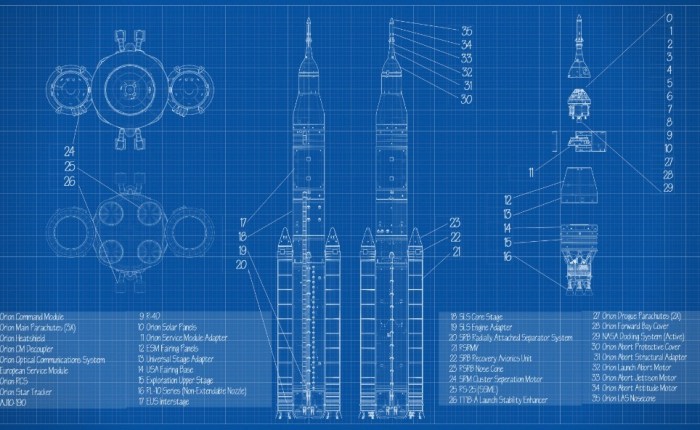
In addition to deep cuts, the Budget also calls for the cancellation of programs that NASA has been pursuing for years as part of its “Moon to Mars” mission architecture. These include the Space Launch System (SLS), the Orion Spacecraft, and the Lunar Gateway, which are integral to the Artemis Program and plans to send the first crewed missions to Mars. The Budget also pushes privatization as the solution to every proposed cut, and very deliberately and specifically targets funding for “woke” programs that seek to increase representation in the STEM fields.

To call this Budget a disaster in the making only undersells it. If enacted, it could throw NASA’s entire future into jeopardy. Whereas the Budget specifies that NASA’s only priority should be beating China to the Moon and Mars, it will likely make that goal much harder to achieve. And it would almost surely compromise the agency’s longstanding reputation for leadership in space.

The release of this episode is also a milestone for me and the podcast I launched almost three years ago (July 12th, 2022). Its inception can be trace to an interview I had with the hosts of the Intersection of Technology and Society Magazine (ITSM), Sean Martin and Marco Ciappelli. The funny thing is, they wanted to interview me for an article I wrote for Interesting Engineering titled “Life in 2050: A Glimpse at Education in the Future.”

Afterward, I told them what my main subject was (i.e., space and spacey stuff), and they had me back on for two more episodes to discuss the future of space exploration and exoplanet studies. During the second interview, we announced that I was joining ITSP with a new podcast – Stories from Space!

As such, I wish this episode’s subject were less alarming or depressing. But I promise future episodes (knock on wood!) will be cheerier and feature better news!
Where to Listen:

Episode 99 of Stories from Space is now Live!

Episode 99 of Stories from Space is now Live!

This week’s episode was an exciting one! I sat down with aerospace engineer, astrophysicist, and analog astronaut Dr. Rodrigo Schmitt. For years, he and other engineers have used the Kerbal Space Program (with the realism mods) to assist with spacecraft design and mission planning. KSP and other “sandbox games” have also been hailed as a vital educational tool for people studying to become aerospace engineers.

During our interview, we chatted about his recent paper, in which he proposes how KSP and other sandbox games could be integrated into the actual spaceship and mission design process. Based on NASA’s Program/Project Life Cycles, he explained how the software could become part of Pre-Phase A: Concept Studies, the initial design phase. Our interview also focused on how he and his team simulated the Artemis V mission and how orbital refueling will play an important role.

It was honestly one of the most fun interviews I’ve done in recent history. Check out the links below to hear more…

Where to Listen:

Episode 98 of Stories from Space – The Growing Problem of Space Junk – is now Live!

Episode 98 of Stories from Space – The Growing Problem of Space Junk – is now Live!

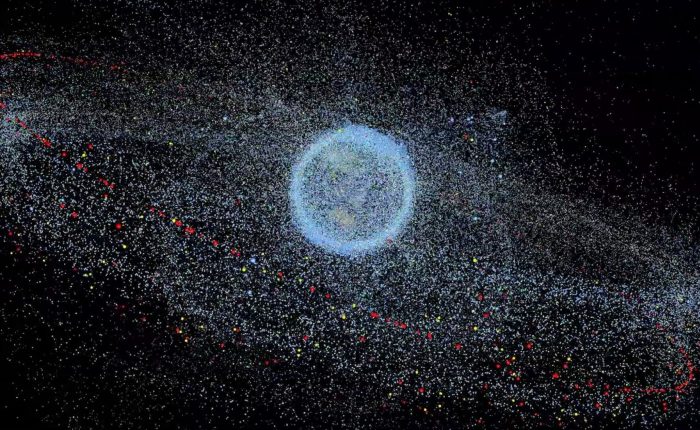
After a wee hiatus, Stories from Space is back! And this week’s episode is dedicated to something that is overdue: Space Junk! Otherwise known as orbital debris, this problem is the result of decades’ worth of launches (roughly 7000) that have placed 21,620 satellites into orbit. About 14,240 of these satellites are still there, and 11,400 are still operational. Similarly, every launch made before the advent of reusable rockets has left thousands of spent first and second stage rockets in orbit.

Over time, collisions between these objects have littered Low Earth Orbit (LEO) with literally millions of objects ranging from the massive to the incredibly small. Regardless, objects in orbit are accelerated to speeds of 7 to 8 km/s (4.35 to 5 mi/s), making them potentially lethal. And the worst part is, it’s only going to get worse. With more and more space companies conducting regular launches to deploy satellite “mega constellations,” CubeSats, and commercial space stations are deployed, the situation in orbit is projected to get worse.

But the greatest threat is what is known as Kessler Syndrome, where the saturation of LEO with debris will create a cascade effect – where more collisions will mean more debris objects, and so on. Hence why this episode also gets into mitigation strategies and proposals for active debris removal (ADR). But of course, the greatest challenge is changing the way we think!

Check out the links below to learn more.

Where to Listen: