Kevin J Anderson and I have a chat… Seriously!

Kevin J Anderson and I have a chat… Seriously!

It’s a rare treat when you get to confront a person you’ve badmouthed for some time, isn’t it? Just think of James Reston Jr., the American journalist and author who was part of David Frost’s interview team. After years of slamming Nixon with his poison pen, and welcoming the opportunity to do a scathing interview, he got a chance to meet the man face to face. And wouldn’t you know it, he shook the man’s hand and called him “Mr. President”! Yes, somehow it’s hard to be mean to a man in person.

Well, as turns out I had the same opportunity opportunity recently; to speak to a man I’ve been criticizing for quite some time. I am referring, of course, to Kevin J Anderson. After reviewing the Brian Herbert/KJA Dune spinoffs on this site (quite poorly, I might add), I began a thread over at Goodreads dedicated to the Dune finale and what people thought of it. Opinions were mixed, the debate was somewhat heated. But then, one of the contributors, a fan of the new books, advised that I go on over to the Dune Saga site on Facebook to make my opinions known. Naturally, I was a little worried when I noticed KJA himself was the man in charge of this site, and I a little peaved when I noticed that my comments at Goodreads had already garnered some rather harsh criticisms from KJA fans.

Here’s a sample of what some of them said:

“It’s the usual crew that likes to bad mouth Brian and Kevin. I had a suspicion that the guy that started it was with them. One of his posts after they started showing up confirmed that.”

“I don’t even bother adding to these posts and go out of my way to ignore them on sites. These people don’t change and are limited in their ability to separate one writer from another. I wish they would stop reading Dune books or at the very least suffer from a head injury that would make them forget that Dune even existed. That way people that actually enjoy the continued story would not have to stumble upon their adolescent, mindless blabbering. THANK YOU KEVIN AND BRIAN FOR CONTINUING THE STORY FOR US!! I look forward to each new exciting installment of the Dune Saga. I would have been tragic if this story had stopped with Frank.”

“The Talifans return!”

Well, needless to say, I was taken aback and replied in kind. I mean really, Talifans! What nerve!:

“As the person who started that forum, I would like to ask, have you really read the arguments of how these books failed? Because I’ve noticed glaring inconsistencies between the old work and the new, ones that go far beyond “hating” and other things we are accused of. What’s more, I find it ironic for people to say that these are the “same old” complaints. Whenever I hear people defending the new books, its always the same. The “styles” are different, its his son, its bound to be different, but they had notes, etc.

And given the declining sales figures, I’d say its the McDune franchise thats likely to fade away soon.”

Guess who replied? The man himself! Here’s what he said:

“Sorry you don’t like the new books, Matt. The “glaring inconsistencies” the Talifan complain about have all been addressed in the novels, but they don’t–or don’t want to–read very carefully. The fact that they have not attacked the “glaring inconsistencies” in the original Frank Herbert books with the same vehemence seems a bit of a double standard.”

And of course, one of his fans jumped in with a somewhat harsher response:

“Amen Kevin. LOL…They had NOTES….HA…..I cant remember the last time I picked up a published notes at the book store. The notes still need to be fleshed out into stories regardless of what “notes” they may have had. Again since Frank did not write these stories, only provided a guideline, they will be different….you know…because they were not written by Frank…….. But thanks for posting more of the “same ol complaint” That you Trolls always state, notes , timeline, blah blah blah. We who have stuck by the Dune saga and have paid close attention to the story know exactly how each event falls into place. I do strongly encourage you to stop reading Dune books. But that is unlikely to happen because most of you Trolls just like something to constantly complain about. As far as the “McDune” franchise falling away, that is highly unlikely to happen thanks to a strong a loyal fan base. Trolls like you have been spewing that BS for YEARS and look 3 more books are on their way. Yeah the all those Dune New york Times best sellers that Brian and Kevin wrote failed horribly…. Again….I do strongly encourage you to stop reading Dune books, it seams your time would be better spent farming a vill or something.”

Well… needless to say, I felt I was being highly misrepresented. So I took it upon myself to explain what I meant by “inconsistencies” and to set the record straight on being a “troll”.

“First off, let me say thank you Mr. Anderson for responding yourself. I feel honored and in a unique position that I can speak to you directly. Let me first assure you that I didn’t dislike all your books. In fact, I thought that the Preludes series was alright, and I enjoyed Hunters, up until the ending that is. And that is what I mean by glaring inconsistencies. Let me illustrate:

First off, the fact the entire saga ended with the old man and woman being the evil robots from the Jihad. I couldn’t see how this could possibly be the result of Frank’s own notes. I mean really, the whole thing ends with characters from your own prequels? For one, they were clearly Face Dancers, as established by Frank in Chapterhouse. Here’s some evidence to that effect:

First, where Duncan recognizes them in one of his visions:

“That thought aroused Idaho’s suspicions because now he recognized the familiarity. They looked somewhat like Face Dancers, even to the pug noses … And if they were Face Dancers, they were not Scytale’s Face Dancers. Those two people behind the shimmering net belonged to no one but themselves.”

And at the end, where Daniel and Marty describe themselves:

“[Tleilaxu Masters] have such a hard time accepting that Face Dancers can be independent of them.” “I don’t see why. It’s a natural consequence. They gave us the power to absorb the memories and experiences of other people. Gather enough of those and…” “It’s personas we take, Marty.” “Whatever. The Masters should’ve known we would gather enough of them one day to make our own decisions about our own future.”

Clearly, they were Face Dancers. And I’m not the only one who thinks so. Here’s William F. Touponce’s take on the ending, taken from his 1988 book entitled Frank Herbert:

“Herbert gives us a segment narrated from their point of view only at the very end of the novel. They are offshoots of the Tleilaxu Face Dancers sent out in the Scattering and have become almost godlike because of their capacity to assume the persona of whoever they kill — and they have been doing this for centuries, capturing Mentats and Tleilaxu Masters and whatever else they could assimilate, until now they play with whole planets and civilizations. They are weirdly benign when they first appear in the visions of Duncan Idaho as a calm elderly couple working in a flower garden, trying to capture him in their net…”

And finally, in an August 2007 review of Sandworms of Dune, John C. Snider of SciFiDimensions.com argued that it “doesn’t fit” or “add up” that Frank Herbert’s Daniel and Marty are the “malevolent” thinking machines Brian Herbert and Anderson created in their Legends of Dune prequel novels.

That was the glaring inconsistency I mentioned. Not plot holes or things not adding up in your own books. So for those who’ve already posted back and slammed by comment, I’d advice you understand what a person is saying first before you respond in kind.”

Now that I look at it, I notice I say “firstly” a lot. Not good. It looks unprofessional when you repeat yourself. And it looks unprofessional when you – okay, bad joke! Moving on! I was also sure to smack Greg back with a little “taking the high road” approach:

“And to Greg, you’re obvious disdain for us “trolls” notwithstanding, we’re fans like you and we’ve got opinions and points to make. You don’t like it fine, but I’m going to make it, and in the process show a lot more class than you’ve demonstrated thus far.”

All of this is a reiteration of what I said on Goodreads and in my review of Hunters of Dune. I of course left out the criticism of the Butlerian Jihad premise, seeing as how I was already not being brief. This, in turn, garnered some rather civilized comments from the man himself.

“And your own comments notwithstanding, you have to admit that the behavior of many of the “trolls” is vitriolic and insulting. I am not in the business of telling people which books they can or can’t read. If you don’t like the new Dune novels, I hope you’ll try my Seven Suns or some of my other books…or just read something else entirely. Don’t read all twelve of the new Dune books and keep railing about how much you hate them. For months now, the Talifan have been trashing SISTERHOOD OF DUNE, a book that none of them has read.”

Hmm, I notice he used the term “Talifan” too. Makes you wonder if he had a hand in creating it, or is just repeating what his own die-hards say. Either way, getting reamed by anyone isn’t easy so I’ll give him the benefit of the doubt here. Our conversation is ongoing at this point, with other salient issues being raised. In fact, one commenter, a highly civilized person who is a fan of the new books but has also been very polite to me, had a point to offer.

Here it is in its entirety:

“And since Kevin J. Anderson is here for the discussion, perhaps he can confirm or deny my theory I posted on the Goodreads site.

The theory broke down:

Item: Frank left next to nothing in notes for The Butlerian Jihad time which that trilogy was set in.

Item: Frank left a detailed outline for Dune 7 which was turned into two books upon fleshing it out.

Speculation: Brian and Kevin figured out from Frank’s notes on Dune 7 that certain characters were from the era of the Butlerian Jihad which they planned on writing a trilogy about.

Item: The Butlerian Jihad trilogy was published before the two Dune 7 novels were published.

Accusation: Brian and Kevin totally invented everything for The Butlerian Jihad, so therefore: They clearly inserted their own characters into the Dune 7 books.

My theory: It’s the opposite. They took what they could from the Dune 7 books in order to do better foreshadowing when they wrote The Butlerian Jihad trilogy. Therefore, not all characters in that trilogy were “made up” by Brian and Kevin even if they had to create the vast majority of the story involved to support the characters they had found in the notes of Dune 7.”

For non-fans of the Brian and KJA remakes, this is not a new theory. We’ve heard this one before, many times in fact! “The Butlerian Jihad was based on Franks notes, so it wasn’t unnatural for the series to end with characters form it.” This prompted me to reply to it by stating that this theory doesn’t add up. That’s when I posted my argument of how the Butlerian Jihad happened in the Legends series in a way that Frank couldn’t have intended, and how Brian and KJA said Frank left few notes on it so they made most of it up themselves, etc etc.

However, Kevin had this to say in response:

“David, your theory is very insightful. We had the Dune 7 outline from the time we started writing House Atreides and *always* had the final destination in mind; there are details in HOUSE CORRINO and throughout the Legends of Dune trilogy that we planted specifically to take the story and characters where we knew it was supposed to go in HUNTERS & SANDWORMS.”

His theory is insightful… I notice he’s not saying he’s right or wrong. If David had hit it on the head, I would think KJA would be the first to say so. He’s also saying how they “planted” things, but based on what – Frank’s notes, or their own inventions? In short, were they planting stuff for the sake of establishing ties between their own work and the ending ahead of time or was it something Frank left behind? You be the judge!

He also said the following to me about my proof:

“Again, thanks for giving the novels a chance, whether or not you liked all of them. Regarding your issues with Face Dancers and the remnants of the Butlerian Jihad, that was tied together in the books and detailed in Erasmus’s experiments to create the Face Dancers. It’s not my call whether or not you found the explanation or the resolution satisfying, but it’s not inconsistent with the series as a whole.”

Ties together huh?

Interesting, but again, can’t see how that’s what Frank had in mind. And I said as such. Saying Erasmus was experimenting with Face Dancers establishes a connection between Frank’s work and their ending, but does it not seem forced? Again, how could Frank have been planning on introducing robot characters in a final novel that made no appearance beforehand, were ever mentioned or even hinted at? Well, I said as much, and feel a little shmuckish at this point. I tell ya, its hard to say to someone’s face exactly what you think of their work. But as they say, “Nut up or shut up!” And remember, honesty and civility are not mutually exclusive.

I will no doubt have more to post on this as it unfolds. Needless to say, I’m just happy I get a chance to address this man directly, pose all my question directly to him. I mean, how often does someone get to do that? I want to see how he responds to these challenges, as I’m sure do many others!

More Reviews

Some more reviews are in! Again, these are just for the free samples I’ve made available on a couple of ebook sites, but that’s what they’re there for! Besides, feedback always matters to me and I take it seriously wherever it comes from. For the sake of the commentators anonymity, I’ve also substituted their full names with initials. Here’s what people said:

Source:
K.K from free-ebooks.com writes:
“I enjoyed reading this, but was a bit distracted by the number of mistakes. Please have someone edit this book. Ta”

*Good advice. The free version of Source remains the most unpolished version I have. I’ll get right on it!

K.Z.F. from Authonomy.com writes:
“interesting start, I like the setting a lot”

*Hope that feeling lasts, the setting kind of jumps around after the beginning!

Liability:
B.A. from free-ebooks.com writes:
“It’s a well conceived and beautifully delivered novel. I wish it has more pages for a more lasting reading.”

At the same site, J. D. writes:
“Good story. Gets you wrapped up in the action right away and doesn’t stop till the end.”

and T.P. writes:
“Dont look behind you when you read this novel, they may be watching you. thoroughly enjoyable reading.”

*All good. Especially the part about expanding it. I was told, frankly and helpfully by a fellow author that the story needed more action. I shall deliver!

No comments from Obooko.com, but Source has been given five stars from three reviewers, Smartbomb‘s been given five stars from two, and Liability five stars from one.

Sickness, more Alternate History, and some coming reviews…

Sickness, more Alternate History, and some coming reviews…

I hate being sick! Whenever the seasons change for me, I tend to come down with one of those colds that comes on hard and takes forever to leave. Well, this Fall season has been a double whammy, seems I’ve gotten sick twice in the last four weeks, which has meant a month of convalescing I could totally do without! But at least its given me time to ponder future writing projects.

For starters, I had an idea for an alternate history novel of my own. Its been something I’ve been interested in of late, as my reviews of Man in the High Castle, Fatherland and Guns of the South will attest. Reviewing Rabbletown by Mr. Attwood also gave me another push; somehow reading other people’s work always inspires me to write more of my own. And if there’s one thing I learned from reading other works of historical fiction, it is that there are two basic trends to every story.

1. History diverges due to key events happening just a little bit differently.
2. Ultimately, things converge again and familiar patterns reassert themselves.

Or, to put it mathematically, H = (Ce + Ha) / Env, where H is history, Ce is the Confluence of Events, Ha is human agency and Env is environmental (i.e. external) mitigating factors. Alteration of one (i.e. human agency) is what allows for divergence, but in the end, the other factors assert themselves and balance is restored. Okay, I totally made that up and it was unbelievably geeky! But also kinda cool, right? Ah whatever, my idea:

Red Sky At Night:

A working title, but one which was suggested to me by the maestra of title work (hi Katrina!) And given the title, one might suspect that Communism and/or Communists are the focus. They would be right! My story deals with a question that I’ve been pondering for a long time and with all the fiction I’ve read of late, stuff that deals with similar questions and “what ifs”, I began to turn it into an idea. In short, my story is based on the question of what would have happened had Leon Trotsky come to be leader of the Soviet Union instead of Stalin?

To be fair, this question has been asked by generations of historians and communists alike, particularly the latter group who wanted to distance themselves from Stalin after the full weight of his crimes and megalomania had been exposed. But for historians, the question is more academic, motivating by genuine interest instead of personal beliefs. Overall, they are simply interested in whether or not Trotsky would have been any gentler, or the course of Soviet history any different, had he been in charge.

But first, a little preamble. You see, it is one of the great questions of history why Trotsky did not disavow Stalin when he had the chance. Before his death, Vladimir Ilyich Ilyanov (aka. Lenin) wrote in his “Final Will and Testament” that Stalin was a rude, ruthless man who should never be allowed to have power. Trotsky was seen as the natural successor, and this Will could have shattered Stalin’s support. Stalin’s allies helped him to prevent the Will from being revealed at the 12th Party Congress; however, at the 13th, Trotsky could have revealed it to the Party and done irreperable harm to Stalin’s reputation. Instead, he made conciliatory speech that was intended to heal the rift between himself and Stalin’s followers.

However, this did not prevent Trotsky from being ejected from the Party, put into exile and murdered some years later. So the question of why – why DIDN’T Trotsky denounce Stalin when he had the chance? – has never been successfully answered. We can assume any number of things, but it is at this point irrelevant. The real question, as far as my idea is concerned, is what would have happened had he gone through with it? And that’s where things get fun… if you’re a history geek anyway!

For one, Trotsky wouldn’t have launched Stalin’s crash industrialization programs (aka. the Five Year Plans) in the later 20’s. In all likelihood, he would have continued Lenin’s New Economic Policy (NEP, which allowed for a degree of privatization) and when the big economic crisis loomed, have appointed Bukharin to deal with it (as opposed to purging him as Stalin did). This would have led to the slow recovery of the Soviet economy, and when the Great Depression hit in 1929, Russia would have continued to be spared the worst ravages of it while similarly showing signs of growth.

In addition, the Communists in China would not have been cut off as they had been by Stalin in the 1920’s. Chiang Kai-shek would have continued to fight them, but there would have been no massacre, meaning the Chinese communists would have been stronger and in a better position to dictate terms to Chiang when the Japanese invaded in the late 20’s. As a result, the Japanese army would have encountered stiffer, unified resistance as it fought its way south years later.

Similarly, in Europe, when the Nazi’s come to power in 33, Trotsky would have thrown his country’s support behind the German Social Democrats and would have committed the Comintern (Communist International Organization) to fighting Hitler once he seized power. Over the course of the next few years, during the re-militarizing of the Rhineland, the Anschluss, the Spanish Civil War, and the Sudenten crisis, Russia would have been the most outspoken advocate for resistance.

This had the effect of inspiring people from other nations, particularly France, England and Czechoslovakia, into doing the same, often in defiance of their own governments who sought accommodation. Combined with the fact that Russia’s heavily regulated economy had avoided the scourges of the Depression, these acts of support would convince many foreign nationals of the need to stand with Russia. And without Stalin’s own paranoia and megalomania to discredit and embarrass the Soviet Union and its supporters, these efforts were far more successful.

Finally, after years of advocating Collective Security through the United Nations, Trotsky’s Foreign Commissar – Maxim Litvinov – saw his efforts to create an anti-fascist alliance comes together. During the Sudeten Crisis of 38, Hitler found himself being resisted on all sides. France declared that it would mobilize to help the Czechs since Russia was promising the same. Britain, fearing a Communist victory in the next election, mobilized to pressure Poland and Romania to come to a right of passage agreement with Russia, rather than pressuring Czech president Benes to concede the Sudetenland to Germany. As a result, Hitler was overruled by his own commanders and forced to stand down.

Hilter was unable to recover from this political setback, and when Germany similarly suffered an economic recession a year later, his support dwindled further. By the end of 1939, he found himself ousted from power and the SPD was restored. Mussolini and Franco, one-time allies of Hitler’s, were also brought to heal, the Italian dictator going as far as to relinquish his countries control of Abyssinia (Ethiopia) and remove all his troops from the Balkans. In Asia, Japan also found itself without a friend and was forced to withdraw from the Chinese mainland. Europe and the world celebrated as it seemed that the aggressors had been contained and another world war had been averted.

But this jubilant mood did not last long. Without World War II and the post-war reconstruction to stimulate the economies of the western nations, the Depression continued for several more years. The post-war population boom similarly did not take place. Instead, Europe and the Anglosphere witnessed slow recovery as nations on the continent resorted to increasingly socialist measures to address their economic woes and closer trade ties were established with Russia. Russia, now enjoying cordial ties to most European nations, similarly began to open its economy and its borders to foreign investment and tourism. By the late 40’s, most economies had pulled out of the Depression through a combination of social programs and regulated trade.

This had the added effect of creating a rift between the Continent and Britain, a country that prided itself on its free markets and traditional liberal approach. As socialism began to take root from Lisbon to Vladivostok, Britain sought new alliances to protect its way of life. They found it in the US, which was once again experiencing a Red Scare and cracking down on communists, labor leaders and protesters. Together, they created a secret alliance to protect their mutual interests and continued to eye the Continent with suspicion.

Relations were further strained when in the 1950’s, India began to demand independence. Without the threat of Hitler, the British government had never come to an agreement with Ghandi for the sake of independence. What’s more, agitation on behalf of Europe’s new socialist organizations became a constant source of irritation. Though France was loath to give up its own Empire, pressure from the League and its own populace was mounting. In time, France gave up trying to work with Britain to find a common solution, began disbanding its own empire and urged Britain to do the same. Britain refused and held on to its possessions, but by the early 60’s, virtually every French speaking colony was free and joined the League of Nations.

Which brings me to the opening of my story. It is the early 60’s, the world is divided between two major blocs – the League of Nations and the Anglo-American Alliance – and in between are dozens of nations that are either neutral or part of one or the others sphere of influence. Relations between the two sides are strained as competition for markets, alliances and weapons have reached a tipping point, and some are beginning to fear the possibility of open war. Within this talk of war are even more frightening rumors that both sides are researching advanced technologies – rockets, jet engines, super computers, and even (God forbid!) atomic weapons…

So as you can see, history unfolded quite differently due to the presence of one man instead of another. However, in time, the familiar patterns reasserted themselves. While World War II did not take place from 39-45, it does appear on the horizon by 1960. While there was no Cold War to speak of after 45′ between two nuclear-armed superpowers, a state of detente exists between two similar global powers by the late 50’s with the prospect of a nuclear war by the early 60’s.

That’s all I got for now. More to follow just as soon as Data Miners is complete and my others ideas have panned out. That’s the fun thing about alternate histories though isn’t it? Since they have to do with past events, no one can ever accuse you of not being “current”, right? Who knows? If its successful, I might even write a sequel, Red Sky At Morning, about the aftermath. Thank you honey (my wife) for THAT title idea!

Coming Reviews:

On top of that, tackling “McDune” franchise in a more comprehensive way inspired me to do a more in-depth review of both the Legends and Hunters/Sandworms of Dune series. I’ve shellacked the latter ones before, but I’d like nothing better than giving them a good, specific thrashing! Fans of the elder Herbert, unite and hear me shellack! So, in the coming weeks, I hope to do a review of Hunters, the Machine Crusade, and possibly the Battle of Corrin and Sandworms as well. And since I’m almost finished with the A Song of Fire and Ice series (i.e. Game of Thrones, etc) I might publish some thoughts on them too. Can’t wait for season two of the miniseries! Go Starks! Screw the Lannisters!

P.S. for those who don’t know, Katrina runs a fun and fascinating website named Were You Wondering? She even lets me contribute for some reason… Here’s the link:
wereyouwondering.com

And don’t forget to support Wikipedia! Free flow of information! Fight the power!
Support Wikipedia

Of Prequels And Why They Suck…

Of Prequels And Why They Suck…

Looking back, I’ve noticed a sort of thread running through some of the posts I’ve made. And in truth, this thing was quite influential when it came to what inspired me to write science fiction in the first place. It began with the infamous Star Wars prequels, the movies which ruined what used to be a very influential and nostalgic franchise. It was then reinforced by the odious Dune prequels, which tarnished the legacy that inspired me to write science fiction in the first place. Since then, I’ve noticed these same elements at work in any prequel I’ve chanced upon and the lessons only seem to get more concrete.

While I’m no expert on the fine art of writing, be it science fiction or anything other genre, by the time I started doing it I was pretty clear on what I wanted to create. Basically, I wanted to write something I would enjoy, something that emulated the greats I had come to know and admire. But when it came to what I DIDN’T want to do, I found prequels summed up a lot of it succinctly (especially the aforementioned examples). I’m sure I mentioned as much in previous posts, but today, I thought I might speak to these things specifically; outline why prequels can – and often do – suck!

1. No Surprises:
Whether it was the Star Wars prequels, X Men Origins: Wolverine, the Legends of Dune series, or anything else prequel-oriented, there was one undeniable problem they all had in common: we already knew what was going to happen. By stories end, we know that the characters are going to become whatever it is they were in the original story, and we know who’s going to live and who’s going to die. In some cases, we even know how, so there really are no surprises. The only real purpose of a prequel is to fill in the background, explain HOW things happened and how the characters and story we are familiar with came to be.

For example, in Star Wars, we know that Anakin becomes Darth Vader, that Palpatine is the villain and will take over the Republic, and that Amidala will give birth to Luke and Leia before dying. There are a host of other details which the more nerdy among us were familiar with as well, and we were all drawn to theaters back in 1999 hoping to see how they played out. But in the end, when all was said and done, I don’t think any of us came away satisfied. Seeing how things happened when you already know what will happen just seems to make for a disappointing experience.

2. Sense of Duty:
Another thing that brings down a prequel is the fact that things MUST be explained. In short, the writer, director, author, etc. has a list of things which need to be covered before the end. These things have to fall within an established framework – i.e. what has already been established by the original story – and cannot contradict or be inconsistent with them. So really, in addition to having a story where there really are no surprises, you also get a story where things have to proceed in an established fashion and often seem heavily contrived. The end result is not what would feel natural based on the story so far but based on what needs to happen for the sake of the original story.

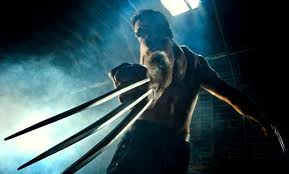
X-Men Origins will suffice as an example here. In this movie, the story had to show where Wolverine came from, how he and his brother (Sabretooth) had their falling out, and how his memory got erased. The result was actually pretty weak, in my opinion. Basically, Colonel Striker shot him in the head with Adamantium bullets, which he knew wouldn’t kill him but would erase his memory. Now, how did he know ahead of time that that would be the effect it would have? Second, why do that instead of lobbing a rocket-propelled grenade at him? Simple, because the story required it. Wolverine is supposed to be an amnesiac in the first movie, so this movie had to show how.

And while were on the subject, why didn’t Wolverine’s girlfriend kill Striker at the end when she had the chance? The woman had suggestive powers and had the man in her grasp, so why not tell him to march off a cliff? Again, because the story demanded it. Striker needed to live to see movie two, so instead she said some fluff about how she’d be no better than him and just told him to take a walk until his feet bled and he fell from exhaustion. I can’t speak for everyone, but personally, I was disappointed.

3. Less Is More
A lot of people insist that when it comes to back stories and background, the less we know, the better. After all, wasn’t Darth Vader scarier before we knew that he was once portrayed by Hayden Christensen? Wasn’t he a lot more menacing before he cried over the loss of Padme? I know for a fact that I’m not alone when I say that the whole “NOOOOOOO!” scene at the end of Revenge of the Sith brought him down in my eyes. What was once a titanic force of badassery was transformed into a whiney, bitchy child through the simple act of fashioning an origins story.

To use a non-prequel example, consider the Batman franchise. In the Tim Burton version, we got to see the Joker’s origin story, but in the Christopher Nolan version, we got nothing. And frankly, wasn’t Ledger’s updated take on the Joker much more scary than Nicholson’s because of it? Sure, his dialogue and acting were spot on at capturing the insanity and terror of the laughing psychotic killer, but wasn’t part of that assured by the fact that we had NO IDEA who he was or where he came from? The origins stories that he told – “wanna know how I got these scars?” – and how they kept changing was part of what made him so effective. As the audience, we wanted to know, how DID he get those scars? Why IS he so crazy? But by denying us this, I think we were kept wanting and we respected the movie more for it.

The same is true of Batman himself. In Burton’s, we got an exact reversal of what happened with the Joker. Aside from the fact that his parents were murdered, apparently by a young Jack Napier (who would go on to become the Joker), we knew nothing about him. Where he got his skills from, his equipment, and how he got started. This served to make him a much more mysterious character which in turn made him more interesting. In Burton’s Batman, he was the focal point whereas the Joker was his nemesis. But in Nolan’s updated version of The Dark Knight, the Joker was undoubtedly the focus while Batman was just the hero trying to stop him. I’d say what he knew – or in this case, didn’t know – about them was central to that.

4. The Audience’s Imagination Is The Writer’s Greatest Weapon:
I believe it was the famous photographer Duane Michals who said “I believe in the imagination. What I cannot see is infinitely more important than what I can see.” Okay, I Googled that, sue me! But the man had a point, and it applies doubly to movies since they too are a visual medium. What the readers and/or an audience can imagine based on snippets of a story is infinitely more powerful than what they can be shown with a few hundred pages of text or a two hour movie. This is why less is more. By giving the audience less to work with, they have more freedom to imagine and create. If you tell them what happened, detail for detail, then they have nothing except for what you’ve given them.

This, I think, is precisely why prequels are so often a disappointment, at least in my estimation. I’ve always considered myself to be an imaginative person. Given a blank canvas, or one with just a few details, I can create just about anything. And I’m hardly alone in that fact. Imagination is something everyone has – to varying degrees, sure – but it’s part of what makes us human and gives our lives meaning. Being able to express our inner life makes us happy, and there are few things more hurtful and insulting than having someone mock or dismiss that creativity. It’s also one of the cornerstones of a free society, the freedom to create and not be persecuted for it.

So it’s little wonder then why people are drawn to movies where books they’ve read are being adapted to film, or to prequels, where things that have been previously alluded to are acted out. People go to see them because they want to know if it will bear any resemblance to what they themselves imagined. Or, they go because they just want to see what the director’s own vision was. Either way, when you get around to seeing it for yourself, is it not a letdown no matter what? Isn’t that the real reason why people who’ve read the book constantly insist that the movie isn’t as good? That certainly seemed to be the consensus amongst LOTR geeks. And I should know; by The Two Towers, I was one of them! And isn’t that the real reason why the Star Wars prequels sucked as much as they did? We, the fans and audiences are active participants and create out of what we are given. Being told point blank what happened removes half the fun of it!

Some Tips For Writing:
Well, that’s all I got for now. Except to say that if someone is hoping to do a prequel, there are certain tips that I’ve come up with that can help. These are by no means established rules, just the result of my own amateur experience and observations. For one, a writer should take care not to give too much away when writing background. As always, less is more. It’s enough to let the background stay in the background and focus on the story. The more the reader/audience has to work with, the better. That way, when you are writing out the back story, you have much more freedom to work with, and don’t have to worry about staying within boundaries.

Second, a good idea is to write things out ahead of time. When I was thinking up Legacies, I began by writing out an outline for the entire background of the story. I didn’t do this because I was one day planning on writing a whole franchise worth of books, prequels included, but because I just wanted the story to be tight and know where everything fit. But because of that, I was able to pen several short stories that took place before the first novel. Rarely were the main characters and plot lines from that novel the focus of these stories, but they did serve as a solid backdrop which helped to advance things.

But don’t take my word on that, consider Lucas himself. He thought up the entire plot for Star Wars trilogy before making the first movie in the franchise, thus he knew exactly what he wanted to do ahead of time. Sure, he made changes and was forced to adapt along the way, but the end result benefited from this foresight. However, when it came to the prequels, he had only the bare bones to work with, and began writing each movie independently of shooting it. And it certainly showed, didn’t it? Rather than feeling like an ongoing story, each movie was a self-contained tale that was full of duty and contrivances. Nuff said? Plan ahead!

Last, but not least, remember that a story, ANY story, needs to tell its own tale. It cannot be written for the sake of filling in another. Its a bit of a vague point, I know, but a writer’s mentality is important when it comes to the creative process. At no point can you be thinking, “this needs to be explained, that needs to be explained”. It needs to be, “this is a story that needs to be told”. Every character has an interesting back story, and stories are living, organic things. They change over time, grow, and eventually die. Showing how they got to where they were going needs to be interesting and told with sincerity. So forget the duty, focus on the events and what made them interesting. If in the end its not a story that you yourself would enjoy, then don’t tell it! Simple as that…

More 1984…

More 1984…

Well, my book club is finally coming to the end of reading 1984. I sure am happy we picked that novel, as it is not only one of my favorites reads but one of my favorite books to teach. There’s just so much there, a real English-teachers delight! And really, I never get tired of reviewing it. There’s always something new to talk about, as you can plainly see! In addition, I’ve been hosting some 1984 chat groups over at Goodreads and that got me thinking about certain elements of the story all over again. In the first forum we were discussing whether or not a 1984-type society could still happen, and to what extent did we think we might be living in one already. In the second, we got into the differences between 1984 and Brave New World, how Orwell and Huxley had different visions on the future, and which we thought came true.

In any case, what I realized from all this was which part of the book I loved best. It was definitely the passages in Part II where Winston was reading from Goldstein’s Manifesto. Not only did it totally appeal to the historian in me, it was just so full of depth and insight that it got to me every time I read it (I think I’m up to three now). And after doing a little side research, I came to realize that Orwell wrote this section of the story first. Not only was the manifesto a major, culminating event in the story, it was also the centerpiece of Orwell’s thought, the very basis of his cautionary tale. Essentially, the manifesto detailed how inequality was a constant in human civilization, the ongoing struggle between the high, middle and low. But in addition to being a constant, it was almost a necessity as well, an inevitable side-effect of living with scarcity, drought, and recurring shortages.

It was with the advent of industrial technology however, that this pattern finally became breakable. While it took some tweaking, common sense finally convinced the barons of industry and political leaders alike to make reforms to fit the times. This began in the 19th century and carried on well into the 20th, when standards of living for the poor and common finally began to rise. And as education, the distribution of goods and services, and news media also improved, the gap between rich and poor and even the need for social distinctions began to diminish.

Curiously, it was as the need for social distinction seemed about to disappear that the totalitarian philosophies of the 20th century appeared. Whereas industrial processes had come to represent the potential for human liberation, these new thinkers (Marxist-Leninist and Fascist were their official titles) wanted to use these same things to make enslavement permanent. In other words, these folk saw the writing on the wall and decided to do everything they could to arrest the process of history. Or, as Orwell put it, “the pendulum would swing one last time and then stop forever”. Human beings could never be allowed to be fully liberated, they had to be cast down and kept there. Hence, these totalitarians took advantage of all that was happening in the 20th century to make it happen. Two World Wars had already began the process in earnest, destroying the infrastructure that was making human equality possible and turning what were once comfortable, privileged people into brutalized subjects.

In order to ensure that this continued to be the case – in other words, that the basis for oppression and inequality continued to exist – war had to be constant, but also limited. Nuclear weapons were abandoned and war would continue by conventional means, albeit for unconventional purposes. The real aim henceforth would be for the dual purposes of keeping people focused on an external enemy while ensuring that no improvement in the standard of living would ever be possible. All industrial products would be used by the war, and occasionally, planned shortages would go into effect to keep people wanting and just a little off-balance.

Or at least, this is what Orwell had predicted, in a nutshell, through his alter ego of Goldstein. And there’s a reason the second act ended with it. Up until that point in the story, Winston knew there was something wrong with society and wanted to rebel against it. The book did not really teach him anything in this respect. In truth, it did little more than confirm what he already knew. But the overall effect it had was to let him know he wasn’t alone. He finally learns that he is indeed sane for feeling the way he does, mainly because he knows he has to be right.

This readers with all of Act III to answer the final burning question of Why? Winston soon learns this after he and Julia are arrested and taken to the Ministry of Love to be tortured and brainwashed. Much like their betrayal, the hopelessness of their situation and the fact the Brotherhood does not even exist, the answer to this question is a spirit-shattering disappointment. Power, O’Brien tells Winston. Power is the only reason. For what else is there, in the final analysis that can justify the lengths that tyrants and their administrators will go to? Why else would countless generations of kings, emperors, nobles, priests and elites do what they have done over the millennia? Why torture, detain, brainwash, conquer, convert, force confessions and exterminate entire races of people? What better reason is there than to feel god-like and know that moral arguments and the truth are useless against you?

True, Orwell’s vision never really came to pass. There are those who would venture that we are living with Big Brother government and in an Oceania-style society right now but I would not be one of them. In every measurable way, we averted Orwell’s dystopian future by not getting into a third world war, by expanding the middle class, public education, and narrowing the gap between rich and poor even further. We also managed to take big steps towards the elimination of the gender gap – another thing that has been increasingly obsolete with the advent of modern society – and the racial gap. Granted we’ve only come so far, but if one looks at the post-colonial wars of independence, the civil rights movement and the feminist movement in conjunction with the victories of organized labor and the expansion of the middle class, one can see just how much progress we’ve made towards the kind of society of equals that Goldstein’s totalitarians wanted to avert.

But in the last thirty years, we’ve moved away from that ideal like never before. More and more, there are forces out there who are telling us of the need to cut taxes, deregulate the economy, globalize, privatize, cut education, eliminate collective bargaining, pensions, job security, outsource industry, streamline, downsize, etc etc. These same forces are the ones pushing for fiscal conservatism, saying “we simply cannot afford it anymore” as a justification for neutering governments by destroying their budgets and putting tax monies back into the hands of the rich and the super rich. Where that fails to sway people, the specter of “SOCIALISM!” is used quite effectively to frighten people into compliance and keep them from seeing the real agenda. All the while, smear campaigns are employed to paint protest movements, reformists, and people who question these changes as “radical”, “socialist”, “communist”, and even “elitist” – much the same labels that were used against people who protested the Vietnam War, segregation and sexism in the workplace.

This “revolution” began in earnest in the late 70’s, early 80’s as a response to the progress made in previous decades. In Britain, it was led by Margaret Thatcher, in the US by Ronald Reagan, and by various other supplicants and imitators in other parts of the Anglosphere and west. In terms of politics, the goal was clear: squeeze the concerns of the poor and the idea social responsibility out of politics by taking advantage of the fact that the poor were at an all time low. In terms of values, the objective seemed to be erase the pluralistic society that was emerging as confusing and chaotic, while emphasizing a traditional society instead. In short, these people wanted to regress because they didn’t like the society that was emerging. However, these revolutions did not really take off until a full decade later, when another event – the end of the Cold War – gave them another push. In the absence of a second hegemonic superpower, it now seemed that the US and its allies were free to push forth with a new agenda, not just abroad but at home.

Intrinsic to the agenda of these new conservatives (aka. neo-conservatives) was the idea that peace, security, and open markets should be achieve not through multilateralism, but through unilateralism and military force, if necessary. Rather than the US and its allies becoming more multinational, the world was to become more American. Britain and the Anglosphere would continue to enjoy the “special relationship” with the US, while continental Europe would be split based on “old” and “new”. The old Europe – France, Germany, Italy, Spain, all EU members who were firm in their commitment to regulated markets and in the habit of challenging US interests from time to time – would be marginalized in favor of countries that had recently emerged from dictatorships and had more fragile economies. These countries, who were not in a position to challenge the US, would be pressured into entering into military treaties that would cordon off Russia with a “missile defense shield”. The same is true of China, another major power with access to nuclear weapons. Their neighbors would also be pressured into an alliance with the US, extending the missile shield, and thus making the US (in theory) impervious to attack. Thus, with nothing to fear from these countries nuclear arsenals, the US could do as it pleased and not concern itself with the objections of its former enemies.

In the Middle East, a similar plan was put into effect. For many decades, Britain, the US, and continental European powers had maintained close ties to several “friendly dictators” in exchange for good trade relations and access to petroleum. However, by the end of the Cold War, the US and Anglosphere maintained this policy more aggressively, placing military bases on the soil of willing nations in exchange for direct political and military support. This came with obvious consequences, most notably in the form of terrorism and widespread anti-US sentiment. With country after country viewing the US presence in the region as a liability, the US and its “willing” friends decided to look for a new base of operations, a place where they could build “enduring” military bases that would give them secure access to petrol reserves and the ability to sandwich unfriendly neighboring regimes.

Finally, there was the agenda at home. For decades, this new breed of conservatives dreamed about turning their countries into one-party states, or at least marginalizing dissenting political voices until they were no longer a concern. Be they Republican, Tory, Conservative, or Likud, virtually all nations in the developed world experienced a push from the right on or after the last decade of the 20th century whose aim was to oust “liberal” concerns from politics and make a “security” agenda paramount. In addition, a clear economic agenda was being put into place as well that seemed dedicated to weakening government and allowing the private sector to fill the void. Oftentimes, this took the form of removing restrictions to trade, but also involved removing environmental, trade, and labor regulations that were designed to prevent unsafe or exploitative business practices. And finally, there was the moral dimension, where political forces of the right allied themselves to the religious right in order to push for legislation that would make abortion and stem cell research illegal, while simultaneously decriminalizing martial rape and the teaching of creationism mandatory.

What is most curious about this is the timing. Once again, it seems that forces intent of preventing freedom and imposing their singular world view mobilized when the exact opposite trends were on the cusp of being realized. With the Cold War over, former colonies freed, and minorities, natives, women and homosexuals free to be themselves and demand equality, it seemed that a new golden age might be possible. In fact, many people, of all political stripes, predicted that this would be the case, that the 21st century would be characterized by peace, the extension of free markets, and human rights. So… what happened? Personally, I would venture that it was precisely to avoid these things that the neo-cons mobilized the way they did and have done what they have done. Where they couldn’t take power, they stole it. Where they couldn’t exploit tensions, they created them. This isn’t to say that there weren’t lylegitimate security concerns at the turns of the century (i.e. terrorism), but the neo-cons certainly did all they could to make these worse through negligence, mishandling and/or overreaction.

Some would certaintly disagree and say these things are natural developments, or are necessary. But really, how can one not look at the concentration of political power, media, industry, and money into fewer and fewer hands over the last thirty years and not see an agenda. What is the purpose of all this, aside from the desire to put power into the hands of a select few? Aside from making a few people a hell of a lot richer, it would successfully reverse the trends that have been at work in western society for the past century, and that First Nations and the non-western world has been fighting to have access to for the latter half of it. That being, freedom, equality, and the elimination of vast disparities of wealth, power and privilege. Destroying that will once again create the basis for an unequal society by making sure that the middle and low do not have the means to challenge the power of the elite. If education, job security, a full belly and an informed mind are no longer possible on a grand scale, then the power of a small elite will seem justified. The only stumbling block to achieving all this lies in the ballot box or (God forbid!) technology that cannot be turned on its users to prevent the spread of information and dissenting viewpoints. But these too can be dealt with, given time…

Yes, I am aware of how soap-boxish this all must sound, but it HAS been on my mind of late. It also might sound like a conspiracy theory, but there’s a difference: Conspiracies are subtle, underhanded, and can’t be proven either way. Hence why they are called conspiracy theories. This, on the other hand, is blatant, obvious, and in everyone’s face. And the tactics aren’t rational or covert either, they have about as much subtly as a sledgehammer and are constantly being spewed. From the television, the newspaper, the pulpit, and the halls of government, there is scarcely a corner of society that hasn’t been exposed to this new take on an old rhetoric, so I don’t imagine anyone will not know what I’m talking about, even if they don’t happen to share my interpretation.

Anyhoo, I’ve gone on long enough with my own opinions. And since it was the Goodreads forums that inspired these thoughts of mine, I’ve included links to the Goodreads threads below. I’m becoming aware of how good a forum this is for discussing literature, and for aspiring authors to post their work, get feedback and network with others of their ilk. Check it out!

1984 – Can It Still Happen?
1984 Vs. Brave New World

Reviews are in… well two anyway!

The reviews are in from fans who have taken time out of their busy day to post reviews for a story of mine. The story in question is Liability, which has been downloaded 2470 times and added to 33 personal libraries! Here’s what two of said people have had to say:

“Good story. Gets you wrapped up in the action right away and doesn’t stop till the end.”

“Dont look behind you when you read this novel, they may be watching you. thoroughly enjoyable reading.”

Just what I was going for too! Good to know other people spot this stuff, even better when they spot things you yourself didn’t intend when you wrote it. But that’s how it goes, oftentimes the reader will reveal things of the text that the author did not realize they were including, but which is no less valid (at least that’s what T.S. Eliot tells us!) More to come soon.

free-ebooks.com