New Idea: The Cronian Incident

terraform_MarsA friend and mentor once told me that you shouldn’t be too worried about people stealing your ideas. To paraphrase what he said, you’ll have thousands of ideas, and no one can steal your work unless you’re careless. Those words rung true to me, mainly because I have far too many ideas, and not nearly enough of them are developed. Case in point, I’ve got four projects in the works, and none of them are near to completion.

And yet, I find myself once again adding an idea to the mix. It came to me over the course of the last few months while working for Universe Today and trying to refine my ideas on science fiction. Basically, I have been thinking for some time that any piece written by me should focus on the paradoxical issues of Climate Change and technological change, and how these will play out to shape our near, not-too-distant, and distant future.

And then an idea started forming. I would have filed it in the “not now, maybe later” column, but I think it might be something that could really work. And given the way I’ve been bugging people constantly over the past few months with it, asking their opinions, soliciting thoughts on the first few chapters, I clearly have become emotionally invested in it. So I thought perhaps it was time to commit to it, as I always do, by sharing the idea, and thus ensuring that there’s a record of it somewhere so no one can steal it! 😉

Jupiter-and-Io2
The Cronian Incident:
It is the late 22nd century, and humanity has grown to colonize almost every corner of the Solar System. Earth is now recovering from the worst aspects of “The Anthropocene”. Temperatures are dropping, species extinctions have stopped and are being reversed, and the population is stable, with over 13 billion people living in its cities, arcologies, and orbital habs. Over 1 million people live on the Moon, in cities built in lava tubes beneath the surface.

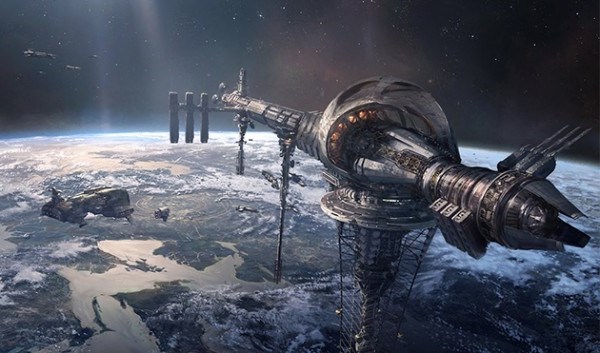
Mars and Venus are also home to humanity. On Mars, the Martian people live in domes that crisscross the surface, a Space Elevator brings people to and from the planet, and a constant flow of shipping to and from the Asteroid Belt and Solar System keeps the place busy. On Venus, the Cythereans live in cities that float atop the planet’s extremely dense atmosphere, harnessing carbon from the clouds to create graphene and diamond-based materials.

On all these worlds, humanity exists as a series of factions that know no national boundaries, and are collectively referred to as “Extros” – short for Extoprian. Thanks to over a century of runaway technological progress, diseases and disabilities have been eliminated, implants and embedded machinery allow for constant connectivity to the Nexus (future version of the Internet), and all vestiges of life are assisted by sentient programs and algorithms of various complexity.

space_elevator2
Meanwhile, the Outer Solar System hosts an entirely different mix of people. On the moons of Jupiter (the Jovians), Saturn (the Cronians), and Uranus (the Uranians), people enjoy a simpler existence. While they have access to plenty of advanced technology, many types of nanotech, biotech, and embeddadles are eschewed in favor of organic living, portable machines, and non-sentient computing.

Despite the fact that the Jovians, Cronians and Uranians are made up of countless peoples and factions, collectively, they are often referred to as “Retros” – a pejorative used to refer to their regressive lifestyle. But whether it is for religious reasons, personal reasons, or because they fear that Earth and the Inner Colonies have become consumed by runaway change and progress, the people who call these moons home prefer to maintain a balance.

Whereas these colonies were established in the latter half of the 21st century to ensure that humanity would have backup locations in case Earth died one day, by the 22nd century, they became dedicated to the preservation of something else. In this day in age, it is no longer about ensuring humanity’s physical survival, but rather preserving its spirit or a certain way of life.

Callisto_baseThe Plot:
Enter into this universe Jeremiah Ward, a disgraced former-detective who developed a drug problem as a result of his stressful work and the pace of life in the Inner Colonies. After an incident where two witnesses were murdered – which was attributed to negligence on his part – he is given a hefty prison sentence, which he decided to serve out in a penal colony on Mercury.

On this planet, where the day-side is hellish and unlivable, and the night-side is freezing and unlivable, mining crews live in the northern crater known as Prokofiev. Given the planet’s slow rotation (which takes 58 days to rotate once on its axis), mining crews go out to the night-side, spend days harvesting ore, and then transport it back to Prokofiev, where it then processed and fired off into space.

After a few years of this miserable existence, Ward is approached by a faction from Mars. Known as the Formists, this well-connected and powerful faction has a very strong standing on Mars. And they have a problem. One of their prospectors, who was traveling to the Outer Colonies to investigate their resource extraction operations, has gone missing. Worse yet, this prospector apparently had “sensitive materials” on his person that the Formists don’t want falling into the wrong hands.

titan_surface
These materials, they claim, detail a plan to convert Mars into a livable environment over the next few generations. Consistent with the Formists long term plan to terraform Mars into a new Earth, they are hoping to expand their contracts with the Outer Colonies for the vast amounts of resources they will need to do so. If these plans are made public, they worry that one of the rival factions – the Dysonists, the Habitationists, Settlers or Seedlings – will try to take advantage.

In exchange for finding their colleague and obtaining this information, Ward will have his sentence reduced to time served. He is told that his experience as an investigator makes him well-suited to the task, as well as the contacts he made in the Outer Colonies during his many years of service. But of course, he knows the real reason why he was selected: as a convict, he will be well-motivated to get the job done, and will be less likely to ask questions.

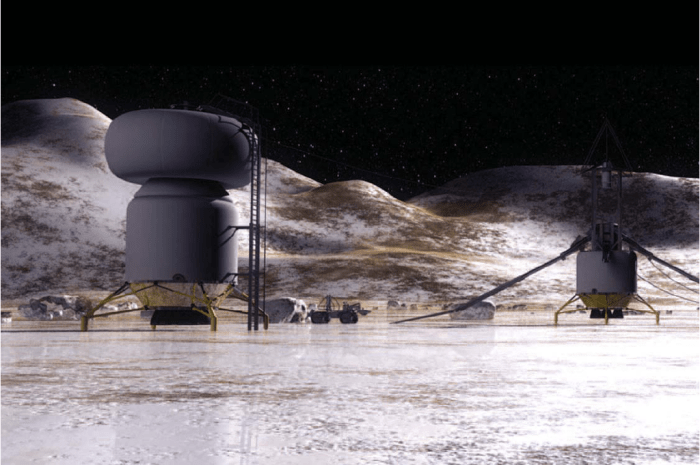
His journey takes him from Mars, to Jupiter’s moons of Ganymede and Callisto, and eventually to Titan – Saturn’s largest moon and the last stop of the prospector before he disappeared. When he finally comes to the end of his investigation, what he finds is far more than he bargained for. Rather than simply being a case of kidnapping or a hate-crime perpetrated by angry Retros, the prospector’s disappearance is part of a conspiracy that goes right to the heart of the Formist’s agenda.

alien-world
More than that, it goes right to the heart of an ongoing struggle, one which humanity has been preoccupied with for over a century. For in the end, the issue of humanity’s long-term survival has not been settled. And the solution to this problem just might mean sacrificing the few to save the many. In the end, Ward will be faced with a terrible decision: expose the agenda and spend the rest of his life on the run, or complete his mission and let things fall where they may?

***Of course, I can’t say what the big “conspiracy” is, for that would be spoilers galore! But suffice it to say, I have that worked out and its where the story gets particularly detailed, and brings up a lot of the intricacies of terraforming and space colonization.***

So that’s the idea. How does it sound? I’m five chapters in and quite hopeful that it will turn out to be something “magnum opus-y”.

Featured Guest Post: “Realistic Sci-Fi – The Best Films That Accurately Portray the Modern World” by Maria Ramos

interstellar_voyage-3840x2160

Please welcome back to the site, Maria Ramos. You may recall her last contribution, which dealt with Contemporary Dystopian Novels that are worth reading and not part of the current, overplayed YA fad. Well she’s back, this time with contemporary science fiction movies that are definitely worth watching. Enjoy!

The world of science fiction is full of fantastical tales that have no place in reality. Some of the best stories could never happen in real life. Still, the ones that really capture our imagination are those that contain a hint of truth. These five films are fascinating examples of realistic sci-fi films that may provide a glimpse into our future.

Many films of the past have been able to accurately predict things like tablet computers, home security and automation, cell phones and wearable tech. It’s a strange thought that these objects, when shown for the first time on the silver screen, seemed so far fetched and borderline ridiculous, but today are as commonplace as a coffee maker. Let’s take a look at some of the films that have gotten it disturbingly right in their predictions.

Metropolis (1927):
This film from the 1920s is set in a seemingly perfect city filled with wealthy people living a charmed life, with no idea that a vast population of oppressed workers are forced to stay underground, operating the machines that keep life going for the upper class. Although created decades before the advent of computers or even television, Metropolis predicted video calls through programs like Skype with its “television phone,” which characters in the movie use to communicate.

The Andromeda Strain (1971):
This film based on the novel by Michael Crichton tells the story of an alien virus that comes into contact with humans, mutating as it goes, almost destroying civilization. From biological warfare to satellites and laser weaponry, a lot of what is used throughout The Andromeda Strain mirrors the technology we have available to us today. Even the premise of the movie in general is not completely outlandish; microbiologists believe that it is possible that we may one day contract an extraterrestrial disease. If that were to happen, it’s unclear whether we would have the tools to combat it.

Gattaca (1997):
The premise of this 1997 flick may seem completely impossible: society is structured based on genetic sequencing, which reveals everyone’s genetic makeup. Clear lines are drawn, giving those who are genetically superior special privileges over everyone else. The discrimination the main character faces for his inferior dreams isn’t yet a reality, but as we work towards sequencing complete genomes, we will find ourselves closer to uncovering the secrets of our genes, and the consequences of this knowledge may not all be good. The film’s basic premise echos the recent controversy surrounding genetic testing to detect cancer.

Interstellar (2014):
In this movie, the world has become uninhabitable due to drought brought on by global warming, forcing mankind to search for somewhere to live. Although we haven’t reached this point, scientists stress the very real possibility of climate change ending life on Earth. If this were to happen now, humanity would be doomed, since we haven’t quite mastered the art of long-distance space travel yet. Still, scientists say that a trek on the scale of the one taken in Interstellar is possible. Ideas for how to accomplish this are still being explored, but thermonuclear fusion, light sails and gravitational slingshots are all potential solutions.

Mad Max: Fury Road (2015):
One of this year’s most popular films is also one of the most noteworthy as far as realism in science fiction goes. While apocalyptic settings aren’t uncommon in sci-fi, the psychology of the characters in Mad Max: Fury Road is unique. Instead of the stereotypical hero who beats the villain and gets the girl, Max shows the kind of psychological damage you might expect in a harsh environment like the apocalypse. The other people in the movie also show the influence of this trauma through their behaviors, making for a realistic portrayal of what the end of the world might really be like.

Scientifically accurate sci-fi can both educate and inspire its viewers. Films like the ones listed above offer a window to the future, letting us see what might happen if we continue on the path that we are on. These predictions are sometimes an encouragement to innovate, but also sometimes a warning to change course before it’s too late. Either way, realism in science fiction makes for quality films that can be enjoyed for decades to come.

Madmax

New Trailer: The Expanse

expanseHey folks, long time! I’ll get right to the point. I came across these trailers lately while chatting with my fellow fans of SF and Space Opera (SO). As you may know, one of the highlights from SD Comic Con every year are the trailers for upcoming movies and SF television series. Well, this year, a particularly interesting looking trailer was featured, one which got a lot of people excited.

Based on the novels of James S. A. Corey, the Expanse is set 200 years into the future, when humanity has colonized Mars and established a mining colony on Ceres. Tensions are brewing between Earth and Mars and a full-scale conflict is feared. Meanwhile, the people who work the Asteroid Belt (known as Belters) are resentful over the ways they are exploited by planetary governments and are threatening to revolt.

Enter into this a detective looking to solve a murder, but who naturally gets caught up in a web of intrigue. Naturally, the trailer impressed quite a few people, and Lauren Davis, the writer from IO9 who was there to write about it, even went as far as to say that this is the kind of show fans of SF have been “wanting since Battlestar Galactica”.

You can see why from the trailers. The show is dark, gritty, and has a realistic feel that puts human nature at the center of all its predictions for the future. Below is the first full-length trailer that made it to ComicCon, followed by the expanded trailer that aired just before it:

https://youtu.be/67vLGQiLbLk

https://youtu.be/6q7q-m4ybQ0

Source: IO9

Reciprocity – Making Progress

future-city-1Hey all. Just wanted to let people know that I’m still around. And as luck would have it, I’ve found myself with some free time; free time that I’ve put towards creative writing again! In the past two weeks in fact, I have come up with a lot of new ideas for both Oscar Mike and (more importantly) Reciprocity. On this latter project, I’ve spent the past few days working through the half-written spots, and now I have a full five chapters done.

More importantly, I have revised the overall plot yet again. The last time I did this (not that long ago), I chose to change the nature of the antagonist to that of a Chinese ex-pat who was a former member of Unit 61398 – the People’s Liberation Army’s cyber warfare division. His name was Shen, and his plot involved a string of kidnapping, double-dealing, and cyber-terrorism that threatened to change the global geopolitical balance.

I liked this idea because I felt that after a good deal of research, the focus of the story should be on post-communist China, where a great deal of social confusion and economic turmoil was leading to the emergence of a semi-fascist state. In a pattern that is reminiscent to modern-day Russia, Shen sought to take advantage of these changes in order to unleash a massive cyber attack.

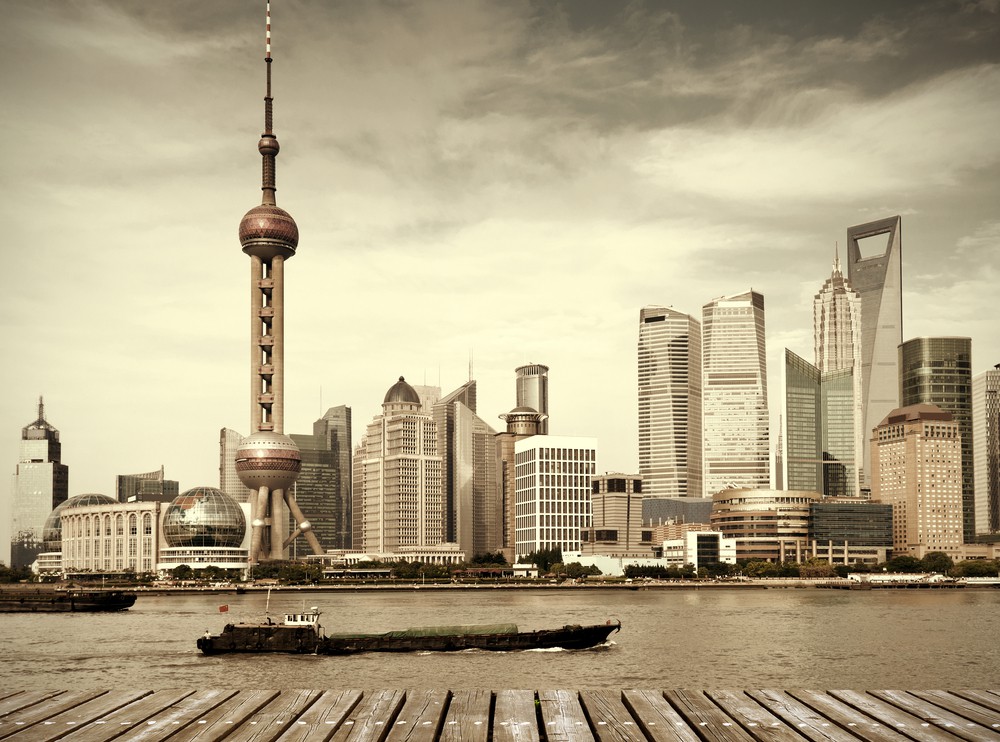
The downtown district of Shanghai. One of many locations in the story.
The downtown business district of Shanghai. One of many locations in the story.

This would have the effect of completely preoccupying the west, disabling the US Pacific Fleet, and allowing China’s new government to occupy Taiwan and the South China Sea, thus asserting their territorial sovereignty over the region. While this was interesting (at least to me), it still fell short. What I really wanted was an antagonist in the story that would make the focus be all about the two greatest issues we will be facing in the not-too-distant future.

These issues are none other than climate change, which will result in more in the way of droughts, wildfires, flooding, coastal storms, tornadoes, and diminishing resources; and technological progress, which will result in the pace of change and getting faster and faster to the point of total unpredictability.

For awhile, I’ve been writing about these subjects, and they were supposed to be the centerpiece of the story. So here’s the new plot, in a nutshell: The year, same as always, is 2030. A technological magnate’s child disappears while slumming in the Pacific Northwest in what appears to be an act of kidnapping. However, his disappearance is in fact orchestrated as part of a complex cyber intrusion designed to steal company data.

InternettrafficThe man leading this theft – who is known only as Zeke – intends to leverage this data in mainland China, where a former member of Unit 61398, now himself a technological magnate, is in possession of a quantum-based cyber virus of last resort, a weapon that was created for a war that never happened. This virus is known as “Baoying”, which in Chinese, loosely translates to Reciprocity.

Zeke knows about this weapon because he spent years developing contacts around the world, bringing together gun runners, terrorists, socialist and anarchist militias, and Chinese ex-pats that reaches from Central Asia and the Middle East all the way to South America and the South Pacific. Though separated by ideological differences, these organizations are united in wanting to see an end to the status quo.

Zeke, however, has his own agenda. A one-time member of the technological magnates he is now using as pawns, he saw so much of the world and witnessed atrocities firsthand. He also witnessed how the privilege of developed countries is paid for in the blood of others. After a scandal in which he publicly aired all of his companies many shady dealings, his partners crucified him and cast him to the fringes of society.

^In an age where the richer nations are facing the prospect of limitless energy, quantum computing, abundant resources and post-mortality while other states are failing due to displacement and mass starvation, Zeke is hoping to level the playing field once and for all. He is a genius and a man moved by a personal sense of justice. But most of all, he is a man dealing with terrible demons and some deep trauma that he can’t begin to suppress.

This kind of plot, I think, works so much better. The antagonist seems much more socially relevant, the story more focused on the big issues I like to explore, and it all seems a little less hawkish than a story where the Chinese are essentially the bad guys. But most of all, I envisioned a climactic scene where the antagonist – while explaining his motivations – says something like this:

I want a future I can control. I want a future where I have a choice. I am sick of unpredictability, or chaos and confusion. I’m sick of people being left behind, and our world being torn apart. Tomorrow, everyone will find themselves on common footing. Tomorrow, we will begin thinking towards our common future.

Try getting something like that out of a former communist who just wants to see his country win a war! Well, that’s the idea as I see it right now. What do you think? Sound good?

Reciprocity – First Peek, Part II

shutterstock_204508153

The air stunk of mildew of cigarettes. At least in the front foyer. Farther inside, the aroma of cooking smells and latrines began to intensify and take precedence. The interior floor space looked gutted, nothing but concrete floors and beams with barely any demarcation between one section and the next. In a central beam that lay several dozen meters inside, a large monitor had been mounted that was tuned to the local news.

The reporter recapped the game-winning goal by Villanueva, then quickly moved on to cover the displacement camps in Darwin clashing with police. After a few introductory words Shen could not hear, they moved to aerial footage of people with tan-complexions rioting, overturned cars and fires, and light-skinned police retaliating with shields and batons.

They passed many improvised rooms as they walked through the building proper. Tall stacks of crates or sheets of plywood, drywall or corrugated plastic that denoted the boundaries of different rooms. And inside, those who were at home sat huddled before monitors or gas stoves, cooking their afternoon meals or engaged in some online gaming. In one, a young lady as busy pleasuring and older man. Both parties looked up to acknowledge them as they passed a bead curtain that acted as the doorway, and then went right back to their carnal activity.

“This way,” said Shen, as they neared the stairwell at the end. The smell of mildew followed them, and on every stoop, a new waft of cooking smells. By the time they reached the fourth floor, the density decreased and it looked as if the entire space was dominated by one living area.

Not far from the doorway, two young toughs sat on some stacked plastic crates and exchanged words. The taller one wore a faux leather vest, what appeared to be tā moko ink on his arm. The smaller one wore a white tank and jeans, and his eyes glowed with a band of copper that indicated he had displays. Both jumped to their feet as soon as Shen and Ping walked in.

The tall one snapped his fingers, alerting three more youths in the room to approach them. Shen noticed the ink on his arm beginning to change shape, the intricate system of lines morphing to form something entirely different.

When the tall one spoke, he did so in Tagalog. “Ano ang gusto mo, tao?”

A small field of green characters formed in the lower right lens of Shen’s glasses.

What do you want, man?

“Is Wáng around?” he replied in Mandarin. He directed it to the smaller one, who immediately accessed a translation app and relayed it to the tall one. He stuck to Tagalog, and replied just as curtly.

“Siya ay hindi dito!”

He is not here!

Shen looked to Ping and reached into his pocket. Everyone reacted at once, pulling out assorted handguns and pointing them at him. Ping moved too, producing the impact gun he had inside his jacket. The weapon clacked loudly as he whipped it out, it’s targeting laser focused on the forehead of the shorter man.

“Stop!” Shen yelled.

The tall one’s ink had changed again. The line segments now converged to form the face of an angry tiger, mouth agape, fangs fully bared. Its purpose was clear to him now.

Dynamo ink, adrenal-activated, he thought. A way of letting people know exactly how pissed he was. He imaged there were many kids in Tondo that had them, perhaps it was a local gang’s calling card. Understandable that Wang had taken to hiring a few for security.

“Everyone just relax,” he said, raising his free hand defensively while the other slowly withdrew something from his jacket pocket. The tall one moved quickly to fetch what he’d removed as soon as it was clear.

A small folding leather case which he opened and examined. The display card inside read off a designation for a unit that no longer existed, and an army that went by a new name. But the identification and the picture were clear enough. A look confusion was the tall one’s reaction, which he directed at Shen. Shen nodded to him, motioning to the far end of the floor space, where he imaged Wáng would be.

“Go on. He’ll know what it means.”

The tall one said something to the others in Tagalog, and then ventured to the back, disappearing behind a large partition wall. All the weapons remained trained on them while they waited. Shen stood perfectly still and never stopped smiling. Ping, meanwhile, kept his weapon trained on the short one, his finger gently resting against the gun’s trigger. He, in turn, was now aiming his Glock squarely back at Ping.

Shen knew that if things went south, Ping would be the first to get a shot off. The make and model of the pistols the boys had indicated that they were old-world relics, double actions pistols with casings. No digital architecture in their design. In the time it took them to squeeze their triggers and ignite a single round, Ping’s weapon would have accelerated a full burst of caseless slugs into the short one’s forehead.

Of course, he also knew that that would be the only shot Ping could get off. Regardless of how fast the boy was, they had three more weapons aimed at them. And Shen knew he could only disarm one before the remaining three got a shot or two off at him.

Shooting first didn’t count much when you were horribly outgunned. Luckily, the tall one emerged again from behind the partition and yelled to his friends.

“Sabi niya ang mga ito ay okay!”

He says they are okay!

Shen smiled. He nodded to the men around him, who looked slightly dejected as they lowered their weapons. Ping lowered his as well and began to follow, when the tall one made an addendum.

“Siya ay nag-iiwan sa kanyang baril dito!”

He leaves his gun here!

Shen sighed and looked to Ping, nodding to his weapon. Ping didn’t argue, and flipped it around to pass it off to the nearest of Wáng’s henchmen. While reluctant, he didn’t appear particularly worried. He knew that the second any one of them tried to turn it on him, they’d receive a 2000 volt surprise.

Without further delay, they made it past the partition wall, and into the far end of the fourth floor. Shen immediately became aware of a long counter positioned next to the partition, and a large workstation pushed back against the far wall. Another thug-like man with dynamos was standing behind the counter, while at the workstation, a single Chinese national sat amidst a pile of scattered components and tools.

From the looks of things, he had been working on a wrist-mounted portable before they had arrived. Now, his eyes were fixed on Shen’s little “gift”. A monocle sat over one eye, but he wasn’t using it at the moment. As he gazed at the old credentials, no augments, apps or mediation were needed to make sense of it. Everything about it was known to him, as was the message it carried.

“Comrade Shen,” he said in Mandarin, his voice tired and harsh.

“Comrade Wáng,” he replied. “It’s been a long time.”

“Not long enough.” He kept his eyes fixed downward. “I can only imagine you coming here means that you are in some kind of trouble.”

Shen chuckled and advanced towards WĂĄng several paces. The man at the counter kept eying him carefully, his right hand clenching at something underneath. He paid him no mind, leaving that for Shen to do as he followed behind.

“Strictly speaking, I am no trouble. Nothing new, at least, old friend. But there have been some developments. Things which I need to speak to you about.”

WĂĄng looked at him momentarily, a look of bitter mistrust in his one eye. He looked back to the credentials quickly, and removed the monocle. His eyes took on a faraway look then, an expression that seemed to contain equal measures of nostalgia and sadness.

“Do you remember the day when we you first became a member of the unit?” he asked.

Shen took that as an invitation to come closer. “Yes, I do.”

“You should,” said Wáng, a trace of bitterness returning to his face. “For you, it was not as long ago. When I joined, the unit was still in its infancy. The concept of warfare not fought with tanks, bombs and assault rifles was still alien to most in the army. But those higher up had wisdom enough to know that information was the new measure of a nation’s wealth. It only served to reason that it would become the basis of warfare as well.”

Shen advanced the last few steps that stood between them.

“Methods that are not characterized by the use of the force of arms, nor by the use of military power, nor even by the presence of casualties and bloodshed, are just as likely to facilitate the successful realization of the war’s goals, if not more so,” Shen said, reciting the famous quote.

“You remember?” Wáng’s face momentarily brightened.

“Of course I do.” Shen replied, keeping his tone as even as he could. “And it’s what brings me here.”

WĂĄng removed the monocle and began to look at him ominously. He gave a quick glance at the man behind the counter, who stirred ever so slightly. Ping stood tensely by, poised to strike at the man with whatever weapons he still had at his disposal. At the moment, that was just his hands and feet. Perhaps it was time to get the point.

“I need to find Li.”

“Oh?” said Wáng. “I assume you mean our mutual acquaintance, from the old days?” Shen nodded. “I haven’t seen him in years.”

Shen removed his glasses and rubbed his tired eyes. It had been a long day, and there were limits to his patience as well. “I know you make regular trips to the mainland, old friend. And I know that you’ve met with members of the unit on your trips before.”

Wáng cocked an eyebrow. “You’ve been spying on me?”

“Not necessary, or possible given my current circumstances. But I do hear things. And I know that you facilitate entry to the mainland for people looking to get back into Zǔguó. I am one such person.”

Wáng nodded. “I also hear things, Comrade. And I find it hard to understand why you would want to return a place that does not welcome you. If anyone at Interior knew you were setting foot on native soil, they would surely have you shot on sight.”

“I know,” said Shen. “But I know that you can help with that.”

“What is it that you think I can do?”

“I will need biometric IDs for myself and the young one here, ones which I know you can provide. And I need you to facilitate a meeting with Li. I will take care of the rest, and see to it that you come away all the richer for it.”

“What do you want from Li?” he asked finally.

Shen inhaled deeply and looked him in the eye as he said it. “Boaying.”

WĂĄng went silent for a moment and looked caught between disbelief and amusement. Eventually, he opted for the latter and began laughing.

“Boaying does not exist, old friend. It was lost with the ‘restructuring’, like so much else. I’m sorry you wasted your time –”

Shen raised his hand to interject. “I know that is not true. I know that certain copies were made and that Li had access. If you could just –“

“What you are asking for is not possible!” Wáng said, cutting off all talk. “And even if it were, I would be hard pressed to think of anything that would justify the risk for me.”

“Oh?” said Shen, genuinely surprised. “I can think of much and more in that regard. I would imagine you would leave this hovel behind in a heartbeat if you could afford to do so. And I know that Comrade Li would be most grateful to you once he hears what I have to offer. He has accrued great wealth and power back home.”

“Quite,” said Wáng, rather bitterly. “Such are the rewards for those who ingratiated themselves with the new government.”

“Yes, but his power currently has limits. What I am proposing to him could potentially benefit him more than anything the Tuánjié zhèngfǔ has given to him. And knowing that you helped facilitate would put him in your debt for life.”

Wáng once again looked caught, this time between disbelief and anger. Mentioning his current surroundings, and raising the issue of Li’s own status back home was sure to do that. For a moment, neither man said anything. The silence only broke when Wáng looked in Ping’s direction and frowned.

“This one I do not recognize. He is new, yes?”

“He is that, yes.” Shen replied.

Wáng shook his head, drew in a deep breath and spat it out like it was bile. “He’s not even old enough to remember, is he? In fact, he looks barely old enough to know anything of what you are talking about.”

“Do not speak about me like I’m not even here!” Ping stepped forward with his hands curled into fists. The man behind the counter removed the submachinegun he had been concealing until now and aimed it at squarely at Ping. A small laser sight beamed in the dusty air, painting a small, steady dot on his right temple.

Shen looked at him angrily. WĂĄng could only respond with laughter.

“You see? He exhibits the petulance of the new generation. No deference at all.”

Ping face turned red and he was prepared to say something obscene, but thought the better of it. At this point, he had another gun aimed at him and was too far away to do anything about it. Shen was thankful at least that cooler heads were prevailing and the latest in Wáng’s group of thugs hadn’t lost control yet.

“One generation plants the trees, and another gets the shade,” Shen said, hoping to get them back on track. “Perhaps the fault lies in the world we left for them. It has corrupted them with excess and makes them forget.”

“Perhaps.” Wáng turned his attention back to the materials on his desk and began to tinker with them quietly. “But it too late to help that now. The world has moved on without us. My advice to you, Comrade, is to accept that.”

Shen waited momentarily. He was sure his old colleague would have more to say. When nothing came, he stepped back from the table and turned to Ping.

“I shall be in the city for a few more days. Please let me know if you reconsider.”

Wáng kept his eyes on his work and didn’t bother to reply. Shen turned to leave, but paused to say one last thing.

“Life certainly has not worked out the way any of us planned, old friend. Despite what you might think of the path I have chosen, I know that we share the same sense of loss. All that I ask is that you consider helping me right that wrong, and leave something better for those who follow in our footsteps.”

WĂĄng still would not acknowledge him. But Shen knew he had absorbed everything he had just said and that it made an impression. He came about again and walked by Ping, who seemed surprised and a bit beleaguered to see that they were leaving. Following Shen out, they returned to the thugs that guarded the stairwell where he retrieved his weapon. Stern glances were exchanged between them as they walked out, but Ping ignored them. His only concern at the moment was keeping up with Shen, and asking him the obvious once they were well out of earshot.

“Is that it? We’re just leaving?”

Shen slid his glasses back on and powered them back up. He had a number of new messages, all encrypted. No doubt, they were from his contacts back east. “He will come around. Just give him some time to think it over.”

“And what if he doesn’t?”

Shen smiled. “You do not know him as I do. He will not pass up an opportunity to place Li in his debt. And he is not as satisfied with his current predicament as he would pretend. He just does not want to admit as much openly. Give him time.”

Ping sighed, checking his weapon to make sure Wáng’s men hadn’t stripped it of its magazine. He was pleased to see that all the slugs were still there. “In the meantime, what do we do?”

They had come to the ground floor, where Shen stopped and turned to look at him. “Same as always,” he said. “We stay with those who would harbor us, and hope that no one in Beijing realizes we are here. Otherwise, we can expect to be returning to Zǔguó ahead of schedule.”

Reciprocity – First Peek

shutterstock_117410959Happy Holidays everyone! Hope this post finds everyone safe, snug and warm in their homes, preferably surrounded by loved ones and lots of new swag! While I’m on break from my writing jobs, I thought I’d switch gears and get back to my personal writing for a bit.

And as luck would have it, I made some headway with my latest story idea – the near-future thriller Reciprocity – and I thought I’d share some of it. So far, I’ve got a few introductory chapters, and a prologue that introduces the antagonist. So, over the next few days, I thought I might share some of this work and see how it stacks up.

Here is the first snippet, which takes place in the Philippines in the year 2029. Enjoy!

*               *               *

Manila, Philippines, Asia-Pacific Economic Cooperative

He was bathing in a sea of connectivity, looking out onto the second skin that blanketed the Earth. There was virtually no corner of it now that wasn’t covered, but finding oneself in a major city was like standing directly in a pivot. After spending many weeks off the grid, it was like stepping back into the light of day after days in a dark cave. His entire body awash with high-fidelity photonic light and a microwave glow.

He felt like his skin should be burning, and yet it wasn’t…

Setting his glasses to normal view, the microwave landscape disappeared and was replaced by the stark, colorful reality of the favela. At once, his sense adjusted the combination of movement and sound that was so common to such places. A world of congestion, decay, and waste, yet teeming with so much life. Shen remembered coming to the region before, back in the day before reality could be mediated and augmented.

Now, the unseen energy and information that coursed through the landscape was illustrated in any number of ways.

At the moment, it took the form of a dozen colorful overlays that played across his contacts. He looked left and right along the thoroughfare and was awarded with helpful icons and some less-than-helpful adverts. Compared to the Metro area, the visual landscape here was not nearly as cluttered. But there were still tourist markers and small tags that he could access if he so chose. Slum tourism had become its own business of sorts, a form of adventure tourism that appealed to the reckless and irresponsible.

And for their convenience, Tondo’s checkered past and the locales that had played a role were mapped out and catalogued. They walked a few more blocks, sticking to the overhang that shaded them from the beating sun. Bagyó season was fast approaching, and the air had taken on a sticky, wet quality. For those unaccustomed, it could be the most stifling thing in the world. But for expats accustomed to venturing across the Pacific, it was within the realm of the ordinary.

They passed several rows of vendors; men, women and children who had brought their stands directly out into the street, offering large piles of oranges, bananas, watermelon, dragonfruit, mangosteens, and lychees. Farther on, they were hit with the scent of fresh and rotted produce, and the stands changed their offering to provisions of cassava, okra, pak choi, and bitter melon.

Much like the clothiers, toy sellers and peddlers or wearables that resided not far away, they would be sitting on the very edge of the streets until the weather turned. Until the rain began to pelt down with incredible fury and the flooding began. A tenacious folk, and one that seemed to respond to escalating catastrophes like the coming and going of the tide.

“Is that it?” asked Ping, pointing to a hazy standing structure at the end of the block.

Shen squinted to allow his contacts to zoom in on the building, shrouded by dew and smog. An icon appeared over top that read Cathay Towers, and a small stub explaining the nature of the housing project and how its status was currently listed as Postponed Indefinitely.

“Yes, it is,” Shen replied, tapping on his glasses again to adjust the display. He cycled to IR and noted the sheer number of heat signatures located on the first three floors. “Looks like Wáng has found himself a colorful place to live.”

“Is it safe to just walk in?”

Shen looked to the fourth floor, noted the few bodies that were standing about. Another tap and the display adjusted again, aided by the small sensor suite attached to the outer frame. He zoomed and adjusted until the scanner had just the right resolution, producing signature of a different kind and in different color. Opal and green came together to indicate the outline of weapons, all small arms from the look of it.

“There’s not many protecting him. And their weapons are antiquated. We’ll have no trouble.”

They pressed on, moving through the sea of humanity and commerce. Upon reaching the thoroughfare that ran perpendicular to them, they passed into a different crush. Countless vehicles, smart and dumb, forced them to pick up their feet and weave through the tangled mass of metal and plastic. The shouts of vendors were replaced by cab drivers and commuters exchanging expletives in Tagalog, Spanish and English – often in the same sentence.

At the front entrance, a large set of double doors that were permanently open, they paused. Shen touched the small protrusion in his jacket pocket to make sure it was still there. An odd thing to do, but if things went awry in there, it was his assurance that they might make it through.

He looked to Ping, who appeared to be doing the same. Except in his case, his fingers tapped against the PDW stashed under his coat and next to his hip. In a pinch, he knew the boy could be counted on to retrieve it and squeeze off a maelstrom before anyone else got a shot. Hopefully, his old friend would be in a talking mood and it wouldn’t come to that.

“You ready?” he asked. Ping nodded, a look of hard resolve on his face. “Good. Stay close and try not to be appalled by what you see inside.”

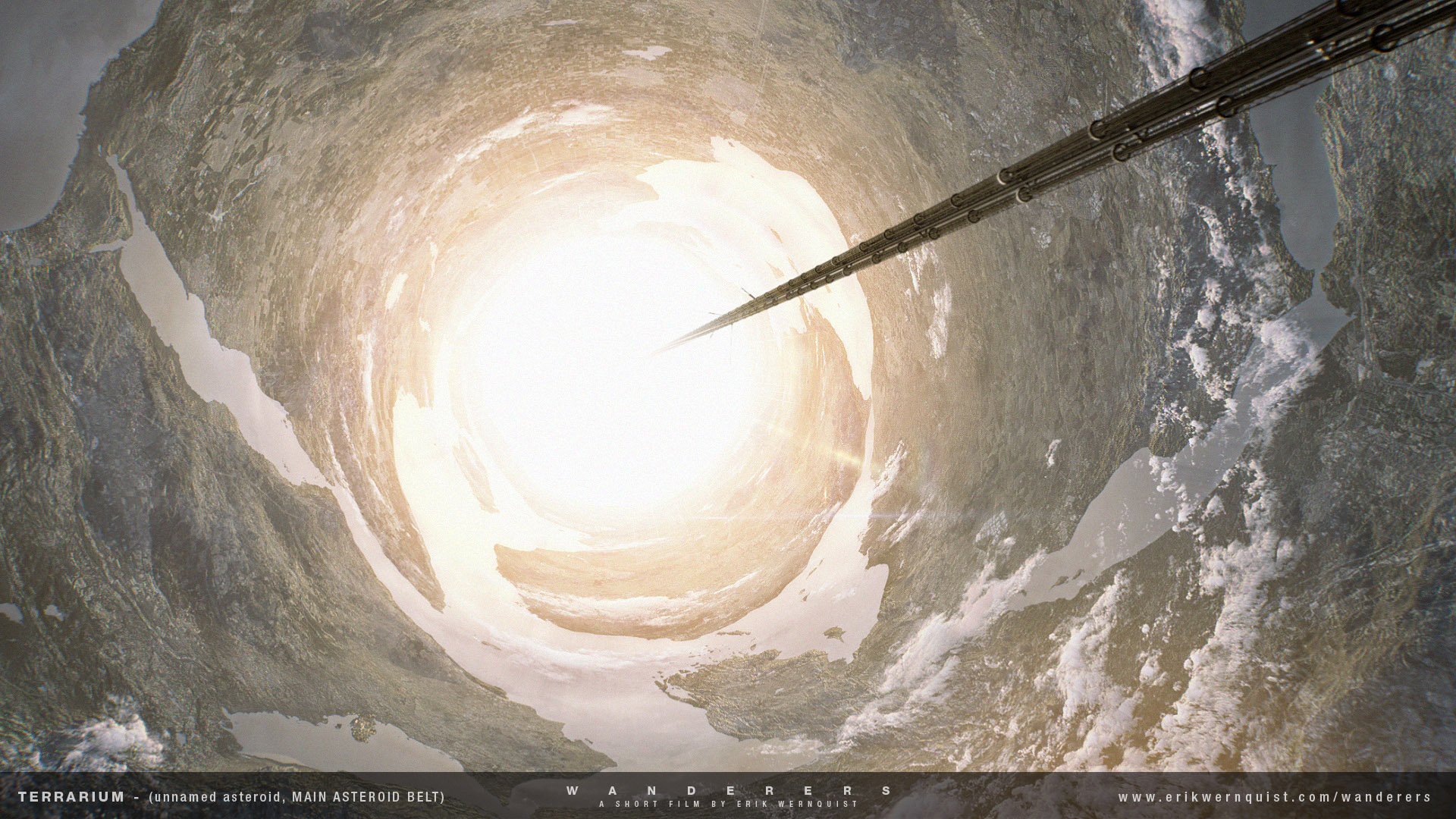
Wanderers by Erik Wernquist

Terrarium. Credit: Erik
Terrarium (unnamed asteroid, Main Asteroid Belt). Credit: Erik Wernquist

This has to be one of the most inspiring short films of the year. Erik Wernquist = a digital artist and animator from Stockholm, Sweden – released this movie this past fall, and its made quite the impact already! Addressing the idea of future space exploration, Wernquist uses stunning visuals to show how human beings may one day fly to Jupiter, float walk on the surface of Mars, skate on the frozen surfaces of Europa, and fly through the skies of Titan.

One thing I myself loved was the attention to detail and little accuracies. Within each impressive visual, there are hints that give away the locations. For example, the blue sunset is from Mars, as pictured by NASA’s many rover missions over the past few years. The frozen lake where people are skating on shows Jupiter looming in the sky, indicating that it is Europa. And an overhead shot of Titan shows the “Mini Nile River” observed there by the Cassini space probe. And while the asteroid is unnamed, I would bet dollars to donuts that Vesta!

Including in these visuals are a number of speculative science fiction ideas pioneered by writers like Arthur C. Clarke and Kim Stanley Robinson, not the least of which have to do with space elevators and habitats built into hollowed-out asteroids. But above all is the contribution of Carl Sagan, who’s narration from his own book “Pale Blue Dot: A Vision of the Human Future in Space” (1994) provides the voiceover for the film.

You can watch the short film below, and be sure to check out Wernquist’s website for more info and his stunning gallery of images:

Terminator Genisys Trailer

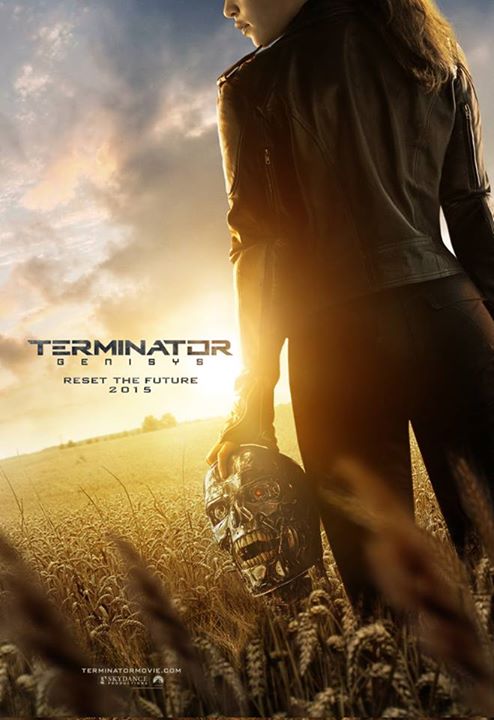
Terminator-Genisys-posterRumors have been flying for over a year now as to what the new Terminator relaunch will look like, and what the plot will entail. We knew in advance that Anrie would be back (sorry!), that the movie would be set in the future and the present, and that it would be rebooting the plot after the last few abortive sequels. Well, they finally released a full-length trailer that answers all the nagging questions, it seems!

From what is shown, the film starts in 2029, where John Conner is leading the resistance to their victory of Skynet and the Terminators. Consistent with the original movie, they overrun the machines base, only to find that they have sent a machine back in time to kill John mother, Sarah. Reese steps through the portal with the intent of saving her, only to find that the past has changed drastically.

In this version of the past, Sarah is the militarized, ass-kicker we remember from T2, Arnie is an aged T-101 John sent back in the second movie to protect himself, and a newfangled T-1000 is hunting them. And in the course of it, Sarah explains to Reese that the past he thought he was traveling to no longer exists. Apparently, this past is a mashup of the previous timelines covered in the first two movies… interesting.

TG_arnieAnd of course, there’s a ton of shooting and shit getting blown up! We also get to see from this trailer who will be playing whom, and the cast looks pretty good. Arnie reprises the role of the good Terminator (interesting that he’s aged),  Emilia Clarke (of GOT fame) plays Sarah Conner, Jason Clarke is John Conner, Jai Courtney (Sam Worthington’s less-talented clone) is Kyle Reese, and Byung hun Lee (of G.I. Joe fame) is the evil T-1000.

I do wonder how they plan to explain the aging Terminator angle. But I imagine it will be something along the lines of Arnie saying “you know how I explained how I’m a cybernetic organism, living tissue over a robotic endoskeleton? Well, the tissue part get’s older and saggier with time. Go figure!”

The movie is set for release in August of next year. Enjoy the trailer!

Reciprocity – The Deets

self-aware-colonyHey again, all. I find myself with some spare time for the first time in awhile. So I thought I might take a moment to share an idea I’ve been working with, in a bit more detail. Last post I made, I talked about the bare bones of a story I am working on known as Reciprocity, the successor to the story known as Apocrypha. But as it turns out, there are a lot of details to that story idea that I still want to share and get people’s opinion on.

You might say this is a story that I am particularly serious about. Should it work out, it would be my break from both space-opera sci-fi and zombie fiction. A foray into the world of hard-hitting social commentary and speculative science fiction.

The Story:
So the year is 2030. The world is reeling from the effects of widespread drought, wildfires, coastal storms, flooding, and population displacement. At the same time, a revolution is taking place in terms of computing, robotics, biomachinery, and artificial intelligence. As a result, the world’s population finds itself being pulled in two different directions – between a future of scarcity and the promise of plenty.

space-solar-headSpace exploration continues as private aerospace and space agencies all race to put boots on Mars, a settlement on the Moon, and lay claim to the resources of the Solar System. India, China, the US, the EU, Russia, Argentina, Brazil, and Iran are all taking part now – using robotic probes and rovers to telexplore the System and prospect asteroids. Humanity’s future as an interplanetary species seems all but guaranteed at this point.

Meanwhile, a new global balance of power is shaping up. While the US and the EU struggle with food and fuel shortages, Russia remains firmly in the grips of quasi-fascist interests, having spurned the idea of globalization and amicable relations with NATO and the EU in favor of its Collective Security Treaty, which in recent years has expanded to include Iran, Afghanistan and Pakistan.

shanghai_towerMeanwhile, China is going through a period of transition. After the fall of Communism in 2023, the Chinese state is lurching between the forces of reform and ultra-nationalism, and no one is sure which side it will fall on. The economy has largely recovered, but the divide between rich and poor is all too apparent. And given the sense of listless frustration and angst, there is fear that a skilled politician could exploit it all too well.

It’s an era of uncertainty, high hopes and renewed Cold War.

The MacGuffin:
The central item of the story is a cybervirus known as Baoying, a quantum-decryption algorithm that was designed by Unit 61398 in the early 2020’s to take down America’s quantum networks in the event of open war. When the Party fell from power, the Unit was dissolved and the virus itself was destroyed. However, rumors persisted that one or more copies still exist…

MatrixBackgroundNotable Characters:
For this ensemble to work, it had to represent a good cross-section of the world that will be, with all its national, social and economic boundaries represented. And so I came up with the following people, individuals who find themselves on different sides of what’s right, and are all their own mix of good, bad, and ambiguous.

William Harding: A privileged high school senior with an big of a drug problem who lives in Port Coquitlam, just outside of the Pacific Northwest megalopolis of Cascadia. Like many people his age, he carries all his personal computing in the form of implants. However, a kidnapping and a close brush with death suddenly expand his worldview. Being at the mercy of others and deprived of his hardware, he realizes that his lifestyle have shielded him from the real world.

Amy Dixon: A young refugee who has moved to Cascadia from the American South. Her socioeconomic status places her and her family at the fringes of society, and she is determined to change their fortunes by plying her talents and being the first in her family to get a comprehensive education.

Climate_ChangeFernie Dixon: Amy’s brother, a twenty-something year-old man who lives away from her and claims to be a software developer. In reality, he is a member of the local Aryan Brotherhood, one of many gangs that run rampant in the outlying districts of the city. Not a true believer like his “brothers”, he seeks money and power so he can give his sister the opportunities he knows she deserves.

Shen Zhou: A former Lieutenant in the People’s Liberation Army and member of Unit 61398 during the Cyberwars of the late teens. After the fall of Communism, he did not ingratiate himself to the new government and was accused of spying for foreign interests. As  result, he left the country to pursue his own agenda, which places him in the cross hairs of both the new regime and western governments.

artificial-intelligenceArthur Banks: A major industrialist and part-owner of Harding Enterprises, a high-tech multinational that specializes in quantum computing and the development of artificial intelligence. For years, Banks and his associates have been working on a project known as QuaSI – a Quantum-based Sentient Intelligence that would revolutionize the world and usher in the Technological Singularity.

Rhianna Sanchez: Commander of Joint Task Force 2, an elite unit attached to National Security Agency’s Cyberwarfare Division. For years, she and her task force have been charged with locating terror cells that are engaged in private cyberwarfare with the US and its allies. And Shen Zhou, a suspected terrorist with many troubling connections, gets on their radar after a mysterious kidnapping and high-profile cyberintrusion coincide.

And that about covers the particulars. Naturally, there are a lot of other details, but I haven’t got all day and neither do you fine folks 😉 In any case, the idea is in the queue and its getting updated regularly. But I don’t plan to have it finished until I’ve polished off Oscar Mike, Arrivals, and a bunch of other projects first!

Rebooting An Idea – Reciprocity

future-city3For awhile now, I’ve been tinkering with a story idea known as Apocrypha. It first came to me back in 2009 when I decided to move away from space opera and into more hard science fiction. I even decided to relaunch the idea a few months back, which would be the second time I decided to reboot the idea. And now, I’m rebooting it yet again, but with one major change.

Basically, I’ve re-conceived the plot to focus on a world set in 2030, where China’s Communist system has collapsed, Russia continues to exist as a semi-fascist state, the internet of things is in full swing, and several different forces are competing for control over which direction the future takes. Some want to rehash old rivalries, while others want to bring about a revolution in computing that will dissolve all boundaries.

shanghai_towerThe name of the new story is Reciprocity, which is taken from the Chinese concept of Bao Ying. I chose this as a name because while researching Chinese ancestral religion, I came across a central theme which states that the fate of all human beings is determined by cosmic reciprocity.

The concept of Bao Ying is also expressed as follows in various Zhou-Dynasty texts:

On the doer of good, heaven sends down all blessings, and on the doer of evil, he sends down all calamities.

This belief incorporates two separate elements:

  1. Ming yun: which loosely translated, means personal destiny. Whereas ming is “life” or “right”, the word yun defines “circumstance” and “individual choice”. In the Chinese ancestral faith, it is perceived as something both fixed (bound by fate) and flexible (implying choice and free will).
  2. Yuan fen: which means “fateful coincidence”, describing good and bad possibilities and potential relationships. Here too, the elements of fate and choice intersect, with good and bad casualties being assigned usually to one or the other.

Both concepts are linked, because what appears on the surface to be chance events (for better or worse), are part of the deeper rhythm that shapes personal life based on how destiny is directed. Given the fact that I thought the story should focus on China, this concept spoke to me.

cyber_virusOriginally, Apocrypha was all about a group of apocalyptic terrorists who have ties to various anti-modernist, anti-western groups who try to use a Chinese cyber-virus named HǔnluĂ n (Chinese for chaos) to accomplish their goals. However, this idea wasn’t panning out in a few ways. Mainly, the antagonists didn’t seem believable to me, especially where their motivations are concerned.

But after talking it over with a friend and neighbor, I came to realize that the real focus of the story was China – or rather, how the aftermath of Maoism would affect the country and the global balance of power. In this sense, the antagonists were much more believable if they themselves were Chinese ex-pats, people who were unhappy with the current world order and wanted to change it.

Unit-61398-Chinese-Army-Hacking-Jobs-With-Great-BenefitsBorrowing from Russia’s post-Communist experience, I basically foresee China going through many of the same problems in the near future. First, the state would find itself under a great deal of pressure due to ongoing demands for reform, pro-democracy protests, and the memory of Tienanmen Square. And I also imagine the health effects of air pollution and cancer farms would also add to the resistance.

But by the 2020s, I expect that the country will also be reeling from the effects of drought, famine, and the destruction of water tables. And then there would be the collapse of the economy caused by the implosion of the real estate bubble – a very likely possibility – which would end the Party’s long history of buying loyalty with economic growth. At that point, the Party would officially fall under the weight of its own corruption, bankruptcy and failure.

phoenix-towers-worlds-tallest-wuhan-china-designboom-01Ten years later, China would find itself in a state of serious change and facing an ambiguous future. On the one hand, it would remain a major power economically and militarily, but would still be suffering from lingering environmental damage and uneven development. As a result, it would find itself vulnerable to quasi-fascist politicians looking to exploit people’s uncertainty and funnel it towards a revisionist agenda.

I think you’ll agree, this idea makes way more sense than its predecessor. What’s more, it would give me a chance to cover a big angle I was looking at, which was the involvement of former members of the People’s Liberation Army Cyberwarfare Division (aka. Unit 61398). Assuming that said people were out a job in the not-too-distant future, they would be seriously upset and willing to help in a malicious plot.

What do you think? Too political? Or does it have potential?