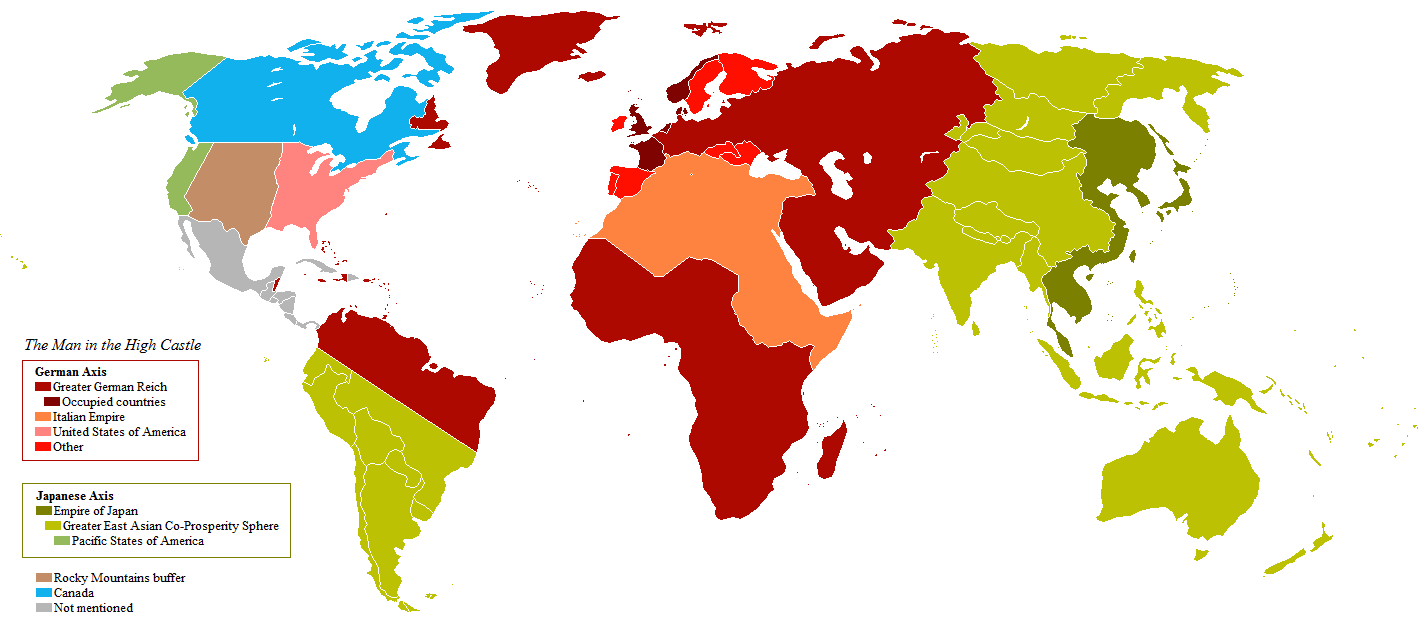
Last time, I spoke (at length) about all the awesome firearms that come to us from a variety of science fiction franchises. But let’s face it, there’s a lot more than just guns to speak of! In fact, part of the genius of sci-fi is in how it is constantly inventing entire arsenals of weaponry, tools, and the various nicknacks that make the world go round. Any director or writer who show attention to detail will make sure that their characters come equipped, looked the part, and that their settings have plenty of believable gadgetry taking up space in the background. Here are just some of the cool examples:
Claws: Along with the burner/plasma caster, these weapons are the most basic of Hunter weapons in the Predator universe. According to tradition, every Hunter must distinguish themselves in battle by confronting an enemy in single combat using no other weapon than their claws. Based on the two non-crossover films (Predator and Predator 2), this is apparently done once all lesser prey are eliminated and only the top prey is left. When that occurs, the Hunter will ensure that this finale opponent has been deprived of any additional weaponry, and then will shed every other weapon in their arsenal and engage them in hand to hand combat.
Combi-Stick: Part of the Hunters arsenal, this weapon comes from the Predator universe and is part of their wider arsenal of cool weaponry. The name refers to the fact that this staff serves multiple functions. Collapses, it serves as a sort of quarter staff. However, the stick has telescoping sections with a blade like end, which when deployed turn it into a spear. In Predator 2, a hunter used his stick on multiple occasions. Against a group of the Jamaican gang members, it was used strictly for impaling, but during a later scene, it was used as a throwing spear against Danny Glover’s character.
Crysknife: The Fremen weapon of choice, made from the tooth of a Maker (i.e. a Sandworm). The name and design of the weapon are based on the kris, a ceremonial dagger that was traditionally used in Indonesia and is associated with many cultural legends.
A testament to Herbert’s ability to incorporate historic and cultural elements into his stories, the kris is an enduring symbol of the Dune universe and was used by Fremen for warfare, duals, and ceremonial purposes, much like the real thing! In addition, the Fremen had very strict rules about the use and exposure of these knives. According to the Shadout Mapes – the Fremen housekeeper in Dune – who gives one to Jessica: “Who sees that knife must be cleansed or slain!” And as Leto II remarked in Children of Dune: “The crysknife dissolves at the death of its owner.”
Lasgun: This weapon was the brainchild of Frank Herbert, and is a familiar weapon in the Dune universe. According to Frank’s many novels, the lasgun was a continuous-wave laser projector weapon that when fired emitted a constant, narrow beam of photons. Though it was able to cut through just about anything and was the weapon of choice in the Old Imperium, it had since fallen into disuse by the first Dune novel.
This apparently had to do with the invention of personal shields. Rather than protecting against a lasgun burst, the interaction of the two would cause a reaction that rivaled that of an atomic explosion. Hence, attacker and defender would both be killed instantly if either ever came into contact. Much like the prohibition against the use of nukes in Herbert’s universe, one would get the distinct impression that he was commenting on the futility of nuclear deterrents and arms races.
But that’s another matter. The lasgun, from its first appearance in Dune, has gone on to inspire many a sci-fi franchise. One that immediately comes to mind is Akira. In this movie, riot squads and the military employed large, external cell powered weapons to fire focused beams of light on a large mob, hewing off limbs and burning holes straight through some people! The main character Kaneda also commandeered one and used it to fight his psionic friend, Tetsuo, near the end of the movie.
Lightsaber:
Just what is it about lightsabers that make them so unbelievably cool? Is it that warm glow? The otherworldly feeling one gets from seeing one being activated? Could it be that crack, hiss sound they make when they clash, or that warbling noise when they’re spun around? Or could it just be the fact that they deflect blasters and cut through anything? Well yes! It’s all of the above, clearly! Yet another brainchild of George Lucas, meant to call to mind scenes of swashbuckling and chivalry from old samurai movies, the lightsaber has since gone on to occupy a central spot in the collective unconscious of an entire generation. It is a staple, perhaps THE staple, of pop culture’s take on sci-fi.
Making its debut appearance in the first Star Wars movie, the lightsaber was the established weapon of the Jedi. In addition to being their mainstay, lightsabers were also highly personalized, every Jedi being tasked with building one as part of their training. Originally, the only two designs were that of the blue and red, the former being associated with Obi Wan and Anakin Skywalker (which Luke then inherited), and the latter being associated with Darth Vader. However, Luke went on to create his own and fashioned a green beam. With the expanded universe, significance has been given to different colors, each one associated with a different class of Jedi, and indicating whether they are a member of the Sith or the Jedi Order.
For starters, blue is the color of the Jedi Guardian, the warrior class of the order who focus on combat training and fighting. Green is used by the Jedi Consuls, people who focus more on the force and accumulating wisdom and insight. Yellow represents a sort of middle ground, belonging to those Jedi who focus on a combination of both and are usually called upon to settle disputes and act as arbiters. When it comes to the Sith, only one color appears to be used, and that is red. However, purple, orange, and other closely related colors have popped up from time to time in various places as well. In addition, Mace Windu, the Jedi Master portrayed by Samuel L. Jackson, wielded a purple lightsaber as well. However, this was apparently due to Jackson’s insistence that his character have a purple weapon, as well as the initials BMF etched onto the side!
Ma’Tok Staff: Coming to us from the Stargate universe, the Ma’Tok is a combination laser gun, club staff that is used by Jaffa warriors (the specially-bred human servants of the Goa’uld). According to the Stargate Wiki, the Ma’Tok relies on a plasma discharge to strike and cauterize the enemy, causing severe damage and intimidating resistance. It takes its power from an internal cell that employs a liquified mineral (Naquadah) to generate plasma energy. This liquid mineral gives the staff a virtually indefinite shelf life, making it the perfect blend of aesthetics and lethality!
Monomolecular Wire: Here’s an idea that comes in various forms, but for the purposes of this post, I shall stick to the examples that I know best. The first one comes in the form of the Yakuza enforcer from Johnny Mnemonic! Anyone who’s seen this movie (or read the short story it was based on) will remember the main badguy who had an artificial thumb that contained a long filament of glowing wire. When he pulled that thing out and started whipping it around – LOOK OUT! – things began to get lopped off and sliced up! Another example of this being used as a weapon is from the Japanese anime Hellsing. In that show, the butler of the namesake character had monomolecular wires attached to each finger which he would break out whenever there was a crisis. Perhaps they were fashioned from silver, I really can’t recall. Would make them more effective against vampires though!
Plasma Sword: And we’re back to the Halo universe for another example of cool gear! And today, the item in question is the plasma sword. As gamers are no doubt aware, this weapon is melee weapon of the Elites, but can be employed by humans as well since it’s your basic hand-held weapon. And much like lightsabers and lasguns, it can cut through just about anything and makes short work of any opponent. In many ways, its even more effective than the ballistic and energy weapons in the game. Whereas those can take several shots to take down an enemy (especially someone infected by the flood) one good hit from this baby will turn them into pulp! And if you see an enemy approaching you with one, be sure to hang back and unload your weapon in their direction!
Stone Burner: Doubling down on the Dune universe, the next example of cool weapons comes in the form of Stone Burner. As a tactical nuke of limited yield, this weapon was the only form of nuclear device that was not prohibited by the Great Convention. This body, in addition to banning all forms of AI’s, also put a stop to the use of nuclear weapons, though it did not forbid the Great Houses from owning any. In any case, Stone Burners, when used strategically, could have a devastating effect on an enemy.
This weapon makes only one appearance in the Dune saga. In Dune Messiah, Paul Atreides is lured into a trap in the old quarter of Arrakeen where a stone burner is set off, which leads to the loss of his eyes. Though physically blinded, Paul was not deprived of his vision (i.e. his prescience). This all had to do with a larger plot to force Paul to surrender his power as Emperor in order to save his children. And I think we can all agree, any plot that involves a tactical nuke and blinding your enemy Samson-style is pretty badass!
Throwing Disc: Another Hunter weapon, this particular one made its first appearance in the second Predator movie and then went on to become a regular part of the Hunters’ arsenal. Much like their other weapons, the throwing disc appears to have many variations and may even be personalized to an extent. This may be the result of constant upgrading, or it may be that individual Hunters have a hand in designing their own gear. In either case, many types of throwing discs have appeared. Some employ simple curved blades, blades with spikes, or even shuriken-like appendages (as the picture at right demonstrates). In each and every case, the result generally involves hewed limbs and decapitations!
Thermal Detonator: “Because he’s holding a thermal detonator!” Yes, whenever a bounty hunter pulls one of these out, you know they mean business! This weapon, which comes to us from the Star Wars universe, made its first appearance in Return of the Jedi. Since that movie came out, the device has been mentioned and referenced countless times in the expanded franchise. Apparently, thermal detonators are the grenades of the future, using plasma charges that when detonated, cause a large explosion that will burn through just about anything. Always be sure to bring one to a negotiation, just be sure to get the ones with the fail-safe triggers!
Vibroblades: My third and final act of doubling down on a single franchise! Vibroblades are an integral part of the Star Wars universe, but also appear in a number of other franchises. In each case, the weapon revolves around melee weapons that are powered by ultrasonic devices. This increases the weapons cutting effectiveness, and makes them almost as dangerous as a lightsaber. Well, more like a distant second! But non-Jedi’s got to settle for what they can get.
In the video game Knights of the Old Republic, vibroblades and melee weapons are used due to the introduction of personal shields. Some might call this a rip-off of the Dune universe, but in this case, its not so much a matter of necessity as practicality. If an enemy can absorb your blaster fire, then rushing and attacking them with a sword kind of makes sense. And it gives the characters some practice with melee combat before they learn to harness their Jedi abilities.
Last Word:
Okay, I got nothing! Yep, after looking through all the aforementioned examples of cool weaponry, I really couldn’t find any particular patterns that were worthy of comment. Basically, it all comes down to things that augment or go beyond the usual arsenal of guns. It’s only where the swords and knives come into the mix that I see anything beyond simple coolness. And just about all that drinks from the cup of Frank Herbert, a man who merged the ancient and futuristic in order to make a point about technology and how one could find the past in the future and the future in the past. Yeah, that stuff was deep!
As for the rest of it, it’s just plain cool to behold… and fantasize about! Yeah, twenty years later and I still want a lightsaber of my own! 😉
I’m getting hooked on writing conceptual posts, mainly because it gives me the chance to explore a lot different franchises of sci-fi without being too constrained. Not only that, I really like digging into subject matter of finding the common elements; in this case, the stuff that makes cool stuff cool! So far, I’ve covered the concepts of Galactic Empires, Planetkillers and Ancient Aliens. But today, I thought I’d tackle something a little simpler that’s been known to make sci-fi geeks experience collective nerdgasms! Today the topic is: COOL GUNS!
BFG 9000: Starting off this review right is the BFG (Big F***ing Gun) that comes to us from the Doom universe. Fans of that old franchise know this one by heart, and I’m sure they remember with some nostalgia what it was like firing this thing. Given that Doom was like most first-person shooters, this weapon would turn up late in the game as a way of dealing with the more tenacious evil critters. And it worked! One shot released a big cloud of green plasma which killed everything in the vicinity. Unless it was a boss, in which case, it might take two or three… Apparently, Quake II and Quake III Arena pay homage by including their own version, known as the BFG10K.
“Blow Dryer”: Also known as a “burner” or plasma caster, this weapon was the mainstay of the Predator aliens and is featured in the many movies, comics, video games, and novels of the franchise. Mounted on the shoulder, this weapon would discharge a ball of red-hot plasma into objects, causing damage akin to an explosive device, but with none of the messy shrapnel. Though the standard model is shoulder mounted and aimed using a heads-up-display and laser sight, the Predators in later movies were also known to carry wrist-mounted versions of this weapon as well. Like their claws and wrist bombs, they were embedded in the cuffs and served as a backup. One of these makes an appearance in Predator 2 during the meat locker shoot-out.
BR55 Battle Rifle: This baby is a Halo universe invention, and is the mainstay of the UNSC infantry. Aesthetically, this rifle is based on several bull-pup assault rifles designs from the modern era, a design which is clearly growing in popularity. Some potential sources for inspiration include the Austrian-made Steyr AUG, the French FAMAS, the British L85, the Belgian F2000, and the experimental PAPOP design. Like all bull-pup rifles, this gun loads from the rear and can cut through Covenant opposition with ease! Even when I’m playing as the Covenant, this was my second favorite weapon to be carrying (the first was either two submachine guns or two pistols, or a combinati0n thereof!)
Blade Runner Gun: In the classic move Blade Runner, Detective Rick Deckard was responsible for locating and “retiring” replicants. And the weapon he used to do just that is featured here. This is the model of a Blade Runner service revolver, for which little information exists, but whose appearance and performance pretty much speaks for itself. Based on a standard service revolver with several extra bits added on for effect, this gun pretty much screams cyberpunk.
In addition, there are several scenes in the movie where Deckard’s gun turned flesh (artificial though it was) into mush! Recall the scene where Deckard uses this gun to punch several holes in Zhora? Or how about the scene immediately thereafter where Leon is beating the crap out of him, and Rachael manages to save him by using his own weapon? Yeah, whenever this gun was brought out of his holster, some big holes resulted!
Blasters: When asked about his idea for a “Galactic Empire”, George Lucas said that he wanted to create something that was as aesthetically similar to Nazi Germany as possible. This was reflected in the weapons as well. Numerous guns that were modified and used as props in the movie were based on WWII vintage weapons. The first and most recognizable is Han’s blaster, aka. the DL-44. Based on the German C96 Mauser pistol, this weapon was apparently a popular item amongst smugglers and traders, being very powerful and compact. It was also quick on the draw, which comes in handy when in a bar and looking down the barrel of a bounty hunter’s gun (Han shot first!)
The next was the standard issue blaster used by both the Stormtroopers and the heroes, especially in the first movie during their daring breakout from the Death Star. This blaster, known as the E-11, was based on the Sterling submachine gun of WWII. Simple, consisting of little more than a barel, a handle, and a side-mounted magazine, the gun was easily altered with a few pieces of molded plastic and a scope that made it look suitably futuristic.
The heavier T-21 Blaster Rifle was yet another WWII adaptation. Built around a Lewis machine gun, it was featured in the first movie during the Mos Eisley scene where Stormtroopers were seen walking through the streets searching for Luke and Obi Wan.
Last, there was the DLT-19 Heavy Blaster, the heaviest infantry weapon in the Star Wars franchise. In keeping with his love of WWII kit, Lucas’ set designers used a German MG42 to fashion this one. This blaster appeared aboard the Death Star in the hand of the search party that went over the Millenium Falcon, and again when Chewy commandeered one to take out the remote blasters and cameras in the cell block.
GE M134 Minigun Handheld: How could I have forgotten this one? I mean really, is there a better visual representation of sheer badassery than the handheld minigun from Predator? Sure, the mere idea of a man carrying a minigun around by hand is so unbelievable its makes me want to laugh out loud. Considering the weight of the weapon, even before you factor in all the ammo, coupled with the killer recoil that no human could withstand – all of this makes the physics totally implausible! But what the heck? It was fun to watch! I can’t imagine anyone not feeling the hair on the back of their neck stand on end as those barrels started whirling and the bullets streamed out, so fast it sounded like a turbine! And I know from talking to actual pilots who’ve seen this baby in action that if you add tracers to the mix, its like watching a laser show. WHURRRRRRRRRRRR! Total carnage!
Grammaton Cleric Pistol: Though it was not my favorite movie, there were undeniably cool aspects to the movie Equilibrium. One of which was all the cool Gun Kata moves pulled by Christain Bale, Angus Macfadyen, and the other Grammaton Clerics with their special pistols. These guns were clearly souped-up versions of the Beretta 92FS. They clearly fire in both semi-automatic and automatic bursts, and were retrofitted in one scene with impact hammers on the handles.
In addition, some rather curious reloading tricks were devised. One involved arm-rails that would deliver fresh magazines from inside the cleric’s sleeve. Another included magazines that could be balanced upright, which gave the cleric the ability to simply slam his gun down on the fresh magazine once the empty ones had been ejected and go right on shooting. It’s all about rate of fire in this movie, making sure the bullets (and dust) keep flying!
The Lawgiver II: Also known as the Judge Dredd gun, this pistol is also a modified version of the Beretta 92FS, with molded plastic and LED lights giving it a future-city look. In addition to a rapid-fire setting, the gun also boasts a grenade launcher, signal flare launcher, and a special dual round known as the “double-whammy”. It also has a taser device built into the handle so that only a Judge can operate it, and a DNA tagging system that ensures that every slug fired can be traced back to the person operating it.
M41A Pulse Rifle:
The franchise Alien gave so much to the world of sci-fi geeks, not the least of which came in the form of cool guns. And the Pulse Rifle was arguably the mainstay of that contribution. In fact, it was this gun that inspired entire generations of futuristic weapons, and the name itself has been used many times over to refer to energy and slug-thrower weapons in sci-fi franchises.
This is an important disctintion seeing as how “pulse”, to most sci-fi acolytes, refers to weapons that fire out pulsing beams of energy (most likely plasma). But in this case, it referred to pulses of caseless ammo, big bursts of projectiles that would tear through acid-spewing aliens by the dozen. And let’s no forget the grenade launcher that was attached to the underside, how cool was that? The signature, click-click, BOOM! combination was as pleasing to the ears as it was to the eyes.
But in addition to being just so freaking cool to look at, the amount of creative energy and ingenuity that went into making it was quite impressive. For example, the people in charge of set design wanted a prop that would actually fire, so they built their rifle concept around the M1A1 Thompson submachine gun, a WWII vintage weapon that was small and sturdy enough to get the job done. To simulate the grenade launcher, they attached a cutdown Remington 870 shotgun beneath it and mounted the foregrip of the SPAS 12 shotgun on top of that. Then, they applied pieces of molded plastic and a little LED display to the side to make it look especially badass! Remember that scene where Ripley used it to level that room full of egg’s with the Alien queen inside? Iconic!
M56 Smart Gun: I know, I’m shoving two examples from a single franchise into one post. But I think it’s worth it. And for fans of Aliens and sci-fi junk, you just can’t make a list of cool guns and not include the Smart Gun! Much like the Pulse Rifle, this weapon was the perfect marriage of aesthetics and ingenuity.
To fashion it, the set designers for Aliens used another vintage WWII weapon (like Lucas, they used the German MG42 machinegun) some motorcycle handles, and the arms from a Steadicam mount. The result, once again, was pure badassery! And the name, according to the expanded Aliens universe, comes from the fact that these weapons could aim themselves. Marines would simply employ their eyepieces and helm cameras, and the guns would pick up movement and target it. Oh, and that scene where Vasquez opens fire in the Alien lair… classic! “Let’s roooooock!”
PPG’s: The PPG, or Phased Plasma Gun, is the standard weapon of security officers and soldiers in the Babylon 5 universe. According to franchise sources, the PPG fires a small charge of superheated helium which retains its shape and small volume via a residual magnetic field. Upon impact with an object, the magnetic field is dissipated and the heat discharged. PPG bolts also cause visible distortion as they travel through air, hence the blurred effects when people in the show fire off their weapons.
The PPG comes in several standard models. First, there’s the service pistol which every security officer and member of station personnel. The heavier rifles are busted out during riots and times of war, along with the vests and riot helmets. In two episodes (S01E20 Babylon Squared and S05E19 Wheel of Fire ) Garibaldi has scenes where he busts out the BFG version.
Reason: This weapon is both deadly and cheekily-named, and is taken from Neal Stephenson’s smash-hit novel Snow Crash. This picture doesn’t quite do it justice, but its a close approximation. In the novel, Reason was a gatling gun that was the property of Uncle Enzo’s Mafia, an organization that ran a series of franchulates along the west coast of the former US. But unlike your conventional gatler, it fired caseless depleted-uranium slugs, bullets that are incredibly dense and very heavy. Hence, the weapon packed a massive punch and a mad recoil.
During one of the later chapters, Enzo’s men use the gun to take out a pirate yacht while firing from a life raft. A single burst demolished the pirate ship, but the recoil sent their boat about fifty meters in the opposite direction! This scene also had a hilarious set up when the mafiosos first broke it out, saying that if they ran afoul of any privateers, they were sure they’d “listen to Reason.”
Phaser Rifle:
Over the years, Star Trek has been a source of many weapons designs. However, some were arguably more cool than others, at least in my opinion. These came largely from the later spinoffs and movies, in particular DS9 and Voyager. Prior to this, phaser designs were either too boxy, too bulbous, or just too… Buck Rogers-y! When you’re repelling boarders, or on an away mission, one thing you want is a kick-ass weapon to bolster your confidence and inspire fear in your enemies.
These requirements were met by a new model of weapon, known as the type 3 Phaser Rifle. This weapon went through many variations throughout the course of the show. The first design was very boxy-looking, whereas later models tended to be more sleek and menacing (as shown above). Then came a whole new design, known as the Compression Rifle (seen below), which was apparently an even more powerful model. These weapons were specifically created for use on starships where heavy combat was expected, or in times of war.
Final Thoughts:
Man, that was a long list! But that’s the thing with cool ideas, they tend to get around. And as usual, I noticed some key patterns in the mix which I think should be pointed out. In all of these cases, there were apparently two classes that each weapon fell into.
Directed-Energy Weapons:Arguably the more science-fictiony of the two. These weapons first made their appearance in Saturday morning serials like Buck Rogers from the 1950’s. They come in many forms – ray guns, death rays, beam guns, blasters, laser guns, and phasers – but the core concept is the same. Phased or directed energy, usually in the form of plasma, that is focused into a tight beam and then emitted. The ironic thing is, since the 1950’s, sci-fi franchises have moved away from these seemingly farfetched devices and come to rely on ballistic weapons designs more and more. Meanwhile, Directed Energy Weapons have become more and more feasible, with several prototypes being explored by military contractors today.
Ballistic Weapons: In the context of sci-fi, these often take the form of weapons that use caseless ammunition, electromagnetically-propelled ammunition, or just standard bullets. But in each case, the weapons that use them are adapted to look more futuristic. Interestingly enough, the future seems to be coming sooner than we thought. In just about every developed nation, firearm technologies are being explored under the banner of the “Future Soldier” program. Having studied many of these, I can tell you that they put much of what was shown in Aliens to shame, especially where Heads-Up-Displays and portable computers are concerned! Again, the future seems to be coming sooner than we thought!
And I’m back with another conceptual post, hard at work exploring the ideas that run deep in the grand genre that is sci-fi. And this is one that I find particularly cool, mainly because it’s just so freaking existential! I mean what is there that can possibly throw a wrench into our collective anthropomorphism more than knowing that there is sentient life out there that significantly predates our own, especially if we were to find out that they had something to do with our own evolution…?
In some ways, this is a shout out to the “ancient astronauts” theory, which speculates that extra-terrestrials came to Earth long ago and left some evidence of their visit behind. This can be limited to something as basic as a structure or a relic, or can run as deep as having influenced human cultures, religions and technological development. Regardless of whether or not this theory is to be taken literally, it is well represented in the sci-fi community. Here are some examples that I have assembled:
2001: A Space Odyssey: A classic example of an ancient species, ancient astronauts, and one of my personal favorites! Originally conceived in the form of a screenplay by Arthur C. Clarke and Stanley Kubrick, the concept of the TMA-1 monolith aliens was a central plot element to one of the most groundbreaking science fiction movies of all time. However, owing to Kubrick’s esoteric style, not much was ever made clear about the species that built the monoliths. Luckily, Clarke went on to develop the idea at length in his novelization of the movie and its many sequels.
According to the novel, and ongoing interviews with Kudrick, the beings that built the monoliths were known as the Firstborn – an extremely ancient race that achieved sentience millions of years ago and were exploring the galaxy long before humanity even existed. The monoliths were their means of traveling from star to star, which they did in order to seek out life and help it along. In the course of their travels, they came upon Earth four million years ago and discovered Simians that were on the verge of starvation. By teaching them to expand their diet through hunting and some basic tricks to cultivate their manual dexterity, they ensured not only the survival of higher order primates, but the eventual emergence of humans as a species.
The story of 2001 thus takes place in the near-future (from when it was originally written) where humanity has developed into a star-faring race and colonized the Moon. Not far from this colony, a monolith is discovered buried under millions of years of moon dust. After examining it, to no avail, they discover that it has sent a signal out to Jupiter. The ship Discovery is then dispatched to investigate, where it finds an even larger monolith in orbit around Europa. The mission ends quite mysteriously as David Bowman, the last surviving member of the crew, flies closer to it in a small pod and disappears. Adding to the mystery were his last words: “My God, it’s full of stars!”
In subsequent books, the mystery of Bowman’s disappearance and the nature of the monoliths is made clear. Essentially, the monoliths are alien machines that contain their consciousness, and some are gateways which allow for FTL space travel. Bowman, when he came into contact with the one around Europa, was transformed or downloaded (depending on how you look at it) and became one with the monolith. The reason they are hanging out around Europa is because they are currently working to transform Jupiter into its own star so that life may blossom on Europa (which scientists speculate is already teaming with life underneath its icey shell).
Cool idea! But you see, there’s a snag… Apparently, the First Ones have also been known to weed wherever they’ve sown. What would happen if they came to the conclusion that humanity was too aggressive for its own good, the result of them teaching us how to harness an appetite for killing other animals and members of our own species? This is the premise that is explored in the finale 3001: Final Odyssey, and which was left on a cliffhanger note. Unfortunately, Clarke died in 2008, leaving fan fiction authors to speculate on how this would all play out…
Alien vs.Predator:
Note: this is not a reference to the terrible movie or its even more terrible sequel! No, in this case, I am referring to the wider franchise, as exemplified by its many video games, comics, novelizations, and even the independent (non-crossover) movies. In these cases, we get a glimpse of two races that predate humanity by hundreds of thousands or even millions of years. Their outward characteristics alone make them cool, and they are both pretty badass in their own special ways. But what is especially cool about them is the fact that very little known about them, other than the fact that they are very, very dangerous!
“I admire its purity. A survivor… unclouded by conscience, remorse, or delusions of morality”. That is how the Alien, or Xenomorph in AVP terminology, was described in the very first movie. Their origin is unknown, as is the timeline of their existence and the circumstances of their evolution. However, one thing is clear: on this last note, it must have been something pretty harsh! I mean really, how difficult must life have been on their homeworld for something like the xenomorph to have emerged. They proliferate at an alarming rate, require living being to gestate, and are designed purely for the hunt!
Overall, their race is divided into two symbiotic and interrelated species. First, there are the “Facehuggers”, the spidery creatures that attach themselves to living creatures and implant them with embryos. This in turn gives rise to the “Chestbusters”, the warrior aliens that seek out, kill and capture creatures for the Facehuggers to use. At the top of the pyramid is the Queen, a Chestbuster who has evolved to become the egg-layer who gives birth to more Facehuggers. An interesting chicken and the egg type arrangement, and something which only adds to their mystery!
The Predators, on the other hand, are relatively straightforward. At their core of their society lies a warrior ethic, where each and every male member of their species is trained to be a hunter. In time, hunters accumulates honor and seniority within their culture by attaining as many kills and trophies (i.e. skulls) as possible, preferably from different species. In fact, it is rumored that a single scene from Predator 2, in which an Alien skull appeared in a hunter’s trophy case was the basis for the whole AVP crossover.
In addition, there are also some clear and apparent rules to the hunt. First, each hunter is drawn to arenas of conflict. In the first movie, one chooses a hunt in Central America where a guerrilla war is taking place. In the sequel, one travels to LA during the height of the drug wars. In both cases, the get a sense of their terrain, taking out the easy prey first, and gradually working their way up to the top carnivore. At first, they rely on their advanced weaponry and stealth. But when at last they face off with the strongest prey, they fight them in the open in hand to hand combat.
God knows how long they’ve been doing this. But given their obvious level of technology, its clear they are not exactly recent additions to space race!
The “AncientHumanoids”: Now this was one I didn’t much like, but it’s an example of the concept of ancient astronauts nonetheless. And it comes to us courtesy of Star Trek: TNG. from an episode named “The Chase” (episode 146). In it, Picard’s old friend and mentor turns up dead in the course of an expedition which he claims could be the most profound discovery of their time.
After retracing his footsteps, Picard and the Enterprise are joined by three other search parties – one Klingon, one Romulan and one Cardassian – in orbit around a dead planet. When they reach the surface, they find that all the clues lead to a recording left behind by an ancient species. In the recording, the humanoid alien tells them all that they are the progenitors of every sentient race in the quadrant, that their DNA was planted on countless worlds. This is apparently why so many species are humanoid, and means that humanity shares ancestry with all these would-be enemies.
Heartwarming, and kind of cool if it weren’t such a convenient explanation as to why all aliens in the Star Trek franchise are humanoid. This is something that’s always annoyed me about the franchise. It’s not enough that all the aliens speak English and look like people, minus the occasional molded plastic on their faces. But to make matters worse, they always got to make a point of drawing attention to their humanoid forms. So when it came right down to it, this episode felt more like a contrived explanation than a homage. Personally, I would have thought that limited budgets would be the reason, but what do I know? I’m no xenobiologist!
The First Ones:
Another favorite which comes to us courtesy of the Babylon 5 universe. According to the expanded storyline, the First Ones were the first beings to achieve sentience in the Milky Way Galaxy. By the time of the show, most of them had left our corner of the universe in order to explore other galaxies and what lies between them. Only two remains behind, ostensibly to act as shepherds to the younger races. They were known as the Vorlons and the Shadows. However, in time, the two races turned on each other because of their diametrically opposed ideologies.
The Vorlons believed that development and progress came from order. In the course of their long history, they travelled to many worlds inhabited by sentient races and began tampering with their evolution. In each case, they presented themselves as angels, thus ensuring that sentient beings would see them as creatures of light and truth. In addition, they fostered the development of telepaths for use in the coming wars against the Shadows, whom they knew to vulnerable to psionics.
To illustrate this, the Vorlons are often presented as being aloof and rather stodgy figures. In fact, Lyta Alexander, one of the show’s secondary characters, commented that despite their power, the Vorlons are a highly sensitive people who do not react well to change! In the course of the show, they were initially hesitant to commit their forces to fighting the Shadows, they were extremely irked when Kosh (their ambassador to B5) was killed, and when Sheridan went – and presumably died – at Z’ha’dum, they began destroying entire worlds in the hopes of erasing every trace of the Shadow’s influence.
In addition, their esoteric, mysterious nature was summed up with one question that they would ask anyone who was privileged enough to speak to them: “Who are you?” If ever you found yourself being asked that, odds were you were meant for some higher purpose, one which the Vorlons had a hand in arranging!
The Shadows, by comparison, were much more enabling and intriguing, even if they were a little… oh, I don’t know, shit-your-pants scary! In the course of their history, they too traveled to many worlds as ambassadors, encouraging different people and races to embrace their ambitious, darker side and go to war with each other. Whereas the Vorlons asked “Who are you?”, the Shadows big question was “What do you want?” Again, if you found yourself being asked this question, it meant that you were on their radar and they had big plans for you. The proper response to this would be feelings of flattery followed by abject terror.
In any case, whereas the Vorlons believed in order and stability, the Shadows believed that evolution came only through conflict and disorder. This, they reasoned, is what lead to the development of stronger, more advanced races. As Morden, their own representative to B5 said, humanity would never have come so far so fast were they not constantly “at each others’ throats”. Sure, some races had to be sacrificed along the way to make this philosophy work, but that was all for the greater good. In the end, what came out of it was a series of species that were stronger and better than they were before.
This philosophy eventually led them into conflict with the Vorlons as well as several other First Ones. Many younger races found themselves taking sides as well or just getting caught in the middle. In fact, wars between the two sides became a recurring thing, happening every few thousand years. In the last, which took place 10,000 years before the main story, the Shadows were defeated by the last great alliance between the First Ones, most of whom then chose to leave the galaxy. Then, just 1000 years before the events in the show take place, the Shadows were once again defeated by the Vorlons and an alliance of younger races and forced out of the galaxy entirely. However, as the show opens, we quickly learn that the Shadows are once again returning to their old stomping grounds, and the first spot on the tour is a planet known as Z’ha’dum.
This world is doubly significant because it is this planet where another First One – THE first one in fact – is thought to reside. His name is Lorien, and he is the last of his kind and the sole First One outside of the Vorlons and Shadows that is left in galaxy. All of the others have long since abandoned it, leaving the Shadows and Vorlons to their war and all the other races that have chosen to enlist in it. In the end, however, Sheridan, Delenn and the younger races form their own alliance which they use to draw a line against both races. With the help of those First Ones that they are able to reach and enlist the help of, they are successful. After a brief but decisive fight, both races agree to leave the galaxy with Lorien, never to return. In the last episode, when Sheridan is on the verge of death , he is found by Lorien who takes him to the great beyond where the other First Ones now reside.
Like I said, its a personal favorite, mainly because I felt it was so richly detailed and in-depth.
The Forerunners: Now here is an interesting take on the whole ancient astronauts concept. Whereas in most versions of this idea, aliens make contact with a younger race and influence them for their own purposes, in the Halo universe, things happen in a sort of reverse order. It is established as part of the game’s back story that eons after they died out, the Covenant races came upon the remains of an ancient race which are referred to as the Forerunners. After learning how to reverse-engineer their technology, the Covernant began to merge it with their own and was able to jump thousands of years ahead as a result.
At the same time, they began to develop a religion and even a theocracy based on the Forerunners and what they believed their most important relics to be. These would be the Halo devices, for which the game takes its name. Believing that the Halos were the gateway to the afterlife, or the source of deliverance, the Convenant became obsessed with finding a working Halo and activating it. All of their mythology for the past few thousands years was based on this, and they pursued it with absolute single-mindedness.
So in this way, the Forerunners had a profound impact on the development and beliefs of the Covenant, but not intentionally. Rather than coming to the Convenant while it was still in its infancy and manipulating them for their own purposes, the Covenant instead found them, but only after they were long dead. In addition, they were influenced by their own assumptions about the Forerunners, and not anything they chose to tell them. And in the end, this influence had a near disastrous effect, given that the Halo devices were weapons of mass-MASS destruction and not holy relics. By attempting to activate them, the Covenant very nearly brought about their own extinction, and that of every other sentient race in the quadrant. One would think there was a message in all this about the dangers of blind faith and the dangers of deification or something!
The Goa’uld: Here is a perfect example of the ancient astronauts theory, so bang on that you’d think it was tailor made to fit the premise! In the Stargate universe, which has expanded considerably over the years, an advanced extra-terrestrial species known as the Goa’uld came to Earth during the neolithic period and had a vast influence on our history. In the original movie, this involved a single alien who took on human form and appointed himself God Emperor over his human subjects. This, in turn, gave rise to the Egyptian civilization, with the alien-god Ra at its apex.
In addition to creating ancient Egypt though, Ra was also revealed to have taken human beings through the Stargate, an means of near-instantaneous interstellar transportation, and established similar civilizations on distant planets. On each of these, the Egyptian motifs of pyramids and the cult of Ra persisted, in some cases for thousands of years. Meanwhile, back at Earth, a revolt unseated Ra and he fled into the cosmos, to be found thousands of years later when humans accessed the Star Gate on Earth.
In the expanded universe, we learn that the Goa’uld were merely one of many races that visited Earth and appeared as gods to humanity because of their advanced technology. But whereas most had benign intentions, the Goa’uld were concerned solely with establishing slave colonies on many worlds throughout the universe. In addition, their interference extended to other less advanced races as well. As a result, humanity is now faced with the task of preparing to face this and other threats, all of which involve highly advanced races that have visited Earth at one time or another and could very well be hostile.
Although it was not too good a movie (in my opinion), the concept is still a very fertile one! It’s little wonder then why it was made into a series, one which has done quite well for itself. Aliens came before, they may come again… Can we stop them this time. Who knows? Spooky stuff!
The Orions: In the video game series Master of Orion, there is yet another take on the concepts of ancients aliens. In this turn-based strategy game, players select from different alien races that inhabit the galaxy and begin the process of colonization and expansion. In time, the concept of the Orions comes up. It seems that each race, though they are different and possess varying special abilities, have their own legends about this particular race.
One of the aspects of the game is to find the Orions homeworld, a place full of secret and advanced technology, but which is defended by a powerful robotic starship known as the Guardian. Whoever is able to destroy this ship and land on the planet is the most likely to win the game. This is advisable, seeing as the how the purpose of the whole game is to become the undisputed master of the galaxy – the Master of Orion, as it were 😉
The Xel’naga: Another example of this concept which comes to us from the gaming world. of which fans of Starcraft will no doubt be instantly familiar with! Translated literally as “Wanders from Afar”, the Xel’naga were apparently a race from a distant galaxy that was concerned with creating the perfect life form. In the course of their lifetime, they apparent “seeded and cultivated thousands of various species” (from the SC game handbook). This included the Protoss and Zerg, two of the major players in the game, and figures pretty prominently in the game’s backstory.
In the case of the Protoss, the Xel’naga thought that they had found beings that possessed “purity of form” and began manipulating them. However, when they revealed themselves to the Protoss, the latter turned on them and they fled. They discovered the Zerg shortly thereafter, a species which they believed possessed “purity of essence”. They began by enhancing them from the small, parasitic larvae that they were, but found that they were too primitive. They therefore developed the Overmind as well to give them purpose and direction, but this only made matters worse. In time, the Zerg found the Xel’naga, who had chosen to remain hidden this time, and consumed them.
In the course of the game, Xel’naga ruins make only one appearance, in the form of an ancient temple which possesses the ability to sterilize the planet of all other species. However, other ruins are apparently featured in one of the game’s novelizations. Otherwise their is no mention of them, their existence merely constituting part of the story’s deep background.
FinalThoughts: After looking through these and other examples of ancient astronauts, a few things began to stand out. Like I said before, sooner or later aliens serve an anthropological purpose in science fiction. Or to put it another way, they will always play the role of mirror and meter stick. On the one hand, they are the means by which we project aspects of ourselves onto others so we can study them better. On the other, they are means by which we measure our own flaws and development.
But above all, aliens tend to fall into any one of four categories based on where they fit into the moral and technological spectrum. This spectrum, which I made up myself (!), breaks down as follows:
Benevolent/Malevolent:How aliens behave in our favorite franchises and what purpose they serve often has much to do with their basic motivation. In short, are they kind of benevolent, enlightened overseers as envisioned by Arthur C. Clarke in 2001: A Space Odyssey and Childhood’s End, or are they hostile, conquering species as envisioned in War of the Worlds and Invasion of the Body Snatchers? In either case, the alien serve a basic purpose: as a commentary on humanity. Their murderous ways are our murderous ways, their benevolent, technical perfection what we aspire to be. As Nixon is said to have muttered to JFK’s painting: “Men look at you, they see what they want to be. Men look at me, they see what they are.”
Advanced/Nascent:Another important aspect to the aliens in question is their level of technical development. And, interestingly enough, this can have much to do with their moral character. Oftentimes, the aliens in a franchise are both advanced and malevolent, blowing up the White House Independence Day-style or trying to make us one with the Borg! Other times, they are advanced and enlightened, technology and evolution having erased whatever primitive impulses they might have had, but which humanity still possesses. And in other cases still, their are aliens who are less advanced than humanity and are either ethically challenged because they are behind the times, or noble and “untainted” because they haven’t been perverted by civilization’s greed and avarice. It’s a toss up, really, where the benefits and downfalls of technological progress are seen as having an influence on moral and social development.
Again, these are all mere projections, designed to focus attention on moral and ethical dilemmas that arise out of our collective history. Still, it is fun to take these various examples from popular culture and see where they line up on the moral/technological graph. That way we can see where different franchise place their aliens in terms of the overall spectrum. And like I said at the beginning, its a cool concept. I mean seriously, wouldn’t it be cool if it were actually true? No one can prove aliens didn’t visit Earth thousands or even millions of years ago and mess with our evolution, right? Yeah, it’s not exactly a sound basis for a scientific theory, but a very fertile source for science fiction!
What is it about doomsday devices that make them simultaneously scary and freakishly cool? Oh, I don’t know. Maybe it’s the fact that they can turn an entire planet into glass, render it completely uninhabitable, or just plain blow it to smithereens? If none of these things do it for you, I suggest you stop reading now, this is what the whole post is about!
Where these ideas come from is a source of debate, but it goes without saying that apocalypticism is part of our collective unconscious. The very concept of the end of the world has worked its way into every world religion and is as intrinsic to our beliefs as creation. And I suppose that it goes without saying that since humanity began to develop weapons that could actually level entire cities, depopulate entire countrysides, or even raze whole continents, that this obsession with the end of days has expanded beyond the spiritual world and has become an everyday preoccupation.
So it’s little wonder then why science fiction writers have taken it upon themselves to come up with concepts of machines that can destroy and sterilize entire worlds. It just seems like the next logical step after anthrax and thermonuclear weapons doesn’t it? And in the course of this, some pretty cool concepts have been thought up. Here are some examples from various popular sci-fi franchises:
The Death Star: Without a doubt, this planet killer is the best known in the business. Making its first appearance in A New Hope where it destroyed the planet Alderaan, the Death Star was a massive space station that was created to inspire fear and silence all dissent to the Emperor’s rule. At the center of this force of unrivaled terror was a massive, high-powered laser that resembled a huge eye or a massive crater on the station’s surface. A single beam from this weapon was capable of breaking planets apart and obliterating all life on the surface.
Granted, this same station was then destroyed by a ragtag group of Rebel pilots, guys in tiny fighters who knew about a tiny exhaust vent in the side. But its replacement was even more badass! The second Death Star, which appeared in Return of the Jedi boasted a laser that was capable of recharging more quickly between shots and was accurate enough to take out large vessels as well. Before being destroyed by the Rebels at the Battle of Endor, the new Death Star managed to destroy two Mon Calamari cruisers with ease.
But alas, this weapon’s fatal flaw lay in its design. Being so big, small craft were capable of penetrating its defenses and attacking its vulnerable points. In the case of the first incarnation, this involved firing torpedoes into an exhaust port which would then reach the main reactor. In the second version, there were to be no exhaust ports so the station would have no outward vulnerability. But as long as it was still under construction, the station was vulnerable and hence open to attack. And given it’s sheer size and the time it would take to complete just one, that’s a pretty big window! I guess it’s true what they say: the bigger they are…
The Vorlon/Shadow Planet Killers:
In the B5 universe, a few different types of planet killers existed, both of which were the property of the oldest races. Given the amount of energy that would be required to destroy an entire planet, it was reasoned that only ancient races like the Shadows and Vorlons would be capable of constructing such a thing. However, the younger races had their own means of leveling a planet, if not destroying it completely. This involved mass drivers, which the Centauri used in season two to hurl asteroids into the surface of the Narn homeworld, causing massive destruction and forcing the Narn to surrender. But that’s another matter. Here are what the proper examples of planet killers in the B5 universe looked like:
The Vorlon planetkiller was essentially just a massive gun that was built into a ship. The long, flattened spheroid with plenty of tentacle like things would be escorted through space, fly into position around the enemy planet, and then fire a massive energy discharge that would obliterate the entire thing. By comparison, the Shadow’s planetkiller was much more complex, not to mention insidious!
In what appeared to be a massive, black cloud, a Shadows Shroud held a massive buckminsterfullerene-like assembly that would move into position around a planet and then enclose itself around it. The assembly would then unleash a massive swarm of missiles which would bore into the surface and then detonate, releasing a massive thermonuclear payload near the core of the planet which would trigger tectonic activity that would rip the planet apart.
The former planet killer got its fair share of attention in the series proper, where the combined forces of Sheridan and Delenn’s alliance managed to destroy one only by calling in the help of the First Ones. Between all their races, only they possessed the kind of firepower that was needed in order to destroy a ship of that size. Some attention is also given to the Shadow’s Shrouds, but it wasn’t until the TV movie “A Call to Arms” came out that any in-depth explanations of how they worked or how they could be beat ever came up. In this movie, we see for the first time what the internal structure of the Shroud looks like and how the device could be defeated by attacking its nerve center. This alone would not destroy it, but would prematurely trigger it, causing it to unleash all its missiles, which would then impact and destroy the assembly itself.
The Behemoth: This planet killer comes to us courtesy of the Wing Commander videogame and made its appearance in the third installment in the series. Much like the Vorlon planet killer, the Behemoth was essentially a big gun that was designed to blow up planets by firing a single, concentrated beam directly into its surface. Simple, and effective, were it not for the fact that the weapon suffered from some congenital defects, which included gaps in the shielding array and the fact that it had no defensive mounts anywhere along the hull.
However, given the fact that the Terran Confederation (the good guys in the story) were losing to the Kilrathi Empire (the bad guys), the weapon had to be pressed into service before it was complete. Its intended purpose was to destroy the Kilrathi homeworld, a move which they believed was the only way to win the war outright at that point. Naturally, the vessel was destroyed due to a combination of its weaknesses and high-level treason. However, the good guys still won in the end due to alternate plans and daring-do, so don’t fret!
Unicron: The Transformers franchise was something I enjoyed for many years as a kid. And were it not for Michael Bay, I might have enjoyed it again as a result! But whatever… In the course of telling the story of machines that could transform to hide their true identities, one robot in particular truly stands out. Mainly because of his size! His name is Unicron, a massive machine that can transform from a robot to a planet-sized sphere, and which preys on smaller planets. A pretty cool concept, really, especially for a children’s cartoon! Unlike other planet killer devices though, Unicron was unique in that he was a sentient being, and not a simple machine that was under the control of others. His first and only appearance was in Transformers: The Movie, where he was also destroyed. He did not appear again in the course of the original series, but was mentioned several times, particularly in the CGI-animated spinoff, Beast Wars.
The Doomsday Machine: Gene Roddenberry weighed in on the planet killer thing back in the late 60’s with his own version of a doomsday weapon. It was known simply as the Doomsday Machine, a massive, lamprey-like device that was capable of consuming entire planets into its massive maw. In the course of the episode where it makes its appearance (episode 35, of the same name), the crew of the Enterprise learns that the machine is drawn to populated worlds which it then destroys and converts into fuel so that it can keep going. The process is entirely automated, the ship itself having destroyed its masters and sterilized its own region of the universe a long time ago.
Airing in the late 60’s, the Doomsday Machine was clearly a commentary on the Cold War and the creation on doomsday weapons which were intended for use as a “deterrent”. In fact, at one point Captain Kirk theorizes that the machine was never intended for use, merely to serve as a instrument to inspire fear in an enemy. However, once it was activated, it ran amok and destroyed its enemies and those who created it. In the end, the crew manages to destroy it by (ironically) letting it ingest a ship which they rig to go thermonuclear once its inside.
Halo Array: Gamers are no doubt familiar with this one! In the Halo universe, much of the focus is on alien artifacts which were built by a race known as the Forerunners. The Covenant, the alien antagonists in the game, believe them to be holy, particularly the Halo devices which are central to the plot. These devices, it turns out, are “weapons of last resort” which the Forerunners built to sterilize all worlds of sentient life that are within range. Their reason for this have to do with a hostile organism known as the Flood, a parasitic life form that infects sentient organisms and turns them into zombie-like creatures.
Unfortunately, the Forerunners died off shortly after concluding their war with the Flood, leaving the Halos and several other artifacts behind. In time, these were stumbled upon by the Covenant who began to reverse-engineer the devices and used them to advance significantly. In time, the Convenant came to believe that the artifacts had been left behind by a holy race and built a religion and even a theocracy around this belief.
The Halo is apparently the crowning piece of the Convent faith. They believe that activating them will lead them on the “Great Journey” (aka. entrance into the hereafter). However, the main characters in the story quickly learn that this would actually cause the destruction of Earth and every inhabited planet in the sector. Inspired by Larry Niven’s Ringworld series, the concept of the Halo devices and the thematic elements which drive the story (i.e. blind faith, theocracy, evolution and ancient alien artifacts) are all prime examples of classic science fiction. Nice to see that they make their way into the gaming world once in awhile!
The Necromongers: The Chronicles of Riddick is yet another example of theocracy, apocalypticism, and doomsday devices. Within the context of the story, we have a faction of hostile force known as Necromongers, a faction of humanity that worships death and believes that better world (known as Underverse) lies at the edge of the known universe. Leading them is a man known as the High Marshall, a person who apparently traveled to Underverse and returned half-man, half… something else. No kidding, this is how he’s described in the movie, verbatim!
In any case, in their drive to reach the edge of the universe, the Necromongers conquer, pillage and convert every planet in their path. The final step in this process, before moving on, is the use of a planet-killing device of their own, one which leaves the planet itself intact, but destroys all remaining life on the surface. In short, after they replenish their ranks and bring in fresh converts from the conquered populace, they commit whats called the “Final Protocol” before dusting off. Basically, it involves a series of ships standing up on end and releasing payloads into the air which then explode, unleashing a massive shock wave that kills everything in its path. This process gives literal meaning to the words: “Convert, or fall forever!”
The Inhibitors: As I final example, I have included one of my personal favorites: the hostile alien species known as the Inhibitors, which come to us from Alastair Reynolds’ Revelation Space universe. According to the first novel in the series, the Inhibitors are all that remains of several ancient alien races which went extinct long ago. These machines, which are semi-intelligent and automated, are programmed to seek out and destroy sentient life.
The reason for their existence apparently has to do with a series of terrible events that are collectively known as the Dawn War. This war was apparently fought by all the earliest sentient races in the Milky Way Galaxy which began shortly after they discovered each other, but which lasted for eons. Finally, what was left of the various races decided to merge their consciousness with a series of specialized machines which they then programmed to ensure that no such wars ever happened again. These machines take the form of tiny black boxes which are capable of multiplying, replicating and seem next to impossible to kill.
Ostensibly, these machines were designed to nip the development of sentient life in the bud by sterilizing any planet that supported a potentially star-faring race. In short, they were meant to inhibit the growth of sentient life, hence their name. However, in books II and III, their motivations are explained further. In addition to wanting to prevent another major war from taking place, the Inhibitors were also concerned about the eventual galactic collision which is scheduled to take place between the Andromeda and Milky Way Galaxies several million years from now. When that happens, our two galaxies will merge, but the consequences for any lifeforms living within either of them will be disastrous.
The only way to prevent this, it is said, is to either ensure the development of a single race that has the requisite technological development to resist the destruction brought on by the collision, or to inhibit the growth of any sentient species until after the collision takes place. Once the collision is complete and the galaxy returns to a state of gravitational equilibrium, life can resume, but not before. Sounds crass, but the way they see it, they are doing sentient beings a favor by making sure they don’t get off the ground, rather than letting them die by the billions when the stars all come crashing together!
In the end, these machines destroy planets through various means. In fact, much attention is given to how the Inhibitors employ a great deal of creativity in designing ways to sterilize worlds. Instead of just parking a giant gun in orbit around a planet or covering with a toxic blanket, they will use the system’s natural resources to construct tools and weapons which they will then use to take planet’s or suns apart, bit by bit. The process can take years, even centuries for them. But they plan ahead, and are very patient…
Ultimately, the Inhibitors are not defeated in the Revelation Space universe, but are beaten back, pushed to the fringes of known space where humanity fights an ongoing fight with them that lasts beyond the final novel in the series. They do this by incorporating technology from other extinct races as well as one’s that have developed extremely clever ways to survive. And like with everything else in Reynold’s universe, it all comes down to technology that is both plausible and fascinating to read about!
Well, that’s about all the planet killing I can stand for now. Sure, there are plenty more examples in the realm of sci-fi, but these are the ones that stand out for me. Plus, if I were to take the time to research and list them all, we’d both be stuck on this one post forever. Remember, it takes longer to write than it does to read! So in keeping with the theme of this post, let me leave you with some words of advice:
No matter what you’ve done, its not the end of the world. Unless it is, in which case, it probably didn’t matter anyway 😉
Hello again, fellow sci-fi fans! Today, I thought I’d write about something conceptual, something that is intrinsic to so much science fiction and keeps popping up in various forms. It’s something that has appeared in countless serials, novels, tv shows, movies, and RPG’s. I am referring, of course, to the concept of the Galactic Empire, a science fiction trope that has seen many incarnations, but revolves around a singular theme of a political entity that spans the known universe.
Whether it’s a loose federation of humans and aliens spanning many different star systems, or a despotism made up of millions of worlds, all populated by human beings, or something somewhere in the middle, this trope has proven to be one of the most enduring ideas of classic science fiction.
But where exactly did this idea come from? Who was the first to come up with a futuristic, galaxy-spanning polity where millions of star systems and quadrillions of sentient beings all found themselves living underneath one roof?
Asimov’s Foundation Series:
An artists rendering of Trantor
Isaac Asimov is arguably the first science fiction author to use the concept of a galaxy-spanning empire in his literature. Known simply as the Galactic Empire, this organization was the centerpiece of his Foundation series. As fans of the books know, the entire series was built around the idea of the imminent collapse of said empire and how a small band of scientists (led by Hari Seldon) were dedicated to ensuring that the collective knowledge of the universe would be preserved in its absence. The books were based heavily on Gibbon’s History of The Decline and Fall of the Roman Empire, a compendium which explored the various reasons for the collapse of Rome and the resulting Dark Ages.
The universe of the Galactic Empire centered on a planet named Trantor. Based on his descriptions, the planet was covered by a massive urban landscape, every habitable area having been built over in order to accommodate the planet’s huge population. In addition to being the capitol of the Empire, it was also its administrative head, cultural hub, and economic epicenter. Much like Rome of antiquity, it depended heavily on the surrounding territories for food and raw materials in order to sustain itself, and was terribly hit when the Empire began to decline.
However, beyond some passing descriptions of its size, centrality and the problems facing its encapsulated population, not much is said about Trantor or many other worlds of the Galactic Empire. In fact, not much is said about the Empire itself, other than the fact that it has endured for millennia and is on the verge of collapsing. Mainly, the focus in Asimov’s Foundation is on the events that precipitated its fall and the work of the Foundation once that was complete; how they went about the process of restoring civilization in the absence of a central authority. However, the subsequent Foundation novels, which included some prequels, helped to flesh out the Empire further, providing details on member worlds and the events which preceded the development of Hari Seldon’s “psychohistory”.
Frank Herbert’s Dune:
Arrakis (aka. Dune), the main setting of the story
One of the greatest examples of a galactic empire in my opinion. In the first installment of the Dune series, we are made immediately aware that humanity now inhabits the entire galaxy and are ruled from a world called Kaitan by a sovereign known as the Padishah Emperor. However, it is also made clear that while the emperor is the supreme leader, power is shared in a quasi-feudal arrangement between the noble houses (the Landstraad), a corporate entity that controls all economic affairs (CHOAM), and the various guilds (of which the Spacing Guild is arguably the most powerful). In this universe, much attention is given to the breakdown of power, the history of how it came to be, and the various member worlds and houses.
For starters, there is House Corrino, the ruling dynasty of the empire that is centered on Kaitan. Their house once ruled from a planet known as Selusa Secundus, but which has since been reduced to ashes from a nuclear attack and now serves as the emperor’s prison planet (where his elite armies are trained). More important, and central to the story, is House Atreides, the family which rules from an ocean planet named Caladan, but come to inherit the desert planet Arrakis (aka. Dune). Passing attention is also given to Geidi Prime, the industrial world run by House Harkonnen, the nominal villains of the story.
But by far, the most detailed and developed descriptions are that of the planet Arrakis, where most of the story takes place. Throughout the first novel, the planet’s ecology, native species, and inhabitants (the Fremen) are richly detailed. Given that it is the only world where the spice (an awareness drug the entire universe depends on) is mined, the world is understandably the focal point of the Dune universe. Clearly analogous to oil, the spice is a metaphor for human dependence on a single resource, and the consequences thereof. By taking control of the planet at story’s end and threatening to destroy the spice, Paul Atreides effectively becomes the universe’s new ruler. For as the sayings go: “He who controls the spice, controls the universe”, and “He who can destroy a thing controls that thing.”
Frank Herbert cited a number of influences for his galactic empire. Like Asimov, he relied a great deal on history, particularly that of the Middle East, the Crusades, and a number of feudal societies. At the same time, Herbert became fascinated with ecology, a result of his living in Florence, Oregon where the US Department of Agriculture was using poverty grasses to stabilize the expanding Oregon dunes. The article which he wrote about them, entitled “They Stopped the Moving Sands” was never completed and only appeared decades later in The Road to Dune. Nevertheless, it was from this combination of real history and ecology, how the living environment affects its inhabitants and shapes history, that the universe of Dune emerged.
Star Wars:
Coruscant, capitol of the Old Republic and Empire
Perhaps the best known example of a galactic empire, which in turn emerged from what Lucas called the Old Republic. When asked about his inspirations, George Lucas claimed that he wanted to create an empire that was as aesthetically and thematically similar to Nazi Germany as possible. This is made abundantly clear when one looks into the back story of how the Empire emerged, how its malevolent dictator (Palpatine, a Sith Lord) rose to power and began launching campaigns to eliminate anyone who stood in his way. In addition, the use of Storm Troopers, the uniforms of the imperial officers, and the appearance of Darth Vader also add visual representation to this.
However, a great deal of antiquity works its way into the Star Wars universe as well. Much like Herbert and Asimov, there is a parallel between the past and the future. The incorporation of royalty, swordfights between Bushido-like warriors, gun-toting smugglers, cantinas, dangerous towns in the middle of the desert, and all the allusions to the “Republic” and “Galactic Senate”, fair and noble institutions which ruled the galaxy before the dark times – all of these are themes taken from ancient Greece, Rome, feudal Japan, medieval Europe, and the Wild West.
Urban sprawl on Coruscant
In any case, at the center of Lucas’ galactic empire lies Coruscant, a planet that was clearly inspired by Trantor. Whereas in the original series, the planet was not shown or even mentioned, it receives a great deal of attention in the Star Wars novelizations, comics, and prequel movies. Much like Trantor, it is a planet that is completely dominated by urban sprawl, literally every corner of it is covered by massive sky-scrapers and multi-leveled buildings.
According to the Star Wars Wiki (Wookiepedia), roughly a trillion humans and aliens live on its surface, which is another detail that is noteworthy about Lucas’ universe. Unlike Foundation or Dune, in Star Wars, the galactic empire includes countless sentient races, though humans do appear to be the dominant species. This racial aspect is something else that is akin to World War II and Nazi Germany.
Whereas the Rebellion is made up of humans and aliens who are struggling for freedom and tolerance, the Empire is composed entirely of humans who believe in their own racial superiority. However, in a tribute to Lucas’ more creative days, not much is said about this divide, the audience is instead left to infer it from the outward appearances and behavior of the characters on screen. However, the idea receives much development in the novelizations, particularly Timothy Zhan’s Thrawn Trilogy.
StarTrek:
Star Fleet Command, in orbit above Earth
Yet another take on the concept of a galactic polity: Gene Roddenberry’s United Federation of Planets. Much like the Empire of Lucas’ own universe, the Federation is made up of hundreds of member worlds and any number of races. But unlike its peers in the Foundation, Dune or Star Wars universes, the Federation only encompasses a small portion of the galaxy – between ten and fifteen percent, depending on where you look in the storyline.
Beyond their range of influence lie several competing or cooperative empires – the Klingons, the Romulans, the Cardasians, the Dominion, and the Borg. Each of these empires represent a threat to the Federation at one time or another in the story, largely because their ideologies are in direct conflict with the Federations policy of peace, multiculturalism and understanding.
This may sound a tad tongue-in-cheek, but it is the main vehicle for the story. In Star Trek, like many other sci-fi franchises, Gene Roddenberry uses alien races as mirrors for the human condition. Whereas in his vision of the future humanity has evolved to overcome the scourges of war, poverty, disease, intolerance and oppression, other races are either less advanced or openly embrace these things.
The Klingons, for example, were the enemies of the Federation because of their commitment to warrior politics. The Romulans are locked in an ongoing cold war with them because of their belief in their own racial superiority. The Dominion seeks dominance over all “solid” life forms because, as shape shifters, they fear being controlled themselves. And the Borg are an extremely advanced cybernetic race that seeks to “perfect” organic life by merging it – by force, if necessary – with the synthetic. The metaphors are so thick, you could cut them with a knife!
Yes, subtlety was never Roddenberry’s greatest attribute, but the franchise was an open and inclusive one, borrowing freely from other franchises and sci-fi concepts, and incorporating a great deal of fan writing into the actual show itself. And whereas other franchises had firm back-stories and ongoing plots, Star Trek has always been an evolving, ad hoc thing by comparison.
Roddenberry and the producers and writers that took over after his death never did seem to plan that far ahead, and the back story was never hammered out with that much precision. This has allowed for a degree of flexibility, but also comes with the painstaking task of explaining how and why humanity became a utopian society in the first place. But for the most part, the franchise leaves that one vague, arguing that space travel, technology and contact with other sentient races allowed for all of this to happen over time.
Babylon 5:One of my favorite franchises of all time! And possibly one of the most detailed examples of a galactic empire, due largely to the fact that it took shape in the course of the show, instead of just being there in the background from the beginning. Here too, we see a trade off between other franchises, the most similar being Star Trek. In this universe, there is no single galactic empire, but rather a series races that exist is a web of alliances, rivalries and a loose framework of relations.
But as time goes on, many of them come together to form an alliance that is reminiscent of the Federation, though arguably more detailed and pluralistic in its composition. When the show opens, we see that humanity is merely one of many races in the cosmic arena, most of whom are more advanced and older than we are.
The Earth Alliance, as its called, controls only a few colonies, but commands a fair degree of influence thanks to the construction of an important space station in neutral territory. This station (namesake of the show) is known as Babylon 5, aptly named because it is a place of trade, commerce, and the intermixing of peoples and cultures. And much like its namesake, it can be a dangerous and chaotic place, but is nevertheless the focal point of the known universe.
According to the back story, which is explored in depth in the prequel movie “In the Beginning”, the station began as a way of preventing wars based on cultural misunderstandings. Such a war took place between the human race and the Mimbari, a race that is central to the story, ten years prior to the show. After four abortive attempts, the station finally went online and was given the designation of five because it was the fifth incarnation of the project.
Once completed, all major races in the area sent representatives there in order to make sure their interests and concerns were being represented. Chief amongst them was Earth, the Mimbari, the Narns, the Centauri and the Vorlons, who together made up the stations executive council. Beyond them was the “League of Non-Aligned Worlds”, a group made up of fifteen sentient races who were all smaller powers, but together exercise a fair degree of influence over policy.
The Centauri, who were based on the late-period Roman Empire, are a declining power, the once proud rulers of most of the quadrant who have since regressed and are looking to reverse their fortunes. The Narns are their chief rival, a younger race that was previously occupied and brutalized by the Centauri, but who have emerged to become one of the most powerful forces in the quadrant.
Based heavily on various revisionists powers of history, they are essentially a race that is familiar with suffering and freely conquers and subjugates others now to ensure that such a thing never happens to them again. The Mimbari, an older and somewhat reclusive race, is nominally committed to peace. But as the war demonstrated, they can easily become a force to be reckoned with given the right provocation. And then there are the Vorlons, a very old and very reclusive race that no one seems to know anything about, but who nevertheless are always there in the background, just watching and waiting…
As the show progresses, we come to see that B5 will actually serve a purpose that is far greater than anyone could have foreseen. It seems that an ancient race, known only as the Shadows, are returning to the known universe. Before they can to invade, however, they must recruit from the younger races and encourage them to make war on their rivals and neighbors. This will sow the seeds of chaos and ensure that their eventual advance will be met with less resistance.
The Vorlons and the Mimbari ambassadors (Kosh and Delenn) are aware of this threat, since their people have faced it before, and begin recruiting the station’s two human commanders (Jeffrey Sinclair and John Sheridan) to help. This proves difficult, as the Shadows appear to have contacts on Earth as well and are backing the power play of Vice President Clarke, an ambitious man who wants to be a dictator. They are also ensuring that the Centauri and Narn go to war with each other as a way of keeping all the other member races preoccupied.
However, using the station as a rallying point, Sheridan, Sinclair, Delenn and Kosh eventually manage to organize the younger races into a cohesive fighting force to turn back the Shadows. Things become more complicated when they realize that the Vorlons are also the enemy, being involved in a power struggle with the Shadows that goes back eons. However, with the help of other First Ones (very old races) and a commitment to stand on their own, they manage to force both sides to leave the known universe.
In the wake of the war, a new spirit of cooperation and cohesion is formed amongst the younger races, which eventually gives rise to the Interstellar Alliance. This organization is essentially an expanded version of the League, but where members are fully aligned economically and politically and committed to defending each other. This comes in handy when the allies of the Shadows, younger races who are armed with all their old mentors’ gear, come out of hiding and begin to make trouble!
Naturally, the full story is much more complex and I’m not doing it justice, but this is the bare bones of it. Relying on historic examples and countless classic science fiction themes, J. Michael Straczynski establishes a detailed universe where multiple races and political entities eventually come together to form a government that rules the known universe and stands the test of time.
Battletech:
Here we have a franchise that had multiple inspirations, according to the creators. The focal point of the franchise is on massive war machines, known as battlemechs, which were apparently inspired by Macross and other anime. However, the creators also came to incorporate a back story that was very European in its outlook, which revolved around the concept of an ongoing war between feudal states.
One could make the case that the Shogunate period of Japan, a time of ongoing civil war, was also a source of inspiration for this story. However, upon familiarizing myself with the background of the series, I couldn’t help but feel that the whole thing had a predominantly Russian feel to it. In addition to the heroic characters being named Alexandr and Nicholas Kerensky, something about the constant feudal warfare and the morally ambiguous nature of humanity in the story seemed analogous to much of Russia’s troubled history.
To break it down succinctly, the story takes place in the 31st century, a time marked by incessant warfare between different clans and worlds, all of which are populated by humans.Terra (as Earth is now called) was once the center of a grand empire known as the Star League. After centuries of conflict, in what is known as the “Succession Wars”, Earth and many its immediate neighbors were rendered damaged or completely uninhabitable.
As a result, the focal point of the universe resides within the Inner Sphere, a region that is 500 light years away from Earth and dominated by five Great Houses. The leader of each house claims to be the rightful successor of the Star League, and hence the houses are all known as the Successor States. Outside the Inner Sphere lies the Periphery, a large ring of independent star systems that predate the League and the Successor States, but are inferior to them in terms of technology. Though nominally independent, none of these regions have the ability to stand against the houses of the Inner Sphere, and thus avoid conflict with them whenever possible.
A key feature of the Battletech universe is the absence of sentient species outside of the human race. This serves to make the ongoing warfare more realistic, as well as establishing how the current state of war is a direct extension of earlier rivalries (some dating all the way back to the 20th century). Another interesting feature about this franchise is the fact that humanity has not evolved very far beyond its current state, in spite of the lengthy passage of time.
Again, the constant state of warfare has much to do with this, which has had a slowing and even reversing effect on the technological development of many worlds. In short, the franchise is gritty, realistic, and has a pretty dim view of humanity. In addition, there is a palatable sense that humanity’s best years are behind it, and that barring the appearance of some external threat, humanity will war itself into extinction.
Key Features:
A couple of things stand out about each of these examples of a galactic empire. And for anyone interesting in creating their own, they are considerations which have to be taken into account. All of the previous creators, from Isaac Asimov to Weisman and Babcock, either took a singular approach on these issues, or adopted a combined one. Here they are, as I see them:
Humans and Aliens: This is arguably the most important consideration when developing a sci-fi franchise, especially one where a galactic empire is concerned. The creator must decide, is this going to be a universe where humans and aliens coexist with one another, or is it going to be strictly human? Both options open up a range of possibilities; for example, are humans and aliens living together in harmony in this story, is one subjugated to another, or something else entirely? What’s more, what role will the aliens play? Are they to be the benign, enlightened aliens who teach us “flawed humans” how to be better, or will we be the the species that’s got things figured out and they be allegorical representations of our past, flawed selves? Inevitably, aliens serve as a sort of mirror for the human condition or as examples of past human societies, in any story. There’s simply no way around it, not if we want them to be familiar and relateable.
Utopian/Dystopian: Another very important decision to make when creating a universe is the hue its going to have. In short, is it going to be a bright place or a dark place? Would humanity advance as a result of technology and space exploration, or regress because improved weapons and tools merely meant we could do more harm? Both visions serve their purpose, the one eliciting hope for the future and offering potential solutions to contemporary problems, the other making the point that the human condition is permanent and certain behaviors will never be overcome. However, in my opinion, the most respectable approach is to take the middle road on this. Sci-fi franchises, like those of Straczynski and Alastair Reynolds (creator of the Revelation Space universe) did their best to present humanity as being morally ambiguous. We were neither perfect nor unsalvageable. We simply did our best and tried to make a difference, but would always have our share of flaws.
Space Travel: Almost all galactic empires are agreed on this one front. When it comes to creating a extra-solar empire, one that encompasses hundreds or even thousands of star systems, one needs to be able to travel faster than the speed of light. It might mean contravening the laws of physics (causing Einstein to roll over in his grave!) but you can’t really do it otherwise. Whether it’s by the Alcubierre drive, hyperspace, warp, jump gates, or folding space, all of the aforementioned franchises incorporated some kind of FTL. Without it, humanity would require thousands or even millions of years in order to expand to encompass the known universe, at which point, we’d probably have evolved to the point where we were no longer even human! In addition, the problems of subjective time and perspective would wreak havoc with story lines, continuity, and the like. Better and easier to just say “Here (zoom!) Now there!”
Technology: Following on the heels of FTL is the issue of how technology in general is treated within the universe in question. Will it be the source of man’s betterment and salvation, of their downfall, or something in between? Star Trek is a perfect example of the former approach, set in a future where all hunger, disease, poverty and inequality have been eliminated through the application of technology. Despite the obvious utopianism of this view, the franchise really isn’t that far off if you think about it. If we did have matter replicators, machines that could manufacture food, materials and consumer goods out of simple trace elements, then money, precious metals and other artificial means of measuring wealth would become obsolete. In addition, there’d be no more food shortages or distribution problems to speak of, not as long as everyone had access to this technology. And if fusion power and warp technology were available, then energy would be cheap and abundant and commerce would be rapid and efficient.
However, Roddenberry would often show the downside of this equation by portraying societies in which technology had been allowed to run amok. A good example is an episode in Star Trek TNG where the Enterprise comes upon a planet that is run by an advanced machine named Custodian. The people of the planet have grown entirely dependent on the machine and have long since forgotten how to run and maintain. As a result, they have become sterile due to radiation poisoning and are slowly dying off. Another perfect example is the Borg, a race of cybernetic beings that are constantly expanding and assimilating anything in their path. In terms of aesthetics, they are dark, ugly and sterile, traveling around in ships that look like giant cubes that were slapped together out of toxin-spewing industrial junk. Is there a more perfect metaphor for the seemingly unstoppable march of technological progress, in all its darker aspects?
Asimov’s Foundation series also had a pretty benign view of technology. In his universe, the people of Terminus and other Foundation worlds distinguished themselves from their neighbors through their possession of superior technology and even used it to their advantage wherever possible. In the first novel, for instance, the Foundation’s scientists began to travel to neighboring worlds, places that had the use of nuclear power and began teaching them how to rebuild it. Over time, they became a sort of priestly caste who commanded reverential respect from the locals thanks to all the improvements their inventions brought to their daily lives. When in the first book a warlord from the neighboring planet of Anacreon tries to conquer them, they then respond by cutting off all power to the planet and their forces, and use their status as religious leaders to foment rebellion against him.
However, other franchises have a different take on technology and where it will take us. For example, Battletech tends to look at technology in a darker perspective. In this future, the focus of technological development is overwhelmingly on battlemechs and weapons of war. In addition, the ongoing war in the series has had a negative effect on the development of other forms of technology, particularly the kinds that are beneficial to society as a whole. In short, technology has not corrected for mankind’s flaws because it has failed to remove the greatest cause of war and suffering – i.e. ambition!
Frank Herbert, on the other hand, took what could be construed as a mixed view. Whereas in his universe, instantaneous space travel is possible, energy shields, laser guns and nuclear power are all in existence, the overall effect on humanity has not been progressive. In the first Dune novel, we learn that humanity fought a holy war against thinking machines and automation over ten thousands years prior to the main story (the Butlerian Jihad). The target of the jihad was apparently a machine mentality as much as the machines themselves, and the result was a sort of compact whereby future generations promised never to develop a machine that could take the place of a human being. That, in addition to the invention of energy shields, led to the development of a feudal society where nobles and merchant princes were once again responsible for controlling planetary resources, and where armies went to war using swords and daggers in addition to lasers, slug throwers and missiles.
In subsequent novels, this was developed even further to present a sort of twofold perspective on technology. On the one hand, it is shown as being potentially harmful, where a machine mentality and a society built on unrestricted production of material goods can lead to social chaos and anarchy. Not necessarily because it can be harmful in and of itself, but because it can lead to a situation where humans feel so alienated from themselves and each other that they are willing to regress to something simpler and less free. On the other hand, advanced technology is also shown to have a potentially retrogressive effect as well, forcing people to look backwards for solutions instead of forwards. One can see genuine parallels with history, like how industrial civilization, in spite of all its benefits, led to the rise of fascism and communism because of its atomizing and alienating effects on society. Or how the Japanese of the post-Shogunate period deliberately regressed by destroying their stores of muskets and cannons because they feared that the “coward weapons” were detrimental to the Bushido.
Personally, I thought Herbert’s perspective on things was by far the most brilliant and speculative, packed full of social commentary and irony. It was therefore a source of great disappointment that his successors (Brian Herbert and KJA) chose to present things in a far more myopic light. In the prequels to Dune, particularly the Legends of Dune series, the jihad is shown to be a struggle between advanced machines that have enslaved the human race and the few free human worlds that are locked in a life and death struggle to defeat them. However, in twist that is more contradiction than irony, they find the solution to their problem by using nukes to level every machine planet. The fact that the “free worlds” relied on slave labor to compensate for the loss of automation was somewhat interesting, but would have been far more effective if the enemy machines were not portrayed as purely evil and the protagonists as selfless heroes.
Final Thoughts:
The concept of a galactic empire is something that has a long history and many, many incarnations. But as always, the purpose of it seems to be to expand the focus of the commentary so that as many possible aspects of the human condition can be explored. By placing human beings on hundreds or thousands of planets, authors generally seek to show how different places can give rise to different cultures. This is as true of different parts on the globe as it is for different planets in the universe. In addition, the incorporation of aliens also gives us a chance to explore some of the deeper sociological questions, things that arise out of how we interact with different cultures around the world today. For in the end, all science fiction is really about history and the period in which it is conceived, regardless of it being set in the future. Like all other genres, the real aim is to serve as a vehicle for speculation and investigation, answering questions about who we are and what makes us us.
Whew! I think I got a little tongue and cheek there myself! In any case, I enjoy delving into this conceptual stuff, so I think I’m going to do it more often here. Next time, something a bit lighter and more specific. I was thinking about something along the lines of PLANETKILLERS! Stay tuned!
Okay, yesterday, the conversation I mentioned in the previous post, between myself and KJA (and several of his fans) began. And here’s where it ended just now. All in all, the folks there aren’t bad, their opinions notwithstanding, so I intend to stick around on it and see if I convert anyone! In any case, I more or less got the answers I was looking for. I say more or less because I got some admissions, but they seemed more or less couched in denials and ambiguities. Here’s what I mean…
Kevin’s final response, in reference to my saying that the Butlerian Jihad angle didn’t fit with Dune 7’s ending:
“Matt, Erasmus and Omnius were *our* creations–we have always been clear on that. But before his death Frank Herbert was planning on writing the story of the Butlerian Jihad with Brian, which probably influenced his thinking on tying together the grand finale of Dune 7 with earlier events in the Jihad. Again, you have every right to think it sounds contrived if it doesn’t appeal to you…I thought Isaac Asimov’s later work was a little contrived when he began tying everything together, and I never believed George Lucas meant for Luke and Leia to be brother and sister…But the books are written and published — 18 of them now over the course of more than 60 years, and you need to look at the totality of the story. I wish Frank Herbert had lived long enough to write Dune 7 himself.”
I replied with the following:
“All right then. Thank you Kevin for your honesty and forthcoming-ness (if that’s a word). Rest assured, I do look at the stories as a totality, and they remain the very thing that inspired me to write. I remember reading how Frank inspired you when you were younger and I feel that we have that very thing in common. Hell, he’s the guy who literally wrote the book that made people take sci-fi seriously! And that’s what got me off my ass and made me feel that ideas I had were worthy of putting down. I only hope the reading public feels the same way some day and I have some measure of what you’ve accomplished over the years.”
Hmm, that’s some pretty good bullshit, huh? Well, its largely true, I DO hope to have the same kind of following for my own writing someday. If nothing else, KJA is financially successful and does have fans. I want that, dammit! And of course, KJA does claim Frank as a major inspiration. Personal opinions aside, I thought I’d acknowledge that debt.
He then signed off with this statement:
“Matt, thanks for the civil tone, and if you see some anger in the other posts here, bear in mind that many of the others on Jacurutu have been quite vicious to *anyone* who dares to say they enjoy the new books.”
All I could think to say in reply was:
“Seems to be a controversial topic. Frank would be… intrigued I guess!”
Frankly, that seemed kinder than saying that his work has had a polarizing effect on people. Kind of sounds blamey, even if it is true. And from his point of view, I’m sure its true. There’s plenty of viciousness coming from his side of the aisle too, and I got a fare dose just coming on this forum! But I got a no trolling policy in place and I intend to stand by it.
Overall, what stood out for me in all this was the admissions that were made. Erasmus and Omnius were their inventions, Frank was planning on writing about it, and they established connections throughout their works. This partially explained what I was looking for, but he avoided saying the one thing that would have cinched it for me. He never confirmed nor denied that Frank had left notes that firmly connected the Butlerian Jihad to Dune 7, aka. that he intended to end it with killer robots. But he did seem to be implying that the ending he wrote was the one that Frank intended. So once again, the connection remains tenuous, you either believe it or you don’t.
However, his peeps had their contributions to make as well. The following comes from two such people who sought to show how my proof could be interpreted to support Brian and KJA’s writing who once again said the things that fans of the new books are known to say:
Here’s the first, and arguably, most eloquent:
“Matt, as I’m still a “novice” by not having read EVERYTHING so far published in Dune (although I DO own everything except the biography of Frank that Brian did), I recognize that I’m not really one most would look to for comments on things unread. That being said, I’m just looking at the quotes you mention from Chapterhouse and it seems to me that Frank could easily have been setting up a changeroo on the readers. Examples of previous changeroos are when he changed Paul from Dune to Dune Messiah. Also, he apparently does have this way of doing things “suddenly” as I’ve heard how you go from one page to another to find a planet (Dune itself if I recall correctly not having read that book) has exploded or was destroyed somehow), so him doing something drastically different about characters, and suddenly, from one novel to the next isn’t so out of touch with how he did things. So allow me to break it down based on my understanding of things regarding the end of Chapterhouse and the beginning of Hunters, not having read either one. You quote both: “That thought aroused Idaho’s suspicions because now he recognized the familiarity. They looked somewhat like Face Dancers, even to the pug noses … And if they were Face Dancers, they were not Scytale’s Face Dancers. Those two people behind the shimmering net belonged to no one but themselves.”
and
“[Tleilaxu Masters] have such a hard time accepting that Face Dancers can be independent of them.” “I don’t see why. It’s a natural consequence. They gave us the power to absorb the memories and experiences of other people. Gather enough of those and…” “It’s personas we take, Marty.” “Whatever. The Masters should’ve known we would gather enough of them one day to make our own decisions about our own future.”
As I haven’t read the book, I’ll rely on the verification of others that these are both accurate quotes from Chapterhouse.
Now I will show you how it’s quite possible Frank had intended for them not to be Face Dancers the whole time (regardless of whether he would have ever imagined Omnius and Erasmus up), and I will do it based solely on the quotes you have given.
“Idaho’s suspicions” indicates suspicions from Idaho, not certainty. He is not at all certain that they are Face Dancers although “he recognized the familiarity”.
“if they were Face Dancers” continues to show the uncertainty of this. Idaho is clearly not certain that they are Face Dancers, but “if they were Face Dancers, they were not Scytale’s Face Dancers.”
“Those two people….belonged to no one but themselves” indicates that there wasn’t any allegiance for these two, plus could easily be a foreshadowing to them not even being Face Dancers of any kind.
The second full quote sounds almost like a couple of “superior” people discussing how other “lesser” races look at each other.
“They gave us the power” could indicate the power humans gave machines to begin with and Tleilaxu being humans then that sentence following the comment about Tleilaxu could fit and be a sneaky way that Frank worded things.
“It’s personas we take” could indicate more than what I presume is the usual motif of a Face Dancer. Frank could be indicating that for these two, the “personas” they took were the personas of Face Dancers. Again, not exactly something that is immediately evident from how Frank was telling the story I’ll wager having not read that story yet, but he’s proven his sneakiness in other ways, so this could have all just been his way of foreshadowing things.
As far as Frank not coming up with computers taking over and men having to fight computers, I’ll refer to something Brian Conway told me on the phone one time, and I think Greg Arnold may have mentioned the very novel earlier, and that reference is Frank Herbert has shown in his other writings that machines can be a threat, and it’s always possible that some of his other novels about this could have been “tied together” later as being set before the events of Dune. Imagine if he actually had lived long enough to write a prequel about The Butlerian Jihad, he just may have tied the two series together with that prequel. Again, Brian Conway would be better at explaining that than I am and I hope he has time to join the conversation and add his theory about this for even greater clarification.
As far as you quoting passages Frank wrote about The Butlerian Jihad to disprove the trilogy which Brian and Kevin wrote, I’m not sure your reasoning stands.
You talk about a time period of 93 years which Frank called a “crusade” as nothing more than a rebellion. As if all rebellions never have life or death consequences. And this is one that went on for quite some time, so it’s only natural that things during that time would even escalate at various points along the way.
Even if Frank never meant for “Erasmus” and “Omnius” as specific characters from the beginning of Dune (or even at the end of his own life), when I read Dune for the first time a couple of years back (before then going back and reading The Butlerian Jihad) I got the distinct impression from Frank’s comments about that time that it was more than just humans turning off and then destroying a bunch of robotic butlers that had gone awry. The fact that he used a very war-like word such as “Jihad”, which historically has had religious and war associated with it, told me that there was definitely a story to be told, and I was glad that I had a novel handy to read after I read Dune in order to see how it all unfolded. Of course, that turned out to be a three novel ordeal, but I enjoyed every page of it. ; )
Personally, I’m enjoying both Frank’s original novels as well as what Brian and Kevin have done. I’m looking forward to when I’ve read everything to reading it all over again and breaking things down to have even further understanding as I’ve seen a lot of other fans do. It should be a lot of fun to do that. I know I’m looking forward to the new novel in January, and maybe that will help “connect” things a little better too, between the Butlerian Jihad trilogy and the House trilogy.”
And another:
“Ahhh – I see that House of William aka Matt Williams from Jacurutu is here – Welcome! Your 1st quote ” the crusade against computers, thinking machines, and conscious robots ” does lend it’s self well to the legends series, as do others from the original books. You have to consider that in KJA and BH’s books the Machines have already wrested power away from the Humans that sought to use them as tools to dominate the rest of Humanity, through their own carelessness.
Keep in mind that on other works by FH he used Artificial Consciousness as a creation of humanity that assumes control of humanity (Ship from the Destination:Void series). There is no telling what FH may have done had he lived long enough to finish it himself.”
Sound familiar? Well, they did to me. Every one smacks of the same “let’s stretch the evidence to fit the theory” kind of thing. What surprises me is that Kevin wasn’t making these claims. This could be out of a desire not to explain himself, or because he’s constrained by what he can and cannot admit. If you’re claiming to be working by Frank’s own notes, but also taking great liberties with the material, you gotta keep tight lipped about it!
And I got to admit, not sure how I feel about talking to these people the way I did. Not sure if it was cowardly, brave, disingenuous or honest. All I can say is I wanted to strike a civil tone while still telling what I thought. Hard to do that when you think someone’s work sucks! Either way, I found his overall answers to be only partially revealing, and it kind of confirmed what I suspected. I’m unplacated, but then again, I never expected this to be revelatory. Oh well, fun while it lasted!
It’s a rare treat when you get to confront a person you’ve badmouthed for some time, isn’t it? Just think of James Reston Jr., the American journalist and author who was part of David Frost’s interview team. After years of slamming Nixon with his poison pen, and welcoming the opportunity to do a scathing interview, he got a chance to meet the man face to face. And wouldn’t you know it, he shook the man’s hand and called him “Mr. President”! Yes, somehow it’s hard to be mean to a man in person.
Well, as turns out I had the same opportunity opportunity recently; to speak to a man I’ve been criticizing for quite some time. I am referring, of course, to Kevin J Anderson. After reviewing the Brian Herbert/KJA Dune spinoffs on this site (quite poorly, I might add), I began a thread over at Goodreads dedicated to the Dune finale and what people thought of it. Opinions were mixed, the debate was somewhat heated. But then, one of the contributors, a fan of the new books, advised that I go on over to the Dune Saga site on Facebook to make my opinions known. Naturally, I was a little worried when I noticed KJA himself was the man in charge of this site, and I a little peaved when I noticed that my comments at Goodreads had already garnered some rather harsh criticisms from KJA fans.
Here’s a sample of what some of them said:
“It’s the usual crew that likes to bad mouth Brian and Kevin. I had a suspicion that the guy that started it was with them. One of his posts after they started showing up confirmed that.”
“I don’t even bother adding to these posts and go out of my way to ignore them on sites. These people don’t change and are limited in their ability to separate one writer from another. I wish they would stop reading Dune books or at the very least suffer from a head injury that would make them forget that Dune even existed. That way people that actually enjoy the continued story would not have to stumble upon their adolescent, mindless blabbering. THANK YOU KEVIN AND BRIAN FOR CONTINUING THE STORY FOR US!! I look forward to each new exciting installment of the Dune Saga. I would have been tragic if this story had stopped with Frank.”
“The Talifans return!”
Well, needless to say, I was taken aback and replied in kind. I mean really, Talifans! What nerve!:
“As the person who started that forum, I would like to ask, have you really read the arguments of how these books failed? Because I’ve noticed glaring inconsistencies between the old work and the new, ones that go far beyond “hating” and other things we are accused of. What’s more, I find it ironic for people to say that these are the “same old” complaints. Whenever I hear people defending the new books, its always the same. The “styles” are different, its his son, its bound to be different, but they had notes, etc.
And given the declining sales figures, I’d say its the McDune franchise thats likely to fade away soon.”
Guess who replied? The man himself! Here’s what he said:
“Sorry you don’t like the new books, Matt. The “glaring inconsistencies” the Talifan complain about have all been addressed in the novels, but they don’t–or don’t want to–read very carefully. The fact that they have not attacked the “glaring inconsistencies” in the original Frank Herbert books with the same vehemence seems a bit of a double standard.”
And of course, one of his fans jumped in with a somewhat harsher response:
“Amen Kevin. LOL…They had NOTES….HA…..I cant remember the last time I picked up a published notes at the book store. The notes still need to be fleshed out into stories regardless of what “notes” they may have had. Again since Frank did not write these stories, only provided a guideline, they will be different….you know…because they were not written by Frank…….. But thanks for posting more of the “same ol complaint” That you Trolls always state, notes , timeline, blah blah blah. We who have stuck by the Dune saga and have paid close attention to the story know exactly how each event falls into place. I do strongly encourage you to stop reading Dune books. But that is unlikely to happen because most of you Trolls just like something to constantly complain about. As far as the “McDune” franchise falling away, that is highly unlikely to happen thanks to a strong a loyal fan base. Trolls like you have been spewing that BS for YEARS and look 3 more books are on their way. Yeah the all those Dune New york Times best sellers that Brian and Kevin wrote failed horribly…. Again….I do strongly encourage you to stop reading Dune books, it seams your time would be better spent farming a vill or something.”
Well… needless to say, I felt I was being highly misrepresented. So I took it upon myself to explain what I meant by “inconsistencies” and to set the record straight on being a “troll”.
“First off, let me say thank you Mr. Anderson for responding yourself. I feel honored and in a unique position that I can speak to you directly. Let me first assure you that I didn’t dislike all your books. In fact, I thought that the Preludes series was alright, and I enjoyed Hunters, up until the ending that is. And that is what I mean by glaring inconsistencies. Let me illustrate:
First off, the fact the entire saga ended with the old man and woman being the evil robots from the Jihad. I couldn’t see how this could possibly be the result of Frank’s own notes. I mean really, the whole thing ends with characters from your own prequels? For one, they were clearly Face Dancers, as established by Frank in Chapterhouse. Here’s some evidence to that effect:
First, where Duncan recognizes them in one of his visions:
“That thought aroused Idaho’s suspicions because now he recognized the familiarity. They looked somewhat like Face Dancers, even to the pug noses … And if they were Face Dancers, they were not Scytale’s Face Dancers. Those two people behind the shimmering net belonged to no one but themselves.”
And at the end, where Daniel and Marty describe themselves:
“[Tleilaxu Masters] have such a hard time accepting that Face Dancers can be independent of them.” “I don’t see why. It’s a natural consequence. They gave us the power to absorb the memories and experiences of other people. Gather enough of those and…” “It’s personas we take, Marty.” “Whatever. The Masters should’ve known we would gather enough of them one day to make our own decisions about our own future.”
Clearly, they were Face Dancers. And I’m not the only one who thinks so. Here’s William F. Touponce’s take on the ending, taken from his 1988 book entitled Frank Herbert:
“Herbert gives us a segment narrated from their point of view only at the very end of the novel. They are offshoots of the Tleilaxu Face Dancers sent out in the Scattering and have become almost godlike because of their capacity to assume the persona of whoever they kill — and they have been doing this for centuries, capturing Mentats and Tleilaxu Masters and whatever else they could assimilate, until now they play with whole planets and civilizations. They are weirdly benign when they first appear in the visions of Duncan Idaho as a calm elderly couple working in a flower garden, trying to capture him in their net…”
And finally, in an August 2007 review of Sandworms of Dune, John C. Snider of SciFiDimensions.com argued that it “doesn’t fit” or “add up” that Frank Herbert’s Daniel and Marty are the “malevolent” thinking machines Brian Herbert and Anderson created in their Legends of Dune prequel novels.
That was the glaring inconsistency I mentioned. Not plot holes or things not adding up in your own books. So for those who’ve already posted back and slammed by comment, I’d advice you understand what a person is saying first before you respond in kind.”
Now that I look at it, I notice I say “firstly” a lot. Not good. It looks unprofessional when you repeat yourself. And it looks unprofessional when you – okay, bad joke! Moving on! I was also sure to smack Greg back with a little “taking the high road” approach:
“And to Greg, you’re obvious disdain for us “trolls” notwithstanding, we’re fans like you and we’ve got opinions and points to make. You don’t like it fine, but I’m going to make it, and in the process show a lot more class than you’ve demonstrated thus far.”
All of this is a reiteration of what I said on Goodreads and in my review of Hunters of Dune. I of course left out the criticism of the Butlerian Jihad premise, seeing as how I was already not being brief. This, in turn, garnered some rather civilized comments from the man himself.
“And your own comments notwithstanding, you have to admit that the behavior of many of the “trolls” is vitriolic and insulting. I am not in the business of telling people which books they can or can’t read. If you don’t like the new Dune novels, I hope you’ll try my Seven Suns or some of my other books…or just read something else entirely. Don’t read all twelve of the new Dune books and keep railing about how much you hate them. For months now, the Talifan have been trashing SISTERHOOD OF DUNE, a book that none of them has read.”
Hmm, I notice he used the term “Talifan” too. Makes you wonder if he had a hand in creating it, or is just repeating what his own die-hards say. Either way, getting reamed by anyone isn’t easy so I’ll give him the benefit of the doubt here. Our conversation is ongoing at this point, with other salient issues being raised. In fact, one commenter, a highly civilized person who is a fan of the new books but has also been very polite to me, had a point to offer.
Here it is in its entirety:
“And since Kevin J. Anderson is here for the discussion, perhaps he can confirm or deny my theory I posted on the Goodreads site.
The theory broke down:
Item: Frank left next to nothing in notes for The Butlerian Jihad time which that trilogy was set in.
Item: Frank left a detailed outline for Dune 7 which was turned into two books upon fleshing it out.
Speculation: Brian and Kevin figured out from Frank’s notes on Dune 7 that certain characters were from the era of the Butlerian Jihad which they planned on writing a trilogy about.
Item: The Butlerian Jihad trilogy was published before the two Dune 7 novels were published.
Accusation: Brian and Kevin totally invented everything for The Butlerian Jihad, so therefore: They clearly inserted their own characters into the Dune 7 books.
My theory: It’s the opposite. They took what they could from the Dune 7 books in order to do better foreshadowing when they wrote The Butlerian Jihad trilogy. Therefore, not all characters in that trilogy were “made up” by Brian and Kevin even if they had to create the vast majority of the story involved to support the characters they had found in the notes of Dune 7.”
For non-fans of the Brian and KJA remakes, this is not a new theory. We’ve heard this one before, many times in fact! “The Butlerian Jihad was based on Franks notes, so it wasn’t unnatural for the series to end with characters form it.” This prompted me to reply to it by stating that this theory doesn’t add up. That’s when I posted my argument of how the Butlerian Jihad happened in the Legends series in a way that Frank couldn’t have intended, and how Brian and KJA said Frank left few notes on it so they made most of it up themselves, etc etc.
However, Kevin had this to say in response:
“David, your theory is very insightful. We had the Dune 7 outline from the time we started writing House Atreides and *always* had the final destination in mind; there are details in HOUSE CORRINO and throughout the Legends of Dune trilogy that we planted specifically to take the story and characters where we knew it was supposed to go in HUNTERS & SANDWORMS.”
His theory is insightful… I notice he’s not saying he’s right or wrong. If David had hit it on the head, I would think KJA would be the first to say so. He’s also saying how they “planted” things, but based on what – Frank’s notes, or their own inventions? In short, were they planting stuff for the sake of establishing ties between their own work and the ending ahead of time or was it something Frank left behind? You be the judge!
He also said the following to me about my proof:
“Again, thanks for giving the novels a chance, whether or not you liked all of them. Regarding your issues with Face Dancers and the remnants of the Butlerian Jihad, that was tied together in the books and detailed in Erasmus’s experiments to create the Face Dancers. It’s not my call whether or not you found the explanation or the resolution satisfying, but it’s not inconsistent with the series as a whole.”
Ties together huh?
Interesting, but again, can’t see how that’s what Frank had in mind. And I said as such. Saying Erasmus was experimenting with Face Dancers establishes a connection between Frank’s work and their ending, but does it not seem forced? Again, how could Frank have been planning on introducing robot characters in a final novel that made no appearance beforehand, were ever mentioned or even hinted at? Well, I said as much, and feel a little shmuckish at this point. I tell ya, its hard to say to someone’s face exactly what you think of their work. But as they say, “Nut up or shut up!” And remember, honesty and civility are not mutually exclusive.
I will no doubt have more to post on this as it unfolds. Needless to say, I’m just happy I get a chance to address this man directly, pose all my question directly to him. I mean, how often does someone get to do that? I want to see how he responds to these challenges, as I’m sure do many others!
One of the best science fiction shows of all time, in my humble estimation. And I know I’m not alone in this. I think I’ve watched the full series a couple of times over now. In fact, a few years back, some friends and I used to watch the reruns on DVD over a couple of cold Swan beers! Hi Aaron, hi Megan! And since I got my hands on all five seasons a few weeks ago, I’ve been replaying all the good moments.
I loved the action, the story, the writing, but one thing I especially liked was the dialogue. J. Michael Straczynski is definitely one of the best writers, but he also benefited from a kick-ass cast. I’m sure everyone had their favorites, and I can’t possibly do the whole series justice in one post. But here are some I managed to dig up. Enjoy!
Season 1: G’Kar: The Earthers have a saying: “Keep your friends close and your enemies closer.” I believe they stole it from us.
Franklin: It’s all so brief, isn’t it? Typical human lifespan is almost a hundred years, but it’s barely a second compared to what’s out there. It wouldn’t be so bad if life didn’t take so long to figure out. Seems you just start to get it right and then…it’s over. Ivanova: Doesn’t matter. If we lived 200 years we’d still be human, we’d still make the same mistakes. Franklin: You’re a pessimist. Ivanova: I’m Russian, doctor. We understand these things.
Narn Courier: Are you Ambassador G’Kar? G’Kar: This is Ambassador G’Kar’s quarters. This is Ambassador G’Kar’s table! This is Ambassador G’Kar’s dinner! Which part of this progression escapes you?!
Londo Mollari: Do you know what the last Xon said just before he died? [clutches chest] AAAAGGGHHHH!
Vir: But they love each other! Londo: Love. Pah! Overrated. Here. Look. These are my three wives: Pestilence, Famine, and Death. Do you think I married them for their personalities? Their personalities could shatter entire planets! Arranged marriages, every one of them. But they worked out. They inspired me! Knowing that they were waiting for me is what keeps me here — 75 light-years away.
Franklin: Are you okay? Londo, do you know where you are? Londo: (looks around, sees his wives) Either in Medlab, or in Hell. Either way, the decor needs work. Daggair: Oh, Doctor Franklin! Thank you for saving our husband! You’ve done the Centauri a great service! Mariel: I agree. It’s so good to see you with us again, Londo! Londo: Well, that settles it, Doctor! I am in hell!
G’Kar: What do I want? The Centauri stripped my world, I want justice. Morden: But what do you want? G’Kar: To suck the marrow from their bones and grind their skulls into powder. Morden: What do you want? G’Kar: To tear down their cities, blacken their sky, sow their ground with salt… To completely and utterly erase them! Morden: And then what? G’Kar: I don’t know. As long as my homeworld safety is guaranteed, I don’t think it matters. Morden: (looks disappointed) I see… Well, thank you very much for your time, Ambassador. Good day! G’Kar: Nonsense!
Londo: You really want to know what I want? You really want to know the truth? I want my people to reclaim their rightful place in the Galaxy. I want see the Centauri stretch forth their hand again, and command the stars. I want a rebirth of glory, a renaissance of power! I want to stop running through my life like a man late for an appointment, afraid to look back, or to look forward. I want us to be what we used to be! I want… I want it all back, the way THAT IT WAS! Does that answer your question? Morden: (smiles darkly) Yes… yes it does.
Londo: (after receiving the Eye from Morden) How? (Notices Morden’s gone) Where did you go, eh? Let me buy you a drink! Let me buy you an entire FLEET of drinks! How can I ever find you to thank you? Morden’s voice: We will find you, Ambassador. We will find you…
Ivanova: Worst case of testosterone poisoning I have ever seen.
Londo: But this…this, this, this is like… being nibbled to death by, uh…Pah! What are those Earth creatures called? Feathers, long bill, webbed feet…go “quack”. Vir: Cats. Londo: Cats! I’m being nibbled to death by cats.
Season 2: G’Kar: LONDO! (grabs him) I’m going to get you… a drink! …It’s not everyday I have a revelation, you know… I believed your people only capable of only murder and pain, but apparently there is still a spark of decency in your genetic code. It’s not much of a foundation, I’ll grant you that but… it’s a start!
Londo: But what happens if I ask for another of these… little demonstrations? Morden: Then we’ll provide it. Simply choose your target, a colony, an outpost… Londo: (laughs) Why don’t you eliminate the entire Narn homeworld while you’re at it? Morden: (looks at him darkly) One thing at a time, Ambassador. One thing at a time.
G’Kar: Take my advice and go back to the time you came from. The future isn’t what it used to be.
G’Kar: Weep for the future, Na’Toth. Weep for us all. N’Toth: Are you alright? G’Kar: I have looked into the darkness, Na’Toth. You cannot do that and ever be quite the same again.
G’Kar: When you told me about the destruction of our base in quadrant thirty-seven, I knew that only a major power could attempt an assault of that magnitude, but none of the governments here could have done it, which left only one of two possibilities: A new race… or an old race… A VERY old race.
G’Kar: G’Quan spoke of a great war long ago against an enemy so terrible it nearly overwhelmed the stars themselves. G’Quan said that before that enemy was thrown down, it dwelled in a system at the edge of known space. I searched for days, going from one system to another. (Looks distant) Then, on dark, deserted worlds where there should be no life, where no living thing has walked in over a thousands years, something is moving, gathering its forces, quietly, quietly, hoping to go unnoticed. We must warn the others Na’Toth. After a thousand years the darkness has come again.
Marcus Cole: (noticing Ivanova’s not paying attention to his report) There’s always the threat of an attack by say, a giant space dragon. The kind that eats the sun once every 30 days. It’s a nuisance, but what can you expect from reptiles? Did I mention that my nose is on fire? And that I have 15 wild badgers living in my trousers (Ivanova glares at him) I’m sorry would you prefer ferrets?
Lennier: Sometimes I get so close and yet it feels like I’m shut out of the important things. Vir: It’s a useless feeling. The Ambassador is definitely going through some changes. He even looks different. Lennier: Indeed. And now with the military starting to stampede over everyone and everything… Vir: People coming and going and secret meetings… Lennier: You never know what it’s all about until later when it’s too late. Vir: And they never listen to us. Vir/Lennier: Makes me nervous. Vir: Same time tomorrow? Lennier: Sure.
Season 3: Sheridan: You know, I just had a thought. You’ve been back and forth to your world so many times since you got here. How do I know you’re the same Vorlon? Inside that encounter suit you could be anyone. Kosh: I have *always* been here. Sheridan: Oh, yeah? You said that about me too. Kosh: Yes. Sheridan: I really *hate* it when you do that. Kosh: Good!
Garibaldi: I’m not authorized for that kind of information. Endawi: But…you’re the head of Security. Garibaldi: And what kind of head of Security would I be if I let people like me know things that I’m not supposed to know? I mean, I know what I know because I have to know it, and if I don’t have to know it, I don’t tell me, and I don’t let anyone else tell me, either.
Londo: My people have a manifest destiny. They can achieve it just as well without the help of your associates, perhaps better. Morden: So we’re no longer necessary? Londo: That’s right. Morden: And now that we’ve done everything you’ve asked, you’d like us to just.. disappear. Londo: I do believe you have got it surrounded, Mr. Morden! Morden: Aren’t you being premature? After all, you’re people are moving on several other worlds. You might still need us. Londo: No, I don’t think so. We have danced our last little dance Mr. Morden. Now it is time for you… to go away.
Morden: What do YOU want? Vir: I’d like to live just long enough to be there when they cut off your head and stick it on a pike as a warning to the next ten generations that some favors come with too high a price. I want to look up into your lifeless eyes and wave like this (does a little wave). Can you and your associates arrange that for me, Mr. Morden?
Delenn: Three years. For three years, I warned you this day was coming. But you would not listen. “Pride,” you said! “Presumption!” And now the Shadows are on the move. The Centauri and the younger worlds are at war, the Narns have fallen… even the humans are fighting one another. The pride was yours! The presumption was yours… “The problems of others are not our concern.” I do not blame you for standing silent in your shame. You, who knew what was coming, but refused to take up the burden of this war! If the Warrior Caste will not fight, then the rest of us will! If the Council has lost its way, if it will not lead…if we have abandoned our covenant with Valen…! (Grabs the leader’s staff, breaks it) Then the Council should be broken! As was prophesied! We must stand with the others—now, before it’s too late!
Delenn: This is Ambassador Delenn of the Minbari. Babylon 5 is under our protection. Withdraw…or be destroyed! Capt. Drake: Negative. We have authority here. Do not force us to engage your ship. Delenn: Why not? Only one human captain has ever survived battle with a Minbari fleet. He is behind me. You are in front of me. If you value your lives, be somewhere else.
Zathras: Zathras is used to being beast of burden to other people’s needs. Very sad life… probably have very sad death, but at least there is symmetry.
Draal: I don’t like surprises! Ivanova: Really? Love ’em, myself. To me, everything’s a surprise! You’re a surprise. This place is a surprise. You see this? [She holds up a finger.] Paper cut. Hurts like hell! Anybody else would be upset, but to me, it’s just one more wonderful surprise! I mean, I even surprise myself sometimes! So I guess there’s nothing wrong with me surprising you. Right? Draal: I like you! You’re trouble!
Ivanova: Good luck, Captain. I think you’re about to go where…everyone has gone before.
Marcus:I think you just hit a nerve. The Vorlons must owe them money or something. Ivanova: At least it tell us they understand our language, they just aren’t willing to speak to us in it. Marcus: Who knew they were French? (Ivanova glares at him) Sorry!
Walkers: ZOG! Ivanova: “Zog”? What do you mean, zog? Zog what? Zog yes, zog no? Marcus: It’s leaving. My guess is “zog” means “no”. Ivanova: Like hell. I am not letting them leave here without saying yes. Marcus: Really? And how do you propose stopping them? Perhaps a big red and white sign with the word “stop” on it? …I’ll put a bucket on my head and pretend to be the ancient Vorlon god Boogee. Ivanova: That’s it! Marcus: Fine. I’ll get a bucket.
Refa: You walked away from the greatest power I have ever seen! And now you expect me to do the same? They are the key to my eventual rise to the throne! Why would I abandon them? Londo: Because I have asked you. Because your loyalty to our people should be greater than your ambition. And because I have poisoned your drink. Yes… and it is very interesting poison. It comes in two parts. Both are harmless on their own. But when combined…quite lethal. The first settles into the bloodstream, and the intestinal walls. It stays there for years. Silent…dormant…waiting. When the other half of the poison enters your system the two meet, have a little party in your cardiovascular system…and suddenly, you are quite dead. Refa: Why? Why did you do this? Londo: To guarantee your cooperation! And because sooner or later, you would do it to me! As we are returning to the old ways, Refa, and poison was always the instrument of choice in the old Republic, being something of a sentimentalist, I got here first.
Season 4: Marcus: At least a dozen ships have reported seeing something rather godlike in the area, and since neither you nor I were there, it must be one of the First Ones. Ivanova: [smiling] You’re having delusions of grandeur again. Marcus: Well, if you’re gonna have delusions, may as well go for the really satisfying ones.
Drazi: Captain…we’re sorry…We thought you were dead. Sheridan: I was. I’m better now.
Morden: You’re insane. Londo: On any other day, you’d be wrong. But today… today is a very special day! One last time, remove your ships! Morden: No! You don’t frighten us Mollari. If you go up against our ships, you’ll lose. Londo: Yes! Your ships are very impressive in the air, or in space, but at this moment, they are on the ground. Morden: Right. They’re on the ground. But they can sense an approaching ship miles away. So what’re you gonna do, Mollari, huh? Blow up the island? Londo: Actually…now that you mention it… (he produces a small remote detonator) Moden: NO! (Londo blows up the island)
Lorien: We’ve lived too long, seen too much. To live on, as we have, is to leave behind joy, love, and companionship because we know it to be transitory; of the moment. We know it will turn to ash. Only those whose lives are brief can believe that love, is eternal… You should embrace that remarkable illusion. It may be the greatest gift your race has ever received.
Sheridan: Commander! Did you threaten to grab this man by the collar and threaten to throw him out an airlock? Susan Ivanova: Yes, I did. Sheridan: I’m shocked! Shocked and dismayed. May I remind you that we are short on supplies here? We can’t afford to take perfectly good clothing and throw it out into space! Always take the jacket off first—I’ve told you that before! Sorry. She meant to say, “stripped naked and thrown out of an airlock”. I apologize for any confusion this may have caused.
Franklin: Smells like the inside of a Martian pleasure dome on Sunday morning. Marcus: Wouldn’t know about that. Franklin: Don’t make me come over there and [flick] take that thing from you. Marcus: Helps me relax. Franklin: Marcus, this is the kind of conversation that can only end with a gunshot! Marcus: Would you like me to sing instead? Franklin: No. Marcus: You haven’t heard me!
Sheridan: You have a face people trust. Ivanova: I’d rather have a face people fear. Sheridan: That too.
Marcus Cole: Touch passion when it comes your way, Stephen. It’s rare enough as it is. Don’t walk away when it calls you by name.
Now this is one of my favorites. It was taken from the season finale of season 4, when J Michael Straczynski was apparently planning on wrapping it up. It happens after we get a montage of scenes showing how Sheridan, Delenn and what they’ve done will be remembered a million years hence.
Sheridan: I was just thinking about it all, and what I said earlier. And I was just wondering, if they will they remember us in a hundred years or a thousand. And I figure, probably not. Delenn: But it doesn’t matter. We did what we did because it was right, not to be remembered. History will tend to itself, it always does.
(End Credit) DEDICATED TO ALL THE PEOPLE WHO PREDICTED THE BABYLON PROJECT WOULD FAIL IN ITS MISSION. FAITH MANAGES.
But alas, there was a final season. A friend told me that gwas convinced to make it for the sake of his fans, but I also heard he planned to do five all along and got the funding for it at the last minute. Either way, there were some more doozies! Here are a few…
Season 5: G’Kar: Do you want to be President? Sheridan: Yes. G’Kar: Put your hand on the book and say “I do.” Sheridan: I do. G’Kar: Good. Done. Let’s eat.
Bester: Let me ask you something, Mr. Garibaldi. Purely philosophical question. On a scale of one to ten… how stupid do you think I am, anyway? Do you really think I’d let you run around, knowing what you know, and leave you free to kill me? Garibaldi: What have you done to me? Bester: I’ve hit you with an Asimov.
Sheridan: Delenn, I have been working up a good mad all day and I am NOT about to let you ruin it by agreeing with me!
G’Kar: Well, with everyone now on the same side, perhaps you’re planning to invade yourselves for a change. I find the idea curiously appealing. Once you’ve finished killing each other, we can plow under all the buildings and plant rows of flowers that spell out the words, “Too annoying to live” in letters big enough to be seen from space.
Londo: I have this feeling… Something is terribly wrong… G’Kar: You’re at war with everyone in the known universe. Perhaps its that.
Alright, that’s all I got room for now. Holy hell, that was a good show! So many good episodes, so many good lines. I wish they’d get on the spin-offs already!
When it comes to science fiction, alternate histories are a special kind of sub-genre. They explore the what ifs of history, challenge our notions of inevitability, and open up whole worlds based on what could have been. They are a source of fantasy and speculation on the one hand, offering the reader a chance to explore endless possibilities, and realism on the other, showing how a drastically different world can be entirely plausible.
Some might ask why this sort of thing would be considered sci-fi at all. Why not simply file it under the heading of historical fiction next to all those recreations or Dan Brown novels (Ha! Take that, Brown!)? Well, the answer is that, like time travel novels, there is a scientific basis for this kind of story. I’m sure everyone’s familiar with the Multiverse or Alternate Universes hypothesis. In essence, these theories arise out of quantum mechanics as well as pure fantasy, positing that there may be an unlimited number of alternate universes in which all possible realities have been realized.
So really, creating a world where things unfolded differently from our own is not only fun and creative, its also a relatively scientific approach. Who’s to say that this world doesn’t exist somewhere out there, in a different dimension of the universe as a separate quantum reality? Hell, there may very well be countless such realities paralleling our own. And imagining how and why things unfolded differently in any one of them is what makes them fun!
All that being said, let me get into some prime examples of Alternate History and what was good about them. For starters, the classic tale by Philip K. Dick and the world where the Allies LOST the Second World War.
Man In The High Castle:
This story takes place in the US during the 1960’s where a different kind of Cold War is brewing between two superpowers. But unlike the world that WE know, in this world those superpowers are Japan and Germany. After losing the Second World War, the US was divided between these two powers, a loose federation of Midwestern states is currently unoccupied between them, and Jews, Africans and other “undesirables” have all but been exterminated. The rest of the world is similarly divided, falling into either the Greater German Reich, the Japanese Empire, the Greater East Asia Co-Prosperity Sphere, or the Italian Empire.
The reasons for this are made clear throughout. For one, the assassination attempt of FDR by Giuseppe Zangara’s in 1933 was successful. As a result, the US experienced a weak string of governments led by FDR’s VP John Nance Garner and then Republican John W. Bricker. Without FDR’s leadership, America never recovered from the Great Depression and was unable to offer military assistance to Britain and Russia or defend itself against Japan when WWII broke out. As a result, the Axis powers won and the US itself was conquered and divided by 1948.
In the world which resulted, the Mediterranean has also been drained, Africa has been sterilized through the worst manifestation of the Reich’s human experiments, and the Reich is sending people to the Moon and further into space. Technology has advanced quicker within the Reich, but at a tremendous cost in human terms, and the resulting impact on the Reich’s culture is evident everywhere. Madness and mass murder have become a permanent part of their psychology, which is part of the reason why they are planning on war again. The Japanese sphere is much more peaceful and phlegmatic by comparison, but technologically less advanced. In any coming conflict, they will be at a disadvantage and they know it!
Enter into this world a series of characters who represent the various facets of society. There’s the Japanese Trade missioner in San Francisco, Nobusuke Tagomi, Mr. Baynes, a Captain in Reich Naval Counter-Intelligence who poses as a Swedish Industrialist, Frank Frink, a secret Jew who is trying to start a jewelry business with his partner, Wyndam-Mason, an industrialist and the former boss of Frink, Robert Childan, an American antiquities dealer who sells his wares to Japanese customers who are interested in owning examples of pre-war Americana, and Juliana Frink, a Judo instructor and Frank’s ex-wife.
In the course of the story, we find that Baynes is traveling to San Francisco to meet with Tagomi, ostensibly as part of a trade mission, but really to deliver a warning. Germany is gearing up for war with Japan and plans on using nukes! Mason introduces the subject of the book known as The Grasshopper Lies Heavy, an alternate history that deals with the subject of how WWII could have been won. Frink and his partner begin manufacturing jewelry in the hopes of selling it through Childan, who does good business with antiquities but finds that innovative new things are not appealing to his Japanese customer base. And finally, we see that Juliana, after hooking up with a Reich secret agent, is traveling to middle America to find the author of Grasshopper, a man known by his signature – “Man In The High Castle”. The Reich wants this man dead, for obvious reasons.
By books end, Juliana kills the German agent once she discovers his identity and finds the man for herself. She learns that, in spite of the mystery surrounding him, he is actually a perfectly normal man who was inspired to create something groundbreaking. His inspiration for the book apparently came from the Oracle, an aspect of the I Ching which people use to ordain the future (and which plays a central role in this story). How he applies the Oracle to past events is never fully explained, but the point is clear. By book’s end Juliana realizes that they are living in the wrong reality. Germany and Japan were meant to have lost the war and the history was meant to unfold differently.
While difficult to follow at times, mainly because of the sort of stream of consciousness way PKD writes, this book was fascinating and is the perfect example of an alternate history. The plot device of the book, itself an alternate history, illustrates beautifully how history unfolded differently in this alternate universe and spares the reader from having to read through an intro that explains how it all happened. And aside from some debatable scenarios, like the draining of the Mediterranean, most of what goes on in it seems highly plausible.
Fatherland:
Another example of an alternate history in which the Axis once again won World War II, but did not conquer the New World. In addition to being a novel, it was a adapted into a TV movie starring Rutger Hauer, Miranda Richardson and Peter Vaughan. The author, Robert Harris, has done many works of historical fiction, including Enigma (also adapted into a movie), the Roman historical novel of Pompeii, and a trilogy centered on Cicero (Imperium, Lustra, and Conspirata). And though Fatherland does resemble Man in the High Castle in many respects, it is arguably more realistic and novel in its approach.
The story opens in the Greater German Reich in 1965 after a murder has taken place. Investigating this murder is Xavier March (played by Rutger Hauer in the movie), an investigator working for the Kriminalpolizei (Kripo). The victim is a high-ranking Nazi named Josef Bühler, and his death was meant to look like an accident. As he investigates further, he finds that Bühler’s death is linked to several deaths of high-ranking Nazis who lived through the war. In each case, their deaths are made to look like accidents.
At the same time, Charlotte “Charlie” Maguire, an American journalist, has come to the Reich to witness Adolf Hitler’s 75th birthday. This event is also being used by the Reich to heal the rift between the US and Germany, as there has been a state of detente between the two since Second World War. While in Germany, she is slipped a package from a stranger containing details about Bühler and begins looking into it herself. In time, March and Maguire meet up and begin exchanging information, hoping to discover the truth behind all the deaths.
In time, they come to uncover that the deaths are part of a cover-up conspiracy whereby the planners of the Holocaust are being eliminated one by one. This is being done in preparation for the meeting between Hitler and Josheph P. Kennedy (the president of the US in this story), basically to ensure that Germany’s crimes don’t get in the way of a new alliance. When the Gestapo get wind of their discovery, March is arrested and tortured, but Maquire escapes and heads for Switzerland with the proof they’ve found.
March is eventually freed with the help of the chief of Kripo, but quickly realizes his rescue was staged so he might lead them to Macquire. He instead heads for Auschwitz, which has been dismantled since the war, looking for some indication of what went on there. He soon finds bricks in the undergrowth, indicating the existence of old structures. Satisfied that it was real, he pulls out his gun and prepares for the inevitable.
The story not only does a good job of postulating what would have happened had Germany won the war (i.e. the Holocaust would have been covered up and disavowed by later generations in order to protect Germany’s reputation), but also on how this victory came to be. In addition to Reinhard Heydrich (the chief of Reich security during WWII) surviving his assassination attempt in 1942, the Germans also learned that the British had cracked their Enigma codes and changed them, thus being able to successfully cut off Britain with their U-boa ts and starve it into submission by ’44. In the East, the Germans also manage to defeat the Russians in the Caucasus in 42′, thus securing the Baku oil fields, cutting off Moscow from supply and finishing them off by 43′.
With victory in Europe complete, they then begin testing their own nuclear weapons and developing “V-3” intercontinental rockets by 46′. However, the US wins in the Pacific and drops their own nukes on Japan, ending the war there and leading to a state of Cold War between the US and Germany. Thus, in this alternate world, it is the US and Germany that are the global, nuclear superpowers rather than the US and USSR. The story also ends on a cliffhanger note, leaving the reader to wonder if war breaks out between the US and Germany and whether or not the main characters survive.
However, not all alternate histories revolve around WWII or even recent events. Some go much farther back in time, tackling pivotal events like the “discovery” of the New World, or the fall of Rome, or, in the case of Harry Turtledove, the outcome of the American Civil War. This is an especially good example of alternate history because of its apparent plausibility.
Guns of the South:
In this story, historian Harry Turtledove explores the very real possibility of what would have happened had the South won the war. It involves some South African ultra-nationalists (Afrikaner Weerstandsbeweging) traveling back in time to supply Robert E Lee’s army with AK-47’s and nitroglycerine tablets (to treat Lee’s heart condition), thus ensuring a Southern victory at Gettysburg and in the 1864 campaign. The motives for this aid are made clear in the course of the story when Lee finally questions the helpful men who’s accents and technology they find strange and intriguing.
In essence, the leader of the time travelers (known as the AWB, the anglicized version of which is “America Will Break”) tells Lee that in 2014, where they have come from, white supremacy has not endured and that in South Africa by their time, blacks have eclipsed whites as the dominant power. They feel that the only way white supremacy will survive is if the American South won the Civil War, thus ensuring that it would have a home in the US in the future. Lee accepts their help, and the Confederates eventually win the Civil War and the Union, England and France are forced to recognize the CSA.
What follows this is not only intriguing but highly plausible. Lee becomes president of the new south and abolishes slavery, in keeping with his views and the reality of the post-war situation. Not only is slavery untenable from a moral standpoint in his view, Lee knows that forcing former slaves to return to the plantations will only lead to violence and spur on black guerrillas who are now operating throughout the Confederacy. At his inauguration however, men from the AWB attempt to kill him with Uzis and end up murdering his wife, VP and several dignitaries. Lee then seizes their HQ and finds many more things from the future (like lightbulbs and books about the marginalization of racism in the future). He then successfully uses these books to convince his congressmen that slavery is obsolete and must be condemned. Abolition is thus passed in the South without incident.
The story ends with the Union, angered by British recognition and support of the South, invading Canada. Also, Lee is made aware of the fact that they are developing their own version of the AK-47 in case of future war. However, he remains convinced that the CSA will maintain its technological advantage, and will in time catch up with the North in terms of industry and be able to defend itself if worse comes to worse.
Having completed this one volume, Turtledove went on to create ELEVEN more books in the series, drawing out this alternate history thread and creating a very plausible timeline in the end. To sum it succinctly, the US enjoys mostly peaceful relations with the CSA for about fifty years, but angry over England and France’s support of the CSA, aligns itself with the new power in Europe at the end of the end of the 19th century – The German Empire! As the alliances take shape in the early 20th century, it’s Germany, Austria-Hungary and the USA versus Britain, France, Russia and the CSA. Neat huh? One can see without much effort how this will shake things up!
In the US too, politics change as the Republican Party is blamed for losing the war. It disappears and Lincoln, himself despised, ends up joining the Socialist Party, the only rival to the Democrats. With America and Germany as allies, cultural changes occur as well, such as fine mustaches becoming all the rage. This is in reference to Kaiser Wilhelm who was renowned for having a bushy soup strainer on his upper lip!
But its the wars where the real change occurs. When World War I comes around, America is immediately involved and the stalemate of trench warfare is seen running across the Mississippi river and also between Canada – part of the British empire – and the northern US. The black former slaves of the Confederacy, freed by President Robert E. Lee in the 1880s but then left to rot, rise in a Communist-backed revolt in 1915 but are ruthlessly crushed. In the end, the US army conquers Canada in 1917 with the use of tanks and breaks through the Confederate lines in Kentucky and Virginia. Russia is similarly brought out of the war by a revolution in this timeline, but not a Communist one. The US navy then turns its attention to Britain and puts up a blockage with starves it into submission. The USA and Germany have won the war.
Also similar to real history, the victorious powers impose harsh peace terms on the losers, complete with territorial losses, “war guilt” clauses, reparations, and disarmament. Politics thus become radicalised in the defeated powers – Britain, France and the Confederacy – and fascist parties gain control in all of them. The Second World War then arrives on schedule after a demagogue who is voted in in the CSA who resembles Hitler, though his hatred is aimed not at Jews but at blacks. The war opens with a Confederate blitzkrieg into Ohio that almost cuts the US in half, but in time, the weight of numbers begins to swing the balance the other way. Much like in the real WWII, the death camps run by the Freedom Party to exterminate the South’s blacks continue to run full blast, even as their armies are in full retreat.
Both sides are also racing for nuclear weapons, and some are used in the end – but Germany and the USA have more of them than Britain and the CSA, so the victors in the First World War win once again. And this time, the Confederacy is fully occupied and formally abolished. The United States is reunited after generations of disunity, but a genuine reunification will not come for many generations, if at all.
Thus, while some small changes in historical events led to some rather cataclysmic changes in Turtledove’s story, things pretty much meet up with real history in the end and come to resemble the world as we know it today. Russia is not Communist, and the Cold War of the post-WWII era is markedly different, but the general outlines are the same. So in a way, his story is just like PKD’s and Harris’ in that things diverge in the beginning but come back to what we, the readers, interpret as the normal course of history in the end. Hmmm, one might construe that their is a point in all this, a lesson if you will. And in that, they’d be right!
The Lesson of Alternate History(?):
This humble narrator would suggest that if there is a lesson to be learned from Alternate Histories, it is that the force of history is a powerful, weighty thing and that while small changes can have a big impact, the general pattern reasserts itself before too long. At least, that is what the authors in question appear to be saying. In PKD’s Castle, the story ends with the character of Juliana Frink realizing that Germany and Japan lost the war and that the author of the alternate history book wrote it for just that reason. Fatherland ends with every indication that the Holocaust will be revealed and that the US and Germany will remain enemies. And Turtledove’s Guns of the South, though it takes about half a billion words to get there, ends with WWI and II playing out pretty much the same as they did in real life.
But as I’m sure someone wise might have said (might have just been me!), books tell us far more about the author than the subject. It could be that history is a chaotic arbitrary process and the idea that it will meet up with us or overcome obstacles that are artificially put in place is an illusion. For all we know, causation and inevitability are things we impose based on a false consciousness, that we believe we are where we are meant to be because we have to. That idea is often explored in alternate history as well, where the characters believe that their own timelines are the “right” one and that if tampering took place, it was for ill. However, the stories always seem to end with things going back to the way they were meant to be. Everyone’s happy, or at least, a sense of balance is restored.
Either way, it tells us much about ourselves, doesn’t it? We are creatures who like to tamper with things, who like to ask “what if” and experiment with the natural order. But in the end, we also depend on that order and want to know that it will unfold as its meant to. Whether its an illusion or its real, its one of the many things without which, we would be lost!
Sidenote: Shameless plug, but it so happens I wrote some articles on the subjects of the multiverse and alternate universes. They are available at Universe Today.com, here are the links:
Looking back, I’ve noticed a sort of thread running through some of the posts I’ve made. And in truth, this thing was quite influential when it came to what inspired me to write science fiction in the first place. It began with the infamous Star Wars prequels, the movies which ruined what used to be a very influential and nostalgic franchise. It was then reinforced by the odious Dune prequels, which tarnished the legacy that inspired me to write science fiction in the first place. Since then, I’ve noticed these same elements at work in any prequel I’ve chanced upon and the lessons only seem to get more concrete.
While I’m no expert on the fine art of writing, be it science fiction or anything other genre, by the time I started doing it I was pretty clear on what I wanted to create. Basically, I wanted to write something I would enjoy, something that emulated the greats I had come to know and admire. But when it came to what I DIDN’T want to do, I found prequels summed up a lot of it succinctly (especially the aforementioned examples). I’m sure I mentioned as much in previous posts, but today, I thought I might speak to these things specifically; outline why prequels can – and often do – suck!
1. No Surprises:
Whether it was the Star Wars prequels, X Men Origins: Wolverine, the Legends of Dune series, or anything else prequel-oriented, there was one undeniable problem they all had in common: we already knew what was going to happen. By stories end, we know that the characters are going to become whatever it is they were in the original story, and we know who’s going to live and who’s going to die. In some cases, we even know how, so there really are no surprises. The only real purpose of a prequel is to fill in the background, explain HOW things happened and how the characters and story we are familiar with came to be.
For example, in Star Wars, we know that Anakin becomes Darth Vader, that Palpatine is the villain and will take over the Republic, and that Amidala will give birth to Luke and Leia before dying. There are a host of other details which the more nerdy among us were familiar with as well, and we were all drawn to theaters back in 1999 hoping to see how they played out. But in the end, when all was said and done, I don’t think any of us came away satisfied. Seeing how things happened when you already know what will happen just seems to make for a disappointing experience.
2. Sense of Duty:
Another thing that brings down a prequel is the fact that things MUST be explained. In short, the writer, director, author, etc. has a list of things which need to be covered before the end. These things have to fall within an established framework – i.e. what has already been established by the original story – and cannot contradict or be inconsistent with them. So really, in addition to having a story where there really are no surprises, you also get a story where things have to proceed in an established fashion and often seem heavily contrived. The end result is not what would feel natural based on the story so far but based on what needs to happen for the sake of the original story.
X-Men Origins will suffice as an example here. In this movie, the story had to show where Wolverine came from, how he and his brother (Sabretooth) had their falling out, and how his memory got erased. The result was actually pretty weak, in my opinion. Basically, Colonel Striker shot him in the head with Adamantium bullets, which he knew wouldn’t kill him but would erase his memory. Now, how did he know ahead of time that that would be the effect it would have? Second, why do that instead of lobbing a rocket-propelled grenade at him? Simple, because the story required it. Wolverine is supposed to be an amnesiac in the first movie, so this movie had to show how.
And while were on the subject, why didn’t Wolverine’s girlfriend kill Striker at the end when she had the chance? The woman had suggestive powers and had the man in her grasp, so why not tell him to march off a cliff? Again, because the story demanded it. Striker needed to live to see movie two, so instead she said some fluff about how she’d be no better than him and just told him to take a walk until his feet bled and he fell from exhaustion. I can’t speak for everyone, but personally, I was disappointed.
3. Less Is More
A lot of people insist that when it comes to back stories and background, the less we know, the better. After all, wasn’t Darth Vader scarier before we knew that he was once portrayed by Hayden Christensen? Wasn’t he a lot more menacing before he cried over the loss of Padme? I know for a fact that I’m not alone when I say that the whole “NOOOOOOO!” scene at the end of Revenge of the Sith brought him down in my eyes. What was once a titanic force of badassery was transformed into a whiney, bitchy child through the simple act of fashioning an origins story.
To use a non-prequel example, consider the Batman franchise. In the Tim Burton version, we got to see the Joker’s origin story, but in the Christopher Nolan version, we got nothing. And frankly, wasn’t Ledger’s updated take on the Joker much more scary than Nicholson’s because of it? Sure, his dialogue and acting were spot on at capturing the insanity and terror of the laughing psychotic killer, but wasn’t part of that assured by the fact that we had NO IDEA who he was or where he came from? The origins stories that he told – “wanna know how I got these scars?” – and how they kept changing was part of what made him so effective. As the audience, we wanted to know, how DID he get those scars? Why IS he so crazy? But by denying us this, I think we were kept wanting and we respected the movie more for it.
The same is true of Batman himself. In Burton’s, we got an exact reversal of what happened with the Joker. Aside from the fact that his parents were murdered, apparently by a young Jack Napier (who would go on to become the Joker), we knew nothing about him. Where he got his skills from, his equipment, and how he got started. This served to make him a much more mysterious character which in turn made him more interesting. In Burton’s Batman, he was the focal point whereas the Joker was his nemesis. But in Nolan’s updated version of The Dark Knight, the Joker was undoubtedly the focus while Batman was just the hero trying to stop him. I’d say what he knew – or in this case, didn’t know – about them was central to that.
4. The Audience’s Imagination Is The Writer’s Greatest Weapon:
I believe it was the famous photographer Duane Michals who said “I believe in the imagination. What I cannot see is infinitely more important than what I can see.” Okay, I Googled that, sue me! But the man had a point, and it applies doubly to movies since they too are a visual medium. What the readers and/or an audience can imagine based on snippets of a story is infinitely more powerful than what they can be shown with a few hundred pages of text or a two hour movie. This is why less is more. By giving the audience less to work with, they have more freedom to imagine and create. If you tell them what happened, detail for detail, then they have nothing except for what you’ve given them.
This, I think, is precisely why prequels are so often a disappointment, at least in my estimation. I’ve always considered myself to be an imaginative person. Given a blank canvas, or one with just a few details, I can create just about anything. And I’m hardly alone in that fact. Imagination is something everyone has – to varying degrees, sure – but it’s part of what makes us human and gives our lives meaning. Being able to express our inner life makes us happy, and there are few things more hurtful and insulting than having someone mock or dismiss that creativity. It’s also one of the cornerstones of a free society, the freedom to create and not be persecuted for it.
So it’s little wonder then why people are drawn to movies where books they’ve read are being adapted to film, or to prequels, where things that have been previously alluded to are acted out. People go to see them because they want to know if it will bear any resemblance to what they themselves imagined. Or, they go because they just want to see what the director’s own vision was. Either way, when you get around to seeing it for yourself, is it not a letdown no matter what? Isn’t that the real reason why people who’ve read the book constantly insist that the movie isn’t as good? That certainly seemed to be the consensus amongst LOTR geeks. And I should know; by The Two Towers, I was one of them! And isn’t that the real reason why the Star Wars prequels sucked as much as they did? We, the fans and audiences are active participants and create out of what we are given. Being told point blank what happened removes half the fun of it!
Some Tips For Writing:
Well, that’s all I got for now. Except to say that if someone is hoping to do a prequel, there are certain tips that I’ve come up with that can help. These are by no means established rules, just the result of my own amateur experience and observations. For one, a writer should take care not to give too much away when writing background. As always, less is more. It’s enough to let the background stay in the background and focus on the story. The more the reader/audience has to work with, the better. That way, when you are writing out the back story, you have much more freedom to work with, and don’t have to worry about staying within boundaries.
Second, a good idea is to write things out ahead of time. When I was thinking up Legacies, I began by writing out an outline for the entire background of the story. I didn’t do this because I was one day planning on writing a whole franchise worth of books, prequels included, but because I just wanted the story to be tight and know where everything fit. But because of that, I was able to pen several short stories that took place before the first novel. Rarely were the main characters and plot lines from that novel the focus of these stories, but they did serve as a solid backdrop which helped to advance things.
But don’t take my word on that, consider Lucas himself. He thought up the entire plot for Star Wars trilogy before making the first movie in the franchise, thus he knew exactly what he wanted to do ahead of time. Sure, he made changes and was forced to adapt along the way, but the end result benefited from this foresight. However, when it came to the prequels, he had only the bare bones to work with, and began writing each movie independently of shooting it. And it certainly showed, didn’t it? Rather than feeling like an ongoing story, each movie was a self-contained tale that was full of duty and contrivances. Nuff said? Plan ahead!
Last, but not least, remember that a story, ANY story, needs to tell its own tale. It cannot be written for the sake of filling in another. Its a bit of a vague point, I know, but a writer’s mentality is important when it comes to the creative process. At no point can you be thinking, “this needs to be explained, that needs to be explained”. It needs to be, “this is a story that needs to be told”. Every character has an interesting back story, and stories are living, organic things. They change over time, grow, and eventually die. Showing how they got to where they were going needs to be interesting and told with sincerity. So forget the duty, focus on the events and what made them interesting. If in the end its not a story that you yourself would enjoy, then don’t tell it! Simple as that…

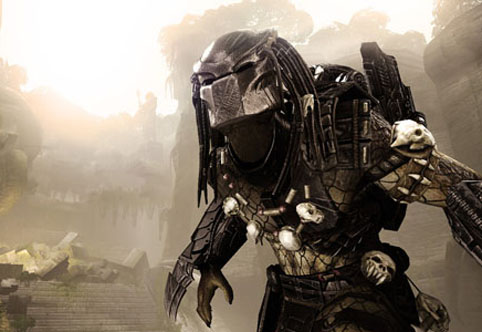 Along with the burner/plasma caster, these weapons are the most basic of Hunter weapons in the Predator universe. According to tradition, every Hunter must distinguish themselves in battle by confronting an enemy in single combat using no other weapon than their claws. Based on the two non-crossover films (Predator and Predator 2), this is apparently done once all lesser prey are eliminated and only the top prey is left. When that occurs, the Hunter will ensure that this finale opponent has been deprived of any additional weaponry, and then will shed every other weapon in their arsenal and engage them in hand to hand combat.
 Part of the Hunters arsenal, this weapon comes from the Predator universe and is part of their wider arsenal of cool weaponry. The name refers to the fact that this staff serves multiple functions. Collapses, it serves as a sort of quarter staff. However, the stick has telescoping sections with a blade like end, which when deployed turn it into a spear. In Predator 2, a hunter used his stick on multiple occasions. Against a group of the Jamaican gang members, it was used strictly for impaling, but during a later scene, it was used as a throwing spear against Danny Glover’s character.
 The Fremen weapon of choice, made from the tooth of a Maker (i.e. a Sandworm). The name and design of the weapon are based on the kris, a ceremonial dagger that was traditionally used in Indonesia and is associated with many cultural legends.
 This weapon was the brainchild of Frank Herbert, and is a familiar weapon in the Dune universe. According to Frank’s many novels, the lasgun was a continuous-wave laser projector weapon that when fired emitted a constant, narrow beam of photons. Though it was able to cut through just about anything and was the weapon of choice in the Old Imperium, it had since fallen into disuse by the first Dune novel.
 Coming to us from the Stargate universe, the Ma’Tok is a combination laser gun, club staff that is used by Jaffa warriors (the specially-bred human servants of the Goa’uld). According to the Stargate Wiki, the Ma’Tok relies on a plasma discharge to strike and cauterize the enemy, causing severe damage and intimidating resistance. It takes its power from an internal cell that employs a liquified mineral (Naquadah) to generate plasma energy. This liquid mineral gives the staff a virtually indefinite shelf life, making it the perfect blend of aesthetics and lethality!
 Here’s an idea that comes in various forms, but for the purposes of this post, I shall stick to the examples that I know best. The first one comes in the form of the Yakuza enforcer from Johnny Mnemonic! Anyone who’s seen this movie (or read the short story it was based on) will remember the main badguy who had an artificial thumb that contained a long filament of glowing wire. When he pulled that thing out and started whipping it around – LOOK OUT! – things began to get lopped off and sliced up! Another example of this being used as a weapon is from the Japanese anime Hellsing. In that show, the butler of the namesake character had monomolecular wires attached to each finger which he would break out whenever there was a crisis. Perhaps they were fashioned from silver, I really can’t recall. Would make them more effective against vampires though!
  And we’re back to the Halo universe for another example of cool gear! And today, the item in question is the plasma sword. As gamers are no doubt aware, this weapon is melee weapon of the Elites, but can be employed by humans as well since it’s your basic hand-held weapon. And much like lightsabers and lasguns, it can cut through just about anything and makes short work of any opponent. In many ways, its even more effective than the ballistic and energy weapons in the game. Whereas those can take several shots to take down an enemy (especially someone infected by the flood) one good hit from this baby will turn them into pulp! And if you see an enemy approaching you with one, be sure to hang back and unload your weapon in their direction!
 Doubling down on the Dune universe, the next example of cool weapons comes in the form of Stone Burner. As a tactical nuke of limited yield, this weapon was the only form of nuclear device that was not prohibited by the Great Convention. This body, in addition to banning all forms of AI’s, also put a stop to the use of nuclear weapons, though it did not forbid the Great Houses from owning any. In any case, Stone Burners, when used strategically, could have a devastating effect on an enemy.
 Another Hunter weapon, this particular one made its first appearance in the second Predator movie and then went on to become a regular part of the Hunters’ arsenal. Much like their other weapons, the throwing disc appears to have many variations and may even be personalized to an extent. This may be the result of constant upgrading, or it may be that individual Hunters have a hand in designing their own gear. In either case, many types of throwing discs have appeared. Some employ simple curved blades, blades with spikes, or even shuriken-like appendages (as the picture at right demonstrates). In each and every case, the result generally involves hewed limbs and decapitations!
 “Because he’s holding a thermal detonator!” Yes, whenever a bounty hunter pulls one of these out, you know they mean business! This weapon, which comes to us from the Star Wars universe, made its first appearance in Return of the Jedi. Since that movie came out, the device has been mentioned and referenced countless times in the expanded franchise. Apparently, thermal detonators are the grenades of the future, using plasma charges that when detonated, cause a large explosion that will burn through just about anything. Always be sure to bring one to a negotiation, just be sure to get the ones with the fail-safe triggers!
 My third and final act of doubling down on a single franchise! Vibroblades are an integral part of the Star Wars universe, but also appear in a number of other franchises. In each case, the weapon revolves around melee weapons that are powered by ultrasonic devices. This increases the weapons cutting effectiveness, and makes them almost as dangerous as a lightsaber. Well, more like a distant second! But non-Jedi’s got to settle for what they can get.
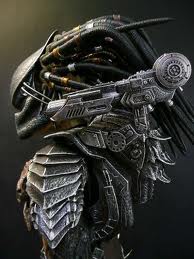







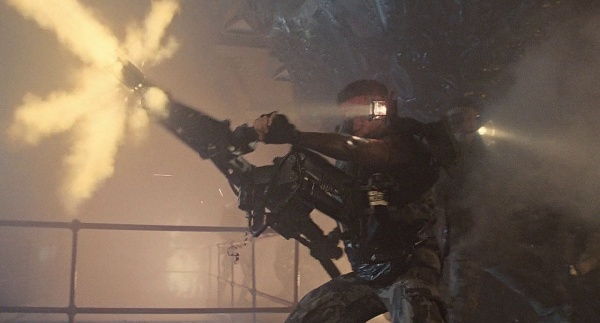


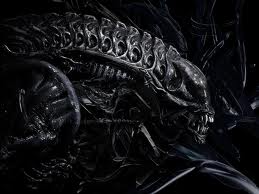

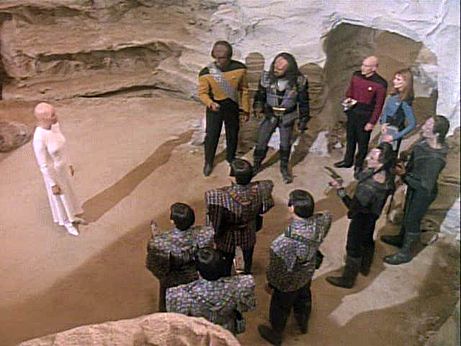

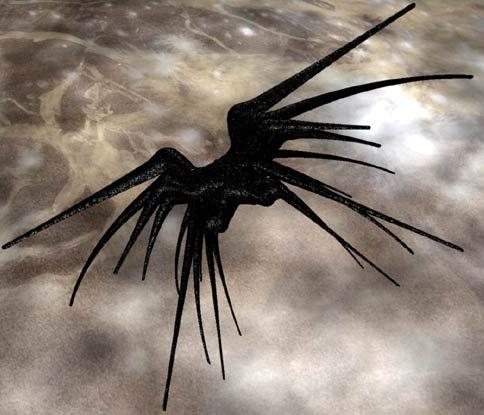
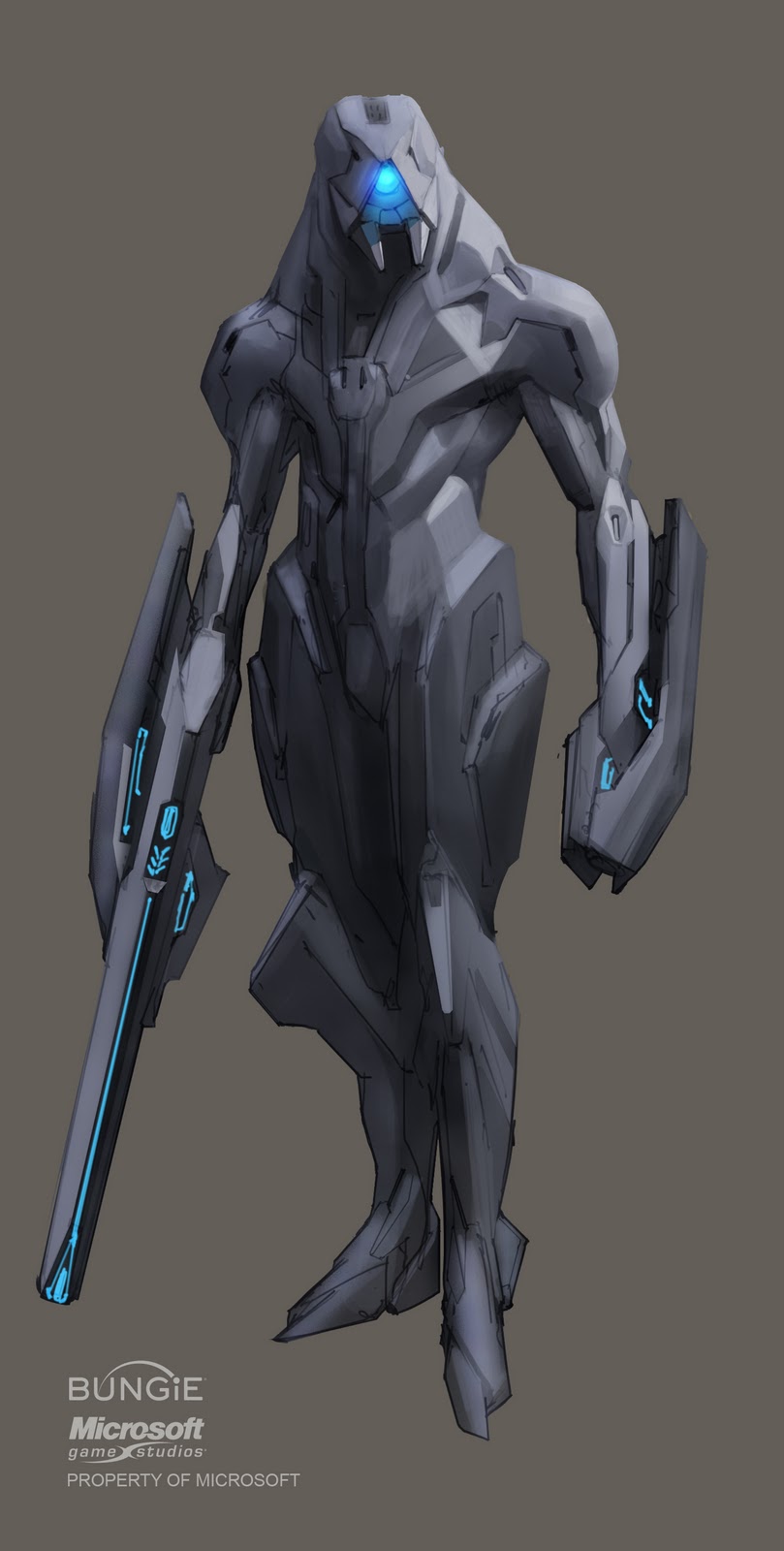
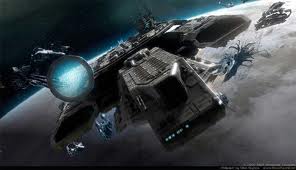

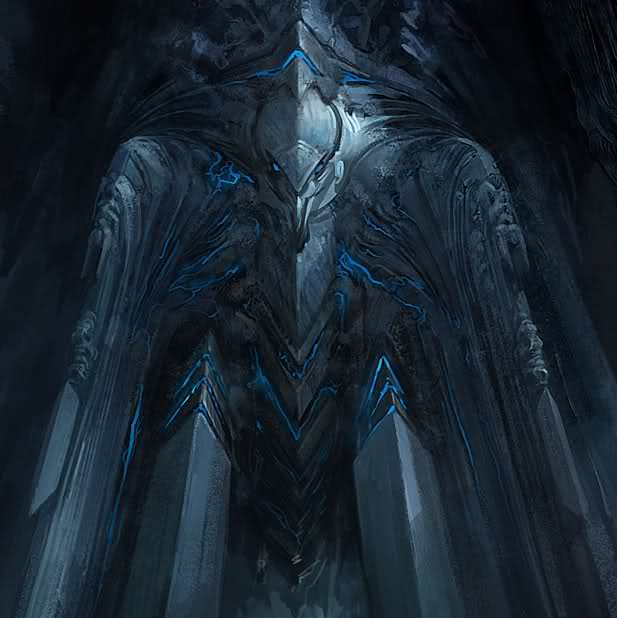

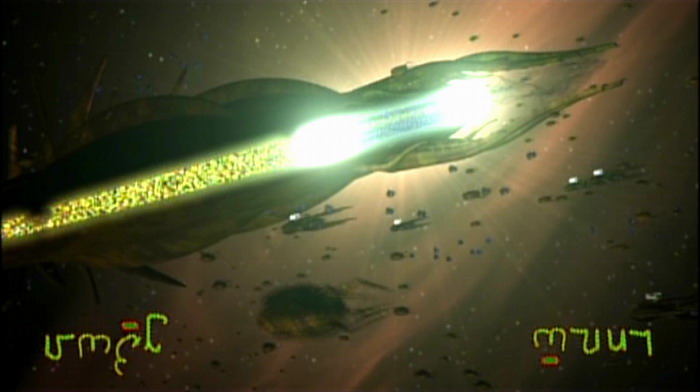
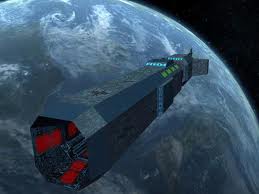
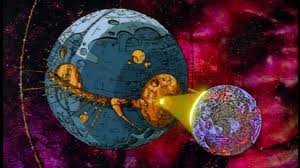





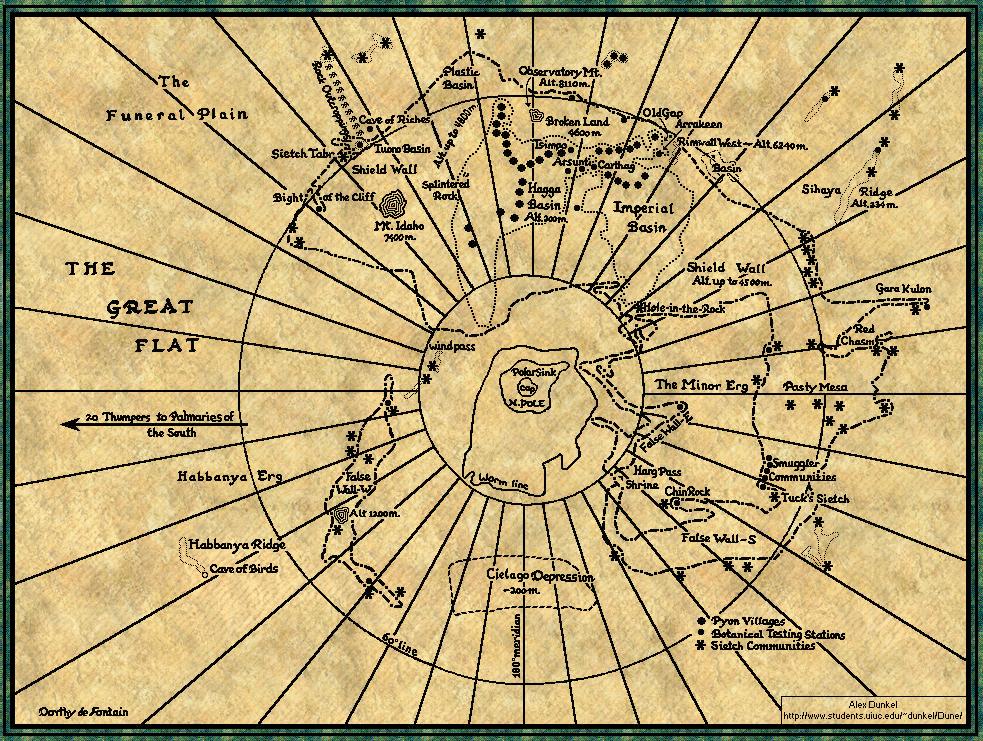


 However, using the station as a rallying point, Sheridan, Sinclair, Delenn and Kosh eventually manage to organize the younger races into a cohesive fighting force to turn back the Shadows. Things become more complicated when they realize that the Vorlons are also the enemy, being involved in a power struggle with the Shadows that goes back eons. However, with the help of other First Ones (very old races) and a commitment to stand on their own, they manage to force both sides to leave the known universe.
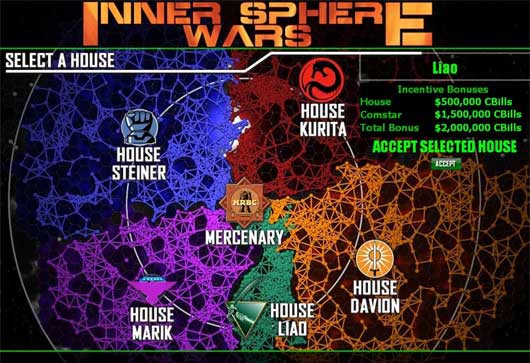

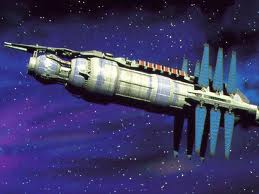
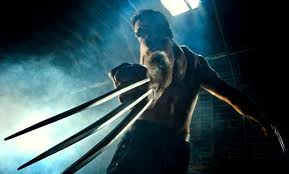
 Stories by Williams