A Diamond Bigger Than Earth

Some interesting news from space these days, and for once didn’t have to do with Mars. For many years, scientists at NASA and other space agencies have known about 55 Cancri e, an extrasolar planet that orbits the Sun-like star 55 Cancri A that is approximately 41 years from our system. Up until recently, it was believed that this planet was a “Super-Earth”, a planet many times the mass of Earth composed of granite.

Recently, however, scientists have announced that the planet may in fact be composed of carbon. That means, in essence, that the surface is composed of graphite and diamond. These findings come as part of a study that was released by the Institut de Recherche en Astrophysique et Planetologie in Toulouse, France. Nikku Madhusudhan, a Yale researcher who was part of the project, estimates that at least a third of the planet’s mass, the equivalent of about three Earth masses, could be diamond.

Imagine that, three entire Earth’s worth of diamonds! The mind reels at the staggering amount of wealth and opulence that this planet could produce, if only human mining teams were able to access it. However, surface conditions might complicate that a little. According to that same report, the planet is incredibly hot, with temperatures on its surface reaching 1,648 Celsius (3,900 degrees Fahrenheit). Not exactly cozy, by Earth standards.

Speaking of which, this is another aspect of the discovery which is proving exciting. According to Madhusudhan, “This is our first glimpse of a rocky world with a fundamentally different chemistry from Earth,” adding that the discovery of the carbon-rich planet meant distant rocky planets could no longer be assumed to have chemical constituents, interiors, atmospheres, or biologies similar to Earth. And he’s not alone is suspecting that discoveries like this are just the tip of the iceberg, as we work our way further out into the universe and discover more examples of strange and exotic exoplanets.

Source: Yahoo News.ca
More News From the Red Planet!

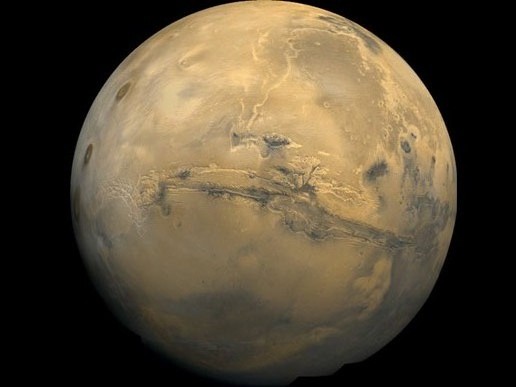
Big news from and about Mars this week! Yes, the Red Planet is showing no signs of slowing down when it comes to making the headlines. But in the past week, the biggest stories have been roughly 100 million kilometers apart. That’s the current distance between the Earth and Mars, give or take a few meters.

The first bit of news came three days ago, when NASA scientists went batty over the discovery of a shiny object sitting in Curiosity’s path, which it quickly began to examine. The second came from Morocco, where a meteorite that landed in the desert 14 months ago was revealed to have come from the Red Planet itself, prompting a team of scientists from the University of Alberta to bring it back for research.

Though seemingly unrelated, both stories had one thing in common. By examining objects on the martian surface, and those which break off from time to time and fall to Earth, scientists may be able to reconstruct what conditions on the surface of the planet were once like.

Unfortunately, the first bit of news turned out to be a bit of a hoax. After examining the shiny object, the Curiosity team determined that it had come from Curiosity itself. At least, that was there initial conclusion when they realized that the object was most likely plastic, which is not something you find sitting on the surface of a dead planet. An image of the object taken by the rover’s micro-imager ChemCam shows it looking very different from the Martian surface around it (click to get a better view).

As for the meteorite, research there may prove to be more lucrative. According to Chris Herd, a geologist with the University of Alberta, the meteorite holds traces of Mars’ atmosphere from when it split off, roughly 600 million years ago. Apparently, the meteorite started out as a typical volcanic rock on the surface of Mars until it was launched off the planet by the impact of an asteroid.

As Herd puts it, when the meteorite struck the martian surface, “a shock wave shot through the rock. Cracks and fissures within the rock were sealed instantly by the heat, trapping components of Mars’ atmosphere inside, and forming black, glassy spots.” These glassy spots are the real point of interest because they reveal “evidence of weathering at the Martian surface.”

This is further evidence that Mars boasted water on its surface, and as recently as within the last few hundred million years. It does not definitively prove whether or not it also boasted life, but at least it helps to confirm what Curiosity has been observing in recent weeks. It’s also exciting news because it means that Mars could one day be made to accommodate water again. This will come in mighty handy should humans ever decide to settle there!

Stay tuned for more Red Planet news!

Sources: cbc.ca, news.cnet.com

3D GIF of Rotating Nebula

click to see 3D animation

Pretty freakishly cool isn’t it? Personally, I never really got onto this GIF thing. It’s like, if it fits on the page and looks cool, it’s all good. However, this one was too cool to ignore. The brain-child of Finnish astrophotographer J-P Metsävainio, this GIF depicts IC 1396, a nebula where stars are born.

This nebula is a little over 2000 light years away, toward the constellation of Cepheus, and is well over a hundred light years across. Even at its tremendous distance, it’s wider than six full Moons in our sky. For some time, Metsävainio has been making impressive images of this nebula, but that didn’t seem to be enough for the erstwhile stargazer. And so, he began playing with 3D images in the hopes of creating a model of the structure of the nebula, one which showed it from different angles.

Granted, some have gone on record as saying this is more art than astronomy, and not all the features are one-hundred percent accurate. But the animation does give you a good sense of the nebula’s composition, as well as a glimpse of what the heart of a star-birthing nebula looks like. Notice the large blue star in the middle that is the ionizing source – i.e. the hot, young, massive star blasting out ultraviolet light which makes the nebula glow. The dark strands on the outside are filaments of dust which appear that way because absorb the visible light emitted from the center of the nebula.

The color pattern is also quite accurate, with blue on the inside and red without. This color change is due to the presence of oxygen gas within the cloud which glows blue because of its proximity to the central stars. Farther out, the starlight is too weak to make oxygen glow, so all you see is the ruddy glow from hydrogen. And fyi, that star is mu Cephei, a massive red supergiant which happens to be one of the most luminous stars in the Milky Way, possibly over 300,000 times more luminous than the Sun.

Pretty cool huh? Hat’s off to you Metsävainio. I can’t speak for everyone, but you’ve certainly blown my mind! Click on the photo to watch the animation, and if you want to download it, don’t be surprised if it takes a while. The damn thing is 7 megabytes!

Source: discovermagazine.com/badastronomy

Three Scenarios for Life on Mars

As usual, the Red Planet is capturing the imagination of scientists and people all over the world, thanks in no small part to ongoing discoveries made by Curiosity and her predecessors. At the center of all the speculation is the big question: was there ever life on Mars? Recently, Curiosity Scientist Ashwin Vasavada sat down with the good folks from thinkrtv to discuss that questions and present some viable scenarios as to what that life might have looked like.

According to thinkrtv, this video is the first installment in an ongoing series called EPIPHANY which “invites impassioned thought leaders across all disciplines to reveal the innovative, the improbable, and the unexpected of their worlds.” Based on that description, I’m thinking they will be moving onto places like Europa, Titan, Dione and Enceladus next, all moons in our Solar System which may boast or be capable of supporting life.

Cool stuff, and some rather intriguing ideas presented here. Click on the video below or follow the link to see Vasavada’s interview:

Source: thinkrtv

The Most Ambitious Skydive in History

Skydiving is something that just about everyone contemplates at some point in their existence, but few of us really get around to. In fact, I’d wager that just about every “Bucket List” that has ever been made has skydiving on it, most likely in the top ten. However, just about all of these “controlled descents” involve a tandem jump with an instructor, and rarely exceed ten to fifteen thousand feet.

But imagine, if you will, that a certain extreme athlete named Felix Baumgartner sought to attempt the most ambitious skydive in history by jumping from a staggering 120,000 feet. That would place him at the very edge of space, making it an stratospheric HALO jump and the longest freefall in human history to boot. As the culmination of Red Bull Stratos Project, the jump will involve a balloon, a space suit, and a chute which will not be deployed until he is well withing Earth’s atmosphere.

Already, Felix has performed his test flight, jumping from a staggering 96,000 feet to test out his suit, the ascension balloon, and all the assorted equipment that is making this jump possible. However, the 120,000 feet will be distinguished by being the jump that breaks not one, but four world records.The first three were all set by a U.S. Air Force Captain named Joe Kittinger, who accomplished the highest skydive, manned balloon flight, and longest freefall in human history back in 1960.

However, Felix’s jump will also accomplish something which no human being has ever accomplished. In the course of his jump, his body will accelerate to to supersonic speeds, making him the first human who has ever broken the speed of sound without the use of an aircraft. Even NASA scientists say that they have no idea what effect this will have on a human body, though it is assumed that his spacesuit will protect him from the worst effects of it. And by the time he reaches the lower atmosphere, wind resistance should slow him down enough that by the time he pulls his chute, his organs won’t be turned to pulp from the sudden deceleration.

The big jump was scheduled for this morning; unfortunately, the jump was aborted at the last minute due to weather. For this jump to be successful, Felix must be jumping into conditions where there can be no clouds, storms, and wind speed closest to the ground are no more than 3.2 km/hour. Seems kind of finicky for a man risking life and limb to break so many records, but what do I know? I’m not an extreme sport, HALO jumping daredevil!

Check out the footage from Felix’s test jump below, and stay tuned for more updates on this historic jump:

Source: CTV.ca, IO9.com

Robonauts

A robot and an astronaut shake hands… That might sound like the set up for a really cheesy joke, but in fact, it was a moment in history. Back in February of this year, a first occurred when Daniel Burbank. the commander of the International Space Station, shook hands with the first ever Robonaut. Controlled by ground crews, and currently lacking in full-body motion – they aint got no legs! – this does represent a big step forward in robotics.

As things stand, it is not yet clear if this represents a plan to “unman” space, or just supplement astronauts with humanoid machines that are capable of performing rote tasks and the more labor intensive aspects of space travel. But given the fact that space travel still requires adaptation and flexibility as much as calculations and precision, and that no amount of remote control can equal the thrill of actually being there, I’m thinking human astronauts are going to be around for a long time.

Check out this video of the Robonaut and Burbank making their historic handshake!

Source: CNET.com

Aerospace Flight!

To say that Richard Branson is an eccentric billionaire or oddball visionary would be the understatement of the century. Though not formally educated in business or economics, he’s got a knack for investing in new and relevant things, and always seems to be able to turn a profit while doing it. So it’s little wonder then why he started Virgin Galactic, a private aerospace company that is offering patrons their first shot at sub-orbital flights.

The idea commercial space ships has been in development for some time, with Branson committing a great deal of his empire’s investment capital and research funds towards this end. In 2008, these efforts bore fruit with the first flight of the White Knight Two launcher craft, known officially as the VMS Eve. This plane, also known as a “mothership”, is a four-engine, twin-fuselage craft with an extended wing base and two air crews. As the name suggests, it acts as a launching platform for the aerospace vehicle itself, which deploys once the WK2 is fully airborne.

Then, in December of 2009, Virgin unveiled the suborbital space ship, known as SpaceShip Two. Ever since 2004, Branson’s company ran test flights using a smaller model, but decided to upgrade to a larger, twin-pilot model for long-term commercial use. By February 2012, SpaceShipTwo had completed 15 test flights and an additional 16 glide tests, the last of which took place in September 2011.

In the end, the process is pretty simple and borrows from NASA’s long-standing practice of launching their space shuttles by piggybacking them onto commercial craft. In this case, the process involves the WK2 flying the SS2 to deployment altitude where it will then be released and take over its own flight using its rocket engines. The SS2 will then fly to an altitude of 100 km (330,000 feet) above see level. After performing a circuit in near-zero gravity, it will deploy its wings and glide back to Earth.

No firm schedule has been given as to when commercial flights will commence, but given the pace at which things are moving, it would not be farfetched to think that they are likely to begin before the decade is out. In addition, no word has been given on when exactly it will affordable for the vast majority of people to use this service, or when aerospace terminals will be built into existing international airports.

As it stands, tickets for the maiden voyage go for a whopping $200,000 US or £121,000, and 400 seats have already been spoken for, largely by public figures and international tycoons. The flight will be two hours end-to-end, and will involve six minutes of weightlessness once its reaches maximum altitude. Seems like a lot of money for something that only lasts six minutes; but hey, people have spent way more on far less!

Also, check out the promotional video from Virgin Galactic’s own website. I think you’ll agree, though they may oversell the significance of this by just a bit, the production values are still pretty damn good!

Evidence of Ancient Streambed Found on Mars

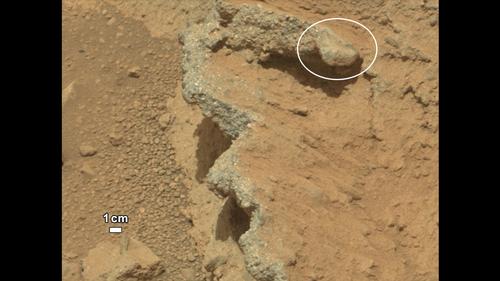
More news from the Red Planet! At a press conference held just yesterday, members of the Mars Science Laboratory announced that Curiosity discovered some interesting gravel patterns in the Gale Crater which would seem to indicate that water once flowed there. What more, according to William Dietrich (Curiosity’s co-investigator from the University of California, Berkeley) the water would have been flowing for some time.

“Too many things that point away from a single burst event,” he said in the press statement. “I’m comfortable to argue that it is beyond the 1,000 year timescales, even though this is very early on in our findings.”

Specifically, what Curiosity found was outcroppings of layered rock that are the result of multiple deposits of gravel, which the science team claims could not have been laid by any other naturally occurring source, such as wind. What’s more, the sizes and shapes of stones offer clues to the speed and distance of a long-ago stream’s flow. Although initially classifying this as a “surprise”, the team inevitably claimed that they weren’t too surprised by the finding.

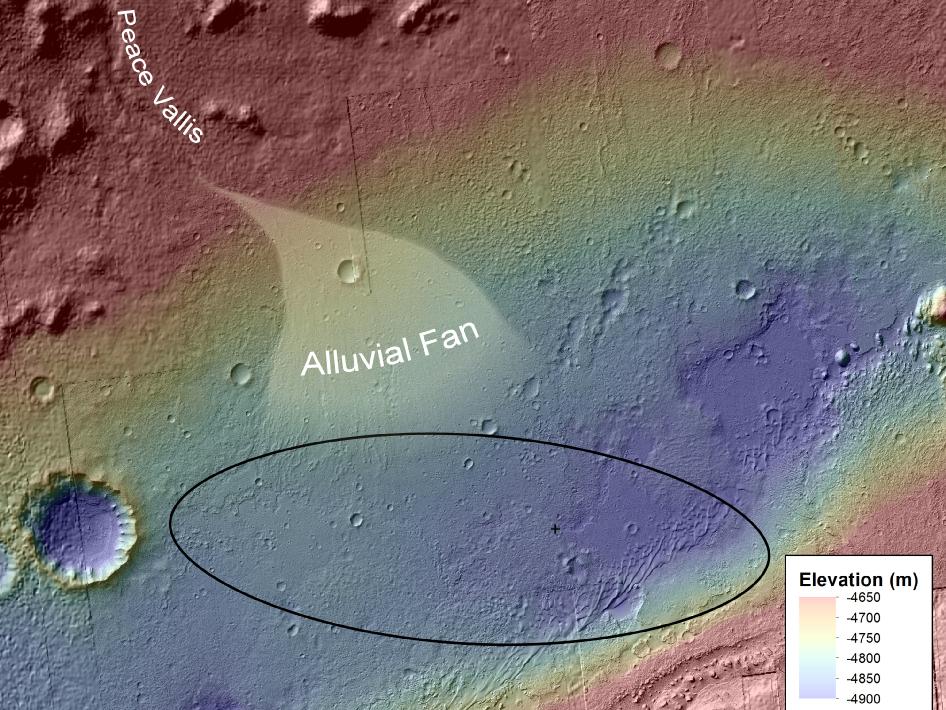
The location of the site lies between the north rim of the Gale Crater and the base of Aeolis Mons (aka. Mount Sharp), a mountain inside the crater. To the north of the crater, a channel named Peace Vallis feeds into the alluvial fan, where the abundance of channels between the rim and conglomerate suggests the presence of flowing water over a long period of time.

For some time, scientists have speculated about the existence of ancient rivers on Mars, based solely on observations from afar. In fact, the “canals of Mars”, as they were often known, have remained a source of inspiration for astronomers and fired the public imagination. The notion that there might be life on the Red Planet inevitably led some to suggest that there was such a thing as a Martian race that was responsible for their creation.

This, in turn, has led to generations of science fiction and storytelling, with images of little Martian men invading Earth in their terrible war machines (a la War of the Worlds) or as benevolent psychic begins who succumbed to disease and the onset of human colonization (i.e. The Martian Chronicles). Naturally, these fantastic notions died when it became known that the Martian surface is all but lifeless. However, evidence that Mars was once capable of supporting life remains; and thanks to Curiosity, continues to grow.

Stay tuned for more news from Curiosity! As of yesterday, it moved on from the Garland Crater and began its longest journey yet towards the Glenelg area, where it will begin taking soil samples and performing test drills. The goal here will be to find samples of preserved organic carbon, another step in the long mission to determine whether Mars really did support life in the past. Exciting times!

Update on Curiosity

More news from Mars! It seems that after a full month of being on Mars, running routine checks on its equipment and snapping some breathtaking photos, Curiosity is ready to begin the first leg of its study mission. This consisted of finding a Martian rock, the first sample in Curiosity’s extensive contact surveys.

And, after a week of searching, the NASA team piloting the rover found a pyramid shaped rock that they feel will be perfect for their surface analysis. The rock is described as a pyramid-shaped hunk, likely composed of basalt, which they nicknamed “Jake Matijevic” after one of the rover engineers who died back in August.

The sample was located just three meters from Curiosity’s landing zone, now known as the “Bradbury Landing” in honor of the late, great Ray Bradbury, author of the Martian Chronicles. On Saturday, it will extend its arm, take possession of the rock, and begin chemical analysis to determine the rock’s primary mineral and precise composition.

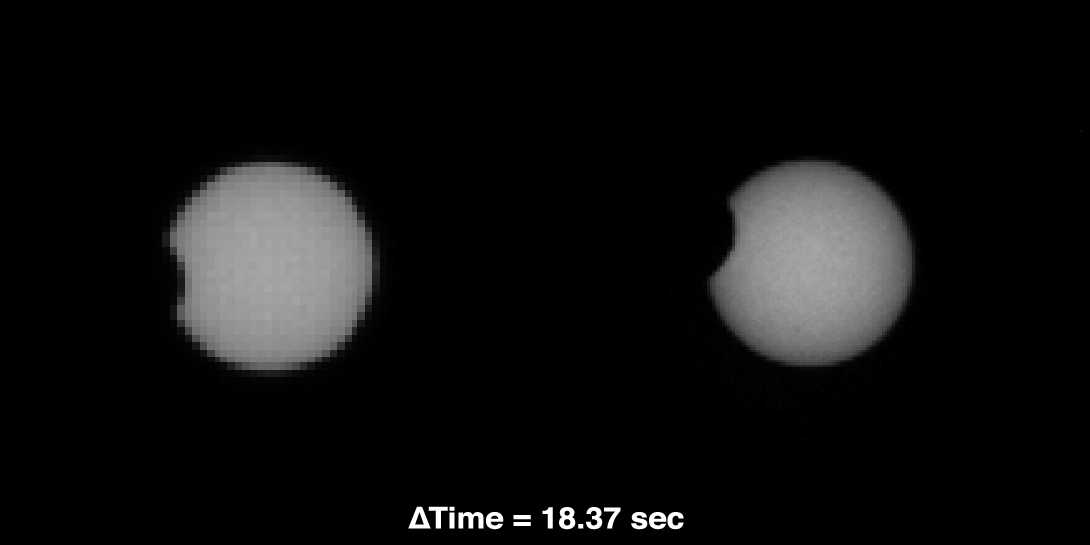
Another important aspect of Curiosity’s mission began this week, as the rover set it’s camera eyes to the skies and captured photos of Phobos making a Solar transit. To be fair, this was not the first time a Martian eclipse was captured on camera. In fact, the Opportunity and Spirit rovers both snapped similar images back in December of 2010 and 2005. However, the images taken by Curiosity were of such high resolution that experts will be able to estimate the consistency of the interior of Mars itself for the first time.

Apparently, this is done by measuring the tidal forces these moons exert on Mars, examining how the planet changes shape ever so slightly as a the moons orbit about it. By measuring this “deformation bulge”, along  with the precise spatial orientation provided by Curiosity’s photos, experts at NASA and abroad will be able to conjecture what the core of Mars is made of based on how much the planet deforms. I always wondered how scientists were able to guess what lay at a planet’s core. Now I know, go figure!

Stay tuned for more news from the Curiosity and the Red Planet!

Source: Popular Mechanics

Curiosity Captures Martian Eclipse

Yes, it seems that Mars has eclipses too. And thanks to the presence of Curiosity and other rovers, we here on Earth are now in a prime position to watch them. As part of its mission to Mars, Curiosity recently turned its cameras to the Martian sky to photograph the Martian sunset, the panoramic landscape, and even managed to capture these photos of Phobos (one of Mars’ two moons) passing in front of the sun. Teams at NASA captured all the photos and compiled a video of the footage, which shows Phobos just hovering at the edge of the sun.

This is just the first step in Curiosity’s planned mission to study Mars’ two satellites – Phobos and Deimos – in greater depth. More in this in a coming post, so stay tuned for that and other news from the Red Planet. Go Curiosity!

Source: Universe Today.com, Space.com