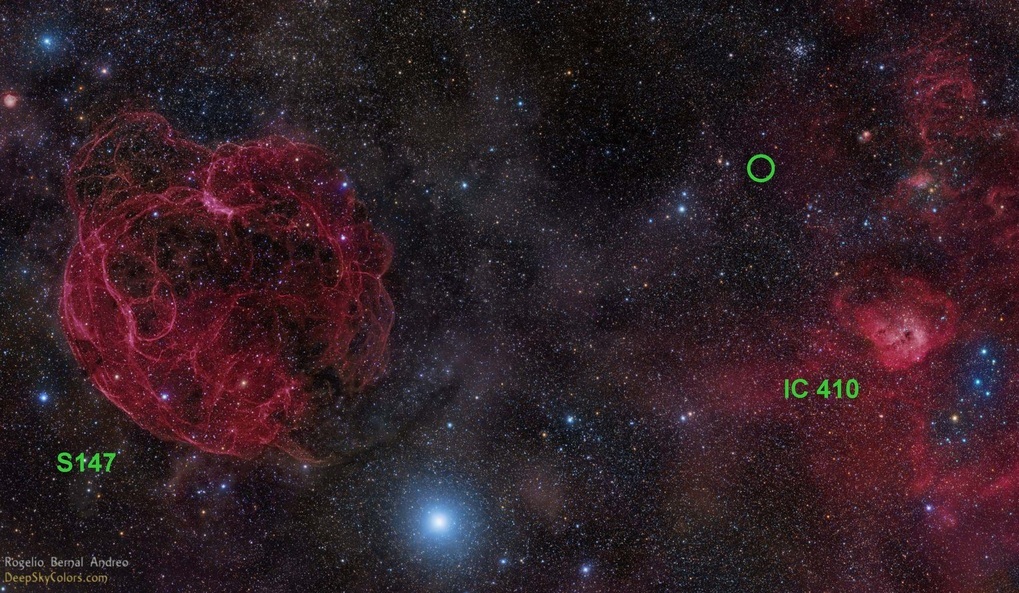
According to a story published on July 10 in The Astrophysical Journal, a radio burst was detected that may have originated outside of our galaxy. Apparently, these split-second radio bursts have heard before, but always with the same telescope – Parkes Observatory in Australia. Given that only this observatory was detecting these signals, there was debate about whether they were coming from inside our galaxy, or even from Earth itself.
However, this time the radio signals were detected by a different telescope – the Arecibo Observatory in Puerto Rico – which concluded that the bursts are coming from outside the galaxy. This is also the first time one of these bursts have been found in the northern hemisphere of the sky. Exactly what may be causing such radio bursts represents a major new enigma for astrophysicists.
Victoria Kaspi, an astrophysics researcher at McGill University who participated in the research, explained:
Our result is important because it eliminates any doubt that these radio bursts are truly of cosmic origin. The radio waves show every sign of having come from far outside our galaxy – a really exciting prospect.
Fast radio bursts are a flurry of radio waves that last a few thousandths of a second, and at any given minute there are only seven of these in the sky on average, according to the Max Planck Institute for Radio Astronomy. Their cause is unknown, and the possibilities range from black holes, to neutron stars coming together, to the magnetic field of pulsars (a type of neutron star) flaring up.
The pulse was detected on Nov. 2, 2012, at the Arecibo Observatory – a National Science Foundation-sponsored facility that has the world’s largest and most sensitive radio telescope. While fast radio bursts last just a few thousandths of a second and have rarely been detected, the international team of scientists reporting the Arecibo finding estimate that these bursts occur roughly 10,000 times a day over the whole sky.
This astonishingly large number is inferred by calculating how much sky was observed, and for how long, in order to make the few detections that have so far been reported. Laura Spitler, a postdoctoral researcher at the Max Planck Institute for Radio Astronomy in Bonn, Germany and the lead author of the new paper, was also the first person to note the event. As she explained:
The brightness and duration of this event, and the inferred rate at which these bursts occur, are all consistent with the properties of the bursts previously detected by the Parkes telescope in Australia.
The bursts appear to be coming from beyond the Milky Way, based on measurement of an effect known as plasma dispersion. Pulses that travel through the cosmos are distinguished from man-made ones by the effect of interstellar electrons, which cause radio waves to travel more slowly at lower radio frequencies. The burst detected by the Arecibo telescope has three times the maximum dispersion measure that would be expected from a local source.
Efforts are now under way to detect radio bursts using radio telescopes that can observe broad swaths of the sky to help identify them. Telescopes under construction in Australia and South Africa as well as the CHIME telescope in Canada have the potential to detect fast radio bursts. Astronomers say these and other new facilities could pave the way for many more discoveries and a better understanding of this mysterious cosmic phenomenon.
For those hoping this was a possible resolution to the Fermi Paradox – i.e. that the radio bursts might have been extra-terrestrial in origin – this news is a little disappointing. But in truth, its yet another example of the deeper mysteries of the universe at work. Much like our ongoing research into the world of elementary particles, every answer gives rise to new questions.
There was something special about this weekends full Moon, which you may have noticed if you were outside and not dealing with severe cloud cover. It was a July “Buck” Moon, or what is known as a Supermoon, when the Earth’s only satellite is at perigee – its closest point in its orbit to Earth – while its also full. And interestingly enough, it was the first of three Supermoons that is expected to happen this year.
As for myself, I was out walking in Esquimalt with my wife and her stepbrother, checking out his new pad and looking to see if there were any properties we might consider buying ourselves in the near future. As we walked, we caught sight of a rather bright and large moon hanging just above the city skyline. Not only was it full, it was a light brown color and appeared larger than at any time I had seen it in recent memory.
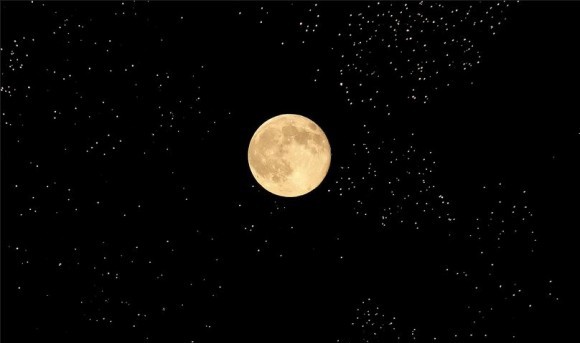
As the evening went on, the Moon drifter higher into the night sky and grew smaller. It’s color also changed as it ascended, going from light brown to bright blue-white. But it’s brilliance was not diminished, and the wife and I walked home beneath a night sky that still seemed to possess some daylight. Needless to say, it was quite the magical evening, warm and mild and illuminated by an intensely bright Moon.
Technically speaking, a Supermoon is not radically different from a regular full Moon. But for people who outside this weekend and gazing at the horizon, the moon would have appeared rather large and light brown in color. And around the world, many people took notice and captured shots of the moon with their cameras and smartphones. And as usual, Universe Today was on hand to collect these images and compiled them into a Flickr Gallery.
However, this month’s big full Moon was not the closest the terrestrial satellite will get to to Earth this year. The closest Full Moon of 2014 will occur next month on August 10th at 18:11 Universal Time (UT) or 1:44 PM EDT. On that date, the Moon reaches will reach perigee – or its closest approach to the Earth – at a distance of 356,896 kilometres at 17:44, less than an hour before it’s full.
Be sure to head on over their Flickr Gallery to see how the Moon appeared from different vantage points around the world. High in the sky, or low on the horizon, it was certainly an inspiring sight!
It’s no secret that the orbital space lanes are clogged with debris. In fact, our upper atmosphere is so clogged with the remains of dead satellites, old rockets, and assorted space garbage, that initiatives are being planned to remedy the situation. The ESA, for example, has the Clean Space Initiative; and the e.DeOrbit mission that aims to send debris-hunting satellites into orbit to clean up the mess.
The aim of this mission is to clean up the important polar orbits between altitudes of 800 to 1,000 km (500 to 625 mil) that face the prospect of becoming unusable due to the increasing buildup of space debris. As part of the plan, the ESA is also investigating the possibility of using space harpoons to capture large items, such as derelict satellites and the upper stages of rockets.
This is just the latest in a series of possible plans to capture debris. In the past, the ESA has revealed that it was looking at capturing space debris in a net, securing it with clamping mechanisms, or grabbing hold of it using robotic arms. However, the latest possibility calls for using capturing debris with a tethered harpoon, which would pierce the debris with a high-energy impact before reeling it in.
Such an approach would not be practical for smaller debris, but is aimed at reeling in uncontrolled multitonne objects that threaten to fragment when colliding with other objects. These sorts of collisions result in debris clouds that would steadily increase in density due to the Kessler syndrome – a scenario in which the density of orbital debris is high enough that collisions generates more debris, increasing the likelihood of further collisions.
The ESA says the space harpoon concept has already undergone initial investigations by Airbus Defense and Space in Stevenage – two aerospace developers based in the UK. The preliminary design incorporates a penetrating tip, a crushable cartridge to help embed it in the target satellite structure, and barbs to keep it sticking in so the satellite can then be reeled in.
The initial tests involved shooting a prototype harpoon into a satellite-like material to assess its penetration, the strength of the harpoon and tether as the target is reeled in, and the potential for the target to fragment, which would result in more debris that could threaten the e.DeOrbit satellite. The ESA now plans to follow up these initial tests by building and testing a prototype version of the harpoon and its ejection system.
The project will examine the harpoon impact, target piercing and the reeling in of objects using computer models and experiments, ultimately leading up to a full hardware demonstration. The space agency has put out the call for bidders to compete for the project contract, and hopes to be sending a working model into orbit by 2021 to conduct some much-needed housecleaning.
Naturally, there are other proposals being considered for debris-hunting. Between the ESA and NASA, there’s also the EPFL’s CleanSpace One debris hunter, and the Universities Space Research Association anti-collision laser concept. And while these remains still very much in the RandD phase, clearing the space lanes is likely to become a central issue once regular missions are mounted to Mars and the outer Solar System.
Late last year, a new space tourism company emerged that proposed using a high-tech balloon ride to take passengers higher than they’ve ever been. The company quickly earned FAA approval for its audacious plan to take tourists on five hour near-space rides. And late last month, the company successfully completed its first round of tests, and in the process broke the record for the highest parafoil flight.
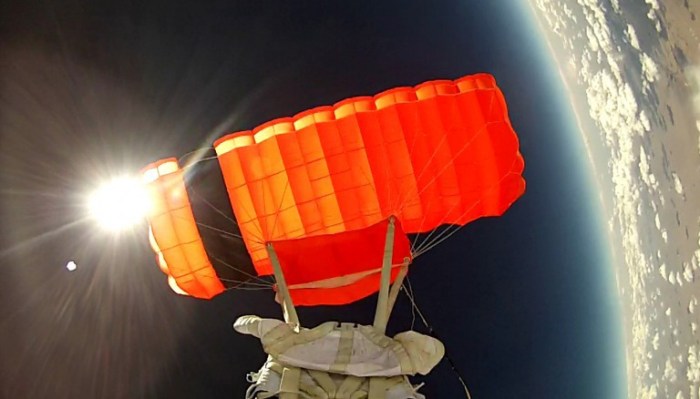
The company launched the test flight some three weeks ago from Roswell, New Mexico using a balloon which was roughly one third the size of that planned for passengers flight. It carried a payload of about 204 kg (450 lb), which is one-tenth the weight of what the company expects will be a full passenger load. The flight was the first time all the components were tested together, reaching a record-breaking altitude of 36,500 m (120,000 ft).
Though components of the experience have been tested in the past, this marks the first time all elements of the spaceflight system were tested together. It was a huge success and a major milestone for the company. The company hopes to be able to commence passenger rides by 2016, once they’ve completed all testing to make sure their equipment and methods are safe.
Based on their FAA filings, the company has said that it will launch its rides from Spaceport American in the New Mexican desert. However, CEO Jane Poynter has recently said that no final decision has actually been made in this regard. Although the balloon does not technically lift its passengers into outer space – which is defined as a distance of 100 km (62 miles) from the Earth’s surface – it will certainly make for an unforgettable experience.
For the cost of $75,000, customers will be taken to an altitude of 32 km (20 miles). From there, they will be able to see the curvature of the Earth, and at a fraction of the price for Virgin Galactic’s $200,000 rocket-propelled trip. The ride will consist of a capsule large enough for passengers to walk around in will being lifted well above the troposphere, thanks to a giant balloon containing 400,000 cubic meters of helium.
Their space balloon is not at all dissimilar to the one used by daredevil Felix Baumgartner when he broke the record for high-altitude skydiving roughly two years ago. In order to return back to Earth, the balloon will cut away from the capsule, and then a parafoil will allow it to land safely as a paraglider, deploying skids on which to land. Alongside other space-tourism ventures, the latter half of this decade is likely to be an exciting time to be alive!
Be sure to check out the company’s website by clicking here. And in the meantime, enjoy this company video showing the test flight:
Quick Note: This is my 1700th post!
Yaaaaaay, happy dance!
Space exploration is a booming industry these days. Between NASA, the ESA, Roscosmos, the CSA, and the federal space agencies of India and China, there’s just no shortage of exciting missions aimed at improving our understanding of our Solar System or the universe at large. In recent months, two such missions have been making the news; one of which (led by the ESA) is now underway, while the other (belonging to NASA) is fast-approaching.
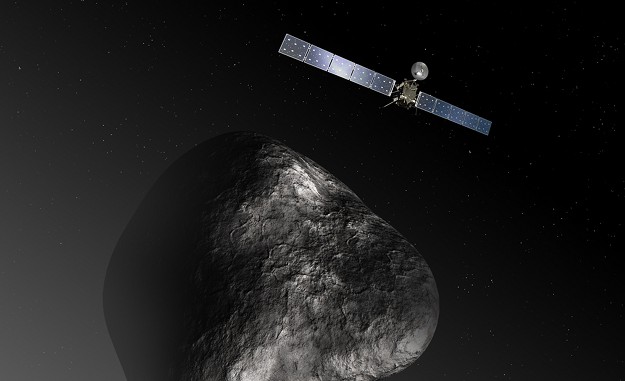
In the first instance, we have the ESA’s Rosetta spacecraft, which is currently on its way to rendezvous with the comet 67P/Churyumov-Gerasimenko at the edge of our Solar System. After awaking from a 957 day hibernation back in January, it has just conducted its first instruments observations. Included in these instruments are three NASA science packages, all of which have started sending science data back to Earth.
Since leaving Earth in March 2004, the Rosetta spacecraft has traveled more than 6 billion km (3.7 billion miles) in an attempt to be the first spacecraft to successfully rendezvous with a comet. It is presently nearing the main asteroid belt between Jupiter and Mars – some 500,000 km (300,000 miles) from its destination. And until August, it will executing a series of 10 orbit correction maneuvers to line it self up to meet with 67P, which will take place on August 6th.
Rosetta will then continue to follow the comet around the Sun as it moves back out toward the orbit of Jupiter. By November of 2014, Rosetta’s mission will then to launch its Philae space probe to the comet, which will provide the first analysis of a comet’s composition by drilling directly into the surface. This will provide scientists with the first-ever interior view of a comet, and provide them with a window in what the early Solar System looked like.
The three NASA instruments include the MIRO, Alice, and IES. The MIRO (or Microwave Instrument for Rosetta Orbiter) comes in two parts – the microwave section and the spectrometer. The first is designed to measure the comet’s surface temperatures to provide information on the mechanisms that cause gas and dust to pull away from it and form the coma and tail. The other part, a spectrometer, will measure the gaseous coma for water, carbon monoxide, ammonia, and methanol.
Alice (not an acronym, just a nickname) is a UV spectrometer designed to determine the gases present in the comet and gauge its history. It will also be used to measure the rate at which the comet releases water, CO and CO2, which will provide details of the composition of the comet’s nucleus. IES (or Ion and Electron Sensor) is one of five plasma analyzing instruments that make up the Rosetta Plasma Consortium (RPC) suite. This instrument will measure the charged particles as the comet draws nearer to the sun and the solar wind increases.
Named in honor of the Rosetta Stone – the a basalt slab that helped linguists crack ancient Egyptian – Rosetta is expected to provide the most detailed information about what comets look like up close (as well as inside and out). Similarly, the lander, Philae, is named after the island in the Nile where the stone was discovered. Together, they will help scientists shed light on the early history of our Solar System by examining one of its oldest inhabitants.
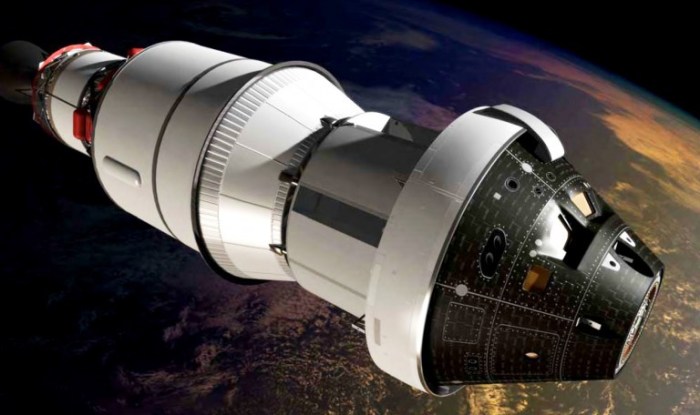
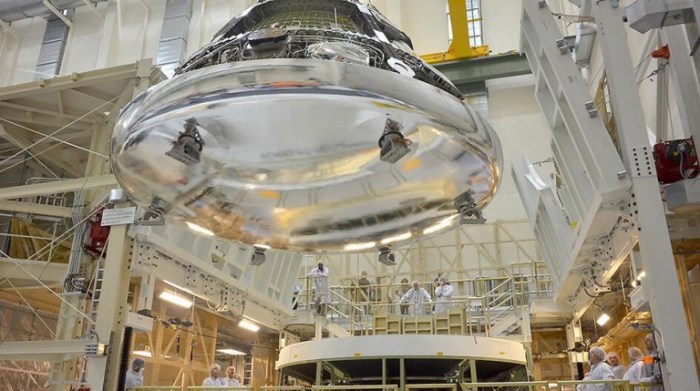
Next up, there’s the next-generation Orion spacecraft, which NASA plans to use to send astronauts to Mars (and beyond) in the not too distant future. And with its launch date (Dec. 4th, 2014) approaching fast, NASA scientists have set out what they hope to learn from its maiden launch. The test flight, dubbed EFT-1 is the first of three proving missions set to trial many of the in-flight systems essential to the success of any manned mission to Mars, or the outer Solar System.
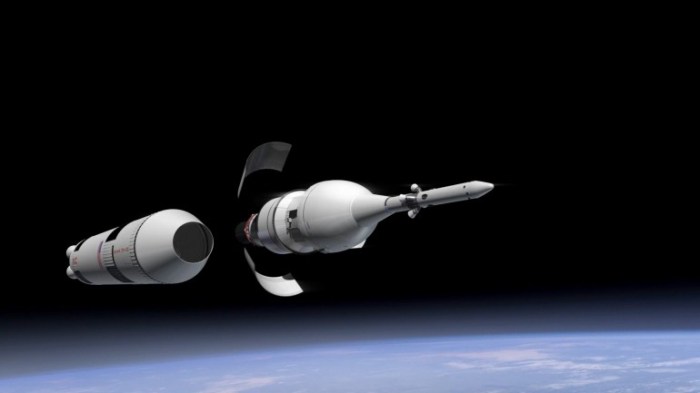
EFT-1 will take the form of an unmanned test flight, with the Orion spacecraft being controlled entirely by a flight control team from NASA’s Kennedy Space Center located in Florida. One vital component to be tested is the Launch Abort System (LAS), which in essence is a fail-safe required to protect astronauts should anything go wrong during the initial launch phase. Designed to encapsulate the crew module in the event of a failure on the launch pad, the LAS thrusters will fire and carry the Orion away from danger.
Orion’s computer systems – which are 400 times faster than those used aboard the space shuttle and have the ability to process 480 million instructions per second- will also be tested throughout the test flight. However, they must also demonstrate the ability to survive the radiation and extreme cold of deep space followed by the fiery conditions of re-entry, specifically in the context of prolonged human exposure to this dangerous form of energy.
Whilst all systems aboard Orion will be put through extreme conditions during EFT-1, none are tested as stringently as those required for re-entry. The entire proving mission is designed around duplicating the kind of pressures that a potential manned mission to Mars will have to endure on its return to Earth, and so naturally the results of the performance of these systems will be the most eagerly anticipated by NASA scientists waiting impatiently in the Kennedy Space Center.
Hence the Orion’s heat shield, a new design comprised of a 41mm (1.6-inch) thick slab of Avcoat ablator, the same material that protected the crew of Apollo-era missions. As re-entry is expected to exceed speeds of 32,187 km/h (20,000 mph), this shield must protect the crew from temperatures of around 2,204 ºC (4,000 ºF). Upon contact with the atmosphere, the heat shield is designed to slowly degrade, drawing the intense heat of re-entry away from the crew module in the process.
The final aspect of EFT-1 will be the observation of the parachute deployment system. Assuming the LAS has successfully jettisoned from the crew module following launch, the majority of Orion’s stopping power will be provided by the deploying of two drogue parachutes, followed shortly thereafter by three enormous primary parachutes, with the combined effect of slowing the spacecraft to 1/1000th of its initial re-entry speed.
Previous testing of the parachute deployment system has proven that the Orion spacecraft could safely land under only one parachute. However, these tests could not simulate the extremes that the system will have to endure during EFT-1 prior to deployment. The Orion spacecraft, once recovered from the Pacific Ocean, is set to be used for further testing of the ascent abort system in 2018. Data collected from EFT-1 will be invaluable in informing future testing, moving towards a crewed Orion mission some time in 2021.
NASA staff on the ground will be nervously monitoring several key aspects of the proving mission, with the help of 1,200 additional sensors geared towards detecting vibration and temperature stress, while taking detailed measurements of event timing. Furthermore, cameras are set to be mounted aboard Orion to capture the action at key separation points, as well as views out of the windows of the capsule, and a live shot of the parachutes as they deploy (hopefully).
The launch promises to be a historic occasion, representing a significant milestone on mankind’s journey to Mars. Orion, the product of more than 50 years of experience, will be the first human-rated spacecraft to be constructed in over 30 years. The Orion will be launch is expected to last four hours and 25 minute, during which time a Delta-2 Heavy rocket will bring it to an altitude of 5,794 km (3,600 miles) with the objective of creating intense re-entry pressures caused by a return from a deep space mission.
And be sure to check out this animation of the Orion Exploration Flight Test-1:
The cosmic hunt for dark matter has been turning up some interesting clues of late. And during the month of June, two key hints came along that might provide answers; specifically simulations that look at the “local Universe” from the Big Bang to the present day and recent studies involving galaxy clusters. In both cases, the observations made point towards the existence of Dark Matter – the mysterious substance believed to make up 85 per cent of the mass of the Universe.
In the former case, the clues are the result of new supercomputer simulations that show the evolution of our “local Universe” from the Big Bang to the present day. Physicists at Durham University, who are leading the research, say their simulations could improve understanding of dark matter due to the fact that they believe that clumps of the mysterious substance – or halos – emerged from the early Universe, trapping intergalactic gas and thereby becoming the birthplaces of galaxies.
Cosmological theory predicts that our own cosmic neighborhood should be teeming with millions of small halos, but only a few dozen small galaxies have been observed around the Milky Way. Professor Carlos Frenk, Director of Durham University’s Institute for Computational Cosmology, said:
I’ve been losing sleep over this for the last 30 years… Dark matter is the key to everything we know about galaxies, but we still don’t know its exact nature. Understanding how galaxies formed holds the key to the dark matter mystery… We know there can’t be a galaxy in every halo. The question is: ‘Why not?’.
The Durham researchers believe their simulations answer this question, showing how and why millions of halos around our galaxy and neighboring Andromeda failed to produce galaxies. They say the gas that would have made the galaxy was sterilized by the heat from the first stars that formed in the Universe and was prevented from cooling and turning into stars. However, a few halos managed to bypass this cosmic furnace by growing early and fast enough to hold on to their gas and eventually form galaxies.
The findings were presented at the Royal Astronomical Society’s National Astronomy Meeting in Portsmouth on Thursday, June 26. The work was funded by the UK’s Science and Technology Facilities Council (STFC) and the European Research Council. Professor Frenk, who received the Royal Astronomical Society’s top award, the Gold Medal for Astronomy, added:
We have learned that most dark matter halos are quite different from the ‘chosen few’ that are lit up by starlight. Thanks to our simulations we know that if our theories of dark matter are correct then the Universe around us should be full of halos that failed to make a galaxy. Perhaps astronomers will one day figure out a way to find them.
Lead researcher Dr Till Sawala, in the Institute for Computational Cosmology, at Durham University, said the research was the first to simulate the evolution of our “Local Group” of galaxies, including the Milky Way, Andromeda, their satellites and several isolated small galaxies, in its entirety. Dr Sawala said:
What we’ve seen in our simulations is a cosmic own goal. We already knew that the first generation of stars emitted intense radiation, heating intergalactic gas to temperatures hotter than the surface of the sun. After that, the gas is so hot that further star formation gets a lot more difficult, leaving halos with little chance to form galaxies. We were able to show that the cosmic heating was not simply a lottery with a few lucky winners. Instead, it was a rigorous selection process and only halos that grew fast enough were fit for galaxy formation.
The close-up look at the Local Group is part of the larger EAGLE project currently being undertaken by cosmologists at Durham University and the University of Leiden in the Netherlands. EAGLE is one of the first attempts to simulate from the beginning the formation of galaxies in a representative volume of the Universe. By peering into the virtual Universe, the researchers find galaxies that look remarkably like our own, surrounded by countless dark matter halos, only a small fraction of which contain galaxies.
The research is part of a program being conducted by the Virgo Consortium for supercomputer simulations, an international collaboration led by Durham University with partners in the UK, Germany, Holland, China and Canada. The new results on the Local Group involve, in addition to Durham University researchers, collaborators in the Universities of Victoria (Canada), Leiden (Holland), Antwerp (Belgium) and the Max Planck Institute for Astrophysics (Germany).
In the latter case, astronomers using ESA and NASA high-energy observatories have discovered another possible hint by studying galaxy clusters, the largest cosmic assemblies of matter bound together by gravity. Galaxy clusters not only contain hundreds of galaxies, but also a huge amount of hot gas filling the space between them. The gas is mainly hydrogen and, at over 10 million degrees celsius, is hot enough to emit X-rays. Traces of other elements contribute additional X-ray ‘lines’ at specific wavelengths.
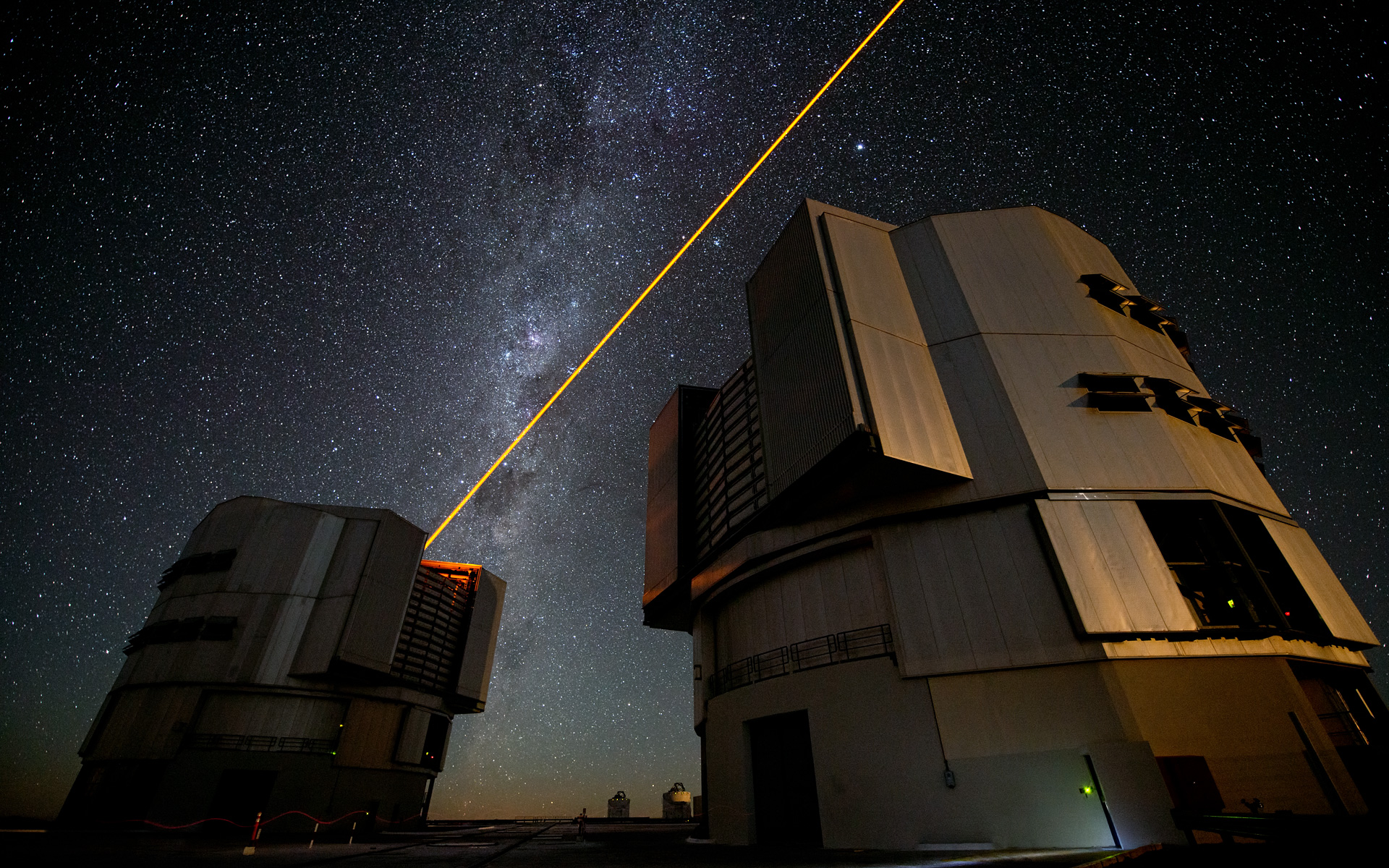
Examining observations by ESA’s XMM-Newton and NASA’s Chandra spaceborne telescopes of these characteristic lines in 73 galaxy clusters, astronomers stumbled on an intriguing faint line at a wavelength where none had been seen before. The astronomers suggest that the emission may be created by the decay of an exotic type of subatomic particle known as a ‘sterile neutrino’, which is predicted but not yet detected.
Ordinary neutrinos are very low-mass particles that interact only rarely with matter via the so-called weak nuclear force as well as via gravity. Sterile neutrinos are thought to interact with ordinary matter through gravity alone, making them a possible candidate as dark matter. As Dr Esra Bulbul – from the Harvard-Smithsonian Center for Astrophysics in Cambridge, Massachusetts, USA, and lead author of the paper discussing the results – put it:
If this strange signal had been caused by a known element present in the gas, it should have left other signals in the X-ray light at other well-known wavelengths, but none of these were recorded. So we had to look for an explanation beyond the realm of known, ordinary matter… If the interpretation of our new observations is correct, at least part of the dark matter in galaxy clusters could consist of sterile neutrinos.
The surveyed galaxy clusters lie at a wide range of distances, from more than a hundred million light-years to a few billion light-years away. The mysterious, faint signal was found by combining multiple observations of the clusters, as well as in an individual image of the Perseus cluster, a massive structure in our cosmic neighborhood.
The implications of this discovery may be far-reaching, but the researchers are being cautious. Further observations with XMM-Newton, Chandra and other high-energy telescopes of more clusters are needed before the connection to dark matter can be confirmed. Norbert Schartel, ESA’s XMM-Newton Project Scientist, commented:
The discovery of these curious X-rays was possible thanks to the large XMM-Newton archive, and to the observatory’s ability to collect lots of X-rays at different wavelengths, leading to this previously undiscovered line. It would be extremely exciting to confirm that XMM-Newton helped us find the first direct sign of dark matter. We aren’t quite there yet, but we’re certainly going to learn a lot about the content of our bizarre Universe while getting there.
Much like the Higgs Boson, the existence of Dark Matter was first theorized as a way of explaining how the universe appears to have mass that we cannot see. But by looking at indirect evidence, such as the gravitational influence it has on the movements and appearance of other objects in the Universe, scientists hope to one day confirm its existence. Beyond that, there is the mystery of “Dark Energy”, the hypothetical form of energy that permeates all of space and is believed to be behind accelerations in the expansion of the universe.
As with the discovery of the Higgs Boson and the Standard Model of particle physics, detecting these two invisible forces will at last confirm that the Big Bang and Cosmological theory are scientific fact – and not just working theories. When that happens, the dream of humanity finally being able to understand the universe (at both the atomic and macro level) may finally become a reality!
As our knowledge of the universe beyond our Solar System expands, the true wonder and complexity of it is slowly revealed. At one time, scientists believed that other systems would be very much like our own, with planets taking on either a rocky or gaseous form, and stars conforming to basic classifications that determined their size, mass, and radiation output. However, several discoveries of late have confounded these assumptions, and led us to believe that just about anything could exist out there.
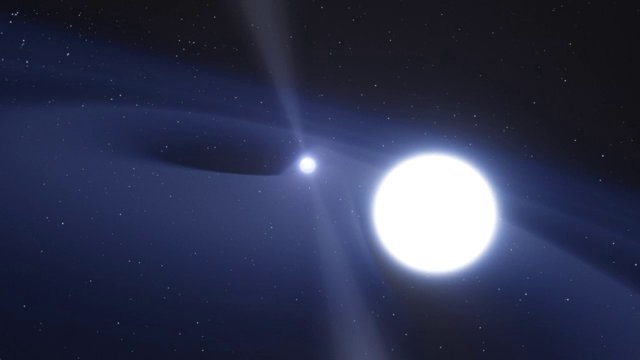
For example, a team of astronomers at the University of Wisconsin-Milwaukee recently identified the coldest, faintest white dwarf star ever detected, some 900 light years from Earth. Hovering near a much larger pulsar, this ancient stellar remnant has a temperature of less than 3,000 K, or about 2,700 degrees Celsius, which made it extremely difficult to detect. But what is especially impressive about this ancient stellar remnant is the fact that it is so cool that its carbon has crystallized.
This means, in effect, that this star has formed itself into an Earth-size diamond in space. The discovery was made by Prof. David Kaplan and his team from the UofW-M using the National Radio Astronomy Observatory’s (NRAO) Green Bank Telescope (GBT) and Very Long Baseline Array (VLBA), as well as other observatories. All of these instruments were needed to spot this star because its low energy output means that it is essentially “a diamond in the rough”, the rough being the endless vacuum of space, that is.
White dwarves like this one are what happens after a star about the size of our Sun spends all of its nuclear fuel and throws its outer layers off, leaving behind a tiny, super-dense core of elements (like carbon and oxygen). They burn at an excruciatingly slow pace, taking billions and billions of years to finally go out. Even newly transformed white dwarfs are incredibly hard to spot compared to active stars, and this one was only discovered because it happens to be nestled right up next to a pulsar.
By definition, a pulsar is what is left over when a neutron star when a slightly larger sun also runs its course. Those that spin are given the name of “pulsar” because their magnetic fields force radio waves out in tight beams that give the illusion of pulsations as they whir around, effectively strobing the universe like lighthouse. The pulsar that sits next to the diamond-encrusted white dwarf is known as PSR J2222-0137, and is 1.2 times the mass of our sun, but even smaller than the white dwarf.
Astronomers were tipped off to the presence of something near the pulsar by distortions in its radio waves, and an old-fashioned space hunt was then mounted for the culprit. The low mass made a white dwarf the most likely cause, but astronomers couldn’t see it because of its incredibly low luminosity. Because of this, the UofW-M team estimated the age of this object had to be upward of 11 billion years, the same age as the Milky Way Galaxy.
This meant that the object was already old when our galaxy was just beginning to coalesce. After all those eons to cool off, the star has likely collapsed into a crystallized chunk of carbon mixed with oxygen and some other elements. It could actually be possible, though extremely difficult, to land a spacecraft on an object like this. There may be many more stars in the sky with diamonds, perhaps some even older than this one.
Spotting this white dwarf was a bit of a fluke, though. Until more powerful instruments are devised that can see an incredibly dim, burnt out star, they’ll remain shrouded in the vast darkness of space. However, this is not the first time that an object composed of diamond was found in space by sheer stroke of luck. Remember the diamond planet, a body located some 40 light years from Earth that orbits the binary star 55 Cancri?
Yep that one! Like I said, such discoveries are demonstrating that the universe is a much more interesting, awesome, and complex place than previously thought. Between diamond worlds, diamond planets, lakes of methane and atmospheres of plastic, it seems that just about anything is possible. Good to know, seeing as how so much of our plans for the future depend upon on getting out there!
Scientists have been staring at the surface of Mars for decades through high-powered telescopes. Only recently, and with the help of robotic missions, has anyone been able to look deeper. And with the success of the Spirit, Opportunity and Curiosity rovers, NASA is preparing to go deeper. The space agency just got official approval to begin construction of the InSight lander, which will be launched in spring 2016. While there, it’s going to explore the subsurface of Mars to see what’s down there.
Officially, the lander is known as the Interior Exploration Using Seismic Investigations, Geodesy and Heat Transport, and back in May, NASA passed the crucial mission final design review. The next step is to line up manufacturers and equipment partners to build the probe and get it to Mars on time. As with many deep space launches, the timing is incredibly important – if not launched at the right point in Earth’s orbit, the trip to Mars would be far too long.
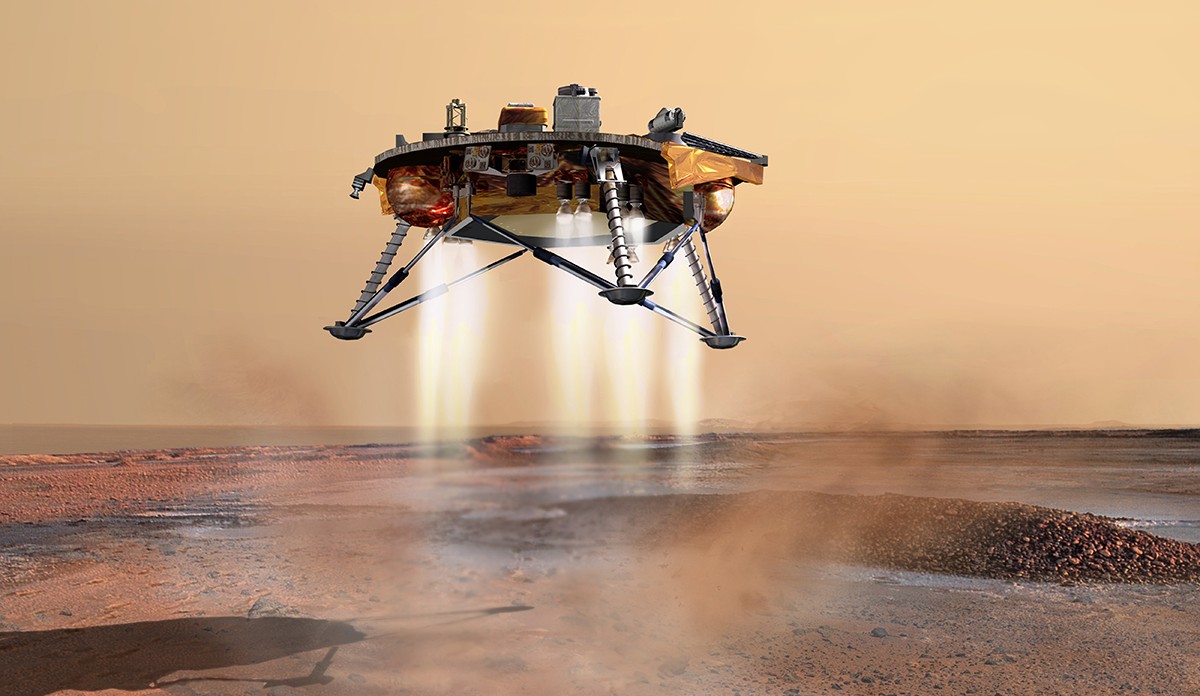
Unlike the Curiosity rover, which landed on the Red Planet by way of a fascinating rocket-powered sky crane, the InSight will be a stationary probe more akin to the Phoenix lander. That probe was deployed to search the surface for signs of microbial life on Mars by collecting and analyzing soil samples. InSight, however, will not rely on a tiny shovel like Phoenix (pictured above) – it will have a fully articulating robotic arm equipped with burrowing instruments.
Also unlike its rover predecessors, once InSight sets down near the Martian equator, it will stay there for its entire two year mission – and possibly longer if it can hack it. That’s a much longer official mission duration than the Phoenix lander was designed for, meaning it’s going to need to endure some harsh conditions. This, in conjunction with InSight’s solar power system, made the equatorial region a preferable landing zone.
For the sake of its mission, the InSight lander will use a sensitive subsurface instrument called the Seismic Experiment for Interior Structure (SEIS). This device will track ground motion transmitted through the interior of the planet caused by so-called “marsquakes” and distant meteor impacts. A separate heat flow analysis package will measure the heat radiating from the planet’s interior. From all of this, scientists hope to be able to shed some light on Mars early history and formation.
For instance, Earth’s larger size has kept its core hot and spinning for billions of years, which provides us with a protective magnetic field. By contrast, Mars cooled very quickly, so NASA scientists believe more data on the formation and early life of rocky planets will be preserved. The lander will also connect to NASA’s Deep Space Network antennas on Earth to precisely track the position of Mars over time. A slight wobbling could indicate the red planet still has a small molten core.
If all goes to plan, InSight should arrive on Mars just six months after its launch in Spring 2016. Hopefully it will not only teach us about Mars’ past, but our own as well.
After the daring new type of landing that was performed with the Curiosity rover, NASA went back to the drawing table to come up with something even better. Their solution: the “Low-Density Supersonic Decelerator”, a saucer-shaped vehicle consisting of an inflating buffer that goes around the ship’s heat shield. It is hopes that this will help future spacecrafts to put on the brakes as they enter Mar’s atmosphere so they can make a soft, controlled landing.
Back in January and again in April, NASA’s Jet Propulsion Laboratory tested the LDSD using a rocket sled. Earlier this month, the next phase was to take place, in the form of a high-altitude balloon that would take it to an altitude of over 36,600 meters (120,000 feet). Once there, the device was to be dropped from the balloon sideways until it reached a velocity of four times the speed of sound. Then the LDSD would inflate, and the teams on the ground would asses how it behaved.
Unfortunately, the test did not take place, as NASA lost its reserved time at the range in Hawaii where it was slated to go down. As Mark Adler, the Low Density Supersonic Decelerator (LDSD) project manager, explained:
There were six total opportunities to test the vehicle, and the delay of all six opportunities was caused by weather. We needed the mid-level winds between 15,000 and 60,000 feet [4,500 meters to 18,230 meters] to take the balloon away from the island. While there were a few days that were very close, none of the days had the proper wind conditions.
In short, bad weather foiled any potential opportunity to conduct the test before their time ran out. And while officials don’t know when they will get another chance to book time at the U.S. Navy’s Pacific Missile Range in Kauai, Hawaii, they’re hoping to start the testing near the end of June. NASA emphasized that the bad weather was quite unexpected, as the team had spent two years looking at wind conditions worldwide and determined Kauai was the best spot for testing their concept over the ocean.
If the technology works, NASA says it will be useful for landing heavier spacecraft on the Red Planet. This is one of the challenges the agency must surmount if it launches human missions to the planet, which would require more equipment and living supplies than any of the rover or lander missions mounted so far. And if everything checks out, the testing goes as scheduled and the funding is available, NASA plans to use an LDSD on a spacecraft as early as 2018.
And in the meantime, check out this concept video of the LDSD, courtesy of NASA’s Jet Propulsion Laboratory:
It’s no secret that NASA has been taking a serious look at Faster-Than-Light (FTL) technology in recent years. It began back in 2012 when Dr Harold White, a team leader from NASA’s Engineering Directorate, announced that he and his team had begun work on the development of a warp drive. His proposed design, an ingenious re-imagining of an Alcubierre Drive, may eventually result in an engine that can transport a spacecraft to the nearest star in a matter of weeks — and all without violating Einstein’s law of relativity.
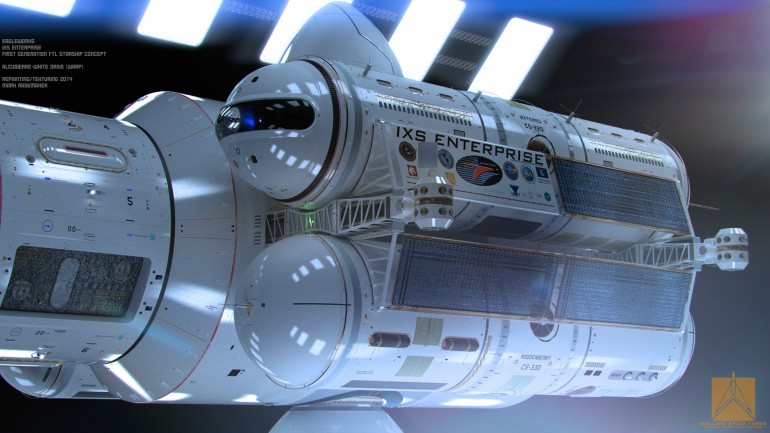
In the spirit of this proposed endeavor, White chose to collaborate with an artist to visualize what such a ship might look like. Said artist, Mark Rademaker, recently unveiled the fruit of this collaboration in the form of a series of concept images. At the heart of them is a sleek ship nestled at the center of two enormous rings that create the warp bubble. Known as the IXS Enterprise, the ship has one foot in the world of science fiction, but the other in the realm of hard science.
The idea for the warp-drive comes from the work published by Miguel Alcubierre in 1994. His version of a warp drive is based on the observation that, though light can only travel at a maximum speed of 300,000 km/sec (186,000 miles per second, aka. c), spacetime itself has a theoretically unlimited speed. Indeed, many physicists believe that during the first seconds of the Big Bang, the universe expanded at some 30 billion times the speed of light.
The Alcubierre warp drive works by recreating this ancient expansion in the form of a localized bubble around a spaceship. Alcubierre reasoned that if he could form a torus of negative energy density around a spacecraft and push it in the right direction, this would compress space in front of it and expand space behind it. As a result, the ship could travel at many times the speed of light while the ship itself sits in zero gravity – hence sparing the crew from the effects of acceleration.
Unfortunately, the original maths indicated that a torus the size of Jupiter would be needed, and you’d have to turn Jupiter itself into pure energy to power it. Worse, negative energy density violates a lot of physical limits itself, and to create it requires forms of matter so exotic that their existence is largely hypothetical. In short, what was an idea proposed to circumvent the laws of physics itself fell prey to their limitations.
However, Dr Harold “Sonny” White of NASA’s Johnson Space Center reevaluated Alcubierre’s equations and made adjustments that corrected for the required size of the torus and the amount of energy required. In the case of the former, White discovered that making the torus thicker, while reducing the space available for the ship, allowed the size of it to be greatly decreased – from the size of Jupiter down to a width of 10 m (30 ft), roughly the size of the Voyager 1 probe.
In the case of the latter, oscillating the bubble around the craft would reduce the stiffness of spacetime, making it easier to distort. This would reduce the amount of energy required by several orders of magnitude, for a ship traveling ten times the speed of light. According to White, with such a setup, a ship could reach Alpha Centauri in a little over five months. A crew traveling on a ship that could accelerate to just shy of the speed of light be able to make the same trip in about four and a half years.
Rademaker’s renderings reflect White’s new calculations. The toruses are thicker and, unlike the famous warp nacelles on Star Trek’s Enterprise, their design is the true function of hurling the craft between the stars. Also, the craft, which is divided into command and service modules, fits properly inside the warp bubble. There are some artistic additions, such as some streamlining, but no one said an interstellar spaceship couldn’t be functional and pretty right?
For the time being, White’s ideas can only be tested on special interferometers of the most exacting precision. Worse, the dependence of the warp on negative energy density is a major barrier to realization. While it can, under special circumstances, exist at a quantum level, in the classical physical world that this ship must travel through, it cannot exist except as a property of some form of matter so exotic that it can barely be said to be capable of existing in our universe.
Though no one can say with any certainty when such a system might be technically feasible, it doesn’t hurt to look ahead and dream of what may one day be possible. And in the meantime, you can check out Rademaker’s entire gallery by going to his Flickr account here. And be sure to check out the video of Dr. White explaining his warp-drive concept at SpaceVision 2013:
Friday the 13th may be a time for worry for the more superstitiously inclined. But for those who turned out to gaze at the night sky in the wee hours of the morning, it was also a chance to see something truly rare and beautiful. It’s what’s known as a “honey moon”, and one which won’t happen again in our lifetime.
Basically, a honey moon is something that happens during the summer solstice when the sun’s path across the sky at its highest during this month and the moon at its lowest, which keeps the lunar orb close to the horizon and makes it appear more amber than other full moons this year.
The amber colors are due to the scattering of longer wavelengths of light by dust and pollution in our atmosphere. As astronomer Raminder Signh Samra of the H.R. MacMillian Space Centre in Vancouver said:
It is a similar phenomenon as seen at sunset, when sunlight is scattered towards the red end of the spectrum, making the sun’s disk appear orange-red to the naked-eye.
The most spectacular part of the honey moon begins hours before midnight, due to an illusion by which the moon appears larger to sky-watchers when it’s near the horizon than when it hangs high in the sky. It reached it’s full phase last night at 12:13 am EDT, at least for those of us living in North America.
Scientists are not entirely sure what accounts for this optical illusion of a larger moon near the horizon, but they suspect it has something to do with the human mind trying to make sense of the moon’s proximity to more familiar objects like mountains, trees and houses in the foreground.
The monthly full moon always looks like a big disk, but because its orbit around the Earth is egg-shaped, there are times when the moon it is at its shortest distance from Earth (called perigee), some 362,065 km (224,976 miles) away. This month the perigee just happened to coincide with the full phase.
Hence why it may have made it appear unusually large to some keen-eyed sky-watchers. As Samra explained:
The moon illusion should be more prominent during this full moon as it will graze closer to the horizon than at any other time of the year. This will make the moon appear more amber than other full moons of the year.
A full moon coinciding on Friday the 13th is not all that uncommon, occurring every three or so years. But having the combination of a honey moon and Friday the 13th is rare, last occurring on June 13, 1919. As for the next, we’ll have to wait until June 13, 2098, for the next one.
In short, stellar events like this one – where’s there’s a perfect conjunction between the occult and the night sky – only happen once every 80 or 90 years. So if you missed last night’s and are sad about it… Well, the good news is they are doing great things in medicine these days!
And if guys like Kurzweil are to be believed, clinical Immortality is just a few decades away. Until next time, be sure to keep your eyes to the heavens. Some interesting things happen there, apparently!

 According to a story published on July 10 in The Astrophysical Journal, a radio burst was detected that may have originated outside of our galaxy. Apparently, these split-second radio bursts have heard before, but always with the same telescope – Parkes Observatory in Australia. Given that only this observatory was detecting these signals, there was debate about whether they were coming from inside our galaxy, or even from Earth itself.
 Fast radio bursts are a flurry of radio waves that last a few thousandths of a second, and at any given minute there are only seven of these in the sky on average, according to the Max Planck Institute for Radio Astronomy. Their cause is unknown, and the possibilities range from black holes, to neutron stars coming together, to the magnetic field of pulsars (a type of neutron star) flaring up.
 This astonishingly large number is inferred by calculating how much sky was observed, and for how long, in order to make the few detections that have so far been reported. Laura Spitler, a postdoctoral researcher at the Max Planck Institute for Radio Astronomy in Bonn, Germany and the lead author of the new paper, was also the first person to note the event. As she explained:
 Efforts are now under way to detect radio bursts using radio telescopes that can observe broad swaths of the sky to help identify them. Telescopes under construction in Australia and South Africa as well as the CHIME telescope in Canada have the potential to detect fast radio bursts. Astronomers say these and other new facilities could pave the way for many more discoveries and a better understanding of this mysterious cosmic phenomenon.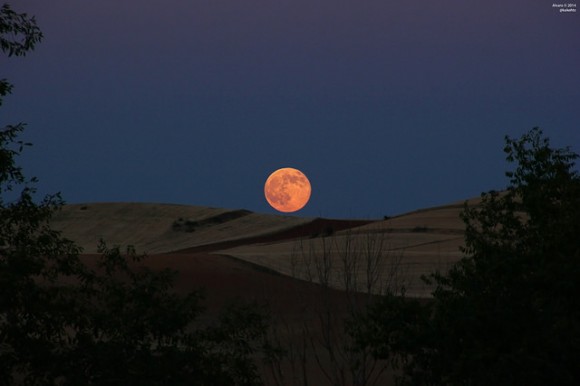
 As the evening went on, the Moon drifter higher into the night sky and grew smaller. It’s color also changed as it ascended, going from light brown to bright blue-white. But it’s brilliance was not diminished, and the wife and I walked home beneath a night sky that still seemed to possess some daylight. Needless to say, it was quite the magical evening, warm and mild and illuminated by an intensely bright Moon.
 However, this month’s big full Moon was not the closest the terrestrial satellite will get to to Earth this year. The closest Full Moon of 2014 will occur next month on August 10th at 18:11 Universal Time (UT) or 1:44 PM EDT. On that date, the Moon reaches will reach perigee – or its closest approach to the Earth – at a distance of 356,896 kilometres at 17:44, less than an hour before it’s full.
 This is just the latest in a series of possible plans to capture debris. In the past, the ESA has revealed that it was looking at capturing space debris in a net, securing it with clamping mechanisms, or grabbing hold of it using robotic arms. However, the latest possibility calls for using capturing debris with a tethered harpoon, which would pierce the debris with a high-energy impact before reeling it in.
 The ESA says the space harpoon concept has already undergone initial investigations by Airbus Defense and Space in Stevenage – two aerospace developers based in the UK. The preliminary design incorporates a penetrating tip, a crushable cartridge to help embed it in the target satellite structure, and barbs to keep it sticking in so the satellite can then be reeled in.


 For the cost of $75,000, customers will be taken to an altitude of 32 km (20 miles). From there, they will be able to see the curvature of the Earth, and at a fraction of the price for Virgin Galactic’s $200,000 rocket-propelled trip. The ride will consist of a capsule large enough for passengers to walk around in will being lifted well above the troposphere, thanks to a giant balloon containing 400,000 cubic meters of helium.
 Space exploration is a booming industry these days. Between NASA, the ESA, Roscosmos, the CSA, and the federal space agencies of India and China, there’s just no shortage of exciting missions aimed at improving our understanding of our Solar System or the universe at large. In recent months, two such missions have been making the news; one of which (led by the ESA) is now underway, while the other (belonging to NASA) is fast-approaching.

 Named in honor of the Rosetta Stone – the a basalt slab that helped linguists crack ancient Egyptian – Rosetta is expected to provide the most detailed information about what comets look like up close (as well as inside and out). Similarly, the lander, Philae, is named after the island in the Nile where the stone was discovered. Together, they will help scientists shed light on the early history of our Solar System by examining one of its oldest inhabitants.
 EFT-1 will take the form of an unmanned test flight, with the Orion spacecraft being controlled entirely by a flight control team from NASA’s Kennedy Space Center located in Florida. One vital component to be tested is the Launch Abort System (LAS), which in essence is a fail-safe required to protect astronauts should anything go wrong during the initial launch phase. Designed to encapsulate the crew module in the event of a failure on the launch pad, the LAS thrusters will fire and carry the Orion away from danger.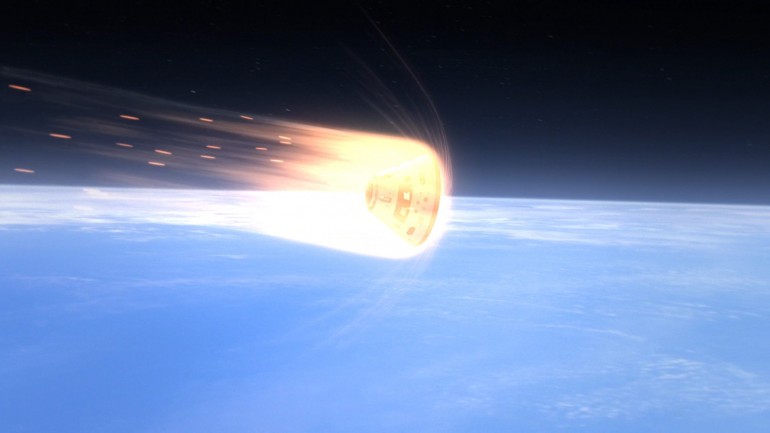
 The final aspect of EFT-1 will be the observation of the parachute deployment system. Assuming the LAS has successfully jettisoned from the crew module following launch, the majority of Orion’s stopping power will be provided by the deploying of two drogue parachutes, followed shortly thereafter by three enormous primary parachutes, with the combined effect of slowing the spacecraft to 1/1000th of its initial re-entry speed.
 NASA staff on the ground will be nervously monitoring several key aspects of the proving mission, with the help of 1,200 additional sensors geared towards detecting vibration and temperature stress, while taking detailed measurements of event timing. Furthermore, cameras are set to be mounted aboard Orion to capture the action at key separation points, as well as views out of the windows of the capsule, and a live shot of the parachutes as they deploy (hopefully).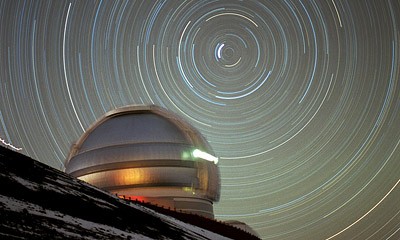

 The findings were presented at the Royal Astronomical Society’s National Astronomy Meeting in Portsmouth on Thursday, June 26. The work was funded by the UK’s Science and Technology Facilities Council (STFC) and the European Research Council. Professor Frenk, who received the Royal Astronomical Society’s top award, the Gold Medal for Astronomy, added:
 Ordinary neutrinos are very low-mass particles that interact only rarely with matter via the so-called weak nuclear force as well as via gravity. Sterile neutrinos are thought to interact with ordinary matter through gravity alone, making them a possible candidate as dark matter. As Dr Esra Bulbul – from the Harvard-Smithsonian Center for Astrophysics in Cambridge, Massachusetts, USA, and lead author of the paper discussing the results – put it:


 By definition, a pulsar is what is left over when a neutron star when a slightly larger sun also runs its course. Those that spin are given the name of “pulsar” because their magnetic fields force radio waves out in tight beams that give the illusion of pulsations as they whir around, effectively strobing the universe like lighthouse. The pulsar that sits next to the diamond-encrusted white dwarf is known as PSR J2222-0137, and is 1.2 times the mass of our sun, but even smaller than the white dwarf.
 Yep that one! Like I said, such discoveries are demonstrating that the universe is a much more interesting, awesome, and complex place than previously thought. Between diamond worlds, diamond planets, lakes of methane and atmospheres of plastic, it seems that just about anything is possible. Good to know, seeing as how so much of our plans for the future depend upon on getting out there!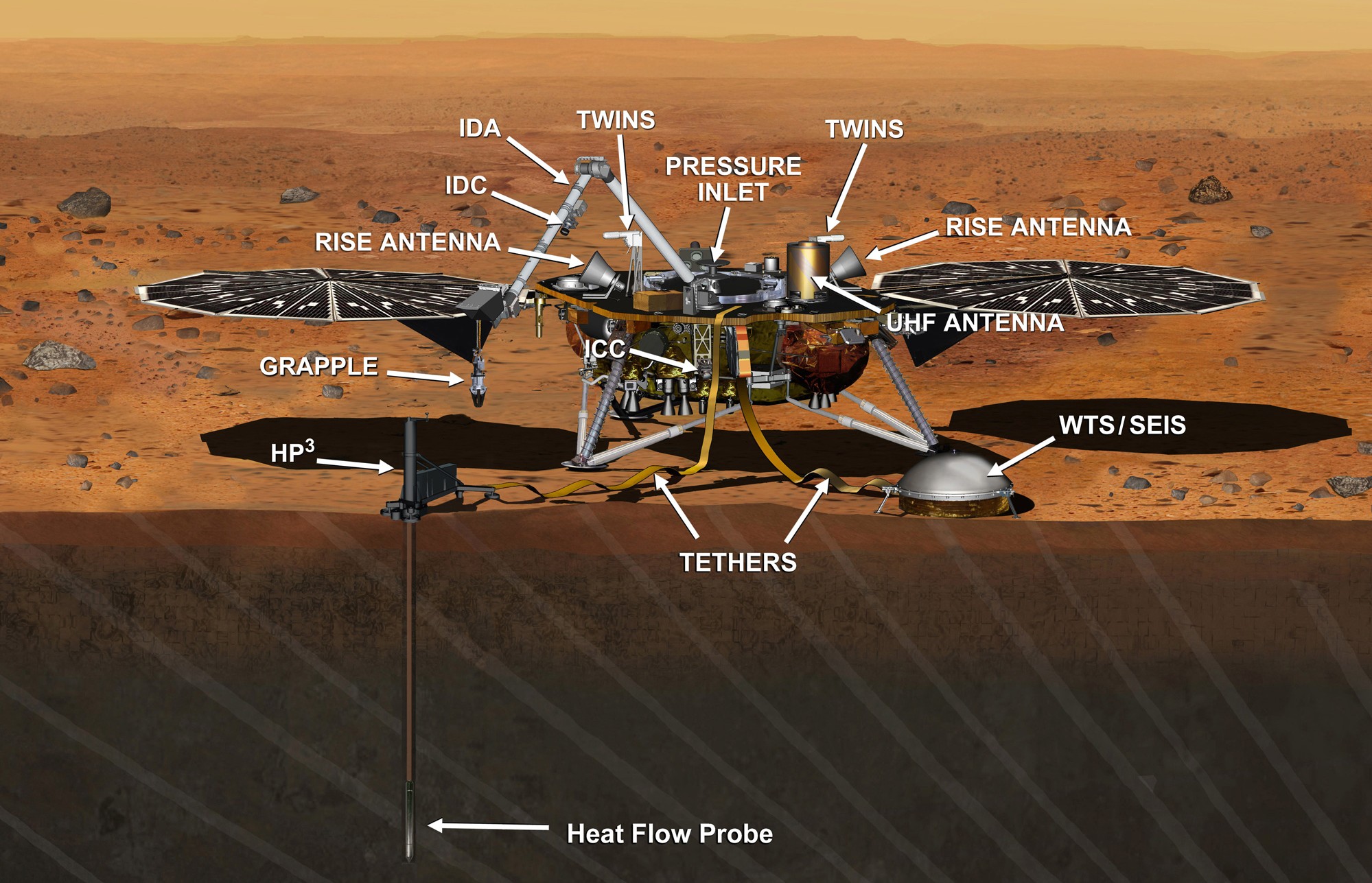

 After the daring new type of landing that was performed with the Curiosity rover, NASA went back to the drawing table to come up with something even better. Their solution: the “Low-Density Supersonic Decelerator”, a saucer-shaped vehicle consisting of an inflating buffer that goes around the ship’s heat shield. It is hopes that this will help future spacecrafts to put on the brakes as they enter Mar’s atmosphere so they can make a soft, controlled landing.



 The amber colors are due to the scattering of longer wavelengths of light by dust and pollution in our atmosphere. As astronomer Raminder Signh Samra of the H.R. MacMillian Space Centre in Vancouver said:
 Scientists are not entirely sure what accounts for this optical illusion of a larger moon near the horizon, but they suspect it has something to do with the human mind trying to make sense of the moon’s proximity to more familiar objects like mountains, trees and houses in the foreground.
 Hence why it may have made it appear unusually large to some keen-eyed sky-watchers. As Samra explained:
 Stories by Williams