Episode 88 of Stories from Space is now Live – “The Coming Age of Astrobiology with Kenneth Goodis-Gordon”!

Episode 88 of Stories from Space is now Live – “The Coming Age of Astrobiology with Kenneth Goodis-Gordon”!

Hello again! This week’s episode featured a special guest – Kenneth Goodis-Gordon! Ken is a Ph.D. candidate with the Planetary Science Group at the University of Central Florida (UCF) whose research focuses on exoplanets and the search for life in the cosmos (astrobiology). In a recent paper, he outlined how future exoplanet surveys could cast a wider net by examining polarized light. As he explains, this could greatly expand scientists’ ability to spot signs of life (aka. “biosignatures.”)

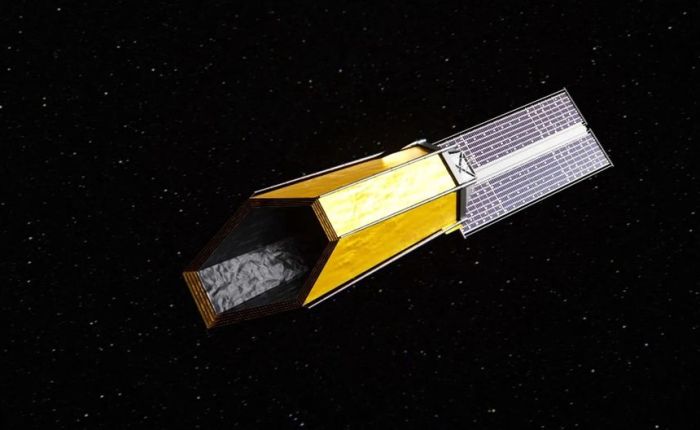
These recommendations will be especially useful when NASA’s Habitable World Observatory (HWO) launches sometime in the 2040s. This next-generation observatory will be the first space telescope specifically designed to search for signs of habitability and life on exoplanets. Learn more by following the links below…

Where to Listen:

Episode 86 of SfS – The Space Race – is now Live!

Episode 86 of SfS – The Space Race – is now Live!

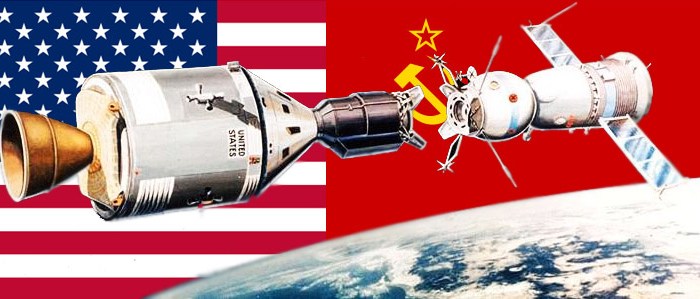
Welcome back! This week’s episode is all about the origins and evolution of the American and Soviet space programs—in other words, the Space Race! As I mentioned in previous episodes, these programs began as an effort to research rocket technology to deliver nuclear warheads. However, a parallel struggle began as both the U.S. and the Soviets realized the benefits of reaching space. Considering the atmosphere of the Cold War, which was as much about ideology as it was about weapons, they also considered it a matter of national prestige to “get their first!”

The Soviets achieved an early lead, sending the first satellite to space (Sputnik-1) in 1958. They also got their first with the first man to space in 1963 (Gagarin) and the first woman to space in 1964 (Valentina Tereshkova) with the Vostok Program. NASA caught up with the Mercury program, which sent the first American astronauts to space (the Mercury Seven), but the Soviets were still maintaining an early lead. That would change as NASA launched the Gemini program, demonstrating that they could spend extended periods there.

The stage was set for the Apollo Program, which would decide the Space Race once and for all and forever alter the course of history. Of course, that epic story has to wait for Part II of the episode, coming soon!

Where to Listen:

Episode 80 of SfS – Indigenous Astronomy: The Aztecs – is now Live!

Episode 80 of SfS – Indigenous Astronomy: The Aztecs – is now Live!

In this week’s episode, I returned to the ongoing series on Indigenous Astronomy with a look at the Aztec Empire and its traditions. Like all Mesoamerican cultures, the Aztecs had a rich astronomical and cosmological tradition that was as complex as anything created by the Babylonians, Greeks, Indians, Chinese, and others. In fact, their traditions demonstrate the type of universality that observations of the heavens inspire.

To the Aztecs, the movements of the Sun, the Moon, and the visible planets were seen as evidence of a cosmic order. Every activity they performed during the year was dictated by this order and even influenced their urban planning. In addition, they followed two calendars: a 365-day solar calendar (xiuhpōhualli) and a 260-day ritual calendar (tōnalpōhualli). Every 52 years, these calendars would coincide, which was seen as the end of a historical cycle.

What is also very interesting is the number of ignorant misconceptions about the Aztecs that have endured until this day. These include but are not limited to the belief that the Aztecs were an illiterate culture, that they lacked the wheel, and that they engaged in ritual cannibalism. This last myth has been especially hard to shake and seems to have been assumed about many Indigenous cultures all across the Americas – including the Anasazi, Inca, and most cultures in North America.

In any case, I hope this episode proves enlightening to all who hear it and inspires them as it inspired me while researching and recording it. Check out the links below to learn more…

Where to Listen:

Episode 79 of SfS – What is a Habitable Zone? – is now Live!

Episode 79 of SfS – What is a Habitable Zone? – is now Live!

This week’s episode focuses on something that is central to the whole search for life in our Universe (aka. astrobiology). To put it in the form of a question: “How do we know if a planet beyond our Solar System can support life?” For many decades, this question was entirely academic, with scientists assuming that systems like our own represented the standard for “habitability.” But with the explosion in exoplanet discoveries in the past decade and a half, the question has been revisited in force!

The traditional definition of a “potentially habitable” planet is based on the orbital distance where a planet could receive enough light and heat from its star so that liquid water could exist on its surface. However, astronomers and astrobiologists have come to question this limited definition based on what we have observed in other star systems and the types of exoplanets discovered. Check out the links below to learn more…

Where to Listen:

Episode 78 of SfS – Where is Everybody? The Percolation Hypothesis – is now Live!

Episode 78 of SfS – Where is Everybody? The Percolation Hypothesis – is now Live!

This week’s episode was one of the last installments in my series exploring the Fermi Paradox (i.e., “Where are all the aliens?”). This episode was special in that it dealt with a proposed resolution that is one of my favorites and the one that I believe is the most likely explanation for the “Great Silence” – the Percolation Hypothesis. The theory was proposed by famed NASA scientist and science fiction author Geoffrey A. Landis in 1993.

To break it down, the Percolation Hypothesis takes its name from Percolation Theory, a concept in mathematics and statistics that describes the behavior of a network when links are added or taken away. In the latter case, the theory states that a large network will break down into smaller clusters if enough links are removed. When applied to the Fermi Paradox, the theory argues the challenges of interstellar space exploration impose constraints on how far a civilization can settle.

Among these are the hazards of cosmic radiation and microgravity and the unknown dangers of exploring “alien” worlds. But perhaps the most important is General Relativity, which rules out FTL travel and communications (to the best of our knowledge). This makes the entire premise of a “galactic empire” impractical and means that large portions of our galaxy would remain unsettled. This theory is not only consistent with known physics, but it doesn’t suffer from the “it only takes one” rule.

With other proposed resolutions, there is a tendency to assume a uniformity of motivation. Such theories tend to break down if just one civilization doesn’t share these motivations. Instead, this theory incorporates the idea that civilizations will be motivated by a plurality of motivations. As I said, this theory is the most plausible (IMHO) and is consistent with what the late and great Carl Sagan argued. Follow the links below to learn more.

Where to Listen:

Episode 75 of SfS – “The Grand Tour: The Legacy of the Voyager Probes” – is Now Live!

Episode 75 of SfS – “The Grand Tour: The Legacy of the Voyager Probes” – is Now Live!

This week’s episode was dedicated to the Voyager 1 and 2 probes, and it was a long time in the making! Launching in 1977, these two probes explored the outer Solar System and accomplished many firsts. This included obtaining the first evidence that Jupiter’s moon, Europa, could have an interior ocean. They also examined Saturn’s rings and got the first close-up look at Saturn’s moon, Titan, and its dense hydrocarbon atmosphere, which led to speculation that liquid methane lakes might exist on its surface.

The Voyager Golden Record. Credit: NASA

While Voyager 2 became the first mission to visit Uranus and Neptune, a feat which has not yet been repeated, Voyager 1 conducted the Pale Blue Dot campaign, obtaining the best-known image of Earth. And, of course, they both carry the Voyager Golden Records, which contain sounds and images of Earth and simple diagrams indicating the location of Earth and the Solar System. These records could be the first interstellar message sent by humanity to another civilization or a time capsule for future generations of humans.

The two probes are now in interstellar space, where they continue to operate and return data on the interstellar medium. Regardless of how much time has passed, the Voyager probes will forever remain iconic and their accomplishments legendary. Check out the episode below:

Where to Listen: