Episode 68 of SfS – The STASH Experiment and Hibernation Technology for Space, with Dr. Ryan Sprenger – is now Live!

Episode 68 of SfS – The STASH Experiment and Hibernation Technology for Space, with Dr. Ryan Sprenger – is now Live!

This week, I sat down with Dr. Ryan Sprenger, the Senior Research Physiologist at Fauna Bio Inc., a California-based biotech company specializing in genomics research. Sprenger and his colleagues have developed a new concept for testing hibernation in space, the Studying Torpor in Animals for Space-health in Humans (STASH) experiment. Their concept was selected by NASA’s Innovative Advanced Concepts (NIAC) program for Phase I development this year.

With NASA’s support, Sprenger and his team will develop a technology demonstrator that will be sent to the ISS. Their concept has the potential to revolutionize space exploration by allowing astronauts to enter synthetic hibernation during the long voyage to Mars and beyond. In essence, astronauts could sleep for the duration of long-term spaceflights, reducing the physiological impact of exposure to microgravity and radiation and the psychological impacts of months spent in a cramped spacecraft.

It will also reduce the amount of supplies missions need to bring along and the amount of waste produced. It will also have applications here on Earth, helping to mitigate aging, disease, and genetic disorders. Follow the links below to learn more!

Where to Listen:

Episode 62 of Stories from Space – Living on Saturn’s Moons – is now Live!

Episode 62 of Stories from Space – Living on Saturn’s Moons – is now Live!

This week, as part of my continuing series, The Great Migration: Settling the Solar System, we took a look at Saturn and its system of moons. With the right technology, know-how, and the right kind of advancements, humanity could someday settle on Saturn’s largest satellites! Much like Jupiter’s icy moons, these satellites are icy bodies, many of which have interior oceans that could harbor life!

Another thing they have in common is their abundant resources, which include water, volatile elements, silicate minerals, metals, hydrogen, and helium-3. But whereas Jupiter has three satellites that could be settled (Europa, Ganymede, and Callisto), Saturn has six – Titan, Rhea, Tethys, Dione, Enceladus, and Mimas. And unlike Jupiter, Saturn has a mild radiation environment that makes harvesting hydrogen and helium-3 from its atmosphere easier and its larger satellites more habitable.

As famed aerospace engineer, science communicator, and space exploration advocate Robert Zubrin has said (many times), Saturn could become the “Persian Gulf of the Solar System,” providing the fuel for nuclear propulsion and fusion reactors across the Solar System. Take a listen to learn more!

Where to Listen:

Talking About Trauma

Talking About Trauma

I’ve been holding back on publishing this post for months now. But with the holidays here, a time for family, love, and reflection, I felt it was time. Four months ago, my darling wife Carla suffered a stroke and has been recovering in the hospital. The experience has left us all permanently changed and has forever altered my perceptions of various things.

I used to think I had lived a cushy life characterized by privilege and good fortune, which I was not particularly proud of. But since this happened, I feel I’ve come to learn a lot about the “real world” and the kinds of things that are possible. So here are my thoughts on the experience…

Continue reading “Talking About Trauma”

Episode 60 of Stories from Space – The Dark Universe – is now Live!

Episode 60 of Stories from Space – The Dark Universe – is now Live!

This week was a bit of a treat for me personally since I got to delve into something really astrophysical and theoretical! To break it down, in 1916, Einstein placed the finishing touches on his Theory of General Relativity (GR), which explained how gravity alters the curvature of spacetime, matter and energy are equivalent, and time and space are one. His theory was confirmed almost immediately, but by the 1950s and 60s, astronomers finally had the telescopes they needed to really test GR!

Ah, but there was a snag! When observing massive galaxies, astronomers noticed that their rotational curves suggested there was a lot more mass out there than what they could see. This led to the speculation that the Universe was filled with a mysterious invisible mass (“Dark Matter”) that interacted with “normal matter” only through gravity. The existence of this mass was needed for GR to be correct, which had been confirmed nine ways from Sunday by this point.

In the 1990s, the Hubble Space Telescope provided the most breathtaking and deep images of the cosmos. The primary mission of this observatory was to test Hubble’s Law – i.e., that the Universe is in a state of expansion. When looking back through space and time upwards of 10 billion light-years (or more), astronomers hit another snag. Essentially, the rate at which the cosmos was expanding (the Hubble Metric) was speeding up over time!

This led to speculation that Einstein’s theory about a force that “held back gravity” – the Cosmological Constant, which he described as the “biggest blunder of his career” – was actually correct. This unknown force, “Dark Energy,” became another mysterious phenomenon scientists needed to include in their cosmological models. To this day, neither has been confirmed directly. But next-generation telescopes are coming that could resolve this mystery.

Where to Listen:

Episode 55 – “The Firstborn Hypothesis” – is now Live!

Episode 55 – “The Firstborn Hypothesis” – is now Live!

This week, I decided it was time to get back into the Fermi Paradox! This time, I addressed the Firstborn Hypothesis, the notion that humanity may be the first advanced civilization to emerge in our Galaxy. Much like the Brief Window Hypothesis, I’m not sure it’s an official proposal. In fact, I’m pretty sure I assigned a name to a general idea that has been raised many times over the years and is considered one of the more obvious resolutions.

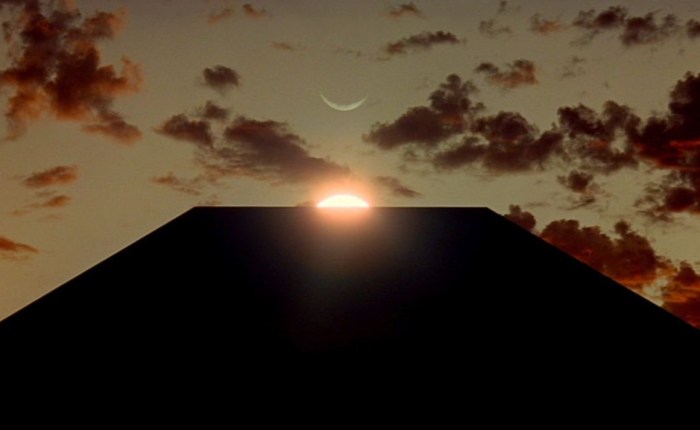
The name itself was inspired by Arthur C. Clarke’s 2001: A Space Odyssey. In this series, “Firstborn” is the name of the advanced species that was the first civilization to emerge in our galaxy. These were the aliens that created the monoliths and tampered with human evolution in the distant past, and are contemplating whether they made a mistake (and need to correct it) in the present. If true, then humanity has a pretty massive responsibility before it! Tune in to hear more:

Where to Listen:

Episode 52 – Going Interstellar: Generation Ships! – is now Live!

Episode 52 – Going Interstellar: Generation Ships! – is now Live!

This week’s episode focuses on a time-honored proposal for interstellar travel. Known as a Generation Ship (or Interstellar Ark, Arkship, etc.), the concept envisions a massive starship that can accommodate multiple generations of crews as they travel to nearby stars. The basic philosophy is that if you can’t go fast enough to get there within a single lifetime, then pack for the long haul! But of course, there are lots of considerations that need to be addressed in advance.

A lot can happen on a multi-generational interstellar voyage, which is why Generation Ships are a wonderful setting for science fiction stories! These include Robert A. Heinlein’s Orphans of the Sky, Poul Anderson’s Tau Zero, Arthur C. Clarke’s Rendezvous with Rama, Ursula K. LeGuin’s Paradises Lost, Kim Stanley’s Robinson’s Aurora, and something I’m currently working on (titled Traverse). Check out the episode below…

Where to Listen:

Episode 51 – The Relativity Revolution: The Life and Times of Albert Einstein – Part II – is now live!

Episode 51 – The Relativity Revolution: The Life and Times of Albert Einstein – Part II – is now live!

In Part I, we looked at the early life and education of Einstein and the steps that would eventually lead him to his groundbreaking theory of Relativity. In this second installment, we examine the implications of his theories, his later contributions to the sciences, and the years he spent in exile due to the rise of Nazi Germany. And, of course, there’s his enduring legacy, which includes theories like Dark Matter, Dark Energy, and the most predominantly accepted cosmological model that is still in use to this day.

Here’s where you can check it out…

Where to Listen:

Episode 50 – “The Relativity Revolution: The Life and Times of Albert Einstein – Part I” – is now Live!

Episode 50 – “The Relativity Revolution: The Life and Times of Albert Einstein – Part I” – is now Live!

This week’s episode was a doozy! Not only did I get into the big man himself – Albert Einstein – I also attempted to explain how Relativity works. Only this time, I used grown-up science-y terms and tried extra hard to explain how he arrived at it. To do that, I also had to explain all the scientists he drew inspiration from arrived at theirs! And to think, I only got to the halfway mark in his life and didn’t even cover the years when he was a refugee and his involvement in the Manhattan Project.

All that will be the subject of Part II, as well as the legacy he left in his wake. Check out Part I by following the links below. And please, let me know if I explained it in a way that made sense to you. As Einstein is often quoted as saying, “If you can’t explain it to a six-year-old, you don’t understand it yourself.” That’s a pretty high bar, but it’s a challenge I accepted. Please let me know how I did.

Where to Listen:

A New Scale for Classifying Intelligence?

A New Scale for Classifying Intelligence?

In the Search for Extraterrestrial Intelligence (SETI), there are many limiting factors. These go beyond the usual technical limitations, where SETI researchers are reliant on existing radio telescopes that can only be used for limited amounts of time. A far greater one is the very limited frame of reference we have for measuring intelligence.

Let’s face it, our notions of intelligence are entirely self-centered and anthropocentric. We think of intelligence in terms of ourselves and rarely consider that intelligence can occur under other domains, even though many exist here on Earth, and there is a considerable body of research that takes a wider view.

Given the way SETI research has become reinvigorated in recent decades, there are many who believe it’s time to expand our notions on what forms life and intelligence could take. For my purposes, the following scheme is motivated mainly by my interest in science fiction and its unparalleled ability to explore the deeper mysteries of the Universe.

Therefore, for your viewing pleasure, I present the Intelligence Scale. It is arranged based on the nature of the intelligence (labels are frustrating and inexact) and the scale it occupies.

Class:

Type a — Distributed: Consisting of individual intelligent beings connected together through social relationships
Type b — Collective: Consisting of large groups of organisms that make up a cohesive intelligent unit
Type c — Cooperative: Consisting of individual intelligence that has merged to form a larger whole
Type d — Adaptive: Consisting of intelligence that is capable of functioning in more than one mode or environment
Type e — Assimilative: Consisting of intelligence that is collective and incorporates all organisms in its environment into a greater whole

Scale:

Type I — Micrometer: Organisms measuring a few micrometers to a few centimeters in scale (ranging from microbes to insect-like creatures)
Type II — Meter: Organisms measuring in the meter range, mammals to high-order primates
Type III — Planetary: Organisms encompassing a large geographic region to an entire planet
Type IV — Stellar: Organisms extending beyond a single planet to an entire solar system
Type V — Cosmic: Organisms occupying a large region of space, extending for light-years and possibly entire galaxies

For reference, humanity is a Type IIa species, which is arguably making the transition to a Type IIIa thanks to the digital age. Will we ever give rise to different classes ourselves, or will we find examples that challenge our notions out there in the cosmos? In both cases, I sincerely hope so!

Episode 38: “The Great Migration: How Can Humans Live on Venus?”

Episode 38: “The Great Migration: How Can Humans Live on Venus?”

This week’s episode was the third installment of the “Settling the Solar System” (or “Great Migration”) segment. Previous episodes covered how humans could one day live on the Moon and Mars. In this latest installment, I discussed how humans (with the right technology and strategies) could live on Venus. Well, not exactly on Venus, since the planet is a total hellhole!

The air pressure alone is enough to crush your bones, the average temperature is literally hot enough to melt lead, and there’s also sulfuric acid rain! Basically, Venus is the WORST piece of real estate in the Solar System! At least… it is on the surface. But above the cloud tops, where temperatures are mild, the air pressure is decent, and the sulfuric acid rain is sparse, floating cities could be established.

Over time, these settlements could be used to terraform the planet into an ocean paradise. Check out the episode to hear how it could be done!

Where to Listen: