
 Recently, I finished watching the animated movie of the classic comic, known as The Dark Knight Returns. Adapted from Frank Miller’s four-part graphic novel, this movie came in two parts that were released separately over the past year. And now that I have both parts under my belt, I feel that a review is necessary. Not only was this an overdue feature, in my opinion, it was also one of the biggest installments in the Batman franchise and the greatest accomplishments of Miller’s checkered career.
Originally published in 1986, TDKR tells the story of Batman many years after the official story arc where he and others like him have gone into retirement. Borrowing from such franchises as The Watchmen, it experiments with some limited alternate-history, showing how the 80’s would have been different had superheroes been around and worked for the government. In and around all that, Miller also takes the time to make some social and political commentary, examining Batman’s quest to save Gotham from multiple angles and presenting it as a controversial issue within the story.
With only some minor liberties and changes, the animated movie presents the story as it happened in the graphic novel and was true to the spirit of Miller’s creation. Intended as a sequel to the 2011 animated film Batman: Year One, the film was directed by Jay Oliva, who worked as a storyboard artist on Man of Steel, Batman: Year One and Batman: Under the Red Hood and stars Peter Weller (Robocop) as the voice of the Dark Knight, Michael Emerson (Lost, Saw) as the Joker, Ariel Winter (Modern Family, Kiss Kiss Bang Bang, Speed Racer) as Robin and David Selby (Dark Shadows, Unknown, The Social Network) as Commissioner Gordon.
Plot Synopsis:
 The story opens on Gotham City, with Bruce Wayne now 55 years old and in retirement. Nearly all superheroes, with the exception of Superman who works for the government, have gone underground since the government made their activities illegal and the population turned against them. Unlike most, Batman went willingly due to the death of Jason Todd, the second Robin, which left him scarred and dejected.
Naturally, Gotham City has descended into a state of chaos and near-anarchy and a new gang of thugs called the Mutants has taken control of the streets. At about this time, Harvey Dent is released from Arkham Asylum after undergoing reconstructive surgery which has restored his face. His therapist, Dr. Bartholomew Wolper, insists that Dent is a healed man and wants to return to normal life and repent for his past crimes. Like many Gothamites, Wolper is not a fan of the Batman, blaming his obsession with order for Dent’s psychosis.
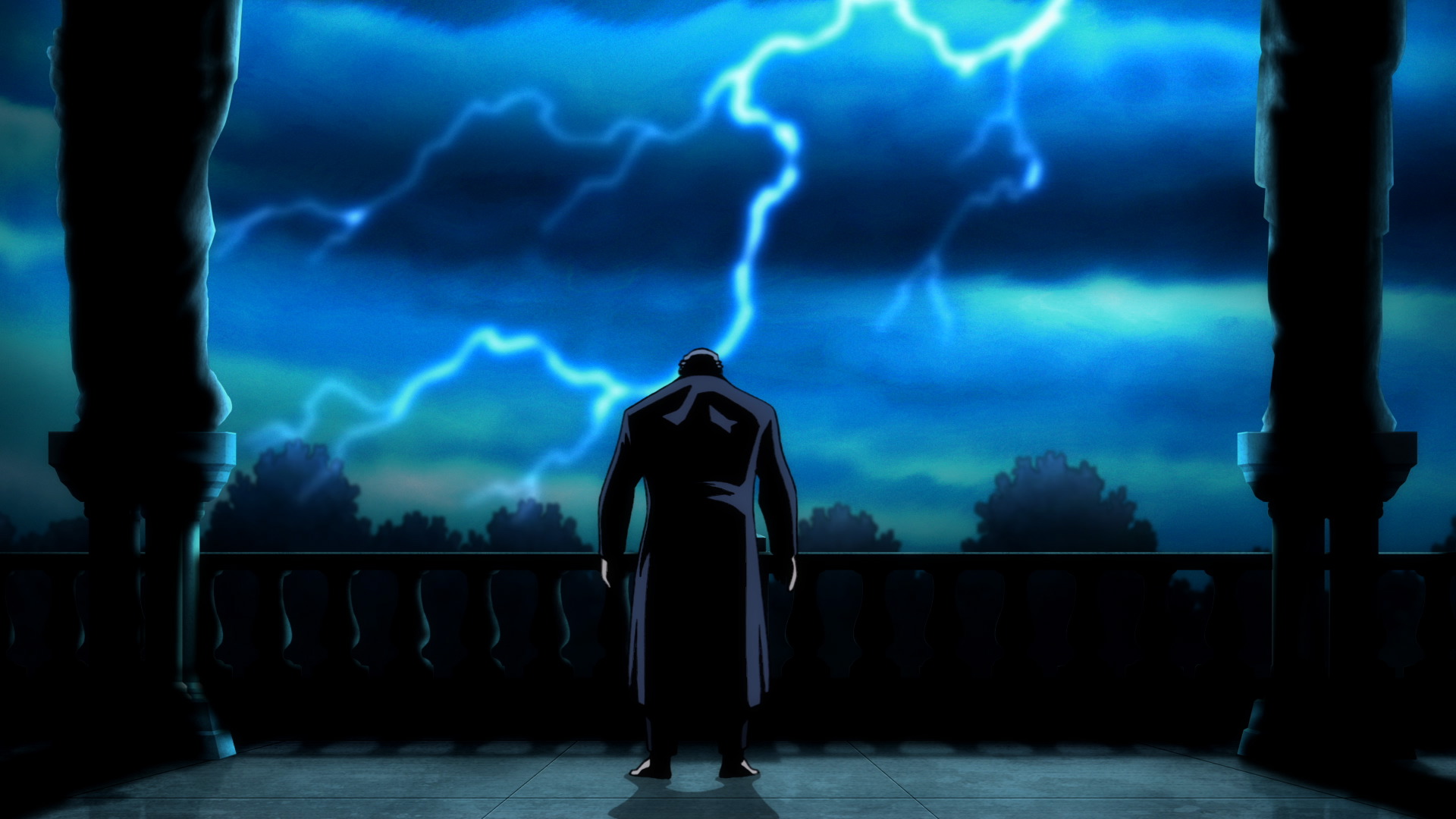 Similarly, the mutant boss begins to release statements saying his gang is going to take control of the city and kill Gordon. After meeting with him for drinks and visiting Crime Alley where his parents were murdered, Bruce Wayne realizes he can no longer stand idly by and decides to don his cape and cowl again. His first stop is to a robbery in progress where he takes out several armed hooligans and is met with nostalgic praise by one police officer, and fear and trepidation from a rookie.
Batman’s return is met with mixed reviews, with some condemning his actions and others hailing the return of the crime fighter who teaches common people to be brave and rise up. His sudden appearance is also noticed by the Mutant boss, who begins to add Batman to his list of people to kill. But more importantly, a masked man holds the city ransom and threatens to blow up the cities “Twin Towers” if he doesn’t get a ransom. Batman is convinced its Harvey and intervenes.
 After taking down his thugs, Batman realizes that the bombs Harvey set were meant to go off no matter what. When he confronts Harvey himself and disarms him, he realizes the entire thing was an elaborate suicide attempt to demonstrate how he has not healed. Rather than being cosmetic or physical, his psychosis is deeply rooted in his psyche and can’t be expunged. He surrenders to Batman and is returned to Arkham.
The city breathes a sigh of relief and once again begins endlessly debating the Batman’s actions. One person who takes particular notice is a young woman named Carrie Kelley, whom Batman rescues earlier on in the story from a mutant attack. After witnessing him save the city, she buys a knock-off Robin costume and decides to pursue him, hoping to become his new sidekick.
 Batman’s next confrontation takes him to the city dump where the Mutants are assembling and getting ready to assault the city. In his souped-up version of the Batmobile, which is now an armored tank, he disperses the thugs quickly using rubber bullets and rockets. But the Mutant leader comes before him and challenges him to a one-on-one fight. Batman cannot refuse, and the two get into it.
The fight goes poorly as Batman realizes the Mutant boss is in his prime, clinically insane and virtually immune to pain. Despite his best efforts at beating his down, Batman suffers some severe injuries as the mutant bites into his shoulder, breaks his arm, and slams him to the ground. He is narrowly saved when Robin intervenes and distracts the boss and Batman is able to pacify him. Together, they retreat back to the Batcave while Gotham PD arrives and places the Mutants into custody.
 While recovering from his wounds, Batman has a talk with Kelley about being his sidekick. He agrees to take her on provisionally, provided she doesn’t disobey his orders or put herself in needless danger. The mayor meanwhile attempts to step in and come to an agreement with the Mutant boss, but is murdered when he steps into the room alone with him. Batman decides that the only way to crush the mutants is to defeat their boss publicly and permanently.
After arranging for his escape, the Mutant boss is lured to another dump where the Mutants have all assembled. Engaging him in knee-high mud which slow him down, the Batman has the advantage and manages to pacify the boss further with nerve pinches and strategic blows. He finishes him off by getting him down and breaking his arm and leg, then punching him until he’s unconscious. To all the Mutants watching, it is clear who is top dog in Gotham now!
Thus ends part I of the story.
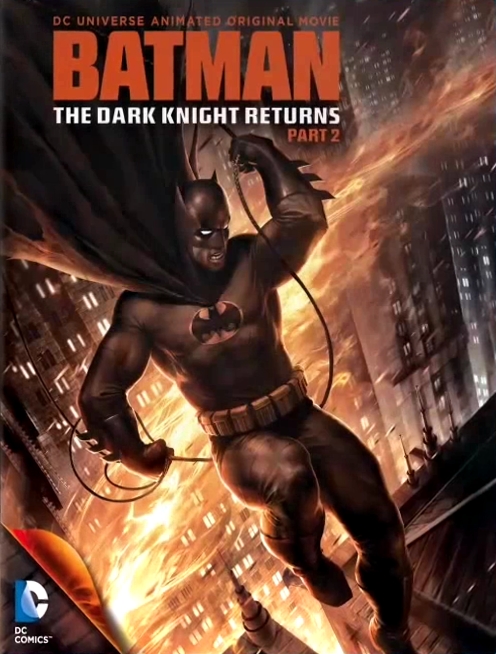 In part II, things once again open with people debating the actions of the Batman, especially since his defeat of the Mutants has led to the creation of a new gang known as the “Sons of Batman” who assault and kill criminals. Commissioner Gordon retires and is replaced by a Ellen Yindel who issues a warrant for the arrest of Batman. And in Arkham Asylum, another person takes notice of Batman’s latest actions with interest… the Joker!
Meanwhile, Superman is called to the White House to discuss putting and end to Batman’s actions. Superman indicates that it won’t be easy and he doubts Wayne will listen to reason, but agrees. He arranges to meet with Wayne and tells him that his coming out of retirement is a violation of their agreement and that if he persists, Superman will have to bring him in. Wayne responds only by saying “may the best man win”.
 Superman is then forced to head to Corto Maltese, a small island that is being contested by the Soviets and the US. After open fighting begins, Superman intervenes and begins destroying the Russian forces. The American forces are declared victorious, but a full-scale nuclear standoff results and a terrible sense of fear sets in.
After convincing Wolper that he has recovered, the Joker decides to come out of retirement himself by going on a late night talk show. Whereas Wolper is presenting him as a recovered man who regrets his actions, the Joker arranges to kill everyone in the studio using his Smile-ex gas, which his assistant disperses using a pair of robot children. Batman arrives on scene but is forced to fight it out with the police, and everyone in the studio dies.
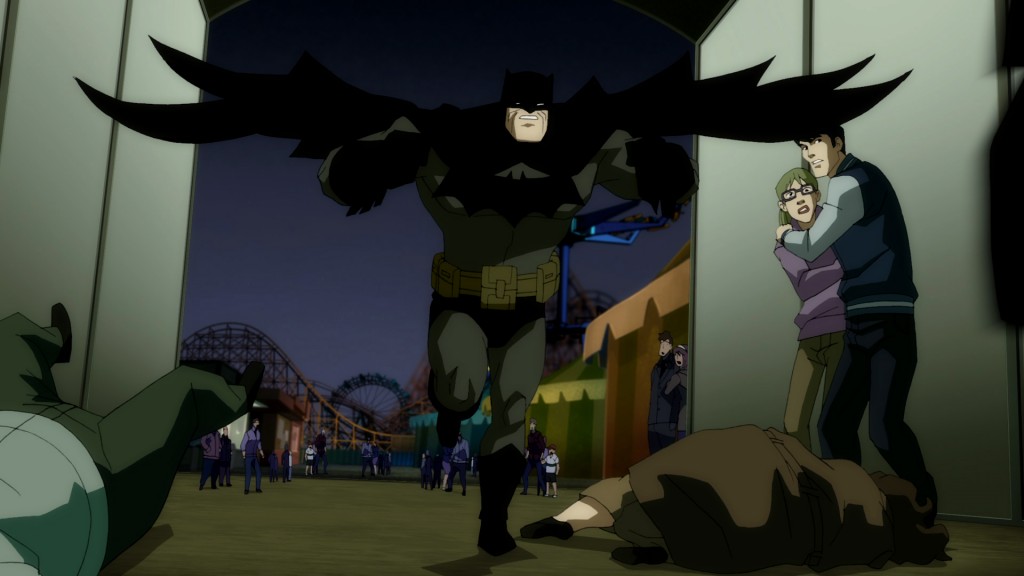 The Joker finds Selina Kyle (aka. Catwoman), who now runs an escort service, and drugs her to make her do his bidding and orders her to send one of her girls to give the same mind-control drug to a local Senator. This man then jumps from his hotel window after saying a full scale first-strike is the only recourse they have with the Russians, which intensifies the panic and keeps the police busy. After learning of this, Batman and Robin head to Kyles place where they find her bound and beaten in a Wonder Woman costume. Barely conscious, she tells them, “he’s worse than ever”, and they realize he has headed to the county fair.
They arrive to find the Joker’s already killed many people and Batman begins pursuing him while Robin tries to stop his associate and his lethal robots. Batman finally corners Joker in the Tunnel of Love where he breaks his neck, but not before the Joker has critically wounded him with a knife. The Joker then taunts the Batman by saying he will be charged with a murder he couldn’t bring himself commit, then twists his own neck to complete the break and kill himself.
Batman narrowly escapes police but knows they will stop at nothing to end him now. Retreating once again to recover, things once again escalate as the Russians respond to Superman’s intervention in Corto Maltese with a tactical nuclear strike. Superman manages to divert the missile from landing in Corto Maltese, but diverts it to the upper atmosphere where its detonation causes a massive EMP to short out all electricity in Gotham.
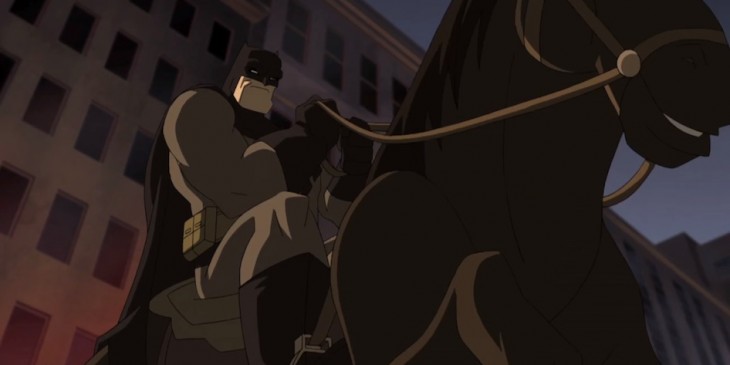 Superman himself is nearly killed by the blast and the resulting cloud cover, and must drain energy from nearby plants and trees in order to recover. Batman also awakens from his bed to find the city rioting and looting in the midst of the blackout, and rides in with Robin on some horses to begin recruiting people to help. He finds willing assistants with the Sons of Batman, former Mutants, and common citizens alike. Commissioner Gordon also manages to enlist the help of people to stop a fire and manages to find his wife after thinking he lost her in the blaze.
With the city once again saved and Superman recovered, the stage is now set for the final confrontation. Passing overhead of Wayne Manor, Superman etches the word WHERE? on the lawn, to which Batman responds “Crime Alley”. After doing an inventory of some specialized weapons, which includes a powered exoskeleton, he is met by Oliver Queen (aka. Green Arrow), who he agrees to let help him. Having lost his arm to Superman in their last confrontation, he is bitter and eager to help the Dark Knight bring him down.

The Gotham Police and National Guard cordon off the area as Superman and Batman both arrive. The Batman gets out of the Batmobile and tells Robin to keep it running and follow the orders he left her with. Robin asks if there is a plan here, but is left with the impression that Batman will not be returning from this fight. He confronts Clarke in the street and they begin to fight it out. Outmatched, Batman employs several special weapons to slow him down, including a sonic blaster, a massive electrical shock, acid, and finally, a kryptonite arrow fired by Oliver.
The arrowhead explodes after Clarke catches it, filling his lungs with the dust. Batman delivers several more punches and is all set to deliver the coup de grace, but takes the time to let him know that he just wanted to defeat him, not kill him. In the end, he wanted Clarke to know what it was like to feel mortal, and to know who defeated him.
Meanwhile, Alfred torches Wayne Manner and collapses outside, suffering a stroke and dying in front of the home of the family he spent his life in service to. The police and army arrive and find Superman wounded but alive and Batman on the ground. Superman refuses to let them touch him and carries his body away.
Shortly thereafter a funeral service is held which is attended by Kyle, Gordon, Superman and a young veiled woman. Kyle blames Superman for his death and Gordon is heartbroken. However, as Clarke turns to leave, he hears a quiet pulse coming through the ground. He turns and looks to the young woman and sees she’s carrying a shovel under her robe. He realizes the truth and winks at her.
 Cut to the final scene, where Robin, Oliver and a group of people arrive at a cave and begin setting up equipment. Bruce arrives and tells them they are setting up here, that this will be their new “Batcave” and he will teach them everything he knows. Henceforth, they will work from the shadows, protecting Gotham and not drawing attention to themselves. The movie ends with Batman saying he spent the last few years searching for a good death, but feels he can now make a good life.
“Well… good enough!” he finishes by saying. Roll credits!
Summary:
Personally, I thought this movie was done right. The casting, and character-acting were all spot on, and I especially enjoyed the animation. Not only was the quality quite good, but it managed to capture a great deal of the aesthetics and even iconic images from the original comic itself. Not easy to do when your adapting graphic novel material, especially when its Miller’s work!
 What’s more, I thoroughly enjoyed how they captured the tone and feel of Miller’s original comic. Not only did it possess the dark, gritty and just-realistic-enough tone of things, they also managed to smooth down some of its more rough edges. For one, many people who enjoyed the original comic did have some complaints about all the social commentary and the way the talking heads and mass media asides kept coming up. While I agree that Frank leaned on these a little too heavily, I think they struck a fine balance in this movie. Basically, they managed to present the issue without getting too saturated by it.
The same is true of the whole controversy surrounding Batman’s actions and the big question it raised. In Miller’s comic, you kind of got the feeling you were being beaten over the head with the moral, but these guys did it right by not overdoing it. It’s like, we get it, vigilantes must consider the consequences of their actions, whether or not their fighting crime is a form of “social fascism” and leads to more kinds of “legitimized violence”. Put it in the background and let the show go on…
 And yes, they did change a few things. For one, Batman’s confrontations with the Joker and Superman happened a little differently in the books. In all four cases – Dent, the Mutant leader, Joker, Superman – they kind of sexed up the actions scenes, adding more punches, kicks and acrobatics. No complaint there, they were awesome! Especially the fight with the mutant boss, which I felt really captured the essence of Batman schooling his younger, crazier enemy in the ways of pain!
 But they when it came to the latter two, they changed things a bit in a way I didn’t like so much. For example, in the comic, the Joker’s taunted Batman for not being able to kill him, whereas here he simply laughs for having made him “lost control”. In truth, Batman still couldn’t kill the Joker, despite how many more people he’d killed and the fact that he now blamed himself for not doing it sooner. It was a brilliant theme, loaded with subtext and something they touch on numerous times throughout the series. Here though, it was kind of minimized.
 Then there was how Batman told Superman he didn’t intend to kill him but just wanted to let him know he could beat him. In truth, Batman was not so merciful to him in the comic. After disabling him with kryptonite, he made sure Clarke understood why he was beating the tar out of him. First, he felt Superman had sold them out by agreeing to serve the government, that he resented him for being a boy scout who blindly did as he was told, and that he could never understand what life was really like. Only after all that did he tell him he wanted him to remember who had beaten him and how he could have killed him.
And that was the real point here. In the end, the fight was a contest of who’s way was better, Batman’s dark and realistic appraisal of things, or Superman’s naive and idealistic way. That’s part of what made it so brilliant. It was a commentary on two parallel stories that were years in the making, and the ironies and consequences that grew out of them.
Superman, for all his power and idealism, is basically an expression of the American Way, with all the naivete and denial that goes with it. Batman, on the other hand, is like a reality check, a cynical and dark admission of what really is. The significance of how they collided in the end and one could have killed the other, but stopped short of doing it, was magnificent!
 Ultimately, The Dark Knight Returns was a great series and its little wonder then why Christopher Nolan drew inspiration from it to fashion his relaunch of the Batman franchise. In the first and second movie we get into the issue of “escalation” in the creation of the Joker and the responsibility of the hero, both of which bear a striking resemblance to what happened in this comic.
Then there was the issue of Batman coming out of retirement to face a younger, meaner, stronger opponent in Bain, which seems ripped from his confrontation with the Mutant boss in this one. Add to that Batman’s apparent death at the end of the last movie and all roads seem to lead back to this comic at some point. Hell, even the name of final movie in the franchise is practically the same as the comic: The Dark Knight Rises (TDKR) – The Dark Knight Returns (TDKR).
And with the final release from the Nolan series, I’m guessing the time seemed ripe to show the adaptation of the classic comic and show people just where so many of the original ideas came from. You’re welcome Nolan, and I strongly recommend anyone who has not read the comic and/or seen this movie yet to get out there and do both. You might say it’s required reading and viewing for any fan of the Batman franchise!




 Stories by Williams