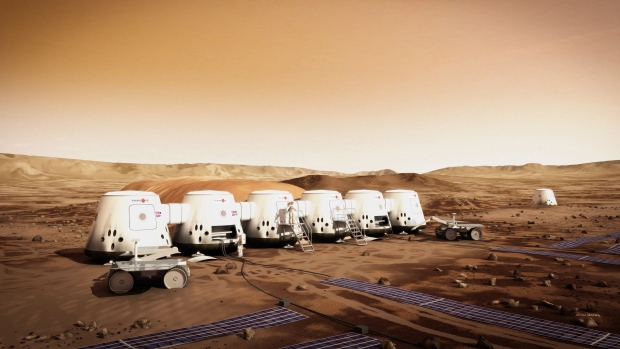
Some New Articles from HeroX

fusion-quotepanel-reactorI know, I promised I would stop doing this. But the other publication I started writing for – HeroX – now has two new articles written by yours truly. Luckily, I have now added pages for both this website and Universe Today so you can see any news ones that have been added to the queue. If you feel like it, that is 😉

My most recent article for HeroX was about the promise of cold fusion, which is getting very close to realization. In the past few years, a number of developments have been made that is making the technology more practical, more cost-effective, and even more compact.

https://herox.com/news/134-is-fusion-the-way-of-the-future/

And here is my first installment for HeroX, which deals with the burgeoning trend of flying cars. Sure, they may be fourteen years late – weren’t we promised flying cars by the 21st century? – and they still aren’t quite affordable. But progress is being made!

https://herox.com/news/133-the-case-for-flying-cars/

Latest Articles Over At Universe Today!

center_universe2As the title would suggest, my third and fourth articles have just been published over at Universe Today. First off, let me assure people that I plan to post a link to UT in the near future so I don’t feel the need to do this every time a new article comes out. But since this is still a new experience to me, I naturally feel the need to share whenever a new one is published.

The first of the two, which was published on Monday, deals with a recent determination made about the source of the Moon’s water. This is based on research conducted by scientists over at the National Museum of Natural History in Paris. Back in 2009, India’s Chandrayaa-1 probe conducted a near-infrared survey of the Moon during a flyby that showed signs of surface water.

moon_waterAfter years of speculation that claimed that the surface water – which exists strictly in icy form – was deposited there by meteors and comets, the National Museum team concluded that its actually formed by solar wind interacting with oxygen in the Moon’s surface dust. Quite the odd little occurrence; but then again, even Mercury appears to have icy spots on it’s molten surface.

www.universetoday.com/115215/water-on-the-moon-was-blown-in-by-solar-wind/

The second is about a recent collaboration between NASA and SpaceX. While the latter was testing their Falcon 9 rockets, NASA filmed the performance using Infrared cameras. The information gleamed from this is helping SpaceX to develop their reusable rocket, but will also help NASA to figure out how they will land habitats and heavy equipment on the surface of Mars.

NASA_thermal1Sort of a win-win scenario, one that shows how the public and private sector are working together like never before to make the future of space exploration happen. And it’s another indication of just how serious NASA and its partners are in making a mission to Mars a reality.

www.universetoday.com/115408/how-nasa-and-spacex-are-working-together-to-land-on-mars/

Feel free to check them out, and stay tuned for the next subject of interest: Dark Matter Emanating From The Sun!

The Fate of Humanity

the-futureWelcome to the world of tomorroooooow! Or more precisely, to many possible scenarios that humanity could face as it steps into the future. Perhaps it’s been all this talk of late about the future of humanity, how space exploration and colonization may be the only way to ensure our survival. Or it could be I’m just recalling what a friend of mine – Chris A. Jackson – wrote with his “Flash in the Pan” piece – a short that consequently inspired me to write the novel Source.

Either way, I’ve been thinking about the likely future scenarios and thought I should include it alongside the Timeline of the Future. After all, once cannot predict the course of the future as much as predict possible outcomes and paths, and trust that the one they believe in the most will come true. So, borrowing from the same format Chris used, here are a few potential fates, listed from worst to best – or least to most advanced.

1. Humanrien:
extinctionDue to the runaway effects of Climate Change during the 21st/22nd centuries, the Earth is now a desolate shadow of its once-great self. Humanity is non-existent, as are many other species of mammals, avians, reptiles, and insects. And it is predicted that the process will continue into the foreseeable future, until such time as the atmosphere becomes a poisoned, sulfuric vapor and the ground nothing more than windswept ashes and molten metal.

One thing is clear though: the Earth will never recover, and humanity’s failure to seed other planets with life and maintain a sustainable existence on Earth has led to its extinction. The universe shrugs and carries on…

2. Post-Apocalyptic:

post-apocalypticWhether it is due to nuclear war, a bio-engineered plague, or some kind of “nanocaust”, civilization as we know it has come to an end. All major cities lie in ruin and are populated only marauders and street gangs, the more peaceful-minded people having fled to the countryside long ago. In scattered locations along major rivers, coastlines, or within small pockets of land, tiny communities have formed and eke out an existence from the surrounding countryside.

At this point, it is unclear if humanity will recover or remain at the level of a pre-industrial civilization forever. One thing seems clear, that humanity will not go extinct just yet. With so many pockets spread across the entire planet, no single fate could claim all of them anytime soon. At least, one can hope that it won’t.

3. Dog Days:

arcology_lillypadThe world continues to endure recession as resource shortages, high food prices, and diminishing space for real estate continue to plague the global economy. Fuel prices remain high, and opposition to new drilling and oil and natural gas extraction are being blamed. Add to that the crushing burdens of displacement and flooding that is costing governments billions of dollars a year, and you have life as we know it.

The smart money appears to be in offshore real-estate, where Lillypad cities and Arcologies are being built along the coastlines of the world. Already, habitats have been built in Boston, New York, New Orleans, Tokyo, Shanghai, Hong Kong and the south of France, and more are expected in the coming years. These are the most promising solution of what to do about the constant flooding and damage being caused by rising tides and increased coastal storms.

In these largely self-contained cities, those who can afford space intend to wait out the worst. It is expected that by the mid-point of the 22nd century, virtually all major ocean-front cities will be abandoned and those that sit on major waterways will be protected by huge levies. Farmland will also be virtually non-existent except within the Polar Belts, which means the people living in the most populous regions of the world will either have to migrate or die.

No one knows how the world’s 9 billion will endure in that time, but for the roughly 100 million living at sea, it’s not a going concern.

4. Technological Plateau:

computer_chip4Computers have reached a threshold of speed and processing power. Despite the discovery of graphene, the use of optical components, and the development of quantum computing/internet principles, it now seems that machines are as smart as they will ever be. That is to say, they are only slightly more intelligent than humans, and still can’t seem to beat the Turing Test with any consistency.

It seems the long awaited-for explosion in learning and intelligence predicted by Von Neumann, Kurzweil and Vinge seems to have fallen flat. That being said, life is getting better. With all the advances turned towards finding solutions to humanity’s problems, alternative energy, medicine, cybernetics and space exploration are still growing apace; just not as fast or awesomely as people in the previous century had hoped.

Missions to Mars have been mounted, but a colony on that world is still a long ways away. A settlement on the Moon has been built, but mainly to monitor the research and solar energy concerns that exist there. And the problem of global food shortages and CO2 emissions is steadily declining. It seems that the words “sane planning, sensible tomorrow” have come to characterize humanity’s existence. Which is good… not great, but good.

Humanity’s greatest expectations may have yielded some disappointment, but everyone agrees that things could have been a hell of a lot worse!

5. The Green Revolution:
MarsGreenhouse2The global population has reached 10 billion. But the good news is, its been that way for several decades. Thanks to smart housing, hydroponics and urban farms, hunger and malnutrition have been eliminated. The needs of the Earth’s people are also being met by a combination of wind, solar, tidal, geothermal and fusion power. And though space is not exactly at a premium, there is little want for housing anymore.

Additive manufacturing, biomanufacturing and nanomanufacturing have all led to an explosion in how public spaces are built and administered. Though it has led to the elimination of human construction and skilled labor, the process is much safer, cleaner, efficient, and has ensured that anything built within the past half-century is harmonious with the surrounding environment.

This explosion is geological engineering is due in part to settlement efforts on Mars and the terraforming of Venus. Building a liveable environment on one and transforming the acidic atmosphere on the other have helped humanity to test key technologies and processes used to end global warming and rehabilitate the seas and soil here on Earth. Over 100,000 people now call themselves “Martian”, and an additional 10,000 Venusians are expected before long.

Colonization is an especially attractive prospect for those who feel that Earth is too crowded, too conservative, and lacking in personal space…

6. Intrepid Explorers:
spacex-icarus-670Humanity has successfully colonized Mars, Venus, and is busy settling the many moons of the outer Solar System. Current population statistics indicate that over 50 billion people now live on a dozen worlds, and many are feeling the itch for adventure. With deep-space exploration now practical, thanks to the development of the Alcubierre Warp Drive, many missions have been mounted to explore and colonizing neighboring star systems.

These include Earth’s immediate neighbor, Alpha Centauri, but also the viable star systems of Tau Ceti, Kapteyn, Gliese 581, Kepler 62, HD 85512, and many more. With so many Earth-like, potentially habitable planets in the near-universe and now within our reach, nothing seems to stand between us and the dream of an interstellar human race. Mission to find extra-terrestrial intelligence are even being plotted.

This is one prospect humanity both anticipates and fears. While it is clear that no sentient life exists within the local group of star systems, our exploration of the cosmos has just begun. And if our ongoing scientific surveys have proven anything, it is that the conditions for life exist within many star systems and on many worlds. No telling when we might find one that has produced life of comparable complexity to our own, but time will tell.

One can only imagine what they will look like. One can only imagine if they are more or less advanced than us. And most importantly, one can only hope that they will be friendly…

7. Post-Humanity:

artificial-intelligence1Cybernetics, biotechnology, and nanotechnology have led to an era of enhancement where virtually every human being has evolved beyond its biological limitations. Advanced medicine, digital sentience and cryonics have prolonged life indefinitely, and when someone is facing death, they can preserve their neural patterns or their brain for all time by simply uploading or placing it into stasis.

Both of these options have made deep-space exploration a reality. Preserved human beings launch themselves towards expoplanets, while the neural uploads of explorers spend decades or even centuries traveling between solar systems aboard tiny spaceships. Space penetrators are fired in all directions to telexplore the most distant worlds, with the information being beamed back to Earth via quantum communications.

It is an age of posts – post-scarcity, post-mortality, and post-humansim. Despite the existence of two billion organics who have minimal enhancement, there appears to be no stopping the trend. And with the breakneck pace at which life moves around them, it is expected that the unenhanced – “organics” as they are often known – will migrate outward to Europa, Ganymede, Titan, Oberon, and the many space habitats that dot the outer Solar System.

Presumably, they will mount their own space exploration in the coming decades to find new homes abroad in interstellar space, where their kind can expect not to be swept aside by the unstoppable tide of progress.

8. Star Children:
nanomachineryEarth is no more. The Sun is now a mottled, of its old self. Surrounding by many layers of computronium, our parent star has gone from being the source of all light and energy in our solar system to the energy source that powers the giant Dyson Swarm at the center of our universe. Within this giant Matrioshka Brain, trillions of human minds live out an existence as quantum-state neural patterns, living indefinitely in simulated realities.

Within the outer Solar System and beyond lie billions more, enhanced trans and post-humans who have opted for an “Earthly” existence amongst the planets and stars. However, life seems somewhat limited out in those parts, very rustic compared to the infinite bandwidth and computational power of inner Solar System. And with this strange dichotomy upon them, the human race suspects that it might have solved the Fermi Paradox.

If other sentient life can be expected to have followed a similar pattern of technological development as the human race, then surely they too have evolved to the point where the majority of their species lives in Dyson Swarms around their parent Sun. Venturing beyond holds little appeal, as it means moving away from the source of bandwidth and becoming isolated. Hopefully, enough of them are adventurous enough to meet humanity partway…

_____

Which will come true? Who’s to say? Whether its apocalyptic destruction or runaway technological evolution, cataclysmic change is expected and could very well threaten our existence. Personally, I’m hoping for something in the scenario 5 and/or 6 range. It would be nice to know that both humanity and the world it originated from will survive the coming centuries!

Bad New from Mars: First Colonists Doomed!

Mars_exploreWith the exploration of Mars continuing apace and a manned missions looming, there has been an explosion of interest in the idea of one day settling the planet. As the non-profit organization known as Mars One can attest, many people are  interested in becoming part of a mission to colonize the Red Planet. In fact, when they first went public, some 200,000 people signed on to become part of the experience.
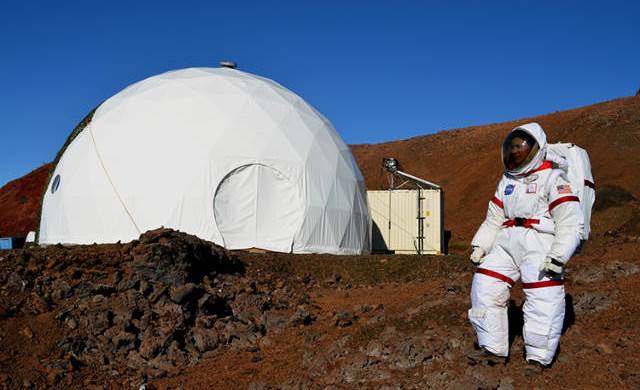
The fact that the trip would be one-way and that the  plans for getting them there did not yet exist was not an deterrent. But if a recent study from MIT is to be believed, those who choose to go will and have the experience televised will be in for a rather harsh experience. According to a feasibility study produced by researchers at the Institute, the plan has potentially deadly and astronomically expensive flaws.

mars_revelationspaceAfter analyzing the Mars One mission plan, the MIT research group found that the first astronaut would suffocate after 68 days. The other astronauts would die from a combination of starvation, dehydration, or incineration in an oxygen-rich atmosphere. The analysis also concludes that 15 Falcon Heavy launches – costing around $4.5 billion – would be needed to support the first four Mars One crew.

The technology underpinning the mission is rather nebulous; and indeed, that’s where the aerospace researchers at MIT find a number of potentially catastrophic faults. While the technology to set up a colony on Mars does technically exist, most of it is at a very low technology readiness level (TRL) and untested in a Mars-like environment. And the prediction that things will be worked out with time and crowdfunding does not appear to be sufficient.

Mars_one2Mars One will rely heavily on life support and in-situ resource utilization (ISRU) – squeezing water from Martian soil and oxygen from the atmosphere. But these technologies are still a long way off large-scale, industrial use by a nascent human colony on Mars. NASA’s next Mars rover will have an ISRU unit that will make oxygen from the Red Planet’s atmosphere of CO2 – but that rover isn’t scheduled to launch until 2020, just two years before the planned launch of Mars One.

Originally, Mars One’s sign-up list included some 200,000 candidates. That number has now been whittled down to 705 – a fairly even mix of men and women from all over the world, but mostly the US. Several teams of four astronauts (two men, two women) will now be assembled, and training will begin. The current plan is to send a SpaceX Falcon Heavy rocket carrying the first team of four to Mars in 2022 – just eight years from now. 

spaceX-falcon9The whole thing will be televised as a reality TV show, an instrinsic part of the plan since much of the funding is expected to come from media sponsors and advertisers. In the interim, a number of precursor missions – supplies, life-support units, living units, and supply units – will be sent to Mars ahead of the human colonizers. More colonists will be sent fairly rapidly thereafter, with 20 settlers expected by 2033.

The new feasibility study was led by Sydney Do, a PhD candidate at the Massachusetts Institute of Technology who has done similar studies on other space missions. Do and his team ran a computer simulation based on publicly available information about the Mars One plan and the kinds of technologies it would rely on. The researchers entered data about the crew’s age, weight and activities to find out how much food, oxygen and water they would need.

Mars_GreenhouseThey took into account information from Mars One, such as its plan that “food from Earth will only serve as emergency rations” and the astronauts will mainly eat fresh food they grow themselves. The simulation monitored conditions in the Mars One habitat over 26 months – the amount of time between spaceships from Earth that would resupply them – or until the death of a crew member, whichever came first.

The results of their study were presented in a paper at the International Astronomic Union conference in Toronto last month. They suggest that serious changes would need to be made to the plan, which would either call for the astronauts to grow all their plants in a unit isolated from the astronauts’ living space to prevent pressure buildup in the habitats, or import all food from Earth instead of growing it on Mars.

mars_one2The researchers recommend the latter, as importing all the necessary food along with the first wave of colonists (not including the costs of development, operations, communications, and power systems) would cost $4.5 billion and require 15 Falcon 9 Heavy Rockets to transport it. Comparatively, flying all the equipment needed for the astronauts to grow their own food indefinitely which cost roughly $6.3 billion.

On top of all that, Do and his research staff have concluded that the project will not be sustainable financially. While Mars One says each subsequent manned mission will cost $4 billion, Do’s study found that each mission would cost more than the one before, due to the increasing number of spare parts and other supplies needed to support an increasing number of people.

mars_roverNaturally, Mars One replied that they are not deterred by the study. CEO and co-founder Bas Landorp – who helped develop the mission design – said the plan was based on the company’s own studies and feedback from engineers at aerospace companies that make space systems, such as Paragon Space Development and Lockheed Martin. He added that he and his people are “very confident that our budgets, timelines and requirements are feasible”.

In any case, the study does not claim that the plan is bogus, just that it may be overreaching slightly. It’s not unreasonable to think that Mars One could get people to Mars, but the prospects for gradually building a self-sustaining colony is a bit farfetched right now. Clearly, more time is needed to further develop the requisite technologies and study the Martian environment before we start sending people to live there.

Mars_simulationOh well, people can dream can’t they? But the research and development are taking place. And at this point, it’s a foregone conclusion that a manned mission to Mars will be happening, along with additional robot missions. These will help lay the groundwork for eventual settlement. It’s only a question of when that could happen…

Sources: cbc.ca, extremetech.com, web.mit.edu

The Future is Here: Light-Bending Invisibility Cloaks!

predator-invisibilityInvisibility cloaks are fast becoming a reality. That is to say, they are moving out of the realm of science fiction and the theoretical and into the realm of science fact. However, issues remain when it comes to developing this technology for real-world applications. Outside of adaptive camouflage that merely allow objects to blend into the background, true invisibility cloaks suffer from the problem of angles.

To break it down, invisibility cloaks are based on the scientific principle of bending light around an object, thereby rendering it invisible to sight. The problem with every device based on this principle built to date is that it only worked if both the viewer and whatever was cloaked remained still. This, of course, is not entirely practical since it means that a cloaked object would only be invisible from one angle.

invisibility_cloakHowever, the latest effort to create a true cloak – developed at the University of Rochester – not only overcomes some of the limitations of previous devices, but relies on inexpensive, readily available materials in a novel configuration. For the first time ever, researchers have made a cloaking device that works multidirectionally in three dimensions and uses no specialized equipment, but four standard lenses.

As well as at least partially solving the viewpoint problem, the Rochester cloak also leaves the background undisturbed, without any warping, as has appeared in other devices. As Joseph Choi, a professor of physics at Rochester University John Howell, explained:

There’ve been many high tech approaches to cloaking and the basic idea behind these is to take light and have it pass around something as if it isn’t there, often using high-tech or exotic materials. This is the first device that we know of that can do three-dimensional, continuously multidirectional cloaking, which works for transmitting rays in the visible spectrum.

invis_cloak_rochIn order to both cloak an object and leave the background undisturbed, the researchers determined the lens type and power needed, as well as the precise distance to separate the four lenses. To test their device, the off-the-shelf lenses were placed at such a distance from each other so as to allow the light to act in specific ways – first focusing it down to a fine point through one lens, then again through the next, and then repeated.

This bends the light so that an object in the ring-shaped cloaking field is not visible to a person peering through the array. To be sure, they placed the object being viewed through the lenses in front of a grid background, and then shifted the viewing angle. In all cases, with the grid background appeared perfectly normal, with no discontinuity appearing behind the cloaked object.

invisibility_cloak1Their simple configuration improves on other cloaking devices, but it’s not perfect. As Choi explained, the the cloak bends light and sends it through the center of the device, so the “on-axis region cannot be blocked or cloaked.” This means that the cloaked region is shaped like a doughnut. In addition, the cloak has edge effects, but these can be reduced by using larger lenses, and the team has some more complicated designs to address the other issues.

For the time being, the technology isn’t exactly workable as far as Predator-style invisibility cloaks are concerned. However, Howell and Choi had some more benign applications in mind, such as allowing surgeons to operate without their view being obstructed by their own hands. Also, such a device could be used to allow truck drivers or even regular commuters see through their vehicle’s blind spots.

And, because the setup is so simple, anyone can grab some lenses and give it a try. You can find instructions for doing so on the Rochester University website, and a paper describing the research on arXiv. And of course, the University of Rochester was sure to provide a video of the cloak being tested out. Check it out below:


Sources:
cnet.com, arxiv.org, rochester.edu

Second Article Published at Universe Today!

"Sleeping to Mars" concept, by SpaceWorks
“Sleeping to Mars” concept, by SpaceWorks

Good news! My second article, which deals with the development of deep-space hibernation, just went public over at Universe Today! This one was especially fun to research, since it deals with a subject that is science fiction gold! Whether it’s from 2001: A Space Odyssey, the Alien franchise, Halo, Avatar, or the literature of Alastair Reynolds, the idea of astronauts going into cryogenic suspension has been well-explored over the past few decades.

And now, NASA is collaborating with a private aerospace company called SpaceWorks to research the possibility of using such a procedure when it sends astronauts to Mars and beyond. The advantages are numerous, from cost-cutting to ensuring that astronauts don’t go all nutter-butters during the many, many months (or even years) that it takes to drift through space.

NASA_hibernationAs seems to be the case more and more these days, researchers and planners are getting serious about it. Much like manned missions to Mars, colonizing Mars, a settlement on the Moon, the Space Elevator, or exploratory missions to Europa, science fiction is fast becoming science fact. Man, am I happy to be alive right now!

Come and check out the full article at:

www.universetoday.com/115265/nasa-investigating-deep-space-hibernation-technology/

News from Space: We’re Going to Mars!

marsAs part of their desire to once again conduct launches into space from US soil, NASA recently awarded commercial space contracts worth $6.8 billion to Boeing and SpaceX. But beyond restoring indigenous spaceflight capability, NASA’s long-term aim is clearly getting a manned mission to Mars by 2030. And in assigning the necessary money to the companies and visionaries willing to help make it happen, they just might succeed.

As per the agreement, Boeing will receive $4.2 billion to finance the completion of the CST-100 spacecraft, and for up to six launches. Meanwhile, SpaceX is receiving $2.6 billion for its manned Dragon V2 capsule, and for up to six launches. NASA expressed excitement its collaboration with both companies, as it frees the agency up for bigger projects — such the development of its own Space Launch System (SLS).

elon-musk-on-mars-curiosity-self-640x353One person who is sure to be excited about all this is Elon Musk, SpaceX founder, CEO, and  private space visionary. With this big infusion of cash, he has apparently decided that it’s time to bring his plans for Mars forward. Ever since 2007, Musk has indicated a desire to see his company mount a manned mission to Mars, and now he may finally have the resources and clout to make it happen.

These plans include flying astronauts to Mars by 2026, almost a decade before NASA thinks it will. By late 2012, he even spoke about building a Mars Colony with a population in the tens of thousands, most likely established sometime during the 2020’s. As of this past year, he has also revealed details about a Mars Colonial Transporter (MCT), an interplanetary taxi that would be capable of ferrying 100 people at a time to the surface.

Fan art concept of the MCT
Fan concept art of the MCT

And then in February of this year, SpaceX began developing the MCT’s engines. Known as the Raptor, this new breed of large engine reportedly has six times the thrust of the Merlin engines that power the second stage of the Falcon 9 rocket. Now that the company has the financial resources to dream big, perhaps the MCT might move from the development stage to prototype creation.

And there is certainly no shortage of desire when it comes to sending people to the Red Planet. Together with Mars Society president Robert Zubrin, and Mars One co-founder Bas Lansdorp, crowdfunded organizations are also on board for a manned mission. The case for settling it, which Musk himself endorses, is a good one – namely, that planting the seed of humanity on other worlds is the best way to ensure its survival. 

Earth_Mars_ComparisonAnd as Musk has stated many times now, a manned mission Mars is the reason there is a SpaceX. Back in 2001, while perusing NASA’s website, he was perturbed to find that the space agency had nothing in the way of plans for a mission to Mars. And the best time to go is probably in about 15 or 20 years, since Mars will be at its closes to Earth by then – some 58 million kilometers (36 million miles).

During this window of opportunity, the travel time between Earth and Mars will be measured in terms of months rather than years. This makes it the opportune time to send the first wave of manned spacecraft, be they two-way missions involving research crews, or one-way missions involving permanent settlers. Surprisingly, there’s no shortage of people willing to volunteer for the latter.

Mars_one1When Mars One posted its signup list for their proposed mission (which is slated for 2025), they quickly drew over 200,000 applicants. And this was in spite of the fact that the most pertinent details, like how they are going to get them there, remained unresolved. Inspiration Mars, which seeks to send a couple on a round trip to Mars by 2021, is similarly receiving plenty of interest despite that they are still years away from figuring out all the angles.

In short, there is no shortage of people or companies eager to send a crewed spaceship to Mars, and federal agencies aren’t the only ones with the resources to dream big anymore. And it seems that the technology is keeping pace with interest and providing the means. With the necessary funding now secured, at least for the time being, it looks like the dream may finally be within our grasp.

Though it has yet to become a reality, it looks like the first Martians will actually come from Earth.

Sources: extremetech.com, (2)sploid.gizmodo.com, mars.nasa.gov

The Walking Dead – Season Five Premiere!

WD_Season5“They’re f@$!#ing with the wrong people!” Those were the words that capped off the season four finale. At least, they were before the show’s writers decided to censor themselves and changed it to “screwing”. In any case, the show ended with Rick and his party arriving at Terminus only to find that the advertised oasis was a lie – a trap designed to lure unsuspected people in for some nefarious purpose.

Naturally, the blogosphere explodedediately after with various people offering their own theories as to what Terminus represented and what they intended for Rick and his crew. The smart money appeared to be on cannibalism, as it seemed most consistent with what happened in the comics, not to mention the odd room with all candles and the words “NEVER AGAIN. NEVER TRUST. WE FIRST, ALWAYS” written on the wall.

In the weeks leading up to the premiere, fans were also warned that this season would be darker and bloodier, and the preview poster – which showed Rick sporting a new beard – had the words “hunt or be hunted” scrolled across it. Between all these hints and warning, the fanbase was pretty much stoked and there was no surprises when the premiere opened at a record-breaking 17.3 million viewers, beating out their previous record of 16.1 million.

And this past Sunday, the big reveal happened in an episode that was appropriately titled…

No Sanctuary:
https://storiesbywilliams.com/wp-content/uploads/2014/10/913a6-the-walking-dead-5-temporada-trailer-07.jpgThe episode opens with a flashback where two residents of Terminus – Chris and Alex – are being held prisoner. They reflect on how they chose to remain human in the midst of the crisis, and suffered for it. Flashing back to the present, we see Rick and the others preparing to make a break for it as soon as the door to the railcar is opened. However, they are surprised when a flashbang is thrown in through the roof and they are then carried out.

Rick, Glenn, Daryl, and Bob are then taken to a kill room where they see a body being carved up. Four others are positioned alongside them over a metal trough, and two men begin butchering them one by one. Chris comes in to take stock and pauses the killing long enough to ask Rick about the bag he stashed out in the woods. Things are about to start again when shooting from outside and an explosion sends everyone to the ground.

http://i2.wp.com/geektasticpodcast.com/wp-content/uploads/2014/10/walking-dead-trailer.jpg?resize=620%2C344Outside of town, Tyreese, Carol and Judith continue on their way towards town when they come across a herd. They hide and are saved when gunfire distracts and lures the herd away. They proceed towards the source, and find Alex out on sentry duty and talking over a walkie-talkie about Carl and Michonne. They take him prisoner in a small shed and Carol goes on ahead while Tyreese remains behind to watch him with Judith.

After covering herself with gore and mud, she proceeds to the edge of town and sees Rick, Daryl, Bob and Glenn being taken inside. At the same time, the herd begins to approach the fence line and the guards begin to run away. Using her sniper rifle, Carol shoots a gas tank sitting by the fence and uses a firework to detonate it, killing a dozen Walkers and breaching the fence in the process.

https://i0.wp.com/www.geekchicelite.com/wp-content/uploads/2014/10/twdno1.jpgChaos ensues as the Walkers move in and begin attacking the town and Carol slips in amongst them. Chris leaves the kill room to assess the situation while Rick uses a piece of sharpened wood to saw through his restraints. He kills the two men and then sets the others free, and the four proceed out into the compound. Fighting against both Walkers and guards, they seize weapons and free the others.

Back at the shed, the noise from the explosions and gunfire begins to draw Walkers. Alex gets free, takes Judith hostage and forces Tyreese to disarm and go outside. He steps out and is grabbed by several Walkers, but all noise stops a moment later. Alex takes Tyreese’s knife and begins inching towards the door, and Tyreese breaks back in, slams him on the grounds and begins beating him to death.

https://i0.wp.com/i.dailymail.co.uk/i/pix/2014/10/13/1413173366927_wps_50_The_Walking_Dead_Season_P.jpgMeanwhile, Carol begins looking for Rick and the others inside. After finding her way into a building, she comes across a stash of stolen goods and finds Daryl’s crossbow. Eventually, she comes to the strange room where she is confronted by Mary, the town matriarch. They fight, Carol gets the upper hand, and Mary explains how the town became the place that it is:

The signs… they were real. It was a sanctuary. People came and took this place. And they raped, and they killed, and they left… over weeks! But we got out, and we fought, and we got it back! And we heard the message: you’re the butcher, or you’re the cattle…

Carol shoots Mary in the leg, and then lets a group of Walkers in to finish her. In the rail car, the rest try to decide whether they should break out into the chaos or wait. Sasha asks Eugene what the cure is, and he explains that he once worked for the Human Genome Project as part of a team that weaponized viruses to fight other weaponized viruses. He claims that with his knowledge, they can kill all the Walkers if they can get to Washington DC.

https://i0.wp.com/cdn.bloody-disgusting.com/wp-content/uploads/2014/10/BzysAj2IUAEZ2yV.png-large-620x400.pngRick then shows up and lets them out, and they all fight their way to the fence. They make it out and proceed into the woods, where Rick digs up the pack he buried and tells them they are going back to finish the job. The group tells Rick its pointless since they are as good as dead, Carol emerges from the trees and is embraced by Daryl and Rick. She tells them to follow her up the road, where they rejoin Tyreese and Judith.

Rick is elated to learn his baby girl is still alive and Sascha her brother. They decide to move on up the rails again, and Rick finds a sign pointing towards Terminus and wipes out all but two words: “No Sanctuary”. The episode ends with another flashback where Chris, Alex and Mary are being held together, and Chris says they will take it back, repeating the adage: “You’re either the butcher, or you’re the cattle.”

https://i0.wp.com/i.dailymail.co.uk/i/pix/2014/10/13/1413173605905_wps_66_The_Walking_Dead_Season_P.jpgAnd in a post-episode peek, we are shown a figure who is following the tracks and comes across the sign. He spots symbols carved into the trees and begins following them. Once he removes his mask, we learn that it’s Rick’s old friend Morgan.

Summary:
I quite enjoyed this episode, and for a few reasons. For one, it delivered on its promise of a darker, bloodier feel, even though this was hardly lacking in the previous seasons. It also handled the whole “good people gone evil” theme very well. Despite everything they do and the evil they commit, the people portraying the Terminites (Terminans?) managed to capture the inherent sense of desperation and anger powering them.

This is the very core Robert Kirkman’s The Walking Dead, which is how otherwise good and civilized people can do terrible things when push comes to shove. And since it was something that didn’t happen in the comics, but was loosely based on it, it made for just enough of a surprise. And of course, few people could argue with the fact that the action was pretty badass too, and the reunions pretty heartfelt.

The only things I would criticize is the character arc of Carol. By now, people can’t fail to notice that she’s become the female version of Rambo. At the end, Rick asks her “did you do that?” And by that, he means rescuing them by single-handedly blowing up a section of wall, letting a herd overrun a small town, and then taking out the town’s matriarch. Yes, somehow, a “thank you” and a “welcome back” would seem appropriate.

But this really doesn’t seem fitting for Carol. As I’ve said before, she went from being an abused, put-upon housewife to a bereaved mother, then an independent woman, then a character who had little to do, all before becoming some ruthless woman who immolated people to prevent the spread of disease. Now, she’s a one-woman army who kicks ass and takes names.

It’s cool, but it’s not exactly realistic. What’s more, Michonne is supposed to be the ass-kicking heroine of that bunch, not Carol. The way her character kind of got sidelined in this episode really drove that home for me. And Sasha is also a strong female presence, same as Maggie. So I do wonder if her character’s not just a bit superfluous at this point. And considering she was long-dead by now in the comics, I have a hard time taking her seriously.

Also, Tyreese’s character has seemed just a little too gentle for my tastes. I very much liked how he took out several Walkers with his bare hands and then beat that Alex kid to death. This is the Tyreese I know and remember from the comics, a big, strong, troubled man who did what he had to, even though he didn’t enjoy it one bit. The TV show’s Tyreese, while certainly likeable, seems too much like a big teddy bear to me.

Otherwise, I like what they’ve done so far this season and where they are going. At this point, Morgan is poised to rejoin the group, and from the previews, it seems clear that they are now converging back on comic book material (i.e. finding a preacher and taking him in), all the while working their way towards Washington DC.

*As a side note, I should point out that, despite what some fans saw in the ending, the producers have indicated that that was NOT Negan making an appearance near the end of the episode. However, I imagine that’s what the shows producers intended when they cast that look alike, as the intro of Negan could turn out to be season 5 material. Stay tuned!

The Future of Firearms: Legally Homemade Metal Guns

Metal-Gun-640x353Ever since 3-D printing became a commercially available service, Defense Distributed has sought to use the technology to create firearms. And in their latest act of circumventing the law, the online, open-source, libertarian group has created another means of building homemade firearms. But unlike the Liberator – their previous single shot incarnation – this one doesn’t involve making guns from 3-D printed plastic.

The group’s latest invention is known as the Ghost Gunner – a small, computer numerical control (CNC) milling machine that they used to create an aluminum lower receiver for an AR-15 rifle. This device, which costs about $1200, allows people with no gunsmith training to assemble a working assault rifle at home with no licensing or serial number. And for the moment, it’s completely legal.

metal-gun-inline22The Ghost Gunner itself is a small box that measures about one foot on each side and contains an Arduino controller and a custom-designed spindle that holds a steel carbide drill bit. It works like any other CNC machine – the drill spins up and moves in three dimensions to carve items out of blocks of metal. However, this machine is specifically intended to make an AR-15 lower receiver.

That’s the part of a gun that connects the stock, barrel, and magazine – and the part that’s regulated by the ATF and assigned a serial number. Selling it without a license is illegal, but making it yourself is perfectly fine. An untraceable gun built without a serial number is often called a “ghost gun” by gun control advocates. Hence why Defense Distributed chose to appropriate the term, to deliberately generate controversy.

Cody-Wilson-Defense-Distributed-Wiki-Weapon-3-d-printed-gunThis is just the latest example of Defense Distributed pushing the bounds of home manufacturing technology to make a point. Cody Wilson, the group’s founder, is an openly radical, libertarian who has repeatedly stated that mass shootings and gun-related violence are simply the price people pay for freedom. In addition, his group has openly stated that they would not allow tragedies like the Sandy Hook Elementary School shooting deter them.

Manufacturing homemade weapons has always been his way of showing that technology can evade regulations, thus making the state obsolete. The group’s previous weapons – the 3D-printed Liberator gun – was more of a political statement. The gun itself was neither effective or practical; but then again, it wasn’t meant to be. This proof-of-concept weapon was simply meant to show that a new era of manufacturing is upon us.

liberatorThe Liberator itself is prone to failure and usually only manages a few poorly aimed shots before breaking down. In designing a cheap CNC machine specifically to make gun parts, Defense Distributed is delivering a viable weapon at a fraction of the cost of other CNC machines (which cost many thousands of dollars). If you can make a lower receiver, all the other parts can be ordered online cheaply and legally.


The Ghost Gunner is capable of making anything that fits in the build envelope, which accounts for several gun parts that go into assembling a working assault weapon or handgun. The only requirement is the parts be created with Defense Distributed’s Physibles Development SDK (pDev) and distributed as a .dd file. In that respect, it’s not much different than any number of 3D printers.

3dmetalgun-640x353Once again, Defense Distributed has proven that, for better or worse, we live in an entirely new era of manufacturing. In the past, a person needed considerable training if they wanted to make their own firearm. Nowadays, one needs only the right kind of hardware, software, and access to the necessary files. And as always seems to be the case in the digital age, the law is miles behind the curve.

One can expect the law will be upon Defense Distributed once again and place a ban on their Ghost Gunner. However, it goes without saying that Wilson and his colleagues will simply try again some other way and the fight between regulators and home manufactures will continue. But regardless of the issue of firearms, this is an indication of the age we now live in, where distributed systems are making for some rather interesting and fearful possibilities.


Source: extremetech.com

The Future is Here: Fabric Circuit Boards

fabric_circuitboard1Chances are that almost every piece of electronics handled by someone today is some sort of printed circuit board (PCB). PCBs are an essential part of modern technology, but as technology improves and moves into the realm of the wearable and the flexible, their rigid and flat design is being reconsidered. In addition to looking for more flexible materials, there’s also a desire to break the 2-dimensional mold.

That’s precisely what researchers at the Hong Kong Polytechnic University were thinking of. Using a revolutionary, never-before-seen concept known as computerized knitting technology, they developed a new line of fabric circuit boards (FCBs).  To make them, lead scientists Qiao Li and Xiao Ming Tao at HKPU relied a combination of conductive fibrous metal materials and traditional fabric.

fabric_circuitboardWithin the FCB, the wires are the equivalent of the circuits on a regular board, and the fabric acts as the mounting material that keeps everything in the right orientation and insulates different circuits. The finished FCBs can contain 3D circuits that are resistant to bending, stretching, and washing. To test this, Li and Ming subjected the boards to repeated stretching and folding, and found they were functional to about 1 million cycles.

The washing test was a little less successful with six of 30 samples experiencing mild damage after 30 washes, but that’s not bad when you consider a single wash cycle would probably kill your average PCB. Oddly enough, Li and Ming also wanted to test how the fabric stood up to bullets, and placed one inside a bulletproof vest. After several shots, the fabric boards continued to work without difficulty.

wearable_computingGarments made of FCBs could also to connect devices that are mounted on different parts of the body, like small solar panels on your back or shoulders to charge your devices. The FBC garment could then route that power into a battery pack or directly to your pocket where your phone charges wirelessly. Another potential use case would be biometric sensors that are built into your clothing instead of a device like a smartwatch or fitness band.

According to the team, the basic FCB design is ready for use. The fabric samples made as part of the study are reportedly rather comfortable and the circuits should be sturdy enough to outlast the fabric component of the garment as well. However, the success of FCBs will likely come down to cost. Right now, the Samsung S Shirt costs $199 with purchase of a smartphone and requires a two-year AT&T contract. Not quite cost-effective just yet!

Augmented_Reality_Contact_lensStill, what this amounts to is the possibility a future where “wearable computing” is taken quite literally. Beyond smart watches, smart rings, smart glasses, and portable computers, there could also be the option for “smart clothes”. In short, people may very well be able to wear their computer on their person and carry it with them wherever they go. Smartphones, contacts or glasses could then be worn to sync up and act as displays.

I can’t help but feel that this is all starting to sound familiar. Yep, echoes of Vinge’s Rainbow’s End right there! And in the meantime, be sure to check out this video from New Scientist that gives a first-hand look at the fabric circuit board:


Sources:
extremetech.com, ecouterre.com
, newscientist.com