Equilibrium

Equilibrium

And we’re back! I tell ya, I’m mentally burnt from reviewing so many classics that I actually enjoyed! But I guess that’s to be expected. Somehow, its just easier to burn and mock bad movies, as opposed to dissecting and delving into movies with real themes, plots, memorable characters and complex messages. And I have covered a few movies in the last while that I had mostly good things to say about. So its about time I got back to bashing something worthy of it! Yeah, that seems about right. Here’s Equilibrium!

Now I already know that I’m stepping on some toes just by implying that this movie was fluff. As it turns out, Equilibrium is a cult-classic with its own dedicated fansite. That’s right, people actually came together and created a website strictly for fans of this 1984-ripoff. Go check it out, its actually pretty respectable: Equilibrium Fans

That shouldn’t come as a big surprise, people love an underdog after all! And considering the bashing it took and how little money it made, its little wonder why its fans would be so dedicated…

(Background—>)
Yes, as already noted, this movie did very poorly at the box office, grossing just over five million dollars, which was roughly a quarter of the movie’s budget. And it was generally panned by critics, earning only 37 percent on Rotten Tomatoes and a metascore of only 33 out of 100 on Metacritic. Little surprise. The general consensus amongst critics was that the movie was a rip-off, a “reheated mishmash of other sci-fi movies” as one review put it. Or, as the NY Times claimed, that it borrowed heavily from such classics as Fahrenheit 451, Nineteen Eighty-Four, Brave New World, and other science-fiction classics. Roger Ebert was the only one to be gentle, giving the film 3 out of 4 stars and saying that “Equilibrium would be a mindless action picture, except that it has a mind. It doesn’t do a lot of deep thinking, but unlike many futuristic combos of sf and f/x, it does make a statement”.

On the other hand, the movie did manage to attract a cult following that saw all this “borrowing” as signs of quality, who enjoyed the combination of action and sci-fi/satirical elements. But regardless of whether it was seen as a weakness or a sign of quality, the fact remains: Equilibrium borrowed HEAVILY from many sci-fi classics, particularly 1984, and tried to repackage them into an action movie riddled with plot holes, contrivances and topped off with a happy ending. You either loved it or hated it, and I personally thought it was pretty damn funny!

(Content—>)
So the movie opens with scenes of destruction and debacle, telling us that humanity was brought to the brink of annihilation by what was clearly WWIII. In response, a new order was formed, this one dedicated to creating a perfect society through the eradication of human emotion. Hmm, interesting spin on the 1984 concept (not to mention F451 and Brave New World!) So apparently, the civilized people live in a walled city called Libria (obvious reference to the movies title and their value system), the rest live in the “Nethers” where emotion is still practiced. The people of Libria take a drug named Prozium which “eliminates the highs and lows” of emotion (thinking they just mashed the words Prozac and Valium together) and the law is enforced by people called “Grammaton Clerics” who go out and arrest “sense offenders”. Oh, and the religious/political leader of this world is known as the “Father”. He’s the guy who founded the Librian philosophy and leads the state through the “Tetragrammaton Council”, even thought no one sees him except on big huge TV screens making his famous speeches.

Okay, first impressions… Obvious! For one, we have some clear satire on the culture of pharmaceuticals, the pills people pop when they are manic or depressed. Except here, you pop one to cure it all! Echoes of Soma, hello Brave New World! Then we have the Grammaton Clerics who go out and arrest “sense offenders”… They ARE the Thought Police, “sense offense” IS thought crime, and the way they burn the people’s houses and possessions out in the Nethers is every bit what happens in F451. Oh yeah, and the Father is totally Big Brother, and its already pretty clear he doesn’t even exist! And the religious angle is also very clear. The name Tetragrammaton for example, which is Greek for “a word having four letters, is clearly a reference to the Hebrew name of the God of Israel (YHWH). And the Grammaton Clerics, need I say more? Essentially, what they are trying to say is that the philosophy of unemotion has been elevated to the status of holy canon, making it unquestionable and the state’s authority total.

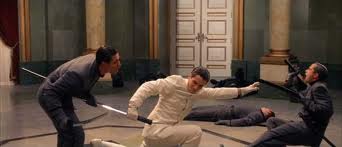
But the action is still pretty cool. For example, in the opening sequence after the intro, we see John Preston (Christian Bale) – cleric extraordinaire – go into a Nether compound. There, he shoots up an entire room of people after jump-kicking the door down and sliding into a room full of gunmen. Seems this is an example of what’s called the “Gun Kata” (or as some people called it “Gun Fu”), where clerics get into the middle of a crowd of hostiles and do a gun dance, inflicting maximum damage on the maximum amount of targets. After clearing this place out, they uncover a cache of art (sense offense materials) and burn them. We also see his partner, Errol Partridge (Sean Bean), steals a book from the scene by WB Yeats and claims he’s turning it in to be destroyed. But you totally know he isn’t! The man is clearly a “sense offender” (dammit, that sounds like sex offender when you say it fast!). Preston quickly realizes this and meets up with him in an abandoned church in the Nethers. There, they have a chat about why he’s chosen to break the law, forsake his career, and condemn himself to death. Bean claims that the price of emotion is a “cost I would pay gladly”. Not sure where that quote is from. Closest thing I could find was “I’ll gladly pay you Tuesday for a hamburger today” by Wimpy, the hamburger addict from Popeye.

Then, in a move that isn’t totally contrived, Preston accidentally breaks his last vial of Prozium and the clinic is closed so he can’t restock. That’s right, an elite cleric lets his stock of mind-altering drugs run out and the factory just happened to be closed so… yeah, he’s screwed until they open again! Then, wouldn’t you know it, he begins to experience emotions and finds the awakening quite appealing (and disturbing because he now feels remorse for killing his ex-partner!) Alas, he has to hide his emotions now because he gets a new partner, some career-minded dude named Brandt who is clearly gunning for the spot of top cleric. Preston’s kids, like something out of children of the corn, are also pretty suspicious (echoes of the Spies from ’84), so he has to be careful at home as well. Only place that’s totally private and safe is the few inches that lay inside his head (’84!)

Oh yeah, we also learn a few things in the course of this that also make little sense. One, Preston had a wife that was arrested and incinerated because SHE was a sense offender. When he meets with Dupont (Angus MacFadyen), the head of the Council under the Father, he is asked how this could have happened. How does an elite cleric, best in the business, NOT notice sense offense in his own home? He replies that he himself has never been able to figure that out. Well, that makes all of us! That and the death of his partner clearly tell us that he’s going rogue real soon! Oh yeah, we also learn that there’s an Underground apparently that operates within Libria. But unlike in 1984, this resistance ACTUALLY exists and literally lives underground. Its now Preston’s job, with his new partner, to find this group and eliminate them.

They then do a mission together where they find a new batch of people in the Nethers, one of them the enigmatic Mary O’Brien (Emily Watson) who has a cache of classical music and antiques. After saving her life, Preston goes through her stuff and has a deep, emotional moment as he listens to some Mozart. This is right out of ’84 again, where Winston found an antique shop in London and was totally enamored by everything he saw in the place. Preston than commits the same act that Partridge did in the beginning, pocketing a book and claiming he was going to get rid of it himself. He then rescues a dog because (holy evil Batman!) dogs are illegal and are have to be put down. He tries to let the dog loose at the edge of town, but that ends badly when a bunch of police show up and he’s forced to kill them using some of funky, acrobatic, Gun Kata moves! Also, in the course of interrogating O’Brien, he finds himself falling in love with her. We learn in the course of things that this lovely red-headed “sense offender” knew Partridge and led him down the path of sense offense in the first place. She’s slated to die now, and he’s obviously not too happy about it.

Shortly thereafter, Dupont summons him again to talk to him about his suspicious behavior. Convinced that Preston is not telling him the truth, he slams his fist down on the table and yells “DON’T LIE TO ME!” Uh, hello? Isn’t emotion supposed to not exist for these people? And this is just the first instance of this kind of plot oversight. Afterward, while practicing what appears to be truncheon Kata, Brandt comes in and starts fighting with Preston and he lets a lot of emotions fly. For one, he keeps smiling! Second, he taunts him by telling him that since some cops turned up dead (his work), there’s going to be a big offensive in the Nethers and all sense offenders will be wiped out on site. No more arrests are processing! Last, he seems disappointed when he looses their match. And these people are suspicious of HIM? No wonder he never suspected his wife, the man’s been surrounded by sense offenders all this time and he can’t even tell! (Still sounds like sex offenders to me!)

So he rides along on one such assault, sees lots of people die and feels bad about it. Then he tries to rescue some hideaways, but Brandt finds him and orders him to kill them. He even hands him his gun to do it. He says “no, you do it”, and hands him his gun back. As if Brandt’s suspicions weren’t already confirmed, he then catches him as he runs out of the “processing center” (where O’Brien has just been incinerated) where he breaks down and start to cry right there in the street. Arrested, Preston has his ass dragged before Dupont (again!) where Brandt tells on him and says that he’s the one who shot those officers. Strangely, Preston doesn’t seem too afraid because, you see, forensics can match bullets to a specific gun. Turns out, the gun used to kill those officers was Brandt’s! We then get a quick flashback to where Preston was handing Brandt back his gun while they were together in the Nethers. Brandt is then hauled off, claiming (screaming, in fact) that he has no feelings. Okay, two things here: One, that whole gun switcheroo happened AFTER he killed those cops. How could he have shot them with Brandt’s gun if he didn’t even have his hands on it yet? This is a major plothole! How could it have gone unnoticed?! Second, Brandt once again is blatantly demonstrating emotion. How is no one noticing this?

Regardless, Preston now seems to have gained Dupont’s trust, so he’s sent on a special mission to infiltrate the Underground. Seems right up his alley, since he’s already decided to become an offender himself. But before that can happen, he must rush home and get rid of the cache of Prozium that he hasn’t been taking. He gets home and rips off the bathroom mirror (he’s been hiding them inside the wall) and is confronted by his son who tells him he needs to do a better job of stashing his vials. His son then smiles! Turns out, his kids are sense offenders too, have been ever since their mother was incinerated! How sweet… Whoa, hang on here! You’re telling me that this guy’s KIDS have been offenders for years now and HE NEVER NOTICED?! What kind of cleric is this guy? First his wife, then his kids, then his partner??? Didn’t he say near the beginning that the key to his success as a cleric was being able to get inside the head of sense offenders? How can he be suspected of being a sense offender when he’s the only one in Libria who HASN’T been sense offending this whole time?

After this close shave, he goes to the Underground and begins plotting with them. Seems they have a plan: they will stage their surrender, Preston will get the credit for the arrest and, as a reward, a chance to meet the Father. He will assassinate him while their people attack the Prozium factory. With the shipments shut down, the people will experience emotions again and rise up against the system. Ah, but there’s a snag! Turns out, as he gets there, that the Tetrarchy have other plans. They sit him down, hook him to a polygraph, and then reveal that he’s been had! Brandt is alive, it seems, and it was all a set-up! And then a video of the Father, which suddenly turns into Dupont, comes on to address him lets him in on the double-cross. The Father (like we didn’t already know) has been dead for years and Dupont has been the real head of state since that time. Oh, and that whole thing of sending him to find the Underground? Part of the set-up! You see, they could tell he was a potential offender, and figured they could use him to locate the resistance and get their hands on them. Letting him beat Brandt was just a ruse so he would feel comfortable and able to fulfill his purpose.

Yeah, this isn’t totally contrived either! According to Dupont, they were looking for an infiltrator to get into the Underground, someone who could think and feel like they did, but who wasn’t aware of it yet. Now how the hell is that supposed to work? This guy couldn’t even spot his own wife and children, and he’s supposed to be an elite cleric AND a latent sense offender? Second of all… what are they, psychic? If he was the perfect candidate for knowing how sense offenders worked, why screw him over? Last, but certainly not least, the only reason he started offending was an unlikely accident! Remember, he broke his last vial and the Prozium factory was closed? Or did they set that up too? Once again, we have a climax where the bad guys somehow foresaw everything, how everything proceeded based on their designs, even though there’s no way they could have planned this without being psychic. Whatever, it’s not supposed to make sense, it’s just supposed to tie everything up into a nice little package!

In any case, Dupont tells him to surrender without incident, but Preston isn’t about to! His polygraph levels go flat, he breaks out the sleeve-guns, and starts blowing everyone away! Yeah, this is another pretty cool action scene, but that doesn’t prevent it from being totally stupid too! I mean, how did he get those guns past the guards? Also, he makes such short work of them that the fight isn’t even suspenseful. A few bullets, a few cuts with his Katana, and everyone’s dead. His ultra-fast fight with Brandt is especially bad; not once did their swords even cross! It was just, swipe, swipe, swipe, and Brandt’s face falls off! No joke! He then takes down Dupont in a Gun Kata fight, but not before Dupont begs for his life, confessing that he himself is a sense offender (he “feels” he says). But Preston kills him anyway, quoting that killing him is “a cost I would gladly pay”. So even Dupont is a sense offender, huh? No surprises there, he’s done enough emoting to put William Shatner to shame! But I guess this was meant to be in keeping with the whole 1984 motif, where the rulers are total hypocrites who don’t follow their own rules.

Anyway, the Underground then attacks the Prozium factory, killing all the guards with ridiculous ease, and then proceeds to blow the place up. The movie then ends with a closeup of Preston’s eye as he sheds a single tear. And that’s not the only piece of blatant symbolism before the movie ends. There’s also the part where Preston wipes his bloody fingers on one of the TV’s boasting the Father’s image, right before he blows this and every other screen in the building away (somehow, this shuts down every screen in the city). So between that and the destruction of the Prozium factory, the system is now in ruins and the people of Libria free to feel. Yaaaay, the sense offenders won! (STILL sounds like sex offenders!)

(Synopsis—>)
I think I better start with what I actually liked about this movie since that is a much shorter list. Yes, some of the action scenes were cool, but Kurt Wimmer (who wrote AND directed this movie) has a thing for action sequences where people die way too quickly. Again and again, we see people sprayed with bullets, tons of dust flying, and dozens of people dropping in the same second. The scene at the end where the Underground is storming the government buildings is the worst of the lot, entire squads of guards drop in seconds as untrained resistance fighters shoot at them. What kind of guards are these? Whoops, supposed to be covering the good stuff here… Okay, the classic sci-fi bits were also cool at times – like how people in the Nethers stockpile whatever emotional materials they can (art, literature, music), and how the clerics are required by law to confiscate and burn them. But here too, things get unbelievably hokey! At the beginning, for example, it turns out that the rogue house was keeping priceless pieces of objets d’art hidden in the floor, which included the (REAL) Mona Lisa! Are you kidding me?

Damn it, did it again! Okay, uh… the shooting locations, which included the Olympic Stadium in Berlin and the subway station under the Reichstag building. Yeah, the way they worked their sets into these locations, that was pretty cool. And the direction wasn’t bad. The camera work, casting and acting weren’t bad either… except for Taye Diggs, who smiles way too much (you’re supposed to be emotionless, dude!) The Gun Kata was neat, and the whole “sense offender” rating system (EC-10, which has to do with the MPAA’s emotional content rating system) was kind of clever as well. Last, there was the clerical/religious angle, which was kind of cool and ironic since the state is supposed to be a society of pure reason, free of emotion, and these terms can’t help but make one think of faith – something inherently irrational.

But other than THAT, this movie sucked! The plot was totally contrived, it was riddled with plot holes, some of them glaring (i.e. the gun switch), and the ending was so totally over the top it was ridiculous! Sure, some of us were encouraged that the good guys won, unlike in the real 1984, but that didn’t make it any more believable or respectable. In fact, it really just felt like Wimmer ripped off some respectable sci-fi classics, splashed them together with a cheesy action plot and called it a movie. I’m reminded of Demolition Man, and the less said about his other flop, Ultraviolet, the better! Uh oh, I’m sensing more bad reviews to come… Equilibrium, folks! Not bad if you’re looking for a guilty pleasure, check your brain at the door!

Equilibrium:
Entertainment Value: 7/10
Plot: 3/10
Direction: 6/10
Total: 5.5/10
Dune, the movie (and miniseries)!

Wow… when I first started doing these movie reviews, last week, I knew that at some point I’d have to cover the book-turned-movie that inspired me to write! And truth be told, I actually saw this movie before reading the book. Yes, Dune was just like Lord of the Rings for me, a film that I was drawn to because I knew it was based on a classic. And upon learning that the movie was significantly different from the book, I decided that at some point, I’d check the latter out. However, it was not until years later, with the production of Frank Herbert’s Dune (the six part miniseries that was much more faithful to the novel) that I finally put my money where my mouth was.

Well, you know the rest… sort of. Short version, it inspired me; long version, I read the first three books, had to return them, then read all six… twice over. Guess you could say I liked them, though I got to admit, not as much as some people! Since I first posted my thoughts about Dune and its Descendents, I’ve learned that their are Dune fansites out there where its all they talk about. And boy do they know their stuff! So let me take this opportunity to give a shout out to the good folks at Jacurutu and Hairy Ticks of Dune! Keep up the good work!

I think I also mentioned somewhere that movies based on books, especially where they differed, would get special attention. To make good on this drunken boast, here’s my review of Dune (1984, directed by David Lynch) and Frank Herbert’s Dune (the 2000 miniseries that premiered on the Sci-fi network). First up, Lynch’s adaptation of Herbert’s Magnum Opus!

(Background—>)
Since 1971, six years after Herbert wrote Dune, attempts were made to adapt the novel to film. Several directors tried and failed, among them Arthur P. Jacobs, Alejandro Jodorowsky, and Ridley Scott. However, all came up short. Then, in 1981, the Italian film producer Dino De Laurentis decided to tackle it and brought in relative newcomer David Lynch to direct it. This did not mean that the two did not go through hell to create it though! The movie did not hit the screen until 1984, Lynch distanced himself from the work, saying he was denied final cut privileges, and several versions have been released over the years. The original was a two-hour movie that glossed over much that happened in the book and simplified the plot. A three hour version was also released, but this too was guilty of the same faults (i.e. glossing and simplifying). But then again, how do you do justice to a book that is as dense as Dune while still making it fit into a two hour format? Hell, even a three hour format is pretty damn tight, and Lynch cited pressure and deadlines as a reason for the disappointing final product. So really, its lack of commercial success and mixed reviews are entirely understandable. But, as Nietzsche said, “God is in the details”. So let’s get down to the particulars and see just what made the original flop and the miniseries work.

(Synopsis—>)
The original movie opens with an intro that parallels the novels, but which seems, in a movie format, to be both confusing and misleading. Princess Irulan (played by Virginia Madsen) gives us an overview of the known universe, set to a background of stars. She lets us know what year it is, how her father’s the Emperor of the known universe, and how the spice runs everything. She also introduces the namesake of the movie, the planet where all spice in the universe “flows” from – Arrakis, aka. Dune. Now here is why this is confusing. Aside from this intro, she has voice over lines for the rest of the movie, and one line of dialogue in the opening scene. But otherwise, we don’t hear or see from her until the very end, and even then she’s just a stand-in. A glorified prop. This is faithful to the novel, in which every chapter opens with a quote from her Histories of Muad’Dib and what not, but like I say, doesn’t work here. In a movie, if someone’s doing the intro, you’d expect them to have some kind of role throughout the movie.

Moving on, the original movie then introduces us to the Spacing Guild by having them confront the Emperor about a possible conspiracy they got wind of. They demand that the Emperor explain the key elements to them, which is really just an excuse for some exposition. I should mention that none of this takes place in the original novel, and it feels like a total info dump, especially if you’ve read said novel. There, Herbert took his time to build up the conspiratorial relationship that existed between House Harkonnen and the Emperor and used dialogue to put it into the background, which is something they should have done with the movie. Dropping it on the audience all at once just seems forced. Oh, and once the Emperor is done explaining his conspiracy, the Guild adds their two cents: if Duke Leto Atreides is to die, could he throw in the son as well? Why? They try to explain that later. In the meantime, we are left to wonder for ourselves, and the Emperor even asks this obvious question in an internal monologue. I should note that this ALSO did not happen in the original book. In fact, the Guild never made any demands at all and had nothing to do with the conspiracy that gets Act I rolling. So again, no real need for this, except to set up the truncated, simplified plot they went with. The scene did involve some cool costumes though, not to mention a big, animatronic navigator in a pressure tank; all of which was pretty original since the appearance of navigators was never described in any great detail. But for the most part, this scene is kinda useless. It also sets up the rather annoying and persistent habit this movie has of relying on internal monologues. I’m reminded of Blade Runner, where Scott felt that need to include narration in the theatrical version, something which was left out of the Director’s Cut. And as time has proven, the latter was better, relying on the actors and direction to establish things and convey information instead of just telling the audience what’s going on.

The movie then moves to planet Geidi Prime, the home of the Harkonnen’s. This scene I actually liked, at least until the dialogue really started to flow. The reason was because the sets were actually very cool. They create the kind of dark, fearful atmosphere that you would expect from a director like Lynch. But then, a big expository speech is made in which the Baron (Kenneth McMillan) and Mentat Piter De Vries (Brad Dourif) explain to Feyd (played by Sting!) and his brother “The Beast” Rabban, what their plan is, in painfully simple terms! “We got us a conspiracy here, and nobody can know about it, k?” I mean, c’mon people, a little subtlety! They go over the top just a little to make the Baron look evil here too, like how he’s got disease ridden flesh that a doctor has to lance constantly, or how he molests some boy to death, or how Rabban and Feyd enjoy the spectacle immensely. I mean, we get it, they’re evil. Move on!

Speaking of moving on, we are brought to Caladan next, home of the Atreides. We meet Paul Atreides (Kyle MacLachlan) as he’s brushing up on his planet studies from what appears to be an iPad/audiobook. And of course, more internal monologue is used to tell us what we need to know about these places. And it’s annoying as all hell! “Geidi Prime, home of our enemy…”, “Kaitain, where the Emperor lives…” “Arrakis… Dune… Desert planet…” Then, we get to meet Paul’s tutors, who stand still and stare at Paul long enough for the narration to introduce them all. Really? Why not just freeze frame it, or better yet, NOT have Irulan introduce them? Seriously, it looks like they’re in a stage play and are waiting for the damn chorus to stop talking so they can say their lines. Okay, so there’s Gurney Halleck (Patrick Stewart, aka. Captain Picard), Thufir Hawat (Freddie Jones) and Doctor Yueh (Dean Stockwell, aka. Al from Quantum Leap). More expository dialogue follows as they dump info on Arrakis, the Fremen, the giant Sandworms, the spice, their enemies the Harkonnens, and how they suspect the Emperor’s in league with them. Then we get a quasi-action scene as Paul takes down a robot using a Weirding Module (a gun that relies on sound, already mentioned in the movie). Do I even need to mention that these things were never in the original book? In truth, they are kind of neat, and the settings used for this scene are also lavish, just like the ones used to reconstruct the emperor’s palace and Geidi Prime. But, you kind of get the feeling that they are setting the tone for the rest of the movie at this point, like all the money went into wardrobe and sets and none was left over for decent writers!

After beating up the robot with his Weirding gun, Paul meets up with Duke Leto (Jürgen Prochnow), who tells Paul he’s proud of him and explains how their move will do them good in spite of the danger. Why? Some stuff about how the “sleeper must awaken”. Now of course this is a case of foreshadowing, but even with all the info dumping and internal monologues, its never quite clear what this means, even by the end of the movie. The Lady Jessica is then introduced, Paul gets to meet the Revered Mother, and she tests him with that funky black box that induces pain. This is also in keeping with the novel, as it establishes that Paul might be the Kwisatz Haderach*, and that there is a conspiracy in the works against Paul’s father. Unlike the previous scenes, this one doesn’t feel so info-dumpish. Maybe that’s because its actually pretty close to what was in the novel, so the writers didn’t feel the need to be so expository. But alas, this good scene is followed by a pretty stupid one in which Duncan Idaho (Richard Jordan) is intro’d and Paul says good-bye to him, since he will be going to Arrakis with an advance party to check the place out. What makes this scene stupid? Two lines of dialogue: “May the hand of God be with you,” says Paul. “May the hand of God be with us all,” replies Duncan. Just substitute the word Force and you’ve got a lawsuit on your hands. What the hell! That wasn’t even a subtle attempt at ripping off Star Wars, which was by 1984, the most popular sci-fi franchise of all time! What were they trying to do, cash in on one-liner recognition?

We then cut to the Guild transport ship where we get a special effects montage that is meant to illustrate the mysterious process of how a navigator “folds space”. This, as the novel explains, is an instantaneous form of space travel, which is dependent on navigators who have heightened, spice-induced mental abilities to merge time and space. Whoa! Okay, while the special effects in this scene are not up to current standards, it was still pretty cool. And I did love the models used to create the scene, mainly because you get a real sense of grandeur from them which is what Lynch was clearly going for. In the novel, Herbert emphasized that the Guild ships were really, really big! So kudos for more good set work, David. That’s one thing this movie keeps doing well. Then, cut to Arrakis, where the ship has deposited them safely.

What follows is several scenes in which we see the Duke’s men deploying and settling in. Lady Jessica also meets the Fremen and we find out that they also have legends that involve a Messianic figure that parallel the Bene Gesserit’s. We also get a good long scene where Doctor Kynes (Max Von Sydow), the planetary ecologist, takes them to the desert in an ornithopter and we get to see a worm attack a harvester. Again, kind of cheesy by current standards, but the scene is quite well done and does a pretty good job of conveying Paul’s wonder and the obvious tension over being attacked by a gigantic beast. Then, an attempt is made on Paul’s life, they find booby traps, yadda yadda, yadda. And all the while, Paul becomes more and more entranced with Arrakis, the spice, and his own fate. Then, after ALL that build-up, the Harkonnens and the Emperor finally attack! The combat scene is short, people die, Doctor Yueh betrays the Duke, and Paul and his mother are ushered to safety. Duncan also dies way too soon, having lost the better part of his page time and any involvement he had in making sure Paul and his mother survived. But this was obviously done in order to speed along the movie, which was already going long and had lots to cover still.

Speaking of which, Paul and his mother then find themselves in the desert where they narrowly escape a worm and the Fremen find them. Now this part, mainly the scene where they see the desert Fremen for the first time, I got a problem with for three reasons. First of all, they totally change the reason why Paul takes the name Muad’Dib. Its the name of a desert mouse, not the damn “mouse shadow” that’s on the planet’s second moon! Why’d the movie writers change that anyway? Was the book’s version not messianic enough for ya? The nerve! Second, the acting is wooden, from Stilgar (Everett McGill) to Chani (Sean Young), and just about everyone else in this scene! Everything they say just sounds laughable and cheesy. Third, they speed through it like they’re in a huge rush, which is precisely what the movie does from this point onward! Like I said, its as if they acknowledged that they’ve already spent half the movie on Act I and need to rush through Acts II and III. So from this initial encounter where Paul and his mother are welcome into the tribe, we are rushed to the Fremen’s hideout where they show Paul and his mother one of their moisture traps, the Reverend Mother dies and Jessica take her place (in the process drinking the “Water of Life”** and altering her unborn daughter, Alia), Paul begins teaching the Fremen the “Weirding Way” (still sounds weird!) and they begin their campaign against the Harkonnens, and Paul and Jessica fall in love. Totally, totally rushed! Scene by scene, minimal time is given to establishing the significance of these events, Lynch relying on internal dialogue and narration to relate what the audience needs to know. Even the scene where Paul rides the worm feels rushed, and its got the epic music and a freaking Sandworm!

To make matters even worse, Irulan’s voiceover is cued again and we’re told that Paul then spent the next two years waging war against the Baron’s spice production, Alia grew up way faster than any normal child, and Paul and Chani fell in love. Really? All that just happened, huh? And we’re only an hour and fifteen minutes in? Wow, were making great time! Naturally, the book did this too, but it dedicated plenty of page time filling in those gaps. They didn’t just phone it in! I know, I know, time constraints, but even in the long version, it’s the same. Just a montage of shit blowing up, then we come to the scene where Paul meets Gurney again – whose taken up with some smugglers since the attack – and they join forces. I should also mention that the movie then skips a whole bunch of scenes that took place in the novel and moves right to the part where the Emperor comes to Arrakis to demand answers. He does this, in the movie, because the Guild demanded it of him. Again, not in the damn book! In the book, the Emperor intervenes because the Baron’s incompetence in suppressing the rebellion demanded it, not because the Guild is pissed. Then, we learn why the Guild wants him dead. They say so, and Paul sees it in his dream. They are afraid he’ll drink the “Water of Life”, apparently, because… Well, we’re not sure why at this point. And we’re not even sure why Paul will do it, aside from the fact that we’re told, point blank, that he HAS to. His visions are interrupted, you see, and he needs to take the water of life to regain it and “become what he is meant to be”, or some such prophetic shit!

Anyway, Paul achieves a higher state of awareness after surviving the ordeal, as is demonstrated by a series of watery images and more internal monologue. The truth, he realizes, is that the worms create the spice and the two are interrelated. Duh! But apparently, drinking the water has not just restored his visions but given him control over the worms too. Oh boy! Do I even need to say it? NOT IN THE BOOK! In the original story, Paul drank the water to gain full awareness, which is something every Bene Gesserit sister does and Paul knew he’d have to do sooner or later to see if he was the Kwisatz Hadderach. And he didn’t gain control over the damn worms in the process! What’s more, the Guild didn’t give a shit about any of this, nor did it ever even come up, mainly because they didn’t suspect he would take control over the spice-producing worms in the process. That was all invented by the movie’s writers, and it was pretty damn flaccid, you ask me! It was the simplification I mentioned, and for any fan of the novel (or anyone with half a brain, for that matter) it was a letdown. This, apparently, was what his father was talking about when he said those prophetic words: “The Sleeper must awaken.” Well, seems it has. Makes no sense, but whatever…

So, Paul and the Fremen get a hold of a whole lot of Sandworms and decide to attack the Emperor, who’s arrived on Arrakis in his Imperial fortress. And this climactic action scene is, once again, rushed and pretty sloppy. Lots of tracers and lots of things blowing up, but hardly a satisfying fight scene with the kind of urgency or desperation you’d expect. I mean, I know Paul’s prescient and has already foreseen victory, but that doesn’t mean it should be all one-sided. Then comes the final scene where Paul is dictating terms to the Emperor, a scene which is truncated and underdeveloped by any standard. Yes, he does order the Emperor to abdicate and give him power, which involves marriage to Irulan (who appears in this scene, but says nothing), and yes, he tells off the Mother Superior; all of which is in keeping with the original novel. But nothing is mentioned as to how Paul plans to back up these demands. In the novel, his victory is not complete since the Emperor still has the armies of every noble house sitting in orbit, just waiting for him to say “attack!”. He cannot bring the Emperor and the entire universe to heel until he threatens to destroy the spice, which he knows about because he’s stumbled onto the secret of how water is lethal to the worms. “He who can destroy a thing, controls a thing”, as the novel put it. But in the movie, the Emperor is about to protest until the Guild simply tells him to shut up, because apparently, they “know what he can do”. Uh, mind telling the rest of us? Paul controls the worms, so does that mean he can shut off spice production? Tell the worms to simply stop making it? What?

But all that gets pushed aside so Paul and Feyd (aka. Sting) can have their final knife fight scene. Of course, Paul kills him, and makes his proclamation, also from the novel. “We Fremen have a saying. ‘God created Arrakis to train the faithful’. One cannot go against the word of God’. Then comes the two stupidest parts of the movie, nice that they saved them for last! First, Irulan’s final voiceover of the movie explains that Paul ushered in some kind of golden age. “Where there was war, Paul would bring peace. Where there was hate, he would bring love.” Are you freaking kidding me? I could mention that this is a total perversion of what happened in the novels, where in fact Paul’s reign brought in successive Crusades against the world’s that resisted him, killing billions, but I think I’ll just point out how this makes no sense. For starters, this bringer of peace and love, is this the same guy who just waged a war against the Harkonnens for two years, a war that was based on tons of guerrilla/terrorist-style attacks? The same guy who brought down the Emperor’s army by using a tactical nuke, followed by a full-frontal assault that involved monster-like creatures? Second, just how is this messianic emperor (who happens to have an army of skilled religious zealots at his disposal that see him as a living god and obey his every comomand) going to spread peace and love? Boxes of candy and flowers? Get real! It’s “Do as I say, or freaking die like these other bastards!” Why the hell they even threw this line in in the first place is beyond me! It totally goes against everything the book stood for, which was a sense of historic and humanistic realism. Paul wasn’t no Gandhiesque Jesus figure who loved his enemies and fell on their swords. He was a bass-ass prophet with the toughest army on the block, who smote his enemies hard, fast, and where it hurt! Second, its just plain stupid!

Oh, but I’m forgetting the other stupid thing. Paul makes it rain. Yeah, that’s right. As a demonstration of his powers after he’s killed Feyd and brought everyone to heel, he uses his mind and makes the skies open with tears. Um… what??? What the hell is this, more totally over the top messianic crap? The man is NOT God, in spite of his freaky powers or what his followers think of him. Furthermore, as the extended movie already established (not to mention the novel, many times over), water is poisonous to the worms! This is why Arrakis is a desert planet, for chrissakes! The worms altered the ecology so they could survive. So making it rain would automatically kill all of them and shut down spice production forever! And, as the novel and movie both mentioned, spice is the life blood of EVERYTHING! Without it, people die, and I don’t just mean from the total breakdown of trade, commerce and transport. I mean they start Jonesin’ and freaking die! True, the book did dedicate vast amounts of page time explaining how the Fremen want to alter Arrakis’ ecology so it will be lusher and more hospitable, hence all the moisture traps, but this plan involved centuries of ecological engineering, with great care being given to ensure that some patches of desert would remain so the worse could survive. So not only was it a completely over the top, Ten Commandments-style trick, it also contradicted everything established in the movie – and more importantly, the novel – up until this point.

Ah, screw this! Roll credits!

(Synopsis—>)
Okay, no two ways about it, I didn’t like this movie. Obviously, my love of the original book has much to do with that, but so does my commitment to a well-drawn out, well-written story! And while I liked the sets, the costumes, and felt they did a good job of casting, that’s about as far as my love went. The dialogue moves between wooden and preachy, their are far too many expositions being made, the internal monologues are as annoying as they are persistent, the pace is rushed, and the plot feels like a cut and paste job. Once again, I must acknowledge that time constraints and production difficulties were responsible, but that doesn’t change the fact that it feels like they cut a whole lot of corners in this movie, then pasted on some half-assed plot lines in their place to make it fit and still make sense. Well… not exactly make sense, but you get the point. And I’d be one of the first people to admit that this was inevitable since Dune really can’t be made into a two or even three hour movie, but that doesn’t change the fact that the end result was still pretty bad. Not all bad, mind you. In fact, the first hour or so is actually pretty enjoyable if you don’t know what to expect. But then, it all kind of goes to hell and by the end, you get the feeling even David Lynch was saying it “screw it, roll credits.”

And as was to be expected, the movie was panned by critics and did poorly at the box office. A cult classic like Dune you’d expect to not garner a lot of attention at first, but at least you’d hope it would get the attention of critics and command a cult following. Alas, this movie did neither, and it was for this reason that the miniseries was made some sixteen years later. Essentially, many felt that the Dune franchise, with all its adherents and devoted fans, deserved a second shot at a worthy adaptation. And by opting for a miniseries format – three episodes, two hours each with commercials – they would be able to do it justice. And you know what, they did! But more on that in my next installment…

Dune:
Entertainment Value: 6/10 (good for the first hour, then not so much)
Plot: 3/10 (weaaaaak!)
Direction: 8/10 (nothing wrong with how Lynch shot it!)
Total: 6/10

Endnotes:(your welcome!)
* A superbeing the Bene Gesserit were conspiring to develop through selective breeding. A male that would combine all their powers of genetic memory, prescience, and super-human kills.
** The liquid exhalation of a sandworm that is excreted in the course of their dying, which the Bene Gesserit rely on to achieve higher awareness. The “trial” involves drinking the poisonous water and converting it by using their mental acuity. Those who survive achieve higher awareness, those who fail die.

1984: the year that wasn’t (Phew!)

1984_John_HurtTo finish off this review of the two great satires that encapsulated the 20th century: 1984, George Orwell’s dystopian vision of a totalitarian future. As I’ve said many times in the course of this thread, there has been an ongoing debate as to which vision of the future came true, and it appears that Huxley’s was the one that proved to be more accurate. But as I said in the previous post, the era in which the books were written had much to do with their divergence of opinion. And ultimately, it was the course of history that proved Orwell wrong and vindicated Huxley. But then again, his book was a cautionary tale, something that was not meant to come true, right? Damn straight, so let’s move on…

And as I also spoke about in the previous post (at great length), Brave New World was written within the context of the 1920’s as a satire on Fordism, commercialism, mass-consumption, leisure, propaganda, and the American Way. Beginning in the early 20th century, shorter hours and better pay, coupled with aggressive marketing strategies that targeted the working class, were used to tame an increasingly unmanageable workforce, not to mention immigrants. In addition, it ensured the creation of a new consumer base, on that could fuel ongoing economic growth and industrial expansion. Win-win! Well, sort of… Then, as now, the most effective way to steer workers away from radical organizations and immigrants away from their traditional cultures was seen to be the combination of nationalism and commercialism, consumption advertised as a way to achieve the American Dream of prosperity and acceptance.

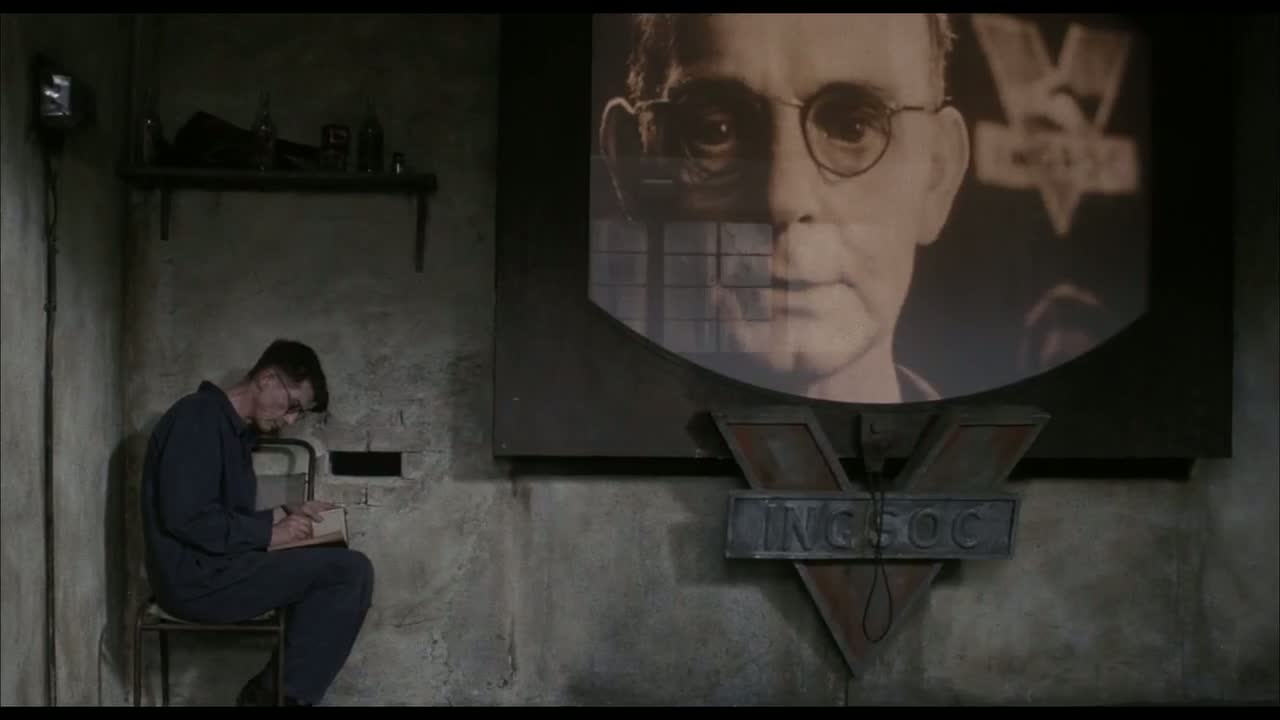
IngsocBut by Orwell’s time, a new demon had emerged that threatened to extinguish human freedom. The roaring twenties, a time when bribing the workers seemed both enlightened and possible, ended abruptly with Black Tuesday and the crash of the New York Stock Exchange. Mass unemployment, desperation, drought; all these led to the radicalization of society and the rise of totalitarian ideologies. For the first time since the Age of Revolution, human beings appeared willing to surrender their freedom in exchange for security and a better life. And with Liberal-Democracy largely discredited, people needed a new philosophy to look to for solutions. On the one hand, many intellectuals and workers found a likely candidate in the Soviet Union, the home of Marxist-Leninism and the global crusade against capitalism. On the other, people began to turn to a strange new – but no less radical – philosophy known as fascism. This polarization tore many countries apart, with different segments of society turning on each other to the point of civil war. This trend continued well into, and even after, World War II. The Age of Extremes was born!

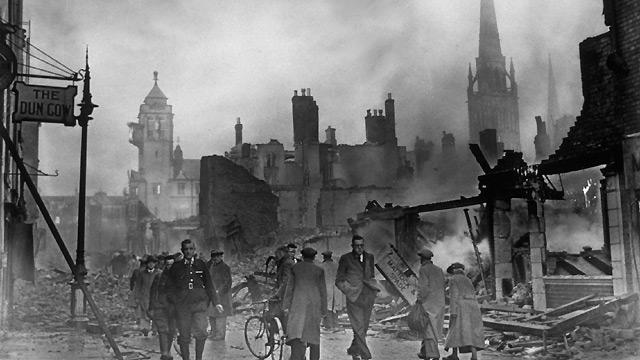
Which brings us to George Orwell, an intellectual and writer who turned to socialism at a young age and saw it as the means to cure the ills of traditional liberal-democratic society. After years of championing reform in England, he joined the international brigades and went off to fight in the Spanish Civil War. Like many intellectuals who looked favorably to the Russian example, he quickly became disillusioned with Soviet Communism, witnessing firsthand its methods and motivations in the field. The Great Purges, in addition to leading to the death of millions of Russians, had the effect of alienating countless intellectuals who had turned to Russia for inspiration over the years. Those who had visited Russia were especially appalled. The liquidation of the Kulaks, the Show Trials, the Great Terror, the constant purging of political dissidents; all of this convinced people just how precious human freedom was, and how flawed social theories that promised utopia truly were.the_blitzDuring the war, Orwell became further disillusioned by the growing trend of authoritarianism in his own and other democratic countries. While he initially approved of the process of “socializing” the economy, a necessity in a time of total war, it soon became clear to him that the process of censoring information, controlling industry, and using war as a means to keep the population united and compliant could lead to totalitarianism at home. These themes were all central to 1984, a book that takes place in a futuristic London that very much resembles London during the time of “The Blitz”. And just like in World War II, England (renamed Airstrip One, part of the global state of Oceania) is at war with another global power named Eurasia. The war dominates the lives of the people, with all aspects of society being slaved towards the need for victory. Industry, security, information, education, and even record keeping; all of these are controlled by The Party, Orwell’s satirical rendition of the Communist Party of the Soviet Union, the only power in the one-party state that has been in power as long as anyone can remember.

In the novel, society is rigidly divided between the Inner Party, the executive branch who’s membership is secret, the Outer Party that is made up of bureaucrats and government workers, and the Proles, the proletariat who have no power or any understanding of how it is exercised. Four institutions dominate Oceania, the Ministry of Love (responsible for breaking the will of dissidents), the Ministry of Truth (responsible for misinformation and propaganda) and the Ministry of Peace (responsible for war), and the Ministry of Plenty (Responsible for rationing and controlled shortages). In keeping with this contradictory appraisal of all things, the three slogans which embody the state’s power are “War is Peace, Freedom is Slavery, Ignorance is Strength”. And above all else, the ever-watchful state is embodied by “Big Brother”, a frightening yet somehow comforting caricature who represents the police state, depicted as a man with cold, dark eyes and a big, black mustache (echoes of Joseph Stalin and the cult of personality).

ministry_of_truthAll of these institutions, the entire agenda of the party, is clearly dedicated to preserving its own power and the total control they have over people’s lives. The war is ongoing, the shortages and fear it inspires constant. Propaganda and monitoring, which includes telescreens and the “Moment of Hate” are inescapable. No one has a moment’s peace or privacy. The people are taught that the war has always been, and with always the same enemy, regardless of the fact that the enemy frequently changes. Thanks to the Party’s control over information, no one knows whats really happening or whether or not a war is even taking place beyond their borders. Thanks to the Party’s censorship of all records, no one knows the true course of history or how they got to where they are. When a person is purged, they simply disappear, and no one knows if they ever really existed thanks to the Party’s control of all census data. Hell, thanks to the Party, no one even knows if it is 1984 at all…

Enter the main character, Winston, a man who remembers something of what life was like before the revolutions and the ongoing war. He is searching for answers, a search which leads him to his love Julia, a woman who actually enjoys sex, contrary to what women are taught in Oceania. The two then meet up with a man named O’Brien, a member of the Inner Party who is apparently a member of the resistance as well. In Oceania, the resistance is a clandestine group that is led by a figure known as Goldstein, a man who embodies all things evil and treasonous as far as the state is concerned (echoes of the Nazi campaign against “The Jew”). Through O’Brien, Winston and Julia are given a taste of freedom and a copy of Goldstein’s manifesto which explains how the Party seized and exercises power. Satisfied with the who, the what, the where and when of it all, Winston is left with only one question: why? Why did the Party take power, why do they exercise it so brutally and repressively, and why do they want force humanity to live a constant state of war and fear? There has to be a reason, right? Right?

ministry_of_loveWell, as it turns out, there is. In the end, Winston and Julia are betrayed and sent to the Ministry of Love. Winston soon meets O’Brien again, and realizes he’s been had, that there is no resistance, and that O’Brien and the Inner Party were the ones who wrote Goldstein’s manifesto. After being tortured and forced to confess his treason, Winston is given the answer he seeks. The Party, O’Brien claims, is interested in power, power for its own ends, the power to tear up minds and remake them however they see fit. The main difference between the Party and others like it in the past is that the Party has no illusions of why it does what it does. Then, to complete the process of torture and brainwashing, O’Brien and the Ministry of Love force Winston to betray Julia rather than undergo his worst fear (in Winston’s case, being eaten alive by rats). When its all over, Winston ends up at the same cafe he saw in an old photograph, one which he was previously ordered to destroy. In this photo, some old Party members who were purged were seen sitting after clearly being tortured, and right before they were killed. In this way, we know that Winston is about to die, but not before he says good-bye to Julia, they confess that they sold each other out under the pressure of torture, and he undergoes the terrifying transformation to become what the Party wants him to be: a loyal and loving servant of Big Brother.

I tell ya, this book scared the crap out of me when I first read it! It was so gripping that I read the bulk of it in two sittings, (something unheard of for me) and took its many lessons to heart. Foremost amongst these was the message that human freedom is precious, that empathy and feeling are what make us human, and that the last thing we should do with our minds is surrender them to those who promise us deliverance from our suffering and an earthly paradise. I am thus far relieved that his predictions did not come true, for it is how 1984 came to be that is very important, and often overlooked in my opinion. In essence, Orwell feared that the process of total war would continue well into a third world war, that society would be destroyed by nuclear bombs and then overthrown by radical revolutions, and that the world would descend into a series of totalitarian regimes that had learned from the failures of others and could therefore not be overthrown as the others had. But lucky for us, World War III didn’t happen (yet), democratization and socialization spread in western nations, and the Cold War ended. Fears of a totalitarian future have been renewed since 9/11 and the “War on Terror”, but these fears have served to demonstrate how important and enduring Orwell’s vision was.

George-OrwellIn a way, Orwell was a more effective satirist than Huxley in that his vision did not come true. Which, after all, was why he wrote it, wasn’t it? The whole point of cautionary tales is that people avoid what they’re being cautioned about, right? RIGHT? Well yeah! Orwell sought to warn the people of his day what could very well be coming, what could come from the scourges of total war, the desire for security, revolutionary justice, and putting one’s faith in ideologies that promise an earthly utopia. In many respects, its a credit to him that people have to turn to Huxley’s vision to identify the sources of their oppression. It means he did his job!

So thank you George Orwell, and rest in peace knowing that the world is still safe from 1984… so far!

1984 vs. Brave New World

Whenever I’m confronted by a virtual bookshelf or asked to list my favorite authors, I always make sure that George Orwell and Aldous Huxley are ranked among the top 10. Both of these men were immensely influential for me, inspiring not only my love of literature but also my desire to write. In that, I am hardly alone. Literally millions of people list these men as major influences, claiming that 1984 and/or Brave New World had a huge impact on their personal and/or intellectual development. It is probably for these reasons that I love teaching them so much, they’re just so chock full of all the elements a literary teacher likes to get into! Picture a quarry full of gold nuggets, one that never runs out and pays out for every new person who’s willing to mine it, and you’ve got a good idea of what these books are like.

Geez, was that sycophantic enough for ya? Okay, both books have their share of weakness too, and while I must admit that 1984 was certainly better structured and more serious than Brave New World, arguably it is the latter which proved to be more accurate. This is another aspect of these two books which has helped to establish their timeless nature: both are distopian visions of the future, both are works of satire that – like all works of satire – were set in the future but were really about the times in which they were written. And, most importantly, both were extremely critical of the day and age they were written in, addressing the many ways in which freedom was being suppressed. But since their approaches and their visions contrasted heavily , future generations were left to debate: which came true?

Huxley sought to answer this question himself in his essay “Brave New World Revisited”. Naturally, he thought that it was his vision that proved more accurate, but of course he’d say that! It was his vision! He also had the advantage in that Orwell had died shortly after writing his magnum opus so he wasn’t exactly around to rebut. But alas, Huxley’s contemporaries and subsequent generations of scholars tend to agree with him. Between a future where humanity is controlled by a series of brutal dictatorships who suppress free thought and control their citizens through the destruction of language, the rewriting of history, and the constant manipulation of emotions, and a future where humanity belongs to a global state where people are made compliant through pleasure and conditioning, it is arguably the latter which came true. The jury is still out, and the trial never ends, but right here, right now, Huxley’s vision is still taking the lead.

Of course, a few years ago, proponents of the 1984 school of thought believed the odds might have been tipped in Orwell’s favor thanks to the rise of the Bush administration, Afghanistan and Iraq, domestic spying and the controlled paranoia of orange alerts and patriotic orthodoxy. However, with the worsening situation in Iraq, Hurricane Katrina, and a series of blatant scandals, each one a “slow-bleed” on Bush’s approval rating, those fears were put to rest. With every passing month after the 2004 election, it seemed that Bush’s “War on Terror”, which many believed to be little more than a justification for waging war on American civil liberties or launching a global neo-con agenda, was doomed to fail. So once again, the pendulum swung back to Huxley. Thank God too! I don’t know about you, but between Feelies and Soma on the one hand and he Thought Police and Room 101, I’ll take being amused to death over being brutalized to death any day!

Naturally, the debate shall continue, most likely well into the “information age”, a time in which new ways and opportunities for encouraging social cohesion or suppressing human freedom will present themselves. But it is such a good debate isn’t it? Not only is it fun, from an intellectual standpoint anyway, but it also forces us to confront the ways in which our personal, intellectual, and creative freedoms are not being addressed, by circumstance or design. It forces us to take stock of our society and think of ways with which we could address the ways in which our governments and even we as a people fall short. It forces us to think for ourselves, which, I don’t know about you, but to me seems to be the point of these novels in the first place. For it is only in individual thought and the freedom to do so that any kind of social control or attempts to make us compliant fail. Well, that and armed rebellion, but this way is much cleaner, I think you’ll agree!