
You know those characters, people who come to us from our favorite movies, TV shows, or pop culture in general. The kinds of people who excel at kicking ass and taking names? The kinds of people that just never seem to die, they just keep getting bigger and badder the more time passes? Yeah, we all have people like that in our collective imagination, the inspiration heroes and villain who just impressed the hell out of us and made us want to be badass like them!
Well today, I felt inspired to do a little tribute piece to characters such as these. On the one hand, this seemed like a good diversion from my usual conceptual pieces which deal with big and potentially boring stuff. I mean, outside of people like me, who really cares about planetary cultures and mega cities? On the other, it felt like an overdue acknowledgement to all the characters that were well written, well scripted and well executed over the years. Yes, today I’m paying tribute to all the people in sci-fi who were so good at being so bad, or just bad enough…
Here they are!
Alucard:
 The main character from the short-lived by popular Hellsing series. Not to be confused with Van Hellsing, also about a vampire hunter, this series was all about an organization in the UK that was dedicated to fighting vampires, ghouls, and other hellish creatures. Their chief operative, a mysterious vampire named Alucard (Dracula backwards), was quite the epitome of badassness!
In addition to his cape, Victorian-era clothes, and massive handgun, he had the supreme confidence and “man of few words” thing going that can only come from being alive for so freaking long. As they say with most vampire series, the longer they live, the more powerful they get. And Alucard has been around for a long, long time!
 Ordinarily, he would just dispatch his enemies with a few blasts of his massive double-action pistol. But when faced with truly powerful demons, he would break the really scary shit! We’re talking seriously dark, scary energies that would tear an enemy to pieces, body and soul! Though it was never made clear why he was helping humanity in the animated series, the original comic did a better job of exploring his back story and motivations.
Taking its cue from Bram Stoker’s original novel, Dracula was apparently defeated by the notorious Abraham Van Hellsing and agreed to become the family’s loyal servant. The main story takes place several hundred years, later when the latest descendent of the Hellsing family is carrying on the tradition of keeping England safe from the forces of evil.
Blade:
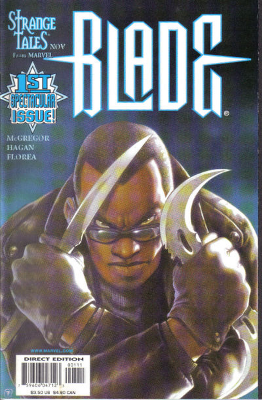 Here we have another vampire hunter who’s more than just your average guy! Though his real name is Eric Brooks (according to the comic series), this street hunter goes by the professional name of “Blade”. Little wonder, considering that just about every weapon in his arsenal features an acid edged pig-sticker or a sharpened silver stake! But of course, the real twist comes in why he does what he does.
As if that wasn’t badass enough though, he also alternates between a Gran Torino and a motorbike, wears a leather cape over segmented body armor, and packs enough firepower to take down an entire SWAT team single-handedly! All the while, he utters his few, but cryptic lines through those big, vampire incisors.
Known ominously as the “Daywalker” to vampires who are scared shitless of him, he combines the best of both worlds when it comes to human and vampires. He is immune to silver, garlic and daylight, but can heal almost instantaneously and has super strength. His only weakness however comes in the form of the “thirst”, the need for blood which every vampire suffers from and must eventually succumb to, or die. In order to preserve his humanity, Blade relies on a synthetic “serum” which temporarily satisfies his cravings.
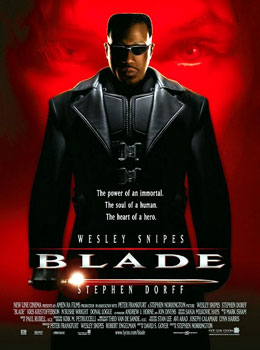 In a theme that has growing in popularity and familiarity since the early 80’s, Blade is a half-man, half-vampire who’s mother was bitten while pregnant with him. Tormented by his split identity, and the supposed loss of his mother, he has chosen to resolve this crisis by hunting those that made him what he is and robbed him of his human life. However, the question of what he will do once he’s rid the world of the last vampire, and what he will do when the serum stops working, are questions that remain unresolved, and help to drive the story.
Boba Fett:
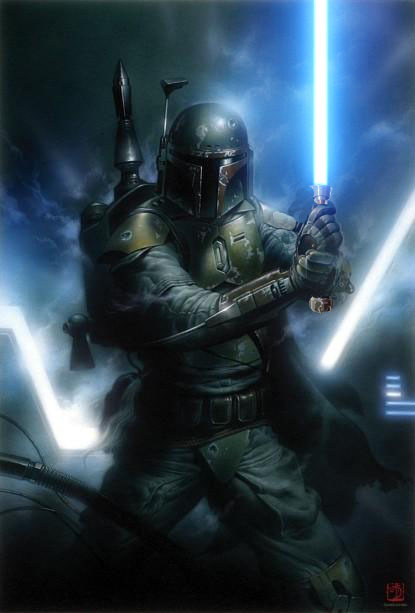 When you hear the name Star Wars and the word badass, what naturally comes to mind? Assuming you know anything about Star Wars, then chances you thought of Boba Fett! This notorious bounty hunter was probably the most badass thing about the series, dwarfing Vader, Jabba, and the Emperor in terms of shear awesomeness!
Hell, this guy not only appeared repeatedly in movies two and three (with a small cameo in a deleted scene in movie one), he also had entire novels, comics, and games dedicated to him. Annnnd, if the Dark Horse series Dark Empire is to be believed, Fett even escaped the mighty sarlacc. Who else amongst the expanded cast of the Star Wars saga can boast that kind of record? Lando? HA!
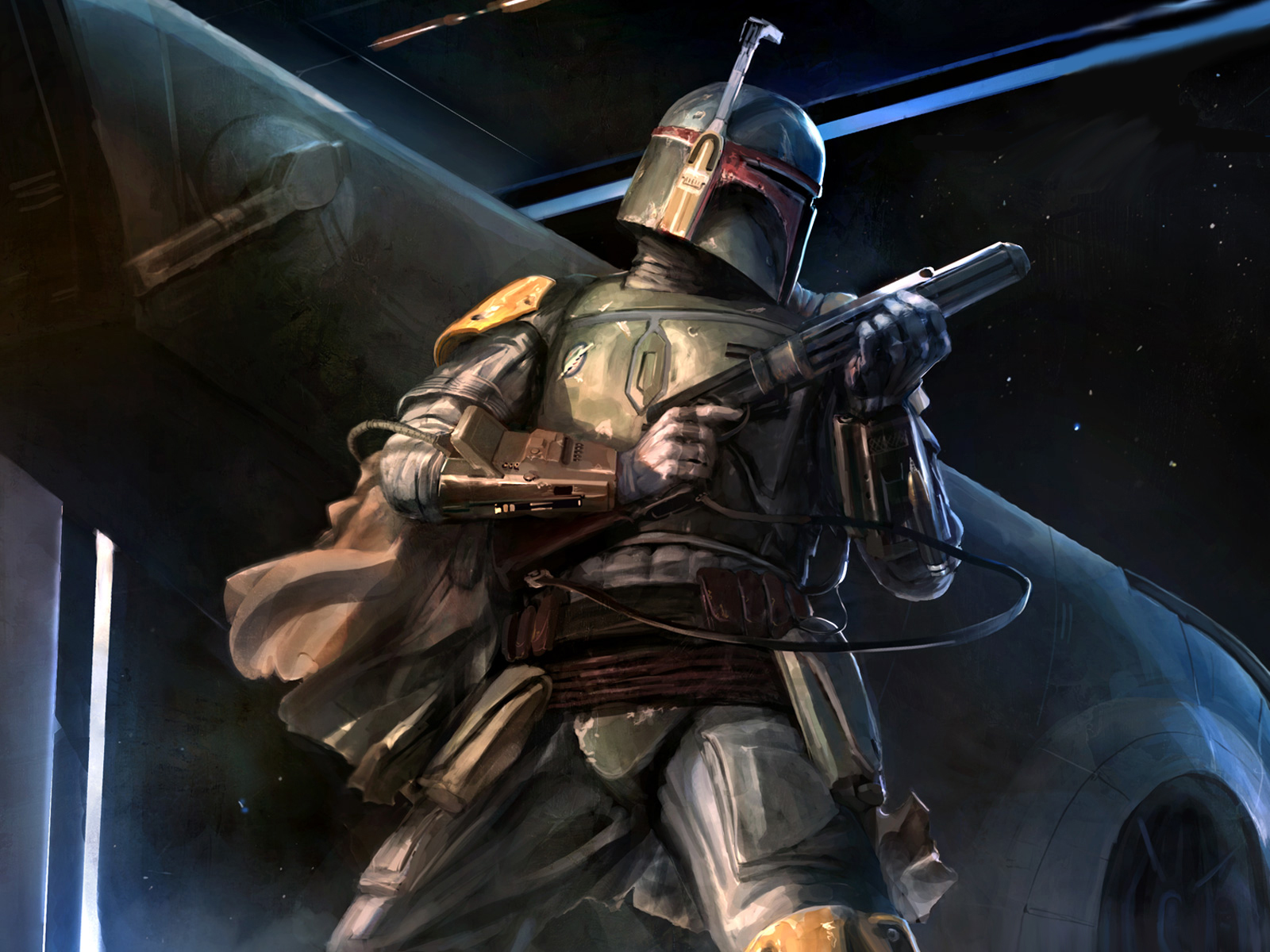 Though Lucas attempted to explain Boba’s origins in the prequel movie Attack of the Clones, other stories from the expanded universe claims that Boba was in fact a former Stormtrooper of Mandalorian origin.
However, on this latter point, all sources agree. Clearly, Boba Fett was of Mandalorian origin, a warrior race that had become virtually extinct after the Sith Wars and had relegated themselves to the role of bounty hunters and mercenaries. Boba had apparently distinguished himself amongst his rivals by delivering on contracts, charging exorbitant fees, and being very hard to kill. Hell, somebody who crawled their way free of the sarlacc aint no pushover!
The Joker:
 Batman’s nemesis, and Gotham’s smiling psychopath, the Joker is one of those villians you just love to hate! And yes, he’s also pretty damn badass! Though he has gone through countless renditions and adaptations over the years, all the variations revolve around the same basic theme.
Basically, the Joker is a sociopathic criminal who thrives on chaos, the perfect polar-opposite to Batman’s vigilante persona. Over the years, he has been in and out of Gotham’s Arkham Asylum, examined by doctors, but always seems to escape to stir up shit again.
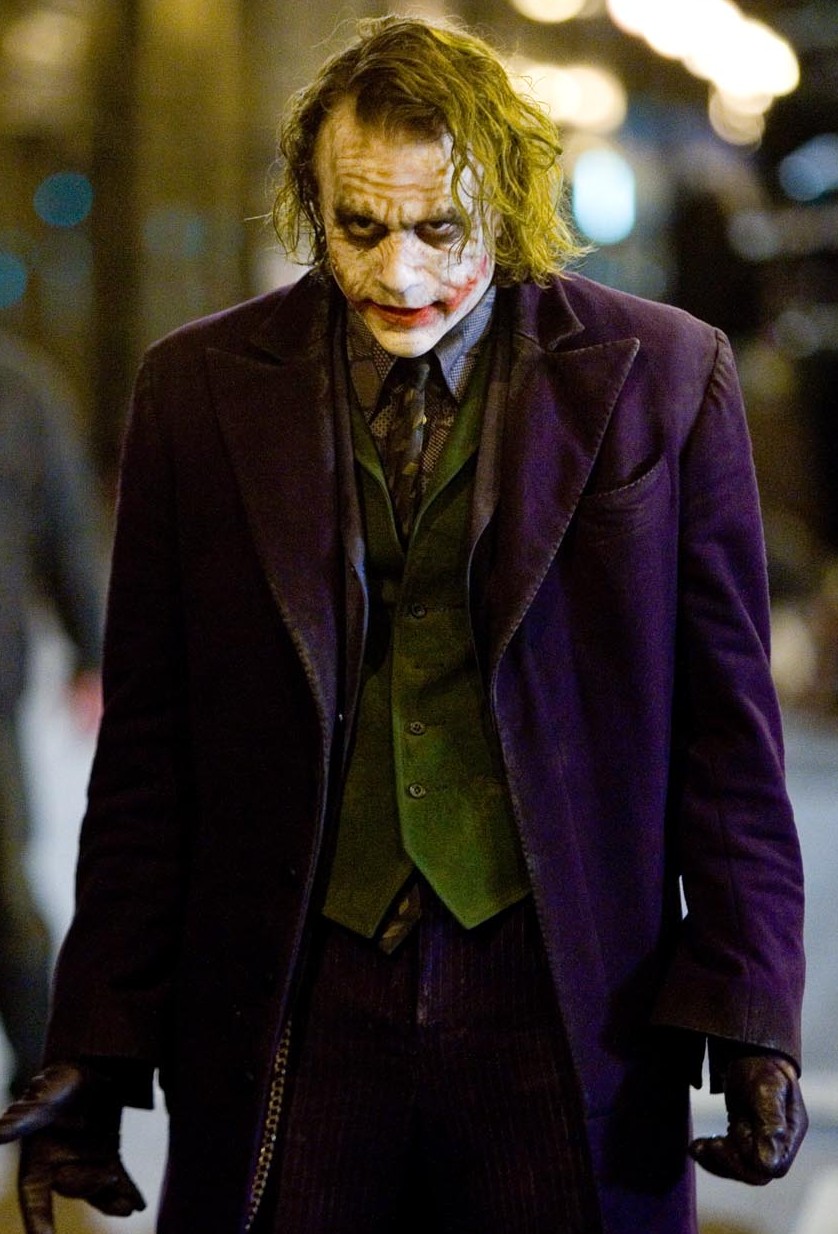 In his most recent incarnation, as performed by Heath Ledger, the Joker reached new heights of popularity and badassery! Not only did he manage to rip off the mob, turn Gothamites against the Batman, drive Harvey Dent mad, commandeer the mob, bring Gotham to the brink, and stay one step ahead of the Batman and police the whole time. He managed to do it all with a twisted smile on his face! That’s an awful lot for a man who claims he doesn’t do planning!
Looking to the comics and expanded franchise, one sees even more examples of badassery! Here, as well as in the movies, new and old, the Joker is notorious for causing trouble and doing it with a shit-eating grin. In addition to the general mayhem he’s been known to cause, his credentials include turning a psychologist into his willing sidekick (Harley Quinn), kidnapping and torturing the Commissioner’s daughter, killing one of the Robin’s, and nearly killing Batman on numerous occasions. Yet somehow, he always manages to escape, survive, and live to inspire chaos another day. Malevolent? Yes. Psychotic. Oh yes! But a notorious badass as well? You betcha!
Raven:
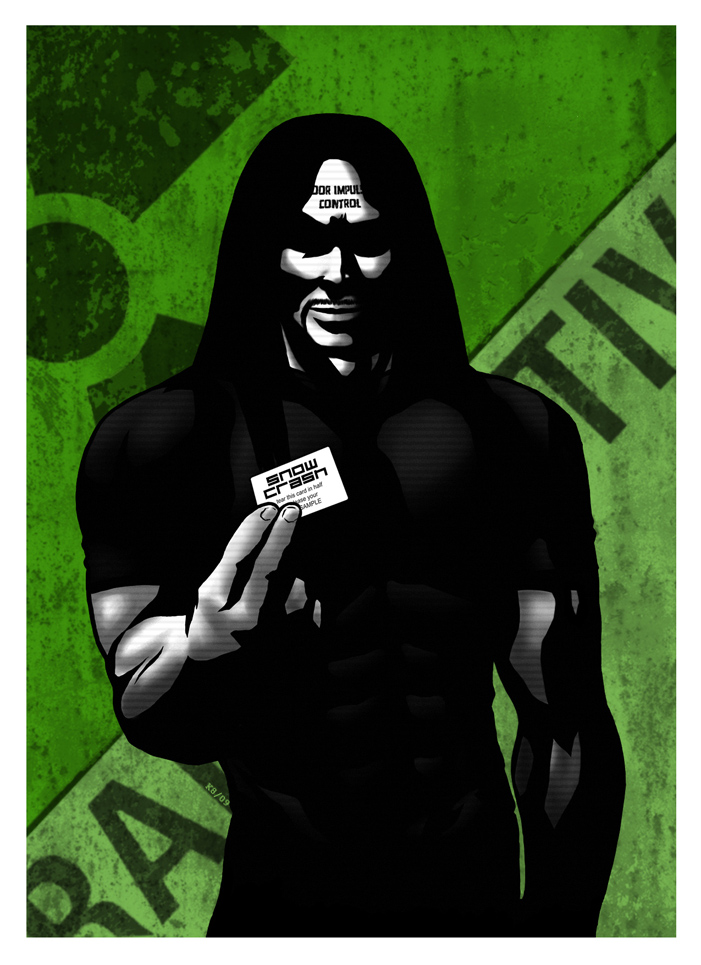 “Until a man is twenty-five, he still thinks, every so often, that under the right circumstances he could be the baddest motherfucker in the world… Hiro used to feel this way, too, but then he ran into Raven. In a way, this was liberating. He no longer has to worry about being the baddest motherfucker in the world. The position is taken.”
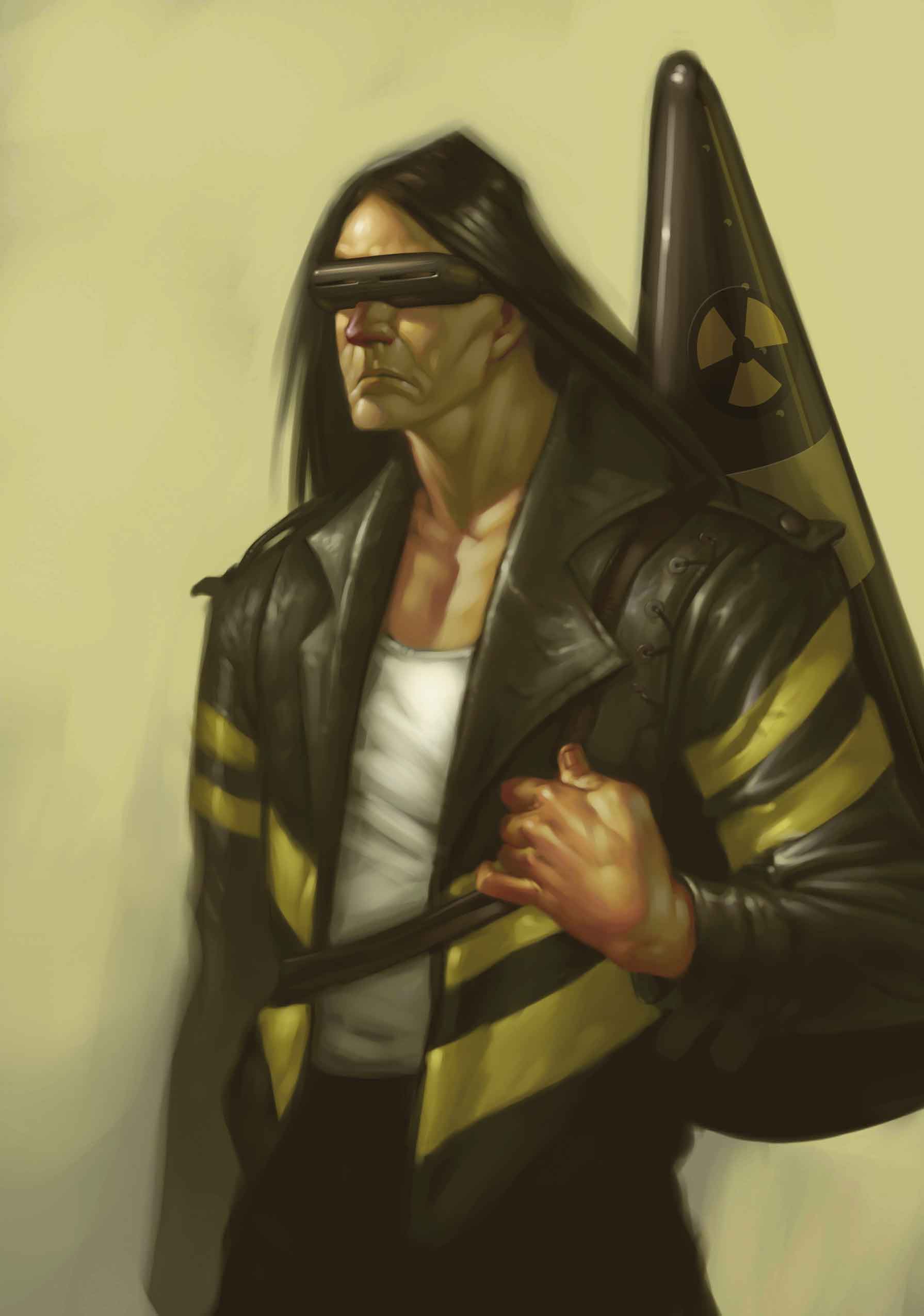 That pretty much says it all. Taken from Neal Stephenson’s Snow Crash, Raven is one of the chief antagonists of the story and one of the baddest motherflechter’s around! An Aleut by ancestry, he is skilled in the art of harpoon throwing, knife fighting, killing people, and being untouchable. Of course, this might have a lot to do with the fact that in the sidecar on his motorbike (pretty badass in itself!) he has a thermonuclear device stashed. This, apparently, he got off a Russian sub after stowing aboard and killing the entire crew with glass knives, and its wired to go off in case anybody does the unthinkable and kills him. Hence, nobody messes with Raven, as if his size and skill with weapons weren’t intimidating enough!
People recognize Raven not only by his obvious size, leather jacket, and motorbike, but also by the words “Poor Impulse Control” tattooed on his forehead. This is a holdover from his years in the corrections system of the future, where they’ve resorted to tattooing a prisoner’s particular maladjustments directly on their forehead for all to see. But for those who’ve pissed him off, or are just on his hit list, the first indication that Raven’s around is the telltale presence of his harpoon in your chest!
Molly Millions:
 Also known as “Sally Shears”, Molly is a recurring character in William Gibson’s Sprawl Trilogy. Technically, she is what is known as a “razor girl”, though cyber-ninja works just as well. Basically, she’s a gun (or razor blade) for hire who gets paid by high-rollers to take out anyone who stands between them and their objectives. This, she typically does by slashing people with razor claws that are imbedded in her fingertips, though she’s adept at hand to hand combat and wield firearms with the best of them too!
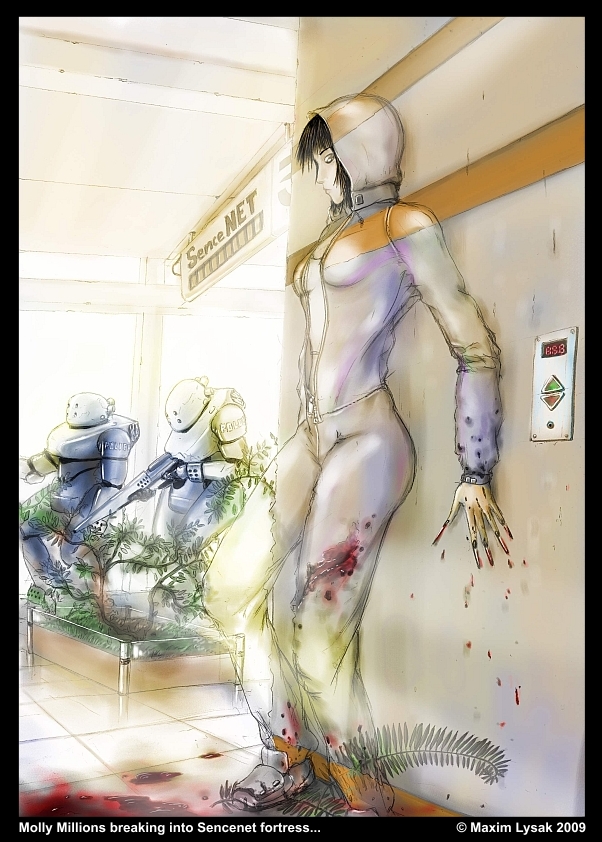 Thought tough, deadly and ruthlessly efficient, she has shown herself to have a softer, sensitive side, not to mention a sympathetic past. For instance, her first appearance is in Gibson’s short story (and film adaptation) of Johnny Mnemonic. Here, she goes beyond her usual mandate and begins to fall in love with the story’s protagonist, Johnny.
In her follow-up appearance in Neuromancer, she admits that he was the first “client” she overstepped her boundaries with and still mourns him years later. She also reveals that she began as a “meat puppet”, a form of prostitute who allows their body to be controlled by handlers while they are maintained in a blank-outed state. This is how she apparently paid for her cybernetic enhancements and became a mercenary ninja.
On top of all that, she is a fiercely loyal and levelheaded woman who, despite the nature of her job, is committed to her moral code and values the kinds of human relationships that are becoming increasingly rare in Gibson’s world. One might say that she’s tough because she has to be and would much rather live an ordinary life where love is not obsolete and murder for hire is not the only way for street people to get ahead. Still, don’t mess with her! Just because she’s got a soft side doesn’t mean she won’t fillet your ass!
Ripley:
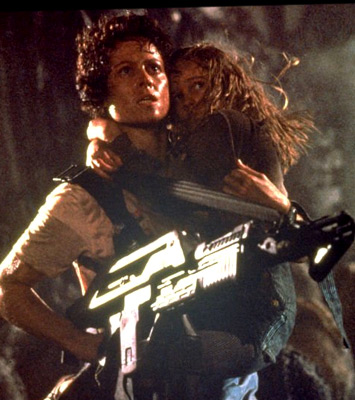 Mother, warrior, humanitarian and xenocidal ass-kicker, Ellen Ripley defined female badassery for an entire generation of moviegoers! From her humble origins as a crewman aboard the Nostromo to her showdown with the mother Alien, Ripley demonstrated the full range of the heroine protagonist. She was began as a regular officer who was put into a terrifying and claustrophobic situation, a lone survivor of a xenomorph attack aboard a confined spacecraft.
But living to fight another day, she faced her vulnerability, overcame her fear, and put it all on the line to save a little girl. And in the course of that, she also strapped on some heavy artillery and kicked some serious ass! And in the end, the showdown between herself and the Alien hive queen was not only cinematic gold, it was so thick with allegory you could cut it with a knife! Two mothers, two titanic forces, coming together to fight for their young!
 Let’s face it, this is what makes Sigourney Weaver and her character so awesome and sympathetic. She’s a regular woman who, when faced with treacherous odds, went above and beyond to do the right thing. And let’s not forget that her motives were purer than anyone else’s. Whereas some people were interested in their bonuses and others in shooting shit up, she fought tooth and nail to protect and save the life of a young child, a girl who reminded her of the daughter she lost.
And it worked. In the end, she outlived all the professionals who ignored her or were sent in to “protect her”. When all else failed, this lady came through and showed that you don’t come between a mother and her child and you don’t underestimate a determined woman, or she’ll kick your ass! Yes, years later and Ripley still remains an inspiration to women everywhere, and a reminder to us boys to respect and honor the women in their lives. In the end, they are a hell of a lot tougher than you think 😉
Vampire Hunter D:
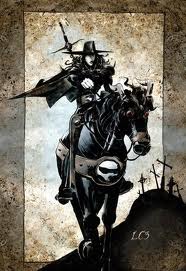 Yet another vampire hunter who’s got some questionable ancestry! Vampire Hunter D is based on a novel series with manga and anime adaptations. Taking place in the distant future, thousands of years after WWIII took place, D wanders through a pre-industrial world hunting the demons, vampires and assorted creatures that have come to plague it. Apparently, in the distant future, vampires have established themselves as a sort of Nobility that control their fiefdoms through a combination of advanced technology and magic.
Much like Alucard, D has a questionable ancestry which is gradually established as time goes on. Right off the bat, it is clear that he is a dhampire, the child of a vampire mother and a human mother. As time goes on, it becomes established that he is fact the son of the ancient Count himself. As a result, he has some pretty badass powers, which include spontaneous healing, super strength, and some pretty dark powers! Unfortunately, he also has his share of weaknesses as well. Sun-sickness, garlic; all the things that are fatal to vampires are pretty harmful to him as well.
 Believing that vampires have overstepped their traditional authority, D is dedicated to sending them back to the darkness from whence they came. Though he is part vampire, he values his human side and cannot condone how vampires abuse the humans they have dominion over.
Ah, and his weapon of choice for dispatching vampires and demons? A big katana-style sword! This weapon can decapitate even the most powerful vampire, or rend him from his neck to his navel. Oh, and did I mention he also has a smartass symbiot living on his hand? Might sound weird, but this thing keeps him company, keeps him honest, and has even saved his life a few times.
Vasquez:
 Yes, I realize I’m doubling down on a single franchise. But no list of badasses would be complete without mentioning Private Vasquez. Also of Aliens fame, this woman put the bad in badass, toting that massive smartgun and telling everybody who got smart with her where to go! Seriously, those iconic lines, “Let’s ROOOOOCK!” and “I just want to know one thing… where-they-are!” Bam! There wasn’t a single person in the audience who wasn’t get goose bumps.
Not only was she clearly a tough, take-no-prisoners kind of woman, she commanded the respect of those around her, particularly the men. Hudson, played by Bill Paxton, would get smacked down anytime he tried to sass her. Recall the lines: “Vasquez, anybody ever mistake you for a man?” “No, how about you?” Classic! And of course Private Drake, her partner in arms, practically followed her around, even though he was twice her size!
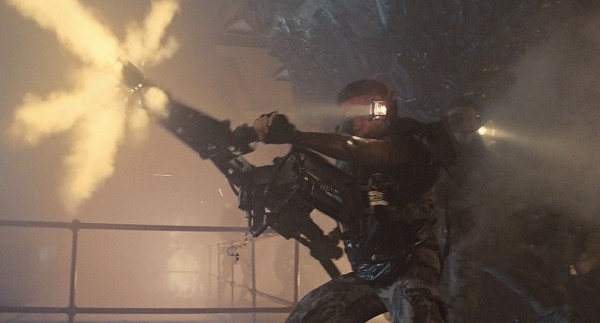 But of course, she too had a sensitive side. When Drake fell protecting their group, she took it really hard. She was even willing to go back into the den of the xenomorph’s when it became clear he was still alive. Even though it was obvious he and the others were being used as symbiotes and the odds of them making it out alive were virtually nil, she was still willing to risk her life. One seriously got the impression that she loves the big lug after all…
But mainly, she was an ice cold chick and tough as nails. When those around her began to panic and cry “game over, man!”, she raised her gun and started kicking ass! And when at last she was cornered and wounded, did she roll over and die? Hell no! She grabbed hold of that grenade and went down with a bang, taking as many of those buggers as she could buggers with her! RIP Vasquez. You rock!
Well that’s all for now. I was going to include some non sci-fi examples in this list as well, but that would made it too long to post! Stay tuned, I’m thinking I’ll save those examples of mainstream badassery for next time. And I might just have some final thoughts to offer on this whole phenomenon known as badassesness. I love inventing words! Bye!

 Stories by Williams