Conan (Cont’d)

Conan (Cont’d)

And we’re back! Last time, I got into Conan (ca. 1982), the Milnius/Stone/Laurentiis version that effectively made Arnie’s career. Now, it’s time for the remake, the one directed by Marcus Nispel and starring Jason Momoa. Having just sat through it, I can tell you that the impressions it left are fresh in my mind, as is the bad taste it left in my mouth. I suppose that’s the inevitable result of seeing something that comes with high hopes, only to find out that it really isn’t that good. But I’m getting ahead of myself again, here’s Conan, the remake!

Conan The Barbarian (2011):

For some time now, producers have been trying to do a remake/re-imaging of Conan. Perhaps its the nostalgic appeal of the original or maybe its just a retro thing: sooner or later, fans grow up and pay good money to see something that reminds them of their youth. Just look at American Graffiti. But these attempts can always be messed up when studios spend forever fighting over rights and trying to come up with a plan, and then slap together a product hastily. That’s apparently  what happened here.

After spending  seven years in development with Warner Bros, the rights to shoot this film were shifted to Nu Image/Millennium Films in 2007, with a clause wishing for immediate start on production. It then took another two years before they found a director, eventually settling on Marcus Nispel, a man who’s made his career shooting remakes for guys like Michael Bay, and the critically-panned movie Pathfinder. A big-ass writing team was then assembled to come up with a passable script, and Jason Momoa (hot off playing the role of Khal Drogo in Game of Thrones) was cast as the hero.

Not a very encouraging start, but there were signs of promise. Momoa seemed like a good fit, having already done the badass barbarian thing as Drogo. Stephen Lang also seemed like a good choice to play the villain, having performed the role of the dubious military man in Avatar. And Ron Perlman, hell, he’s always good as a dirty, hairy, hut-dwelling man! One look at Quest for Fire and you can see how he seemed like a sure thing to play Conan’s father. All that was left was the story.

Plot Synopsis:

The story opens with narration by Morgan Freeman. Okay, bit of miscasting right there, but whatever. He explains how its the Hyborian Age, and gives us the bare bones of what’s been going on in this vague, adventurous period of historical fiction. And unlike the first movie, the back story here is kind of extensive. This story, we soon learn, has to do with a magic mask that gave evil witches and wizards the power of Gods. They are known as the Acheronian necromancers, and as the name suggests, they could resurrect the dead and… do other scary things I guess. Okay, seems a little Dungeons and Dragonsesque, but the movie’s just starting…

We also learn that this mask was broken when the evil people were cast down and divided amongst the Cimmerian tribes. And now, predictably, some evil dude is going around and collecting them, hoping to put the mask back together so he can have godlike power. All he needs is one final piece, and guess who’s got it… Conan’s people, naturally! We also get to see how Conan was born, on the battlefield of all places when his pregnant mother was stabbed and his dad had to perform a battlefield C section. Thus, in keeping with his legend, we get a boy who was “borne in battle”. Again, kind of over the top, but things are just getting started.

What follows are many scenes showing Conan as a young boy. After eviscerating a war party of rival tribesmen, we see him helping his father forge a sword, being told all about the Riddle of Steel. And wouldn’t you know it, they even tell us what it is! “What’s more important, Conan, the fire or the ice? Both! It’s the two that make steel hard. That’s the Riddle of Steel.” Really? That’s the riddle, fire and ice make it hard? Gee, I thought it would be something more complicated, not a user’s guide to smithing. If knowing this is all it takes to get into Valhalla then the damn place must be overflowing!

And then, Conan’s people are attacked by some big, bad warlord named Khalar Zym (Stephen Lang). Hmm, Khalar, Khal? Do I detect a slight similarity (aka. ripoff!) there? Anyhoo, he beseiges the village, Conan’s people die, and he tells Corin that he can bend the knee and give up the last remaining fragment, or he’ll burn him alive and take it anyway. He also lets him know its okay to submit to him, since he’ll soon be a living God. But of course, Corin says no, and tells him that God or no, he’ll still fall! Conan of course comes to his aid, but it captured and tied up with him. Zym takes the last fragment, completes the mask (which looks like some kind of dried octopus, all tentacly-like), puts it on and has his evil moment. “Bwoohaahahahaha” and all that.

Conan and his father are left chained to a pot of molten iron which is suspended above them. In short, all they can do is stand there, or risk dumping it on one of their heads. Conan does his best to release his father, but Corin eventually sacrifices himself and causes the pot to dump on his head. Hmm, getting another deja vu moment here. Golden Crown anyone? Conan then goes out into the killing fields that were his home, grabs a sword and does the avenging hero thing. He raises it high and yells!

At this point, we’re about half an hour into the movie and the differences are becoming glaring. For one, in the original movie, Conan was the focus of things. Sure, its about his quest for revenge, but its also a big-time bildungsroman, the telling of how he came to be a powerful warlord who would go on to become a king. There was no magic MacGuffin to incite the plot and keep things going. Second, a great deal of time, far more than was necessary, is dedicated to Conan’s childhood in this movie. Whereas in the original, we get a brief glimpse of a rough, honest and in some ways idyllic existence that was interrupted by tragedy, here we get a full-on preamble that kind of overdeveloped things.

I mean, was it really necessary to show how Conan was a badass even as a child? Wasn’t it supposed to be his hard life that made him so rough and ruthless? Here we see him cutting off the heads of multiple warriors before he’s even hit puberty! And not at the neck, which would have been more civilized; no, he hews their heads off at the jaw! With blunt instruments! Forget Conan the Barbarian, Conan the Psychopath would have been much more appropriate! Don’t get me wrong, I was pulling for him, but it still seemed over-the-top.

What’s more, in spite of that fact Conan brutalized some of his men (he cuts off one of their noses), Zym decides to basically leave Conan alive. Sure, he chained them up to a pot of molten metal, but doesn’t that seem a little super-villainy? Instead of killing the father and selling the child into slavery, I’m going to put them in a situation that at least one of them can escape and pray they never find me. Doom at least had the foresight to sell the boy into slavery, and he seemed relatively helpless by comparison. But with this little psycho, seems to me the sane thing would have been to make sure he died in that village. He chops heads in half at ten, how bad do you think he’s going to be in twenty years?

And of course, the movie then cuts to Conan as a man. He’s part of a group of Aquilonian Mercenaries led by a big burly dude named Artus (Nonso Anozie). He and Conan are close friends and are dedicated to piracy and making trouble, but in truth their ultimate goal is to free slaves and find the man that killed Conan’s people. We get a scene where they are doing just this, killing slavers and setting the captives free because, as Conan says “No man shall live in chains.” After taking the slaves to party in Messantia, Conan is chanced upon by a man named Ela-Shan (Saïd Taghmaoui), a thief who is being pursued by one of Zym’s men: Lucius, the man who lost his nose to Conan as a boy.

Conan recognizes the man and decides to let himself be captured. Once in his prison, he breaks free and begins torturing him for answers. He reveals Zym’s identity to Conan and tells him of his plans. Basically, they involve him capturing a “pure one”, aka. a descendent of the Acheron necromancers, so he can unleash the mask’s power. Taking this information, Conan makes Lucius swallow the prison’s master key and hands the slaves a knife, telling them their freedom lies in Lucius’ belly. I suppose this is meant to be a kind of comic relief, “You swore you’d let me live!” “I swore that I wouldn’t kill you!” Mainly, it just seems cruel. However, Conan is told by Ela-Shan (who is a clear remake of Subotai) that if he ever needs a favor, to come looking for him in the City of Thieves. And of course, he will…

We then cut to Zym and his daughter, the dark sorceress Marique (Rose McGowan), as they cross the land looking for the “pure one”. This journey brings them to a monastery where we see a woman named Tamara (Rachel Nichols), who is being told her future by the head priest. He tells her that she will meet a warrior, a man who will change the course of history. However, the lesson is cut short when Zym’s men attack and seize the place.  A totally overdone scene follows where Marique, after they’ve rounded up all the monasteries ladies, tastes their blood with her claws and then kills them, one after another, once she’s determined that they are not pure.

We also learn that Zym’s ultimate goal is to resurrect his wife, a witch herself who was burned alive by monks, and that he’s quite bitter about it. And of course, there’s also the obligatory scene where Zym smashes the head of the head priest on the stone steps after he tells him his wife was evil and got what she deserved.  Okay, we get it, these guys are really, really bad! Moving on… On the plus side, Tamara got away, and it just so happens that Conan sees her fleeing and recognizes the men that are chasing her. After saving her, Conan pretends that he is going to ransom her to Zym for gold, but his real goal is to lure Zym into a trap.

Conan manages to catch up with Zym as his land-ship (a sea vessel which, for some reason, he’s having pulled across land!) where Zym and his daughter are talking about their plans. Marique tells Zym, in a speech heavily laced with incest, that she could be her mother and he wouldn’t need to bring her back. But naturally, in a response laced with abusiveness, he shoves her away and tells her she will never be her mother. Okay, if the goal here was to make these two seem more evil, then mission accomplished! Otherwise, all I can say is ew! In any case, that’s when Conan delivers his message via a catapult (yep, you read that right!): he hurls Zym’s man at his ship with a note attached. “Meet me at this abandoned trading post at midday”, it says. “Come alone!”

But of course, he doesn’t. He comes to the post with Marique, and Conan confronts them and demands Zym’s head! This is the first fight scene between these two, and naturally it goes against Conan. Using her dark magic, Marique sends a whole bunch of sand people at Conan while he father and him exchange blows with their swords. Conan is forced to flee, taking Tamara with them, by jumping off the edge of the cliff into the water, where Conan’s buddies happen to be waiting. They get on board, sail off, fight off some of Zym’s men, and Tamara and Conan get better acquainted. She learns that he’s incredibly noble, in spite of his rough and tumble exterior. And Conan tells Artus that he’s found the man who murdered father, his family, his people, and of course Artus pledges to help him get his revenge. They’re buddies, remember?

So Conan is dropped up farther along the coast, where he will make his way to Zym’s fortress. However, Tamara decides to tag along for a bit and the two have rough sex in a cave nearby. Yes, the timing of this seems stupid, the dialogue is quite awful, and there’s absolutely no chemistry between them. But what’s even more odd is on the following morning, Tamara wanders out of the cave before Conan awakes (guess she wasn’t too impressed!) somehow finds herself wandering deeper in the wilderness, and is captured by Zym’s daughter. Wait, weren’t they doing it in a cave near the shore? How did she wander into the forest here? Was she totally turned around, or was the sex just that good? In any case, Marique tastes her blood (as usual) and determines she’s the one! Shortly thereafter, Conan wakes up, follows Tamara’s trail to the same wood, and finds one of Marique’s claws which she carelessly left behind. It’s on now!

He then, as previewed, travels to the City of Thieves (guard your pocket book man!), finds Ela-Shan and tells him he needs his help breaking in to Zym’s stronghold. They arrive just Zym is preparing the sacrifice, which consists of making Tamara wear some tight, revealing outfit, cuffing her wrists and ankles, strapping her to a big wheel and… I’m sorry, I got lost there for a second. Were they going for some serious visual innuendo here? Somehow, it seemed like they took a wrong turn on “damsel in distress” road and got lost in S&M junction. But predictably, Conan and El-Shan battle their way in, fight some bad dudes and a big tentacled monster, and Conan is set for his big finale with Zym.

And I can say without reservation that the final fight was totally anti-climactic! For one, they seem to be fighting in front of a poorly animated green screen for all it. It looks like a scene from Mordor, but only if the people from Xena had designed it! And invariably, Tamara must be saved repeatedly (which is annoying), the fight scenes get both ludicrous (they fight on the wheel as its suspended on two rocks over a chasm!) and there’s really no tension to speak of. But alas, Tamara needs to be saved again, as she falls through a plank on a walkway and Zym’s spell is taking effect. Slowly, she’s being invaded by the evil spirit of Zym’s wife. She tells Conan to drop her, but he can’t! Not even with Zym standing before him ready to deliver a death blow.

He and Zym then delivers their final words to each other, which is really just a rehashing of the words he and Conan’s father shared years before. Zym tells Conan that there’s no shame in kneeling to him since he’s a living god. Conan replies, “You forgot what my father told you. God or not, you will FALL! He then knocks the planks out from under Zym’s feet, he falls to his death, and Tamara is saved from being taken over by the spirit of his dead wife. They make it out, he drops her off at a new monastery, then carries on the remains of his old village site. There, he finds the remains of his father’s forge, raises his old sword, and yells!

Strengths/Weaknesses/Impressions:

Okay, I’m going to start with what I didn’t like about this movie, because its a far more important list. Strengths, I got few to mention, and as for impressions, practically none! So here goes… First of all, having Morgan Freeman do the narration was a serious case of miscasting. Yeah, I love Morgan as much as the next person, and he is like THE guy when it comes to voice-over work, but not for this movie. This is a fantasy and historical fiction epic, it requires someone who sounds bad-ass and foreboding. Someone like Mako, Keith David (Spawn), or Tony Todd (The Crow), not the man who narrated Shawshank Redemption, played God in Bruce Almighty, was Driving Miss Daisy, and played Neslon Mandella. It’s just not a good fit!

Second, as mentioned, Conan’s backstory. The original did the best job of this, in my opinion. When it comes right down to it, Conan is characterized by a few simple things: his strength, his cunning, and his feral wits. He’s tough in a way that speaks to hard living and smart in a way that speaks to a life of survival and living on the edge. By taking that away, the remake made his less believable, presenting him as a guy who was just badass from the day he was born. This might have seemed cool to some, but in my opinion it made him way less believable.

Also, in this remake, the character of Conan seemed poorly executed and somewhat confused. With his many overdone antics, we’re made to believe he’s a real bad dude. But then they kind of go out of their way to make him appear good, loyal and loving. And when I say out of their way, I mean they just come out and say it. “I live, I love, I slay, and I am content.” “No man shall live in chains”. “He has the loyalty of a dog”, etc, etc. In the original, Arnie needed barely any words at all to convey this, he just played the part. People could tell from his mere presence he was bad, and by his friendship with Subotai and his romance with Valeria that he was loyal and loving, and by his determination to find Doom and avenge his parents on his own that he was brave. Nobody needed to say anything out loud.

The same is true for the villain, Khalar Zym. I was surprised, to be sure. Ordinarily, Stephen Lang is an effective actor who lends a certain dignity and strength to his characters. This was true even in Avatar, where in spite of a weak plot a cliched characters, he still managed to give strong performance. But here, he is both overdone as the bad guy and really not scary at all! Mainly, he just seems like a creepy old dude who’s looking to get smashed! I’m not sure where all those muscles he built up for Avatar went, but in this movie, he looked pretty damn scrawny and emaciated. Might have been the costume, but gone was the picture of the brusque and burly old dude who can still kick your ass! And that tuft of grey hair on his chin? Didn’t help! Neither did his cheesy lines: “Behold… and despair… your new master!”

In addition, the supporting cast is pretty weak. Ron Perlman did a good job of portraying Conan’s father, but the role really didn’t seem like a challenge for him. Mainly, he just looked the part and phoned the rest in. Then there was Rachel Nichols, who people might recognize from GI Joe: The Rise of Cobra or as the new blonde lady on Criminal Minds. To call her acting wooden would be too kind! Seriously, I haven’t seen blank stares and cardboard acting like this since… well, GI Joe! The romance between her and Conan was also totally unbelievable. At one point I asked myself, isn’t this woman supposed to be a nun or something? Why then is she shagging the barbarian? And the way he just drops her off at a monastery at the end. Has she not broken her vows at this point? Wouldn’t there be some kind of moral conflict in them having an affair?

Rose McGowan (from Charmed and clealrly one of Tarantino and Rodriguez’s favorite people to work with)  filled the role of the evil daughter quite well, but the character itself was quite weak. Mainly, she’s just creepy and dark for the sake of being creepy and dark, and the incest thing was clearly just thrown in for added vileness. And Ela-Shan, a clear homage to Sobutai’s character, felt like he was just penciled in out of duty. He shows up near the beginning to advance the plot, disappears, reappears as needed, then disappears again. In short, he’s the friend you call when you need a ride but have no intention of hanging out with. That’s mean!

Jason Momoa, who I admire the hell out of for his performance of Khal Drogo in the HBO Game of Thrones miniseries, also had some issues adapting the role of Conan. Sure, he looks the part. A tall, dark, ripped dude with long dark hair? Hell, he IS the part! But he’s a long way from Khal Drogo in this one. Much of the time, he can’t seem to decide if he’s going to go with the deep, raspy voice (a la Christian Bale in Batman), or just use his natural, deep voice. The latter was far better, but he kept doing the raspy thing, sometimes switching in mid-sentence. And when he does the evil stare and threatening words, he just sounded kind of silly! Momoa said he wanted to steer away from Arnie’s version of Conan, which was totally respectable. But at the same time, I think he should have taken a lesson from Arnie’s performance: less is more, especially when you’ve got the kind the commanding presence these two share.

Okay, what was actually good about this movie was the set design. Here was something that also reminded me of Game of Thrones, and it was the picturesque castles and landscapes the movie’s animators came up with. Most of the time, they are pretty cool, and don’t look particularly phoney or out of place. This cannot be said for the final scene where Conan and Zym fight it out in the “Cracks of Doom”, but otherwise the setting looked pretty good. And they did manage to make a lot of the settings look and feel like something out of the original story, giving things a dirty look and feel that calls to mind Biblical allusions, or scenes out of Orientalist art. This was something the original movie did quite well in spite of a limited budget, and this movie did it quite well too.

Reception/Recommendation:

Other than that, sorry to say, but this movie did not live up to the original or the graphic novel which inspired it all. It was a good attempt, but clearly a combination of things were working against it. For one, you can’t take something like an original cult-classic and just redo it! Something like that takes dedication, vision, time, and energy. Throwing writers, a director, some actors (albeit good ones) together and saying “get on it” just isn’t enough. And in the end, the results spoke for themselves. In addition to being almost universally panned by critics, this movie made only 20 million dollars, and that was with a budget over 70! Given time and with DVD sales, I’m sure the studio will recoup its dough, but for the moment, this re-release has done little aside from riding off the coat tails of Game of Thrones.

Speaking of which, it was recently announced that Nonso Anozie will be in season 2 of GOT, playing the role of Xaro Xhoan Daxos. It’s also been said that Momoa’s been talking to the writers about bringing the character of Khal Drogo back. The ties between these two projects continues to astound me! In any case, if you’re looking for some cheesy entertainment, pick this one up and help the studio make its money back! If you’re looking for a faithful adaptation of the original though, something with sword, epic fantasy and a touch of realism, I strongly recommend you rewatch the original, maybe even with the commentary. Or you could just check out Game of Thrones! Whatever floats your boat…

Conan The Barbarian (2011):

Entertainment Value: 7/10

Plot: 4/10

Direction: 6/10

Overall: 5.5/10
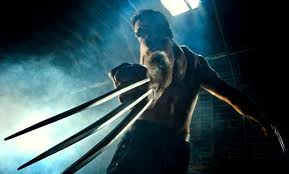
Of Prequels And Why They Suck…

Of Prequels And Why They Suck…

Looking back, I’ve noticed a sort of thread running through some of the posts I’ve made. And in truth, this thing was quite influential when it came to what inspired me to write science fiction in the first place. It began with the infamous Star Wars prequels, the movies which ruined what used to be a very influential and nostalgic franchise. It was then reinforced by the odious Dune prequels, which tarnished the legacy that inspired me to write science fiction in the first place. Since then, I’ve noticed these same elements at work in any prequel I’ve chanced upon and the lessons only seem to get more concrete.

While I’m no expert on the fine art of writing, be it science fiction or anything other genre, by the time I started doing it I was pretty clear on what I wanted to create. Basically, I wanted to write something I would enjoy, something that emulated the greats I had come to know and admire. But when it came to what I DIDN’T want to do, I found prequels summed up a lot of it succinctly (especially the aforementioned examples). I’m sure I mentioned as much in previous posts, but today, I thought I might speak to these things specifically; outline why prequels can – and often do – suck!

1. No Surprises:
Whether it was the Star Wars prequels, X Men Origins: Wolverine, the Legends of Dune series, or anything else prequel-oriented, there was one undeniable problem they all had in common: we already knew what was going to happen. By stories end, we know that the characters are going to become whatever it is they were in the original story, and we know who’s going to live and who’s going to die. In some cases, we even know how, so there really are no surprises. The only real purpose of a prequel is to fill in the background, explain HOW things happened and how the characters and story we are familiar with came to be.

For example, in Star Wars, we know that Anakin becomes Darth Vader, that Palpatine is the villain and will take over the Republic, and that Amidala will give birth to Luke and Leia before dying. There are a host of other details which the more nerdy among us were familiar with as well, and we were all drawn to theaters back in 1999 hoping to see how they played out. But in the end, when all was said and done, I don’t think any of us came away satisfied. Seeing how things happened when you already know what will happen just seems to make for a disappointing experience.

2. Sense of Duty:
Another thing that brings down a prequel is the fact that things MUST be explained. In short, the writer, director, author, etc. has a list of things which need to be covered before the end. These things have to fall within an established framework – i.e. what has already been established by the original story – and cannot contradict or be inconsistent with them. So really, in addition to having a story where there really are no surprises, you also get a story where things have to proceed in an established fashion and often seem heavily contrived. The end result is not what would feel natural based on the story so far but based on what needs to happen for the sake of the original story.

X-Men Origins will suffice as an example here. In this movie, the story had to show where Wolverine came from, how he and his brother (Sabretooth) had their falling out, and how his memory got erased. The result was actually pretty weak, in my opinion. Basically, Colonel Striker shot him in the head with Adamantium bullets, which he knew wouldn’t kill him but would erase his memory. Now, how did he know ahead of time that that would be the effect it would have? Second, why do that instead of lobbing a rocket-propelled grenade at him? Simple, because the story required it. Wolverine is supposed to be an amnesiac in the first movie, so this movie had to show how.

And while were on the subject, why didn’t Wolverine’s girlfriend kill Striker at the end when she had the chance? The woman had suggestive powers and had the man in her grasp, so why not tell him to march off a cliff? Again, because the story demanded it. Striker needed to live to see movie two, so instead she said some fluff about how she’d be no better than him and just told him to take a walk until his feet bled and he fell from exhaustion. I can’t speak for everyone, but personally, I was disappointed.

3. Less Is More
A lot of people insist that when it comes to back stories and background, the less we know, the better. After all, wasn’t Darth Vader scarier before we knew that he was once portrayed by Hayden Christensen? Wasn’t he a lot more menacing before he cried over the loss of Padme? I know for a fact that I’m not alone when I say that the whole “NOOOOOOO!” scene at the end of Revenge of the Sith brought him down in my eyes. What was once a titanic force of badassery was transformed into a whiney, bitchy child through the simple act of fashioning an origins story.

To use a non-prequel example, consider the Batman franchise. In the Tim Burton version, we got to see the Joker’s origin story, but in the Christopher Nolan version, we got nothing. And frankly, wasn’t Ledger’s updated take on the Joker much more scary than Nicholson’s because of it? Sure, his dialogue and acting were spot on at capturing the insanity and terror of the laughing psychotic killer, but wasn’t part of that assured by the fact that we had NO IDEA who he was or where he came from? The origins stories that he told – “wanna know how I got these scars?” – and how they kept changing was part of what made him so effective. As the audience, we wanted to know, how DID he get those scars? Why IS he so crazy? But by denying us this, I think we were kept wanting and we respected the movie more for it.

The same is true of Batman himself. In Burton’s, we got an exact reversal of what happened with the Joker. Aside from the fact that his parents were murdered, apparently by a young Jack Napier (who would go on to become the Joker), we knew nothing about him. Where he got his skills from, his equipment, and how he got started. This served to make him a much more mysterious character which in turn made him more interesting. In Burton’s Batman, he was the focal point whereas the Joker was his nemesis. But in Nolan’s updated version of The Dark Knight, the Joker was undoubtedly the focus while Batman was just the hero trying to stop him. I’d say what he knew – or in this case, didn’t know – about them was central to that.

4. The Audience’s Imagination Is The Writer’s Greatest Weapon:
I believe it was the famous photographer Duane Michals who said “I believe in the imagination. What I cannot see is infinitely more important than what I can see.” Okay, I Googled that, sue me! But the man had a point, and it applies doubly to movies since they too are a visual medium. What the readers and/or an audience can imagine based on snippets of a story is infinitely more powerful than what they can be shown with a few hundred pages of text or a two hour movie. This is why less is more. By giving the audience less to work with, they have more freedom to imagine and create. If you tell them what happened, detail for detail, then they have nothing except for what you’ve given them.

This, I think, is precisely why prequels are so often a disappointment, at least in my estimation. I’ve always considered myself to be an imaginative person. Given a blank canvas, or one with just a few details, I can create just about anything. And I’m hardly alone in that fact. Imagination is something everyone has – to varying degrees, sure – but it’s part of what makes us human and gives our lives meaning. Being able to express our inner life makes us happy, and there are few things more hurtful and insulting than having someone mock or dismiss that creativity. It’s also one of the cornerstones of a free society, the freedom to create and not be persecuted for it.

So it’s little wonder then why people are drawn to movies where books they’ve read are being adapted to film, or to prequels, where things that have been previously alluded to are acted out. People go to see them because they want to know if it will bear any resemblance to what they themselves imagined. Or, they go because they just want to see what the director’s own vision was. Either way, when you get around to seeing it for yourself, is it not a letdown no matter what? Isn’t that the real reason why people who’ve read the book constantly insist that the movie isn’t as good? That certainly seemed to be the consensus amongst LOTR geeks. And I should know; by The Two Towers, I was one of them! And isn’t that the real reason why the Star Wars prequels sucked as much as they did? We, the fans and audiences are active participants and create out of what we are given. Being told point blank what happened removes half the fun of it!

Some Tips For Writing:
Well, that’s all I got for now. Except to say that if someone is hoping to do a prequel, there are certain tips that I’ve come up with that can help. These are by no means established rules, just the result of my own amateur experience and observations. For one, a writer should take care not to give too much away when writing background. As always, less is more. It’s enough to let the background stay in the background and focus on the story. The more the reader/audience has to work with, the better. That way, when you are writing out the back story, you have much more freedom to work with, and don’t have to worry about staying within boundaries.

Second, a good idea is to write things out ahead of time. When I was thinking up Legacies, I began by writing out an outline for the entire background of the story. I didn’t do this because I was one day planning on writing a whole franchise worth of books, prequels included, but because I just wanted the story to be tight and know where everything fit. But because of that, I was able to pen several short stories that took place before the first novel. Rarely were the main characters and plot lines from that novel the focus of these stories, but they did serve as a solid backdrop which helped to advance things.

But don’t take my word on that, consider Lucas himself. He thought up the entire plot for Star Wars trilogy before making the first movie in the franchise, thus he knew exactly what he wanted to do ahead of time. Sure, he made changes and was forced to adapt along the way, but the end result benefited from this foresight. However, when it came to the prequels, he had only the bare bones to work with, and began writing each movie independently of shooting it. And it certainly showed, didn’t it? Rather than feeling like an ongoing story, each movie was a self-contained tale that was full of duty and contrivances. Nuff said? Plan ahead!

Last, but not least, remember that a story, ANY story, needs to tell its own tale. It cannot be written for the sake of filling in another. Its a bit of a vague point, I know, but a writer’s mentality is important when it comes to the creative process. At no point can you be thinking, “this needs to be explained, that needs to be explained”. It needs to be, “this is a story that needs to be told”. Every character has an interesting back story, and stories are living, organic things. They change over time, grow, and eventually die. Showing how they got to where they were going needs to be interesting and told with sincerity. So forget the duty, focus on the events and what made them interesting. If in the end its not a story that you yourself would enjoy, then don’t tell it! Simple as that…

V for Vendetta

Chances are, we all know people who are avid readers and swear up and down that a movie is never as good as an original novel. Man, those people can be annoying! However, as time goes on I find myself identifying with those people more and more. The difference between them and myself is, they read the books first and then see the movies. I, on the other hand, see the movie, listen to people complain about how “it wasn’t the same”, read the novel, and then join the chorus! Maybe this is a sign that I should read more, maybe its just dumb luck. But somehow, I find that with a lot of adaptations, I’m getting it all backwards.

The experiences tend to be pretty far between, but on the whole, I notice they are becoming more and more frequent. First, there was The Lord of the Rings, where I saw the first movie and then read the trilogy. By the time the trilogy was wrapping up, I was nitpicking all the omissions and changes with all the other Rings geeks! Then there was Fight Club, a movie I thoroughly enjoyed but then read the book and suddenly found reason to criticize. Then came Blade Runner, one of those rare instances where I liked the movie better. More recently, its been Game of Thrones – we’ll see how that turns out! – and, for the purposes of this review, V for Vendetta.

Yes, here too I saw the movie before I ever knew the source of inspiration. Then, having finally read it, I found myself having second thoughts about the movie. In truth, that’s not really fair, but it is kind of unavoidable. Regardless of what order you do it in, you can’t help but be very much aware of the fact that between the original story and the screen adaptation, things change. It might not always seem faithful, but a movie is not diminished simply because it’s different from the source material, nor can you fault director’s for taking creative liberties. And with adaptations that come years or even decades after the book was first released, you have to figure that changes will be made because they have to be. Things have happened between now and then, things which may make certain parts of the story impossible or at the very least unlikely. So with that in mind, let’s get down to V for Vendetta – the movie, the graphic novel, and everything in between!

(Background—>):
Since I knew in advance that V (the movie, not the sci-fi series) was based on an original graphic novel, I thought it only fair that I read it before giving the movie a review. After reading it, I was reminded of why I enjoyed Watchmen as thoroughly as I did. In both cases, Alan Moore was the creative mind, combining an obvious passion for politics, history and narrative depth with the usual subject matter of comic books (i.e. superheros). It was these same elements that Frank Miller would later emulate in order to create one of the best entries in the Batman franchise – The Dark Knight Returns. This is surprising, seeing as how V was apparently a side project of Moore’s, something he and illustrator David Lloyd did for fun more than anything else. The fact that it went on to become one of the most critically acclaimed series’ in history, eventually spawning a movie adaptation, was just a sign of its quality.

But of course, the graphic novel was released between 1982 and 89, covering events which took place towards the end of the 90’s. In it, a post-apocalyptic Britain has been spared the ravages of the nuclear holocaust, but then finds itself struggling to survive in a devastated world. It is then quickly taken over by a fascist government that uses the chaos of the outside world and the mentality of “Lifeboat Britain” to take power and justify its extreme policies. After many years of supposed peace and stability, a masked anarchist emerges who begins to slowly take apart the state, exposing its lies, secrets, and the crime that made him what he is.

Not only was this a chilling basis for a story, it also had an undeniably British flavor to it. The setting, the characters, and the mentality of it all just screamed Britain! In the movie, we get much the same feeling, but the elements are different. Rather than involving nuclear war, the plot revolves around the threat of terrorism and repression done in the name of security (something audiences in 2006 would find much more relatable). That, and a slew of other changes, made the movie more current, but also had the effect of watering it down somewhat.

(Content—>):
The movie opens almost exactly as the graphic novel does, except that for the sake of American audiences, the story of Guy Fawkes is first explained. Natalie Portman tells of the Gunpowder Treason, the man behind the plot, and the difference between ideas and the people who fight for them. However, the movie then moves to a near-future London at night, where both Evey (Natalie Portman) and V (Hugo Weaving) are getting ready to go out. In the background, the “Voice of London” – the regimes chief spewer propaganda – is delivering his latest spiel.

Evey then goes out for the night, on her way to meat her suitor and superior over at BTN (British Television Network) where she works. However, on her way she is intercepted by Fingermen (government spooks) who attempt to rape her. She is narrowly saved by a masked stranger who is in the habit of spouting poetry before wielding his knives and cutting his enemies to ribbons. He says his name is V, a name which he then cuts into one of the government’s posters. Thus begins Evey’s adventure with him, and the premise of the story.

He then takes Evey to the roof of a nearby building where a performance is about to begin. This “show” involves the destruction of the Old Bailey, the symbol of Britain’s justice system in London, done to the tune of 1812 Overture. During the display, he mentioned the 5th of November to her, and how that act, over 400 years old at this point, has been largely forgotten. As has the lesson. Through all this, we are made immediately aware that V is a revolutionary anarchist who has a score to settle with Britain’s fascist government. His theme: Guy Fawkes, and the Gunpowder Treason!

I should note that within these first few scenes, there are some notable differences between the book and movie. For one, Evey did not work in television, she worked in a munitions plant. And she was not out for a date, she was out trying to sell herself. Yes, this 16-year old (they never specified her age in the movie) had fallen on hard times since her job didn’t pay enough, was looking to make a little extra money and thought dabbling in prostitution might make up the difference. What’s more, in the movie V whooped the Fingermen’s asses but left them otherwise unharmed. In the book, he killed several, and used gas and an exploding hand, not knives!

What’s more, V did not blow up the Old Bailey in the opening scene, but Parliament itself! Much like the Old Bailey, this was an old government building that was no longer in use. Given the fact that the fascist party that had taken control had no need of parliamentary procedure, the building was essentially empty. But of course, it was the symbolic value that mattered. It was shortly thereafter in the book that V blew up the Bailey, but only after delivering an impassioned speech to the figure of Madam Justice on the subject of betrayal.

In any case, we then get a quick gander at the authorities who run Britain and their leader – the Lord High Chancellor Adam Sutler (John Hurt). Much like in the book he is a totalitarian and runs Britain through several branches known as the Eyes, Ears, Nose, Mouth and Finger – video, audio surveillance, regular police, propaganda, and secret police (echoes of 1984 with its four ministries!). But whereas in the movie they are known as the Norsefire party (a clear reference to their Nordic beliefs and action platform), the Party was never really named in the book. Regardless, they are of course determined to find the masked vigilante, and put out a spin story about a controlled demolition to cover up the terrorist incident. Since this is a criminal investigation, it falls to inspector Finch (Stephen Rea) to find him.

However, their attempts at spin control prove futile when on the 5th of Nov, V marches into the BTN network headquarters with a bomb and forces them to broadcast a manifesto of sorts. In it, he declares that the people of Britain have been robbed of their freedom by the Lord Chancellor and his goons, and were of course complicit in the process. And that, in one year’s time, he will resurrect the Gunpowder Treason by blowing up Parliament, and invites the people of Britain to come and watch. In the course of his escape, Evey comes to his rescue and is knocked unconscious. Unsure of what to do, he brings her back to his lair and they become acquainted.

In the course of this, Evey begins to tell V her story, how her parents were political dissidents who were taken away when she was young. However, her sympathies are soon spent when she realizes that he is killing people and she hatches a plan to escape. She puts this into action when V asks for her help in killing Archbishop Lilliman (Eddie Marsan), a Party member who was the Chaplain at Larkhill – now the Archbishop of Canterbury – and who just happens to be a pedophile. She knows that running away is dangerous since the police now believe she is his accomplice, but can’t stomach what he’s doing. This is also different from the book, but more on that later.

Shortly thereafter, V enters into phase two of his plan, which Evey becomes involved in. This includes him isolating members of the Party that run Britain, key personnel in the regime, who he then murders. The first is the Lewis Prothero (Roger Allam), otherwise known as the “Voice of London” (Voice of Fate in the book). But whereas in the book, V goes through the process of kidnapping him and bringing him to Larkhill – where he destroys his prized dolls (which he collects), in the movie, V enters his apartment and kills him with a poisoned needle. I notice a subtle reference to the doll collection though; in his bathroom, Prothero had a small collection up on his wall.

In the course of investigating, Detective Finch (Stephen Rea) – head of the Nose – discovers that Prothero was once the Commandant of the camp. His other victims all have similar ties to the place, one of whom was a doctor named Delia Surridge (Sinéad Cusack), the one who conducted the camps’ experiments and was responsible for creating V. When she is dead, V leaves her journal, in which she kept detailed notes about her time in the camp, for Inspect Finch to find. It is from this journal and their own snooping that the Nose men begin to see what’s going on. Like V, they’ve stopped believing in coincidences and suspect that everything in this case is connected. And since things have escalated, the investigation has been taken over by Creedy (Tim Pigott-Smith), head of the Finger, which is a blessing since it leaves Finch free to look into this conspiracy.

Things become increasingly desperate as things get closer to the 5th of Nov. The government, as predicted, begins to become more repressive, leading to increased resentment and backlash from the people. Into all this, V continues to point Finch and his investigators in the direction of the overarching conspiracy. This includes the creation of a biological weapon which the people of Norsefire unleashed on England in order to secure power and then pinned on some hapless Muslims as a terrorist incident. They realize that Arkhill was ground zero, and that V was a test subject who became changed as a result of the testing, then blew the place up and escaped! Whats more, they know that this can only end in bloodshed, and with the fall of the Party… unless they can find another way.

At this point, something crucial takes place. Evey, having run away from V, goes to stay with her friend Dietrich (Stephen Rea), who just happens to be the one she had a date with at the beginning. He is her superior over at BTN and takes her in, revealing that he too has secrets, being a liberal intellectual and gay to boot! He promises to jeep her safe. However, after an episode of his show that makes fun of Chancellor airs, the is taken in the night by Creedy and his men. Evey is forced to watch as he’s beaten and has a bag put over his head, thus reliving what happened to her parents. She tries to escape but is captured outside the house.

Afterward, she believes she is in a government camp, where she is tortured, interrogated, and locked in a tiny cell for weeks on end. During that time, she finds a note stashed in a rat hole written on toilette paper. The note is apparently written by a woman named Valerie (Natasha Wightman), a former actress who was an inmate on a count of her being a lesbian. Her story empowers Evey, and when asked to give up V, she refuses, choosing death instead. Her guards offer her one last chance, but when she again refuses, the guard says only “Then you have no fear any more. You’re completely free.”

Mystified by this statement, Evey leaves her cell and finds that she is still in V’s lair. It seems her conducted her torture and detainment as an elaborate ruse to help her come to terms with what happened to her parents, and to find the strength to fight the fascists and win. She is initially quite furious, but in time sees to see what he did as a good thing. It is at this time that he reveals that the woman Valerie was real, that she and V were both at Larkhill together, and he is doing what he’s doing to avenge her and everyone else they murdered. In fact, it was her love of roses that motivated V to use them as his calling card. Eve leaves, but she and V promise to see each other one last time before the 5th.

At this point, V makes a deal with Creedy to betray and kill the Chancellor. In exchange for overthrowing the man,
V will surrender willingly. Creedy agrees, mainly because he knows he’s not likely to be able to stop V otherwise, and that Sutler will have his head in that event. Meanwhile, Evey meets V one last time and he shows her the train that he’s loaded up with explosives and placed on a track that leads underneath Parliament, true to the original Gunpowder Treason! He leaves the controls to her, saying he must go do his final errand, and that she is to decide whether or not to blow up Parliament. She naturally tries to stop him, but he insists that he must go and leaves her.

Nearby, Creedy and his men show up, bringing the Chancellor with them as agreed. Creedy then shoots Sutler and demands V come with them, but V refuses. A gunfight ensues, but V is relatively unharmed and kills all Creedy’s men. He saves Creedy for last and then strangles him, but not before delivering one of the best lines of the movie. “Behind this mask lies more than flesh. Behind this mask lies an idea, and ideas are BULLETPROOF!” He then unstraps the metal vest that absorbed most of the bullets, but is still mortally wounded and lurches his way back to the subway. Once he gets there, he dies in Evey’s arms, and is followed shortly thereafter by Finch.

Not surprisingly, Finch does not stop her. He knows this must happen and lets her set the train off. Up above, the masses are converging on Parliament in anticipation for its destruction, each of them wearing a Guy Fawkes mask! Without orders and no word from the Chancellor or Creedy, the soldiers decide to do the right thing and stand down. The crowd is then in the perfect position to see the fireworks. And they do! The crowd whip off their masks, revealing everyone who’s been in the movie, even those who have died. This coincides with Evey explaining that V was every one of them, not just some masked vigilante inspired by Guy Fawkes.

(Synopsis—>):
Okay, now would be a good point to mention all the differences I had to skip over because believe me, there are a lot!
As I mentioned, the character of Evey was different in the book, being far more vulnerable and naive than she was in the movie. It was in this way that her transformation, which happened because of her contact with V, became all the more apparent. Making her character a stronger, more nubile and independent person who saves V at one point was clearly designed to appeal to post-modern audiences.

In keeping with this, she did not leave V during the commission of his murder of the Archbishop. In truth, he kicked her out shortly after this, thus forcing her to shack up with Deitrich, who was then murdered not by Fingermen, but by thugs. The reason for this was because in the book, Deitrich was involved in criminal activity and had nothing to do with broadcasting, nor was he gay. He and Evey had a sexual relationship for a time, and it was clear that Evey’s unresolved father issues had a part to play in that!

Moreover, the “Leader” (not Chancellor) did not work from some bunker and communicate with his lieutenants on some massive monitor. In fact, he worked from a central location called “The Head” where he was connected to all the other branches (Eyes, Ears, Nose, Finger, Mouth) through a computer named Fate. Strangely enough, he became increasingly obsessed and even enamored with this computer over the course of the story, leading to an eventual breakdown that led to the plot to overthrow him by Inspector Creedy. Speaking of which, the plot to overthrow was not spearheaded by V but occurred as a result of inter-Party politics, a lot of which was the result of Creedy’s wife who was scheming to make sure her lover the new Leader. V, of course, took advantage of all this and played the people against each other so that by the time the train was dispatched, they had all killed each other.

However, in another twist, this plot came to halt when the Leader was shot point blank by the wife of Creedy’s successor (Inspector Almond) during a parade. Her involvement was a side-story that was completely missing from the movie. As indeed was the confrontation that took place between Finch and V in the subway. Yes, in another change-about, that action scene at the end did not take place between V, Creedy and his Fingermen but between Finch and V alone. But similarly, it was this confrontation that caused V to be mortally wounded, right before he meets Evey for the last time and leaves it to her to dispatch the train.

But, as mentioned earlier, V didn’t blow up Parliament at the end, he’d already done that at the beginning. His target
was the Head, and Evey did not just send the train but adopted V’s persona and addressed the crowds of London before it went off. This, combined with a scene were Evey removes his mask and sees herself, her father, and many other faces (anyone but V’s true face) was meant to illustrate what V said: behind the mask is an idea. Behind the mask was anarchy and freedom, and it lives in the heart of all people. The Wachowski brothers illustrated this as well, but chose to have an entire crowd dressed up as V with Natalie Portman doing a voice over about how “he was all of us”.

But the biggest difference of all had to do with how England came to be a fascist state. In the book, WWIII takes place in the mid to late 80’s, England was spared a direct nuclear attack, but society goes to hell all the same. Then, in the early 90’s, the fascists took charge of the country, taking advantage of all the disorder and chaos. Once in power, they proceeded to round up all the political dissidents, minorities, gays, and placed them in concentration camps. And of course, they established a police state where everyone’s movements, words and actions were monitored.

And their slogan was “Strength Through Unity, Unity through Purity”, not Strength Through Unity, Unity through Faith“. Faith, after all, implies the presence of religion – i.e a state where religion and politics are not separate. Purity, on the other hand, implies a state that seeks singularity, which in the case of Fascism involves the active liquidation of minorities and other “undesirables”. This is in keeping with the fundamental character of the Party in the book, a ruthless, fascist organization that has no qualms about committing genocide. By contrast, the Norsefire party was somewhat more subdued, concerning itself with direct control and avoiding racial purity. Ironic, considering the fact that in the movie, they committed mass murder in order to obtain power!

Which brings me back to the different back story that was used in the novel, which I found far more realistic than the movie’s. With the movie, the Wachowskis needed to update things since the end of the Cold War pretty much meant that WWIII was no longer a likely event. And after Sept.11th and the advent of the “War on Terror”, what better angle was there than a government that turned totalitarian because of terrorism and the manipulation of people’s fear? True, it WAS more current, but it also a lot less realistic. The 9/11 Truth Movement’s opinions aside, are we really to believe that any government would be willing to commit mass murder just to get in power? And its openly alluded that the world outside was going to hell all same, even if it wasn’t specified from what (the US’s war is mentioned, but they do not go into detail). This alone would have been enough to create a the “Lifeboat Britain” mentality, why did they need to kill 80,000 people as well?

But aside from all this, the movie was quite faithful to the source material. And most of what was changed arose out of the need to shorten and condense the original ten volumes into a two hour movie. And dammit if they didn’t do a good job of it! Above all, the back story of V was treated faithfully. V being the Roman numeral for five, signifying the 5th of November, and also referring to the five V’s that make up “Vi Veri Veniversum Vivus Vici”, which is Latin for “By the power of truth I, while living, have conquered the universe”. This quote, which is attributed to Marlowe’s Dr. Faustus, has immense symbolic value since V himself is the product of a Faustian deal, though it was the state who forced him into it. The deal he makes with Evey is similar, that in exchange for his help, he forces her to undergo a painful transformation.

And of course the movie has undeniable signs of quality that is typical of the Wachowskis at their peak. The colors are vivid (in the Matrix everything was green and black, here it’s red and black), the direction and cinematography are very good, and the writing was both cool and faithful. In many places, the Wachowskis took liberties but still managed to capture the essence of the story and the characters. And I musn’t forget to mention how much the movie benefitted from an all-star cast! Hugo Weaving was especially good at capturing the magnetic personality of V, John Hurt is sublime as the ruthless High Chancellor, Stephen Rea was spot on as the straight and fearful detective, and Tim Pigott-Smith was very convincing as the evil “Creepy Creedy”. And Natalie Portman, wow! Those scenes where she is being tortured and humiliated in prison were made real by her powerful performances.

In the end, I think I’d file this movie under the same category as the Dune Miniseries. In short, it was different from the source material, but was faithful nonetheless. I highly recommend both the graphic novel and the movie, the one is inspired and interesting, while the latter is highly entertaining!

V for Vendetta:
Entertainment Value: 8/10
Plot: 8/10
Direction: 9/10
Total: 8.5/10

The Dark Knight Returns

While I’m riding this comic book turned movie high, I must mention one of the best comic books around and definitely one of the best installments in the Batman franchise ever. And while this comic has not yet been made into a movie per se, I do believe large tracts of it have been used to create The Dark Knight Rises. I am, of course, referring to The Dark Knight Returns by Frank Miller.

To be fair, I’m not exactly a comic expert, but even I’m not that big a fan of Miller’s work. He has obvious woman issues and is not the best illustrator, and large parts of this comic were lifted from The Watchmen. But hell, it worked! If you’re going to steal, steal big. And the concepts of outlawing superheroes, forcing others to work for the government, a dictator president and an escalated Cold War all worked quite well within a Batman context. And trust me when I say, Dark Knight Rises will use this stuff! Read the review and you’ll see what I mean…

(Background—>):
Initially, the comic was the result of a collaboration between Miller and DC’s editor-director Dick Giordano (formerly the Batman group director). However, disagreements over deadlines forced Giordano to pull out, leaving Miller to complete the project alone. DC then published the full and final product in one volume with four parts which, despite its price, sold quite well.

(Plot Synopsis—>):
The story opens on a near-future Gotham city where things have gone to hell due to the absence of the Batman. The reason for his retirement is simple: superheroes have been outlawed, except for Superman who now works for the government. We learn that this was part of the deal, where he became a military asset in order to spare his former comrades the indignity of going to prison. As with Watchmen, this has led to an escalation of the Cold War and the creation of a dictator president (in this case, its Reagan or a clear look-alike).

In any case, Bruce Wayne (aka. Batman) is struggling with being retired. By turning his back on his former profession, he feels like he’s betrayed the promise he made to his parents decades back. In addition, the situation is getting so bad that he feels he has nothing to lose by returning. This worsening situation is portrayed with an allegorical heat wave that has gripped the city and is only getting worse.

Enter into this Harvey Dent, the former DA turned Two-Face who has had corrective surgery (courtesy of Bruce Wayne) and who’s doctors now claim is recovered. However, these doctors soon have egg on their face when a masked terrorist seizes Gotham’s two main business towers, clearly meant to resemble the WTO’s twin towers (it should be noted that this comic was written several years before Sept.11th 2001), and threatens to detonate a bomb.

Batman is successful in stopping the terrorist, who is clearly Dent, and finds that the surgery has not had the desired effect. Rather than correcting his split personality, it has only deepened it, making his look one way but feel another. Dent is placed back into psychiatric care, and the public is divided over Batman’s return. The media, in the form of talking heads and news reports, play a large role in this comic. And for the most part, they have bad things to say about Batman, claiming that in spite of his actions, he ultimately attracts a more deranged breed of psychotics and criminals.

His return also puts Superman in an awkward position since he will now be forced to come to Gotham and arrest him. However, as he is still occupied with a US-Soviet standoff taking place on the fictitious island of Corto Maltese, Batman has some time. Which he spends moving onto his next targets, the Mutants gang. Seems these thugs have taken over the streets, are thieving and murdering, and are led by a massive, psychotic freak. Oh yeah, and they operate out of the city’s dump. When Batman confronts them, he gets into it with the boss, but things go awry. After all, the boss is a mutant, is hugely strong and powerful, nearly impervious to pain, and a lot younger than Batman.

After several rounds, Batman begins to lose ground against the titanic thug and has his arm broken and shoulder torn by his claws. He is on the verge of blacking out when a young girl (dressed as Robin) jumps in and takes down the boss with a crowbar. She helps Batman escapes and the police show up shortly thereafter to arrest the boss. Seems Batman has a new sidekick, and makes it back to the Batcave to recuperate. However, the mutant boss lets everyone know from custody that he defeated the Batman and that he will wreak further vengeance on Commissioner Gordon and anyone else who gets in his way.

Across town, the spineless mayor comes out of hiding and blames the escalation on Batman. He further claims that he will step in and put an end to things by speaking with the mutant’s leader. However, this meeting turns bad when the mutant leader decides to kills the Mayor. He is placed back in prison, but Batman soon arranges it so he can escape. He then confronts him again, this time in a mud pit in the middle of the dump where he plans to beat him by outsmarting him. He also makes sure that every member of the mutant gang is there to watch, because he knows their reign of terror will only end if they see their leader defeated firsthand.

This time around, the fight is still a tough slog, but Batman utilizes his experience and his environment to his advantage. The mud slows the boss down, he manages to partially blind him with his own blood and the mud, then paralyze his limps with a nerve pinch and a broken elbow. He then gets him down into the mud where he latches onto one his legs and breaks it, immobilizing him completely. He then pounds him senselessly into the mud while the mutants look on in horror and awe. The mutants are beat and the city is safe, except that people are now forming a new gang that wants to emulate the Batman (echoes of The Dark Knight here!). Just like in DK, Batman is not too enthused about their existence and begins cracking down on them. Meanwhile, at Arkham, a dispirited and anesthetized Joker sees Batman on the TV, and comes back to life! Seems Batman’s resurgence is attracting his old enemies…

Meanwhile, on Corto Maltese, Superman’s actions have prompted the Soviets to up the ante. They fire an ICBM at the island, but rather than being a nuke, its a massive EM missile. Superman diverts it to a desert where it explodes and harms no civilians, but he is almost killed in the blast. A interesting point, since we know that Superman draws his power from the sun, it seems reasonable that an uncontrolled blast of EM radiation would harm him. And of course, it does! Also, Gotham and every other city in the area is hit by a massive black out. Chaos ensues, and Batman must travel to the prisons and take control of all the gang members who are escaping. Since many are Batman wannabees, he manages to recruit them to restore some order to the streets. The power comes on shortly thereafter, and once again, the media and experts debate the events. Most condemn Batman’s latest actions, even though he has helped to save many lives.

But Batman has his own theories. Mainly, he blames Superman for selling out to the government, and sees the escalation with the Soviets as a direct result. During a conversation before Superman sets off, he tells Wayne (they use each others’ real names!) that he will have to go up against him if he persists. Wayne replies by saying that he no intention of going back into retirement, and that if it comes to a confrontation “may the best man win”. Superman is incredulous, but he has his answer!

Back in Gotham, the Joker is finding new ways to create mayhem. Having convinced the same crop of doctors that he’s cured, he goes on a talk show where he is confronted by a Dr. Ruth look-a-like. After some innane psychobabble, he kills Ruth with a poisoned kiss and unleashes his smilex gas into the theatre, killing everyone. He then runs to an amusement park where he is intercepted by Batman, and more mayhem ensues. Batman finally corners him in a sewer where they have their final fight! The Joker stabs him a few times in the stomach, and Batman manages to cripple him by breaking his neck. The Joker then finishes it, snapping what’s left of his neck and killing himself. He dies laughing…

Again, Batman narrowly escapes, and Superman recovers enough to return to Gotham. After some preparations, Batman is prepared for his final fight! Getting himself into some powered armor, assembling his usual arsenal of tools, and enlisting the help of Green Arrow, someone else who resents Superman. He’s also sure to pop a pill, who’s purpose is as yet unclear. Then, he picks the location for their fight, the very street corner where Bruce Wayne’s parents were gunned down. The fight goes to plan, with Batman managing to hurt Superman in a number of ways (he’s still recovering from the EM missile attack) and stalling him long enough for Green Arrow to fire off his special package! A kryptonite tipped arrow!

Naturally, Superman catches the arrow, but the tip then explodes into a million tiny particles which he then becomes poisoned with. Severely weakened, Batman puts his hands around Superman’s throat and delivers his last words to him. Essentially, he tells them he sold them out, that he could never understand that the world doesn’t make sense, that his ideological purity makes him a pawn, and that he beat him! But then, Batman suffers from what appears to be a heart attack and collapses. The police arrive to see Superman kneeling over his old friends body, guarding it even though they were locked in mortal combat not a moment before.

The comic then moves to Batman’s funeral. Things are just wrapping up when Superman notices something. A faint sound coming from the ground, and someone suspicious looking standing nearby, waiting. In short, what he hears is heartbeats, the suspicious figure is the new Robin girl, and she’s waiting with a shovel. Remember the pill Batman took? Turns out it was a designer drug that imitates the appearance of death (little Romeo and Juliet there, but okay). His case contained a hidden oxygen supply, and everything was timed so Robin could dig him up before it ran out. Superman looks at her and winks. He’s onto them, but has decided to let his friend go.

Once he’s emerged, we see Batman moving to a new location with the new Robin and a set of accolades. From there, they will rebuild, create a new Batcave and start fighting crime anew. The public thinks he’s dead, but his spirit will live on through a new generation of masked crime fighters. Yeah! Batman forever!

(Synopsis—>):
A possible downside to this comic was Miller’s frequent use of media types and talking heads to advance the story. While it is interesting – and effective when it comes to providing transitions and pacing – the way it constantly helps advance the plot and provide background can get a little tiring at times. By volume four its like, we get it, Batman is a controversial media topic, and the so-called experts are morons! That, plus the fact that Miller really seemed to want to stack public opinion against Batman in the story got a little heavy-handed at times.

Still, it did manage to give some depth and a certain social context to the story. Not to mention realism, seeing as how any vigilante, no matter how effective, would not fail to stir up resentment and fear amongst those in power. All throughout the novel, it is made painfully clear that authorities condemn Batman because they don’t want to appear condoning, regardless of how needed he really is. At the same time, those same people seem to want to think that former villains have been successfully rehabilitated, if for no other reason than because they want to believe their methods are effective.

And I said, this book did seem to be borrowing pretty heavily from The Watchmen. However, these elements were well suited to the Batman universe, and given the fact that Dr. Manhattan was openly compared to Superman, it wasn’t like the borrowing was all one way. What was also well executed was the reason for Superman’s employment by the government. Not only was he doing it to protect his friends; according to Batman, it had much to do with his naivete and idealistic outlook. The boy from Smallville just couldn’t help but take orders, it was what he was born to do. And when society and the government turned on them, he effectively sold them out by agreeing to do their bidding.

This last element was something I especially liked about this graphic novel, the it explored the differences between Batman, Superman, and pitted them against each other. Fans of DC comics couldn’t help but have a big fangasm, but it was also highly appropriate. Whereas Superman had always been the clean-cut, cardboard cut-out superhero, Batman was always the darker, grittier, more realistic one. And in both cases, this was presented in very real terms, showing the upside and downside of these traits. Whereas Superman is seen by Batman as a fool and sell-out, the complete flip-side of how others see him, Batman is portrayed as a sort of social fascist in addition to be being a brave vigilante. This dichotomy serves to elevate the content and makes everything feel more realistic.

The Dark Knight Returns, ladies and gentlemen. Read it, love it, then look for traces of it in The Dark Knight Rises. I’m telling ya, it’s in there. Look for it!