Cool Ships (volume VIII)

Battleship Yamato:
A couple times now I’ve given praise to ship designs that went beyond the usual airplane/ seafaring paradigm. But what can you say about a spaceship which is a carbon copy of a old sea battleship? I don’t know, gutsy maybe? That its paying homage to the original? That’s all I can really say on this one, since it is identical to its namesake from the Imperial Japanese Navy.

Taken from the anime series of the same name, the Yamato was a prototype ship which was built in secret by Earth forces in the ruins of the original. Using alien technology, it was the first Earth ship to boast FTL and a “wave-motion-gun”. These devices were meant to give it an edge in the ongoing war with a race known as the “Gamilons”.

Early in this war, the Gamilons had bombarded Earth with radioactive meteorites. The result was that all human settlements had to be moved underground. However, the radiation was slowly working its way down to the inhabitants, and the only hope for survival came in the form of a message from a distant star. After completion, the Yamato was meant to fly to this world and retrieve the device which apparently could cleanse Earth of its poisonous radiation.

Thus, the Yamato was created to perform a mission that meant the very survival of the human race. It’s drive system was to make sure it could make the trip, while its weapons were meant to ensure it could defend itself.

Cylon Heavy Raider:
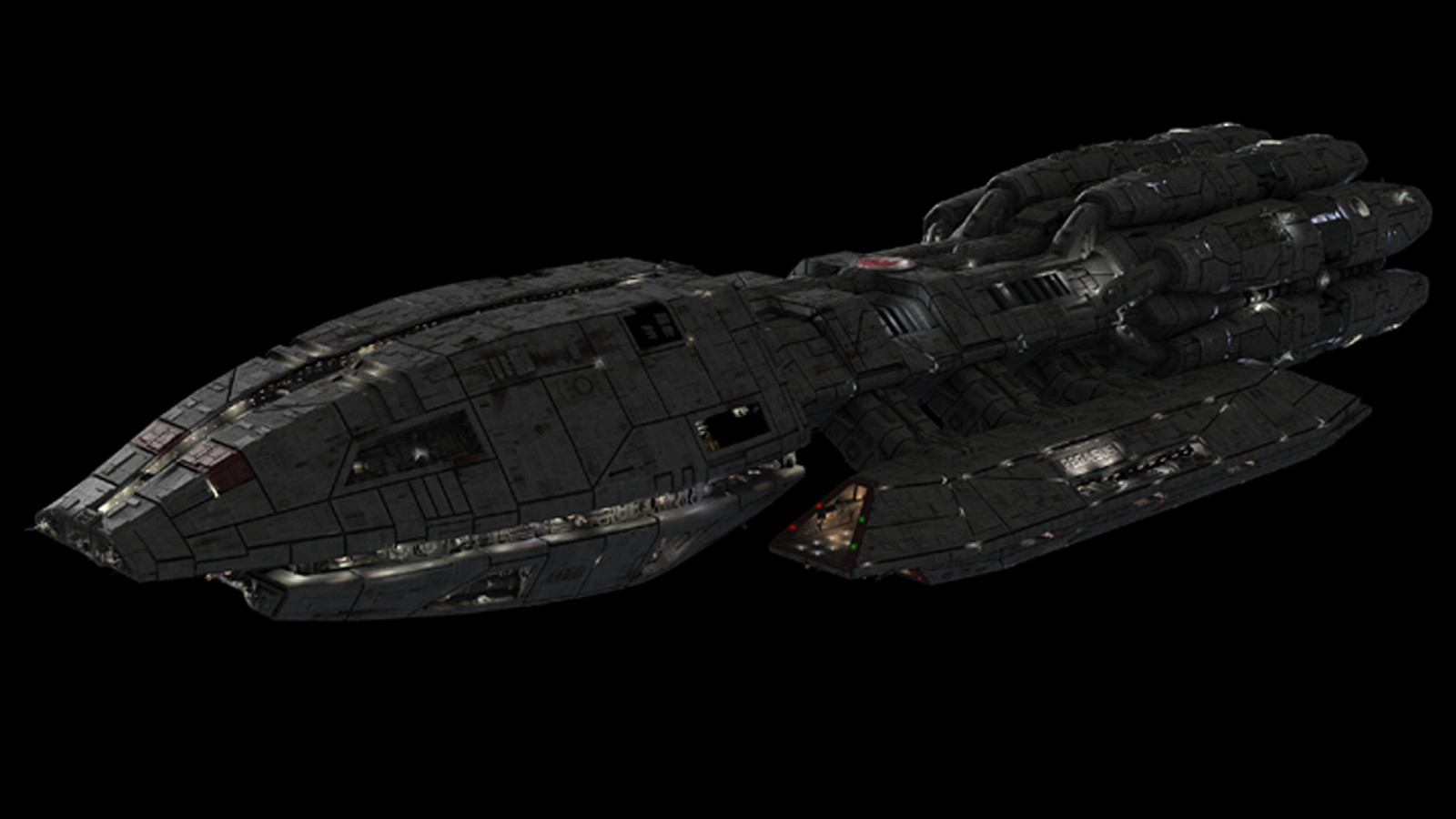
Another installment from the BSG universe, here we have the heavy hitter of the Cylon fleet, the dual purpose attack and transport craft, otherwise known as “the turkey”. Capable of atmospheric entry, space flight and FTL travel, the Heavy Raider is capable of attacking, transporting troops and conducting boarding operations.

Unlike the standard Raider, the heavy can either fly itself on autopilot or be piloted by actual an Centurion. However, its automated functions do not appear to be the result of a sentient nervous system. In terms of armaments and capacity, the heavy has six cannons mounted under its cockpit and its bay is capable of holding up to ten Centurions.

The Heavy Raider made its first appearance in season one (“Scattered”) when one crashed into the starboard flight pod. On Caprica, Sharon Valerii (Boomer) commandeers one to provide fire support to the resistance and save Starbuck as she escaped from a Cylon medical facility (“The Farm”). The Heavy Raider would go on to make several more appearances in the series, particularly whenever assault missions or heavy raids were concerned.

Quasar Fire-class Cruiser:
Once more onto the Star Wars universe, my friends! But this time, its into the expanded universe with a ship that is somewhat obscure by most standards. Known as the Quasar Fire-class cruiser, or Alliance Escort Carrier, this ship made its first appearance in the Thrawn Trilogy during the Battle of Bilbringi then again in the novel The Truce At Bakura.

Designed by the Sullustans as a cargo transport, many of these vessels were given to the Alliance and converted for combat. This consisted of stripping down the cargo bays and turning into hangars, and mounting defensive turrets at the front and rear.

Thought lightly armored, armed, and shielded, the Quasar’s small size and versatility make it a ship of choice for small fleets and minor attack forces. It’s six squadrons of fighters also give it an effective defensive screen, making it all the more suitable as a small fleet command ship.

The Leviathan:
Did I say once more, I meant twice… maybe more! And this one goes way back, to roughly 4000 years before events in the original movies. Officially known as an Interdictor-class cruiser, this vessel was the mainstay of the Republican navy during the time of the Mandalarion Wars and was featured heavily in Star Wars: Knights of the Old Republic.

During the outbreak of the Sith War which immediately followed, the Leviathan served as Darth Revan’s flagship. After he was captured by the Jedi Order, ownership of this vessel changed to Darth Malak. The ship was responsible for obliterating the surface of Taris and was later the site where Darth Revan, now working for the Jedi Order, confronted Darth Malak for the first time since his defection.

Measuring 600 meters in length, the ship carries an arsenal of 20 quad laser cannons, 4 turbolasers, 2 ion cannons, and four squadrons of fighters. Although somewhat mild by modern Star Wars standards, she was designed to be a forerunner to the modern Star Destroyer design.

Negh’var-class Cruiser:
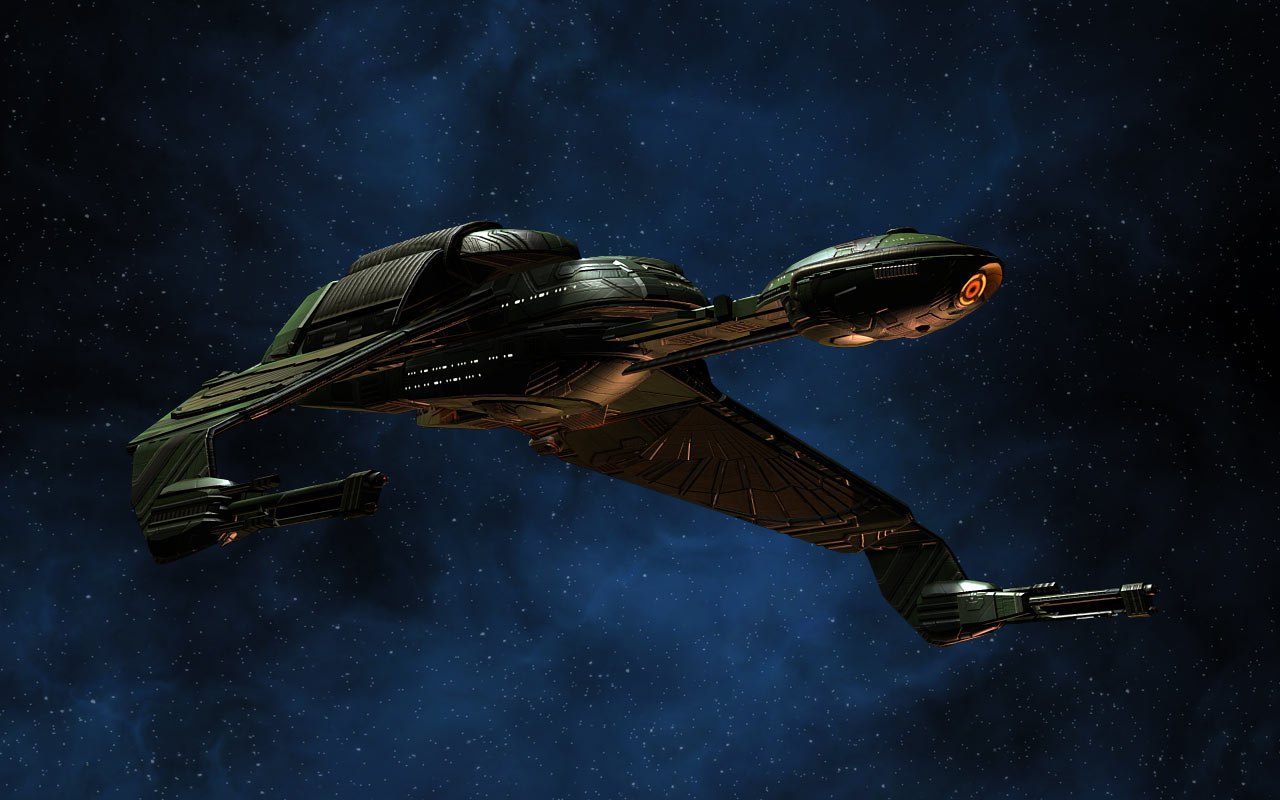
Despite their brawling, yelling and terrible table manners, you gotta admit; the Klingons make a fine looking ship! And this is especially true of the Negh’var-class warship, the heaviest of the heavies in the Klingon armada, serving as the command ship on many different occasions (and in multiple universes).

Ships of this kind made their first appearance in the series finale of Star Trek: TNG when two attacked the USS Pasteur. Another appeared in DS9 when a changling posing as General Martok led the Klingon fleet against the Cardassian Union, and again against Deep Space 9 when the Federation chose to oppose the invasion. They also went on to play an important role in the Dominion War alongside Federation and Romulan warships.

In addition to the standard cloaking device, the Negh’var carries an impressive array of armaments, including two massive disruptor pods mounted underneath the ship’s wings. It also carries multiple photon torpedo launchers, and several smaller emitters mounted across the ship. She is also capable of standing toe to toe with most other ships in the Alpha Quadrant in terms of velocity, making it up to speeds of Warp 9.

Ornithopter:
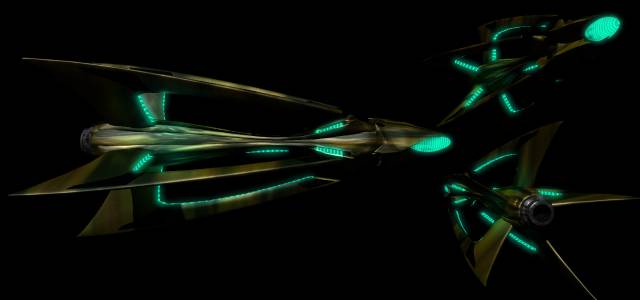
Not long ago, I was lamented the fact that I kept forgetting to mention anything from the Dune universe. Now I can’t seem to do a single post without including a Dune ship! This time, its the ornithopter, the curious cool ship that’s perplexed readers and conceptual artists for some time.

The most common vessel in the Imperium, the ornithopter (or ‘thopter for short) was an extremely versatile vessel that served primarily as a cargo vessel and transport. In addition, they often served in a military capacity, being fitted with lasguns, bombs and missiles. This was particulalry the case during Paul Muad’ib’s uprising, when House Atreides ‘thopters were fitted for the assault on Arrakeen and the Imperial Palace.

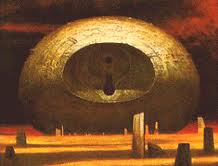
According to numerous descriptions taken from the expanded Dune universe, the thopter was primarily powered by jet propulsion, but relied on a set of beating wings to maintain altitude and maneuver. The concept has gone through several renditions over the years, due to the many attempts to adapt Dune to the screen. In David Lynch’s 1984 movie adaptation, ‘thopters appeared as small, box-like crat with swept wings that retracted and deployed from the fuselage.

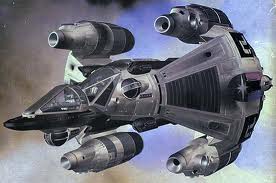
In the 2000 miniseries, they were pictured as vertical take off and landing craft with fans mounted in pivoting wings. The featured picture (shown above left) is taken from The Road to Dune and is an artists concept of what a ‘thopter would look like. Here, we see beating wings which deploy for takeoff and retract upon landing.

USNC In Amber Clad:
Feels like its been awhile since I included anything from the Halo universe. And so here’s the Reunion, a Vladivostok-class guided missile frigate. Though somewhat old and outclassed by modern Covenant standards, several frigates played a crucial role in the Great War against Covenant forces. One such vessel was the In Amber Clad.

Armed with 12 Point Defense Guns, 40 missile pods, 5 twin rail gun turrets, a magnetic accelerator cannon, a compliment of Shiva nuclear missiles and a full compliment of Marines, dropships and escort fighters, the In Amber Clad was considered the mainstay of the old Earth fleet. Capable of atmospheric entry and landing, this ship did not need to rely on drop pods or shuttles, and could land an entire Marine force by itself.

During the Covenant War, these frigates were replaced by the larger and more heavily armed Halcyon-class cruisers. However, the In Amber Clad managed to score a significant victory over the Covenant during the Battle of Installation 05. During the course of the battle, it served as the flagship and won the day when it crashed into the Covenant ship High Charity.

VF-1 Veritech:
As requested, I’ve finally found an example from the Robotech universe! And to be honest, I wondered how long it would take. Though I’m not too familiar with this franchise, the RPG is something I remember fondly from my childhood, and some of the designs still percolate in my consciousness.

One of which is this, the VF-1 Vertiech, also known as the “Valkyrie”. This battleoid, which was adapted from alien technology (known as Protoculture),was originally designed for hand-to-hand combat with aliens which were up to 15 meters in height, the Veritech and subsequent breeds of mechas became the new face of warfare.

Mechas can function in both the fighter and mech role. Capable of flying through space, atmospheres and fighting on land, the Veritech was one of the most versatile and maneuverable mechas in the known universe. With a flight speed of Mach 3 (in atmosphere), and a top speed of 100 km/h running, she is as fast as any land vehicle or aerospace vessel. In addition, the standard Veritech carries two high-powered lasers, head mounted laser cannons, guided missiles, a rotary cannon, and is even capable of engaging in hand to hand combat.

YT-2400 Corellian Freighter:
To finish, I’m in the mood for something Corellian! And so it’s back to the Star Wars universe for this one. Much like its predecessor, the YT-1300 (a.k.a. the Millennium Falcon), the 2400 was a class of light freighter that was fast, tough and endlessly modifiable. So like the Falcon, it was a favorite amongst smugglers, merchants and privateers.

Smaller and lighter than the 1300 series, the 2400 boasted only one servo-turret for defense in addition to its shield array and armor plating. However, this could easily be remedied with the addition of extra guns and missile launchers. And its ample hull space and engine power, the 2400’s could easily accommodate additional mounts and the added weight.

One such ship which acheived notoriety during the Galactic Civil War was the Outrider, the ship of famed smuggler Dash Rendar. This ship, like most other 2400’s, was heavily modified to accommodate additional systems and weapons. Clearly, when the Corellian shipyard designated this vessel as freight transport, it was a nod and a wink!

Thank you all and good hunting! See you in next time in volume 9!

Cool Ships (volume VII)

Welcome to volume 7. Nuff chit chat, let’s get started!
The Blackbird:
Starting this list off right is the stealth ship from the updated Galactica universe. Christened the Laura, in honor of President Roslyn, this ship was the brainchild of engineer Galen Tyrol and his deck hands, who decided to build a new fighter from scratch to make up for their losses. Build for speed and skinned with carbon fiber instead of the usual metal, this ship proved to be invisible to both Colonial and Cylon tracking equipment, hence its designation as a stealth ship.

On her maiden voyage, Starbuck flew the Blackbird on an illegal reconnaissance mission to take pictures of the Cylon Resurrection ship that had been pursuing Galactica. The operation was a complete success, with Admiral Cain – the Pegasus’ CO – going as far to say that: “she flew right up their tailpipe and they didn’t even notice”.

As a result of the technical data obtained from this mission, a joint attack was planned between the Galactica and Pegasus to take the RS down. The Blackbird would go on to play a crucial role in this attack, using its stealth abilities to fly within a few meters of the RS and take out its FTL drive with a well-placed missile. Unfortunately, the Blackbird would suffer a fatal collision after performing this duty, and Captain Lee Adama, its pilot for the op, was almost killed.

Corellian Corvette:
Another mainstay of both the Rebel and Imperial fleets, this ship made its debut in the opening scene from Star Wars: A New Hope and has been with the franchise ever since. Otherwise known as a “Blockade Runner”, the CR90 corvette embodies the spirit of Corellian ship designs, boasting speed and versatility over size and raw firepower.

Because of its adaptability, another Corellian trademark, the CR90 could serve in a variety of roles. These ran the gambit from such mundane duties as freight hauling, to more dangerous assignments like raids and providing fighter escort. In some cases, they could even take on such high-profile missions as diplomatic envoys, carrying public officials to and from their assignments.

Because of these qualities, the CR90 had a long history of service in the Galaxy, serving in the navies of the Old Republic, the Galactic Empire, the Rebel Alliance, and the New Republic. Even after it was phased out of service, it remained a favorite among smugglers, pirates and smaller navies for some time.

Harbor Ship of Bentus:
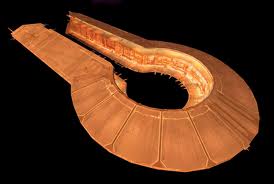
Here is another feature from the Homeworld universe, the Harbor Ship of the alien race known as the Bentusi. Known for their focus on trade and supplying less advanced races with “short-jump” technology (i.e. FTL), the Bentusi soon found themselves caught in the middle of a series of interstellar conflicts between worlds.

As a result, the Harbor Ship was created, a mothership for the Bentusi fleet that was capable of housing, repairing and deploying smaller vessels. Thought not armed in any official capacity, it is the bulwark of the Bentusi armada and can be found wherever large-scale fleet deployments take place.

From what I can tell, this design was inspired by what historians believe the harbor of Carthage looked like. Much like the Harbor Ship, it was based on a sort of teardrop design, with a long entrance passage giving way to a sort of rotunda. This design, in addition to being aesthetically pleasing, also makes a lot of practical sense, ensuring that multiple ships are able to be serviced in a 360 degree arc rather than a series of enclosed bays.

Ixian No-Ship:
Another Dune entry which I failed to acknowledge in previous posts, can you believe it? Well, mistake remedied as of now, here is the No-Ship! Named for the fact that it is capable of shielding itself from prescient vision and other forms of detection, including sight. This all makes the No-Ship the ultimate in stealth technology, and led to its wide adoption by all factions in the Dune universe.

Based on the same technology which powered the No-Chamber, a device which the Ixians used to shield their inventions from Leto II’s prescience, No-Ships would become the mainstay of all fleets after his death. In addition to their stealthy characterisitics, they would also boast another invention that was proposed during the time of Leto II, the Ixian navigation machine. This device, which was capable of limited prescience, was able to guide these ships through foldspace without the need of a Guild navigator.

Much like Guild Heighliners, No-Ships appear to have massive capacities. In Heretics of Dune, the No-Ship which Miles Teg steals from the Honored Matres on Gammu apparently had a Great Hold which measured one kilometer in length. This hold was later used to transport an adult sandworms and several tons of its native sand off of Rakis before the HM’s destroyed it. In Chapterhouse and subsequent books, No-Ships served as the mainstay of the Bene Gesserit fleet as well as with all other factions.

The Pegasus:
Battlestar Galactica gave so many cool ship designs that its hard for me to know where to look next. But today, I thought I’d go for the obvious and cover the ultra-modern and behemoth-sized Pegasus, the other Battlestar to survive the destruction of the Twelve Colonies. As with the original, the Pegasus makes an appearance in the re-imagined series. And like everything else, its appearance received an update, as did the tone and nature of its crew.

Although networked like all other modern Colonial ships, the Pegasus survived the assault through sheer luck, having taken its systems down for a diagnostic before the first wave came. Since that time, it’s CO, Admiral Cain, had been fighting a guerrilla style war with the Cylons, attacking their holdings and raiding small convoys in order to keep them off balance.

A mercury-class battlestar, the Pegasus was far more advanced and boasted significantly greater firepower than the Galactica.  In addition to its 30 defensive turrets, four heavy cannons, multiple missile launchers and compliment of nukes, its massive bays also hold 10 squadrons of Vipers, as well as dozens of Raptors and support craft. It also carries a series of Viper VII production facilities, meaning that it is capable of replenishing its losses.

With all of these attributes, the arrival of the Pegasus was a great boost to the Colonial fleet, adding a great deal of firepower, manufacturing and many of the latest ships to their arsenal. Nicknamed “The Beast”, the destruction of this ship over New Caprica was considered an immeasurable loss, though its sacrifice was hardly in vain.

Primus-class Battlecruiser:
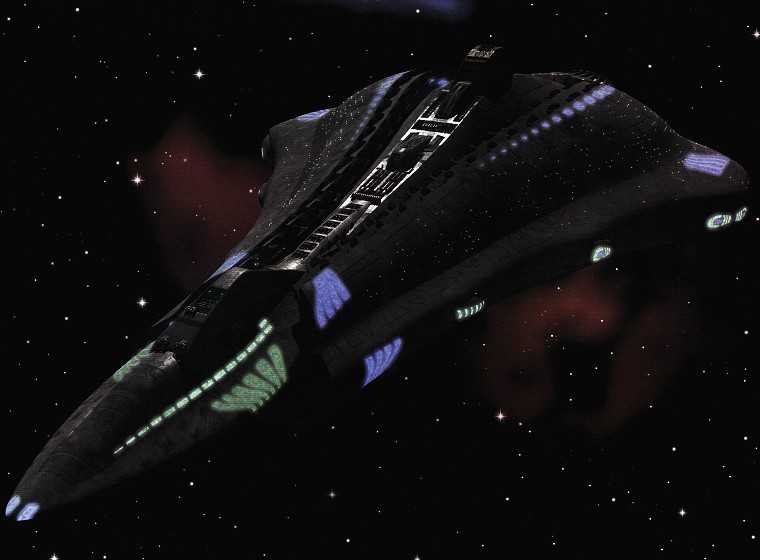
Here we have another installment from the B5 universe, from the Centauri Republic to be specific. Known as the Primus-class Battlecruiser, this baby is renowned for packing firepower and artistic design into one package.

Discernible from its manta ray-like configuration, the Primus remains the mainstay of the Centauri navy even after two centuries of service. Although lightly armored, the ship boasts an impressive array of ion guns, a hyperspace drive, and artificial gravity for its crew.

Making its first appearance in season two of the show (“And Now For a Word”) when televised a standoff occurred outside the station between the Centauri and the Narn. In that battle, the cruiser in question was destroyed, but managed to inflict enough damage that the G’Quon class cruiser also blew up while attempting to make a jump. This demonstrated that the Primus, though an older design, was still capable of standing toe-to-toe with its Narn equivalent.

This encounter was followed up during the season two finale (“The Fall of Night”), when another such cruiser threatened the station when it was discovered that Sheridan was harboring a Narn heavy cruiser. This cruiser managed to inflict serious damage on the station before a squad of Starfuries and the station’s own defenses managed to destroy it.

Primus class cruisers would go on to make several appearances in the course of the show, serving throughout the Narn-Centauri war and even making an appearance during Sheridan’s war to liberate Earth. During the Alliance-Centauri war, these cruisers appeared to have been relegated to defensive duty, leaving offensive operations to the newer and lighter Vorchan-class cruisers.

USS Reliant:
Thank you to Victor for suggesting this one. I was wondering if I should go back to the original Star Trek for ideas, and this was just the push I needed to include some. And given that this ship made its appearance in Wrath of Khan, arguably the best of the bunch, I figured it would be the perfect candidate.

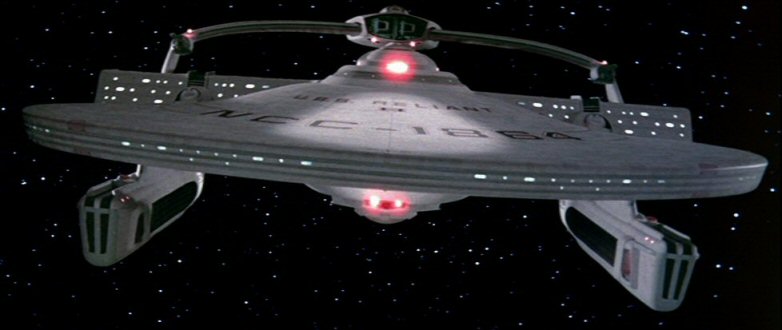
A Miranda-class starship, the Reliant possessed capabilities comparable to that of the USS Enterprise. She is best known for being the ship that was charged with investigating planets for the Genesis Project and then being commandeered by Khan Noonien Singh, a warlord from Earth’s Eugenics Wars who had been marooned on the planet for many years.

After commandeering the ship with his people, Khan used the Reliant to seize Genesis and attack the USS Enterprise. During their initial encounter, Khan was able to use surprise to disable and inflict considerable damage. He was only defeated when Spock, using the ship’s prefix code, was able to bring the Reliant’s shields down long enough for the Enterprise to strike back and take out its weapons and warp drive.

During their second confrontation, Kirk was able to lure Khan into the nearby Nebula where neither ship had the tactical advantage. There, the Enterprise was able to outmaneuver the Reliant and crippled her with a series of torpedoes and well placed phaser shots. Rather than face capture, Khan chose to initiate the Genesis’ self destruct sequence and nearly destroyed both ships in the process. The Enterprise narrowly escaped, thanks to Spock’s decision to sacrifice himself to bring the warp engines back on line.

Viscount-class Star Defender:
Last on the list is an entry which I’m personally impressed with. Known as a Star Defender, this class of Mon Calamari heavy cruiser comes from the Star Wars universe, and reminds us that not only the Empire was capable of creating some badass ships!

Commissioned during the time of the New Republic at the behest of Admiral Ackbar, the Star Defender was the Alliance’s answer to the Super Star Destroyer and other classes of Imperial terror weapons. Measuring 17 km in length and boasting over 5000 weapons turrets, this ship was more than a match for the Executor, Eclipse and any other vessel of similar size.

Like all Mon Calamari cruisers, this ship was studded with hangars and launch bays and could carry fourteen fighter squadrons, dozens of troops transports and any number of shuttles and support craft. It can also house over 12,000 troops and carries a standard crew of about 70,000. Though production of these vessels stalled due to the diminishing threat posed by the Empire after the Battle of Endor, the Thrawn crisis and the threat posed by the resurrected Emperor and his Eclipse dreadnoughts provided the final push.

Several versions of the Viscount class were commissioned for service over the years, including the Mon Remonda, pictured below.

Okay, that’s seven down. Do I really need to do an eighth? Ha! Just kidding, of course I do. Perhaps I’ll end this series at ten, or maybe it will become one of those things that slows down but never really goes away. As long as people keep suggesting things and I keep having ideas of my own, there’s no real end in sight! See ya next time 😀

Cool Ships (volume VI)

Back yet again with a sixth installment in the Cool Ships series. Like last time, I took this opportunity to tackle some overlooked examples, and some new ones as well. In addition… You know what? Screw the introductions and final thoughts, let’s just get into this!

Bird of Prey:
There’s nothing like a classic, and when it comes to the Star Trek franchise, few ships are more classic than the Klingon Bird of Prey. The perfect balance of form, speed, versatility, and firepower, the Bird of Prey is a ship with a very long history of service in the Klingon Empire.

This ship made its first appearance in Star Trek III: The Search for Spock when a renegade Klingon captain, seeking the secrets of the Genesis Planet, used one to attack the Enterprise. Kirk and his crew would later commandeer this ship and use it in the following movie to travel back in time and bring two whales to the future (The Voyage Home).

Bird of Preys would also appear in the fifth and six movie installments, in the latter case as a prototype raider that could fire while cloaked (something previously unheard of). Remaining in service well into the 24th century, Bird of Preys appeared repeatedly in Stark Trek TNG, and DS9,  most notably as part of the Klingon war effort against the Dominion.

Boasting two multi-directional disruptors and single photon torpedo launcher located in the nose. It is also one of the first Klingon vessels to boast a cloaking device, something unavailable on heavier cruisers. Because of their stealthy abilities and versatility, they have played a variety of roles, including reconnaissance, escort, raids and as support for larger vessels.

Cylon Raider:
Boy, they’ve come along way baby! During the original series, Cylon raiders were saucer-shaped, had energy weapons and were crewed by up to three Centurions. In the re-imagined series, this changed significantly, though the Raider still retained its basic roll as a light assault craft.

In addition to getting a facelift, the newer generation of raiders relied on kinetic weapons, missiles and even tactical nukes. Its crew was replaced by an organic brain which was merged with the ship’s machinery, and which relied on an “eye” located in the fore of the central module to communicate and conduct navigation. Much like Raptors, Raiders are capable of making short-range FTL jumps, and therefore do not need to be deployed from a Basestar in the field.

Much of what is known about the modern raider came from Starbuck’s own experiences with a downed vessel. After making her way into the interior, she discovered a system of organs which were apparently fed by an internal supply of nitrogen and oxygen. After removing the brain, she was able to fly the ship using the system of organic levers and controls and rendezvous with the Galactica. Starbuck was meant to use this same vessel as a Trojan horse, but instead used it to fly back to Caprica (“You Can’t Go Home Again”)

Though self-aware, the average Cylon ship is not as intelligent or independent as a humanoid Cylon. However, like the humanoids, they are capable of resurrection and have their consciousness and memories recycled into a new body whenever they are shot down. In time, their accumulated knowledge and experience can make them even more formidable as opponents, as was demonstrated by the vessel known as “Scar” in the season two episode of the same name.

The Ebon Hawk:
Looking beyond the original movies, there are plenty of cool ships to be found in the expanded Star Wars universe. One example is the Ebon Hawk, a Corellian freighter which comes from the Knights Of The Old Republic game.

Much like its modern cousin, the Millennium Falcon, the Ebon Hawk is every smugglers wet dream. The perfect marriage of speed, maneuverability, and survivability, it is perfect for running blockades, evading capture, and saving the galaxy! It also played a central role in the Sith War and the events immediately following it.

Originally belonging to Davik, a ruthless criminal warlord belonging to the Exchange, the ship became the property of the Jedi Order after it was confiscated by Revan. Using this vessel to escape the Sith blockade of Taris, Revan and his comrades used this vessel to travel the Galaxy, investigating the Sith’s plans for domination and systematically unraveling them.

After the end of the Sith War, Revan took this ship to the Rim to further invesigate the true source of the Sith threat. The ship returned to the universe a few years later, carrying an former Jedi master named Kreia who had since become a Sith master, and was exiled by her peers. Once again, the ship would become the property of a Jedi warrior – Meetra Surik – and several fellow-travellers who would used it to retrace the path of Revan and eliminate the Sith Triumvirate, the last of the Sith Lords.

The Event Horizon:
A bit of a break for the usual lineup of cool ships here, the Event Horizon was a  prototype vessel that was featured in the movie of the same name. Built in the near future by Earth scientists to be the first that would be capable of making FTL jumps. In the course of making the jump from the edge of the Solar System to Proxima Centauri, the ship disappeared. Seven years, it rematerialized, sending out a general distress signal.

Upon investigating the derelict, the crew of the rescue ship Lewis and Clarke found a ship of horrors. In addition to having a long spine that was inlaid with jagged metal spikes, the experimental gravity drive looked like some kind of medieval torture device. Seriously, the thing was basically a studded metal ball with spiky rotating appendages.

Oh, and did I mention the ship was haunted? Yeah, apparently generating a quantum singularity and passing through it leads directly to Hell. So in essence, the ship brought a whole lot of Hell back with it when it came back to our universe, and these dark forces began making the rescue teams go made just as it had the original crew. Kinda stupid really…

But ultimately, the design and concept of the ship were pretty cool. And even if you forget about the obviously macabre nature of the engine room, it was pretty neat to behold.

Mothership (Homeworld):
The flagship of the Kushan fleet, the Mothership was the centerpiece of every mission in the Homeworld universe. Originally intended as a colony vessel, its role expanded during the Homeworld War to include that of a command ship and mobile shipyard. This was due to the many hostile races encountered after the Kushan fleet left Kharak to find Earth.

Although not an effective combat platform, the Mothership’s hyperdrive make it FTL capable and therefore capable of deep-space travel. In addition to its internal factories, it also has the capacity to hold 600,000 cryogenically frozen colonists as well as its regular crew of 50,000.

Although not heavily armed, the Mothership contained the means to construct many different classes of support vessels. These included scouts, resource harvesters, fighter craft, destroyers and even cruisers. As such, it had a solid defense screen during the time of the Exodus. Periodically stopping to replenish its resources from asteroid belts, the Mothership was also able to replenish its losses.

USNC Pillar of Autumn:
And here we have another franchise making its first appearance in this series! Coming from the Halo universe, the Pillar of Autumn was featured in the original Halo. A Halcyon-class light cruiser, this class of ship is one of the older ships in service with the UNSC Navy.

During the Covenant assault on Reach, the Autumn fled to the Soell system where it discovered and then crash landed on the Halo ring known as Installation 04. There, after engaging both Covenant and Flood forces, Master Chief John 117 detonating it in order to destroy the installation before it could fire.

Measuring 1.17 km in length and armed with a combination of kinetic guns, nuclear missiles and a magnetic accelerator cannon, the Autumn is powered by a fusion core and able to make FTL (aka. slipspace) jumps through space. In addition, it also carries a squadron of fighters, 15 Pelican dropships, 8 Scorpion tanks, 40 Warthogs, and a full compliment of Marines and Orbital Drop Shock Troops. The ship is run by a central AI – in the case of the Autumn, Cortana – and has a crew of between 300 and 400 personnel.

The Scimitar:
Though I didn’t care much for the movie that featured it, The Scimitar was still a pretty freaking cool ship! Huge, powerful, scary-looking and packing a doomsday device and a truly impenetrable cloak, this baby pretty much had it all. So it begs the question… how the hell did a bunch of slaves built this thing anyway?

Of Reman origin, this dreadnought was built under the supervision of the Picard clone Shinzon and figured prominently in his designs to take over the Romulan Empire and destroy the Federation. This he planned to do by attacking Earth, a plot which was narrowly averted by the crew of USS Enterprise E.

Built for total war, the Scimitar was given every technological advantage the Romulan Empire had at its disposal. This included 52 disruptor banks, 27 torpedo launchers, several squadrons of Scorpion attack fighters, and of course, its thalaron radiation weapon of mass destruction. Requiring several minutes to power up, this weapon was capable of sterilizing an entire planet. Deployment of the weapon involved unfolding its wings, a move which only made it look scarier!

The Scimitar was also protected by two shield arrays, which combined with its weaponry gave it the edge in every combat situation. And as already noted, its cloak was perfect, emitting no tachyons or anti-protons as other cloaking devices were notorious for. As a result, the Scimitar was truly impossible to track while under cloak.

Slave I:
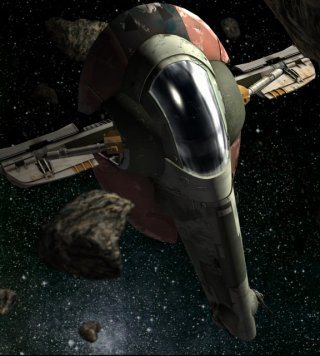
Anyone familiar with the Star Wars universe knows who Boba Fett is. And chances are, all of those people are familiar with his ship, the Slave I. A modified Firespray-31-class attack and patrol craft, the Slave I was originally the property of famed bounty hunter Jango Fett. After his death at the hands of Mace Windu, it passed to his son, Boba Fett.

Small, sleek and stealthy, the ship was also augmented with several advanced weapons systems. These included two rapid fire blaster cannons, two missile launchers, and a rear-mounted minelayer compartment which was capable of deploying seismic charges. The ship also carried a compliment of dummy torpedoes which could tag ships with tracking beacons.

During the events of Empire, Fett used this ship to track Han and the Falcon back to Bespin and then take his carbonite-frozen body back to Jabba’s Palace. After escaping from the Rancour Pit on Tatooine, Fett upgraded to a new ship, which he named Slave II in honor of his father’s ship.

Reaver Ship:
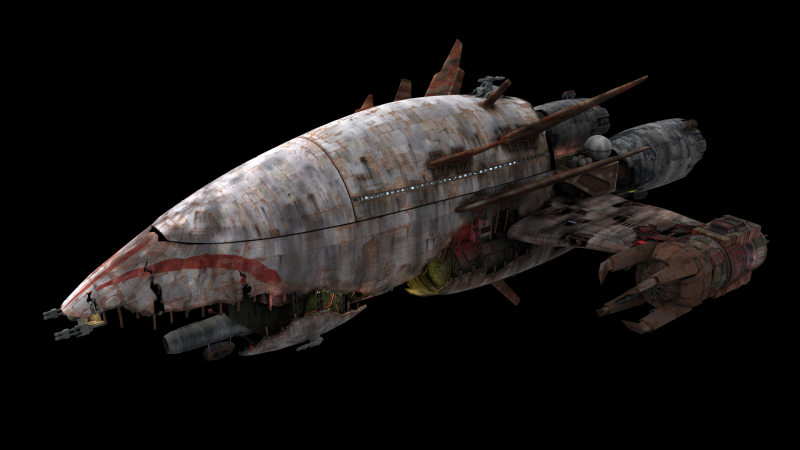
As a fitting final entry, I am returning to the Firefly universe once more. And this time, it’s the Reaver ship that I’ve decided to cover. Though every Reaver ship is of unique design, the one which was featured in the pilot episode (featured at right) is my personal favorite.

Like all Reaver ships, this vessel is adorned with red paint and what I can only assume is the blood of innocent victims. It’s hull and engine compartments have also been modified to look claw-like and threatening, it’s front section has been mangled from ramming into other ships, and its engine functions without radiation containment.

Above all, its weapons have been modified to incorporate the unique Reaver combination of medieval weaponry and snares. These can consist of EMP’s, grappling lines, nets, and launchers that fire shurikens, buzz saw blades, spears and some kinetic weapons. Ultimately, the purpose of Reaver weapons are to disable and capture enemy ships rather than destroy them. This gives the Reaver crews the pleasure of meeting their victims face to face and killing them with sharpened implements.

Yes, much like the Reavers themselves, their ships are scary and look like they got a facelift from a belt sander. But such appearances, as well as their lack of containment, let merchant ships and smugglers know they are coming. When that happens, crews can either power down and hope they’ll go unnoticed or run like all hell. Otherwise, they’re only option is to make peace with whatever deity they pray to and eat a bullet, cuz’ the alternative aint pretty!

Thank you all, this has been volume six! Stay tuned for volume seven, coming soon!

Cool Ships (volume V)

Back again! More ships, more designs, more franchises too. Like I said last time, there’s just no limit when you get right down to it. And in the course of doing my homework on cool sci-fi concepts, I’ve found that there are hundreds of franchises out there that I’ve never even heard of before. Of those I have heard of, I always seem to miss a few obvious candidates. That’s the beauty of ongoing segments though. Here are the latest, with some suggestions thrown in too 😉

Colonial Raptor:
Another late entry from the Battlestar Galactica universe, the updated version. Designed for reconnaissance, transport, atmospheric and space flight, and capable of making short range FTL jumps, the Raptor is the workhorse of the Colonial fleet and one of its most versatile vessels. Ordinarily, the Raptor is operated by a crew of two, one pilot and one Electronic Countermeasures Officer. Given it’s size and shape, it cannot launch from a launch tube and must take off and land from a Battlestar’s forward launch bay.

Having served with the Colonial fleet for over 40 years, making its debut in the first Cylon War, the versatility and reliability of this craft have prevented it from being phased out by newer generations of Colonial ships. During the second Cylon War, Raptors were used regularly in order to dust off survivors from Caprica and other colonies. Relying on a fly-by-wire system, rather than the new defense network systems, it also proved invulnerable to the virus the Cylon’s used to cripple the fleet.

Cygnus:
Now here’s one that people probably won’t remember. In fact, I didn’t recall it either until I did some reading and realized I had seen the movie which featured it – The Black Hole – as a child and quite enjoyed it. Though a little Buck Rogers-y by modern standards, the concept and the movie and this ship still stand the test of time.

Released in 1979 by Walt Disney Pictures, The Black Hole was one of many movies that sought to take advantage of the sci-fi craze that Star Wars had unleashed. The plot centers on a derelict ship, known as the Cygnus, which is run by an android crew and a brilliant (albeit mad) scientist named Doctor Hans Reinhardt.

In addition to looking pretty cool, with its glowing transparent sections and old-school design, the Cygnus is apparently able to withstand the gravitational pull of black hole due to its ability to generate its own gravity well. In addition, its commander, Dr. Reinhardt, theorized that he would be able to fly it through a black hole and see once and for all what lay on the other side… It didn’t take, but still a cool idea!

Guild Heighliner:

Artist’s concept for a Guild Heighliner

Here’s one I couldn’t believe I had forgotten. In fact, I will accept any and all chastisements for my failure to include Dune craft in this series thus far. This can include physical beatings, just stay away from the nads… not quite done with those yet!

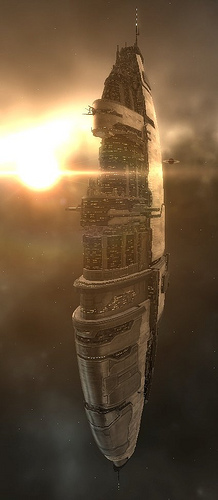
Anyhoo, when it comes to Dune ships, the Heighliner definitely takes the cake! Massive as all hell, this ship was the backbone of all commerce, diplomacy, travel and tourism in the Dune universe. Like all shipping, it was the exclusive property of the Spacing Guild and subject to their many controls, laws and whims.

Boasting Holtzman engines – a FTL drive system that was capable of “folding space” – the ship still required the services of a Guild Navigator. This person, a semi-prescient mutant due to years of living in a spice tank, would see a path through time and space and thus navigate the ship safely to its destination.

According to the original Dune, a single Heighliner was capable of lifting an entire planet’s worth of personnel, goods and supplies from one point in space to the next. As Duke Leto tells Paul in Part I of the story: “A Heighliner is truly big. Its hold will tuck all our frigates and transports into a little corner — we’ll be just a small part of the ship’s manifest.” Later in that same installment, House Harkonnen used a single Heighliner in order to lift an entire army to Arrakis for a surprise assault on the Atreides, and the cost was nothing short of punitive!

Given that the Heighliners are the sole means of commerce in a Empire as massive as that of the Dune universe, its little wonder why Heighliners are so freakishly big. Chartering one aint cheap, and if you do stowe aboard, you are expected to mind your business and wait until you arrive at your destination. Due to their high level of secrecy and sensitivity, no one is even allowed to venture beyond their own boarding craft when on a Heighlinger, and virtually no one outside of the Guild has ever seen a Guild navigator. Considered to be neutral territory by Imperial law, any and all acts of violence aboard Guild Heighliners carry stiff penalties.

Gunstar:
Ah, another childhood classic! Taken from the film The Last Starfighter, the Gunstar was the first line of defense of the Star League against the evil Xur and the Ko-Dan Armada. Sounds pretty cheesy, huh? Well, it was the eighties! And this was yet another Disney franchise that seemed to be riding in the Star Wars wake. Still, this movie was one the first to make extensive use of CGI (Tron being the only other) and had a none-too-bad storyline too boot!

Boasting multiple guns, missiles and a “Death Blossom” trick that is nothing short of devastating, the gun star is a rather unique and innovative design. Apparently, it was meant to be a class of ship that would never go out of style, merging functionality with lethality and being able to take on any class of enemy ship.

Every Gunstar is a two seater, with the starfighter (gunner) in front, and the navigator in the rear. While the navigator flies the ship, the gunner directs fire from a swivel chair, which gives them control over the ships moveable weapons batteries. Although it has no shielding to speak of, the hull is protected by armor plating which can withstand multiple direct hits. When cornered, it is also capable of unleashing the “Death Blossom” where it will begin to rotate at a furious speed and unleash gun and missile fire in all directions. This however, is considered a weapon of last resort, since it will drain the ship’s power supply completely.

Heart of Gold:
Now here’s an interesting, and highly improbably, entry! Coming to us straight out of The Hitchhikers Guide To The Galaxy, the SS Heart of Gold is rather unique in that it merged scientific theory with Douglas Adam’s notoriously quirky sense of humor.

Being a prototype vessel, it was the first ship ever in the universe to boast the “Infinite Probability Drive”. This drive system is essentially a Faster-Than-Light engine which is actually based in quantum theory. Essentially, the theory states that a subatomic particle is most likely to be in a particular place at a particular time, but that there is also a small probability of it being found very far from its point of origin. Thus, a body could travel from place to place without passing through the intervening space as long as it had sufficient control of probability.

Pretty cool huh? In the original radio series, the shape of the vessel was not specified. In the novelization of the series, it was described as a “sleek white running shoe”. For the sake of the movie, artists went with a tea-cup design, and added some brake lights for good measure. Originally built as part of a secret government project on the planet of Damogran, the ship was stolen by President Zaphod Beeblebrox during its launching ceremony and became the means through which the main characters began exploring the universe.

Minbari Cruiser:
Back once more to the B5 universe for another fine example of kick-ass shippery! Known officially as the Sharlin-class Warcruiser, this Minbari vessel is the mainstay of the Minbari fleet in the original series. Big, bold, stealthy, and packing a sh*tload of firepower, this vessel is veritable nightmare for all but the most powerful of races. Even Shadow vessels mind their business when some of these are in the field.

Making its appearance in season one of the show (episode 17: “Legacies”) and went on to become a regular feature. When Sheridan assumed command of the station in season two, the renegade cruiser Trigati was destroyed in the course of a standoff. After B5 broke away from Earth in season 3, a force of Sharlin cruisers arrived just in time to prevent the station from being captured by forces loyal to Clarke. Many went on to serve alongside Sherian and Delenn in the Shadow War and even went on to help liberate Earth from Clarke’s forces.

According to Delenn, Minbari ships do not rely on conventional engines like other ships. Instead, a system of gravitational and electromagnetic fields for propulsion, which have the added benefit of supplying artificial gravity. This frees up their ships from the needs of rotating sections and makes for a more effective combat platform. Sharlin cruisers also boast a significant amount of weaponry, which consists mainly of heavy beam cannons, but also includes missile launchers, neutron guns, and electro-pulse cannons.

During the Earth-Mimbari War, Earth Forces were completely outmatched by this class of Cruiser. In addition to being highly resistant to Earth force weapons, the Sharlin cruiser also boasted a stealth field which prevented Earth ships from being able to lock onto it. In the course of the war, only one human Captain ever survived combat with one, Captain John Sheridan. Relying on a phony distress signal and several well placed tactical nukes, Sheridan was able to lure the Black Star, the Minbari flagship, into a trap and destroy it. Though the Minbari considered it a cheap victory, Sheridan’s fame and renown quickly spread throughout the fleet.

During the battle of Sector 83, the Sharlin-class Cruiser proved an effective weapon against the Shadows. Although somewhat slow and providing a large target for Shadows, their powerful beam weapons were capable of destroying a Shadow ship unassisted. When protected by smaller, faster craft like the White Star, it proves to be a very effective combat platform.

Nebula-B Escort Frigate:
More Star Wars! God, I think I’m OD’ing on this franchise. But the sign says “Cool Ships” and this one is no exception. Known as the Nebula-class frigate, this ship is probably best remembered as the “Medical Frigate” which appeared in Empire and Jedi. 

Measuring some 300 meters long and designed to defend Imperial convoys from Rebel attacks, this ship was more famously used by the Rebellion as a hospital ship. During heavy fighting, Nebula-B’s would be on hand to pick up pilots that had ejected and provide them with life-saving assistance, ensuring that Rebel pilots could live to fight another day.

The most famous appearance of a Medical Frigate was during the Battle of Endor, when several medical frigates were on hand to service Rebel pilots who had been shot down by superior Imperial forces. It was also on board the Medical Frigate Redemption that Luke Skywalker received his prosthetic hand after losing it in a lightsaber duel to Vader.

In addition to providing escort and as a hospital ship, the Nebula-B was proved useful as a deep space scout and reconnaissance ship, due to its sophisticated sensors. During raiding missions or less intense combat operations, many also served as command ships given their speed and defensive capabilities. One weakness of the Nebula-B however was its thin fusilage. Though this made the ship an inexpensive vessel by most standards, it also made it a poor choice for heavy combat. Hence why it was relegated to support, scouting and medical roles.

The Nostromo:
You know, I really thought I covered this one already. I already mentioned how the Alliance Cruisers from Firefly appeared to be inspired by this baby. And it just makes sense that if you’re going to cover ships from the sequel, (the USS Sulaco and the Cheyenne Dropship) that you cover the original first. But alas, the Nostromo was somehow passed over by me, another act of wanton insensitivity! Beating shall continue until my attitude improves!

Okay, now that we got my punishment out of the way, allow me to pay this ship it’s due homage. The main set for the movie Alien, the USCSS Nostromo was a deep space commercial vessel which belonged to the Weyland-Yutani corp (much like everything else in this universe!).

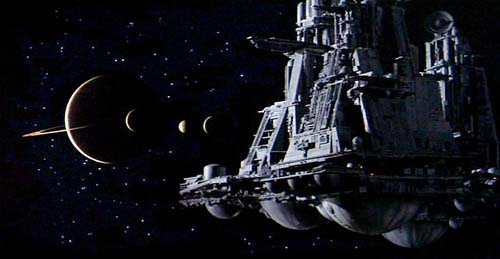
Overall, the Nostromo was a curious design which made perfect sense from a space-faring point of view. Doing away with such things as streamlining and aerodynamic sleekness, the ship was well suited to deep-space travel and hailing. In addition, it was also taller than it was long, another common aspect to spaceships which are confined to the whole sea ship/airplane paradigm.

It’s massive refinery, which it towed behind, would process its manifest of mined ore while it made its way back to Earth from wherever it had been deployed. Thus, in addition to providing transport and amenities for a crew of miners and spacers, it was also a mobile refining platform that could deliver processed materials to factories rather than just unrefined ore.

While on return from the distant planet of Thedus, the Nostromo was rerouted to LV-426 where it picked up the alien organism known as a xenomorph. After all but one of the crew were killed the by creature, Ellen Ripley, the ship’s Warrant Officer, set the ship’s to self-destruct and escaped aboard the ship’s life craft with the crew cat, Jones. According to Weyland-Yutani execs, who were some pissed when she returned without her ship, the destruction of this vessel cost them 24 million in adjusted dollars. Damn penny-pinchers!

The Sathanas:
What do you call the most fearsome, intimidating and powerful ship in the universe, without being too obvious, that is? The Sathanas, that’s what! Being the Latin name for Satan, this title is very apt when applied to a massive juggernaut built by a race known as the the Shivans (i.e. Shiva, Hindu god of destruction).

This last entry, much like The Colossus and Deimos from my last list, comes to us from the game Freespace 2. Making its appearance midway through the game, this terrifying vessel was the most powerful space-faring ship ever encountered by the human race or its allies.

Boasting four massive beam cannons which are situated at the end of its claw like appendages, this ship best exemplifies the offensive fighting spirit. Jumping into a field of battle, it is capable of dealing devastating blows on a target head on, keeping its flanks and rear hidden from the enemy.

Above all, it is clear that the Shivan built the Sathanas to act as a terror weapon in addition to a capital ship. One look at its design confirms this, given its clawing appendages and thorny skin. Defeating this ship outright is quite difficult given its reinforced plating and terrible array of weapons. Disabling this ship, through EMP missiles and guns, is not much easier given the incredibly density of its hull and many redundant systems. In the end, the only way to beat it seems to be for lighter craft to take out its “claws” while heavier vessels strike at it from a distance. However, this still proves to be a suicidal mission given the Sathanas’ many missile and defensive batteries.

Ultimately, taking down this ship in the game is much like the real-life campaign to sink the Bismark. This dreadnought, which was the pride and joy of the German navy in WWII, also boasted massive weapons, a heavily armored hull and superior systems. In the end, the Royal Navy brought it down through a combination of luck, persistence, and careful engagements, taking their time to disable it and then closing in to pound it relentlessly! Hmmm. I guess good history makes for good gaming 🙂

Final Thoughts:/strong>
The suggestion box, as always, is still open. Thanks to Goran Zidar for suggesting the Gunstar, I knew I’d have to include it sooner or later and I’m glad someone asked. Anything else? I got another installment on the way, and probably a few more after that. No? Sigh, alright, bring on the beatings! No nads!

Cool Ships (volume IV)

Back with a fourth installment. As usual, I am indebted to people for making suggestions and offering critiques. Funny thing, these lists seem to be getting longer and more diverse the longer this series goes. But I guess that tells you something about the world of sci-fi. No shortage of material, and kind of like fossil hunting in that the deeper you dig, the more fascinating things get.

Ancients City Ship:
You know the old saying “you can never go home”? Well in this case, the Ancients seemed to think that the best away around that was to take it with you. This one goes out to Nicola Higgins. Thanks for the suggestion, you Stargate fangirl!

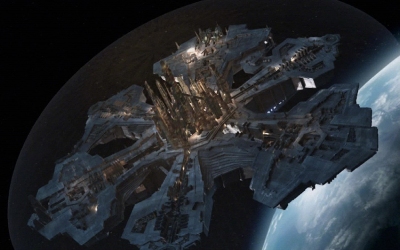
Known as a City Ship, this piece of Ancients technology is in centerpiece of the spinoff series Stargate: Atlantis. A self-contained city that is capable of traveling through space, and comes equipped with a hyper drive, this vessel was designed to transplanting colonies of Ancients on distant worlds throughout the Galaxy. It also heavily armed and shielded, making it a veritable mobile fortress.

Beginning several million years ago, the Ancients began what was known as the “Great Migration”, where they left Earth for the Pegasus Galaxy and other destinations in deep space. One such ship which took part in the migration was the Atlantis, which departed from Antarctica and landed on the world known as Lantea, where it was again discovered by humans in the course of the show.

Measuring roughly the same size as Manhattan island, an average city ship comes equipped with extensive living quarters and amenities that make it suitable for large-scale population for extended periods of time. Though capable of space flight and space combat, it’s environment of choice is terrestrial, preferably on water.

Colonial Viper:
This one kind of seems overdue. But I felt the need to push this one back so I could cover the bigger ships from the Battlestar Galactica franchise first. With them done, I can now pay tribute the fighter-craft of choice for the Twelve Colonies, the Viper! Taken from the original series, the Mark II was your basic space superiority fighter, fast, maneuverable, and boasting two laser guns for defense.

In the updated series, the Mark II was considered a relic from the Human-Cylon War, its systems outdated and its controls antiquated (the laser guns were also replaced by two ballistic weapons and a compliment of missiles). However, it was these very antiquated features that would prove to be the saving grace of the Mark II when the Cylons attacked the Colonies at the beginning of the new series.

The updated Mark VII Viper was the pinnacle of Colonial technology at the time. Boasting updating targeting, controls, all of which were networked with the fleet’s central computer system, the Mark VII was far more sophisticated than its predecessor in every measurable way. However, being a networked fighter made it vulnerable when the Cylons unleashed their crippling virus on the Colonies defense mainframe. Several models remained in operation though, thanks in large part to the Pegasus surviving the initial Cylon assault. Once the two fleets combined their resources, the Colonial fleet had several Mark VII’s at their disposal and even began manufacturing new ones to replace their losses.

The Colossus:
Now here’s a franchise I haven’t covered yet! Fans of Freespace and FS II know that when it comes to cool ships, there was no shortage to come out of this video game series. Classically inspired, well-designed and just plain awesome to behold, the Colossus is definitely top of that list. Big, bad, and boasting enough firepower to take down an enemy armada, the Colossus was appropriately named!

Designed by the Terran-Vasudan Alliance in the wake of the Great War, the Colossus was a prototype super-destroyer that was designed to confront all future incursions by a hostile race. Foremost amongst these was the threat of the Shivans, the species that appeared in the first game, destroyed the Vasudan homeworld and nearly destroyed Earth as well.

Measuring 6 km in length, bristling with weapons and boasting a crew of over 30,000, the Colossus took over 20 years to complete and involved dozens of contractors from both races. In terms of defense, it has over 80 weapon turrets, consisting of cannons, missile launchers, and multiple heavy beam emitters. It also houses 60 fighter and bomber wings and requires a crew of over 30,000. In short, the Colossus wields more firepower and fighter wings than an entire Terran or Vasudan armada.

Deimos-class Corvette:
You know the old saying, “it’s not the size of the dog in the fight but the size of the fight in the dog”? That’s what comes to mind whenever I see small ships that are solidly built and pack a wicked punch. As you might have guessed, that precisely what the GTCv Deimos-class vessel is all about! Also taken from the Freespace universe, this corvette was designed for fighter support and attack purposes, providing some added firepower and punch to light assaults and defensive screens.

As the newest addition to the Terran fleet in FS II, these corvettes were designed to replace the aging Fenris and Leviathan-class cruisers from the Great War. In addition to their small profiles and heavy firepower, their hulls are strengthened with collapsed-core molybdenum sheathing for better protection against beam fire and their Vasudan-designed reactor core provides more energy per ton than any other allied ship class.

In a way, these ships remind me of the USS Defiant. Much like that little ass-kickers from the DS9 universe, she packs a lot of power and toughness into a small frame, proving that you don’t have to be big to bring a big ass-whooping! As you might be able to tell, this is a bit of a vicarious experience for me 😉 Being only 5’8”, I too had to be known for scrappiness whenever height and reach failed me in a sparring match!

Drakh Raider:
Once more onto B5 friends. God, I worry people are going to get so sick of this universe given all the attention I devote to it. But as long as it keeps providing ’em, I’ll feel obliged to honor ’em! This time, it’s the Drakh Raider which I’ve chosen to represent. Small, sleek, fast and powerful, these ships were the first line of assault and defense for the Drakh fleet, providing attack screens and defensive escort to their larger destroyers and carriers.

As Londo remarked in the course of the show, “They’re a legend. The kind you would use to frighten small children at night... They were ruthless, savage, but extremely bright. A very bad combination.” And these ships certainly embodied that. Making their first appearance in the third season (“Lines of Communication”) when it became revealed that the Drakh were manipulating the Mimbari into a civil war, and later in the Call to Arms TV movie when the Drakh began assaulting Earth.

Being quite small and based around a central beam weapon, these ships were either unmanned or had a very small crew. They were also quite effective, as two were able to destroy a White Star during their initial encounter with Delenn and the Alliance fleet. However, being small and light, they were also relatively easy for more sophisticated ships of the Alliance to shoot down, and even a small fleet of them could not stand up to larger vessels like the Excalibur. Still, these puppies could wreak havoc against shipping and military vessels that belonged to the younger races. Once they began conducting raids on League Worlds, all parties were forced to turn to Sheridan and the White Star fleet for help.

Romulan Warbird:
Also known as the D’deridex-class, the Warbird class was one of the largest and most powerful ships in the Romulan Star Empire’s armada and served as the backbone of the Romulan fleet during the latter half of the 24th century. In addition to its impressive array of disruptors and photon torpedo banks, the Warbird also has a cloaking device, the result of military exchanges between the Klingon and Romulan Empires.

After their debut in the first season of TNG (“The Neutral Zone”), the Warbird went on to appear in several engagements with Star Fleet (most notably the Enterprise) and the Dominion. In the spinoff series of D29, they would figure prominently in the Dominion War. Initially, this consisted of providing defense against Jem’Hadar incursions, but eventually went on to take part in most major offensives. These included the battles of Chin’toka and the final assault on Cardassia Prime.

Measuring twice as long as a Galaxy-class starship (such as the Enterprise D) the Warbird is powered by a forced quantum singularity and boasts the latest in Romulan technology. This makes it not only one of the most advanced ships in the Romulan fleet, but the Alpha Quadrant itself!

Rama:
Once again, I find myself looking back and wondering how the hell I forgot this one. You can’t call yourself an Arthur C. Clarke fan and a sci-fi geek without knowing about Rama. Lucky for me, ongoing segments give us chances to correct for our mistakes, which I am doing now.

Taken from Clarke’s famous novel Rendezvous with Rama, this namesake was what can be termed a “generational ship”, meaning a spaceship where successive generations of people are expected to be born and die before it finally reaches its destination. In the course of the story, this massive ship was detected on its way towards Earth. Once scientists and astronomers learned that it was not an asteroid or some other natural phenomena, they became mighty interested mighty fast!

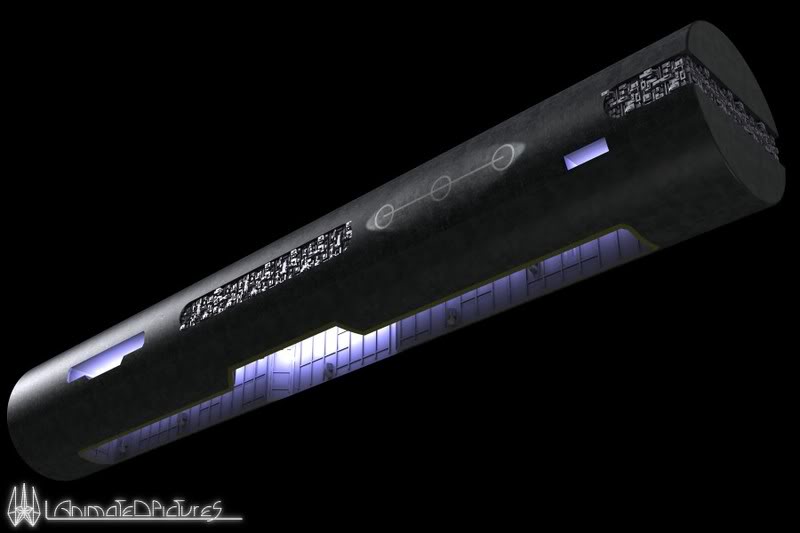
Basically a large cylinder in space, the ship measured 50 km in length, 16 km wide, and rotated in order to provide gravity equal to 0.25 g’s (or a quarter of what we’re used to here on Earth). After boarding it, astronauts from Earth noticed an interior layout that resembled cities, rivers and other common geographical features, but being based on technology and chemical compositions which they could not recognize. The horizontal sections of the ship also housed windows which appeared to be letting in outside light, which in turn was having a thawing effect on the landscape since it was frozen from being in deep space for so long.

In addition, they discovered that their was no crew to speak of, nor any cryogenic tanks that held them in stasis. Evenutally, it was determined that these chemical rivers contained the trace chemicals needed to “manufacture Ramans”, and that as it neared a star, it would take the energy and heat necessary to perform these and other life-restoring functions. In the end, Rama was just passing through, a grave disappointment for Earth people… until they realized that more were on the way!

Pretty damn cool huh? This concept of a cylindrical hull with a self-contained city went on to inspire countless franchises and writers, not the least of which was J.M. Straczynski who modeled the interior of Babylon 5 based on Clarke’s descriptions. Generational ships also appear in many science fiction franchises, not the least of which are Alastair Reynold’s Revelation Space series and Joss Whedon’s Firefly.

USS Saratoga:
Space Above and Beyond is back for another installment, this time with the main ship of the fleet! Designated as a SCVN (Space Carrier Vehicle Nuclear) the USS Saratoga is the futuristic equivalent of a modern-day aircraft carrier and was home to the 58th Squadron (“The Wild Cards”) for the entire series.

In the course of the show, the Saratoga served on the front lines for the entire Chig War. This included the defense of Earth in the pilot episode, the offensive at Ixiom and Deimos, and in Operation Roundhammer – the assault on the Chig homeworld – at the end of the series. For the duration of its service, the Saratoga was commanded by Commodore Glen Ross, a no-bullshit naval officer who enjoyed playing guitar, cared deeply for his people, and was known for his catch-phrase “take that bird out of my sky!”

In addition to its compliment of fighters, the Saratoga boasted some pretty heavy armaments, including laser pulse cannons, phalanx missile launchers, and anti-ship torpedos. The vessel was also powered by a helium 3 fusion engine, measured 525.6 m in length and was capable of FTL travel thanks to a wormhole-generating engine technology.

Tigers Claw:
Yet another franchise I have neglected to include so far, but which deserving since cool ships was kind of their thing… Here we have the TCS Tiger’s Claw, the carrier and command vessel from the video game series Wing Commander. In the first installment in the series, the Tiger’s Claw was as the focal point of the story, a Bengal-class carrier that was deployed to the Vega Sector to fight in ongoing conflict known as the Terran-Kilrathi war.

In the course of its deployment in the Vega Sector, the Tiger’s Claw participated in many successful campaigns. These included the destruction of the Kilrathi base of operations for the entire sector in the campaign known as Custer’s Carnival, and the destruction of the KIS Sivar in what was known as the Goddard Campaign.

Unfortunately, after proving victorious in Vega, the ship was transferred to the Enigma Sector where it was destroyed during an assault on the Kilrathi starbase K’tithrak Mang. Using stealth fighters, the Kilrathi managed to ambush and then obliterate the carrier using torpedoes. These events took place between the first and second installment in the series and formed the basis of the latter’s backstory. Save for the main character of the story – Col. Christopher Blair (aka. you) – all hands aboard her were killed, including her air group commander, General Halcyon.

In addition to its vast compliment of 104 fighters, the Tiger’s Claw also possesses 8 heavy laser turrets, 20 defensive batteries, and powerful shields. Measuring 700 meters in length and weighing over 80,000 tons, her crew numbers in the thousands. Although slow and lumbering compared to smaller craft, she is still capable of a high maximum velocity (468,000 km/hour) and can make FTL jumps.

Voth City Ship:
Here’s another example of something the Star Trek franchise did really right! Appearing in the third season of Star Trek: Voyager (episode 64: “Distant Origin”), the Voth City Ship was something that was both intriguing and heavily-inspired. Based on the concept of a self-contained city in space, she was the command and administrative center of the entire Voth race and home to its ruling matriarch.

As the episode which featured her progressed, we learn that a group of alien scientists have discovered Voyager and have become convinced that she holds the key to proving their “Distant Origins” theory. When they meet these creatures, they learn that their kind evolved from dinosaurs on Earth to become a race of talking, bipedal humanoids who developed an entire civilization before they were forced to flee. After millennia of wandering, they landed in the Gamma Quadrant where they have since become the dominant power.

Unfortunately for said scientists, and the crew of Voyager, the Voth leaders are not too crazy about this idea. In addition to contradicting their beliefs that they emerged in the Gamma Quadrant (known as “Doctrine”) they are insulted to think they are related to mammals, creatures they consider inferior. Once they make contact, they are able to capture Voyager and neutralize her defenses quite easily, beaming the entire ship into one of their massive internal bays and knocking out all of their equipment using a dampening field.

In addition to all this impressive technology, the Voth also appeared to possess cloaking technology, trans-warp capability, and no doubt had some serious mother-loving weapons technology. It was a major blessing that Janeway and her crew didn’t press matters too hard and try to get into a firefight with these aliens, otherwise we would have seen some serious fireworks.

Final Thoughts:
Woo! Okay, that one was pretty good. And some rather new and unique examples made it in this time. Thanks for the suggestions people and my endless thanks as always to the good folks who maintain the Wiki’s and other source info sights for these franchises. Without you, I’d be very limited and would have quite doing these long ago! Also, I seem to have focused on city and generation ships a lot in this posting, which got me thinking…

It was the physicist and mathematician Freeman Dyson who claimed that the pinnacle of technology would be the ability to build a “Dyson’s Sphere”. That is, a sphere so large that it could encompass an entire star system, or at least the star and its primary planets. After all, the amount of materials and engineering capabilities required to build such a thing are just staggering and clearly beyond the means of anything we now know. Now that all may be true, but might I suggest that a more realistic and attainable measure of technological prowess would be the ability to create self-contained environments where several successive generations of humans and animals could survive for long periods of time?

Think about it. A species that can do this would be capable of leaving whatever world they call home behind and transplanting themselves in a distant star system or galaxy, meaning that their fortunes would never be tied to one rock in one star system. Even if our survival didn’t depend on it – which it might given the state of the planet! – it would still be a rather elegant way of planting the seed of humanity elsewhere in the galaxy. Instead of sending people out land on a planet and then do all the hard work of terraforming and building infrastructure, you just send the ship, and people can grow outwards in their own time without having to worry about hostile environments or organisms.

Pretty anthropocentric, I know. And yes, colonization is chock full of potential for evil, especially where indigenous life is concerned. Still, it’s a cool concept and it got me thinking, which is partly why I like to do these things. An excuse for research and to expand my mind!

Until next time, keep those idears coming!

Cool Ships!

God, what an obvious extension of the whole conceptual sci-fi thing, I can’t believe I didn’t think of it sooner! After all, what is a sci-fi franchise without some cool spacefaring vessels? Sometimes, these come in the form of exploratory ships that chart the unknown regions of the galaxy. Sometimes they are battleships which kick ass and don’t do much else. And sometimes they are generational ships, spending decades, centuries or even millennia cruising through space, ferrying people to new star systems and new galaxies.

But whatever their purpose, futuristic vessels are a constant source of enjoyment and interest. A lot of imagination and creativity goes into creating them, and what comes out is often a testament to the allure of speculative sci-fi. Anyway, today I thought I’d explore some choice examples of sci-fi ships and what makes them so cool. Here goes…

Defiant:
Making its debut in Star Trek: DS9, the Defiant became the workhorse of the station and the first line of defense against it’s enemies. Originally designed for combat with the Borg, the Defiant was a prototype for an entire generation of warship. Smaller than most starships, but also faster and boasting very powerful weaponry, the Defiant quickly gained a reputation for being the most dangerous vessel in the quadrant!

Yep, when this ship made its debut, I started watching the show. Every episode that featured space battles with the Defiant were worth watching, in my estimation. Blasting those rapid-fire cannons, firing those quantum torpedoes, blowing up anyone stupid enough to cross it; the Defiant did it all!

It’s prototype version even boasted a cloaking device, something the Federation borrowed from the Romulans so they could slit into Dominion territory once they found out about them. In time, the Defiant was lost, but more of its kind appeared to take up its role. The Valiant, the Sao Paolo, and a host of others were pressed into service as the series went on and the Dominion War became the focal point of the show. Much like their predecessor, these new Defiant-class ships kicked plenty of asses and never went down without a fight. A big, brutal, hard-slogging fight!

Galactica:
This ship is the namesake of the original movie and series and got a makeover for the re-imagining which was released back in 2005. And though her appearance has changed somewhat since the 1970’s when the original movie came out, the Galactica’s role and importance has remained the same. The last surviving Battlestar of the Twelve Colonies, she is the sole protector of the human fleet as it flees the Cylon onslaught and makes its way to an elusive world called Earth… and salvation!

One thing that did change between the old and new series was the sophistication of the design. Whereas in the 1970’s version, the Galactica was a state of the art, modern warship with laser cannons and a full crew, the newer version was an older, outdated vessel with projectile cannons and flak guns that had been retired from active service. As the series opens, we see that the Galactica was being converted into a museum ship that was meant to commemorate the last war against the Cylons which had ended over twenty years ago. It’s crew was skeletal and its senior officers were also due for retirement.

However, all of that changed when the Cylons launched their surprise attack on the Colonies. Being an obsolete vessel which used outdated computers and had no wireless networks, the Galactica was the only ship that wasn’t crippled by the virus the Cylon’s used to disable the Colonial fleet. After hastily equipping themselves with ammunition and some equally outdated Vipers from their showroom, the Galactica was forced into service. But by this time, the war was effectively over, and the Captain and crew dedicated themselves to a new mission: to find the only other human colony in existence (Earth) and begin repopulating their species.

Despite her age, the Galactica could still surprise her enemies when she needed to. Unlike her more modern companions, including the Pegasus which she met in season two, she had a habit of getting out of some rather tight spots. You could say that in the new series, this ship was a metaphor for humanity; aging and endangered, but a survivor nonetheless!

Millennium Falcon:
Here she is, the centerpiece of this list! For what ship is more cool than the Millennium Falcon? I mean really! Sure, she’s not the biggest or the most heavily armed ship on this list, but she is the fastest, nimblest, and she’s definitely got the most character. In some ways, she was almost part of the cast of the original Star Wars series, and I’m sure everyone felt bad for her when she got scuffed up during that last battle in Return of the Jedi ;).

Officially, the Falcon is a modified Corellian transport. Corellia, the planet Han calls home, is renowned for producing good ships in addition to good spacers. They’re fast, sleek, and infinitely modifiable. It’s little wonder then why they are a favorite amongst smugglers. And Corellian spacers especially are known for being very monogamous and loyal when it comes to their ship selection.

Prior to joining the Rebellion, the Falcon was primarily used to smuggle spice from Kessel to other regions of the Galaxy, usually at the behest of Jabba the Hutt. In spite of its speed, the Falcon would occasionally get boarded by Imperial patrols. When this happened, Han and Chewi relied on a secret compartment to stash their goods. However, on one of his final runs, Han was boarded by an Imperial patrol and was forced to ditch his manifest.

Shortly thereafter, Han and Chewi joined the Rebellion and the role of the Falcon changed considerably. Now, it was involved in attack missions, the most notable of which were the assaults on the first and second Death Star. At other times, it continued to do what it did best – fly fast and elude Imperial ships!

Nostalgia for Infinity:
Here we have an interesting ship, which comes to us from the mind of Alastair Reynolds and the Revelation Space universe. Known as a “Lighthugger”, this class of vessel was one which could travel close to the speed of light thanks to its massive “Conjoiner Drives”. These engines, which were attached to the outsides of the ships, relied on a controlled singularity to generate the necessary inertia to push the ship as close to light speed as was physically possible for a vessel of its size.

The crews of these ships were known as “Ultranauts”, or Ultras for short. Typically, these were the kinds of cybernetically enhanced human beings who were capable of interfacing with the ship’s advanced machinery, prolonged space travel and withstanding the inertial stresses caused by near-light speed travel.

In the case of the Nostalgia, the ship was commanded by a Triumvir, three Captains who took turns commanding the ship while it was in deep space and the others were in reefersleep (i.e. cryogenic suspension). This included Ilia Volyova, Sajaki and Hegazi, three Ultras who had taken over after the Captain and ship had succumbed to what was known as the “Melding Plague”. This virus is a key element to the story of RS, being alien in origin and which infects and perverts nanotechnological matter.

In the course of running their various missions to and from the many worlds of the RS universe, the crew came into possession of a series of “Cache Weapons”, missiles and gun platforms which were apparently of Conjoiner design, and were officially known as Hell-class weapons.  As the series progressed, both the Nostalgia, its crew, and these weapons played an increasingly important role in defending the human race from the alien threat of the “Inhibitors” (see Planet Killers, The Inhibitors, for more detail).

Red Dwarf:
The eponymous spaceship from the BBC series, the Red Dwarf – otherwise known as the “giant red trashcan” – was a huge mining vessel measuring 10 km in length, 6.5 km in height, and 5 km in width. Built for mining and owned by the Jupiter Mining Corporation, the ship is immense, largely self-sufficient, and run by an AI named Holly. And for some reason, it has an asteroid embedded in its hull (this is never explained).

In the beginning of the series, a radiation leak killed the entire crew, except for the protagonist Dave Lister, a technician who was apparently in suspended animation at the time. In order to ensure his survival, Lister is kept in suspension by Holly until all the background radiation dissipates, a process which takes over three million years. As a result, Lister wakes up to find that he’s the last living human in existence. His only companions are the hologram of his former bunk-mate Rimmer, and a humanoid feline named Cat who evolved from Lister’s cat (Frankenstein) over three million years that he was asleep.

Over the course of the show, the crew encounters new planets, species and time distortions aboard the Red Dwarf, all the while trying to make their back to Earth. The largely self-sufficient ship takes care of their every need, though it has begun to run out of certain supplies after three million years (including Shake n Vac and all but one After Eight mint!).

Serenity:
I’ve spent quite a bit of time talking about Firefly as of late, but the list says cool ships so I don’t see how the Serenity can possibly be left off this list! As the centerpiece of the single-season series and the movie, the ship has a long story and a lot of character, much like her crew! Originally designed as a class of cargo freighter, the Firefly is apparently an older model of ship that is no longer in use with the Alliance but remains popular out on the rim.

All references to it in the early episodes indicate that the series is essentially obsolete, but due to their ruggedness, shelf-life and the presence of secret compartments, they remain a popular item amongst smugglers. Hmmm, echoes of the Millennium Falcon there. Nevertheless, as the series progresses, this reputation is illustrated in how Mal and the crew are able to stow illegal goods and how Kaylee is able to keep the ship running under tight conditions with all kinds of improvised repairs. And despite the fact that it is no longer being constructed, most of its parts are still available and easily attainable on the open and black market.

Much like all ships in the Firefly/Serenity universe, the Firefly is apparently a sub-light vessel, incapable of traveling faster than the speed of light. Though unarmed, it is fast and maneuverable in both space and planetary atmospheres. This is made possible by the addition of two external multi-directional thrusters which allow for takeoff, landing, and the occasional crazy Ivan (which the crew pulled in the pilot episode). It also boasts two shuttle pods, which can be used as escape vessels or as secondary transports. Inara, the Companion crewwoman, uses one such pod as her quarters and transport for personal away missions.

The ship also has its own medbay and crew quarters, which is another feature that makes it popular amongst spacers. In fact, the availability of a private room was intrinsic in Mal’s offer to “recruit” Jayne Cobb from another gang, which was illustrated in a flashback sequence during the episode “Out of Gas”. There was even room enough to accommodate River and Simon and Book, which would indicate that the ship contains eight bunks in total. A communal dining area and food processors also see to their needs while not sleeping, gun-slinging, or generally doing something illegal!

USS Sulaco:
After barely surviving her first encounter with the xenomorph in Alien, Ellen Ripley and a crew of Colonial Marines returned to LV-426 in Aliens to settle the score! The ship that brought them there was none other than the USS Sulaco – a big, bad, military vessel boasting big-ass guns and enough Marine firepower to level an entire colony. Much like the Nostromo, the Sulaco is a reference to the work of Joseph Conrad, writer of Heart of Darkness (significant? Oh, I think so!).

Apparently, the Sulaco is a Conestoga-class warship designed for ferrying Marines to and from conflict areas in the future. While it was only carrying one platoon of Marines and two dropships in the second movie, this class of ship is capable of carrying 20,000 tons of cargo, eight UD4L Cheyenne-class dropships and a crew of 90 personnel (according to other franchise reference material). Hmm, too bad they didn’t pack the Sulaco to capacity, otherwise Ripley would have never had to take matters into her own hands to kill the Queen Alien!

Much like everything else in the Alien franchise, the Sulaco and all other Conestoga-class vessels are built by the Weyland-Yutani corporation, military division. Clearly, their purpose is to enforce the law, hunt down (and capture) xenomorphs, and maintain the peace aboard its many, many colonies. All part of their commitment to “Building Better Worlds” I guess 😉

White Star:
My personal favorite of this list, the coolest and most badass ship to come from the Babylon 5 universe! Fast, small, and boasting incredible firepower, the White Star was the workhorse of the Shadow War, Sheridan’s campaign to liberate Earth, and the early military campaigns of the Interstellar Alliance. In a lot of ways, it is much like the Defiant from the DS9 universe… I do believe they stole the idea from Straczynski!

As a collaboration between the Mimbari and the Vorlons, the White Star ships were partially based on organic technology. This meant that the ship was essentially alive and could heal itself when damaged. In addition, its organic armor was capable of deflecting energy, giving it a sort of shielding which could protect it from anything other than a physical impact.

The ship’s main weapons consisted of pulse cannons and a single beam cannon mounted in the nose. This gave it the ability to pepper targets with rapid fire shots while conducting high-speed maneuvers, and slicing them with focused bursts while on an attack vector.  All of this came in handy when dealing with Shadow vessels, which are notoriously hard to kill! It also proved useful when up against larger, heavier ships like Earth Force cruisers, Drakh vessels, and anything else the known universe could throw at them.

From the initial prototype, the Mimbari would go on to construct thousands of White Star-class vessels which were crewed by the Rangers and members of the Religious Caste. After the formation of the Alliance, Sheridan proposed the creation of a heavier version which culminated in the design of two White Star Destroyers, the Victory and Excalibur. This latter ship was the centerpiece of the spinoff series, Crusade.

Final Thoughts:
Well, that was fun! No final thoughts today, as I really have none to offer. I just really like cool ships! And much like most toys for grown ups, they are made cool by the fact that they are used for some fun purposes – like smuggling, fighting or exploration – and generally boast one or more of the following factors: speed, firepower, special abilities, visual appeal, and maybe some secret compartments. Any or all of these will do, thank you very much. Until next time!

Babylon 5, Farewell…

Babylon 5, Farewell…

We come at last to the final season, the fifth and final year in Babylon 5’s planned lifespan. According to legend, Straczynski had been told repeatedly that he was crazy to think that he could ever pre-plan a series like this, that actors quit, budgets got slashed, and time slots got changed around. And that certainly happened in the course of the show, a couple of times. However, somehow he made it work, though apparently he had to take on a huge burden as a result.

And even after making a season four finale, season five eventually got the go ahead and was made in full. It was a season of epilogues, goodbyes and even a few more threads, previewing events which were portended to take place later in the show’s projected plot. Even with its tight five season storyline, there were still a lot of things that had been previewed for the future, and some explanations needed to be made.

Babylon 5 Season Five:

The last season ended with Earth being liberated, Sheridan being elevated to the status of President of the new Interstellar Alliance, Sheridan and Delenn being married, and Ivanova being saved by Marcus. As the new season opens, Sheridan assumes his presidency, Ivanova leaves the station, and a new captain assumes the role as commander of B5. In an interesting twist, it turns out to be Sheridan’s ex.

Another early development is the establishment of a colony of telepaths aboard the station. There presence becomes an immediate source of trouble, as the psi cops want to bring them in, and Lyta becomes very drawn to them and their leader. Essentially, they are looking to establish a colony for free telepaths, but in time, they learn the truth of their existence from Lyta. In the course of having sex, Lyta’s mind opens and the leader of the telepaths, Byron, comes to learn that the Vorlons were responsible for creating the majority of known telepaths.

When he learns this, he and the others are incensed. All their lives, they’ve operated under the assumption that their gifts were a matter of personal responsibility. Now they see that they were made, and hence were never given a choice as to what they are. They then demand that Sheridan and the Alliance provide them with a home, or else they will begin revealing every member races secrets, which they gathered from having followed the diplomats around for days.

Soon, everything hits the fan, the psi cops and Bester come for them, and Byron sacrifices himself to end the conflict. The telepaths are taken away, but Lyta vows that she will protect them and make sure that Byron is avenged. She begins running stockpiling weapons in preparation for an eventual war with the telepaths, and is soon arrested for her trouble. A showdown with her takes place on the Zocallo, which would have been messy had Sheridan not been there. As the only other person who’s been touched by the Vorlons, he alone is able to withstand her psychic influence.

At the same time, Garibaldi confronts Bester. Once aboard the station, he corners him in his quarters and demands that he confess everything he did to Garibaldi at gunpoint. However, Bester refuses, and when Garibaldi tries to make good on his threat, he can’t pull the trigger. Seems Bester had placed an “Azimov” in his head, preventing Garibaldi from harming him or allowing harm to come to him. Feeling completely helpless, Garibaldi begins drinking again. It’s not long before it interferes with his job, and his wife, Lyse, shows up just in time to ask him to come back to Mars with him.

However, Garibaldi comes up with another plan. He meets Lyta and asks for her help. She agrees, but tells him that in exchange for his help running money and guns to her planned resistance, she will remove the block and let him get even. He agrees, and returns with Lyse to Mars to run Edgar industries (which she inherited since Edgar’s murder), promising to see Lyta again in two years, at which time, everything will be set. The “telepath war” which was hinted at in season four, is thus on its way…

Meanwhile, something is rotten on Centauri Prime. After an assassination attempt on Londo, G’Kar agrees to become his body guard and travels to Centauri Prime. The regent is apparently under the influence of something dark, and preparations are being made for war. Londo narrowly escapes a second attempt, and it seems that whoever is controlling the regent was responsible, and hopes to work with him soon… he returns to B5 with a very bad feeling. And we are made aware that Centauri ships are being used to prey on shipping…

The attacks intensify, and member worlds of the Alliance begin to accuse each other. However, an investigation reveals that Centauri agents are involved, and soon Lennier, now a member of the Rangers, witnesses an attack take place. Centauri Prime is kicked out of the Alliance and put under embargo, a full-scale firefight erupts when they challenge the blockage, and war is declared! Londo returns home, again with G’Kar, to see what is going on. After several weeks of fighting, some frightening facts become clear.

For starters, the Centauri ships that are performing the attacks are using Shadow technology to control them. This is a clear indication that the Drakh, one of the Shadows old friends have infiltrated Centauri Prime, as Morden threatened, and are using the regent to create chaos. This becomes clear to Londo as Alliance forces arrange for an unsanctioned assault on Centauri Prime, and the regent himself performs one last duty… shutting down the planet’s defensive grid. The assault begins, with a combined Narn-Drazi force devestating the Centauri capitol.

The regent and his Drakh masters reveal themselves, and tell Londo that it is his turn to wear the Shadow device that control a person’s actions, otherwise they will blow up the planet. Londo agrees, the regent dies, he assumes the role of emperor (which was also foretold and which he feared for some time), and Centauri Prime surrenders. Now that he’s their unwilling servant, he lies to Sheridan and tells him the Shadow technology was bought on the black market, not acquired from the Drakh. He also declares that Centauri Prime will be an isolationist power and have nothing more to do with the Alliance.

From all this, we are given a detailed preview of what was hinted at in earlier seasons. For one, we now see how Londo became Emperor, how this would lead to his death at the hands of G’Kar years later, how his world would be devastated, and how he would capture Delenn and Sheridan – ostensibly so he could punish them for happened to his world, but would then release them. And as hinted at, we also see how it would be the Drakh who were responsible for Centauri Prime’s devastation, a final legacy of the Shadow War.

Oh, and a couple other side stories take place in the midst of all this. One involves Lennier, who was told by a vision he had of Morden that he would commit an act of betrayal. And he does! During an accident in which Sheridan is sealed in a room with a poisonous gas leak, Lennier is about to help him, but then chooses to leave him there instead. He has second thoughts and returns, only to find that Sheridan freed himself. Shamed by his betrayal, he flees, leaving Delenn only with a message saying how sorry he is.

The other side story involves G’Kar. For some time, he has been garnering popularity among his people since he was the leader of the resistance and the one who liberated their world. Upon returning to B5 from Centauri Prime, he finds that the book he’s been writing since his revelation has been making the rounds. In fact, its even been published and has outsold the book of G’Quon (which is like outselling the Bible!) Despite his resistance, the problem only gets worse, and when a spurned acolyte tries to kill him, he decides its time to leave. Having learned much from his years on the station among other races, he decides he will set out to explore the known universe. He also decides to take Lyta with him, hoping he can help her overcome her pain and hatred as he did his.

Sheridan also discovers that Delenn is pregnant after she collapses and is examined by Franklin. This too matches up with what Sheridan foresaw in the future, that they would have a boy named David. Delenn’s pregnancy begins to take a toll on her health, since her physiology is part-human, part-Mimbari. However, she and Sheridan are committed to making sure she and the baby survive. They also announce that they will be moving the HQ of the Alliance to Mimbar for the next few years, hence they too are leaving B5. A big send-off is held, and Zack Allen remarks how its sad to see everyone go, but that he’ll probably still be there until they “shut the lights off”.

They are met on Mimbar by Londo, who professes his friendship, despite the circumstances of their last meeting. However, it quickly become clear he’s on an errand from the Drakh, delivering a similar device to the one that is controlling him that is meant for their son when he comes of age. After making the delivery, Londo asks them “what now”, to which they reply “now we await the passage of years… we are very patient.” The last hint of whats to come is given!

The final episode takes place roughly twenty years later when Sheridan is about to die. In keeping with Lorien’s prediction that he could only prolong his life by twenty years, Sheridan’s health begins to fail and they arrange a farewell party for him. He says goodbye to Vir, Ivanova, Garibaldi, Franklin and Delenn, and they toast those who couldn’t be amongst them – Londo, G’Kar, Lennier and Marcus. After all this, he has a tearful goodbye with Delenn and flies off to say goodbye to B5. He sees Zack there, who tells him the station is about to be decommissioned. Sheridan then flies off to Coriana 6, the site of their major battle with the Shadows, where he encounters Lorien.

Lorien tells him that he’s not so much dying as taking the next step, that he and the others have not forgot about him and are taking him beyond the rim to where they are now living. Sheridan laments that he can’t ever come back, but is ready. He dies in a blinding flash of light, remarking “the sun’s coming up”. Ivanova then gives the final narration, saying how the Babylon project taught them all how to stand together and look out for each other, calling to mind what was said in the season four finale. The station is then given a big send off and demolished, and the show ends with it being said that Delenn spent every morning thenceforth watching the sun rise and remembering Sheridan.

A poignant and fitting ending! In many ways, season five was an epilogue season, not as exciting or consequential as the previous four. However, I was glad they made it in the end. One finale episode was just not enough of a send-off for this show. What’s more, there were still a lot of plot elements and threads that needed to be expanded on.

Conclusion:

In the spirit of epilogues, let me say some final words about Babylon 5 and what made it such a good show and franchise. Well, to break it down, there was its epic feel, its solid writing, its great and memorable characters, and its tight narrative feel. Unlike many other franchises that start with a sort of open, shoestring plot, B5 was plotted out well in advance, everything that happened in it was part of a single, unfolding story. That meant it didn’t have any of the usual contrivances, plot holes, or third act revelations that other shows are famous for (Star Trek is a perfect example!)

What’s more, the episodes didn’t end with everything going back to a state of balance, with everyone happy. If anything, they ended with a sense of “what’s next?” In every episode they were either in the midst of a conflict or worrying about the next one. That’s where the realism was truly felt. Even in season five, when all things are wrapping up, there was a strong sense of the problems that were to come. Though we got a preview of how things ended happily for the most part, we knew that there would be plenty of speed bumps along the way.

These two elements, a tight plot and realistic tone, are two lessons that have remained with me years later. Whenever I write, I find myself trying to follow Straczynski’s example, both in terms of how he constructing a storyline as well as the tone he struck. In short, when I’m working on a story, I try to write out the plot well in advance so that there’s plenty of hints of what’s to come and as few inconsistencies and plot holes later on. But whereas I am an acolyte, Straczynski was the man who really wrote the book on this for sci-fi serials. I know nothing comparable to his work except for maybe the re-envisioning of Battlestar Galactica… something for another review!

The same is true when it comes to characters, those that are best are the ones who are flawed and complex, ones that have backgrounds and back stories rather than being one-dimensional in nature. And the acting, for the most part, was classical… Shakespearean even. My favorite characters have to be G’Kar and Londo, played by Andreas Katsulas (RIP) and Peter Jurasik. Not only are they great actors, they had some of the best lines between them, especially when paired together in a scene. Jerry Doyle was also great as Michael Garibaldi; in addition to some great lines, he was probably the most realistic character, combining a workaholic’s personality with genuine vulnerability, all the while punctuated by a very irreverent sense of humor!

That, and the fact that the show was really fun to watch! Even now, years later, the CGI and sets are still impressive, which is surprising considering its limited budget. Given all that, its really too bad that the franchise didn’t pan out in terms of spin offs. Crusade and the tv movie Legends of the Rangers were both commercial flops, and weren’t too well received critically either. But that tends to happen with cult hits, they don’t have the deep pockets and mass market appeal of major franchises. On the other hand, the other B5 movies (River of Souls, A Call to Arms, Thirdspace) were well-received, for the most part anyway. I strongly recommend that fans and prospective fans check them out, in addition the full five seasons!

So long B5, you will be remembered…

Cityspeak (Blade Runner)

bladerunner“That gibberish he talked was Cityspeak, gutter talk, a mishmash of Japanese, Spanish, German, what have you. I didn’t really need a translator. I knew the lingo, every good cop did. But I wasn’t going to make it easier for him.” – Rick Deckard (Harrison Ford), Voiceover

That’s how Ridley Scott explained it in his adaptation of Blade Runner. Well, technically Ford did the explaining through the character of Deckard, but that’s neither here nor there. Point is, Cityspeak was something that did not appear in the novel version of Blade Runner/Do Androids Dream of Electric Sheep?. It was instead an original creation, designed to give the future-noire city of LA some subtext and a more gritty, realistic feel.

I mean, let’s face it. Overcrowded cities have a way of spawning their own lingo, and in a mega-city that is congested with millions of people, hundreds of cultures and dozens of languages, something like this would be sure to emerge. It was simply a matter of predicting which major languages would be involved, and writing the script in the 80’s, it was only natural that the languages of the most populous and wealthiest nations would do.

English was and still is the trade language of the world, Japanese was quickly becoming another one, Spanish was already spoken by millions in California and all over the South-Western US, Germany was next to Japan as being the world’s strongest economies, and Chinese… well, there were over a billion speakers of Chinese even back then. So really, Cityspeak was a legitimate sci-fi concept.

But here’s an interesting fact: turns out Edward James Olmos – who played the character of Gaff, the only one who spoke Cityspeak – was the man chiefly responsible for its creation. Relying on his diverse ethnic background and some in-depth research, he managed to come up with all the lines his character spoke in the course of that opening scene where it makes it debut.

Not only did he rely on his own Hungarian background, he took some night courses and studied inner-city youth lingo, relying even on his own experiences of living in the Philippines. As he recalled, Filipino cab drivers had their own lingo, a combination Spanish, Tagalog and the occasional English words which they would insert into their speech. One can see this in the lines of dialogue he composed, which were diverse and had several words in English for which no translation would be found.

Here’s the conversation as it appeared in the movie in full:

Gaff: Monsieur, azonnal kövessen engem, bitte!
Sushi Master: He say you under arrest, Mister Deckard.
Deckard: Got the wrong guy, pal.
Gaff: Lófaszt! Nehogy már! Te vagy a Blade, Blade Runner!
Sushi Master: He say you blade runner.
Deckard: Tell him I’m eating.
Gaff: Captain Bryant toka. Meni-o mae-yo.
Deckard: Bryant, huh?

The first section breaks down as follows:
Monsieur (French): Sir
azonnal kövessen engem (Hungarian): follow me immediately
bitte (German): please

The second, however, was entirely in Hungarian:
Lòfàszt!: Bullshit! (Or horse dick, depending on how literal you want to get!)
Nehogy már!: Do it!
Te vagy a Blade, Blade Runner!: You are the Blade, Blade Runner!

The last sentence… Well, it stumped me! Yep, not even a few full-on Google searches or several rounds with Google Translate and Babel Fish could crack this code! And I tried everything they listed, Japanese, Chinese, German, even Hungarian. But luckily, the Blade Runner crew had already provided a translation, it’s just that there was no mention of which languages were used. It reads as follows:
“Captain Bryant toka. Meni-o mae-yo” (Captain Bryant ordered me to escort you to him).

And that’s Cityspeak for you, something Ridley Scott and his Blade Runner adaptation was famous for, but which was mainly the creation of Edward James Olmos. I guess he’s not just a pretty face, or the man that played Adama and won the love of countless Battlestar Galactic nerds…