News from Space: NASA Showcases New Rover Tools

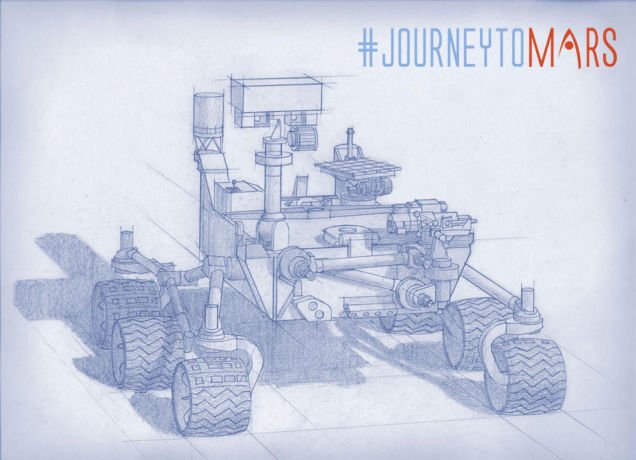
NASA_2020rover1Last Thursday at the agency’s headquarters in Washington, NASA unveiled more information about its Mars 2020 rover, which is scheduled to join Opportunity and Curiosity on the Red Planet by the end of the decade. The subject of this latest press release was the rover’s payload, which will consist of seven carefully-selected instruments that will conduct unprecedented science and exploratory investigations, and cost about $130 million to develop.

These instruments were selected from 58 proposals that were submitted back in January by researchers and engineers from all around the world. This is twice the usual number of proposals that NASA has received during instrument competitions in the recent past, and is a strong indicator of the extraordinary level of interest the scientific community is taking in the exploration of the Mars.
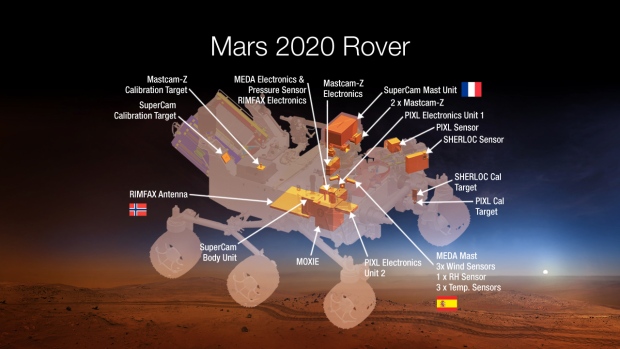
NASA_2020roverThese seven new instruments include:

  • Mars Oxygen ISRU Experiment (MOXIE): this technology package will process the Martian atmosphere into oxygen. ISRU stands for In Situ Resource Utilization.
  • Planetary Instrument for X-ray Lithochemistry (PIXL): this spectrometer will use a high-resolution imager and X-ray fluorescence for detailed elemental analysis to a finer degree than possible with any prior equipment.
  • Scanning Habitable Environments with Raman & Luminescence for Organics and Chemicals (SHERLOC): this sensor suite will use an ultraviolet laser for fine-scale mineralogy, detecting organic compounds, and high-resolution imaging.
  • Mastcam-Z: an advanced camera system that will send home panoramic and stereoscopic images and assist with rover operations and help determine surface mineralogy.
  • SuperCam: an imaging device with super capacities to perform chemical composition analysis and more mineralogy. This tool will allow the rover to peer around hunting for organic compounds within rocks or weathered soils from a distance, helping identify interesting locations to sample in greater detail.
  • Mars Environmental Dynamics Analyzer (MEDA): This sensor suite to measure temperature, wind speed and direction, pressure, and relative humidity. As dust is such a defining characteristic of weather on the red planet, it’s also going to measure dust size and shape, helping characterize how big of a hassle it will make housekeeping.
  • Radar Imager for Mars’ Subsurface Exploration (RIMFAX): a ground-penetrating radar to imagine the subsurface to centimeter-scale resolution.

These instruments will be used to determine how future human explorers could exploit natural resources to live on Mars, pinning down limits to how much we could rely on using local materials. In addition, demonstration technology will test out processing atmospheric carbon dioxide to produce oxygen, a key step towards using local resources for manufacturing oxidizers for rocket fuel and suitable for humans.

NASA_2020rover5This is perhaps the most exciting aspect of the proposed mission, which is looking ahead to the possibility of manned Martian exploration and even settlement. To quote William Gerstenmaier, the associate administrator for the Human Exploration and Operations Mission Directorate at NASA Headquarters in Washington:

Mars has resources needed to help sustain life, which can reduce the amount of supplies that human missions will need to carry. Better understanding the Martian dust and weather will be valuable data for planning human Mars missions. Testing ways to extract these resources and understand the environment will help make the pioneering of Mars feasible.

At the same time, and in keeping with plans for a manned mission, it will carry on in NASA’s long-term goal of unlocking Mars’ past and determining if life ever existed there. As John Grunsfeld, astronaut and associate administrator of NASA’s Science Mission Directorate in Washington, explained:

The Mars 2020 rover, with these new advanced scientific instruments, including those from our international partners, holds the promise to unlock more mysteries of Mars’ past as revealed in the geological record. This mission will further our search for life in the universe and also offer opportunities to advance new capabilities in exploration technology.
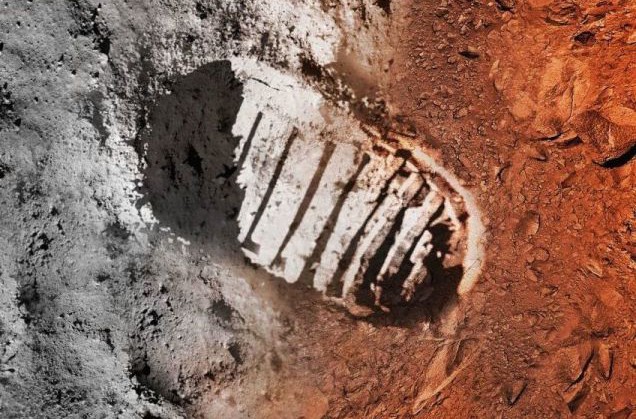
Mars_footprintNASA addressed these goals and more two weeks ago with their mission to Mars panel at the 2014 Comic-Con. This event, which featured retired astronaut and living legend Buzz Aldrin, spoke at length to a packed room about how Apollo 11 represented the “the first Giant Leap”. According to Aldrin, the Next Giant Leap could be “Apollo 45 landing humans on Mars.”

The panel discussion also included enthusiastic support of Orion and the Space Launch System which are currently under development and will be used when it finally comes time to send human explorers to join the rovers on Mars. The Mars 2020 mission will be based on the design of the highly successful Mars Science Laboratory rover, Curiosity, which landed almost two years ago.

NASA_2020rover2Not only does it look virtually identical to Curiosity – from its six-wheeled chassis, on-board laboratory, and instrument-studded retractable arms – and will even be partly built using Curiosity’s spare parts.It will also land on Mars using the same lowered-to-the-surface-by-a-giant-sky-crane method. NASA als0 plans to use the rover to identify and select a collection of rock and soil samples that will be stored for potential return to Earth by a future mission.

These rock samples will likely have to wait until the proposed manned mission of 2030 to be picked up, but NASA seems hopeful that such a mission is in the cards. In the meantime, NASA is waiting for their MAVEN orbiter to reach Mars and begin exploring it’s atmosphere (it is expected to arrive by September), while the InSight Lander – which will examine Mars’ interior geology – is slated for launch by March 2016.

terraformingSo we can expect a lot more news and revelations about the Red Planet in the coming months and years. Who knows? Maybe we may finally find evidence of organic molecules or microbial life there soon, a find which will prove once and for all that life exists on other planets within our Solar System. And if we’re really lucky, we might just find that it could feasibly support life once again…

Sources: cbc.ca, fastcompany.com, nasa.gov, space.io9.com, (2), extremetech.com

News from Space: NASA taking Suggestions on Europa

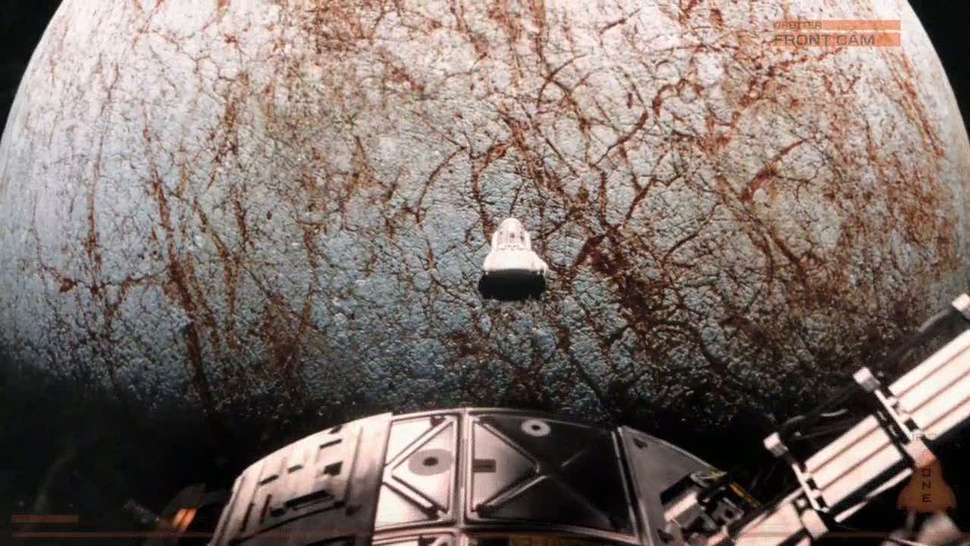
europa_image_0The Jovian moon of Europa remains a mystery that is just dying to be cracked. Although covered in ice, scientists have long understood that tidal forces caused by its proximity to Jupiter have created a warm interior, one which can sustain warm oceans beneath the surface. In the coming years, NASA wants to fly a mission to this planet so we can finally get a look at what, if anything, is lurking beneath that icy crust.

Perhaps emboldened by the success of the Curiosity Rover and the plans for a manned mission to Mars in 2030, NASA has several possible plans for what a Europa mission might look like. If the budget environment proves hospital, then NASA will likely send a satellite that will perform several orbits of the moon, a series of flybys on it, and scout the surface for science and potential landing sites.

europa_reportTowards this end, they are looking for proposals for science instruments specifically tailored to the task. And within a year’s time, they plan to select 20 from a list of those proposed for the mission. At which point, the selectees will have $25 million to do a more advanced concept study. As John Grunsfeld, associate administrator for NASA’s science mission directorate, stated:

The possibility of life on Europa is a motivating force for scientists and engineers around the world. This solicitation will select instruments which may provide a big leap in our search to answer the question: are we alone in the universe?

The Europa mission is not a guarantee, and it’s unclear just how much money will be allocated to it in the long run. NASA has requested $15 million in fiscal 2015 for the mission, but the mission will naturally be subject to budgetary approvals by Congress. If it passes all obstacles, it would fly sometime in the 2020s, according to information released with the budget earlier this year.

europa-lander-2In April, NASA sent out a request for information to interested potential participants on the mission itself, which it plans to cost less than $1 billion (excluding launch costs). Besides its desire to look for landing sites, NASA said the instruments should also be targeted to meet the National Resource Council’s (NRC) Planetary Decadal Survey’s desires for science on Europa.

In NASA’s words, these are what those objectives are:

  • Characterize the extent of the ocean and its relation to the deeper interior;
  • Characterize the ice shell and any subsurface water, including their heterogeneity, and the nature of surface-ice-ocean exchange;
  • Determine global surface, compositions and chemistry, especially as related to habitability;
  • Understand the formation of surface features, including sites of recent or current activity, identify and characterize candidate sites for future detailed exploration;
  • Understand Europa’s space environment and interaction with the magnetosphere.

JIMO_Europa_Lander_MissionAccording to the agency, any instrument proposal must meet NASA’s landing scout goal or the NRC goals. The instruments must also be highly protected against the harsh radiation, and meet planetary protection requirements to ensure no extraterrestrial life is contaminated with our own. In essence, this means than any instruments must be safeguarded against carrying bacteria that could play havoc with Europan microbes or (do we dare to dream!) more complex organisms.

Solicitations are due by Oct. 17, so if you’ve got an idea and think it might make the cut, consult the following solicitation page and have a look at what NASA is looking for. Personally, I got nothing. But that’s why they don’t pay me the big bucks! No, like most of humanity, I will simply be sitting back and hoping that a mission to Europa happens within my lifetime, and that it uncovers – to quote Arthur C. Clarke’s 201o: Odyssey Two – “something wonderful”…

Source: universetoday.com, nspires.nasaprs.com

News from Mars: Laser-Blasting and Soil Sampling

mars_lifeAs the exploration of Mars goes on, the small army of robotic rovers, satellites and orbiters continue to provide us with information, photographs and discoveries that remind us of how great a mystery the Red Planet truly is. For instance, in the past month, two major stories have been announced concerning the nature of Martian soil, its ancient history, and some of the more exciting moments in it’s exploration.

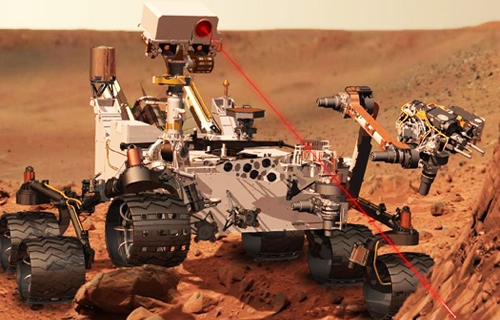
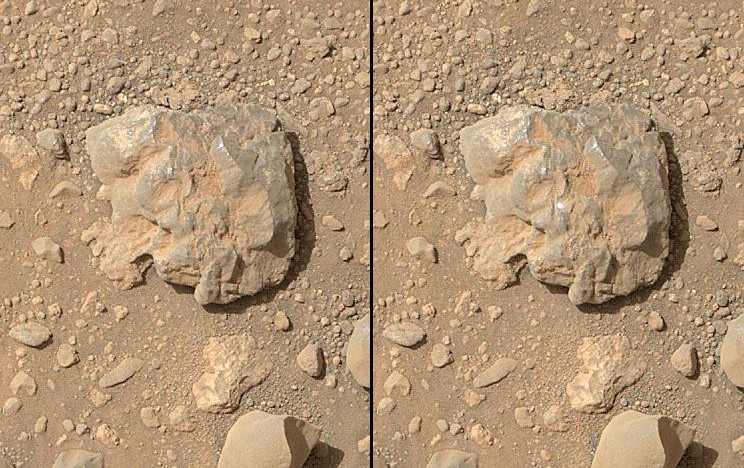
For example, Curiosity made news as its high resolution camera caught an image of sparks being generated as it zapped a Martian rock. In it’s lifetime, the rover has used its million watt Chemistry and Camera (ChemCam) laser to zap over 600 rock or soil targets as part of its mission. However, this was the first time that the rover team was able to get the arm-mounted Mars Hand Lens Imager (MAHLI) to capture the action as it occurred.

Curiosity-Laser-BeamThe ChemCam laser is used to determine the composition of Martian rocks and soils at a distance of up to 8 meters (25 feet). By hitting targets with several high-energy pulses, it is able to yield preliminary data for the scientists and engineers back at Earth to help them decide if a target warrants a closer investigation and, in rare cases, sampling and drilling activities.

ChemCam works through a process called laser-induced breakdown spectroscopy. The laser hits a target with pulses to generate sparks, whose spectra provide information about which chemical elements are in the target. Successive laser shots are fired in sequence to gradually blast away thin layers of material. Each shot exposes a slightly deeper layer for examination by the ChemCam spectrometer.

Mars_novarockAs Curiosity fired deeper into the target rock – named “Nova” – it showed an increasing concentration of aluminum as the sequential laser blasts penetrated through the uninteresting dust on the rock’s surface. Silicon and sodium were also detected. As Sylvestre Maurice, ChemCam’s Deputy Principal Investigator at the Research Institute in Astrophysics and Planetology, said in a statement:

This is so exciting! The ChemCam laser has fired more than 150,000 times on Mars, but this is the first time we see the plasma plume that is created… Each time the laser hits a target, the plasma light is caught and analyzed by ChemCam’s spectrometers. What the new images add is confirmation that the size and shape of the spark are what we anticipated under Martian conditions.

During it’s first year on Mars, Curiosity has already accomplished its primary objective of discovering a habitable zone on Mars that contains the minerals necessary to support microbial life billions of years ago when Mars was wetter and warmer. Currently, the rover is driving swiftly to the base of Mount Sharp at the center of Gale Crater, where it hopes to find more.

Mars_soilIn that same vein, according to new geological information obtained by Curiosty’s images and soil examinations, samples that were pulled out of a crater that is estimated to be some 3.7 billion years old contain more evidence that Mars was once much warmer and wetter. These findings were announced in a recent paper published in the online edition of Geology by University of Oregon geologist Gregory Retallack.

Unlike Earth, the Martian landscape is littered with loose rocks from impacts or layered by catastrophic floods. However, recent images from Curiosity from the Gale Crater reveal Earth-like soil profiles with cracked surfaces lined with sulfate, ellipsoidal hollows and concentrations of sulfate comparable with soils in Antarctica’s McMurdo Dry Valleys and Chile’s Atacama Desert.

mars-180-degrees-panorama_croppedRetallack, the paper’s lone author, studied mineral and chemical data published by researchers closely tied with the Curiosity mission. As a professor of geological sciences and co-director of paleontology research at the UO Museum of Natural and Cultural History, he internationally known as an expert on the recognition of paleosols – ancient fossilized soils contained in rocks.

As he explains in the paper:

The pictures were the first clue, but then all the data really nailed it. The key to this discovery has been the superb chemical and mineral analytical capability of the Curiosity Rover, which is an order of magnitude improvement over earlier generations of rovers. The new data show clear chemical weathering trends, and clay accumulation at the expense of the mineral olivine, as expected in soils on Earth. Phosphorus depletion within the profiles is especially tantalizing, because it attributed to microbial activity on Earth.

dryvalleysThe ancient soils do not prove that Mars once contained life, but they do add to growing evidence that an early, wetter and warmer Mars was more habitable than the planet has been in the past 3 billion years. Surface cracks in the deeply buried soils suggest typical soil clods. Vesicular hollows, or rounded holes, and sulfate concentrations, he said, are both features of desert soils on Earth.

Since Curiosity is currently on its way to Mount Sharp, future missions will be needed to fully explore these features. But as Retallack explained, the parallels with Earth are quite exciting:

None of these features is seen in younger surface soils of Mars. The exploration of Mars, like that of other planetary bodies, commonly turns up unexpected discoveries, but it is equally unexpected to discover such familiar ground.

The newly discovered soils indicate that more benign and habitable soil condition existed on Mars than previously expected. What’s more, their dating to 3.7 billion years ago places them within a transition period when the planet went from an early, benign water cycle to the acidic and arid Mars of today. This is especially important since major changes were taking place on Earth at around the same time.

Living-Mars.2Roughly 3.5 billion years ago, life on Earth is believed to have emerged and began diversifying. But some scientists have theorized that potential evidence that might indicate that life existed on Earth earlier may have been destroyed by tectonic activity, which did not occur on Mars. Basically, it may offer some credence to the theory that while flourished on Earth, it originated on Mars.

One person who supports this theory is Steven Benner of the Westheimer Institute of Science and Technology in Florida.  In the past, he has speculated that life is more likely to have originated on a soil planet like Mars than a water planet like Earth. In an email interview with Science Daily, Benner wrote that Retallack’s paper:

[S]hows not only soils that might be direct products of an early Martian life, but also the wet-dry cycles that many models require for the emergence of life.

So in addition to shedding light on the mysteries of Mars, Curiosity has also been pivotal in addressing some major questions which only increase the mystery of our own existence. Did life as we know it originate on Mars but flourish on Earth? Are there still some remnants of this microbial “Eden” being preserved deep within the soil and rocks? And could life exist there again some day?

All good questions that will no doubt keep robotic rovers, orbiters, landers, and even manned missions busy for many decades to come! In the meantime, check out the video from NASA’s Jet Propulsion Laboratory of Curiosity’s spark-generating laser blast being caught on tape:


Sources:
universetoday.com, sciencedaily.com

News from Mars: Opportunity Still at Work

opportunityAfter ten years in service (when it wasn’t supposed to last longer than nine months), one would think that left for the Opportunity rover to do. And yet, Opportunity is still hard at work, thanks in no small part to its solar panels being their cleanest in years. In its latest research stint, NASA’s decade-old Mars Exploration Rover Opportunity is inspecting a section of crater-rim ridgeline chosen as a priority target due to evidence of a water-related mineral.

Orbital observations of the site by another NASA spacecraft – the Mars Reconnaissance Orbiter (MRO) – found a spectrum with the signature of aluminum bound to oxygen and hydrogen. Researchers regard that signature as a marker for a mineral called montmorillonite, which is in a class of clay minerals (called smectites) that forms when basalt is altered under wet and slightly acidic conditions. The exposure of it extends about 240 meters (800 feet) north to south on the western rim of Endeavour Crater.

Mars_Reconnaissance_OrbiterThe detection was made possible using the MRO’s Compact Reconnaissance Imaging Spectrometer for Mars (CRISM) combined with rover observations some 3 kms (2 miles) north on the crater’s western rim. Rocks exposed there contain evidence for an iron-bearing smectite – called nontronite – as well as for montmorillonite. That site yielded evidence for an ancient environment with water that would have been well-suited for use by microbes, evidence that could boost our understanding of what Mars looked like billions of years ago.

Opportunity reached the northern end of the montmorillonite-bearing exposure last month – a high point known as “Pillinger Point.” Opportunity’s international science team chose that informal name in honor of Colin Pillinger (1943-2014), the British principal investigator for the Beagle 2 project, which attempted to set a research lander on Mars a few weeks before Opportunity landed there in January of 2004.

Beagle 2Opportunity Principal Investigator Steve Squyres, of Cornell University, had this to say about Pillinger:

Colin and his team were trying to get to Mars at the same time that we were, and in some ways they faced even greater challenges than we did. Our team has always had enormous respect for the energy and enthusiasm with which Colin Pillinger undertook the Beagle 2 mission. He will be missed.

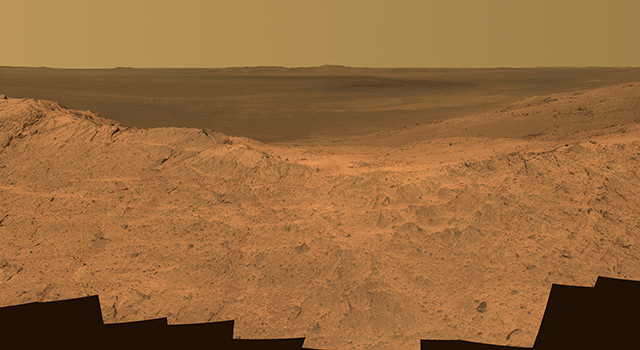
Though selected as a science destination, Pillinger Point also offers a scenic vista from atop the western rim of Endeavour Crater, which is about 22 kms (14 miles) in diameter. The picture below shows a section of a color shot taken by Opportunity’s panoramic camera (Pancam) upon arrival. A full-size view of this picture can be seen by going to NASA’s Jet Propulsion Laboratory Mars Exploration Rovers webpage.

Pillinger_pointInitial measurements at this site with the element-identifying alpha particle X-ray spectrometer at the end of Opportunity’s arm indicate that bright-toned veins in the rock contain calcium sulfate. Scientists deduce this mineral was deposited as water moved through fractures on Endeavour’s rim. The rover found similar veins of calcium sulfate farther north along the rim while investigating there earlier last month.

As Opportunity investigated this site and other sites farther south along the rim, the rover had more energy than usual. This was due to the solar cells being in rare form, says Opportunity Project Manager John Callas of NASA’s Jet Propulsion Laboratory:

The solar panels have not been this clean since the first year of the mission. It’s amazing, when you consider that accumulation of dust on the solar panels was originally expected to cause the end of the mission in less than a year. Now it’s as if we’d been a ship out at sea for 10 years and just picked up new provisions at a port of call, topping off our supplies.

Both Opportunity and its rover twin, Spirit, benefited from sporadic dust-cleaning events in past years. However, on the ridge that Opportunity has been navigating since late 2013, winds have removed dust more steadily, day by day, than either rover has experienced elsewhere. The rover’s signs of aging – including a stiff shoulder joint and occasional losses of data – have not grown more troublesome in the past year, and no new symptoms have appeared.

mountsharp_galecraterJPL’s Jennifer Herman, power-subsystem engineer added:

It’s easy to forget that Opportunity is in the middle of a Martian winter right now. Because of the clean solar arrays, clear skies and favorable tilt, there is more energy for operations now than there was any time during the previous three Martian summers. Opportunity is now able to pull scientific all-nighters for three nights in a row — something she hasn’t had the energy to do in years.

During Opportunity’s first decade on Mars and the 2004-2010 career of Spirit, NASA’s Mars Exploration Rover Project yielded a range of findings about wet environmental conditions on ancient Mars – some very acidic, others milder and more conducive to supporting life. These findings have since been supplemented and confirmed by findings by the Curiosity Rover, which hopes to find plenty of clues as to the nature of possible life on Mars when it reaches Mount Sharp later this summer.

Source: sciencedaily.com, marsrovers.jpl.nasa.gov

News from Space: Insight Lander and the LDSD

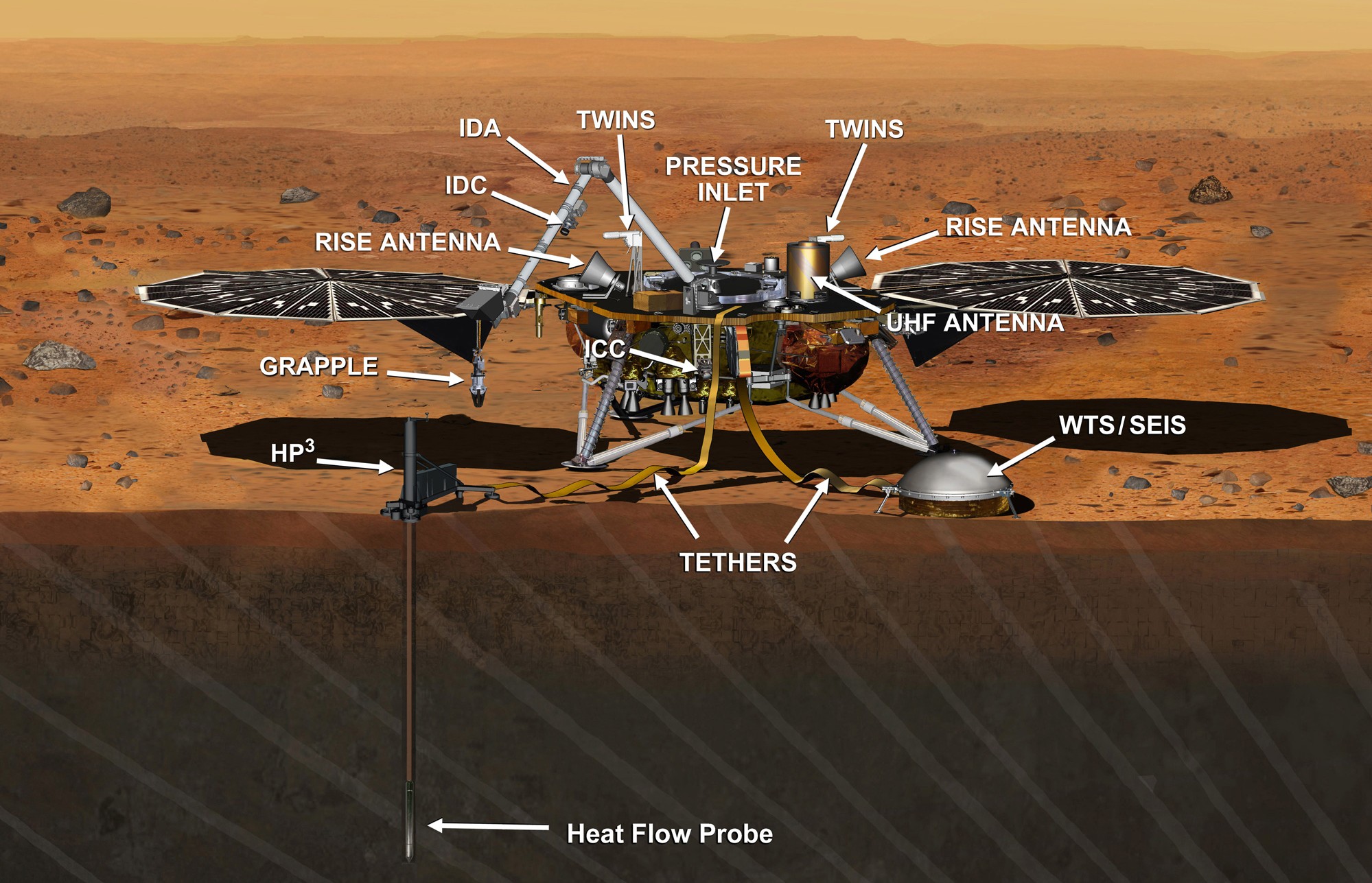
mars-insight-lander-labelledScientists have been staring at the surface of Mars for decades through high-powered telescopes. Only recently, and with the help of robotic missions, has anyone been able to look deeper. And with the success of the Spirit, Opportunity and Curiosity rovers, NASA is preparing to go deeper. The space agency just got official approval to begin construction of the InSight lander, which will be launched in spring 2016. While there, it’s going to explore the subsurface of Mars to see what’s down there.

Officially, the lander is known as the Interior Exploration Using Seismic Investigations, Geodesy and Heat Transport, and back in May, NASA passed the crucial mission final design review. The next step is to line up manufacturers and equipment partners to build the probe and get it to Mars on time. As with many deep space launches, the timing is incredibly important – if not launched at the right point in Earth’s orbit, the trip to Mars would be far too long.

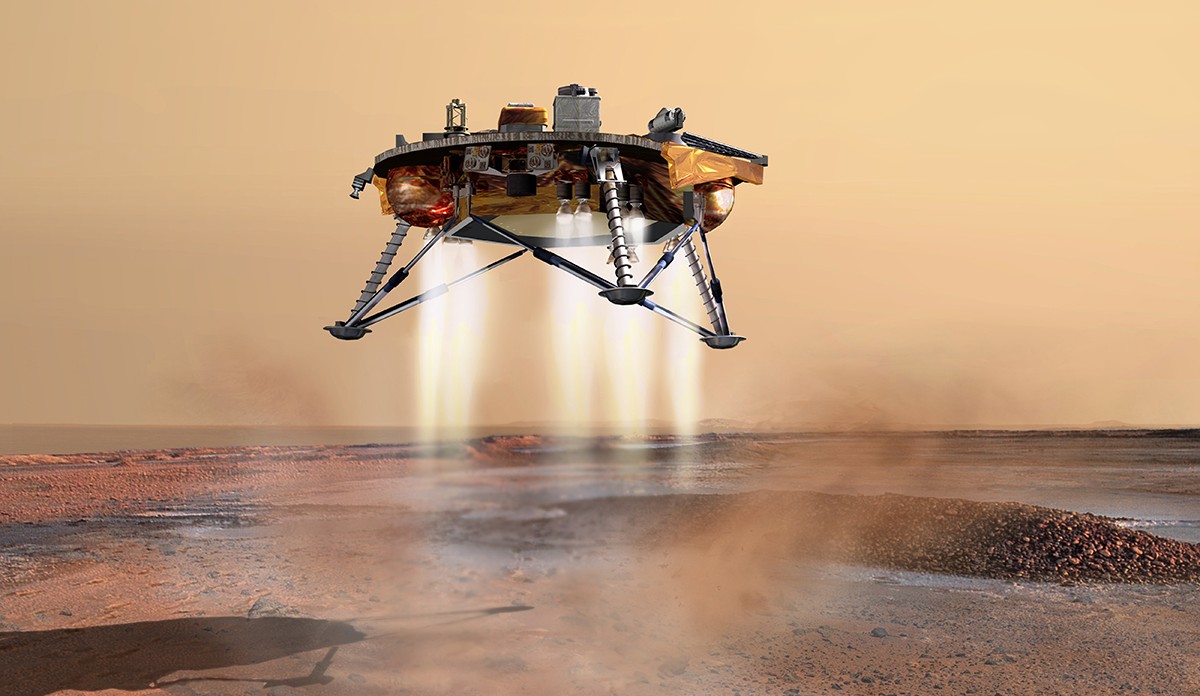
Phoenix_landingUnlike the Curiosity rover, which landed on the Red Planet by way of a fascinating rocket-powered sky crane, the InSight will be a stationary probe more akin to the Phoenix lander. That probe was deployed to search the surface for signs of microbial life on Mars by collecting and analyzing soil samples. InSight, however, will not rely on a tiny shovel like Phoenix (pictured above) – it will have a fully articulating robotic arm equipped with burrowing instruments.

Also unlike its rover predecessors, once InSight sets down near the Martian equator, it will stay there for its entire two year mission – and possibly longer if it can hack it. That’s a much longer official mission duration than the Phoenix lander was designed for, meaning it’s going to need to endure some harsh conditions. This, in conjunction with InSight’s solar power system, made the equatorial region a preferable landing zone.

mars-core_bigFor the sake of its mission, the InSight lander will use a sensitive subsurface instrument called the Seismic Experiment for Interior Structure (SEIS). This device will track ground motion transmitted through the interior of the planet caused by so-called “marsquakes” and distant meteor impacts. A separate heat flow analysis package will measure the heat radiating from the planet’s interior. From all of this, scientists hope to be able to shed some light on Mars early history and formation.

For instance, Earth’s larger size has kept its core hot and spinning for billions of years, which provides us with a protective magnetic field. By contrast, Mars cooled very quickly, so NASA scientists believe more data on the formation and early life of rocky planets will be preserved. The lander will also connect to NASA’s Deep Space Network antennas on Earth to precisely track the position of Mars over time. A slight wobbling could indicate the red planet still has a small molten core.

If all goes to plan, InSight should arrive on Mars just six months after its launch in Spring 2016. Hopefully it will not only teach us about Mars’ past, but our own as well.

LDSDAfter the daring new type of landing that was performed with the Curiosity rover, NASA went back to the drawing table to come up with something even better. Their solution: the “Low-Density Supersonic Decelerator”, a saucer-shaped vehicle consisting of an inflating buffer that goes around the ship’s heat shield. It is hopes that this will help future spacecrafts to put on the brakes as they enter Mar’s atmosphere so they can make a soft, controlled landing.

Back in January and again in April, NASA’s Jet Propulsion Laboratory tested the LDSD using a rocket sled. Earlier this month, the next phase was to take place, in the form of a high-altitude balloon that would take it to an altitude of over 36,600 meters (120,000 feet). Once there, the device was to be dropped from the balloon sideways until it reached a velocity of four times the speed of sound. Then the LDSD would inflate, and the teams on the ground would asses how it behaved.

LDSD_testUnfortunately, the test did not take place, as NASA lost its reserved time at the range in Hawaii where it was slated to go down. As Mark Adler, the Low Density Supersonic Decelerator (LDSD) project manager, explained:

There were six total opportunities to test the vehicle, and the delay of all six opportunities was caused by weather. We needed the mid-level winds between 15,000 and 60,000 feet [4,500 meters to 18,230 meters] to take the balloon away from the island. While there were a few days that were very close, none of the days had the proper wind conditions.

In short, bad weather foiled any potential opportunity to conduct the test before their time ran out. And while officials don’t know when they will get another chance to book time at the U.S. Navy’s Pacific Missile Range in Kauai, Hawaii, they’re hoping to start the testing near the end of June. NASA emphasized that the bad weather was quite unexpected, as the team had spent two years looking at wind conditions worldwide and determined Kauai was the best spot for testing their concept over the ocean.

If the technology works, NASA says it will be useful for landing heavier spacecraft on the Red Planet. This is one of the challenges the agency must surmount if it launches human missions to the planet, which would require more equipment and living supplies than any of the rover or lander missions mounted so far. And if everything checks out, the testing goes as scheduled and the funding is available, NASA plans to use an LDSD on a spacecraft as early as 2018.

And in the meantime, check out this concept video of the LDSD, courtesy of NASA’s Jet Propulsion Laboratory:


Sources:
universetoday.com, (2), extremetech.com

News from Mars: Martian Water and Earth Organisms

curiosity_peakThis August, the Curiosity Rover will be celebrating its second anniversary of roving around the Red Planet. And ever since it made landfall, Curiosity and the Mars Science Laboratory has repeatedly uncovered signs that Mars was once very like Earth. Basically, it has become undeniable that water once flowed freely over the surface of this barren and uninhabitable world. And this finding, much to the delight of futurists and sci-fi enthusiasts everywhere, is likely to pave the way for human settlement.

Liquid water disappeared from Mars’ surface millions of years ago, leaving behind tantalizing clues about the planet’s ancient past—clues that the MSL has been deciphering for the past 22 months. This began last year when Curiosity found rounded pebbles in the Glenelg region, an indication that a stream once flowed at the site. This was followed by the discovery of rocky outcroppings where the remains of an ancient stream bed consisting of water-worn gravel that was washed down from the rim of Gale Crater.

mountsharp_galecraterThe rover has since moved to a location about 6.5 kilometers (4 miles) away from the Gale Crater landing site, where scientists expect to make even more discoveries. The new location is named Kimberly, after a region of northwestern Australia. As Dawn Sumner, a UC Davis geology professor and co-investigator for NASA’s Mars Science Laboratory team, explained:

Our findings are showing that Mars is a planet that was once a whole lot like Earth. All the rocks we’ve seen on this mission are sediments that have been deposited by water. We’ve found almost no sandstone deposited by wind.

Sumner is working from Curiosity mission control at NASA’s Jet Propulsion Laboratory in Pasadena while on sabbatical from UC Davis, exploring whether the planet ever had an environment capable of supporting microbial life. She is also one of several UC scientists and engineers who have been vital to the success of the Curiosity mission, which is part of NASA’s long-term plan to pave the way for sending astronauts to Mars.

Living-Mars.2In that vein, research continues here on Earth to see exactly what kind of life can survive in the harsh Martian environment. And now,  research suggests that methanogens – among the simplest and oldest organisms on Earth – could survive on Mars. These microorganisms are typically found in swamps and marshes, where they use hydrogen as their energy source and carbon dioxide as their carbon source to produce methane (aka. natural gas).

As an anaerobic bacteria, methanogens don’t require require oxygen or organic nutrients to live, and are non-photosynthetic. Hence, they would be able to exist in sub-surface environments and would therefore be ideal candidates for life on Mars. Rebecca Mickol, a doctoral student in space and planetary sciences at the University of Arkansas, subjected two species of methanogens to Martian conditions to see how they would fair on the Red Planet.

methanogens485These strains included Methanothermobacter wolfeii and Methanobacterium formicicum, both of which survived the Martian freeze-thaw cycles that Mickol replicated in her experiments. This consisted of testing the species for their ability to withstand Martian freeze-thaw cycles that are below the organisms’ ideal growth temperatures. As she explained it:

The surface temperature on Mars varies widely, often ranging between minus 90 degrees Celsius and 27 degrees Celsius over one Martian day. If any life were to exist on Mars right now, it would at least have to survive that temperature range. The survival of these two methanogen species exposed to long-term freeze/thaw cycles suggests methanogens could potentially inhabit the subsurface of Mars.

Mickol conducted the study with Timothy Kral, professor of biological sciences in the Arkansas Center for Space and Planetary Sciences and lead scientist on the project. She presented her work at the 2014 General Meeting of the American Society for Microbiology, which was held from May 17th to 20th in Boston.

maven_atmosphereThe two species were selected because one is a hyperthermophile, meaning it thrives under extremely hot temperatures, and the other is a thermophile, which thrives under warm temperatures. Since the 1990s, Kral has been studying methanogens and examining their ability to survive on Mars. In 2004, scientists discovered methane in the Martian atmosphere, and immediately the question of the source became an important one. According to Kral:

When they made that discovery, we were really excited because you ask the question ‘What’s the source of that methane?. One possibility would be methanogens.

Understanding the makeup of Mars atmosphere and ecology is another major step towards ensuring that life can exist there again someday. From Red Planet, to Blue Planet, to Green Planet… it all begins with a fundamental understanding of what is currently able to withstand the Martian environment. And once this foundation is secured, our ecologists and environmental engineers can begin contemplating what it will take to create a viable atmosphere and sustainable sources of water there someday.

terraformingSources: phys.org, (2)

Mission to Europa: NASA now Taking Suggestions

europa_moon_IoJupiter’s moon of Europa has been the subject of much speculation and intrigue ever since it was first discovered by Galileo in 1610. In addition to having visible sources of (frozen) surface water and a tenuous oxygen atmosphere, it is also believed to boast interior oceans that could very well support life. As evidence for this mounts, plans to explore Europa using robot landers, miners, submersibles, or even manned missions have been floated by various sources.

However, it was this past December when astronomers announced that water plumes erupting 161 kilometers (100 miles) high from the moon’s icy south pole that things really took a turn. It was the best evidence to date that Europa, heated internally by the powerful tidal forces generated by Jupiter’s gravity, has a deep subsurface ocean. In part because of this, NASA recently issued a Request for Information (RFI) to science and engineering communities for ideas for a mission to the enigmatic moon. Any ideas need to address fundamental questions about the subsurface ocean and the search for life beyond Earth.

europa-lander-2This is not the first time that NASA has toyed with the idea of investigating the Jovian moon for signs of life. Last summer, an article by NASA scientists was published in the peer-reviewed journal Astrobiology, which was entitled “Science Potential from a Europa Lander“. This article set out their research goals in more detail, and speculated how they might be practically achieved. At the time, the article indicated NASA’s ongoing interest, but this latest call for public participation shows that the idea is being taken more seriously.

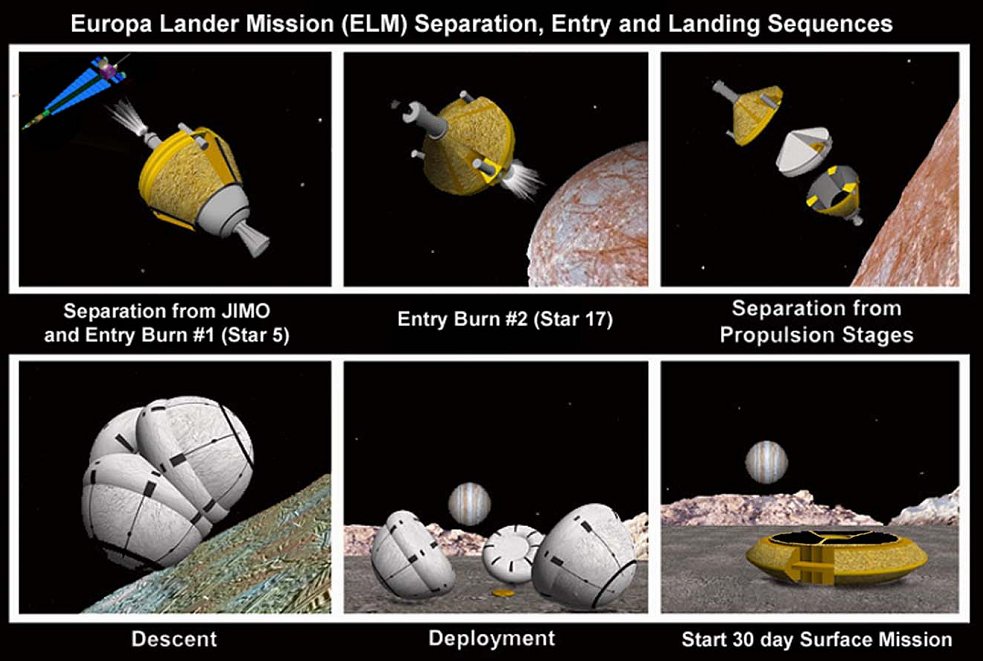
This is positive news considering that NASA’s planned JIMO mission – Jupiter Icy Moon Orbiter, which was cancelled in 2005 – would be taking place by this time next year. Originally slated for launch between May and January of 2015/16, the mission involved sending a probe to Jupiter by 2021, which would then deploy landers to Callisto, Ganymede, Io and Europa for a series of 30 day studies. At the end of the mission in 2025, the vehicle would be parked in a stable orbit around Europa.

JIMO_Europa_Lander_MissionJohn Grunsfeld, associate administrator for the NASA Science Mission Directorate, had the following to say in a recent press release:

This is an opportunity to hear from those creative teams that have ideas on how we can achieve the most science at minimum cost… Europa is one of the most interesting sites in our solar system in the search for life beyond Earth. The drive to explore Europa has stimulated not only scientific interest but also the ingenuity of engineers and scientists with innovative concepts.

By opening the mission up to public input, it also appears that NASA is acknowledging the nature of space travel in the modern age. As has demonstrated with Chris Hadfield’s mission aboard the ISS, the Curiosity rover, as well as private ventures such as Mars One, Inspiration Mars, and Objective Europa  – the future of space exploration and scientific study will involve a degree of social media and public participation never before seen.

europa_reportThe RFI’s focus is for concepts for a mission that costs less than $1 billion, but will cover five key scientific objectives that are necessary to improve our understanding of this potentially habitable moon. Primarily, the mission will need to:

  1. Characterize the extent of the ocean and its relation to the deeper interior
  2. Characterize the ice shell and any subsurface water, including their heterogeneity, and the nature of surface-ice-ocean exchange
  3. Determine global surface, compositions and chemistry, especially as related to habitability
  4. Understand the formation of surface features, including sites of recent or current activity, identify and characterize candidate sites for future detailed exploration
  5. Understand Europa’s space environment and interaction with the magnetosphere.

Although Europa has been visited by spacecraft and imaged distantly by Hubble, more detailed research is necessary to understand the complexities of this moon and its potential for life. NASA’s Galileo spacecraft, launched in 1989 was the only mission to visit Europa, passing close by the moon fewer than a dozen times. Ergo, if we’re ever to determine conclusively whether or not life exists there, we’re going to have to put boots (robotic or human) onto the surface and start digging!

To read the full Decadal Survey report on NASA’s website, click here.

Sources: universetoday.com, IO9.com, science.nasa.gov

News From Space: Curiosity’s Latest Photos

curiosity_sol-177-1April was a busy month for the very photo-talented (and photogenic) Curiosity Rover. In addition to another panoramic shot of the Martian landscape – which included Curiosity looking back at itself, making it a “selfie” – the rover also managed to capture a night-sky image that captured two minor planets and the Martian moon of Deimos in the same picture. At a time when Curiosity and Opportunity are both busy on long-haul missions to find evidence of life, these latest pictures remind us that day-to-day operations on Mars are still relevant.

The first shot took place on April 20th (Sol 606), when rover scientists used the Mast Camera to capture the minor planets of Ceres and Vesta, as well as the moon of Deimos, in the same frame. Ceres is a minor planet with a diameter of about 950 km, and is the largest object in the main asteroid belt. With a diameter of about 563 km, Vesta is the third-largest object in the asteroid belt. Deimos, meanwhile, is the smaller of Mars’ two moons, with a mean radius of 6 km.

curiosity_nightskyIn the main portion of the new image (seen above), Vesta, Ceres and three stars appear as short streaks due to the duration of a 12-second exposure. In other camera pointings the same night, the Curiosity’s camera also imaged Phobos and the planets Jupiter and Saturn, which are shown as insets on the left.  Dr Mark Lemmon from Texas A&M University, a Curiosity team member, explained:

this imaging was part of an experiment checking the opacity of the atmosphere at night in Curiosity’s location on Mars, where water-ice clouds and hazes develop during this season… The two Martian moons were the main targets that night, but we chose a time when one of the moons was near Ceres and Vesta in the sky.

Deimos was much brighter than the visible stars, Vesta and Ceres in the same part of the sky, in the main image. The circular inset covers a patch of sky the size that Earth’s full moon appears to observers on Earth. At the center of that circular inset, Deimos appears at its correct location in the sky, in a 0.25 second exposure.

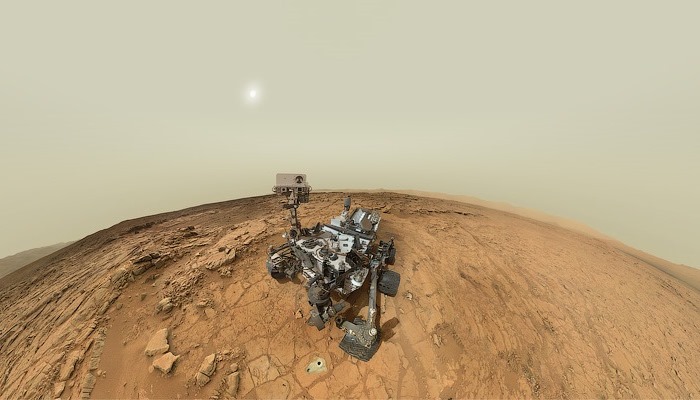
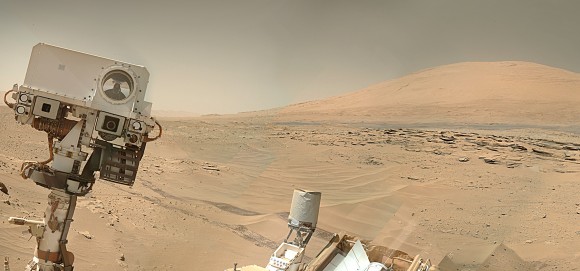
Curiosity_selfieAs for the latest in Curiosity’s long-line of panoramic self-portraits, this one comes to us courtesy of Jason Major. As a graphic designer and amateur space explorer, Major assembled the picture from about the dozen or so images acquired with the rover’s Mars Hand Lens Imager (MAHLI) instrument on April 27-28, 2014 (Sol 613). In the background, one can see the 5.5-km-high (3.4 miles) Mount Sharp (Aeolis Mons) that sits in the center of the Gale Crater.

One thing that Major noted about the picture he assembled is the way the cylindrical RUHF antenna and the bit of the RTG that is visible in the lower center seem to form a “toothy (if slightly dusty) grin”. But, as he stated:

…with almost 21 Earth-months on Mars and lots of discoveries already under her robot belt, Curiosity (and her team) certainly have plenty to smile about!

And the best is likely to still be coming. As we speak, Curiosity is making its way towards Mount Sharp and is expected to arrive there sometime in August. As the primary goal in its mission, Curiosity set off for this destination back in June after spending months studying Glenelg area. She is expected to arrive at the foot of the mountain in August, where she will begin drilling in an effort to study the mountain’s vast caches of minerals – which could potentially support a habitable environment.

mountsharp_galecraterIf Curiosity does find evidence of organic molecules in this cache, it will be one of the greatest scientific finds ever made, comparable only to the discovery of hominid remains in the Olduvai Gorge, or the first recorded discovery of dinosaur remains. For not only will we have definitive proof that life once existed on Mars, we will know with some certainly that it may again someday…

Stay tuned for more news from the Red Planet. And in the meantime, keep on trucking Curiosity!

Sources: sci-news.com, universetoday.com

News From Mars: Jelly Donut Rock Mystery Solved

mars_donut1In the course of investigating the surface of Mars, NASA has uncovered some rather interesting and curious rock formations. And if once in awhile those rocks should resemble something odd and Earth-like then one should expect the media maelstrom that follows. And the sudden appearance of what people referred to as the “jelly doughnut” rock in January was no exception to this rule.

Much the Martian “rat” discovered last summer, the appearance of the doughnut rock was met with all kinds of speculation. The rock – now dubbed “Pinnacle Island” – first appeared on January 8th in a series of pictures taken by the Opportunity Rover. Measuring only about 4 centimeters (1.5 inches) in diameter with a noticeable white rim and red center, the rock quickly picked up the nickname “jelly doughnut”.

mars_donutAccording to pictures taken just four days earlier by Opportunity, during which time it had not moved an inch, that area had been free of debris. In response, wild theories began to emerge, with some thinking it was an indication that rocks were falling from the sky. Others, looking to explain how something so odd in appearance could suddenly have appeared, claimed it was a heretofore undetected Martian surface beings.

Luckily, the ongoing work of mission scientists solved the by determining that the rock was actually created by an “alien invader” – the Opportunity Rover! Apparently, the mysterious rock was created when Opportunity unknowingly drove over a larger rock formation on Solander Point, where she is currently located. It then crushed the rock, sending fragments across the summit.

Opportunity-Route-map_Sol-3560_Ken-KremerOne piece, the ‘Pinnacle Island’ fragment, unwittingly rolled downhill where Opportunity caught it on camera a few days later. This explanation became apparent when the Opportunity was moved a tiny stretch and took some look-back photographs. Another fragment of the rock that was eerily similar in appearance to the ‘Pinnacle Island’ doughnut appeared, indicating that it had left a trail of such debris in its wake.

Ray Arvidson, Opportunity’s Deputy Principal Investigator, explained in a recent NASA statement:

Once we moved Opportunity a short distance, after inspecting Pinnacle Island, we could see directly uphill an overturned rock that has the same unusual appearance. We drove over it. We can see the track. That’s where Pinnacle Island came from.

Opportunity-and-Pinnacle-Island_Sol-3540_1_Ken-KremerTo gather some up-close clues before driving away, the rover deployed its robotic arm to investigate ‘Pinnacle Island’ with her microscopic imager and APXS mineral mapping spectrometer. According to Arvidson, the results revealed high levels of the elements manganese and sulfur which suggest that:

[these] water-soluble ingredients were concentrated in the rock by the action of water. This may have happened just beneath the surface relatively recently, or it may have happened deeper below ground longer ago and then, by serendipity, erosion stripped away material above it and made it accessible to our wheels.

The Solander Point mountaintop is riven with outcrops of minerals, including clay minerals, that likely formed in flowing liquid neutral water conducive to life – a potential scientific goldmine. Thus, the presence of such water-soluble minerals in this particular rock indicates quite strongly that the Opportunity brought it with her while rolling through the area.

mars-map

Meanwhile, on the opposite side of Mars, Opportunity’s younger sister rover Curiosity is trekking towards gigantic Mount Sharp and just crested over the Dingo Gap sand dune. She celebrated 500 days (Sols) on Mars on New Years Day, 2014. And a pair of new orbiters are streaking to the Red Planet to fortify Earth’s invasion fleet- NASA’s MAVEN and India’s MOM.

So expect more surprises from the Red Planet soon enough, which will include more information on surface conditions and the history of Mars’ atmosphere and how it disappeared. And maybe, just maybe, one of the rovers will uncover the existence of the long-sought after organic molecules – thus demonstrating unequivocally that life still exists on Mars.

Stay tuned!


Source: universetoday.com

Life on Mars: What it Once Looked Like

mars_oxygenBillions of years ago when the Red Planet was young, it appears to have had a thick atmosphere that was warm enough to support oceans of liquid water, and perhaps even life. Thanks to past and ongoing research conducted by the Spirit, Opportunity and Curiosity rovers, NASA scientists are certain that Mars once boasted conditions that would have supported life.

To dramatize these discoveries, NASA’s Goddard Space Flight Center has created a video representation of what the environment might have looked like billions of years ago. The artist’s concept opens with Mars appearing as a warm, wet place, and then transitioning to the climate that we know today.  As the atmosphere gradually disappears, it changes from the Earthlike blue to the dusty pink and tan hues of Mars today.

As the description reads on NASA Goddard’s Youtube page:

The animation shows how the surface of Mars might have appeared during this ancient clement period, beginning with a flyover of a Martian lake. The artist’s concept is based on evidence that Mars was once very different. Rapidly moving clouds suggest the passage of time, and the shift from a warm and wet to a cold and dry climate is shown as the animation progresses.

By the end, Mars has transformed to the acrid environment of 2013 – all “dusty pink and tan hues”. One day, NASA believes it may be possible to bring the environment back from this fate. Though its a mere theory at this point, terraforming could transform Mars back into a warm, wet, and life-sustaining planet once more. Enjoy the clip!


Source: fastcoexist, svs.gsfc.nasa.gov