Engineering Life for Mars

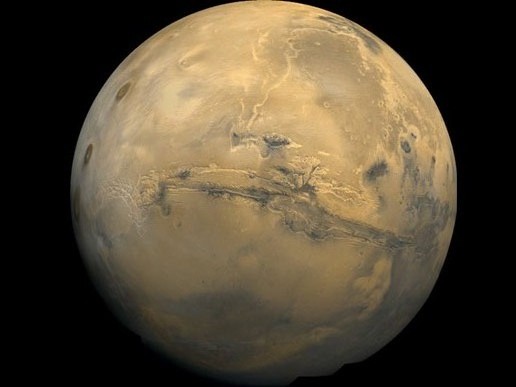
And we’re back with some more news of and about the Red Planet! Thanks to Curiosity’s ongoing efforts to discover potential life on Mars, scientists back at home have begun to seriously contemplate engineering life that will help in our own colonization efforts someday. The rational seems to be, “why search for life on Mars when you could create it?”

And the reasons for this seem pretty straightforward. Though Mars may have supported life at one time, it is not an especially hospitable environment right now. If in fact human beings settle there someday, survival won’t be easy. The average surface temperature of Mars is minus 60 degrees Celsius, and the almost-nonexistent atmosphere is 95 percent carbon dioxide.

And although water exists in Mars’ ice caps and there’s some evidence that oceans once existed, today it’s essentially a deep-frozen desert. If the would-be settlers ever want to live beyond sealed domes, and eat something other than hydroponically grown food and melted ice that is constantly being recycled, efforts to be got underway to ecologically engineer the surface.

And one such group is a team of undergraduate students from Stanford and Brown Universities that are busy applying synthetic biology to space exploration, outfitting microbes to survive the extreme Martian conditions and produce resources needed to sustain a human colony. According to Ben Geilich, the team Captain, the benefits are obvious: “Obviously, bringing up heavy machinery or building materials is going to be really expensive. The benefit of having bacteria that can do this for you is they’re really small and very light. Once there, they could grow food, produce medicine, extract minerals, and build building material.”

The fruit of their labor is the Hell Cell, a genetically engineered assemblage that could enable a bacterium to withstand extreme cold, dryness and radiation. It includes genetic modules, or BioBricks, based on DNA from a variety of ultra-tough organisms, including a cold-resistant species of Siberian beetle that makes “antifreeze” proteins, a radiation-resistant bacterium that sequesters large amounts of the element manganese, and E. coli, which produces a nutrient that confers cold and drought resistance.

It’s part of a process that Andre Burnier, one of the team’s mentors and a lab technician at NASA’s Ames Research Center, described in the following way: “You go into nature and find genes, and then you can recombine them into circuits that you cannot find in nature.” After presenting their Hell Cell during the regional International Genetically Engineered Machines (iGEM) challenge this month, the team has since moved on to developing bacteria that could extract minerals from Martian sediment or recycle rare metals from spacecraft electronics. In addition, they are also investigating heat and acid-tolerance mechanisms that could be useful in other planetary environments, particulary Venus, which as you may recall, is also a candidate for terraforming.

Needless to say, Geilich is excited by all the doors theirs and the research of others is opening. “In the coming years,” he says, “I think we’re going to see a huge boom in stuff done with bacteria, only limited by our imagination and creativity.” But of course, not all agree. As Burner indicates, there are ethical implications that are likely to upset some, should the concept ever be made viable. After all, if there is no life on planet to begin with, then there are no ethical implications about transforming it. But send in the bacteria to change up a world that already boasts life, and you are essentially committing eco-genocide.

All of this puts me in mind of the Genesis Project from Star Trek II and III. There, scientists created a device which could alter the configuration of any planet within minutes. With a name like “Genesis”, the purpose was pretty self-explanatory – to create life from lifelessness. But this made it absolutely necessary to find a lifeless planet, otherwise whatever was already there would find itself permanently altered.

Funny how science fiction predicts real science, up to and including the ethical implications. They were pretty good movies too, go heck them out. And follow the link below for more reading on the subject!

Source: Wired.com
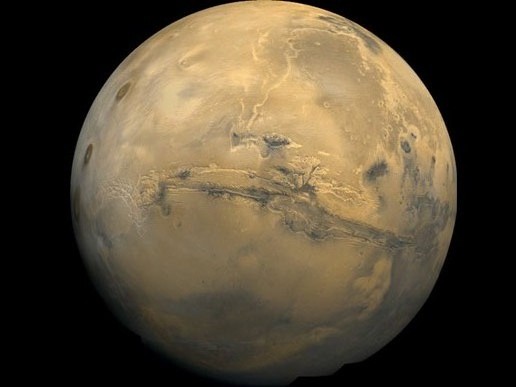
More News From the Red Planet!

Big news from and about Mars this week! Yes, the Red Planet is showing no signs of slowing down when it comes to making the headlines. But in the past week, the biggest stories have been roughly 100 million kilometers apart. That’s the current distance between the Earth and Mars, give or take a few meters.

The first bit of news came three days ago, when NASA scientists went batty over the discovery of a shiny object sitting in Curiosity’s path, which it quickly began to examine. The second came from Morocco, where a meteorite that landed in the desert 14 months ago was revealed to have come from the Red Planet itself, prompting a team of scientists from the University of Alberta to bring it back for research.

Though seemingly unrelated, both stories had one thing in common. By examining objects on the martian surface, and those which break off from time to time and fall to Earth, scientists may be able to reconstruct what conditions on the surface of the planet were once like.

Unfortunately, the first bit of news turned out to be a bit of a hoax. After examining the shiny object, the Curiosity team determined that it had come from Curiosity itself. At least, that was there initial conclusion when they realized that the object was most likely plastic, which is not something you find sitting on the surface of a dead planet. An image of the object taken by the rover’s micro-imager ChemCam shows it looking very different from the Martian surface around it (click to get a better view).

As for the meteorite, research there may prove to be more lucrative. According to Chris Herd, a geologist with the University of Alberta, the meteorite holds traces of Mars’ atmosphere from when it split off, roughly 600 million years ago. Apparently, the meteorite started out as a typical volcanic rock on the surface of Mars until it was launched off the planet by the impact of an asteroid.

As Herd puts it, when the meteorite struck the martian surface, “a shock wave shot through the rock. Cracks and fissures within the rock were sealed instantly by the heat, trapping components of Mars’ atmosphere inside, and forming black, glassy spots.” These glassy spots are the real point of interest because they reveal “evidence of weathering at the Martian surface.”

This is further evidence that Mars boasted water on its surface, and as recently as within the last few hundred million years. It does not definitively prove whether or not it also boasted life, but at least it helps to confirm what Curiosity has been observing in recent weeks. It’s also exciting news because it means that Mars could one day be made to accommodate water again. This will come in mighty handy should humans ever decide to settle there!

Stay tuned for more Red Planet news!

Sources: cbc.ca, news.cnet.com

Three Scenarios for Life on Mars

As usual, the Red Planet is capturing the imagination of scientists and people all over the world, thanks in no small part to ongoing discoveries made by Curiosity and her predecessors. At the center of all the speculation is the big question: was there ever life on Mars? Recently, Curiosity Scientist Ashwin Vasavada sat down with the good folks from thinkrtv to discuss that questions and present some viable scenarios as to what that life might have looked like.

According to thinkrtv, this video is the first installment in an ongoing series called EPIPHANY which “invites impassioned thought leaders across all disciplines to reveal the innovative, the improbable, and the unexpected of their worlds.” Based on that description, I’m thinking they will be moving onto places like Europa, Titan, Dione and Enceladus next, all moons in our Solar System which may boast or be capable of supporting life.

Cool stuff, and some rather intriguing ideas presented here. Click on the video below or follow the link to see Vasavada’s interview:

Source: thinkrtv

Evidence of Ancient Streambed Found on Mars

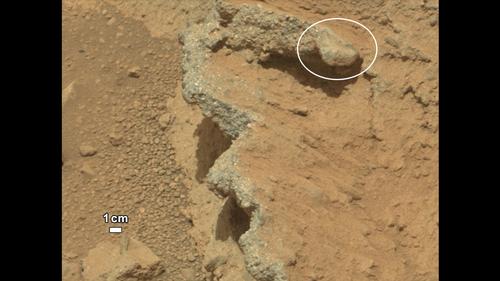
More news from the Red Planet! At a press conference held just yesterday, members of the Mars Science Laboratory announced that Curiosity discovered some interesting gravel patterns in the Gale Crater which would seem to indicate that water once flowed there. What more, according to William Dietrich (Curiosity’s co-investigator from the University of California, Berkeley) the water would have been flowing for some time.

“Too many things that point away from a single burst event,” he said in the press statement. “I’m comfortable to argue that it is beyond the 1,000 year timescales, even though this is very early on in our findings.”

Specifically, what Curiosity found was outcroppings of layered rock that are the result of multiple deposits of gravel, which the science team claims could not have been laid by any other naturally occurring source, such as wind. What’s more, the sizes and shapes of stones offer clues to the speed and distance of a long-ago stream’s flow. Although initially classifying this as a “surprise”, the team inevitably claimed that they weren’t too surprised by the finding.

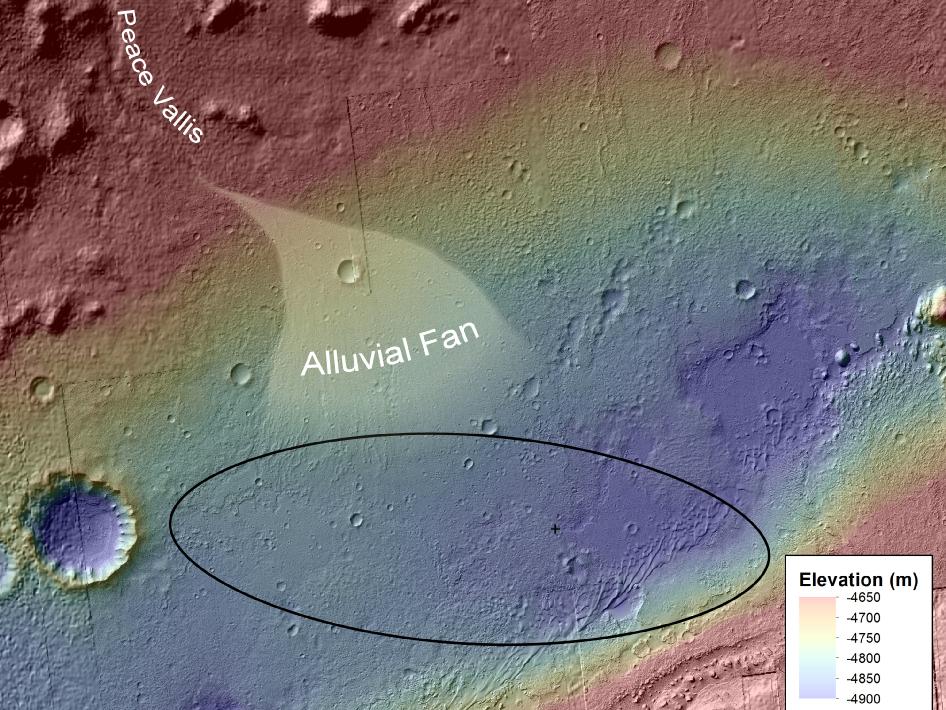
The location of the site lies between the north rim of the Gale Crater and the base of Aeolis Mons (aka. Mount Sharp), a mountain inside the crater. To the north of the crater, a channel named Peace Vallis feeds into the alluvial fan, where the abundance of channels between the rim and conglomerate suggests the presence of flowing water over a long period of time.

For some time, scientists have speculated about the existence of ancient rivers on Mars, based solely on observations from afar. In fact, the “canals of Mars”, as they were often known, have remained a source of inspiration for astronomers and fired the public imagination. The notion that there might be life on the Red Planet inevitably led some to suggest that there was such a thing as a Martian race that was responsible for their creation.

This, in turn, has led to generations of science fiction and storytelling, with images of little Martian men invading Earth in their terrible war machines (a la War of the Worlds) or as benevolent psychic begins who succumbed to disease and the onset of human colonization (i.e. The Martian Chronicles). Naturally, these fantastic notions died when it became known that the Martian surface is all but lifeless. However, evidence that Mars was once capable of supporting life remains; and thanks to Curiosity, continues to grow.

Stay tuned for more news from Curiosity! As of yesterday, it moved on from the Garland Crater and began its longest journey yet towards the Glenelg area, where it will begin taking soil samples and performing test drills. The goal here will be to find samples of preserved organic carbon, another step in the long mission to determine whether Mars really did support life in the past. Exciting times!

Update on Curiosity

More news from Mars! It seems that after a full month of being on Mars, running routine checks on its equipment and snapping some breathtaking photos, Curiosity is ready to begin the first leg of its study mission. This consisted of finding a Martian rock, the first sample in Curiosity’s extensive contact surveys.

And, after a week of searching, the NASA team piloting the rover found a pyramid shaped rock that they feel will be perfect for their surface analysis. The rock is described as a pyramid-shaped hunk, likely composed of basalt, which they nicknamed “Jake Matijevic” after one of the rover engineers who died back in August.

The sample was located just three meters from Curiosity’s landing zone, now known as the “Bradbury Landing” in honor of the late, great Ray Bradbury, author of the Martian Chronicles. On Saturday, it will extend its arm, take possession of the rock, and begin chemical analysis to determine the rock’s primary mineral and precise composition.

Another important aspect of Curiosity’s mission began this week, as the rover set it’s camera eyes to the skies and captured photos of Phobos making a Solar transit. To be fair, this was not the first time a Martian eclipse was captured on camera. In fact, the Opportunity and Spirit rovers both snapped similar images back in December of 2010 and 2005. However, the images taken by Curiosity were of such high resolution that experts will be able to estimate the consistency of the interior of Mars itself for the first time.

Apparently, this is done by measuring the tidal forces these moons exert on Mars, examining how the planet changes shape ever so slightly as a the moons orbit about it. By measuring this “deformation bulge”, along  with the precise spatial orientation provided by Curiosity’s photos, experts at NASA and abroad will be able to conjecture what the core of Mars is made of based on how much the planet deforms. I always wondered how scientists were able to guess what lay at a planet’s core. Now I know, go figure!

Stay tuned for more news from the Curiosity and the Red Planet!

Source: Popular Mechanics

How To Get To Mars…

A new video has been making the rounds recently. In this full-length compilation video, we get a glimpse of what the flight and deployment of Spirit/Opportunity Rover to Mars looked like, using CGI animation of course. In between, real footage from NASA is spliced in to provide real-time background to the simulated events. We see the navigators eagerly awaiting the landing and recovery of the rover’s signal, and the first photographs sent back by that rover. The arrival of this footage is very timely of course, coming soon after the arrival of Curiosity. Enjoy!

Mars Lander Mission, 2016

With all the news coming back from Curiosity rover since its deployment, one would get the impression that Mars is a pretty happening place. Blue sunsets, wide open vistas, tall mountains and extensive plains. All the while, our collective fascination with the planet has been growing apace. And it seems that this trend is destined to continue…

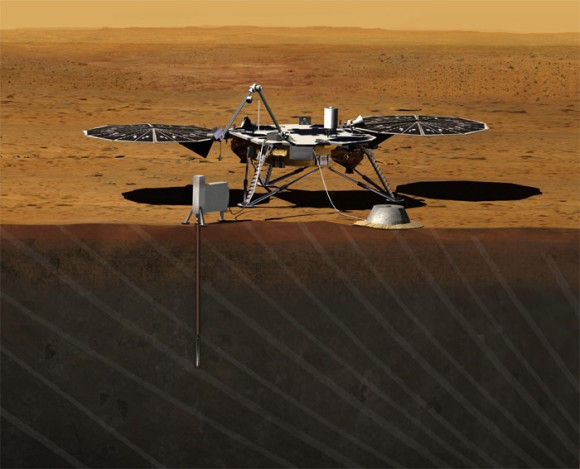
After looking at several low-cost options for their next major mission, NASA scientists decided to once again return to the Red Planet, this time to do some interior planet studies to determine whether Mars has a solid or liquid core, and determine the planet’s basic structure.

Known as the InSight lander, this mission won out over two equally enticing proposals. The first called the for the deployment of the Titan Mare Explorer (TiME), a floating high-tech buoy which would be sent to Saturn’s moon Titan. Once there, it would study the methane lakes of Titan, examining their composition and interaction with the atmosphere. Thanks to the Cassini probe, these lakes have attracted a great deal of interest of late, particularly since they may be able to support life. Understandably, many can’t wait to study them up close and see if this holds true.

The second potential mission called for the deployment of “Chopper”, a proposed Comet Hopper mission that would put a lander on comet 46P/Wirtanen where it would study the comet’s composition. This comet, which was originally discovered in 1948, belongs to the Jupiter family of comets and orbits the Solar System once every 5.4 years. Studying its make-up would go a long way to helping scientists understanding how Solar comets behave and provide clues as to the early formation of our Solar System.

But scratch those! With 2016 on the way, budget limited and Mars the happening place, InSight will be the one to go. What’s more, it’s research is likely to prove very useful in settling some ongoing arguments, not the least of which is whether Mars possesses liquid water beneath its surface. If this should prove true, it might mean terraforming could be a go sometime down the road…

People can dream! And speaking of which, check out the NASA simulation of what InSight will look like once deployed.


Source: Universe Today

Time-Lapse Footage of Curiosity Rover Landing

Amongst the awesome footage which is coming back from Mars, courtesy of the Curiosity Rover, is this lovely compilation. Using the many photos snapped by the rover as it made it’s decent, the enterprising folks over at Spaceflight 101 have created a time-lapse video of what the landing looked like.

Taken by the the Mars Descent Imager (MARDI), the images capture the separation of the heat shield from the rover and then its powered descent. Well worth watching, and stay tuned for more updates from Curiosity as it continues its journey across the Martian Landscape.

Virtual Mars Rover Landing Party!

As you all may know, the Curiosity Rover is on its way to Mars and due to land in just a few days. And it just so happens that my buddy and mentor, Fraser Cain of Universe Today, is hosting a virtual party to mark the event. He and his crew will be in Pasadena for the event, surrounded by NASA officials and people in the know and conducting interviews, while the rest of us will be able to watch through live video.

This is an historic occasion and I for one feel privileged that I know someone who has inside access 😉 Below is a copy of the original invitation inviting people to come by Google+ to join in the party. It promises to be a very informative time so I highly recommend people check it out any way they can. I also included the link to the NASA simulation (the shortened one this time) which shows what the deployment of the Curiosity Rover will look like. Enjoy!

“To celebrate the landing of NASA’s Curiosity Rover – the Mars Science Laboratory – we’ll be running a special live hangout. 

In conjunction with +CosmoQuest. We’ll have all your favorite space/astronomy journalists on hand to discuss the mission in depth, and celebrate the landing live, when it happens.

Over the course of this 4-hour Google+ Hangout on Air, we’ll interview members of the Curiosity team live in the hangout, as well as other special guests from the +The Planetary Society and the +SETI Institute.

+Scott Lewis and +Amy Shira Teitel will be on location at the Jet Propulsion Laboratory to interview members of the engineering team, and show you what it’s like to be at NASA during this amazing moment.”