Hello all and welcome back. Starting today, I thought I’d get into a cheerier aspect of science fiction. Not that I don’t looooove dystopian stuff, but after days and days of romping through endless examples of totalitarian, cyberpunk and just generally dark futures, I thought it might be time for a break. And it just so happened that I had an idea the other day which seemed like the perfect diversion. For those who read my site regularly, you might have noticed I did a long list of conceptual sci-fi posts. Well, today I thought I’d get back into that some.
To break it down, I wanted to do a piece that was dedicated entirely to “Cool Worlds”, an exploration of the various planets, cultures and civilizations science fiction has given us over the years. However, after coming up with just a few candidates, I quickly realized my mistake. There was no way I could possibly list all the best examples in just one post. And if I settled on just a few, then people might start writing in and saying “what about this one? what about that one?”
So rather than do all that, I decided instead to tackle specific franchises, particularly ones that made it into my Galactic Empires post, and address some of the cool worlds that existed within.And what better place to start than with my favorite galactic franchise, one of the most detailed franchises ever to be dreamed up: the venerable Dune!
Anyone who is familiar with Frank Herbert’s six volume series knows that he was pretty damn good at weaving an intricate and finely layered tale. One aspect where this was particularly evident was in his descriptions of the Imperium’s planets. Not only would Frank dedicate a great deal of time and effort to describing what a place was and what significance it held, he would also get into the lesser explored areas of ecology and what impact that had on a planet’s culture. Here are some of the best examples that I could think of, all from his original books:
Arrakis:
 The focal point of the Dune universe, and the most important planet in the entire franchise. It was here that the spice was manufactured, where Paul Mua’dib came face to face with his destiny, and “The Tyrant” Leto II was born and ruled for three and a half millenia. It was also eradicated when the Honored Matres attacked the Old Imperium, triggering a full-scale war which would lead humanity along the final steps of the “Golden Path”. In short, it was the backdrop for most of the story, and from a storytelling point of view, a very richly detailed place!
Much of what is known about Arrakis’ culture and ecology comes from the appendixes of the first novel where Herbert wrote about the fictitious exploits of Dr. Pardot Kynes, planetary ecologist to the Imperium. However, a great deal more came through in the course of the story once Paul and Jessica find refuge amongst the Fremen and had to learn their ways and secrets in order to survive. Much of this has to do with the spice, the Sandworms of Arrakis, and how the production of the former depended on the life cycle of the latter. They also came to learn about the Fremen’s plans to alter the planet’s ecology using moisture traps and water caches, as well as the careful introduction of plants and grasses to anchor the dunes.
Basically, Arrakis was a desert planet where moisture was the most precious commodity in existence. A fitting paradox, seeing as how the planet’s desert environment was essential to the production of spice – the most precious resource in the known universe. Two things permeated this environment, both of which kept outsiders away and ensured the security of the Fremen who lived in the deep desert. The first were the Sandworms themselves, the predominant life form on the planet. The second, though no less dangerous, were Arrakis’ famous sandstorms.
According to Dr. Yueh, worms measuring up to 450 meters had been captured and studied, but that ones which were larger still had been seen in the deep desert where no citizen of the Imperium had ever ventured. Living beneath the sand, the sandworms would be attracted to rhythmic vibrations coming from the surface. Knowing this, the Fremen were forced to develop a way of walking arrhythmical when forced to do “dune-crossings”. At other times, when they sought to ride the worms, they would plant “thumpers” to draw their attention, and then mount the worms once they came to the surface.
The worms were also the producers of the spice, which they used to fabricate nest for their young (“sand trout”), which would then leave before the nest underwent a chemical reaction, triggering a “spice blow”. Because of their central role in the life cycle of Arrakis, and the fearsome and awesome nature of the creature itself, the Fremen regarded them as godlike creatures. Shai-Hulud, “the old man of the desert”, was the name given to mature worms while “the Maker” referred to the worms role in the production of spice and the life cycle of the planet. Though Zensunni’s by descent, believing in a God that was transcendent, the Fremen still seemed to attribute some degree of divinity to the worms themselves.
Similarly, sandstorms were common to the Deep Desert, and also the reason why the capital city of Arrakeen was built within a protective outcropping of rock known as the “Shield Wall”. According to the expanded universe, sandstorms on Arrakis were electrically charged and could reach up to 500 km/h, powerful enough to destroy vehicles, equipment and strip anyone unlucky enough to be caught outside in one down to their bones! Due to the havoc they played with navigation and harvesting, all activity beyond the Shield Wall had to be timed to ensure that it happened between storms, otherwise harvesters could wind up buried beneath tons of sand.
As expected, the harsh and unforgiving conditions of this planet did much to shape its inhabitants. The “Fremen” as they are called (play on the word Free Men) were what could be expected from a nomadic desert people who were used to oppression. Recluse, mysterious, pragmatic and extremely tough, they were both feared and loathed by an Imperium that knew little about them and could not control them. However, once Paul and Jessica managed to penetrate the Fremen society by proving their worth to them, they began to see that the Fremen were also capable of extreme hospitality, fierce loyalty, great patience and uncompromisingly dedication.
Over the course of the six original novels, Arrakis was transformed from a desert planet into a lush green world, only to then be transformed back again. This had much to do with the plans of the Fremen, but also to Leto II’s “Golden Path”. In the end, it was realized that the spice-producing worms, and even the Fremen themselves, would not survive the ecological transformation, but once Leto died and the worms were reintroduced to the planet, spice production and desertification once again resumed. Knowing that worms were responsible for removing all traces of poisonous water form the planet, the Sisterhood began using some to conduct their own ecological transformations on Chapterhouse after Arrakis was destroyed.
The Fremen themselves had a saying which pretty much encapsulated their world and themselves: “God created Arrakis to train the faithful”.
Caladan:
 Although comparatively little time was spent detailing this planet, Caladan was nevertheless an important planet in the Dune universe. It was the ancestral home of House Atreides, Paul’s birthplace, and would eventually become the sole property of Jessica after Paul became Emperor and moved his seat to Arrakis.
Based on various descriptions from the original novels and expanded universe, Caladan was an ocean planet with few landmasses to speak of. Because of its relatively mild and agreeable climate, House Atreides was spared the expense of weather control measures. It’s primary exports consisted of biomass, plus the important agricultural produce known as pundi rice. In addition, it also traded in whale fur, gemstones, wine, corals and livestock.
According to Paul’s father, Duke Leto, House Atreides ruled this planet through air and sea power, for obvious reasons. When describing his world to Chani and the Fremen, they were incredulous to know that on some worlds, water was so commonplace that it formed oceans as big as the desert, or that plants could grow so thick that they were impassable.
Clearly, Caladan was meant to serve as a sort of Edenic setting compared to the hostile and rugged landscape of Arrakis. In addition, Paul’s exile into this harsh wilderness after the death of his father could be interpreted as a fall from grace, which he then reconciled when he became the prophet and religious leader of the Fremen and returned in the end to claim the throne. If there’s one thing Dune was known for, its religious allegories!
Chapterhouse:
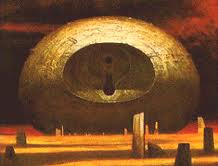 The home of the vaunted Bene Gesserit training facility in the later books of the series. In the original Dune, this facility was located on Wallach IX and had been for some time. However, five thousands years later in Heretics of Dune, the location had been changed to Chapterhouse. In the following and final novel, Chapterhouse: Dune when the Honored Matres began there assault, it was noted that Wallach had fallen to their advance.
According to the descriptions from Heretics and Chapterhouse, this planet was a green and fertile world. However, with the destruction of Rakis (Arrakis in the later novels) and the death of nearly every sandworm in the known universe, the Bene Gesserit began the process of terraforming it into another desert planet where the worms would be able to thrive, thus giving them control over the only source of spice in the universe.
Throughout the latter books in the series, the Bene Gesserit kept the location of this world a secret to protect it from the Honored Matres. They even went so far as to station a fleet of no-ships around the planet to ensure that no one would be able to locate them with prescient ability.
Geidi Prime:
 The homeworld of House Harkonnen. And if the religious metaphor which I alluded to earlier is to be believed – where Caladan is Eden and Arrakis is the real world- then this place would definitely be hell. In fact, judging by the many descriptions made of this planet and its rulers in the original series, the hellish metaphor is so thick you could cut it with a knife!
In the original Dune, we are given descriptions that emphasize the planet’s industrial nature. Hints are also given that the planet was highly volcanic and covered in wastelands. In addition to its many factories, large arenas were also built in most cities, where gladiator duels were held to entertain the populace. The Baron’s nephew, Feyd-Rathau, would often compete as a way of gaining popularity amongst the people and demonstrating his skill.
Also, in the original and subsequent novels, much is made of the Harkonnen’s sense of brutality and perversion. Whereas the Baron delighted in little boys, whom he would often kill in the course of molesting them, the planet’s artwork and decor often emphasized sex and violence.The Baron’s appearance, which is described as being so “grossly and immensely fat” that he requires an anti-gravity device just to get around. In addition, he described himself as “always hungry”.
In Heretics of Dune, when Miles Teg and the ghola of Duncan Idaho are hiding in an abandoned Harkonnen chamber, they notice an old clock where the hands are figured of a man and woman with over-sized genitalia (when the two hands line up, it looks as though a gruesome sex act is occurring!). When describing the Harkonnen’s, Leto II claimed they were “lovers of sensation”, people who were obsessed with pleasures of the body.
Hmmm, factories, volcanoes, gladiator rings and bodily pleasures? Sounds like something right out of Dante’s Inferno! In the course of adapting the novel to the big screen, David Lynch went to town on this, showing the planet to be dark, polluted and filled with terrifyingly decrepit people, many of whom had undergone hideous types of surgery (i.e. heartplugs). In the miniseries version, similar attempts were made to capture the hellish nature of the place. Here, every set was done in the colors red and black and camera angles were always askew, capturing the dark and twisted nature of the Baron and his family.
Ix:
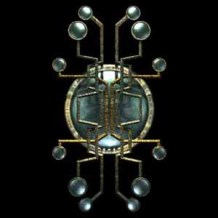 The ninth planet in the star system of Alkalurops, Ix is the home of the technocracy that is responsible for producing the vast majority of the Imperium’s machinery. The name of the planet stems from the misinterpretation of the planet’s designation in Roman numerals.
In the original six novels, we never did get a description of what Ix looks like or what really went on there. For reasons which may have a lot to do with the fact that they are technologists in a universe where technology is morally proscribed, the Ixians appear to be somewhat recluse. However, it was clear that they were responsible for creating the various technologies that were central to the plot.
In God Emperor of Dune, Leto II is found to be recording his thoughts using an illegal device that was manufactured by on Ix. It was also the Ixians who were responsible for breeding Malky, a man who’s purpose was to influence Leto into doubting his own path and purpose. Hwi Noree, who was a sort of polar opposite to Malky, was also created to lure him with her charms. Both individuals were bred inside a “no-chamber”, a special cell that hide what is within from prescient detection. This same technology would later go into created “no-ships” and even larger “no-fields” which could shield entire planets.
Another revelation which came in God Emperor of Dune was the fact that Leto, through his Golden Path, had apparently prevented the Ixians from developing a breed of hunter-seekers which would have completely destroyed humanity. Ultimately, part of his plan was to encourage the development of certain technologies while preventing others. Whereas the hunter-seekers fell into the latter category, machines that could block prescience or replace it (i.e. the machine that could do the job of a navigator) fell into the former.
Kaitain:
 In the original Dune novel, Kaitain was the seat of power for the Padishah Emperor and the location of the Imperial Court. It was also the homeworld of House Corrino after events on Selusa Secundus forced them to move. All of the guilds, major houses and interests in the known universe maintained a presence here, including the Spacing Guild, the Bene Gesserit, the Ixians, the Tleilaxu, the Landsraad, CHOAM, etc.
After events on Arrakis forced him to intervene, Emperor Shaddam IV relocated the royal palace to Arrakis so that he could oversee the deployment of his armies and ensure the Baron’s cooperation.
Aside from that, not much is mentioned of Kaitain, except for a description of the Golden Lion throne in the original novel’s appendices. Here, it is described as an opulent throne that had been “carved from a single piece of Hagal quartz — blue-green translucency shot through with streaks of yellow fire.”
Selusa Secundus:
 Once the seat of House Corrino and the Royal Court, this planet became a prison world after it was devastated in a nuclear attack. As a result, the planet’s climate is incredibly harsh and inhospitable, making it the perfect world for the condemned of society. Radiation from the attack still permeates the planet’s climate, and mortality rates amongst prisoners are apparently as high as 60 percent.
However, as is quickly made clear in the first novel and throughout the series, Selusa Secundus also serves as the training grounds for the Emperor’s dreaded Sardaukar army. This is done in secret, though most Houses within the Imperium apparently suspect it. In fact, in the first novel, the Emperor apparently became suspicious when Baron Harkonnen remarked to Count Fenrig that he would use Arrakis to conduct a similar experiment with his own armies. This was meant only in jest, but it did speak to suspicions the Emperor had.
One other person who understood this was Paul. After becoming an exile on Arrakis, he began to learn that his father had similar plans with the Fremen. By making an alliance with the Fremen, people who had been toughened by conditions worse than that on Selusa Secundus, his father would eventually be able to raise an army army that could rival the Sardaukar. Convinced that Paul was their messiah, he put this plan into action and was able to defeat the Emperor’s armies outside of Arrakeen.
After seizing control of the Golden Lion Throne, Paul exiled House Corrino to Selusa Secundus where they remained until events in Children of Dune. It was here that Shaddam’s third daughter, Princess Wensicia, began plotting the assassinate Paul’s twin children and place her own son Farad’n on the throne. When Jessica is forced to flee Arrakis with Duncan, they found shelter here and made their deal with Winsicia. In exchange for marriage between Ghanima and Farad’n, she agreed to teach him in the Bene Gesserit ways.
Beyond that, no mention is made of Selusa Secundus. Much like House Corrino, it seemed this planet was destined to fade into obscurity.
Tleilax:
 Yet another obscure world to come out of the Dune universe. And much like Ix, very little was said about this planet until late in the series. Nevertheless, it too played a very important role in the Dune universe and a number of key developments and inventions were apparently born here.
The sole planet in the Thalim star system, this world is also the home of the mysterious Bene Tleilax. In addition to being the training ground for “twisted Mentats”, Tleilax is also the home of the elusive axlotl tanks, which are used in the production of gholas. Though most within the Imperium frowned upon these devices, as they did all Tleilaxu inventions, the tanks and gholas in particular were used by just about all factions for the sake of their plotting and machinations.
In Dune Messiah, much is told about the Tleilaxu due to their involvement in a plot to unseat Paul Mua’dib from the Imperial Throne. This included the creation of a Duncan Idaho ghola, which had been programmed to kill Paul once he uttered the key phrase “she’s gone” in reference to his beloved Chani. However, this was soon revealed to be a plot within a plot, where the real intent was to show how the original memories of a ghola could be recovered by forcing them into a situation where their original self would reassert itself in order to fight against operate conditioning.
In God Emperor of Dune, Leto II is shown to be reliant on the Tleilaxu’s axlotl technology because he keeps demanding gholas of Duncan Idaho. For reasons unknown, he insists on having the original Duncan in his court, with his full memory restored. It is later suggested that this was an important part of his breeding program, that Duncan contained a special gene which he needed to bread into his descendents. But whatever his reasons, the Bene Gesserit continued his program and maintained an alliance with the Tleilaxu whereby they would receive gholas of Duncan Idaho so they could try to ascertain his true purpose.
In Heretics of Dune, the sixth incarnation of the Sisterhood’s Duncan Idaho is revealed to be special. Unlike the other incarnations, he has access to the memories of all other Idaho gholas, dating back to the very first who served Pual Mua’dib and all those who served and died at the hands of Leto II. In addition, the Tleilaxu clearly equipped him with the sex techniques of the Honored Matres so that he would be able to turn the tables on them when the time came, resisting their attempts to “imprint him” and imprint himself onto one of them. All of this leads Duncan to the conclusion that he now possesses Kwisatz Haderach-like abilities, which is confirmed in Chapterhouse: Dune when he begins to experience visions of the old man and lady (see below).
Also, in was in Heretics of Dune that readers got their first glimpse of the Tleilaxu homeworld and their society. Prior to this, it was understood that Tleilaxu was master geneticists who had engineered their own version of the Kwisatz Hadderach, but which had apparently committed suicide. It was also shown that they were ruled by a series of “masters”; Master Scytale being the one who participated in the plot in Dune Messiah.
However, what was not revealed was that the Tleilaxu were actually secret Zensunni’s and Sufi’s who maintained strict religious secrecy so as to keep their plans hidden from “powindah” (aka. outsiders). In addition, all masters were clones (not gholas) of their original selves and achieved a sort of immortality this way. This was apparently part of their long-term plan to assert their dominance over the known universe, a plan which was finally hatched in Heretics of Dune and involved the specially-programmed Duncan Idaho ghola.
Also central to the plot of several novels in the original series was the Face Dancer, another invention unique to the Tleilaxu. These were people specially bred to be able to take on the likeness and even the memories of people they were charged with killing and impersonating. Bred to be eunuchs and completely loyal, they were human only in the strictest sense of the word and possessed no identity of their own. However, this changed as the series progressed and it became clear that after millenia of adopting the personas of others, Face Dancers were beginning to develop personalities of their own.
This was apparently the threat the Honored Matres were themselves fleeing and which had forced them back into the universe of the Old Imperium. Throughout Chapterhouse: Dune, Duncan Idaho is haunted by visions of an old man and a woman whom he identifies as free Face Dancers. It is these people who he concludes are responsible for the greater threat they face, and who appear to want to capture him because of his special abilities as well.
Another interesting invention to come out Tleilax was the “slig”, a genetically engineered hybrid which crossed the DNA of a pig with a slug to produce a large, fleshy and slothful creature that is easily harvested for its meat. As was remarked in one of the later books in the series, this animal was considered ugly, even disgusting, due to its multiple mouths and skin that excreted a slimy and noxious residue. However, due to its sweet and terder meat, there were few in the Imperium who did not enjoy having “slig medallions” on their tables.
Final Thoughts:
Before I get into talk of patterns and conclusions, a little disclaimer first. First, there are plenty more worlds in Dune universe that are probably worth mentioning. However, there was no way to include them all without making either breaking this post in two or making it run on forever. Second, I deliberately left out information that did not come from the original six novels. True, there’s plenty more mentioned in the expanded franchise of these and other worlds in the Dune universe, but I wanted to stick to material that Frank himself was known to have written. Anything that comes from the expanded universe is likely to suffer from original though. Funny way of putting I know, but it can be known to dilute or undercut anything the original author themselves established.
Okay! Now that I’ve covered my ass, let me get to what I think about these cool worlds! Well, a few things jumped out at me after I was finished researching this list and gave it a final glance:
1. Frank loved secret societies!: Whether it was the Fremen, the Bene Gesserit, the Bene Tleilax, the Ixians, or the Emperor, the concept of recluse worlds and secrets ran through Frank’s original works like a vein. Clearly, he was a big (and I mean big, big, BIG!) fan of intrigue, secrecy, and societies that were founded on them. This is one of the things that I think made the Dune universe so readable and realistic in tone.
Regardless of their house or faction, it seemed that everybody was looking to get a leg up on someone else and found that the best way to do that was to conduct themselves in secret. Was this a commentary on humanity, the result of living under imperial rule, or the result of the complacency Paul and Leto hoped to rescue humanity from? Who knows, point is, he loved em! I think I smell another post in the wind…
2. Ecology effects people: As already mentioned, Frank paid a great of attention to the link between environments and culture. Whereas the Fremen and their values were clearly the result of their hostile and sparse world, the Atreides had apparently been rendered soft by generations of living on Caladan. House Harkonnen, with all their ugly desires and habits, boasted a world to match. And of course Selusa Secundus and Arrakis both served as the ideal training grounds for elite soldiers because life on both was just so freaking hard!
Well that’s all for now. Stay tuned, I plan to tackle the Star Wars universe next! And more chapters for Data Miners are still on the way…

 This controversial story, also adapted into a film, takes place in an alternate universe where Japan is a member region of a totalitarian state named the Republic of Greater East Asia. Alluding to the Greater East Asia Co-Prosperity Sphere of WWII, it is clear that this a world in which Japan won the Second World War and continued on the path of fascist Imperialism.
 Officially a military research project, it is a means of terrorizing the population, of creating such paranoia as to make organized insurgency impossible. Every year, fifty classes are selected to participate where students from a single class are isolated and are required to fight the other members. It ends when only one student remains, with that student being declared the winner.
 Fans of Dune will remember the lovely scene in the novel where Count Fenrig travels to Geidi Prime to speak with the Baron. Once he arrived, and in honor of Feyd Rathau’s birthday, he was treated to a gladiator match between Feyd and a slave gladiator. This is a common feature on Geidi Prime where death matches are considered public entertainment and every major city has its own arena.
 Taking place in a post-apocalyptic world where conventional warfare is forbidden between nations, Robot Jox tells the tale of a gladiator-style sport where giant mechs do battle in open arenas. This is how the two super-nations – the American-influenced Western Market and the Russian Confederation – work out their differences.
 Following in the same vein as Battle Royale and Lord of the Flies, The Hunger Games tells the tale of a not-too-distant future where the United States has degenerated into a tyrannical government ruled from a political seat known only as “The Capitol”. Every year, the rulers of this city force all the outlying districts to send two young people – one boy and one girl – to compete in a free-for-all known as the Hunger Games.
 Throughout the book, several things are made clear about the games which highlight its satirical nature. Satirizing reality TV shows, we learn that the games are televised, incentives are offered to keep the games going, and contestants draw sponsors based on their popularity. In addition, extra elements like romances and collaborations are encouraged to ensure that the games remain interesting and dramatic.
 Written by Stephen King under the pen name Richard Bachman, The Running Man is also a near-future dystopian tale set in 2025 where the US has become a totalitarian state because of economic fallout and wide-scale starvation. For a population dogged by hunger and martial law, the only real source of enjoyment is a televised TV show where convicts are forced to engage in gladiator-style combat against seasoned “hunters”.
 Don’t laugh! Yes, this may have been a glorified (and gory) first-person shooter in it’s time, but that doesn’t mean it wasn’t also inspired. Though gamers cared little for the storyline, the fact remains that Unreal Tournament actually had a dystopian theme that drew from several classical sources. Set in a future where the Earth government creates a no-holds-barred arena deathmatch game to settle disputes between deep space miners.



 Stories by Williams