Religion in Sci-Fi

Since its inception as a literary genre, religion has played an important role in science fiction. Whether it took the form of informing the author’s own beliefs, or was delivered as part of their particular brand of social commentary, no work of sci-fi has ever been bereft of spirituality.Even self-professed atheists and materialists had something to say about religion, the soul and the concept of the divine, even if it was merely to deny its existence.

And so, I thought it might make for an interesting conceptual post to see exactly what some of history’s greats believed and how they worked it into their body of literature. As always, I can’t include everybody, but I sure as hell can include anyone who’s books I’ve read and beliefs I’ve come to know. And where ignorance presides, I shall attempt to illuminate myself on the subject. Okay, here goes!

Alastair Reynolds:
Despite being a relative newby to the field of sci-fi authors, Reynolds has established a reputation for hard science and grand ideas with his novels. And while not much information exists on his overall beliefs, be they religious or secular, many indications found their way into his books that would suggest he carries a rather ambiguous view of spirituality.

Within the Revelation Space universe, where most of his writing takes place, there are many mentions of a biotechnological weapon known as the “Indoctrination Virus”. This is an invasive program which essentially converts an individual to any number of sectarian ideologies by permeating their consciousness with visions of God, the Cross, or other religious iconography.

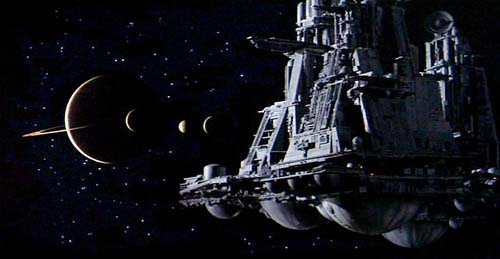
In Chasm City, these viruses are shown to be quite common on the world of Sky’s Edge, where religious sects use them to convert people to the official faith of the planet that claims Sky Haussmann was a prophet who was unfairly crucified for his actions. In Absolution Gap, they also form the basis of a society that populates an alien world known as Hela. Here, a theocratic state was built around a man named Quaiche, who while near death watched the moon’s gas giant disappear for a fraction of a second.

Unsure if this was the result of a strain he carries, he created a mobile community that travels the surface of the planet and watches the gas giant at all times using mirrors and reclining beds, so that they are looking heavenward at all times. Over the years, this community grew and expanded and became a mobile city, with each “believer” taking on transfusions of his blood so they could contract the the strain that converted him and allowed him to witness all that he did.

While this would indicate that Reynolds holds a somewhat dim view of religion, he leaves plenty of room for the opposite take. All throughout his works, the idea of preserving one’s humanity in a universe permeated by post-mortal, post-human, cybernetic beings remains a constant. In addition, as things get increasingly dark and the destruction of our race seems imminent, individual gestures of humanity are seem as capable of redeeming and even saving humanity as a species.

In fact, the names of the original trilogy allude to this: Revelation Space, Redemption Ark, Absolution Gap. Like with everything else in his books, Reynold’s seems to prefer to take a sort of middling approach, showing humanity as an ambiguous species rather than an inherently noble one or foul one. Religion, since it is a decidedly human practice, can only be seen as ambiguous as well.

Arthur C. Clarke:

At once a great futurist and technologist, Clarke was nevertheless a man who claimed to be endlessly fascinated with the concept of God and transcendence. When interviews on the subjects of his beliefs, he claimed that he was “fascinated by the concept of God.” During another interview, he claimed that he believed that “Any path to knowledge is a path to Godβ€”or Reality, whichever word one prefers to use.”

However, these views came to change over time, leading many to wonder what the beliefs of this famed author really were. At once disenchanted with organized religion, he often found himself subscribing to various alternative beliefs systems. At other times, he insisting he was an atheist, and nearing the end of his life, even went so far as to say that he did not want religious ceremonies of any kind at his funeral.

Nowhere were these paradoxical views made more clear than in his work. For example, in 2001: A Space Odyssey, the theme of transcendence, of growing to the point of becoming god-like, is central. Early hominid’s evolution into humanity is seen as the direct result of tampering by higher forces, aliens which are so ancient and evolved that they are virtually indistinguishable from gods. Throughout the series, human beings get a taste of this as they merge with the alien intelligence, becoming masters of their own universe and godlike themselves.

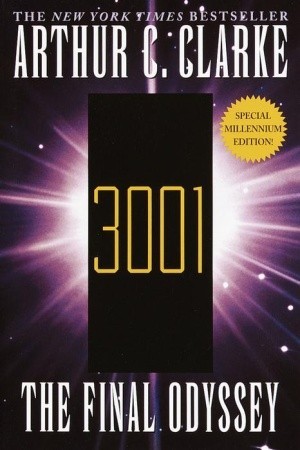
In the last book of the series – 3001: Final Odyssey, which Clarke wrote shortly before his death – Clarke describes a future where the Church goes the way of Soviet Communism. Theorizing that in the 21st century a reformist Pope would emerge who would choose to follow a similar policy as Gorbachev (“Glasnost”) and open the Vatican archives, Clarke felt that Christianity would die a natural death and have to be replaced by something else altogether. Thereafter, a sort of universal faith built around an open concept of God (called Deus) was created. By 3001, when the story is taking place, people look back at Christianity as a primitive necessity, but one which became useless by the modern age.

So, in a way, Clarke was like many Futurists and thoroughgoing empiricists, in that he deplored religion for its excesses and abuses, but seemed open to the idea of a cosmic creator at times in his life. And, when pressed, he would say that his personal pursuit for truth and ultimate reality was identical to the search for a search God, even if it went by a different name.

Frank Herbert:
Frank Herbert is known for being the man who taught people how to take science fiction seriously all over again. One of the reasons he was so successful in this regard was because of the way he worked the central role played by religion on human culture and consciousness into every book he ever wrote. Whether it was the Lazarus Effect, the Jesus Incident, or the seminal Dune, which addresses the danger of prophecies and messiahs, Frank clearly believed that the divine was something humanity was not destined to outgrow.

And nowhere was this made more clear than in the Dune saga. In the very first novel, it is established that humanity lives in a galaxy-spanning empire, and that the codes governing technological progress are the result of a “jihad” which took place thousands of years ago. This war was waged against thinking machines and all other forms of machinery that threatened to usurp humanity’s sense of identity and creativity, resulting in the religious proscription “Thou shalt not make a machine in the likeness of a human mind.”

Several millennium later, the Bene Gesserit Sisterhood, a quasi-religious matriarchal society, are conspiring to create a messianic figure in the form of the Kwisatz Haderach. The name itself derives from the Hebrew term “Kefitzat Haderech” (literally: “The Way’s Jump”), a Kabbalic term related to teleportation. However, in this case, the name refers to the individual’s absolute prescience, the ability to jump through time in their mind’s eye. In preparation for the arrival of this being, they have been using their missionaries to spread messiah legends all over the known universe, hoping that people will respond to the arrival of their superbeing as if he were a messianic figure.

When the main character, Paul Atreides – the product of Bene Gesserit’s breeding program – arrives on the planet Arrakis, where his family is betrayed and killed, he and his mother become refugees amongst the native Fremen. They are one such people who have been prepped for his arrival, and wonder if he is in fact the one who will set them free. In order to survive, Paul takes on this role and begins to lead the Fremen as a religious leader. All along, he contends with the fear that in so doing, he will be unleashing forces he cannot control, a price which seems too high just to ensure that he and his mother survive and avenge themselves on their betrayers.

However, in the end, he comes to see that this is necessary. His prescience and inner awareness reveal to him that his concepts of morality are short-sighted, failing to take into account the need for renewal through conflict and war. And in the end, this is exactly what happens.By assuming the role of the Kwisatz Haderach, and the Fremen’s Mahdi, he defeats the Emperor and the Harkonnens and becomes the Emperor of the known universe. A series of crusades followers as his followers go out into the universe to subdue all rebellion to his rule and spread their new faith. Arrakis not only becomes the seat of power, but the spiritual capital of the universe, with people coming far and wide to see their new ruler and prophet.

As the series continues, Paul chooses to sacrifice himself in order to put an end to the cult of worship that has come of his actions. He wanders off into the desert, leaving his sister Alia to rule as Regent. As his children come of age, his son, Leto II, realizes the follies of his father and must make a similar choice as he did. Granted, assuming the role of a God is fraught with peril, but in order to truly awaken humanity from its sleep and prepare it for the future, he must go all the way and become a living God. Thus, he merges with the Sandworm, achieving a sort of quasi-immortality and invincibility.

After 3500 of absolute rule, he conspires in a plot to destroy himself and dies, leaving a huge, terrible, but ultimately noble legacy that people spend the next 1500 years combing through. When they come to the point of realizing what Leto II was preparing them for, they come to see the wisdom in his three and half millennia of tyranny. By becoming a living God, by manipulating the universe through his absolute prescience, he was preparing humanity for the day when they would be able to live without Gods. Like the Bene Gesserit, who became his chosen after the fact, he was conspiring to create “mature humanity”, a race of people who could work out their fates moment by moment and not be slaved to prophecies or messiahs.

As you can see, the commentary ran very deep. At once, Herbert seemed to be saying that humanity would never outlive the need for religion, but at the same time, that our survival might someday require us to break our dependency on it. Much like his critique on rational thought, democracy and all other forms of ideology, he seemed to be suggesting that the path to true wisdom and independence lay in cultivating a holistic awareness, one which viewed the universe not through a single lens, but as a multifaceted whole, and which was really nothing more than a projection of ourselves.

For those seeking clarity, that’s about as clear as it gets. As Herbert made very clear through the collection of his works, religion was something that he was very fascinated with, especially the more esoteric and mystical sects – such as Kaballah, Sufism, Zen Buddhism and the like. This was appropriate since he was never a man who gave answers easily, preferring to reflect on the mystery rather than trying to contain it with imperfect thoughts. Leto II said something very similar to this towards the end of God Emperor of Dune; as he lay dying he cautions Duncan and Siona against attempts to dispel the mystery, since all he ever tried to do was increase it. I interpreted this to be a testament of Frank’s own beliefs, which still inspire me to this day!

Gene Roddenberry:
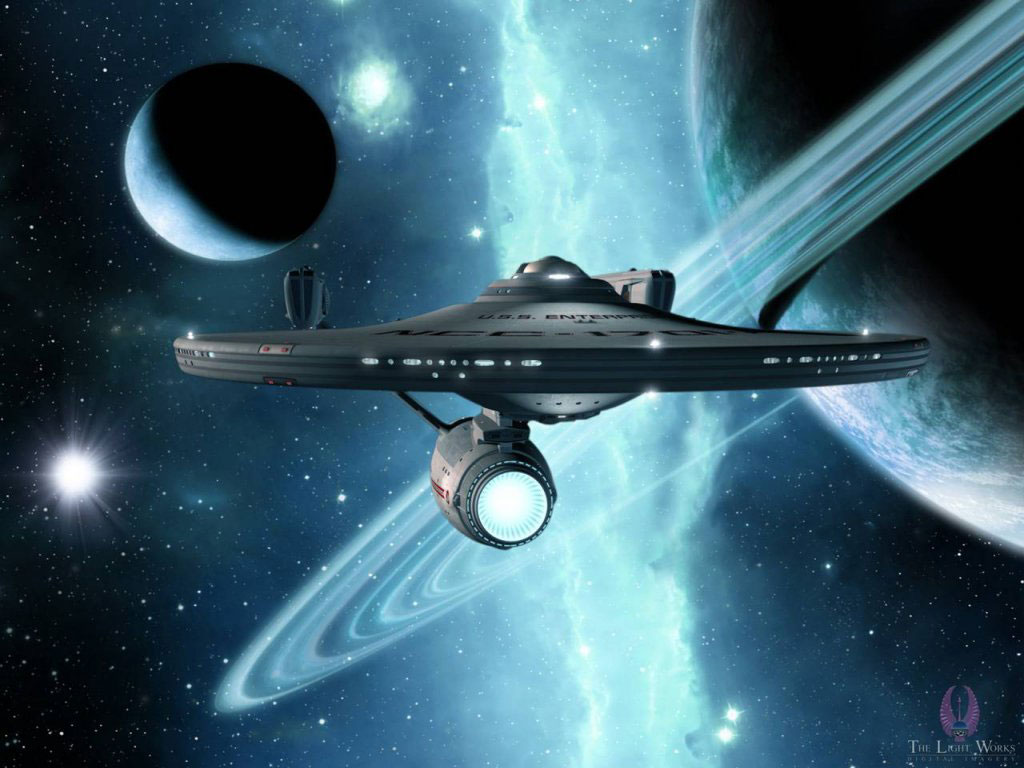
For years, I often found myself wondering what Roddenberry’s take on organized religion, spirituality, and the divine were. Like most things pertaining to Star Trek, he seemed to prefer taking the open and inclusive approach, ruling nothing out, but not endorsing anything too strongly either. Whenever religion entered into the storyline, it seemed to take the form of an alien race who’s social structure was meant to resemble something out of Earth’s past. As always, their was a point to be made, namely how bad things used to be!

Behind the scenes, however, Roddenberry was a little more open about his stance. According to various pieces of biographical info, he considered himself a humanist and agnostic, and wanted to create a show where none of his characters had any religious beliefs. If anything, the people of the future were pure rationalists who viewed religion as something more primitive, even if they didn’t openly say so.

However, this did not prevent the subject of religion from coming up throughout the series. In the original, the crew discovers planets where religious practices are done that resemble something out of Earth’s past. In the episode “Bread and Circuses”, they arrive on a planet that resembles ancient Rome, complete with gladiatorial fights, Pro-Consuls, and a growing religion which worships the “Son”, aka. a Jesus-like figure. This last element is apparently on the rise, and is advocating peace and an end to the cultures violent ways. In “Who Mourns Adonais”, the crew are taken captive by a powerful alien that claims to be Apollo, and who was in fact the true inspiration for the Greek god. After neutralizing him and escaping from the planet, Apollo laments that the universe has outgrown the need for gods.

In the newer series, several similar stories are told. In the season one episode entitled “Justice”, they come Edenic world where the people live a seemingly free and happy existence. However, it is soon revealed that their penal code involves death for the most minor of infractions, one which was handed down by “God”. This being is essentially an alien presence that lives in orbit and watches over the people. When the Enterprise tries to rescue Wesley, who is condemned to die, the being interferes. Picard gains its acquiescence by stating “there can be no justice in absolutes”, and they leave. In a third season episode entitled “Who Watches the Watchers”, Picard becomes a deity to the people of a primitive world when the crew saves one of their inhabitants from death. In an effort to avoid tampering with their culture, he lands and convinces him of his mortality, and explains that progress, not divine power, is the basis of their advanced nature.

These are but a few examples, but they do indicate a general trend. Whereas Roddenberry assiduously avoided proselytizing his own beliefs in the series, he was sure to indicate the ill effects religion can have on culture. In just about every instance, it is seen as the source of intolerance, injustice, irrationality, and crimes against humanity and nature. But of course, the various crews of the Enterprise and Starfleet do not interfere where they can help it, for this is seen as something that all species must pass through on the road to realizing their true potential.

George Lucas:
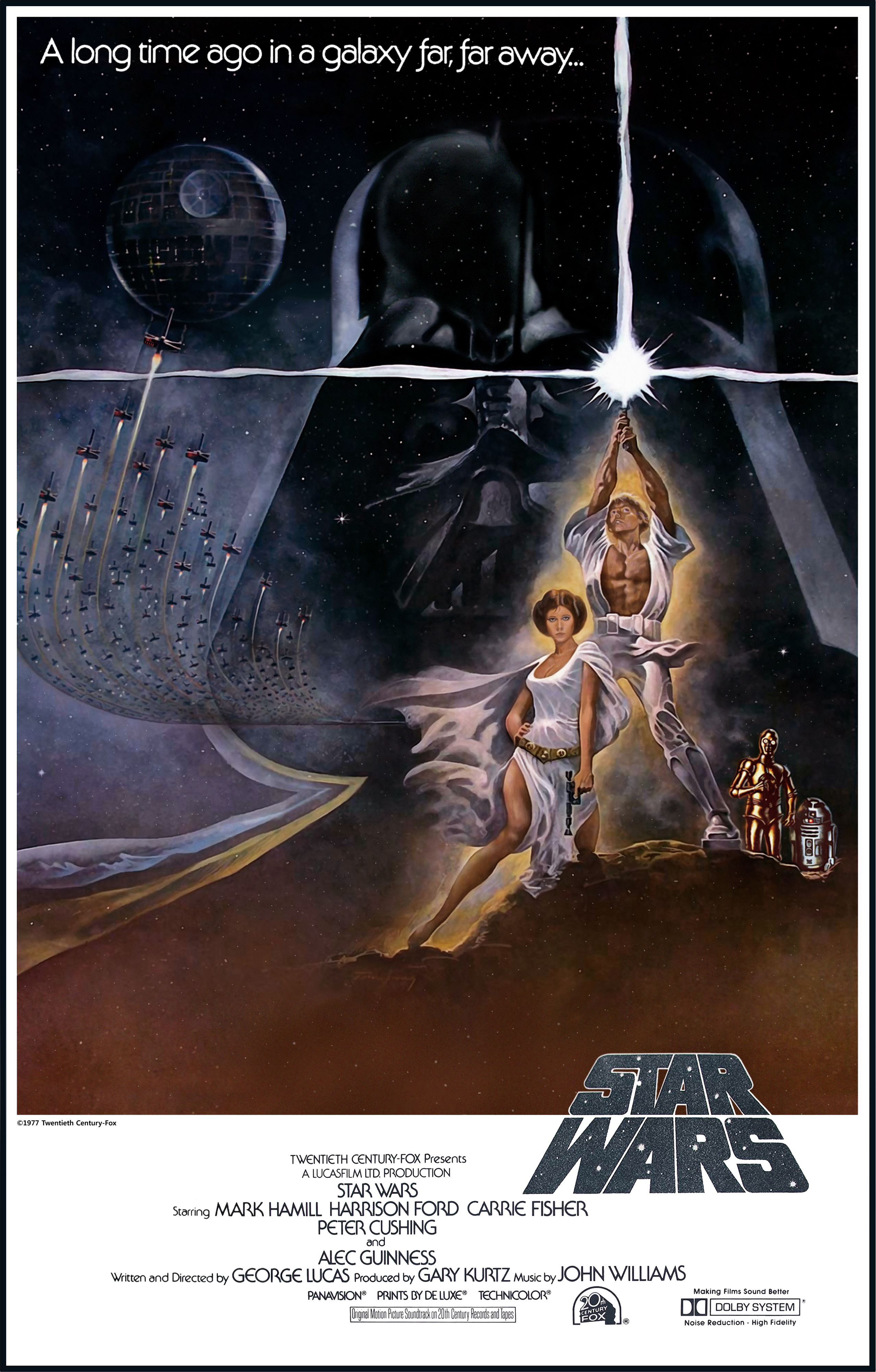
Whereas many singers of space opera and science fiction provided various commentaries on religion in their works, Lucas was somewhat unique in that he worked his directly into the plot. Much like everything else in his stories, no direct lines are established with the world of today, or its institutions. Instead, he chose to create a universe that was entirely fictional and fantastic, with its own beliefs, conflicts, institutions and political entities. But of course, the commentary on today was still evident, after a fashion.

In the Star Wars universe,religion (if it could be called that) revolves around “The Force”. As Obi-Wan described it in the original movie “It is an energy field created by all living things. It surrounds us and penetrates us. It binds the galaxy together.” In Empire, Yoda goes a step farther when he says “Life creates it, makes it grow. Its energy surrounds us and binds us. Luminous beings are we, not this crude matter.”Sounds rather pantheistic, doesn’t it? The idea that all life emits an essence, and that the fate of all living things is bound together in a sort of interdependency.

What’s more, the way the Force was governed by a Light Side and a Dark Side; here Lucas appeared to be relying on some decidely Judea-Christian elements. Luke’s father, for example, is a picture perfect representation of The Fall, a Faustian man who sold his soul for power and avarice. The way he and the Emperor continually try to turn Luke by dangling its benefits under his nose is further evidence of this. And in the end, the way Darth Vader is redeemed, and how he is willing to sacrifice himself to save his son, calls to mind the crucifixion.

In the prequels, things got even more blatant. Whereas Anakin was seen as a sort of Lucifer in the originals, here he became the prodigal son. Conceived by the “Will of the Force”, i.e. an immaculate conception, he was seen by Qui Gonn as “The Chosen One” who’s arrival was foretold in prophecy. The Jedi Council feared him, which is not dissimilar to how the Pharisees and Sanhedrin reacted to the presence of Jesus (according to Scripture). And of course, the way Anakin’s potential and powers became a source of temptation for him, this too was a call-back to the Lucifer angle from the first films.

All of this was in keeping with Lucas’ fascination with cultural mythos and legends. Many times over, Lucas was rather deliberate in the way he worked cultural references – either visually or allegorically – into his stories. The lightsaber fights and Jedi ethos were derived from medieval Europe and Japan, the architecture and many of the costumes called to mind ancient Greece, Rome and Byzantium, the setting and gun fights were regularly taken from Old Westerns, and the Imperial getup and rise to power of the Emperor were made to resemble Nazi Germany.

However, Lucas also dispelled much of the mystery and pseudo-religious and spiritual quality of his work by introducing the concept of the “midi-chlorians”. This is something I cannot skip, since it produced a hell of a lot of angst from the fan community and confounded much of what he said in the original films. Whereas the Force was seen as a mystic and ethereal thing in the originals, in the prequels, Lucas sought to explain the nature of it by ascribing it to microscopic bacteria which are present in all living things.

Perhaps he thought it would be cool to explain just how this semi-spiritual power worked, in empirical terms. In that, he failed miserably! Not only did this deprive his franchise of something truly mysterious and mystical, it also did not advance the “science” of the Force one inch. Within this explanation, the Force is still a power which resides in all living things, its just these microscopic bacteria which seem to allow people to interact with it. Like most fans, I see this as something superfluous which we were all better off without!

H.G. Wells:
Prior to men like Herbert and the “Big Three” (Asimov, Clarke, and Robert A. Heinlein), Wells was the master of science fiction. Since his time, during which he published a staggering amount of novels, short-stories and essays, his influence and commentaries have had immense influence. And when it came to matters of faith and the divine, Well’s was similarly influential, being one of the first sci-fi writers to espouse a sort of “elemental Christian” belief, or a sort of non-denominational acceptance for religion.

These beliefs he outlined in his non-fiction work entitled God the Invisible King, where he professed a belief in a personal and intimate God that did not draw on any particular belief system. He defined this in more specific terms later in the work,Β  aligning himself with a “renascent or modern religionΒ … neither atheist nor Buddhist nor Mohammedan nor ChristianΒ … [that] he has found growing up in himself”.

When it came to traditional religions, however, Wells was clearly of the belief that they had served their purpose, but were not meant to endure. In The Shape of Things to Come, he envisioned the creation of a global state (similar to Zamyatin’s “One State” and Huxley’s “World State”), where scientific progress was emphasized and all religions suppressed. This he saw as intrinsic to mankind’s progress towards a modern utopia, based on reason and enlightenment and the end of war.

In War of the Worlds, a similar interpretation is made. In this apocalyptic novel, one of the main characters is a clergyman who interprets the invasion of the Martians as divine retribution. However, this only seems to illustrate his mentally instability, and his rantings about “the end of the world” are ultimately what lead to his death at the hands of the aliens. Seen in this light, the clergyman could be interpreted as a symbol of mankind’s primitive past, something which is necessarily culled in the wake of the invasion my a far more advanced force. And, as some are quick to point out, the Martians are ultimately defeated by biology (i.e. microscopic germs) rather than any form of intervention from on high.

Isaac Asimov:
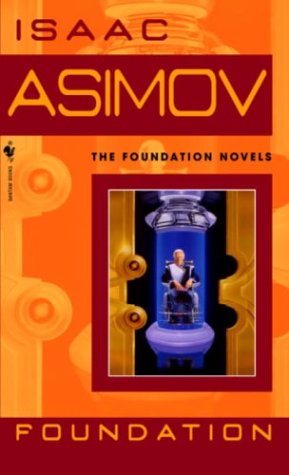
Much like his “Big Three” colleague Clarke, Asimov was a committed rationalist, atheist and humanist. Though he was born to Jewish parents who observed the faith, he did not practice Judaism and did not espouse a particular belief in God. Nevertheless, he continued to identify himself as a Jew throughout his life. In addition, as he would demonstrate throughout his writings, he was not averse to religious convictions in others, and was even willing to write on the subject of religion for the sake of philosophical and historical education.

His writings were indicative of this, particularly in the Foundation and I, Robot series. In the former, Asimov shows how the Foundation scientists use religion in order to achieve a degree of influential amongst the less-advanced kingdoms that border their world, in effect becoming a sort of technological priesthood. This works to their advantage when the regent of Anacreon attempts to invade Terminus and ends up with a full-scale coup on his hands.

In the Robot series, Asimov includes a very interesting chapter entitled “Reason”, in which a robot comes to invent its own religion. Named QT1 (aka. “Cutie”) this robot possesses high-reasoning capabilities and runs a space station that provides power to Earth. It concludes that the stars, space, and the planets don’t really exist, and that the power source of the ship is in fact God and the source of its creation.

Naturally, the humans who arrive on the station attempt to reason with Cutie, but to no avail. It has managed to convert the other robots, and maintains the place in good order as a sort of temple. However, the human engineers conclude that since its beliefs do not conflict with the smooth running of the facility, that they should not attempt to counterman it’s belief system.

What’s more, in a later story entitled “Escape!” Asimov presents readers with a view of the afterlife. After developing a spaceship that incorporates an FTL engine (known as the hyperspatial drive), a crew of humans take it into space and perform a successful jump. For a few seconds, they experience odd and disturbing visions before returning safely home. They realize that the jump causes people to cease exist, effectively dying, which is a violation of the Three Laws, hence why previous AI’s were incapable of completing the drive.

Taken together, these sources would seem to illustrate that Asimov was a man who saw the uses of religion, and was even fascinated by it at times, but did not have much of a use for it. But as long as it was not abused or impinged upon the rights or beliefs of others, he was willing to let sleeping dogs lie.

Philip K. Dick:

Naturally, every crowd of great artists has its oddball, and that’s where PKD comes in! In addition to being a heavy user of drugs and a fan of altered mental states, he also had some rather weird ideas when it came to religion. These were in part the result of a series of religious experiences he underwent which began for him in 1974 while recovering from dental surgery. They were also an expresion of his gnostic beliefs, which held that God is a higher intelligence which the human mind can make contact with, given the right circumstances.

Of Dick’s hallucinations, the first incident apparently occurred when a beautiful Christian woman made a delivery to his door and he was mesmerized by the light reflecting off of her fish pendant, which he claimed imparted wisdom and clairvoyance. Thereafter, Dick began to experience numerous hallucinations, and began to rule out medication as a cause. Initially, they took the form of geometric patterns, but began to include visions of Jesus and ancient Rome as well. Dick documented and discussed these experiences and how they shaped his views on faith in a private journal, which was later published as The Exegesis of Philip K. Dick.

As he stated in his journal, he began to feel that his hallucinations were the result of a greater mind making contact with his own, which he referred to as the “transcendentally rational mind”, “Zebra”, “God” and “VALIS” (vast active living intelligence system). Much of these experiences would provide the inspiration for his VALIS Trilogy, a series that deals with the concept of visions, our notions of God and transcendent beings.

In addition, many of Dick’s hallucinations took on a decidedly Judea-Christian character. For instance, at one point he became convinced that he was living two parallel lives; one as himself, and another as “Thomas” – a Christian persecuted by Romans in the 1st century AD. At another point, Dick felt that he had been taken over by the spirit of the prophet Elijah. These experiences would lead him to adapt certain Biblical elements into his work, a prime example being a chapter in Flow My Tears, the Policeman Said, which bore a striking resemblance to the a story from the Biblical Book of Acts, which Dick claimed to never have read.

All of this is a testament to the rather profound (and possibly nuts!) mind of PKD and his fascination with all things divine and spiritual. Though not a man of faith in the traditional sense, he was very much a part of the counter-culture in his day and experimented with drugs and alternative religious beliefs quite freely. And while most of his ideas were dismissed as outlandish and the result of drug abuse, there were many (Robert A Heinlein included) who saw past that to the creative and rather gifted artistic soul within. It is therefore considered a tragedy that PKD died in relative obscurity, having never witnessed how much of an impact and influence he would have on science fiction and modern literature.

Ray Bradbury:

Next up, we have the late great Ray Bradbury, a science fiction writer for whom all literature was of immense import. This included the Bible, the Tanakh, the Koran, and just about any other religious text ever written by man. What’s more, many of his works contain passages which would seem to indicate that Bradbury held religion in high esteem, and even believed it to be compatible (or at least not mutually exclusive) with science.

For example, in his seminal novel Fahrenheit 451, one of the most precious volumes being protected by the character of Faber, a former English professor, is the Bible itself. When Montag confronts him and begins ripping the pages out of it, Faber tells him that it is one of the last remaining copies in the world that actually contains God’s words, instead of the newer versions which contain product placements.

As the story progresses and World War III finally comes, Montag joins Faber and a community of exiles, all of whom are responsible for “becoming a book” by memorizing it. In this way, they hope to preserve whatever literature they can until such a time as civilization and the art of writing re-emerges. Montag is charged with memorizing the Book of Ecclesiastes, and joins the exiles on their journey.

In the Martian Chronicles, Bradbury is even more clear on his stance vis a vis religion. In the short story “-And the Moon Be Still as Bright”, the Fourth Expedition arrives on Mars to find that the majority of the Martians have died from chickenpox. A disillusioned character named Jeff Spender then spends much time in the alien ruins and comes to praise the Martians for how their culture combined religion and science.

Humanity’s big mistake, according to Spender, was in praising science at the expense of religion, which he seemed to suggest was responsible for modern man’s sense of displacement. Or has Spender put it: “That’s the mistake we made when Darwin showed up. We embraced him and Huxley and Freud, all smiles. And then we discovered that Darwin and our religions didn’t mix. Or at least we didn’t think they did. We were fools. We tried to budge Darwin and Huxley and Freud. They wouldn’t move very well. So, like idiots, we tried knocking down religion.”

In short, Bradbury saw humanity as lost, largely because of it deification of reason at the expense of faith. However, he did not appear to be advocating any particular religion, or even religion over science. When it came right down to it, he seemed to be of the opinion that faith was important to life, an outlet for creativity and inspiration, and needed to be preserved, along with everything else.

Robert A. Heinlein:
As yet another member of the “Big Three”, Heinlein’s own religious view bear a striking resemblance to those of his contemporaries. Much like Clarke and Asimov, he was a committed rationalist and humanist, and varied from outright atheism to merely rejecting the current state of human religion. According to various sources, this began when he first encountered Darwin’s Origin of the Species at the age of 13, which convinced him to eschew his Baptist roots.

These can be summed up in a statement made by Maureen, one of his characters in To Sail Beyond the Sunset, when she said that the purpose of metaphysics was to ask the question why, but not to answer. When one passed beyond the realm of questions and got into answer, they were firmly in religious territory. Naturally, the character of Maureen preferred the former, as the latter led to intolerance, chauvinism, and persecution.

In Stranger In A Strange Land, one of the most famous science fiction novels of all time, plenty of time is dedicated to the main character’s (the Martian Smith) experiences with religion. After becoming disillusioned with humanity’s existing institutions, he decides to create a new faith known as the “Church of All Worlds”. This new faith was based on universal acceptance and blended elements of paganism, revivalism, and psychic training. In short, it was an attempt to predate major religions by reintroducing ancient rites, nature worship, and the recognition of the divine in all things.

What’s more, Stranger’s challenge to just about every contemporary more, which included monogamy, fear of death, money, and conventional morality could only be seen by religious authorities as an indictment of traditional values. In that respect, they were right. Heinlein plotted out the entire novel in the early fifties, but did begin writing it for a full decade. He would later of say of this, “I had been in no hurry to finish it, as that story could not be published commercially until the public mores changed. I could see them changing and it turned out that I had timed it right.”

But just in case his work did not suffice, Heinlein expressed his opinions quite clearly in the book entitled Notebooks of Lazarus Long (named after one of his recurring characters): “History does not record anywhere at any time a religion that has any rational basis. Religion is a crutch for people not strong enough to stand up to the unknown without help. But, like dandruff, most people do have a religion and spend time and money on it and seem to derive considerable pleasure from fiddling with it.” These and other quotes illustrated his issues with religion, which included their irreconcilable nature with reason, their inherent contradictions, and the ludicrous things done in their names.

Summary:
And that’s what the masters had to say on the subject, at least those that I chose to include. As you can plainly see, their opinions ran the gambit from outright condemnation of religion (but not necessarily of faith) to believing that religion had it’s place alongside science as an equally worthy form of expression. And of course, there were those who fell somewhere in the middle, either seeing religion as an ambiguous thing or something that humanity would not outgrow – at least not for the foreseeable future. Strangely, none of them seemed to think that religion trumped science… I wonder why πŸ˜‰

Of Faster-Than-Light Travel

It’s a popular concept, the fictional technology that could help us break that tricky light barrier. And it’s not hard to see why. The universe is a really, really, REALLY big place! And if we ever want to begin exploring and colonizing our tiny corner of it – and not have to deal with all the relativistic effects of time dilation and long, long waits – we better find a way to move faster.

And this is where various franchises come up with their more creative take on physics and the natural universe. Others, they just present it as a given and avoid any difficult, farfetched, or clumsy explanations. And in the end, we the viewers go along because we know that without it, space travel is going to be one long, tedious, and mind-bendingly complex journey!

Alcubierre Drive:
Proposed by Miguel Alcubierre as a way of resolving Einstein’s field equations, the Alcubierre Drive is an untested by possible way to achieve FTL travel. As opposed to Warp, Foldspace, or most other proposed means of FTL that involve some kind of internal propulsion of jump drive, the Alcubierre Drive is based on the idea of generating a wave that a ship would then “surf” in order to travel.

The creation of this wave would cause the fabric of space ahead of the spacecraft to contract and the space behind it to expand. The ship would then ride this wave inside a region of flat space known as a warp bubble and be carried along as the region itself moves through space. As a result, conventional relativistic effects such as time dilation would not apply in the same way as if the ship itself were moving.

The Alcubierre drive is featured in a few different science fiction genres, mainly those of the “hard” variety. This includes Stephen Baxter’s Ark, M. John Harrison’s novel Light,Β Warren Ellis and Colleen Doran’s Orbiter, and Ian Douglas’s Star Carrier where it is the primary means of transport.

FTL Drive:
The primary means of interstellar travel in the Battlestar Galactica universe, where every ship larger than a in-system transport is equipped with an FTL drive. How it works is never really explained, but it is clear that the technology is complex and involves a great deal of calculation. This is not only to ensureolve n accurate relocation through space-time, but also to make sure they don’t up jumping too close to a planet, star, or worse, right in the middle of either.

Whereas Colonial ships use their own computers to calculate jumps, Cylon ships rely on the Hybrid. These “machines” are essentially semi-organic computers, and represent the first step in Cylon evolution from pure machines to organic beings. Apparently, the hybrids were more sophisticated than Colonial computers, especially the aging Galactica. Hence, they were able to calculate jumps more quickly and accurately.

Holtzman Drive:
This FTL drive system comes to us from the Dune universe, and is otherwise known as a “Foldspace Engine”. Relying on principles that are not entirely clear to those in the Dune universe, the system involves depositing a ship from one point in space-time to another instantaneously. Though the workings of the drive are never really explained, it is intimated in Chapterhouse: Dune that tachyons are involved.

Another key component in the system is a Guild Navigator, a mutant who has been given natural prescient abilities thanks to constant exposure to spice. Using this prescience, the Navigator “sees” a path through space-time in order to guide the ship safely through. But in time, the Ixians invented a machine that was capable of doing this job as well, thus making the entire process automated and breaking the Guild’s monopoly on spacing.

Hyperspace:
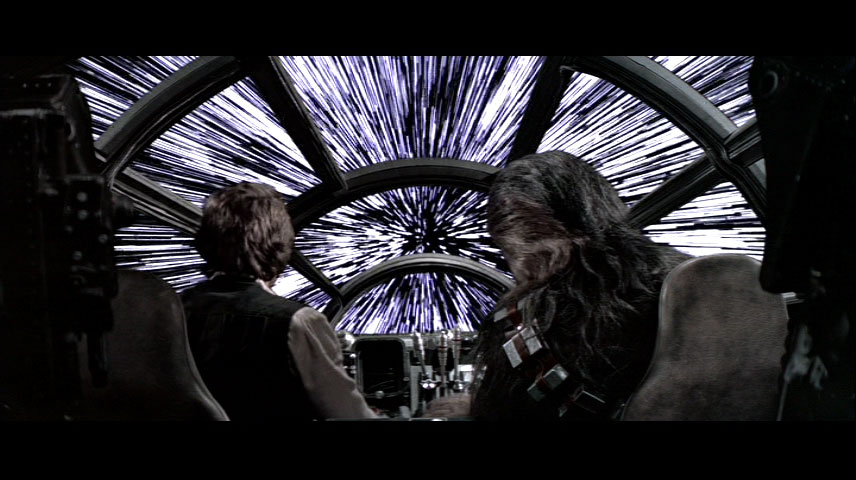
Like the Warp drive, the terms hyperspace and hyperdrive have become staples withing the science fiction community. It’s most popular usage comes from Star Wars where it is the principle means of interstellar travel. Though it is never explained how a hyperdrive works, it is made abundantly clear through a series of visuals in the first and subsequent movies that it involves speeds in excess of the speed of light.

In addition, Han Solo indicated in the original movie that the Falcon’s top speed was “point five past light-speed”, indicating that it can travel 1.5 c. All other references to hyperspace speed factors in the franchise are similar, with velocities given in terms of a decimal point value. As a fast ship, the Falcon can reach point five, whereas most of the larger Imperial and Rebel ships can make only point three or four at most.

Though Star Wars is the most popular example of hyperspace, it is by no means the earliest. The first recorded example was in John Campbell’s “Islands of Space,” which appeared in Amazing Stories in 1931.Β Arthur C. Clarke’s also mentioned hyperspace in his 1950 story Technical Error. However, the most enduring example comes from Asimov’s Foundation universe, where hyperspace is the principal means of travel in the Galactic Republic. In I, Robot, the invention of the “hyperspatial drive” is the basis of one of the short stories, and was meant to provide a sense of continuity with his earlier Foundation series.

Other franchises that feature the concept of hyperspace include Babylon 5, Homeworld, Macross/Robotech, and Stargate. Combined with Star Wars and the Foundation series, it is the most popular – albeit the most ill-defined -form of FTL in the realm of science fiction.

Infinite Probability Drive:
The perfect mixture of irreverence and science: the Infinite Probability Drive from The Hitchhikers Guide to the Galaxy. This FTL concept is based on a particular perception of quantum theory which states that a subatomic particle is most likely to be in a particular place, such as near the nucleus of an atom, but there is also a small probability of it being found very far from its point of origin.

Thus, a body could travel from place to place without passing through the intervening space if you had sufficient control of probability. According to the Guide, in this way the drive “passes through every conceivable point in every conceivable universe almost simultaneously,” meaning the traveller is “never sure where they’ll end up or even what species they’ll be when they get there” and therefore it’s important to dress accordingly!

Subspace Jump Drive:
Here we have an FTL concept which comes from one of my favorite games of all time, Descent Freespace. Subspace jumps, relying on the drive system of the same name, represent a very quick method of interstellar travel. By relying on subspace “corridors” that run from one point in space-time to another, a ship is able to move quickly from one star system to the next.

The only drawback to this concept is the fact that travel must occur along officially designated “nodes”. These nodes usually pass between large gravitational sources (i.e. between stars systems) but also can exist within a system itself. Virtually all nodes are unstable, existing for mere seconds or minutes at a time. However, nodes which will last for centuries or longer are designated as “stable” and used for transit.

Another favorite franchise which uses a similar concept is the Wing Commander universe. In all versions of the game, particularly Wing Commander: Privateer, interstellar travel comes down to plotting jumps from predesignated points in space. One cannot simply jump from one spot to another provided accurate calculations are made, they have to use the mapped out points or no jump is possible. This, as opposed to hyperspace travel, posits that subspace is a reality that exists only in certain areas of space-time and must be explored before it can be used.

TARDIS:
Officially, the Time and Relative Dimension in Space is a time machine and spacecraft that comes to us from British science fiction television program Doctor Who and its associated spin-offs. Produced by the advanced race known as the Time Lords, an extraterrestrial civilization to which the Doctor belongs, this device that makes his adventures possible.

Basically, a TARDIS gives its pilot the ability to travel to any point in time and any place in the universe. Based on a form of biotechnology which is grown, not assembled, they draw their power primarily from an artificial singularity (i.e. a black hole) known as the “Eye of Harmony”. Other sources of fuel include mercury, specialized crystals and a form of temporal energy.

Each TARDIS is primed with the biological imprint of a Time Lord so that only they can use it. Should anyone else try to commandeer one, it undergoes molecular disintegration and is lots. The interior of a TARDIS is much larger than its exterior, which can blend in with its surroundings using the ship’s “chameleon circuit”. Hence why it appears to outsiders as a phone booth in the series.

Warp Drive:
Possibly the best known form of FTL travel which comes to us from the original Star Trek and its many spinoffs. In addition to being a prime example of fictional FTL travel, it is also perhaps the best explained example.Though said explanation has evolved over time, with contributions being made in the original series, TNG, and the Star Trek technical manual, the basic concept remains the same.

By using a matter/antimatter reactor to create plasma, and by sending this plasma through warp coils, a ship is able to create a warp bubble that will move the craft into subspace and hence exceed the speed of light. Later explanations would go on to add that an anti-matter/matter reaction which powers the two separate nacelles of the ship are what create the displacement field (the aforementioned “bubble”) that allows for warp.

Apparently, Warp 10 is the threshold for warp speed, meaning that it is the point at which a ship reaches infinite speed. Though several mentions are made of ships exceeding this threshold, this was later explained as being the result of different scales. Officially, it is part of the Star Trek canon that no ship is capable of exceeding Warp 10 without outside help. When that occurs, extreme time dilation, such as anti-time, occurs, which can be disastrous for the crew!

In addition to Star Trek, several other franchises have made mention of the Warp Drive. This includes StarCraft, Mass Effect, Starship Troopers, and Doctor Who.

Final Thoughts:
Having looked through all these examples, several things become clear. In fact, it puts me in mind of a clip produced by the Space Network many years ago. Essentially, Space explored the differences between FTL in past and present franchises, connecting them to developments in real science. Whereas Warp and Hyperspace tended to be the earliest examples, based on the idea of simply exceeding the speed of light, thereby breaking the law of physics, later ideas focused on the idea of circumventing them. This required that writers come up with fictional ideas that either relied on astrophysics and quantum theory or exploited the holes within them.

One such way was to use the idea of “wormholes” in space-time, a hypothetical theory that suggests that space is permeated by topological holes that could act as “shortcuts” through space-time. A similar theory is that of subspace, a fictional universe where the normal rules of physics do not apply. Finally, and also in the same vein, is the concept of a controlled singularity, an artificial black hole that can open a rift through space-time and allow a ship to pass from one point in the universe to another.

Explanations as to how these systems would work remains entirely hypothetical and based on shaky science. As always, the purpose here is to allow for interstellar travel and communications that doesn’t take decades or even centuries. Whether or not the physics of it all works is besides the point. Which brings me to two tentative conclusions.

  1. Explanations Need Not Apply: Given the implausible (or at the very least, inexplicable) nature of most FTL concepts, the best sci-fi is likely to be the stuff that doesn’t seek to explain how its FTL system of choice works. I’st simply there and does the job. People hit a button, push a lever, do some calculations, or fly into a jump gate. Then boom! seconds later (or days and weeks) and they find themselves on the other side, light years away and ready to do their mission!
  2. That’s Hard: Given how any story that involves relativistic space travel, where both time dilation and confusing time jumps are necessarily incorporated into the story, only the hardest of hard sci-fi can ever expect to do without warp drives, hyperspace, jump or FTL drives. Any other kind of sci-fi that is looking to be accessible, and therefore commercially successful, will have to involve some kind of FTL or face extinction.

Well, that’s all I got for the time being. In the meantime, keep your eyes on the skies and don’t stop dreaming about how we’re one day going to get out there. For even if we start sending ships beyond our solar system in the near future, it’s going to be well into the distant future before they get anywhere and we start hearing back from them. At least until someone figures out how to get around Einstein’s Theory of Relativity, damn bloody genius! Until then, I’d like to sign off with a tagline:

This has been Matt Williams with another conceptual post. Good night, and happy spacing!

Generation Ships

systems___cryogenics_1Ever since my writing group and I got on the subject of space and colonization, some recurring themes have come up. For starters, there’s the concept of interstellar space travel, the kind that doesn’t involve fictitious Faster-Than-Light drive systems and cannot exceed the speed of light. In those situations, which are far more likely to happen in this and the next century, the question of how to keep crews alive until your arrival keeps popping up.

One way is to utilize some kind of cryogenic procedure, where passengers are put into “reefersleep” for the duration of the journey and awakened upon arrival. Though it might sound a bit crude, it’s actually a very practical solution to the problems of how to keep a crew preserved and provided for during the incredibly long voyages that space travel entails. This procedure has come up repeatedly in the realm of science fiction, particularly H.P. Lovecraft’s Cool Air, Robert A Heinlein’s The Door into Summer, Clarke’s 2001: A Space Odyssey, PKD’s Ubik, the Alien franchise, and the Revelation Space universe, just to name a few.

RAMAThe other solution, which is the subject of this post, is to construct generational ships. These are basically “interstellar arks” where people and even entire biospheres are transported from one location to another. Crews are kept in waking conditions, experience subjective time, and entertain themselves in interactive, simulated, or virtual environments in order to stay sane until they complete their voyage. Though much more expensive to build, these ships are an equally elegant solution for what to do about non-FTL space travel and settlement.

These two have made many appearances in science fiction, and I’ve compiled a list of all the Generation Ships, Space Arks, and O’Neil Cylinders I could find.

Firefly:
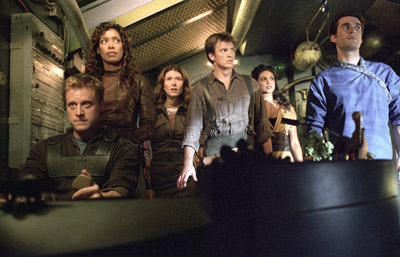
At the beginning of each episode, it was explained how Earth was used up, prompting humanity to seek out a new home. This is what eventually led them to 34 Tauri in the 22nd century, where they began the process of terraforming and settling the many worlds and moons. Though it was never explained in detail, mainly because the show was canceled before they could (screw you, Fox!), indications are given in the movie Serenity and the expanded universe that this migration involved Generation Ships.

In the movie, this was done mainly through visuals, where a large flotilla dusts off from Earth and eventually finds its way to the system of the White Sun. It was also said that the process of terraforming took decades, which would require that the crews had somewhere to stay while the terraformers did their work. Also, speculative point here, but it would stand to reason that the fleet would have to have some pretty large ships to accommodate both settlers and the kind of equipment they would need.

Chasm City:
This novel, set in Alastair Reynold’s Revelation Space universe, involves a large thread that follows the settlement of the world known as Sky’s Edge. This took place early in the universe’s backstory, before the development of “lighthuggers,” and therefore required that the ships be able to support crews for long periods of time.

From Reynold’s descriptions, these ships were large, cylindrical vessels that boasted vast bays to hold their many cryogenically frozen passengers. At the same time, the waking crew needed vast facilities to provide for their needs. These included mess halls, sleeping quarters, medical bays, and recreational facilities. Sky Haussmann, one of the children amongst the crew, had a nursery with a robotic clown and virtual backgrounds.

This divide, between a waking crew and frozen settlers, represents a sort of compromise between the cryo-ship design and the generation ship. On the one hand, you’ve got the majority of your crew at near-frozen temperatures and perfectly preserved for the voyage. On the other, you’ve got a crew walking about and looking for food, rest, and entertainment. However, it still qualifies and even inspired my group in our quest to design the perfect story for settlement!

Orphans of the Sky:
One of the earliest known examples of the use of generation ships in sci-fi, this two-novella set was also one of Heinlein’s first works. Like Clarke’s Rendezvous with Rama, it features a massive cylindrical ship that is drifting through space. But unlike Rama, Heinlein’s ship, known as the Vanguard, has become a derelict that is permanently adrift in space.

As the story goes on, we learn that this was due to a mutiny that killed all the piloting officers many generations back. Since that time, the descendants of the surviving loyal crew have forgotten the purpose and nature of their ship and lapsed into a pre-technological culture marked by superstition. In fact, they now view their ship as the cosmos itself and interpret its “voyage” as a metaphor.

The crew is also ruled by an oligarchy of “Officers” and “Scientists”, the head of which is the descendent of the original captain. Much like pre-industrial times, most crew members are dedicated to a simple life where they tend to agriculture and are illiterate. Seldom does anyone ever venture to the “upper decks” where the “muties” (aka. “mutants” or “mutineers”) are kept. These individuals, it is learned, know the truth of the ship’s purpose, another reason why they are ostracized from the rest of the crew.

As you can plainly see, this book not only featured a generation ship and some rather hard science when it came to colonization, but it also raised some valid and interesting questions about how space travel and confining environments could affect subsequent generations of people. Those who were born into an enclosed environment would come to know it as their whole world. And in the absence of external, verifiable facts (such as messages from Earth or historical records), they could even be led to believe there was nothing beyond their walls.

Paradises Lost:
Similar in tone and setting to Heinlein’s Orphans, this story by Ursula K. LeGuin focuses instead on the psychological impact that generational travel would have on a human crew. Adapted into a musical, this story explores the basic question of what happens when you spend your whole life (and entire generations) traveling toward a goal, only to find that the endpoint has become otherworldly and unattainable?

The story takes place aboard a generation ship known as the Discovery, where people are born and die on a trip to colonize a distant planet. Much like the Orphans, the ship becomes their entire universe and begins to seem more tangible to them than Earth or their mission to colonize a new world. The reason for this is quite simple; as the journey goes on, those who once lived on Earth are slowly dying off, and subsequent generations know about these things only through tales and lore.

As a result, a new religion is born that teaches that the ship is “spaceship heaven” and that it is bound for eternity. This religion is known as Bliss, and the younger generation is embracing it against the wishes of the older. The story is told through the eyes of two elder characters – Hsing and Luis. They know their lives will end on board the ship and that their mission lies in the hands of future generations. Naturally, they worry since said generations are convinced that they should never leave the ship they call heaven.

Rendezvous with Rama:
One of the best examples of a generational ship that is extra-terrestrial in origin! Known as Rama, this massive space cylinder was basically a self-contained world that was carrying the Raman civilization from one corner of the galaxy to another. When a crew from Earth arrives and begins to survey the interior, they begin to notice several tell-tale features.

For one, the interior contains several structures that appear to be arranged in “cities” – odd blocky shapes that look like buildings and streets with shallow trenches in them, looking like trolley car tracks. In addition, there is a sea that stretches in a band around Rama, dubbed the Cylindrical Sea, and trenches cut into the sides that appear to be windows.

In time, all the machinery comes to light, thanks in part to the admission of light through the ship’s long windows. Small creatures that appear to be biological machines (aka. “biots”) also begin to come out to conduct routine maintenance. In time, they come to the conclusion that the buildings constitute factories and the cylindrical sea contains trace elements and bio-matter, which they will begin to convert into “Ramans” as soon they get within range of their destination.

In the end, it seemed that the Ramans determined that the best way to spread their species was to break them down into their component parts, place them aboard ships that would float for generations through space, and begin recompiling them once they got to where they wanted to go. Ultimately, Sol was just a stopover on their long journey, and more ships were coming in subsequent novels. Still, this first exposure to the alien generation ship was an educational experience!

Ringworld:
Written by Larry Niven, the Ringworld series is considered one of the greatest examples of exploratory sci-fi. Set in the Known Space universe of the distant future, the story revolves around the discovery and exploration of the Ringworlds, an artificial habitation ring built by an extinct civilization. With the makers of these rings long dead, the rings themselves are adrift and their engineered inhabitants degenerated into a primitive state.

These artificial rings are roughly one million kilometers wide and one thousand kilometers across, approximately the diameter of Earth’s orbit. Each one encircles a Sol-type star which provides both life-sustaining energy and light. And, of course, they rotate, thus providing artificial gravity that is 99.2% as strong as Earth’s through the action of centrifugal force. Nighttime is provided by an inner ring of shadow squares which are connected to each other by thin, ultra-strong shadow square wire.

The ringworld has a habitable flat inner surface that is equivalent in area to approximately three million Earth-sized planets. Hence, it is able to sustain extensive ecosystems and all forms of life. This appears to be the purpose of the rings, in the end, the creation of habitable areas in space that were removed from terrestrial environments. An added bonus was the ability to transport said life and ecosystems over vast distances through space without having to stick them in an enclosed environment.

So really, these things were like a gigantic version of a generation ship, capable of moving an entire species or civilization through space.

Stargate Atlantis:

The series Stargate AtlantisΒ contained a few mentions of vessels that fit the profile of generation ships. For starters, there was the Ancients City Ship, a self-contained city that was also a spaceship. Though it was capable of FTL travel, the vessel was capable of sustaining a city-sized population for extended periods of time as it traveled through space.

In addition, in the third season episode entitled “The Ark”, Colonel Sheppard’s team discovers a facility inside a hollowed-out moon that turns out to be an ark created by the people of the planet around which the moon is in orbit. The ark was built to preserve the existence of the people from the planet so that they could reemerge and rebuild their civilization. Generations prior, these people had fought a disastrous war with the Wraith in which they were almost exterminated.

Though not a vessel per se, the moon base served the same purpose as a generation ship. Though the moon orbited their original homeworld and the people really weren’t traveling through space (except in orbit around their planet), the principle was essentially the same. People were kept in stasis until the day came when they could awaken to transplant themselves on the intended world, thus ensuring the survival and expansion of their civilization.

Yes, the examples abound! In fact, the concept of the generation ship and related ideas are so fertile that I’m kind of surprised that it took me so long to really appreciate it. But then again, I came to a lot of the classics a little late in life. Ah well, it doesn’t really matter when you get to the destination, provided that you get there and enjoy the journey – which is kind of the concept behind a generation ship, isn’t it? If you can’t just warp your way across the Universe – if you have to take your time and drift slowly – you might as well travel in style!

More Utopian Science Fiction

Boy this is fun, and like I said last time, overdue! For fans of literature and science fiction in particular, you really can’t do justice to a genre unless you examine its opposite as well. Not only is it fun and interesting, it kind of opens your eyes to the fact that we find a certain truth in the pairing of opposites.

For one, you come to see that they really aren’t that different. And two, that they essentially come from the same place. Much like light and dark, black and white, heaven and hell, extremes have more in common with each other than anything occupying the space between them. Is that quote? If not, it is now! MINE!

Last time, I buckled down to tackle the big names, the famous classics. Today, I thought I’d cast the net a little wider since there are a ton I missed and there really is no shortage of examples. Here’s what I got so far:

3001: The Final Odyssey:
The final book in Clarke’s Odyssey series, 3001 not only provided a sense of culmination to this epic story, but also gave Clarke the opportunity to share his predictions on where humanity would be by the 31st century. Released in 1997, it also contained a great deal of speculation about the coming millennium and what the 21st century would look like.

The story begins when, just shy of the millennial celebrations, the body of Frank Poole is discovered at the edge of the solar system. This astronaut, who died in the first novel, had been floating at the far edge of the solar system for almost a thousand years. His body is resurrected using the latest technology, and his reintroduction to society is the vehicle through which things are told.

As a fish out of water, Poole is made privy to all the changes that have taken place in the last 1000 years. Humanity now lives throughout the solar system, Earth and most planets are orbited by massive rings that connect to Earth through huge towers. Sectarian religion has been abandoned in favor of a new, universal faith, and the problems of overpopulation, pollution and war have all been solved.

Amongst humanity’s technological marvels are inertia drives on their ships (no FTL exists), a form of holodeck, genetically engineered work creatures, skull caps that transmit info directly into a person’s brain, data crystals, and of course the massive space habitation modules. Though the story was meant to be predictive for the most part, one cannot deny that this book contained utopian elements. Essentially, Clarke advanced his usual futurist outlook, in which humanity’s problems would be solved through the ongoing application of technology and progress.

Though I found it somewhat naive at the time of reading, it was nevertheless an interesting romp, especially where the predictive aspects came into play. And it also contained one of the best lines I’ve ever read, a New Years toast for the 21st century which I quoted on midnight on Dec. 31st, 1999: “Here’s to the 20th century. The best, and worst, century of them all!”

Brave New World:
IΒ  know, BNW is listed as one of the quintessential dystopian novels of our time, and I even listed as such on my list of dystopian classics. However, one cannot deny that this book also contained very strong utopian elements and themes, and it was how these failed to remedy the problem of being human that ultimately made BNW a dystopia.

Set in the year 2540 CE (or 632 A.F. in the book), the World State is very much the product of utopian engineering. Literally all aspects of social control, which are largely benign, are designed to ensure that all people are born and bred to serve a specific role, cannot aspire beyond it, and are emotionally and psychologically insulated against unhappiness.

In short, people have exchanged their freedom for the sake of peace, order, and predictability. In fact, these ideals are pretty much summed up with the States motto: “Community, Identity, Stability.” Another indication is the popular slogan, “everyone belongs to everyone else”. And finally, the orgy porgy song provides some insight as well: “Orgy-porgy, Ford and fun, Kiss the girls and make them One. Boys at one with
girls at peace; Orgy-porgy gives release.”

Couldn’t have said it better myself. The goal of creating oneness and sameness to prevent things like greed, jealousy, war, and strife, is a constant theme in utopian literature, elevated to the form of high art in Huxley’s vision. And above all, the dream of a perfectly regulated, peaceful society, where individuality and difference have been purged, was accomplished through pleasure and not pain. This can best be summed up in an exerpt from Huxley’s letter to Orwell after 1984 was released:

“Within the next generation I believe that the world’s rulers will discover that infant conditioning and narco-hypnosis are more efficient, as instruments of government, than clubs and prisons, and that the lust for power can be just as completely satisfied by suggesting people into loving their servitude as by flogging and kicking them into obedience. In other words, I feel that the nightmare of Nineteen Eighty-Four is destined to modulate into the nightmare of a world having more resemblance to that which I imagined in Brave New World.”

I, Robot:
In the course of examining utopian literature, a term came up with made me stop and think… Robotocracy. Hence this next example which also contains some rather interesting utopian elements. As one of Asimov’s most recognized works, this collection of interlinked short stories tells of a future where intelligent robots make their debut and gradually become more and more integrated to society.

Ultimately, Asimov portrays AI’s as loyal and gentle creatures who not only improve the lot of humanity, but are incapable of harming their human masters. Whereas most speculative works of fiction dealing with AI’s are cautionary in nature, showing how entrusting our fate to machines will result in death, in this story, all of humanity’s fears prove baseless.

In time, the employment of robots and positronic master computers leads to the development of FTL, optimizes the world’s economy and production, and even prevents problems and conflicts which they can foresee. Human beings express reservation and fear, but in the end, the robotocracy proves to be sensible and caring, not cold and inhuman.

It was for this reason that I didn’t care for the film adaptation. Not only would a repressive, world-domination plan contradict the first and most important of the Three Laws (a robot may not harm, or through inaction, allow to be harmed, a human), it really didn’t contain any inherent logic. How would putting humans under house arrest ultimately ensure their protection? With all humans deprived of their most basic rights, revolution would be inevitable, leading to more death. Ah, whatever. At least the book was good.

Island:
Also written by Aldous Huxley, this novel (published in 1962) represented a possible resolution to the central problem he raised in Brave New World. Essentially, the protagonist of John the Savage committed suicide at the end because he could not reconcile himself to either world, one characterized by primitive freedom and the other by civilized sterility.

In the foreword section of the 1946 edition, Huxley expressed regret over the fact that he could not have given John a third option, which could have taken the form of the various exile communities where the thinking people who didn’t fit in with the “civilization” of the World State were sent.

Hence the setting of Island, a utopia created on the fictional island of Pala. Told from the point of view of a cynical journalist named Will Farnaby who gets shipwrecked on the island, the story was Huxley’s final book and a message to humanity about possible third options and the positive application of technology and knowledge.

As Huxley decribed it beforehand: “In this community economics would be decentralist and Henry-Georgian, politics Kropotkinesque co-operative. Science and technology would be used as though, like the Sabbath, they had been made for man, not (as at present and still more so in the Brave New World) as though man were to be adapted and enslaved to them. This last sentence is especially important in reference to Island. Here, drug use, trance states, contraception, assisted reproduction and slogans are all used voluntarily and serve the purposes of learning and social betterment. They are not employed as a means to pacify and control people.

What’s more, from a social perspective, Huxley characterized Pala’s prevailing philosophy as:Β  “a kind of Higher Utilitarianism, in which the Greatest Happiness principle would be secondary to the Final End principle – the first question to be asked and answered in every contingency of life being: “How will this thought or action contribute to, or interfere with, the achievement, by me and the greatest possible number of other individuals, of man’s Final End?”

The Culture Series:
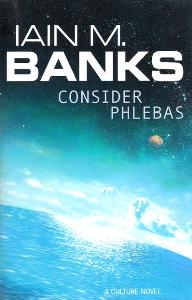
Created by sci-fi author Ian M. Banks, “The Culture” refers to the fictional interstellar anarchist, socialist, and utopian society that characterizes his novels. Encompassing ten novels – beginning with Consider Phlebas (1987) and concluding with The Hydrogen Sonata (slated for release in October 2012), Banks paints the picture of a universe where humanity has created a peaceful, stable and abundant society through the application of technology.

Told predominantly from the point of view of those who operate at the fringes of The Culture, the stories focus on the interactions of these utopian humans with other civilizations. Much in the same way as Star Trek follows the adventure of the Enterprise crew as they deal with alien cultures, often ones which are less developed or evolved, this provides a vehicle for examining humanity’s current predicament and providing possible solutions.

Overall, The Society is best characterized as post-scarcity, where advanced technologies provide practically limitless material wealth and comfort, where almost all physical constraints – including disease and death – have been eliminated, and the concept of possessions are outmoded. Through all of this, an almost totally Β egalitarian, stable society has been created where compulsion or force are not needed, except as a means of self-defense.

At times however, The Culture has been known to interfere with other civilizations as a means of spreading their culture and affecting change in their neighbors. This has often been criticized as an endorsement of neo-conservatism and ethnocentrism on Banks part. However, Banks has denied such claims and many of his defenders claim that The Culture’s moral legitimacy is far beyond anything the West currently enjoys. Others would point out that this potential “dark side” the The Culture is meant to reflect the paradox of liberal societies at home and their behavior in foreign affairs.

The Mars Trilogy:
This ground-breaking trilogy by Kim Stanley Robertson about the colonization and terraforming of Mars is also a fine example of utopia in literature. taking place in the not-too-distant future, the trilogy begins with the settlement of the planet in Red Mars and then follows the exploits of the colonists as they begin transforming from a barren rock to a veritable second Earth.

Even though there are numerous dark elements to the story, including civil strife, internal divisions, exploitation and even assassination, the utopian elements far outweigh the dystopian ones. Ultimately, the focus is on the emergence of a highly advanced, egalitarian society on Mars while Earth continues to suffer from the problems of overpopulation, pollution and ecological disaster.

In addition, the colony of Mars benefits from the fact that its original inhabitants, though by no means all mentally stable and benevolent people, were nevertheless some of the best and brightest minds Earth had produced. As a result, and with the help of longevity treatments, Mars had the benefit of being run by some truly dedicated and enlightened founders. What’s more, their descendents would grow up in a world where stability, hard work, and a respect for science, technology and ecology were pervasive.

All of this reflects Robertson’s multifaceted approach to story writing, where social aspirations and problems are just as important as the technological and economic aspects of settling a new world. Much like the conquest and settlement of the New World gave rise to various utopian ideals and social experiments, he speculates that the settlement of new planets will result in the same. Technology still plays an important role of course, as the colonists of Mars have the benefit of taking advantage of scientific advancements while simultaneously avoiding the baggage of life on Earth. In the end, there’s just something to be said about a fresh start isn’t there?

The Night’s Dawn Trilogy:
Written by British author Peter F. Hamilton, The Night’s Dawn Trilogy consists of three science fiction novels: The Reality Dysfunction (1996), The Neutronium Alchemist (1997), and The Naked God (1999). Much like Robertson’s depiction of humanity in the Mars Trilogy, Hamilton explores humanity’s dark side at length, and yet the tone of his novels are predominantly optimistic.

Set in a distant 27th century, humanity has become divided between two major factions. On the one side there are the Edenists, an egalitarian, utopian society who employ biotech (“biteck” in their lingo) to create living, sentient space stations as well as machines. The use of “Affinity” – a form of telepathy – allows them to communicate with each other and their biteck, creating a sort of mass mentality which encompasses entire communities. Thiee Edenic government is what is known as the “Consensus”, a form of direct democracy that is made possible by telepathic link.

On the one side their are the Adamists, the larger of the two where human beings live with a limited religious proscription against technology. Biteck is forbidden, but nanotechnology, FTL and other advanced applications are freely used. Because the Adamists encompass anyone not in the Edenic camp, they are larger, but far less organized and cohesive than their counterparts.

Through all this, Hamilton attempts to showΒ  how the application of technology and the merger between biological and artificial can create the kind of society envisioned by men like Thomas More, characterized by participatory government, collective mentality, and a consensus-oriented decision-making process. While both the Edenic and Adamist societies are still pervaded by problems, not the least of which is competition between the two, the ideals of betterment through technological progress are nevertheless predominant.

Revelation Space Series:
Another series which examines the beneficial aspects of technology, particularly where governance and equality are concerned, is the Revelation Space Trilogy by Alastair Reynolds. Comprised of the five novels Revelation Space (2000), Chasm City (2001), Redemption Ark (2002), Absolution Gap (2003) and The Prefect (2007).

Taking place in the distant future (circa. 2427 to 2727), the story revolves around a series of worlds that have been settled by several different factions of humanity. The two largest factions are known as the Demarchists and the Conjoiners, both of whom have employed advanced technology to create their own versions of an ideal society.

Though much of the books are dark in tone due to the discovery of a terrible nanotechnological virus (the “Melding Plague”) and the discovery of hostile ancient aliens (the “Inhibitors”), the series still does have some discernible utopian elements. For starters, the Demarchists take their name from the concept of “Democratic Anarchy”, and employ cybernetic implants, nanotech and wireless communications to achieve this.

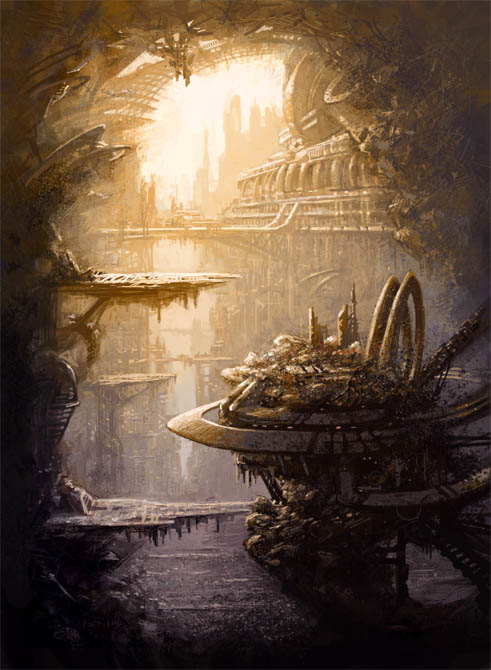
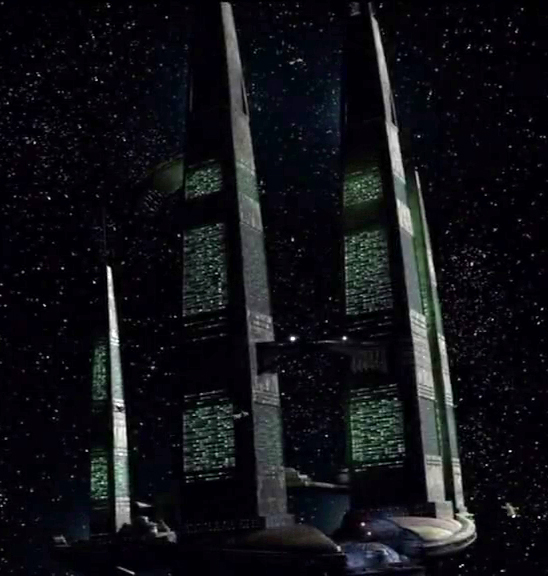
Within the Demarchist metropolis of Chasm City, all citizens are permanently wired into a central server which allows them permanent access to news, updates, and the decision-making process. As a result, Demarchist society is virtually egalitarian and marks of social status, such as ranks and titles, do not exist. This changed with the spread of the Melding Plague however, causing the city’s structures to degenerate into a gothic nightmare and the class divide to become very visible.

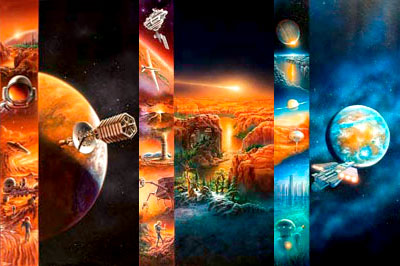
Another important faction are the Conjoiners. These people, who were originally inhabitants with the Great Wall of Mars (above left picture), but who became a star-faring people after the war with the “Coalition for Neural Purity” drove them off Mars. To these people, cybernetic implants were taken a step further, giving every Conjoined person the ability to telepathically link with others, preserve their memories beyond death, prolong their life, and enhance their natural thinking process.

Thus, much like Hamilton and Banks, Reynolds speculates that the advent of nanotech, biotech, and space travel will result in the emergence of societies that are predominantly egalitarian, peaceful, and dedicated to consensus and direct democracy. I personally found these stories quite inspiring since it seems that in many ways, we are already witnessing the birth of such possibilities in the here and now.

Yep, this is still fun, if somewhat tiring and conducive to burnout! I think I’ll be taking a break from these literary-criticism pieces for a day or two, maybe getting back to pieces on robots and cool gear. However, in keeping with the format I used for dystopia, I still have one more utopian article left to cover. Look for it, it will be called “Utopia in Popular Culture!” See ya there…

Cool Ships (volume VIII)

Battleship Yamato:
A couple times now I’ve given praise to ship designs that went beyond the usual airplane/ seafaring paradigm. But what can you say about a spaceship which is a carbon copy of a old sea battleship? I don’t know, gutsy maybe? That its paying homage to the original? That’s all I can really say on this one, since it is identical to its namesake from the Imperial Japanese Navy.

Taken from the anime series of the same name, the Yamato was a prototype ship which was built in secret by Earth forces in the ruins of the original. Using alien technology, it was the first Earth ship to boast FTL and a “wave-motion-gun”. These devices were meant to give it an edge in the ongoing war with a race known as the “Gamilons”.

Early in this war, the Gamilons had bombarded Earth with radioactive meteorites. The result was that all human settlements had to be moved underground. However, the radiation was slowly working its way down to the inhabitants, and the only hope for survival came in the form of a message from a distant star. After completion, the Yamato was meant to fly to this world and retrieve the device which apparently could cleanse Earth of its poisonous radiation.

Thus, the Yamato was created to perform a mission that meant the very survival of the human race. It’s drive system was to make sure it could make the trip, while its weapons were meant to ensure it could defend itself.

Cylon Heavy Raider:
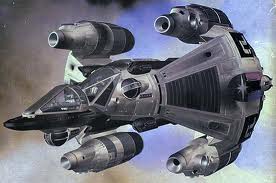
Another installment from the BSG universe, here we have the heavy hitter of the Cylon fleet, the dual purpose attack and transport craft, otherwise known as “the turkey”. Capable of atmospheric entry, space flight and FTL travel, the Heavy Raider is capable of attacking, transporting troops and conducting boarding operations.

Unlike the standard Raider, the heavy can either fly itself on autopilot or be piloted by actual an Centurion. However, its automated functions do not appear to be the result of a sentient nervous system. In terms of armaments and capacity, the heavy has six cannons mounted under its cockpit and its bay is capable of holding up to ten Centurions.

The Heavy Raider made its first appearance in season one (“Scattered”) when one crashed into the starboard flight pod. On Caprica, Sharon Valerii (Boomer) commandeers one to provide fire support to the resistance and save Starbuck as she escaped from a Cylon medical facility (“The Farm”). The Heavy Raider would go on to make several more appearances in the series, particularly whenever assault missions or heavy raids were concerned.

Quasar Fire-class Cruiser:
Once more onto the Star Wars universe, my friends! But this time, its into the expanded universe with a ship that is somewhat obscure by most standards. Known as the Quasar Fire-class cruiser, or Alliance Escort Carrier, this ship made its first appearance in the Thrawn Trilogy during the Battle of Bilbringi then again in the novel The Truce At Bakura.

Designed by the Sullustans as a cargo transport, many of these vessels were given to the Alliance and converted for combat. This consisted of stripping down the cargo bays and turning into hangars, and mounting defensive turrets at the front and rear.

Thought lightly armored, armed, and shielded, the Quasar’s small size and versatility make it a ship of choice for small fleets and minor attack forces. It’s six squadrons of fighters also give it an effective defensive screen, making it all the more suitable as a small fleet command ship.

The Leviathan:
Did I say once more, I meant twice… maybe more!Β And this one goes way back, to roughly 4000 years before events in the original movies. Officially known as an Interdictor-class cruiser, this vessel was the mainstay of the Republican navy during the time of the Mandalarion Wars and was featured heavily in Star Wars: Knights of the Old Republic.

During the outbreak of the Sith War which immediately followed, the Leviathan served as Darth Revan’s flagship. After he was captured by the Jedi Order, ownership of this vessel changed to Darth Malak. The ship was responsible for obliterating the surface of Taris and was later the site where Darth Revan, now working for the Jedi Order, confronted Darth Malak for the first time since his defection.

Measuring 600 meters in length, the ship carries an arsenal of 20 quad laser cannons, 4 turbolasers, 2 ion cannons, and four squadrons of fighters. Although somewhat mild by modern Star Wars standards, she was designed to be a forerunner to the modern Star Destroyer design.

Negh’var-class Cruiser:
Despite their brawling, yelling and terrible table manners, you gotta admit; the Klingons make a fine looking ship! And this is especially true of the Negh’var-class warship, the heaviest of the heavies in the Klingon armada, serving as the command ship on many different occasions (and in multiple universes).

Ships of this kind made their first appearance in the series finale of Star Trek: TNG when two attacked the USS Pasteur. Another appeared in DS9 when a changling posing as General Martok led the Klingon fleet against the Cardassian Union, and again against Deep Space 9 when the Federation chose to oppose the invasion. They also went on to play an important role in the Dominion War alongside Federation and Romulan warships.

In addition to the standard cloaking device, the Negh’var carries an impressive array of armaments, including two massive disruptor pods mounted underneath the ship’s wings. It also carries multiple photon torpedo launchers, and several smaller emitters mounted across the ship. She is also capable of standing toe to toe with most other ships in the Alpha Quadrant in terms of velocity, making it up to speeds of Warp 9.

Ornithopter:
Not long ago, I was lamented the fact that I kept forgetting to mention anything from the Dune universe. Now I can’t seem to do a single post without including a Dune ship! This time, its the ornithopter, the curious cool ship that’s perplexed readers and conceptual artists for some time.

The most common vessel in the Imperium, the ornithopter (or ‘thopter for short) was an extremely versatile vessel that served primarily as a cargo vessel and transport. In addition, they often served in a military capacity, being fitted with lasguns, bombs and missiles. This was particulalry the case during Paul Muad’ib’s uprising, when House Atreides ‘thopters were fitted for the assault on Arrakeen and the Imperial Palace.

According to numerous descriptions taken from the expanded Dune universe, the thopter was primarily powered by jet propulsion, but relied on a set of beating wings to maintain altitude and maneuver. The concept has gone through several renditions over the years, due to the many attempts to adapt Dune to the screen. In David Lynch’s 1984 movie adaptation, ‘thopters appeared as small, box-like crat with swept wings that retracted and deployed from the fuselage.

In the 2000 miniseries, they were pictured as vertical take off and landing craft with fans mounted in pivoting wings. The featured picture (shown above left) is taken from The Road to Dune and is an artists concept of what a ‘thopter would look like. Here, we see beating wings which deploy for takeoff and retract upon landing.

USNC In Amber Clad:
Feels like its been awhile since I included anything from the Halo universe. And so here’s the Reunion, a Vladivostok-class guided missile frigate. Though somewhat old and outclassed by modern Covenant standards, several frigates played a crucial role in the Great War against Covenant forces. One such vessel was the In Amber Clad.

Armed with 12 Point Defense Guns, 40 missile pods, 5 twin rail gun turrets, a magnetic accelerator cannon, a compliment of Shiva nuclear missiles and a full compliment of Marines, dropships and escort fighters, the In Amber Clad was considered the mainstay of the old Earth fleet. Capable of atmospheric entry and landing, this ship did not need to rely on drop pods or shuttles, and could land an entire Marine force by itself.

During the Covenant War, these frigates were replaced by the larger and more heavily armed Halcyon-class cruisers. However, the In Amber Clad managed to score a significant victory over the Covenant during the Battle of Installation 05. During the course of the battle, it served as the flagship and won the day when it crashed into the Covenant ship High Charity.

VF-1 Veritech:
As requested, I’ve finally found an example from the Robotech universe! And to be honest, I wondered how long it would take. Though I’m not too familiar with this franchise, the RPG is something I remember fondly from my childhood, and some of the designs still percolate in my consciousness.

One of which is this, the VF-1 Vertiech, also known as the “Valkyrie”. This battleoid, which was adapted from alien technology (known as Protoculture),was originally designed for hand-to-hand combat with aliens which were up to 15 meters in height, the Veritech and subsequent breeds of mechas became the new face of warfare.

Mechas can function in both the fighter and mech role. Capable of flying through space, atmospheres and fighting on land, the Veritech was one of the most versatile and maneuverable mechas in the known universe. With a flight speed of Mach 3 (in atmosphere), and a top speed of 100 km/h running, she is as fast as any land vehicle or aerospace vessel. In addition, the standard Veritech carries two high-powered lasers, head mounted laser cannons, guided missiles, a rotary cannon, and is even capable of engaging in hand to hand combat.

YT-2400 Corellian Freighter:
To finish, I’m in the mood for something Corellian! And so it’s back to the Star Wars universe for this one. Much like its predecessor, the YT-1300 (a.k.a. the Millennium Falcon), the 2400 was a class of light freighter that was fast, tough and endlessly modifiable. So like the Falcon, it was a favorite amongst smugglers, merchants and privateers.

Smaller and lighter than the 1300 series, the 2400 boasted only one servo-turret for defense in addition to its shield array and armor plating. However, this could easily be remedied with the addition of extra guns and missile launchers. And its ample hull space and engine power, the 2400’s could easily accommodate additional mounts and the added weight.

One such ship which acheived notoriety during the Galactic Civil War was the Outrider, the ship of famed smuggler Dash Rendar. This ship, like most other 2400’s, was heavily modified to accommodate additional systems and weapons. Clearly, when the Corellian shipyard designated this vessel as freight transport, it was a nod and a wink!

Thank you all and good hunting! See you in next time in volume 9!

Cool Ships (volume V)

Back again! More ships, more designs, more franchises too. Like I said last time, there’s just no limit when you get right down to it. And in the course of doing my homework on cool sci-fi concepts, I’ve found that there are hundreds of franchises out there that I’ve never even heard of before. Of those I have heard of, I always seem to miss a few obvious candidates. That’s the beauty of ongoing segments though. Here are the latest, with some suggestions thrown in too πŸ˜‰

Colonial Raptor:
Another late entry from the Battlestar Galactica universe, the updated version. Designed for reconnaissance, transport, atmospheric and space flight, and capable of making short range FTL jumps, the Raptor is the workhorse of the Colonial fleet and one of its most versatile vessels. Ordinarily, the Raptor is operated by a crew of two, one pilot and one Electronic Countermeasures Officer. Given it’s size and shape, it cannot launch from a launch tube and must take off and land from a Battlestar’s forward launch bay.

Having served with the Colonial fleet for over 40 years, making its debut in the first Cylon War, the versatility and reliability of this craft have prevented it from being phased out by newer generations of Colonial ships. During the second Cylon War, Raptors were used regularly in order to dust off survivors from Caprica and other colonies. Relying on a fly-by-wire system, rather than the new defense network systems, it also proved invulnerable to the virus the Cylon’s used to cripple the fleet.

Cygnus:
Now here’s one that people probably won’t remember. In fact, I didn’t recall it either until I did some reading and realized I had seen the movie which featured it – The Black Hole – as a child and quite enjoyed it. Though a little Buck Rogers-y by modern standards, the concept and the movie and this ship still stand the test of time.

Released in 1979 by Walt Disney Pictures, The Black Hole was one of many movies that sought to take advantage of the sci-fi craze that Star Wars had unleashed. The plot centers on a derelict ship, known as the Cygnus, which is run by an android crew and a brilliant (albeit mad) scientist named Doctor Hans Reinhardt.

In addition to looking pretty cool, with its glowing transparent sections and old-school design, the Cygnus is apparently able to withstand the gravitational pull of black hole due to its ability to generate its own gravity well. In addition, its commander, Dr. Reinhardt, theorized that he would be able to fly it through a black hole and see once and for all what lay on the other side… It didn’t take, but still a cool idea!

Guild Heighliner:

Artist’s concept for a Guild Heighliner

Here’s one I couldn’t believe I had forgotten. In fact, I will accept any and all chastisements for my failure to include Dune craft in this series thus far. This can include physical beatings, just stay away from the nads… not quite done with those yet!

Anyhoo, when it comes to Dune ships, the Heighliner definitely takes the cake! Massive as all hell, this ship was the backbone of all commerce, diplomacy, travel and tourism in the Dune universe. Like all shipping, it was the exclusive property of the Spacing Guild and subject to their many controls, laws and whims.

Boasting Holtzman engines – a FTL drive system that was capable of “folding space” – the ship still required the services of a Guild Navigator. This person, a semi-prescient mutant due to years of living in a spice tank, would see a path through time and space and thus navigate the ship safely to its destination.

According to the original Dune, a single Heighliner was capable of lifting an entire planet’s worth of personnel, goods and supplies from one point in space to the next. As Duke Leto tells Paul in Part I of the story: “A Heighliner is truly big. Its hold will tuck all our frigates and transports into a little corner β€” we’ll be just a small part of the ship’s manifest.” Later in that same installment, House Harkonnen used a single Heighliner in order to lift an entire army to Arrakis for a surprise assault on the Atreides, and the cost was nothing short of punitive!

Given that the Heighliners are the sole means of commerce in a Empire as massive as that of the Dune universe, its little wonder why Heighliners are so freakishly big. Chartering one aint cheap, and if you do stowe aboard, you are expected to mind your business and wait until you arrive at your destination. Due to their high level of secrecy and sensitivity, no one is even allowed to venture beyond their own boarding craft when on a Heighlinger, and virtually no one outside of the Guild has ever seen a Guild navigator. Considered to be neutral territory by Imperial law, any and all acts of violence aboard Guild Heighliners carry stiff penalties.

Gunstar:
Ah, another childhood classic! Taken from the film The Last Starfighter, the Gunstar was the first line of defense of the Star League against the evil Xur and the Ko-Dan Armada. Sounds pretty cheesy, huh? Well, it was the eighties! And this was yet another Disney franchise that seemed to be riding in the Star Wars wake. Still, this movie was one the first to make extensive use of CGI (Tron being the only other) and had a none-too-bad storyline too boot!

Boasting multiple guns, missiles and a “Death Blossom” trick that is nothing short of devastating, the gun star is a rather unique and innovative design. Apparently, it was meant to be a class of ship that would never go out of style, merging functionality with lethality and being able to take on any class of enemy ship.

Every Gunstar is a two seater, with the starfighter (gunner) in front, and the navigator in the rear. While the navigator flies the ship, the gunner directs fire from a swivel chair, which gives them control over the ships moveable weapons batteries. Although it has no shielding to speak of, the hull is protected by armor plating which can withstand multiple direct hits. When cornered, it is also capable of unleashing the “Death Blossom” where it will begin to rotate at a furious speed and unleash gun and missile fire in all directions. This however, is considered a weapon of last resort, since it will drain the ship’s power supply completely.

Heart of Gold:
Now here’s an interesting, and highly improbably, entry! Coming to us straight out of The Hitchhikers Guide To The Galaxy, the SS Heart of Gold is rather unique in that it merged scientific theory with Douglas Adam’s notoriously quirky sense of humor.

Being a prototype vessel, it was the first ship ever in the universe to boast the “Infinite Probability Drive”. This drive system is essentially a Faster-Than-Light engine which is actually based in quantum theory. Essentially, the theory states that a subatomic particle is most likely to be in a particular place at a particular time, but that there is also a small probability of it being found very far from its point of origin. Thus, a body could travel from place to place without passing through the intervening space as long as it had sufficient control of probability.

Pretty cool huh? In the original radio series, the shape of the vessel was not specified. In the novelization of the series, it was described as a “sleek white running shoe”. For the sake of the movie, artists went with a tea-cup design, and added some brake lights for good measure. Originally built as part of a secret government project on the planet of Damogran, the ship was stolen by President Zaphod Beeblebrox during its launching ceremony and became the means through which the main characters began exploring the universe.

Minbari Cruiser:
Back once more to the B5 universe for another fine example of kick-ass shippery! Known officially as the Sharlin-class Warcruiser, this Minbari vessel is the mainstay of the Minbari fleet in the original series. Big, bold, stealthy, and packing a sh*tload of firepower, this vessel is veritable nightmare for all but the most powerful of races. Even Shadow vessels mind their business when some of these are in the field.

Making its appearance in season one of the show (episode 17: “Legacies”) and went on to become a regular feature. When Sheridan assumed command of the station in season two, the renegade cruiser Trigati was destroyed in the course of a standoff. After B5 broke away from Earth in season 3, a force of Sharlin cruisers arrived just in time to prevent the station from being captured by forces loyal to Clarke. Many went on to serve alongside Sherian and Delenn in the Shadow War and even went on to help liberate Earth from Clarke’s forces.

According to Delenn, Minbari ships do not rely on conventional engines like other ships. Instead, a system of gravitational and electromagnetic fields for propulsion, which have the added benefit of supplying artificial gravity. This frees up their ships from the needs of rotating sections and makes for a more effective combat platform. Sharlin cruisers also boast a significant amount of weaponry, which consists mainly of heavy beam cannons, but also includes missile launchers, neutron guns, and electro-pulse cannons.

During the Earth-Mimbari War, Earth Forces were completely outmatched by this class of Cruiser. In addition to being highly resistant to Earth force weapons, the Sharlin cruiser also boasted a stealth field which prevented Earth ships from being able to lock onto it. In the course of the war, only one human Captain ever survived combat with one, Captain John Sheridan. Relying on a phony distress signal and several well placed tactical nukes, Sheridan was able to lure the Black Star, the Minbari flagship, into a trap and destroy it. Though the Minbari considered it a cheap victory, Sheridan’s fame and renown quickly spread throughout the fleet.

During the battle of Sector 83, the Sharlin-class Cruiser proved an effective weapon against the Shadows. Although somewhat slow and providing a large target for Shadows, their powerful beam weapons were capable of destroying a Shadow ship unassisted. When protected by smaller, faster craft like the White Star, it proves to be a very effective combat platform.

Nebula-B Escort Frigate:
More Star Wars! God, I think I’m OD’ing on this franchise. But the sign says “Cool Ships” and this one is no exception. Known as the Nebula-class frigate, this ship is probably best remembered as the “Medical Frigate” which appeared in Empire and Jedi.Β 

Measuring some 300 meters long and designed to defend Imperial convoys from Rebel attacks, this ship was more famously used by the Rebellion as a hospital ship. During heavy fighting, Nebula-B’s would be on hand to pick up pilots that had ejected and provide them with life-saving assistance, ensuring that Rebel pilots could live to fight another day.

The most famous appearance of a Medical Frigate was during the Battle of Endor, when several medical frigates were on hand to service Rebel pilots who had been shot down by superior Imperial forces. It was also on board the Medical Frigate Redemption that Luke Skywalker received his prosthetic hand after losing it in a lightsaber duel to Vader.

In addition to providing escort and as a hospital ship, the Nebula-B was proved useful as a deep space scout and reconnaissance ship, due to its sophisticated sensors. During raiding missions or less intense combat operations, many also served as command ships given their speed and defensive capabilities. One weakness of the Nebula-B however was its thin fusilage. Though this made the ship an inexpensive vessel by most standards, it also made it a poor choice for heavy combat. Hence why it was relegated to support, scouting and medical roles.

The Nostromo:
You know, I really thought I covered this one already. I already mentioned how the Alliance Cruisers from Firefly appeared to be inspired by this baby. And it just makes sense that if you’re going to cover ships from the sequel, (the USS Sulaco and the Cheyenne Dropship) that you cover the original first. But alas, the Nostromo was somehow passed over by me, another act of wanton insensitivity! Beating shall continue until my attitude improves!

Okay, now that we got my punishment out of the way, allow me to pay this ship it’s due homage. The main set for the movie Alien, the USCSS Nostromo was a deep space commercial vessel which belonged to the Weyland-Yutani corp (much like everything else in this universe!).

Overall, the Nostromo was a curious design which made perfect sense from a space-faring point of view. Doing away with such things as streamlining and aerodynamic sleekness, the ship was well suited to deep-space travel and hailing. In addition, it was also taller than it was long, another common aspect to spaceships which are confined to the whole sea ship/airplane paradigm.

It’s massive refinery, which it towed behind, would process its manifest of mined ore while it made its way back to Earth from wherever it had been deployed. Thus, in addition to providing transport and amenities for a crew of miners and spacers, it was also a mobile refining platform that could deliver processed materials to factories rather than just unrefined ore.

While on return from the distant planet of Thedus, the Nostromo was rerouted to LV-426 where it picked up the alien organism known as a xenomorph. After all but one of the crew were killed the by creature, Ellen Ripley, the ship’s Warrant Officer, set the ship’s to self-destruct and escaped aboard the ship’s life craft with the crew cat, Jones. According to Weyland-Yutani execs, who were some pissed when she returned without her ship, the destruction of this vessel cost them 24 million in adjusted dollars. Damn penny-pinchers!

The Sathanas:
What do you call the most fearsome, intimidating and powerful ship in the universe, without being too obvious, that is? The Sathanas, that’s what! Being the Latin name for Satan, this title is very apt when applied to a massive juggernaut built by a race known as the the Shivans (i.e. Shiva, Hindu god of destruction).

This last entry, much like The Colossus and Deimos from my last list, comes to us from the game Freespace 2. Making its appearance midway through the game, this terrifying vessel was the most powerful space-faring ship ever encountered by the human race or its allies.

Boasting four massive beam cannons which are situated at the end of its claw like appendages, this ship best exemplifies the offensive fighting spirit. Jumping into a field of battle, it is capable of dealing devastating blows on a target head on, keeping its flanks and rear hidden from the enemy.

Above all, it is clear that the Shivan built the Sathanas to act as a terror weapon in addition to a capital ship. One look at its design confirms this, given its clawing appendages and thorny skin. Defeating this ship outright is quite difficult given its reinforced plating and terrible array of weapons. Disabling this ship, through EMP missiles and guns, is not much easier given the incredibly density of its hull and many redundant systems. In the end, the only way to beat it seems to be for lighter craft to take out its “claws” while heavier vessels strike at it from a distance. However, this still proves to be a suicidal mission given the Sathanas’ many missile and defensive batteries.

Ultimately, taking down this ship in the game is much like the real-life campaign to sink the Bismark. This dreadnought, which was the pride and joy of the German navy in WWII, also boasted massive weapons, a heavily armored hull and superior systems. In the end, the Royal Navy brought it down through a combination of luck, persistence, and careful engagements, taking their time to disable it and then closing in to pound it relentlessly! Hmmm. I guess good history makes for good gaming πŸ™‚

Final Thoughts:/strong>
The suggestion box, as always, is still open. Thanks to Goran Zidar for suggesting the Gunstar, I knew I’d have to include it sooner or later and I’m glad someone asked. Anything else? I got another installment on the way, and probably a few more after that. No? Sigh, alright, bring on the beatings! No nads!

More Cool Ships

And I’m back with more examples, in part because people had some suggestions but also because I found the last list lacking. I mean, you can’t suggest a concept as big and as awesome as cool science fiction ships and only provide a handful of examples. It’s just not decent! So here’s installment number two in the series, cool ships from various sci-fi franchises and what made them so. Keep in mind that suggestions are always welcome. I’m thinking a third and even fourth list might be necessary πŸ™‚

Alliance Cruiser:
alliance_2Back to the universe of Firefly for another installment! This time around, it’s the Alliance Cruiser that I’ve chosen to talk about. In short, I think the design of this particular ship is quite inspiring. Unlike your average cruisers from other franchises, this ship is not based on the usual seafaring or aerodynamic-ship paradigm. It’s long axis is vertical rather than horizontal, making it a platform instead of a cutter.

In addition to making a lot more sense from a physics standpoint, this design offers many advantages in terms of navigation and defense. Unlike longitudinal designs which are forced to turn around on their long axis, this ship can simply fire thrust from any of its four sides to change course and direction. It’s tall appendages also make it easier for sensors or long-range telescopes to spot things out in space, no blindsides from which to approach on.

Basically, ships like these remind us that spaceships operate in vacuum and are therefore subject to a vastly different set of physical requirements. Since they do not operate in atmospheres, they don’t need to be aerodynamic or sleek like planes. And since they don’t cut across water, they don’t need to have sculpted hulls or prows to part the waves. So why then do a whole slew of spaceships look like aeroplanes or boats?

Simple, it’s a paradigm thing. When we hear ship, we automatically think of airships and seaships since that’s our frame of reference, and our artistic sensibilities naturally follow. But spaceships are a whole ‘nuther ballgame, requiring the ability to withstand inertial pressures instead of drag. So while sleek and streamlined models are cool to look at, they aren’t really the best spaceship design from a technical standpoint.

And in a lot of ways, the Alliance cruiser reminds me of another classic design, that of the Nostromo. Much like the mining vessel from the original Alien movie, it is vertical in design, boasting towers instead of horizontal compartments. It’s size and towering appearance also make it intimidating to behold, illustrating the power and imposing nature of the Alliance itself. Those who crew it tend to be pretty imposing as well, always boarding you and asking question!

Borg Cube:
https://i0.wp.com/img2.wikia.nocookie.net/__cb20060721051747/startrek/images/7/76/Borg_cube.jpgHere we have the capital ship of the Borg, the frightening cyborg race from the Star Trek: TNG series that assimilates or crushes everything in its path. Introduced in the second season of the show (episode 42: “Q Who”), this fearsome foe went on to become a recurring element of the show and was even central to the plot of the spinoff Voyager and the movie First Contact. Much like their raison-d’etre, their ships reflected a sort of cold technological rationalism, like something out of a cyberpunk fans wet dream!
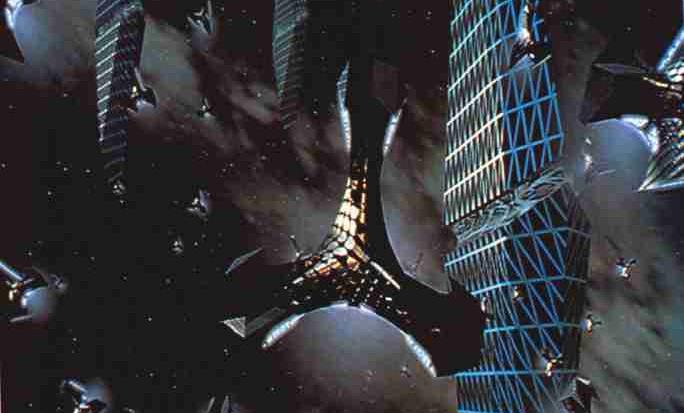
The design of the basic cube, which was later supplemented by spheres and upgraded cube designs, is clearly based on a pythagoran aesthetic: nothing frilly, sleek, aerodynamic or even remotely artistic about it. They are simple, utilitarian, and equilateral, a testament to the precise and unsentimental mindset of those who designed it. It’s basic profile also came in handy when taking on multiple enemy ships. By having six sides, each with the same surface area, weapons and tractor beam mounts, the cube had a 360 degree sphere of defense, making it damn near impregnable.

On every occasion when one of these cubes showed up, bad things were known to happen! In their first encounter with one, the Enterprise barely got out in one piece. In the second, 39 ships were destroyed before the Enterprise and her crew were able to trick one into going into sleep mode, which it then responded to by blowing itself up! In the third encounter, which took place in First Contact, several more federation ships were destroyed before Captain Picard was able to use his inside knowledge of the Borg to help the fleet destroy another ship. In all subsequent encounters, future technologies, viruses, trickery, or a combination thereof were needed to overcome the Borg’s technology and singular mindset.

Chig Cruiser:
chigMuch like Firefly, this example comes to us from a franchise which was cancelled by the executives over at Fox after its first season. Yes, Space Above and BeyondΒ was yet another sci-fi series which had a lot of promise, but got axed when the execs concluded it wasn’t doing well enough for their liking. What the hell goes on over at Fox anyway?! Does every new show get this kind of treatment, or do Rupert Murdoch’s minions think sci-fi is just inherently liberal?

In any case, the Chig Cruiser was much like the concept for the Chigs themselves. Cool, original, and quite alien in appearance! Basically, the vessels shape can be described as two right triangles attached end to end with the tips removed. The command center appeared to be located in the middle, along with much of its weapons and observation deck. The outer hulls also appear to have been constructed out of the triangular-shaped panels of some alien metal that gave of a peculiar sheen when seen from the right angle.

Like everything else in the series, the concept never really had time to be fully developed. Which is really too bad. Their fighters, encounter suits, and capital ships were all cool to look at, and some explanations as to their utility and even artistic inspirations would have been nice. But what can do? Fox is run by idiots! Rest in peace Space Above and Beyond! You died too young!

Earth Alliance Destroyer:
Thanks toΒ Goran Zidar for suggesting I include this one! And please know that you are alone in thinking that it is cool to behold, Mr. Z πŸ˜‰ Coming to you from the Babylon 5 universe, source of so many cool ships (see below), the concept for the Earth Alliance Destroyer was nothing short of pragmatic genius. Given that the show boasted dozens of alien races, J.M. Straczynski and his design teams had to come up with countless design concepts that would reflect the multicultural and multiracial tone of the show.

In the case of humanity, Straczynski and his people concluded that the spaceships should look boxy, utilitarian, and should reflect the fact that Earth was one of the less advanced races in the story. As a result, the Earth Alliance Destroyer was built around the concept of a compartmentalized hull with its engines at the rear, a central rotating section (to provide artificial gravity), and a forward section where the bridge, carrier deck and command center would be located. And, as you can plainly see, the end result was quite cool!

While not the most advanced ship in the Galaxy, the Omega-class destroyer was certainly realistic, aesthetically pleasing, and could also holds its own in most firefight situations. And unlike their organic, alien counterparts, these ships were also a lot cooler to watch in battle. Instead of “dying” or breaking apart, they would catch fire and throw off flaming debris, not to mention life pods and floating bodies. Yes, since ships didn’t have energy shields or a lot in the way of armor in the B5 universe, firefights tended to get real serious, real fast! Like I said… realistic!

The Daedalus:
daedalusNext up, and taken from the Stargate universe, is the battlecruiser Daedalus. After appearing in the spinoff show Stargate: Atlantis, this class of vessel (codenamed 304) became the basis for an entire fleet of vessels who’s purpose was to defend Earth from an alien invasion. Based on various alien technologies that were taken from the Goa’uld and Asgard, the Daedalus was the first Earth Battlecruiser and FTL ship ever constructed.

Based on the design of a modern aircraft carrier, the Daedalus bridge and command center were located along the top of the hull at the rear while the forward section contained the ships compliment of fighters and takeoff and landing bays. The ship also contained a hyperdrive which was powered by a Zero Point Module (an alien power source), giving it FTL capabilities.

In terms of armaments and advanced technology, the ship boasted beaming units, shields, multiple rail gun and missile systems, and a compliment of nuclear warheads. Designed to stand up to a potential Gua’old or Or’i invasion, the Daedalus and her kind were built to combine the best that Earth and her alien allies could offer. Yes, if the war came to Earth, we would be ready!

The Executor:
Hello terror! Next up, we have the gargantuan and terrifying Imperial command ship known as The Executor. Who among us can forget that introductory scene in The Empire Strikes Back when a whole fleet of massive Star Destroyers were assembling, only to be suddenly overshadowed by the even larger Executor? Cut to the bridge where we see the terrifying Vader looking out over the fleet, and you begin to see just how big and powerful the empire truly is! Yes, those visuals really gave a sense of size and scale to the bad guys and let us know just how much they meant business!

Commissioned roughly one year after the Battle of Yavin, where the first Death Star was destroyed, the Executor was intended to be a terror weapon, replacing the Death Star as the symbol of Imperial might and badassery! Measuring 19 kilometers in length and bristling with turbolasers, ion guns, multiple tractor beams projectors and a complement of fourteen TIE fighter/bomber squadrons, the Executor was every spacers worst nightmare! No ship in the Alliance was capable of standing toe to toe with it, making a strategic withdrawal an inevitability once it showed up in a theater of battle.

However, during the Battle of Endor, the Alliance was able to destroy it through a combination of strategy and dumb luck. After several Rebel fighters took out the Executor’s shield generators, a single fighter who lost control of his ship crashed directly into the bridge. The Executor then lost control of its helm and was pulled in by the second Death Star’s gravitational field, destroying the ship and causing extensive damage to the Death Star’s outer hull. An ironic death for such a big ship, but at least she went down in a blaze! A big, embarrassing, expensive blaze! I don’t envy the bastards who had to pay the premiums on that one!

Home One:
HomeOneAnother vessel that comes to us from the Star Wars universe, Home One was the mobile headquarters of the Rebel Fleet and the biggest Mon Calamari cruiser in existence. As Admiral Ackbar’s command vessel in the original trilogy, it distinguished itself during the Battle of Endor, during which the Executor and the second Death Star were destroyed.

Like most Mon Calamari cruisers, Home One was cylindrical in design and originally served as a star-liner that got modified for combat. This consisted of equipping it with fighter bays, multiple shield emitters, a reinforced hull, and many turbolaser mounts. It’s revolutionary targeting and computer system also gave it a decided advantage in a firefight with Imperial vessels, which boasted heavier armaments, but lacked the ability to coordinate and amass their firepower as effectively.

The largest bay on Home One was on the starboard side where larger vessels would dock. However, a total of twenty hangers were placed throughout the hull, giving it the ability to carry multiple squadrons of X-wings, A-wings, B-wings and Y-wings. It also boasted a crew of over 5000 personnel and could carry 1,200 troops and 20,000 metric tons of cargo. While most of its systems – especially targeting and navigation – were designed for Mon Calamari use, the ship was crewed by a variety of races, reflecting the multiracial nature of the Alliance.

Lexx:
lexxThough not the prettiest ship in the Galaxy, the Lexx certainly deserves a spot on the Cool Ship list. Much like the show that featured it, it was weird, conceptually skewed,Β  but still damn original! A planet-destroying bioship by design, the Lexx was clearly inspired by the concept of a giant, wingless dragonfly and was created out of resynthesized proteins that were obtained from confiscated organs. Hmmm, gross!

Originally intended for use by His Divine Shadow, the evil ruler of the Divine Order, the Lexx was essentially a terror weapon that would be capable of destroying whole planets. However, the ship was commandeered in the first episode by the show’s crew – consisting of anti-hero Stanley Tweedle, the sex slave Zev Bellringer, and the Kai, an undead assassin, and the bodiless AI 790 – and became the means through which they traveled the universe looking for a new home.

This journey would take them over 6000 years, since the Lexx does not have FTL capabilities, and the crew would go into cryostasis for much of the voyage. Being sentient as well as organic, the ship was required to feed from time to time in order to maintain the life force which powered it. This could involve landing on a planet and eating organic matter directly, but more often than not, required that it blow up an entire planet and eat the resulting debris afterwards.

In the latter case, this consisted of emitting massive amounts of ionized energy from its “eyes” which was then channeled into the “mouth”. This energy was then fired outward in a planar wave which would intercept and obliterate any planet in its path. The Lexx would then take in the giant rocks and debris from the explosion and feed off of all the organic matter they carried. If not permitted to feed regularly, the Lexx could apparently become quite cranky and agitated, which would prove to be hell for whoever had to interact with it!

Narn Cruiser:
narn02As promised, another cool ship from the B5 universe. And as I said earlier, when it came to producing concepts for alien ships, J.M. Straczynski really had an eye for aesthetics, art, and functionality. Whereas Earth vessels tended to be compartmentalized and practical in nature, other alien races tended to be a bit more flamboyant, a reflection of their particular cultures and levels of technology.

When it came to the Narns, an aggressive but artistic race, their ship designs exemplified this dual nature. Originally a pastoral and peaceful people, the Narns had been brutalized by generations of occupation at the hands of the Centauri and had become quite warlike as a result. Their heavy cruisers, the mainstay of their fleet, were thus powerful and fierce looking, but still managed to achieve an aesthetic quality which brought beauty into the mix.

Boasting two massive beam cannons, several pulse guns and a compliment of space mines, the Narn Heavy Cruiser could take on just about any ship in the Galaxy. Though most were destroyed in the Great War against the Centauri, the ship proved to be effective in numerous engagements, not the least of which were against the Shadows themselves. For example, at the battle of Ragesh 3, two Narn Cruisers combined their beam cannons to seriously damage a Shadow vessel. During the battle in Sector 83, when Sheridan and the White Star Fleet engaged a fleet of Shadows vessels, the Cruiser G’tok managed to assist a pair of White Stars in destroying two Shadow vessels. Quite the accomplishment for this class of vessel!

After the Great War, the Narn regime began rebuilding its fleet, and the Narn Cruiser remained the mainstay of their forces. Several were used during the Alliance war with the Centauri and participated in the assault on Centauri Prime, where its massive compliment of weapons proved quite devastating against the planet’s surface!

Prometheus-Class Assault Vessel:
PrometheusYou know, I’ve never been that big a fan of the Star Trek franchise. But even I have to admit, when these guys do something right, they really do it right! And this ship, the Prometheus Assault Vessel, would be one such example. Much like the USS Defiant from my previous list, this ship demonstrated that when required, Star Fleet could produce ships that really excelled at kicking ass and taking names!

A revolutionary prototype, the Prometheus-Class vessel appeared in a single episode of Voyager where it was being stolen by a bunch of Romulan agents. However, thanks to the combined efforts of the ship’s own holographic surgeon and Voyager’s similarly holographic doctor, the ship was saved and even managed to turn the tables on its Romulan adversaries.

Incorporating advanced phasers, quantum torpedoes, ablative armor and regenerative shields, the biggest surprise the Prometheus had was its multi-vector assault capability. This involved the separation of the ship into multiple modules, much like the USS Enterprise-D would do with its saucer and engine sections. However, in the Prometheus’ case, this resulted in the creation of three semi-independent sections which were capable of unleashing a single, coordinated attack against multiple opponents.

After it was done dispatching all its enemies, it would then come back together, perform repairs as needed, and move on to the next target. And since the ship was programmed with extensive routines, a very small crew was capable of operating it and really only had to speak the requisite commands to get it to kill, kill, kill! Not a bad ship to have in your arsenal!

Shadow Attack Ship:
shadow06“It was jet black. A shade of black so deep your eye just kinda slides off it. And it shimmered when you looked at it. A spider big as death and twice as ugly. And when it flies past, it’s like you hear a scream in your mind.” These were the words Lt. Warren Keffer used to describe a Shadow vessel, right before he died chasing one down. An apt description for a ship that was clearly designed to inspire terror in its enemies, and a reflection of the race that built it.

As my final installment, taken again from the B5 universe, I’ve decided to include the Shadow Attack Ship, which is perhaps the most original and artistic spaceship I have ever seen. Granted, it had some stiff competition given the franchise it is coming from, but in terms of its design, performance, and sheer alien appearance, I can’t think of anything that can top it.

Given the fact that Straczynski and crew were working with the concept of organic technology, the ship was clearly meant to look like a living creature. Apparently, they settled on the combination of an arachnid and a giant octopus for the design, which combined with its jet-black sheen, made it both terrifying to behold and aesthetically awesome! And since every Shadow vessel is a living thing, they required sentient beings to merge with them in order to become active. When inactive, they would lie dormant and could remain operable for thousands of years.

More often than not, the Shadows preferred to use telepaths as drivers since only a telepath was capable of jamming the ship’s central operating system (i.e. a person’s mind). When damaged, the ships would emit a high-pitched screeching noise and often required another ship to merge with them and carry them to safety where they could. Of course, the screech couldn’t be heard through space. As Keffer noted, the sounds it made seemed to take place in the observers mind – aka. it was being telepathically conveyed. Hence, in addition to scaring the shit out of their opponents with their appearance and awesome firepower, these ships also had a calculated psychological edge in battle!

Not that they needed it though. In addition to their speed and firepower, the ship’s organic hulls were also incredibly tough, capable of absorbing tremendous amounts of energy before dying. As Sheridan and his people learned, pulse cannons were virtually useless against the Shadow’s skin, and beam weapons were only capable of killing them when focused on its central region for extended periods of time. On multiple occasions, Sheridan and the Alliance forces were only able to destroy one of these vessels by relying on telepaths to jam them while multiple ships combined their firepower to finish them off.

For the Shadows, the weapon of choice seemed to be the beam cannon that was located in the ship’s “mouth”. This focused, pink-purple beam was capable of slicing through the most hardened of structures and ships, and could reduce an entire colony to rubble in the space of a few seconds. However, the standard Shadow vessels also contained a type of space mine that was capable of c0llapsing hyperspace jump nodes and also carried a compliment of Shadow fighters which they kept embedded in their skin. These appeared to be independent in nature seeing as how they were too small for a person to fit in, and served as a mere screen for the larger vessels to make their attack.

In short, a Shadow vessel was the sort of thing you didn’t stick around to fight unless you had plenty of ships watching your back. Fast, furious, and shit-your-pants scary to look at, if you managed to kill one, you counted yourself amongst the few, the proud, the luckiest sons of bitches in the universe!

Okay, thanks for sticking around for the second installment! I think I have one more in me, but I’ll wait a few days before posting that. In the meantime, be sure to check out this cool chart. It provided me with a couple of ideas during the course of my research:
The ultimate starship size comparison chart