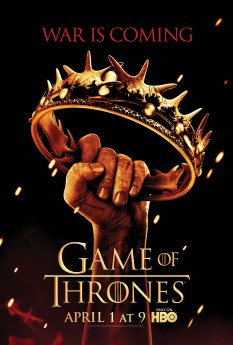
A Clash of Kings (A Song of Fire and Ice, book II)

As I’m sure I said in my last post, George R.R. Martin is known to his contemporaries as the “American Tolkien”. This is a fitting comparison for me seeing as how Game of Thrones was something I had no real interest in until after I saw it adapted to screen. It was only after I saw the whole first season, which is book I in the series, that I decided to start reading it and get informed! I’m now on book four in the series and like all GOT geeks, am eagerly awaiting season two which premiers April 1st (This better not be some kind of prank!) But anyway, here is book II in the Song of Fire and Ice series, which is appropriately named:

A Clash of Kings:
As with Lord of the Rings series, I decided to read the second book first, mainly so I could get a head start on all the material that was to come. However, since the series is ongoing, I did not dare wait til I read to the end before going back to cover the original. And I can honestly say that book II improves upon the first, bringing more action, more intrigue, and more fantasy-fiction to the fore. I tell ya, its a rare thing when a sequel actually surpasses the first in a series, but that was to be expected here. Whereas Game Of Thrones set the scene, introducing the major plot threads and building up the action, Clash of Kings incites it all and brings it all to an explosive semi-climax. The most important element of which is the battle at Kings Landing, which I cannot wait to see adapted to the screen!

Plot Synopsis:
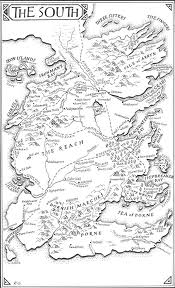
The book opens with a celestial event. A red comet, which goes by various names, has entered the heavens and seems to mean different things to different people. To some, its a portent of evil, but to others, its a sign of impending victory. Picking up where the first book left off, the realm of Westeros finds itself divided between five powers who are now in a state of civil war. In the south, power is divided between Kings Landing, where the Lannisters rule through Joffrey, and Robert Baratheons two brothers – Renly and Stannis. The former now controls the southern area of Highgarden while the latter controls the island Dragonstone. While a Baratheon alliance would surely defeat the Lannisters, the brothers are divided because both are determined to sit the Iron Throne.

While Stannis, the elder, has the better claim to the throne, Renly is the more charismatic of the two. He is just as determined and has a much larger army, but Stannis has a secret weapon which he has yet to unveil: a sorceress named Melisandre, a priestess of Asshai who worships the fire god R’hllor. The cult of R’hllor, which is monotheistic in focus, is quite popular in the East but relatively unheard of in Westeros. To many, her backing of Stannis, whom she sees as the Azor Ahai (prophet of R’hllor) reborn, is merely a power play, a means to introduce her religion to the Seven Kingdom should be triumph in the war. But according to Melisandre, the civil war is merely a prelude to a much greater war against a dark force that has been coming for some time…
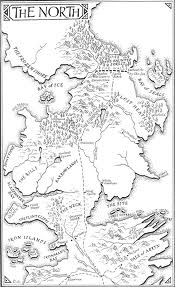
Meanwhile, to the north Robb Stark has been crowned King of the North by his bannermen and continues in his long campaign south. Though they are outnumbered by the Lannisters, they win victory after victory, and soon even Tywin Lannister is forced to move the bulk of his forces south when they hear that King’s Landing is threatened. For the wolf, victory seems possible, but a there are a few complications to his plans. For one, King Joffrey and the Lannisters are still holding Sansa Stark hostage and Arya Stark is still missing (in truth, she and the Night’s Watch recruiter who saved her are moving north with a band of convicts and recruits). The only thing keeping Sansa safe is the fact that Jaime Lannister is in their custody, but he’s proving to be a tricky hostage…

What’s more, the Iron Isles, where Theon Greyjoy hails from, are up in arms. With the wolf marching south and civil war dividing the realm, his father seems intent on carving out his own kingdom in north as well. His daughter is chief amongst his Captains, a fact which annoys Theon to no end. Determined to upstage her, he leads an attack on Winterfell and takes it. In time, Bran Stark and his newfound friends from the Riverlands, who’ve convinced him he’s having prescient dreams, decide to escape to The Wall. Something is up there, it seems, that is calling to Bran. When he flees, Theon decides to stage their murder to avoid the inevitable embarrassment of having lost them.

To the far north, Jon Snow has taken up with the Nights Watch and is with them as they begin a large-scale reconnaissance north of The Wall. Apparently, the Wildlings have been abandoning their villages in droves, moving to a large encampment where a man named Mance Rayder. Apparently, he has declared himself “King-beyond-the-Wall” and plans to lead a united army of Wildlings south to take the lands they have been historically cut off from. In time, it becomes clear that he himself is fleeing something, they very thing that Jon Snow and the Watch have been worrying about. It seems the White Walkers have been getting around, and just about everyone in their path is looking to flee…

To the east, Dany and her host travel across the desert to the great city of Qarth. Once there, Dany becomes the focus of much attention and fascination, given that she travels with three dragons. Despite this, she is unable to raise an army because the only coin she has to barter with is her dragons, which she refuses to give up. When she goes into the House of the Undying, where the warlocks of Qarth reside, she is told that her life is threatened and that she will be betrayed three times. When the warlocks try to attack her, her dragon burns the House down, sparking emnity between her and the Qartheen. An attempt is made on her life at the city harbor, but she is saved by two men – an old warrior named Arstan Whitebeard and a mercenary named Strong Belwas. They were sent by Illyrio, the man who sheltered her and her brother, and join her host. Together, they begin to plot where to travel to next to find her an army.

After a failed meeting between Renly and Stannis, which Catelyn Stark travelled south to host, Renly was killed by a “shadow”. It becomes clear that Stannis’ priestess was involved, because all those who oppose Stannis have a way of winding up dead. As a result, Renly’s former bannermen declare fealty to Stannis and add to his power, and Catelyn is forced to flee north with one of Renly’s staunchest supporters. A woman named Brienne of Tarth, a formidable fighter whom Renly made a knight. They return to Riverrun, the domain of her brother, where Robb is rallying his forces and her father lies dying. Upon her return, she learns of what happened to Winterfell and her two youngest sons and is heartbroken. Between Ned, her ailing father, and now her two boys, it seems everyone she loves is dying.

Back to King’s Landing, Tyrion has taken up the role as Hand of the King. Before him is the challenge of defending the capitol from Stannish Baratheon, who is quickly approaching by land and sea with his combined armies and navy. At the same time, he must cover his ass seeing as how his sister will stop at nothing to do him in. A game of chess ensues, with both sides employing bribes and whatever blackmail and threats they can to gain leverage over the other. For a time, Tyrion seems to have the upper hand, but soon, battle comes to their doorstep, and he must forgo all that to lead the defense of the city.

Meanwhile, Arya is captured while traveling north by men loyal to the Lannisters. The survivors are taken to Harrenhal, a major castle that is currently in Lannister hands, where she is forced to serve as a peasant girl. Her identity remains a secret, but she is forced to endure all kinds of abuse as a serving girl. However, one of the captives who was part of their caravan comes to her and tells her that he owes her three lives for saving him and the lives of his companions. Instead, she uses him to help free a bunch of Stark men who then seize the castle. However, her fortunes do not change much, as she is then forced to act as cup bearer to Roose Bolton who comes to occupy the castle. She escapes shortly thereafter with her old companions and continues north.

Tyrion’s preparations pay off in the end. At sea, the large chain link he had constructed is used to close off the river once Stannis’ fleet enters it. In addition, their forces use a their vast stores of Wildfire he had prepared to set them ablaze once they are trapped. On land, things go a little more poorly, but Tyrion manages to lead a successful defense of the gates and is eventually saved by his father, Tywin. It seems that he travelled to Highgarden before the conflict and enlisted the help of many of Renly’s former bannermen. At just the right time, they perform a flanking maneuver which routs Stannis’ forces and saves King’s Landing. Sensing that he will not die in battle, one of Cersei’s assassins attacks and nearly kills Tyrion. When he wakes up in bed, he finds that Cersei has gained the upper hand on him by preying on their father’s good graces.

North of the Wall, the Black Brothers find a base amongst a ruined tower and begin sending recon forces further north. Jon is part of a force dispatched to the Skirling Pass, where they find the bulk of Rayner’s army massing. In addition to thousands of Wildlings, they see giants, mammoths, and wargs complimenting their force. In time, the Wildlings fall upon them and they are forced to flee. Before they are captured, Qorin asks Jon to betray him when the time comes so that he may infiltrate the Wildling camp and learn their secrets. Jon reluctantly agrees, and when they are cornered, Qorin fights him and lets him win. Jon is now a prisoner of the Wildlings and is reunited with a young Wildling woman that he met and set free earlier. She convinces Rayner to take Jon in, as he himself was once a Black Brother who defected.

Back in Winterfell, Theon finds himself with his back to the wall when Robb dispatches one of his bannermen and an army to remove the Iron Men from Winterfell. All hope seems lost to him, when a new force enters the field and saves his butt. It seems that one of the sellswords who joined him earlier was in fact the Bastard of Bolton, a usurper who fell into disfavor with Robb’s men and was imprisoned in Winterfell. When Theon set him free, he returned to his home, took up the cities army, and returned to save him. However, he quickly betrays Theon, kills him, and orders Winterfell razed…

Strengths/Weaknesses:
As I said before, this book packs some serious action into its binding! After much build-up in the first, the climactic battle of King’s Landing takes place, and it was quite unclear how things were going to go… In fact, much of the book is unpredictable. One gets the impression that the Lannisters are bound to lose well up until the battle finally takes place. In addition, the fate of House Stark is something which is tenuous at best. As always, one can’t get too emotionally attached where the characters of George R.R. Martin is concerned. They tend to die suddenly and haphazardly. However, unlike in book I, none of the major characters die off, just the supporting cast. This I would consider a strength considering that I tend to get sour when people I like get killed!

That being said, there were a number of inexplicable plot twists in this book, so many that it began to feel a little contrived after awhile. For starters, the battle of King’s Landing suddenly turns when all hope seems lost. In itself, that was a pretty good twist, but there were many like it. When it came to the rivalry between Renly and Stannis, it seemed apparent that Renly was destined to win, but then he’s suddenly killed by Melisandre’s shadow, thus completely turning the tide. And then there’s the part where Theon Greyjoy is defending Winterfell. Everything seems said and done when at the last moment, he is saved by the intervention of the Bastard of Bolton, only to then be killed! That’s three major plot twists in one book, and the last one was like a… a compound twist! Kind of grows thin after awhile.

In addition, like all the books in the series, the story can become drawn out and emotionally taxing. It seems that despite whatever hopes the reader might have for a satisfactory resolution, the plot threads just seem destined to go on and on. Whether its Tyrion, Arya, Sansa, Robb, Catelyn, or John, it seems that they are just destined to suffer and endure more and more in the way of bad news. Unless of course the character dies suddenly, but that too is emotionally taxing for the reader! Just once, I would have liked for a character who I sympathize with to be able to put their feet up and say, “Whew! That was tough, but we got through it! Time to relax…”

However, this makes for a more respectable and realistic read all around. More than anything, the book conveys a genuine sense of desperation and discomfort, which is fitting since its about a civil war. These things are not comfortable, especially in a medieval setting! They are dirty, painful, bloody and festering, and the innocent constantly suffer. In all fairness, my feelings on this last note could be the result of the fact that I’m still reading the series, and after four books, all the war and death can get exhausting. However, this does not take away from this particular novel. It’s still awesome, and a very good follow-up to the first. My advice, check it out and then catch the miniseries. That way, you’ll have a frame of reference!

Check out the trailer:
GOT Season 2 Teaser Trailer (Youtube)
Game of Thrones

Or as its known by its literary name, A Song of Fire and Ice. This is the series which inspired the recent HBO series, named after the first novel in the series, and which is apparently destined to keep that name for the duration of the show. After watching the first season, I was inspired to pick up the second book, then I was inspired to buy the Kindle set of all four books. And then the author George RR Martin released the fifth book in the series and two more are planned… Wow. I tell ya, this series could go on forever! But apparently, that’s the thing about these books. As many fans have told me, his work is expected to take the same route as Wheel of Time. Aptly named, because it just keeps rolling on and on and on…

But I digress. A while back I decided I would tackle this series and give it a full review. Having loved the miniseries, I sought to delve into the source material and get a sense of what it was all about. And of course, I wanted to see where the story was going and what would come of all the characters, and I was quite pleased. While Martin’s notorious characteristics as a writer – his level of detail, his willingness to kill of main characters, his ability to really flesh out a storyline – were all abundantly apparent in later installments, I also found examples of his strengths in abundance. These included, but were not limited to, his ability to create rich, engrossing worlds, his drawing on historical sources, his ability to make readers emphasize and identify with characters, and his ability to keep people guessing. I tell ya, nothing about these stories seems predictable! The downside of that last aspect is, people keep dying, and not always the ones you hope will! But in the plus column, it keeps the reader on their toes!

Down to specifics: George RR Martin was already famous before writing A Song of Fire and Ice. During the 1980’s, he worked in Hollywood as a writer for such shows as The Twilight Zone and Beauty and the Beast. His early fantasy novel, The Ice Dragon, became a best-selling children’s novel. However, it was with A Game of Thrones and subsequent novels that his fame as a fantasy author was cemented, earning him the nickname, “The American Tolkien”. This is an appropriate description, given the fact that the depth and breadth of his fantasy novels are rivaled by only The Lord of the Rings. Several differences have been noted, however. For starters, his stories are much more gritty and realistic. Fantasy elements – that is to say, supernatural things like magic, dragons and mythical creatures – appear sparingly and only as the story progresses. And, as I’ve already mentioned twice, he kills his main characters! In short, Martin’s books revolve around realistic human characters and their goings on, with all the sex, violence, betrayal and intrigue that that entails!

The world of George RR Martin is a fictitious world set in a medieval period, hence why it falls into the genre of medieval fantasy. In this world, something transpired long ago known as “The Doom”, which has had the effect of making the seasons longer. Summer and Winter, for reasons no one can explain, last years instead of months. The coming of winter is a time of fear since it means that the White Walkers, a supernatural force from the frozen north, will be returning to threaten the Seven Kingdoms. As the story opens, a particularly long summer is coming to an end, and in the north, dark forces appear to be on the move. Further south, throughout the land known as Westeros, King Robert “the Usurper” is facing a conspiracy within his own Kingdom which could lead to another civil war (the last one is what made him king). Meanwhile, on the nearby continent of Essos, the exiled Targaryens are plotting their return to Westeros. The deposed heir, Viserys Targaryen, is planning on marrying his sister, Daenerys, to a Dothraki warlord named Khal Drogo. This marriage, he hopes, will provide him with the army he needs to return to Westeros and reclaim the Iron Throne.

The first novel thusly opens with these three story lines and ends with all three being poised on a cliffhanger note. At the Wall in the north, the giant ice-barrier that separates the Seven Kingdoms from the north, the Wildlings are apparently fleeing their villages, prompting the Night’s Watch to go and investigate. When only one man returns, he claims to have witness White Walkers, but is executed for desertion. Meanwhile, Lord Eddard Stark, Warden of the North and head of House Stark, is visited by King Robert, the man he helped become king. Robert needs a new Hand of the King, seeing as how his old one, Lord John Arryn, has died suddenly. Ned agrees and travels to King’s Landing to take up the role, and quickly become privy to the conspiracy that took his predecessor. Meanwhile, on the continent, Viserys succeeds in wedding his sister to Khal Drogo, an arrangement which begins to backfire on him when he realizes that Drogo and Daenerys are actually falling in love with each other, and are perhaps planning on cutting him out of the deal.

(Spoiler alert!): Things come together as John Snow, Lord Eddard’s bastard son, joins the Night’s Watch and begins to witness for himself what is happening the North. An attack by wights, the resurrected bodies of people killed by White Walkers, begin attacking the Wall itself. After his own uncle fails to return from a patrol beyond the Wall, Lord Mormont prepares a campaign to go north in force and meet the threat head on. For John, this means turning his back on the troubles of his family to the south. When news reaches him that his father might be in danger and his half-brothers riding to war, he is tempted to desert and ride to their aide. But as a sworn Brother of the Night’s Watch, he is bound by honor to serve until death, even at the expense of his true family.

At King’s Landing, Eddard soon uncovers the conspiracy that claimed the life of John Arryn and even involves an assassination attempted on his own son. It seems that the Queen, Cersei Lannister, is engaged in an incestuous relationship with her brother Jaime, who is one of Robert’s Kingsgaurd. Before he can inform King Robert, Robert is crippled during a hunting expedition and dies shortly thereafter. Eddard is forced to move quickly to ensure that Joffrey, Cersei’s eldest son, does not take the throne. However, his attempts are thwarted when Lord Petyr Baelish, the Master of Coin, betrays him to the Queen. Eddard is executed by the brutal and stupid Joffrey, and his daughter – Sansa, who was betrothed to him – is now his hostage. Ned’s youngest daughter, Arya, escapes with the help of a Night’s Watch brother who disguises her as a boy recruit, and they travel north together. In response to his father’s death Ned’s oldest son, Robb Stark, declares war on the king and mobilizes every house in the north to march on King’s Landing. They are joined from forces to the far south, led by Robert’s brothers, Renly and Stannis who were next in line to the throne. However, rather than declare their fealty to either of Robert’s brothers, Robb’s bannerman declare him “King in the North”, using this war as a pretext to declare independence from the south.

On the continent, Drogo and Daenerys fall in love and she learns that she is pregnant with his heir. This, plus the fact that his sister is able to stand up to him now, leads Viserys to force the issue with Drogo. During a feast, a drunken Viserys threatens Drogo by declaring that he’s taking his sister back and will cut his son to be right out of her belly. Unless of course he gets what he wants, which is the golden crown he covets. Drogo responds by having his men break Viserys’ arm and then hold him down while he prepares a pot of molten gold which he proceeds to pour on Viserys’ head. His promise of “a golden crown” is thus fulfilled! Free of her abusive brother, Daenerys tries to convince Drogo to take the Iron Throne for their son, but Drogo is reluctant, until a would-be assassin sent by Robert’s court tries to poison Daenerys. Enraged, Drogo declares that he will conquer and ravage Westeros, but unfortunately succumbs to a festering wound during combat with one of his own men. Daenerys tries to save him using a slave’s witchcraft, but is betrayed and loses her son as well. Most of the Dothraki move on, and she is left with just a small host, her advisor Jorah Mormont, and the dragon’s eggs he gave her as a wedding gift. When she burns Drogo on a funeral pyre, she walks into the flames with the eggs, and miraculously survives! The Dragonborn, which all Targaryens are said to descend from, are immune to fire, and the eggs hatch to become the first dragons the world has seen in generations. Mormont and her host declare their loyalty to her, the true Dragonborn, and plot to reclaim Westeros with her!

Thus ends book I. And as I said, one can see the influence of real at work almost right away. On the one hand, Westeros is clearly styled on the British Isles, its northern/southern divide clearly an allegory for the divide between the English south, and the Scottish North. The Wall is clearly analogous to Hadrian’s Wall, the barrier that kept the “northern barbarians” at bay during the Roman occupation of Britain, and which serves a similar function in the book. The continent of Essos is also a clear reference to the European mainland, the Dothraki styled on the Huns or Mongols (invading horsemen from the East), whereas the free cities and slave cities are inspired by Asia Minor and its vast, ancient metropolises (more on that in book II). And of course, the royal intrigue, the very concept of the “Game of Thrones” – a reference to the never ending fight to claim the crown – is a fitting rendition of the actual royal intrigues taken from medieval history. Much like real wars of succession, it is loaded with secret alliances, plots, backstabbing, and of course, bloody civil war.

And the miniseries did a very good job of adapting all this to television. Naturally, any adaptation of Martin’s work would be hard pressed to adapt all the interwoven storylines, detail and events that characterize his writing. Still, the HBO miniseries did a pretty good job of getting all the relevant info in, making time for secondary perspectives without moving too far away from the main characters. And of course, there was the shocking scene where Eddard Stark is killed, much to the chagrin of television audiences who don’t expect main characters to die. Yes, that was masterfully done too. I myself was appalled and even angry at first, but respected them all the more for doing it. It’s what’s in the book and you can’t go changing major elements just because the audience might object. I hope they keep this in mind come season two. Rumor has it Jason Momoa is hoping they’ll bring Drogo back from the dead. Clearly he hasn’t read the books!

Furthermore, the casting was SUPERB! Sean Bean, a man who brings a touch of awesomeness to just about everything he does, was perfect as Eddard Stark. Mark Addy was also superb as King Robert, capturing his pudgy, teddy bear exterior and his bitter, angry personality! Lena Headey, of Terminator: The Sarah Conner Chronicles and 300 fame, achieved a sort of perfection in the role of Cersei. I’m telling you, you seriously think she’s an evil bitch after seeing her in this, a tribute to her acting talent! Jason Momoa, who went on to play Conan in the remake of the Schwarzenegger classic, fit the bill perfectly as Khal Drogo. He was brutish, strong, manly and scary, but also endearing and loving at times. A good thing too, since the Conan remake kind of sucked! Emilia Clarke, a relative newcomer to the acting scene, was nevertheless very convincing as Daenarys, capturing both her frailty and quiet strength quite well. And last, but certainly not least, was Peter Dinklage, who played the role of the dwarf Tyrion Lannister to absolute perfection! Seriously, this guy has the best lines of the entire series as the rude, crude, but brilliant and bawdy black sheep of the Lannister clan. You love him, love to hate him, and sympathize with him, even when you’re shaking his head at his antics!

The rest of the cast, which is just too extensive to mention, was similarly awesome. Understandable given the fact that most of them are classically trained actors, people who cut their teeth doing Shakespeare and are therefore accustomed to performing epic roles. I wish I could do them all justice, but like I said, too many to count! I hope its enough just to say they were awesome!

And like most fans of the book and miniseries, I can’t wait for season two. The book was quite spectacular, picking up where book I one left off with war on the horizon and major battle in the works. And word is, cast and crew had a real hard time adapting the damn thing, it was just so epic in scope! But that only ensures that the outcome is likely to be that much more awesome to behold! A Game of Thrones, everybody. Read it, watch it, and then read book II because the series will be back soon! Not soon enough…

Stay tuned for my review of book II, A Clash of Kings, coming up next!

Conan (Cont’d)

Conan (Cont’d)

And we’re back! Last time, I got into Conan (ca. 1982), the Milnius/Stone/Laurentiis version that effectively made Arnie’s career. Now, it’s time for the remake, the one directed by Marcus Nispel and starring Jason Momoa. Having just sat through it, I can tell you that the impressions it left are fresh in my mind, as is the bad taste it left in my mouth. I suppose that’s the inevitable result of seeing something that comes with high hopes, only to find out that it really isn’t that good. But I’m getting ahead of myself again, here’s Conan, the remake!

Conan The Barbarian (2011):

For some time now, producers have been trying to do a remake/re-imaging of Conan. Perhaps its the nostalgic appeal of the original or maybe its just a retro thing: sooner or later, fans grow up and pay good money to see something that reminds them of their youth. Just look at American Graffiti. But these attempts can always be messed up when studios spend forever fighting over rights and trying to come up with a plan, and then slap together a product hastily. That’s apparently  what happened here.

After spending  seven years in development with Warner Bros, the rights to shoot this film were shifted to Nu Image/Millennium Films in 2007, with a clause wishing for immediate start on production. It then took another two years before they found a director, eventually settling on Marcus Nispel, a man who’s made his career shooting remakes for guys like Michael Bay, and the critically-panned movie Pathfinder. A big-ass writing team was then assembled to come up with a passable script, and Jason Momoa (hot off playing the role of Khal Drogo in Game of Thrones) was cast as the hero.

Not a very encouraging start, but there were signs of promise. Momoa seemed like a good fit, having already done the badass barbarian thing as Drogo. Stephen Lang also seemed like a good choice to play the villain, having performed the role of the dubious military man in Avatar. And Ron Perlman, hell, he’s always good as a dirty, hairy, hut-dwelling man! One look at Quest for Fire and you can see how he seemed like a sure thing to play Conan’s father. All that was left was the story.

Plot Synopsis:

The story opens with narration by Morgan Freeman. Okay, bit of miscasting right there, but whatever. He explains how its the Hyborian Age, and gives us the bare bones of what’s been going on in this vague, adventurous period of historical fiction. And unlike the first movie, the back story here is kind of extensive. This story, we soon learn, has to do with a magic mask that gave evil witches and wizards the power of Gods. They are known as the Acheronian necromancers, and as the name suggests, they could resurrect the dead and… do other scary things I guess. Okay, seems a little Dungeons and Dragonsesque, but the movie’s just starting…

We also learn that this mask was broken when the evil people were cast down and divided amongst the Cimmerian tribes. And now, predictably, some evil dude is going around and collecting them, hoping to put the mask back together so he can have godlike power. All he needs is one final piece, and guess who’s got it… Conan’s people, naturally! We also get to see how Conan was born, on the battlefield of all places when his pregnant mother was stabbed and his dad had to perform a battlefield C section. Thus, in keeping with his legend, we get a boy who was “borne in battle”. Again, kind of over the top, but things are just getting started.

What follows are many scenes showing Conan as a young boy. After eviscerating a war party of rival tribesmen, we see him helping his father forge a sword, being told all about the Riddle of Steel. And wouldn’t you know it, they even tell us what it is! “What’s more important, Conan, the fire or the ice? Both! It’s the two that make steel hard. That’s the Riddle of Steel.” Really? That’s the riddle, fire and ice make it hard? Gee, I thought it would be something more complicated, not a user’s guide to smithing. If knowing this is all it takes to get into Valhalla then the damn place must be overflowing!

And then, Conan’s people are attacked by some big, bad warlord named Khalar Zym (Stephen Lang). Hmm, Khalar, Khal? Do I detect a slight similarity (aka. ripoff!) there? Anyhoo, he beseiges the village, Conan’s people die, and he tells Corin that he can bend the knee and give up the last remaining fragment, or he’ll burn him alive and take it anyway. He also lets him know its okay to submit to him, since he’ll soon be a living God. But of course, Corin says no, and tells him that God or no, he’ll still fall! Conan of course comes to his aid, but it captured and tied up with him. Zym takes the last fragment, completes the mask (which looks like some kind of dried octopus, all tentacly-like), puts it on and has his evil moment. “Bwoohaahahahaha” and all that.

Conan and his father are left chained to a pot of molten iron which is suspended above them. In short, all they can do is stand there, or risk dumping it on one of their heads. Conan does his best to release his father, but Corin eventually sacrifices himself and causes the pot to dump on his head. Hmm, getting another deja vu moment here. Golden Crown anyone? Conan then goes out into the killing fields that were his home, grabs a sword and does the avenging hero thing. He raises it high and yells!

At this point, we’re about half an hour into the movie and the differences are becoming glaring. For one, in the original movie, Conan was the focus of things. Sure, its about his quest for revenge, but its also a big-time bildungsroman, the telling of how he came to be a powerful warlord who would go on to become a king. There was no magic MacGuffin to incite the plot and keep things going. Second, a great deal of time, far more than was necessary, is dedicated to Conan’s childhood in this movie. Whereas in the original, we get a brief glimpse of a rough, honest and in some ways idyllic existence that was interrupted by tragedy, here we get a full-on preamble that kind of overdeveloped things.

I mean, was it really necessary to show how Conan was a badass even as a child? Wasn’t it supposed to be his hard life that made him so rough and ruthless? Here we see him cutting off the heads of multiple warriors before he’s even hit puberty! And not at the neck, which would have been more civilized; no, he hews their heads off at the jaw! With blunt instruments! Forget Conan the Barbarian, Conan the Psychopath would have been much more appropriate! Don’t get me wrong, I was pulling for him, but it still seemed over-the-top.

What’s more, in spite of that fact Conan brutalized some of his men (he cuts off one of their noses), Zym decides to basically leave Conan alive. Sure, he chained them up to a pot of molten metal, but doesn’t that seem a little super-villainy? Instead of killing the father and selling the child into slavery, I’m going to put them in a situation that at least one of them can escape and pray they never find me. Doom at least had the foresight to sell the boy into slavery, and he seemed relatively helpless by comparison. But with this little psycho, seems to me the sane thing would have been to make sure he died in that village. He chops heads in half at ten, how bad do you think he’s going to be in twenty years?

And of course, the movie then cuts to Conan as a man. He’s part of a group of Aquilonian Mercenaries led by a big burly dude named Artus (Nonso Anozie). He and Conan are close friends and are dedicated to piracy and making trouble, but in truth their ultimate goal is to free slaves and find the man that killed Conan’s people. We get a scene where they are doing just this, killing slavers and setting the captives free because, as Conan says “No man shall live in chains.” After taking the slaves to party in Messantia, Conan is chanced upon by a man named Ela-Shan (Saïd Taghmaoui), a thief who is being pursued by one of Zym’s men: Lucius, the man who lost his nose to Conan as a boy.

Conan recognizes the man and decides to let himself be captured. Once in his prison, he breaks free and begins torturing him for answers. He reveals Zym’s identity to Conan and tells him of his plans. Basically, they involve him capturing a “pure one”, aka. a descendent of the Acheron necromancers, so he can unleash the mask’s power. Taking this information, Conan makes Lucius swallow the prison’s master key and hands the slaves a knife, telling them their freedom lies in Lucius’ belly. I suppose this is meant to be a kind of comic relief, “You swore you’d let me live!” “I swore that I wouldn’t kill you!” Mainly, it just seems cruel. However, Conan is told by Ela-Shan (who is a clear remake of Subotai) that if he ever needs a favor, to come looking for him in the City of Thieves. And of course, he will…

We then cut to Zym and his daughter, the dark sorceress Marique (Rose McGowan), as they cross the land looking for the “pure one”. This journey brings them to a monastery where we see a woman named Tamara (Rachel Nichols), who is being told her future by the head priest. He tells her that she will meet a warrior, a man who will change the course of history. However, the lesson is cut short when Zym’s men attack and seize the place.  A totally overdone scene follows where Marique, after they’ve rounded up all the monasteries ladies, tastes their blood with her claws and then kills them, one after another, once she’s determined that they are not pure.

We also learn that Zym’s ultimate goal is to resurrect his wife, a witch herself who was burned alive by monks, and that he’s quite bitter about it. And of course, there’s also the obligatory scene where Zym smashes the head of the head priest on the stone steps after he tells him his wife was evil and got what she deserved.  Okay, we get it, these guys are really, really bad! Moving on… On the plus side, Tamara got away, and it just so happens that Conan sees her fleeing and recognizes the men that are chasing her. After saving her, Conan pretends that he is going to ransom her to Zym for gold, but his real goal is to lure Zym into a trap.

Conan manages to catch up with Zym as his land-ship (a sea vessel which, for some reason, he’s having pulled across land!) where Zym and his daughter are talking about their plans. Marique tells Zym, in a speech heavily laced with incest, that she could be her mother and he wouldn’t need to bring her back. But naturally, in a response laced with abusiveness, he shoves her away and tells her she will never be her mother. Okay, if the goal here was to make these two seem more evil, then mission accomplished! Otherwise, all I can say is ew! In any case, that’s when Conan delivers his message via a catapult (yep, you read that right!): he hurls Zym’s man at his ship with a note attached. “Meet me at this abandoned trading post at midday”, it says. “Come alone!”

But of course, he doesn’t. He comes to the post with Marique, and Conan confronts them and demands Zym’s head! This is the first fight scene between these two, and naturally it goes against Conan. Using her dark magic, Marique sends a whole bunch of sand people at Conan while he father and him exchange blows with their swords. Conan is forced to flee, taking Tamara with them, by jumping off the edge of the cliff into the water, where Conan’s buddies happen to be waiting. They get on board, sail off, fight off some of Zym’s men, and Tamara and Conan get better acquainted. She learns that he’s incredibly noble, in spite of his rough and tumble exterior. And Conan tells Artus that he’s found the man who murdered father, his family, his people, and of course Artus pledges to help him get his revenge. They’re buddies, remember?

So Conan is dropped up farther along the coast, where he will make his way to Zym’s fortress. However, Tamara decides to tag along for a bit and the two have rough sex in a cave nearby. Yes, the timing of this seems stupid, the dialogue is quite awful, and there’s absolutely no chemistry between them. But what’s even more odd is on the following morning, Tamara wanders out of the cave before Conan awakes (guess she wasn’t too impressed!) somehow finds herself wandering deeper in the wilderness, and is captured by Zym’s daughter. Wait, weren’t they doing it in a cave near the shore? How did she wander into the forest here? Was she totally turned around, or was the sex just that good? In any case, Marique tastes her blood (as usual) and determines she’s the one! Shortly thereafter, Conan wakes up, follows Tamara’s trail to the same wood, and finds one of Marique’s claws which she carelessly left behind. It’s on now!

He then, as previewed, travels to the City of Thieves (guard your pocket book man!), finds Ela-Shan and tells him he needs his help breaking in to Zym’s stronghold. They arrive just Zym is preparing the sacrifice, which consists of making Tamara wear some tight, revealing outfit, cuffing her wrists and ankles, strapping her to a big wheel and… I’m sorry, I got lost there for a second. Were they going for some serious visual innuendo here? Somehow, it seemed like they took a wrong turn on “damsel in distress” road and got lost in S&M junction. But predictably, Conan and El-Shan battle their way in, fight some bad dudes and a big tentacled monster, and Conan is set for his big finale with Zym.

And I can say without reservation that the final fight was totally anti-climactic! For one, they seem to be fighting in front of a poorly animated green screen for all it. It looks like a scene from Mordor, but only if the people from Xena had designed it! And invariably, Tamara must be saved repeatedly (which is annoying), the fight scenes get both ludicrous (they fight on the wheel as its suspended on two rocks over a chasm!) and there’s really no tension to speak of. But alas, Tamara needs to be saved again, as she falls through a plank on a walkway and Zym’s spell is taking effect. Slowly, she’s being invaded by the evil spirit of Zym’s wife. She tells Conan to drop her, but he can’t! Not even with Zym standing before him ready to deliver a death blow.

He and Zym then delivers their final words to each other, which is really just a rehashing of the words he and Conan’s father shared years before. Zym tells Conan that there’s no shame in kneeling to him since he’s a living god. Conan replies, “You forgot what my father told you. God or not, you will FALL! He then knocks the planks out from under Zym’s feet, he falls to his death, and Tamara is saved from being taken over by the spirit of his dead wife. They make it out, he drops her off at a new monastery, then carries on the remains of his old village site. There, he finds the remains of his father’s forge, raises his old sword, and yells!

Strengths/Weaknesses/Impressions:

Okay, I’m going to start with what I didn’t like about this movie, because its a far more important list. Strengths, I got few to mention, and as for impressions, practically none! So here goes… First of all, having Morgan Freeman do the narration was a serious case of miscasting. Yeah, I love Morgan as much as the next person, and he is like THE guy when it comes to voice-over work, but not for this movie. This is a fantasy and historical fiction epic, it requires someone who sounds bad-ass and foreboding. Someone like Mako, Keith David (Spawn), or Tony Todd (The Crow), not the man who narrated Shawshank Redemption, played God in Bruce Almighty, was Driving Miss Daisy, and played Neslon Mandella. It’s just not a good fit!

Second, as mentioned, Conan’s backstory. The original did the best job of this, in my opinion. When it comes right down to it, Conan is characterized by a few simple things: his strength, his cunning, and his feral wits. He’s tough in a way that speaks to hard living and smart in a way that speaks to a life of survival and living on the edge. By taking that away, the remake made his less believable, presenting him as a guy who was just badass from the day he was born. This might have seemed cool to some, but in my opinion it made him way less believable.

Also, in this remake, the character of Conan seemed poorly executed and somewhat confused. With his many overdone antics, we’re made to believe he’s a real bad dude. But then they kind of go out of their way to make him appear good, loyal and loving. And when I say out of their way, I mean they just come out and say it. “I live, I love, I slay, and I am content.” “No man shall live in chains”. “He has the loyalty of a dog”, etc, etc. In the original, Arnie needed barely any words at all to convey this, he just played the part. People could tell from his mere presence he was bad, and by his friendship with Subotai and his romance with Valeria that he was loyal and loving, and by his determination to find Doom and avenge his parents on his own that he was brave. Nobody needed to say anything out loud.

The same is true for the villain, Khalar Zym. I was surprised, to be sure. Ordinarily, Stephen Lang is an effective actor who lends a certain dignity and strength to his characters. This was true even in Avatar, where in spite of a weak plot a cliched characters, he still managed to give strong performance. But here, he is both overdone as the bad guy and really not scary at all! Mainly, he just seems like a creepy old dude who’s looking to get smashed! I’m not sure where all those muscles he built up for Avatar went, but in this movie, he looked pretty damn scrawny and emaciated. Might have been the costume, but gone was the picture of the brusque and burly old dude who can still kick your ass! And that tuft of grey hair on his chin? Didn’t help! Neither did his cheesy lines: “Behold… and despair… your new master!”

In addition, the supporting cast is pretty weak. Ron Perlman did a good job of portraying Conan’s father, but the role really didn’t seem like a challenge for him. Mainly, he just looked the part and phoned the rest in. Then there was Rachel Nichols, who people might recognize from GI Joe: The Rise of Cobra or as the new blonde lady on Criminal Minds. To call her acting wooden would be too kind! Seriously, I haven’t seen blank stares and cardboard acting like this since… well, GI Joe! The romance between her and Conan was also totally unbelievable. At one point I asked myself, isn’t this woman supposed to be a nun or something? Why then is she shagging the barbarian? And the way he just drops her off at a monastery at the end. Has she not broken her vows at this point? Wouldn’t there be some kind of moral conflict in them having an affair?

Rose McGowan (from Charmed and clealrly one of Tarantino and Rodriguez’s favorite people to work with)  filled the role of the evil daughter quite well, but the character itself was quite weak. Mainly, she’s just creepy and dark for the sake of being creepy and dark, and the incest thing was clearly just thrown in for added vileness. And Ela-Shan, a clear homage to Sobutai’s character, felt like he was just penciled in out of duty. He shows up near the beginning to advance the plot, disappears, reappears as needed, then disappears again. In short, he’s the friend you call when you need a ride but have no intention of hanging out with. That’s mean!

Jason Momoa, who I admire the hell out of for his performance of Khal Drogo in the HBO Game of Thrones miniseries, also had some issues adapting the role of Conan. Sure, he looks the part. A tall, dark, ripped dude with long dark hair? Hell, he IS the part! But he’s a long way from Khal Drogo in this one. Much of the time, he can’t seem to decide if he’s going to go with the deep, raspy voice (a la Christian Bale in Batman), or just use his natural, deep voice. The latter was far better, but he kept doing the raspy thing, sometimes switching in mid-sentence. And when he does the evil stare and threatening words, he just sounded kind of silly! Momoa said he wanted to steer away from Arnie’s version of Conan, which was totally respectable. But at the same time, I think he should have taken a lesson from Arnie’s performance: less is more, especially when you’ve got the kind the commanding presence these two share.

Okay, what was actually good about this movie was the set design. Here was something that also reminded me of Game of Thrones, and it was the picturesque castles and landscapes the movie’s animators came up with. Most of the time, they are pretty cool, and don’t look particularly phoney or out of place. This cannot be said for the final scene where Conan and Zym fight it out in the “Cracks of Doom”, but otherwise the setting looked pretty good. And they did manage to make a lot of the settings look and feel like something out of the original story, giving things a dirty look and feel that calls to mind Biblical allusions, or scenes out of Orientalist art. This was something the original movie did quite well in spite of a limited budget, and this movie did it quite well too.

Reception/Recommendation:

Other than that, sorry to say, but this movie did not live up to the original or the graphic novel which inspired it all. It was a good attempt, but clearly a combination of things were working against it. For one, you can’t take something like an original cult-classic and just redo it! Something like that takes dedication, vision, time, and energy. Throwing writers, a director, some actors (albeit good ones) together and saying “get on it” just isn’t enough. And in the end, the results spoke for themselves. In addition to being almost universally panned by critics, this movie made only 20 million dollars, and that was with a budget over 70! Given time and with DVD sales, I’m sure the studio will recoup its dough, but for the moment, this re-release has done little aside from riding off the coat tails of Game of Thrones.

Speaking of which, it was recently announced that Nonso Anozie will be in season 2 of GOT, playing the role of Xaro Xhoan Daxos. It’s also been said that Momoa’s been talking to the writers about bringing the character of Khal Drogo back. The ties between these two projects continues to astound me! In any case, if you’re looking for some cheesy entertainment, pick this one up and help the studio make its money back! If you’re looking for a faithful adaptation of the original though, something with sword, epic fantasy and a touch of realism, I strongly recommend you rewatch the original, maybe even with the commentary. Or you could just check out Game of Thrones! Whatever floats your boat…

Conan The Barbarian (2011):

Entertainment Value: 7/10

Plot: 4/10

Direction: 6/10

Overall: 5.5/10

Sickness, more Alternate History, and some coming reviews…

Sickness, more Alternate History, and some coming reviews…

I hate being sick! Whenever the seasons change for me, I tend to come down with one of those colds that comes on hard and takes forever to leave. Well, this Fall season has been a double whammy, seems I’ve gotten sick twice in the last four weeks, which has meant a month of convalescing I could totally do without! But at least its given me time to ponder future writing projects.

For starters, I had an idea for an alternate history novel of my own. Its been something I’ve been interested in of late, as my reviews of Man in the High Castle, Fatherland and Guns of the South will attest. Reviewing Rabbletown by Mr. Attwood also gave me another push; somehow reading other people’s work always inspires me to write more of my own. And if there’s one thing I learned from reading other works of historical fiction, it is that there are two basic trends to every story.

1. History diverges due to key events happening just a little bit differently.
2. Ultimately, things converge again and familiar patterns reassert themselves.

Or, to put it mathematically, H = (Ce + Ha) / Env, where H is history, Ce is the Confluence of Events, Ha is human agency and Env is environmental (i.e. external) mitigating factors. Alteration of one (i.e. human agency) is what allows for divergence, but in the end, the other factors assert themselves and balance is restored. Okay, I totally made that up and it was unbelievably geeky! But also kinda cool, right? Ah whatever, my idea:

Red Sky At Night:

A working title, but one which was suggested to me by the maestra of title work (hi Katrina!) And given the title, one might suspect that Communism and/or Communists are the focus. They would be right! My story deals with a question that I’ve been pondering for a long time and with all the fiction I’ve read of late, stuff that deals with similar questions and “what ifs”, I began to turn it into an idea. In short, my story is based on the question of what would have happened had Leon Trotsky come to be leader of the Soviet Union instead of Stalin?

To be fair, this question has been asked by generations of historians and communists alike, particularly the latter group who wanted to distance themselves from Stalin after the full weight of his crimes and megalomania had been exposed. But for historians, the question is more academic, motivating by genuine interest instead of personal beliefs. Overall, they are simply interested in whether or not Trotsky would have been any gentler, or the course of Soviet history any different, had he been in charge.

But first, a little preamble. You see, it is one of the great questions of history why Trotsky did not disavow Stalin when he had the chance. Before his death, Vladimir Ilyich Ilyanov (aka. Lenin) wrote in his “Final Will and Testament” that Stalin was a rude, ruthless man who should never be allowed to have power. Trotsky was seen as the natural successor, and this Will could have shattered Stalin’s support. Stalin’s allies helped him to prevent the Will from being revealed at the 12th Party Congress; however, at the 13th, Trotsky could have revealed it to the Party and done irreperable harm to Stalin’s reputation. Instead, he made conciliatory speech that was intended to heal the rift between himself and Stalin’s followers.

However, this did not prevent Trotsky from being ejected from the Party, put into exile and murdered some years later. So the question of why – why DIDN’T Trotsky denounce Stalin when he had the chance? – has never been successfully answered. We can assume any number of things, but it is at this point irrelevant. The real question, as far as my idea is concerned, is what would have happened had he gone through with it? And that’s where things get fun… if you’re a history geek anyway!

For one, Trotsky wouldn’t have launched Stalin’s crash industrialization programs (aka. the Five Year Plans) in the later 20’s. In all likelihood, he would have continued Lenin’s New Economic Policy (NEP, which allowed for a degree of privatization) and when the big economic crisis loomed, have appointed Bukharin to deal with it (as opposed to purging him as Stalin did). This would have led to the slow recovery of the Soviet economy, and when the Great Depression hit in 1929, Russia would have continued to be spared the worst ravages of it while similarly showing signs of growth.

In addition, the Communists in China would not have been cut off as they had been by Stalin in the 1920’s. Chiang Kai-shek would have continued to fight them, but there would have been no massacre, meaning the Chinese communists would have been stronger and in a better position to dictate terms to Chiang when the Japanese invaded in the late 20’s. As a result, the Japanese army would have encountered stiffer, unified resistance as it fought its way south years later.

Similarly, in Europe, when the Nazi’s come to power in 33, Trotsky would have thrown his country’s support behind the German Social Democrats and would have committed the Comintern (Communist International Organization) to fighting Hitler once he seized power. Over the course of the next few years, during the re-militarizing of the Rhineland, the Anschluss, the Spanish Civil War, and the Sudenten crisis, Russia would have been the most outspoken advocate for resistance.

This had the effect of inspiring people from other nations, particularly France, England and Czechoslovakia, into doing the same, often in defiance of their own governments who sought accommodation. Combined with the fact that Russia’s heavily regulated economy had avoided the scourges of the Depression, these acts of support would convince many foreign nationals of the need to stand with Russia. And without Stalin’s own paranoia and megalomania to discredit and embarrass the Soviet Union and its supporters, these efforts were far more successful.

Finally, after years of advocating Collective Security through the United Nations, Trotsky’s Foreign Commissar – Maxim Litvinov – saw his efforts to create an anti-fascist alliance comes together. During the Sudeten Crisis of 38, Hitler found himself being resisted on all sides. France declared that it would mobilize to help the Czechs since Russia was promising the same. Britain, fearing a Communist victory in the next election, mobilized to pressure Poland and Romania to come to a right of passage agreement with Russia, rather than pressuring Czech president Benes to concede the Sudetenland to Germany. As a result, Hitler was overruled by his own commanders and forced to stand down.

Hilter was unable to recover from this political setback, and when Germany similarly suffered an economic recession a year later, his support dwindled further. By the end of 1939, he found himself ousted from power and the SPD was restored. Mussolini and Franco, one-time allies of Hitler’s, were also brought to heal, the Italian dictator going as far as to relinquish his countries control of Abyssinia (Ethiopia) and remove all his troops from the Balkans. In Asia, Japan also found itself without a friend and was forced to withdraw from the Chinese mainland. Europe and the world celebrated as it seemed that the aggressors had been contained and another world war had been averted.

But this jubilant mood did not last long. Without World War II and the post-war reconstruction to stimulate the economies of the western nations, the Depression continued for several more years. The post-war population boom similarly did not take place. Instead, Europe and the Anglosphere witnessed slow recovery as nations on the continent resorted to increasingly socialist measures to address their economic woes and closer trade ties were established with Russia. Russia, now enjoying cordial ties to most European nations, similarly began to open its economy and its borders to foreign investment and tourism. By the late 40’s, most economies had pulled out of the Depression through a combination of social programs and regulated trade.

This had the added effect of creating a rift between the Continent and Britain, a country that prided itself on its free markets and traditional liberal approach. As socialism began to take root from Lisbon to Vladivostok, Britain sought new alliances to protect its way of life. They found it in the US, which was once again experiencing a Red Scare and cracking down on communists, labor leaders and protesters. Together, they created a secret alliance to protect their mutual interests and continued to eye the Continent with suspicion.

Relations were further strained when in the 1950’s, India began to demand independence. Without the threat of Hitler, the British government had never come to an agreement with Ghandi for the sake of independence. What’s more, agitation on behalf of Europe’s new socialist organizations became a constant source of irritation. Though France was loath to give up its own Empire, pressure from the League and its own populace was mounting. In time, France gave up trying to work with Britain to find a common solution, began disbanding its own empire and urged Britain to do the same. Britain refused and held on to its possessions, but by the early 60’s, virtually every French speaking colony was free and joined the League of Nations.

Which brings me to the opening of my story. It is the early 60’s, the world is divided between two major blocs – the League of Nations and the Anglo-American Alliance – and in between are dozens of nations that are either neutral or part of one or the others sphere of influence. Relations between the two sides are strained as competition for markets, alliances and weapons have reached a tipping point, and some are beginning to fear the possibility of open war. Within this talk of war are even more frightening rumors that both sides are researching advanced technologies – rockets, jet engines, super computers, and even (God forbid!) atomic weapons…

So as you can see, history unfolded quite differently due to the presence of one man instead of another. However, in time, the familiar patterns reasserted themselves. While World War II did not take place from 39-45, it does appear on the horizon by 1960. While there was no Cold War to speak of after 45′ between two nuclear-armed superpowers, a state of detente exists between two similar global powers by the late 50’s with the prospect of a nuclear war by the early 60’s.

That’s all I got for now. More to follow just as soon as Data Miners is complete and my others ideas have panned out. That’s the fun thing about alternate histories though isn’t it? Since they have to do with past events, no one can ever accuse you of not being “current”, right? Who knows? If its successful, I might even write a sequel, Red Sky At Morning, about the aftermath. Thank you honey (my wife) for THAT title idea!

Coming Reviews:

On top of that, tackling “McDune” franchise in a more comprehensive way inspired me to do a more in-depth review of both the Legends and Hunters/Sandworms of Dune series. I’ve shellacked the latter ones before, but I’d like nothing better than giving them a good, specific thrashing! Fans of the elder Herbert, unite and hear me shellack! So, in the coming weeks, I hope to do a review of Hunters, the Machine Crusade, and possibly the Battle of Corrin and Sandworms as well. And since I’m almost finished with the A Song of Fire and Ice series (i.e. Game of Thrones, etc) I might publish some thoughts on them too. Can’t wait for season two of the miniseries! Go Starks! Screw the Lannisters!

P.S. for those who don’t know, Katrina runs a fun and fascinating website named Were You Wondering? She even lets me contribute for some reason… Here’s the link:
wereyouwondering.com

And don’t forget to support Wikipedia! Free flow of information! Fight the power!
Support Wikipedia

V for Vendetta

Chances are, we all know people who are avid readers and swear up and down that a movie is never as good as an original novel. Man, those people can be annoying! However, as time goes on I find myself identifying with those people more and more. The difference between them and myself is, they read the books first and then see the movies. I, on the other hand, see the movie, listen to people complain about how “it wasn’t the same”, read the novel, and then join the chorus! Maybe this is a sign that I should read more, maybe its just dumb luck. But somehow, I find that with a lot of adaptations, I’m getting it all backwards.

The experiences tend to be pretty far between, but on the whole, I notice they are becoming more and more frequent. First, there was The Lord of the Rings, where I saw the first movie and then read the trilogy. By the time the trilogy was wrapping up, I was nitpicking all the omissions and changes with all the other Rings geeks! Then there was Fight Club, a movie I thoroughly enjoyed but then read the book and suddenly found reason to criticize. Then came Blade Runner, one of those rare instances where I liked the movie better. More recently, its been Game of Thrones – we’ll see how that turns out! – and, for the purposes of this review, V for Vendetta.

Yes, here too I saw the movie before I ever knew the source of inspiration. Then, having finally read it, I found myself having second thoughts about the movie. In truth, that’s not really fair, but it is kind of unavoidable. Regardless of what order you do it in, you can’t help but be very much aware of the fact that between the original story and the screen adaptation, things change. It might not always seem faithful, but a movie is not diminished simply because it’s different from the source material, nor can you fault director’s for taking creative liberties. And with adaptations that come years or even decades after the book was first released, you have to figure that changes will be made because they have to be. Things have happened between now and then, things which may make certain parts of the story impossible or at the very least unlikely. So with that in mind, let’s get down to V for Vendetta – the movie, the graphic novel, and everything in between!

(Background—>):
Since I knew in advance that V (the movie, not the sci-fi series) was based on an original graphic novel, I thought it only fair that I read it before giving the movie a review. After reading it, I was reminded of why I enjoyed Watchmen as thoroughly as I did. In both cases, Alan Moore was the creative mind, combining an obvious passion for politics, history and narrative depth with the usual subject matter of comic books (i.e. superheros). It was these same elements that Frank Miller would later emulate in order to create one of the best entries in the Batman franchise – The Dark Knight Returns. This is surprising, seeing as how V was apparently a side project of Moore’s, something he and illustrator David Lloyd did for fun more than anything else. The fact that it went on to become one of the most critically acclaimed series’ in history, eventually spawning a movie adaptation, was just a sign of its quality.

But of course, the graphic novel was released between 1982 and 89, covering events which took place towards the end of the 90’s. In it, a post-apocalyptic Britain has been spared the ravages of the nuclear holocaust, but then finds itself struggling to survive in a devastated world. It is then quickly taken over by a fascist government that uses the chaos of the outside world and the mentality of “Lifeboat Britain” to take power and justify its extreme policies. After many years of supposed peace and stability, a masked anarchist emerges who begins to slowly take apart the state, exposing its lies, secrets, and the crime that made him what he is.

Not only was this a chilling basis for a story, it also had an undeniably British flavor to it. The setting, the characters, and the mentality of it all just screamed Britain! In the movie, we get much the same feeling, but the elements are different. Rather than involving nuclear war, the plot revolves around the threat of terrorism and repression done in the name of security (something audiences in 2006 would find much more relatable). That, and a slew of other changes, made the movie more current, but also had the effect of watering it down somewhat.

(Content—>):
The movie opens almost exactly as the graphic novel does, except that for the sake of American audiences, the story of Guy Fawkes is first explained. Natalie Portman tells of the Gunpowder Treason, the man behind the plot, and the difference between ideas and the people who fight for them. However, the movie then moves to a near-future London at night, where both Evey (Natalie Portman) and V (Hugo Weaving) are getting ready to go out. In the background, the “Voice of London” – the regimes chief spewer propaganda – is delivering his latest spiel.

Evey then goes out for the night, on her way to meat her suitor and superior over at BTN (British Television Network) where she works. However, on her way she is intercepted by Fingermen (government spooks) who attempt to rape her. She is narrowly saved by a masked stranger who is in the habit of spouting poetry before wielding his knives and cutting his enemies to ribbons. He says his name is V, a name which he then cuts into one of the government’s posters. Thus begins Evey’s adventure with him, and the premise of the story.

He then takes Evey to the roof of a nearby building where a performance is about to begin. This “show” involves the destruction of the Old Bailey, the symbol of Britain’s justice system in London, done to the tune of 1812 Overture. During the display, he mentioned the 5th of November to her, and how that act, over 400 years old at this point, has been largely forgotten. As has the lesson. Through all this, we are made immediately aware that V is a revolutionary anarchist who has a score to settle with Britain’s fascist government. His theme: Guy Fawkes, and the Gunpowder Treason!

I should note that within these first few scenes, there are some notable differences between the book and movie. For one, Evey did not work in television, she worked in a munitions plant. And she was not out for a date, she was out trying to sell herself. Yes, this 16-year old (they never specified her age in the movie) had fallen on hard times since her job didn’t pay enough, was looking to make a little extra money and thought dabbling in prostitution might make up the difference. What’s more, in the movie V whooped the Fingermen’s asses but left them otherwise unharmed. In the book, he killed several, and used gas and an exploding hand, not knives!

What’s more, V did not blow up the Old Bailey in the opening scene, but Parliament itself! Much like the Old Bailey, this was an old government building that was no longer in use. Given the fact that the fascist party that had taken control had no need of parliamentary procedure, the building was essentially empty. But of course, it was the symbolic value that mattered. It was shortly thereafter in the book that V blew up the Bailey, but only after delivering an impassioned speech to the figure of Madam Justice on the subject of betrayal.

In any case, we then get a quick gander at the authorities who run Britain and their leader – the Lord High Chancellor Adam Sutler (John Hurt). Much like in the book he is a totalitarian and runs Britain through several branches known as the Eyes, Ears, Nose, Mouth and Finger – video, audio surveillance, regular police, propaganda, and secret police (echoes of 1984 with its four ministries!). But whereas in the movie they are known as the Norsefire party (a clear reference to their Nordic beliefs and action platform), the Party was never really named in the book. Regardless, they are of course determined to find the masked vigilante, and put out a spin story about a controlled demolition to cover up the terrorist incident. Since this is a criminal investigation, it falls to inspector Finch (Stephen Rea) to find him.

However, their attempts at spin control prove futile when on the 5th of Nov, V marches into the BTN network headquarters with a bomb and forces them to broadcast a manifesto of sorts. In it, he declares that the people of Britain have been robbed of their freedom by the Lord Chancellor and his goons, and were of course complicit in the process. And that, in one year’s time, he will resurrect the Gunpowder Treason by blowing up Parliament, and invites the people of Britain to come and watch. In the course of his escape, Evey comes to his rescue and is knocked unconscious. Unsure of what to do, he brings her back to his lair and they become acquainted.

In the course of this, Evey begins to tell V her story, how her parents were political dissidents who were taken away when she was young. However, her sympathies are soon spent when she realizes that he is killing people and she hatches a plan to escape. She puts this into action when V asks for her help in killing Archbishop Lilliman (Eddie Marsan), a Party member who was the Chaplain at Larkhill – now the Archbishop of Canterbury – and who just happens to be a pedophile. She knows that running away is dangerous since the police now believe she is his accomplice, but can’t stomach what he’s doing. This is also different from the book, but more on that later.

Shortly thereafter, V enters into phase two of his plan, which Evey becomes involved in. This includes him isolating members of the Party that run Britain, key personnel in the regime, who he then murders. The first is the Lewis Prothero (Roger Allam), otherwise known as the “Voice of London” (Voice of Fate in the book). But whereas in the book, V goes through the process of kidnapping him and bringing him to Larkhill – where he destroys his prized dolls (which he collects), in the movie, V enters his apartment and kills him with a poisoned needle. I notice a subtle reference to the doll collection though; in his bathroom, Prothero had a small collection up on his wall.

In the course of investigating, Detective Finch (Stephen Rea) – head of the Nose – discovers that Prothero was once the Commandant of the camp. His other victims all have similar ties to the place, one of whom was a doctor named Delia Surridge (Sinéad Cusack), the one who conducted the camps’ experiments and was responsible for creating V. When she is dead, V leaves her journal, in which she kept detailed notes about her time in the camp, for Inspect Finch to find. It is from this journal and their own snooping that the Nose men begin to see what’s going on. Like V, they’ve stopped believing in coincidences and suspect that everything in this case is connected. And since things have escalated, the investigation has been taken over by Creedy (Tim Pigott-Smith), head of the Finger, which is a blessing since it leaves Finch free to look into this conspiracy.

Things become increasingly desperate as things get closer to the 5th of Nov. The government, as predicted, begins to become more repressive, leading to increased resentment and backlash from the people. Into all this, V continues to point Finch and his investigators in the direction of the overarching conspiracy. This includes the creation of a biological weapon which the people of Norsefire unleashed on England in order to secure power and then pinned on some hapless Muslims as a terrorist incident. They realize that Arkhill was ground zero, and that V was a test subject who became changed as a result of the testing, then blew the place up and escaped! Whats more, they know that this can only end in bloodshed, and with the fall of the Party… unless they can find another way.

At this point, something crucial takes place. Evey, having run away from V, goes to stay with her friend Dietrich (Stephen Rea), who just happens to be the one she had a date with at the beginning. He is her superior over at BTN and takes her in, revealing that he too has secrets, being a liberal intellectual and gay to boot! He promises to jeep her safe. However, after an episode of his show that makes fun of Chancellor airs, the is taken in the night by Creedy and his men. Evey is forced to watch as he’s beaten and has a bag put over his head, thus reliving what happened to her parents. She tries to escape but is captured outside the house.

Afterward, she believes she is in a government camp, where she is tortured, interrogated, and locked in a tiny cell for weeks on end. During that time, she finds a note stashed in a rat hole written on toilette paper. The note is apparently written by a woman named Valerie (Natasha Wightman), a former actress who was an inmate on a count of her being a lesbian. Her story empowers Evey, and when asked to give up V, she refuses, choosing death instead. Her guards offer her one last chance, but when she again refuses, the guard says only “Then you have no fear any more. You’re completely free.”

Mystified by this statement, Evey leaves her cell and finds that she is still in V’s lair. It seems her conducted her torture and detainment as an elaborate ruse to help her come to terms with what happened to her parents, and to find the strength to fight the fascists and win. She is initially quite furious, but in time sees to see what he did as a good thing. It is at this time that he reveals that the woman Valerie was real, that she and V were both at Larkhill together, and he is doing what he’s doing to avenge her and everyone else they murdered. In fact, it was her love of roses that motivated V to use them as his calling card. Eve leaves, but she and V promise to see each other one last time before the 5th.

At this point, V makes a deal with Creedy to betray and kill the Chancellor. In exchange for overthrowing the man,
V will surrender willingly. Creedy agrees, mainly because he knows he’s not likely to be able to stop V otherwise, and that Sutler will have his head in that event. Meanwhile, Evey meets V one last time and he shows her the train that he’s loaded up with explosives and placed on a track that leads underneath Parliament, true to the original Gunpowder Treason! He leaves the controls to her, saying he must go do his final errand, and that she is to decide whether or not to blow up Parliament. She naturally tries to stop him, but he insists that he must go and leaves her.

Nearby, Creedy and his men show up, bringing the Chancellor with them as agreed. Creedy then shoots Sutler and demands V come with them, but V refuses. A gunfight ensues, but V is relatively unharmed and kills all Creedy’s men. He saves Creedy for last and then strangles him, but not before delivering one of the best lines of the movie. “Behind this mask lies more than flesh. Behind this mask lies an idea, and ideas are BULLETPROOF!” He then unstraps the metal vest that absorbed most of the bullets, but is still mortally wounded and lurches his way back to the subway. Once he gets there, he dies in Evey’s arms, and is followed shortly thereafter by Finch.

Not surprisingly, Finch does not stop her. He knows this must happen and lets her set the train off. Up above, the masses are converging on Parliament in anticipation for its destruction, each of them wearing a Guy Fawkes mask! Without orders and no word from the Chancellor or Creedy, the soldiers decide to do the right thing and stand down. The crowd is then in the perfect position to see the fireworks. And they do! The crowd whip off their masks, revealing everyone who’s been in the movie, even those who have died. This coincides with Evey explaining that V was every one of them, not just some masked vigilante inspired by Guy Fawkes.

(Synopsis—>):
Okay, now would be a good point to mention all the differences I had to skip over because believe me, there are a lot!
As I mentioned, the character of Evey was different in the book, being far more vulnerable and naive than she was in the movie. It was in this way that her transformation, which happened because of her contact with V, became all the more apparent. Making her character a stronger, more nubile and independent person who saves V at one point was clearly designed to appeal to post-modern audiences.

In keeping with this, she did not leave V during the commission of his murder of the Archbishop. In truth, he kicked her out shortly after this, thus forcing her to shack up with Deitrich, who was then murdered not by Fingermen, but by thugs. The reason for this was because in the book, Deitrich was involved in criminal activity and had nothing to do with broadcasting, nor was he gay. He and Evey had a sexual relationship for a time, and it was clear that Evey’s unresolved father issues had a part to play in that!

Moreover, the “Leader” (not Chancellor) did not work from some bunker and communicate with his lieutenants on some massive monitor. In fact, he worked from a central location called “The Head” where he was connected to all the other branches (Eyes, Ears, Nose, Finger, Mouth) through a computer named Fate. Strangely enough, he became increasingly obsessed and even enamored with this computer over the course of the story, leading to an eventual breakdown that led to the plot to overthrow him by Inspector Creedy. Speaking of which, the plot to overthrow was not spearheaded by V but occurred as a result of inter-Party politics, a lot of which was the result of Creedy’s wife who was scheming to make sure her lover the new Leader. V, of course, took advantage of all this and played the people against each other so that by the time the train was dispatched, they had all killed each other.

However, in another twist, this plot came to halt when the Leader was shot point blank by the wife of Creedy’s successor (Inspector Almond) during a parade. Her involvement was a side-story that was completely missing from the movie. As indeed was the confrontation that took place between Finch and V in the subway. Yes, in another change-about, that action scene at the end did not take place between V, Creedy and his Fingermen but between Finch and V alone. But similarly, it was this confrontation that caused V to be mortally wounded, right before he meets Evey for the last time and leaves it to her to dispatch the train.

But, as mentioned earlier, V didn’t blow up Parliament at the end, he’d already done that at the beginning. His target
was the Head, and Evey did not just send the train but adopted V’s persona and addressed the crowds of London before it went off. This, combined with a scene were Evey removes his mask and sees herself, her father, and many other faces (anyone but V’s true face) was meant to illustrate what V said: behind the mask is an idea. Behind the mask was anarchy and freedom, and it lives in the heart of all people. The Wachowski brothers illustrated this as well, but chose to have an entire crowd dressed up as V with Natalie Portman doing a voice over about how “he was all of us”.

But the biggest difference of all had to do with how England came to be a fascist state. In the book, WWIII takes place in the mid to late 80’s, England was spared a direct nuclear attack, but society goes to hell all the same. Then, in the early 90’s, the fascists took charge of the country, taking advantage of all the disorder and chaos. Once in power, they proceeded to round up all the political dissidents, minorities, gays, and placed them in concentration camps. And of course, they established a police state where everyone’s movements, words and actions were monitored.

And their slogan was “Strength Through Unity, Unity through Purity”, not Strength Through Unity, Unity through Faith“. Faith, after all, implies the presence of religion – i.e a state where religion and politics are not separate. Purity, on the other hand, implies a state that seeks singularity, which in the case of Fascism involves the active liquidation of minorities and other “undesirables”. This is in keeping with the fundamental character of the Party in the book, a ruthless, fascist organization that has no qualms about committing genocide. By contrast, the Norsefire party was somewhat more subdued, concerning itself with direct control and avoiding racial purity. Ironic, considering the fact that in the movie, they committed mass murder in order to obtain power!

Which brings me back to the different back story that was used in the novel, which I found far more realistic than the movie’s. With the movie, the Wachowskis needed to update things since the end of the Cold War pretty much meant that WWIII was no longer a likely event. And after Sept.11th and the advent of the “War on Terror”, what better angle was there than a government that turned totalitarian because of terrorism and the manipulation of people’s fear? True, it WAS more current, but it also a lot less realistic. The 9/11 Truth Movement’s opinions aside, are we really to believe that any government would be willing to commit mass murder just to get in power? And its openly alluded that the world outside was going to hell all same, even if it wasn’t specified from what (the US’s war is mentioned, but they do not go into detail). This alone would have been enough to create a the “Lifeboat Britain” mentality, why did they need to kill 80,000 people as well?

But aside from all this, the movie was quite faithful to the source material. And most of what was changed arose out of the need to shorten and condense the original ten volumes into a two hour movie. And dammit if they didn’t do a good job of it! Above all, the back story of V was treated faithfully. V being the Roman numeral for five, signifying the 5th of November, and also referring to the five V’s that make up “Vi Veri Veniversum Vivus Vici”, which is Latin for “By the power of truth I, while living, have conquered the universe”. This quote, which is attributed to Marlowe’s Dr. Faustus, has immense symbolic value since V himself is the product of a Faustian deal, though it was the state who forced him into it. The deal he makes with Evey is similar, that in exchange for his help, he forces her to undergo a painful transformation.

And of course the movie has undeniable signs of quality that is typical of the Wachowskis at their peak. The colors are vivid (in the Matrix everything was green and black, here it’s red and black), the direction and cinematography are very good, and the writing was both cool and faithful. In many places, the Wachowskis took liberties but still managed to capture the essence of the story and the characters. And I musn’t forget to mention how much the movie benefitted from an all-star cast! Hugo Weaving was especially good at capturing the magnetic personality of V, John Hurt is sublime as the ruthless High Chancellor, Stephen Rea was spot on as the straight and fearful detective, and Tim Pigott-Smith was very convincing as the evil “Creepy Creedy”. And Natalie Portman, wow! Those scenes where she is being tortured and humiliated in prison were made real by her powerful performances.

In the end, I think I’d file this movie under the same category as the Dune Miniseries. In short, it was different from the source material, but was faithful nonetheless. I highly recommend both the graphic novel and the movie, the one is inspired and interesting, while the latter is highly entertaining!

V for Vendetta:
Entertainment Value: 8/10
Plot: 8/10
Direction: 9/10
Total: 8.5/10