
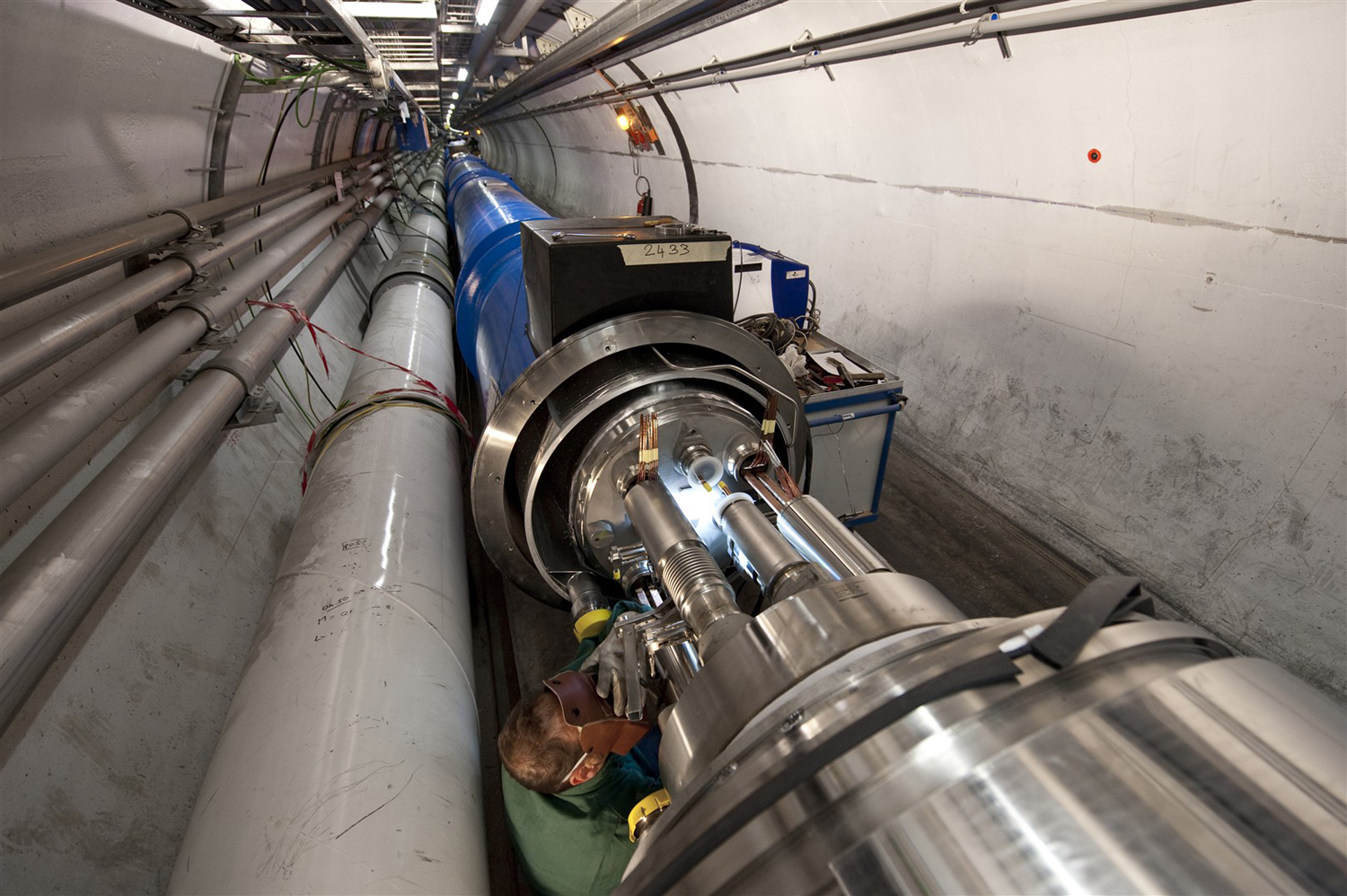
 In July of 2012, scientists working for the CERN Laboratory in Geneva, Switzerland announced that they believed they had found the elusive “God Particle” – aka. the Higgs Boson. In addition to ending a decades-long search, the discovery also solved one of the greatest riddles of the universe, confirming the Standard Model of particle physics and shedding light on how the universe itself came to be.
But of course, this discovery needed to be confirmed before the scientific community could accept its existence as fact. The announcement made in July indicated that what the CERN scientists had found appeared to be the Higgs Boson, in that it fit the characteristics of the hypothetical subatomic particle. But as of last Thursday, they claimed that they are now quite certain that this is what they observed.
 Joe Incandela, a physicist who heads one of the two main teams at CERN (both made up of over 3000 individuals) claimed that: “To me it is clear that we are dealing with a Higgs boson, though we still have a long way to go to know what kind of Higgs boson it is”. In essence, he and his staff believe that may be several types of Higgs to be found, each of which behaves a little differently.
This was no small challenge, as the Higgs will only make an appearance once in every trillion collisions. Originally theorized in 1964 by British physicist Peter Higgs to explain why matter has mass, it has long been suspected that the Higgs stood alone, explaining how the six “flavors” of quarks, six types of leptons, and twelve gauge bosons, interact. Now, it may be the case that there are several, each of which moves differently and are responsible for different functions.
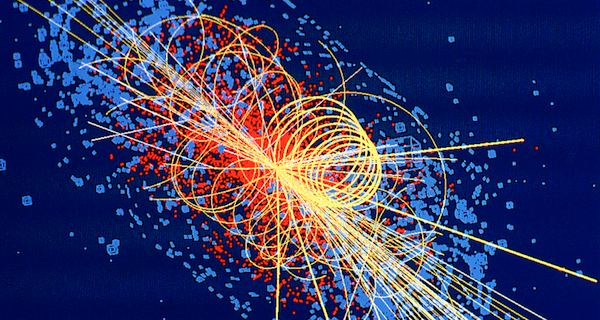 And of course, there are several larger mysteries that remain to be solved, which the discovery of the Higgs is expected to shed light on. These include why gravity is so weak, what the dark matter is that is believed to make up a large part of the total mass in the universe, and just how all the major forces of the universe work together to define this thing we know as reality.
These include gravity, weak and strong nuclear forces, and electromagnetism. The Theory of Relativity explains how gravity works, while Quantum Theory explains the other three. What has been missing for some time is a “Grand Unifying Theory”, something which could explain how these two theories could co-exist and account for all the basic forces of the universe.
If we can do that, we will have accomplished what Stephen Hawking has dreamed of for some time, and in effect be one step closer to what he described as: “understanding the mind of God”.
Source: nytimes.com
 Stories by Williams