Last time, I spoke (at length) about all the awesome firearms that come to us from a variety of science fiction franchises. But let’s face it, there’s a lot more than just guns to speak of! In fact, part of the genius of sci-fi is in how it is constantly inventing entire arsenals of weaponry, tools, and the various nicknacks that make the world go round. Any director or writer who show attention to detail will make sure that their characters come equipped, looked the part, and that their settings have plenty of believable gadgetry taking up space in the background. Here are just some of the cool examples:
Claws: Along with the burner/plasma caster, these weapons are the most basic of Hunter weapons in the Predator universe. According to tradition, every Hunter must distinguish themselves in battle by confronting an enemy in single combat using no other weapon than their claws. Based on the two non-crossover films (Predator and Predator 2), this is apparently done once all lesser prey are eliminated and only the top prey is left. When that occurs, the Hunter will ensure that this finale opponent has been deprived of any additional weaponry, and then will shed every other weapon in their arsenal and engage them in hand to hand combat.
Combi-Stick: Part of the Hunters arsenal, this weapon comes from the Predator universe and is part of their wider arsenal of cool weaponry. The name refers to the fact that this staff serves multiple functions. Collapses, it serves as a sort of quarter staff. However, the stick has telescoping sections with a blade like end, which when deployed turn it into a spear. In Predator 2, a hunter used his stick on multiple occasions. Against a group of the Jamaican gang members, it was used strictly for impaling, but during a later scene, it was used as a throwing spear against Danny Glover’s character.
Crysknife: The Fremen weapon of choice, made from the tooth of a Maker (i.e. a Sandworm). The name and design of the weapon are based on the kris, a ceremonial dagger that was traditionally used in Indonesia and is associated with many cultural legends.
A testament to Herbert’s ability to incorporate historic and cultural elements into his stories, the kris is an enduring symbol of the Dune universe and was used by Fremen for warfare, duals, and ceremonial purposes, much like the real thing! In addition, the Fremen had very strict rules about the use and exposure of these knives. According to the Shadout Mapes – the Fremen housekeeper in Dune – who gives one to Jessica: “Who sees that knife must be cleansed or slain!” And as Leto II remarked in Children of Dune: “The crysknife dissolves at the death of its owner.”
Lasgun: This weapon was the brainchild of Frank Herbert, and is a familiar weapon in the Dune universe. According to Frank’s many novels, the lasgun was a continuous-wave laser projector weapon that when fired emitted a constant, narrow beam of photons. Though it was able to cut through just about anything and was the weapon of choice in the Old Imperium, it had since fallen into disuse by the first Dune novel.
This apparently had to do with the invention of personal shields. Rather than protecting against a lasgun burst, the interaction of the two would cause a reaction that rivaled that of an atomic explosion. Hence, attacker and defender would both be killed instantly if either ever came into contact. Much like the prohibition against the use of nukes in Herbert’s universe, one would get the distinct impression that he was commenting on the futility of nuclear deterrents and arms races.
But that’s another matter. The lasgun, from its first appearance in Dune, has gone on to inspire many a sci-fi franchise. One that immediately comes to mind is Akira. In this movie, riot squads and the military employed large, external cell powered weapons to fire focused beams of light on a large mob, hewing off limbs and burning holes straight through some people! The main character Kaneda also commandeered one and used it to fight his psionic friend, Tetsuo, near the end of the movie.
Lightsaber:
Just what is it about lightsabers that make them so unbelievably cool? Is it that warm glow? The otherworldly feeling one gets from seeing one being activated? Could it be that crack, hiss sound they make when they clash, or that warbling noise when they’re spun around? Or could it just be the fact that they deflect blasters and cut through anything? Well yes! It’s all of the above, clearly! Yet another brainchild of George Lucas, meant to call to mind scenes of swashbuckling and chivalry from old samurai movies, the lightsaber has since gone on to occupy a central spot in the collective unconscious of an entire generation. It is a staple, perhaps THE staple, of pop culture’s take on sci-fi.
Making its debut appearance in the first Star Wars movie, the lightsaber was the established weapon of the Jedi. In addition to being their mainstay, lightsabers were also highly personalized, every Jedi being tasked with building one as part of their training. Originally, the only two designs were that of the blue and red, the former being associated with Obi Wan and Anakin Skywalker (which Luke then inherited), and the latter being associated with Darth Vader. However, Luke went on to create his own and fashioned a green beam. With the expanded universe, significance has been given to different colors, each one associated with a different class of Jedi, and indicating whether they are a member of the Sith or the Jedi Order.
For starters, blue is the color of the Jedi Guardian, the warrior class of the order who focus on combat training and fighting. Green is used by the Jedi Consuls, people who focus more on the force and accumulating wisdom and insight. Yellow represents a sort of middle ground, belonging to those Jedi who focus on a combination of both and are usually called upon to settle disputes and act as arbiters. When it comes to the Sith, only one color appears to be used, and that is red. However, purple, orange, and other closely related colors have popped up from time to time in various places as well. In addition, Mace Windu, the Jedi Master portrayed by Samuel L. Jackson, wielded a purple lightsaber as well. However, this was apparently due to Jackson’s insistence that his character have a purple weapon, as well as the initials BMF etched onto the side!
Ma’Tok Staff: Coming to us from the Stargate universe, the Ma’Tok is a combination laser gun, club staff that is used by Jaffa warriors (the specially-bred human servants of the Goa’uld). According to the Stargate Wiki, the Ma’Tok relies on a plasma discharge to strike and cauterize the enemy, causing severe damage and intimidating resistance. It takes its power from an internal cell that employs a liquified mineral (Naquadah) to generate plasma energy. This liquid mineral gives the staff a virtually indefinite shelf life, making it the perfect blend of aesthetics and lethality!
Monomolecular Wire: Here’s an idea that comes in various forms, but for the purposes of this post, I shall stick to the examples that I know best. The first one comes in the form of the Yakuza enforcer from Johnny Mnemonic! Anyone who’s seen this movie (or read the short story it was based on) will remember the main badguy who had an artificial thumb that contained a long filament of glowing wire. When he pulled that thing out and started whipping it around – LOOK OUT! – things began to get lopped off and sliced up! Another example of this being used as a weapon is from the Japanese anime Hellsing. In that show, the butler of the namesake character had monomolecular wires attached to each finger which he would break out whenever there was a crisis. Perhaps they were fashioned from silver, I really can’t recall. Would make them more effective against vampires though!
Plasma Sword: And we’re back to the Halo universe for another example of cool gear! And today, the item in question is the plasma sword. As gamers are no doubt aware, this weapon is melee weapon of the Elites, but can be employed by humans as well since it’s your basic hand-held weapon. And much like lightsabers and lasguns, it can cut through just about anything and makes short work of any opponent. In many ways, its even more effective than the ballistic and energy weapons in the game. Whereas those can take several shots to take down an enemy (especially someone infected by the flood) one good hit from this baby will turn them into pulp! And if you see an enemy approaching you with one, be sure to hang back and unload your weapon in their direction!
Stone Burner: Doubling down on the Dune universe, the next example of cool weapons comes in the form of Stone Burner. As a tactical nuke of limited yield, this weapon was the only form of nuclear device that was not prohibited by the Great Convention. This body, in addition to banning all forms of AI’s, also put a stop to the use of nuclear weapons, though it did not forbid the Great Houses from owning any. In any case, Stone Burners, when used strategically, could have a devastating effect on an enemy.
This weapon makes only one appearance in the Dune saga. In Dune Messiah, Paul Atreides is lured into a trap in the old quarter of Arrakeen where a stone burner is set off, which leads to the loss of his eyes. Though physically blinded, Paul was not deprived of his vision (i.e. his prescience). This all had to do with a larger plot to force Paul to surrender his power as Emperor in order to save his children. And I think we can all agree, any plot that involves a tactical nuke and blinding your enemy Samson-style is pretty badass!
Throwing Disc: Another Hunter weapon, this particular one made its first appearance in the second Predator movie and then went on to become a regular part of the Hunters’ arsenal. Much like their other weapons, the throwing disc appears to have many variations and may even be personalized to an extent. This may be the result of constant upgrading, or it may be that individual Hunters have a hand in designing their own gear. In either case, many types of throwing discs have appeared. Some employ simple curved blades, blades with spikes, or even shuriken-like appendages (as the picture at right demonstrates). In each and every case, the result generally involves hewed limbs and decapitations!
Thermal Detonator: “Because he’s holding a thermal detonator!” Yes, whenever a bounty hunter pulls one of these out, you know they mean business! This weapon, which comes to us from the Star Wars universe, made its first appearance in Return of the Jedi. Since that movie came out, the device has been mentioned and referenced countless times in the expanded franchise. Apparently, thermal detonators are the grenades of the future, using plasma charges that when detonated, cause a large explosion that will burn through just about anything. Always be sure to bring one to a negotiation, just be sure to get the ones with the fail-safe triggers!
Vibroblades: My third and final act of doubling down on a single franchise! Vibroblades are an integral part of the Star Wars universe, but also appear in a number of other franchises. In each case, the weapon revolves around melee weapons that are powered by ultrasonic devices. This increases the weapons cutting effectiveness, and makes them almost as dangerous as a lightsaber. Well, more like a distant second! But non-Jedi’s got to settle for what they can get.
In the video game Knights of the Old Republic, vibroblades and melee weapons are used due to the introduction of personal shields. Some might call this a rip-off of the Dune universe, but in this case, its not so much a matter of necessity as practicality. If an enemy can absorb your blaster fire, then rushing and attacking them with a sword kind of makes sense. And it gives the characters some practice with melee combat before they learn to harness their Jedi abilities.
Last Word:
Okay, I got nothing! Yep, after looking through all the aforementioned examples of cool weaponry, I really couldn’t find any particular patterns that were worthy of comment. Basically, it all comes down to things that augment or go beyond the usual arsenal of guns. It’s only where the swords and knives come into the mix that I see anything beyond simple coolness. And just about all that drinks from the cup of Frank Herbert, a man who merged the ancient and futuristic in order to make a point about technology and how one could find the past in the future and the future in the past. Yeah, that stuff was deep!
As for the rest of it, it’s just plain cool to behold… and fantasize about! Yeah, twenty years later and I still want a lightsaber of my own! 😉
Hello again, fellow sci-fi fans! Today, I thought I’d write about something conceptual, something that is intrinsic to so much science fiction and keeps popping up in various forms. It’s something that has appeared in countless serials, novels, tv shows, movies, and RPG’s. I am referring, of course, to the concept of the Galactic Empire, a science fiction trope that has seen many incarnations, but revolves around a singular theme of a political entity that spans the known universe.
Whether it’s a loose federation of humans and aliens spanning many different star systems, or a despotism made up of millions of worlds, all populated by human beings, or something somewhere in the middle, this trope has proven to be one of the most enduring ideas of classic science fiction.
But where exactly did this idea come from? Who was the first to come up with a futuristic, galaxy-spanning polity where millions of star systems and quadrillions of sentient beings all found themselves living underneath one roof?
Asimov’s Foundation Series:
An artists rendering of Trantor
Isaac Asimov is arguably the first science fiction author to use the concept of a galaxy-spanning empire in his literature. Known simply as the Galactic Empire, this organization was the centerpiece of his Foundation series. As fans of the books know, the entire series was built around the idea of the imminent collapse of said empire and how a small band of scientists (led by Hari Seldon) were dedicated to ensuring that the collective knowledge of the universe would be preserved in its absence. The books were based heavily on Gibbon’s History of The Decline and Fall of the Roman Empire, a compendium which explored the various reasons for the collapse of Rome and the resulting Dark Ages.
The universe of the Galactic Empire centered on a planet named Trantor. Based on his descriptions, the planet was covered by a massive urban landscape, every habitable area having been built over in order to accommodate the planet’s huge population. In addition to being the capitol of the Empire, it was also its administrative head, cultural hub, and economic epicenter. Much like Rome of antiquity, it depended heavily on the surrounding territories for food and raw materials in order to sustain itself, and was terribly hit when the Empire began to decline.
However, beyond some passing descriptions of its size, centrality and the problems facing its encapsulated population, not much is said about Trantor or many other worlds of the Galactic Empire. In fact, not much is said about the Empire itself, other than the fact that it has endured for millennia and is on the verge of collapsing. Mainly, the focus in Asimov’s Foundation is on the events that precipitated its fall and the work of the Foundation once that was complete; how they went about the process of restoring civilization in the absence of a central authority. However, the subsequent Foundation novels, which included some prequels, helped to flesh out the Empire further, providing details on member worlds and the events which preceded the development of Hari Seldon’s “psychohistory”.
Frank Herbert’s Dune:
Arrakis (aka. Dune), the main setting of the story
One of the greatest examples of a galactic empire in my opinion. In the first installment of the Dune series, we are made immediately aware that humanity now inhabits the entire galaxy and are ruled from a world called Kaitan by a sovereign known as the Padishah Emperor. However, it is also made clear that while the emperor is the supreme leader, power is shared in a quasi-feudal arrangement between the noble houses (the Landstraad), a corporate entity that controls all economic affairs (CHOAM), and the various guilds (of which the Spacing Guild is arguably the most powerful). In this universe, much attention is given to the breakdown of power, the history of how it came to be, and the various member worlds and houses.
For starters, there is House Corrino, the ruling dynasty of the empire that is centered on Kaitan. Their house once ruled from a planet known as Selusa Secundus, but which has since been reduced to ashes from a nuclear attack and now serves as the emperor’s prison planet (where his elite armies are trained). More important, and central to the story, is House Atreides, the family which rules from an ocean planet named Caladan, but come to inherit the desert planet Arrakis (aka. Dune). Passing attention is also given to Geidi Prime, the industrial world run by House Harkonnen, the nominal villains of the story.
But by far, the most detailed and developed descriptions are that of the planet Arrakis, where most of the story takes place. Throughout the first novel, the planet’s ecology, native species, and inhabitants (the Fremen) are richly detailed. Given that it is the only world where the spice (an awareness drug the entire universe depends on) is mined, the world is understandably the focal point of the Dune universe. Clearly analogous to oil, the spice is a metaphor for human dependence on a single resource, and the consequences thereof. By taking control of the planet at story’s end and threatening to destroy the spice, Paul Atreides effectively becomes the universe’s new ruler. For as the sayings go: “He who controls the spice, controls the universe”, and “He who can destroy a thing controls that thing.”
Frank Herbert cited a number of influences for his galactic empire. Like Asimov, he relied a great deal on history, particularly that of the Middle East, the Crusades, and a number of feudal societies. At the same time, Herbert became fascinated with ecology, a result of his living in Florence, Oregon where the US Department of Agriculture was using poverty grasses to stabilize the expanding Oregon dunes. The article which he wrote about them, entitled “They Stopped the Moving Sands” was never completed and only appeared decades later in The Road to Dune. Nevertheless, it was from this combination of real history and ecology, how the living environment affects its inhabitants and shapes history, that the universe of Dune emerged.
Star Wars:
Coruscant, capitol of the Old Republic and Empire
Perhaps the best known example of a galactic empire, which in turn emerged from what Lucas called the Old Republic. When asked about his inspirations, George Lucas claimed that he wanted to create an empire that was as aesthetically and thematically similar to Nazi Germany as possible. This is made abundantly clear when one looks into the back story of how the Empire emerged, how its malevolent dictator (Palpatine, a Sith Lord) rose to power and began launching campaigns to eliminate anyone who stood in his way. In addition, the use of Storm Troopers, the uniforms of the imperial officers, and the appearance of Darth Vader also add visual representation to this.
However, a great deal of antiquity works its way into the Star Wars universe as well. Much like Herbert and Asimov, there is a parallel between the past and the future. The incorporation of royalty, swordfights between Bushido-like warriors, gun-toting smugglers, cantinas, dangerous towns in the middle of the desert, and all the allusions to the “Republic” and “Galactic Senate”, fair and noble institutions which ruled the galaxy before the dark times – all of these are themes taken from ancient Greece, Rome, feudal Japan, medieval Europe, and the Wild West.
Urban sprawl on Coruscant
In any case, at the center of Lucas’ galactic empire lies Coruscant, a planet that was clearly inspired by Trantor. Whereas in the original series, the planet was not shown or even mentioned, it receives a great deal of attention in the Star Wars novelizations, comics, and prequel movies. Much like Trantor, it is a planet that is completely dominated by urban sprawl, literally every corner of it is covered by massive sky-scrapers and multi-leveled buildings.
According to the Star Wars Wiki (Wookiepedia), roughly a trillion humans and aliens live on its surface, which is another detail that is noteworthy about Lucas’ universe. Unlike Foundation or Dune, in Star Wars, the galactic empire includes countless sentient races, though humans do appear to be the dominant species. This racial aspect is something else that is akin to World War II and Nazi Germany.
Whereas the Rebellion is made up of humans and aliens who are struggling for freedom and tolerance, the Empire is composed entirely of humans who believe in their own racial superiority. However, in a tribute to Lucas’ more creative days, not much is said about this divide, the audience is instead left to infer it from the outward appearances and behavior of the characters on screen. However, the idea receives much development in the novelizations, particularly Timothy Zhan’s Thrawn Trilogy.
StarTrek:
Star Fleet Command, in orbit above Earth
Yet another take on the concept of a galactic polity: Gene Roddenberry’s United Federation of Planets. Much like the Empire of Lucas’ own universe, the Federation is made up of hundreds of member worlds and any number of races. But unlike its peers in the Foundation, Dune or Star Wars universes, the Federation only encompasses a small portion of the galaxy – between ten and fifteen percent, depending on where you look in the storyline.
Beyond their range of influence lie several competing or cooperative empires – the Klingons, the Romulans, the Cardasians, the Dominion, and the Borg. Each of these empires represent a threat to the Federation at one time or another in the story, largely because their ideologies are in direct conflict with the Federations policy of peace, multiculturalism and understanding.
This may sound a tad tongue-in-cheek, but it is the main vehicle for the story. In Star Trek, like many other sci-fi franchises, Gene Roddenberry uses alien races as mirrors for the human condition. Whereas in his vision of the future humanity has evolved to overcome the scourges of war, poverty, disease, intolerance and oppression, other races are either less advanced or openly embrace these things.
The Klingons, for example, were the enemies of the Federation because of their commitment to warrior politics. The Romulans are locked in an ongoing cold war with them because of their belief in their own racial superiority. The Dominion seeks dominance over all “solid” life forms because, as shape shifters, they fear being controlled themselves. And the Borg are an extremely advanced cybernetic race that seeks to “perfect” organic life by merging it – by force, if necessary – with the synthetic. The metaphors are so thick, you could cut them with a knife!
Yes, subtlety was never Roddenberry’s greatest attribute, but the franchise was an open and inclusive one, borrowing freely from other franchises and sci-fi concepts, and incorporating a great deal of fan writing into the actual show itself. And whereas other franchises had firm back-stories and ongoing plots, Star Trek has always been an evolving, ad hoc thing by comparison.
Roddenberry and the producers and writers that took over after his death never did seem to plan that far ahead, and the back story was never hammered out with that much precision. This has allowed for a degree of flexibility, but also comes with the painstaking task of explaining how and why humanity became a utopian society in the first place. But for the most part, the franchise leaves that one vague, arguing that space travel, technology and contact with other sentient races allowed for all of this to happen over time.
Babylon 5:One of my favorite franchises of all time! And possibly one of the most detailed examples of a galactic empire, due largely to the fact that it took shape in the course of the show, instead of just being there in the background from the beginning. Here too, we see a trade off between other franchises, the most similar being Star Trek. In this universe, there is no single galactic empire, but rather a series races that exist is a web of alliances, rivalries and a loose framework of relations.
But as time goes on, many of them come together to form an alliance that is reminiscent of the Federation, though arguably more detailed and pluralistic in its composition. When the show opens, we see that humanity is merely one of many races in the cosmic arena, most of whom are more advanced and older than we are.
The Earth Alliance, as its called, controls only a few colonies, but commands a fair degree of influence thanks to the construction of an important space station in neutral territory. This station (namesake of the show) is known as Babylon 5, aptly named because it is a place of trade, commerce, and the intermixing of peoples and cultures. And much like its namesake, it can be a dangerous and chaotic place, but is nevertheless the focal point of the known universe.
According to the back story, which is explored in depth in the prequel movie “In the Beginning”, the station began as a way of preventing wars based on cultural misunderstandings. Such a war took place between the human race and the Mimbari, a race that is central to the story, ten years prior to the show. After four abortive attempts, the station finally went online and was given the designation of five because it was the fifth incarnation of the project.
Once completed, all major races in the area sent representatives there in order to make sure their interests and concerns were being represented. Chief amongst them was Earth, the Mimbari, the Narns, the Centauri and the Vorlons, who together made up the stations executive council. Beyond them was the “League of Non-Aligned Worlds”, a group made up of fifteen sentient races who were all smaller powers, but together exercise a fair degree of influence over policy.
The Centauri, who were based on the late-period Roman Empire, are a declining power, the once proud rulers of most of the quadrant who have since regressed and are looking to reverse their fortunes. The Narns are their chief rival, a younger race that was previously occupied and brutalized by the Centauri, but who have emerged to become one of the most powerful forces in the quadrant.
Based heavily on various revisionists powers of history, they are essentially a race that is familiar with suffering and freely conquers and subjugates others now to ensure that such a thing never happens to them again. The Mimbari, an older and somewhat reclusive race, is nominally committed to peace. But as the war demonstrated, they can easily become a force to be reckoned with given the right provocation. And then there are the Vorlons, a very old and very reclusive race that no one seems to know anything about, but who nevertheless are always there in the background, just watching and waiting…
As the show progresses, we come to see that B5 will actually serve a purpose that is far greater than anyone could have foreseen. It seems that an ancient race, known only as the Shadows, are returning to the known universe. Before they can to invade, however, they must recruit from the younger races and encourage them to make war on their rivals and neighbors. This will sow the seeds of chaos and ensure that their eventual advance will be met with less resistance.
The Vorlons and the Mimbari ambassadors (Kosh and Delenn) are aware of this threat, since their people have faced it before, and begin recruiting the station’s two human commanders (Jeffrey Sinclair and John Sheridan) to help. This proves difficult, as the Shadows appear to have contacts on Earth as well and are backing the power play of Vice President Clarke, an ambitious man who wants to be a dictator. They are also ensuring that the Centauri and Narn go to war with each other as a way of keeping all the other member races preoccupied.
However, using the station as a rallying point, Sheridan, Sinclair, Delenn and Kosh eventually manage to organize the younger races into a cohesive fighting force to turn back the Shadows. Things become more complicated when they realize that the Vorlons are also the enemy, being involved in a power struggle with the Shadows that goes back eons. However, with the help of other First Ones (very old races) and a commitment to stand on their own, they manage to force both sides to leave the known universe.
In the wake of the war, a new spirit of cooperation and cohesion is formed amongst the younger races, which eventually gives rise to the Interstellar Alliance. This organization is essentially an expanded version of the League, but where members are fully aligned economically and politically and committed to defending each other. This comes in handy when the allies of the Shadows, younger races who are armed with all their old mentors’ gear, come out of hiding and begin to make trouble!
Naturally, the full story is much more complex and I’m not doing it justice, but this is the bare bones of it. Relying on historic examples and countless classic science fiction themes, J. Michael Straczynski establishes a detailed universe where multiple races and political entities eventually come together to form a government that rules the known universe and stands the test of time.
Battletech:
Here we have a franchise that had multiple inspirations, according to the creators. The focal point of the franchise is on massive war machines, known as battlemechs, which were apparently inspired by Macross and other anime. However, the creators also came to incorporate a back story that was very European in its outlook, which revolved around the concept of an ongoing war between feudal states.
One could make the case that the Shogunate period of Japan, a time of ongoing civil war, was also a source of inspiration for this story. However, upon familiarizing myself with the background of the series, I couldn’t help but feel that the whole thing had a predominantly Russian feel to it. In addition to the heroic characters being named Alexandr and Nicholas Kerensky, something about the constant feudal warfare and the morally ambiguous nature of humanity in the story seemed analogous to much of Russia’s troubled history.
To break it down succinctly, the story takes place in the 31st century, a time marked by incessant warfare between different clans and worlds, all of which are populated by humans.Terra (as Earth is now called) was once the center of a grand empire known as the Star League. After centuries of conflict, in what is known as the “Succession Wars”, Earth and many its immediate neighbors were rendered damaged or completely uninhabitable.
As a result, the focal point of the universe resides within the Inner Sphere, a region that is 500 light years away from Earth and dominated by five Great Houses. The leader of each house claims to be the rightful successor of the Star League, and hence the houses are all known as the Successor States. Outside the Inner Sphere lies the Periphery, a large ring of independent star systems that predate the League and the Successor States, but are inferior to them in terms of technology. Though nominally independent, none of these regions have the ability to stand against the houses of the Inner Sphere, and thus avoid conflict with them whenever possible.
A key feature of the Battletech universe is the absence of sentient species outside of the human race. This serves to make the ongoing warfare more realistic, as well as establishing how the current state of war is a direct extension of earlier rivalries (some dating all the way back to the 20th century). Another interesting feature about this franchise is the fact that humanity has not evolved very far beyond its current state, in spite of the lengthy passage of time.
Again, the constant state of warfare has much to do with this, which has had a slowing and even reversing effect on the technological development of many worlds. In short, the franchise is gritty, realistic, and has a pretty dim view of humanity. In addition, there is a palatable sense that humanity’s best years are behind it, and that barring the appearance of some external threat, humanity will war itself into extinction.
Key Features:
A couple of things stand out about each of these examples of a galactic empire. And for anyone interesting in creating their own, they are considerations which have to be taken into account. All of the previous creators, from Isaac Asimov to Weisman and Babcock, either took a singular approach on these issues, or adopted a combined one. Here they are, as I see them:
Humans and Aliens: This is arguably the most important consideration when developing a sci-fi franchise, especially one where a galactic empire is concerned. The creator must decide, is this going to be a universe where humans and aliens coexist with one another, or is it going to be strictly human? Both options open up a range of possibilities; for example, are humans and aliens living together in harmony in this story, is one subjugated to another, or something else entirely? What’s more, what role will the aliens play? Are they to be the benign, enlightened aliens who teach us “flawed humans” how to be better, or will we be the the species that’s got things figured out and they be allegorical representations of our past, flawed selves? Inevitably, aliens serve as a sort of mirror for the human condition or as examples of past human societies, in any story. There’s simply no way around it, not if we want them to be familiar and relateable.
Utopian/Dystopian: Another very important decision to make when creating a universe is the hue its going to have. In short, is it going to be a bright place or a dark place? Would humanity advance as a result of technology and space exploration, or regress because improved weapons and tools merely meant we could do more harm? Both visions serve their purpose, the one eliciting hope for the future and offering potential solutions to contemporary problems, the other making the point that the human condition is permanent and certain behaviors will never be overcome. However, in my opinion, the most respectable approach is to take the middle road on this. Sci-fi franchises, like those of Straczynski and Alastair Reynolds (creator of the Revelation Space universe) did their best to present humanity as being morally ambiguous. We were neither perfect nor unsalvageable. We simply did our best and tried to make a difference, but would always have our share of flaws.
Space Travel: Almost all galactic empires are agreed on this one front. When it comes to creating a extra-solar empire, one that encompasses hundreds or even thousands of star systems, one needs to be able to travel faster than the speed of light. It might mean contravening the laws of physics (causing Einstein to roll over in his grave!) but you can’t really do it otherwise. Whether it’s by the Alcubierre drive, hyperspace, warp, jump gates, or folding space, all of the aforementioned franchises incorporated some kind of FTL. Without it, humanity would require thousands or even millions of years in order to expand to encompass the known universe, at which point, we’d probably have evolved to the point where we were no longer even human! In addition, the problems of subjective time and perspective would wreak havoc with story lines, continuity, and the like. Better and easier to just say “Here (zoom!) Now there!”
Technology: Following on the heels of FTL is the issue of how technology in general is treated within the universe in question. Will it be the source of man’s betterment and salvation, of their downfall, or something in between? Star Trek is a perfect example of the former approach, set in a future where all hunger, disease, poverty and inequality have been eliminated through the application of technology. Despite the obvious utopianism of this view, the franchise really isn’t that far off if you think about it. If we did have matter replicators, machines that could manufacture food, materials and consumer goods out of simple trace elements, then money, precious metals and other artificial means of measuring wealth would become obsolete. In addition, there’d be no more food shortages or distribution problems to speak of, not as long as everyone had access to this technology. And if fusion power and warp technology were available, then energy would be cheap and abundant and commerce would be rapid and efficient.
However, Roddenberry would often show the downside of this equation by portraying societies in which technology had been allowed to run amok. A good example is an episode in Star Trek TNG where the Enterprise comes upon a planet that is run by an advanced machine named Custodian. The people of the planet have grown entirely dependent on the machine and have long since forgotten how to run and maintain. As a result, they have become sterile due to radiation poisoning and are slowly dying off. Another perfect example is the Borg, a race of cybernetic beings that are constantly expanding and assimilating anything in their path. In terms of aesthetics, they are dark, ugly and sterile, traveling around in ships that look like giant cubes that were slapped together out of toxin-spewing industrial junk. Is there a more perfect metaphor for the seemingly unstoppable march of technological progress, in all its darker aspects?
Asimov’s Foundation series also had a pretty benign view of technology. In his universe, the people of Terminus and other Foundation worlds distinguished themselves from their neighbors through their possession of superior technology and even used it to their advantage wherever possible. In the first novel, for instance, the Foundation’s scientists began to travel to neighboring worlds, places that had the use of nuclear power and began teaching them how to rebuild it. Over time, they became a sort of priestly caste who commanded reverential respect from the locals thanks to all the improvements their inventions brought to their daily lives. When in the first book a warlord from the neighboring planet of Anacreon tries to conquer them, they then respond by cutting off all power to the planet and their forces, and use their status as religious leaders to foment rebellion against him.
However, other franchises have a different take on technology and where it will take us. For example, Battletech tends to look at technology in a darker perspective. In this future, the focus of technological development is overwhelmingly on battlemechs and weapons of war. In addition, the ongoing war in the series has had a negative effect on the development of other forms of technology, particularly the kinds that are beneficial to society as a whole. In short, technology has not corrected for mankind’s flaws because it has failed to remove the greatest cause of war and suffering – i.e. ambition!
Frank Herbert, on the other hand, took what could be construed as a mixed view. Whereas in his universe, instantaneous space travel is possible, energy shields, laser guns and nuclear power are all in existence, the overall effect on humanity has not been progressive. In the first Dune novel, we learn that humanity fought a holy war against thinking machines and automation over ten thousands years prior to the main story (the Butlerian Jihad). The target of the jihad was apparently a machine mentality as much as the machines themselves, and the result was a sort of compact whereby future generations promised never to develop a machine that could take the place of a human being. That, in addition to the invention of energy shields, led to the development of a feudal society where nobles and merchant princes were once again responsible for controlling planetary resources, and where armies went to war using swords and daggers in addition to lasers, slug throwers and missiles.
In subsequent novels, this was developed even further to present a sort of twofold perspective on technology. On the one hand, it is shown as being potentially harmful, where a machine mentality and a society built on unrestricted production of material goods can lead to social chaos and anarchy. Not necessarily because it can be harmful in and of itself, but because it can lead to a situation where humans feel so alienated from themselves and each other that they are willing to regress to something simpler and less free. On the other hand, advanced technology is also shown to have a potentially retrogressive effect as well, forcing people to look backwards for solutions instead of forwards. One can see genuine parallels with history, like how industrial civilization, in spite of all its benefits, led to the rise of fascism and communism because of its atomizing and alienating effects on society. Or how the Japanese of the post-Shogunate period deliberately regressed by destroying their stores of muskets and cannons because they feared that the “coward weapons” were detrimental to the Bushido.
Personally, I thought Herbert’s perspective on things was by far the most brilliant and speculative, packed full of social commentary and irony. It was therefore a source of great disappointment that his successors (Brian Herbert and KJA) chose to present things in a far more myopic light. In the prequels to Dune, particularly the Legends of Dune series, the jihad is shown to be a struggle between advanced machines that have enslaved the human race and the few free human worlds that are locked in a life and death struggle to defeat them. However, in twist that is more contradiction than irony, they find the solution to their problem by using nukes to level every machine planet. The fact that the “free worlds” relied on slave labor to compensate for the loss of automation was somewhat interesting, but would have been far more effective if the enemy machines were not portrayed as purely evil and the protagonists as selfless heroes.
Final Thoughts:
The concept of a galactic empire is something that has a long history and many, many incarnations. But as always, the purpose of it seems to be to expand the focus of the commentary so that as many possible aspects of the human condition can be explored. By placing human beings on hundreds or thousands of planets, authors generally seek to show how different places can give rise to different cultures. This is as true of different parts on the globe as it is for different planets in the universe. In addition, the incorporation of aliens also gives us a chance to explore some of the deeper sociological questions, things that arise out of how we interact with different cultures around the world today. For in the end, all science fiction is really about history and the period in which it is conceived, regardless of it being set in the future. Like all other genres, the real aim is to serve as a vehicle for speculation and investigation, answering questions about who we are and what makes us us.
Whew! I think I got a little tongue and cheek there myself! In any case, I enjoy delving into this conceptual stuff, so I think I’m going to do it more often here. Next time, something a bit lighter and more specific. I was thinking about something along the lines of PLANETKILLERS! Stay tuned!
Looking back, I’ve noticed a sort of thread running through some of the posts I’ve made. And in truth, this thing was quite influential when it came to what inspired me to write science fiction in the first place. It began with the infamous Star Wars prequels, the movies which ruined what used to be a very influential and nostalgic franchise. It was then reinforced by the odious Dune prequels, which tarnished the legacy that inspired me to write science fiction in the first place. Since then, I’ve noticed these same elements at work in any prequel I’ve chanced upon and the lessons only seem to get more concrete.
While I’m no expert on the fine art of writing, be it science fiction or anything other genre, by the time I started doing it I was pretty clear on what I wanted to create. Basically, I wanted to write something I would enjoy, something that emulated the greats I had come to know and admire. But when it came to what I DIDN’T want to do, I found prequels summed up a lot of it succinctly (especially the aforementioned examples). I’m sure I mentioned as much in previous posts, but today, I thought I might speak to these things specifically; outline why prequels can – and often do – suck!
1. No Surprises:
Whether it was the Star Wars prequels, X Men Origins: Wolverine, the Legends of Dune series, or anything else prequel-oriented, there was one undeniable problem they all had in common: we already knew what was going to happen. By stories end, we know that the characters are going to become whatever it is they were in the original story, and we know who’s going to live and who’s going to die. In some cases, we even know how, so there really are no surprises. The only real purpose of a prequel is to fill in the background, explain HOW things happened and how the characters and story we are familiar with came to be.
For example, in Star Wars, we know that Anakin becomes Darth Vader, that Palpatine is the villain and will take over the Republic, and that Amidala will give birth to Luke and Leia before dying. There are a host of other details which the more nerdy among us were familiar with as well, and we were all drawn to theaters back in 1999 hoping to see how they played out. But in the end, when all was said and done, I don’t think any of us came away satisfied. Seeing how things happened when you already know what will happen just seems to make for a disappointing experience.
2. Sense of Duty:
Another thing that brings down a prequel is the fact that things MUST be explained. In short, the writer, director, author, etc. has a list of things which need to be covered before the end. These things have to fall within an established framework – i.e. what has already been established by the original story – and cannot contradict or be inconsistent with them. So really, in addition to having a story where there really are no surprises, you also get a story where things have to proceed in an established fashion and often seem heavily contrived. The end result is not what would feel natural based on the story so far but based on what needs to happen for the sake of the original story.
X-Men Origins will suffice as an example here. In this movie, the story had to show where Wolverine came from, how he and his brother (Sabretooth) had their falling out, and how his memory got erased. The result was actually pretty weak, in my opinion. Basically, Colonel Striker shot him in the head with Adamantium bullets, which he knew wouldn’t kill him but would erase his memory. Now, how did he know ahead of time that that would be the effect it would have? Second, why do that instead of lobbing a rocket-propelled grenade at him? Simple, because the story required it. Wolverine is supposed to be an amnesiac in the first movie, so this movie had to show how.
And while were on the subject, why didn’t Wolverine’s girlfriend kill Striker at the end when she had the chance? The woman had suggestive powers and had the man in her grasp, so why not tell him to march off a cliff? Again, because the story demanded it. Striker needed to live to see movie two, so instead she said some fluff about how she’d be no better than him and just told him to take a walk until his feet bled and he fell from exhaustion. I can’t speak for everyone, but personally, I was disappointed.
3. Less Is More
A lot of people insist that when it comes to back stories and background, the less we know, the better. After all, wasn’t Darth Vader scarier before we knew that he was once portrayed by Hayden Christensen? Wasn’t he a lot more menacing before he cried over the loss of Padme? I know for a fact that I’m not alone when I say that the whole “NOOOOOOO!” scene at the end of Revenge of the Sith brought him down in my eyes. What was once a titanic force of badassery was transformed into a whiney, bitchy child through the simple act of fashioning an origins story.
To use a non-prequel example, consider the Batman franchise. In the Tim Burton version, we got to see the Joker’s origin story, but in the Christopher Nolan version, we got nothing. And frankly, wasn’t Ledger’s updated take on the Joker much more scary than Nicholson’s because of it? Sure, his dialogue and acting were spot on at capturing the insanity and terror of the laughing psychotic killer, but wasn’t part of that assured by the fact that we had NO IDEA who he was or where he came from? The origins stories that he told – “wanna know how I got these scars?” – and how they kept changing was part of what made him so effective. As the audience, we wanted to know, how DID he get those scars? Why IS he so crazy? But by denying us this, I think we were kept wanting and we respected the movie more for it.
The same is true of Batman himself. In Burton’s, we got an exact reversal of what happened with the Joker. Aside from the fact that his parents were murdered, apparently by a young Jack Napier (who would go on to become the Joker), we knew nothing about him. Where he got his skills from, his equipment, and how he got started. This served to make him a much more mysterious character which in turn made him more interesting. In Burton’s Batman, he was the focal point whereas the Joker was his nemesis. But in Nolan’s updated version of The Dark Knight, the Joker was undoubtedly the focus while Batman was just the hero trying to stop him. I’d say what he knew – or in this case, didn’t know – about them was central to that.
4. The Audience’s Imagination Is The Writer’s Greatest Weapon:
I believe it was the famous photographer Duane Michals who said “I believe in the imagination. What I cannot see is infinitely more important than what I can see.” Okay, I Googled that, sue me! But the man had a point, and it applies doubly to movies since they too are a visual medium. What the readers and/or an audience can imagine based on snippets of a story is infinitely more powerful than what they can be shown with a few hundred pages of text or a two hour movie. This is why less is more. By giving the audience less to work with, they have more freedom to imagine and create. If you tell them what happened, detail for detail, then they have nothing except for what you’ve given them.
This, I think, is precisely why prequels are so often a disappointment, at least in my estimation. I’ve always considered myself to be an imaginative person. Given a blank canvas, or one with just a few details, I can create just about anything. And I’m hardly alone in that fact. Imagination is something everyone has – to varying degrees, sure – but it’s part of what makes us human and gives our lives meaning. Being able to express our inner life makes us happy, and there are few things more hurtful and insulting than having someone mock or dismiss that creativity. It’s also one of the cornerstones of a free society, the freedom to create and not be persecuted for it.
So it’s little wonder then why people are drawn to movies where books they’ve read are being adapted to film, or to prequels, where things that have been previously alluded to are acted out. People go to see them because they want to know if it will bear any resemblance to what they themselves imagined. Or, they go because they just want to see what the director’s own vision was. Either way, when you get around to seeing it for yourself, is it not a letdown no matter what? Isn’t that the real reason why people who’ve read the book constantly insist that the movie isn’t as good? That certainly seemed to be the consensus amongst LOTR geeks. And I should know; by The Two Towers, I was one of them! And isn’t that the real reason why the Star Wars prequels sucked as much as they did? We, the fans and audiences are active participants and create out of what we are given. Being told point blank what happened removes half the fun of it!
Some Tips For Writing:
Well, that’s all I got for now. Except to say that if someone is hoping to do a prequel, there are certain tips that I’ve come up with that can help. These are by no means established rules, just the result of my own amateur experience and observations. For one, a writer should take care not to give too much away when writing background. As always, less is more. It’s enough to let the background stay in the background and focus on the story. The more the reader/audience has to work with, the better. That way, when you are writing out the back story, you have much more freedom to work with, and don’t have to worry about staying within boundaries.
Second, a good idea is to write things out ahead of time. When I was thinking up Legacies, I began by writing out an outline for the entire background of the story. I didn’t do this because I was one day planning on writing a whole franchise worth of books, prequels included, but because I just wanted the story to be tight and know where everything fit. But because of that, I was able to pen several short stories that took place before the first novel. Rarely were the main characters and plot lines from that novel the focus of these stories, but they did serve as a solid backdrop which helped to advance things.
But don’t take my word on that, consider Lucas himself. He thought up the entire plot for Star Wars trilogy before making the first movie in the franchise, thus he knew exactly what he wanted to do ahead of time. Sure, he made changes and was forced to adapt along the way, but the end result benefited from this foresight. However, when it came to the prequels, he had only the bare bones to work with, and began writing each movie independently of shooting it. And it certainly showed, didn’t it? Rather than feeling like an ongoing story, each movie was a self-contained tale that was full of duty and contrivances. Nuff said? Plan ahead!
Last, but not least, remember that a story, ANY story, needs to tell its own tale. It cannot be written for the sake of filling in another. Its a bit of a vague point, I know, but a writer’s mentality is important when it comes to the creative process. At no point can you be thinking, “this needs to be explained, that needs to be explained”. It needs to be, “this is a story that needs to be told”. Every character has an interesting back story, and stories are living, organic things. They change over time, grow, and eventually die. Showing how they got to where they were going needs to be interesting and told with sincerity. So forget the duty, focus on the events and what made them interesting. If in the end its not a story that you yourself would enjoy, then don’t tell it! Simple as that…
Isn’t it always this way? I just get finished with a long review of the Star Wars prequels, and I realize I left some stuff out. Not only that, I notice that I made some technical errors as well. Ah well, I suppose its the burden of Star Wars geekdom – anal-retentiveness and a total weakness for details. And if all these Star Wars reviews have proven nothing else to me, it’s that I’m a total geek! So here we go…
1. Anakin is NINE in the original movie: That’s right, nine. Not ten, as I originally said. Boy, I’m splitting hairs even mentioning this, but I don’t want someone noticing it and thinking I’m not up on my Star Wars trivia. Why, to a fellow geek, something like that might just stick in their craw!
2. Good acting: Looking back on my three reviews of the Phantom, Clones and Revenge I realized there was something I neglected to mention. The fact that there was actually some good acting throughout. Liam Neeson, for example. He’s always good, but as Qui Gon he was actually quite capable and had a good presence. Samuel L. Jackson, though his lines were heavy-handed as hell, nevertheless managed to bring some much needed bad-assery to this painful trilogy. And how could I have possibly forgotten Ian McDiarmid? The man who brought The Emperor to life in the originals was back again for more in this trilogy! I honestly think that his character was the only one that was faithfully executed in every one of his scenes. He was certainly the only one who had consistently decent one-liners, and that’s in spite of Lucas’ weak writing! I tell ya, it’s that voice. The man could make dish water sound cool and menacing! And the way he transitions so easily from a prissy, overly-cultured Senator to an evil blood-curdling Sith Lord… masterful!
3. Racial Caricatures: In drawing out Lucas’ use of racial stereotypes, there was one key characteristic I failed to mention. Watto, who is an obvious Jewish caricature, had several characteristics that gave him away. The ones I mentioned were his love of money, yamaka-style hat, and exploitative personality. But I forgot to mention the hooked nose! That above all else was a dead giveaway that Lucas had antiquated prejudices on the brain when he wrote this! I also could have mentioned that he combines several Italian stereotypes into his character as well: the stubbly face, the paunchy belly, the thick, raspy accent, the tank top, the hand gestures and phrases like “whaddyaknow?” In fact, that’s what I thought he was until the Shylock-like parallels were pointed out to me, then I was even more offended. Two stereotypes in one, good job Lucas! *Cough* Racist!
4. Hard-ass Jedi: In my first review, I mentioned how the Jedi were portrayed as needlessly harsh teachers for the way they told Anakin that his fear for his mother was a bad thing. I even mentioned that this would come up again later, by which I was referring to the third movie. And wouldn’t you know it, I totally spaced on it! Which is nuts because it was pretty damn intrinsic to the plot. To recap, the Jedi Council tells a nine year old Anakin (nine, not ten!) that he must forget about his mother because his fear of losing her will lead him to the Dark Side. Of course I thought that was total BS! I mean, who tells a kid this kind of stuff and expects it to go over well? Not only that, but it seems like such a stretch. “You’re afraid of losing your mom? Why, that’s the gateway to evil!” No, telling a kid he has to forget about his mom and sit back while she’s MURDERED is the gateway to evil! Not that they’d notice, these guys can’t sense evil when it’s three feet in front of them and in the form of a Sith Lord!
But as if that wasn’t enough, Yoda is at it once again in the third movie. When told that Anakin is having premonitory dreams where someone he loves dies, he simply tells him to let it go. Apparently, his love for this person and fear of losing them is also a bad thing! “Attachment leads to jealousy. The shadow of greed that is,” says Yoda. Not only that, he’s told he should be happy that this person is dying! “Rejoice for those around you who transform into the Force.” What the hell kind of advice is this?! Has Yoda forgotten what Anakin did the last time they told him to just let go? Apparently he has because it never once came up again! So not only is he not allowed to have any romantic attachments, he can’t have any attachments period! Seriously, was Lucas so desperate to make Anakin’s fall to the Dark Side seem justified that he had to pitch the Jedi as a bunch of unfeeling jagoffs? Personally, I’d be telling Yoda and the entire Council to get bent and then march straight on home to nail my wife! Them and their whole order of ascetic virgins can kiss my ass! Bunch of self-righteous fops, you ask me!
4. Selling out: Last time around, I lamented Lucas’ selling out but hoped he might take the hint and get back to his base. Alas, I was already too late! Seems that in the last few years, he’s released two more special editions of his movies! Yes, as if the original box set, the THX box set, the Gold Edition box set, and the prequel box set weren’t enough, now we have “Star Wars: the Force”, and “Star Wars: The Complete Saga”, both of which are full volumes of all six movies. Both contain all the usual bonus feature crap and behind-the-scenes documentaries, but the Force edition is apparently a directors cut that includes all the deleted scenes. Yeah, I’m kind of intrigued by the idea of bonus scenes too, but Jesus Christ Lucas, how many new versions of Star Wars do we need?! You got alimony to pay or a dozen bastard children we don’t know about? Stephen Spielberg got something on you that you gotta pay to keep under wraps? Why else would you feel the need to re-merchandize the most merchandized franchise of all time? You know, I think this might just be his way of sticking it to all those people who laughed at him when he said he wanted to retain the merchandizing rights!
Well, that about covers it for now. As usual, reflecting on the path Star Wars has taken since my younger days has left me feeling bitter and jaded. I suppose its all in how you look at it. On the one hand, I could be happy that Lucas, who started as a humble purveyor of sci-fi (like me!), became a man with the power to shape several generations worth of popular culture. Or I could be pissed that the man who created something that helped shape my and many other people’s childhood went on to rape it! Tough call man…
Last time, I believe I left off with a passing mention of how the Clone Wars weren’t exactly given their due in Lucas’ prequels. Correct me if I’m wrong, but it was my understanding that that was what they were supposed to address, and with a name like Attack of the Clones, I don’t think that would be an unrealistic expectation. But Lucas seemed more concerned with addressing the back-story of Anakin’s fall to the dark side and the love story between him and Padme/Amidala. Everything else was pushed to the side or parceled out between obligatory scenes of (ahem) romance and Anakin bitching about how angry he was and unfair his life is. The end result was a movie that hopped all over the place, moving along with a sense of duty rather than an intriguing story that took its time to build, and with dialogue and character development that was basically info-dumping and pure exposition.
In short, it sucked! But between movies two and three, Lucas appeared to sit up and take notice. Whereas Phantom Menace and Clones were chock full of indications that Lucas held the fan’s feelings in contempt, Revenge of the Sith seemed to contain within it a feeling of humility. It was as if Lucas saw the writing on the wall and realized that if the third movie was to be a critical flop, the Star Wars franchise might forever be ruined. That, I think, was enough to get him to realize that he was still mortal.
Still, the final entry in the franchise suffered from the same weaknesses as the rest. Nobody missed Jar Jar Binks, the cheesy romantic element was toned down (somewhat), the action was a lot better and more relevant, and the motivation was a lot more believable. But the same basic problems of duty, pacing and rushing were there all around. About the best thing you could say about it was that it was salvageable. Not great, but enough to ensure that the whole trilogy didn’t totally suck. But I’m getting ahead of myself here…
Star Wars Episode III: Revenge of the Sith
Prior to the movie’s release, Lucas did his usual round of interviews and gave the fans a bit of an inside look at the plot and his process. In the course of this, he admitted that he had to force himself to commit to writing every day, eight hours at a stretch, in order to get the script banged out on time. Now that’s not something you EVER want to admit to as a writer! Automatically it makes people think that what they are about to see is a second-rate effort, done out of a sense of obligation and devoid of any heart. And yet, it was better than the first two, even if it managed to retain their weaknesses.
The War: As I said in the last review, the war happens between movies. We catch the very beginning of it in Clones and the tail end of it in this one, but that’s it. Despite the fact that they are of extreme importance to the story, the war (or wars) are really more of a backdrop against which the main story – Anakin’s fall to the Dark Side, takes place. That only drives home the point of how the prequels are dominated by a sense of duty, meant to explain rather than tell their own story. If anything, it should have been the other way around. The war happens, it is the means through which Palpatine seizes power, and in the course of it, Anakin becomes a great hero, falls in love with Padme/Amidala, and then succumbs to temptation. It’d be a lot more fun, more subtle, and more entertaining that way.
Anakin and Dooku, take two: Here was a fight scene that was due, and it was enjoyable to see Anakin take down Dooku. But it was pretty much a total rehash of the first time these two fought, sans the ridiculous walk-on by Yoda. As predicted, Dooku has to take out Obi Wan in order for him and Anakin to duke it out between themselves. And its perfectly contrived, the way he tossed him aside with the Force and uses a gangplank to pin him down. It’s also perfectly contrived that Obi Wan would thusly be unconscious and totally unaware of how Anakin kills Dooku. That was another problem I had with this fight scene. After cutting off Dooku’s hands, Anakin is told by Palpatine to execute him. This is in keeping with the whole Sith thing: “you beat my apprentice, now take his place”. But what is so stupid about it is how Anakin beheads him with barely a second thought.
It’s like “You know, I really shouldn’t…”. “Do it, Anakin! He’s too dangerous.” “Okay!” Slit! “Gee, That felt wrong.” “It’s okay Anakin, he had it coming!” And then, barely another word on the subject. As if to remind us how this has happened before, Palpatine brings up how Anakin wiped out all those Sandpeople. Once again, it seems like the Jedi have no clue and Anakin has got away with cold-blooded murder.
The Love Story: We’re fortunate not to get an earful of awful, cheesy dialogue between Anakin and Padme in this one, but there’s still enough to bring the bile to the edge of your throat. For what its worth, the two seem to have a little more chemistry in this one, but it still feels forced. “You are so beautiful” says Anakin. “That’s because I’m so much in love,” she replies. Ugh!
Grievous: Here is a character who is not bad, as far as conceptuals go. But the fact that he’s introduced in this last movie where he then dies, that’s kind of weak. You can’t expect to introduce characters who are central to the plot in the third act and expect people to develop some kind of attachment to them. What’s more, in this movie, Grievous sounded oafish and really wasn’t that threatening. In the Clone Wars cartoon (the original by Genndy Tartakovsky, not the crappy Lucas remake!) Grievous was a frightening, bad-ass mutha who took down multiple Jedis at once. His voice was deep, cold, and metallic, and he had some truly bone-chilling lines! “Run, Jedi run! You have only prolonged the inevitable. But I will give you the honor of a warrior’s death.” Did I mention he’s also a master of psychological warfare?
Yes, that’s what’s wrong here! Between the cartoon and the third movie, Grievous goes from being an unstoppable malevolent force to a veritable heel! This was the guy who cut his way through clone troopers and Jedi alike and even managed to kidnap Palpatine in his own capitol building. And yet, we’re to believe that Obi Wan is able to take him down all by himself. There’s even a joke that fans made about this: Right before their big fight, Grievous turns to Obi Wan and says “It’s a good thing this is the movie and not the cartoon version, otherwise you’d be right fucked!” Ha! It’s funny because it’s true.
Anakin kills kids: Okay, really? I mean I know Lucas is trying to establish that Anakin’s turned evil, but are we seriously to believe that he’s gone from being conflicted and afraid about joining Palpatine to murdering children? How exactly does the Force work? Do one bad thing and BOOM! You’re an evil psychopath? If it’s that easy a transition, no wonder the Jedi are so pedantic. What’s more, I loved Padme’s reaction when she finds out about his crime. “No! Not Anakin! He couldn’t…” she says. What, this surprises you? You barely batted an eye when he told you that he slaughtered women and children, now you’re surprised he murdered some Jedi younglings? A more fitting reaction would be, “Not again! Christ, that boy’s incorrigible!” Not saying I approve, but if you’re going to have such a casual attitude the first time your hubby commits mass murder, you kind of forfeit the right to be surprised when he does it again. Or is Lucas trying to say indiscriminate murder is okay when it’s Sandpeople? Dude… that’s racist!
Anakin and Obi Wan’s big fight: Now, it’s been well-established at this point that Anakin is a better swordsman than Obi Wan, right? I mean, Dooku kicked Obi Wan’s ass twice with little effort, and Anakin kicked Dooku’s ass with energy to spare. So… how is it that Obi Wan was able to stand toe-to-toe with Anakin for like ten minutes straight and then beat him? Seriously, this fight scene makes no sense! Just like with his one-on-one with Grievous, Obi Wan, who’s been a bumbling dope up until this point, seems to suddenly acquire some mad fighting skills and saves the day. What’s more, this fight scene drags on forever! The choreography is beautiful, like watching fire dancers do their thing, but there’s no real tension. Not like there was between Vader and Luke in Empire. That fight scene went on for awhile, but it was well-paced and punctuated by terror. You could see how Vader was slowly beating Luke down and you feared for him. This time around, it was just a lot of visuals with little to no emotional content. And the fact that we knew ahead of time that Obi Wan would win removed any sense of anxiety from it.
“Nooooo!”: Now I know for a fact that few among us thought Hayden Christensen could possibly fill Vader’s shoes. The whiny, bitchy stride he struck in movies two and three hardly seemed consistent with the Darth’s deep voice or malevolent nature. Still, that scene at the end, where Anakin/Vader asks the whereabouts of Padme and then emits a pained shriek when Palpatine tells him she’s dead… painful! Not to mention kind of dumb. It goes without saying that if Anakin is truly going to cross over, Palpatine needs to make him sever all ties to his past. But telling him he killed his own love, strange, but I’d think that’d have the opposite effect. The whole reason he sided with Palpatine was to save her. Now that she’s dead, there’s really nothing to hold them together. Not only that, but in light of Padme’s death, all the sacrifices he’s made to earn Palpatine’s help would seem like they were done in vain. Personally, I’d be pissed! Rather than commit wholeheartedly to Palpatine’s plan, I’d want to kill Palpatine and take his whole plan apart piece by piece! Or, in keeping with the whole Sith thing, kill Palpatine and take over the whole operation myself. That’d make way more sense than serving him like a slave, “I must obey my master,” and all that. Really, what’s he done for you Darth?
Well, that about covers it. To be fair, I’d like to point out that there were some things I actually liked in this movie. Unlike the others, it wasn’t saved merely by its action. No, this one actually had a little depth that managed to justify the expense of seeing it. The fact that Anakin’s fall was born of fear, that he did it because of the promise of powers that would make him what he wanted to be (powerful enough to prevent death) actually made sense. Knowing that Lucas had to force himself to get this script out didn’t help things much, I knew in the back of my head as I saw it that he kind of pulled it out of his ass. But like most critics, I was willing to forgive this. It seemed like we were all pulling for him because we didn’t want to see Star Wars fail. After growing up with it and spending so much time and money on the toys, books, etc, we just weren’t prepared to abandon ship!
However, I personally feel that enough time has passed so that we might finally able to put the prequel trilogy and everything else Lucas has done in perspective. Despite his weaknesses as a writer/director, Lucas has an undeniable talent for borrowing elements from different genres and combining them in just the right way with some classical mythology and history to create an enjoyable experience. The original movies called to mind all kinds of things that the audience could relate to. The Battle of Hoth was like Dunkirk, the (first) assault on the Death Star like the Doolittle raid, and I don’t think anyone wasn’t on the edge of their seat with the final battle! Luke’s journey to find himself and learn the truth of his ancestry was like the Odyssey, the redemption and sacrifice his father made like something out of Greek tragedy.
It’s ironic then that Lucas himself would succumb to the temptation and allure of money, fame and power. In the end, they led him to believe that he was the master of Star Wars and that he alone knew what it was all about and what made it great. He was wrong, of course. One of the most enduring powers of Star Wars was its mass-appeal, how it could snatch up the youth and adult vote in one swoop. By snubbing advice and letting his age-old fans know that he didn’t care what they thought, he ended up churning out two movies that were almost universally panned and nearly cost him his legacy. It was only in listening to the critics and accepting his limitations that he was able to create a passable third and thereby “redeem” the franchise before it was too late. Yeah… irony!
But alas, Lucas appears to be up to his old tricks again. No sooner had Tartakovsky’s Star Wars: Clone Wars begin to garner critical acclaim that he snatched it up and began making his own version. It seemed that he was perfectly happy to let someone else tell the story of the Clone Wars until they began to do a better job of it than him. Then, I’m guessing ego or greed got the better of him and he came out with a cartoon movie and a series! And of course, they are just like his first two prequels – kiddy, cheesy, and razor thin in terms of plot. And it seems as though he isn’t finished just yet. Word is, he’s thinking of making sequels; that is, movies that pick up where the originals left off! If so, I’d say he has an opportunity on his hands to do what all the fans want – i.e. get back to what made the originals great and stop churning out the kind of crass, commercial crap that’s been spewing from Lucasarts for so many years.
So on behalf of all fans everywhere, I’d like to make a plea to Lucas. Dear Sir, I urge you to consider the lesson of the prequels and incorporate it into your future work. First, check your ego at the door. You created Star Wars, but that doesn’t mean you’re infallible. Second, ditch the adulators who are keeping you from hearing the truth. It’s always a true friend who’ll tell you what you need to hear even if you don’t want to hear it. Those who tell you flattering things with shit-eating grins plastered on their faces will only bring you down. Third, your foresight to retain the merchandising rights may have made you filthy-fucking-rich, but it’s also what’s been polluting your mind. There are things more important than money, merchandise, spin-offs, re-releases, and digital remastered editions! In the end, it should be about the story, not the returns. Fourth, get back to your fan base and really try to connect with them. I know, who are they to question you, right? Simple, they’re the ones who grew up watching Star Wars and made it the success that it was. Had they not paid their hard-earned money to see your movies and buy your paraphernalia, you’d have spent the last thirty years writing fan fiction and paperback space opera out of a studio apartment in downtown LA. Whether you like it or not, the franchise does in part belong to them. As its creator you can make it good, but only they can make it great! Without your fans, there is no phenomenon, so take what they say seriously.
That’s all! And as cheesy finish, let me just say “May the Force be with you” and not worry about reprisals ;)!
Star Wars Episode III: Revenge of the Sith Entertainment Value: 6/10
Plot: 5/10
Direction: 7/10
Total: 7/10

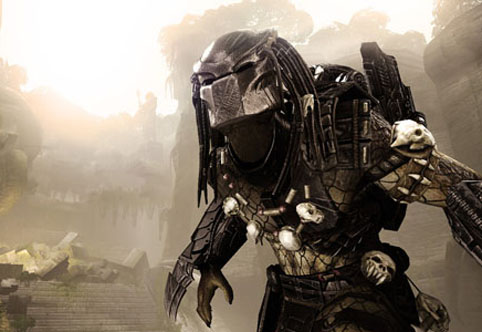 Along with the burner/plasma caster, these weapons are the most basic of Hunter weapons in the Predator universe. According to tradition, every Hunter must distinguish themselves in battle by confronting an enemy in single combat using no other weapon than their claws. Based on the two non-crossover films (Predator and Predator 2), this is apparently done once all lesser prey are eliminated and only the top prey is left. When that occurs, the Hunter will ensure that this finale opponent has been deprived of any additional weaponry, and then will shed every other weapon in their arsenal and engage them in hand to hand combat.
 Part of the Hunters arsenal, this weapon comes from the Predator universe and is part of their wider arsenal of cool weaponry. The name refers to the fact that this staff serves multiple functions. Collapses, it serves as a sort of quarter staff. However, the stick has telescoping sections with a blade like end, which when deployed turn it into a spear. In Predator 2, a hunter used his stick on multiple occasions. Against a group of the Jamaican gang members, it was used strictly for impaling, but during a later scene, it was used as a throwing spear against Danny Glover’s character.
 The Fremen weapon of choice, made from the tooth of a Maker (i.e. a Sandworm). The name and design of the weapon are based on the kris, a ceremonial dagger that was traditionally used in Indonesia and is associated with many cultural legends.
 This weapon was the brainchild of Frank Herbert, and is a familiar weapon in the Dune universe. According to Frank’s many novels, the lasgun was a continuous-wave laser projector weapon that when fired emitted a constant, narrow beam of photons. Though it was able to cut through just about anything and was the weapon of choice in the Old Imperium, it had since fallen into disuse by the first Dune novel.
 Coming to us from the Stargate universe, the Ma’Tok is a combination laser gun, club staff that is used by Jaffa warriors (the specially-bred human servants of the Goa’uld). According to the Stargate Wiki, the Ma’Tok relies on a plasma discharge to strike and cauterize the enemy, causing severe damage and intimidating resistance. It takes its power from an internal cell that employs a liquified mineral (Naquadah) to generate plasma energy. This liquid mineral gives the staff a virtually indefinite shelf life, making it the perfect blend of aesthetics and lethality!
 Here’s an idea that comes in various forms, but for the purposes of this post, I shall stick to the examples that I know best. The first one comes in the form of the Yakuza enforcer from Johnny Mnemonic! Anyone who’s seen this movie (or read the short story it was based on) will remember the main badguy who had an artificial thumb that contained a long filament of glowing wire. When he pulled that thing out and started whipping it around – LOOK OUT! – things began to get lopped off and sliced up! Another example of this being used as a weapon is from the Japanese anime Hellsing. In that show, the butler of the namesake character had monomolecular wires attached to each finger which he would break out whenever there was a crisis. Perhaps they were fashioned from silver, I really can’t recall. Would make them more effective against vampires though!
  And we’re back to the Halo universe for another example of cool gear! And today, the item in question is the plasma sword. As gamers are no doubt aware, this weapon is melee weapon of the Elites, but can be employed by humans as well since it’s your basic hand-held weapon. And much like lightsabers and lasguns, it can cut through just about anything and makes short work of any opponent. In many ways, its even more effective than the ballistic and energy weapons in the game. Whereas those can take several shots to take down an enemy (especially someone infected by the flood) one good hit from this baby will turn them into pulp! And if you see an enemy approaching you with one, be sure to hang back and unload your weapon in their direction!
 Doubling down on the Dune universe, the next example of cool weapons comes in the form of Stone Burner. As a tactical nuke of limited yield, this weapon was the only form of nuclear device that was not prohibited by the Great Convention. This body, in addition to banning all forms of AI’s, also put a stop to the use of nuclear weapons, though it did not forbid the Great Houses from owning any. In any case, Stone Burners, when used strategically, could have a devastating effect on an enemy.
 Another Hunter weapon, this particular one made its first appearance in the second Predator movie and then went on to become a regular part of the Hunters’ arsenal. Much like their other weapons, the throwing disc appears to have many variations and may even be personalized to an extent. This may be the result of constant upgrading, or it may be that individual Hunters have a hand in designing their own gear. In either case, many types of throwing discs have appeared. Some employ simple curved blades, blades with spikes, or even shuriken-like appendages (as the picture at right demonstrates). In each and every case, the result generally involves hewed limbs and decapitations!
 “Because he’s holding a thermal detonator!” Yes, whenever a bounty hunter pulls one of these out, you know they mean business! This weapon, which comes to us from the Star Wars universe, made its first appearance in Return of the Jedi. Since that movie came out, the device has been mentioned and referenced countless times in the expanded franchise. Apparently, thermal detonators are the grenades of the future, using plasma charges that when detonated, cause a large explosion that will burn through just about anything. Always be sure to bring one to a negotiation, just be sure to get the ones with the fail-safe triggers!
 My third and final act of doubling down on a single franchise! Vibroblades are an integral part of the Star Wars universe, but also appear in a number of other franchises. In each case, the weapon revolves around melee weapons that are powered by ultrasonic devices. This increases the weapons cutting effectiveness, and makes them almost as dangerous as a lightsaber. Well, more like a distant second! But non-Jedi’s got to settle for what they can get.


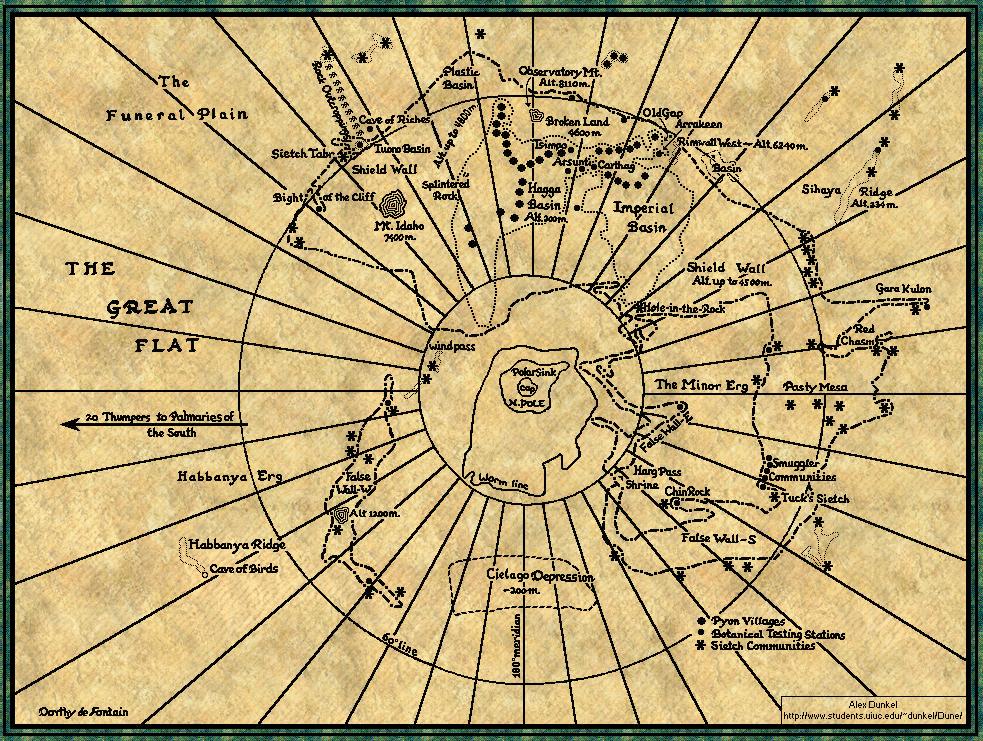


 However, using the station as a rallying point, Sheridan, Sinclair, Delenn and Kosh eventually manage to organize the younger races into a cohesive fighting force to turn back the Shadows. Things become more complicated when they realize that the Vorlons are also the enemy, being involved in a power struggle with the Shadows that goes back eons. However, with the help of other First Ones (very old races) and a commitment to stand on their own, they manage to force both sides to leave the known universe.
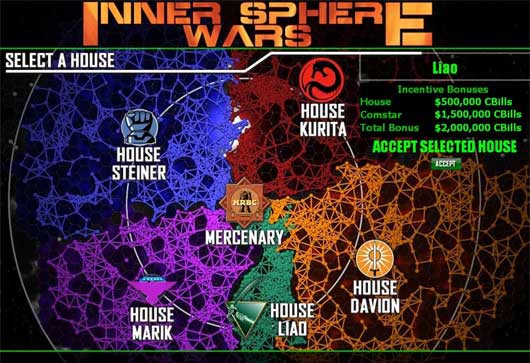
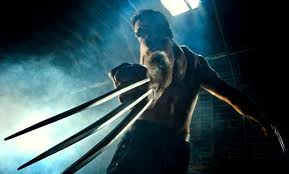
 Stories by Williams