
Akira:
 This futuristic tale takes place in Neo-Tokyo, an ultra-modern city that was built on the ruins of the old after an incident touched off World War III. This is a major them in the movie Akira and manga it was adapted from. Throughout the entire story, there is a pervasive sense of shock and horror over the destruction of the old city, and a sense of dread that it might happen again very soon…
Enter into this story the characters of Kaneda and Tetsuo, two orphan boys who belong to a biker gang that is constantly engaged in battles with other gangs for control of the streets. Being children of the system after their parents died in the war, all they really have is each other and the other members of their biker gang. These surrogate families and their ongoing feuds provide a sense of community and an outlet for their pent-up energies, living in a world characterized by boredom and angst and haunted by a past filled with horror.
In addition, you have Colonel Shikishima, a man who witnessed WWIII and has dedicated himself to the rebuilding and ensuring that it never happens again. In addition to being a main character, he is representative of the generational gap in the story. As a stern, disciplined military man who was shaped by apocalyptic events, he is appalled by the sense 0f self-indulgence which he feels has set in with the younger generation.
And the apocalyptic nature of the story is something which is demonstrated over and over through intense scenes and nightmarish visions. In short, it’s an awesome take on the post-apocalyptic scenario, which could only come from firsthand experience.
Alas, Babylon:
 This 1959 novel by Pat Frank is one of the first post-apocalyptic stories of the nuclear age and has remained a science fiction ever since. Taking place in small town in Central Florida, Fort Repose, the story opens with a veteran-turned-lawyer named Randy Bragg who gets a cryptic telegram from his brother who works for the Strategic Air Command. He informs his brother that he will be sending his wife and kids to stay with his Randy, and ends it with “Alas Babylon”, a biblical reference which his brother uses as a euphemism ford disaster.
In time, he learns that the bad news concerns a potential Soviet attack, which inevitably takes place after much escalation. After bringing his sister-in-law and her kids to their home, they are all awoken in the night to the sounds of Miami being bombed. They residents awake to witness a mushroom cloud forming over Tampa shortly thereafter, and the events which characterize the following 24 hours they come to name “The Day” – i.e. a one day war.
The story delves into the effects of “The Day”, which are felt differently by people in Fort Repose. Tourists are trapped in their hotels, convicts escape from jails and prisons, the local retirement homes are filled with panicked people, and just about everyone tries to withdraw their money from the local bank and buy up supplies. The only reliable means of news comes through short wave radio.
As chaos begin to set in, Randy begins to organize neighbors to provide housing, food, and water for themselves and organizes the community to defense itself against highwaymen. As an active Army Reserve officer, Randy learns that he has the legal right to exercise martial law, and an order comes in over the short wave from the acting Chief Executive (who is governing from a bunker in Colorado) for any surviving officers to form local militias.
In the end, military helicopters arrive to evacuate people, but are refused as the locals tell them that they want to stay in the new home they have built. They learn the war is over, that the USA prevailed, and that country is now being run from Denver. However, the victory came at a tremendous cost, Millions are dead, entire stretches of the country are irradiated and won’t be habitable for a thousand years, and the US is now a third-rate power that is dependent on third world countries for aid. Faced with this prospect, the people of Fort Repose settle in and decide to face the “thousand year” night that is coming.
This book not only introduced readers to the likely prospect of what would happen in the event of WWIII, it also presented a likely scenario of how that was going to happen. While it the Soviets were apparently planning an attack in the first place, it was an accident that touched everything off. And in the end, how people went about rebuilding and trying to restore some semblance of normalcy was quite classic. In addition to inspiring numerous generations of nuclear holocaust fiction, numerous apocalyptic franchises owe an allegiance to him, not the least of which is the re-imagined series of Battlestar Galactica.
The City of Ember:
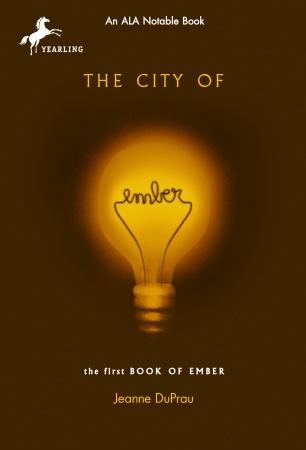 This post-apocalyptic story, written by Jeanne DuPrau in 2003, takes place in an underground city named Ember. After many years of continuous habitation, the city is slowly running out of power and supplies. Similar to in tone and structure to Suzanne Martel’s 1963 story The City Under Ground, this city was apparently built to ensure that humanity had a place to live and wait out the effects of nuclear war.
The story begins when a two protagonists, Lina Mayfleet and Doon Harrow, receive a message which is apparently left by “the Builders” containing clues that could lead them back to the outside world. This message was kept in a box that was passed down from mayor to mayor, with instructions that it be opened after two hundred years. Until recently, the box had been lost, but as soon as Mayfleet and Harrow find it, the race is on to decipher it and find a way to the surface.
In the end, the children follow the note’s instructions through a series of caves that lead them towards the surface. When they see the city from above, they realize that they are underground, something which they never knew before. This scene, which calls to mind Plato’s “Allegory of the Cave”, provides the story’s big revelation. The story then ends on a cliffhanger note with the girls trying to alert the other inhabitants of what they’ve found.
The Matrix:
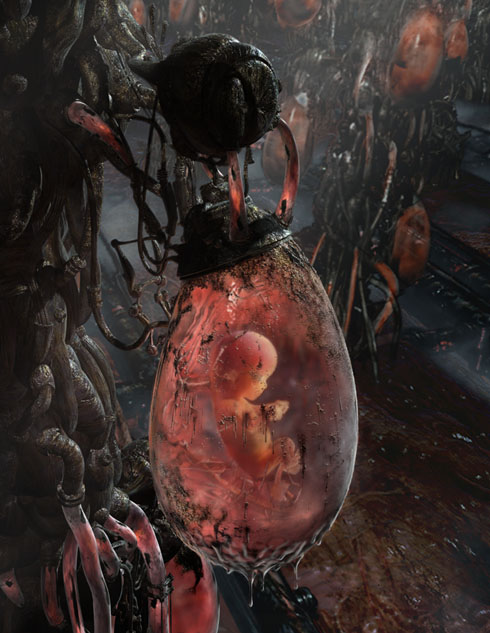 The setting and back story of the Matrix revolve around two fundamental facts: One, that a terrible war between humanity and AI’s took place in the future; and two, that what is left of humanity lives underground due to the devastation wrought on the planet’s surface. Enter into this the concept of the Matrix, a simulated reality where humans are kept docile by being fed the lie that they live in the pre-millenial world, at a time when human’s were still in charge.
But of course, not all human beings are able to accept the program and experience a sort of existential crisis as a result. When Mr. Anderson, hacker alias Neo, is presented with the answers he so desperately seeks, he is horrified to learn the terrible truth. Not only was it the year significantly later than he thought, but the world as he knows it was destroyed long ago. All major cities reduced to rubble, the sky itself has been “scorched”, and the surface rendered a cold, uninhabitable shadow of its former self.
This is a crucial element of the Matrix, which is not just a sci-fi story set in a post-apocalyptic world, but a metaphor for truth and “false consciousness”. With reality so displeasing and harsh, there are many who would prefer the warm comfort of a simulated world, which just happens to be a recreation of happier, stabler times. The metaphor is not just thick, but multi-layered!
It is for this reason that the majority of human beings accept the programming of the Matrix, even if they are only aware of this acceptance on an unconscious level. It is also the reason why those who choose to opt out of it, due to an innate feeling that their reality isn’t real, is a choice which must be made many times over. As Cypher himself demonstrated in the first movie, not everyone has the stomach for the real world, and will willingly betray their comrades for a chance to be put back inside. Others however, find hope in the prophecy of “The One”, the person who’s arrival will herald the end of the war and peace for humanity at last… or so it seems!
The Omega Man:
 Released in 1971 and starring (once again) Charlton Heston, this movie post-apocalyptic film is a classic amongst film buffs. Based on the 1954 novel, I Am Legend, this story has gone through many adaptations over the years and has been spoofed and imitated endlessly. Though the plot was updated for the most recent version (2007, starring Wil Smith), much of the elements – a post-apocalyptic world, a lone human survivor, fighting against mutants – have remained the same.
Essentially, the plot takes place in a world that has been devastated after a terrible plague was unleashed and wreaked havoc on the world. In the film versions, this involved biological warfare between the Soviet Union and China – or a mutated cure for cancer – but was only hinted at in the book. In any case, the story revolves around a man named Robert Neville, a doctor who seems to be the last man on Earth, hence the term “Omega Man”.
Though technically not the last living creature, Neville appears to be the last human being who has not succumbed to the most dreaded aspect of the plague – transformation into a flesh-eating mutant. Whereas most of humanity died after exposure, a small minority was converted, leaving an even smaller minority of infected to be hunted as prey. Living in a fortified apartment with an arsenal, Neville spends his days patrolling the abandoned city and killing members of “The Family” – the albino mutants who are hunting him.
At the same time, Neville is dedicated to finding other survivors who have not turned. Eventually, he is saved by one such group of people, but discovers that they are not immune as he is. He decides to treat others using his own blood as a serum, while at the same time escaping to the wilderness to start a new life while leaving the mutants to die in the city. Ultimately, Neville is forced to sacrifice himself to stop the Family from overtaking the rest of them, but the survivors make it out, carrying with them a vial of his blood.
Though significantly different from the original novel, all versions of the story deal with a world in which all of humanity has been wiped out by a biological agent, not nuclear war or a natural disaster.
The Road:
 This 2006 novel by Cormac McCarthy, which was adapted into a 2009 movie of the same name, takes place in a post-apocalyptic world where a father and son wander the landscape together. Though it is not specified what caused the destruction they are forced to witness and endure, what is clear is the effect it had on the survivors. Most people have given up hope in the ashen landscape, while others struggle to stay alive and some even turn to cannibalism to survive.
The plot involves an unnamed father and son who are venturing south towards the coast because they have realized that they will not survive the winter where they lived. Though the father is dying and they have barely any possessions to speak of, and the land in between is filled with horrors, the two keep going, fending off roving bands of cannibals and raiders and maintaining hope that the coast will be their deliverance.
All along, is father assures his son that they are the “good guys” who are “carrying the fire” through a dark terrible land. In the end, they find no refuge when they reach the sea and are forced to venture back inland, but the father finally succumbs to his illness and dies. He tells his son to maintain hope and to speak to him in his mind after he is gone, and the boy holds a vigil for days over his father’s body when he finally passes on.
With no idea what to do or where to go, he is eventually found by another family who claim to have been tracking them. The father of the group assures him he is one of the “good guys” and asks the son to join them. With no other options available to him, he agrees to join them and they set off together to find a new home.
Inspired by McCarthy’s own relationship with his son, and a great deal of speculation about what the apocalypse would look like, this story is a very personal take on the end civilization and the struggle to survive. Whereas a great deal of the survivors have resorted to unspeakable acts in order to stay alive, McCarthy redeems humanity by showing the lengths to which regular people will go to protect their families and ensure that good people live on when all the world goes to hell.
The Scarlet Plague:
 Here we have a post-apocalyptic classic that predates the nuclear age. Written by Jack London and published in 1912, this story was the original “last man on Earth” scenario which inspired such works as I Am Legend and many others. In addition to being based on the idea of a plague wiping out nearly all of humanity, the stories resolution involves the main character imparting his knowledge to others to ensure that something survives when he is gone.
The story is set in San Francisco in the year 2073, sixty-years after a terrible epidemic, known as the Red Death,has depopulated the planet. Enter into this the story’s protagonist, a man named James Howard Smith, a survivors from the pre-plague era. As an aging man living in the San Francisco area, he is faced with the unpleasant question of what will happen when he dies. As one of the few people who is old enough to remember the pre-plague days, he possesses rare knowledge which will be lost.
Through Howard’s narrative, we learn how the plague spread throughout the world and of the struggles of the handful of survivors it left in its wake. This is apparently being told to his grandchildren, who he has decided to teach everything he knows to ensure that his knowledge will not be lost.
Much like the novels it helped inspire, the Scarlet Plague’s real value lies in its personal nature, relating how the struggle to survive goes beyond the mere physical. In the end, it is when people are facing death that what is most important in life is realized and affirmed. Or to put it is as Commander Adama did, “It’s not enough to survive. One must be worthy of survival.” Sorry! My mind keeps going back to BSG with all this post-apocalyptic talk. More on that one later…
The Terminator:
 Central to the story of the Terminator franchise is “Judgement Day”, the day when humanity was nearly destroyed in a nuclear holocaust that was triggered by the sentient machine known as “Skynet”. This serves as the backdrop to the story, along with the ensuing war between the human resistance and the machines its spawned.
Though the majority of the story takes place in modern-day Los Angeles, a great deal of attention is dedicated to the war in the future and what life is like for those who survived Judgement Day. Kyle Reese described his life in the following way: “There was a nuclear war… There were survivors. Here, there. Nobody even knew who started it. It was the machines… I grew up after. In the ruins… starving… hiding from [Hunter-Killers]. Patrol machines built in automated factories. Most of us were rounded up, put in camps for orderly disposal. ”
Eventually, these camps were liberated by John Conner, the leader of the Resistance. After training and equipping the survivors, effectively turning them into a fighting force, Conner led them in a protracted war against the machines. For the most part, the resistance lived and operated out of underground facilities and went out at night to fight HK’s and Terminator’s, guerrilla-style. Survivors and refugees were gathered in these facilities, and their defenders were forced to constantly be on guard against infiltrators. Eventually, John Conner organized all his fighters into a massive offensive force and led them against the Skynet’s central HQ, destroying it and winning the war for humanity.
It was for this exact reason that the machines built their time machine and began sending Terminators back into the past. Since they could not defeat Resistance in the present, they reasoned that eliminating their commander before he was even born was their only recourse. This provides the set up for the entire franchise, with both the machines and the Resistance sending people back in time; the former to kill him and the latter to protect him and ensure that the war could be prevented.
The Walking Dead:
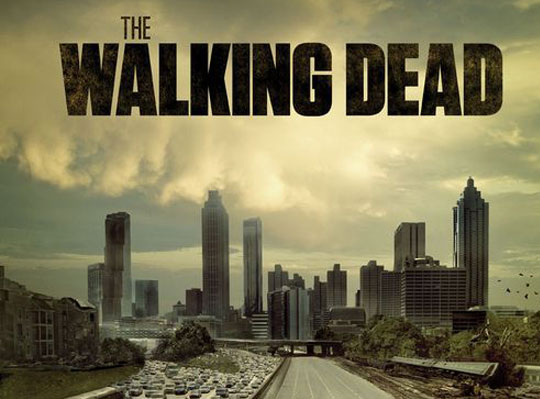 Fans of this franchise will know instantly why I’ve chosen to include it on this list. Not only is it a gritty, realistic take on the zombie apocalypse, but it also manages to capture the essence of survival and the struggle to stay human when everything around you has fallen. Part of what makes this show so bang on is the fact that the character’s personal struggles go well beyond the need to stay alive.
In addition to finding food, ammo, and a place to set down, there’s also the constant battle to keep hope alive. This takes them at first to the CDC, where the expect to find answers, a cure, and some protection. But of course, all they find is a single scientist who can explain how the zombie illness works, but has no idea how to cure it.
And of course, the familiar and realistic themes of loss, suicide, procreation, betrayal, and brutalization play a central role to the development of the story. Everyone who has survived the zombie apocalypse has lost people near and dear to their heart. As a result, many people have a hard time going on, some of whom commit or actively contemplate suicide. Rick and Sarah, the show’s main protagonists, also face a tough choice when they realize she is pregnant. Essentially, they’re not sure it would a good idea to bring a baby into this post-apocalyptic world. Much like the decision to carry on, it often seems that embracing death would be a far more merciful decision.
Amongst the other main characters, there is also the extremely difficult choice between survival at all costs and maintaining one’s humanity. Whereas Shane seems to favor survival, and becomes a hardened, amoral man who will kill anyone who gets in his way, the elderly Dale is committed to not being pulled down into a world of misery and letting it change him. With everyone else, the decision is the same, with people falling to one side or the other and divisions setting in.
 Stories by Williams