Jupiter’s Red Eye, that trademark spot on the gas giant’s surface that is its most recognizable feature, appears to be shrinking faster than ever. Earlier this year, amateur astronomers had observed and photographed the Eye and noted that it had grown smaller. Shorlty thereafter, astronomers observed it using the Hubble Space Telescope and came to the same conclusion. Based on their calculations, they estimate that Jupiter’s Eye, a giant long-lasting storm, is narrowing by more than 900 kilometres a year, much faster than before.
At this rate, they claim, it will be gone by 2031 – just 17 years from now. Using historic sketches and photos from the late 1800s, astronomers determined the spot’s diameter then at 41,000 km (25,475 miles) across. Now, it is turned from a giant ovoid into a discrete circle that is a mere 16,500 kilometres (10,252 miles) across. Many who’ve attempted to see Jupiter’s signature feature have been frustrated in recent years not only because the spot’s pale color makes it hard to see against adjacent cloud features, but because it’s physically getting smaller.
As to what causing the drastic downsizing, there are no firm answers yet. However, NASA has a theory, which was shared by Amy Simon of NASA’s Goddard Space Flight Center in Maryland, USA:
In our new observations it is apparent that very small eddies are feeding into the storm. We hypothesized that these may be responsible for the accelerated change by altering the internal dynamics of the Great Red Spot.
Michael Wong, a scientist at the University of California, Berkeley, seems to be in agreement. He stated that one theory is the spot eats smaller storms, and that it is consuming fewer of them. But for the time being, scientists can’t be sure why its getting smaller, why the eye is red in the first place, or what will happen once it is completely gone.
The Great Red Spot has been a trademark of the planet for at least 400 years – a giant hurricane-like storm whirling in the planet’s upper cloud tops with a period of 6 days. But as it’s shrunk, its period has likewise grown shorter and now clocks in at about 4 days. The storm appears to be conserving angular momentum by spinning faster and wind speeds are increasing as well, making one wonder whether they’ll ultimately shrink the spot further or bring about its rejuvenation.
In short, the eye could become a thing of the past, the sort of thing children many years from now will only read about or see in pictures to give them some idea of how the Solar System once looked. Or, its possible that it could blow up again and become as it once was, a massive red Eye observable from millions of kilometres away. Who knows? In the meantime, check out this video by NASAJuno, explaining what little we know about Jupiter’s most prominent feature (while it lasts):
April was a busy month for the very photo-talented (and photogenic) Curiosity Rover. In addition to another panoramic shot of the Martian landscape – which included Curiosity looking back at itself, making it a “selfie” – the rover also managed to capture a night-sky image that captured two minor planets and the Martian moon of Deimos in the same picture. At a time when Curiosity and Opportunity are both busy on long-haul missions to find evidence of life, these latest pictures remind us that day-to-day operations on Mars are still relevant.
The first shot took place on April 20th (Sol 606), when rover scientists used the Mast Camera to capture the minor planets of Ceres and Vesta, as well as the moon of Deimos, in the same frame. Ceres is a minor planet with a diameter of about 950 km, and is the largest object in the main asteroid belt. With a diameter of about 563 km, Vesta is the third-largest object in the asteroid belt. Deimos, meanwhile, is the smaller of Mars’ two moons, with a mean radius of 6 km.
In the main portion of the new image (seen above), Vesta, Ceres and three stars appear as short streaks due to the duration of a 12-second exposure. In other camera pointings the same night, the Curiosity’s camera also imaged Phobos and the planets Jupiter and Saturn, which are shown as insets on the left. Dr Mark Lemmon from Texas A&M University, a Curiosity team member, explained:
this imaging was part of an experiment checking the opacity of the atmosphere at night in Curiosity’s location on Mars, where water-ice clouds and hazes develop during this season… The two Martian moons were the main targets that night, but we chose a time when one of the moons was near Ceres and Vesta in the sky.
Deimos was much brighter than the visible stars, Vesta and Ceres in the same part of the sky, in the main image. The circular inset covers a patch of sky the size that Earth’s full moon appears to observers on Earth. At the center of that circular inset, Deimos appears at its correct location in the sky, in a 0.25 second exposure.
As for the latest in Curiosity’s long-line of panoramic self-portraits, this one comes to us courtesy of Jason Major. As a graphic designer and amateur space explorer, Major assembled the picture from about the dozen or so images acquired with the rover’s Mars Hand Lens Imager (MAHLI) instrument on April 27-28, 2014 (Sol 613). In the background, one can see the 5.5-km-high (3.4 miles) Mount Sharp (Aeolis Mons) that sits in the center of the Gale Crater.
One thing that Major noted about the picture he assembled is the way the cylindrical RUHF antenna and the bit of the RTG that is visible in the lower center seem to form a “toothy (if slightly dusty) grin”. But, as he stated:
…with almost 21 Earth-months on Mars and lots of discoveries already under her robot belt, Curiosity (and her team) certainly have plenty to smile about!
And the best is likely to still be coming. As we speak, Curiosity is making its way towards Mount Sharp and is expected to arrive there sometime in August. As the primary goal in its mission, Curiosity set off for this destination back in June after spending months studying Glenelg area. She is expected to arrive at the foot of the mountain in August, where she will begin drilling in an effort to study the mountain’s vast caches of minerals – which could potentially support a habitable environment.
If Curiosity does find evidence of organic molecules in this cache, it will be one of the greatest scientific finds ever made, comparable only to the discovery of hominid remains in the Olduvai Gorge, or the first recorded discovery of dinosaur remains. For not only will we have definitive proof that life once existed on Mars, we will know with some certainly that it may again someday…
Stay tuned for more news from the Red Planet. And in the meantime, keep on trucking Curiosity!
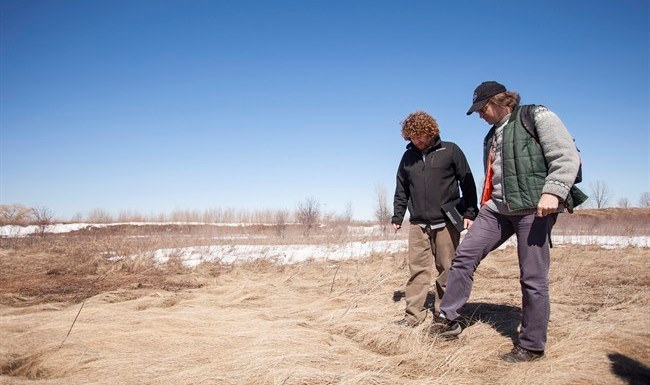
A search is underway in the small community St. Thomas, Ontario for a rare meteorite that may prove to be a major scientific find. That’s what the Canadian and NASA researchers believe, and they are urging local residents to comb their fields and neighborhoods for one or more of the rock’s fragments. It all began on Tuesday, March 18th at 10:45 p.m., when a fireball streaked across the sky some 75 kilometres above Port Dover, Ont.
The fireball then headed in a westerly direction before vanishing at an altitude of 32 kilometres between Aylmer and St. Thomas. It was widely seen in Toronto, Hamilton, London and other parts of southern Ontario, where skies were clear. Peter Brown, the director of Western University’s Center for Planetary Science and Exploration, estimated the space rock was originally the size of a basketball, which then broke up upon entry.
His colleague, Western University meteorite curator Phil McCausland, said one or more fragments “about the size of a golf ball or baseball” likely landed about five kilometers north or northwest of St. Thomas. The meteorite from this event is particularly rare and valuable because the fireball was captured by seven all-sky cameras of Western University’s Southern Ontario Meteor Network, allowing researchers to calculate its orbit.
Not only were they able to obtain solid data on the space rock’s orbit, but that orbit itself was special. Before entering Earth’s atmosphere, the object spent most of time circling closer to the sun than the Earth, having left its original orbit in the asteroid belt between Mars and Jupiter long ago. Bill Cooke, head of NASA’s meteoroid environment office, said only one other meteorite known to have come from that kind of orbit has ever been recorded.
As Cooke said during a recent press conference:
This is not your run-of-the-mill meteor fall. This is a very unusual orbit. We’re really interested in knowing what type of object was in this … We won’t know that until we find a piece of it.
According to Brown, this makes each of the meteorite’s fragments something of a “Rosetta Stone”, referring to the famous Egyptian artifact that was the key to translating ancient hieroglyphics. The comparison is not an exaggeration, as the meteor is likely to tell scientists quite a bit about the history of the early Solar System. As he described it:
This is like a poor man’s space probe. It comes to us. It’s going to tell us … what made the Earth, what made the other planets.
Hence why Brown is asking for the public to help look for the meteorite, which has been described as a rock that looks like it was painted black, and contact the researchers if they find it. The researchers are also interested in hearing accounts from anyone who may have heard a whistling sound “like artillery coming in” or a thud after witnessing the fireball, indicating that it may have landed within a few hundred metres. That may help narrow down the area for the search.
Brown noted that it’s the first time in five years that such a meteor fall has taken place in southern Ontario. The last time researchers issued a callout like this, the meteorite was recovered days later by a member of the public near Grimsby, Ont., where it had crashed through the windshield of an SUV. The fact that this meteorite did not cause injuries or property damage, unlike the one that exploded in the sky over Russia, is also a plus!
My buddy and mentor in all things space and internet-related, Fraser Cain, has produced yet another informative video that I wish to share today. The subject in question is, “Could Jupiter Become a Star”? Naturally, this question has a wider context which needs to be understood if it is to make any sense. You see, for decades scientists have wondered whether or not a gas giant could be converted into a smaller version of own sun.
This is mainly due to the fact that gas giants and brown dwarves are very similar; in some cases, it’s even considered acceptable to say that a gas giant represents a failed star. This is not entirely accurate, since a gas giant does not have the necessary mass to trigger a deuterium reaction (aka. fusion) in order to create one. But, as Fraser points out, there are those who have wondered if an explosion – like that created by the Galileo space probe crashing into Jupiter – could cause a sun-birthing explosion.
This question has become relevant once again thanks to Cassini’s ongoing mission around Saturn. Thanks to the prevalence of noble (and flammable) gases that make up this planet as well, some worry that crashing a nuclear powered satellite into it will trigger a massive thermonuclear reaction. But, as Cain points out in a blow-by-blow manner, the answer to this question is a “series of nos”. Put simply, the raw materials and mass simply aren’t there.
Still, it’s a cool idea, and it was the focal point of Arthur C. Clarke’s 2001: A Space Odyssey and all subsequent novels in the series. In this seminal collection of classic sci-fi, we are told that an ancient race (the First Born) tampered with our evolution eons ago, thus giving rise to the hominid we see every time we look in the mirror. By 2001, when the story opens up, we see a space-faring humanity uncovering evidence of this face, in the form of a strange Monolith buried on the Moon.
After learning that this strange object is sending signals towards Jupiter, several missions are mounted which determined that these same extra-terrestrials are one again at work, this time in the outer Solar System. Believing there is life trapped underneath the heavy ice sheets of Europa, the First Born use their superior technology and know-how to convert Jupiter into a sun, which in turn melts Europa’s ice, giving rise to an atmosphere and letting the life out to flourish.
So while it’s sci-fi gold, its not exactly science. But then again, that’s the beauty of science fiction – you can always postulate that the means will exist somewhere down the road. But until such time as we can manipulate matter, download our consciousness into rectangular monoliths with perfect dimensions, and travel through the cosmos in said same objects, we’re going to have to get used to NOT looking up at night and seeing this:
In the meantime, enjoy the video. Like all Universe Today videos, articles and podcasts, it’s really quite informative. And be sure to subscribe if you like having all your questions about space, science and the answers to the big questions addressed:
Last week, researchers released the first-ever geological map of Ganymede, Jupiter’s largest moon and the largest planetary satellite in the Solar System. Led by Geoffrey Collins of Wheaton College, these scientists produced the first global geologic map that combines the best images obtained by NASA’s Voyager 1 and 2 spacecraft (1979) and the Galileo orbiter (1995 to 2003).
The information of these probes was pieced together as a mosaic image of the planet, giving us our first complete image of the geological features of the world. This image has now been published by the U. S. Geological Survey as a global planar map. The 2D version of the planet surface illustrates the varied geologic character of Ganymede and is the first global, geologic map of the icy, outer-planet moon.
And its about time too! As Robert Pappalardo of NASA’s Jet Propulsion Laboratory in Pasadena, California put it:
This map illustrates the incredible variety of geological features on Ganymede and helps to make order from the apparent chaos of its complex surface. This map is helping planetary scientists to decipher the evolution of this icy world and will aid in upcoming spacecraft observations.
Since its discovery in January 1610 by Galileo Galilee, Ganymede has been the focus of repeated observation; first by Earth-based telescopes, and later by the flybys and orbiting spacecraft. These studies depict a complex, icy world whose surface is characterized by the striking contrast between the dark, very old, highly cratered regions, and the lighter, somewhat younger regions marked with an extensive array of grooves and ridges.
The map isn’t just aesthetically pleasing; it also informs our understanding of Ganymede’s geological history. Researchers have identified three geological periods – one involving heavy impact cratering, followed by tectonic upheaval, and then a decline in geological activity. The more detailed images let them study the ridges and groves, and have revealed that the formation of cryovolcanos is rare on Ganymede.
Baerbel Lucchitta, scientist emeritus at the U.S. Geological Survey in Flagstaff, Ariz., who has been involved with geologic mapping of Ganymede since 1980, had this to say:
The highly detailed, colorful map confirmed a number of outstanding scientific hypotheses regarding Ganymede’s geologic history, and also disproved others. For example, the more detailed Galileo images showed that cryovolcanism, or the creation of volcanoes that erupt water and ice, is very rare on Ganymede.
According to the Jet Propulsion Laboratory, Ganymede is an especially valuable body to study because it is an ice moon with a richly varied geology and a surface area that is more than half as large as all the land area on Earth. The Ganymede map will also enable researchers to compare the geologic characters of other icy satellite moons, since most features found on other icy satellites have a similar feature somewhere on Ganymede.
Laszlo Kestay, the director of the United States Geological Survey (USGS) Astrogeology Science Center, explained the implications of this in a statement:
After Mars, the interiors of icy satellites of Jupiter are considered the best candidates for habitable environments for life in our solar system. This geologic map will be the basis for many decisions by NASA and partners regarding future U.S. missions under consideration to explore these worlds.
The project was funded by NASA through its Outer Planets Research and Planetary Geology and Geophysics Programs, and the images can all be downloaded by going to the Jet Propulsion Laboratory’s website at the California Institute of Technology (Caltech). And be sure to check out the animated version of the Ganymede planetary map below:
Scientists and astronomers have learned a great deal about the universe in recent years, thanks to craft like the Kepler space probe and the recently launched Gaian space observatory. As these and other instruments look out into the universe and uncover stars and exoplanets, it not only lets us expand our knowledge of the universe, but gives us a chance to reflect upon the meaning of this thing we call “habitability”.
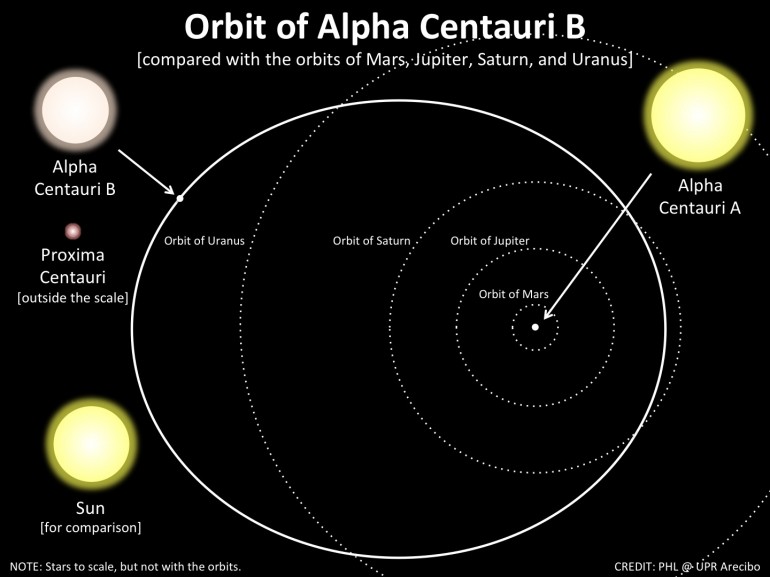
Basically, our notions of what constitutes a habitable environment are shaped by our own. Since Earth is a life-sustaining environment from which we originated, we tend to think that conditions on another life-giving planet would have to be similar. However, scientists René Heller and John Armstrong contend that there might be a planet even more suitable in this galaxy, and in the neighboring system of Alpha Centauri B.
For those unfamiliar, Alpha Centauri A/B is a triple star system some 4.3 light years away from Earth, making it the closest star system to Earth. The nice thing about having a hypothetical “superhabitable” planet in this system is that it makes it a lot easier to indulge in a bit of a thought experiment, and will make it that much more easy to observe and examine.
According to the arguments put forward by Heller, of the Department of Physics and Astronomy, McMaster University, Hamilton; and Armstrong, of the Department of Physics, Weber State University in Ogden, this planet may be even more suitable for supporting life than our own. It all comes down to meeting the particulars, and maybe even exceeding them.
For example, a habitable planet needs the right kind sun – one that has existed and remained stable for a long time. If the sun in question is too large, then it will have a very short life; and if it’s too small, it might last a long time. But the planet will have to be very close to stay warm and that can cause all sorts of problems, such as a tidally locked planet with one side constantly facing the sun.
Our own sun is a G2-type star, which means it has been alive and stable for roughly 4.6 billion years. However, K-type dwarfs, which are smaller than the Sun, have lives longer than the age of the universe. Alpha Centauri B is specifically a K1V-type star that fits the bill with an estimated age of between 4.85 and 8.9 billion years, and is already known to have an Earth-like planet called Alpha Centauri B b.
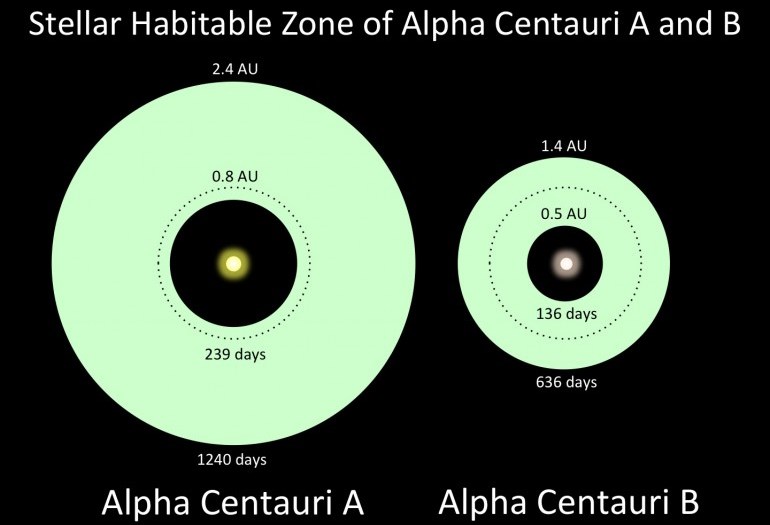
As to the superhabitable planet, assuming it exists, it will be located somewhere between 0.5 and 1.4 astronomical units (46 – 130 million mi, 75 – 209 million km) from Alpha Centauri B. All things being equal, it will have a circular orbit 1. 85 AU (276 million km / 172 million miles) away, which would place it in the middle of the star’s habitable zone.
Also, for a planet to sustain life it has to be geologically active, meaning it has to have a rotating molten core to generate a magnetic field to ward off cosmic radiation and protect the atmosphere from being stripped away by solar winds. A slightly more massive planet with more gravity means more tectonic activity, so a better magnetic field and a more stable climate.
However, the most striking difference between the superhabitable world and Earth would be that the former would lack our continents and deep oceans – both of which can be hostile to life. Instead, Heller and Armstrong see a world with less water than ours, which would help to avoid both a runaway greenhouse effect and a snowball planet that an overabundance of water can trigger.
Our superhabitable planet might not even be in the habitable zone. It could be a moon of some giant planet further away. Jupiter’s moon Io is a volcanic hellhole due to tidal heating, but a larger moon that Heller and Armstrong call a “Super Europa” in the right orbit around a gas giant could heat enough to support life even if it’s technically outside the star’s habitable zone.
According to Heller and Armstrong, this world would look significantly different from our own. It would be an older world, larger and more rugged, and would provide more places for life to exist. What water there was would be evenly scattered across the surface in the form of lakes and small, shallow seas. And, it would also be slightly more massive, which would mean more gravity.
This way, the shallow waters would hold much larger populations of more diverse life than is found on Earth, while the temperatures would be more moderated. However, it would be a warmer world than Earth, which also makes for more diversity and potentially more oxygen, which the higher gravity would help with by allowing the planet to better retain its atmosphere.
Another point made by Heller and Armstrong is that there may be more than one habitable planet in the Alpha Centauri B system. Cosmic bombardments early in the history of the Solar System is how the Earth got its water and minerals. If life had already emerged on one planet in the early history of the Alpha Centauri B system, then the bombardment might have spread it to other worlds.
But of course, this is all theoretical. Such a planet may or may not exist, and may or may not have triggered the emergence of life on other worlds within the system. But what is exciting about it is just how plausible its existence may prove to be, and how easy it will be to verify once we can get some space probes between here and there.
Just imagine the sheer awesomeness of being able to see it, the images of a super-sized Earth-moon beamed back across light years, letting us know that there is indeed life on worlds besides our own. Now imagine being able to study that life and learning that our conceptions of this too have been limited. What a time that will be! I hope we all live to see it…
In the course of becoming an indie writer, there is one aspect of the creative process which keeps coming back to me. To put it simply, it is the challenges and delights of world building – i.e. creating the background, context, and location in which a story takes place. For years, I have been reading other people’s thoughts on the subject, be they authors themselves or just big fans of literary fiction.
But my own experience with the process has taught me much that I simply couldn’t appreciate before I picked up my pen and pad (or in this case, opened a word doc and began typing). Ad lately, the thoughts have been percolating in my mind and I felt the need to write them out. Having done that, I thought I might share them in full.
For starters, being a science fiction writer presents a person with particular opportunities for creative expression. But at the same time, it presents its share of particular challenges. While one is certainly freer to play around with space, place, and invent more freely than with most other genres, they are still required to take into account realism, consistency and continuity in all that they do.
Sooner or later, the world a writer builds will be explored, mapped, and assessed, and any and all inconsistencies are sure to stick out like a sore thumb! So in addition to making sure back-stories, timelines and other details accord with the main plot, authors also need to be mindful of things like technology, physical laws, and the nature of space and time.
But above all, the author in question has to ask themselves what kind of universe they want to build. If it is set in the future, they need to ask themselves certain fundamental questions about where human beings will be down the road. Not only that, they also need to decide what parallels (and they always come up!) they want to draw with the world of today.
Through all of this, they will be basically deciding what kind of message they want to be sending with their book. Because of course, anything they manage to dream up about the future will tell their readers lots about the world the author inhabits, both in the real sense and within their own head. And from what I have seen, it all comes down to five basic questions they must ask themselves…
1. Near-Future/Far Future: When it comes to science-fiction stories, the setting is almost always the future. At times, it will be set in an alternate universe, or an alternate timeline; but more often than not, the story takes place down the road. The only question is, how far down the road? Some authors prefer to go with the world of tomorrow, setting their stories a few decades or somewhere in the vicinity of next century.
By doing this, the author in question is generally trying to show how the world of today will determine the world of tomorrow, commenting on current trends and how they are helping/hurting us. During the latter half of the 20th century, this was a very popular option for writers, as the consensus seemed to be that the 21st century would be a time when some truly amazing things would be possible; be it in terms of science, technology, or space travel.
Other, less technologically-inclined authors, liked to use the not-so-distant future as a setting for dystopian, post-apocalytpic scenarios, showing how current trends (atomic diplomacy, arms races, high tech, environmental destruction) would have disastrous consequences for humanity in the near-future. Examples of this include Brave New World, 1984, The Iron Heel, The Chrysalids, and a slew of others.
In all cases, the totalitarian regimes or severe technological and social regression that characterized their worlds were the result of something happening in the very near-future, be it nuclear or biological war, a catastrophic accident, or environmental collapse. Basically, humanity’s current behavior was the basis for a cautionary tale, where an exaggerated example is used to illustrate the logical outcome of all this behavior.
At the other end of the spectrum, many authors have taken the long view with their sci-fi world building. Basically, they set their stories several centuries or even millennia from now. In so doing, they are able to break with linear timelines and the duty of having to explain how humanity got from here to there, and instead could focus on more abstract questions of existence and broader allegories.
Examples of this include Frank Herbert’s Dune and Asimov’s Foundation series, both of which were set tens of thousands of years in the future. In both of these universes, humanity’s origins and how they got to where they were took a backseat to the historical allegories that were being played upon. While some mention is given to the origins of humanity and where they came from, little attempt is made to draw a line from the present into the future.
Instead, the focus is overwhelmingly on the wider nature of human beings and what drives us to do the things we do. Asimov drew from Gibbon’s Decline and Fall of the Roman Empire to make a point about the timeless nature of history, while Herbert drew on the modern age, medieval and ancient history, religion, philosophy, and evolutionary biology and ecology to investigate the timeless nature of humanity and what factors shape it.
For non-purists, Star Wars and Star Trek can also serve as examples of both tendencies in action. For decades, Star Trek used a not-too-distant future setting to endlessly expound on the human race and the issues it faces today. And always, this examination was done in the form of interstellar travel, the crew of the Enterprise going form world to world and seeing themselves in the problems, norms and social structure of other races.
Star Wars, on the other hand, was an entirely different animal. For the people living in this universe, no mention is ever made of Earth, and pre-Republic history is considered a distant and inaccessible thing. And while certain existential and social issues are explored (i.e. racism, freedom and oppression), the connections with Earth’s past are more subtle, relying on indirect clues rather than overt comparisons.
The Republic and the Empire, for example, is clearly inspired by Rome’s own example. The Jedi Code is very much the picture of the Bushido code, its practitioners a sort of futuristic samurai, and the smugglers of Tatooine are every bit the swashbuckling, gun toting pirates and cowboys of popular fiction. But always, the focus seemed to more on classically-inspired tales of destiny, and of epic battles of good versus evil.
And of course, whether we are talking near future or far future has a big influence on the physical setting of the story as well. Which brings me to item two…
2. Stellar or Interstellar:Here is another important question that every science fiction author has faced, and one which seriously influences the nature of the story. When it comes to the world of tomorrow, will it be within the confines of planet Earth, the Solar System, or on many different world throughout our galaxy? Or, to go really big, will it encompass the entire Milky Way, or maybe even beyond?
Important questions for a world-builder, and examples certainly abound. In the former case, you have your dystopian, post-apocalyptic, and near future seenarios, where humanity is stuck living on a hellish Earth that has seen better days. Given that humanity would not be significantly more adavanced than the time of writing, or may have even regressed due to the downfall of civilization, Earth would be the only place people can live.
But that need not always be the case. Consider Do Androids Dream of Electric Sheep? by Philip K Dick. In his dystopian, post-apocalyptic tale, Earth was devestated by nuclear war, forcing the wealthiest and healthiest to live in the Offworld Colonies while everyone who was too poor or too ravaged by their exposure to radiation was confined to Earth. Clearly, dystopia does not rule out space travel, though it might limit it.
And in the latter case, where human beings have left the cradle and begun walking amongst our System’s other planets and even the stars, the nature of the story tends to be a bit more ambiguous. Those who choose such a setting tend to be of the opinion that mankind either needs to reach out in order to survive, or that doing so will allow us to shed some of our problems.
Examples abound here again, but Alastair Reynolds’ Revelation Space universe seems like the ideal one here. In this series, humanity has access to near-light speed travel, nanotechnology, brain-computer interfacing, neural uploading, AI, smart materials, and has colonized dozens of new worlds. However, the state of humanity has not changed, and on many worlds, civil war and sectarian violence are common.
In either case, the setting also bears a direct relation to the state of technology in the story. For humans still living on Earth (and nowhere else) in the future, chances are, they are about as advanced or even behind the times in which the story was written. For those living amongst the stars, technology would have to advanced sufficiently to make it happen. Which brings me to the next point…
3. High-Tech or Low-Tech: What would a work of science fiction be without plenty of room for gadgets, gizmos, and speculation about the future state of technology? And once more, I can discern of two broad categories that an author can choose from, both of which have their share of potential positives and negatives. And depending on what kind of story you want to write, the choice of what that state is often predetermined.
In the former case, there is the belief that technology will continue to advance in the future, leading to things like space travel, FTL, advanced cyborgs, clones, tricorders, replicators, artificial intelligence, laser guns, lightsabers, phasers, photon torpedoes, synthetic humans, and any number of other fun, interesting and potentially dangerous things.
With stories like these, the purpose of high-tech usually serves as a framing device, providing visual evidence that the story is indeed taking place in the future. In other words, it serves a creative and fun purpose, without much thought being given towards exploring the deeper issues of technological progress and determinism. But this not be the case, and oftentimes with science fiction, high-tech serves a different purpose altogether.
In many other cases, the advance of technology is directly tied to the plot and the nature of the story. Consider cyberpunk novels like Neuromancer and the other novels of William Gibson’s SprawlTrilogy. In these and other cyberpunk novels, the state of technology – i.e. cyberpsace decks, robotic prosthetics, biotech devices – served to illustrate the gap between rich and poor and highlighting the nature of light in a dark, gritty future.
By contrast, such post-cyberpunk novels as Neal Stephenson’s The Diamond Age took a different approach. While high-tech and its effects on society were explored in great detail, he and other authors of this sub genre chose to break with their predecessors on one key issue. Namely, they did not suppose that the emergence of high-tech would lead to dystopia, but rather an ambiguous future where both good and harm resulted.
And at the other end of the spectrum, where technology is in a low state, the purpose and intent of this is generally the same. On the one hand, it may serve as a plot framing device, illustrating how the world is in a primitive state due to the collapse of civilization as we know it, or because our unsustainable habits caught up with us and resulted in the world stepping backwards in time.
At the same time, the very fact that people live in a primitive state in any of these stories serves the purpose of commentary. Simply by showing how our lives were unsustainable, or the actions of the story’s progenitor’s so foolish, the author is making a statement and asking the reader to acknowledge and ponder the deeper issue, whether they realize it or not.
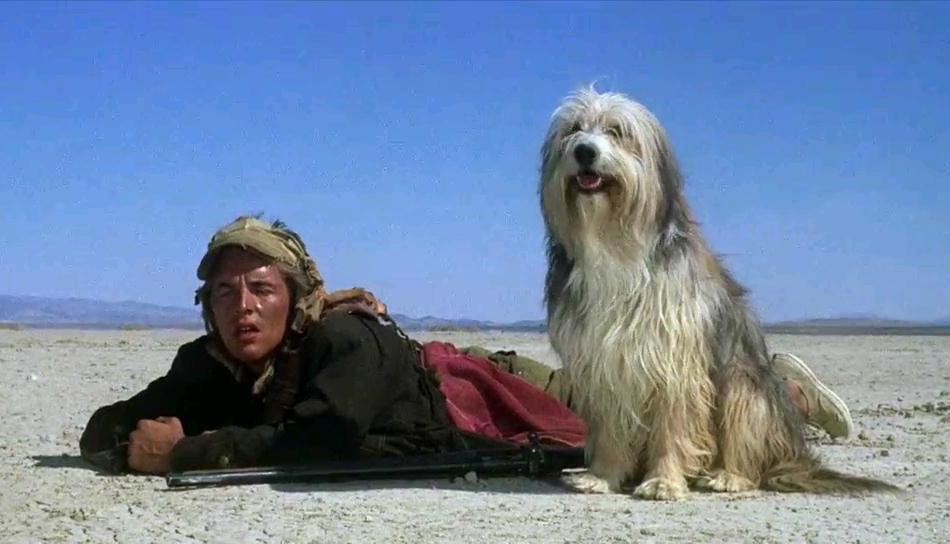
At this end of things, A Boy and His Dog and Mad Max serve as good examples. In the former case, the story takes place in a post-apocalyptic landscape where a lone boy and his genetically-engineered talking dog rove the landscape in search of food and (in the boy’s case) sexual gratification. Here, the state of technology helps to illustrate the timeless nature of the human condition, namely how we are essentially the products of our environment.
In Mad Max as well, the way roving gangs are constantly looking for gasoline, using improvised weapons, and riding around in vehicles cobbled together from various parts gives us a clear picture of what life is like in this post-collapse environment. In addition, the obvious desperation created by said collapse serves to characterize the cultural landscape, which is made up of gangs, tinpot despots, and quasi-cults seeking deliverance.
But on the other hand, the fact that the world exists in this state due to collapse after the planet’s supply of oil ran dry also provides some social commentary. By saying that the world became a dangerous, anarchistic and brutal place simply because humanity was dependent on a resource that suddenly went dry, the creators of Mad Max’s world were clearly trying to tell us something. Namely, conserve!
4. Aliens or Only Humans: Another very important question for setting the scene in a science fiction story is whether or not extra-terrestrials are involved. Is humanity still alone in the universe, or have they broken that invisible barrier that lies between them and the discovery of other sentient life forms? Once again, the answer to this question has a profound effect on the nature of the story, and it can take many forms.
For starters, if the picture is devoid of aliens, then the focus of the story will certainly be inward, looking at human nature, issues of identity, and how our environment serves to shape us. But if there are aliens, either a single species or several dozen, then the chances are, humanity is a united species and the aliens serve as the “others”, either as a window into our own nature, or as an exploration into the awe and wonder of First Contact.
As case studies for the former category, let us consider the Dune, Foundation, and Firefly universes. In each of these, humanity has become an interstellar species, but has yet to find other sentiences like itself. And in each of these, human nature and weaknesses appear to be very much a constant, with war, petty rivalries and division a costant. Basically, in the absence of an “other”, humanity is focused on itself and the things that divide it.
In Dune, for example, a galaxy-spanning human race has settled millions of worlds, and each world has given rise to its own identity – with some appearing very much alien to another. Their are the “navigators”, beings that have mutated their minds and bodies through constant exposure to spice. Then there are the Tleilaxu, a race of genetic manipulators who breed humans from dead tissue and produce eunuch “Face Dancers” that can assume any identity.
Basically, in the absence of aliens, human beings have become amorphous in terms of their sense of self, with some altering themselves to the point that they are no longer even considered human to their bretherin. And all the while, humanity’s biggest fight is with itself, with rival houses vying for power, the Emperor gaurding his dominance, and the Guild and various orders looking to ensure that the resource upon which all civilization depends continues to flow.
In the Foundation universe, things are slightly less complicated; but again, the focus is entirely inward. Faced with the imminent decline and collapse of this civilization, Hari Seldon invents the tool known as “Psychohistory”. This science is dedicated to anticipating the behavior of large groups of people, and becomes a roadmap to recovery for a small group of Foundationists who seek to preserve the light of civilization once the empire is gone.
The series then chronicles their adventures, first in establishing their world and becoming a major power in the periphery – where Imperial power declines first – and then rebuilding the Empire once it finally and fully collapses. Along the way, some unforeseen challenges arise, but Seldon’s Plan prevails and the Empire is restored. In short, it’s all about humans trying to understand the nature of human civilization, so they can control it a little better.
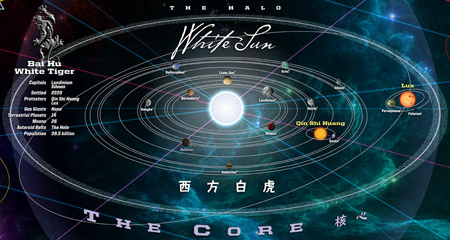
Last, but not least, their is the Firefly universe which – despite the show’s short run – showed itself to be in-depth and interestingly detailed. Basically, the many worlds that make up “The Verse” are divided along quasi-national lines. The core worlds constitute the Alliance, the most advanced and well-off worlds in the system that are constantly trying to expand to bring the entire system under its rule.
The Independents, we learn early in the story, were a coalition of worlds immediately outside the core worlds that fought these attempts, and lost. The Border Worlds, meanwhile, are those planets farthest from the core where life is backwards and “uncivilized” by comparison. All of this serves to illustrate the power space and place have over human identity, and how hierarchy, power struggles and divisiveness are still very much a part of us.
But in universes where aliens are common, then things are a little bit different. In these science fiction universes, where human beings are merely one of many intelligent species finding their way in the cosmos, extra-terrestrials serve to make us look outward and inward at the same time. In this vein, the cases of Babylon 5, and 2001: A Space Odyssey provide the perfect range of examples.
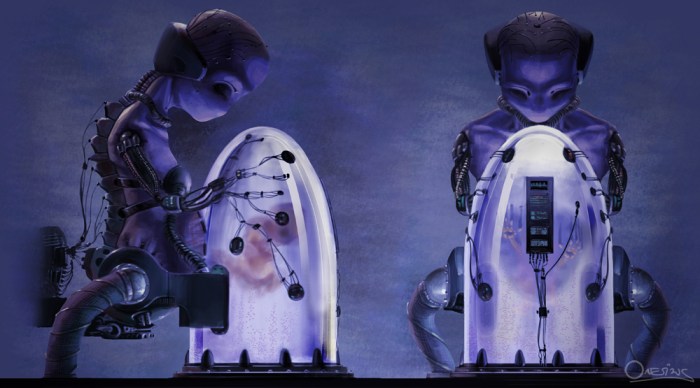
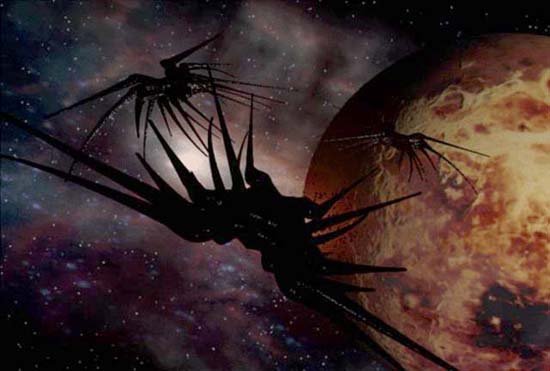
In B5 – much as with Stark Trek, Star Gate, or a slew of other franchises – aliens serve as a mirror for the human condition. By presenting humanity with alien cultures, all of whom have their own particular quarks and flaws, we are given a meter stick with which to measure ourselves. And in B5‘s case, this was done rather brilliantly – with younger races learning from older ones, seeking wisdom from species so evolved that often they are not even physical entities.
However, in time the younger race discover that the oldest (i.e. the Shadows, Vorlons, and First Ones) are not above being flawed themselves. They too are subject to fear, arrogance, and going to war over ideology. The only difference is, when they do it the consequences are far graver! In addition, these races themselves come to see that the ongoing war between them and their proxies has become a senseless, self-perpetuating mistake. Echoes of human frailty there!
In 2001: A Space Odyssey, much the same is true of the Firstborn, a race of aliens so ancient that they too are no longer physical beings, but uploaded intelligences that travel through the cosmos using sleek, seamless, impenetrable slabs (the monoliths). As we learn in the course of the story, this race has existed for eons, and has been seeking out life with the intention of helping it to achieve sentience.
This mission brought them to Earth when humanity was still in its primordial, high-order primate phase. After tinkering with our evolution, these aliens stood back and watched us evolve, until the day that we began to reach out into the cosmos ourselves and began to discover some of the tools they left behind. These include the Tycho Monolith Anomaly-1 (TMA-1) on the Moon, and the even larger one in orbit around Jupiter’s moon of Europa.
After making contact with this monolith twice, first with the American vessel Discovery and then the joint Russian-American Alexei Leonov, the people of Earth realize that the Firstborn are still at work, looking to turn Jupiter into a sun so that life on Europa (confined to the warm oceans beneath its icy shell) will finally be able to flourish. Humanity is both astounded and humbled to learn that it is not alone in the universe, and wary of its new neighbors.
This story, rather than using aliens as a mirror for humanity’s own nature, uses a far more evolved species to provide a contrast to our own. This has the same effect, in that it forces us to take a look at ourselves and assess our flaws. But instead of showing those flaws in another, it showcases the kind of potential we have. Surely, if the Firstborn could achieve such lengths of evolutionary and technological development, surely we can too!
5. Utopian/Dystopian/Ambiguous: Finally, there is the big question of the qualitative state of humanity and life in this future universe. Will life be good, bad, ugly, or somewhere in between? And will humanity in this narrative be better, worse, or the same as it now? It is the questions of outlook, whether it is pessimistic, optimistic, realistic, or something else entirely which must concern a science fiction writer sooner or later.
Given that the genre evolved as a way of commenting on contemporary trends and offering insight into their effect on us, this should come as no surprise. When looking at where we are going and how things are going to change, one cannot help but delve into what it is that defines this thing we know as “humanity”. And when it comes right down to it, there are a few schools of thought that thousands of years of scholarship and philosophy have provided us with.
Consider the dystopian school, which essentially posits that mankind is a selfish, brutish, and essentially evil creature that only ever seeks to do right by himself, rather than other creatures. Out of this school of thought has come many masterful works of science fiction, which show humanity to be oppressive to its own, anthropocentric to aliens and other life forms, and indifferent to the destruction and waste it leaves in its wake.
And of course, there’s the even older Utopia school, which presents us with a future where mankind’s inherent flaws and bad behavior have been overcome through a combination of technological progress, political reform, social evolution, and good old fashioned reason. In these worlds, the angels of humanity’s nature have won the day, having proven superior to humanity’s devils.
In the literally realm, 1984 is again a perfect example of dytopian sci=fi, where the totalitarian rule of the few is based entirely on selfishness and the desire for dominance over others. According to O’Brien, the Party’s mouthpiece in the story, their philosophy in quite simple:
The Party seeks power entirely for its own sake.We are not interested in the good of others; we are interested solely in power. Power is in inflicting pain and humiliation. Power is in tearing human minds to pieces and putting them together again in new shapes of your own choosing. If you want a picture of the future, imagine a boot stamping on a human face — forever.
Hard to argue with something so brutal and unapologetic, isn’t it? In Orwell’s case, the future would be shaped by ongoing war, deprivation, propaganda, fear, torture, humiliation, and brutality. In short, man’s endless capacity to inflict pain and suffering on others.
Aldous Huxley took a different approach in his seminal dystopian work, Brave New World, in which he posited that civilization would come to be ruled based on man’s endless appetite for pleasure, indifference and distraction. Personal freedom and individuality would be eliminated, yes, but apparently for man’s own good rather than the twisted designs of a few true-believers:
Universal happiness keeps the wheels steadily turning; truth and beauty can’t. And, of course, whenever the masses seized political power, then it was happiness rather than truth and beauty that mattered… People were ready to have even their appetites controlled then. Anything for a quiet life. We’ve gone on controlling ever since. It hasn’t been very good for truth, of course. But it’s been very good for happiness. One can’t have something for nothing. Happiness has got to be paid for.
But even though the means are entirely different, the basic aim is the same. Deprive humanity of his basic freedom and the potential to do wrong in order to ensure stability and long-term rule. In the end, a darker, more cynical view of humanity and the path that we are on characterized these classic examples of dystopia and all those that would come to be inspired them.
Imminent Utopia by Kuksi
As for Utopian fiction, H.G. Wells’ Men Like Gods is a very appropriate example. In this novel, a contemporary journalist finds himself hurled through time into 3000 years into the future where humanity lives in a global state named Utopia, and where the “Five Principles of Liberty” – privacy, free movement, unlimited knowledge, truthfulness, and free discussion and criticism – are the only law.
After staying with them for a month, the protogonist returns home with renewed vigor and is now committed to the “Great Revolution that is afoot on Earth; that marches and will never desist nor rest again until old Earth is one city and Utopia set up therein.” In short, like most Positivists of his day, Wells believed that the march of progress would lead to a future golden age where humanity would shed it’s primitive habits and finally live up to its full potential.
This view would prove to have a profound influence on futurist writers like Asimov and Clarke. In the latter case, he would come to express similar sentiments in both the Space Odyssey series and his novel Childhood’s End. In both cases, humanity found itself confronted with alien beings of superior technology and sophistication, and eventually was able to better itself by opening itself up to their influence.
In both series, humanity is shown the way to betterment (often against their will) by cosmic intelligences far more advanced than their own. But despite the obvious questions about conquest, loss of freedom, individuality, and identity, Clarke presents this as a good thing. Humanity, he believed, had great potential, and would embrace it, even if it had to be carried kicking and screaming.
And just like H.G Wells, Clarke, Asimov, and a great many of his futurist contemporaries believes that the ongoing and expanding applications of science and technology would be what led to humanity’s betterment. A commitment to this, they believed, would eschew humanity’s dependence on religion, superstition, passion and petty emotion; basically, all the things that made us go to war and behave badly in the first place.
Summary: These are by no means the only considerations one must make before penning a science fiction story, but I think they provide a pretty good picture of the big-ticket items. At least the ones that keep me preoccupied when I’m writing! In the end, knowing where you stand on the questions of location, content, tone and feel, and what your basic conception of the future, is all part of the creation process.
In other words, you need to figure out what you’re trying to say and how you want to say it before you can go to town. In the meantime, I say to all aspiring and established science fiction writers alike: keep pondering, keep dreaming, and keep reaching for them stars!
As the prime candidate for extra-terrestrial life, the Jovian moon of Europa has been the subject of much speculation and interest over years. And while our understanding of the surface has improved – thanks to observations made by several space probes and the Hubble space telescope – what lies beneath remains a mystery. Luckily, Europa may yet provide Earth scientists with a chance to look at its interior.
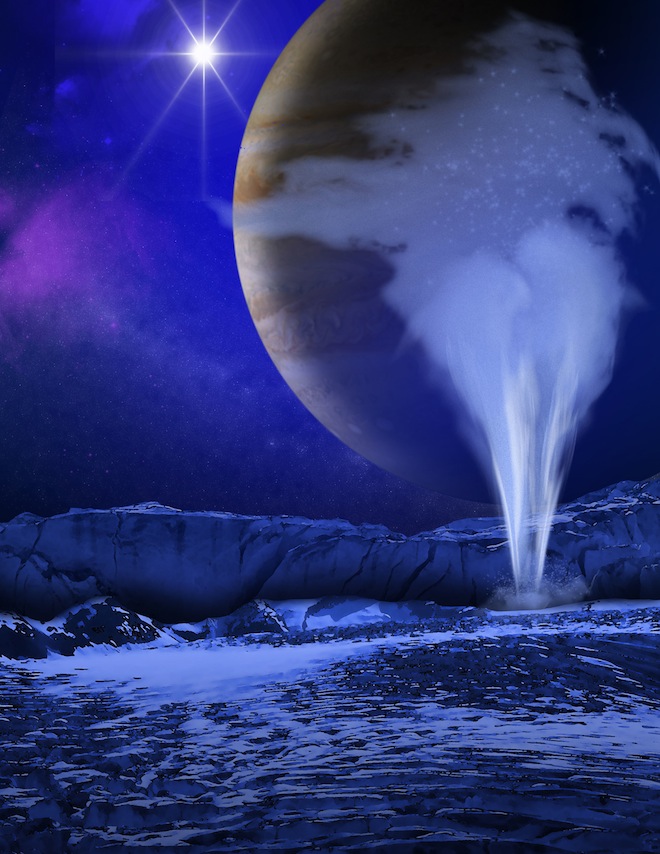
Earlier this month, data collected from the Hubble space telescope suggested that enormous jets of water more than 200 kilometers tall may be spurting intermittently from the moon’s surface. The findings, presented last week to the American Geophysical Union, await independent confirmation. But if the jets are real, the frozen world would join the tiny number of others known to have active jets, including Saturn’s moon Enceladus and Neptune’s moon Triton.
What’s more, should these newly observed water plumes be tapping into some Europan sea, they could be bringing material to the surface that would otherwise stay hidden. Follow-up observations from Earth or with probes around Europa could sample the fountains, hunting for organic material and perhaps finding the evidence need to prove that living organisms exist beyond Earth.
Scientists spotted the plumes thanks to ultraviolet images taken by Hubble in December 2012. The research team, which hails from the Southwest Research Institute in Texas, then published their research in Science magazine. In the paper, astronomer and co-author Lorenz Roth explained their findings:
We found that there’s one blob of emission at Europa’s south pole. It was always there over the 7 hours we observed and always at the same location.
Previous observations from NASA’s Galileo mission, which visited the Jupiter system in the 1990s and early 2000s, suggest that Europa’s south pole is full of ridges and cracks quite similar to features called tiger stripes on Enceladus that spew water.
Lorenz and his team looked back through previous Hubble data to see if the plumes could have been spotted earlier but saw nothing, suggesting that they are likely transient. At the time, Europa was at its farthest from Jupiter, which could explain why the jets appeared only then. Researchers recently determined that Enceladus’ plumes are weakest when the moon is closest to Saturn, likely because the ringed planet’s gravity squeezes the tiger stripes shut.
Astronomer Kurt Retherford, also of SwRI and another co-author, claimed that the case of Enceladus helped them to make a connection with what they were observing:
We actually saw this press release on Enceladus. And we thought, ‘Oh my god! This is the explanation’” for why Europa’s plumes might only appear when it’s far from Jupiter.
In the past, scientists have looked for evidence of jets coming from Europa’s surface. When the Voyager probes flew by in the 70s, one image showed a fuzzy spot that some thought to be a plume, though most considered it an artifact of imaging. Galileo also saw a row of dark spots on a ridge of Europa which looked similar to spots seen on planet Earth before an eruption begins.
Because of these previous false positives though, scientists are likely to be cautious when interpreting these newest results. But even with these reservations, Robert Pappalardo – who leads the planning team for the Europa Clipper Pre-Project (a proposed mission to Europa) – said that he’s already discussing with other scientists how these new results should affect their study priorities.
For instance, some future orbiter headed to Europa could carry detectors specifically designed to search for heavy organic molecules that could be indicative of life in the subsurface. When it passed over the geyser’s spray, it would be bathed in material from the moon’s interior, giving scientists a window into Europa’s ocean. Pappalardo also hopes that the finding will help push Europa to a place of high priority in NASA’s exploration agenda.
Due to budget constraints, a manned mission is not yet feasible, but NASA has indicated that it would be willing to send a robot lander there in the near future. In addition, recent computer models provided from the University of Texas showed that the ice is likely to be thinnest at the equator. Between the possibility that the oceans might be most accessible in this region, and the likelihood that some of that water escapes into space, unlocking the mysteries of the Jovian satellite might be easier than previously thought.
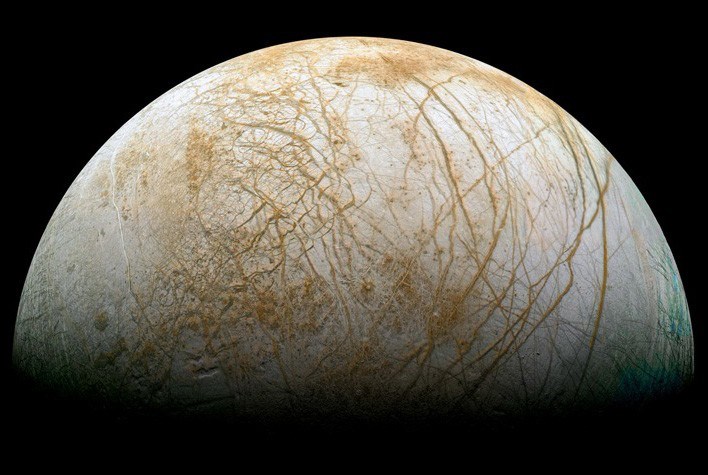
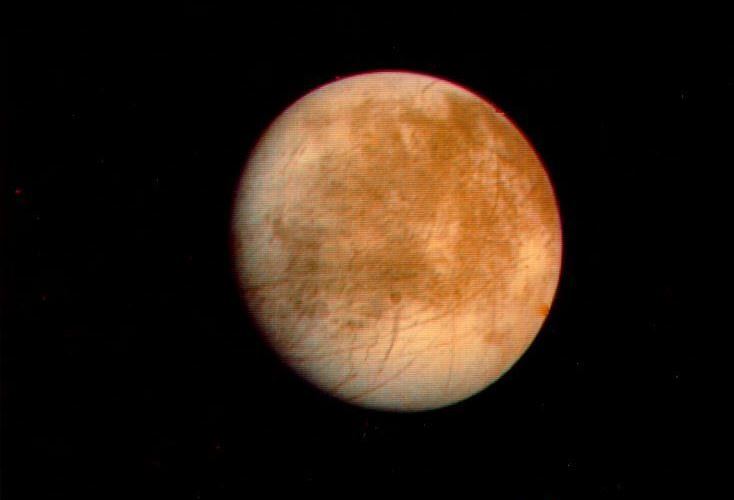
Jupiter’s moon of Europa is one of the best and most intriguing candidates for extra-terrestrial life in our Solar System. For many decades, scientists have known that beneath its icy outer-shell, a warm, liquid ocean resides. Due largely to interaction with Jupiter’s strong magnetic field – which causes heat-generating tidal forces in Europa’s interior – these warm waters may host life.
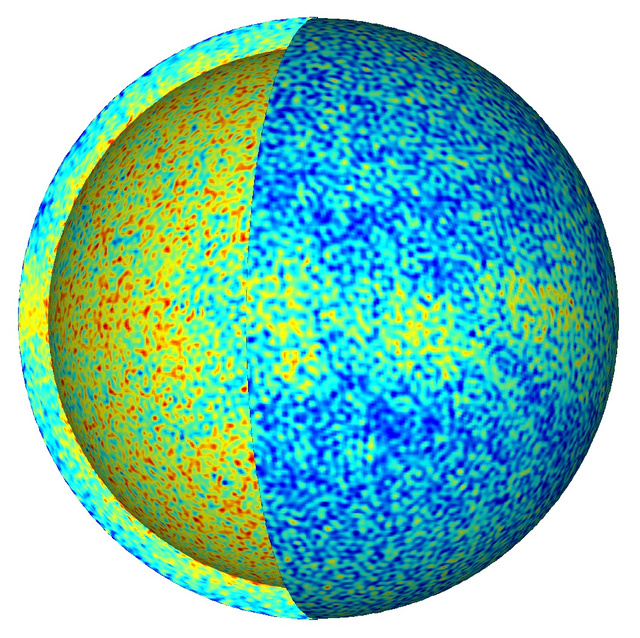
And now, new models suggest that its ice-covered waters are turbulent near the lower latitudes. This is what gives rise to its chaotic equatorial landscapes, but intriguingly, may also make it easier for life to make it to the surface. This contradicts previously held beliefs that Europa’s life was contained beneath it’s outer shell, and will mean that any missions mounted to Europa may have an easier time spotting it.
Thanks to ongoing observation of the planet’s surface – especially the Galileo and New Horizons space probes which provided comprehensive and detailed images – it has been known that Europa’s surface features are not consistent. The landscape is marked by features of disrupted ice known as chaos terrains, geological features that are characterized by huge chunks of ice that have broken away and then re-froze into chaotic patterns.
These models were produced by University of Texas geophysicist Krista Soderlund and her colleagues. Based on computer simulations, Soderlund and her colleagues have theorized that turbulent global ocean currents move Europa’s internal heat to the surface most efficiently in regions closest to the moon’s equator. This is likely causing the melting and upwelling at the surface, and why regions further north and south appear to be smoother.
In addition, the models indicate that given Europa’s spin, heat flow, and other factors, it likely percolates upward at about 1m per second or so — which is remarkably fast. This would explain why the equatorial regions appear to be so fragmented. But it also means that these areas are also likely yo be relatively fragile and soft, which means that upward currents could bring nutrients and even living organisms to the surface.
Hence why any potential search for signs of life on this moon would now appear to be considerably easier. If missions are indeed mounted to Europa in the not-too-distant future, either involving probes or manned missions (most likely in that order), their best bet for finding life would be to land at the equator. Then, with some drilling, they could obtain core samples that would determine whether or not life-sustaining nutrients and organic particles exist beneath the ice.
Hopefully, these missions won’t run afoul of any life that doesn’t take too well to their presence. We don’t want a re-enactment of Europa Report on our hands now do we?
Studying the known universe is always interesting, mainly because you never know what you’re going to find. And just when you think you’ve got something figured out – like a moon in orbit around one of the Solar Systems more distant planet’s – you learn that it can still find ways to surprise you. And interestingly enough, a few surprises have occurred back to back in recent weeks which are making scientists rethink their assumptions about these moons.
The first came from Io, Jupiter’s innermost moon and the most volcanically active body in the Solar System. All told, the surface has over 400 volcanic regions, roughly 100 mountains – some of which are taller than Mount Everest – and extensive lava flows and floodplains of liquid rock that pass between them. All of this has lead to the formation of Io’s atmosphere, which is basically a thin layer of toxic fumes.
Given its distance from Earth, it has been difficult to get a good reading on what the atmosphere is made up of. However, scientists believe that it is primarily composed of sulfur dioxide (SO2), with smaller concentrations of sulfur monoxide (SO), sodium chloride (NaCl), and atomic sulfur and oxygen. Various models predict other molecules as well, but which have not been observed yet.
However, recently a team of astronomers from institutions across the US, France, and Sweden, set out to better constrain Io’s atmosphere. Back in September they detected the second-most abundant isotope of sulfur (34-S) and tentatively detected potassium chloride (KCl).Expected, but undetected, were molecules like potassium chloride (KCl), silicone monoxide (SiO), disulfur monoxide (S2O), and other isotopes of sulfur.
But more impressive was the team’s tentative of potassium chloride (KCl), which is believed to be part of the plasma torus that Io projects around Jupiter. For some time now, astronomers and scientists have been postulating that Io’s volcanic eruptions produce this ring of plasma, which includes molecular potassium. By detecting this, the international team effectively found the “missing link” between Io and this feature of Saturn.
Another find was the team’s detection of the sulfur 34-S, an isotope which had previously never been observed. Sulfur 32-S had been detected before, but the ratio between the 34-S and 32-S was twice that of what scientists believed was possible in the Solar System. A fraction this high has only been reported once before in a distant quasar – which was in fact an early galaxy consisting of an intensely luminous core powered by a huge black hole.
These observations were made using the Atacama Pathfinder Experiment (APEX) antenna – a radio telescope located in northern Chile. This dish is a prototype antenna for the Atacama Large Millimeter Array (ALMA). And while Io is certainly an extreme example, it will likely help terrestrial scientists characterize volcanism in general – providing a better understanding of it here on Earth as well as outside the Solar System.
The second big discovery was announced just yesterday, and comes from NASA’s Cassini space probe. In its latest find investigating Saturn’s largest moon, Cassini made the first off-world detection of the molecule known as propelyne. This simple organic compound is a byproduct of oil refining and fossil fuel extraction, and is one of the most important starting molecules in the production of plastics.
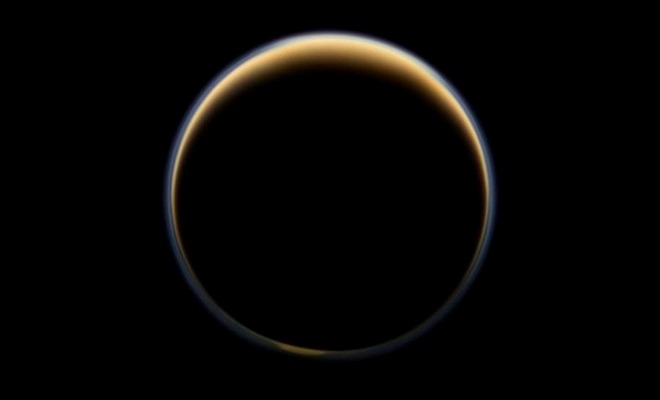
The molecules were detected while Cassini used its infrared spectrometer to stare into the hydrocarbon haze that is Titan’s atmosphere. The discovery wasn’t too surprising, as Titan is full of many different types of hydrocarbons including methane and propane. But spotting propylene has thus far eluded scientists. What’s more, this is the first time that the molecule has been spotted anywhere outside of Earth.
These finding highlight the alien chemistry of Saturn’s giant moon. Titan has moisture and an atmosphere, much like our own, except that its rains are made of hydrocarbons and its seas composed of ethane. Scientists have long wanted to explore this world with a boat-like rover, but given the current budget environment, that’s a distant prospect. Still, sales of propylene on Earth are estimated at $90 billion annually.
While no one is going to be mounting a collection mission to Titan anytime soon, it does offer some possibilities for future missions. These include colonization, where atmospheric propylene could be used to compose settlements made of plastic. And when it comes to terraforming, knowing the exact chemical makeup of the atmosphere will go a long way towards finding a way to make it breathable and warm.
And in the meantime, be sure to enjoy this video about Cassini’s latest discovery. With the government shutdown in effect, NASA’s resources remain offline. So we should consider ourselves lucky that the news broke before today and hope like hell they get things up and running again soon!

 Jupiter’s Red Eye, that trademark spot on the gas giant’s surface that is its most recognizable feature, appears to be shrinking faster than ever. Earlier this year, amateur astronomers had observed and photographed the Eye and noted that it had grown smaller. Shorlty thereafter, astronomers observed it using the Hubble Space Telescope and came to the same conclusion. Based on their calculations, they estimate that Jupiter’s Eye, a giant long-lasting storm, is narrowing by more than 900 kilometres a year, much faster than before.
 As to what causing the drastic downsizing, there are no firm answers yet. However, NASA has a theory, which was shared by Amy Simon of NASA’s Goddard Space Flight Center in Maryland, USA:
 The Great Red Spot has been a trademark of the planet for at least 400 years – a giant hurricane-like storm whirling in the planet’s upper cloud tops with a period of 6 days. But as it’s shrunk, its period has likewise grown shorter and now clocks in at about 4 days. The storm appears to be conserving angular momentum by spinning faster and wind speeds are increasing as well, making one wonder whether they’ll ultimately shrink the spot further or bring about its rejuvenation.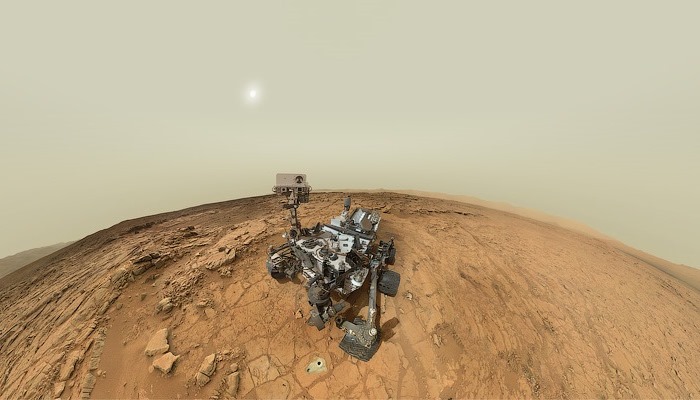

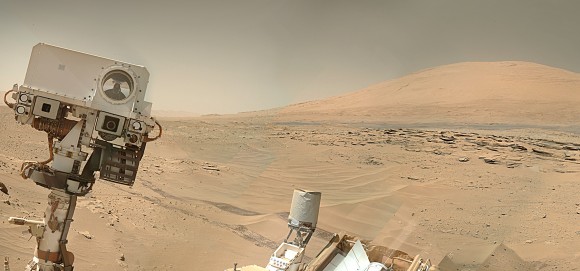 As for the latest in Curiosity’s long-line of panoramic self-portraits, this one comes to us courtesy of Jason Major. As a graphic designer and amateur space explorer, Major assembled the picture from about the dozen or so images acquired with the rover’s Mars Hand Lens Imager (MAHLI) instrument on April 27-28, 2014 (Sol 613). In the background, one can see the 5.5-km-high (3.4 miles) Mount Sharp (Aeolis Mons) that sits in the center of the Gale Crater.

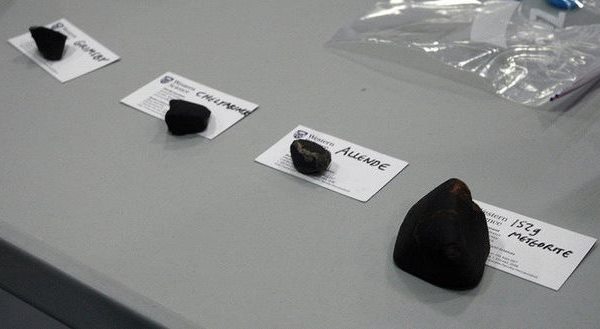 Hence why Brown is asking for the public to help look for the meteorite, which has been described as a rock that looks like it was painted black, and contact the researchers if they find it. The researchers are also interested in hearing accounts from anyone who may have heard a whistling sound “like artillery coming in” or a thud after witnessing the fireball, indicating that it may have landed within a few hundred metres. That may help narrow down the area for the search.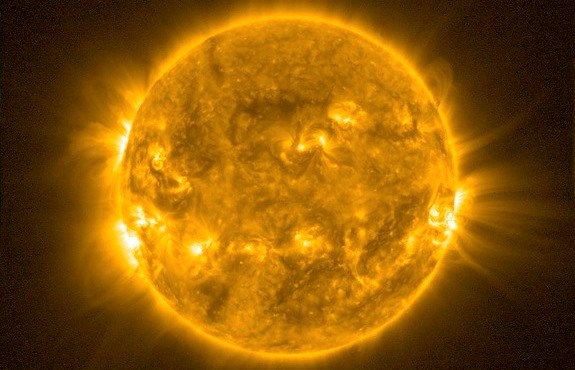
 After learning that this strange object is sending signals towards Jupiter, several missions are mounted which determined that these same extra-terrestrials are one again at work, this time in the outer Solar System. Believing there is life trapped underneath the heavy ice sheets of Europa, the First Born use their superior technology and know-how to convert Jupiter into a sun, which in turn melts Europa’s ice, giving rise to an atmosphere and letting the life out to flourish.
 In the meantime, enjoy the video. Like all Universe Today videos, articles and podcasts, it’s really quite informative. And be sure to subscribe if you like having all your questions about space, science and the answers to the big questions addressed:




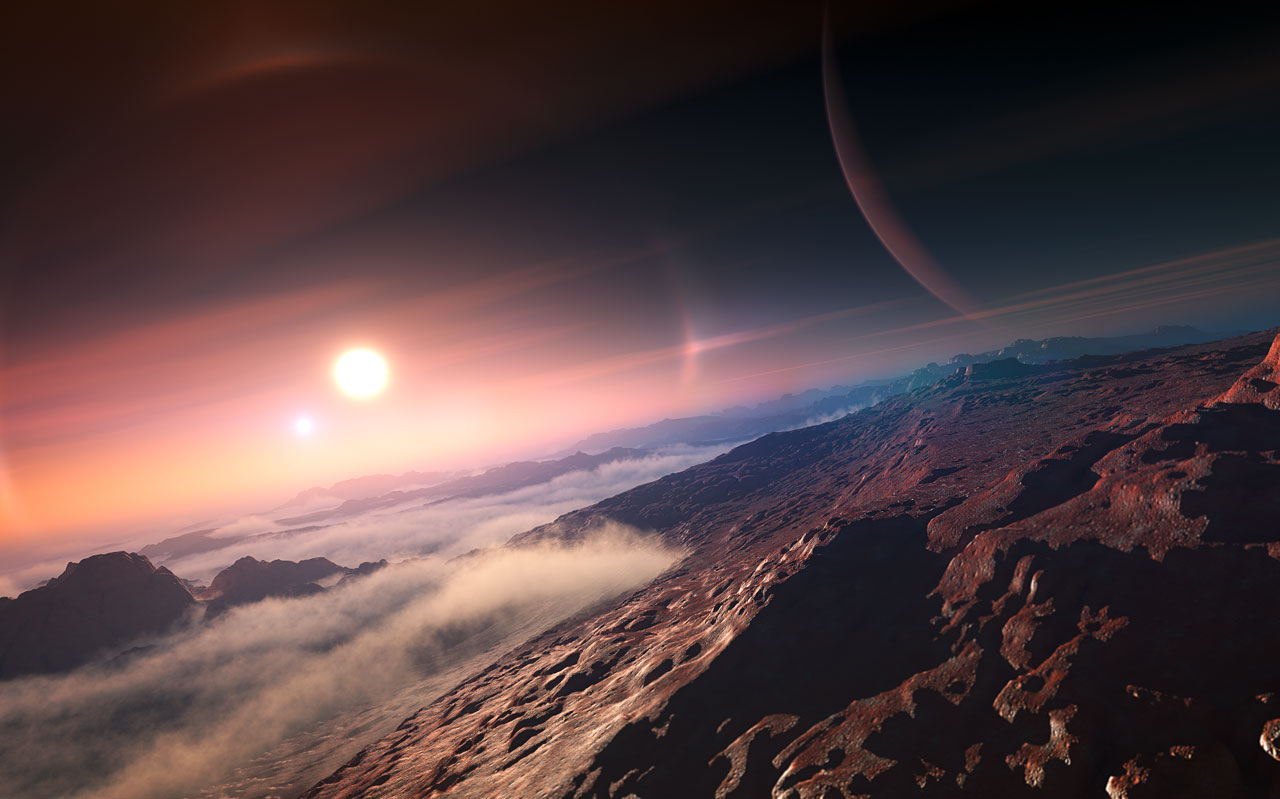
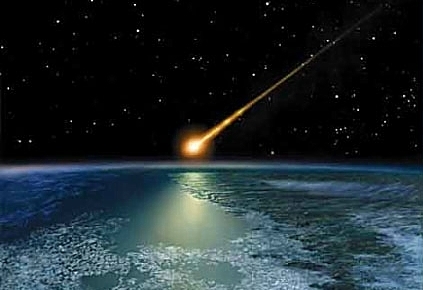

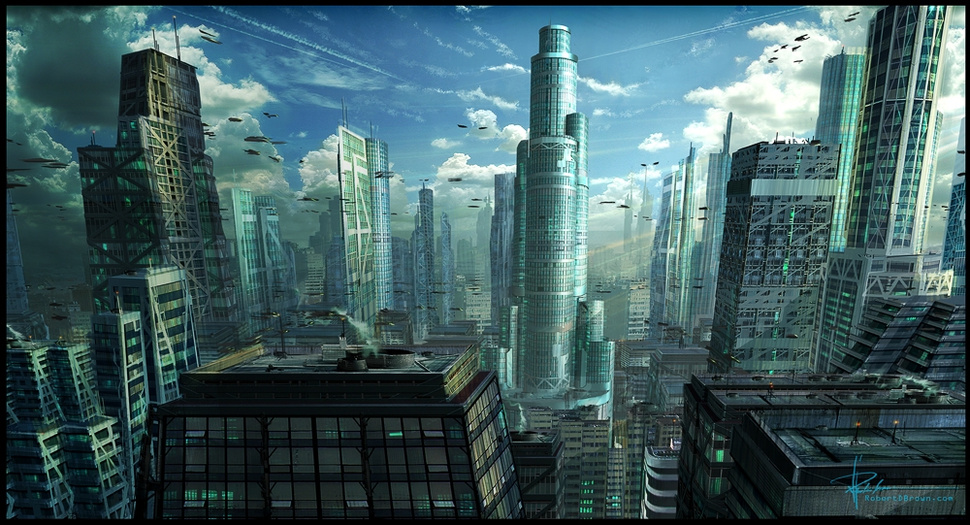
 When it comes to science-fiction stories, the setting is almost always the future. At times, it will be set in an alternate universe, or an alternate timeline; but more often than not, the story takes place down the road. The only question is, how far down the road? Some authors prefer to go with the world of tomorrow, setting their stories a few decades or somewhere in the vicinity of next century.
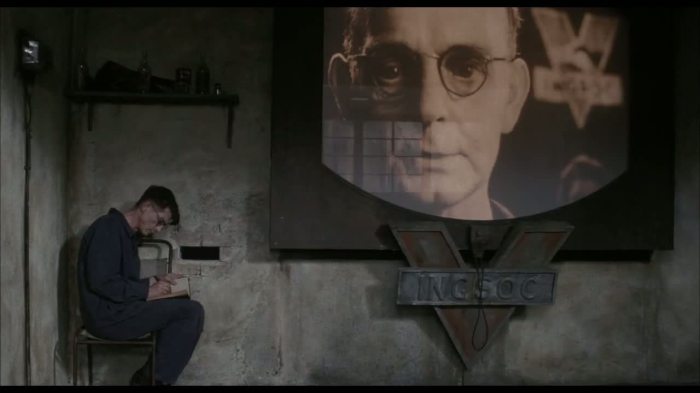 Other, less technologically-inclined authors, liked to use the not-so-distant future as a setting for dystopian, post-apocalytpic scenarios, showing how current trends (atomic diplomacy, arms races, high tech, environmental destruction) would have disastrous consequences for humanity in the near-future. Examples of this include Brave New World, 1984, The Iron Heel, The Chrysalids, and a slew of others.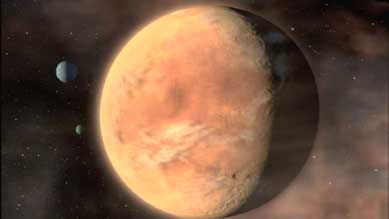


 Here is another important question that every science fiction author has faced, and one which seriously influences the nature of the story. When it comes to the world of tomorrow, will it be within the confines of planet Earth, the Solar System, or on many different world throughout our galaxy? Or, to go really big, will it encompass the entire Milky Way, or maybe even beyond?

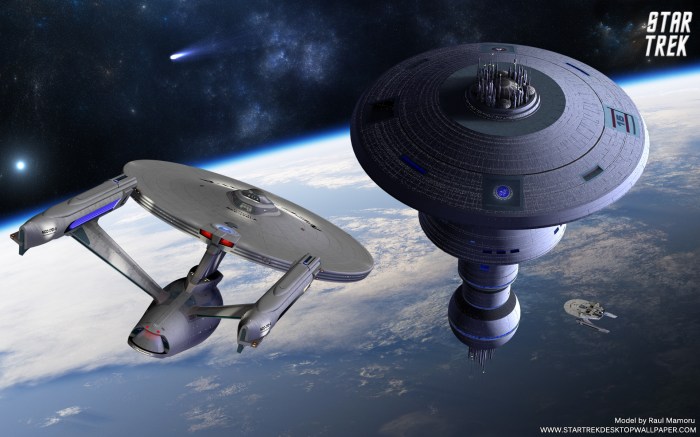 What would a work of science fiction be without plenty of room for gadgets, gizmos, and speculation about the future state of technology? And once more, I can discern of two broad categories that an author can choose from, both of which have their share of potential positives and negatives. And depending on what kind of story you want to write, the choice of what that state is often predetermined.
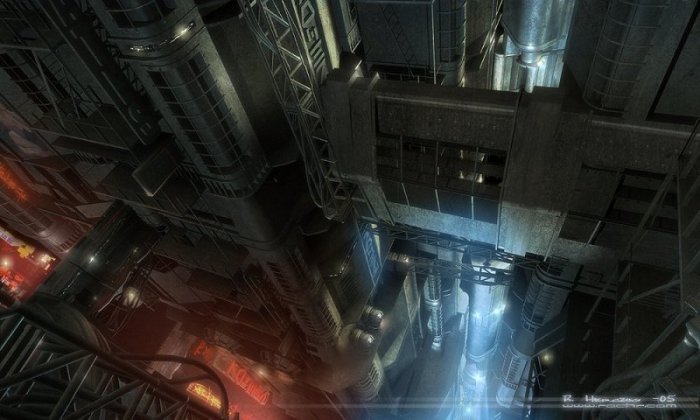 With stories like these, the purpose of high-tech usually serves as a framing device, providing visual evidence that the story is indeed taking place in the future. In other words, it serves a creative and fun purpose, without much thought being given towards exploring the deeper issues of technological progress and determinism. But this not be the case, and oftentimes with science fiction, high-tech serves a different purpose altogether.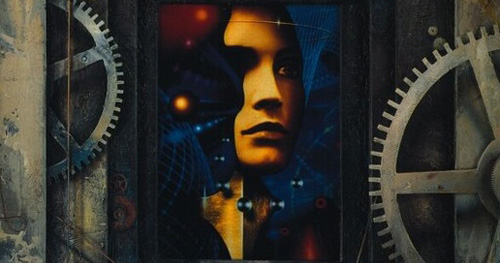
 In Mad Max as well, the way roving gangs are constantly looking for gasoline, using improvised weapons, and riding around in vehicles cobbled together from various parts gives us a clear picture of what life is like in this post-collapse environment. In addition, the obvious desperation created by said collapse serves to characterize the cultural landscape, which is made up of gangs, tinpot despots, and quasi-cults seeking deliverance.
 Another very important question for setting the scene in a science fiction story is whether or not extra-terrestrials are involved. Is humanity still alone in the universe, or have they broken that invisible barrier that lies between them and the discovery of other sentient life forms? Once again, the answer to this question has a profound effect on the nature of the story, and it can take many forms.

 The Independents, we learn early in the story, were a coalition of worlds immediately outside the core worlds that fought these attempts, and lost. The Border Worlds, meanwhile, are those planets farthest from the core where life is backwards and “uncivilized” by comparison. All of this serves to illustrate the power space and place have over human identity, and how hierarchy, power struggles and divisiveness are still very much a part of us.
 In B5 – much as with Stark Trek, Star Gate, or a slew of other franchises – aliens serve as a mirror for the human condition. By presenting humanity with alien cultures, all of whom have their own particular quarks and flaws, we are given a meter stick with which to measure ourselves. And in B5‘s case, this was done rather brilliantly – with younger races learning from older ones, seeking wisdom from species so evolved that often they are not even physical entities.
 After making contact with this monolith twice, first with the American vessel Discovery and then the joint Russian-American Alexei Leonov, the people of Earth realize that the Firstborn are still at work, looking to turn Jupiter into a sun so that life on Europa (confined to the warm oceans beneath its icy shell) will finally be able to flourish. Humanity is both astounded and humbled to learn that it is not alone in the universe, and wary of its new neighbors.







 Stories by Williams