

For those deeply concerned about internet security and privacy, the year of 2013 certainly opened with a bang. First, there was the news that a cyberspy ring – apparently operating out of Russia – had been spying on embassies, governments and research institutions around the world for the past five years using a virus dubbed “Red October”. This was back in January, when the Moscow-based antivirus firm known as Kaspersky Lab announced the discovery of the international intrigue.
Then, on Jan. 30th, the New York Times announced that they too have been the target of hackers, this time from China. In a statement released by the newspaper, the company claimed that Chinese hackers have been persistently attacking their publication for the last four months, infiltrating its computer systems and getting passwords for its reporters and other employees.
 The timing of the attacks coincided with a Times investigation, published online on Oct. 25, that found that the relatives of Wen Jiabao, China’s prime minister, had accumulated a fortune worth several billion dollars through business dealings. The hackers tried to cloak the source of the attacks on The Times by first penetrating computers at United States universities and routing the attacks through them.
With the help of Mandiant, the internet security company hired by The Times, they were able track the intruders, study their movements and help erect better defenses to block them. In the end, The Times reported that they had successfully expelled the attackers and kept them from breaking back in. However, the fact these hackers were able to infiltrate the network of a private news organization in the first place was much cause for worry.
 For one, this is not the first time that hackers, originating in China, have used these sort of subterfuge tactics to hack US databases. According to experts at Mandiant, their company has tracked many such intrusions back to the Chinese mainland, all of which used the same approach of cloaking their efforts using US servers. In addition, this incident, which smacked of state-involvement, did not occurr in a vacuum.
Back in 2008, internet security experts indicated that Chinese hackers had begun targeting Western journalists as part of a wider campaign to identify and intimidate their sources and contacts, and to anticipate stories that might damage the reputations of Chinese leaders. The purpose behind this far-reaching and growing spy campaign aimed at corporations, government agencies, activist groups and media organizations inside the US seemed to be for the purpose of controlling China’s public image, domestically and abroad, as well as stealing trade secrets.
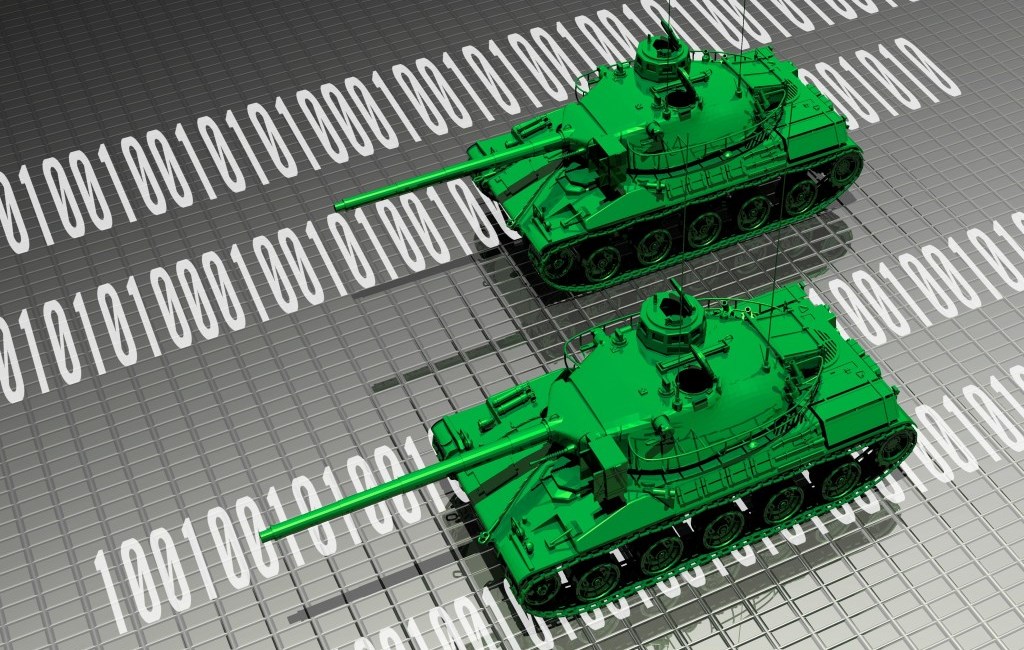 But of course, China is hardly alone in these sorts of covert cyber-warfare. As already mentioned, Russia has already shown signs of developing cyber weapons to assist in spying abroad, and there’s mounting evidence that Israel, Iran and the US are on board too. Starting in 2008, Iran’s main nuclear enrichment plant was hit by a sophisticated computer worm that caused damage to it, thus putting a crink in their efforts to become a nuclear power.
While no one took responsibility for this incident, the evidence seemed to indicate that the worm originated from sources within Israel and the US. Attacks which took place later on American banks and oil companies within the US were believed to have been caused by Iran, in retaliation for the worm that hurt their main source of enriched uranium and a key component in their nuclear program.
 For some time now, hacking federal databases has become something of a sport for various groups and causes who are seeking to reveal government secrets and expose their inner workings to public scrutiny. The “Hacktivist” group known as Anonymous is a perfect example, a group closely linked to Assange (of Wikileaks) who’s most recent infiltration of the Federal Reserve Bank made the news earlier this month as well.
But as I’m sure all will agree, it’s one thing when private citizen attack domestic and foreign databases, and quite another when nations attack each others. While cyber criminals may constitute a vague and slippery enemy, one which is much harder to identify and prosecute, nation-states constitute a far more frightening one. Not only are their resources far more vast, the consequences of battling them are far greater.
Knowing who your enemy is, and that they have nuclear capabilities and the ability to strike at you physically… Yes, I think that’s a much scarier prospect! While the old ways of plausible deniability and covert action may apply, no one likes the idea of subtle attacks which could escalate into a full-scale conflict. Even if it is waged entirely by computer, the effects are still likely to be felt!
Source: NYTimes.com, money.cnn.com


 Stories by Williams