News From Space: The NASA-Funded Fusion Rocket

fusion-rocket-university-of-washington-640x353NASA scientists have been saying for some time that they plan to send a manned mission to Mars by 2030. At the same time, space adventurist Dennis Tito and his company Inspiration Mars want to send a couple on a flyby of the Red Planet in 2018. With such ambitions fueling investment and technological innovation, its little wonder why people feel we are embarking on the new era of space exploration.

However, there is one sizable problem when it comes to make the Mars transit, which is the wait time. In terms of Tito’s proposed flyby, a trip to Mars when it is in alignment with Earth would take a total 501 days. As for NASA’s round-trip excursions for the future, using current technology it would take just over four years. That’s quite the long haul, and as you can imagine, that longer transit time has an exponential effect on the budgets involved!

Mars_landerBut what if it were possible to cut that one-way trip down to just 30 days. That’s the question behind the new fusion rocket design being developed at the University of Washington and being funded by NASA. Led by John Slough, this team have spent the last few years developing and testing each of the various stages of the concept and is now bringing the isolated tests together to produce an actual fusion rocket.

The challenge here is to create a fusion process that generates more power than it requires to get the fusion reaction started, a problem which, despite billions of dollars of research, has eluded some of the world’s finest scientists for more than 60 years. However, researchers continue to bang their head on this proverbial wall since fusion alone – with its immense energy density – appears to be the way of overcoming the biggest barrier to space travel, which is fuel weight and expense.

spacecraft_marsUltimately, the UW fusion rocket design relies on some rather simple but ingenious features to accomplish its ends. In essence, it involves a combustion chamber containing rings made of lithium and a pellet of deuterium-tritium – a hydrogen isotope that is usually used as the fuel in fusion reactions. When the pellet is in the right place, flowing through the combustion chamber towards the exhaust, a huge magnetic field is triggered, causing the metal rings to slam closed around the pellet of fuel.

These rings then implode with such pressure that the fuel compresses into fusion, causing a massive explosion that ejects the metal rings out of the rocket and at 108,000 km/h (67,000 mph) and generating thrust. This reaction would be repeated every 10 seconds, eventually accelerating the rocket to somewhere around 320,000 km/h (200,000 mph) — about 10 times the speed of Curiosity as it hurtled through space from Earth to Mars.
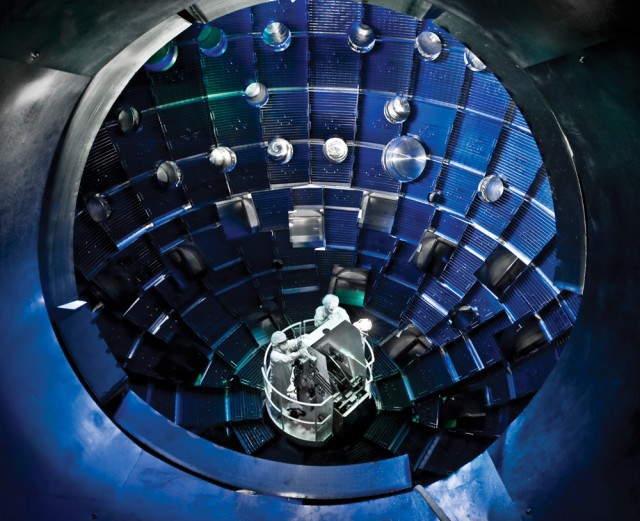
NASA_fusionchamberHowever, things still remain very much in the R&D phase for the fusion rocket. While the team has tested out the imploding metal rings, they have yet to insert the deuterium-tritium fuel and propel a super-heated ionized lump of metal out the back at over 100,000 kilometers and hour. That is the next – and obviously a very, very – big step.

But in the end, success will be measured when it comes to two basic criteria: It must work reliably and, most importantly, it must be capable of generating more thermal energy than the electrical energy required to start the fusion reaction. And as already mentioned, this is the biggest challenge facing the team as it is something that’s never been done before.

However, most scientific minds agree that within 20 years at least, fusion power will be possible, and the frontiers it will open will be vast and wonderful. Not only will we be able to fully and completely lick the problem of clean energy and emissions, we will have rockets capable of taking us to Mars and beyond in record time. Deep space flight will finally become a possibility, and we may even begin considering sending ships to Alpha Centauri, Bernard’s Star and (fingers crossed!) Gliese 581!

daedalus_starship_630pxSource: Extreme.tech

News From Space: MESSENGER and Mercury

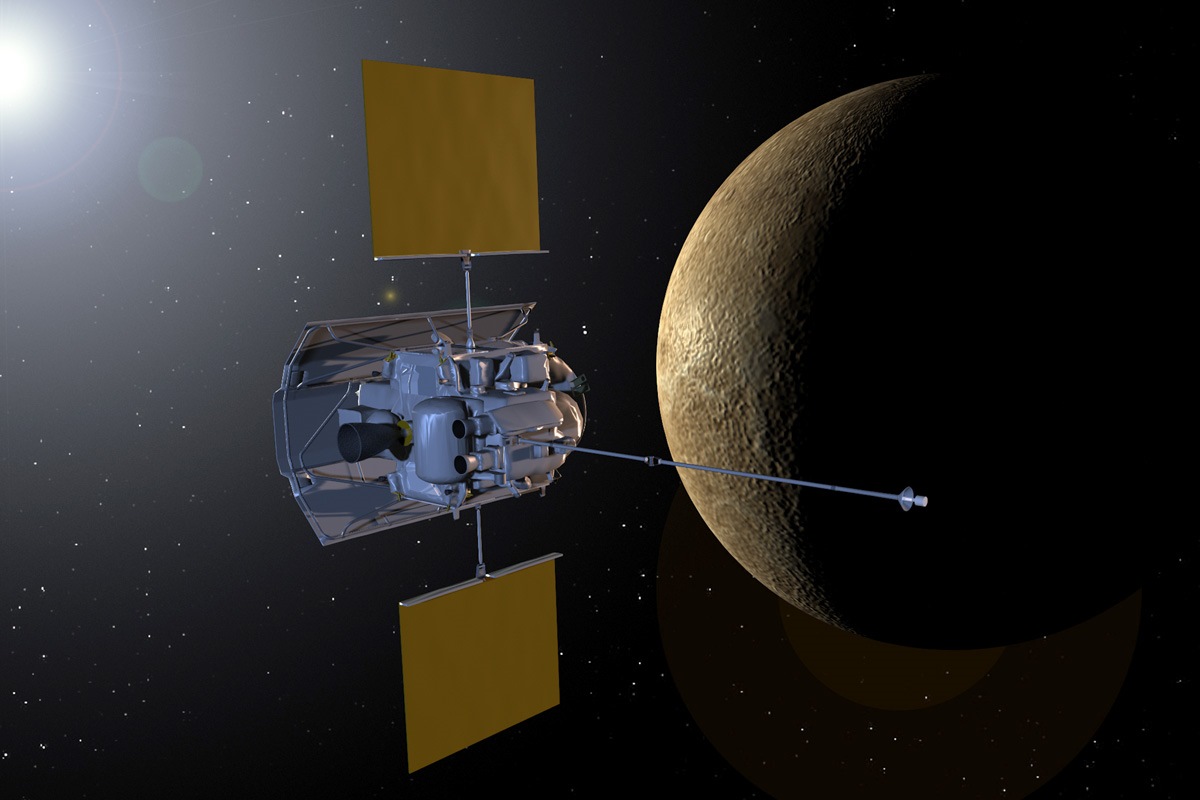
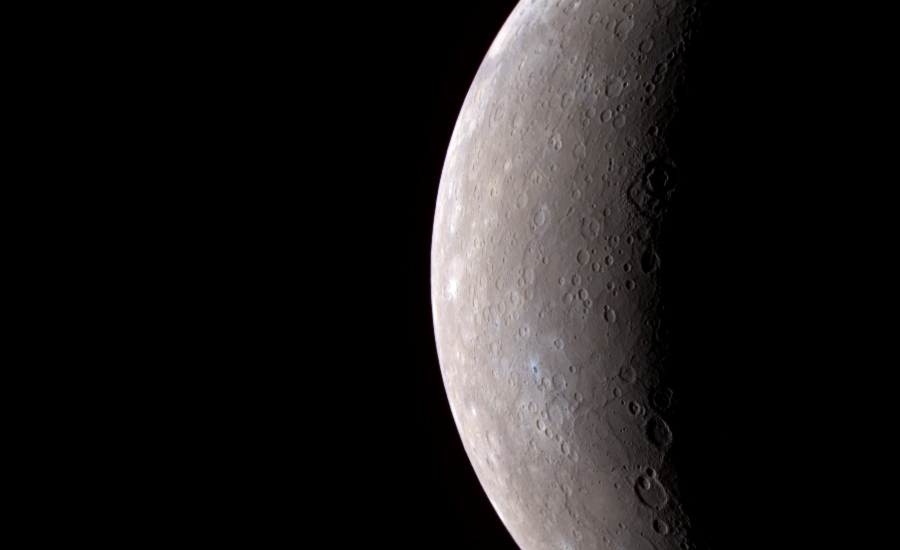
messengerWith Curiosity’s ongoing research and manned missions being planned for Mars by 2030, it seems that the other planets of the Solar System are being sadly neglected these days. Thankfully, the MESSENGER spacecraft, which has been conducting flyby’s of Mercury since 2008 and orbiting it since 2011, is there to remind us of just how interesting and amazing the planet closest to our sun truly is.

And in recent weeks, there has been a conjunction of interesting news stories about Earth’s scorched and pockmarked cousin. The first came in March 22nd when it was revealed that of the many, many pictures taken by the satellite (over 150,000 and counting), some captured a different side of Mercury, one which isn’t so rugged and scorched.

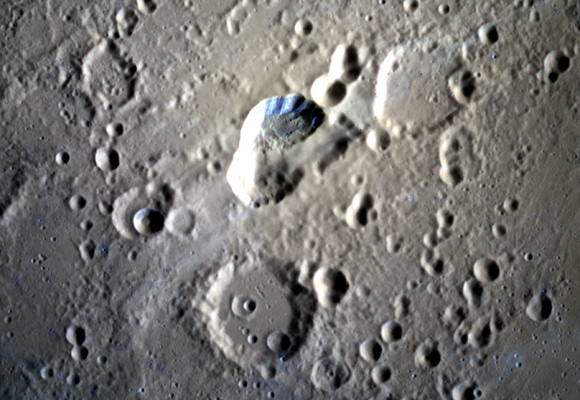
Messenger_smooth1The pictures in question were of a natural depression located northeast of the Rachmaninoff basin, where the walls, floor and upper surfaces appear to be smooth and irregularly shaped. What’s more, the  velvety texture observed is the result of widespread layering of fine particles. Scientists at NASA deduced from this that, unlike many features on Mercury’s  ancient surface, this rimless depression wasn’t caused by an impact from above but rather explosively escaping lava from below.

In short, the depression was caused by an explosive volcanic event, which left a hole in the surface roughly 36 km (22 miles) across at its widest. It is surrounded by a smooth blanket of high-reflectance material, explosively ejected volcanic particles from a pyroclastic eruption, that spread over the surface like snow. And thanks to Mercury’s lack of atmosphere, the event was perfectly preserved.

Messenger_smooth2

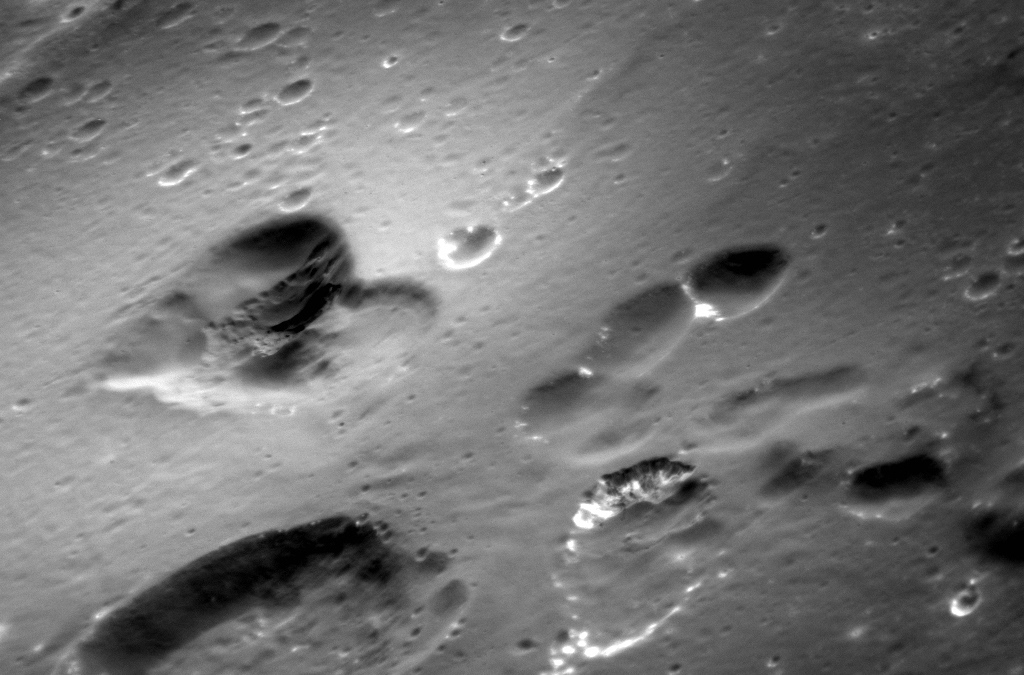
Other similar vents have been found on Mercury before, like the heart-shaped depression observed in the Caloris basin (seen above). Here too, the smooth, bright surface material was a telltale sign of a volcanic outburst, as were the rimless, irregular shapes of the vents. However, this is the first time such a surface feature has been captured in such high-definition.

And then just three days later, on March 25th to be exact, Mercury began to experience its greatest elongation from the Sun for the year of 2013. In astronomy, this refers to the angle between the Sun and the planet, with Earth as the reference point. When a planet is at its greatest elongation, it is farthest from the Sun as viewed from Earth, so its view is also best at that point.

Mercury_31-03-13_0630What this means is that for the remainder of the month, Mercury will be in prime position to be observed in the night sky, for anyone living in the Northern Hemisphere that is. Given its position relative to the Sun and us, the best time to observe it would be during hours of dusk when the stars are still visible. And, in a twist which that may hold cosmic significance for some, people are advised to pay special attention during the morning of Easter Day, when the shining “star” will be most visible low in the dawn sky.

And then just three days ago, a very interesting announcement was made. It seems that with MESSENGERS ongoing surveys of the Hermian surface, nine new craters have been identified and are being given names. On March 26th, the International Astronomical Union (IAU) approved the proposed names, which were selected in honor of deceased writers, artists and musicians following the convention established by the IAU for naming features on the innermost world.

crater_names

The announcement came after MESSENGER put the finishing touches on mapping the surface of Mercury earlier this month. A good majority of these features were established at Mercury’s southern polar region, one of the last areas of the planet to be mapped by the satellite. And after a submission and review process, the IAU decided on the following names of the new craters:

Donelaitis, named after 18th century Lithuanian poet Kristijonas Donelaitis, author of The Seasons and other tales and fables.

Petofi, named after 19th century Hungarian poet Sandor Petofi, who wrote Nemzeti dal which inspired the Hungarian Revolution of 1848.

Roerich, named after early 20th century Russian philosopher and artist Nicholas Roerich, who created the Roerich Pact of 1935 which asserted the neutrality of scientific, cultural and educational institutions during time of war.

Hurley, named after the 20th century Australian photographer James Francis Hurley, who traveled to Antarctica and served with Australian forces in both World Wars.

Lovecraft, named after 20th century American author H.P. Lovecraft, a pioneer in horror, fantasy and science fiction.

Alver, named after 20th century Estonian author Betti Alver who wrote the 1927 novel Mistress in the Wind.

Flaiano, named after 20th century Italian novelist and screenwriter Ennio Flaiano who was a pioneer Italian cinema and contemporary of Federico Fellini.

Pahinui, named after mid-20th century Hawaiian musician Charles Phillip Kahahawai Pahinui, influential slack-key guitar player and part of the “Hawaiian Renaissance” of island culture in the 1970’s.

L’Engle, named after American author Madeleine L’Engle, who wrote the young adult novels An Acceptable Time, A Swiftly Tilting Planet & A Wind in the Door. L’Engle passed away in 2007.

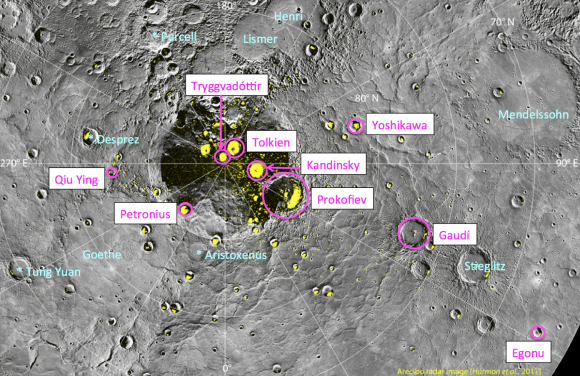
Crater_names_August2012-580x376The campaign to name Mercury’s surface features has been ongoing since MESSENGER performed its first flyby in January of 2008. Some may recall that in August of last year, a similar process took place for the nine craters identified on Mercury’s North Pole. Of these, the names of similarly great literary, artistic and scientific contributors were selected, not the least of which was Mr. J RR Tolkien himself, author of Lord of the Rings and The Hobbit!

It’s no secret that the MESSENGER spacecraft has been a boon for scientists. Not only has it allowed for the complete mapping of the planet Mercury and provided an endless stream of high resolution photos for scientists to pour over, it has also contributed to a greater understanding of what our Solar System looked like when it was still in early formation.

Given all this, it is somewhat sad that MESSENGER is due to stand down at the end of the month, and that the next mission to Mercury won’t be until 2022 with the planned arrival of the joint ESA/JAXA BepiColombo mission. But of course, we can expect plenty of revelations and stories to emerge from all the scientific data collected on this latest trip. And I’m sure Mars will be more than willing to provide ample entertainment until 2022 comes to pass!

While we’re waiting, be sure to check out this informative video of MESSENGER’s contributions over the past few years:

Source: universetoday.com, (2), (3)

Wanted: Married Couple to go to Mars

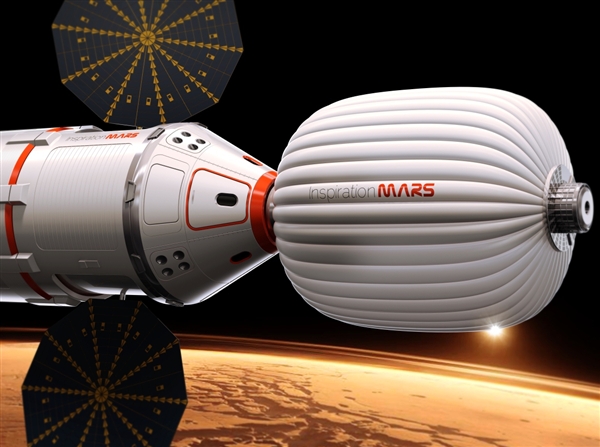
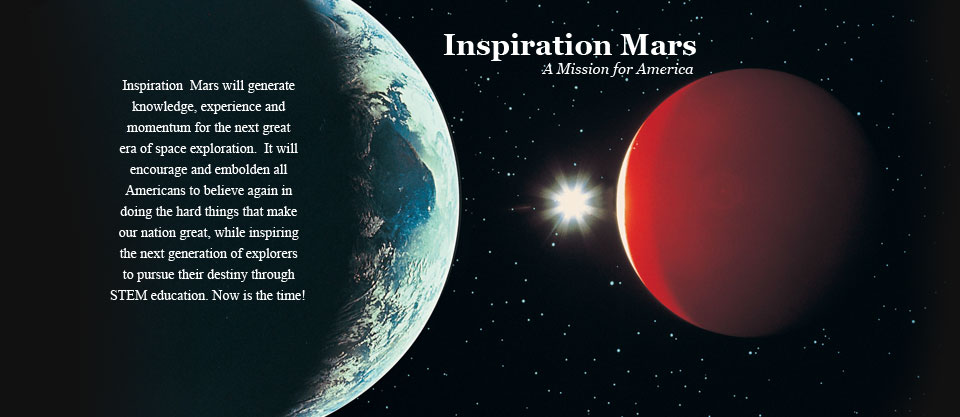
tito-mars-mission-conceptSounds like the setup for a sci-fi romantic comedy doesn’t it? But in fact, it’s the basis for a planned Mars mission which is being hosted by space adventurist Dennis Tito. As the head of the non-profit organization known as Inspiration Mars, Tito has long believed that humanity must seize on the opportunity being provided by a new generation of space exploration, with the intention of becoming a truly “multi-planet species”.

The mission will consist of sending two professional crew members –  who will likely be a married couple – on a “fast, free-return” mission, passing within 160 kilometers of Mars before swinging back and safely returning to Earth. The spacecraft will likely be tinier than a small Winnebago recreational vehicle, and will be launched on Jan. 5, 2018 when planet Earth and Mars will be in alignment.

inspiration_marsTo make it happen, Inspiration Mars has signed a Space Act Agreement with NASA – specifically the Ames Research Center (Ames) – to conduct thermal protection system and technology testing and evaluation, as well as tapping into NASA’s knowledge, experience and technologies. Tito emphasized during their initial meeting that his organization was not looking for money, but a partner to help them develop the required technologies.

The mission system will consist of a modified capsule launched out of Earth orbit using a single propulsive maneuver to achieve the Mars trajectory. An inflatable habitat module will be deployed after launch and detached prior to re-entry. Closed-loop life support and operational components will be located inside the vehicle, designed for simplicity and “hands-on” maintenance and repair.

Mars_A1_Latest_2014As already stated, the mission is a non-profit venture that is designed to inspire. As Tito himself put it:

“[the mission will engage] the best minds in industry, government and academia to develop and integrate the space flight systems and to design innovative research, education and outreach programs for the mission. This low-cost, collaborative, philanthropic approach to tackling this dynamic challenge will showcase U.S. innovation at its best and benefit all Americans in a variety of ways.”

What’s more, Tito believes that the time is right for this mission, and not only because of the orbital window of opportunity. “Investments in human space exploration technologies and operations by NASA and the space industry are converging at the right time to make this mission achievable,” he said.

The mission will last 501 days, and Tito has emphasized that it will be an American adventure, not an international one. Tito himself plans to fund the next two years of the mission, beyond that it will be funded primarily through private, charitable donations, as well as government partners that can provide expertise, access to infrastructure and other technical assistance. He also believes media rights will be a major part of things, since the mission will be an historic first and ought to be caught on tape!

mars_lifeAnd the reason they wanted a married couple to do the deed is quite simple. Jane Poyter, a member of Inspiration Mars explains:

“Imagine, it’s a really long road trip and you’re jammed into an RV and you can’t get out,” Poynter said. “There’s no microgravity … all you have to eat for over 500 days are 3,000 lbs of dehydrated food that they rehydrate with the same water over and over that will be recycled,” adding that the two crew will need the proven ability to be with each other for the long term.

Makes sense. After all, who but a couple already intimately familiar with each others foibles and used to spending an inordinate amount of time together could make it 501 days without killing each other? And as we all know, taking a trip together is the true test of a relationship’s mettle, especially when its a capsule smaller than an RV with no chance of escape!

And for Tito’s sake, I hope things work out. One thing is for sure, his dream of a public-private relationship to make space travel happen is already taking shape.

In the meantime, be sure to check out the promotional animation, showing the mission and the mechanics of the free return trajectory:

Source: www.universetoday.com, inspirationmars.com

Asteriod Prospecting by 2015

asteroid_beltDeep Space Industries, a private aerospace company, has been making a big splash in the news lately. Alongside SpaceX, they have been pioneering a new age in space exploration, where costs are reduced and private companies are picking up the slack. And in their latest bid to claim a share of space, the company announced plans late in January to begin asteroid prospecting operations by 2015.

For some time, the concept of sending spaceships to mine asteroids and haul ore has been explored as a serious option. Within the asteroid belt that lies between Mars and Jupiter, countless tons of precious metals, carbon, silicates, and basaltic minerals. If humanity could tap a fraction of a fraction of that mineral wealth, it would be able to supply Earth’s manufacturing needs indefinitely, without all the harmful pollutants or run off caused by mining.

asteroid_miningSo to tap this potential goldmine (literally!) known as the Asteroid Belt, DSI plans to launch a fleet of mini spacecraft into solar orbit to identify potential targets near to Earth that would be suitable to mine. Lacking the resources of some of the bigger players in the space rush, DSI’s probes will ride-share on the launch of larger communications satellites and get a discounted delivery to space.

Initially, a group of 25kg (55 pounds) cubesats with the awesome designation “Firefly” will be launched on a journey lasting from two to six months in 2015. Then, in 2016, the 32 kilograms (70 pound) DragonFly spacecraft will begin their two-to-four-year expeditions and return with up to 68 kilograms (150 pounds) of bounty each. Beyond this, DSI has some truly ambitious plans to establish a foundry amongst the asteroids.

asteroid_foundryThat’s another thing about the Belt. Not only is it an incredibly rich source of minerals, its asteroids would make an ideal place for relocating much of Earth’s heavy industry. Automated facilities, anchored to the surface and processing metals and other materials on site would also reduce the burden on Earth’s environment. Not only would there be no air to befoul with emissions, but the processes used would generate no harmful pollutants.

In DSI’s plan, the foundry would use a patent-pending nickel gas process developed by one of DSI’s co-founders, Stephen Covey, known as “sintering”. This is the same process that is being considered by NASA to build a Moon Base in the Shackleton Crater near the Moon’s south pole. Relying on this same technology, automated foundries could turn ore into finished products with little more than microwave radiation and a 3D printer, which could then be shipped back to Earth.

deepspaceindustries-640x353Naturally, DSI will have plenty of competition down the road. The biggest comes from Google-backed Planetary Resources which staked it claim to an asteroid last April. Much like DSI, they hope to be able to mine everything from water to fuel as well as minerals and rare earths. And of course, SpaceX, which has the most impressive track record thus far, is likely to be looking to the Asteroid Belt before long.

And Golden Spike, the company that is promising commercial flight to the Moon by 2020 is sure to not be left behind. And as for Virgin Galactic, well… Richard Branson didn’t get crazy, stinking rich by letting opportunities pass him by. And given the size and scope of the Belt itself, there’s likely to be no shortage of companies trying to stake a claim, and more than enough for everyone.

So get on board ye capitalist prospectors! A new frontier awaits beyond the rim of Mars…

Source: Extremetech.com

More News from Mars… Lots More!

marsIt’s a good thing I’ve come down with a cold and have little to do but sit at my computer. Because in the last week, some very interesting news stories have been piling up that just scream for recognition. And wouldn’t you know it, more than a few have to do with our big red neighbor Mars, that world many human beings will one day think of as home.

The first story comes to us from the Siding Spring Observatory in New South Wales, where noted astronomer Robert McNaught recently sighted an new comet. From his observations, the icy interloper appeared to have originated in the Oort Cloud – a hypothetical cloud surrounding the solar system and containing billions of icy planetesimals that were cast out from our Solar System billions of years ago.

Mars_A1_Latest_2014After news of the discovery was released, the astronomers at the Catalina Sky Survey in Arizona looked back over their observations to find “prerecovery” images of the comet dating back to Dec. 8, 2012. These observations placed the orbital trajectory of the comet – now known as C/2013 A1 – through the orbit of Mars on Oct. 19, 2014. This means, in essence, that this comet could very well strike the Red Planet late next year.

Luckily, NASA’s Jet Propulsion Laboratory has run the calculations and indicated that their close approach data suggests the comet is most likely to make a close pass of the Martian surface. And by close, they mean at roughly 0.0007 AU, or approximately 100,000 kilometers (63,000 miles) from the Martian surface. So in all likelihood, Curiosity and Opportunity will be safe from a serious impact that could turn them into scrap metal!

But of course, predicting its exact trajectory at this time is subject to guess work, and ongoing observations will be needed. No doubt, the predictions will be refined a the next 20 months go by, and we’ll know for sure if this comet plans to miss Mars completely, or slam head-on into the surface at 200,000 km/h (126,000 mph).

Source: news.discover.com, astroblogger.blogspot.ca

Mars_curiosity_drillingThe second bit of news comes to us from the good-ole Curiosity Rover! Roughly four weeks after conducting the first drilling operation into the Martian surface, the Rover ate its first sample of the grey dust that resulted. The delivery of the two aspiring-sized tablets of dust took place on Feb. 22nd and 23rd respectively after the robotic arm delivered them into the rover’s Chemistry and Mineralogy (CheMin) and Sample Analysis at Mars (SAM) laboratories for analysis. Results expected in two weeks!

Among other things, the results from the analysis are expected to give clues as to what the color change between the red surface and the grey interior means. One theory is that it might be related to different oxidations states of iron that could potentially inform us about the habitability of Mars inside the rover’s Gale Crater landing site.

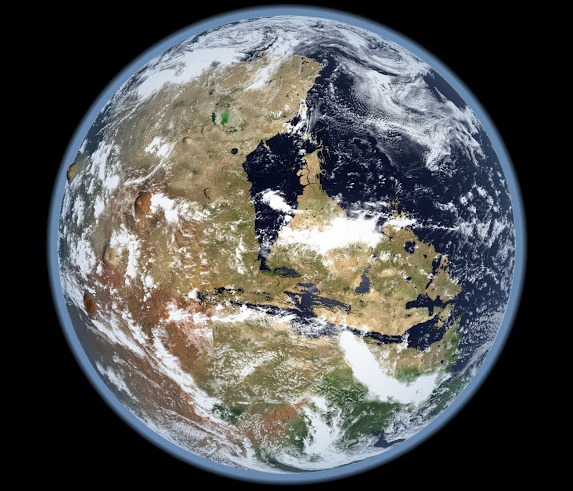
Living-Mars.2At the same time, the Mars Science Laboratory team expects to find further evidence of what life was like in previous geological eras. The Curiosity team believes that the area inside the Gale Crater, known as Yellowknife Bay, experienced repeated exposure to flowing liquid water long ago when Mars was warmer and wetter – and therefore was potentially more hospitable to the possible evolution of life.

The rover will likely remain in the John Klein area for a month or more to obtain a more complete scientific characterization of the area which has seen repeated episodes of flowing water. Eventually, the six-wheeled mega rover will set off on a year long trek to her main destination: the sedimentary layers at the lower reaches of the  5 km (3 mile) high mountain named Mount Sharp.

Source: universetoday.com

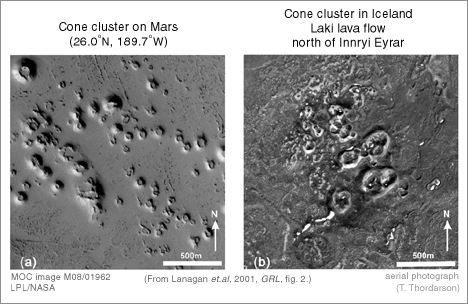
mars_hieroglyphsAnd last, but not least by any stretch of the imagination, is the discovery of “hieroglyphs” on the Martian surface. While they might appear like ancient glyphs to the untrained eye, they are in fact evidence of past subsurface water. The images were caught by the HiRISE camera on the Mars Reconnaissance Orbiter as it passed the surface area known as Amazonis Planitia.

Known as ‘rootless cones,’ these geological features are the result of an explosive interaction of lava with ground ice or water contained within the regolith beneath the flow. Vaporization of the water or ice when the hot lava comes in contact causes an explosive expansion of the water vapor, causing the lava to shoot upward, creating what appears to be a button hole on the surface.

rootlessConesIn the past, Mars scientists have used geological patterns on Earth to make sense of similar ones found on Mars. For example, when the Curiosity Rover discovered veins of hydrated calcium in the rock surface in the Gale Crater, they compared them to similar patterns found in Egypt to determine that they were the result of long-term exposure to water flows. In this case, the rootless cones found in Amazonis Planitia are comparable to those found in Iceland’s Laki Lava Flow (as seen above).

According to Colin Dunas, from the US Geological Survey, the cones are rather large and most likely very old:

“The cones are on the order of a hundred meters across and ten meters high. The age of these specific cones isn’t known. They are on a mid- to late-Amazonian geologic unit, which means that they are young by Martian standards but could be as much as a few hundred million to over a billion years old.”

terraformingOnly time will tell if any subsurface water is still there, and hence usable by future teams of terraformers and settlers. According to Dundas, the odds are not so good of that being the case. Given the surface depth at which the ice was found, not to mention that at the low latitude at which it was found (22 degrees north), shallow ground ice is unstable. Dundas added that since ice stability varies as the obliquity changes, it’s even possible that ice has come and gone repeatedly since the lava erupted.

Too bad. That could have come in really handy for hydroponics, fuel cells, and even restoring surface water to the planet. Guess future generations of Martians will just have to look for their ground and irrigation water elsewhere, huh? Just another challenge of converting the Red Planet to a green one, I guess 😉

Stay tuned for more news Mars. As it stands, there’s plenty to be had! Stick around!

Source: hirise.lpl.arizona.edu, universetoday.com

Interactive Panorama of Curiosity!

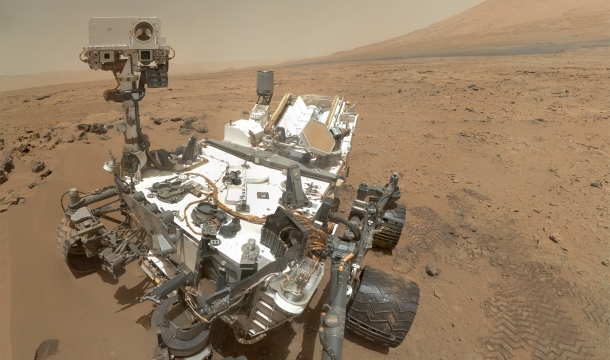
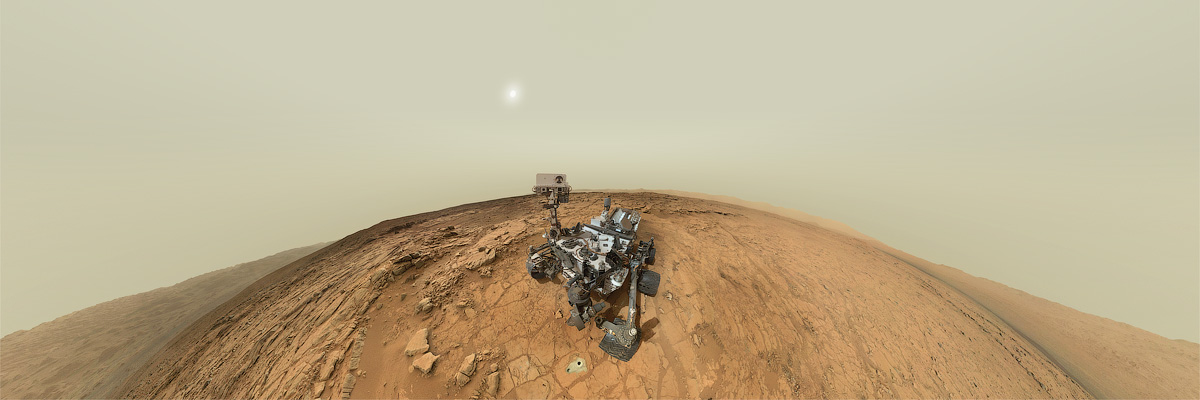
Curiosity_selfportraitThe credit goes to photographer Andrew Bodrov for creating this new and stunning  interactive self-portrait of the Curiosity Rover. Relying on several recent images taken at the “John Klein” drilling sight, he was able to create a full 360-degree panorama. What’s more, the picture is interactive, giving viewers the option of clicking, zooming, and surveying the entire “John Klein” drilling sight.

The mosaic stretches about 30,000 pixels width and includes the self-portrait, which consists of 66 different images (seen above) taken by the rover’s Mars Hand Lens Imager (MAHLI) during the 177th Martian sol, of Curiosity’s work on Mars (Feb. 3, 2013 here on Earth), along with 113 images taken on Sol 170 and an additional 17 images taken on Sol 176.

curiosity_sol-177-1The full and non-interactive photo appears above. If you look closely, you can see the drill holes directly beneath the rover. In addition, the shiny protuberance which was noticed earlier this month. And if you pan around the sky, you get a look at what a typical Martian day looks like, at least in Yellowknife Bay.

Click here to see the panorama and tinker with it some! And stay tuned for more news from the Red Planet!

Source: universetoday.com

NASA Engine Will Take Us To The Moon (And Beyond)

NASA_Moon1For almost a year now, NASA has been discussing plans which will eventually culminate in a return to the Moon. Initially, such plans were kept under wraps just in case NASA found itself in a budget environment that did not favor renewed space exploration. But since the 2012 election, and the re-election of President Obama, NASA publicly announced its plans, confident that the budget voted on in 2010 (which included lucrative funding for them) would continue.

And now, NASA has been unveiling the tools that will take us there and beyond in the coming years. Far from simply shooting for the Moon for the first time in decades, NASA’s plans also include manned missions to Mars, and exploratory missions which will take it out to Jupiter and the outer Solar System. And since they are thinking big, its clear some budget-friendly and powerful tools will be needed for the job.

jx-2rocketAbove, we have the latest. It’s called the JX-2, a liquid-fuel cryogenic rocket engine is the modernized version of the J-2, the engine that NASA used in the late-’60s and early-’70s to thrust humans beyond low Earth orbit. With the conclusion of the Apollo program, these babies fell into disuse. But with the upgrades made to these new versions, NASA hopes to send people back to the Moon, and a few places beyond.

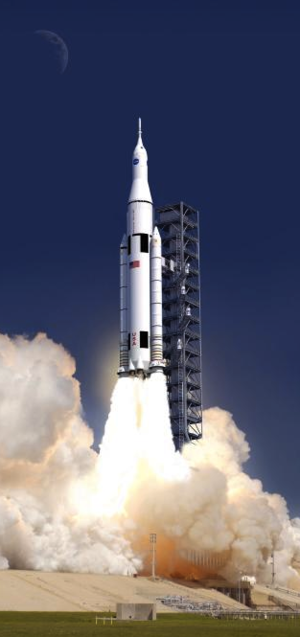
Of course, there are other noted improvements in NASA’s arsenal that will also come into play. For starters, the J-2 was part of the general assembly of the Saturn V rocket, the mainstay of the space agency’s fleet at the time. In the years to come, NASA will be deploying its new Space Launch System (SLS) and the Orion Multi-Purpose Crew Vehicle (MPCV).

NASA_marsThe SLS is NASA’s next-generation rocket, a larger, souped-up version of the Saturn V’s that took the Apollo teams into space and men like Neil Armstrong to the Moon. According to NASA spokesmen, the SLS rocket will “incorporate technological investments” and “proven hardware” from previous space exploration programs.” Essentially, this means that projects which have been shelved and retired have been updated and incorporated to create a rocket that can do the job of sending men into deep space again.

The Orion MPCV, on the other hand, is the module that will sit atop the SLS, carrying its crew compliment and delivering them to their destination once the rocket has put them into space and disassembled itself. Announced back in September of 2011, the SLS and MPCV constitute the largest and most powerful space rocket system ever built by a space agency.

No date has been given as to when the SLS and MPCV will be sent into space, courtesy of the new JX-2 rocket engine. But NASA claims there will be a launch sometime next year. As for the Moon, well, we’re waiting on that too, but it’s clear that with Mars slated for 2030, a manned mission to the Moon is sure to happen before this decade is out.

In the meantime, check out the infographic on the new rocket system below, and keep your eyes on the skies! We’re going back, and this time, we mean to stay!

nasa-spaceship-mpcv-orion-capsule-comparison-apollo-shuttle-infographic-110525b-02

Sources: IO9.com, (2), Space.com

Mercury Mapped for the First Time

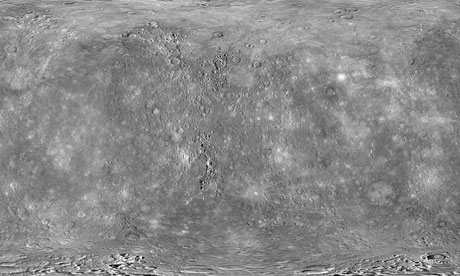
mercury_mapMercury is the smallest planet in the Solar System and has the closest proximity to our sun. As a result, it’s one of the most neglected when it comes to scientific study. While Mars, Venus, Jupiter and Saturn have been probed and photographed in exquisite detail during the space age, the closest planet to the Sun has had to make do with a few flybys from the Mariner 10 spacecraft in the early 1970s.

However, that is now changing thanks to NASA’s Messenger spacecraft. In addition to confirming the existence of ice and organic molecules back in November, the probe has also transmitted thousands of images of the planet over the past year. These have allowed NASA personnel to construct the first high-resolution maps of the planet, its own high-resolution maps, down to the scale of kilometers.

Global Map Of Mercury From Messenger.According to David Blewett, a scientist at the Applied Physics Laboratory at Johns Hopkins University and part of the Messenger team, part of the reason it has taken more than 30 years to revisit the planet since the Mariner 10 flybys was because a lack of public interest. Messenger, he claims, has changed all that. Speaking ahead of a briefing on Friday at the annual meeting of the American Association for the Advancement of Science in Boston, Blewett had this say:

“Messenger has revealed Mercury to be a fascinating, dynamic and complex world. We know now that it is an oddball planet. It’s the smallest of the eight planets but has the highest density. The interior structure is different than the other planets. The geologic surface is different to the moon and Mars. The surface composition is enigmatic because … it consists of rock types that we don’t have much experience with. It has a global, Earth-like magnetic field, Venus and Mars do not.”

messenger_mercuryThe new global map is an enhanced image that shows the different compositions of rocks on the surface of Mercury by color-coding them. The more orange areas are volcanic plains while the make-up of the rocks in the deep blue areas is unknown. Though Messenger was able to detect an abundance of individual elements on Mercury’s surface – including iron, titanium, sulphur and potassium – without rock samples to study, scientists cannot determine the exact compounds or minerals in which those elements are arranged.

But the biggest surprise came on the surface, where there was an abundance of relatively volatile elements such as potassium and sulphur was seen to be very high. Most of the models for the formation of Mercury predict that these elements should have evaporated away during the planet’s formation. So in addition to learning more about its surface features, scientists are now presented with the opportunity to study and learn more about the planet’s early history as well.

But of course, much of that information and research are going to have to wait for future generations of Rovers. These are likely to be similar in nature to Curiosity, in that they are remote controlled, networked robots with internal labs. But unlike those currently combing the Red Planet, these ones will have to be able to withstand surface temperatures in excess of 400 C and some dangerous surface activity. Hard to know exactly when NASA will be rolling any of those out, but the simplest answer is, not too bloody soon!

Check out the video of Mercury’s new color map as it rotates to show its fully-detailed surface. And FYI, this bit of breaking news has become my 900th post! Woohoo!

Source: gaurdian.co.uk

Curiosity Drills!

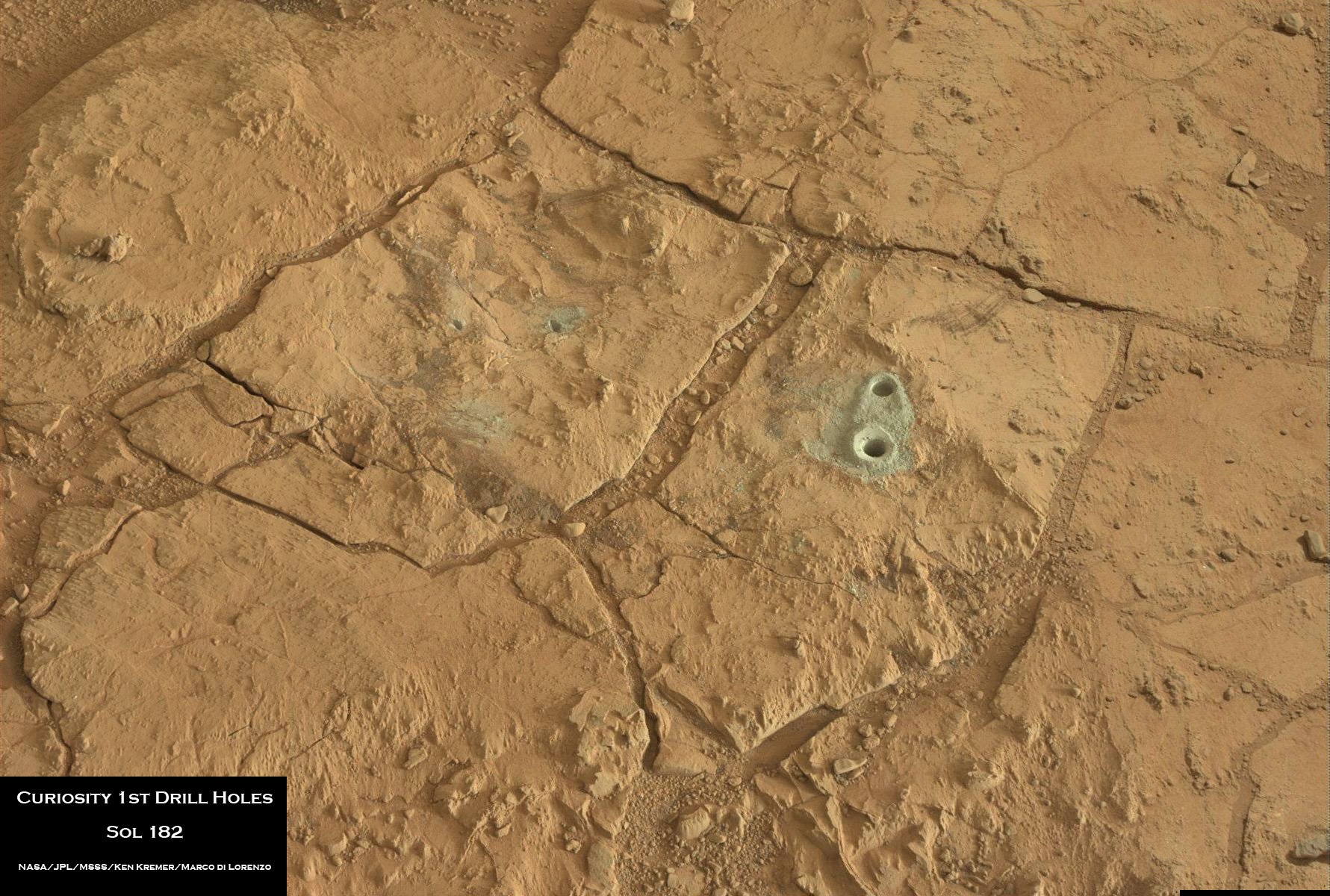
curiosity_drillsIn what is a first amongst cosmic first, the Curiosity Rover drilled into Martian rock and collected fresh samples from the resulting dust. The precision drilling took place this past Friday, Feb. 8, 2013 – during the 182nd day of the mission – after numerous tests and procedures were conducted. The images were beamed back to Earth on the following day (Saturday, Feb 9) amidst a great deal of fanfare and celebration.

Given the fact that it took them nearly a decade of painstaking work and effort to design, assemble, launch and land the Curiosity Mars Science Laboratory (MSL) rover, it’s obvious while the rover team is overjoyed with this latest development. What’s more, this was more than just a first in the history of space exploration, it also marked Curiosity’s 6 month anniversary on the Red Planet since touching down on Aug. 6, 2012 inside Gale Crater.

John Grunsfeld, NASA’s associate administrator for the agency’s Science Mission Directorate, had this to say about the drilling:

“The most advanced planetary robot ever designed now is a fully operating analytical laboratory on Mars. This is the biggest milestone accomplishment for the Curiosity team since the sky-crane landing last August, another proud day for America.”

curiosity_drilling_sightCuriosity drilled a circular hole about  16 mm (0.63 inch) wide and 64mm (2.5 inches) deep into the red slab at the “John Klein” rock site. The  fine-grained sedimentary rock, which is rich with hydrated mineral veins of calcium sulfate, parted to produce a slurry of grey trailings surrounding the hole. These dust samples were then collected for examination using the rover’s on board laboratory.

The team believes the area known as Yellowknife Bay, where the drilling took place, repeatedly experienced percolation of flowing liquid water eons ago when Mars was warmer and wetter, and potentially more hospitable to the possible evolution of life. These latest samples, they hope, will offer additional compelling evidence to this effect, and also some traces of organic molecules.

curiosity_drillbitWhile this may sound like an ordinary day around NASA, it represents a quantum leap in terms of what remote landed craft are capable of doing. At no time in the past have astronauts been able to place mobile research platforms on a distant planet, collect samples of said planet, and conduct research on them, all the while beaming the results and images back to labs at Earth for analysis.

What’s next for the rover? Well, once the analysis is complete, the 1 ton robot will continue to investigate Yellowknife Bay and the Glenelg area. After that, it will set off on a nearly year long trek to her main destination – the sedimentary layers of the lower reaches of the  5 km (3 mile) high mountain named Mount Sharp – some 10 km (6 miles) away from its current position.

Source: universetoday.com

The Mercury/Mars Conjunction

mercury1This weekend, amateur astronomers and stargazers will be treated to a rare sight: the conjunction of Mercury and Mars in the sky. This has proven to be quite the confusing spectacle in the past, as people have often misinterpreted the conjunction of the two planets as the appearance of Mercury’s moon. Much like the appearance of other “pseudo-moons”, it is a mistake that litters the history of astronomy.

The conjunction will appear tonight, on February 8th, during the closest conjunction of two naked eye planets in 2013. This month offers a chance to see the fleeting Mercury in the sky, and the conjunction with Mars will provide the opportunity to see how Mercury would look in the night sky if it did indeed have a moon.

mercurymarsTo see the conjunction, be sure to find a site with a clear view of the western horizon, grab some binoculars, and begin watching the skies at about 15 minutes after local sunset. According to astronomers, this should coincide with February 8th at 17:00 Universal Time! Look for a reddish dot just above that bright star that hangs low in the sky, and you’ll have your two planets looking very much like they’re in orbit of each other.

But be quick about it, since you’ll only have a 15-30 minute window (depending on latitude) to snare the pairing before they follow the setting Sun below the horizon. Photographing the pair will be tricky, though not impossible, since they present a very low contrast against the bright background twilight sky. And just in case you’re not impressed with the sight itself, consider that with Curiosity and other rovers operating on Mars and the Messenger satellite orbiting Mercury, permanent robotic “eyes” are monitoring both!

Good luck and good gazing! And if you happen to snap a picture of the conjunction, don’t hesitate to send it my way. I’ll be sure to post it with the deets of the amateur professional who made it happen!

Source: universetoday.com