
 I’ve been thinking… which is not something novel for me, it just so happens that my thoughts have been a bit more focused lately. Specifically, I have an idea for an invention: something futuristic, practical, that could very well be part of our collective, computing future. With all the developments in the field of personal computing lately, and I my ongoing efforts to keep track of them, I hoped I might eventually come up with an idea of my own.
Consider, the growth in smartphones and personal digital assistants. In the last few years, we’ve seen companies produce working prototypes for paper-thin, flexible, and durable electronics. Then consider the growth in projection touchscreens, portable computing, and augmented reality. Could it be that there’s some middle ground here for something that incorporates all of the above?
 Ever since I saw Pranav Mistry’s demonstration of a wearable computer that could interface with others, project its screen onto any surface, and be operated through simple gestures from the user, I’ve been looking for a way to work this into fiction. But in the years since Mistry talked to TED.com and showed off his “Sixth Sense Technology”, the possibilities have grown and been refined.
 And then something happened. While at school, I noticed one of the kids wearing a jacket that had a hole near the lapel with a headphones icon above it. The little tunnel worked into the coat was designed to keep the chord to your iPod or phone safe and tucked away, and it got me thinking! Wires running through a coat, inset electrical gear, all the advancements made in the last few years. Who thinks about this kind of stuff, anyway? Who cares, it was the birth of an idea!
 For example, its no longer necessary to carry computer components that are big and bulky on your person. With thin, flexible electronics, much like the new Papertab, all the components one would need could be thin enough and flexible enough to be worked into the inlay of a coat. These could include the CPU, a wireless router, and a hard drive.
Paper-thin zinc batteries, also under development, could be worked into the coast as well, with a power cord connected to them so they could be jacked into a socket and recharged. And since they too are paper-thin, they could be expected to move and shift with the coat, along with all the other electronics, without fear of breakage or malfunction.
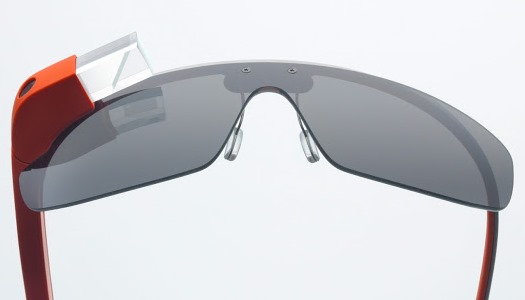
 And of course, there would be the screen itself, via a small camera and projector in the collar, which could be placed and interfaced with on any flat surface. Or, forget the projector entirely and just connect the whole thing to a set of glasses. Google’s doing a good job on those, as is DARPA with their development of AR contact lenses. Either one will do in a pinch, and could be wirelessly or wired to the coat itself.
 Addendum: Shortly after publishing this, I realized that a power cord is totally unnecessary! Thanks to two key technologies, it could be possible to recharge the batteries using a combination of flexible graphene solar panels and some M13 peizoelectric virus packs. The former could be attached to the back, where they would be wired to the coats power system, and the M13 packs could be placed in the arms, where the user’s movement would be harnessed to generate electricity. Total self-sufficiency, baby!
 And then how about a wrist segment where some basic controls, such as the power switch and a little screen are? This little screen could act as a prompt, telling you you have emails, texts, tweets, and updates available for download. Oh, and lets not forget a USB port, where you can plug in an external hard drive, flash drive, or just hook up to another computer.
So that’s my idea, in a nutshell. I plan to work it into my fiction at the first available opportunity, as I consider it an idea that hasn’t been proposed yet, not without freaky nanotech being involved! Look for it, and in the meantime, check out the video of Pranav Mistry on TED talks back in 2010 when he first proposed 6th Sense Tech. Oh, and just in case, you heard about the Computer Coat here first, patent pending!
 Stories by Williams