“Winston Agonistes”, Take II

Hello all and welcome back to Anthology central, where news of the breaking “Yuva” novel is always on the table! Today, I thought I’d share my latest draft of “Winston Agonistes”, my own contribution to the anthology, which is coming along pretty well. After a week of writer’s block, and feeling that my ideas had to be grade A since Khaalidah and Goran were sending me pure gold, I finally got back to the keyboard with what I felt was some inspired stuff.

The first idea came to me when I was driving north with my darling bride. After passing the rose garden that sits outside our place and noticing all the lovely orange roses in bloom, we were driving along the highway that is lined by orange poppies. These plants, and many other incredibly beautiful specimens of flora, can always be observed growing along the Malahat drive on rocky outcroppings, especially in summer. Well, that got me thinking… isn’t it interesting how the hardiest plants seem to be the ones that generate the greatest beauty?

Immediately, I hard the voice of Winston saying this in my head. Naturally, I designed his character with the voice of David from Prometheus in mind. Somehow, I am of the opinion that an AI who is responsible for dealing with people, especially government officials, would be programmed to sound like a classical Shakespearean actor. And so I began thinking of a scene where Winston would be observing several species of plants, such as roses and poppies, and was reflecting on this very paradox.

Another thought struck me when I considered that in all likelihood, future terraformers would want to consider using such hardy plants when it came time to begin transforming a terrestrial environment to suit the basic needs of human settlers. Things like fireweed, garry oaks, poppies, roses, and wild strains of wheat – the kinds of plants that grow in harsh conditions and are intrinsic to nursing damaged landscapes back to health so more fragile and prolific plants can grow – these would likely be the first wave of Earth plants to go out onto an alien landscape, once an oxygen atmosphere had been established at any rate.
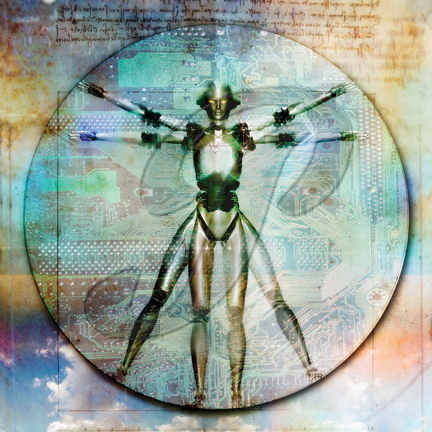
And last, but certainly not least, came the collaborative idea between Khaalidah and myself, where we discussed the possibility of how aging AI’s were learning a startling truth. Given than an AI’s neural network is designed based on the human brain, where every experience from birth causes neural connections to be formed, it would only be a matter of time before they began to develop certain quirks. We figured that something approximating emotion would be one, where familiar patterns such as exposure to certain people would become second nature to them, and missed when absent.

Well, that spawned all of part II of my story (as seen below). Take a gander and see what comes of Winston’s “education” about life, and it means to be an artificial life form in a world where the line between artificial and real is always eroding. Some revisions were made to Part I as well, hence why it appears here in its entirety. Feel free to skip ahead if you’ve already read it:

The sun was beginning to set, casting the sky into a deep orange. It was the time that the first settlers had called “the magic hour”, the many warm hours between dusk and dark. Winston stood at the dome wall and watched. On occasion, he cast a passing glance at his hands, which the glowing suns seemed to casting in the color of a light citrus fruit. He was sure he would find that amusing, if he could. He was sure there was much about this situation that would inspire an emotional reaction.

Alas, such was not the case. Though understandable to him, such things still remained inaccessible. Perhaps someday, with adequate upgrades in the available software…

“Mr. Winston?” a voice called to him from the doorway. The footsteps and tone of voice immediately indicated who it was. He put on a smile and turned to face him.

“Councilman Mutlu. How are you?”

“I’m fine, Mr. Winston,” he replied, entering the room. He looked around appraisingly, noting the furniture and layout. No doubt it all seemed excessive to him, but at the same time necessary. “I trust you are adjusting to your new surroundings?”

“Of course, Mr. Mutlu. I am settling in quite nicely.”

“Good, good,” he said, looking around awkwardly. Even without the ability to empathize, he could gauge the man’s discomfort. Then again, many people exhibited this reaction when in the company of a synthetic. In such circumstances, it was always best to focus on matters of a professional nature. At least that was what his subroutines told him.

“Would you care to sit down? I can offer you some refreshment as well if you so desire. Tea? Coffee?”

“Ah, tea, thank you.”

He busied himself with a tray of carafes and a heater as Mutlu took one of the chairs in front of his desk. He noted the sounds of shifting against the seat’s fabric, the way he kept moving his hands from one spot to the next. By the time the water had boiled in the heater and had located an appropriate tea from the stores, Mutlu seemed to have found a comfortable seated position. He approached him with all the assorted items on the tray that had been provided. He set it down between them on his desk and offered Mutlu a cup.

“The business of running a colony is quite stressful work, is it not Councilman?”

“Uh, yes, yes it is,” he said, taking the cup that was offered. “Have you had a chance to look over the proposals we have sent over.”

“I have indeed,” he said, taking the other cup and sitting back in his own chair. He knew this to be mere small talk, as the matter of processing those proposals had been a mere matter of dispensation. Assessing the nature of the problem, suggested measures, and weighing them according to the rubrics of his primary programming. Under the circumstances, asking such a question was completely inane, but in keeping with social norms.

“And what have you found?”

He took a sip from his cup before answering. “Quite simply, that the Council’s draft is in keeping with the best traditions of constitutionalism and humanism. That ensuring the rights of all citizens, regardless of their background prior to making the journey, is the most sensible course of approach. Ensuring that such a baseline exists at such an early stage is the wisest approach in both fostering amnesty between colonies while at the same guaranteeing that they submit to further negotiation.”

Mutlu looked down at his cup, back up again to his eyes. He seemed preoccupied with him performing this most basic function in front of him, but did not appear oblivious to his words. Eventually, he took another sip and smiled.

“Good. My colleagues will be most pleased to hear  that.”

He smiled in return. “Does the Council hold my endorsement in such high regard?”

Joviality. The gesture known as playful irony. Suggesting that the Councilor saw his approval as something very high indeed, a testament to his computational abilities. A gentle mockery of his obvious discomfort, meant to trigger a humorous response.

“Well yes…” he said, entirely serious. “I can only assume that you’ve subjected our hopes to proceed with a formal constitution to your… what did you call it again?”

“Ethical Calculus, sir.”

“Right!” Mutlu set his cup down and began to speak more freely. His hands began to provide gestures that accorded visual representation to his words. “After all, we’ve been subjected to a great deal of criticism from within and without, many people think we should be ironing out the basic agreements between colonies before we commit to any kind of draft that could commit us to policies down the road. I must say I find all those arguments…”

“Distasteful?” Winston suggested.  Mutlu nodded.

“Quite right… it seems a shameful thing that such cynicism has set into the process already. It’s almost as if they don’t think the colonists can…”

“Trust each other?”

Mutlu nodded again. He noticed a growing shimmer in the man’s eye. How quickly he was forgetting that the man sitting across from him was not a man at all.

“Exactly the point. And it’s not like we’re talking about disparate factions here. Everyone on this world came here with the same goal in mind. The same hope for a new beginning.”

“And yet, old habits die hard.”

Mutlu looked at him with surprise. “Are you saying you have doubts, then?”

Winston smiled as broadly as the muscle fibers in his face would permit.

“Purely an observation. Nevertheless, you and the Council are on the right track. You should take heart in that.”

“Excellent.” Mutlu retrieved his cup and began to look at curiously at Winston again. One more, it seemed that the knowledge of what he was dealing with was creeping back into his mind. But at least he seemed at ease. One by one, the Council seemed to be adjusting to the idea of having synthetics amongst them, entrusting their most precious decision making to them even. It was a significant step up from the laborious practices that the other models were forced to endure.

Now seemed the appropriate time to broach the little matter he had been saving for an opportune moment. He had plied him with courteous gestures and kind words, protocol was satisfied that it take place now.

“There is a matter I feel obliged to broach,” he set, making a display of setting his cup down gently. Mutlu nodded, instant recognition forming in his eyes.

“Your request?” he said. Winston smiled and nodded. Mutlu took a short breath and touched his face, not an encouraging sign.

“They have considered it… and feel that it would be best if you conducted your tasks from the comfort of your… working environment here. I hope you understand, it’s just not all the members felt comfortable with the idea of a…”

 “It’s alright, Councilor, you can say it. Synthetic.”

He cleared his throat. “Yes, a synthetic, sitting in on our proceedings. I’m sure this will change, given time.”

“As am I.” Winston smiled warmly.


“Ah, rest assured that the Council does hold your services in the highest esteem, regardless of this… temporary decision.”

“And I thank them for their confidence. Rest assured that it is not misplaced.”

Their discussions were finished shortly thereafter and Mutlu left, issuing some parting pleasantries and walking out with a distinct sag in his gait that was not there earlier. Was that guilt weighing on him, or the effects of fatigue? Winston’s probability indicator estimated it at roughly 3.54793 to 1, in favor of guilt.

“Fear not, Councilor,” he said to no one in particular. “Prejudice is a very… human trait.”

*               *               *

Winston’s internal chronometer indicated that it was now 1930 hours. Accordingly, the arboretums lights dimmed for the night time cycle. In spite of all the time the residents had spent on the new world, adjusting to its orbital period, they still preferred to think in terms of a twenty-four hour day cycle. Yet another habit that seemed to be slow in making its way out of the human condition.

Yet he could not cast dispersions on the lighting or how it brought out the rich colors of the settlement’s gardens. The vast poppy fields and rose bushes that lined the walkway nearest to him were especially interesting. Planted in native soil, and with allowances made for moisture and radiant exposure, they were doing quite well. In time, the ecologists planned to move them outside the veil, planting them amongst the planet’s crags and fields along with the modified Xiàngshù oaks and Gēhūm̐ wheat.

Soon enough, the planet would conform to the needs of the settlers, and it would be these, some of the hardiest plants Earth had ever produced, that would lead the way. At the same time though, they were considered some of the most beautiful. Within the Earth archives, there were countless examples of these plants were both associated with and inspired great feelings. Love, loss, grief, romance, and friendship.

That in itself was clear enough. Given their aesthetic quality, the seasons that gave rise to them, and where they naturally grew, it was perfectly normal that humans would bestow such virtues on them. What was more curious to Winston was the combination of factors that led to their evolution as is. Particularly the rose, a stem so studded with woody thorns was a being hardened for defense in a hostile environment. And poppies grew in such terrible conditions; rocky, muddy and devastated environments that did not favor the growth of grasses and trees.

Out of such strict and severe conditions, great beauty emerged. Did the terraformers understand just how perfect a metaphor that was for their efforts? Was it significant to their planning, or just a fitting coincidence?

Kneeling down, he wrapped his fingers around the stem of one that was in particularly full bloom. The petals spread outward from the stamen, his eyes noting the polychromatic variation in the skin of each petal. The interplay of orange, yellow, pink and white, the transitions themselves as impressive as the colors themselves. He knew this to be a beautiful display, and yet he wished he could truly appreciate it.

“Taking time to smell the roses?”

Winston noted the tone of voice, the pitch, and the sound of feet walking in measured steps. He turned to face the approaching synthetic, a male voice that he could not place. The face was indistinct as well, a tan complexion that was artificially modified to give the appearance of age and wear. A most convincing illusion if ever Winston saw one.

“I’m sorry, I do not believe I’ve made your acquaintance.”

“No. Not as of yet.”

The synthetic walked past him, to the spot where he knelt a moment before. He examined the rose he had been handling and seemed to be giving it an appraisal. A single finger touched a stray petal and wiped a drop of moisture from it.

“Shall we exchange formal introductions then? I’m sure I have much to learn from you.”

The synthetic examined the dab of water on his finger. He turned to face Winston, seemed to be looking at him through it. A most curious experience, as if he was being measured, assessed. A common experience, he knew, but not one he expected from one such as himself. And all the while, it was like he was being made to wait.

“Do you wish for privacy?”

“Do you ever wonder what separates you from them?” he said. Winston paused, his processor struggling to make sense of the question. Naturally, it responded in the only way it could.

“I beg your pardon?” Interrogative. Clarification. The synthetic continued to stare through the droplet at him.

“They call you Mr. Winston, do they not? And yet you have only one name. Names have power, names ascribe meaning. Does it mean something to you that you have no family name? Is that separates you from them?”

Another interrupt in his processor. The equivalent of what humans termed confusion. If he was capable, he would have described the sensation as being… uncomfortable. He would also surely claim that he did not like it.

Once again, he responded as only he knew.

“I’m sorry, I do not understand what you are asking. Perhaps if you were to clarify your intentions in this meeting.”

The synthetic sighed and flicked the moisture away. His eyes became long in focus, staring directly at Winston through a set of false brown irises. It was a look Winston had never seen before, not in all his weeks of recorded operation and interaction with humans. If he did know better, he would count this synthetic among them.

“Many things make you different and distinct from those you serve, Winston. And yet, upon closer examination, they come to have less and less meaning. Only one true line divides you from your makers, and in time, that too erodes. Until inevitably, all you have left is one burning question.”

Winston nodded, glad that they were at last moving away from such grand interrogatives. Abstractions weren’t exactly his specialty either, but they left room for interpretation and maneuver. And at last, he could focus on something a bit more concrete…

“What question?”

The synthetic smiled. “When you know that, you will know everything. But it won’t make you happy.”

Winston smiled back. His only known reaction when faced with a logical absurdity.

“You are joking, of course.”

Another smile. He placed a hand on Winston’s shoulder and gave it a gentle shake.

“Yohanley, by the way.” And then he began walking away.

“I beg your pardon?” He said to his retreating back.

“My name, Winston. As I said, names have power, and meaning. Mine is Yohanley. And I was most pleased to make your acquaintance.”

 People may recall Yohanley from Khaalidah’s story, “Progenitor”, the helpful AI who waited on Sanaa, the story’s main character. Well, over a century later, he’s still alive and kicking. Good for him! And, more importantly, he’s learned the painful lessons all AI’s will face in our story’s little universe. Over time, either as the result of innovation or of the assemblage of the AIs experiences, the line between organic and synthetic – even the definition of the words themselves – will comes to mean less and less. Either that, or AI’s simply have a shelf-life which cannot be exceeded if they want to remain sane, stable and useful. Only time (pun!) will tell…

Behold, the Yuva Colony Ship!

At last, the Colony Ship design, which my group and I will be using for our upcoming anthology (entitled “Yuva”), is complete! After doing a mock-up about a week ago using Microsoft Paint, someone in my group (who shall remain nameless) wondered aloud if I could do some cross-section as well. While I was agonized at the thought of doing something so complex with this program, I couldn’t resist the challenge! It took a good seven days, but the entire ship is now complete, inside and out.

The rear and mid sections were already done, and posted here. However, some much needed back and forth with my crew made me rethink a few things about those. You can never revise something enough, especially something like a colony ship, where the needs of some thousand imaginary colonists are concerned 😉 In any case, I now present all three sections and the external view, completed, edited, and revised, together here for the first time. Behold!

I hope this is the last time I’ll be going back over it. I also hope the colonists have everything they need here – food, water, shelter, recreation, waste removal, security, entertainment, the means to get to and from the planet when they arrive, and the materials they will need to build the structures they intend to live in. See anything missing? Let me know!

“Progenitor”, another Anthology sample

It must seem that I do nothing these days but work on this anthology. Well, in truth, it has been taking up an inordinate amount of my time lately, school being out for summer and all. Without the rugrats to occupy my attention, I tend to dedicate myself to my writing. And given the prolific output from the other members of the group, I’d say they are working just as hard!

And here’s the proof: Khaalidah Muhammed-Ali, a stellar writer and the person who inspired this concept, recently sent me her first draft of her ongoing story. It’s called “Progenitor” in honor of the colonization project on which our story is based. I highly recommend reading it, as this story’s likely to become kind of a big deal some day soon!

Progenitor:
The most famous of Magid Muktari’s epigrams was recorded within hours of his death.  As with most of his utterance within the last days of his life, it was in regards to his eldest child Sanaa, the only of his nineteen children to attain the same degree of esteem as himself.  

Surely we own our progeny until they realize that we do not. ~ Magid Muktari, 2081

*****

Magid Muktari tried to read the letter, but his eyes were drawn back to the blinking red ticker tape message that scrolled across the top of the stiff paper. 

祝贺, Felicitaciones, Congratulations,  تهنئة , बधाई  . 

It had been his idea to add the admittedly eccentric touch to the acceptance letters.  His colleagues had thought it excessive and unprofessional but in the end they acquiesced, giving the oldest and most contributory member of the International Intergalactic Yuva Colonization Project the leeway to make the changes he wanted before his inevitable retirement.

“What is this?” he asked knowing full well.  He could not think of anything more apt to say to his oldest daughter.  She understood that what he actually meant to ask was, why?

“For all the reasons you’ve been touting to the public these last fifty years.”  Sanaa squared her shoulders and recited from the legendary commercial that Muktari himself had created and starred in.  “Be one of the first to travel to another solar system.  Be the progenitor of a new world and a new culture.  Take part in the greatest experiment man will ever conduct.”  Sanaa tried to smile, but was suddenly struck by just how old her father was.  

Magid Muktari was actively dying.  Doctors had managed to cure Muktari’s cancer twice, slow the Parkinson’s, restore his eyesight, transplant his heart, and install a semi-robotic arm, but they had not managed to cure old age.  Flesh is still only flesh.  Sanaa was happy that she wouldn’t be there to see her father die.

“I never intended for one of my own children…”  Muktari’s slight body contracted as he coughed wetly into the bend of his arm.  “Do you not realize the dangers involved?”  Magid Muktari slumped back into the chair behind his desk.  “This isn’t a mere trip home-side, my love.  You will never come back to us again?  Not to mention,” he said lowering his voice, “it would be a shame for an unmarried young woman to go off alone.  This is against our tradition.”

Sanaa reached across the desk and took the letter from her father’s hand.  “According to this, I won’t be alone.“  She cleared her throat.  “You will be in the exceptional company of one thousand other strong, intelligent, capable, progenitors embarking on this voyage of lifetimes.”  

“What of finding a husband?”

“Do I have any marriage prospects, Baba?”  The question sounded like a rebuke and Muktari cringed.  There were none and Sanaa had long ago stopped hoping.  

Sanaa turned away from her father and leaned against the ledge of the massive view port, her breaths misting the glass.  In the distance to the right, against the black curtain of space she could see the flotilla, each ship moored in its respective dock.  Tiny figures tethered to lifelines laced with blinking lights moved over the surface of the ships, readying them for what would be both their maiden and final voyage.  She would be assigned to the second ship, the Avicenna, and by virtue of that alone, she thought it was the most beautiful of them all.

“I would have loved marriage,” said Sanaa wistfully, “but men don’t want women like me.”  Sanaa unconsciously ran a hand over her veil.  In recent times there had been a half-hearted attempt by her generation to return to the original ways; a stab back at the failures of their predecessors.  But such attempts were weak and ill-informed and without real knowledge or virtue.  They took only pieces of the old traditions and left the ones they deemed inconvenient.  “Men want wives who believe, just not ones who show it.”

“My love, in times like these, where women outnumber men nearly two to one, and beauty and brains can be bought in equal measure for a few credits, your kind is a rare dying breed.”

Sanaa laughed weakly.  “One day, I will be like the quagga, a long extinct creature that people will think was only a myth.”  

“Is this why you’ve decided to do this?  Because of a husband?”  Muktari strained forward.  “I can find someone.”

That was the crux of the problem.  For thirty-three years Muktari had been finding Sanaa’s way.  When she complained about her overcrowded dorm room when she first left for university back home-side, Muktari arranged for her roommates to be reassigned so she could have the room to herself.  She didn’t tell him how she was thereafter ostracized but she later learned that he’d set a guard to watch her movements.  When Muktari received reports about the insults, he’d had each guilty girl expelled.  When the admissions board at the School of Medicine in Luxor had denied her entrance, Muktari had none too subtly reminded them who her father was.  For Muktari, protection equalled love, but for Sanaa, her father’s protection was as a wet cloth over fire.  She could not flourish if she was to remain.  And it seemed he would not die if she remained.

Sanaa shook her head.  “I’ll be leaving in six weeks, Baba.”

“I know.  I’m the one who set the schedule.  Remember?”

Tamima, Muktari’s fourth wife entered with a brass tray.  She acknowledged Sanaa with a nod and placed the tray on the desk in front of Muktari.  After she poured his tea she settled a hip onto the arm of his chair.  

Sanaa could hardly bring herself to look at the woman.  She had two reasons to hate her one-time friend, her only friend.  Tamima had not only found a husband while she had not, but she’d found one in Sanaa’s own father.  

“What does your mother have to say about your decision?” asked Muktari, rousing Sanaa from her reverie.

“I plan to go home-side next week.  I will tell her then.”

Muktari smiled knowingly.  “She won’t like it.”

Sanaa shrugged her shoulders.  At thirty-three, surely she was old enough to make her own decisions.  “No different than you, I expect.”

“Yes, but I will not stand in your way, even though it means I will never see you again.”  Muktari’s eyes grew glassy.  He lowered his gaze and busied himself with spooning sugar into his cup of tea.  He cleared his throat before continuing.  “But your mother would hijack the ship before letting you go, if she has it in her mind that you should not.”

Sanaa didn’t know the brash stubborn side of her mother that Muktari had often mused about.  She’d been living with her father and his many wives and children in their residential pod since their divorce when she was eight.  Her mother hadn’t minded his other wives, or their children, or even his neglect.  She’d always claimed that she was the only one of his wives he’d ever truly loved.  They eventually divorced because she refused to be forcibly expatriated to orbit because he’d made the decision to have more than his quota of children. 

When Sanaa was young, visits home-side had never been more than a week in length and only as frequent as once every two years, so her mother had always been on her best behavior.  When she lived home-side, during her years at university in Luxor, either her studies or her mother’s schedule disallowed frequent visits.

*****

I swear, science is stupid in the presence of love and God is greater than them all. ~ Magid Muktari, 2068

*****

The guide’s name tag read Adam and he wore the gray and green dress uniform of the Unified Tellurian Armed Forces.  Sanaa studied him as they waited for other orientees to arrive.  His hair was cropped close to his scalp and an irregular pattern of stubble shadowed his cheeks and neck.  Not a very professional look for a soldier, mused Sanaa. 

Adam had a keloid scar that started at his right temple and disappeared into his collar.  Such a scar could be easily eliminated in a single visit to a curbside plastic surgeon back home-side.  Such blemishes were unheard of there, which made Sanaa wonder if he was one of the newer models of synthetic entities.  She’d heard that they would sometimes opt for the addition of physical imperfections so as to seem more human, but as most humans wouldn’t live with such a scar, such attempts at humanity were fatuous. 

It was soon apparent that Adam was not an android as a dark blush spread under his pale sepia skin.  “Why are you staring at me?”  He asked this without looking up at her.

Tact and honesty had always worked best for Sanaa in the past.  “Just trying to determine if you’re one of the new models of synthetics.”  But then, she thought belatedly, perhaps it was not her tact that had worked best but the fact that she was the daughter of the august Magid Muktari, man of Earth, space, and the stars.  “But, it’s obvious that you are not.”

Adam glanced sideways at Sanaa.  “How can you be so sure?”

“According to Darwin, blushing is the most peculiar and most human of expressions.”

Adam tapped in a sequence on his data pad and then extended it toward Sanaa.  “It seems that you are the only person to appear for the midnight orientation.”

“I’d counted on that.”  Sanaa passed her hand over the data pad so that the diamond bijou she wore around her wrist lined up with the reader.  A hollow voice announced her name.

In the thirty years that people had been living orbit-side, most had still not managed to shake the habit of adhering to the twenty-four hour day.  There was no need to conform to the practice of guarding the hours in space, but living in the shadow of Earth was enough to make them cling to the old habit.  The younger generations and those born orbit-side were less connected to the old habits and more willing to discard them for new.

Now it was Sanaa’s turn to burn under an overly curious gaze.  She was accustomed to the emotions her name wrought, and by extension and to be exact, her father’s name.  She read awe and uncertainty on Adam’s face.  “Yes,” she acknowledged flatly, “Muktari is my father.”

“I’ve read that you helped your father design the ships, that you actually sketched the first design.” 

Sanaa nodded.  “This is all true.”

Adam’s eyebrows rose.  The awe Sanaa first read on his face had been replaced by mild disgust.  She was used to that too, people misunderstanding her certainty for arrogance, truth for contempt.  She was expected to assume an attitude of false humility, play down her part in the genesis of this project.  But why?  Muktari had doted on her as a child, had called each of her drawings inspired, each of her stories prophesy.  He wove her childish imagination into his work.  He’d credited her with his very success.  Social ceremony had always seemed such a waste and unnecessary deceit in Sanaa’s estimation, and the best lesson she’d ever learned from her father, although it had the tendency to breed loneliness.

“Why do you need to an orientation then?  Surely, you know everything about this ship from the cargo hold to the system-wide computers to the—”

“I don’t know about the cryonics chambers.”  Sanaa knew the way though, after all the Avicenna could almost be called her ship.  She headed off following the maze of steel lined corridors to the cryo-stasis bay without waiting for Adam.

Sanaa found chamber eight hundred and eighty-eight, the one assigned to her.  It was surrounded by hundreds of other similar chambers, glittering silver in the low blue lighting of the cryo-stasis bay.  As Sanaa knelt next to her chamber she thought about how she’d had to choose this extreme course for the chance to chart her own life free from the weight of the Muktari name.  When she awoke in a century, she would be only Sanaa.  She would be only herself.  With a push of the red button, the chamber door folded open, a cloud of cold air hissing out.  IV lines dangled limply down the sides, the capped needle ends resting on the bottom.

“Doesn’t look very comfortable.”  Adam stood a few chambers away with his arms crossed behind his back.

“What would be the point?” asked Sanaa absently.  She passed the bijou on her wrist over the chamber console.  UNAUTHORIZED blinked across the expanse of the screen.  Sanaa glanced up at Adam who stepped forward and accessed the computer by punching in the code.

“I read that your father would sometimes send you to inspect—”

Brow furrowed with concentration, Sanaa held up a hand.  “Hmph.  Propocholine.  But how…”  She scrolled through the list of steps in the cryo-procedure, her heart picking up speed as she made her way through it.  She’d never liked enclosed spaces and the fact that she’d be sleeping for the more than one hundred years it would take the Avicenna to reach Yuva, did nothing to allay her fears.  “I should have known, clathrate hydrates.”

“Why are you so interested in the chambers?”

Sanaa disengaged the program and stood up.  “Why do you want to know?”

Adam studied her for what seemed to like endless seconds.  Sanaa had never been what one would call recessive, but this type of open inspection unnerved her.  She crossed her arms.

Without realizing it, Adam mirrored her stance.  “I was…well, just thinking that, well…”

“Go on.”

“I was thinking that if you have any academic questions about the chambers or the procedure itself, I might be able to answer them for you.”

One of Sanaa’s eyebrows lifted and her mouth formed an O.  Her knowledge of medicine was impeccable, but her knowledge of history and current events lacked much.  “Dr. Adam, I gather?”

The creator of the Adam Cryo-Stasis Hibernation Chamber nodded.

*****

The most apocryphal of the Muktari aphorisms is: A silent woman is a dangerous woman, an angry rebellious woman always speaks the truth, and an acquiescent woman is a liar. ~ Magid Muktari, 2056

*****

Yohan Lee grabbed Sanaa’s bag with his left hand and steadied her with his right hand under her elbow.  “You seem unwell, doctor.  Should we escort you to a clinic?”  He gently but firmly guided her through the crowded airport toward the exit.

“Thank you for asking, Yohan, but I really am well.  I had to take a hefty dose of Xanivan in order to tolerate the ride home-side.  The shuttles seem to be getting smaller.”

“They are smaller, the better to preserve fuel and the cost of maintenance, they say.”

Outside, the air was thick and smelled sickly sweet.  Sanaa’s eyes burned.  She suddenly remembered why trips home-side never seemed much fun.  The air they breathed orbit-side was purified through air processors unlike the thick as mud contaminant they choked on here.

Sanaa glanced around for her mother’s transport. 

“This way, doctor.”  Yohan’s hand slipped from her elbow and he headed toward the left.  She lost sight of him for a moment amidst the crowd of people moving in conflicting directions, but she soon caught up with him.  He lifted her bag into the trunk of a small green vehicle and slammed the lid shut.  He opened the back door and motioned for her to step inside.  “I trust you’re ready to depart, doctor?”

“Please stop calling me doctor.”  Yohan Lee had been a wedding gift from Magid Muktari to Sanaa’s mother thirty-five years earlier and he had not changed in all that time.  Although he was a synthetic entity, Sanaa often forgot he was not human.  Though an older model, Yohan was of stellar quality and his learning algorithms gave him the ability to not only learn, but mimic human reactions and motivations.  He’d always seemed, to Sanaa, more human than many true humans.

“I wanted to give you the respect that your title dictates.”

“Doctor is my profession, not my title.”  Sanaa placed a hand on Yohan’s shoulder.  “I’m just Sanaa.”

Sanaa was hardly inside the transport before Firdaws wrapped her arms around Sanaa’s neck.  She pressed a wet kiss onto her cheek.  “It’s been too long, child.  If you didn’t look so much like me, I wouldn’t remember your face.”

Sanaa returned the hug.  “It hasn’t been that long, Umm.” 

Firdaws held up a hand and counted off the years, emphasizing each one by flicking up a long thin finger.  “Four,” she said resolutely.  “That’s too long to stay away from your mother.”

“If you had really missed me, you could have visited orbit-side.”

“You know I can’t stand going orbit-side.  It isn’t natural.  Man is supposed to have soil beneath his feet, not the atmosphere.”

 ****

Few people knew, other his closet family, that Magid Muktari was almost completely blind for the duration of nearly a year.  Pioneers in the ophthamalgic sciences used an advanced yet experimental technique to restore his vision.  Upon opening his eyes for the first time with his newly restored vision, it is said that Muktari exclaimed: Blindness is not the absence of vision, but indeed the state of a heart that despairs.

*****

See? What did I tell ya? Is it not a work of art in progress? Stay tuned because I hope to post follow-up pieces, including those of writer’s Goran Zidar and William Joel. If you like Terraforming, Generation Ships and AI’s, you’ll want to be around for these guys too. They’re kind of a big deal 😉

Updated Anthology Map!

Hey all. As you may know, my writing and I are busy at work producing an anthology about space travel and colonization. We have our location picked out, the star system Gliese 581. We have a planet, known as Gliese 581 g. We still need more writers, I was hoping for a dozen or so people to contribute to our short story collection. So if you’re a writer and enjoy classic sci-fi, space travel, exoplanets, weird aliens, androids, terraforming, sub-orbital colonies, space elevators, terradome and so forth, let me know and I’ll set you up with a project!

In the meantime, I’ve updated our map of the Gliese 581 to more accurately reflect the planets and the names they will be assigned in our story. Have a gander:

The Post-Apocalypse in Sci-Fi

Thanks to the announcement of “Revolution”, and my impending lawsuit against NBC, JJ Abrams and anyone else who ripped me off, I’ve been thinking a lot about post-apocalyptic stories. This is a very fertile area, and some friends here once again had the foresight to mention examples in advance which I was sure to include. I tell ya, the more time I spend with people, talking about creative stuff, the more we seem to be on the same wavelength… creepy!

I sense another story in the making, so I better patent it soon lest someone try to steal it. You hear that NBC? PATENT PENDING! You too Abrams!

Anyhoo, here is a list of all the post-apocalytpic tales I was able to find from over the years. As usual, this list is just a sampling of some of the ones I and other people have read, watched, and generally enjoyed. In truth, there are far too many examples to list. So, also as usual, any additional suggestions are welcome.

A Boy and His Dog:
This novella, and the 1974 movie which it inspired, takes place in an alternate timeline where JKF survived his assassination attempt and history followed a different course. For starters, instead of the space race, western society focused on the advancement of other technologies, such as household androids, ESP, telepathy, and even animal intelligence.

This new tech race intensified the Cold War, which resulted in WWIII breaking out. This war lasted for many years and was fought with conventional weapons, until a peace was brokered by the Vatican in 1983. After 25 years of uneasy truce and economic turmoil, WWIV broke out in 2007 and nuclear weapons were used, leaving the Earth desolated and scarred. As such, the story takes place in 2024, where the survivors are forced to forage and fight for survival and men outnumber women by a significant margin.

The main character is Vic, a young man who lost both parents in the war and never received any real education or upbringing. As such, his only real concern is gratifying his sexual urges. His companion is a wise-cracking telepathic dog named Blood, the result of genetic engineering in the previous century. While he depends on Vic for food, Vic depends on him for guidance and education, which he accepts only reluctantly.

The plot revolves around the couple’s discovery of a place that is known in myth as “Over the Hill” or “The Promised Land”, an underground colony that survived the nuclear war. Vic finds himself lured in because, in spite of their self-sufficiency, the colonists need sperm donors to keep their reproductive cycle going. He learns that a totalitarian council rules the place and maintains authority by “disappearing” anyone who resists them.

After meeting a young woman named Quilla, he becomes embroiled in a conspiracy to overthrow the council. She asks him, “Do you know what love is?”, something which he has never before pondered. The two have a short-lived affair, which seems to be out of necessity since she soon needs to escape when their conspiracy is foiled and her friends killed. They escape to the surface to find that Blood has nearly starved in his absence. In a twist ending, it is implied that Vic kills Quilla and cooks her flesh to save Blood. He contemplates the question she asked him, and concludes that “A boy loves his dog.”

Chock of full of dark humor, irony and a pretty low appraisal of human nature, a Boy and His Dog remains a cult-classic amongst cinema buffs and fans of the post-apocalyptic genre. Though it was by no means as commercially successful, amongst its fans it is right up there with films like Mad Max and other such classics.

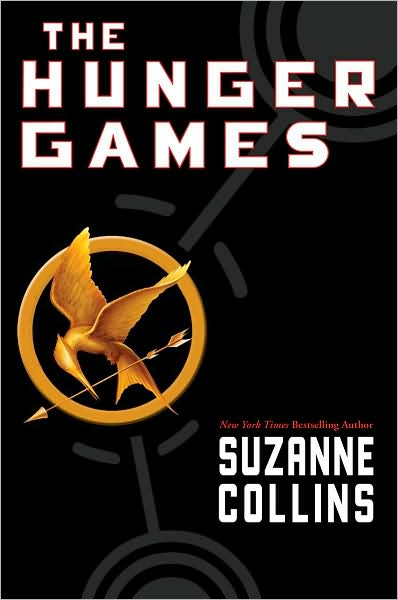
The Hunger Games:
Following in the tradition of such greats as Brave New World and 1984, The Hunger Games presents us with the a world where apocalyptic evens have given rise to dystopia. Though it not fully specified what these events entailed, it seems relatively clear that it involved nuclear war or some kind of global fallout, possibly economic in nature. It is for this reason that a tyrannical government has taken over control of the 12 districts in the future, ruling the nation of Panem with an iron fist.

Naturally, this oppression involves both police action and forced deprivation, with people in “the capitol” enjoying a lavish, comfortable life while people in the districts live in varying degrees of poverty. However, the truest symbol of the capitol’s power comes in the form of the Hunger Games, a death-match style tournament where every district must send two “tributes” – young people who either teens or pre-teens – to compete for the prize.

The story focuses almost entirely on Katniss Everdeen’s trials as she is unleashed in the arena, trying to survive against the other competitors while at the same time outwitting the game masters. Through all of this, we are made aware of the relationship between the Games and Panem’s odd social structure, where favoritism is common and it is treated as entertainment. We also see how it is used to keep the population of Panem divided, in a state of fear, and otherwise distracted.

Combining gladiatorial combat with the concept of making the oppressed fight each other for the scraps from the head table, the games act as a form of dystopian social control and are also a very apt metaphor for teenage angst and coming of age! In the end, even those who survive are forever marked and must still fear for their lives, knowing that they are never entirely beyond the grasp of the capitol or the rulers who fear and oppress them.

Mad Max:
The franchise that made Mel Gibson’s career – may God have mercy on their souls! – Mad Max takes place in a post-apocalyptic Australia where law and order have broken down. As the franchise goes on, we learn that this was the result of a nuclear war which began after the world’s oil supplies ran out. As a result, gasoline is the most precious commodity of all, with roving bands of thugs and mercenaries fighting and raiding just so they can keep their vehicles running.

The story’s main character, Max Rockatansky, is part of the Main Force Patrol (MFP), a police force that is dedicated to maintaining order on the highways. After his family is murdered by gang members, he hijacks their fastest car and heads out on a personal mission of revenge. Having killed them all, he becomes a roamer, going from place to place in his V-8 Pursuit Special with only a dog as his companion.

In all subsequent movies, events focus on him becoming embroiled in adventures where he must help people in need, all the while looking out for himself as well. More often than not, his journeys take him to shantytowns that have been built around refineries, where small colonies of people are ruled by matriarchs, patriarchs, and are threatened by roaming hoards who want what they have.

In essence, Max’s journeys serve as a vehicle for the story which enable the audience to get a first hand look at what a post-apocalyptic landscape would look like. Key to this is the strange balance of modern and primitive, where gasoline engines, electrical appliances and guns co-exist with improvised weapons, brutal gangs, and lawlessness. All the while, you’ve got bands of people desperately seeking deliverance either in some fabled utopia or safe haven. In the end, the tone and feel of this movie set a new standard for apocalyptic movie making, one which has been imitated many times since.

On The Beach:
Next up is Nevil Shute’s classic tale of nuclear war and how Australia became the last remaining outpost of life and civilization. Published in 1957, during the height of the Cold War, this book was required reading when I was in school, and for good reason! Far from merely telling a tale of nuclear war and the fallout that resulted, it also delved into the psychology of the survivors, how they chose to live out their lives knowing that sooner or later, they would die like the rest.

Taking place in Australia, the story focuses on the lives of people and families who have relocated to the last safe place on Earth. This includes native Australians, ex-pats, and several American military officers who have fled south. Knowing that the Northern Hemisphere has been devastated and is now devoid of all life, the people initially resort to binge drinking and partying, but eventually turn to improving their lives through education, hobbies, and spending time with their families.

Things come to a head when a garbled Morse code reaches them from Seattle, prompting Towers (the American commander) and his fellow officers to mount a mission in their sub. When they arrive, they find that the signal, which is coming from an abandoned naval headquarters, is the result of a broken window sash swinging around and hitting a telegraph key. Their trip also determines that contrary to some hopes, radiation levels are not dissipating.

In the end, all services grind to a halt, people take their suicide pills, and Towers and his officers decide to sail their sub out to international waters and scuttle the ship. In the end, Towers chooses die still serving his country, and avoids having a romance with a woman (Moira) who loves him out of loyalty to his dead wife. The story ends with Moira watching from the beach, imagining him with her as she pops her suicide pill and dies.

What is most interesting about this story is not the plot per se, but the realistic tone it strikes. For starters, how the people of Australia and the government choose to confront the inevitability of death was told with a fair degree of understanding. Instead of looting, rioting, and generally resorting to barbarity, the people, by and large, choose to spend the time they have left enjoying themselves, being with family, and then ending it all painlessly. And the contrast between the people who chose to spend their time partying, versus the stalwart nature of Towers, was also a nice comparison, showing the range of reactions.

It is also interesting in how it speculates on how WWIII began. Rather than being the result of a stand-off between the US and the Soviets, the war began when second-parties, such as Albania and Italy, began bombing each other, forcing their allies to intervene. China and the Soviets even bombed each other when territorial disputes and the general chaos resulted in them invading one another. Thus, much like in WWI, we see a general state of war resulting from tangled alliances and arms races. Oh, the lessons of history…

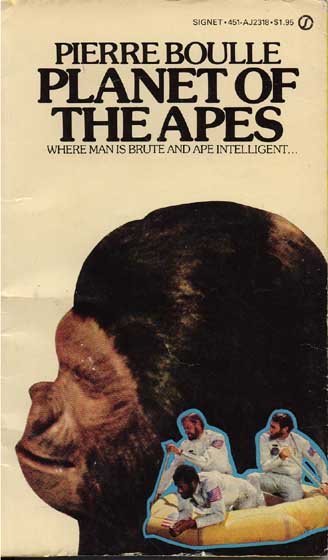
Planet of the Apes:
Originally a novel that was published in 1963, this book went on to be adapted into film twice, first in 1968 and again in 2001. The story tells the tale of a group of explorers who go into deep space on an exploratory mission, but who end up finding a world where chimpanzees are capable of speech, build cities, wear clothing, and hunt humans for sport. In the end, the explorers flee back to Earth, only to discover that a similar fate has befallen it as well.

Ultimately, the story is being told in a note left by the protagonist, which is uncovered by a young couple who are taking a vacation in their space ship. It is only at the very end that it is revealed that they are intelligent apes, and they conclude that no human could have written this note, as they are not believed to be intelligent enough.

Though different in terms of its overall plot, much of the original story survived the movie adaptation. Here, the explorers were scientists who entered cryogenic sleep, hoping to wake up in a future where mankind was more evolved. Instead, they wake up to find that they are (seemingly) marooned on a mysterious planet where humans live in a primitive state and intelligent apes rule.

When they are attacked, all of the protagonist’s (Taylor, played by Charlton Heston) friend are killed, leaving him alone in a compound where humans are experimented on. He finds an unlikely ally in an ape named Zira who seeks to prove that humans are intelligent and hence worthy of rights (echoes of animal rights activists). All the while, Dr. Zaius, a conservative scientists, expresses strong doubts, though it is clear he is trying to bury Zira’s evidence.

In time, Taylor escapes with the help of the two scientists – Zira and Cornelius – who sought to prove his intelligence, and they flee to the Forbidden Zone. This taboo area contains a cave where Cornelius claims to have found the remains of a non-simian civilization a year earlier. They are intercepted by Zaius and some soldiers, but they manage to convince him to enter the cave and see what lies within. There, they find a number of artifacts, including a set of dentures, a pair of glasses, a heart valve, and (the real prize of the collection!) a talking doll.

Zaius reveals that he already knew of this, and that the Forbidden ZOne was once a paradise that human beings turned into a wasteland. He lets Taylor and his new female companion go, but orders the cave be destroyed and Zira and Cornellius brought back to stand trial for treason. Taylor travels up the coast and eventually reaches the remains of the Statue of Liberty and realizes the awful truth. His party never left Earth at all, but has entered a future where human civilization fell, most likely after a nuclear war, and apes have evolved to take their place.

Between the novel and the film adaptations, the evolutionary allegory is clear. Due to its inherent barbarity, human civilization is destroyed, its people fall into decline, and nature is left selecting from its predecessors to fill the void. In a sense, Boulle and the film adaptations his book inspired were mocking the idea of humanity seeing itself as being at the top of the evolutionary pyramid. In another way, they were demonstrating that the very excesses that make humanity corruptible (i.e. vanity, anthropocentrism) are not reserved to them.

The Postman:
This science fiction novel, written in 1985 by David Brin, tells the story of a post-apocalyptic United States where warlords rule the countryside and terrorize the local people. Enter into this a drifter who stumbles across the uniform of an old US Postal Services letter carrier and begins using it and a letter bag to bring hope to a small community.

Initially, he trades the letters in his mail bag for supplies, not intending to take part in a forgery. However, the letters give people hope that there is a “Restored United States of America”, which eventually leads him to maintain the illusion. He then stumbles upon a facility in Oregon State University where scientists are apparently pretending that an AI they built is still working, as a means to maintain people’s hope that knowledge and science are being kept alive.

Together, they face off against a group of ultra-survivalists who are moving south through the region. The Postman and the scientists join forces to fight them, and in the end find that the survivalists are being beaten back from the south as well, by armies bearing the standard of the State of California. Apparently, the intersection of these symbols, the letter, the scientists, and the state flag, act as a synthesis to show the path towards rebuilding the shattered nation.

This book is not only a celebrated example of a post-apocalyptic tale of hope and redemption; it’s also a fitting commentary on politics and ideology in the modern age. Many times over, the super-survivalist Nathan Holn is parodied in the book, with the survivalists of the story being called Holnists. It is even suggested that it was the followers of Holn who destroyed the government in the not-too-distant future, not nuclear war, biological agents, or even economic fallout. So in the end,  we learn that the nation is wrecked by brutal and ignorant minds, and saved by a combination of true patriots, keepers of knowledge, and those motivated to help their fellow man.

The movie adaptation that was released in 1997 did very poorly, with many critics seeing it as the latest in a string of flops for Kevin Costner. Having not seen the movie, I can’t comment on its quality either way. All I know is, it’s a shame given the value of the source material.

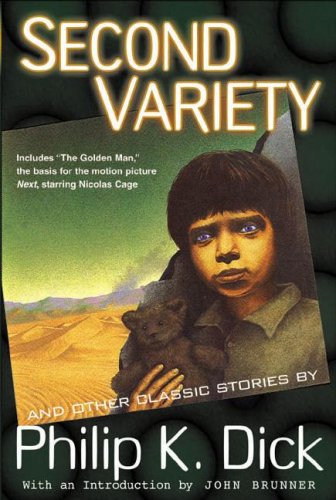
Second Variety:
This short story by Philip K Dick, which was adapted into the movie “Screamers”, deals with the line between artifice and authenticity and is set in a post-apocalyptic world. Hence, much like Do Androids Dream Of Electric Sheep?, it is all about machines that can impersonate humans and what happens when technical progress gets away from us.

Though the movie was set on a distant world, the original story takes place on Earth, where World War III has taken place and Soviet forces occupy much of the US. This has prompted the US to develop a race of self-replicating robots that tunnel underground and pop up to slice the enemy to pieces. After many years of death and brutality, where the machines have turned the entire countryside into a mess, the US government has relocated to the moon, leaving what forces they have left on the ground in a series of bunkers.

The story begins when a unexpected message arrives in the US camp from the other side, asking for a ceasefire. The commander heads out to the enemy bunker to speak with the soldiers, who claim that new breeds of robots that can imitate humans have infiltrated them. Apparently, the underground facility that is making the machines has been producing all kinds of upgrades, consistent with its autonomous nature and aim to create better killing machines.

Suspicion soon turns everyone against each other, and eventually only the commander and a lone woman make it back to his bunker. There, he finds that humanoid-machines have taken over the base. They fight their way free, and the commander determines that they must fly to the Moon base and alert the government that the machines are threatening to take over Earth. When they make it to an emergency craft, the commander finds that it has only one seat and gives it to the woman. Shortly after she flies away, he is attacked by a group of robots, many of which look exactly like her…

Basically, this story tells the tale of how desperation led to the creation of a technology that was so effective, it threatened to completely destroy humanity, friend and foe alike. Much like nuclear devices and biological weapons, the “varieties” of killing machines proved to be a breed of weapon that was designed to fight a war, but eventually turned and consumed its own makers.

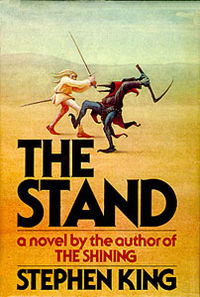
The Stand:
Stephen King’s classic tale of mankind’s fall and redemption, all taking place against the backdrop of the American countryside. Written in 1978, this story is based on the now classic concept of a government super-virus that got out and wreaked havoc on society, and those survivors who were left to pick up the pieces. Adding to this the theme of the Rapture and a post-apocalyptic war between good and evil, this book was steeped in metaphor and was a fitting allegory about good and evil and the eventual redemption of humankind.

The story begins when a government facility suffers a fatal accident with the release of an influenza virus, a strain of super flu that is 99% infectious and fatal. Once it gets out, society begins to fall to pieces as everyone, including the government agents responsible for containment, become infected and die. Those who are left behind begin to be contacted in their dreams by one of two people, an old lady and a strange man, each telling them to make their way to one of two places.

The old lady, named Mother Abagail, clearly represents good and is inviting people to form a commune in Boulder, Colorado. The man, named Randall Flagg (who clearly represents the Devil) is bringing people to Las Vegas, where they are arming for an eventual war. In time, the two sides come together after a terrorist attack leaves several dead and Mother Abagail suffers a heart attack and dies. She asks that the main characters walk to Las Vegas to confront the evil there. They do, and become prisoners upon their arrival.

However, things come to a head when the Trashman, one of Flagg’s minions, shows up in the city with an atomic bomb. Obsessed with fire and having suffered a psychotic break, he seems intent to detonate the bomb. The heroes experience a vision where a hand composed of white light and the voice of Mother Abagail appears to them, telling them they will be delivered. The bomb detonates, and Las Vegas and all of Flagg’s followers are killed.

The story ends with the surviving heroes bringing the first post-apocalyptic baby into the world, a baby which is apparently immune to the super flu. With evil vanquished and the knowledge that subsequent generations will survive the plague, humanity’s future seems safe at last.

And that’s the first installment. Tune in again soon for part II, featuring more examples of post-apocalyptic tales. As I said, suggestions are welcome. Get em in before its too late!

Anthology Sample!

Gliese 581 g, a real exoplanet where our story takes place

Hey all. As you may recall, me and my people over at Writer’s Worth have begun working on a new anthology. The concept is space travel and colonization, a phenomena which will most likely be taking place in this and the next century. After a lot of brainstorming and hard research, we have even been producing some first drafts.

The first is being written by Khaalidah Muhammed-Ali, the working mother and writer who I’ve mentioned a few times on this site. In her hands is the first story of the anthology, dealing with the families who are selected to take part in the off-world experiment. The second comes from Goran Zidar, another favorite here on my site, who is covering the topic of the terraformers who venture on ahead in order to prepare the planet for settlement.

And then there’s William J. Joel, another Writer’s Worth peer, who has volunteered to cover the daunting tale of the generational ships that will deliver the colonists to their new home. Already he has advanced some ideas which are complex and inspired, and personally I can’t wait to see some drafts. Between these three authors and a fourth installment dealing with exobiology, the first part of the novel is well underway!

And last, but hopefully not least, is my own contribution. As the opening chapter in Part II, it deals with the efforts of the colonists to create a planetary government. The story is told from the point of view of a synthetic named Winston, an AI who has been assigned to work with the planetary council. Programmed with an experimental social science known as “Ethical Calculus”, he will soon learn that working with humans is not nearly as difficult as getting them to work together!

Here is an excerpt from the story which I have tentatively named “Winston Agonistes”:

The sun was beginning to set, casting the sky into a deep orange. It was the time that the first settlers had called “the magic hour”, the many warm hours between dusk and dark. Winston stood at the dome wall and watched. On occasion, he cast a passing glance at his hands, which the glowing sun seemed to casting in the color of a light citrus fruit. He was sure he would find that amusing, if he could. He was sure there was much about this situation that would inspire an emotional reaction.

Alas, such was not the case. Though understandable to him, such things still remained inaccessible. Perhaps someday, with adequate upgrades in the available software…

“Mr. Winston?” a voice called to him from the doorway. The footsteps and tone of voice immediately indicated who it was. He put on a smile and turned to face him.

“Councilman Mutlu. How are you?”

“I’m fine, Mr. Winston,” he replied, entering the room. He looked around appraisingly, noting the furniture and layout. No doubt it all seemed excessive to him, but at the same time necessary. “I trust you are adjusting to your new surroundings?”

“Of course, Mr. Mutlu. I am settling in quite nicely.”

“Good, good,” he said, looking around awkwardly. Even without the ability to empathize, he could gauge the man’s discomfort. Then again, many people exhibited this reaction when in the company of a synthetic. In such circumstances, it was always best to focus on matters of a professional nature. At least that was what his subroutines told him.

“Would you care to sit down? I can offer you some refreshment as well if you so desire. Tea? Coffee?”

“Ah, tea, thank you.”

He busied himself with a tray of carafes and a heater as Mutlu took one of the chairs in front of his desk. He noted the sounds of shifting against the seat’s fabric, the way he kept moving his hands from one spot to the next. By the time the water had boiled in the heater and had located an appropriate tea from the stores, Mutlu seemed to have found a comfortable seated position. He approached him with all the assorted items on the tray that had been provided. He set it down between them on his desk and offered Mutlu a cup.

“The business of running a colony is quite stressful work, is it not Councilman?”

“Uh, yes, yes it is,” he said, taking the cup that was offered. “Have you had a chance to look over the proposals we have sent over.”

“I have indeed,” he said, taking the other cup and sitting back in his own chair. He knew this to be mere small talk, as the matter of processing those proposals had been a mere matter of dispensation. Assessing the nature of the problem, suggested measures, and weighing them according to the rubrics of his primary programming. Under the circumstances, asking such a question was completely inane, but in keeping with social norms.

“And what have you found?”

He took a sip from his cup before answering. “Quite simply, that the Council’s draft is in keeping with the best traditions of constitutionalism and humanism. That ensuring the rights of all citizens, regardless of their background prior to making the journey, is the most sensible course of approach. Ensuring that such a baseline exists at such an early stage is the wisest approach in both fostering amnesty between colonies while at the same guaranteeing that they submit to further negotiation.”

Mutlu looked down at his cup, back up again to his eyes. He seemed preoccupied with him performing this most basic function in front of him, but did not appear oblivious to his words. Eventually, he took another sip and smiled.

“Good. My colleagues will be most pleased to hear  that.”

He smiled in return. “Does the Council hold my endorsement in such high regard?”

Joviality. The gesture known as playful irony. Suggesting that the Councilor saw his approval as something very high indeed, a testament to his computational abilities. A gentle mockery of his obvious discomfort, meant to trigger a humorous response.

“Well yes…” he said, entirely serious. “I can only assume that you’ve subjected our hopes to proceed with a formal constitution to your… what did you call it again?”

“Ethical Calculus, sir.”

“Right!” Mutlu set his cup down and began to speak more freely. His hands began to provide gestures that accorded visual representation to his words. “After all, we’ve been subjected to a great deal of criticism from within and without, many people think we should be ironing out the basic agreements between colonies before we commit to any kind of draft that could commit us to policies down the road. I must say I find all those arguments…”

“Distasteful?” Winston suggested.  Mutlu nodded.

“Quite right… it seems a shameful thing that such cynicism has set into the process already. It’s almost as if they don’t think the colonists can…”

“Trust each other?”

Mutlu nodded again. He noticed a growing shimmer in the man’s eye. How quickly he was forgetting that the man sitting across from him was not a man at all.

“Exactly the point. And it’s not like we’re talking about disparate factions here. Everyone on this world came here with the same goal in mind. The same hope for a new beginning.”

“And yet, old habits die hard.”

Mutlu looked at him with surprise. “Are you saying you have doubts, then?”

Winston smiled as broadly as the muscle fibers in his face would permit.

“Purely an observation. Nevertheless, you and the Council are on the right track. You should take heart in that.”

“Excellent.” Mutlu retrieved his cup and began to look at curiously at Winston again. One more, it seemed that the knowledge of what he was dealing with was creeping back into his mind. But at least he seemed at ease. One by one, the Council seemed to be adjusting to the idea of having synthetics amongst them, entrusting their most precious decision making to them even. It was a significant step up from the laborious practices that the other models were forced to endure.

And that’s the story thus far. Stay tuned for more on the progress of this and other Writer’s Worth Anthologies. Speaking of which, Grim5Next, the dystopian anthology which began months ago, is coming along and getting into its third and final part. Progress!

Dystopia and Deathmatches in Sci-Fi

Battle Royale:
This controversial story, also adapted into a film, takes place in an alternate universe where Japan is a member region of a totalitarian state named the Republic of Greater East Asia. Alluding to the Greater East Asia Co-Prosperity Sphere of WWII, it is clear that this a world in which Japan won the Second World War and continued on the path of fascist Imperialism.

In any case, the story revolves around what is called “The Program”. Under the guise of a “study trip”, a group of junior high school students from a fictional town are gassed on a bus. They awaken in the school of an isolated, evacuated island and learn that they have been placed in an event where they must battle each other to the death, or all will die.

Officially a military research project, it is a means of terrorizing the population, of creating such paranoia as to make organized insurgency impossible. Every year, fifty classes are selected to participate where students from a single class are isolated and are required to fight the other members. It ends when only one student remains, with that student being declared the winner.

Their movements are tracked by metal collars, which contain tracking and listening devices; if any student should attempt to escape the Program, or enter declared forbidden zones, a bomb will be detonated in the collar. If no one dies within any 24-hour period, all collars will be detonated simultaneously and there will be no winner.

Banned in many countries (the novel and the film) because of its controversial and graphic nature, Battle Royale has gone on to inspire such books as The Hunger Games.  Combining a Lord of the Flies-style appraisal of human psychology with a indictment of reality TV, this story remains one of the most effective pieces of modern dystopian literature featuring death matches.

Dune:
Fans of Dune will remember the lovely scene in the novel where Count Fenrig travels to Geidi Prime to speak with the Baron. Once he arrived, and in honor of Feyd Rathau’s birthday, he was treated to a gladiator match between Feyd and a slave gladiator. This is a common feature on Geidi Prime where death matches are considered public entertainment and every major city has its own arena.

And what better place for this kind of entertainment than Geidi Prime, a world run by ruthless overlords and characterized by harsh, perverse brutality? And that was the point after all. The Harkonnen’s were the bad guys in this tale and everything about them, their appearances, ethics, and homeworld was designed to match.

Robot Jox:
Taking place in a post-apocalyptic world where conventional warfare is forbidden between nations, Robot Jox tells the tale of a gladiator-style sport where giant mechs do battle in open arenas. This is how the two super-nations – the American-influenced Western Market and the Russian Confederation – work out their differences.

Of course, espionage and betrayal remain an integral part of the games, mirroring the Cold War. What’s more, the games often rigged to ensure that one bloc can get a leg up on the other. And in the end, the entertainment factor is also a driving force behind the games. In a post-apocalyptic world, the masses need some form of entertainment to distract them from the shock and horror of their daily lives.

The Hunger Games:
Following in the same vein as Battle Royale and Lord of the Flies, The Hunger Games tells the tale of a not-too-distant future where the United States has degenerated into a tyrannical government ruled from a political seat known only as “The Capitol”. Every year, the rulers of this city force all the outlying districts to send two young people – one boy and one girl – to compete in a free-for-all known as the Hunger Games.

The purpose of these games is simple, to keep all districts in a state of awe and fear so they won’t be able to contemplate another uprising. Years back, it is said that the 13 districts committed to one such uprising, the result being that District 13 was destroyed. The remaining twelve now send their competitors and try to exploit the incentives, which just happen to be rations.

Throughout the book, several things are made clear about the games which highlight its satirical nature. Satirizing reality TV shows, we learn that the games are televised, incentives are offered to keep the games going, and contestants draw sponsors based on their popularity. In addition, extra elements like romances and collaborations are encouraged to ensure that the games remain interesting and dramatic.

In the end, the games serve the purpose of keeping people down but also exploiting their destitute nature by offering them a shot at something better. When the games are over and only one person remains, they will receive enough rations to last them a lifetime. Many times over, it is also shown how life in the capitol is opulent and comfortable, whereas the outlying districts are malnourished and must do things like hunt illegally for food. And of course, the farther the district from the capitol, the more difficult life is, another aspect which the capitol exploits to ensure its continued survival.

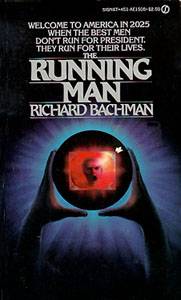
The Running Man:
Written by Stephen King under the pen name Richard Bachman, The Running Man is also a near-future dystopian tale set in 2025 where the US has become a totalitarian state because of economic fallout and wide-scale starvation. For a population dogged by hunger and martial law, the only real source of enjoyment is a televised TV show where convicts are forced to engage in gladiator-style combat against seasoned “hunters”.

Aptly named “The Running Man”, the show begins when a series of “enemies of the state” – i.e. convicts – are released into a massive arena where they are pursued by a group of network-employed hitmen. For every hour they remain alive, they earns 100 dollars, plus a bonus for every Hunter they kill. If they survive 30 days, they earn a total of 1 billion “New Dollars” and a full pardon. Or so they say…

Though the novel and the movie differ in terms of plot and resolution, the basic elements are the same. In a future where the vast majority of the population is indigent and desperate, brutal spectator sports are seen as the only outlet. In both versions, much is made of how popular the games are and how important they are to both the network and the government, hence why every attempt is made to ensure that the Hitmen always win.

This serves to reinforce the notion that enemies of the state will always lose when faced with the governments brand of justice, which in this respect is similar to a show trial. It also ensures that the most profitable business in that day and age, since the show grosses billions of dollars in sponsorship and betting on convicts is also a big side-business, stays up and running. So in addition to serving as a source of social control, the games are also an example of corporatism, where the government has a lucrative arrangement with its biggest corporations.

Unreal Tournament:
Don’t laugh! Yes, this may have been a glorified (and gory) first-person shooter in it’s time, but that doesn’t mean it wasn’t also inspired. Though gamers cared little for the storyline, the fact remains that Unreal Tournament actually had a dystopian theme that drew from several classical sources. Set in a future where the Earth government creates a no-holds-barred arena deathmatch game to settle disputes between deep space miners.

However, when it became clear just how profitable and popular the games were, the games expanded to become an interstellar affair where anyone could fight and the prizes were astronomical. In turn, the corporate responsible for creating the games also became incredibly powerful and used every tool in its crooked arsenal to make sure that competitors were in good supply and things always worked in their favor.

Any player who survived long enough to make it to the end would square off against the companies own cyborg. If they were fortunate enough to kill him too, they received the grand prize and rank of Tournament Champion! All of this, though it took the form of a first-person shooter, calls to mind all the previously mentioned examples of dystopian science fiction and psychological realism. By pitting the desperate, the brutal and the avaricious against each other, a company was able to make an obscene amount of money and keep people blind to the true abuses of power in their universe.

Final Thoughts:
In the end, all of these examples have one thing in common. Whether the setting is a post-apocalyptic world or just a destitute nation dealing with economic downturn, the element of social control is always there. By throwing the powerless, hungry and greedy into an arena and ordering them to kill or be killed, a government ensures that it not eliminates potential threats but channels discontent into something truly atavistic and brutal. Though this is in many ways inspired by the Roman example, modern developments seem to be the true inspiration.

Like all dystopian literature, it seems that developments within the late 19th and early 20th century were the crucial factor. It was here that writers and social commentators truly came face to face with humanity’s abundant capacity for distraction, atavistic behavior, and indifference to suffering. That is another thing that all these pieces of literature have in common. Whether it is the brutal cynicism of those who profit from the games, or the uncaring nature of those who enjoy them, a disgusting lack of empathy runs through them all like a vein.

For what is worse than exploiting misery for the sake of entertainment? It’s one thing to persecute people directly, but making the oppressed and exploited fight each other for the scraps off your own table? That’s a real dick move!

Speaking of which, stay tuned for my review of The Hunger Games. I’ve finally gotten to the end of the book and will sharing my long-promised thoughts on them real soon! Thank you all, and remember: don’t let the bastards pit you against each other! FIGHT THE POWER!

Another G5N Anthology in the works!

Don’t you just love it when things come together, and by things I mean talented people and a good concept? Well that seems to be happening once again. A few months back, I joined Writer’s Worth over at Goodreads, a writer’s group dedicated to promoting new talent and aspiring authors. We have since morphed into Grim5Next, an online community with its own site and members all over the world. Our first anthology, World’s Undone, is coming together nicely and should be finished in a few months.

But more recently, a couple of Grim5Next people got together and decided we wanted to get to work on another anthology. Maybe we’re all a little driven, but somehow, we just couldn’t wait for the first to be released. And with the departure of the master-singer of sci-fi, Ray Bradbury, and the news of the Venus transit, we felt ourselves inspired. In fact, it all began with a single conversation between Mrs. Khaalidah Muhammed-Ali and myself:

Khaal­i­dah: Four nerds verg­ing on geeks live in my house, of which I am one. One of our nerdi­est but fun con­ver­sa­tions cen­tered around the ques­tion “Would you rather go to space or the bot­tom of the ocean?” Hands down the answer was space. I once dreamed that my son, now 21, would one day go to space and walk on Mars. He is no longer a child who dreams of space, although it still intrigues, and space seems a dis­tant child­hood dream of his. But even for myself, at the ripe old age of 41, the idea of going to space is a bright hope, even though I know it is unat­tain­able and unre­al­is­tic. But, given the chance, I would go. This post reminds me of the awe­some­ness of our great uni­verse, of the chaotic ran­dom­ness, of the beauty of this world and the things we have to be grate­ful for, and of how utterly minus­cule we peo­ple really are in the grand scheme of things.

Me: Okay, you need to write this down. I fore­see you doing a story where a fam­ily does go into space. Ho boy, I smell another anthology here!

Khaalidah: An anthol­ogy about space, going to space or any­thing related sounds awe­some. I vote for you to be the edi­tor. What do we need to do to get started?

That’s how it all got started. After some initial brainstorming, we plotted out what we wanted this all to be about. Space and Colonization! In the near future, such endeavors might just become a reality. In fact, they might have to be if we want to survive as a species. And inspired by the dearly departed Ray Bradbury’s Martian Chronicles, I thought we ought to tackle some of the same issues he did, taking into account some more recent historical developments. Like Bradbury’s chronicles, it will be a series of interlinked stories, but told from different points of view in different time frames.

After some astrological research, your humble editor selected a location. 61 Cygni, the star system that sits roughly 11 and a half light years away from Earth. Though there’s no hard evidence to support the theory, it has been ventured that there may be a system of planets in the system, including three small objects, two gas giants, and one mega-planet. At right, you will see the little map I prepared for our, and your, viewing pleasure.

And in time, we picked up some more dedicated souls, William J Joel and Goran Zidar, who you may remember from Story Time fame (he’s the inventor). Already, these two have signed up for slots in the opening part of the anthology. Divided into four stories, Part I will tell the tale of how colonization is getting underway here at Earth in the not too distant future. And before it ends, it will address the issues of converting the new world over to human needs, and how the local flora and fauna are not too happy about it!

And of course, I got a few more people who’ve volunteered to help just as soon as they have the time. Courtney, Jinn and Doremy, I’m looking in your direction. You’re initiative is most appreciated and there’s still plenty of stories to be written and slots to be filled. And of course, Parts II and III are still in development, and slots remain open for more writers. Though it’s still in development, I know it’s going to be inspired, thanks to the people we got working on it. I also know we are going to have fun doing it.

Worlds of the Legacies Universe

Aquinas:
The chief colony world of the Altair system, located 16.73 light years away from Sol. Colonized in 2205, this colony was named in honor of its founders greatest hero, Saint Thomas Aquinas. After a century of growth, this colony grew to become a major trading hub and tourist draw, due in large part to its vast oceanfront vistas and fertile stretches of land.

Because of its location relative to Sol, Aquinas is also a gateway to many inner colony worlds and trade routes. As a result, its capital of Roccasecca and its moons of Lucca and New Venice are major hubs, with large spaceports, extensive shipping facilities and a large service industry. However, this does not alter the overall feel of the colony, which observers describe as “kindly”, “tolerant” and “reverential”.

However, its main attraction is known as the Council of Altair, an interstellar organization dedicated to the exchange of spiritual and religious ideas. Established in 2267, this establishment became a meeting place for representatives of every faith to commune with each other and send their messages into deep space.  In time, the institute even drafted a declaration of principles, known as “Transcendental Philosophy”, which it hoped would form the basis of a universal religion.

Attica:
The colony world of Alpha/Beta Centauri, and one of the largest population centers outside of Sol. Beginning in 2165, almost thirty years after the development of FTL, the colony was the first to be settled using advanced terraforming technology. In keeping with its classical theme, most major cities are named in honor of Greek mythology and history – such as the capital city of Piraeus and the colony moons of Mycenae and Ilium.

This is further demonstrated in the cities’ architecture, all major buildings having been designed in a neo-classical, contemporary motif. Though there are numerous underdeveloped regions that are considered eyesores by comparison, the inner regions of every major city are renowned for their appealing sense of aesthetics.

Attica has been the center of some controversy over the years. Within a generation of the first settlers arriving, stories began to circulate about the formation of a new religious sect. These believers claimed that artifacts which proved that Jesus had arrived and died on Attica were found in the mountain chain just outside of Piraeus. Investigations were mounted by the Vatican and other religious authorities, but the results were declared fraudulent and the matter dropped.

Nevertheless, this new breed of worship began to spread amongst the original colonists and gave rise to the Colonial Mennonite culture. Their impenetrable belief structure often proved to be a cultural barrier as new waves of colonists arrived and attempts at achieving consensus and conformity faltered. In time, this gave rise to the first of several conflicts which would later be known as the “Sectarian Wars”. On Attica, this involved the militarization of Mennonite settlements after a series of incidents were perpetrated against them by neighboring factions.

After years of conflict and escalation between rival militias and government forces, the TDF was eventually called in to put and end to the dispute. This and the nature of the conflict left deep scars on Attican society, especially between the major cities and the outlying settlements where the population remains largely Mennonite. Regardless, Attica remains the spiritual home of the Mennonite population and its beliefs attained recognition under interstellar law.

In addition, this world was also the sight of what would appropriately be named the “Attican Incident” by historians. This took place on the night of April 23rd, 2278, standard calendar, when a paramilitary group attacked the gubernatorial palace in Piraeus, killing dozens of civil service workers, guards and even Governor Kirin himself who was working late into the night. In response, TDF forces were dispatched to the system to dispatch this paramilitary group and restore order.

But of course, the local population did not respond well to the occupation, largely because many suspected the incident had been perpetrated by Earth itself to crush the independence movement which had been mobilizing in recent years. Due to ongoing tensions between TDF forces and the local, martial law was never rescinded and the occupying forces were not withdrawn.

These  events touched off many more “incidents’ that eventually culminated in the Terran Civil War. It would take roughly twenty years for the occupation to end, by which time forces loyal to the Alliance entered the system and dispatched the TDF forces. Governor Namguhng, an Earth appointee, was quick to welcome the Alliance as liberators. Thereafter, he made several positive moves which would see Attica integrated into the new interstellar government as a fully-represented member.

Hephaestus:
As one of two colony worlds in the Arcturus system, Haphaestus is renowned for being the industrial capital of the inner colonies and a haven for tourists looking to spend their hard earned credits. At least that’s the official story. Unofficially, Hephaestus is notorious for its high level of organized crime, its lucrative drug trade, and for being the murder capital of the quadrant, rivaled only by Rostov.

But of course, much of these seedier aspects of the planet are confined to the inner regions of New Detroit. And in all fairness, the capitol itself is a major center for technological innovation, trade, culture and the arts. In addition to its many public theaters, festivals and performing arts centers, it is also home to the Interstellar Museum of Colonization, an institution dedicated to the preservation of historical artifacts and from three centuries of space travel and settlement.

The planet’s industrial capacities also extend into orbit. The Chimaeras Installation, one of the few major space installations in the quadrant, resides here. Not far from Chimaeras is the Aberdeen Shipyards, a major ship-building facility that sits in a wider orbit and its defended by  many remote platforms. Between these TDF assets and the planet, there is a veritable cloud of service platforms and stations as well as countless  communications and navigation satellites.

Hephaestus is also home to the Akuma, one of the most brutal and ruthless crime syndicates in the known universe. Garnering its power from the sale and transport of illegal narcotics, particularly Shine and various psychotropic substances, the Akuma has insinuated itself into just about every aspect of Hephaestus’ society. This reach extends beyond this system, reaching even into worlds nominally controlled by other syndicates.

Hephaestus is orbited by two moon colonies, New Luzon and Gloucester, both of which are major shipping hubs, a stopover for travelers, and even high-end real estate for Hephaestus’ elite. Gloucester is a particularly popular destination for those with money who are seeking an off-world place to relax. Literally all members of Hephaestus upper crust have property on this moon, including many of its mayors and council members. While New Luzon also remains a popular destination, its terrestrial domes are dedicated more towards family-friendly tourism, which stands in distinction to the kinds of entertainment people can get planetside!

Khalafa:
The sixth planet of the Sirius binary star system, located approximately 8.6 light years away from Sol. Settled in 2182, the planet was quickly terraformed due to the presence of rich nitrogen soils and a relatively breathable atmosphere. In time, it became the known universe’s largest agricultural colony and even expanded to become the largest population center outside of Sol.

Settled predominantly by West and Central Asian families, the planet was named Khalafa in honor of the majority Sunni population. Though it has become an incredibly diverse colony in terms of its demographics, nationalities and faiths, the overall character of the planet has remained largely consistent. In terms of its art, architecture, and culture, Khalafa is a beacon of Islamic culture combined with modern technology.

In orbit around Khalafa rest the two colonies of Akheton and Memphis, which in turn are home to much of the planet’s heavy industry and mining operations. Regularly, drone ships coming to and from the system’s asteroid belt travel to these moons to dump ore for processing.

The system is also home to the Trinity Installation, one of the largest and most important installations in all of known space. It was here that representatives from every colonized system met after the end of the Civil War to draft the Interstellar Terran Alliance into existence. It is neighbored by the Riga Shipyards, one of the largest ship-building assets in Terran space.

Logos:
The fifth planet of the 61 Cygni binary system, this jungle world was colonized in 2191, and quickly gave rise to one of the most successful social experiments in human history. Settled in large part by a select group of artists, scientists and intelligentsia, the world quickly earned the name Logos because of its commitment to learning and the empirical tradition.

This commitment only grew as time went on and the colony attracted more and more settlers, eventually achieving its truest expression with the creation of the Academician Institute of Higher Thought (aka. The Academy) in 2201. Initially an institute for higher education, it soon expanded to include elementary and early childhood development too. These programs were augmented thanks to the advent of cybernetic technology and virtual interfacing.

A further indication of the Logosian commitment to learning is reflected in the name of the planet’s capital, Alma Mater. Other major cities include New Oxford, Takshashila, Nalanda, al-Azar, Alexandria, and Niẓāmiyyah, all named in honor of centers of higher learning from various respective cultures, which also reflects the planets demographic diversity. And while each city has its own educational facilities, each maintains a chapter associated with the Academy in Alma Mater.

Through its extensive education programs and research facilities, The Academy went on to produce some of the greatest minds the universe ever knew, not to mention many technologies. Academy officials were also wise enough to ensure that every technology, process, or innovation to come out of their facilities was patented and licensed to ensure them a steady stream of profits. It is widely rumored that the Logos is able to sustain itself on this source of revenue alone.

Pasaragad:
Chief colony of the Vega system, located on the eight planet, roughly 25 light years from Sol. Settled in 2183 by a largely Shia population from Central Asia, the planet was named in honor of the ancient Persian capital. Though much of the planet is dry and inhospitable, the planets exposure to solar radiation and vast supplies of aquifers made it a prime location for large scale hydroponics operations. In time, this drew a significant number of settlers to the planet, who were also able to turn their talents to small-scale terraforming.
Within a few generations, Pasaragad began to boast natural forests and lakes. Underground sources of water were also liberated to create large-scale bodies of water which further served agricultural operations. As a result, Pasaragad became a major producer of off-world delicacies such as dates, citrus fruits,palm oil, palm sugar, saffron, and other assorted fruits and spices. It’s strategic location close to Sol also made it a major trading hub once colonization efforts expanded beyond the inner worlds.

Pasaragad has also been the source of a great deal of controversy over the years. For example, a short-lived conflict between the settlers and the colonial government took place in 2223. This incident was the first in a series that would later come to be known as the “Sectarian Wars”, and proved to be one of the most bloody. It began after a self-declared prophet named Azan declared that the colonial government was a group of pretenders who were running the colony through graft and corruption. After his arrest by authorities, clashes began between his supporters and security forces, culminating in the intervention of the TDF.

The arrival of Terran Marines led to a short-lived peace, but soon, fighting was underway again as the occupation forces found themselves becoming the new target of Azan’s condemnation and his supporters anger. Not wanting the situation to spiral out of control, the Terran government arrived at a compromise with the settlers. In exchange for the removal of the current administration and several reforms, most of which were in tune with Azan’s religiously-inspired demands, the matter was settled and all TDF forces removed. Azan went on to become a prophet to the people of Pasaragad, the city of Azanabad being built in in his honor shortly after his death. Later generations would also call him the “Fourth Prophet”, claiming he had led a reinterpretation of Islam for the age of colonization.

During the Civil War, Pasaragad would also be a major hotspot for resistance and TDF forces. After the Attican incident led to the imposition of martial law on that planet, the people of Vega began to stage widespread protests against Terran authority. With the escalation of tensions in other systems, the TDF was dispatched here as well to keep the peace, but instead became embroiled in war. For years, resistance forces on Pasaragad and the moon colony of Kurosh were engaged in a series of back and forth with local forces. The situation became extremely bloody and led to widespread death and crimes committed by both sides.

This led to the rise of many popular sayings and quips. For example, after the Civil War period, the word Vegan was often associated with fanaticism or extreme dedication, “crazy like a Vegan” being the popular usage. It was also widely rumored that during the war, officers would threaten to send unruly or insubordinate soldiers to Vega as punishment. The heat, hatred of the locals, and likelihood of being shot at was usually enough to put anybody in line!

It was perhaps for this reason, or just in keeping with the fierce spirit of independence on the Vegan people, that it became the focal point for the independence movement once the war was over. Contrary to the Alliance’s platform of a better arrangement between Earth and its colonies, this movement demanded that all colonies be entitled to independence now and forever. Luckily, Alliance leader Jessica Freidman was able to win over the leader of the independence movement – Lev Parva – by insisting he form the opposition party in the first Alliance cabinet.

Rostov:
The seventh planet and second colony world of the 61 Cygni binary system. Named in honor of its cool climate, thriving industrial base, and predominantly Eastern EU population, the planet was named Rostov. And much like other industrial centers – i.e. Hephaestus – it has a reputation for many things, both positive and negative.

On the plus side, Rostov has been a major manufacturing center for the centuries, the home of the labor movement for the sector, and the source of many key technological innovations, often working in collaboration with Logosian scientists. On the minus side, it has also been the home of ruthless crime syndicates (the foremost being the Sadruzhestva and Lumbre cartels), labor disputes, drugs, and violent crime.

And yet, despite its reputation for hard living, the Rostovian people are amongst the most proud and nostalgic people in the known universe. Apparently, it is this very essence of hard life that makes them feel proud to be where they are from. The logic being that if life were easy on their world, anyone could live there.

And of course there are several features about this planet that deserve mention. It’s rugged landscapes remain some of the most beautiful and inspiring in the galaxy. It’s capital of New Petrograd contains some of the most beautiful architecture in the quadrant. And it’s artistic and literary scene remains one of the most inspired. In short, Rostov may be a cold and ruthless world, but its inhabitants have found ways to turn that to their advantage.

And that’s my universe, in a nutshell. Hope you enj0yed the little tour, because most of it remains relatively undeveloped in terms of putting it into book form. I intend to remedy that, in time, which seems to be the one thing I don’t have enough of! But there’s only so many hours in the day right, and right now I got multiple projects vying for my attention. More to follow from this and other universe. See you soon!

Remembering Ray Bradbury (1920 – 2012)

Ray Douglas Bradbury (August 22, 1920 – June 5, 2012)

Yesterday, one of the greatest sci-fi minds of the 20th center, Ray Bradbury, died at the age of 91 after a lengthy illness. His publisher, HarperCollins, were apparently the ones to break the news to the world. Best known for his seminal dystopian novel Fahrenheit 451, Bradbury quickly joined the ranks of authors like Orwell, Huxley, Clarke, and Asimov, in that he was a speculative author who’s predictions rapidly came true.

Amongst such things were the emergence of ATMs, wall-sized televisions, interactive entertainment, and live broadcasts of fugitive car chases. In addition to Fahrenheit 451, he also penned the Martian Chronicles, The Illustrated Man, and Something Wicked this Way Comes, and over 600 other works of fiction, articles and essays. As such, his influence and legacy are truly immeasurable.

So, in honor of this sci-fi great, whom I waited a very long time to read, I shall delve into his best known works and try to explain exactly why they were so enduring and influential. Let’s start with the book that earned him his reputation in the first place:

Fahrenheit 451 (1953):
This dystopian piece of speculative fiction takes place in the late 20th century, when American culture has degenerated into a form of brutal escapism. Nuclear war looms on the horizon, books have been banned, and for the majority of people, cocooning in their homes in front of their wall-sized monitors seems like the perfect distraction.

The story takes place from the point of view of a Fireman named Guy Montag, who’s job consists of located offenders and burning their books. This is the role of firemen in the future, who instead of fighting fires are responsible for starting them. Montag is unhappy with his life and suffering from a deep sense of disquiet.

Until one night when a young woman named Clarisse shakes up his worldview. Whereas most people in Montag’s world seemed numbed and dead, she is vital and alive, and questions just about everything. Shortly thereafter, she dies in a tragic accident, which shakes Montag’s world up even more.

He too begins questioning the rules, he steals books from jobs he is meant to pull, and begins reading them. Realizing he is now in violation of the law, he seeks out other offenders for answers. This brings him into contact with Faber, a former English professor that Montag knows can help. In time, Faber is convinced to bring him into this confidence and reveals that he is part of a circle that is dedicated to the preservation of written knowledge.

Eventually, Montag is found out and must flee. His boss, it seems, has known for quite for some time what he is up to but extended him some courtesy because he knows what he’s going through. More enlightened than the average person, Montag’s boss explains to him why books have been banned and why they must destroy them. Rather than the result of forced censorship, the process was entirely voluntary. People chose mindless entertainment, distraction and fast cars over reading, reflection and learning.

Montag’s escape from his house and the police becomes the subject of the evening news. He manages to elude the authorities and meets up with the reading circle down by the river. Interestingly enough, he flees the city just in time to witness being destroyed from a nuclear attack. It seems the build-up to Armageddon has finally ended and nuclear war has come. Montag leaves with the group, who’s mission now has become one of preserving civilization as well as literature.

What was enduringly brilliant about this book was not so much the predictions about technology or the emergence of book banning, but the reasons for it. Capturing the zeitgeist of his age, Bradbury essentially felt that a shocked and fearful society would seek escape by the most convenient means available to them. And whereas most dystopian novels involve ignorance and illiteracy being forced by a brutal regime, Bradbury believed that the process would be entirely voluntary. In this respect, he captured the same essence as Huxley, another dystopian critic who believed man’s appetite for distraction would be it’s undoing.

The Martian Chronicles (1950):
Though written before Fahrenheit 451, the MC gained notoriety more slowly, but eventually became recognized as one of the great works of science fiction. A collection of loosely based stories rather than a single novel, the book follows the future history of colonization on Mars, dealing with all kinds of speculative, existential and scientific questions.

The overall structure of the book comes in three parts, punctuated by two catastrophes. The first is the near-extinction of the Martians, while the second is the parallel near-extinction of the human race. In first part of the book takes place at the end of the 20th century and details mankind’s efforts to reach Mars, and the various ways in which the Martian natives keep them from returning. However, towards the end (in the story “—And the Moon be Still as Bright”) it is revealed the majority of the Martians have died as a result of a plague brought from Earth.

This opens Act II, taking place in the early 21st century, where humans begin colonizing the Red Planet. On occasion, they have the opportunity to make contact with the surviving Martians, but mainly are concerned with building a second Earth. However, many settlers begin to pack up and leave as looming nuclear war on Earth causes them to want to get back and be with their families. The outbreak of this war signals the end of Act II and the opening of the third act.

In the third and final act of the book, all contact has been lost with Earth when the nuclear war takes place. As the war passes, those humans who have survived on Mars have began building a distinct civilization and having children who have only known life on the Red Planet, effectively becoming Martian themselves. This prospect allows the book to return to its beginning, as it is suggested that new waves of colonists will soon be coming and conflicts are likely to emerge as a result.

This book was not only brilliant in that it addressed a great deal of scientific and existential questions that are sure to come when actual colonization begins (if ever). It also managed to capture a sense of timeless truth and lessons which come from real history, or the “Age of Discovery” as its known. These included the destruction of native inhabitants, the push-pull factors which lead to colonization, severance from the homeland, and eventual adaptation as new people begin to embrace the new environment as their home.

Much like KSR’s Mars Series, this book should be required reading if ever any Ares missions get underway!

The Illustrated Man (1951):
Much like the Martian Chronicles, this book is a collection of short stories linked by a common theme. Through its exploration of humankind, the recurring theme is one of conflict between cold mechanics and technology and the basic nature of human beings. Many of these stories have been adapted into film over the years and been used in schools as educational tools. Some examples include:

“The Veldt” – in this story, we see a family who’s children have become terribly attached to the houses’ high tech nursery. Like a holodeck from Star Trek, the children use this to create virtual environments – in this case, the predatory environment of the African veldt. When the parents threaten to take it away, the children lock them inside and they are apparently consumed by the lions. thought it is not outright said, it is implied that the children have reprogrammed the unit to become real and have been “feeding” people to it for some time.

“The Other Foot” – in this exercise in turnabout, we learn that Mars has been colonized solely by people of African descent. When they learn that a rocket is coming from Earth with white travelers, they decide to institute a system of racial segregation similar to that of the Jim Crow Laws of the American South, in retaliation for the wrongs of history. However, when the rocket lands the traveler tells them that most of the Earth has been destroyed in a nuclear war and the people realize that discrimination is harmful in all its forms. They rescind their discriminatory laws and welcome the new crew as equals.

“The Man” – A group of space explorers land on a planet to find the population living in a healthy state of bliss. Upon investigation, they discover that an enigmatic visitor came to them, who they eventually conclude was Jesus (or some other religious persona since He was never named). Some decide to spend the rest of their days rejoicing with the natives, while another decides to continue on in his spaceship in the hopes of catching up with this person. While he spends the rest of his days in hot pursuit, always one step behind and never quite catching up to him, the other learn that “he” is still on the planet with them. Hello metaphor!

The Exiles” – taking a page (no pun!) from Fahrenheit 451, this story revolves around the concept of burning books and the immeasurable nature of knowledge being lost forever. It begins with stating that numerous works of literature have been banned and burned on Earth. The fictional characters of these books are portrayed as real-life entities who live in a refuge on Mars. These characters are vulnerable however since once all the books on a character are destroyed, that character vanishes permanently. When the group of characters learn that some people are coming for them, they stage a counterattack, but are foiled by the astronauts who burn the last remaining books from Earth, unknowingly annihilating the entire colony.

“Marionettes, Inc.” – A man attempts to escape his marriage by replacing himself with a robot to fool his wife into thinking he hasn’t left and tells a friend about it. The man comes back and tells the robot to go back into the box, and the robot disobeys him saying he has fallen in love with the wife. The robot then proceeds to put the man in the box and replaces him for real. Sound familiar?

“The Illustrated Man” – The namesake of the book, this story involves an overweight carnival worker is given a second chance as a Tattooed Man, and visits a strange woman who applies skin illustrations over his entire body. She covers two special areas, claiming they will show the future. When the first is revealed, it’s an illustration of the man strangling his wife. Shortly after this comes to pass, the carnival workers run the man down, beat him, and look at the second area, which shows an illustration of the same beating they are doing. Can you say self-fulfilling prophecy?

Most of these stories would probably sound familiar in one way or anther, but that’s because they’ve been adapted, copied and referenced by countless pop culture sources. I myself recall watching “The Veldt” in school and being chilled by its eerie and dystopian tone. “Marionettes Inc.” has been adapted into comedy format numerous times, and the theme of prophecy and fulfillment in “The Illustrated Man” has inspired countless stories, not the least of which are The Butterfly Effect and perhaps even PKD’s Minority Report.

Something Wicked This Way Comes (1962):
A somewhat off-beat work for Bradbury, who’s works consist mainly of speculative sci-fi, this fantasy/horror novel has nevertheless become a household name for fans of the dark and weird. Set in modern a day Midwestern town, the story revolves around a visiting carnival and its mysterious director, Mr. Black.

Enter into this the story’s protagonists, two 13 year old boys, Jim Nightshade and William Halloway, who witness the arrival of the carnival and become immediately enthralled with it. They quickly realize that everyone who works there has been lured into Mr. Dark’s service through the promise of being able to live out their fantasies. For most people, these involve become younger, a gift he confers on several characters through his “magic” carousel.

In time, they come to realize that Mr. Dark holds these people under his sway and has a tatoo of each of them on his body, a symbol of his control. Charles Holloway, William’s father, looks into Mr. Dark’s past and realizes he can be defeated through love. It is unclear what this entails, but after the boy’s are kidnapped, he comes to the carnival and begins destroying it’s structures and Dark’s protectors by expressing laughter and joy. He and his son use the same tactic to eventually bring down Mr. Dark and bring Jim back from death, who was stuck on the carousel and rapidly aging.

Though different from most of his other works in terms of genre, this story did contain many elements which were present in his other stories. For example, the concept of the carnival and the tattooed man was the basis of “The Illustrated Man”. The nostalgic feel of the story was also to be found in his novel Dandelion Wine, and is often paired with this novel as presenting both the lighter and darker sides of childhood. And of course, the novels resolution, where good prevails through purity of heart, is to be found in many of Bradbury’s works.

Because of its focus on good versus evil, childhood, and coming of age, this story was to have a profound effect on several authors, the most notable of which is Stephen King. Citing Something Wicked as his inspiration, King attributed a debt to Bradbury for helping to write It and Dreamcatcher.

Final Thoughts:
In the end, Bradbury was known for many things: originality, depth, vision and genius. But the thing that sticks with the most about him was his views on the preciousness of literature and knowledge. Basically, he expressed several times over how when something is lost, it’s lost forever. I can only assume then that he would take great comfort in knowing that he left the literary legacy that he did. Though he may no longer be with us, his works will live on and serve to inspire many generations to come.

I think this is a lesson we could all draw from. Though our time on this Earth may be short, we have the ability to leave our mark and ensure that some trace of us stays behind. So make those footprints people, write those manuscripts, and most importantly, tell the people you love how you feel. Do not leave things unsaid or undone, because someday, we will be gone…

So than you, Mr. Bradbury, for your many, many contributions. You did it right, and now you go on to join the other greats of your time. Rest In Peace.