Hunters of Dune, a review

Hunters of Dune, a review

Oh boy, it’s finally here! After years of waiting and having to endure those horrible prequels, the long-awaited conclusion is finally here! Yes, that’s what I thought when I first heard the news. After years of making us wait and spend our hard earned money on a sleuth of teaser prequels and filler, Brian Herbert and KJA (or as I like to call him, NOT FRANK HERBERT!) finally delivered on their promise and released the damn Dune 7 novel!

Like most fans, I had been waiting years for that day. Ever since KJA and Brian got together and announced that they would be releasing Dune 7, a book which Frank had apparently been working on shortly before he died, I was understandably excited. It was just a few years before this announcement that I had finally worked my way to the end of the Dune series (Chapterhouse: Dune) only to find that it ended on a cliffhanger note with numerous loose ends.

For example, what was this mysterious enemy that the Honored Matres were fleeing? Who were the old man and woman from Duncan’s visions? What was Duncan’s role in all this; i.e. was he the new Kwisatz Haderach or something even greater? And above all, was this all the result of Leto’s vision, or were the main characters finally free of the Tyrant’s “Golden Path”? These and other questions I wanted answered, and after many years of waiting, I kinda felt entitled!

Needless to say, the anticipation I felt was rivaled only by the disappointment, but that didn’t occur until the very end when the answers were revealed. There was plenty of material to disappoint in between, but I was able to endure all that so long as I got see how it all ended. I’ve said all this before, so I shan’t waste any more time with it here. Let me get to the specifics of the story and why it was such a horrible, crass, and cynical novel that left Dune fans everywhere disappointed and angry.

Hunters of Dune:
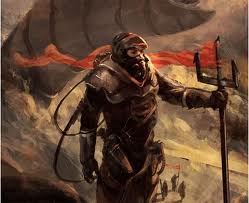
As fans of Dune are no doubt aware, this book was part I in a two part collection that was meant to tie up the series. While this novel didn’t end, it did tie up most of the threads Frank had laid down in Chapterhouse and predicted what the ultimate ending would be. It is for this reason that this book is arguably more important than its follow-up Sandwords of Dune. This book established what the conclusion would be, the other one was mere filler, seeing the threads through to their conclusion and giving every character a final farewell.

Plot Synopsis:
The story picks up three years after the events in Chapterhouse: Dune, with Duncan and the crew of the Ithaca trying to find their way in an alternate universe, hoping to stay ahead of the old man and woman. However, there efforts are upset when Duncan is spoken to telepathically by a mysterious character known as the “Oracle of Time”, a Guild agent who then plucks him from his current location and brings him back to the known universe. The old man and women realize he’s returned, and immediately begin trying to catch him in their tachyon net again.

Meanwhile, back on Chapterhouse, Murbella is continuing with her efforts to bring the Bene Gesserit and Honored Matres together in preparation for the coming war. In addition, she is approached by the Guild who are desperate for spice now that Chapterhouse is the last known source of melange. Given their past support for the Honored Matres, Murbella is loath to help them, but manages to leverage their future loyalty in exchange for not cutting them off completely. In the meantime, the Guild is in contact with the Ixians, who are busy developing a machine that will take the place of a Guild Navigator. Unbeknownst to them, Face Dancers have already infiltrated Ix and are now dealing directly with the Guild.

The Face Dancers are essentially doing this all over the Old Empire, infiltrating worlds and replacing key people with their own copies. Having replaced the last of the Tleilaxu masters with their own copies, their leader Khrone now focuses on infiltrating the HM’s. They do this by putting Uxtal in the custody of Hellica, the new leader of the HM’s. In exchange for sparing his life, Hellica demands that he teach them the secret of axlotl tanks. In addition, Uxtal’s tasks include creating a ghola of the Baron Harkonnen and Paul for Daniel and Marty’s purposes. The reason for this is because the old man and woman feel they will be “useful”, especially Paul who’s prescience will be intrinsic to their “calculations”.

A third reason for his research into axlotl tanks is to create a Waff ghola so he can obtain the secret of making artificial melange (a secret thought to be lost with the destruction of the Tleilaxu Masters). This will come in handy for the Guild Navigators, who are looking for an alternative to the Sisterhood’s source. However, they are unaware that Scytale – the last surviving Tleilaxu master – has already given said secret to the crew of the Ithaca. They in turn are generating it using their own tanks for their own use, seeing as how the sandworms they have aboard are not yet mature.

In addition, Scytale has revealed the existence of the nullentropy tube with the ghola cells he’s kept hidden to Duncan and the Ithaca crew. He does this in exchange for the creation of a Scytale ghola, one which replace him when he dies, which is getting closer. Duncan, Sheeana and Miles all decide that it would also be in their best interests to start cloning all the other people in this tube – Paul, Leto II, Chani, Stilgar, etc. – because apparently, “they will prove useful”. Over the course of the next few years, they begin to give birth to and rear these gholas, one by one.

In the meantime, Murbella’s forces continue to consolidate their hold over more and more of the Old Empire, flushing out HM’s and adding their weapons and resources to their own. This includes the so-called “Devastators”, some kind of super weapon that can sterilize an entire planet. Murbella also begins searching her “Other Memory” in order to find the answers she needs; namely, where the Honored Matres came from and who their enemy is. She learns in the course of this that the HM’s are the descendents of Tleilaxu women who were freed with the help of Fish Speakers and Bene Gesserit’s from the Scattering. Hence why the HM’s seem hellbent on wiping out the Tleilaxu. There’s also the brief and needless scene where she converses with Serena Butler, figurehead of the Butlerian Jihad.

Shortly thereafter, the Sisterhood attack Ix, and Hellica, and Uxtal all die in the process. Waff however, escapes and finds refuge with the Guild, promising them the secret to breeding their own sandworms instead of artificial melange. Meanwhile, the Ithaca stumbled onto a planet that is concealed by a no-field. They find that the place was sterilized by a deadly plague, and after a very brief exploratory mission, they realize that it was this same plague that the Honored Matres were fleeing. Shortly thereafter, they come upon the planet of the Handlers, which they learn are in fact Face Dancers. In the course of trying to return the Futars to the surface, a boarding party attacks them and they are forced to flee, but some make it aboard.

And finally, through “Other Memory”, Murbella realizes the true identity of the old man and woman. Apparently, they’re the evil robots Omnius and Erasmus, who survived the Butlerian Jihad by sending probes into deep space. They reveal themselves shortly thereafter when their ships are marshaled and start heading into the Old Empire to attack. It is also revealed that the “Oracle of Time” is none other than Norma Cenva, who’s been alive and hidden for 15,000 years and has come out to fight this war. The story ends on the cliffhanger note, if it could be called one, and is one of the biggest disappointments in the history of literature…

More to follow in part two, coming up soon!

Rabbletown: Life in these United Christian States of Holy America, by Randy Attwood

Rabbletown: Life in these United Christian States of Holy America, by Randy Attwood

Hello and welcome to the first literary review I have had the honor of doing for a fellow author! On the docket for today, a sci-fi, near future dystopian work known as Rabbletown: Life in these United Christian States of Holy America, by Randy Attwood. Awhile back, this author and his work came to my attention by way of my writers group. Like many of us, Randy has been writing for many years, had an idea and manuscript that was just awaiting completion, and which he recently finished and made available as an ebook and paperback (see links below for info on where to find it).

Author Bio: Randy is a retired journalist, but also worked as the director of university relations for Kentucky University medical center and as the media relations officer for the Nelson-Atkins Museum of Art in Kansas City. He retired in 2010 and now dedicates himself to his writing. He has several titles to date, and Rabbletown is (far as I can tell) the flagship of his fleet.

Plot Synopsis: The story takes place in a dystopian future, circa 2084, where the US has become a fundamentalist state (as the name clearly implies). The how and why of this are explained in the preamble, where ongoing tension between the US and Middle East eventually turn nuclear and result in the full scale devastation of both. Whereas the United States bombs Iran and environs into oblivion using its ICBM’s, the various nation-states and terrorist organizations strike back using backpack nukes and dirty bombs until most US major cities are ruined.

What emerges is, predictably, a renewed Dark Ages where civil authorities are replaced by religious ones, the Evangelical movement becomes the dominant political force in America, and Jews, Muslims and Catholics are either suppressed or eradicated. The president of the US is known as the Pastor President, and all offices (governor, mayor, etc) are also required to take on the title of pastor before their rank. Each president is named in honor of famous Evangelists; the current president is Jerry Falwell V, his VP is Pat Robertson.

In addition to demonstrating their lineage from these current media figures, this is also a clear and delicious stab at the Christian Right and its political machinations! Other names of note include Cheney – a former member of the regime who is languishing in jail after an attempted coup – thus ensuring that the political right are also included in this indictment. What’s more, the civil authorities are known as Inquisitors, who are naturally the enforcers of religious law, extract confessions through torture and regularly stone those who sin.

Foreign policy is similarly medieval in this day and age. Whereas the US has become a Christian Republic, there is talk of the “Caliphate”, presumably a united Arab world, where Christian and Muslim soldiers fight for control of Jerusalem once again. It is hinted in the story that this “Crusade” is not real, merely a political tool that the Pastor Presidents use from time to time to drum up support. Still, the purpose of having it is clear. Whereas politics in the US are now dominated by religion, so to is their view of the world.

In any case, what follows is a story of how one town – Rabbletown, Kansas (a borough of Topeka) – is working to create the country’s greatest Cathedral in preparation for a visit from the Pastor President. The main characters, the Mason Bob Crowley, his wife Cheryl, Pastor Governor Jerry Johnson IV, Healer Elmer, Father Superior Robert, Friar Francis and Pastor Teacher Harold, give us a inside view of life in this future Kansas town, presenting it from various angles and providing exposition of how society works. Their particular POV’s are also important when a seminal development takes place, the appearance of a boy who has a knack for quoting Bible verses and seems somehow… “touched” by the Lord. This boy is none other than Bobby Crowley, the son of Mason Bob.

(Spoiler Alert!): The story begins to truly come together after a series of holy events takes place involving Bobby and a routine stoning. Everyone, from the President to the boy’s father, becomes swept up in a frenzy after news of it spreads, the authorities condemning it as the work of Satan while others proclaim the boy to be Christ reborn. Repression and division follow, with the so-called holy authorities becoming very much the enemy of those who appear chosen and righteous. Needless to say, the allegory is clear. In time, the division between the authorities and believers reaches (ahem!) Biblical proportions, in a scene that very much resembles that of Jerusalem during the time of Jesus.

Weaknesses: It is this last part which fell short for me. Given the background and nature of the story, one would get the impression that religion is being cast in a negative light, or at least that it is being mocked for its current excesses and abuses. However, the story also seems to be making the point that religion will be the source of salvation. While this would seem like a keen observation about the duality of faith – the line between salvation and condemnation being so fine – it also makes for an unbelievable ending. Whereas the question of Bobby’s holiness would have seemed best if left vague and metaphorical, there is no doubt about it in the story. Bobby is literally divine, his nature and purpose a force of righteous redemption.

There are some other weaknesses, such as the relevant facts being presented in a matter-of-fact way that leaves the reader feeling spoon fed. The dialogue also comes off as expository and forced at times, something you wouldn’t expect to hear from real people no matter how politically conscious they are. And the intro gives us a full dose of the background which leaves the reader feeling less inclined to read and discover for themselves what’s already happened, what has led the characters to their current situation. And the ending, well its a little predictable given all the Biblical allusions. However, these are hardly fatal and don’t really take away from the overall plot. Really, its just the ending that felt like it misfired.

Strengths: Overall, the story has all the elements of good satire: corruption, decay, selfishness and power mongering; with small, shining lights of redemption amidst it all. The bit about people’s daily lives and how they turn to their PPC’s (Personal Pastor Counselor) is also quite ingenious, predicting the emergence of an internet-based personal religious counseling. The mock history, particularly the part about the Catholic Accommodation was also a stroke a fine art (I shan’t describe, read it yourself!).

And above all, the mockery of the Evangelical movement and its political ambitions feels quite apt. For what can be said about people who seem to think that its a good idea to combine religion and politics, and have little to no qualms about condemning their “liberal” adversaries and all the “undesirables” of society? If they got their wish, would it really resemble anything other than Taliban-style medievalism?

Hence, I recommend Rabbtletown for those people looking for a dystopian read with a religious twist. It’s clever, fun, and a short read which will inspire thought. And, given some tweaking and a little expansion, it could even be a bestseller someday! Hey, you gotta have faith (ba pa ra pum pum!).

Strange Days

Here’s a cult classic you don’t hear about often. But that’s the way of cult classics, isn’t it? You never hear about them until you stray into the fan community and they insist that you have to see it. You finally do and then maybe, just maybe, you yourself become an accolade. Once that happens, you might eventually become aware of the community of fans that’s out there – most likely they have an internet fansite going – they spread the word and make sure the movie is listed as a “sleeper hit” or a “hidden gem”.

Yeah, that’s about how I came to see the movie Strange Days. I can remember when it came out back in 95, how little fanfare and attention it got and how briefly it was in theaters. In fact, I didn’t even hear about it again until recently when it turned up on somebody’s top ten lists of the best sci-fi movies. Upon further investigation, I found that this movie made it onto a lot of people’s lists, even a few professional ones. And since I committed to covering sci-fi cult-classics awhile back, I thought I’d check this one out. And, I am pleased to say, I was pretty impressed.

(Background—>):
In spite of being well-received by critics, this movie did quite poorly at the box office. Surprising, considering the all-star cast and the fact that James Cameron co-wrote and produced the thing. And when I stay all-star, I mean all-star! Ray Fiennes, Angela Basset, Juliet Lewis, Tom Sizemore, Vincent D’Onofrio, and Michael Winscott all had main roles in this movie (this last guy you may remember as the creepy villain from The Crow, and every other movie he’s ever done for that matter!)

However, as is often the case, the movie went on to attract a cult following who enjoyed the movies cyberpunk elements, its millennial theme and dark, paranoid feel. And with few exceptions, the acting and delivery was quite good. Ray Fiennes excels at being the sleazy but redeemable huckster, Basset as his concerned and beleaguered friend, and Winscott as the creepy, paranoid control-freak. Juliet Lewis came off as a little labored, but then again, her dialogue was kind of the cheesy, looks good on paper stuff. Still, she manages to pull off the abused, damaged damsel quite convincingly (draw whatever inference you will from that ;)).

In addition, the movie did a good job of capturing that pervasive sense of millennial madness that was beginning to manifest around the early-mid nineties. While things like the Y2K virus quickly became a cliche, especially after they proved baseless, the years leading up to the millennium were not without their share of fears, concerns and a general sense of imminence. Many people, both religious and secular, predicted doom, thinking the world would end. Others predicted a sort of social cataclysm, that mobs and rioters would take to the streets and begin looting, especially if all the grids went down. But most, I think, were just worried that the madness and hysteria would be self-fulfilling, that some riots and crackdowns might happen before everyone realized that the world wasn’t ending.

Also, the technological aspects of this movie were quite interesting. Mainly, they centers on a form of virtual entertainment known as the SQUID (Superconducting Quantum Interference Device), a device which can record and playback events directly from the wearers cerebral cortex. This predicted the internet phenomena in many ways, the concept of “viral videos” and snuff films being the main plot device in the story. And one of the major events in the movie, the murder of an outspoken hip-hop artist and the controversy surrounding it, predicted the death of Tupac Shakur, which took place around a year later.

(Content—>):
The movie opens on the last days of December, 1999. Violent crime and gang warfare are getting out of control, and in the midst of all this, a major recording artist and activist named Jeriko One (Glenn Plummer) is killed. Meanwhile, a woman is being chased by two policemen, played by Vicent D’Onofrio and William Fichtner, who clearly want to kill her. Seems she saw something and was wearing a SQUID at the time, and when she gets away, the policemen retrieve the device and realize she got it all on tape (disc, whatever!).

Meanwhile, we meet Lenny Nero (Ray Fiennes), a former LAPD officer who has since turned to the world of contraband and sleaze, selling SQUID tapes to anyone looking for a break from reality or themselves. However, Nero has a rule that he never sells “blackjacks” (i.e. snuff films), because he considers himself a purveyor of experiences, not a peddler of smut! His friends, Lornette ‘Mace’ Mason (Angela Basset) and Max Peltier (Tom Sizemore) are also former LAPD officers who have since retired. Mason now does private security while Justin is a private eye. They don’t approve of what Nero does, but stick by him because of their friendship, and in Mason’s case, feelings of unrequited love.

Things begin to unfold when the woman who was being chased, named Iris (Brigette Bako), finds Nero at a bar. She claims someone is trying to kill her and has to flee, but that she recorded the entire thing on a disc and dropped it in his car. However, his car is soon towed and he’s unable to figure out what she was talking about. Shortly thereafter, a “blackjack” is dropped off at his house that shows someone killing her. Nero is freaked, especially since when he last saw her, Iris also told him that their mutual friend and Nero’s former lover, Faith Justin (Juliette Lewis), is in danger as well. This presents Nero with an opportunity to see her, only to be told by her and her manager that he’s not wanted. In between telling him that they are through, Justin is sure to relate that she’s also afraid because her manager, Philo Gant (Michael Winscott), is becoming increasingly paranoid and controlling. Spurned, Nero shows Mason and Peltier the blackjack and they are similarly shocked.

Shortly thereafter, Nero and Mason go to pick up his car so they can see what Iris dropped off and run into the same two officers who were chasing Iris earlier. They narrowly escape them and then view the tape, where it shows these same officers murdering Jeriko in cold blood. Shortly thereafter, Nero finds his supplier, Tick (Richard Edson), dead from an overdose of the SQUID. It looks like an accident, but Peltier suspects foul play since what appears to be an isolated case of murder might have something to do with a larger conspiracy he’s been hearing about. According to Peltier, there is a militant movement coming from City Hall and the LAPD who are determined to bring the city under control, even if it involves death squads! Because Jeriko was a major activist who was bringing the gangs of LA together to reign in the LAPD and the cities politicians, these squads would have been targeting him.

They then go to pick up Faith who is at a New Years party being hosted Philo. She reveals to them that she knows what going on, that Philo has become a total “wirehead” (i.e. SQUID-addict), who’s in the habit of having his artists followed because of his increasing paranoia. Iris was his mole and was tailing Jeriko, and was therefore with him when he was murdered. When she showed the tape to Philo, he feared for his business, beat her up, burnt the tape and told her killer where to find her. However, she made a copy in advance which she then put in Nero’s car. They now understand why Faith was afraid and trying to keep Nero away. Clearly, she feared for her life as well and didn’t want him getting involved. They all agree they should release the tape, but both Peltier and Nero worry about the impact it will have – i.e. a full-scale war between the gangs and the LAPD.

However, their rescue attempt is thwarted as Philo and his thugs intervene. Faith is then taken to his suite where she expects to die. After arguing and regrouping, Nero and Mason decide to attempt to rescue her again. Meanwhile, the streets are filled with people celebrating, rioting, and signs boasting “2K”. In the midst of the rowdy chaos, Mason and Nero manage to sneak into Philo’s party, Nero attempts to rescue Faith while Mason confronts the police commissioner and slips him the disk. Mason gets into Philo’s suite but finds him dead, and that Peltier, his friend, is the one who killed him. Seems he and Faith have been having an affair, and that HE was the one who murdered Iris and sent the tapes to Nero. He also confesses that the whole conspiracy theory was just his way of keeping Nero away from the authorities. In the end, it was all just a “traffic stop gone wrong”.

While this might seem like a letdown, I actually preferred it to the alternative. Rather than there being some big conspiracy that goes all the way to the top, the real motivating factor in all this was just random violence. And it is for this reason that Peltier did what he did. In a world as messed up as theirs, he believes what matters most is getting what you can before you’re murdered senselessly. In any case, Faith comes in and distracts him long enough for Nero to get the upper hand and they fight. Nero gets a knife in his back (symbolic since his friend betrayed him) but manages to toss Peltier from the balcony in the end.

Down below, Mason has been forced to flee the party when the two crooked officers spot her and begin chasing her through a crowd. She subdues them, but then is set upon by several riot cops. She is cornered and beaten, and it looks like its all over until a number of people in the crowd decide to help her out. A big fight, symbolic of the war they were anticipating, begins, but is broken up when the commissioner arrives and reveals he’s seen what’s on the disc. The two officers are arrested, one eats his gun while the other – D’Onofrio, in true psychotic form – tries to shoot Basset and is gunned down!

The movie ends with the New Year being rung in. Yes, in spite of the shooting, several deaths and a near riot, the countdown happens as planned and people cheer. Ah whatever, it’s New Year’s right? No sense letting a few fatalities ruin the biggest party of the millennium. Everyone is merry, people kiss (even some riot troops and civilians), and of course, Nero and Mason hook up! Seems he’s finally taken the hint and broken it off with Faith who, let’s face it, is more trouble than she’s worth. War is averted, the New Year arrives without the apocalypse, and there’s resolution all around!

(Synopsis—>):
Overall, I can see why this movie was a cult hit and why it didn’t do so well in theaters. For one, it wasn’t the usual big-budget splashy action flick Cameron is famous for, and it didn’t have a faithful marketing effort behind it. And that’s to be expected from a noire, cyberpunk thriller such as this, studios just don’t seem to know how to peddle and pigeon hole it. However, given its obvious depth and signs of quality, I think it was inevitable that audiences would take notice of it, adding it to their lists of favorites alongside movies like Blade Runner and Akira.

For one, the movie managed to capture, years in advance, the feeling of paranoia that surrounded the actual millennium. Ultimately, these fears proved to be baseless (just like in the movie!), which was one of the things I found subtly brilliant here. Long before the myth of Y2K began to circulate, it was easy to see how people would treat the millennium with a certain degree of paranoia. The religiously minded would fear that the apocalypse was at hand, the paranoid would expect riots, and others believed the world’s infrastructure to all go down! But of course, the clock struck twelve… and nothing happened. And, the plot where a hip-hop artist/activist is murdered in many ways predicted the feelings of loss and suspicion that followed Tupac’s death. Many of his die-hard fans continue to say he was assassinated, some even that he’s still alive!

In addition, the concept of VR technology and human experience was explored in depth and I found this very effective as well. On the one hand, the SQUID technology is just like a drug, something people do to escape their daily lives. On the other, there’s a lot of time dedicated to showing how something like this would have a negative impact on people’s memories and experiences by depriving them of authenticity. On several occasions, Nero is criticized for not being able to let go of the past, mainly because he keeps reliving it with his SQUID. The character of Mason says at one point that memories are meant to fade. Ergo, reliving his old experiences is depriving him of the ability to move on.

But what was best was the twist at the end. Ultimately, the threat came from close to home rather than from death squads or in the form of some big, shadowy conspiracy. All along, the characters are moving about thinking that they are witnesses to an assassination and that they can’t trust the authorities. But in the end, it turns out that the “assassination” was just a random act of violence – albeit with disastrous consequences if it went public – and that it’s their best friend they can’t trust. All of this is in keeping with the central theme and setting of the movie, which again, is millennial madness and an impending set of doom, all of which proves baseless in the end.

Movies like this one remind me that Cameron had a keen mind and some pretty cool ideas way back when. So… what happened? How did he go from Aliens, T2 and Strange Days to “I’m king of the world” and “Unobtainium”? Was it the money? Must be the money. Screws up everything!

Strange Days:
Entertainment Value: 7/10 (admittedly, not the funnest movie around)
Plot: 9/10
Direction: 8/10
Total: 8/10

Demolition Man

Ah yes, another classic guilty-pleasure movie! At least, that is my enduring opinion of this film. When I first saw it as a surly teenager, I thought it was a good shoot-em-up. As I got older, I recognized the satirical elements in it – or rather, the attempts at them – and concluded that they fell short. Now I know for a fact that there are those who disagree with me on this point. Hell, there are even some who might say that this movie was a smart, satirical take on the PC age or an re-imaging of Brave New World for the early 90’s. I, however, don’t happen to be one of them! While I did get the allusions to BNW, I simply cannot bring myself to see how this film could possibly be compared to the brilliant and seminal work of Aldous Huxley. But as usual, some background info is needed before I get into all that.

(Background—>):
Ultimately, Demolition Man was a story about social engineering and control, but at the same time was marketed as an action movie. Fittingly, Sylvester Stallone and Wesley Snipes were brought in to the play the leads, both of whom were A-list action stars at the time. In the end, this combination of action-satire received mixed reviews, with Gene Siskel gave the movie a thumbs down for its violence and Ebert (as usual) praising it for it’s “satiric angle”. Rotten Tomatoes rates the movie as “fresh” with a 63% approval rating while on Metacritic, the movie scores a meager 34/100. In addition, Hungarian sci-fi writer István Nemere claimed the movie plagiarized the vast majority of his novel Holtak harca (Fight of the Dead), which was published in 1986. Regardless, audiences seemed suitably impressed. The movie did make over 50 million domestic, and 150 million foreign. Unfortunately, the director, Marco Brambilla, has gone on to do very little since. If this was the high-point in his career, all I can say is “tough break, man!”

(Content—>):
The movie opens in 1996, on a Los Angeles that is literally on fire. The opening scene where the Hollywood sign is burning is a pretty good indication that society has gone to hell at this time. It’s possible that it was even meant to call to mind the LA riots of 92. Enter John Spartan (Stallone), aka. “The Demolition Man”. At the movie’s opening, he is on his way to bust a domestic terrorist with the equally ridiculous name of Simon Phoenix (Snipes). The latter has commandeered a building and is holding hostages while his men are in a standoff with police. Meanwhile, Spartan, air cavalry-style, jumps from a helicopter, shoots some guys, and then takes down Phoenix in a hand to hand fight. But of course, the building was wired to blow, and the whole place goes up just as Spartan jumps out with Phoenix over his shoulder. Seems blowing shit up is what he’s famous for, hence the nickname!

Then, after the blow-up, the clean up crews find dozens of bodies – apparently, the remains of the hostages! Spartan claimed they had to be somewhere else since he did a thermal scan on the place and saw only Phoenix’s own men, but dead bodies don’t lie! Alas, he and Phoenix are both sentenced to cryogenic freezing for their crimes, since in this day and age (only three years from when the movie was released!) the penal system is no longer in use. Criminals are put in deep sleep and have their brainwaves altered using synaptic suggestion (kind of a neat idea!). His freezing scene is little more than an excuse for Stallone to show off his ass, but whatever.

Okay, first impressions? Well for starters, nothing about the opening sequence is believable, and the hints its dropping are pretty damn obvious. For one, the images and action call to mind things like Beirut and Baghdad more than downtown LA, the tracer fire alone in the opening shots are clearly meant to make us think of a war zone. And last I checked, police didn’t have access to military helicopters or were cleared for aerial insertions. But this is the future right? Sure, but only three years from when the movie was made! Did they expect society to go to hell in that amount of time? Well, it IS LA… Oh, and another thing about the tracers: with all the flak they were putting up, how is it the one thing they didn’t seem to be firing at was the one helicopter that was flying above them? Ah, who cares?

Fast forward to 2032. San Angeles (Los Angeles and San Diego merged after the Big One), is a peaceful, sterile, happy-faced place where violence is obsolete, swearing is illegal, and everything and anything unhealthy has been outlawed. But we quickly see that there is dissent; underground people’s who spray paint messages of resistance here and there and occasionally conduct raids. Enter Lenina Huxley (Sandra Bullock in her debut action role), a young cop who is curious about the past and longs for some action. Hm, no ironic foreshadowing there! In any case, in what appears to be a mix-up, Phoenix is awakened over at the cryo-facility for a parole hearing. In a scene that definitely tells us something is up, he escapes from his cage, kills the guards, escapes from the facility and begins spreading chaos in his wake. And when the police confront him, Phoenix whoops out some badass martial arts skills and kills a few. The police are frightened, and for good reason!

Naturally, they appeal to the man who runs things in San Angeles, Doctor/Dictator Raymond Cocteau (played by British actor Nigel Hawthorne), who just happens to be the inventor of the cryoprison as well. He says “do what you will”, but its clear he’s got something up his sleeve. The cops got nothing, and its clear they are unequipped to deal with such a violent criminal. But it just so happens that someone on the force is old enough to remember the man who brought Phoenix down the first time… John Spartan! They commence defrosting, and some expository dialogue lets us know some pertinent facts: the merger that created San Angeles, the Big One (which coincidentally claimed Spartan’s wife), and the fact that smoking, alcohol, red meat, contact sports, salt, etc etc are now illegal. A brief encounter between Spartan and a swear monitor also lets him know that swearing results in a fine!

Now this is a part of the movie I actually liked. It’s been established at this point that the new age folk are completely helpless in the face of a violent convict. They fear and revile Phoenix, but they’re impressions of Spartan are not much better. Essentially they think he too is a barbarian, in part because he’s a convict, but mainly because of where and when he comes from. This is a realistic touch and something that’s consistent throughout the movie. However, this is still an action flick and things quickly move to the first post-thaw confrontation between the two titans, and at a museum of all places! Seems Phoenix went there to find a gun, which is the only place one can even see a gun in the future. Spartan shows up, and two begin using the museum guns to shoot at each other. Yes, it seems the guns in this particular museum are kept loaded. Uh… okay! Makes absolutely no sense, but okay…

Phoenix escapes, and runs into Cocteau outside. He tries to shoot him, but cannot and is forced to flee. At this point, we are made aware of the fact that there’s some sort of conspiracy between them. Prior to this, it was obvious that someone has been pulling Phoenix’s strings since he got out of cryogenics. He’s obsessed with the name Edgar Friendly (played by Dennis Leary), another absurdly named character who just happens to be the man running the dissidents. What follows is some filler and background scenes where Spartan is invited by a seemingly grateful Cocteau to dinner (at Taco Bell, the only restaurant to survive the “franchise wars”!) he is subjected to more bigotry from the San Angeles folk, and is in the right place at the right time to stop a band of Friendly’s men from raiding the restaurant for food. Afterward, he and Lenina go back to her place where she asks him to have “sex”, which consists of wearing helmets that simulate sex-related sensations. Seems real sex has been banned due to STD’s! Bummer…

Anyway, irked and unable to adjust to this new form of “sex”, Spartan retires to his flat and begins looking at security footage from the museum. Upon seeing the clip where Phoenix couldn’t shoot Cocteau and the short conversation that ensued, he becomes highly suspicious. He looks up Phoenix’s file and finds that in addition to being thawed “accidentally”, he was programmed for mass destruction. Remember the bit about synaptic suggestion? Well, it seems that while Spartan was encouraged to knit (no joke!), Phoenix was encouraged to kill! At this point in the movie, things begin to revolve around Cocteau as both Spartan and Phoenix take turns confronting him. Spartan does so to get answers, but is told to get lost and that he’s going back into the freezer. Phoenix does so to find out why the hell he was thawed and why he’s been programmed. You see, in addition to being fixated on killing Friendly, he can access any computer in the city and seems to instinctively know his way around. He, in turn, is told everything, as is the audience!

Essentially, Cocteau tells him that he let Phoenix out of cryoprison and programmed to kill, be able to access any computer in the city and find his way around San Angeles with ease so that he would kill Friendly, the only remaining obstacle to him creating a “perfect society”. In exchange for this, Phoenix will get whatever he wants, and he even promises to put Spartan back in the freezer for him as “a guarantee”. Phoenix however, says he will take out Spartan himself, but will need the help of a dozen or so additional convicts from his past to complete these various tasks. For whatever reason, Cocteau consents and gives him his access to his old buds. Cue tense music!

Okay, two things! One, are we really to believe that this Cocteau fellow would thaw the most dangerous criminal of the 20th century just so he could deal with some meager political dissident? Why not hire some mercenaries from out of state, or out of the country? And its not like Friendly is a threat really! All he does is spray paint things and raid Taco Bells! Seriously, in what world is it smart to unleash a psychopath to deal with a simple political protester? That’s like unleashing a poisonous snake to deal with a rodent. Second, did he really believe he could control Phoenix simply by putting some kind synaptic block on him? Sure, Phoenix was unable to kill HIM, but what about everybody else in the city? Moreover, how was he planning on controlling him once he was finished with Spartan and Friendly? Cocteau had obviously given no thought to that since he had nothing in mind to offer him. Last, are we really to believe he would agree to thaw more psychos without bothering to take ANY precautions with them? With Phoenix he at least did something, but with these other guys, he does nothing! How stupid is this guy?

Alright, lets move on! Despite being told he’s going back into the freezer, Spartan is still walking around. He even leads Huxley and her partner Garcia (Benjamin Bratt) on a manhunt for Phoenix, a search which takes them into the sewers. Coincidentally, they run into Simon Friendly’s people, because the sewers are where he and his band of dissidents/thieves/scavengers live. Oh yeah, and they have guns too! They must have raided a museum at some point… Meanwhile, Phoenix is plotting with his psychos (duh!) to take over San Angeles society by killing Raymond and Spartan. After Spartan explains to Friendly what he thinks is going on (i.e. Cocteau wants to kill you and thawed a mass murdered to do so), Phoenix and his gang show up and a gunfight ensues. Spartan and Phoenix fight their way across town with an obligatory car chase, during which time Phoenix tells him that all those hostages Spartan allegedly killed in his capture attempt were already dead; or as he puts it, “Cold as Hagen Daas!” Well, as the Joker said to the Batman, “even to a guy like me, that’s cold!” Okay, nuff cold-related puns! Phoenix escapes again, and has his men kill Cocteau. Wow… didn’t see that one coming!

The police and Friendly’s scavengers then come together, with Spartan asking for their cooperation. They then march on Cocteau’s office where they find him dead and see that Phoenix and what remains of his thugs have taken to the cryogenics facility where they are planning on thawing all the convicts there. A final showdown takes place between Spartan and Phoenix and Spartan manages to (you guessed it!) blow up the place in the process! He escapes in the nick of time as the place is exploding all around him, all the while doing the Stallone signature grunt/yell. The movie ends with the uptight police chief fearing for the future, Friendly suggesting they all get drunk and “paint the town red”, and Spartan suggesting they find a middle path. Then, of course, Spartan kisses Huxley, and they agree to have sex the old fashioned way. Cue theme music by The Police!

(Synopsis—>):
Of the top of my head, I can think of several things that were good about this movie. For one, they actually did bring some satirical elements to the screen. The way the future citizens of San Angeles saw Spartan as a brute, for example. “Cro-Magnon”, “primate”, “caveman”; these are how they describe him, and to his face! And the paradox is quite clear: on the one hand, their values demand that they reject a man like him. On the other, they make them hopelessly dependent on him. Also, the nature of the “utopian” San Angeles society seems like a pretty fitting commentary on the PC age: how taken to its extreme, censorship and repression – even if its well-meaning – will lead to a society of stunted, helpless virgins. Though the entire plot may have been lifted from a Hungarian sci-fi novel, this aspect of the movie was kind of fitting given the year of its release. The early 90’s were kind of the dawn of the PC age, and it only made sense that there would be those who would want to warn people about the potential for danger before it had a chance to get in full swing!

There were also several funny moments I feel the need to acknowledge. Snipes manages to pull off the psycho quite well and has some downright funny lines. “Cold as Hagen Daas” was one, as was his Scarface imitation. Also, the joke about President Schwarzenegger wasn’t bad. One might get the impression that he and Stallone have some kind of agreement where they’re required to give a shout out to each other every few years. And how about the running joke about “the three seashells”? And the swear detectors were not just satirically apt, they were a pretty good comedic tool.

And now for the bad stuff… First off, the totally contrived, unthought-out nature of the plot! Again, are we really to believe some conniving future dictator would unleash a mass murderer to kill ONE MAN and expected he could control him? Wasn’t this guy supposed to be the leader of San Angeles and the creator of their entire way of life? Did he get to where he was by NOT planning ahead like this, or is he just this stupid? Also, the fact that people are able to get both guns and ammo in a future where there are supposed to be none made no sense either. I know, if you remove these elements, there’s no movie. But a few lines of dialogue would have patched this movie’s biggest holes, but no explanations were ever given! Hell, they could have even done a thing where Spartan and Phoenix were forced to improvise their weapons, showing how they had to resort to classic ingenuity in an age where mass-produced firearms were no longer available. I’m just saying…

There was also the small plot thread about John’s daughter that went nowhere in the movie. We learn that he had a wife and child before he went into cryosleep, and that his wife died in the Big One. But his daughter apparently survived and despite missing her, he doesn’t even bother to look her up. They do make a point of having Spartan say that he’s not sure if he wants to see her since she grew up in this new society and he fears she won’t be able to relate to him. But when Huxley offers to look her up, he says no and then the whole thing is just dropped! Seriously, if he had a daughter, I would think he’d want to reunite with her, and that this reunion would be intrinsic to the plot in some way. Say, for example, that after he’s finished killing Phoenix he decides to look her up and that’s how the movie ends; you know, as opposed to him and Huxley having sex and him learning how to work the damn three seashells! Or, she could even be central to the plot by having Phoenix abduct her in Act III in order to lure Spartan into a trap? Hell, either of these ideas would have been better than bringing the daughter up and then just writing her off like that. Why bring her up if she’s going to serve no purpose whatsoever?

Also, there’s the idea that this movie managed to adapt elements of Brave New World to the big screen. Sure, that was the aim, and the references were certainly clear enough. But that was the problem, in my opinion, and the reason for its failure. For one, the name of Sandra Bullock’s character is an obvious allusion to BNW. Her last name is Huxley (aka. Aldous), and Lenina is the name of BNW’s main female character (Lenina Crowe). And at one point, Phoenix even yells out, “Its a Brave New World” before firing off his weapon. Now that was just plain unnecessary! I mean, if you’re going for literary allusions, try some subtlety! Don’t just announce what you’re trying to emulate! It comes off as obvious, and its not like people aren’t going to make the connection anyway. In any tale of social engineering where freedom is being killed by soft measures, the inevitable connection is to Brave New World!

But then again, this was in keeping with what brought this movie down for me, which was its watered down character. Putting aside the fact that this movie was possibly a total rip-off, there were still the basic outlines of a decent plot before Brambilla and whoever else decided to turn it into an action movie got their hands on it. Once that was done, the potential for real satire and social commentary was pretty much lost. In the end, all that stuff just seemed like it was thrown in to give a feeling of depth to an otherwise cheesy action flick, which really wasn’t the case. The movie started out as a tale about a dystopian future borne out of the violence and chaos of the present, but was dumbed down in order to make it accessible to Hollywood audiences. And that’s a shame man! Consider how many otherwise decent movies or original novels have been ruined simply because of the director’s, producers and industry’s lack of respect for their audiences.

But that’s something for another time and I’m starting to get that preachy feeling again. And like I said, this really isn’t a bad movie, just one that requires a little brain-checking if you don’t want to come away disappointed. Overall, I’d say it belongs in the fun but kinda stupid bin, next to the other guilty pleasures that DON’T make you think!

Demolition Man
Entertainment Value: 7.5/10
Plot: 4/10
Direction: 7/10
Total: 6.5/10

Idoru!

The second installment in William Gibson’s “The Bridge” Trilogy. Looking back, I don’t feel like I did the first book justice with the rather short review I gave it. Not to say that my overall opinion of the book has changed, but I feel like there were elements and angles that I should have delved into a little more. But since this book took place within the same general framework as the first, I shall rectify that here! So much better than re-editing old posts, don’t you think?

Idoru:
What can I say about Gibson’s second “Bridge” novel? Well, for starters, I liked it! It was much more developed and intriguing than the first, to be honest. While Virtual Light was concerned with the sense of post-millennial shock, the disintegration of California and the US and the massive privatization thereof – calling to mind other books by Gibson and Stephenson’s Snow CrashIdoru dealt mainly with the concept of celebrity and the nature of modern media. Although it is set just a few years after the events in the first novel, far less attention is given this time around to either the Pacific west coast or Japan’s experience of the big earthquake. It’s still there, just operating in the background and popping up on occasion to set the scene.

In addition, Kowloon’s Walled City makes an even bigger appearance this time around. In the first book, it is listed as the inspiration for The Bridge – aka. the Golden Gate Bridge that has become a community unto itself. This time though, it has matured into a cyberspace VR construct where people port in and live out their lives in a virtual environment. Like the original Walled City, it is a place for hackers, Otaku, and cyberpunks, people who live on the fringes of society in this day in age. In keeping with all of Gibson’s pre-Bigend novels, this is indicative of the disappearance of the middle class and the emergence of cyber communities as a form of resistance. This tribalistic behavior, taken into the digital realm, is not so much political as it is cultural.

This is best exemplified by the character Chia Pet McKenzie, a teenager who also happens to be a member of the Lo/Rez fan club. Lo/Rez is a Japanese band, a clever pun on Low-res (i.e. low resolution), and the fan site is an international community that communicates via cyberspace. The concept of “nodal points” is also introduced via the character of Laney, a man who is apparently adept at finding these nodes in information patterns. After leaving a company named SlitScan, a media giant renowned for ruining celebrities by exposing their secrets, he is hired because his unique abilities make him useful to anyone looking to find these patterns. These two characters and the plot strands that involve them come together when Rez, half of Lo/Rez, announces he wants to marry Rei Toei, the Idoru (Japanese for Idol). The Idoru is a virtual creation, a holographic person, who is apparently achieved a measure of sentience. Laney is hired to find out, via Lo/Rez’s info, why he could be doing this and/or if anyone is manipulating him (like the Idoru’s people). Chia is similarly flown to Japan to determine the cause of this as well, but on behalf of the fan club. In any case, the two finally find a way to consummate their union by obtaining nanotechnology, apparently so they can fashion her a physical body. This, however, is left open, we never see if they pulled it off or not.

All of this calls to mind several familiar Gibson themes. For starters, the concept of data mining, which makes an appearance in many of his novels. According to Gibson, the character of Laney is a fictitious rendering of himself, his ability being a metaphor for what Gibson dose on a regular basis in order to predict the future. This seems clear enough given that the theme has come up again and again in Gibson’s works (Cayce Pollard, another main character, did much the same thing in Pattern Recognition). Also, there is the concept of AI’s, digital sentience, and the increasingly blurred line between artificial and authentic. In addition, the influence of the mass media, the culture of celebrity, and the massive influence these two things plays on our society is featured throughout this book. In short, it asks the question of why people are obsessed with celebrities, want to be them, what it takes to be one, and why we want to ruin them so badly! It is also quite Warholian in how it addresses how fame has changed over time and how it is the industry that seems to determine who is famous, why, and for how long.

Selling Points:
Overall, I could see why this book was hailed as the book that cemented Gibson’s reputation. There’s a lot going on in this book! One can see many layers of technological, cultural and social commentary, punctuated as always by Gibson’s love of sub-culture, street life, and cutting edge things. In fact, this book was quite influential in the way it predicted virtual personalities, which is something that became quite big in Japan on or around the time of the book’s publication. It was also rather prescient in the way it delved into the kinds of tribalism that have become incredibly common with the internet. On top of all that, his delving into the world of media, celebrity and the dividing line between what is real and fake (exemplified by the marriage of Rei Toei) was executed with his usual subtle genius. That was one of the things I liked best about this novel. At no point was someone saying “You can’t marry a program! It’s immoral, unnatural!” Nor was anyone arguing in favor of it by saying “Look at the world today! There IS no line between real and fake anymore!” Everyone was concerned, most people thought he’d either lost his mind or was being manipulated, but no one came right out and ANNOUNCED it. This is something that people like the makers of S1mOne, who were clearly imitating Gibson, did do (just look at that title! What an obvious binary reference!).

Weak Points:
For one, the open ending. That applied to more than just whether or not Rez and Rei Toei ever achieved a physical union. That much I could understand given that it was the idea of it that was important, the exploration of whether or not it would ever be possible for a human and digital person to cross that boundary. But it also applied to other aspects of the story as well. For one, Laney’s ex-boss shows up deep into the story to blackmail him, and she is apparently disappeared by Lo/Rez’s head of security. We never find out if he really did anything to her or if he just scared her off. The plot thread involving her just disappears like it had become inconvenient and Gibson wanted to get rid of it. Perhaps it comes up in book three, but here, it was like a final act cut-off. This is something this book has in common with Stephenson too, ironically enough; the quick, choppy endings!

And of course, some familiar old patterns also emerge in this book and have become apparent in this trilogy as well. The first pattern is one I’ve seen in every Gibson book I’ve read yet: having one man and one woman as main characters and either hooking them up, or pairing them off with secondary characters. Some examples include Chase and Molly in Neuromancer (who hooked up with each other), Hollis and Milgrim in Zero History (who had separate hook-ups), Chevette and Rydel in Virtual Light (together), and now Laney and Chia (separate). Mind you, I’m not calling this a weakness. In fact, most people would call it a convention; interesting stories need some degree of romance to keep them from being totally dry! But it does seem just the slightest bit repetitive this time around. He also switches main characters in the second book in this trilogy, which he did with the Bigend Trilogy too, but not the Sprawl one for some reason.

Overall, a good book and a fun, fascinating read. I definitely recommend it for anyone interested in classic sci-fi or who, like me, is interesting in charting the course of cyber/post-cyberpunk literature. You see? This is the kind of treatment Virtual Light should have gotten! I’ll be sure to be this thorough from now on!

Updated Review List

Hello, and welcome to my updated review list. After many, many reviews and plenty of change-ups in the lineup, I decided it was time to revise my master playlist. I do this mainly for the sake of being succinct, seeing as how I put up three in the last two months. The first was dedicated to initial ideas for reviews, the second to all the ones I forgot, and a third for animes that I realized were being neglected. There was also the constant need to go back and alter these lists so that I could indicate which reviews were covered and when. So to simplify things, here is my new master list, with the titles that have already been covered listed first with the date of their review provided. As usual, I will try to stick to this lineup, but some of the later ones might be brought forward if it seems like its taking too long to get to them.

Enjoy! Oh, and fyi, suggestion are still welcome!

1. Terminator: Salvation – July 7th
2. Independence Day – July 9th
3. Blade Runner – July 10th
4. Alien franchise (movies 1 through 4) – July 10th, July 11th…
5. Dune (1984, and the 2000 miniseries) – July 14th, 16th, and 18th
6. 2001: A Space Odyssey – July 21st
10. Starship Troopers – July 28th
11. Akira – Aug. 2nd
12. The Terminator franchise (movies 1 through 3) – Aug. 7th, Aug. 13th…
13. Equilibrium – Aug. 14th
14. The Star Wars prequels – Aug. 24th and 25th
15. The Matrix Trilogy – Sept. 4th, 11th, and 17th
16. Strange Days – Oct. 18th
17. Ghost in the Shell
18. V for Vendetta – Oct. 21st
19. Avatar – Sept. 29th
20. District 9
21. I, Robot – Sept. 27th
22. Eternal Sunshine of the Spotless Mind
23. 28 Days Later – Oct. 28th
24. Ninja Scroll
25. A Clockwork Orange
26. Predator franchise (1, 2, and Predators)
27. Screamers (first in the Philip K Dick lineup)
28. Impostor
29. Paycheck
30. A Scanner Darkly
31. The Adjustment Bureau (finishing off the PKD segment)
32. Lord of the Rings (like I said, some fantasy will slip in, and allowances must be made for such classics!)
33. Willow (another fantasy honorable mention)
34. Solaris (the original and the Soderberg remake) – thanks to Tom Sharp for the suggestion!
35. Inception
36. Metropolis
37. Princess Mononoke
38. Vampire Hunter D.
39. Sunshine
40. Children of Men
41. The Watchmen – Oct. 12th
42. Tron (original, and Legacy)
43. Wall-E
44. Twelve Monkeys
45. Iron Man

Of Plot Holes and Oversights…

Hello again. Today I thought I’d break with the norm and do another “best of” post. Thing is, this time around I didn’t want to do one dedicated to “best lines” or anything like that. No, today I thought I’d tackle some of the worst moments in movie history. And if there’s one thing I’ve noticed plenty of in my collection of bad reviews, it’s plot holes! Those rare moments that make you stop and say “Uh… what?” Or the kind that make you want to reach out, grab the director by the ears and say “That makes no f@!%@%$ sense! What the hell were you thinking?” Not literally, of course. That’d be creepy, Kathy Bates in Misery creepy.

So, with that in mind, and inspired by all the moments that have made me – and I’m sure others – want to pull out my hair, here’s a list of some of the worst plot holes and oversights I have ever seen. Yep, its a veritable “best of the worst”! And who knows? This might just become a regular thing. There’s certainly no shortage of material. And on the chopping block for today: Independence Day, Terminator: Salvation!, and Equilibrium!

Independence Day:
As far as plots go, this movie was a doozy. In fact, it was lot more enjoyable if you checked your brain at the door and didn’t ask too many questions. But, inevitably, at some point you had to pick your brain up, reinstall it, and deal with all the logical inconsistencies it was sure to raise. Here were the one’s that came to my mind:

The Signal: Remember how Jeff Goldblum, a cable man, picked up on that alien signal, the binary code that was being transmitted using Earth’s satellites? Remember how NO ONE ELSE noticed the same thing? That’s right, the guy who installs your HBO noticed something that all the cryptologist and covert brains at the CIA, NSA, and NASA did not. But of course, Director/Writer Roland Emmerich had that one covered. Apparently, the signal was “subtle!”

Backdraft: This is a minor point, but it was still insulting! During the aliens’ assault on LA, Vivica A Fox, her son, and their dog Boomer were all trapped in a freeway tunnel. Whereas most people were consumed by the fire, they survived by hiding in a workman’s shed. Only problem with this is, the fireball went right by the open doorway and left them untouched. Funny, I always thought fire expanded to fill empty spaces. Forgot about the shed exception!

Small World: Remember how Will Smith managed to fly a commandeered helicopter into LA after the aliens leveled it to retrieve Vivica A Fox and her son? Yeah, how did he find them exactly? And what the hell happened to all those alien ships that were shooting down anything that flew? More importantly, how did Vivica A Fox manage to find the First Lady and the downed White House helicopter? Come to think of it, this movie was full of these kind of unlikely reunions! Why, for example, did Will Smith decide to wander to Area 51, hundreds of miles away from his airbase and where he got shot down? Was it just because the president and several other main characters happened to be there? And how is it that the big caravan of mobile homes, with Quaid and his family in it, manage to meet up with him in the middle of the desert? How small is LA? Or the Nevada Desert for that matter?

The Plan: Remember how Goldblum came up with the big world-saving plan towards the end? The one that involved planting a computer virus in the mother ship, yadda yadda yadda… Yeah, how did he manage to figure out how to crack the alien’s technology? We’re talking about a race with vastly superior technology. So not only was a cable man able to detect an alien signal that the best minds at NASA, the CIA and NSA could not, he was also the only one who could figure out how to bring them down. Oh yeah, and how does Will Smith know how to fly an alien ship? He saw one in combat… I’ve seen fighter jets in combat, does that mean I can fly one of those? I’d like to think so! Emmerich raised the holes in this one too, but he dismissed them by putting them in the mouth of a douche bag character who we weren’t likely to listen to! Seriously, by the time he was done bitching about the logical inconsistencies of this plan, we were ALL hoping he’d be fired. And then he was… yay!

The Mother Ships: Remember those big alien ships that had shields that could withstand nukes? Remember how when they went down, the US airforce started ripping one to shit with their missiles? Same with the alien fighters, they blew right up when hit with mere bullets. Seems odd… you’d think solid metal hulls that are capable of withstanding the intense pressure and heat of space flight and atmospheric entry would be able to withstand bullets and air to air missiles. Granted they DID say they weren’t doing ENOUGH damage, but the fact that they were doing much at all was a bit of a surprise. But that wasn’t nearly as odd as the stunt Randy Quaid pulled. Remember how the big alien ships had those big alien ray guns, the ones that could level entire cities? Yeah, turns out that if you fly a single jet into the barrel of one, the entire ship will explode… How the hell does that work?! Does putting your finger in the barrel of a gun make the gun explode? No, it makes your finger explode as the bullet rips through it and anything else in the way! And this was with a freaking city-leveling laser! In short, Randy Quaid’s plane should have exploded harmlessly beneath the gun, not blown the whole ship up! But that would have been way less heroic… Funnier, but less heroic.

Man that was a stupid movie! Fun, but stupid!

Terminator: Salvation:
Here was a movie that started off good but got real messed up towards the end! Yep, as soon as they dropped the hammer and revealed everything, you got to see how little sense this sequel really made. I tell ya, it had so many holes, you’d think a Terminator took a gatling gun to it!

The List: So the machines made a hit list in this movie with Kyle Reese’s name at the top and Conner’s not far behind, right? And they also created a man-machine hybrid in the form of Marcus, right? And their plot all along was to have him help them kill Reese and Conner so they would win the war, right? Right! So… why the hell didn’t he just kill them? What was the point of delivering Reese and Conner into their lair if the goal was to kill them all along? That’s like the long-movie equivalent of a villain putting James Bond into some complicated death machine instead of just shooting him! It’s like, if you want him dead, why put him in a situation he can actually get out of? You’re life not challenging enough as it is? Especially with Reese, Marcus had him at gunpoint twice within the first thirty minutes! First time when he stole his shotgun, second time when he was showing him how to hold said shotgun. Boom! Movie’s done! But instead, we get a big convoluted plot where they end up being captured, apparently thanks to Marcus, when it seemed like all he was doing from the beginning was try to help them!

“That was our plan all along!”: Marcus spent the first portion of the movie wandering from the desert to the ruins of LA. There, he met (totally by coincidence) Kyle Reese. Reese and his little friend were captured IN SPITE of Marcus’ efforts to protect them, not because of them. Marcus then found John Conner (again, purely by coincidence), and convinced him to let him go to Skynet’s base so he could save them. John then went to that base to save Reese as well because the resistance was planning on attacking it. So really… how was Skynet orchestrating all this from the beginning? Seems to me that everything that happened up until this point was well beyond its control. Contrived? Hell yes! But saying that this all be part of some master plan doesn’t make it any less so. If anything, it’s just a weak-ass attempt at justifying these contrivances by tying them all together.

The Future: How did Skynet know that Conner would somehow come to defeat it? How did it know that Reese was his father? Finally, how his did it know that it had failed repeatedly to “get John Conner” in the past? The only way Skynet could have known how the future would work out is if someone told it, just like how Conner knew about the future because his mother told him (and she was told by Kyle Reese). In short, someone who has actually been there needs to come back and tell you. And that bits ruled out by the fact that all three Terminators that came from the future were destroyed. So really, how does Skynet know a thing about this whole temporal thing? It got a crystal ball, some kind of device that can see the future? Nuh-uh!

Chip in the neck: If Skynet wanted to control Marcus, which apparently they were doing all along (though he didn’t know it and it really didn’t seem like they were), why do it through a chip he could easily remove? Why put the damn chip in his neck? Why not his brain? Just like with the whole delivering Reese and Conner to them, this seemed like an easily fixable situation. Rip, rip! Problem solved! Remember how Skynet said to Marcus, “You cannot save John Conner”? Well… yeah, actually he could! And thanks to Skynet’s stupid, convoluted planning, that was exactly what he did!

The Machine HQ: Did you notice how at the end of the movie, the Resistance people just show up and pull Conner, Reese and Marcus out of the base? Didn’t that seem remarkably easy? What about those gun towers and other defenses we just saw? What happened to those? Were they just for show? And if it was this easy, why couldn’t they have done it way back when and shaved a couple years off the war?

Temporal Paradox thingy: We know from the first and second movie that Conner exists because Reese went back in time and had sex his mother. We also know that he didn’t go back in time until after they broke into the machine HQ, presumably in 2029, destroyed Skynet and discovered the time machine. But in this alternate future, where Judgement Day happened later and the Resistance destroyed Skynet sooner (2018), there was no time travel to speak of. Sure they shamelessly and senselessly said that the war was still on because Skynet’s “global network” was still out there, but if Skynet is gone before it built its time machine, wouldn’t that mean that no time travel ever took place, and John Conner therefore wouldn’t exist? Think about it! Conner exists because Reese had sex with his mom, but if Skynet was destroyed 11 years before he was supposed to go back in time, then it would never have built the time machine, Reese would never have gone back, and Sarah Conner would never have gotten pregnant with him. Come to think of it, the same holds true of the Terminators and even Judgement Day! No time machine, no Terminators going back, no basis for Skynet’s creation… Whoa! I just went cross-eyed!

Wow, that’s a lot of holes. Am I being too harsh? I mean, I wanted to like this movie. Really, I did! But it made it just so damned hard!

Equilibrium:
Worst for last! This movie had holes so big a truck could pass through them! Seriously, by the end, you were taking stock of them all and realizing that they essentially rendered the entire premise moot. Where to begin…

Cleric Extraordinaire: So the movie starts with us being told that Bale’s character is like the prodigal son of Grammaton Clerics (not too subtle reference to the movie’s religious tone here!). Way he puts it, he’s always been able to get inside “sense offenders” (sex offenders!) heads and know how they think. And yet, this guy not only failed to notice his wife was an offender, but his children too! Turns out, she was loving him in secret for years, and the kids stopped taking their Prozium after she was hauled off to be incinerated. So really, that means he was living in a house full of offenders for years and didn’t even notice! If he’s the best they got its little wonder why they lost to the Underground!

“Don’t lie to me!”: There are countless examples of people who are supposed to be emotionless showing emotion in this movie. Taye Diggs does much of that with his constant smiling, but by far the worst was Angus MacFadyen’s huge outburst. Seriously, how did Bale’s character not notice that? I know, truth was he was never taking his Prozium, but that’s not supposed to be common knowledge. You’d think he’d be a bit more subtle than to slam his fist down on a table and yell at someone. Especially a man who is specially trained to seek out and kill the kinds of people who do that. But then again, this is the same guy who didn’t notice that his wife and kids were offenders, and they were doing it for years. Yeah, he’s safe!

Gun Switch: Ah, yes! The scene where Bale switches guns with Diggs, and then frames him for the murder he already committed by using his gun to do it. Wait, what? Yeah, that’s how it played out in the movie. Bale framed Diggs for the murder of several officers of the state by (apparently) using his gun to do it. Problem is, he didn’t swap guns with him until AFTER the event. Only way this would make sense was if he already switched them, committed the murders, and was just giving him his own weapon back at this point. That would have worked just fine. All that would be needed is an added scene or a flashback showing Bale how stole his gun beforehand. The other way, the way it happened in the movie, makes no damned sense! Sloppy stuff like that makes the audience think someone in the editing booth was either asleep at the wheel or high! Maybe they had the right idea!

“We planned this”: By the end, Bale is about to meet “The Father”, but realizes he’s been had. Turns out, his nemesis Diggs is alive, his whole mission to find the Underground was a ruse, and he himself was selected because apparently they thought he was a latent sense offender and just hadn’t realized it yet. Uh… how did they know this exactly? I mean yes, he did BECOME a sense offender, but that was the result of an accident! He somehow forgot to stock up on Prozium, broke his last vial, and the damn pharmacy was closed! That’s how it all began, the result of an unlikely, totally implausible accident. So really, how could they have foreseen this and planned it all out? Man, its just like what Terminator: Salvation did, except Wimmer did it sooner! Note to all writers and directors out there, DON’T IMITATE KURT WIMMER! I don’t know if you’ve noticed, but his movies aren’t exactly getting nominated for most original screenplay!

“I Feel!”: By the very end, we learn that MacFadyen, the true leader of Libria, is himself a sense offender. Makes sense in a “we ripped off” 1984 kind of way, the leaders are hypocrites who don’t follow their own rules. But really, this means that the head of this dystopian state has been breaking the rules all along and no one seemed to have noticed. Either that or all his colleagues in government were doing the same, how else could he have gotten away with it? With all the Clerics, informants and surveillance devices they have out there monitoring for offenders, wouldn’t it have been really easy to spot a public figure exhibiting emotion? Am I over-thinking the bit? Probably. At this point, the movie is over anyway so who the hell cares?

Man that was a stupid movie. No, no addendums to that statement – like it was still fun, so long as you checked your brain at the door. It was just a stupid, stupid movie!

Well, that’s all for now. I could go on, but I’m already in a bad mood just thinking about all these plot f$@*-ups! Quite frankly, I’d like to get back to reviewing books or movies that I actually enjoyed. And seeing as how I finally got my hands on a copy of Idoru, I think I’ll do just that. Stay tuned!

Cityspeak (Blade Runner)

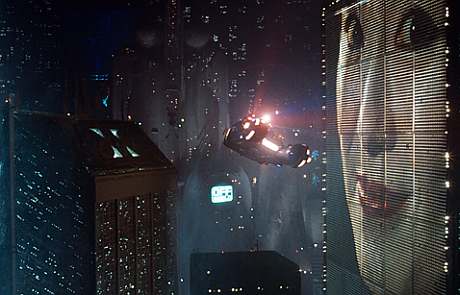
bladerunner“That gibberish he talked was Cityspeak, gutter talk, a mishmash of Japanese, Spanish, German, what have you. I didn’t really need a translator. I knew the lingo, every good cop did. But I wasn’t going to make it easier for him.” – Rick Deckard (Harrison Ford), Voiceover

That’s how Ridley Scott explained it in his adaptation of Blade Runner. Well, technically Ford did the explaining through the character of Deckard, but that’s neither here nor there. Point is, Cityspeak was something that did not appear in the novel version of Blade Runner/Do Androids Dream of Electric Sheep?. It was instead an original creation, designed to give the future-noire city of LA some subtext and a more gritty, realistic feel.

I mean, let’s face it. Overcrowded cities have a way of spawning their own lingo, and in a mega-city that is congested with millions of people, hundreds of cultures and dozens of languages, something like this would be sure to emerge. It was simply a matter of predicting which major languages would be involved, and writing the script in the 80’s, it was only natural that the languages of the most populous and wealthiest nations would do.

English was and still is the trade language of the world, Japanese was quickly becoming another one, Spanish was already spoken by millions in California and all over the South-Western US, Germany was next to Japan as being the world’s strongest economies, and Chinese… well, there were over a billion speakers of Chinese even back then. So really, Cityspeak was a legitimate sci-fi concept.

But here’s an interesting fact: turns out Edward James Olmos – who played the character of Gaff, the only one who spoke Cityspeak – was the man chiefly responsible for its creation. Relying on his diverse ethnic background and some in-depth research, he managed to come up with all the lines his character spoke in the course of that opening scene where it makes it debut.

Not only did he rely on his own Hungarian background, he took some night courses and studied inner-city youth lingo, relying even on his own experiences of living in the Philippines. As he recalled, Filipino cab drivers had their own lingo, a combination Spanish, Tagalog and the occasional English words which they would insert into their speech. One can see this in the lines of dialogue he composed, which were diverse and had several words in English for which no translation would be found.

Here’s the conversation as it appeared in the movie in full:

Gaff: Monsieur, azonnal kövessen engem, bitte!
Sushi Master: He say you under arrest, Mister Deckard.
Deckard: Got the wrong guy, pal.
Gaff: Lófaszt! Nehogy már! Te vagy a Blade, Blade Runner!
Sushi Master: He say you blade runner.
Deckard: Tell him I’m eating.
Gaff: Captain Bryant toka. Meni-o mae-yo.
Deckard: Bryant, huh?

The first section breaks down as follows:
Monsieur (French): Sir
azonnal kövessen engem (Hungarian): follow me immediately
bitte (German): please

The second, however, was entirely in Hungarian:
Lòfàszt!: Bullshit! (Or horse dick, depending on how literal you want to get!)
Nehogy már!: Do it!
Te vagy a Blade, Blade Runner!: You are the Blade, Blade Runner!

The last sentence… Well, it stumped me! Yep, not even a few full-on Google searches or several rounds with Google Translate and Babel Fish could crack this code! And I tried everything they listed, Japanese, Chinese, German, even Hungarian. But luckily, the Blade Runner crew had already provided a translation, it’s just that there was no mention of which languages were used. It reads as follows:
“Captain Bryant toka. Meni-o mae-yo” (Captain Bryant ordered me to escort you to him).

And that’s Cityspeak for you, something Ridley Scott and his Blade Runner adaptation was famous for, but which was mainly the creation of Edward James Olmos. I guess he’s not just a pretty face, or the man that played Adama and won the love of countless Battlestar Galactic nerds…

T2!

Normally, if I do a review, I try to re-familiarize myself with the material before writing about it. That way I’ll be sure not miss anything. It’s only been on occasion that I’ve done one strictly from memory, and that’s assuming it’s still fresh. That was certainly the case with Independence Day and Terminator: Salvation, the latter I had seen just a few weeks before, and the former I’d seen so many times that I really didn’t need to see it again! However, this was not the case with The Terminator. Here was a movie I had not seen in years. Make that MANY years, and yet I penned my review almost entirely from what I could remember of it. Not smart! Even less smart to watch it immediately thereafter and realize all the points I missed! Luckily, I still have two more movies to do in the franchise, and most of what I noticed applies directly to the sequel!

First off, James Cameron was guilty of recycling actors even more than I thought. Michael Beihn, Bill Paxton, and Jennette Goldstein all played prominent roles in Aliens (Hicks, Hudson and Vasquez) and were around for either T1 or T2, in some cases, both. But I forgot about Lance Henrikson, the man who played Bishop in Aliens. Turns out, he played one of the LA detectives in the first movie who got his ass shot off when evil Arny came knocking! Wish I hadn’t glossed over those guys in my T1 review, turns out they were actually pretty important. In any case, that makes four actors whom he used for both franchises, and I’m betting there were more in the background somewhere…

On top of that, I came to see just how many action sequences were reused in T2. I don’t want to get too specific just yet, but let’s say that action scenes involving motor bikes, big-rigs, car jumping and pile ups were also reused from the first movie. The only real difference was the budget, and of course Arny was now a protagonist instead of a force of pure malevolence. And there was also one all-important theme that made it into both Aliens and T2, and that was the theme of reconciliation between man and woman and humans and machines! But more on that later. Having just watched the movie and it still fresh in my mind, let’s get to the specifics of T2, one of the biggest and most successful sequels of all time!

(Background—>)
T2 was generally lauded by critics, all of whom thought that Arny did a great job reprising the role that complimented his particular brand of talents (his natural grandeur and presence, for example). Cameron’s gift for action direction was also seen as a big plus, and with three successful movies under his belt (T1, Aliens, and The Abyss), he now had a bigger budget and a degree of creative freedom he did not have with the before. And as I said in my first Terminator review, T2 also did better at the box office, not proportionally speaking, but certainly in terms of overall gross. And according to some, it was one of those rare movies that was believed to be better than the original. I’m not one of them, but I can certainly see why others might think so. On the whole, T2 was bigger, glitzier, and a lot more fun than the first. It’s mass appeal, made possible by its awesome action sequences, intense pace, and cutting-edge special effects which involved the use of CGI (something brand-new at the time) were sure to please. It also did a good job of wrapping up the temporal paradox presented in the first movie, and offered a way out of said paradox that was both believable and consistent with it. It may not have been as gritty, realistic or smart as the original, but that was to be expected. Originals are meant to set the tone and establish the parameters, sequels to expand on them. And in that respect, T2 was a fitting follow-up to the first, superior in some respects but certainly not better.

(Content—>)
The movie opens with scenes from modern day LA, moving from traffic jams and pedestrian crossings to a playground with children at play. This is clearly a “before” scene, where the music is foreboding and things suddenly slow down, with the sound of children laughing in the background. And then, the big white out. If this isn’t indication enough that something terrible has happened, we immediately cut to the “after” scene – a blackened ruin littered with skeletons and rubble. We are told that is what Los Angeles looks like in 2029, cold, dark, and dead. Linda Hamilton’s voice over then reminds us of the relevant facts, how billions died on Aug. 29th 1997 (“Judgement Day”), and those who survived lived only to face a worse horror… the war against the machines. We then get a moment of pure symbolism as a machine foot crushes a human skull, followed immediately thereafter by one of pure action porn!

All over the post-apocalyptic landscape, machines are attacking, purple tracers fill the sky, and human resistance fighters mobilize to fight back. This sequence was certainly superior to the ones in the first movie. There, the post-apocalyptic battle scenes involved just a few people and models, fighting in a limited fashion that gave the impression of guerrilla-warfare rather than an epic confrontation. In T2, there were literally hundreds of people and models being used, and the pace and scale was faster and bigger. The humans aren’t hiding here, they are out in full force, fighting, dying, shooting and killing. This gives the impression of a genuine war: ugly, awesome, and epic! Naturally, this was due to budgets, but that doesn’t change the fact that T2’s opening action sequence was far more kick-ass! We even get a shot of John Conner, the future version. He’s grizzly, determined, and surveying the field while his mother continues to let us in on things: Years back, a Terminator was sent back in time to kill her before she could give birth to this illustrious man – who is looking mighty heroic right now – and failed. Now, another one is on the way, hoping to strike at Conner himself. But the resistance has sent another warrior, and only time will tell which one reaches him first…

And, much like in the first movie, we cut back and forth between three points of view: Arny, the T1000 (played by Robert Patrick), and the main protagonists – in this case, John and Sarah. She’s in an insane asylum. The character of Doctor Silberman (Earl Boen), who in the first movie pronounced Kyle Reese insane, is back and saying the same thing about her. John is in foster care, is clearly disillusioned over the fact that his mother is locked up, and chooses to take it out on his foster parents. That’s an immediate selling point to this movie: the idea that anyone who knew the future would be a Cassandra, shouting to the wilderness and being totally ignored by the people (or in this case, committed). Conner’s delinquency is also a realistic touch. We know he will grow up to a hero someday, but right now, he’s a pissed-off adolescent who’s confused and bewildered. On the one hand, he hates his mother for apparently lying to him for so many years, and on the other he obviously misses her. Remember that photo he gave Kyle Reese, the one she had taken of herself at the end of the first movie? Well, turns out he’s kept it. Must be some embers still left in that hearth, huh?

Anyway, Arny has his scene where he wanders into a biker bar naked and wrecks the place up in order to get his hands on some badass looking clothes and a Harley. This is of course a retake from the first movie, but unlike the first where the evil Arny killed to get them, the good Arny in this one merely brutalizes a few people. Yep, this is the good guy… baby-steps I guess! And just like in the first movie, the bad guy has an easier time, simply killing a police officer and then commandeering his vehicle. Turns out when you’ve got liquid metal for skin, you don’t need clothes. You just morph your surface layer and boom, you’re good to go! But alas, the T1000 (as Arny explains later) cannot form complex machines, so he still needs the policeman’s car and weapons.

The three finally meet and, just like in the first, we get a tense, climactic moment with slow-motion and intense music. John sees Arny as he pulls his shotgun out of a box of roses (product placement, Guns and Roses did the theme music!) and thinks he’s out to kill him. But those fears are generally allayed when Arny levels the gun and yells his famous tagline, “Get down!”, and shoots the T1000 behind him. A gun fight ensues, followed by a wrestling match, followed by a big-ass car chase. Again, elements of the first are at work here again. In T1, Arny was chasing Sarah and Kyle on a Harley, followed shortly thereafter by a truck. Much like in the first, it all ends with the truck crashing and exploding. This is not to say that it wasn’t awesome this time around though. As usual, Cameron’s flare for action-direction makes the scene tense and beautiful, and the way Arny keeps flipping that gun around to reload it? You look me in the eye and tell me you didn’t think that was badass the first time you saw it! And of course, the sequence ends with the T1000 walking from the fiery wreckage unharmed, provided by some of those cutting-edge digital effects I mentioned!

John then has a chat with Arny about what’s going on. Some funny lines here: “Don’t take this the wrong way but… you’re a Terminator, right?” Keen grasp of the obvious. “Okay… And you’re not here to kill me! I figured that part out for myself!” Well he did save your as several times in just the last few minutes so… duh! What makes this funny is that while freaked out, John clearly has a framework in place for understanding what’s going on. In spite of the fact that he’s spent the last few years thinking his mom was crazy, he still remembers everything she taught and what he’s just witnessed just confirmed it. Sure he’s freaked out by all the violence and near-death, but one he’s not is shocked. He doesn’t even get that phased when Arny tells him that it was HIM – John Conner – who sent him; his future self, that is. Somehow, it all just makes sense given his upbringing. And of course, Arny takes the time to explain the particulars of their enemy. Let me see if I can condense it all into a few bullet points here:
> T1000, advanced prototype, liquid metal, here to kill you.
> Can’t form weapons beyond knives and stabbing tools.
> Can also morph into things, but only things of equal size
> Can impersonate other people and knows where you will go
> Oh yeah, and its not known if he can be destroyed or not

Yikes! That’s another thing that I enjoyed about this movie. At first, it seems like Arny can defeat the T1000 as he manages to save John Conner from his repeated murderous attempts. However, as more confrontations ensue and Arny is forced to go toe to toe with him, the T1000 begins to show his superiority. Not only does he managed to take Arny’s arm off, he even manages to take Arny out. Well, temporarily deactivate, but you get the idea. In the end, Anry’s only able to win by outsmarting him, and relying on the help of John and Sarah.

But getting back to the storyline, Arny soon confirms that the T1000 has already killed John’s foster parents and warns him that his mother could be next. But not before John has an expository scene where he expresses all his angst over how his mother taught him everything he knew, only to be taken away from him and declared a delusional psychotic. And now, it appears she was right all along, so naturally he wants to find her. But no, Arny reminds him, the T1000 would have anticipated that, and will try to impersonate her and will kill her in the process. John freaks, a ruckus ensues, and it ends with John realizing that Arny must obey his orders. So naturally, he orders Arny to help him save his mother (Oh, and not to kill anyone, on a count of he almost killed two people during that ruckus).

They then get to the asylum where Sarah is attempting to make her escape. Seems people told her that a dead-ringer for the man that shot up a police station and killed 17 officers in 84′ was spotted at a local mall. Thus why she needs to escape tonight. If things are happening again, she needs to make sure her son is safe! She does this smashing the face of the guy who’s been physically and sexually abusing her for the last few months and taking Dr. Silberman hostage. Naturally, we don’t feel sorry for either of these people, since the attendee is a dick and Dr. Silberman is a cynical douche! John and Arny are simultaneously breaking in, which begins with Arny knee-capping the guard at the front (he said he wouldn’t kill, wasn’t nothing in there about knee-capping!) They meet up inside as Arny steps off the elevator right in front of her, and a slow-motion scene ensues where Sarah recognizes him and becomes so terrified that she runs back in the direction of the guards she eluded not a moment previous. Arny saves her and issues one the tag-lines from the first movie: “Come with me if you want to live”. John is also there and lets just her know that Arny’s cool, right before the T1000 shows up right behind them and tries to kill them. Dr. Silberman witnesses all this, and is no doubt going to need therapy himself!

Another chase scene ensues. Arny and Sarah protect John, steal a police car, and start driving backwards while shooting. The T1000, for his part, sprouts swords and crowbars from his arms and pursues them. Here too we see a scene being rehashed from the first movie, where the evil Terminator jumps on their car and starts smashing through the window, trying to get his hands on his target and almost succeeding. But in the nick of time, they manage to shake him with some keen maneuvering and shotgun blasts. This time around, its Arny who does the rescuing, blowing off one of the T1000’s limbs and sending him flying off the back end of their car. Having made it away for the second time, the three of them start make their way out of town in great haste.

While in the desert, we get some pacing scenes as Arny, Sarah Conner, and John get to talking, and in the course things, learn some things about each other. For example, Sarah wants to know how Judgement Day happened, how Skynet was created and who’s responsible. Arny reveals that a man named Mr. Miles Dyson is responsible for the breakthroughs that led to Skynet’s creation, and that the key developments are happening pretty much as they speak. We already know from a rather telling scene earlier that Mr. Dyson, over at Cyberdyne systems, was the recipient of the remains of the first Terminator and is working on a big AI-related breakthrough. Seems that Conner was right, that someone conspired to remove them from the factory where Sarah left them, and made sure they got into the “right” hands. Sounds… conspiratorial! In any case, it was the first Terminator’s broken CPU and remaining arm, which came from the future, that ended up being the basis for Dyson’s research, and hence Skynet’s creation… The temporal paradox strikes again!

There are echoes of Alien and Aliens here. In those movies, the megacorp Weylan-Yutani kept screwing over its own people in order to get their hands on the alien specimen. Here, however, we are getting it more in the form of the dark future/cautionary tale, where networked, intelligent computers are responsible for nearly wiping out humanity, largely because we made the mistake of trusting our fate to them. But unlike the first movie, T2 introduces us to the human side of that equation, how it was human avarice that led to Skynet’s creation, and how Skynet decided to kill humanity because they tried to pull the plug on it. Doesn’t make Skynet any nicer, but it was a nice touch, as is the humanizing of the people responsible which follows later on. But at the moment, Sarah is obviously perturbed by this information, and we can tell she’s going to do something about it very soon…

Also, there’s a very important scene in all this that didn’t make it into the original movie but came with the director’s cut. This is the scene where Arny reveals that all Terminators have their CPU’s set to “read-only” when they are sent out, a provision against them exercising too much independent thought. While they are held up in an abandoned garage and nursing their wounds, John proposes that they remove Arny’s chip and switch this fail-safe off so he can be of more use to them. After removing it, Sarah tries to smash the chip with a hammer but John stops her. She tells him this could be their last chance to be “it”, and that John doesn’t understand this because he’s never had to kill one of them. But John insists that they need Arny, that “it” is a “he”, and that if he’s to be a great leader someday, his mom ought to start taking his ideas seriously. She decides to go with him, although just barely, and lets Arny live. This scene is important because it establishes that in spite of the fact that the good Arny saved them, Sarah still doesn’t trust him and is willing to kill him as soon as the opportunity arose. One would expect this considering what the first Arny bot put her through.

There’s also the amusing scene where John tries to teach Arny to smile. This is just one of many where John is trying to teach him how to “be more human”. Most of these are pretty cheesy, consisting of one-liners and hand gestures, but this one was actually funny and even made sense in the overall context of the movie. Later, we see Arny pulling facial expressions, and the more anal-retentive critic would surely want to point out that this is supposed to impossible. Cyborg’s don’t feel emotion, hence they don’t smile, smirk, or shrug. The subtleties of facial expressions and how they convey emotions would surely be beyond them. But, if they knew someone was teaching them what faces to pull and when, they just might find it realistic and shut the hell up!

Anyhoo, John, Arny and Sarah show up at Enrique’s hideout. This would be the former Green Beret gun-running dude John mentioned with earlier, one of several dude’s she shacked up with while he was growing up. While at Enrique’s hideout, they start stockpiling guns and getting some new vehicles together. Arny gives us a preview of things to come when he hoists up the mini-gun and smirks at John. “It’s you, definitely,” John says. And in the course of things, Sarah watches her son and the Terminator talking and carrying on and has a revelation. Turns out that of all the father figures that had come and gone, the Terminator is actually the most ideal father figure for John. He’d never neglect him, never abuse him, and would die to protect him. We see at last a reconciliation between humanity and technology with this, not unlike the one that took place in Aliens between Bishop and Ripley. Once again, James Cameron is showing his fondness for certain themes. Still, it works here. After all the paranoia and hatred Sarah has been living with over the years, she finds herself finally able to trust her enemy – a killing machine – with John’s life. Irony!

But then, Sarah has another one of her apocalyptic dreams, and this one is particularly graphic! She even sees an alternate version of herself playing with a baby. This is a particularly symbolic moment, we get the impression is seeing what she’d look like if history had worked out just a little different. And like everyone in the playground, she doesn’t appear to be able to hear Sarah as she screams at them to run. In any case, they are all vaporized when a nuke goes off in the distance, graphically! I tell ya, that shot scared me when I first saw it. I believe it was the first case of the effects of a nuclear blast being caught on film. Sarah then wakes up with a start and she sees the words that she herself carved in the picnic table not a moment earlier. “No Fate”, which paraphrases what John told Reese to tell her: “The future is not set, there is no fate but what we make for ourselves.” Ironic, given the temporal nature of the story, but it certainly convinces Sarah that its time she acts. She grabs her guns, a truck, and tells John and Arny she will meet them later. It doesn’t take long for them to figure out what she’s got in mind (killing Dyson) and they head off to intercept her. Arny warns John that this is bad strategy, that the T1000 could anticipate this move, and that Dyson’s death might actually prevent Judgement Day. But of course, John tells him they have to. It’s a human thing!

They arrive at Dyson’s just in time to find that Sarah has shot up the place, put a bullet through Dyson’s shoulder and just about to deliver the coup de grace. But alas, she couldn’t. He’s still human, and she’s not a monster. So instead, they decide to fill him in on things and give him the benefit of the knowing everything his work will lead to. Arny starts by pealing the flesh off his arm and letting his robot innards tell the story. Dyson immediately recognizes the arm, since he’s got an identical one at his office. We get the distinct impression that some pretty messed up possibilities are going through his mind. In any case, Arny has his full attention now and he tells him to “listen to me very carefully.” Sarah’s voice-over fills in the rest and says that Arny told him everything – about Skynet, Judgement Day, and the war – as we cut to what is clearly several hours later. Naturally, he’s shocked and professes that he never intended for any of that to happen, but Sarah is naturally unconvinced. Seems “men like him” are the reason the hydrogen bomb exists. They think themselves creative, but only know how to create death and destruction, so fuck em, they’re evil! Uh, remind me now, who shot up who’s place here in a homicidal attempt? But alas, because he didn’t know, and maybe to prove he’s not a bad guy, he agrees to help them, which includes destroying the lab and also the remains of the first Terminator. Hello! This is the first time those remains have even been publicly acknowledged. Everyone is surprised, except Sarah who is both feels both angry and vindicated. She’s known all along that there was some kind of cover-up and nobody believed her. Now, she’s hearing from the horses mouth that she right. Still, right or no, she still gotta feel pissed!

What follows is another tense series of scenes as they rush to Cyberdyne, commandeer the facility, and begin laying explosives. Meanwhile, the police show up, thinking they got the man who shot up the police station back in 84′, and cordon off the building. Sarah’s voiceover and a shot of them driving up a dark highway convey the significance of these scenes perfectly before they actually unfold. Essentially, after years of trying to ensure that the machine’s didn’t alter the future, they are now trying to do the same. Whereas they were just players before, doing what was required of them, they are now free-agents who have the power to change history. Arny has his scene with the minigun too where he levels all the cop cars out front, firing a couple thousand rounds and a handful of grenades into the police cruisers to gives Sarah, John and Dyson the time they need to finish rigging the place to blow. But, as promised, does so without hurting or killing a single person. Not bad, Arny! Way to respect human life! Of course, the police are pissed and start firing back at him, and their SWAT team goes on in with blood on their minds.

There’s also what appears to be a sort of reconciliation taking place between Sarah and Dyson now, paralleling once again what Ripley experienced in Aliens. Obviously, Sarah had become embittered towards her male counterparts after years of being ignored and condemned by them. After losing Reese, she wasn’t able to find a single stable father figure for John, not one who would stick around after she told him the truth at any rate. Then there were all those who condemned her and put her in an insane asylum. On top of that, there’s men like Dyson who were responsible for Skynet’s creation in the first place. But now, she and Dyson appear to be coming together thanks to their common cause. There’s even a symbolic moment where Sarah passes him the detonator and we get a close-up of it changes hands. This reconciliation is cut short however when about a dozen SWAT team members comes breaking in and fills Dyson full of holes! But once they realize the place is totally rigged, they pull back! And the three protagonists managed to make it out right before the bomb goes off and levels Cyberdyne! But the front door is still blocked and there’s no way they can make it out without some shooting. That’s when Arny issues his famous tag-line from the first movie: “I’ll be back”! He gets about a hundred bullets to his face before knee-capping and pelting all the SWAT team members with their own tear gas canisters. He then steals the SWAT van and drives it through the front foyer, thus ensuring their escape. Meanwhile, the T1000 has shown up and steals a helicopter, much as Arny stole that 18-wheeler in movie one, and is even sure to include the “get out!” tag-line to its driver.

Which brings us to chase number three! This time, the good guys are in a SWAT van and the bad guy in a helicopter. True to the first movie, there’s a change-up when the bad guy is shmucked and has to switch vehicles. Having lost his helicopter, he commandeers (what else?) an 18-wheeler and chases them into a Foundry. Really? They have Foundries in LA? Right beside of the highway to boot? Just asking… Point is, more action porn follows: Arny delivers his “Hasta la Vista, Baby” line and shatters the T1000 with a bullet. This was after he forced him to crash his truck that was apparently carrying liquid nitrogen (…really?). The bits begin to melt because there’s hot metal all around (Foundry, remember?), and the three protagonists are forced to flee again. But with nowhere to run, they have to fight it out inside the Foundry, and get pretty beat up in the process! As a climactic scene, this was quite effective, being in such a hostile environment and everyone already being wounded. You can feel the tension and danger, which is made all the more palatable since it’s clear that there is no chance of escape. With Sarah already reeling from a gunshot wound in her thigh, and Arny twisted up from the crash, it really seems like they might not make it.

And yet, they do! And I don’t think I’ll ever forget the last scene where Linda Hamilton empties a whole shotgun into the T1000’s body, one-handed! Or how Arny shows up at the last second and pops a rocket propelled grenade into his belly that blows him in half! The T1000 then falls to his death in a bath of molten metal (how’s that for irony, liquid metal man!) and things end tidily when John realizes that the metal will make a perfect disposal spot for the remains of the first Terminator. But alas, Arny realizes that he too much go into the cauldron. As long as any evidence of the future remains in the past, there will always be a chance that Skynet could still be created and Judgement Day still happen. And so the movie ends with Arny being heroically lowered into the molten metal and giving John the thumbs up before disappearing beneath the surface (John taught him how to do that, which makes it all the more sad!)

Then, there’s the very last scene, which is kind of a controversial issue for me! In the original movie, it took the form of them driving along the dark highway again, a clear metaphor for the future, with Sarah giving jer final voice-over that wraps things up nicely. She says she is finally able to face the future with hope because, as she says, “If a machine – a Terminator – can learn the value of human life, maybe we can too…” Cue music and roll credits! I get tingly just thinking about it. But in the director’s cut, the last scene was altogether different. Instead of the still uncertain but hopeful future, we get to see the picture of that future, and its totally disappointing! Apparently, its 2030 or so, Judgment Day came and went without incident, and Sarah is making another recording where she explains how she got drunk and celebrated the fact that it never came. Everyday thereafter was a gift (a line that would make it into T3). And now, she’s sitting on a park bench and watching John play with her grand daughter in that same old playground. The background shows LA of the future, a skyline that looks like something out of a bad sci-fi movie or a rerun of Star Trek (the original version). Oh, and apparently John is not the grizzled leader here, but a Congressman who fights the good fight on the floor’s of Congress.

Where do I begin? Well, for starters, this whole franchise was gritty and dark and never did more than it had to. So ending it with a scene that lays things on way too thick just seems inappropriate. There’s also the fact that its totally sappy! John becomes a peacenik Senator and everybody lived happily ever after? C’mon people! This is supposed to be a movie about post-apocalyptic nightmares and murderous machines! I can understand wanting to end it on a happy note after all the darkness and extended horror shows, but this was ridiculous! But luckily, this scene never made it in to the original. Clearly, someone felt that it would be better to let the movie end on the same note it had maintained throughout. Thus, they went with the highway ending which was best: succinct, serious, symbolic, yet still hopeful. And it wrapped up everything from the first and second movie nicely, with no wasted effort or needless screen time. Last thing you want after tying up all the loose ends is to drop a fresh load of crap on the audience! It brings the whole production down!

(Synopsis—>)
This time around, I think I’d like to start by mentioning what was weak about the film. For starters, the themes that were present in Aliens that had a way of making it into this movie too. The theme of redemption, be it between man and woman and man and machine, was present in both. As was the theme of the evil corporation working behind the scenes so it could get its hands on something dangerous, and in so doing, condemning people to death. It was only recently that I even noticed this, and it kind of brought the movie down in my estimation. However, I am hard-pressed to argue this point too finely. These themes worked too well for them to be considered weaknesses, in my estimation. It was good and fitting to see Sarah find common ground with her fellow man after so much time of being at odds with them. It was also cool and ironic that a Terminator was capable of learning the value of human life and was ultimately the greatest protector/father figure that John Conner would ever have.

And of course the action scenes that were re-hashed from the first movie. Like I said, one could take the position that this was somehow lazy or uncreative, but I’d be hard-pressed to argue that as well. Mostly, they felt like homages, inside references to stuff the audience already saw and would instantly recognize. Those are desirable in a movie, they are like punch lines that make the audience go “Ahaaaa!” And done properly, they are also amusing and entertaining. And they certainly were in this movie. Arny’s big one-liners, “Come with me if you want to live” and “I’ll be back” were both deliberate references to the first movie and they worked. The way they zoomed in on Arny’s face and that intense expression as he said the latter; everyone in the audience knew it was painfully significant!

As for the other weaknesses. These mainly took the form of the extended and deleted scenes. For the most part, they kinda sucked. The alternate ending, where Sarah and John are alive decades down the road and the world is peaceful. SUCKED! The scene where we see Dyson at home explaining his work to his wife, how he’s creating the basis for AI… that one was a tad obvious. We already get that his work is revolutionary and will pave the way towards machines that will be able to think and become self-aware. No need to come out and say it. The ones I mentioned, where they switch Arny’s CPU from read-only mode and John teaches Arny facial expressions, those were good and should have been included in my mind. There were also a few from the Foundry where we see the T1000 having some problems re-resolving after being frozen and shattered, which were also good. But of course, running-time is a factor and that’s why we have director’s cuts.

Last, but certainly not least, there’s that one big, possible plot hole in the movie. Essentially, we are told from the get-go that the machines have once again sent back a Terminator and the resistance has once again sent back a fighter of their own. Now didn’t Kyle Reese say in the first movie that they found the Terminator’s time machine when they trashed Skynet’s HQ and only one Terminator had gone in? Didn’t he also say that he was the only other one to go through and they destroyed the machine immediately thereafter? Well sure! So theoretically, John should have been safe from then on. All of this meant that the future would unfold as promised, Judgement Day would happen, and John Conner would grow up to lead the resistance to victory over the machines. There’s simply no way the machines would have known that they had failed, they don’t have a crystal ball that shows them the past or how alternate time lines are unfolding. So its not like they could just say, “Woop! We missed! Send another one!” The very act of sending Arny back was a desperate act, they’d just have to expect that however things were unfolding for them in the future was the direct result.

But, this can be explained away easily enough. For example, how could Kyle know for sure that they destroyed the time machine after he left? For all he knew, they found out that the machines had actually sent two Terminators back in time, one T101 Arny bot and one T1000 advanced prototype. The first one was sent to take out the mother, the second to take out John should the first one fail. The resistance could then say “Oh crap! We need to send another fighter of our own to deal with the second one too! Any ideas?” They looked around, saw another Arny bot, figured it would have a better shot of protecting John from a T1000, decided to reprogram it, and sent it on its merry way. THEN they destroyed the machine! Okay, that works, more or less. Only problem is… you can’t keep doing it! A third batch of Terminators would just make things stupid!

Okay, now the strengths! The movie’s action scenes were awesome! Cameron has shown again and again that he has an eye for making destruction, shoot-em-ups and car chases beautiful! Its little wonder then why he’s a renowned action director. His ideas tend to be old fashioned, but they work in the context of classic sci-fi and his directorial style brings a sense of grandeur and epicness to his work. And of course Arny, a man who embodies those traits, was well suited to what he had to offer. Not the best actor in the world, but he’s nothing if not grand and epic. And this time around, he went beyond those simple attributes to bring some heart and humanity to the Terminator, which is ultimately what makes him him. He’s Arny, the action hero with a heart of gold and a keen sense of humor!

T2 also had a very good plot. Aside from the one possible plot hole which I don’t think anyone cares about anyway, it was virtually seamless. The future that Reese knew and told Sarah about was the direct result of everything they did together in the past. The Terminators exist because the wreckage of the first one was found, John Conner exists because Reese and Sarah had sex, and so on. Kyle Reese told Sarah in the first that he was from the future, but that it was one possible future, maybe… He didn’t know. But alas, we do! It was all foretold thanks to a temporal paradox where the future influenced the past and vice versa. But this time around, they found the fulcrum of this would-be future and removed it. Anal retentive critics might say “Well, if they destroyed all of Cyberdyne’s research, wouldn’t that mean that Skynet would never exist?” Well, good point actually. Once Cyberdyne was destroyed, shouldn’t Arny and the T1000 just have disappeared? Ah, but they had that one covered! You see, as long as the T1000 and Arny were alive and in the past, there was still the chance that Skynet would be created. Hell, for all we knew, that was HOW it got created in the first place. So technically, the future could not be altered til both the T1000 and Arny were destroyed and there was no chance whatsoever that their wreckage would fall into the wrong hands… again!

Another thing worth mentioning was that this movie was made in 1991, a full seven years after the first movie and five after Aliens. In between, he did the Abyss in 1989, but that was it, and had already begun working on Aliens back in 84 when he was shooting The Terminator. So really, he and his people had years to work out the script for T2, and it really showed. I can remember seeing it when it first came out and being blown away, in part because it had such a big feel! This was the long-anticipated sequel to the first movie and just about everyone agreed that it was fun, cool, and awesomely good. Like I said, Cameron already had a reputation for being a sci-fi director after Aliens and T2 really cemented that for him. The use of cutting-edge special effects, the big-budget action scenes, the way the plot really came together; he really topped off the Terminator franchise big time with this movie. The only downside would be if someone got the bright idea to do a third movie. Worse yet, that they’d shoot it sometime after August 29th 1997, when Judgement Day was supposed to have happened! Why, then they’d have to come up with some contrived explanation for why it didn’t happen on schedule, or why the Terminators were still being sent back in time! And that would be just downright nutty…

Terminator 2:
Entertainment Value: 9/10!
Plot: 8/10
Direction: 8/10
Total: 8.5/10

Da Terminator!

Back in 1984, a budding director named James Cameron was working on two projects almost simultaneously, both of which would go on to become some of the most successful sci-fi franchises in history. These were the time-traveling cyber-thriller The Terminator and the long awaited sequel known as Aliens. And not only were they well received at the box office, both went on to become classics in their own right, earning a cult following and spawning even more sequels. Yep, the guy could write and direct back in the day, before success and fame went to his head and he got all… Titanicy! Fans of said movie might disagree, but I think it just went downhill from there! I mean, Avatar? C’mon people, that was just a rehashing of Titanic and Aliens with a whole lot of Pocahontas ripped off and plastered on.

But that’s neither here nor there (I’m so gonna trash that movie later!). Right now, I wanna talk about the movie that started it for James and turned Arny from a champion body builder and B-list actor into an A-list movie star (Which reminds me, at some point I got to review Conan, his other break-out hit!) And a warning, you can’t get into this movie without talking about Arny, a lot! So plenty of biopic info will be coming up throughout the course of this review, be warned! So without further ado, let’s get to reviewing this baddest of bad-boys!

(Background—>)
In truth, Arny was first approached by the studio to play the role of Kyle Reese. However, after reading the script, he said he would rather play the role of the murdering cyborg. After meeting with Schwarzenegger, whom he had no intention of casting in the role, Cameron became convinced. And it worked! Anry’s presence, his bad-guy face, and his imposing demeanor sold people on the Terminator. Even his accent, which was still pretty thick, seemed believable coming from a synthetic human. And while it got mixed reviews at first because of its violence, many critics saw unmistakable quality in it, hailing its tense pace, its cool action, and its storyline. In time, these positive reviews would become the general consensus, and Cameron was inspired to make the sequel. T2 did better at the box office, but compared to The Terminator‘s modest budget and overall gross, the original’s performance was far more impressive. He would NOT be involved in the later movies, which was good for him. They did not hold a candle to his original creations!

(Content—>)
The movie opens with a brief intro showing us the post-apocalyptic world of Judgement Day, explaining that there’s been a nuclear holocaust and that machines are waging a war on all those humans who still remain. Its just a taste of things to come, nothing long or drawn out. And then, we move to modern-day LA. There’s a big burst of light, and Arny standing naked in the street. He has a run in with some thugs, the leader of whom is Bill Paxton (or Hudson, as he was known in Aliens), and deprives them of their clothes. He even brutally kills one of them just to make his point: don’t mess with evil-Terminator Arny! Simultaneously, Kyle Reese (Michael Biehn, Hicks from Aliens. Holy recycling actors Batman!) shows up and is going through the same motions. Like Arny, he is in a rush to find clothes, weapons, and the whereabouts on one Sarah Connor. Yet somehow, Reese seems to be having a harder time of it. Funny how being a cybernetic powerhouse who’s not afraid to brutally kill makes life easier! In fact, after visiting a gun store and making only one gaff about plasma cannons, Arny ups his body count to two! But seriously, what was up with that line: “phased plasma cannon in the 40 watt range”. Really? Wouldn’t a Terminator be programmed with what weapons were available in 1984; them detailed files Arny mentioned in the second movie? Ah well, comic relief before he blew the unsuspected store owner away, I guess.

We also get to see Sarah Conner (Linda Hamilton), who for all intents and purposes seems like a regular, run of the mill lady. Naturally, we are wondering why Arny is out to kill her, and what Reese wants with her. But one thing we are sure of, Arny DEFINITELY wants to kill her. The way he is tracking down and murdering anyone named Sarah Conner in the greater LA area would seem to indicate that. As for Reese, his intentions become abundantly clear when the three of them – him, Sarah and Arny – finally come together in a barroom shootout. I can attest to the fact that this scene is one of the most tense in the entire movie. Arny comes in, Kyle shoves his way through the crowd as soon as he sees him, Arny levels his gun at Sarah’s head, she is frozen with terror, and Reese brings his gun to bear. The sound is faint for much of this… but when Reese fires, the sound returns! BOOM, BOOM, BOOM… and Arny drops! Naturally, he doesn’t stay down, and Reese has to unload what’s left of his ammo into him before he can reveal his true purpose. He makes this abundantly clear when he bends down to grab hold of Sarah’s arm and says the classic line: “Come with me if you want to live!” Naturally, she does. And in the course of fleeing from Arny, Reese fills her in on the whole situation.

In short, on Aug. 29th, 1997, a nuclear holocaust will take the lives of 3 billion people, in an event known (appropriately) as Judgement Day. The culprit is a machine known as Skynet, an AI created by humans that turned on them and spawned an entire race of machines that were designed to hunt down and destroy all human life. They are known (also appropriately!) as Terminators. Most survivors were herded into camps for what Reese refers to as “orderly disposal”, echoes of the holocaust. But one man rallied them turned them into the Resistance. His name: John Connor, Sarah’s unborn son. Shortly before Reese traveled back in time, the Resistance had broken into the machine HQ and destroyed Skynet. Hence, the machines sent a Terminator back in time to kill John Conner before he ever existed. What makes this semi-believable is the fact that at first, Sarah doesn’t believe him and tries to flee. There’s none of this “you saved my life and your we have obvious chemistry… so sure, I’ll go with you” crap. But Reese’s insistence plus the sheer unbelievability of his story manages to convince her. Cyborgs created a time machine so they could travel back in time, from the post-apocalyptic future, and kill the woman who will give birth to the boy who will lead humanity to victory over them. Hell, you can’t make shit like that up! Unless you’re James Cameron… The fact that he’s protecting her while a homicidal Arny will stop at nothing to kill her might have been an added push.

What follows in some more tense scenes where Reese and Connor attempt to flee from the Arny bot. Both he and Reese are wounded in one exchange, forcing Arny to cut out one of his synthetic eyes and wear shades. The look was born! But then Reese and Sarah Conner are arrested, Reese is charged with kidnapping, and Sarah is told that he’s a psycho, and not to listen to him! The chief also tries to allay her fears with what immediately becomes some famous last words: “There are thirty cops in this building. You’re safe.” Arny of course find them, enters and gives HIS famous words to the clerk who tells him visiting hours are over: “I’ll be back!” And boy was he ever! After driving his car through the front doors, he whoops out the artillery and proceeds to murder seventeen officers. That’s ballsy for any bad guy, lord knows the only policemen who are allowed to die in an action movie are the ones who are three days to retirement! But in the carnage, Reese manages to escape and pulls Sarah Connor out. They both then double-time it out of town.

Then, with a little privacy and some trust established, we get to see the relationship that’s taking root between Reese and Connor. Cameron also takes this opportunity to give us additional glimpses of the future. Up until this point, this was done through Reese having flashbacks and nightmares. At this point, it takes the form of Reese conveying everything John Connor told him to share with her, which includes anecdotes about the war. This is important since she will give birth to the future commander of the resistance and he needs to be prepped! Some cool temporal paradox stuff happening here. But wait, it get’s better! Eventually, Reese confesses that he always loved Sarah – well, not so much her, but the idea of her. Her picture is something he’s kept, its a little worse for wear, but still manages to capture her determination and beauty (keep this in mind, it comes up later!). Then, they have sex, and Sarah gets pregnant with – drumroll! – the future John Connor! Yes, as it turns out, Reese is Connor’s father due to this same temporal paradox, whom he will meet and become the protege of in the future. So in addition to this being a post-apocalyptic, time-travelling sci-fi thriller, it comes complete with a big twist! And not just one…

Back to Arny, who must get creative in order to find Connor again. This he does by finding her mother and takes her call when she does the obligatory good daughter thing and calls just to let her know she’s all right. He then gets the address of the hotel where they’re staying. Luckily, Connor and Reese are on top of things. Like good soldiers, they were ready to mobilize, even did some shopping so they could build some homemade plastic explosives. Another car chase ensues, Reese gets severely wounded this time, and Arny gets unseated from his motor bike, hit by an 18-wheeler, and has more of his face ripped off. The look evolves! We also get famous one-liner number two when Arny commandeers the 18-wheeler. After tossing the driver, he turns to the passenger with a half-revealed cyborg face and says… “Get out!” Of course, the guy does! When a killer cyborg steps into your vehicle with half his face missing and tells you to move it, you don’t say no! Shortly thereafter, the 18-wheeler crashes and they think Arny is dead. But no! The fully revealed Terminator crawls from the flames (symbolism moment here, harking back to the intro!) and advances on them.

And of course, Reese sacrifices himself to blow the thing in two, but Sarah is forced to deliver the finishing blow by crushing it in an hydraulic press! But before she does, she gives her own big one-liner: “YOU’RE TERMINATED, MOTHERFUCKER!” Hey, Arny can’t get em all! The movie then cuts to several months later, with Sarah, now pregnant, driving through Mexico. She’s making a recording for her John, and a small boy comes and snaps her picture. Remember that photo Reese had of her, the one that made her fall in love with him? Yep, this is it! And as we will learn in the movie that’s to come, the remains of the Arny bot were recovered… the seeds of Skynet’s creation have been sowed. The paradox is complete! And Sarah drives off into a coming storm, which is both literal and metaphorical. Yep, good line to end it on. “There’s a storms coming,” says the Mexican man. “I know,” says Connor. Cue apocalyptic music and roll credits!

(Synopsis—>)
All throughout this movie, there is a tension that in undeniable. Whether its Reese’s painful flashbacks, the Terminators constant pursuit, or the fact that the police are pursuing them as well, there’s a pace and a tempo that never lets up. It’s downright uncomfortable, the feeling of danger and impending death always there. Though the sequel was arguably more fun and a lot more impressive in terms of effects, the original was a lot grittier and emotionally honest. In a way, it kinds of like Alien and its sequel, the former being packed full of terror and claustrophobia, the latter being a big-ass thriller that relied more on action. Unfortunate that Cameron was only involved in the creation of the latter, otherwise you could say there was a clear pattern. The original sets up the plot and has a deliberately harsh tone, the latter finishes it off and is entertaining in the process. And while the latter might have overshadowed the former in terms of box office gross and overall impact, the former remains the more critically acclaimed cult-hit because its arguably smarter, if less flashy. Not to mention that from top to bottom, the feel, music and direction of the original are faithful to its central themes. One really gets the feeling throughout that this is a movie about the apocalypse and a horrific war that is yet to come. Not only that, but the time travel stuff is intriguing and thoughtful. As Sarah says at one point to Reese: “You keep speaking about things I haven’t done yet, past tense!” She is abundantly clear on the fact that she’s not comfortable with how Reese and people from his time see her, as some kind of hero. But in the end, she has to find the strength to become what she needs to be, something which she passes on to John Connor, a sense of terrible purpose.

In any case, it made for a good movie. But the real points came in the form of the plot, which was a compelling story about fate and free-will. The future is happening because of what happens in the past. They are trying to prevent the machines from altering the future, but in the process, they end up creating it. Cool, and virtually seamless. Because, as I’m sure I said in my Terminator: Salvation review, the good guys not only ensured the birth of John Connor (and hence their eventual victory over the machines), they also ensured the existence of the machines in the first place. Funny how that works, temporal tampering has the power to give and the power to take away. The real genius of it, and the thing that always bakes my noodle, is the notion that the future we know is the result of all our actions. That might seem like fatalism, but its actually far more complex. Fate implies that the future is set, when in fact, things don’t happen in spite of what you do, but because of it. Oy, I just went cross-eyed! These plot twists also set up the plot for a sequel very nicely. Now that John Connor’s existence is assured, he must prepared for the future. At the same time, he and Sarah must see what they can do to prevent it. And of course, with the war still on the horizon and the rise of the machines still to come, we can bet our bottom dollar that they will make another attempt to kill Connor before they lose the war.

And like I said, this movie set Arny and Cameron up FOR LIFE. Cameron would go on to make Aliens before directing his big-budget action-packed sequel, and Arny would land role after role in the big action line-up of the 1980’s. Funny too how that worked out. Arny had all kinds of difficulty getting work at first because of his accent and, amazingly, his name! Director’s initially thought it was too long and hard to pronounce, and that his speech would always be a stumbling block. But thanks to The Terminator, Arny went on to be famous and all those agents and producers who doubted him were left eating crow! And of course, when it came time to make the sequel, Cameron would bring Arny back and give him a chance to reprise his role, this time as the good guy, which was in keeping with Arny’s true character. Linda Hamilton would be back too, reprising her role as Sarah Conner and raising the stakes by becoming the ultimate female bad-ass!

More on that in my review, T2! Like Arny, I too will be back! (Sorry, I had to!)

The Terminator:
Entertainment Value: 8/10
Plot: 9/10
Direction: 9/10
Total: 8.5/10