New Idea: The Cronian Incident

terraform_MarsA friend and mentor once told me that you shouldn’t be too worried about people stealing your ideas. To paraphrase what he said, you’ll have thousands of ideas, and no one can steal your work unless you’re careless. Those words rung true to me, mainly because I have far too many ideas, and not nearly enough of them are developed. Case in point, I’ve got four projects in the works, and none of them are near to completion.

And yet, I find myself once again adding an idea to the mix. It came to me over the course of the last few months while working for Universe Today and trying to refine my ideas on science fiction. Basically, I have been thinking for some time that any piece written by me should focus on the paradoxical issues of Climate Change and technological change, and how these will play out to shape our near, not-too-distant, and distant future.

And then an idea started forming. I would have filed it in the “not now, maybe later” column, but I think it might be something that could really work. And given the way I’ve been bugging people constantly over the past few months with it, asking their opinions, soliciting thoughts on the first few chapters, I clearly have become emotionally invested in it. So I thought perhaps it was time to commit to it, as I always do, by sharing the idea, and thus ensuring that there’s a record of it somewhere so no one can steal it! 😉
Jupiter-and-Io2
The Cronian Incident:
It is the late 22nd century, and humanity has grown to colonize almost every corner of the Solar System. Earth is now recovering from the worst aspects of “The Anthropocene”. Temperatures are dropping, species extinctions have stopped and are being reversed, and the population is stable, with over 13 billion people living in its cities, arcologies, and orbital habs. Over 1 million people live on the Moon, in cities built in lava tubes beneath the surface.

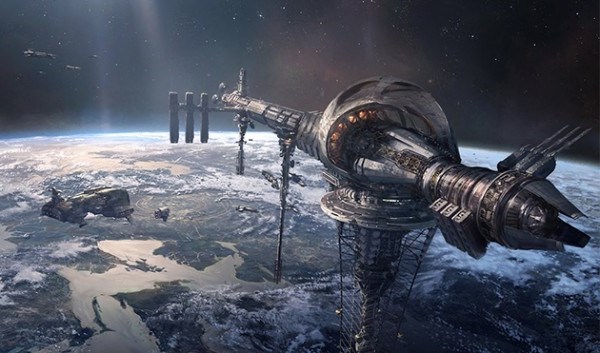
Mars and Venus are also home to humanity. On Mars, the Martian people live in domes that crisscross the surface, a Space Elevator brings people to and from the planet, and a constant flow of shipping to and from the Asteroid Belt and Solar System keeps the place busy. On Venus, the Cythereans live in cities that float atop the planet’s extremely dense atmosphere, harnessing carbon from the clouds to create graphene and diamond-based materials.

On all these worlds, humanity exists as a series of factions that know no national boundaries, and are collectively referred to as “Extros” – short for Extoprian. Thanks to over a century of runaway technological progress, diseases and disabilities have been eliminated, implants and embedded machinery allow for constant connectivity to the Nexus (future version of the Internet), and all vestiges of life are assisted by sentient programs and algorithms of various complexity.
space_elevator2
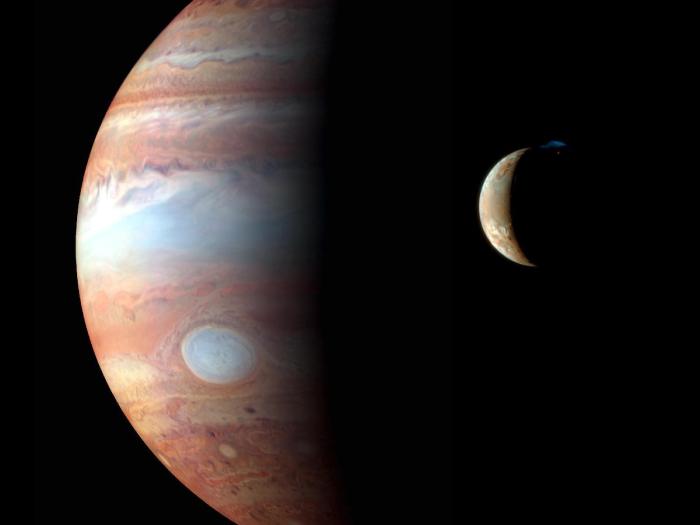
Meanwhile, the Outer Solar System hosts an entirely different mix of people. On the moons of Jupiter (the Jovians), Saturn (the Cronians), and Uranus (the Uranians), people enjoy a simpler existence. While they have access to plenty of advanced technology, many types of nanotech, biotech, and embeddadles are eschewed in favor of organic living, portable machines, and non-sentient computing.

Despite the fact that the Jovians, Cronians and Uranians are made up of countless peoples and factions, collectively, they are often referred to as “Retros” – a pejorative used to refer to their regressive lifestyle. But whether it is for religious reasons, personal reasons, or because they fear that Earth and the Inner Colonies have become consumed by runaway change and progress, the people who call these moons home prefer to maintain a balance.

Whereas these colonies were established in the latter half of the 21st century to ensure that humanity would have backup locations in case Earth died one day, by the 22nd century, they became dedicated to the preservation of something else. In this day in age, it is no longer about ensuring humanity’s physical survival, but rather preserving its spirit or a certain way of life.
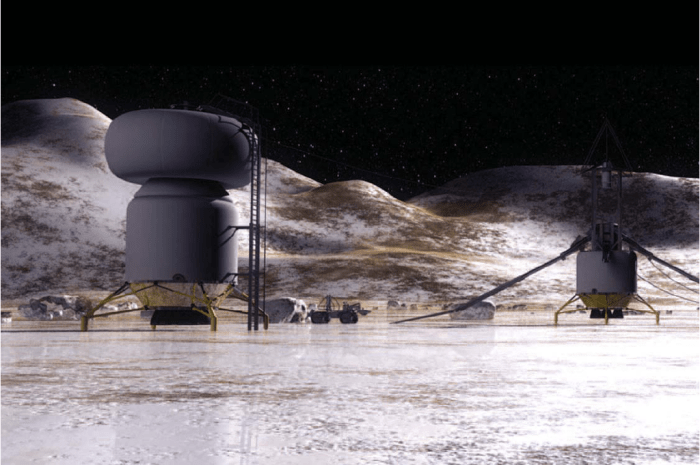
Callisto_baseThe Plot:
Enter into this universe Jeremiah Ward, a disgraced former-detective who developed a drug problem as a result of his stressful work and the pace of life in the Inner Colonies. After an incident where two witnesses were murdered – which was attributed to negligence on his part – he is given a hefty prison sentence, which he decided to serve out in a penal colony on Mercury.

On this planet, where the day-side is hellish and unlivable, and the night-side is freezing and unlivable, mining crews live in the northern crater known as Prokofiev. Given the planet’s slow rotation (which takes 58 days to rotate once on its axis), mining crews go out to the night-side, spend days harvesting ore, and then transport it back to Prokofiev, where it then processed and fired off into space.

After a few years of this miserable existence, Ward is approached by a faction from Mars. Known as the Formists, this well-connected and powerful faction has a very strong standing on Mars. And they have a problem. One of their prospectors, who was traveling to the Outer Colonies to investigate their resource extraction operations, has gone missing. Worse yet, this prospector apparently had “sensitive materials” on his person that the Formists don’t want falling into the wrong hands.

titan_surface
These materials, they claim, detail a plan to convert Mars into a livable environment over the next few generations. Consistent with the Formists long term plan to terraform Mars into a new Earth, they are hoping to expand their contracts with the Outer Colonies for the vast amounts of resources they will need to do so. If these plans are made public, they worry that one of the rival factions – the Dysonists, the Habitationists, Settlers or Seedlings – will try to take advantage.

In exchange for finding their colleague and obtaining this information, Ward will have his sentence reduced to time served. He is told that his experience as an investigator makes him well-suited to the task, as well as the contacts he made in the Outer Colonies during his many years of service. But of course, he knows the real reason why he was selected: as a convict, he will be well-motivated to get the job done, and will be less likely to ask questions.

His journey takes him from Mars, to Jupiter’s moons of Ganymede and Callisto, and eventually to Titan – Saturn’s largest moon and the last stop of the prospector before he disappeared. When he finally comes to the end of his investigation, what he finds is far more than he bargained for. Rather than simply being a case of kidnapping or a hate-crime perpetrated by angry Retros, the prospector’s disappearance is part of a conspiracy that goes right to the heart of the Formist’s agenda.
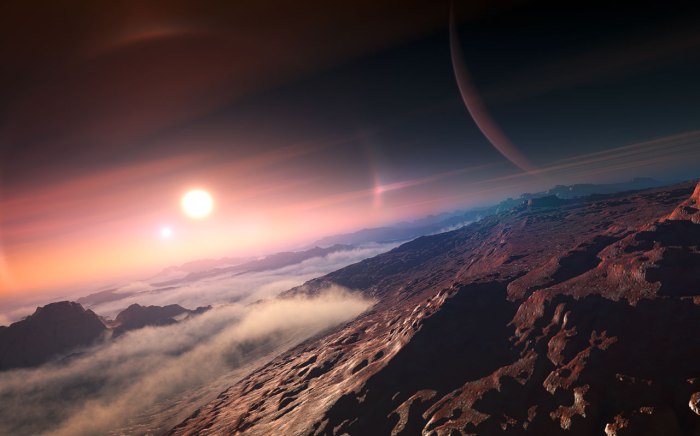
alien-world
More than that, it goes right to the heart of an ongoing struggle, one which humanity has been preoccupied with for over a century. For in the end, the issue of humanity’s long-term survival has not been settled. And the solution to this problem just might mean sacrificing the few to save the many. In the end, Ward will be faced with a terrible decision: expose the agenda and spend the rest of his life on the run, or complete his mission and let things fall where they may?

***Of course, I can’t say what the big “conspiracy” is, for that would be spoilers galore! But suffice it to say, I have that worked out and its where the story gets particularly detailed, and brings up a lot of the intricacies of terraforming and space colonization.***

So that’s the idea. How does it sound? I’m five chapters in and quite hopeful that it will turn out to be something “magnum opus-y”.

Featured Guest Post: “Realistic Sci-Fi – The Best Films That Accurately Portray the Modern World” by Maria Ramos

interstellar_voyage-3840x2160

Please welcome back to the site, Maria Ramos. You may recall her last contribution, which dealt with Contemporary Dystopian Novels that are worth reading and not part of the current, overplayed YA fad. Well she’s back, this time with contemporary science fiction movies that are definitely worth watching. Enjoy!

The world of science fiction is full of fantastical tales that have no place in reality. Some of the best stories could never happen in real life. Still, the ones that really capture our imagination are those that contain a hint of truth. These five films are fascinating examples of realistic sci-fi films that may provide a glimpse into our future.

Many films of the past have been able to accurately predict things like tablet computers, home security and automation, cell phones and wearable tech. It’s a strange thought that these objects, when shown for the first time on the silver screen, seemed so far fetched and borderline ridiculous, but today are as commonplace as a coffee maker. Let’s take a look at some of the films that have gotten it disturbingly right in their predictions.

Metropolis (1927):
This film from the 1920s is set in a seemingly perfect city filled with wealthy people living a charmed life, with no idea that a vast population of oppressed workers are forced to stay underground, operating the machines that keep life going for the upper class. Although created decades before the advent of computers or even television, Metropolis predicted video calls through programs like Skype with its “television phone,” which characters in the movie use to communicate.

The Andromeda Strain (1971):
This film based on the novel by Michael Crichton tells the story of an alien virus that comes into contact with humans, mutating as it goes, almost destroying civilization. From biological warfare to satellites and laser weaponry, a lot of what is used throughout The Andromeda Strain mirrors the technology we have available to us today. Even the premise of the movie in general is not completely outlandish; microbiologists believe that it is possible that we may one day contract an extraterrestrial disease. If that were to happen, it’s unclear whether we would have the tools to combat it.

Gattaca (1997):
The premise of this 1997 flick may seem completely impossible: society is structured based on genetic sequencing, which reveals everyone’s genetic makeup. Clear lines are drawn, giving those who are genetically superior special privileges over everyone else. The discrimination the main character faces for his inferior dreams isn’t yet a reality, but as we work towards sequencing complete genomes, we will find ourselves closer to uncovering the secrets of our genes, and the consequences of this knowledge may not all be good. The film’s basic premise echos the recent controversy surrounding genetic testing to detect cancer.

Interstellar (2014):
In this movie, the world has become uninhabitable due to drought brought on by global warming, forcing mankind to search for somewhere to live. Although we haven’t reached this point, scientists stress the very real possibility of climate change ending life on Earth. If this were to happen now, humanity would be doomed, since we haven’t quite mastered the art of long-distance space travel yet. Still, scientists say that a trek on the scale of the one taken in Interstellar is possible. Ideas for how to accomplish this are still being explored, but thermonuclear fusion, light sails and gravitational slingshots are all potential solutions.

Mad Max: Fury Road (2015):
One of this year’s most popular films is also one of the most noteworthy as far as realism in science fiction goes. While apocalyptic settings aren’t uncommon in sci-fi, the psychology of the characters in Mad Max: Fury Road is unique. Instead of the stereotypical hero who beats the villain and gets the girl, Max shows the kind of psychological damage you might expect in a harsh environment like the apocalypse. The other people in the movie also show the influence of this trauma through their behaviors, making for a realistic portrayal of what the end of the world might really be like.

Scientifically accurate sci-fi can both educate and inspire its viewers. Films like the ones listed above offer a window to the future, letting us see what might happen if we continue on the path that we are on. These predictions are sometimes an encouragement to innovate, but also sometimes a warning to change course before it’s too late. Either way, realism in science fiction makes for quality films that can be enjoyed for decades to come.

Madmax

New Movie Trailer: The Martian

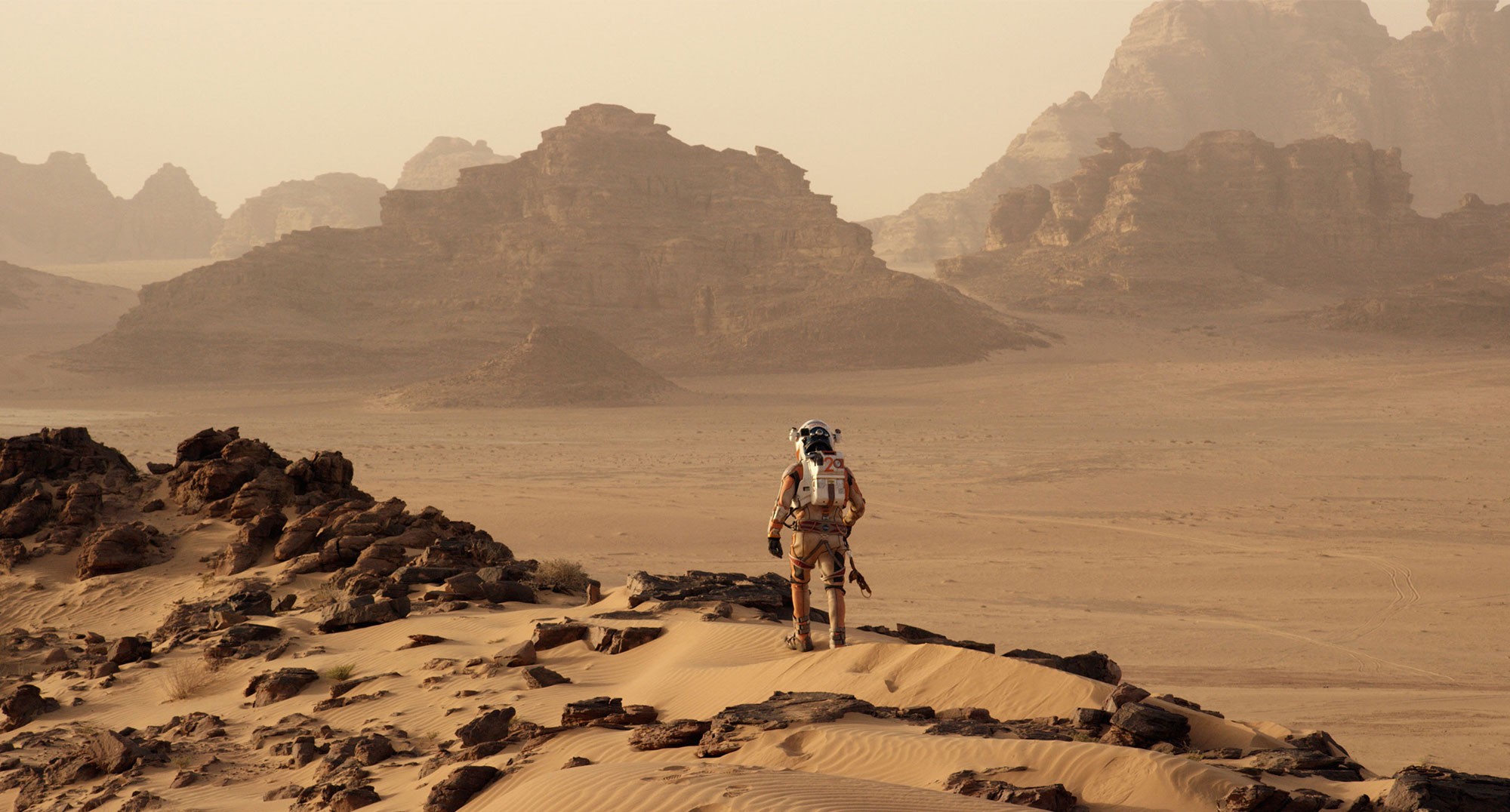
the_martianThe latest trailer for the The Martian has just hit cyberspace! And as you can see, its quite the doozy. Based on the novel by Andy Weir, The Martian tells the story of Mark Watney – a botanist and space engineer who is part of a manned mission to Mars. When an unexpected storm strikes in the course of that mission, Watney is lost during evacuation and presumed dead.

However, the crew soon learns that Watney survived the storm and has been living on the planet ever since. With a return mission expected to take years before it can reach him, NASA must struggle with a terrible dilemma – risk the lives of many astronauts to save one, or let Watney die alone on a distant planet?

I will definitely seeing this movie, but not before I read the original novel! And I can proudly say that after learning about this movie, I ordered a copy of the book a few weeks back and it now sits on my nightstand. I still got finish a few things before getting to it, but I plan to have it read before the movie comes out in October. There is no way in hell I’ll be waiting for this movie to come out on DVD or Netflix!

New Trailer: The Expanse

expanseHey folks, long time! I’ll get right to the point. I came across these trailers lately while chatting with my fellow fans of SF and Space Opera (SO). As you may know, one of the highlights from SD Comic Con every year are the trailers for upcoming movies and SF television series. Well, this year, a particularly interesting looking trailer was featured, one which got a lot of people excited.

Based on the novels of James S. A. Corey, the Expanse is set 200 years into the future, when humanity has colonized Mars and established a mining colony on Ceres. Tensions are brewing between Earth and Mars and a full-scale conflict is feared. Meanwhile, the people who work the Asteroid Belt (known as Belters) are resentful over the ways they are exploited by planetary governments and are threatening to revolt.

Enter into this a detective looking to solve a murder, but who naturally gets caught up in a web of intrigue. Naturally, the trailer impressed quite a few people, and Lauren Davis, the writer from IO9 who was there to write about it, even went as far as to say that this is the kind of show fans of SF have been “wanting since Battlestar Galactica”.

You can see why from the trailers. The show is dark, gritty, and has a realistic feel that puts human nature at the center of all its predictions for the future. Below is the first full-length trailer that made it to ComicCon, followed by the expanded trailer that aired just before it:

Source: IO9

Reciprocity – Making Progress

future-city-1Hey all. Just wanted to let people know that I’m still around. And as luck would have it, I’ve found myself with some free time; free time that I’ve put towards creative writing again! In the past two weeks in fact, I have come up with a lot of new ideas for both Oscar Mike and (more importantly) Reciprocity. On this latter project, I’ve spent the past few days working through the half-written spots, and now I have a full five chapters done.

More importantly, I have revised the overall plot yet again. The last time I did this (not that long ago), I chose to change the nature of the antagonist to that of a Chinese ex-pat who was a former member of Unit 61398 – the People’s Liberation Army’s cyber warfare division. His name was Shen, and his plot involved a string of kidnapping, double-dealing, and cyber-terrorism that threatened to change the global geopolitical balance.

I liked this idea because I felt that after a good deal of research, the focus of the story should be on post-communist China, where a great deal of social confusion and economic turmoil was leading to the emergence of a semi-fascist state. In a pattern that is reminiscent to modern-day Russia, Shen sought to take advantage of these changes in order to unleash a massive cyber attack.

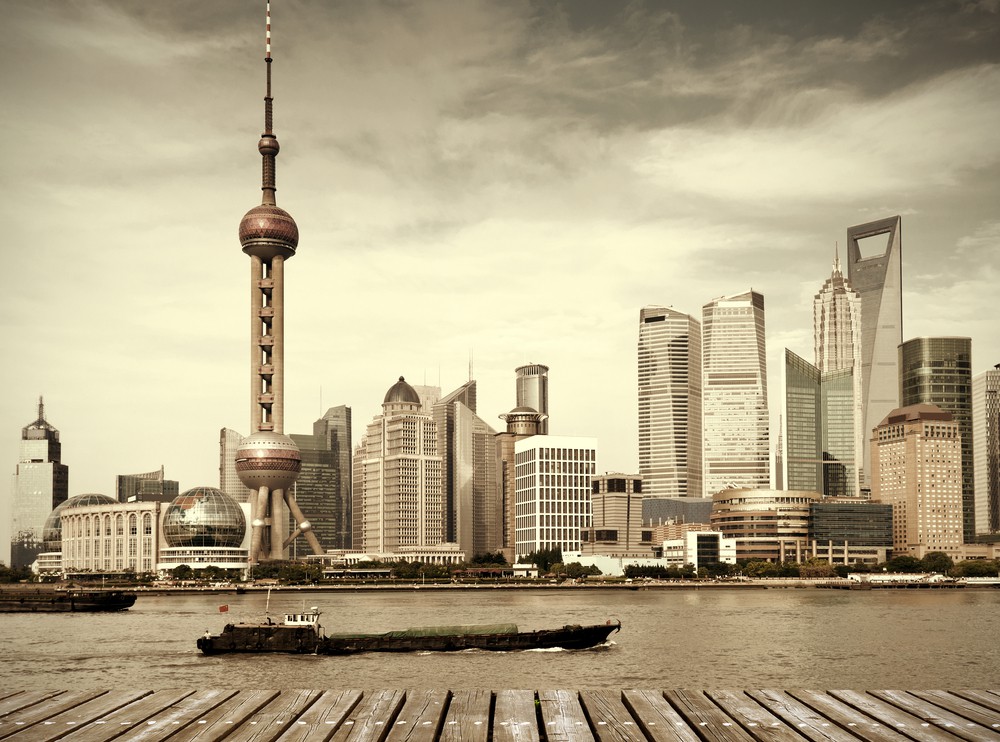
The downtown district of Shanghai. One of many locations in the story.
The downtown business district of Shanghai. One of many locations in the story.

This would have the effect of completely preoccupying the west, disabling the US Pacific Fleet, and allowing China’s new government to occupy Taiwan and the South China Sea, thus asserting their territorial sovereignty over the region. While this was interesting (at least to me), it still fell short. What I really wanted was an antagonist in the story that would make the focus be all about the two greatest issues we will be facing in the not-too-distant future.

These issues are none other than climate change, which will result in more in the way of droughts, wildfires, flooding, coastal storms, tornadoes, and diminishing resources; and technological progress, which will result in the pace of change and getting faster and faster to the point of total unpredictability.

For awhile, I’ve been writing about these subjects, and they were supposed to be the centerpiece of the story. So here’s the new plot, in a nutshell: The year, same as always, is 2030. A technological magnate’s child disappears while slumming in the Pacific Northwest in what appears to be an act of kidnapping. However, his disappearance is in fact orchestrated as part of a complex cyber intrusion designed to steal company data.

InternettrafficThe man leading this theft – who is known only as Zeke – intends to leverage this data in mainland China, where a former member of Unit 61398, now himself a technological magnate, is in possession of a quantum-based cyber virus of last resort, a weapon that was created for a war that never happened. This virus is known as “Baoying”, which in Chinese, loosely translates to Reciprocity.

Zeke knows about this weapon because he spent years developing contacts around the world, bringing together gun runners, terrorists, socialist and anarchist militias, and Chinese ex-pats that reaches from Central Asia and the Middle East all the way to South America and the South Pacific. Though separated by ideological differences, these organizations are united in wanting to see an end to the status quo.

Zeke, however, has his own agenda. A one-time member of the technological magnates he is now using as pawns, he saw so much of the world and witnessed atrocities firsthand. He also witnessed how the privilege of developed countries is paid for in the blood of others. After a scandal in which he publicly aired all of his companies many shady dealings, his partners crucified him and cast him to the fringes of society.

^In an age where the richer nations are facing the prospect of limitless energy, quantum computing, abundant resources and post-mortality while other states are failing due to displacement and mass starvation, Zeke is hoping to level the playing field once and for all. He is a genius and a man moved by a personal sense of justice. But most of all, he is a man dealing with terrible demons and some deep trauma that he can’t begin to suppress.

This kind of plot, I think, works so much better. The antagonist seems much more socially relevant, the story more focused on the big issues I like to explore, and it all seems a little less hawkish than a story where the Chinese are essentially the bad guys. But most of all, I envisioned a climactic scene where the antagonist – while explaining his motivations – says something like this:

I want a future I can control. I want a future where I have a choice. I am sick of unpredictability, or chaos and confusion. I’m sick of people being left behind, and our world being torn apart. Tomorrow, everyone will find themselves on common footing. Tomorrow, we will begin thinking towards our common future.

Try getting something like that out of a former communist who just wants to see his country win a war! Well, that’s the idea as I see it right now. What do you think? Sound good?

Reciprocity – The Deets

self-aware-colonyHey again, all. I find myself with some spare time for the first time in awhile. So I thought I might take a moment to share an idea I’ve been working with, in a bit more detail. Last post I made, I talked about the bare bones of a story I am working on known as Reciprocity, the successor to the story known as Apocrypha. But as it turns out, there are a lot of details to that story idea that I still want to share and get people’s opinion on.

You might say this is a story that I am particularly serious about. Should it work out, it would be my break from both space-opera sci-fi and zombie fiction. A foray into the world of hard-hitting social commentary and speculative science fiction.

The Story:
So the year is 2030. The world is reeling from the effects of widespread drought, wildfires, coastal storms, flooding, and population displacement. At the same time, a revolution is taking place in terms of computing, robotics, biomachinery, and artificial intelligence. As a result, the world’s population finds itself being pulled in two different directions – between a future of scarcity and the promise of plenty.

space-solar-headSpace exploration continues as private aerospace and space agencies all race to put boots on Mars, a settlement on the Moon, and lay claim to the resources of the Solar System. India, China, the US, the EU, Russia, Argentina, Brazil, and Iran are all taking part now – using robotic probes and rovers to telexplore the System and prospect asteroids. Humanity’s future as an interplanetary species seems all but guaranteed at this point.

Meanwhile, a new global balance of power is shaping up. While the US and the EU struggle with food and fuel shortages, Russia remains firmly in the grips of quasi-fascist interests, having spurned the idea of globalization and amicable relations with NATO and the EU in favor of its Collective Security Treaty, which in recent years has expanded to include Iran, Afghanistan and Pakistan.

shanghai_towerMeanwhile, China is going through a period of transition. After the fall of Communism in 2023, the Chinese state is lurching between the forces of reform and ultra-nationalism, and no one is sure which side it will fall on. The economy has largely recovered, but the divide between rich and poor is all too apparent. And given the sense of listless frustration and angst, there is fear that a skilled politician could exploit it all too well.

It’s an era of uncertainty, high hopes and renewed Cold War.

The MacGuffin:
The central item of the story is a cybervirus known as Baoying, a quantum-decryption algorithm that was designed by Unit 61398 in the early 2020’s to take down America’s quantum networks in the event of open war. When the Party fell from power, the Unit was dissolved and the virus itself was destroyed. However, rumors persisted that one or more copies still exist…

MatrixBackgroundNotable Characters:
For this ensemble to work, it had to represent a good cross-section of the world that will be, with all its national, social and economic boundaries represented. And so I came up with the following people, individuals who find themselves on different sides of what’s right, and are all their own mix of good, bad, and ambiguous.

William Harding: A privileged high school senior with an big of a drug problem who lives in Port Coquitlam, just outside of the Pacific Northwest megalopolis of Cascadia. Like many people his age, he carries all his personal computing in the form of implants. However, a kidnapping and a close brush with death suddenly expand his worldview. Being at the mercy of others and deprived of his hardware, he realizes that his lifestyle have shielded him from the real world.

Amy Dixon: A young refugee who has moved to Cascadia from the American South. Her socioeconomic status places her and her family at the fringes of society, and she is determined to change their fortunes by plying her talents and being the first in her family to get a comprehensive education.

Climate_ChangeFernie Dixon: Amy’s brother, a twenty-something year-old man who lives away from her and claims to be a software developer. In reality, he is a member of the local Aryan Brotherhood, one of many gangs that run rampant in the outlying districts of the city. Not a true believer like his “brothers”, he seeks money and power so he can give his sister the opportunities he knows she deserves.

Shen Zhou: A former Lieutenant in the People’s Liberation Army and member of Unit 61398 during the Cyberwars of the late teens. After the fall of Communism, he did not ingratiate himself to the new government and was accused of spying for foreign interests. As  result, he left the country to pursue his own agenda, which places him in the cross hairs of both the new regime and western governments.

artificial-intelligenceArthur Banks: A major industrialist and part-owner of Harding Enterprises, a high-tech multinational that specializes in quantum computing and the development of artificial intelligence. For years, Banks and his associates have been working on a project known as QuaSI – a Quantum-based Sentient Intelligence that would revolutionize the world and usher in the Technological Singularity.

Rhianna Sanchez: Commander of Joint Task Force 2, an elite unit attached to National Security Agency’s Cyberwarfare Division. For years, she and her task force have been charged with locating terror cells that are engaged in private cyberwarfare with the US and its allies. And Shen Zhou, a suspected terrorist with many troubling connections, gets on their radar after a mysterious kidnapping and high-profile cyberintrusion coincide.

And that about covers the particulars. Naturally, there are a lot of other details, but I haven’t got all day and neither do you fine folks 😉 In any case, the idea is in the queue and its getting updated regularly. But I don’t plan to have it finished until I’ve polished off Oscar Mike, Arrivals, and a bunch of other projects first!

Rebooting An Idea – Reciprocity

future-city3For awhile now, I’ve been tinkering with a story idea known as Apocrypha. It first came to me back in 2009 when I decided to move away from space opera and into more hard science fiction. I even decided to relaunch the idea a few months back, which would be the second time I decided to reboot the idea. And now, I’m rebooting it yet again, but with one major change.

Basically, I’ve re-conceived the plot to focus on a world set in 2030, where China’s Communist system has collapsed, Russia continues to exist as a semi-fascist state, the internet of things is in full swing, and several different forces are competing for control over which direction the future takes. Some want to rehash old rivalries, while others want to bring about a revolution in computing that will dissolve all boundaries.

shanghai_towerThe name of the new story is Reciprocity, which is taken from the Chinese concept of Bao Ying. I chose this as a name because while researching Chinese ancestral religion, I came across a central theme which states that the fate of all human beings is determined by cosmic reciprocity.

The concept of Bao Ying is also expressed as follows in various Zhou-Dynasty texts:

On the doer of good, heaven sends down all blessings, and on the doer of evil, he sends down all calamities.

This belief incorporates two separate elements:

  1. Ming yun: which loosely translated, means personal destiny. Whereas ming is “life” or “right”, the word yun defines “circumstance” and “individual choice”. In the Chinese ancestral faith, it is perceived as something both fixed (bound by fate) and flexible (implying choice and free will).
  2. Yuan fen: which means “fateful coincidence”, describing good and bad possibilities and potential relationships. Here too, the elements of fate and choice intersect, with good and bad casualties being assigned usually to one or the other.

Both concepts are linked, because what appears on the surface to be chance events (for better or worse), are part of the deeper rhythm that shapes personal life based on how destiny is directed. Given the fact that I thought the story should focus on China, this concept spoke to me.

cyber_virusOriginally, Apocrypha was all about a group of apocalyptic terrorists who have ties to various anti-modernist, anti-western groups who try to use a Chinese cyber-virus named Hǔnluàn (Chinese for chaos) to accomplish their goals. However, this idea wasn’t panning out in a few ways. Mainly, the antagonists didn’t seem believable to me, especially where their motivations are concerned.

But after talking it over with a friend and neighbor, I came to realize that the real focus of the story was China – or rather, how the aftermath of Maoism would affect the country and the global balance of power. In this sense, the antagonists were much more believable if they themselves were Chinese ex-pats, people who were unhappy with the current world order and wanted to change it.

Unit-61398-Chinese-Army-Hacking-Jobs-With-Great-BenefitsBorrowing from Russia’s post-Communist experience, I basically foresee China going through many of the same problems in the near future. First, the state would find itself under a great deal of pressure due to ongoing demands for reform, pro-democracy protests, and the memory of Tienanmen Square. And I also imagine the health effects of air pollution and cancer farms would also add to the resistance.

But by the 2020s, I expect that the country will also be reeling from the effects of drought, famine, and the destruction of water tables. And then there would be the collapse of the economy caused by the implosion of the real estate bubble – a very likely possibility – which would end the Party’s long history of buying loyalty with economic growth. At that point, the Party would officially fall under the weight of its own corruption, bankruptcy and failure.

phoenix-towers-worlds-tallest-wuhan-china-designboom-01Ten years later, China would find itself in a state of serious change and facing an ambiguous future. On the one hand, it would remain a major power economically and militarily, but would still be suffering from lingering environmental damage and uneven development. As a result, it would find itself vulnerable to quasi-fascist politicians looking to exploit people’s uncertainty and funnel it towards a revisionist agenda.

I think you’ll agree, this idea makes way more sense than its predecessor. What’s more, it would give me a chance to cover a big angle I was looking at, which was the involvement of former members of the People’s Liberation Army Cyberwarfare Division (aka. Unit 61398). Assuming that said people were out a job in the not-too-distant future, they would be seriously upset and willing to help in a malicious plot.

What do you think? Too political? Or does it have potential?

Stephen Hawking: AI Could Be a “Real Danger”

http://flavorwire.files.wordpress.com/2014/06/safe_image.jpgIn a hilarious appearance on “Last Week Tonight” – John Oliver’s HBO show – guest Stephen Hawking spoke about some rather interesting concepts. Among these were the concepts of “imaginary time” and, more interestingly, artificial intelligence. And much to the surprise of Oliver, and perhaps more than a few viewers, Hawking’s was not too keen on the idea of the latter. In fact, his predictions were just a tad bit dire.

Of course, this is not the first time Oliver had a scientific authority on his show, as demonstrated by his recent episode which dealt with Climate Change and featured guest speaker Bill Nye “The Science Guy”. When asked about the concept of imaginary time, Hawking explained it as follows:

Imaginary time is like another direction in space. It’s the one bit of my work science fiction writers haven’t used.

singularity.specrepIn sum, imaginary time has something to do with time that runs in a different direction to the time that guides the universe and ravages us on a daily basis. And according to Hawking, the reason why sci-fi writers haven’t built stories around imaginary time is apparently due to the fact that  “They don’t understand it”. As for artificial intelligence, Hawking replied without any sugar-coating:

Artificial intelligence could be a real danger in the not too distant future. [For your average robot could simply] design improvements to itself and outsmart us all.

Oliver, channeling his inner 9-year-old, asked: “But why should I not be excited about fighting a robot?” Hawking offered a very scientific response: “You would lose.” And in that respect, he was absolutely right. One of the greatest concerns with AI, for better or for worse, is the fact that a superior intelligence, left alone to its own devices, would find ways to produce better and better machines without human oversight or intervention.

terminator2_JDAt worst, this could lead to the machines concluding that humanity is no longer necessary. At best, it would lead to an earthly utopia where machines address all our worries. But in all likelihood, it will lead to a future where the pace of technological change will impossible to predict. As history has repeatedly shown, technological change brings with it all kinds of social and political upheaval. If it becomes a runaway effect, humanity will find it impossible to keep up.
Keeping things light, Oliver began to worry that Hawking wasn’t talking to him at all. Instead, this could be a computer spouting wisdoms. To which, Hawking replied: “You’re an idiot.” Oliver also wondered whether, given that there may be many parallel universes, there might be one where he is smarter than Hawking. “Yes,” replied the physicist. “And also a universe where you’re funny.”

Well at least robots won’t have the jump on us when it comes to being irreverent. At least… not right away! Check out the video of the interview below:


Source: cnet.com

New Anthology Sample: Arrivals!

dome_cityI told you it’s been a busy time for the Yuva anthology, and not just for my venerable colleagues. In my case as well, I’ve made some headway on the short story Arrivals and thought it was time to share! For the last few samples, the story was focused on the goings-on of the Planetary Council once they had learned that a new convoy of ships was approaching the planet. As always, there were hard questions, fears and agendas at play.

For this part, I have chosen to shift the focus back to the person who noticed the new convoy of colonists (aka. the Second Wave) coming in the first place – Marcellin Strauss, a simple technician who toiled in anonymity prior to the detection of the approaching convoy that set everything on the planet in motion. Now, he finds himself being sought out by the Planetary Council, and told to report to strange location for reasons that are not shared. Hope you like the sampling, and stay tuned for more!

_____

Asteria Research Facility
Zarmina, Vogt

It was like looking at a still frame in some futuristic SenSim. The building had the appearance of a mushroom, an off-white, ground-hugging thing with just the slightest overhanging edges. And yet, its dimensions seemed unnaturally large for the setting, far bigger than anything he’d seen in an auxiliary dome, which this place certainly appeared to be.

As he disembarked from the transit car, Strauss consulted his Tab to make sure he was in the right place. The Council’s message had been somewhat short on explanations, but the directions had been quite precise. The private line he had taken to get here had deposited him at a stop just over a hundred meters away, and every building and laneway that sat between him and the mushroom cap seemed awfully quiet. As he looked around the expanse of the small dome, he got the strange feeling that he was very much alone… and being watched.

“Welcome resident! How may I assist you?”

Strauss almost jumped. He turned quickly to the right and noticed the transit chest sitting there. As always, this consisted of a squat red box with a tall display stand at the side. On the display screen, the words it had just uttered were displayed prominently; the happy, iconic face of Magid Mukhtari smiling as it repeated them.

“Welcome resident! How may I assist you?”

“I, uh…” he replied dumbfoundedly, and looked back in the direction of the far building.

“Will you be requiring personal transit on this trip?” the voice asked, suggesting the most obvious option. He considered the distance between him and his destination and judged that it was not an unreasonable suggestion.

“I guess so,” he said, and placed his Tab on his chest.

“Very good, sir. Please return the vehicle to one of several designated transit boxes on your journey when you are finished with it.”

The door on the box opened and a ground car presented itself to him. Stepping onto the foot rest, he placed his hands on the control ring and felt the car power up. The terminal in the middle came online and the face of Muhktari was there as well, giving him a quick tutorial.

“Just place your feet on the acceleration pads located at the front of the footrest to-”

Strauss didn’t bother to wait for it to finish. He had had enough experience driving himself around to know how the capitol cars worked. The face of the screen laughed as he took off, putting distance between himself and the stop.

“Whoa! I see you’ve done this before! Please exercise caution when driving amongst pedestrians and other vehicles. And remember to return the car to a designated transit chest when you are finished with it. Have a nice day!”

What pedestrians? he wondered, as he drove towards his destination. Several minutes passed as he closed the distance between the transit line and the far building. And at no point did he see anyone, nor any indication of people working inside the other structures. The feeling of isolation intermixed with the sense that he was being watched yet again, and it did not make for a happy state of mind.

He was just glad he wasn’t hungover as well, though a shot of liquid courage would certainly have been welcome! He did his best to focus on where he was headed and tried not to think of the eerie, empty buildings that were passing him by, or the distinct impression that they weren’t so much empty as containing spies who watched him from every window.

But on that front, things weren’t much better. At his current distance, the building seemed to loom much higher than before, forcing him to look up towards the dome’s roof to take it all in. This meant that the ceiling, with all it’s rigid struts and panels were now it’s backdrop. The strange, webbed pattern only served to make it all look somehow more… spooky.

As he got closer, he came to realize something else about the building. All along the façade, there were lines of various colors, but none of them seemed to correspond to a segment in the structure. As far as one could tell, the building was a single piece, no joints or seams to speak of. Such seemed unlikely, but the illusion was not dispelled with any decrease of distance.

That’s when every single device on his body began to signal to him. The sound was unmistakable, indicating that they were going into offline mode since there was no longer any bandwidth in this area. He came to a stop and pulled his Tab from his chest to confirm this. Sure enough, the Tab presented a topographical representation of the area that showed a large, circular dead zone emanating out from the mushroom-shaped building. Rather than having ventured beyond the range of the QIN’s wireless network, he was now entering an area where it was actively being denied.

He took a deep breath and let it out slowly. Between his observations of the structure and this latest revelation, it seemed clear that whoever was inside was taking great pains to keep what they were doing in there a secret.

What am I stepping into here? he wondered. He scanned the outer edge of the building again, trying to see if he could spot any telltale signs of cameras or spy drones. There were none that he could see, but he sensed they were there… somehow, somewhere.

And yet, he found himself pressing the accelerator pedal again and driving closer. Whatever this summons was, whatever was going on inside that odd-looking building, he wanted to know. Besides, at this point, he was just about there. Might as well go all the way and see what all the hubbub was about.

“You have reached your destination,” the happy face of Mukhtari said once he came to  stop. “I am not picking up any transit chests at this location. If you would like to park this vehicle for later use, please say so now. If not, please tell this car to –”

“Return,” he ordered, stepping free of the footrest. The voice stopped in midsentence, having recieved the requisite order to head back to it’s last storage location. It did manage to issue a kind farewell as it zipped away along the street, moving in a perfect rectilinear fashion.

“We hope that you enjoyed your ride!”

Strauss chuckled to himself and looked towards the mushroom, which now had the appearance of being a big, white giant. He was tempted to walk up and touch it, thinking at this point that it had to be composed of some kind of ceramic or composite material.

However, in one spot there was an irregularity –  a sort of circular hole that was two meters high and less than a single meter deep. Inside, the same seamless ceramic material sat, solid and impenetrable. But this was the only thing that even resembled a door. Taking another deep breath, Strauss took a few steps towards it and steeled himself for a surprise, one way or another.

That’s when he heard a loud hiss and a high pitched squeal. Strauss’ gate came to an immediate halt and his heart began to beat overtime. He stood motionless for several seconds, worried that he had set something off, afraid to move lest he make it worse.

But the noticed, the circular opening was opening further. Inside, several small lines appeared on the circular surface, bisecting the door at cross-angles, and then began pulling it open. When they finally opened all the way, he saw a woman standing there, wearing a grey jumpsuit with the same strange color patterns he noticed on the building’s façade.

“You Marcellin Strauss?” she asked, sticking her head through the open doorway. He found himself scanning her suit still, wondering just what the hell section it represented. She wasn’t with Planetary, or Defense, for that matter. Neither the color nor the insignia patches matched. He then realized she had asked him a question and simply nodded, unable to form words at the moment.

“Good,” she said. “Get inside, we have a lot to cover and we’re running late.”

She turned back inside and clearly meant for him to follow. Strauss managed to find his voice and clumsily uttered the obvious question. “I- I’m sorry. Who are you?”

She turned back to him and raised an eyebrow, a reaction that let him know exactly how little she thought of the question. “Madeleine Hartberg, Yuva Cosmonautic Corps.”

“Cosmonau-” he stuttered. “I- I wasn’t aware there was one.”

She smiled sideways. “There is now. And there are people inside who would very much like to talk to you. Are you going to come see them, or stand there like an idiot all day?”

Strauss once again fell mute and couldn’t move. And whoever this woman was, she was clearly getting annoyed because of it.

“Look, Strauss, I don’t have time to explain everything right now. Bottom line is, you’ve been asked to participate in something bigger than anyone on this planet has known since we made ‘Fall. Now are you coming, or are you going to miss out on that opportunity?”

Marcellin’s voice didn’t respond, but his feet seemed to be in working order. He knew this, because he began to follow her inside.

“Good!” she said, ushering him in. “Now please move it. Thirty seconds of this and I’m already sick of you!”

Latest Anthology Sample: Ember Storm!

exoplanet_hotThe past few months have been a busy and productive time for the people behind the Yuva anthology. Not only did we take on a host of new writers who adventurously volunteered to join us and share their passion for science fiction, they even managed to produce some solid first and even second drafts. In addition, several members that have been with the project from the beginning have managed to do some final drafts which merit sharing right now!

And this time, it’s Amber Iver’s and Goran Zidar’s Ember Storm, which they just put the final touches on. In this story, we see are given front row seats to a crisis in progress – as told from the points of view of two down and out maintenance workers, and a small family unit caught in the thick of things. Here’s a sample from the beginning, hope you all enjoy! And remember, there’s more where this came from once the book is published:

_____

“Hey, Charlie, do you hear that?”

“Leave me alone, Rhina,” Charlie grunted and pulled his cap down over his face. “I’m trying to sleep here.”

“The environmental alarm’s going off.” Rhina moved over to the console and brought up the display.

“So?”

Rhina studied the screen for a moment. “So it looks like there’s a storm coming.”

“Good.”

“Good?”

“Yeah, it means I’ve got nothing else to do but kick back and study the inside of my eyelids.”

“Wake up idiot,” Rhina tossed a PAD at her colleague’s supine form.

“Hey! What was that for?”

“Strap in. I’m taking us back.”

Charlie let out a huge sigh as he got to his feet and stumbled across to Rhina. She could smell the alcohol on his breath as he loomed over her and tried to get his eyes to focus on the screen.

“You won’t make it.”

“What do you mean?”

Charlie stabbed a finger at a coloured line on the screen. “Front’s coming in fast, it’ll hit before we reach the colony. We might as well just wait it out here.”

“Well I’m gonna try anyway.” Rhina reached forward and touched the ignition. “I don’t relish the idea of spending the next few hours with just your drunk arse for company.”

“That’s harsh.” Charlie’s face twisted in mock disappointment. “I’ll just be asleep on the floor. You won’t even notice I’m here.”

“Even asleep you’re crap company. Now strap yourself in, we’re leaving.”

*                    *                     *

“Good morning, Miss Siera. It’s time to wake up.”

“Just ten more minutes, please,” Siera said, sleep making her words run into each other.

The room was suddenly bathed in sunlight.

“Hey!” Siera was forced to shield her eyes from the bright light.

“Your mother’s instructions were quite clear, miss.”

Siera squinted as she threw the covers aside and strode across the room, snatching the PAD from David’s loose grasp. “Leave my PAD alone.” Her fingers danced over the screen and soon the light in the room dimmed to a more manageable level. “Why do I need to be up? It’s the weekend.”

“Isn’t this the day you’re to make lunch for your father?”

Siera sucked a breath, her drowsiness banished.

“Oh, no. I forgot.”

“That’s why I am here, miss.”

Siera smiled and leaned forward to kiss David lightly on the cheek. “What would I do without you?”

David raised a hand to his face, the latex skin of his cheek still warm where Siera’s lips touched him. “You’re appreciation is welcome but not necessary, miss. I am simply doing what I have been programmed to do.”

“If you’re going to look like a human being, I’m going to treat you like one.” She said as she scooped a bundle of clothes from the floor then ran to the bathroom.

“I am not responsible for my appearance. It was your father who constructed me. I had no say in the matter at all.”

Siera called from the bathroom. “None of us do, David. You’ve got more in common with humans than you realise.”

David shrugged. “I must say I don’t really think about it.”

Siera emerged from the bathroom. “Well you should. You’re part of this family, you know. You’re like the big brother I never had.”

“Well this big brother needs you to go to the kitchen.”

“Hang on a minute, I need my wrist com.”

Siera looked around the room quickly but couldn’t see the wearable communication device anywhere. She moved to the bedside table and rummaged through the drawer to no avail.

“Don’t just stand there. Help me find it,” she said, as she started tearing the sheets off her bed.

“When was the last time you saw it?”

Siera raised an eyebrow as she looked at David. “Are you kidding me?”

“You asked me to help.”

“How is that helping? Just look for it.”

David walked to the bathroom and returned a few seconds later holding the wrist com. “Here you go, miss.”

Siera ran up to him and enveloped him in a firm embrace. “Thank you, David. You’re a life saver.”

“As I said before, your thanks are not necessary.”

Siera clipped the device onto her wrist then looked at the mess she’d created in her room. “Oops … Mum’s going to kill me.”

“Don’t worry, miss. You go to the kitchen; I’ll stay and clean this up for you.”

Siera opened her mouth to say thank you, but David placed a finger on her lips. “Go. Your mother is waiting for you.”

Siera gave her untidy room one last glance then sped down the hall to the kitchen. The sound of pots and pans clanking told her that her mum and sister had started without her, and she hoped that she hadn’t missed too much of the preparation. Cooking with fresh ingredients, on an actual stove, like they did on Earth in the old days was a real treat, and one that didn’t happen very often.

Her mum, Tara, looked up as Siera entered the kitchen. “Good, you’re finally up. You can start by cleaning up Meghan’s mess.”

Her four year old sister, Meghan, sat with a broad grin as she stirred a bowl of dark coloured sauce. With each turn of the spoon, more of the sticky substance spilled on the bench and dripped onto the floor.

“Give the bowl to Siera, sweetie,” Tara said. “Then go wash your hands before we start on the next part.”

Meghan did as she was told, and Siera was left standing with a sticky mess to clean up. “I probably should have gotten up earlier, eh?”

Her mum glanced up. “I didn’t say a word.”

Siera set to cleaning the mess her sister created. “What’re we making?”

“It’s called Mongolian barbeque. The protein sequencer has replicated a few different kinds of meat, and I was able to pick up some garlic and onions from the market as well as something that tastes a bit like plum.”

“The sauce smells good.”

“Try some,” her mother suggested.

Siera dipped a finger in the sauce and placed it in her mouth. The sweet, spicy flavour of the fruit combined with the garlic and other ingredients exploded in her mouth.

“Oh my god, that’s amazing.”

Tara smiled. “Much better than synth food isn’t it?”

“I’ll say. Pity we can’t eat like this all the time.”

“It wouldn’t be special if we did it every day.”

“I suppose.” Siera took another taste.

“Enough of that, we’ve got a lot to do before your father and Joey get here.”

Siera placed the bowl of delicious sauce down on the bench and finished wiping the floor while her mother used a knife to cut the replicated meat into strips. When Tara was done she took the meat and placed it into the bowl of sauce using her fingers to knead the mixture together.

“What can I do now?” Siera asked.

“Can you ground some pepper in here while I do this? There should be some in the pantry.”

Siera opened the pantry door and hunted around for the pepper grinder. She picked it up and shook it. “I think we’re out of pepper, mum.”

“You’re sure?”

Siera rolled her eyes. “Yes, mum, I’m sure. Can we do without it?”

“It won’t be the same without pepper. I need you to run up to the market and get some.”

“Can’t David do it?”

Tara gave Siera a serious look. “I thought you wanted to help.”

“I do but–”

“Well this is helping. Take my chit and go to the market. Don’t worry; there’ll still be lots to do when you get back.”

Siera left their home, and walked along the open streets of the colony to the market. It was a clear day, and Yuva’s orange sun bathed the habitat with light and warmth, but this close to the light side of the planet, warmth was rarely an issue.

Their colony was built in the new style; a new style for Yuva.

The market and other amenities were located at the center of the colony, with the residential population surrounding it. It was a civic model that dated back to ancient times. No matter how far humanity had come, some things would never change.

People here lived and worked in detached buildings, with streets and walkways linking them together beneath a massive plasteel dome that shielded them from radiation and the elements. The terraformers had been able to make the air of Yuva breathable, but the planet’s ozone layer remained weak.

It was possible for a person to go outside the dome, but unless they wore a suit their skin would suffer from dangerous levels of ultra violet radiation.

Siera’s wrist com buzzed as she crested a rise in the street.

“Now what’s she forgotten?” she muttered as she checked the device.

LEVEL 5 STORM WARNING

Environment hazard protocols in place

Her heart raced and she lifted her gaze to look out past the colony’s dome. A thin line of grey marked the horizon. The storm was still a long way off, but she’d lived here long enough to know that it would be here in no time at all.