The Future is Here: The Mind-Controlled Robot Suit

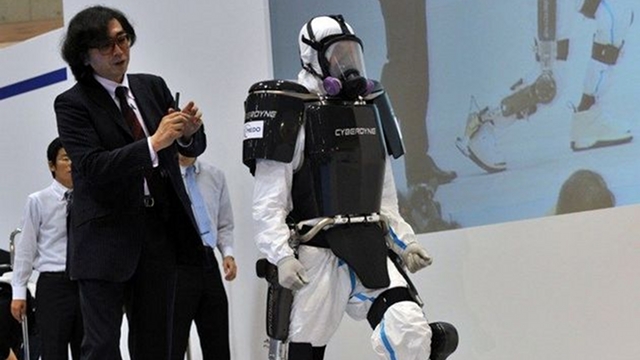
cyberdyneBack in October, some rather interesting news came out of Japan. It appears that a research company known as Cyberdyne produced a robot suit named HAL. No joke, the company is seriously named after the company from Terminator franchise that developed Skynet and the robot suit – who’s name stands for Hybrid Assisted Limb – is named after the HAL 9000 from 2001: A Space Odyssey.

Still, the company is the legit and the new robotic suit is quite impressive. Like many before it, it is a powered suit that gives the wearer enhanced strength and protection. But unlike previous models, this one comes equipped with a network of sensors that monitor the electric signals coming from the wearer’s brain, allowing them to seamlessly control the suit’s movements.

This is expected to remedy a problem which has plagued exoskeletons since their inception, which is the problem of speed. While all exos allow for greater strength and load-bearing capacity, the motors that power the limbs tend to respond slowly to the users commands. By anticipating the wearer’s movements by reading them directly from the brain, this new suit will be able to move in synchronicity with the wearer’s limbs.

The suit is also expected to be helpful with Japan’s ongoing cleanup efforts with the crippled Fukushima nuclear power plant. In addition to the new mind-control interface, the suit’s load-bearing capacities are expected to come in handy for workers who are forced to wear a 60 kg (132 lbs) tungsten vest while working in radiation zones. Even for a husky man, that’s quite the load to bear on top of all the additional weight they’ll need to be carrying.

Naturally, there are anticipated hazards as well, like what will happen if the power supply were to suddenly run out. Essentially, the wearer would be trapped inside. However, these and other bugs are expected to be addressed before any units are pressed into service. And with luck, suits like these could available for HazMat workers, construction crews, and people who work in dangerous conditions in just a few years time.

Source: japandailypress.com

More Judgement Day Announcements…

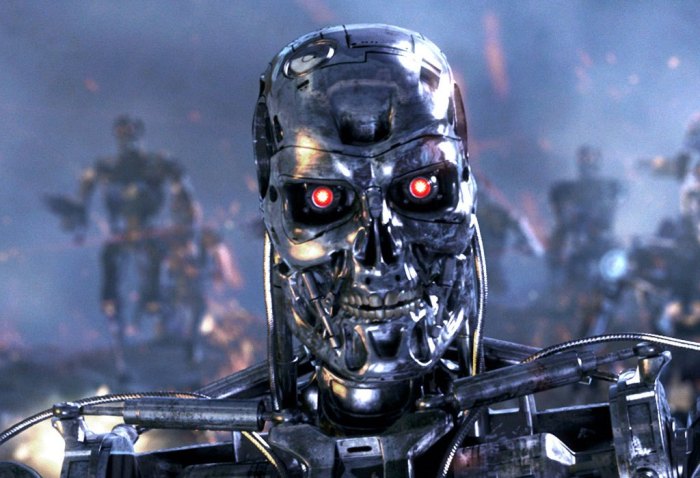
terminator_judgement_dayNovember saw some rather interesting developments in the field of robotics. First, there was the unveiling of Disney’s charming juggling robot, an automaton capable of playing catch with a human being. This robot is intended for use in Disneyland parks as a form of entertainment for guests, but many people wonder if this is an eerie precursor to a machine that is capable of throwing other things as well…

While Disney was scant with the details of how the robot works, they did explain that a camera tracks the balls being thrown, while an algorithm works out exactly where the ball is going to land and positions the robot arm accordingly. Combining video tracking and software, the robot is able to anticipate where its catching hand needs to be, much like the human brain does. Check out the video of it playing catch with a human stand-in below:


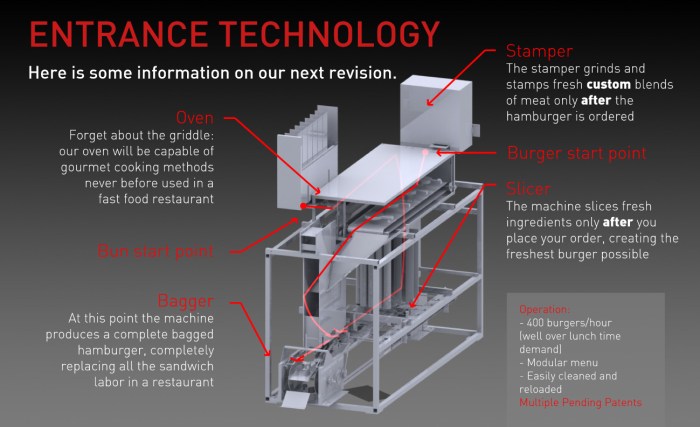
Also in the news, Momentum Machines unveiled a new automated burger robot chef last month. After being successfully tested on the line, the company announced its plans to introduce this robot to fast food chains everywhere, saving companies millions of dollars in staffing costs. According to projections, Momentum Machines says that its automated burger robot — which does everything from flipping burgers, to slicing tomatoes, to toasting the bun — could save the fast food industry $9 billion in wages.

Of as yet, no video is available of the burger robot doing a demonstration, but this helpful infographic does give a breakdown of the robots structure and basic functions (below). Granted, this might seem like a callous and insensitive move, especially to the over 2 million workers currently employed in fast food in the US alone. But with just about every other production line having been automated already, this seems to many like the next logical step. Good luck Momentum Machines; hope the angry mob outside your offices doesn’t scare you!

robot-burger-flipper-momentum-machinesGranted, this may all still seem like a far cry from Skynet and Cylons, but under the circumstances, is it any wonder that Cambridge University founded the Center for the Study of Existential Risk (CSER) to evaluate new technologies? Clearly, some people are worried robots are going to be doing more than just chucking balls and flipping our burgers.

The Post-Apocalypse in Sci-Fi (Part II)

Akira:
This futuristic tale takes place in Neo-Tokyo, an ultra-modern city that was built on the ruins of the old after an incident touched off World War III. This is a major them in the movie Akira and manga it was adapted from. Throughout the entire story, there is a pervasive sense of shock and horror over the destruction of the old city, and a sense of dread that it might happen again very soon…

Enter into this story the characters of Kaneda and Tetsuo, two orphan boys who belong to a biker gang that is constantly engaged in battles with other gangs for control of the streets. Being children of the system after their parents died in the war, all they really have is each other and the other members of their biker gang. These surrogate families and their ongoing feuds provide a sense of community and an outlet for their pent-up energies, living in a world characterized by boredom and angst and haunted by a past filled with horror.

In addition, you have Colonel Shikishima, a man who witnessed WWIII and has dedicated himself to the rebuilding and ensuring that it never happens again. In addition to being a main character, he is representative of the generational gap in the story. As a stern, disciplined military man who was shaped by apocalyptic events, he is appalled by the sense 0f self-indulgence which he feels has set in with the younger generation.

And the apocalyptic nature of the story is something which is demonstrated over and over through intense scenes and nightmarish visions. In short, it’s an awesome take on the post-apocalyptic scenario, which could only come from firsthand experience.

Alas, Babylon:
This 1959 novel by Pat Frank is one of the first post-apocalyptic stories of the nuclear age and has remained a science fiction ever since. Taking place in small town in Central Florida, Fort Repose, the story opens with a veteran-turned-lawyer named Randy Bragg who gets a cryptic telegram from his brother who works for the Strategic Air Command. He informs his brother that he will be sending his wife and kids to stay with his Randy, and ends it with “Alas Babylon”, a biblical reference which his brother uses as a euphemism ford disaster.

In time, he learns that the bad news concerns a potential Soviet attack, which inevitably takes place after much escalation. After bringing his sister-in-law and her kids to their home, they are all awoken in the night to the sounds of Miami being bombed. They residents awake to witness a mushroom cloud forming over Tampa shortly thereafter, and the events which characterize the following 24 hours they come to name “The Day” – i.e. a one day war.

The story delves into the effects of “The Day”, which are felt differently by people in Fort Repose. Tourists are trapped in their hotels, convicts escape from jails and prisons, the local retirement homes are filled with panicked people, and just about everyone tries to withdraw their money from the local bank and buy up supplies. The only reliable means of news comes through short wave radio.

As chaos begin to set in, Randy begins to organize neighbors to provide housing, food, and water for themselves and organizes the community to defense itself against highwaymen. As an active Army Reserve officer, Randy learns that he has the legal right to exercise martial law, and an order comes in over the short wave from the acting Chief Executive (who is governing from a bunker in Colorado) for any surviving officers to form local militias.

In the end, military helicopters arrive to evacuate people, but are refused as the locals tell them that they want to stay in the new home they have built. They learn the war is over, that the USA prevailed, and that country is now being run from Denver. However, the victory came at a tremendous cost, Millions are dead, entire stretches of the country are irradiated and won’t be habitable for a thousand years, and the US is now a third-rate power that is dependent on third world countries for aid. Faced with this prospect, the people of Fort Repose settle in and decide to face the “thousand year” night that is coming.

This book not only introduced readers to the likely prospect of what would happen in the event of WWIII, it also presented a likely scenario of how that was going to happen. While it the Soviets were apparently planning an attack in the first place, it was an accident that touched everything off. And in the end, how people went about rebuilding and trying to restore some semblance of normalcy was quite classic. In addition to inspiring numerous generations of nuclear holocaust fiction, numerous apocalyptic franchises owe an allegiance to him, not the least of which is the re-imagined series of Battlestar Galactica.

The City of Ember:
This post-apocalyptic story, written by Jeanne DuPrau in 2003, takes place in an underground city named Ember. After many years of continuous habitation, the city is slowly running out of power and supplies. Similar to in tone and structure to Suzanne Martel’s 1963 story The City Under Ground, this city was apparently built to ensure that humanity had a place to live and wait out the effects of nuclear war.

The story begins when a two protagonists, Lina Mayfleet and Doon Harrow, receive a message which is apparently left by “the Builders” containing clues that could lead them back to the outside world. This message was kept in a box that was passed down from mayor to mayor, with instructions that it be opened after two hundred years. Until recently, the box had been lost, but as soon as Mayfleet and Harrow find it, the race is on to decipher it and find a way to the surface.

In the end, the children follow the note’s instructions through a series of caves that lead them towards the surface. When they see the city from above, they realize that they are underground, something which they never knew before. This scene, which calls to mind Plato’s “Allegory of the Cave”, provides the story’s big revelation. The story then ends on a cliffhanger note with the girls trying to alert the other inhabitants of what they’ve found.

The Matrix:
The setting and back story of the Matrix revolve around two fundamental facts: One, that a terrible war between humanity and AI’s took place in the future; and two, that what is left of humanity lives underground due to the devastation wrought on the planet’s surface. Enter into this the concept of the Matrix, a simulated reality where humans are kept docile by being fed the lie that they live in the pre-millenial world, at a time when human’s were still in charge.

But of course, not all human beings are able to accept the program and experience a sort of existential crisis as a result. When Mr. Anderson, hacker alias Neo, is presented with the answers he so desperately seeks, he is horrified to learn the terrible truth. Not only was it the year significantly later than he thought, but the world as he knows it was destroyed long ago. All major cities reduced to rubble, the sky itself has been “scorched”, and the surface rendered a cold, uninhabitable shadow of its former self.

This is a crucial element of the Matrix, which is not just a sci-fi story set in a post-apocalyptic world, but a metaphor for truth and “false consciousness”. With reality so displeasing and harsh, there are many who would prefer the warm comfort of a simulated world, which just happens to be a recreation of happier, stabler times. The metaphor is not just thick, but multi-layered!

It is for this reason that the majority of human beings accept the programming of the Matrix, even if they are only aware of this acceptance on an unconscious level. It is also the reason why those who choose to opt out of it, due to an innate feeling that their reality isn’t real, is a choice which must be made many times over. As Cypher himself demonstrated in the first movie, not everyone has the stomach for the real world, and will willingly betray their comrades for a chance to be put back inside. Others however, find hope in the prophecy of “The One”, the person who’s arrival will herald the end of the war and peace for humanity at last… or so it seems!

The Omega Man:
Released in 1971 and starring (once again) Charlton Heston, this movie post-apocalyptic film is a classic amongst film buffs. Based on the 1954 novel, I Am Legend, this story has gone through many adaptations over the years and has been spoofed and imitated endlessly. Though the plot was updated for the most recent version (2007, starring Wil Smith), much of the elements – a post-apocalyptic world, a lone human survivor, fighting against mutants – have remained the same.

Essentially, the plot takes place in a world that has been devastated after a terrible plague was unleashed and wreaked havoc on the world. In the film versions, this involved biological warfare between the Soviet Union and China – or a mutated cure for cancer – but was only hinted at in the book. In any case, the story revolves around a man named Robert Neville, a doctor who seems to be the last man on Earth, hence the term “Omega Man”.

Though technically not the last living creature, Neville appears to be the last human being who has not succumbed to the most dreaded aspect of the plague – transformation into a flesh-eating mutant. Whereas most of humanity died after exposure, a small minority was converted, leaving an even smaller minority of infected to be hunted as prey. Living in a fortified apartment with an arsenal, Neville spends his days patrolling the abandoned city and killing members of “The Family” – the albino mutants who are hunting him.

At the same time, Neville is dedicated to finding other survivors who have not turned. Eventually, he is saved by one such group of people, but discovers that they are not immune as he is. He decides to treat others using his own blood as a serum, while at the same time escaping to the wilderness to start a new life while leaving the mutants to die in the city. Ultimately, Neville is forced to sacrifice himself to stop the Family from overtaking the rest of them, but the survivors make it out, carrying with them a vial of his blood.

Though significantly different from the original novel, all versions of the story deal with a world in which all of humanity has been wiped out by a biological agent, not nuclear war or a natural disaster.

The Road:
This 2006 novel by Cormac McCarthy, which was adapted into a 2009 movie of the same name, takes place in a post-apocalyptic world where a father and son wander the landscape together. Though it is not specified what caused the destruction they are forced to witness and endure, what is clear is the effect it had on the survivors. Most people have given up hope in the ashen landscape, while others struggle to stay alive and some even turn to cannibalism to survive.

The plot involves an unnamed father and son who are venturing south towards the coast because they have realized that they will not survive the winter where they lived. Though the father is dying and they have barely any possessions to speak of, and the land in between is filled with horrors, the two keep going, fending off roving bands of cannibals and raiders and maintaining hope that the coast will be their deliverance.

All along, is father assures his son that they are the “good guys” who are “carrying the fire” through a dark terrible land. In the end, they find no refuge when they reach the sea and are forced to venture back inland, but the father finally succumbs to his illness and dies. He tells his son to maintain hope and to speak to him in his mind after he is gone, and the boy holds a vigil for days over his father’s body when he finally passes on.

With no idea what to do or where to go, he is eventually found by another family who claim to have been tracking them. The father of the group assures him he is one of the “good guys” and asks the son to join them. With no other options available to him, he agrees to join them and they set off together to find a new home.

Inspired by McCarthy’s own relationship with his son, and a great deal of speculation about what the apocalypse would look like, this story is a very personal take on the end civilization and the struggle to survive. Whereas a great deal of the survivors have resorted to unspeakable acts in order to stay alive, McCarthy redeems humanity by showing the lengths to which regular people will go to protect their families and ensure that good people live on when all the world goes to hell.

The Scarlet Plague:
Here we have a post-apocalyptic classic that predates the nuclear age. Written by Jack London and published in 1912, this story was the original “last man on Earth” scenario which inspired such works as I Am Legend and many others. In addition to being based on the idea of a plague wiping out nearly all of humanity, the stories resolution involves the main character imparting his knowledge to others to ensure that something survives when he is gone.

The story is set in San Francisco in the year 2073, sixty-years after a terrible epidemic, known as the Red Death,has depopulated the planet. Enter into this the story’s protagonist, a man named James Howard Smith, a survivors from the pre-plague era. As an aging man living in the San Francisco area, he is faced with the unpleasant question of what will happen when he dies. As one of the few people who is old enough to remember the pre-plague days, he possesses rare knowledge which will be lost.

Through Howard’s narrative, we learn how the plague spread throughout the world and of the struggles of the handful of survivors it left in its wake. This is apparently being told to his grandchildren, who he has decided to teach everything he knows to ensure that his knowledge will not be lost.

Much like the novels it helped inspire, the Scarlet Plague’s real value lies in its personal nature, relating how the struggle to survive goes beyond the mere physical. In the end, it is when people are facing death that what is most important in life is realized and affirmed. Or to put it is as Commander Adama did, “It’s not enough to survive. One must be worthy of survival.” Sorry! My mind keeps going back to BSG with all this post-apocalyptic talk. More on that one later…

The Terminator:
Central to the story of the Terminator franchise is “Judgement Day”, the day when humanity was nearly destroyed in a nuclear holocaust that was triggered by the sentient machine known as “Skynet”. This serves as the backdrop to the story, along with the ensuing war between the human resistance and the machines its spawned.

Though the majority of the story takes place in modern-day Los Angeles, a great deal of attention is dedicated to the war in the future and what life is like for those who survived Judgement Day. Kyle Reese described his life in the following way: “There was a nuclear war… There were survivors. Here, there. Nobody even knew who started it. It was the machines… I grew up after. In the ruins… starving… hiding from [Hunter-Killers]. Patrol machines built in automated factories. Most of us were rounded up, put in camps for orderly disposal. ”

Eventually, these camps were liberated by John Conner, the leader of the Resistance. After training and equipping the survivors, effectively turning them into a fighting force, Conner led them in a protracted war against the machines. For the most part, the resistance lived and operated out of underground facilities and went out at night to fight HK’s and Terminator’s, guerrilla-style. Survivors and refugees were gathered in these facilities, and their defenders were forced to constantly be on guard against infiltrators. Eventually, John Conner organized all his fighters into a massive offensive force and led them against the Skynet’s central HQ, destroying it and winning the war for humanity.

It was for this exact reason that the machines built their time machine and began sending Terminators back into the past. Since they could not defeat Resistance in the present, they reasoned that eliminating their commander before he was even born was their only recourse. This provides the set up for the entire franchise, with both the machines and the Resistance sending people back in time; the former to kill him and the latter to protect him and ensure that the war could be prevented.

The Walking Dead:
Fans of this franchise will know instantly why I’ve chosen to include it on this list. Not only is it a gritty, realistic take on the zombie apocalypse, but it also manages to capture the essence of survival and the struggle to stay human when everything around you has fallen. Part of what makes this show so bang on is the fact that the character’s personal struggles go well beyond the need to stay alive.

In addition to finding food, ammo, and a place to set down, there’s also the constant battle to keep hope alive. This takes them at first to the CDC, where the expect to find answers, a cure, and some protection. But of course, all they find is a single scientist who can explain how the zombie illness works, but has no idea how to cure it.

And of course, the familiar and realistic themes of loss, suicide, procreation, betrayal, and brutalization play a central role to the development of the story. Everyone who has survived the zombie apocalypse has lost people near and dear to their heart. As a result, many people have a hard time going on, some of whom commit or actively contemplate suicide. Rick and Sarah, the show’s main protagonists, also face a tough choice when they realize she is pregnant. Essentially, they’re not sure it would a good idea to bring a baby into this post-apocalyptic world. Much like the decision to carry on, it often seems that embracing death would be a far more merciful decision.

Amongst the other main characters, there is also the extremely difficult choice between survival at all costs and maintaining one’s humanity. Whereas Shane seems to favor survival, and becomes a hardened, amoral man who will kill anyone who gets in his way, the elderly Dale is committed to not being pulled down into a world of misery and letting it change him. With everyone else, the decision is the same, with people falling to one side or the other and divisions setting in.

More Cool Guns!

This post is a follow-up to one I did awhile back, one which featured weapons from the sci-fi universe. At the time, I really wasn’t planning on doing a follow-up. However, since I began writing about existing weapons that just happen to look like something out of sci-fi, I happened to find some more that really were. So here they are, in alphabetical order!

Auto 9:
Robocop_gunOtherwise known as the Robocop gun, the Auto 9 was fashioned out of attaching a frontal assembly to a standard Berretta 93R. This variant of the 9mm pistol is famous for being the automatic version which can fire full auto or in three round bursts. Special vents at the front made for a cooler dispersal of the flames coming out of the barrel.

One look at the handle will also tell you that this model was fitted with an extra-long magazine to ensure that Peter Weller/Robocop had plenty of ammo to take down his enemies. Rarely, if ever, was he to be seen reloading this cannon in the course of his movies!

C-14 Impaler:
C14Hello Starcraft universe! Here we have the Terran rifle that comes standard with marines serving in the Confederate and Dominion forces. As a Gauss rifle, this weapon is not a gun in the traditional sense, but an electromagnetic gun that hurls 8mm projectiles (known as “spikes”) at hypersonic speeds.

Though it is capable of firing up to 30 rounds a minute, the Impaler comes with a built-in capacitor system which restricts fire to short bursts to conserve ammo and power. It also comes with a variety of ammo, giving the average marine the ability to kick all kinds of ass.

Lasgun (Warhammer 40k):
Warhammer_LasgunsNot to be confused with the Lasguns of the Dune universe, even though the principle is the same. A directed energy weapon, it is used by all the military forces within the Imperium of Man, making it the most common energy weapon in the galaxy.

Though comparatively simple next to many Warhammer weapons, this weapon is still extremely effective. In addition to being capable of severing limbs, it is even able to penetrate the Power Armour of a Space Marine.

M6 Nonlinear Rifle:
Halo_Reach_-_Model_8_SP_LaserAlso known as the Spartan Laser, this portable and vehicle-mounted rifle is the only directed energy weapon in service with the USNC. As part of Project GUNGNIR, a program designed to provide supplemental material to the Spartans, this weapon was designed to be part of the MJOLNIR powered assault armor.

Making its first appearance in Halo: Reach, this weapon is devastating to infantry and most vehicles at any range. Unfortunately, the expense of building and maintaining them makes them somewhat impractical compared to other UNSC weapons.

RBS-80 Pulse Gun
RBS-80This baby comes highly recommended by both sides of the Terminator franchise! Designed by General Dynamics in the 21st century, the RBS-20 is a phased plasma pulse gun used by both Skynet’s Terminators and the Resistance. In the former case, it was used as a portable weapon, usually by infiltration units to take out Resistance bases. However, given the weapon’s size and weight, the Resistance preferred to mount them on their vehicles.

Making its debut appearance in Terminator when a T-800 broke into a Resistance safe house and began using its RBS-80 to kill everyone in sight. These events were recounted by Kyle Reese, who narrowly survived the encounter. It was also mentioned by name when Arny, making a gaffe, asked for one at a gunstore. “Just what you see here, pal,” replied the owner. Little wonder then why Arny chose to blow him away afterwards…

Type 25 Directed Energy Rifle:
PlasmarifleBack to the Halo universe, but this time for a more widely known Covenant weapon. More commonly known as the Plasma Rifle, this directed energy weapon, is the weapon of choice for the Elites and the Brutes, though other member races have been seen using it as well. Like much of the Covenant’s weapons, it was reverse-engineered from Forerunner technology.

Powered by a high-capacity energy cell, the Plasma Rifle is capable of semi-automatic fire at a rate of 360~540 rounds per minute. In the hands of the Elites, both the casing and plasma are colored a light shade of blue, whereas the Brutes prefer their weapons look and fire at the red end of the spectrum.

Between Halo and Halo 2, the weapon evolved somewhat, losing power and range in favor of rate of fire and the ability to duel wield. Personally, I like combining this baby with a submachine gun or a magum pistol. Plasma and bullets baby! Whooooo!

Tesla Rifle:
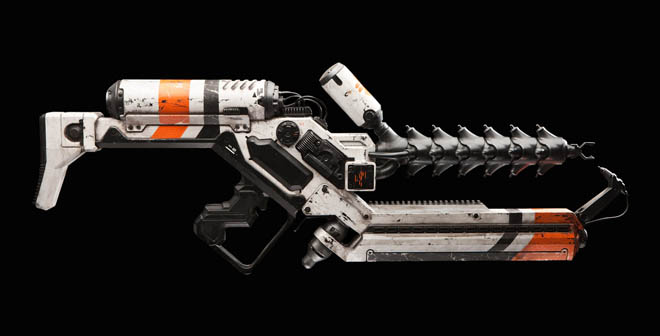
tesla_gunBy definition, a Tesla Rifle is a weapon that fires of electricity with a limited range and high spread. This particular version comes from District 9 and was a weapon of alien manufacture. Built by the race prejoratively known as the “Prawns”, it was confiscated by the South African government, and then fell into the hands of Wilkus (the film’s protoganist).

Since all “Prawn” weapons are attuned to their DNA, no human was able to use one. However, due to the transformation Wilkus was undergoing, he was able to use one, and did so! Surrounded by mercenaries who were in charge of clearing District 9 and taking him down, he had little choice but to blow them to gory pieces with this thing. And since the whole movie was shot in faux-documentary style, you could bet that chunks of bad guy got splattered on the camera!

The Sol:
Sol1Holy crap! I definitely saved the biggest and baddest for last today! Here is The Sol (yes THE Sol) an attack satellite which comes from the anime movie Akira. Featured towards the end of the film, The Sole was called in when Testuo Matsuo – the psychically altered teenager – began going on a rampage and threatened to destroy Neo-Tokyo.

Built around a central directed-energy weapon, The Sol gave new meaning to the term “Death from above!” Though not much is said about her, The Sol was clearly inspired by the Strategic Defense Initiative, aka. Star Wars Defense, and therefore designed to shoot down ICBM’s from orbit. Given that the story revolves around WWIII, this seems like a pretty safe assumption.

Sol2In the course of the story, she was called in by the Neo-Tokyo authorities and tried to blow the psychotic and psionic Tesuo up. It didn’t take, but the kid was psychic man! What can you do? If nothing else, it did demonstrate just how powerful it was by removing one of his arms. Tetsuo was obviously impressed too, because he commandeered the thing and began using it to wreak even more havoc. Seriously, we’re talking death from above man!

And that is all. Thanks for reading and stay tuned for more. Thinking I need to get off this whole guns and robots kick. Everything I write lately seems to revolve around one or the other…

Sexy Robot Women!

Technically, they’re called Gynoids, which refers to anything which resembles or pertains to the female form. Sounds pretty awkward doesn’t it? But if female robots become a reality, chances are, this is what they’ll be called. Assuming of course that the copyright on Fembots holds.

In any case, in honor of my recent foray into the world of cyborgs, today I thought I’d dedicate a post to honoring the many examples of female androids, cyborgs and robots that have come to us over the years. Whether they come in the form of seductresses, pleasure models, heroines or protectors, gynoids have served as a means of social commentary and exploration over the years.

In addition to being a cool concept and a chance for some expanded anthropological exploration, they tell us much about our perceptions on women, don’t you think? Whereas older representations regarded female robots as little more than seductive assassins who worked for evil men, the newer generations have taken a more holistic approach, giving them human characteristics beyond sex appeal and genuine personalities.

Seems only fair doesn’t it? For if robots, androids and synthetic humans are meant to make us question what is real and what being human is, than surely the female robots need to do more than just look good and lead men astray. Anything else would just be stupid! But I digress, here are some examples of gynoids, fembots and artificial women that have come to us over the years.

Annalee Call:
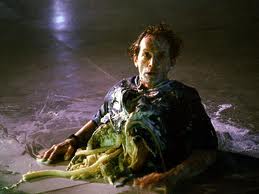
“I should have known. No human being is that humane.” Interesting observation. That is how Ellen Ripley, or rather her part alien clone described this synthetic woman from Alien: Resurrection. An Auton, a type of second-generation synthetic, she and others like were designed by robots to revitalize the flagging synthetics industry in the 24th century.

According to franchise sources, this plan failed when the Autons rebelled against their handlers in a bloody incident known as “The Recall”. As a result, Call was a member of a dying race that was forced to live in secret and hide amongst regular human beings.

Interestingly enough, Call’s programming seemed to include ethical and religious subroutines, both of which had a profound influence over her behavior. In the course of the film, it became evident that she joined the crew of the Betty so she could gain access to the Auriga where Ripley was being cloned. It was her intent to terminate Ripley and therefore terminate the project before it could produce a new line of xenomorphs.

Call distinguished herself in the Alien universe by being the first female synthetic, preceded by Ash and Bishop, and followed by David 8. I guess the moral of the story is that just because your synthetic doesn’t mean you have to have a synthetic wang!

Cameron:
And here’s the beautiful Summer Glau, who I’m honoring for the second time for her role as Cameron from Terminator: The Sarah Conner Chronicles. Named in honor of series creator James Cameron, this new model of Terminator was also inspired heavily by his original concept. According to the many description Cameron had made, Terminators were “infiltration units that could blend in with humanity.”

In keeping with this, Cameron was designed to physically resemble a teenage female who could mimic human emotions. This made her especially effective at blending in with people, for who could suspect a pretty young lady of being a killer cyborg? Well, get between her and her target and you’d soon find out!

Which brings me to her mission. In the series, she served a similar purpose to Arny from T2. That is to say, that in the future, the resistance captured her and reprogrammed her to act as John and Sarah Conner’s protector in the past. This she did very well, because as we all saw, he grew up to become Christian Bale. And aside from some anger management issues, he led the Resistance to victory!

Caprica Six:
Now here’s a woman who fanboys and nerds would do sick and horrible things just to get within an arms length of. I hope her sake she has a mighty big security detail! As the femme fatale and blonde bombshell of the re-imagined Galactic series, she was the Cylon model (ha!) who was responsible for seducing Gaius Baltar and getting access to the Colonial Defenses Mainframe. Because of this, she was instrumental in the genocide of the Twelve Colonies.

Yet strangely, she was also instrumental in bringing the the Colonial fleet and Cylon race together, or at least the portion of them that wanted a reconciliation between the two sides. Because every Six was slightly different from the last, her model went through many changes in appearance and disposition. Whereas her “Caprica” self was quite cool, and powerfully seductive, her later incarnations were more emotional and heartfelt.

As if to keep track with this emotional transformation, her appearance began to change as well. Her hair went from being suicide blonde to sandy and her outfits also became somewhat more conservative. In short, she could do it all. She could be evil, loving, nurturing, compassionate, a murdered, and a sacrificial lamb. But always, she looked damn good doing it!

Fembots:
Sure, they aren’t exactly the most unique or groundbreaking example of gynoids, but they were funny and actually kind of inspired. Taken from the series The Six Million Dollar Man, fembots were infiltration units that were designed to impersonate real people. In Austin Powers, they are satirically portrayed as seductresses in the employ of Dr. Evil.

Here, there duties appear to be twofold: One, seduce Austin Powers or whoever else they are programmed to kill. Two, to shoot their quarry using boob-mounted guns. And like their 6 MDM counterparts, their identities can be easily revealed by simply pulling off their faceplates.

Getting them around some kind of electrical equipment also seems to interfere with their systems as well, as was demonstrated by Austin in the second movie when he began using a universal remote and found that “Vanessa” began responding to it. And as that encounter also demonstrated, they could always self-destruct if they found themselves cornered. Oh, and Austin also demonstrated that being sexy could destroy them, since no one can apparently resist his pudgy, hairy body! Ick!

Jessica:
When it comes to female robots, and sci-fi movies, here is an example that is so often overlooked. Taken from the cult hit Screamers, which was based on PKD’s short story “Second Variety”, Jessica was a type 4 Screamer, the most advanced model to date. As part of a series of “Autonomous Mobile Sword” – a race of self-replicating intelligent machines – she was distinguished from the others by being the most human.

Whereas type 1 was little more than a burrowing killing machine, type 2 was a wounded soldier and type 3 a small child. Each one became more and more complex, designed to infiltrate deeper and deeper into an enemies camp. With type 4, Jessica was not only meant to infiltrate, but to gain deep access and the trust of her comrades before going active and killing everyone.

In her own words, “We can smile, we can cry. We can bleed… we can fuck.” Minus the last part, this was how she managed to infiltrate a NEB (New Economic Bloc) base and lure in the unsuspecting representatives of the Coalition camp. Apparently, it was her mission to bring the last combattants of the war on Sirius 6B together so they all but one (Hendricksson, played by Peter Weller) would lead her to the survivor ship they had stowed away. This ship was meant to take a single person back to Earth, in the event of catastrophe.

In the end, Jessica sacrificed herself to save Hendricksson so he could get off the planet unencumbered. However, the revelation that she was a new type of AMS that could pass for human in every way possible made on thing clear. Having sterilized Sirius 6B of all life, not just the enemy’s, they were intent on making their way back to Earth, looking for new prey to stalk and kill! Cool huh?

The Stepford Wives:
Now here is an example of female robots that carries with it some genuine social commentary! Written in 1972 by famed author Ira Levin, this novel tells the story of how a group of in a fictional small town (called Stepford) have been replaced by machines so that they may better represent their husband’s and societies ideal of “womanhood”.

According to the story, the town of Stepford is run by a men’s club who’s founder was a former “imagineer” for Disney. In addition, many of its members are scientists and artists. together, they managed to come up with the ability to create life-like robots that could not only look like women, but play the part of doting, docile housewives to a tee!

Of course, by novel’s end, all the women in Stepford have been replaced by these robots and the conspiracy seems poised to absorb any new arrivals. Designed to be a cautionary tale about the dangers of social engineering and blatant sexism, the Stepford Wives took a pretty dim view of female robots, don’t you think? I mean, who’s to say these fembots don’t have their own agenda, like they’re just waiting for their husbands to go to work so they can plot their demise? Might make a good sequel…

TX:
“So she’s an Anti-Terminator… Terminator? You’ve got to be shitting me.” Anry was definitely not shitting him! Here we have the villainess of the Terminator 3 movie and the woman that managed to kick Arny’s ass… a couple of times! As the lastest model to roll of the Cyberdine assembly line, the TX was a sort of hybrid of previous models with some added features thrown in.

Basically, this meant that the TX had an armored cybernetic chassis with polymorphic-alloy segments thrown in. This allowed her to adjust her appearance, much like the T-1000, but left her with a hardened endoskeleton that could not be frozen or melted as the 1000 was.

In addition, her right arm could transform into various weapons, taking on the form of a plasma cannon, a flame thrower, an articulated claw; whatever the moment required. Her ability to interface with computer systems also gave her a decided edge, especially over the obsolete T-800 models which kept showing up to defend John Conner!

Because Conner had been living off the grid for so long, this new breed of Terminator was tasked with located the people who would become his lieutenants in the future and kill them. However, that quickly changed when Conner showed up protected by yet another Austrian-sounding T-800! In the end, she was destroyed when a damaged Arny plugged his remaining hydrogen power cell in her mouth and set it to explode.

Maria:
Ah yes, the original gynoid! The fembot who inspired all subsequent generations of female machines. Taken from the classic movie Metropolis, Maria was a scientists attempt to resurrect his dead wife that went terribly wrong. After taking on the form of the working-class hero, the flesh and blood Maria, this female robot was intended to discredit her and undermine the proletarian movement that was looking to revolt.

But ultimately, the Maria bot doesn’t conform to anyone’s expectations. Instead, she ends up causing jealous feuds amongst rich men in a night-club and sowing dissent amongst the poor in the worker city. And to top it all off, she breaks with Maria’s policy of non-violent change by urging the workers to revolt against their oppressors. After the chaos dies down, the mobs of workers blame Maria for their plight and burn her at the stake, revealing her to be a robot.

Out of this commentary on class consciousness and distinction, it is interesting to see what role Maria played. As an artificial human, she is not only a plot device but a commentary on the dangers of runaway technology. Invented by a scientist who is using technology to overcome death, she eventually becomes his and many other people’s undoing. But at the same time, there was an element of misogyny in how she was portrayed.

Whereas the flesh and blood Maria was peaceful, nurturing and a sort of Mother Mary figure, the robot Maria was a vile temptress who drove men to madness and acts of violence. And in the end, these acts were turned against her and she was burned, which is presented as a good thing in the end. Yeah, kinda sexists I’m thinking. But alas, she was the original and borne of a previous age. The concept has evolved quite a bit ever since… Read on to learn more!

Rachel Tyrell:
“How can it not know what it is?” “I think she’s beginning to suspect.” That was Deckard Cain’s reaction when he learned that Rachel was a Replicant. Tyrell’s response was equally telling. Something like that, you just can’t keep quiet for long!

As part of their experiment to make their Replicants more controllable, Rachel was a newer model that had been fitted with artificial memories. For all intents and purposes, she thought she was the late niece of Mr. Tyrell himself. When she learned otherwise, she began to experience a bit of an existential crisis, let me tell you!

On the one hand, she was devastated to know that all her memories were in fact false, at least to her, and that her existence was basically a lie. On the other, there was the conundrum of what to do about her mutual attraction with Deckard Cain, a man who specializes in hunting her kind down and “retiring” them.

In the end, she and Deckard resolve this little problem by accepting their feelings and running off together. Since she was apparently designed to have an indefinite lifespan, and be “more human than human”, it seemed only natural that she accept what she is and live out her life as if she really were. Though somewhat frail by modern standards, her character was central to the plot of Blade Runner. And let’s not forget that she saved Deckard’s life and he’s supposed to be a one man death squad!

Final Thoughts:
Well, what can you say about Robot Women from over the ages? Well for one, they’re pretty damn sexy, that seems to be a rule. Might be a tad sexist, but it doesn’t diminish their worth any. What counts in the end is what roles they play. From their early days as mere vixens meant to tempt and kill the heroes, they’ve evolved to fill the same role occupied by male robots. Allowing audiences to explore the deeper questions of what it means to be human, and how the line between artificial and real can be blurred to the point where we can no longer tell the difference.

Okay, even I’m beginning to sense the cheese factor here! I mean, does anybody really buy this social commentary angle? Really? Ah, maybe there is some room for intellectual content here. And maybe how they are portrayed really does tell us something about society at large and its perceptions of women. But for the most part, I think sexy robot women are just plain cool. There, I said it!

Until next time, treat robot women as equals… to robot men! Ugh, that’s a whole nuther can of worms and I’m not getting into that right now!

Robots, Androids and AI’s

Let’s talk artificial life forms, shall we? Lord knows they are a common enough feature in science fiction, aren’t they? In many cases, they take the form of cold, calculating machines that chill audiences to the bones with their “kill all humans” kind of vibe. In others, they were the solid-state beings with synthetic parts but hearts of gold and who stole ours in the process. Either way, AI’s are a cornerstone to the world of modern sci-fi. And over the past few decades, they’ve gone through countless renditions and re-imaginings, each with their own point to make about humanity, technology, and the line that separates natural and artificial.

But in the end, its really just the hardware that’s changed. Whether we were talking about Daleks, Terminators, or “Synthetics”, the core principle has remained the same. Based on mathematician and legendary cryptographer Alan Turing’s speculations, an Artificial Intelligence is essentially a being that can fool the judges in a double-blind test. Working extensively with machines that were primarily designed for solving massive mathematical equations, Turing believed that some day, we would be able to construct a machine that would be able to perform higher reasoning, surpassing even humans.

Arny (Da Terminator):
Who knew robots from the future would have Austrian accents? For that matter, who knew they’d all look like bodybuilders? Originally, when Arny was presented with the script for Cameron’s seminal time traveling sci-fi flick, he was being asked to play the role of Kyle Reese, the human hero. But Arny very quickly found himself identifying with the role of the Terminator, and a franchise was born!

Originally, the Terminator was the type of cold, unfeeling and ruthless machine that haunted our nightmares, a cyberpunk commentary on the dangers of run-away technology and human vanity. Much like its creator, the Skynet supercomputer, the T101 was part of a race of machines that decided it could do without humanity and was sent out to exterminate them. As Reese himself said in the original: “It can’t be bargained with. It can’t be reasoned with. It doesn’t feel pity, or remorse, or fear. And it absolutely will not stop, ever, until you are dead.”

The second Terminator, by contrast, was a game changer. Captured in the future and reprogrammed to protect John Conner, he became the sort of surrogate father that John never had. Sarah reflected on this irony during a moment of internal monologue during movie two: “Watching John with the machine, it was suddenly so clear. The terminator, would never stop. It would never leave him, and it would never hurt him, never shout at him, or get drunk and hit him, or say it was too busy to spend time with him. It would always be there. And it would die, to protect him. Of all the would-be fathers who came and went over the years, this thing, this machine, was the only one who measured up. In an insane world, it was the sanest choice.”

In short, Cameron gave us two visions of technology with these first two installments in the series. In the first, we got the dangers of worshiping high-technology at the expense of humanity. In movie two, we witnessed the reconciliation of humans with technology, showing how an artificial life form could actually be capable of more humanity than a human being. To quote one last line from the franchise: “The unknown future rolls toward us. I face it, for the first time, with a sense of hope. Because if a machine, a Terminator, can learn the value of human life, maybe we can too.”

Bender:
No list of AI’s and the like would ever be complete without mentioning Futurama’s Bender. That dude put’s the funk in funky robot! Originally designed to be a bending unit, hence his name, he seems more adept at wisecracking, alcoholism, chain-smoking and comedicaly plotting the demise of humanity. But its quickly made clear that he doesn’t really mean it. While he may hold humans in pretty low esteem, laughing at tragedy and failing to empathize with anything that isn’t him, he also loves his best friend Fry whom he refers to affectionately as “meat-bag”.

In addition, he’s got some aspirations that point to a creative soul. Early on in the show, it was revealed that any time he gets around something magnetic, he begins singing folk and country western tunes. This is apparently because he always wanted to be a singer, and after a crippling accident in season 3, he got to do just that – touring the country with Beck and a show called “Bend-aid” which raised awareness about the plight of broken robots.

He also wanted to be a cook, which was difficult considering he had no sense of taste or seemed to care about lethally poisoning humans! However, after learning at the feet of legendary Helmut Spargle, he learned the secret of “Ultimate Flavor”, which he then used to challenge and humiliate his idol chef Elzar on the Iron Chef. Apparently the secret was confidence, and a vial of water laced with LSD!

Other than that, there’s really not that much going on with Bender. Up front, he’s a chain smoking, alcoholic robot with loose morals or a total lack thereof. When one gets to know him better, they pretty much conclude that what you see is what you get! An endless source of sardonic humor, weird fashion sense, and dry one-liners. Of them all “Bite my shiny metal ass”, “Pimpmobile”, “We’re boned!” and “Up yours chump” seems to rank the highest.

Ash/Bishop:
Here we have yet another case of robots giving us mixed messages, and comes to us direct from the Alien franchise. In the original movie, we were confronted with Ash, an obedient corporate mole who did the company’s bidding at the expense of human life. His cold, misguided priorities were only heightened when he revealed that he admired the xenomorph because of its “purity”. “A survivor… unclouded by conscience, remorse, or delusions of morality.”

After going nuts and trying to kill Ripley, he was even kind enough to smile and say in that disembodied tinny voice of his, “I can’t lie to you about your chances, but… you have my sympathies.” What an asshole! And the perfect representation for an inhuman, calculating robot. The result of unimpeded aspirations, no doubt the same thing which was motivating his corporate masters to get their hands on a hostile alien, even if it meant sacrificing a crew or two.

But, as with Terminator, Cameron pulled a switch-up in movie two with the Synthetic known as Bishop (or “artificial human” as he preferred to be called). In the beginning, Ripley was hostile towards him, rebuffing his attempts to assure her that he was incapable of killing people thanks to the addition of his behavioral inhibitors. Because of these, he could not harm, or through inaction allow to be harmed, a human being (otherwise known as an “Asimov”). But in the end, Bishop’s constant concern for the crew and the way he was willing to sacrifice himself to save Newt won her over.

Too bad he had to get ripped in half to earn her trust. But I guess when a earlier model tries to shove a magazine down your throat, you kind of have to go above and beyond to make someone put their life in your hands again. Now if only all synthetics were willing to get themselves ripped in half for Ripley’s sake, she’d be set!

C3P0/R2D2:
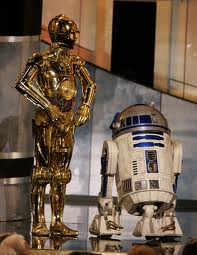
For that matter, who knew robots from the future would be fay, effeminate and possibly homosexual? Not that there’s anything wrong with that last one… But as audiences are sure to agree, the other characteristics could get quite annoying after awhile. C3P0’s constant complaining, griping, moaning and citing of statistical probabilities were at once too human and too robotic! Kind of brilliant really… You could say he was the Sheldon of the Star Wars universe!

Still, C3P0 if nothing if not useful when characters found themselves in diplomatic situations, or facing a species of aliens who’s language they couldn’t possibly fathom. He could even interface with machinery, which was helpful when the hyperdrive was out or the moisture condensers weren’t working. Gotta bring in that “Blue Harvest” after all! And given that R2D2 could do nothing but bleep and blurp, someone had to be around to translate for him.

Speaking of which, R2D2 was the perfect counterpart to C3P0. As the astromech droid of the pair, he was the engineer and a real nuts and bolts kind of guy, whereas C3P0 was the diplomat and expert in protocol.  Whereas 3P0 was sure to give up at the first sign of trouble, R2 would always soldier on and put himself in harm’s way to get things done. This difference in personality was also made evident in their differences in height and structure. Whereas C3P0 was tall, lanky and looked quite fragile, R2D2 was short, stocky, and looked like he could take a licking and keep on ticking!

Naturally, it was this combination of talents that made them comically entertaining during their many adventures and hijinks together. The one would always complain and be negative, the other would be positive and stubborn. And in the end, despite their differences, they couldn’t possibly imagine a life without the other. This became especially evident whenever they were separated or one of them was injured.

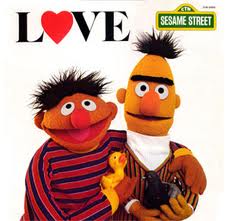
Hmmm, all of this is starting to sound familiar to me somehow. I’m reminded of another, mismatched, and possibly homosexual duo. One with a possible fetish for rubber… Not that there’s anything wrong with that! 😉

Cameron:
Some might accuse me of smuggling her in here just to get some eye-candy in the mix. Some might say that this list already has an example from the Terminator franchise and doesn’t need another. They would probably be right…

But you know what, screw that, it’s Summer Glau! And the fact of the matter is, she did a way better job than Kristanna Loken at showing that these killing/protective machines can be played by women. Making her appearance in the series Terminator: The Sarah Conner Chronicles, she worked alongside acting great Lena Headey of 300 and Game of Thrones fame.

And in all fairness, she and Lokken did bring some variety to the franchise. For instance, in the show, she portrayed yet another reprogrammed machine from the future, but represented a model different from the T101’s. The purpose of these latter models appeared to be versatility, the smaller chassis and articulate appendages now able to fit inside a smaller frame, making a woman’s body available as a potential disguise. Quite smart really. If you think about it, people are a lot more likely to trust a smaller woman than a bulked-out Arny bot any day (especially men!) It also opened up the series to more female characters other than Sarah.

And dammit, it’s Summer Glau! If she didn’t earn her keep from portraying River Tam in Firefly and Serenity, then what hope is there for the rest of us!

Cortana:
Here we have another female AI, and one who is pretty attractive despite her lack of a body. In this case, she comes to us from the Halo universe. In addition to being hailed by critics for her believability, depth of character, and attractive appearance, she was ranked as one of the most disturbingly sexual game characters by Games.net. No surprises there, really. Originally, the designers of her character used Egyptian Queen Nefertiti as a model, and her half-naked appearance throughout the game has been known to get the average gamer to stand up and salute!

Though she serves ostensibly as the ship’s AI for the UNSC Pillar of Autumn, Cortana ends up having a role that far exceeds her original programming. Constructed from the cloned brain of Dr. Catherine Elizabeth Halsey, creator of the SPARTAN project, she has an evolving matrix, and hence is capable of learning and adapting as time goes on. Due to this and their shared experiences as the series goes on, she and the Master Chief form a bond and even become something akin to friends.

Although she has no physical appearance, Cortana’ program is mobile and makes several appearances throughout the series, and always in different spots. She is able to travel around with the Master Chief, commandeer Covenant vessels, and interface with a variety of machines. And aside from her feminine appearance, he soft, melodic voice is a soothing change of pace from the Chief’s gruff tone and the racket of gunfire and dead aliens!

Data:
The stoic, stalwart and socially awkward android of Star Trek: TNG. Built to resemble his maker, Dr. Noonian Soong, Data is a first-generation positronic android – a concept borrowed from Asimov’s I, Robot. He later enlisted in Star Fleet in order to be of service to humanity and explore the universe. In addition to his unsurpassed computational abilities, he also possesses incredible strength, reflexes, and even knows how to pleasure the ladies. No joke, he’s apparently got all kind of files on how to do… stuff, and he even got to use them! 😉

Unfortunately, Data’s programming does not include emotions. Initially, this seemed to serve the obvious purpose of making his character a foil for humanity, much like Spock was in the original series. However, as the show progressed, it was revealed that Soong had created an android very much like Data who also possessed the capacity for emotions. But of course, things went terribly wrong when this model, named Lor, became terribly ambitious and misanthropic. There were some deaths…

Throughout the original series, Data finds himself seeking to understand humanity, frequently coming up short, but always learning from the experience. His attempts at humor and failure to grasp social cues and innuendo are also a constant source of comic relief, as are his attempts to mimic these very things. And though he eventually was able to procure an “emotion chip” from his brother, Data remains the straight man of the TNG universe, responding to every situation with a blank look or a confused and fascinated expression.

More coming in installment two. Just give me some time to do all the write ups and find some pics :)…

Of Plot Holes and Oversights…

Hello again. Today I thought I’d break with the norm and do another “best of” post. Thing is, this time around I didn’t want to do one dedicated to “best lines” or anything like that. No, today I thought I’d tackle some of the worst moments in movie history. And if there’s one thing I’ve noticed plenty of in my collection of bad reviews, it’s plot holes! Those rare moments that make you stop and say “Uh… what?” Or the kind that make you want to reach out, grab the director by the ears and say “That makes no f@!%@%$ sense! What the hell were you thinking?” Not literally, of course. That’d be creepy, Kathy Bates in Misery creepy.

So, with that in mind, and inspired by all the moments that have made me – and I’m sure others – want to pull out my hair, here’s a list of some of the worst plot holes and oversights I have ever seen. Yep, its a veritable “best of the worst”! And who knows? This might just become a regular thing. There’s certainly no shortage of material. And on the chopping block for today: Independence Day, Terminator: Salvation!, and Equilibrium!

Independence Day:
As far as plots go, this movie was a doozy. In fact, it was lot more enjoyable if you checked your brain at the door and didn’t ask too many questions. But, inevitably, at some point you had to pick your brain up, reinstall it, and deal with all the logical inconsistencies it was sure to raise. Here were the one’s that came to my mind:

The Signal: Remember how Jeff Goldblum, a cable man, picked up on that alien signal, the binary code that was being transmitted using Earth’s satellites? Remember how NO ONE ELSE noticed the same thing? That’s right, the guy who installs your HBO noticed something that all the cryptologist and covert brains at the CIA, NSA, and NASA did not. But of course, Director/Writer Roland Emmerich had that one covered. Apparently, the signal was “subtle!”

Backdraft: This is a minor point, but it was still insulting! During the aliens’ assault on LA, Vivica A Fox, her son, and their dog Boomer were all trapped in a freeway tunnel. Whereas most people were consumed by the fire, they survived by hiding in a workman’s shed. Only problem with this is, the fireball went right by the open doorway and left them untouched. Funny, I always thought fire expanded to fill empty spaces. Forgot about the shed exception!

Small World: Remember how Will Smith managed to fly a commandeered helicopter into LA after the aliens leveled it to retrieve Vivica A Fox and her son? Yeah, how did he find them exactly? And what the hell happened to all those alien ships that were shooting down anything that flew? More importantly, how did Vivica A Fox manage to find the First Lady and the downed White House helicopter? Come to think of it, this movie was full of these kind of unlikely reunions! Why, for example, did Will Smith decide to wander to Area 51, hundreds of miles away from his airbase and where he got shot down? Was it just because the president and several other main characters happened to be there? And how is it that the big caravan of mobile homes, with Quaid and his family in it, manage to meet up with him in the middle of the desert? How small is LA? Or the Nevada Desert for that matter?

The Plan: Remember how Goldblum came up with the big world-saving plan towards the end? The one that involved planting a computer virus in the mother ship, yadda yadda yadda… Yeah, how did he manage to figure out how to crack the alien’s technology? We’re talking about a race with vastly superior technology. So not only was a cable man able to detect an alien signal that the best minds at NASA, the CIA and NSA could not, he was also the only one who could figure out how to bring them down. Oh yeah, and how does Will Smith know how to fly an alien ship? He saw one in combat… I’ve seen fighter jets in combat, does that mean I can fly one of those? I’d like to think so! Emmerich raised the holes in this one too, but he dismissed them by putting them in the mouth of a douche bag character who we weren’t likely to listen to! Seriously, by the time he was done bitching about the logical inconsistencies of this plan, we were ALL hoping he’d be fired. And then he was… yay!

The Mother Ships: Remember those big alien ships that had shields that could withstand nukes? Remember how when they went down, the US airforce started ripping one to shit with their missiles? Same with the alien fighters, they blew right up when hit with mere bullets. Seems odd… you’d think solid metal hulls that are capable of withstanding the intense pressure and heat of space flight and atmospheric entry would be able to withstand bullets and air to air missiles. Granted they DID say they weren’t doing ENOUGH damage, but the fact that they were doing much at all was a bit of a surprise. But that wasn’t nearly as odd as the stunt Randy Quaid pulled. Remember how the big alien ships had those big alien ray guns, the ones that could level entire cities? Yeah, turns out that if you fly a single jet into the barrel of one, the entire ship will explode… How the hell does that work?! Does putting your finger in the barrel of a gun make the gun explode? No, it makes your finger explode as the bullet rips through it and anything else in the way! And this was with a freaking city-leveling laser! In short, Randy Quaid’s plane should have exploded harmlessly beneath the gun, not blown the whole ship up! But that would have been way less heroic… Funnier, but less heroic.

Man that was a stupid movie! Fun, but stupid!

Terminator: Salvation:
Here was a movie that started off good but got real messed up towards the end! Yep, as soon as they dropped the hammer and revealed everything, you got to see how little sense this sequel really made. I tell ya, it had so many holes, you’d think a Terminator took a gatling gun to it!

The List: So the machines made a hit list in this movie with Kyle Reese’s name at the top and Conner’s not far behind, right? And they also created a man-machine hybrid in the form of Marcus, right? And their plot all along was to have him help them kill Reese and Conner so they would win the war, right? Right! So… why the hell didn’t he just kill them? What was the point of delivering Reese and Conner into their lair if the goal was to kill them all along? That’s like the long-movie equivalent of a villain putting James Bond into some complicated death machine instead of just shooting him! It’s like, if you want him dead, why put him in a situation he can actually get out of? You’re life not challenging enough as it is? Especially with Reese, Marcus had him at gunpoint twice within the first thirty minutes! First time when he stole his shotgun, second time when he was showing him how to hold said shotgun. Boom! Movie’s done! But instead, we get a big convoluted plot where they end up being captured, apparently thanks to Marcus, when it seemed like all he was doing from the beginning was try to help them!

“That was our plan all along!”: Marcus spent the first portion of the movie wandering from the desert to the ruins of LA. There, he met (totally by coincidence) Kyle Reese. Reese and his little friend were captured IN SPITE of Marcus’ efforts to protect them, not because of them. Marcus then found John Conner (again, purely by coincidence), and convinced him to let him go to Skynet’s base so he could save them. John then went to that base to save Reese as well because the resistance was planning on attacking it. So really… how was Skynet orchestrating all this from the beginning? Seems to me that everything that happened up until this point was well beyond its control. Contrived? Hell yes! But saying that this all be part of some master plan doesn’t make it any less so. If anything, it’s just a weak-ass attempt at justifying these contrivances by tying them all together.

The Future: How did Skynet know that Conner would somehow come to defeat it? How did it know that Reese was his father? Finally, how his did it know that it had failed repeatedly to “get John Conner” in the past? The only way Skynet could have known how the future would work out is if someone told it, just like how Conner knew about the future because his mother told him (and she was told by Kyle Reese). In short, someone who has actually been there needs to come back and tell you. And that bits ruled out by the fact that all three Terminators that came from the future were destroyed. So really, how does Skynet know a thing about this whole temporal thing? It got a crystal ball, some kind of device that can see the future? Nuh-uh!

Chip in the neck: If Skynet wanted to control Marcus, which apparently they were doing all along (though he didn’t know it and it really didn’t seem like they were), why do it through a chip he could easily remove? Why put the damn chip in his neck? Why not his brain? Just like with the whole delivering Reese and Conner to them, this seemed like an easily fixable situation. Rip, rip! Problem solved! Remember how Skynet said to Marcus, “You cannot save John Conner”? Well… yeah, actually he could! And thanks to Skynet’s stupid, convoluted planning, that was exactly what he did!

The Machine HQ: Did you notice how at the end of the movie, the Resistance people just show up and pull Conner, Reese and Marcus out of the base? Didn’t that seem remarkably easy? What about those gun towers and other defenses we just saw? What happened to those? Were they just for show? And if it was this easy, why couldn’t they have done it way back when and shaved a couple years off the war?

Temporal Paradox thingy: We know from the first and second movie that Conner exists because Reese went back in time and had sex his mother. We also know that he didn’t go back in time until after they broke into the machine HQ, presumably in 2029, destroyed Skynet and discovered the time machine. But in this alternate future, where Judgement Day happened later and the Resistance destroyed Skynet sooner (2018), there was no time travel to speak of. Sure they shamelessly and senselessly said that the war was still on because Skynet’s “global network” was still out there, but if Skynet is gone before it built its time machine, wouldn’t that mean that no time travel ever took place, and John Conner therefore wouldn’t exist? Think about it! Conner exists because Reese had sex with his mom, but if Skynet was destroyed 11 years before he was supposed to go back in time, then it would never have built the time machine, Reese would never have gone back, and Sarah Conner would never have gotten pregnant with him. Come to think of it, the same holds true of the Terminators and even Judgement Day! No time machine, no Terminators going back, no basis for Skynet’s creation… Whoa! I just went cross-eyed!

Wow, that’s a lot of holes. Am I being too harsh? I mean, I wanted to like this movie. Really, I did! But it made it just so damned hard!

Equilibrium:
Worst for last! This movie had holes so big a truck could pass through them! Seriously, by the end, you were taking stock of them all and realizing that they essentially rendered the entire premise moot. Where to begin…

Cleric Extraordinaire: So the movie starts with us being told that Bale’s character is like the prodigal son of Grammaton Clerics (not too subtle reference to the movie’s religious tone here!). Way he puts it, he’s always been able to get inside “sense offenders” (sex offenders!) heads and know how they think. And yet, this guy not only failed to notice his wife was an offender, but his children too! Turns out, she was loving him in secret for years, and the kids stopped taking their Prozium after she was hauled off to be incinerated. So really, that means he was living in a house full of offenders for years and didn’t even notice! If he’s the best they got its little wonder why they lost to the Underground!

“Don’t lie to me!”: There are countless examples of people who are supposed to be emotionless showing emotion in this movie. Taye Diggs does much of that with his constant smiling, but by far the worst was Angus MacFadyen’s huge outburst. Seriously, how did Bale’s character not notice that? I know, truth was he was never taking his Prozium, but that’s not supposed to be common knowledge. You’d think he’d be a bit more subtle than to slam his fist down on a table and yell at someone. Especially a man who is specially trained to seek out and kill the kinds of people who do that. But then again, this is the same guy who didn’t notice that his wife and kids were offenders, and they were doing it for years. Yeah, he’s safe!

Gun Switch: Ah, yes! The scene where Bale switches guns with Diggs, and then frames him for the murder he already committed by using his gun to do it. Wait, what? Yeah, that’s how it played out in the movie. Bale framed Diggs for the murder of several officers of the state by (apparently) using his gun to do it. Problem is, he didn’t swap guns with him until AFTER the event. Only way this would make sense was if he already switched them, committed the murders, and was just giving him his own weapon back at this point. That would have worked just fine. All that would be needed is an added scene or a flashback showing Bale how stole his gun beforehand. The other way, the way it happened in the movie, makes no damned sense! Sloppy stuff like that makes the audience think someone in the editing booth was either asleep at the wheel or high! Maybe they had the right idea!

“We planned this”: By the end, Bale is about to meet “The Father”, but realizes he’s been had. Turns out, his nemesis Diggs is alive, his whole mission to find the Underground was a ruse, and he himself was selected because apparently they thought he was a latent sense offender and just hadn’t realized it yet. Uh… how did they know this exactly? I mean yes, he did BECOME a sense offender, but that was the result of an accident! He somehow forgot to stock up on Prozium, broke his last vial, and the damn pharmacy was closed! That’s how it all began, the result of an unlikely, totally implausible accident. So really, how could they have foreseen this and planned it all out? Man, its just like what Terminator: Salvation did, except Wimmer did it sooner! Note to all writers and directors out there, DON’T IMITATE KURT WIMMER! I don’t know if you’ve noticed, but his movies aren’t exactly getting nominated for most original screenplay!

“I Feel!”: By the very end, we learn that MacFadyen, the true leader of Libria, is himself a sense offender. Makes sense in a “we ripped off” 1984 kind of way, the leaders are hypocrites who don’t follow their own rules. But really, this means that the head of this dystopian state has been breaking the rules all along and no one seemed to have noticed. Either that or all his colleagues in government were doing the same, how else could he have gotten away with it? With all the Clerics, informants and surveillance devices they have out there monitoring for offenders, wouldn’t it have been really easy to spot a public figure exhibiting emotion? Am I over-thinking the bit? Probably. At this point, the movie is over anyway so who the hell cares?

Man that was a stupid movie. No, no addendums to that statement – like it was still fun, so long as you checked your brain at the door. It was just a stupid, stupid movie!

Well, that’s all for now. I could go on, but I’m already in a bad mood just thinking about all these plot f$@*-ups! Quite frankly, I’d like to get back to reviewing books or movies that I actually enjoyed. And seeing as how I finally got my hands on a copy of Idoru, I think I’ll do just that. Stay tuned!

T2!

Normally, if I do a review, I try to re-familiarize myself with the material before writing about it. That way I’ll be sure not miss anything. It’s only been on occasion that I’ve done one strictly from memory, and that’s assuming it’s still fresh. That was certainly the case with Independence Day and Terminator: Salvation, the latter I had seen just a few weeks before, and the former I’d seen so many times that I really didn’t need to see it again! However, this was not the case with The Terminator. Here was a movie I had not seen in years. Make that MANY years, and yet I penned my review almost entirely from what I could remember of it. Not smart! Even less smart to watch it immediately thereafter and realize all the points I missed! Luckily, I still have two more movies to do in the franchise, and most of what I noticed applies directly to the sequel!

First off, James Cameron was guilty of recycling actors even more than I thought. Michael Beihn, Bill Paxton, and Jennette Goldstein all played prominent roles in Aliens (Hicks, Hudson and Vasquez) and were around for either T1 or T2, in some cases, both. But I forgot about Lance Henrikson, the man who played Bishop in Aliens. Turns out, he played one of the LA detectives in the first movie who got his ass shot off when evil Arny came knocking! Wish I hadn’t glossed over those guys in my T1 review, turns out they were actually pretty important. In any case, that makes four actors whom he used for both franchises, and I’m betting there were more in the background somewhere…

On top of that, I came to see just how many action sequences were reused in T2. I don’t want to get too specific just yet, but let’s say that action scenes involving motor bikes, big-rigs, car jumping and pile ups were also reused from the first movie. The only real difference was the budget, and of course Arny was now a protagonist instead of a force of pure malevolence. And there was also one all-important theme that made it into both Aliens and T2, and that was the theme of reconciliation between man and woman and humans and machines! But more on that later. Having just watched the movie and it still fresh in my mind, let’s get to the specifics of T2, one of the biggest and most successful sequels of all time!

(Background—>)
T2 was generally lauded by critics, all of whom thought that Arny did a great job reprising the role that complimented his particular brand of talents (his natural grandeur and presence, for example). Cameron’s gift for action direction was also seen as a big plus, and with three successful movies under his belt (T1, Aliens, and The Abyss), he now had a bigger budget and a degree of creative freedom he did not have with the before. And as I said in my first Terminator review, T2 also did better at the box office, not proportionally speaking, but certainly in terms of overall gross. And according to some, it was one of those rare movies that was believed to be better than the original. I’m not one of them, but I can certainly see why others might think so. On the whole, T2 was bigger, glitzier, and a lot more fun than the first. It’s mass appeal, made possible by its awesome action sequences, intense pace, and cutting-edge special effects which involved the use of CGI (something brand-new at the time) were sure to please. It also did a good job of wrapping up the temporal paradox presented in the first movie, and offered a way out of said paradox that was both believable and consistent with it. It may not have been as gritty, realistic or smart as the original, but that was to be expected. Originals are meant to set the tone and establish the parameters, sequels to expand on them. And in that respect, T2 was a fitting follow-up to the first, superior in some respects but certainly not better.

(Content—>)
The movie opens with scenes from modern day LA, moving from traffic jams and pedestrian crossings to a playground with children at play. This is clearly a “before” scene, where the music is foreboding and things suddenly slow down, with the sound of children laughing in the background. And then, the big white out. If this isn’t indication enough that something terrible has happened, we immediately cut to the “after” scene – a blackened ruin littered with skeletons and rubble. We are told that is what Los Angeles looks like in 2029, cold, dark, and dead. Linda Hamilton’s voice over then reminds us of the relevant facts, how billions died on Aug. 29th 1997 (“Judgement Day”), and those who survived lived only to face a worse horror… the war against the machines. We then get a moment of pure symbolism as a machine foot crushes a human skull, followed immediately thereafter by one of pure action porn!

All over the post-apocalyptic landscape, machines are attacking, purple tracers fill the sky, and human resistance fighters mobilize to fight back. This sequence was certainly superior to the ones in the first movie. There, the post-apocalyptic battle scenes involved just a few people and models, fighting in a limited fashion that gave the impression of guerrilla-warfare rather than an epic confrontation. In T2, there were literally hundreds of people and models being used, and the pace and scale was faster and bigger. The humans aren’t hiding here, they are out in full force, fighting, dying, shooting and killing. This gives the impression of a genuine war: ugly, awesome, and epic! Naturally, this was due to budgets, but that doesn’t change the fact that T2’s opening action sequence was far more kick-ass! We even get a shot of John Conner, the future version. He’s grizzly, determined, and surveying the field while his mother continues to let us in on things: Years back, a Terminator was sent back in time to kill her before she could give birth to this illustrious man – who is looking mighty heroic right now – and failed. Now, another one is on the way, hoping to strike at Conner himself. But the resistance has sent another warrior, and only time will tell which one reaches him first…

And, much like in the first movie, we cut back and forth between three points of view: Arny, the T1000 (played by Robert Patrick), and the main protagonists – in this case, John and Sarah. She’s in an insane asylum. The character of Doctor Silberman (Earl Boen), who in the first movie pronounced Kyle Reese insane, is back and saying the same thing about her. John is in foster care, is clearly disillusioned over the fact that his mother is locked up, and chooses to take it out on his foster parents. That’s an immediate selling point to this movie: the idea that anyone who knew the future would be a Cassandra, shouting to the wilderness and being totally ignored by the people (or in this case, committed). Conner’s delinquency is also a realistic touch. We know he will grow up to a hero someday, but right now, he’s a pissed-off adolescent who’s confused and bewildered. On the one hand, he hates his mother for apparently lying to him for so many years, and on the other he obviously misses her. Remember that photo he gave Kyle Reese, the one she had taken of herself at the end of the first movie? Well, turns out he’s kept it. Must be some embers still left in that hearth, huh?

Anyway, Arny has his scene where he wanders into a biker bar naked and wrecks the place up in order to get his hands on some badass looking clothes and a Harley. This is of course a retake from the first movie, but unlike the first where the evil Arny killed to get them, the good Arny in this one merely brutalizes a few people. Yep, this is the good guy… baby-steps I guess! And just like in the first movie, the bad guy has an easier time, simply killing a police officer and then commandeering his vehicle. Turns out when you’ve got liquid metal for skin, you don’t need clothes. You just morph your surface layer and boom, you’re good to go! But alas, the T1000 (as Arny explains later) cannot form complex machines, so he still needs the policeman’s car and weapons.

The three finally meet and, just like in the first, we get a tense, climactic moment with slow-motion and intense music. John sees Arny as he pulls his shotgun out of a box of roses (product placement, Guns and Roses did the theme music!) and thinks he’s out to kill him. But those fears are generally allayed when Arny levels the gun and yells his famous tagline, “Get down!”, and shoots the T1000 behind him. A gun fight ensues, followed by a wrestling match, followed by a big-ass car chase. Again, elements of the first are at work here again. In T1, Arny was chasing Sarah and Kyle on a Harley, followed shortly thereafter by a truck. Much like in the first, it all ends with the truck crashing and exploding. This is not to say that it wasn’t awesome this time around though. As usual, Cameron’s flare for action-direction makes the scene tense and beautiful, and the way Arny keeps flipping that gun around to reload it? You look me in the eye and tell me you didn’t think that was badass the first time you saw it! And of course, the sequence ends with the T1000 walking from the fiery wreckage unharmed, provided by some of those cutting-edge digital effects I mentioned!

John then has a chat with Arny about what’s going on. Some funny lines here: “Don’t take this the wrong way but… you’re a Terminator, right?” Keen grasp of the obvious. “Okay… And you’re not here to kill me! I figured that part out for myself!” Well he did save your as several times in just the last few minutes so… duh! What makes this funny is that while freaked out, John clearly has a framework in place for understanding what’s going on. In spite of the fact that he’s spent the last few years thinking his mom was crazy, he still remembers everything she taught and what he’s just witnessed just confirmed it. Sure he’s freaked out by all the violence and near-death, but one he’s not is shocked. He doesn’t even get that phased when Arny tells him that it was HIM – John Conner – who sent him; his future self, that is. Somehow, it all just makes sense given his upbringing. And of course, Arny takes the time to explain the particulars of their enemy. Let me see if I can condense it all into a few bullet points here:
> T1000, advanced prototype, liquid metal, here to kill you.
> Can’t form weapons beyond knives and stabbing tools.
> Can also morph into things, but only things of equal size
> Can impersonate other people and knows where you will go
> Oh yeah, and its not known if he can be destroyed or not

Yikes! That’s another thing that I enjoyed about this movie. At first, it seems like Arny can defeat the T1000 as he manages to save John Conner from his repeated murderous attempts. However, as more confrontations ensue and Arny is forced to go toe to toe with him, the T1000 begins to show his superiority. Not only does he managed to take Arny’s arm off, he even manages to take Arny out. Well, temporarily deactivate, but you get the idea. In the end, Anry’s only able to win by outsmarting him, and relying on the help of John and Sarah.

But getting back to the storyline, Arny soon confirms that the T1000 has already killed John’s foster parents and warns him that his mother could be next. But not before John has an expository scene where he expresses all his angst over how his mother taught him everything he knew, only to be taken away from him and declared a delusional psychotic. And now, it appears she was right all along, so naturally he wants to find her. But no, Arny reminds him, the T1000 would have anticipated that, and will try to impersonate her and will kill her in the process. John freaks, a ruckus ensues, and it ends with John realizing that Arny must obey his orders. So naturally, he orders Arny to help him save his mother (Oh, and not to kill anyone, on a count of he almost killed two people during that ruckus).

They then get to the asylum where Sarah is attempting to make her escape. Seems people told her that a dead-ringer for the man that shot up a police station and killed 17 officers in 84′ was spotted at a local mall. Thus why she needs to escape tonight. If things are happening again, she needs to make sure her son is safe! She does this smashing the face of the guy who’s been physically and sexually abusing her for the last few months and taking Dr. Silberman hostage. Naturally, we don’t feel sorry for either of these people, since the attendee is a dick and Dr. Silberman is a cynical douche! John and Arny are simultaneously breaking in, which begins with Arny knee-capping the guard at the front (he said he wouldn’t kill, wasn’t nothing in there about knee-capping!) They meet up inside as Arny steps off the elevator right in front of her, and a slow-motion scene ensues where Sarah recognizes him and becomes so terrified that she runs back in the direction of the guards she eluded not a moment previous. Arny saves her and issues one the tag-lines from the first movie: “Come with me if you want to live”. John is also there and lets just her know that Arny’s cool, right before the T1000 shows up right behind them and tries to kill them. Dr. Silberman witnesses all this, and is no doubt going to need therapy himself!

Another chase scene ensues. Arny and Sarah protect John, steal a police car, and start driving backwards while shooting. The T1000, for his part, sprouts swords and crowbars from his arms and pursues them. Here too we see a scene being rehashed from the first movie, where the evil Terminator jumps on their car and starts smashing through the window, trying to get his hands on his target and almost succeeding. But in the nick of time, they manage to shake him with some keen maneuvering and shotgun blasts. This time around, its Arny who does the rescuing, blowing off one of the T1000’s limbs and sending him flying off the back end of their car. Having made it away for the second time, the three of them start make their way out of town in great haste.

While in the desert, we get some pacing scenes as Arny, Sarah Conner, and John get to talking, and in the course things, learn some things about each other. For example, Sarah wants to know how Judgement Day happened, how Skynet was created and who’s responsible. Arny reveals that a man named Mr. Miles Dyson is responsible for the breakthroughs that led to Skynet’s creation, and that the key developments are happening pretty much as they speak. We already know from a rather telling scene earlier that Mr. Dyson, over at Cyberdyne systems, was the recipient of the remains of the first Terminator and is working on a big AI-related breakthrough. Seems that Conner was right, that someone conspired to remove them from the factory where Sarah left them, and made sure they got into the “right” hands. Sounds… conspiratorial! In any case, it was the first Terminator’s broken CPU and remaining arm, which came from the future, that ended up being the basis for Dyson’s research, and hence Skynet’s creation… The temporal paradox strikes again!

There are echoes of Alien and Aliens here. In those movies, the megacorp Weylan-Yutani kept screwing over its own people in order to get their hands on the alien specimen. Here, however, we are getting it more in the form of the dark future/cautionary tale, where networked, intelligent computers are responsible for nearly wiping out humanity, largely because we made the mistake of trusting our fate to them. But unlike the first movie, T2 introduces us to the human side of that equation, how it was human avarice that led to Skynet’s creation, and how Skynet decided to kill humanity because they tried to pull the plug on it. Doesn’t make Skynet any nicer, but it was a nice touch, as is the humanizing of the people responsible which follows later on. But at the moment, Sarah is obviously perturbed by this information, and we can tell she’s going to do something about it very soon…

Also, there’s a very important scene in all this that didn’t make it into the original movie but came with the director’s cut. This is the scene where Arny reveals that all Terminators have their CPU’s set to “read-only” when they are sent out, a provision against them exercising too much independent thought. While they are held up in an abandoned garage and nursing their wounds, John proposes that they remove Arny’s chip and switch this fail-safe off so he can be of more use to them. After removing it, Sarah tries to smash the chip with a hammer but John stops her. She tells him this could be their last chance to be “it”, and that John doesn’t understand this because he’s never had to kill one of them. But John insists that they need Arny, that “it” is a “he”, and that if he’s to be a great leader someday, his mom ought to start taking his ideas seriously. She decides to go with him, although just barely, and lets Arny live. This scene is important because it establishes that in spite of the fact that the good Arny saved them, Sarah still doesn’t trust him and is willing to kill him as soon as the opportunity arose. One would expect this considering what the first Arny bot put her through.

There’s also the amusing scene where John tries to teach Arny to smile. This is just one of many where John is trying to teach him how to “be more human”. Most of these are pretty cheesy, consisting of one-liners and hand gestures, but this one was actually funny and even made sense in the overall context of the movie. Later, we see Arny pulling facial expressions, and the more anal-retentive critic would surely want to point out that this is supposed to impossible. Cyborg’s don’t feel emotion, hence they don’t smile, smirk, or shrug. The subtleties of facial expressions and how they convey emotions would surely be beyond them. But, if they knew someone was teaching them what faces to pull and when, they just might find it realistic and shut the hell up!

Anyhoo, John, Arny and Sarah show up at Enrique’s hideout. This would be the former Green Beret gun-running dude John mentioned with earlier, one of several dude’s she shacked up with while he was growing up. While at Enrique’s hideout, they start stockpiling guns and getting some new vehicles together. Arny gives us a preview of things to come when he hoists up the mini-gun and smirks at John. “It’s you, definitely,” John says. And in the course of things, Sarah watches her son and the Terminator talking and carrying on and has a revelation. Turns out that of all the father figures that had come and gone, the Terminator is actually the most ideal father figure for John. He’d never neglect him, never abuse him, and would die to protect him. We see at last a reconciliation between humanity and technology with this, not unlike the one that took place in Aliens between Bishop and Ripley. Once again, James Cameron is showing his fondness for certain themes. Still, it works here. After all the paranoia and hatred Sarah has been living with over the years, she finds herself finally able to trust her enemy – a killing machine – with John’s life. Irony!

But then, Sarah has another one of her apocalyptic dreams, and this one is particularly graphic! She even sees an alternate version of herself playing with a baby. This is a particularly symbolic moment, we get the impression is seeing what she’d look like if history had worked out just a little different. And like everyone in the playground, she doesn’t appear to be able to hear Sarah as she screams at them to run. In any case, they are all vaporized when a nuke goes off in the distance, graphically! I tell ya, that shot scared me when I first saw it. I believe it was the first case of the effects of a nuclear blast being caught on film. Sarah then wakes up with a start and she sees the words that she herself carved in the picnic table not a moment earlier. “No Fate”, which paraphrases what John told Reese to tell her: “The future is not set, there is no fate but what we make for ourselves.” Ironic, given the temporal nature of the story, but it certainly convinces Sarah that its time she acts. She grabs her guns, a truck, and tells John and Arny she will meet them later. It doesn’t take long for them to figure out what she’s got in mind (killing Dyson) and they head off to intercept her. Arny warns John that this is bad strategy, that the T1000 could anticipate this move, and that Dyson’s death might actually prevent Judgement Day. But of course, John tells him they have to. It’s a human thing!

They arrive at Dyson’s just in time to find that Sarah has shot up the place, put a bullet through Dyson’s shoulder and just about to deliver the coup de grace. But alas, she couldn’t. He’s still human, and she’s not a monster. So instead, they decide to fill him in on things and give him the benefit of the knowing everything his work will lead to. Arny starts by pealing the flesh off his arm and letting his robot innards tell the story. Dyson immediately recognizes the arm, since he’s got an identical one at his office. We get the distinct impression that some pretty messed up possibilities are going through his mind. In any case, Arny has his full attention now and he tells him to “listen to me very carefully.” Sarah’s voice-over fills in the rest and says that Arny told him everything – about Skynet, Judgement Day, and the war – as we cut to what is clearly several hours later. Naturally, he’s shocked and professes that he never intended for any of that to happen, but Sarah is naturally unconvinced. Seems “men like him” are the reason the hydrogen bomb exists. They think themselves creative, but only know how to create death and destruction, so fuck em, they’re evil! Uh, remind me now, who shot up who’s place here in a homicidal attempt? But alas, because he didn’t know, and maybe to prove he’s not a bad guy, he agrees to help them, which includes destroying the lab and also the remains of the first Terminator. Hello! This is the first time those remains have even been publicly acknowledged. Everyone is surprised, except Sarah who is both feels both angry and vindicated. She’s known all along that there was some kind of cover-up and nobody believed her. Now, she’s hearing from the horses mouth that she right. Still, right or no, she still gotta feel pissed!

What follows is another tense series of scenes as they rush to Cyberdyne, commandeer the facility, and begin laying explosives. Meanwhile, the police show up, thinking they got the man who shot up the police station back in 84′, and cordon off the building. Sarah’s voiceover and a shot of them driving up a dark highway convey the significance of these scenes perfectly before they actually unfold. Essentially, after years of trying to ensure that the machine’s didn’t alter the future, they are now trying to do the same. Whereas they were just players before, doing what was required of them, they are now free-agents who have the power to change history. Arny has his scene with the minigun too where he levels all the cop cars out front, firing a couple thousand rounds and a handful of grenades into the police cruisers to gives Sarah, John and Dyson the time they need to finish rigging the place to blow. But, as promised, does so without hurting or killing a single person. Not bad, Arny! Way to respect human life! Of course, the police are pissed and start firing back at him, and their SWAT team goes on in with blood on their minds.

There’s also what appears to be a sort of reconciliation taking place between Sarah and Dyson now, paralleling once again what Ripley experienced in Aliens. Obviously, Sarah had become embittered towards her male counterparts after years of being ignored and condemned by them. After losing Reese, she wasn’t able to find a single stable father figure for John, not one who would stick around after she told him the truth at any rate. Then there were all those who condemned her and put her in an insane asylum. On top of that, there’s men like Dyson who were responsible for Skynet’s creation in the first place. But now, she and Dyson appear to be coming together thanks to their common cause. There’s even a symbolic moment where Sarah passes him the detonator and we get a close-up of it changes hands. This reconciliation is cut short however when about a dozen SWAT team members comes breaking in and fills Dyson full of holes! But once they realize the place is totally rigged, they pull back! And the three protagonists managed to make it out right before the bomb goes off and levels Cyberdyne! But the front door is still blocked and there’s no way they can make it out without some shooting. That’s when Arny issues his famous tag-line from the first movie: “I’ll be back”! He gets about a hundred bullets to his face before knee-capping and pelting all the SWAT team members with their own tear gas canisters. He then steals the SWAT van and drives it through the front foyer, thus ensuring their escape. Meanwhile, the T1000 has shown up and steals a helicopter, much as Arny stole that 18-wheeler in movie one, and is even sure to include the “get out!” tag-line to its driver.

Which brings us to chase number three! This time, the good guys are in a SWAT van and the bad guy in a helicopter. True to the first movie, there’s a change-up when the bad guy is shmucked and has to switch vehicles. Having lost his helicopter, he commandeers (what else?) an 18-wheeler and chases them into a Foundry. Really? They have Foundries in LA? Right beside of the highway to boot? Just asking… Point is, more action porn follows: Arny delivers his “Hasta la Vista, Baby” line and shatters the T1000 with a bullet. This was after he forced him to crash his truck that was apparently carrying liquid nitrogen (…really?). The bits begin to melt because there’s hot metal all around (Foundry, remember?), and the three protagonists are forced to flee again. But with nowhere to run, they have to fight it out inside the Foundry, and get pretty beat up in the process! As a climactic scene, this was quite effective, being in such a hostile environment and everyone already being wounded. You can feel the tension and danger, which is made all the more palatable since it’s clear that there is no chance of escape. With Sarah already reeling from a gunshot wound in her thigh, and Arny twisted up from the crash, it really seems like they might not make it.

And yet, they do! And I don’t think I’ll ever forget the last scene where Linda Hamilton empties a whole shotgun into the T1000’s body, one-handed! Or how Arny shows up at the last second and pops a rocket propelled grenade into his belly that blows him in half! The T1000 then falls to his death in a bath of molten metal (how’s that for irony, liquid metal man!) and things end tidily when John realizes that the metal will make a perfect disposal spot for the remains of the first Terminator. But alas, Arny realizes that he too much go into the cauldron. As long as any evidence of the future remains in the past, there will always be a chance that Skynet could still be created and Judgement Day still happen. And so the movie ends with Arny being heroically lowered into the molten metal and giving John the thumbs up before disappearing beneath the surface (John taught him how to do that, which makes it all the more sad!)

Then, there’s the very last scene, which is kind of a controversial issue for me! In the original movie, it took the form of them driving along the dark highway again, a clear metaphor for the future, with Sarah giving jer final voice-over that wraps things up nicely. She says she is finally able to face the future with hope because, as she says, “If a machine – a Terminator – can learn the value of human life, maybe we can too…” Cue music and roll credits! I get tingly just thinking about it. But in the director’s cut, the last scene was altogether different. Instead of the still uncertain but hopeful future, we get to see the picture of that future, and its totally disappointing! Apparently, its 2030 or so, Judgment Day came and went without incident, and Sarah is making another recording where she explains how she got drunk and celebrated the fact that it never came. Everyday thereafter was a gift (a line that would make it into T3). And now, she’s sitting on a park bench and watching John play with her grand daughter in that same old playground. The background shows LA of the future, a skyline that looks like something out of a bad sci-fi movie or a rerun of Star Trek (the original version). Oh, and apparently John is not the grizzled leader here, but a Congressman who fights the good fight on the floor’s of Congress.

Where do I begin? Well, for starters, this whole franchise was gritty and dark and never did more than it had to. So ending it with a scene that lays things on way too thick just seems inappropriate. There’s also the fact that its totally sappy! John becomes a peacenik Senator and everybody lived happily ever after? C’mon people! This is supposed to be a movie about post-apocalyptic nightmares and murderous machines! I can understand wanting to end it on a happy note after all the darkness and extended horror shows, but this was ridiculous! But luckily, this scene never made it in to the original. Clearly, someone felt that it would be better to let the movie end on the same note it had maintained throughout. Thus, they went with the highway ending which was best: succinct, serious, symbolic, yet still hopeful. And it wrapped up everything from the first and second movie nicely, with no wasted effort or needless screen time. Last thing you want after tying up all the loose ends is to drop a fresh load of crap on the audience! It brings the whole production down!

(Synopsis—>)
This time around, I think I’d like to start by mentioning what was weak about the film. For starters, the themes that were present in Aliens that had a way of making it into this movie too. The theme of redemption, be it between man and woman and man and machine, was present in both. As was the theme of the evil corporation working behind the scenes so it could get its hands on something dangerous, and in so doing, condemning people to death. It was only recently that I even noticed this, and it kind of brought the movie down in my estimation. However, I am hard-pressed to argue this point too finely. These themes worked too well for them to be considered weaknesses, in my estimation. It was good and fitting to see Sarah find common ground with her fellow man after so much time of being at odds with them. It was also cool and ironic that a Terminator was capable of learning the value of human life and was ultimately the greatest protector/father figure that John Conner would ever have.

And of course the action scenes that were re-hashed from the first movie. Like I said, one could take the position that this was somehow lazy or uncreative, but I’d be hard-pressed to argue that as well. Mostly, they felt like homages, inside references to stuff the audience already saw and would instantly recognize. Those are desirable in a movie, they are like punch lines that make the audience go “Ahaaaa!” And done properly, they are also amusing and entertaining. And they certainly were in this movie. Arny’s big one-liners, “Come with me if you want to live” and “I’ll be back” were both deliberate references to the first movie and they worked. The way they zoomed in on Arny’s face and that intense expression as he said the latter; everyone in the audience knew it was painfully significant!

As for the other weaknesses. These mainly took the form of the extended and deleted scenes. For the most part, they kinda sucked. The alternate ending, where Sarah and John are alive decades down the road and the world is peaceful. SUCKED! The scene where we see Dyson at home explaining his work to his wife, how he’s creating the basis for AI… that one was a tad obvious. We already get that his work is revolutionary and will pave the way towards machines that will be able to think and become self-aware. No need to come out and say it. The ones I mentioned, where they switch Arny’s CPU from read-only mode and John teaches Arny facial expressions, those were good and should have been included in my mind. There were also a few from the Foundry where we see the T1000 having some problems re-resolving after being frozen and shattered, which were also good. But of course, running-time is a factor and that’s why we have director’s cuts.

Last, but certainly not least, there’s that one big, possible plot hole in the movie. Essentially, we are told from the get-go that the machines have once again sent back a Terminator and the resistance has once again sent back a fighter of their own. Now didn’t Kyle Reese say in the first movie that they found the Terminator’s time machine when they trashed Skynet’s HQ and only one Terminator had gone in? Didn’t he also say that he was the only other one to go through and they destroyed the machine immediately thereafter? Well sure! So theoretically, John should have been safe from then on. All of this meant that the future would unfold as promised, Judgement Day would happen, and John Conner would grow up to lead the resistance to victory over the machines. There’s simply no way the machines would have known that they had failed, they don’t have a crystal ball that shows them the past or how alternate time lines are unfolding. So its not like they could just say, “Woop! We missed! Send another one!” The very act of sending Arny back was a desperate act, they’d just have to expect that however things were unfolding for them in the future was the direct result.

But, this can be explained away easily enough. For example, how could Kyle know for sure that they destroyed the time machine after he left? For all he knew, they found out that the machines had actually sent two Terminators back in time, one T101 Arny bot and one T1000 advanced prototype. The first one was sent to take out the mother, the second to take out John should the first one fail. The resistance could then say “Oh crap! We need to send another fighter of our own to deal with the second one too! Any ideas?” They looked around, saw another Arny bot, figured it would have a better shot of protecting John from a T1000, decided to reprogram it, and sent it on its merry way. THEN they destroyed the machine! Okay, that works, more or less. Only problem is… you can’t keep doing it! A third batch of Terminators would just make things stupid!

Okay, now the strengths! The movie’s action scenes were awesome! Cameron has shown again and again that he has an eye for making destruction, shoot-em-ups and car chases beautiful! Its little wonder then why he’s a renowned action director. His ideas tend to be old fashioned, but they work in the context of classic sci-fi and his directorial style brings a sense of grandeur and epicness to his work. And of course Arny, a man who embodies those traits, was well suited to what he had to offer. Not the best actor in the world, but he’s nothing if not grand and epic. And this time around, he went beyond those simple attributes to bring some heart and humanity to the Terminator, which is ultimately what makes him him. He’s Arny, the action hero with a heart of gold and a keen sense of humor!

T2 also had a very good plot. Aside from the one possible plot hole which I don’t think anyone cares about anyway, it was virtually seamless. The future that Reese knew and told Sarah about was the direct result of everything they did together in the past. The Terminators exist because the wreckage of the first one was found, John Conner exists because Reese and Sarah had sex, and so on. Kyle Reese told Sarah in the first that he was from the future, but that it was one possible future, maybe… He didn’t know. But alas, we do! It was all foretold thanks to a temporal paradox where the future influenced the past and vice versa. But this time around, they found the fulcrum of this would-be future and removed it. Anal retentive critics might say “Well, if they destroyed all of Cyberdyne’s research, wouldn’t that mean that Skynet would never exist?” Well, good point actually. Once Cyberdyne was destroyed, shouldn’t Arny and the T1000 just have disappeared? Ah, but they had that one covered! You see, as long as the T1000 and Arny were alive and in the past, there was still the chance that Skynet would be created. Hell, for all we knew, that was HOW it got created in the first place. So technically, the future could not be altered til both the T1000 and Arny were destroyed and there was no chance whatsoever that their wreckage would fall into the wrong hands… again!

Another thing worth mentioning was that this movie was made in 1991, a full seven years after the first movie and five after Aliens. In between, he did the Abyss in 1989, but that was it, and had already begun working on Aliens back in 84 when he was shooting The Terminator. So really, he and his people had years to work out the script for T2, and it really showed. I can remember seeing it when it first came out and being blown away, in part because it had such a big feel! This was the long-anticipated sequel to the first movie and just about everyone agreed that it was fun, cool, and awesomely good. Like I said, Cameron already had a reputation for being a sci-fi director after Aliens and T2 really cemented that for him. The use of cutting-edge special effects, the big-budget action scenes, the way the plot really came together; he really topped off the Terminator franchise big time with this movie. The only downside would be if someone got the bright idea to do a third movie. Worse yet, that they’d shoot it sometime after August 29th 1997, when Judgement Day was supposed to have happened! Why, then they’d have to come up with some contrived explanation for why it didn’t happen on schedule, or why the Terminators were still being sent back in time! And that would be just downright nutty…

Terminator 2:
Entertainment Value: 9/10!
Plot: 8/10
Direction: 8/10
Total: 8.5/10

Da Terminator!

Back in 1984, a budding director named James Cameron was working on two projects almost simultaneously, both of which would go on to become some of the most successful sci-fi franchises in history. These were the time-traveling cyber-thriller The Terminator and the long awaited sequel known as Aliens. And not only were they well received at the box office, both went on to become classics in their own right, earning a cult following and spawning even more sequels. Yep, the guy could write and direct back in the day, before success and fame went to his head and he got all… Titanicy! Fans of said movie might disagree, but I think it just went downhill from there! I mean, Avatar? C’mon people, that was just a rehashing of Titanic and Aliens with a whole lot of Pocahontas ripped off and plastered on.

But that’s neither here nor there (I’m so gonna trash that movie later!). Right now, I wanna talk about the movie that started it for James and turned Arny from a champion body builder and B-list actor into an A-list movie star (Which reminds me, at some point I got to review Conan, his other break-out hit!) And a warning, you can’t get into this movie without talking about Arny, a lot! So plenty of biopic info will be coming up throughout the course of this review, be warned! So without further ado, let’s get to reviewing this baddest of bad-boys!

(Background—>)
In truth, Arny was first approached by the studio to play the role of Kyle Reese. However, after reading the script, he said he would rather play the role of the murdering cyborg. After meeting with Schwarzenegger, whom he had no intention of casting in the role, Cameron became convinced. And it worked! Anry’s presence, his bad-guy face, and his imposing demeanor sold people on the Terminator. Even his accent, which was still pretty thick, seemed believable coming from a synthetic human. And while it got mixed reviews at first because of its violence, many critics saw unmistakable quality in it, hailing its tense pace, its cool action, and its storyline. In time, these positive reviews would become the general consensus, and Cameron was inspired to make the sequel. T2 did better at the box office, but compared to The Terminator‘s modest budget and overall gross, the original’s performance was far more impressive. He would NOT be involved in the later movies, which was good for him. They did not hold a candle to his original creations!

(Content—>)
The movie opens with a brief intro showing us the post-apocalyptic world of Judgement Day, explaining that there’s been a nuclear holocaust and that machines are waging a war on all those humans who still remain. Its just a taste of things to come, nothing long or drawn out. And then, we move to modern-day LA. There’s a big burst of light, and Arny standing naked in the street. He has a run in with some thugs, the leader of whom is Bill Paxton (or Hudson, as he was known in Aliens), and deprives them of their clothes. He even brutally kills one of them just to make his point: don’t mess with evil-Terminator Arny! Simultaneously, Kyle Reese (Michael Biehn, Hicks from Aliens. Holy recycling actors Batman!) shows up and is going through the same motions. Like Arny, he is in a rush to find clothes, weapons, and the whereabouts on one Sarah Connor. Yet somehow, Reese seems to be having a harder time of it. Funny how being a cybernetic powerhouse who’s not afraid to brutally kill makes life easier! In fact, after visiting a gun store and making only one gaff about plasma cannons, Arny ups his body count to two! But seriously, what was up with that line: “phased plasma cannon in the 40 watt range”. Really? Wouldn’t a Terminator be programmed with what weapons were available in 1984; them detailed files Arny mentioned in the second movie? Ah well, comic relief before he blew the unsuspected store owner away, I guess.

We also get to see Sarah Conner (Linda Hamilton), who for all intents and purposes seems like a regular, run of the mill lady. Naturally, we are wondering why Arny is out to kill her, and what Reese wants with her. But one thing we are sure of, Arny DEFINITELY wants to kill her. The way he is tracking down and murdering anyone named Sarah Conner in the greater LA area would seem to indicate that. As for Reese, his intentions become abundantly clear when the three of them – him, Sarah and Arny – finally come together in a barroom shootout. I can attest to the fact that this scene is one of the most tense in the entire movie. Arny comes in, Kyle shoves his way through the crowd as soon as he sees him, Arny levels his gun at Sarah’s head, she is frozen with terror, and Reese brings his gun to bear. The sound is faint for much of this… but when Reese fires, the sound returns! BOOM, BOOM, BOOM… and Arny drops! Naturally, he doesn’t stay down, and Reese has to unload what’s left of his ammo into him before he can reveal his true purpose. He makes this abundantly clear when he bends down to grab hold of Sarah’s arm and says the classic line: “Come with me if you want to live!” Naturally, she does. And in the course of fleeing from Arny, Reese fills her in on the whole situation.

In short, on Aug. 29th, 1997, a nuclear holocaust will take the lives of 3 billion people, in an event known (appropriately) as Judgement Day. The culprit is a machine known as Skynet, an AI created by humans that turned on them and spawned an entire race of machines that were designed to hunt down and destroy all human life. They are known (also appropriately!) as Terminators. Most survivors were herded into camps for what Reese refers to as “orderly disposal”, echoes of the holocaust. But one man rallied them turned them into the Resistance. His name: John Connor, Sarah’s unborn son. Shortly before Reese traveled back in time, the Resistance had broken into the machine HQ and destroyed Skynet. Hence, the machines sent a Terminator back in time to kill John Conner before he ever existed. What makes this semi-believable is the fact that at first, Sarah doesn’t believe him and tries to flee. There’s none of this “you saved my life and your we have obvious chemistry… so sure, I’ll go with you” crap. But Reese’s insistence plus the sheer unbelievability of his story manages to convince her. Cyborgs created a time machine so they could travel back in time, from the post-apocalyptic future, and kill the woman who will give birth to the boy who will lead humanity to victory over them. Hell, you can’t make shit like that up! Unless you’re James Cameron… The fact that he’s protecting her while a homicidal Arny will stop at nothing to kill her might have been an added push.

What follows in some more tense scenes where Reese and Connor attempt to flee from the Arny bot. Both he and Reese are wounded in one exchange, forcing Arny to cut out one of his synthetic eyes and wear shades. The look was born! But then Reese and Sarah Conner are arrested, Reese is charged with kidnapping, and Sarah is told that he’s a psycho, and not to listen to him! The chief also tries to allay her fears with what immediately becomes some famous last words: “There are thirty cops in this building. You’re safe.” Arny of course find them, enters and gives HIS famous words to the clerk who tells him visiting hours are over: “I’ll be back!” And boy was he ever! After driving his car through the front doors, he whoops out the artillery and proceeds to murder seventeen officers. That’s ballsy for any bad guy, lord knows the only policemen who are allowed to die in an action movie are the ones who are three days to retirement! But in the carnage, Reese manages to escape and pulls Sarah Connor out. They both then double-time it out of town.

Then, with a little privacy and some trust established, we get to see the relationship that’s taking root between Reese and Connor. Cameron also takes this opportunity to give us additional glimpses of the future. Up until this point, this was done through Reese having flashbacks and nightmares. At this point, it takes the form of Reese conveying everything John Connor told him to share with her, which includes anecdotes about the war. This is important since she will give birth to the future commander of the resistance and he needs to be prepped! Some cool temporal paradox stuff happening here. But wait, it get’s better! Eventually, Reese confesses that he always loved Sarah – well, not so much her, but the idea of her. Her picture is something he’s kept, its a little worse for wear, but still manages to capture her determination and beauty (keep this in mind, it comes up later!). Then, they have sex, and Sarah gets pregnant with – drumroll! – the future John Connor! Yes, as it turns out, Reese is Connor’s father due to this same temporal paradox, whom he will meet and become the protege of in the future. So in addition to this being a post-apocalyptic, time-travelling sci-fi thriller, it comes complete with a big twist! And not just one…

Back to Arny, who must get creative in order to find Connor again. This he does by finding her mother and takes her call when she does the obligatory good daughter thing and calls just to let her know she’s all right. He then gets the address of the hotel where they’re staying. Luckily, Connor and Reese are on top of things. Like good soldiers, they were ready to mobilize, even did some shopping so they could build some homemade plastic explosives. Another car chase ensues, Reese gets severely wounded this time, and Arny gets unseated from his motor bike, hit by an 18-wheeler, and has more of his face ripped off. The look evolves! We also get famous one-liner number two when Arny commandeers the 18-wheeler. After tossing the driver, he turns to the passenger with a half-revealed cyborg face and says… “Get out!” Of course, the guy does! When a killer cyborg steps into your vehicle with half his face missing and tells you to move it, you don’t say no! Shortly thereafter, the 18-wheeler crashes and they think Arny is dead. But no! The fully revealed Terminator crawls from the flames (symbolism moment here, harking back to the intro!) and advances on them.

And of course, Reese sacrifices himself to blow the thing in two, but Sarah is forced to deliver the finishing blow by crushing it in an hydraulic press! But before she does, she gives her own big one-liner: “YOU’RE TERMINATED, MOTHERFUCKER!” Hey, Arny can’t get em all! The movie then cuts to several months later, with Sarah, now pregnant, driving through Mexico. She’s making a recording for her John, and a small boy comes and snaps her picture. Remember that photo Reese had of her, the one that made her fall in love with him? Yep, this is it! And as we will learn in the movie that’s to come, the remains of the Arny bot were recovered… the seeds of Skynet’s creation have been sowed. The paradox is complete! And Sarah drives off into a coming storm, which is both literal and metaphorical. Yep, good line to end it on. “There’s a storms coming,” says the Mexican man. “I know,” says Connor. Cue apocalyptic music and roll credits!

(Synopsis—>)
All throughout this movie, there is a tension that in undeniable. Whether its Reese’s painful flashbacks, the Terminators constant pursuit, or the fact that the police are pursuing them as well, there’s a pace and a tempo that never lets up. It’s downright uncomfortable, the feeling of danger and impending death always there. Though the sequel was arguably more fun and a lot more impressive in terms of effects, the original was a lot grittier and emotionally honest. In a way, it kinds of like Alien and its sequel, the former being packed full of terror and claustrophobia, the latter being a big-ass thriller that relied more on action. Unfortunate that Cameron was only involved in the creation of the latter, otherwise you could say there was a clear pattern. The original sets up the plot and has a deliberately harsh tone, the latter finishes it off and is entertaining in the process. And while the latter might have overshadowed the former in terms of box office gross and overall impact, the former remains the more critically acclaimed cult-hit because its arguably smarter, if less flashy. Not to mention that from top to bottom, the feel, music and direction of the original are faithful to its central themes. One really gets the feeling throughout that this is a movie about the apocalypse and a horrific war that is yet to come. Not only that, but the time travel stuff is intriguing and thoughtful. As Sarah says at one point to Reese: “You keep speaking about things I haven’t done yet, past tense!” She is abundantly clear on the fact that she’s not comfortable with how Reese and people from his time see her, as some kind of hero. But in the end, she has to find the strength to become what she needs to be, something which she passes on to John Connor, a sense of terrible purpose.

In any case, it made for a good movie. But the real points came in the form of the plot, which was a compelling story about fate and free-will. The future is happening because of what happens in the past. They are trying to prevent the machines from altering the future, but in the process, they end up creating it. Cool, and virtually seamless. Because, as I’m sure I said in my Terminator: Salvation review, the good guys not only ensured the birth of John Connor (and hence their eventual victory over the machines), they also ensured the existence of the machines in the first place. Funny how that works, temporal tampering has the power to give and the power to take away. The real genius of it, and the thing that always bakes my noodle, is the notion that the future we know is the result of all our actions. That might seem like fatalism, but its actually far more complex. Fate implies that the future is set, when in fact, things don’t happen in spite of what you do, but because of it. Oy, I just went cross-eyed! These plot twists also set up the plot for a sequel very nicely. Now that John Connor’s existence is assured, he must prepared for the future. At the same time, he and Sarah must see what they can do to prevent it. And of course, with the war still on the horizon and the rise of the machines still to come, we can bet our bottom dollar that they will make another attempt to kill Connor before they lose the war.

And like I said, this movie set Arny and Cameron up FOR LIFE. Cameron would go on to make Aliens before directing his big-budget action-packed sequel, and Arny would land role after role in the big action line-up of the 1980’s. Funny too how that worked out. Arny had all kinds of difficulty getting work at first because of his accent and, amazingly, his name! Director’s initially thought it was too long and hard to pronounce, and that his speech would always be a stumbling block. But thanks to The Terminator, Arny went on to be famous and all those agents and producers who doubted him were left eating crow! And of course, when it came time to make the sequel, Cameron would bring Arny back and give him a chance to reprise his role, this time as the good guy, which was in keeping with Arny’s true character. Linda Hamilton would be back too, reprising her role as Sarah Conner and raising the stakes by becoming the ultimate female bad-ass!

More on that in my review, T2! Like Arny, I too will be back! (Sorry, I had to!)

The Terminator:
Entertainment Value: 8/10
Plot: 9/10
Direction: 9/10
Total: 8.5/10