
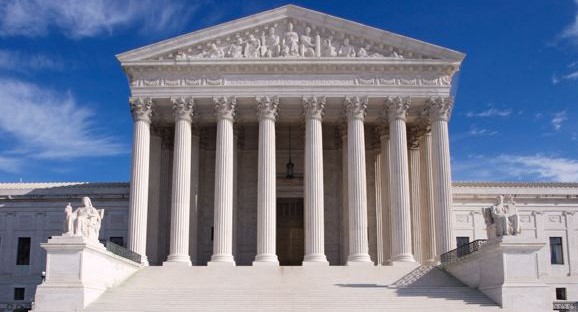
 Earlier this month, the Eleventh Circuit Court of Appeals finished deliberations with the case of United States v. Davis. And the ruling made there is sure to has long-reaching implications for the future of domestic surveillance. In short, the court determined that the NSA’s practice of tracking people’s movements using data from their cell phone without a warrant was unconstitutional. This decision was important for two reasons.
Not only does it provides substantive and procedural protections against abuse of an increasingly common and highly invasive surveillance method, it also also likely to provide support for other cases where security needs trumping privacy is concerned. The Davis decision, in effect, suggests that the U.S. government’s collection of all kinds of business records and transactional data – aka. “metadata” – for law enforcement and national security purposes may also be unconstitutional.
 The Davis case brought this issue to the fore because the tracking was used to make an arrest. Basically, mobile phones send signals to the nearest cell towers so that the communications network system knows where to route a call should one come in. Many providers collect and store the location of towers a customer connects to at the beginning and end of the call for billing purposes. In this case, FBI agentsobtained these records without a search warrant and used them to place the defendant, Quartavious Davis, near the scene of a number of robberies.
The prosecution argued that cell tracking without a warrant is constitutional per the 1979 case Smith v. Maryland, where the Supreme Court said that phone users have no “reasonable expectation of privacy” in the phone numbers they dial, and therefore they aren’t protected under the Fourth Amendment. Key to the Smith case was the Court’s view that the suspect had knowingly disclosed the phone numbers to the phone company and therefore had no protection with regard to them.
 Additionally, Smith built on the 1976 case of United States v. Miller, which held that a person does not have Fourth Amendment rights in their bank records because they are the bank’s business records and not the customer’s private data. Together the cases are known as the “third-party doctrine,” which says that you have no Fourth Amendment interest in a third party’s business records because you have voluntarily disclosed information to the business and assumed the risk of that information being further disclosed to the government.
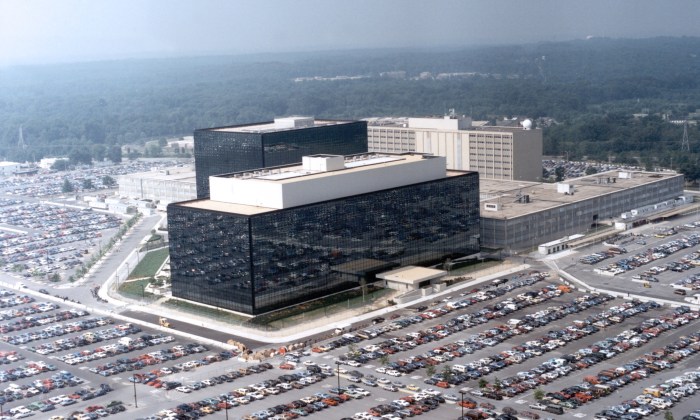
This third-party doctrine is what the NSA has been using up until now to justify its practice of collecting bulk information on phone-call records as well as its past collection of internet activities and financial information. The details of this warrantless metadata collection was revealed in the documents leaked by Edward Snowden, which led to the current round of legal challenges. As we speak, the ones dealing with the phone records bulk-collection program are currently wending their way through the federal courts.
 Last December, a District of Columbia judge held that the bulk collection of phone records violates the Fourth Amendment – regardless of Smith – and called the program “almost Orwellian.” Shortly thereafter, a different district court judge relied on Smith to give the program his stamp of approval. This month, a third federal judge was obligated to allow the warrantless collection of records to continue, but opined that the Supreme Court should overturn Smith v. Maryland.
Relying on the Jones concurrences, the Eleventh Circuit concluded that under the “reasonable expectation of privacy” test, cell phone location data is also protected under the Fourth Amendment, since this data can reveal a range of private matters. The appellate judges also dismissed the argument used in Smith that people lose their right to data submitted to businesses, rejecting the idea that people know in any meaningful way that in using their cell phone they are sending their location information to a provider.
 The appellate judges in Davis, by refusing to apply Smith and Miller to a case involving stored records, have taken a giant step toward undermining the legal justification propping up many of the government’s metadata collection practices. The information that the NSA currently collects include far more detailed data than the simple information at issue in Smith and are far more revealing of private conduct, social networks, and thought processes.
This is especially true because the records are collected in bulk. In Jones, Justice Sotomayor opined that it may be time to rethink the third-party doctrine. The Eleventh Circuit has taken a step in that direction, writing an appellate-level opinion that rejects the extension of those 1970s-era cases to modern communication networks and data. Given the sheer amount of information that is now shared, transferred and processed today, compared to thirty-five years ago, this should come as no surprise.
This is great privacy news for anyone who uses a cell phone. But as a legal precedent, it may also be indicative of what’s coming. In the coming months and years, when the appellate courts finally get hold of the NSA’s bulk metadata collection programs, these programs may very well be knocked down. And if so, one of the last vestiges of the so-called “War on Terror” – a historical episode filled with tragedies, vagaries and abuses of power – may finally be over.
Sources: wired.com
 Stories by Williams