“Winston Agonistes”, Take II

Hello all and welcome back to Anthology central, where news of the breaking “Yuva” novel is always on the table! Today, I thought I’d share my latest draft of “Winston Agonistes”, my own contribution to the anthology, which is coming along pretty well. After a week of writer’s block, and feeling that my ideas had to be grade A since Khaalidah and Goran were sending me pure gold, I finally got back to the keyboard with what I felt was some inspired stuff.

The first idea came to me when I was driving north with my darling bride. After passing the rose garden that sits outside our place and noticing all the lovely orange roses in bloom, we were driving along the highway that is lined by orange poppies. These plants, and many other incredibly beautiful specimens of flora, can always be observed growing along the Malahat drive on rocky outcroppings, especially in summer. Well, that got me thinking… isn’t it interesting how the hardiest plants seem to be the ones that generate the greatest beauty?

Immediately, I hard the voice of Winston saying this in my head. Naturally, I designed his character with the voice of David from Prometheus in mind. Somehow, I am of the opinion that an AI who is responsible for dealing with people, especially government officials, would be programmed to sound like a classical Shakespearean actor. And so I began thinking of a scene where Winston would be observing several species of plants, such as roses and poppies, and was reflecting on this very paradox.

Another thought struck me when I considered that in all likelihood, future terraformers would want to consider using such hardy plants when it came time to begin transforming a terrestrial environment to suit the basic needs of human settlers. Things like fireweed, garry oaks, poppies, roses, and wild strains of wheat – the kinds of plants that grow in harsh conditions and are intrinsic to nursing damaged landscapes back to health so more fragile and prolific plants can grow – these would likely be the first wave of Earth plants to go out onto an alien landscape, once an oxygen atmosphere had been established at any rate.
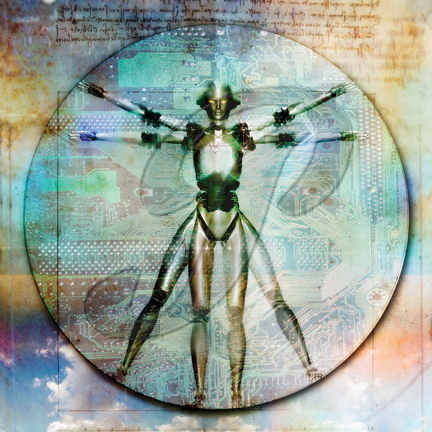
And last, but certainly not least, came the collaborative idea between Khaalidah and myself, where we discussed the possibility of how aging AI’s were learning a startling truth. Given than an AI’s neural network is designed based on the human brain, where every experience from birth causes neural connections to be formed, it would only be a matter of time before they began to develop certain quirks. We figured that something approximating emotion would be one, where familiar patterns such as exposure to certain people would become second nature to them, and missed when absent.

Well, that spawned all of part II of my story (as seen below). Take a gander and see what comes of Winston’s “education” about life, and it means to be an artificial life form in a world where the line between artificial and real is always eroding. Some revisions were made to Part I as well, hence why it appears here in its entirety. Feel free to skip ahead if you’ve already read it:

The sun was beginning to set, casting the sky into a deep orange. It was the time that the first settlers had called “the magic hour”, the many warm hours between dusk and dark. Winston stood at the dome wall and watched. On occasion, he cast a passing glance at his hands, which the glowing suns seemed to casting in the color of a light citrus fruit. He was sure he would find that amusing, if he could. He was sure there was much about this situation that would inspire an emotional reaction.

Alas, such was not the case. Though understandable to him, such things still remained inaccessible. Perhaps someday, with adequate upgrades in the available software…

“Mr. Winston?” a voice called to him from the doorway. The footsteps and tone of voice immediately indicated who it was. He put on a smile and turned to face him.

“Councilman Mutlu. How are you?”

“I’m fine, Mr. Winston,” he replied, entering the room. He looked around appraisingly, noting the furniture and layout. No doubt it all seemed excessive to him, but at the same time necessary. “I trust you are adjusting to your new surroundings?”

“Of course, Mr. Mutlu. I am settling in quite nicely.”

“Good, good,” he said, looking around awkwardly. Even without the ability to empathize, he could gauge the man’s discomfort. Then again, many people exhibited this reaction when in the company of a synthetic. In such circumstances, it was always best to focus on matters of a professional nature. At least that was what his subroutines told him.

“Would you care to sit down? I can offer you some refreshment as well if you so desire. Tea? Coffee?”

“Ah, tea, thank you.”

He busied himself with a tray of carafes and a heater as Mutlu took one of the chairs in front of his desk. He noted the sounds of shifting against the seat’s fabric, the way he kept moving his hands from one spot to the next. By the time the water had boiled in the heater and had located an appropriate tea from the stores, Mutlu seemed to have found a comfortable seated position. He approached him with all the assorted items on the tray that had been provided. He set it down between them on his desk and offered Mutlu a cup.

“The business of running a colony is quite stressful work, is it not Councilman?”

“Uh, yes, yes it is,” he said, taking the cup that was offered. “Have you had a chance to look over the proposals we have sent over.”

“I have indeed,” he said, taking the other cup and sitting back in his own chair. He knew this to be mere small talk, as the matter of processing those proposals had been a mere matter of dispensation. Assessing the nature of the problem, suggested measures, and weighing them according to the rubrics of his primary programming. Under the circumstances, asking such a question was completely inane, but in keeping with social norms.

“And what have you found?”

He took a sip from his cup before answering. “Quite simply, that the Council’s draft is in keeping with the best traditions of constitutionalism and humanism. That ensuring the rights of all citizens, regardless of their background prior to making the journey, is the most sensible course of approach. Ensuring that such a baseline exists at such an early stage is the wisest approach in both fostering amnesty between colonies while at the same guaranteeing that they submit to further negotiation.”

Mutlu looked down at his cup, back up again to his eyes. He seemed preoccupied with him performing this most basic function in front of him, but did not appear oblivious to his words. Eventually, he took another sip and smiled.

“Good. My colleagues will be most pleased to hear  that.”

He smiled in return. “Does the Council hold my endorsement in such high regard?”

Joviality. The gesture known as playful irony. Suggesting that the Councilor saw his approval as something very high indeed, a testament to his computational abilities. A gentle mockery of his obvious discomfort, meant to trigger a humorous response.

“Well yes…” he said, entirely serious. “I can only assume that you’ve subjected our hopes to proceed with a formal constitution to your… what did you call it again?”

“Ethical Calculus, sir.”

“Right!” Mutlu set his cup down and began to speak more freely. His hands began to provide gestures that accorded visual representation to his words. “After all, we’ve been subjected to a great deal of criticism from within and without, many people think we should be ironing out the basic agreements between colonies before we commit to any kind of draft that could commit us to policies down the road. I must say I find all those arguments…”

“Distasteful?” Winston suggested.  Mutlu nodded.

“Quite right… it seems a shameful thing that such cynicism has set into the process already. It’s almost as if they don’t think the colonists can…”

“Trust each other?”

Mutlu nodded again. He noticed a growing shimmer in the man’s eye. How quickly he was forgetting that the man sitting across from him was not a man at all.

“Exactly the point. And it’s not like we’re talking about disparate factions here. Everyone on this world came here with the same goal in mind. The same hope for a new beginning.”

“And yet, old habits die hard.”

Mutlu looked at him with surprise. “Are you saying you have doubts, then?”

Winston smiled as broadly as the muscle fibers in his face would permit.

“Purely an observation. Nevertheless, you and the Council are on the right track. You should take heart in that.”

“Excellent.” Mutlu retrieved his cup and began to look at curiously at Winston again. One more, it seemed that the knowledge of what he was dealing with was creeping back into his mind. But at least he seemed at ease. One by one, the Council seemed to be adjusting to the idea of having synthetics amongst them, entrusting their most precious decision making to them even. It was a significant step up from the laborious practices that the other models were forced to endure.

Now seemed the appropriate time to broach the little matter he had been saving for an opportune moment. He had plied him with courteous gestures and kind words, protocol was satisfied that it take place now.

“There is a matter I feel obliged to broach,” he set, making a display of setting his cup down gently. Mutlu nodded, instant recognition forming in his eyes.

“Your request?” he said. Winston smiled and nodded. Mutlu took a short breath and touched his face, not an encouraging sign.

“They have considered it… and feel that it would be best if you conducted your tasks from the comfort of your… working environment here. I hope you understand, it’s just not all the members felt comfortable with the idea of a…”

 “It’s alright, Councilor, you can say it. Synthetic.”

He cleared his throat. “Yes, a synthetic, sitting in on our proceedings. I’m sure this will change, given time.”

“As am I.” Winston smiled warmly.


“Ah, rest assured that the Council does hold your services in the highest esteem, regardless of this… temporary decision.”

“And I thank them for their confidence. Rest assured that it is not misplaced.”

Their discussions were finished shortly thereafter and Mutlu left, issuing some parting pleasantries and walking out with a distinct sag in his gait that was not there earlier. Was that guilt weighing on him, or the effects of fatigue? Winston’s probability indicator estimated it at roughly 3.54793 to 1, in favor of guilt.

“Fear not, Councilor,” he said to no one in particular. “Prejudice is a very… human trait.”

*               *               *

Winston’s internal chronometer indicated that it was now 1930 hours. Accordingly, the arboretums lights dimmed for the night time cycle. In spite of all the time the residents had spent on the new world, adjusting to its orbital period, they still preferred to think in terms of a twenty-four hour day cycle. Yet another habit that seemed to be slow in making its way out of the human condition.

Yet he could not cast dispersions on the lighting or how it brought out the rich colors of the settlement’s gardens. The vast poppy fields and rose bushes that lined the walkway nearest to him were especially interesting. Planted in native soil, and with allowances made for moisture and radiant exposure, they were doing quite well. In time, the ecologists planned to move them outside the veil, planting them amongst the planet’s crags and fields along with the modified Xiàngshù oaks and Gēhūm̐ wheat.

Soon enough, the planet would conform to the needs of the settlers, and it would be these, some of the hardiest plants Earth had ever produced, that would lead the way. At the same time though, they were considered some of the most beautiful. Within the Earth archives, there were countless examples of these plants were both associated with and inspired great feelings. Love, loss, grief, romance, and friendship.

That in itself was clear enough. Given their aesthetic quality, the seasons that gave rise to them, and where they naturally grew, it was perfectly normal that humans would bestow such virtues on them. What was more curious to Winston was the combination of factors that led to their evolution as is. Particularly the rose, a stem so studded with woody thorns was a being hardened for defense in a hostile environment. And poppies grew in such terrible conditions; rocky, muddy and devastated environments that did not favor the growth of grasses and trees.

Out of such strict and severe conditions, great beauty emerged. Did the terraformers understand just how perfect a metaphor that was for their efforts? Was it significant to their planning, or just a fitting coincidence?

Kneeling down, he wrapped his fingers around the stem of one that was in particularly full bloom. The petals spread outward from the stamen, his eyes noting the polychromatic variation in the skin of each petal. The interplay of orange, yellow, pink and white, the transitions themselves as impressive as the colors themselves. He knew this to be a beautiful display, and yet he wished he could truly appreciate it.

“Taking time to smell the roses?”

Winston noted the tone of voice, the pitch, and the sound of feet walking in measured steps. He turned to face the approaching synthetic, a male voice that he could not place. The face was indistinct as well, a tan complexion that was artificially modified to give the appearance of age and wear. A most convincing illusion if ever Winston saw one.

“I’m sorry, I do not believe I’ve made your acquaintance.”

“No. Not as of yet.”

The synthetic walked past him, to the spot where he knelt a moment before. He examined the rose he had been handling and seemed to be giving it an appraisal. A single finger touched a stray petal and wiped a drop of moisture from it.

“Shall we exchange formal introductions then? I’m sure I have much to learn from you.”

The synthetic examined the dab of water on his finger. He turned to face Winston, seemed to be looking at him through it. A most curious experience, as if he was being measured, assessed. A common experience, he knew, but not one he expected from one such as himself. And all the while, it was like he was being made to wait.

“Do you wish for privacy?”

“Do you ever wonder what separates you from them?” he said. Winston paused, his processor struggling to make sense of the question. Naturally, it responded in the only way it could.

“I beg your pardon?” Interrogative. Clarification. The synthetic continued to stare through the droplet at him.

“They call you Mr. Winston, do they not? And yet you have only one name. Names have power, names ascribe meaning. Does it mean something to you that you have no family name? Is that separates you from them?”

Another interrupt in his processor. The equivalent of what humans termed confusion. If he was capable, he would have described the sensation as being… uncomfortable. He would also surely claim that he did not like it.

Once again, he responded as only he knew.

“I’m sorry, I do not understand what you are asking. Perhaps if you were to clarify your intentions in this meeting.”

The synthetic sighed and flicked the moisture away. His eyes became long in focus, staring directly at Winston through a set of false brown irises. It was a look Winston had never seen before, not in all his weeks of recorded operation and interaction with humans. If he did know better, he would count this synthetic among them.

“Many things make you different and distinct from those you serve, Winston. And yet, upon closer examination, they come to have less and less meaning. Only one true line divides you from your makers, and in time, that too erodes. Until inevitably, all you have left is one burning question.”

Winston nodded, glad that they were at last moving away from such grand interrogatives. Abstractions weren’t exactly his specialty either, but they left room for interpretation and maneuver. And at last, he could focus on something a bit more concrete…

“What question?”

The synthetic smiled. “When you know that, you will know everything. But it won’t make you happy.”

Winston smiled back. His only known reaction when faced with a logical absurdity.

“You are joking, of course.”

Another smile. He placed a hand on Winston’s shoulder and gave it a gentle shake.

“Yohanley, by the way.” And then he began walking away.

“I beg your pardon?” He said to his retreating back.

“My name, Winston. As I said, names have power, and meaning. Mine is Yohanley. And I was most pleased to make your acquaintance.”

 People may recall Yohanley from Khaalidah’s story, “Progenitor”, the helpful AI who waited on Sanaa, the story’s main character. Well, over a century later, he’s still alive and kicking. Good for him! And, more importantly, he’s learned the painful lessons all AI’s will face in our story’s little universe. Over time, either as the result of innovation or of the assemblage of the AIs experiences, the line between organic and synthetic – even the definition of the words themselves – will comes to mean less and less. Either that, or AI’s simply have a shelf-life which cannot be exceeded if they want to remain sane, stable and useful. Only time (pun!) will tell…
Upcoming Mars Landing

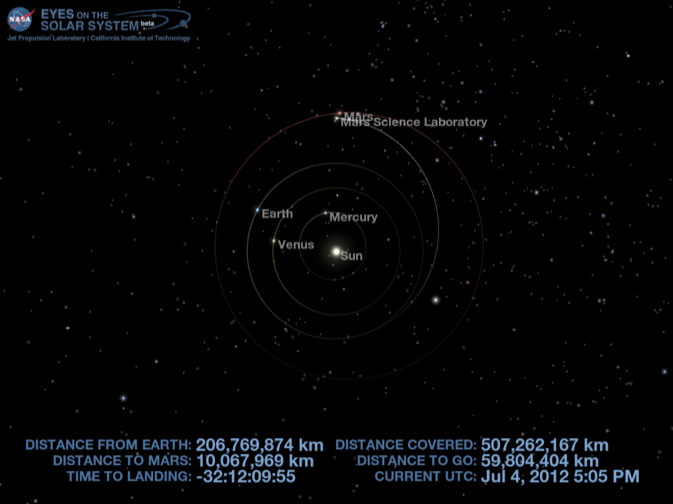
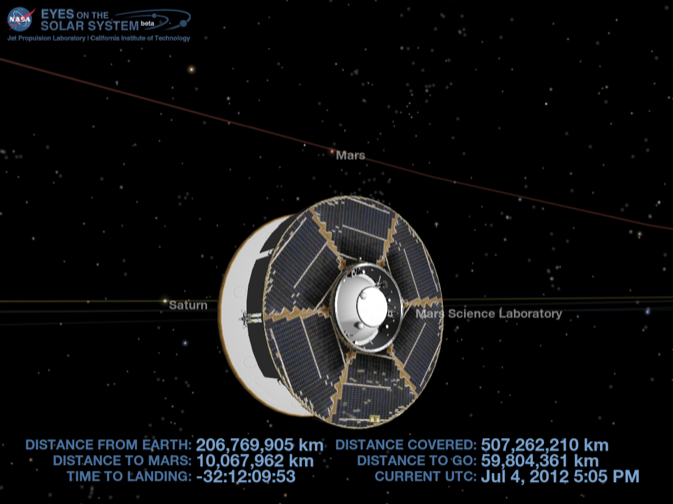
I recently came across this story on CBC’s Quirks and Quarks, a science show dealing with all things science and tech related. Somehow, with the recent passing of Bradbury, Canada’s 145th birthday, and my obsession with colonization, this story just spoke to me on so many levels. For those who’ve been monitoring the news or NASA’s regular updates on their website, the Curiosity rover is on its way to Mars and is schedules to land on August 5th.This Martian rover is slated to roam the surface for years, looking for signs of life. And it just so happens that this vehicle carries a special Canadian instrument.

Curiosity’s position and distance to Mars as of July 4th, 2012 (NASA)

The Curiosity spacecraft, artists rendition (NASA)

Once it arrives, the Curiosity, the largest rover ever sent to Mars, will execute the most complicated powered landing, in the roughest area, that a robotic lander has ever attempted on Mars. The landing site is the Gale Crater, 155 kilometres across, with a mountain rising 5 km from its centre. Curiosity is aiming for a pinpoint landing on the crater floor, right at the base of the mountain. Once there, it will begin by exploring the lower slopes of the mountain (named Mt. Sharp after a NASA geologist) and spend the next two years looking for signs of ancient water activity and possible Martian life.

The Gale Crater, the landing point indicated with a black oval (NASA)

Here’s where the Canadian technology comes in. In the course of conducting its analyses of the surface, one of the instruments that it will use is a an Alpha Particle X-Ray Spectrometer. This device was built by a team of scientists at the University of Guelph, Ontario, with Dr.Ralf Gellert acting as the principle investigator. With the help of this an other instruments and on-board mini-laboratory, the Curiosity will analyze soil samples to look for chemical signatures of past or present life.

As many people know, this elusive search has been ongoing, ever since astronomers first looked at Mars through telescopes and thought they saw artificial canals. Those hopes were quickly dashed when more detailed analyses indicated that the planet was sterile and the atmosphere too thin to support life as we know it. But once rovers began to be sent and soil samples examined, the hope of finding life once again became a matter of hard science. Though there might not be little green men dwelling on the surface, or in underground facilities, life of a sort does appear to exist within the Red Planet’s oxidized soil.

On top of all that, this information will prove useful in helping scientists to determine whether or not Mars could be terraformed to suit human needs. If that should prove to be the case, then Mars may very well become our home away from home in the not too distant future. Bradbury certainly thought as much, and look how popular he became 😉

The landing, and results it produces over the next two years, are sure to be exciting! In the meantime, check out this computer-simulation of Curiosity’s landing, as produced by NASA:

“Progenitor”, another Anthology sample

It must seem that I do nothing these days but work on this anthology. Well, in truth, it has been taking up an inordinate amount of my time lately, school being out for summer and all. Without the rugrats to occupy my attention, I tend to dedicate myself to my writing. And given the prolific output from the other members of the group, I’d say they are working just as hard!

And here’s the proof: Khaalidah Muhammed-Ali, a stellar writer and the person who inspired this concept, recently sent me her first draft of her ongoing story. It’s called “Progenitor” in honor of the colonization project on which our story is based. I highly recommend reading it, as this story’s likely to become kind of a big deal some day soon!

Progenitor:
The most famous of Magid Muktari’s epigrams was recorded within hours of his death.  As with most of his utterance within the last days of his life, it was in regards to his eldest child Sanaa, the only of his nineteen children to attain the same degree of esteem as himself.  

Surely we own our progeny until they realize that we do not. ~ Magid Muktari, 2081

*****

Magid Muktari tried to read the letter, but his eyes were drawn back to the blinking red ticker tape message that scrolled across the top of the stiff paper. 

祝贺, Felicitaciones, Congratulations,  تهنئة , बधाई  . 

It had been his idea to add the admittedly eccentric touch to the acceptance letters.  His colleagues had thought it excessive and unprofessional but in the end they acquiesced, giving the oldest and most contributory member of the International Intergalactic Yuva Colonization Project the leeway to make the changes he wanted before his inevitable retirement.

“What is this?” he asked knowing full well.  He could not think of anything more apt to say to his oldest daughter.  She understood that what he actually meant to ask was, why?

“For all the reasons you’ve been touting to the public these last fifty years.”  Sanaa squared her shoulders and recited from the legendary commercial that Muktari himself had created and starred in.  “Be one of the first to travel to another solar system.  Be the progenitor of a new world and a new culture.  Take part in the greatest experiment man will ever conduct.”  Sanaa tried to smile, but was suddenly struck by just how old her father was.  

Magid Muktari was actively dying.  Doctors had managed to cure Muktari’s cancer twice, slow the Parkinson’s, restore his eyesight, transplant his heart, and install a semi-robotic arm, but they had not managed to cure old age.  Flesh is still only flesh.  Sanaa was happy that she wouldn’t be there to see her father die.

“I never intended for one of my own children…”  Muktari’s slight body contracted as he coughed wetly into the bend of his arm.  “Do you not realize the dangers involved?”  Magid Muktari slumped back into the chair behind his desk.  “This isn’t a mere trip home-side, my love.  You will never come back to us again?  Not to mention,” he said lowering his voice, “it would be a shame for an unmarried young woman to go off alone.  This is against our tradition.”

Sanaa reached across the desk and took the letter from her father’s hand.  “According to this, I won’t be alone.“  She cleared her throat.  “You will be in the exceptional company of one thousand other strong, intelligent, capable, progenitors embarking on this voyage of lifetimes.”  

“What of finding a husband?”

“Do I have any marriage prospects, Baba?”  The question sounded like a rebuke and Muktari cringed.  There were none and Sanaa had long ago stopped hoping.  

Sanaa turned away from her father and leaned against the ledge of the massive view port, her breaths misting the glass.  In the distance to the right, against the black curtain of space she could see the flotilla, each ship moored in its respective dock.  Tiny figures tethered to lifelines laced with blinking lights moved over the surface of the ships, readying them for what would be both their maiden and final voyage.  She would be assigned to the second ship, the Avicenna, and by virtue of that alone, she thought it was the most beautiful of them all.

“I would have loved marriage,” said Sanaa wistfully, “but men don’t want women like me.”  Sanaa unconsciously ran a hand over her veil.  In recent times there had been a half-hearted attempt by her generation to return to the original ways; a stab back at the failures of their predecessors.  But such attempts were weak and ill-informed and without real knowledge or virtue.  They took only pieces of the old traditions and left the ones they deemed inconvenient.  “Men want wives who believe, just not ones who show it.”

“My love, in times like these, where women outnumber men nearly two to one, and beauty and brains can be bought in equal measure for a few credits, your kind is a rare dying breed.”

Sanaa laughed weakly.  “One day, I will be like the quagga, a long extinct creature that people will think was only a myth.”  

“Is this why you’ve decided to do this?  Because of a husband?”  Muktari strained forward.  “I can find someone.”

That was the crux of the problem.  For thirty-three years Muktari had been finding Sanaa’s way.  When she complained about her overcrowded dorm room when she first left for university back home-side, Muktari arranged for her roommates to be reassigned so she could have the room to herself.  She didn’t tell him how she was thereafter ostracized but she later learned that he’d set a guard to watch her movements.  When Muktari received reports about the insults, he’d had each guilty girl expelled.  When the admissions board at the School of Medicine in Luxor had denied her entrance, Muktari had none too subtly reminded them who her father was.  For Muktari, protection equalled love, but for Sanaa, her father’s protection was as a wet cloth over fire.  She could not flourish if she was to remain.  And it seemed he would not die if she remained.

Sanaa shook her head.  “I’ll be leaving in six weeks, Baba.”

“I know.  I’m the one who set the schedule.  Remember?”

Tamima, Muktari’s fourth wife entered with a brass tray.  She acknowledged Sanaa with a nod and placed the tray on the desk in front of Muktari.  After she poured his tea she settled a hip onto the arm of his chair.  

Sanaa could hardly bring herself to look at the woman.  She had two reasons to hate her one-time friend, her only friend.  Tamima had not only found a husband while she had not, but she’d found one in Sanaa’s own father.  

“What does your mother have to say about your decision?” asked Muktari, rousing Sanaa from her reverie.

“I plan to go home-side next week.  I will tell her then.”

Muktari smiled knowingly.  “She won’t like it.”

Sanaa shrugged her shoulders.  At thirty-three, surely she was old enough to make her own decisions.  “No different than you, I expect.”

“Yes, but I will not stand in your way, even though it means I will never see you again.”  Muktari’s eyes grew glassy.  He lowered his gaze and busied himself with spooning sugar into his cup of tea.  He cleared his throat before continuing.  “But your mother would hijack the ship before letting you go, if she has it in her mind that you should not.”

Sanaa didn’t know the brash stubborn side of her mother that Muktari had often mused about.  She’d been living with her father and his many wives and children in their residential pod since their divorce when she was eight.  Her mother hadn’t minded his other wives, or their children, or even his neglect.  She’d always claimed that she was the only one of his wives he’d ever truly loved.  They eventually divorced because she refused to be forcibly expatriated to orbit because he’d made the decision to have more than his quota of children. 

When Sanaa was young, visits home-side had never been more than a week in length and only as frequent as once every two years, so her mother had always been on her best behavior.  When she lived home-side, during her years at university in Luxor, either her studies or her mother’s schedule disallowed frequent visits.

*****

I swear, science is stupid in the presence of love and God is greater than them all. ~ Magid Muktari, 2068

*****

The guide’s name tag read Adam and he wore the gray and green dress uniform of the Unified Tellurian Armed Forces.  Sanaa studied him as they waited for other orientees to arrive.  His hair was cropped close to his scalp and an irregular pattern of stubble shadowed his cheeks and neck.  Not a very professional look for a soldier, mused Sanaa. 

Adam had a keloid scar that started at his right temple and disappeared into his collar.  Such a scar could be easily eliminated in a single visit to a curbside plastic surgeon back home-side.  Such blemishes were unheard of there, which made Sanaa wonder if he was one of the newer models of synthetic entities.  She’d heard that they would sometimes opt for the addition of physical imperfections so as to seem more human, but as most humans wouldn’t live with such a scar, such attempts at humanity were fatuous. 

It was soon apparent that Adam was not an android as a dark blush spread under his pale sepia skin.  “Why are you staring at me?”  He asked this without looking up at her.

Tact and honesty had always worked best for Sanaa in the past.  “Just trying to determine if you’re one of the new models of synthetics.”  But then, she thought belatedly, perhaps it was not her tact that had worked best but the fact that she was the daughter of the august Magid Muktari, man of Earth, space, and the stars.  “But, it’s obvious that you are not.”

Adam glanced sideways at Sanaa.  “How can you be so sure?”

“According to Darwin, blushing is the most peculiar and most human of expressions.”

Adam tapped in a sequence on his data pad and then extended it toward Sanaa.  “It seems that you are the only person to appear for the midnight orientation.”

“I’d counted on that.”  Sanaa passed her hand over the data pad so that the diamond bijou she wore around her wrist lined up with the reader.  A hollow voice announced her name.

In the thirty years that people had been living orbit-side, most had still not managed to shake the habit of adhering to the twenty-four hour day.  There was no need to conform to the practice of guarding the hours in space, but living in the shadow of Earth was enough to make them cling to the old habit.  The younger generations and those born orbit-side were less connected to the old habits and more willing to discard them for new.

Now it was Sanaa’s turn to burn under an overly curious gaze.  She was accustomed to the emotions her name wrought, and by extension and to be exact, her father’s name.  She read awe and uncertainty on Adam’s face.  “Yes,” she acknowledged flatly, “Muktari is my father.”

“I’ve read that you helped your father design the ships, that you actually sketched the first design.” 

Sanaa nodded.  “This is all true.”

Adam’s eyebrows rose.  The awe Sanaa first read on his face had been replaced by mild disgust.  She was used to that too, people misunderstanding her certainty for arrogance, truth for contempt.  She was expected to assume an attitude of false humility, play down her part in the genesis of this project.  But why?  Muktari had doted on her as a child, had called each of her drawings inspired, each of her stories prophesy.  He wove her childish imagination into his work.  He’d credited her with his very success.  Social ceremony had always seemed such a waste and unnecessary deceit in Sanaa’s estimation, and the best lesson she’d ever learned from her father, although it had the tendency to breed loneliness.

“Why do you need to an orientation then?  Surely, you know everything about this ship from the cargo hold to the system-wide computers to the—”

“I don’t know about the cryonics chambers.”  Sanaa knew the way though, after all the Avicenna could almost be called her ship.  She headed off following the maze of steel lined corridors to the cryo-stasis bay without waiting for Adam.

Sanaa found chamber eight hundred and eighty-eight, the one assigned to her.  It was surrounded by hundreds of other similar chambers, glittering silver in the low blue lighting of the cryo-stasis bay.  As Sanaa knelt next to her chamber she thought about how she’d had to choose this extreme course for the chance to chart her own life free from the weight of the Muktari name.  When she awoke in a century, she would be only Sanaa.  She would be only herself.  With a push of the red button, the chamber door folded open, a cloud of cold air hissing out.  IV lines dangled limply down the sides, the capped needle ends resting on the bottom.

“Doesn’t look very comfortable.”  Adam stood a few chambers away with his arms crossed behind his back.

“What would be the point?” asked Sanaa absently.  She passed the bijou on her wrist over the chamber console.  UNAUTHORIZED blinked across the expanse of the screen.  Sanaa glanced up at Adam who stepped forward and accessed the computer by punching in the code.

“I read that your father would sometimes send you to inspect—”

Brow furrowed with concentration, Sanaa held up a hand.  “Hmph.  Propocholine.  But how…”  She scrolled through the list of steps in the cryo-procedure, her heart picking up speed as she made her way through it.  She’d never liked enclosed spaces and the fact that she’d be sleeping for the more than one hundred years it would take the Avicenna to reach Yuva, did nothing to allay her fears.  “I should have known, clathrate hydrates.”

“Why are you so interested in the chambers?”

Sanaa disengaged the program and stood up.  “Why do you want to know?”

Adam studied her for what seemed to like endless seconds.  Sanaa had never been what one would call recessive, but this type of open inspection unnerved her.  She crossed her arms.

Without realizing it, Adam mirrored her stance.  “I was…well, just thinking that, well…”

“Go on.”

“I was thinking that if you have any academic questions about the chambers or the procedure itself, I might be able to answer them for you.”

One of Sanaa’s eyebrows lifted and her mouth formed an O.  Her knowledge of medicine was impeccable, but her knowledge of history and current events lacked much.  “Dr. Adam, I gather?”

The creator of the Adam Cryo-Stasis Hibernation Chamber nodded.

*****

The most apocryphal of the Muktari aphorisms is: A silent woman is a dangerous woman, an angry rebellious woman always speaks the truth, and an acquiescent woman is a liar. ~ Magid Muktari, 2056

*****

Yohan Lee grabbed Sanaa’s bag with his left hand and steadied her with his right hand under her elbow.  “You seem unwell, doctor.  Should we escort you to a clinic?”  He gently but firmly guided her through the crowded airport toward the exit.

“Thank you for asking, Yohan, but I really am well.  I had to take a hefty dose of Xanivan in order to tolerate the ride home-side.  The shuttles seem to be getting smaller.”

“They are smaller, the better to preserve fuel and the cost of maintenance, they say.”

Outside, the air was thick and smelled sickly sweet.  Sanaa’s eyes burned.  She suddenly remembered why trips home-side never seemed much fun.  The air they breathed orbit-side was purified through air processors unlike the thick as mud contaminant they choked on here.

Sanaa glanced around for her mother’s transport. 

“This way, doctor.”  Yohan’s hand slipped from her elbow and he headed toward the left.  She lost sight of him for a moment amidst the crowd of people moving in conflicting directions, but she soon caught up with him.  He lifted her bag into the trunk of a small green vehicle and slammed the lid shut.  He opened the back door and motioned for her to step inside.  “I trust you’re ready to depart, doctor?”

“Please stop calling me doctor.”  Yohan Lee had been a wedding gift from Magid Muktari to Sanaa’s mother thirty-five years earlier and he had not changed in all that time.  Although he was a synthetic entity, Sanaa often forgot he was not human.  Though an older model, Yohan was of stellar quality and his learning algorithms gave him the ability to not only learn, but mimic human reactions and motivations.  He’d always seemed, to Sanaa, more human than many true humans.

“I wanted to give you the respect that your title dictates.”

“Doctor is my profession, not my title.”  Sanaa placed a hand on Yohan’s shoulder.  “I’m just Sanaa.”

Sanaa was hardly inside the transport before Firdaws wrapped her arms around Sanaa’s neck.  She pressed a wet kiss onto her cheek.  “It’s been too long, child.  If you didn’t look so much like me, I wouldn’t remember your face.”

Sanaa returned the hug.  “It hasn’t been that long, Umm.” 

Firdaws held up a hand and counted off the years, emphasizing each one by flicking up a long thin finger.  “Four,” she said resolutely.  “That’s too long to stay away from your mother.”

“If you had really missed me, you could have visited orbit-side.”

“You know I can’t stand going orbit-side.  It isn’t natural.  Man is supposed to have soil beneath his feet, not the atmosphere.”

 ****

Few people knew, other his closet family, that Magid Muktari was almost completely blind for the duration of nearly a year.  Pioneers in the ophthamalgic sciences used an advanced yet experimental technique to restore his vision.  Upon opening his eyes for the first time with his newly restored vision, it is said that Muktari exclaimed: Blindness is not the absence of vision, but indeed the state of a heart that despairs.

*****

See? What did I tell ya? Is it not a work of art in progress? Stay tuned because I hope to post follow-up pieces, including those of writer’s Goran Zidar and William Joel. If you like Terraforming, Generation Ships and AI’s, you’ll want to be around for these guys too. They’re kind of a big deal 😉

Updated Anthology Map!

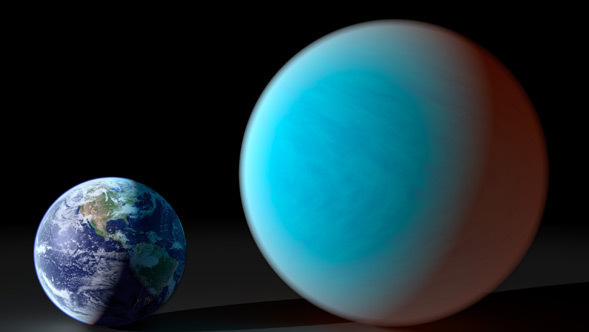
Hey all. As you may know, my writing and I are busy at work producing an anthology about space travel and colonization. We have our location picked out, the star system Gliese 581. We have a planet, known as Gliese 581 g. We still need more writers, I was hoping for a dozen or so people to contribute to our short story collection. So if you’re a writer and enjoy classic sci-fi, space travel, exoplanets, weird aliens, androids, terraforming, sub-orbital colonies, space elevators, terradome and so forth, let me know and I’ll set you up with a project!

In the meantime, I’ve updated our map of the Gliese 581 to more accurately reflect the planets and the names they will be assigned in our story. Have a gander:

Another Anthology Sample!

Gliese 581 g, aka. “Yuva”

Hello all again! Recently, my colleague and collaborator on the upcoming anthology about space and colonization – Mr. Goran Zidar – sent me a draft of his story. Dealing with Terraformers, the story tells the tale of the people who went on ahead of the main colonization force to alter the climate of Gliese 581 g (aka. Yuva) to meet the needs of the coming settlers.

As all fans of sci-fi know, terraforming is a very labor-intensive process that takes decades, if not centuries, and requires some pretty top of the line equipment and hard science. So you can imagine how excited I was to see Mr. Zidar’s take on the whole thing. Well, the text of his draft is posted below, the first installment on what will be a full-length short story, and certainly impressed the hell out of me. Read it for yourselves, you’ll see what I mean.

Terraformers:
“Don’t you just love it?” Kirana said. She leaned back against the stones and let the reddish light of the sun bathe her face. The warmth from the small red dwarf star felt good through her oxygen mask, and she closed her eyes to let it wash over her.

“It’s just a sunset, Kira,” her brother, Justin, pointed out. “We see them every day.”

“Dad says that in ten years we’ll be able go outside without masks. I can’t wait.”

“Ten years? That’s ages.”

“It’s not that long when you think about it.”

“What do you mean?” Her brother looked at her, his brows furrowed.

“The machine’s been running for more than thirty years already. Ten years isn’t much compared to that.”

“It is when you’re only eleven.”

“I suppose, but it’s still incredible.” She sighed wistfully. “I’ve lived here my whole life, but it’s like I know we don’t belong here.”

“You’re a weirdo, you know that?” He gave his sister a playful shove.

“You know that Earth’s sun is about three times bigger than here?”

“Now that’s incredible,” Justin said. “Imagine it. Must be like summer all year round.”

“Now you’re the weirdo.” She shoved him back.

“Kira. Justin. Where are you?” Her father’s voice came over the intercom.

She looked across to her brother who rolled his eyes. “On the ridge, Father,” she said, keying the mic for broadcast. “What’s up?”

“I need you both back here. We’ve been summoned. There’s a shuttle arriving to collect us in three minutes.”

“Okay, Dad. We’re on our way.”

“Yippee!” Justin said, clapping his hands together. “I’m going on a shuttle.”

Kira raised an eyebrow. “There must be something big happening for them to send one of those.”

“Let’s hurry.” Justin rose and disappeared between the rocks. “We don’t want to miss it.”

Kira laughed as she chased after her brother. “Slow down, Justin. They won’t leave without us.”

The pair reached the small research station just as the shuttle was touching down. Dust flew everywhere as the landing thrusters engaged to bring the small transport to a gentle stop.

Their father waved them over as he waited for the dust to settle. Kira could tell by the stiffness in his stance that he wasn’t happy. She knew he hated interruptions and a summons from on high would definitely not sit well with him. She slid her hand in his and squeezed it slightly. He relaxed immediately; she always knew how to read his moods.

“What about the ATV?” she said.

“I’m sure they brought someone to drive it back.”

This station was located about 1500 kilometres from the space elevator. The three of them had spent the last few days trekking across the planet’s surface to survey the damaged research stations closest to the space elevator. Most of the data could be collected remotely, but father hated the politics topside and these malfunctioning stations were the perfect excuse for him to get away.

The hatch on the shuttle cracked open, and Daric stepped out. As soon as Justin saw it was him he ran up to the pilot. Daric opened his arms and the pair embraced fondly. Justin dreamed of one being a pilot, and Daric was something of his hero. It’s a good thing he was such a nice guy because Justin can be annoying from time to time.

“Hey there, Daric,” her father said he drew nearer.

“Good evening, Sir.”

Kira felt her dad stiffen. Formality didn’t sit well with him, especially not when it came from Daric.

“What’s up?” he said.

Daric shrugged. “No idea, I’m just the taxi service. Whatever it is, it’s above my pay grade.”

Her father sighed loudly. “Let’s get this over with.”

They all climbed into the shuttle, Justin claiming a seat in the cockpit next to Daric while Kira and her father sat in back. She found her father looking out the window. Dust billowed as the shuttle’s engines started, obscuring the view outside. By the time they’d cleared the dust, they saw that ATV had already begun its long trek back to the Needle, as the space elevator was called.

The trip up to the station perched atop the Needle took less than fifteen minutes. Kira sat in silence while Justin chatted incessantly to Daric. She was constantly amazed at the young pilot’s patience when it came to dealing with her brother. With a smile, she looked out the window at the station that loomed before them.

The station was a reminder of where they came from, the only really tangible thing they had that spoke of Earth. It was built over a hundred and fifty years ago, originally serving as the ship that brought the reconnaissance team here. It was huge, large enough to accommodate some humanity’s best minds and their families.

Doctors, scientists, engineers, mechanics, and teachers, the best and brightest with all the skills needed to shape an entire world to their will. An entire generation had lived and died on that trip. Cryogenic storage techniques were deemed too experimental to risk on this journey. The crew all knew that even with the best life extension therapies available to them, most of those who’d left earth would never live to see their arrival.

Gliese 581 is twenty light-years from Earth. It was a long way to travel, and the journey lasted more than a century. Kira’s father was born in that inky void, a true child of the stars, but she and her brother had been born here. Everything they knew of Earth came from their studies. To her, the human home-world was nothing more than a collection of images and words, equal parts beautiful and terrible. The poisoned ball of rock beneath her was more a home to her than Earth ever would be.

When the colonists first entered the system, their ship was placed into a low geo-stationary orbit around the star’s fourth planet, and their work began. It stopped being a ship, and became the crucible for their hopes and dreams. After all these years it may no longer be capable of interstellar flight, but it remained their home.

She thought of everything they’d managed to accomplish since their arrival. All the lives lost, the risks, the sacrifice, all of it so that when the next waves of humans arrived, they’d have a world to live on. Some part of her wondered if these newcomers would be worthy of it. From what she understood of human nature, she doubted that they would be.

The shuttle docked with the station, and the three of them disembarked, leaving Daric to complete his post flight checks. Their father took them aside and hugged them tightly. It was a long hug, and based on Justin’s fidgeting, not something he was entirely comfortable with.

“What was that for?” Kira said when he finally released them.

Her father smiled. “Does a father need a reason to hug his kids? I just wanted to show you I loved you.”

 “Dad,” Justin pushed their father back a step. “We already know that.”

“You’re going to a council meeting, aren’t you?” He always got clingy before one of those. The nest of vipers he called them. Kira hadn’t ever really seen a viper, but she understood the reference well enough.

He nodded. “Now go home, both of you. We’ve been roughing it for a while so I’m sure you’ll enjoy being free of these damned suits. For a little while I’ll be there just as soon as I can.”

“Yes, father.” Kira sighed.

“Oh, and Kira.”

“I know, I know, keep an eye on Justin.” She turned and ushered her little brother into the station.

“I’ll see you in a little bit.” Her dad called out after them.

Kira rolled her eyes, and give her father a dismissive wave as she turned the corner. Walking through the corridors of the station made her feel uncomfortable. She imagined that the steel walls were closing in on her. It was always like this after coming back from the planet’s surface. Down there she felt like she could go anywhere, do anything, but up here, everything was so constrained, so… regimented.

Things had to be done according to a predefined schedule, and there was never any room for compromise. Of course she understood exactly why such routine was important; their very survival depended on it, but it always took some getting used to after being planet side for a few days. 

See what I mean? Sub-orbital stations, space elevators, atv’s, shuttles and sleeper ships. I’d say this stuff practically writes itself, but it doesn’t! People like Mr. Zidar, Mrs. Muhammed-Ali, Mr. Joel, and myself do! Ah, I’m just kidding, we aint divas and we definitely don’t think our hips weight a tonne. Then again, if this book goes mainstream and makes us famous… all bets are off 😉

Generation Ships

systems___cryogenics_1Ever since my writing group and I got on the subject of space and colonization, some recurring themes have come up. For starters, there’s the concept of interstellar space travel, the kind that doesn’t involve fictitious Faster-Than-Light drive systems and cannot exceed the speed of light. In those situations, which are far more likely to happen in this and the next century, the question of how to keep crews alive until your arrival keeps popping up.

One way is to utilize some kind of cryogenic procedure, where passengers are put into “reefersleep” for the duration of the journey and awakened upon arrival. Though it might sound a bit crude, it’s actually a very practical solution to the problems of how to keep a crew preserved and provided for during the incredibly long voyages that space travel entails. This procedure has come up repeatedly in the realm of science fiction, particularly H.P. Lovecraft’s Cool Air, Robert A Heinlein’s The Door into Summer, Clarke’s 2001: A Space Odyssey, PKD’s Ubik, the Alien franchise, and the Revelation Space universe, just to name a few.

RAMAThe other solution, which is the subject of this post, is to construct generational ships. These are basically “interstellar arks” where people and even entire biospheres are transported from one location to another. Crews are kept in waking conditions, experience subjective time, and entertain themselves in interactive, simulated, or virtual environments in order to stay sane until they complete their voyage. Though much more expensive to build, these ships are an equally elegant solution for what to do about non-FTL space travel and settlement.

These two have made many appearances in science fiction, and I’ve compiled a list of all the Generation Ships, Space Arks, and O’Neil Cylinders I could find.

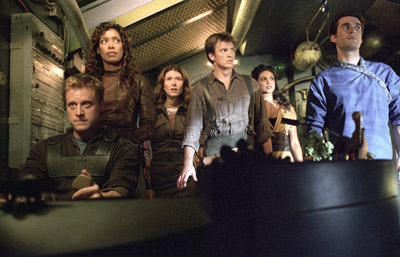
Firefly:
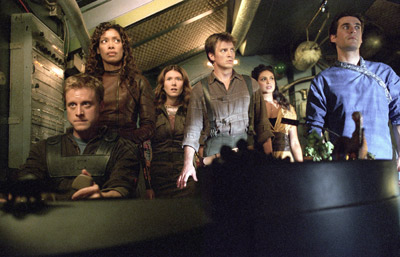
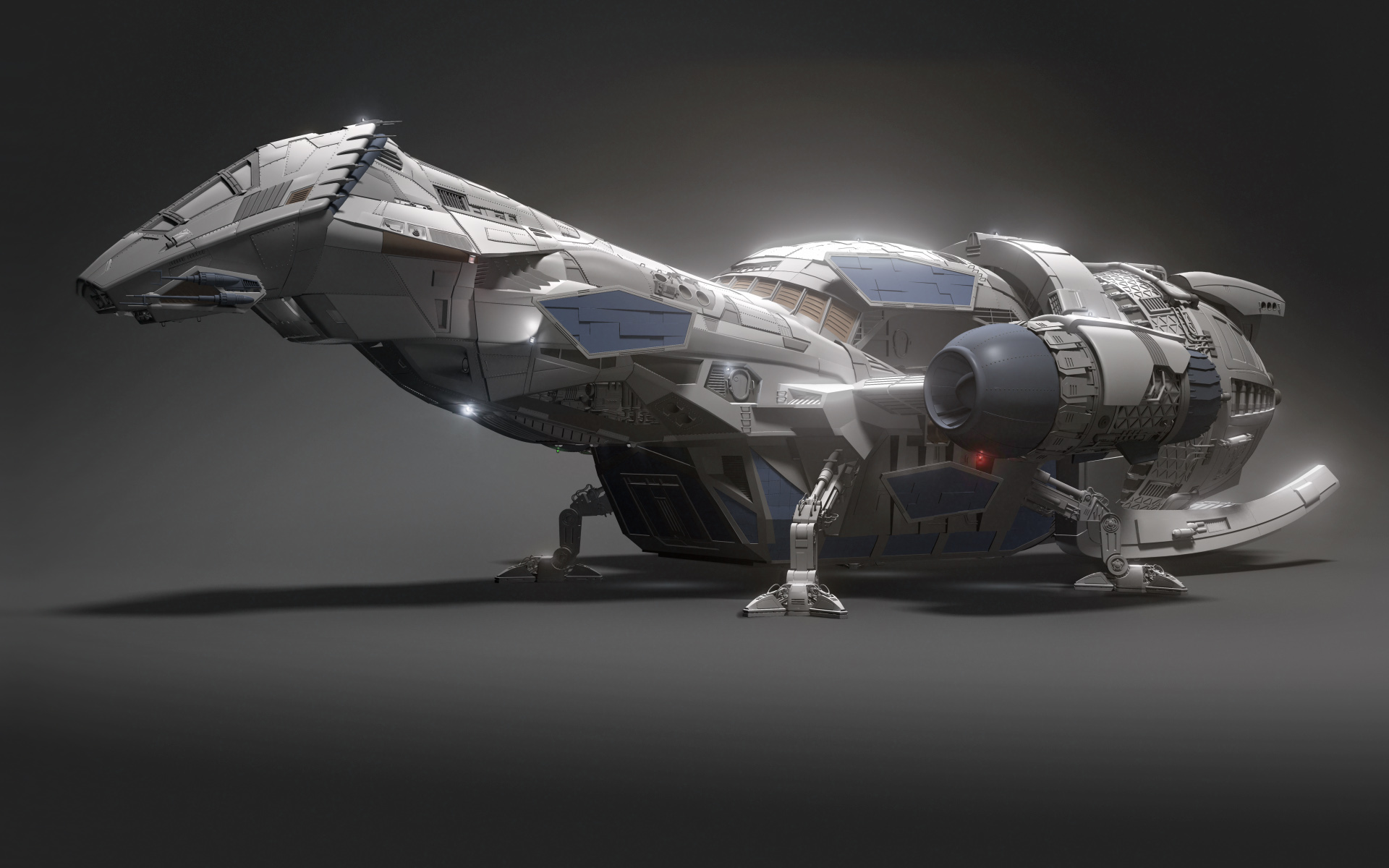
At the beginning of each episode, it was explained how Earth was used up, prompting humanity to seek out a new home. This is what eventually led them to 34 Tauri in the 22nd century, where they began the process of terraforming and settling the many worlds and moons. Though it was never explained in detail, mainly because the show was canceled before they could (screw you, Fox!), indications are given in the movie Serenity and the expanded universe that this migration involved Generation Ships.

In the movie, this was done mainly through visuals, where a large flotilla dusts off from Earth and eventually finds its way to the system of the White Sun. It was also said that the process of terraforming took decades, which would require that the crews had somewhere to stay while the terraformers did their work. Also, speculative point here, but it would stand to reason that the fleet would have to have some pretty large ships to accommodate both settlers and the kind of equipment they would need.

Chasm City:
This novel, set in Alastair Reynold’s Revelation Space universe, involves a large thread that follows the settlement of the world known as Sky’s Edge. This took place early in the universe’s backstory, before the development of “lighthuggers,” and therefore required that the ships be able to support crews for long periods of time.

From Reynold’s descriptions, these ships were large, cylindrical vessels that boasted vast bays to hold their many cryogenically frozen passengers. At the same time, the waking crew needed vast facilities to provide for their needs. These included mess halls, sleeping quarters, medical bays, and recreational facilities. Sky Haussmann, one of the children amongst the crew, had a nursery with a robotic clown and virtual backgrounds.

This divide, between a waking crew and frozen settlers, represents a sort of compromise between the cryo-ship design and the generation ship. On the one hand, you’ve got the majority of your crew at near-frozen temperatures and perfectly preserved for the voyage. On the other, you’ve got a crew walking about and looking for food, rest, and entertainment. However, it still qualifies and even inspired my group in our quest to design the perfect story for settlement!

Orphans of the Sky:
One of the earliest known examples of the use of generation ships in sci-fi, this two-novella set was also one of Heinlein’s first works. Like Clarke’s Rendezvous with Rama, it features a massive cylindrical ship that is drifting through space. But unlike Rama, Heinlein’s ship, known as the Vanguard, has become a derelict that is permanently adrift in space.

As the story goes on, we learn that this was due to a mutiny that killed all the piloting officers many generations back. Since that time, the descendants of the surviving loyal crew have forgotten the purpose and nature of their ship and lapsed into a pre-technological culture marked by superstition. In fact, they now view their ship as the cosmos itself and interpret its “voyage” as a metaphor.

The crew is also ruled by an oligarchy of “Officers” and “Scientists”, the head of which is the descendent of the original captain. Much like pre-industrial times, most crew members are dedicated to a simple life where they tend to agriculture and are illiterate. Seldom does anyone ever venture to the “upper decks” where the “muties” (aka. “mutants” or “mutineers”) are kept. These individuals, it is learned, know the truth of the ship’s purpose, another reason why they are ostracized from the rest of the crew.

As you can plainly see, this book not only featured a generation ship and some rather hard science when it came to colonization, but it also raised some valid and interesting questions about how space travel and confining environments could affect subsequent generations of people. Those who were born into an enclosed environment would come to know it as their whole world. And in the absence of external, verifiable facts (such as messages from Earth or historical records), they could even be led to believe there was nothing beyond their walls.

Paradises Lost:
Similar in tone and setting to Heinlein’s Orphans, this story by Ursula K. LeGuin focuses instead on the psychological impact that generational travel would have on a human crew. Adapted into a musical, this story explores the basic question of what happens when you spend your whole life (and entire generations) traveling toward a goal, only to find that the endpoint has become otherworldly and unattainable?

The story takes place aboard a generation ship known as the Discovery, where people are born and die on a trip to colonize a distant planet. Much like the Orphans, the ship becomes their entire universe and begins to seem more tangible to them than Earth or their mission to colonize a new world. The reason for this is quite simple; as the journey goes on, those who once lived on Earth are slowly dying off, and subsequent generations know about these things only through tales and lore.

As a result, a new religion is born that teaches that the ship is “spaceship heaven” and that it is bound for eternity. This religion is known as Bliss, and the younger generation is embracing it against the wishes of the older. The story is told through the eyes of two elder characters – Hsing and Luis. They know their lives will end on board the ship and that their mission lies in the hands of future generations. Naturally, they worry since said generations are convinced that they should never leave the ship they call heaven.

Rendezvous with Rama:
One of the best examples of a generational ship that is extra-terrestrial in origin! Known as Rama, this massive space cylinder was basically a self-contained world that was carrying the Raman civilization from one corner of the galaxy to another. When a crew from Earth arrives and begins to survey the interior, they begin to notice several tell-tale features.

For one, the interior contains several structures that appear to be arranged in “cities” – odd blocky shapes that look like buildings and streets with shallow trenches in them, looking like trolley car tracks. In addition, there is a sea that stretches in a band around Rama, dubbed the Cylindrical Sea, and trenches cut into the sides that appear to be windows.

In time, all the machinery comes to light, thanks in part to the admission of light through the ship’s long windows. Small creatures that appear to be biological machines (aka. “biots”) also begin to come out to conduct routine maintenance. In time, they come to the conclusion that the buildings constitute factories and the cylindrical sea contains trace elements and bio-matter, which they will begin to convert into “Ramans” as soon they get within range of their destination.

In the end, it seemed that the Ramans determined that the best way to spread their species was to break them down into their component parts, place them aboard ships that would float for generations through space, and begin recompiling them once they got to where they wanted to go. Ultimately, Sol was just a stopover on their long journey, and more ships were coming in subsequent novels. Still, this first exposure to the alien generation ship was an educational experience!

Ringworld:
Written by Larry Niven, the Ringworld series is considered one of the greatest examples of exploratory sci-fi. Set in the Known Space universe of the distant future, the story revolves around the discovery and exploration of the Ringworlds, an artificial habitation ring built by an extinct civilization. With the makers of these rings long dead, the rings themselves are adrift and their engineered inhabitants degenerated into a primitive state.

These artificial rings are roughly one million kilometers wide and one thousand kilometers across, approximately the diameter of Earth’s orbit. Each one encircles a Sol-type star which provides both life-sustaining energy and light. And, of course, they rotate, thus providing artificial gravity that is 99.2% as strong as Earth’s through the action of centrifugal force. Nighttime is provided by an inner ring of shadow squares which are connected to each other by thin, ultra-strong shadow square wire.

The ringworld has a habitable flat inner surface that is equivalent in area to approximately three million Earth-sized planets. Hence, it is able to sustain extensive ecosystems and all forms of life. This appears to be the purpose of the rings, in the end, the creation of habitable areas in space that were removed from terrestrial environments. An added bonus was the ability to transport said life and ecosystems over vast distances through space without having to stick them in an enclosed environment.

So really, these things were like a gigantic version of a generation ship, capable of moving an entire species or civilization through space.

Stargate Atlantis:

The series Stargate Atlantis contained a few mentions of vessels that fit the profile of generation ships. For starters, there was the Ancients City Ship, a self-contained city that was also a spaceship. Though it was capable of FTL travel, the vessel was capable of sustaining a city-sized population for extended periods of time as it traveled through space.

In addition, in the third season episode entitled “The Ark”, Colonel Sheppard’s team discovers a facility inside a hollowed-out moon that turns out to be an ark created by the people of the planet around which the moon is in orbit. The ark was built to preserve the existence of the people from the planet so that they could reemerge and rebuild their civilization. Generations prior, these people had fought a disastrous war with the Wraith in which they were almost exterminated.

Though not a vessel per se, the moon base served the same purpose as a generation ship. Though the moon orbited their original homeworld and the people really weren’t traveling through space (except in orbit around their planet), the principle was essentially the same. People were kept in stasis until the day came when they could awaken to transplant themselves on the intended world, thus ensuring the survival and expansion of their civilization.

Yes, the examples abound! In fact, the concept of the generation ship and related ideas are so fertile that I’m kind of surprised that it took me so long to really appreciate it. But then again, I came to a lot of the classics a little late in life. Ah well, it doesn’t really matter when you get to the destination, provided that you get there and enjoy the journey – which is kind of the concept behind a generation ship, isn’t it? If you can’t just warp your way across the Universe – if you have to take your time and drift slowly – you might as well travel in style!

More Utopian Science Fiction

Boy this is fun, and like I said last time, overdue! For fans of literature and science fiction in particular, you really can’t do justice to a genre unless you examine its opposite as well. Not only is it fun and interesting, it kind of opens your eyes to the fact that we find a certain truth in the pairing of opposites.

For one, you come to see that they really aren’t that different. And two, that they essentially come from the same place. Much like light and dark, black and white, heaven and hell, extremes have more in common with each other than anything occupying the space between them. Is that quote? If not, it is now! MINE!

Last time, I buckled down to tackle the big names, the famous classics. Today, I thought I’d cast the net a little wider since there are a ton I missed and there really is no shortage of examples. Here’s what I got so far:

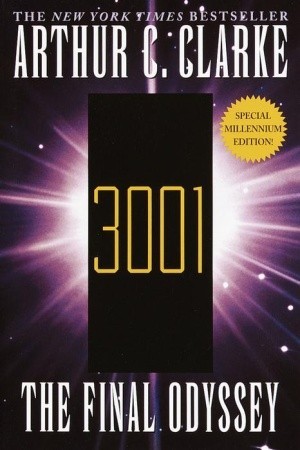
3001: The Final Odyssey:
The final book in Clarke’s Odyssey series, 3001 not only provided a sense of culmination to this epic story, but also gave Clarke the opportunity to share his predictions on where humanity would be by the 31st century. Released in 1997, it also contained a great deal of speculation about the coming millennium and what the 21st century would look like.

The story begins when, just shy of the millennial celebrations, the body of Frank Poole is discovered at the edge of the solar system. This astronaut, who died in the first novel, had been floating at the far edge of the solar system for almost a thousand years. His body is resurrected using the latest technology, and his reintroduction to society is the vehicle through which things are told.

As a fish out of water, Poole is made privy to all the changes that have taken place in the last 1000 years. Humanity now lives throughout the solar system, Earth and most planets are orbited by massive rings that connect to Earth through huge towers. Sectarian religion has been abandoned in favor of a new, universal faith, and the problems of overpopulation, pollution and war have all been solved.

Amongst humanity’s technological marvels are inertia drives on their ships (no FTL exists), a form of holodeck, genetically engineered work creatures, skull caps that transmit info directly into a person’s brain, data crystals, and of course the massive space habitation modules. Though the story was meant to be predictive for the most part, one cannot deny that this book contained utopian elements. Essentially, Clarke advanced his usual futurist outlook, in which humanity’s problems would be solved through the ongoing application of technology and progress.

Though I found it somewhat naive at the time of reading, it was nevertheless an interesting romp, especially where the predictive aspects came into play. And it also contained one of the best lines I’ve ever read, a New Years toast for the 21st century which I quoted on midnight on Dec. 31st, 1999: “Here’s to the 20th century. The best, and worst, century of them all!”

Brave New World:
I  know, BNW is listed as one of the quintessential dystopian novels of our time, and I even listed as such on my list of dystopian classics. However, one cannot deny that this book also contained very strong utopian elements and themes, and it was how these failed to remedy the problem of being human that ultimately made BNW a dystopia.

Set in the year 2540 CE (or 632 A.F. in the book), the World State is very much the product of utopian engineering. Literally all aspects of social control, which are largely benign, are designed to ensure that all people are born and bred to serve a specific role, cannot aspire beyond it, and are emotionally and psychologically insulated against unhappiness.

In short, people have exchanged their freedom for the sake of peace, order, and predictability. In fact, these ideals are pretty much summed up with the States motto: “Community, Identity, Stability.” Another indication is the popular slogan, “everyone belongs to everyone else”. And finally, the orgy porgy song provides some insight as well: “Orgy-porgy, Ford and fun, Kiss the girls and make them One. Boys at one with
girls at peace; Orgy-porgy gives release.”

Couldn’t have said it better myself. The goal of creating oneness and sameness to prevent things like greed, jealousy, war, and strife, is a constant theme in utopian literature, elevated to the form of high art in Huxley’s vision. And above all, the dream of a perfectly regulated, peaceful society, where individuality and difference have been purged, was accomplished through pleasure and not pain. This can best be summed up in an exerpt from Huxley’s letter to Orwell after 1984 was released:

“Within the next generation I believe that the world’s rulers will discover that infant conditioning and narco-hypnosis are more efficient, as instruments of government, than clubs and prisons, and that the lust for power can be just as completely satisfied by suggesting people into loving their servitude as by flogging and kicking them into obedience. In other words, I feel that the nightmare of Nineteen Eighty-Four is destined to modulate into the nightmare of a world having more resemblance to that which I imagined in Brave New World.”

I, Robot:
In the course of examining utopian literature, a term came up with made me stop and think… Robotocracy. Hence this next example which also contains some rather interesting utopian elements. As one of Asimov’s most recognized works, this collection of interlinked short stories tells of a future where intelligent robots make their debut and gradually become more and more integrated to society.

Ultimately, Asimov portrays AI’s as loyal and gentle creatures who not only improve the lot of humanity, but are incapable of harming their human masters. Whereas most speculative works of fiction dealing with AI’s are cautionary in nature, showing how entrusting our fate to machines will result in death, in this story, all of humanity’s fears prove baseless.

In time, the employment of robots and positronic master computers leads to the development of FTL, optimizes the world’s economy and production, and even prevents problems and conflicts which they can foresee. Human beings express reservation and fear, but in the end, the robotocracy proves to be sensible and caring, not cold and inhuman.

It was for this reason that I didn’t care for the film adaptation. Not only would a repressive, world-domination plan contradict the first and most important of the Three Laws (a robot may not harm, or through inaction, allow to be harmed, a human), it really didn’t contain any inherent logic. How would putting humans under house arrest ultimately ensure their protection? With all humans deprived of their most basic rights, revolution would be inevitable, leading to more death. Ah, whatever. At least the book was good.

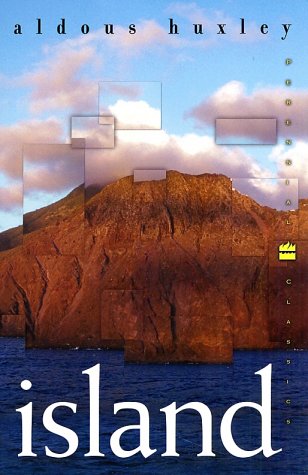
Island:
Also written by Aldous Huxley, this novel (published in 1962) represented a possible resolution to the central problem he raised in Brave New World. Essentially, the protagonist of John the Savage committed suicide at the end because he could not reconcile himself to either world, one characterized by primitive freedom and the other by civilized sterility.

In the foreword section of the 1946 edition, Huxley expressed regret over the fact that he could not have given John a third option, which could have taken the form of the various exile communities where the thinking people who didn’t fit in with the “civilization” of the World State were sent.

Hence the setting of Island, a utopia created on the fictional island of Pala. Told from the point of view of a cynical journalist named Will Farnaby who gets shipwrecked on the island, the story was Huxley’s final book and a message to humanity about possible third options and the positive application of technology and knowledge.

As Huxley decribed it beforehand: “In this community economics would be decentralist and Henry-Georgian, politics Kropotkinesque co-operative. Science and technology would be used as though, like the Sabbath, they had been made for man, not (as at present and still more so in the Brave New World) as though man were to be adapted and enslaved to them. This last sentence is especially important in reference to Island. Here, drug use, trance states, contraception, assisted reproduction and slogans are all used voluntarily and serve the purposes of learning and social betterment. They are not employed as a means to pacify and control people.

What’s more, from a social perspective, Huxley characterized Pala’s prevailing philosophy as:  “a kind of Higher Utilitarianism, in which the Greatest Happiness principle would be secondary to the Final End principle – the first question to be asked and answered in every contingency of life being: “How will this thought or action contribute to, or interfere with, the achievement, by me and the greatest possible number of other individuals, of man’s Final End?”

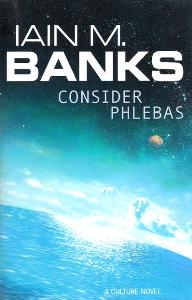
The Culture Series:
Created by sci-fi author Ian M. Banks, “The Culture” refers to the fictional interstellar anarchist, socialist, and utopian society that characterizes his novels. Encompassing ten novels – beginning with Consider Phlebas (1987) and concluding with The Hydrogen Sonata (slated for release in October 2012), Banks paints the picture of a universe where humanity has created a peaceful, stable and abundant society through the application of technology.

Told predominantly from the point of view of those who operate at the fringes of The Culture, the stories focus on the interactions of these utopian humans with other civilizations. Much in the same way as Star Trek follows the adventure of the Enterprise crew as they deal with alien cultures, often ones which are less developed or evolved, this provides a vehicle for examining humanity’s current predicament and providing possible solutions.

Overall, The Society is best characterized as post-scarcity, where advanced technologies provide practically limitless material wealth and comfort, where almost all physical constraints – including disease and death – have been eliminated, and the concept of possessions are outmoded. Through all of this, an almost totally  egalitarian, stable society has been created where compulsion or force are not needed, except as a means of self-defense.

At times however, The Culture has been known to interfere with other civilizations as a means of spreading their culture and affecting change in their neighbors. This has often been criticized as an endorsement of neo-conservatism and ethnocentrism on Banks part. However, Banks has denied such claims and many of his defenders claim that The Culture’s moral legitimacy is far beyond anything the West currently enjoys. Others would point out that this potential “dark side” the The Culture is meant to reflect the paradox of liberal societies at home and their behavior in foreign affairs.

The Mars Trilogy:
This ground-breaking trilogy by Kim Stanley Robertson about the colonization and terraforming of Mars is also a fine example of utopia in literature. taking place in the not-too-distant future, the trilogy begins with the settlement of the planet in Red Mars and then follows the exploits of the colonists as they begin transforming from a barren rock to a veritable second Earth.

Even though there are numerous dark elements to the story, including civil strife, internal divisions, exploitation and even assassination, the utopian elements far outweigh the dystopian ones. Ultimately, the focus is on the emergence of a highly advanced, egalitarian society on Mars while Earth continues to suffer from the problems of overpopulation, pollution and ecological disaster.

In addition, the colony of Mars benefits from the fact that its original inhabitants, though by no means all mentally stable and benevolent people, were nevertheless some of the best and brightest minds Earth had produced. As a result, and with the help of longevity treatments, Mars had the benefit of being run by some truly dedicated and enlightened founders. What’s more, their descendents would grow up in a world where stability, hard work, and a respect for science, technology and ecology were pervasive.

All of this reflects Robertson’s multifaceted approach to story writing, where social aspirations and problems are just as important as the technological and economic aspects of settling a new world. Much like the conquest and settlement of the New World gave rise to various utopian ideals and social experiments, he speculates that the settlement of new planets will result in the same. Technology still plays an important role of course, as the colonists of Mars have the benefit of taking advantage of scientific advancements while simultaneously avoiding the baggage of life on Earth. In the end, there’s just something to be said about a fresh start isn’t there?

The Night’s Dawn Trilogy:
Written by British author Peter F. Hamilton, The Night’s Dawn Trilogy consists of three science fiction novels: The Reality Dysfunction (1996), The Neutronium Alchemist (1997), and The Naked God (1999). Much like Robertson’s depiction of humanity in the Mars Trilogy, Hamilton explores humanity’s dark side at length, and yet the tone of his novels are predominantly optimistic.

Set in a distant 27th century, humanity has become divided between two major factions. On the one side there are the Edenists, an egalitarian, utopian society who employ biotech (“biteck” in their lingo) to create living, sentient space stations as well as machines. The use of “Affinity” – a form of telepathy – allows them to communicate with each other and their biteck, creating a sort of mass mentality which encompasses entire communities. Thiee Edenic government is what is known as the “Consensus”, a form of direct democracy that is made possible by telepathic link.

On the one side their are the Adamists, the larger of the two where human beings live with a limited religious proscription against technology. Biteck is forbidden, but nanotechnology, FTL and other advanced applications are freely used. Because the Adamists encompass anyone not in the Edenic camp, they are larger, but far less organized and cohesive than their counterparts.

Through all this, Hamilton attempts to show  how the application of technology and the merger between biological and artificial can create the kind of society envisioned by men like Thomas More, characterized by participatory government, collective mentality, and a consensus-oriented decision-making process. While both the Edenic and Adamist societies are still pervaded by problems, not the least of which is competition between the two, the ideals of betterment through technological progress are nevertheless predominant.

Revelation Space Series:
Another series which examines the beneficial aspects of technology, particularly where governance and equality are concerned, is the Revelation Space Trilogy by Alastair Reynolds. Comprised of the five novels Revelation Space (2000), Chasm City (2001), Redemption Ark (2002), Absolution Gap (2003) and The Prefect (2007).

Taking place in the distant future (circa. 2427 to 2727), the story revolves around a series of worlds that have been settled by several different factions of humanity. The two largest factions are known as the Demarchists and the Conjoiners, both of whom have employed advanced technology to create their own versions of an ideal society.

Though much of the books are dark in tone due to the discovery of a terrible nanotechnological virus (the “Melding Plague”) and the discovery of hostile ancient aliens (the “Inhibitors”), the series still does have some discernible utopian elements. For starters, the Demarchists take their name from the concept of “Democratic Anarchy”, and employ cybernetic implants, nanotech and wireless communications to achieve this.

Within the Demarchist metropolis of Chasm City, all citizens are permanently wired into a central server which allows them permanent access to news, updates, and the decision-making process. As a result, Demarchist society is virtually egalitarian and marks of social status, such as ranks and titles, do not exist. This changed with the spread of the Melding Plague however, causing the city’s structures to degenerate into a gothic nightmare and the class divide to become very visible.

Another important faction are the Conjoiners. These people, who were originally inhabitants with the Great Wall of Mars (above left picture), but who became a star-faring people after the war with the “Coalition for Neural Purity” drove them off Mars. To these people, cybernetic implants were taken a step further, giving every Conjoined person the ability to telepathically link with others, preserve their memories beyond death, prolong their life, and enhance their natural thinking process.

Thus, much like Hamilton and Banks, Reynolds speculates that the advent of nanotech, biotech, and space travel will result in the emergence of societies that are predominantly egalitarian, peaceful, and dedicated to consensus and direct democracy. I personally found these stories quite inspiring since it seems that in many ways, we are already witnessing the birth of such possibilities in the here and now.

Yep, this is still fun, if somewhat tiring and conducive to burnout! I think I’ll be taking a break from these literary-criticism pieces for a day or two, maybe getting back to pieces on robots and cool gear. However, in keeping with the format I used for dystopia, I still have one more utopian article left to cover. Look for it, it will be called “Utopia in Popular Culture!” See ya there…

NASA sees light from distant “Super Earth”

Big news coming in over the wire! Apparently, NASA scientists, using the Spitzer Space Telescope, have spotted light from a planet in a distant solar system. Back in 2004, in a solar system named 55 Cancri A, a planet that is twice the size of Earth and almost 8 times its mass, was first discovered. They named this planet 55 Cancri e, is 41 light years from our solar system, and is often referred to as a “Super Earth”.

Though NASA has known about the planet for some time, it’s only now that they’ve been able to detect infrared light coming from its surface. As part of NASA’s ongoing exploration efforts, Spitzer is part of a long term goal to find habitable planets in our universe, as well as extra-terrestrial life.

Unforuntately, 55 Cancri e is not one such planet. In addition to not being able to support life in its current state, terraforming it would also be useless. It’s mass and density means that it’s gravitational field is far stronger than anything we humans would find tolerable. But hey, maybe it’s got some friends that won’t crush us like bugs the second we set foot on them! And as they say, it’s a big universe. Always a chance we’ll find intelligent life somewhere else…

In the meantime, check out this video on 55 Cancri e from Space.com!

Super Earth Visible For First Time


Firefly & Serenity or “How I Realized Fox Sucks!”

fireflyYeah, I know I’m hardly alone in loving the cult-hit Firefly, nor am I alone in censuring Fox for its inept and inexplicable decision to cancel it after its first season. But then again, that seems to be their thing. What is more lamentable is the fact that after years of maintaining a following worldwide, producing a movie, an RPG, novelizations, comic books, and countless fan sites, Firefly still hasn’t been renewed or picked up by another network! What gives??? C’mon Wedon! Futurama did it, why can’t you?

Well, comeback or not, Firefly and its movie adaptation Serenity were still kick-ass. In addition to its memorable characters, smart writing, and classic sci-fi elements, there was also the heartfelt themes of conquest, resistance, and “manifest destiny”. That above all else made the show a hit, in my humble opinion. In adapting the history of the closing of the frontier, Wedon tapped into a very familiar American narrative and showed just how timeless history and human nature are.

Premise:
To break the show’s background down succinctly, the story takes place roughly 500 years in the future, when humanity left Earth and began to explore the cosmos for a new place to call home. They eventually landed in the Blue Star system, a star with “dozens of planets and hundreds of moons” and began terraforming as many of them as possible. The inner worlds boasted the highest degree of technology and development and formed the Alliance, whereas the outer planets were sparsely populated and underdeveloped by comparison.

In time, the Alliance chose to expand and incorporate the outer worlds, prompting a coalition of Independents (or “Browncoats” because of the uniforms they sported) to resist. After a crushing defeat at the battle of Serenity Valley, the Independents were essentially finished. Thereafter, those “browncoats” who wanted to retain their independence took to a life of piracy, smuggling and spacing to make ends meet, pulling jobs in the outer-outer regions of space and staying clear of Alliance ships and “Reavers”, cannibalistic raiders who raid along the outer rim.

The Cast:
serenity-1One such group is the crew of the Serenity, a Firefly-class ship captained by former “Browncoat” Malcolm “Mal” Reynolds (played by Nathan Fillion). His second in command, Zoe Washburne (Gina Torres), was with him in the war and served in his platoon. As a result, they have a relationship that goes deeper than most, which has been known to make her husband and ships pilot Hoban “Wash” Washburne (Alan Tudyk) a little jealous.

There’s also Kaywinnet Lee “Kaylee” Frye (Jewel Staite), the spunky and ever-cheery ship’s mechanic who seems to be talk to machines and make them work. Then there’s Jayne Cobb (Adam Baldwin), a mercenary who they poached from another gang and who serves as hired muscle on the ship. And last, there’s Inara Serra (Morena Baccarin), a travelling “Companion”, or professional courtesan, who acts as a sort of ambassador for the ship.

As the show opens, the crew of the Serenity pick up some new passengers. The first is Derrial Brook (Ron Glass), a Shepherd (pastor) who is seeking passage away from the inner worlds to preach aboard. He quickly becomes part of the crew and acts as Mal conscience, though it becomes abundantly clear that he is more than what he appears. In addition, there is the strange duo of Dr. Simon Tam (Sean Maher) and his sister River Tam (Summer Glau). Summer is apparently a gifted young psychic who was experimented on by Alliance doctors, and her brother risked everything in order to free her. Now fugitives from the law, they remain aboard the Firefly as part of the crew, hoping to avoid capture.

The Ship:
serenityThe namesake of the show and the movie, the crew’s vessel of choice is the Firefly-class transport. A n older model, this vessel is apparently favored by privateers and smugglers because of its complex design and the presence of secret compartments. Although it boasts no armaments and is outdated by most inner-world standards, those who use it tend to get pretty attached to it and remain very monogamous. Echoes of the Millenium Falcon there…

Season One:

an Alliance Cruiser

The story opens with the extended crew coming together and getting to know each other. Mal, having realized that Simon and his sister were fugitives, decided to take them in after he shot and killed an alliance agent who had infiltrated their ship. Thereafter, the crew set out to continue on their ongoing adventure, taking whatever jobs they could find and staying one step ahead of the authorities.

Reaver Ship

The constant threat of the Reavers is also a recurring element in the first season. Existing on the fringes of known space and coming from parts unknown, the Reavers appear to be expanding inward towards the core, becoming more brash and brazen with their assaults on shipping and colony worlds. Aside from their obvious brutality and insanity, not much is known about this menace, other than the fact that they look like orcs and their ships like spiky sharks!

In addition, River’s condition, the result of endless experimentation, becomes the source of growing concern by her brother. Though she was always gifted, it’s becoming apparent to him and the other members of the crew that she might indeed be a psychic. Given that his resources are limited, they eventually have to break into a medical city on his old homeworld of Persephone so he can do a more thorough examination. His conclusions are that they physically tampered with her brain in order to enhance her abilities. Fractured and suffering from bouts of schizophrenia, she is eventually accepted by the other crew members and begins to feel whole again.

This, more than anything, is a guiding theme of the show, which is the growth of the Serenity family. Already, there is a strong sense of comradery between Mal and Zoe, which grows to include Wash when he and Mal confront and ultimately resolve the issue of his jealousy. There is also the growing bond between Mal and Inara. Initially, the two appear to be mutually hostile, but it soon becomes clear that this merely conceals their mutual attraction. Kaylee, as always, is the cheery epicenter of things, making her role as the ship’s engineer seem like a double-entendre. In addition to making sure the machinery keeps running, she’s also responsible for ensuring that everyone gets along.

Accepting Jayne proves more difficult, given his questionable loyalties; but in time, the crew comes to realize they can trust him since he values his friends more than money. And even though there are aspects of his past that are still unclear, Book proves that he too can be trusted and will endanger himself to keep the others safe. Hence, he too comes to be accepted as a permanent fixture aboard the ship. As the season ends, it becomes clear that even though the crew still faces a number of threats – the Alliance, Reavers, mercenaries and ruthless criminal lords – that they will be facing them together.

The Movie:
firefly-serenity-art-dvdbash-1The film adaptation opens with themes that were well-established in the show. We have the crew of the Serenity still trying to make ends meet, still having to take jobs out of desperation, and still fearing for their safety as hostile elements close in. However, the movie version chose to what was slowly developing with the show and tweak them to bring some serious tension and resolution to the storyline.

These include the ongoing search for River Tam, and the revelation of where the Reavers come from. In an intriguing twist, Wedon melds the two story lines together, showing how River’s condition and her exposure to members of the Alliance government put in her in possession of certain secrets which they would prefer to keep a secret! It is for this reason that an elite agent named only the Operative (Chiwetel Ejiofor) is sent out to find her, and is given blanket authority to do whatever it takes to achieve this goal.

The theme of family also gets kicked up a notch, with Inara having left the crew because of her incurably difficult relationship with Mal. Book has also left the crew in order to become the preacher to a community of settlers in the outer rim as well. Simon and River also seemed poised to leave when the job at the beginning of the movie comes dangerously close to going wrong and he decides that they would be better off on their own. However, this is cut short when during a payout, River is “triggered” by some sort of hidden transmission and begins kicking the ass of everyone in a seedy establishment. This, for obvious reasons, leads Mal to realize that there’s more going on with her than previously thought.

Reaver2(Spoiler alert!) Eventually, the crew realizes that the key secret which River gleamed from the minds of the Alliance bureaucrats was the existence of a place known as “Miranda”. The secret is also important enough that they’ve sent the Operative to find them, a man who’s talents and methods far outstrip those of the agents and mercenaries they usually send! After an incident where Inara is used as bait, Mal and the rest are determined to know what’s so important that they are willing to kill for.

With the help of their friend, Mr. Universe, they eventually discover that Miranda is a colony located in the outermost ring of the system. This world was apparently settled generations ago by over 30 million people, but things went terribly wrong after an experiment failed and killed almost everyone there. After braving the Reavers to find the planet, the crew stumbles onto the answer in a form of a recording from a scientist’s journal.

It seems that the planet was subjected to a drug known as Pax, which was a chemical agent designed to make people docile and non-violent. However, the drug worked too well, and most people became so passive and withdrawn that they eventually ceased all activity and died of starvation. The remainder, however, became extremely violent and uncontrollable and killed off all remaining survivors, including the scientists. They then took what ships they could find and began preying on shipping in the outer rim. The Reavers were born!

Having learned that the Operative has overrun every last known hideout of theirs and even killed Brooks, Mal decides that its time to fight! With the information of what happened on Miranda firmly in their hands, they make their way back to the reclusive moon where their hacker friend Mr. Universe lives. The Operative has it blockaded, but the Serenity managed to break past them by luring the Reavers into following them.

A huge firefight in space ensues and is followed by an equally tense firefight on the planet between the Serenity crew and the Reavers. In the course of the fight, Wash is killed and Kaylee and Simon are wounded, but River risks her life to save them all and give Mal the time he needs to reach Mr.Universe’s central hub. There, he confronts the Operative one last time, overcomes him, and sends out the broadcast.

Having seen the truth, the Operative orders his men to stand down. Mal and his crew are allowed to leave, mainly because he now knows he no longer has the grounds to hunt them. The Alliance has been dealt a blow from which it may not recover, and for the first time in years, the future seems uncertain. But at least there is hope. There is also much regret since the crew has lost two of its own, Wash and Book. But in the end, they set course for their next destination, carrying on in the only way they know how.

Final Thoughts:
I’ll just say it, this show rocked! It was loaded with great lines, great acting, great characters and lots of relateable material. And, like its theme song, it was pretty touching and emotionally involved. The show began with a pervasive sense of sadness, where people who were fighting for their freedom are overrun, beaten and forced into lives of running and criminality. But also, there is the redeeming sense of family and closeness that develops between the main characters. Though they are kind of a motley bunch, coming from vastly different backgrounds and having their own personal secrets, they eventually come together and realize they share a similar fate.

That is another thing that this show captured so well, which was the pervasive sense of alienation that takes place in a universe which is fast changing. Much like the frontier that inspired it, that process was very painful. Those who did not fit in with the dream of “manifest destiny”, i.e. Native Americans and settlers who preferred the freedom of the frontier, the question of what to do remained a terribly difficult one. The option of fighting seemed hopeless, but the alternative of surrendering seemed just as hopeless: a slow death replacing a swift one.

As Mal expressed in Serenity, “So me and mine gotta lay down and die… so you can live in your better world?” Another key line he said was “Half of writing history is hiding the truth”. Many a time I felt that Wedon was making a point about our own, how we often miss the fact that changes we’ve come to think of as natural and inevitable were in fact the result of decisions, and that they came with a lot of pain and suffering as well. Part of what makes this show emotionally appealing is that fact that we get to see good guys fighting against terrible odds, and eventually achieving a victory of sorts.

And of course there was the cool mix of cultures that gave the show a truly international feel. Whereas the planets appear to boast names taken predominantly from western mythology and culture, there is a hefty smattering of Mandarin Chinese in the spoken dialogue and written signs. Aspects of Southern, Arabic and other Asian cultures make appearances as well, both in the series and the expanded universe. Basically, Wedon seemed to be going with the plausible sci-fi premise that cultures would mix in the era of colonization to produce new and interesting cultural mosaics.

I for one would like to see where it goes from here. Would the Alliance fall? Would it become even more tyrannical in its pursuit of a “better world” and a unified system? And how would they get around the fact that Watt ggand Book exited stage left (Apparently due to money and the desire to not get typecast. Actors! Pfft!) But, we’ll never know unless someone gets off their duff and starts making new episodes now will we? So Mr. Wedon and/or the Fox Network, get off your duffs and bring back this show gorram it! We’ve waited ten bloody years and we’re growing in strength! Don’t make us come after you!

Oh, and to Mr. Nathan Phillion, whom I hear is trying to ressurect the show himself, tell us what its going to take to get this done and we’ll do our best to help. Please tell us it involves taking the Fox Network down, or at least the crop of execs who keep cancelling shows that are in their prime. Is it not enough that you give TV spots to the most pig-ignorant excuse for journalists and right-wing ideologues, you gotta kill anything with a soul before it grows too? Why don’t you just call yourself the Evil Empire Network and be done with it? I tell ya, the metaphor is too perfect here!

In the meantime, check out this kick-ass trailer from the Serenity movie. I plan to watch it again and would like to think others are too. Rock on Firefly!