
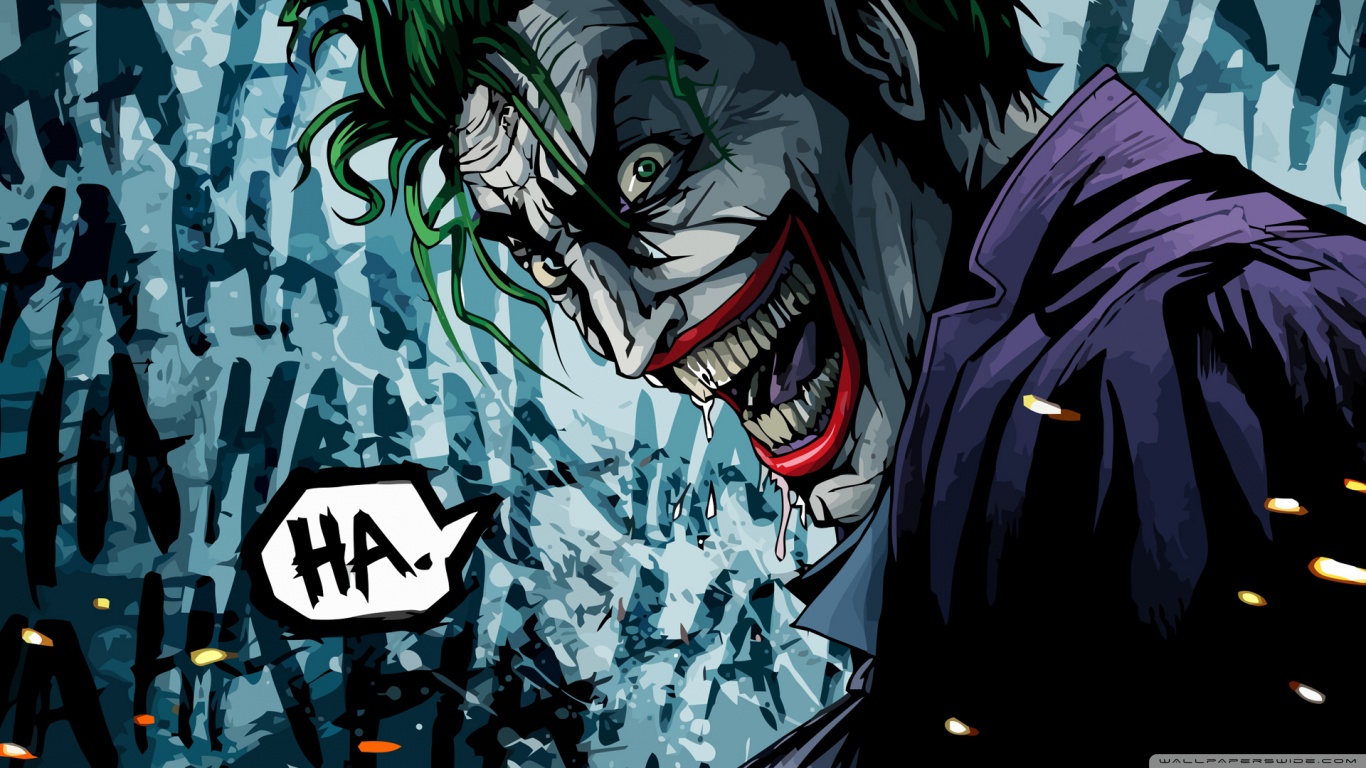
 Soon enough, the third and final installment in Chris Nolan’s Batman franchise will be premiering. I can’t tell you how much I want to see it. Ever since The Dark Knight ended and it was clear the Joker would not be appearing in movie 3, I’ve been itching to see what they would do with it.
And from what I’ve seen, they are taking the proper route. Combining elements from the comic book The Dark Knight Returns with a real life or death, all or nothing feel, this movie might even top the last one in some respects. Don’t want to jinx it, just saying it’s sure to be good.
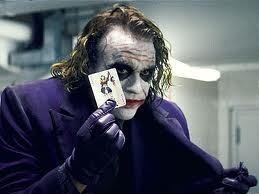
But I think I speak for more than just myself when I say that it’s a shame the Joker won’t be making it back for one last dance. We all know why he won’t, of course. For one, it would have been in bad taste to try and replace Ledger after his untimely death. What’s more, after the masterful performance he gave, no actor could be expected to fill the role. I mean, c’mon, you don’t ask to go on after the Beatles, it’s just plain silly!
 So in honor of Ledger, and every other actor that has ever tried to bring life to this character, I’d like to do a post detailing this villain that has remained so popular over the years.
The Joker:
To put it simply, this character, this villain, is a work of genius. Designed to be one of the many villains the “caped crusader” did battle with, it wasn’t long before this smiling psychopath became Batman’s arch-nemesis and the chief pain in his ass. The reasons for this seems pretty clear, but just for fun I’ll get into them anyway. Basically, he was the perfect villain because people loved to hate him and found him so dark and yet so fun.
Persona:
For starters, his whole work up was immensely inspired. By adopting the whole insane clown thing, he combined the macabre with the innocent, which pretty much made him the stuff of nightmares. He killed, he maimed, and he tortured people sadistically, but he always did it with a smile on his face and a quick joke. He could be insane, yes, but he could also be brilliant and cunning. His method was madness, but it was concealed behind a sort of playful, laughable exterior.
This was in stark contrast to Batman’s tough and cold character and the permanent scowl he had etched on his face. As such, he was the perfect foil for Batman’s particular brand of heroism and social control. Whereas the dark knight was obsessed with order and stability, the Joker was malevolence and disorder personified. In a way, he played Lucifer to Batman’s God, messing with his designs and subverting his sense of right and wrong. And, like Lucifer, he knew how to turn the tables and get people to do his bidding. And whereas Batman never smiled, much like God, the Joker could be counted on to see the fun side of things, even in pain, suffering and death.
Origins:
Due to the many adaptations and interpretations of this character over the years – be they in print, television or cinema – there are more than a few different origin stories. And they don’t always agree. However, certain common elements can be seen across all the different iterations. The earliest mention of his past indicated that he was a criminal named the Red Hood before he donned the clown makeup. This changed when he fell into a vat of chemicals while trying to escape from the Batman, an experience which left his skin permanently discolored.
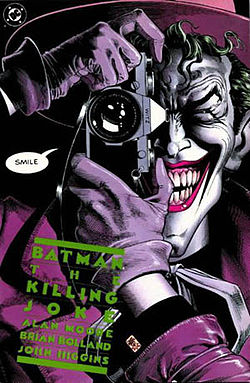 This was expanded further in Alan Moore’s The Killing Joke, where he was shown to be a chemical engineer who quits his job at a chemical plant to become a standup comedian. After failing in this endeavor, he agrees to help two criminals break into the plant. Shortly before the robbery can take place though, he learns that his wife and son have died in a freak accident. He tries to back out of the crime but is strong armed by the other two thugs. And of course, the crime goes south and he is left disfigured. Between this and the loss of his family, he is driven insane and becomes the Joker.
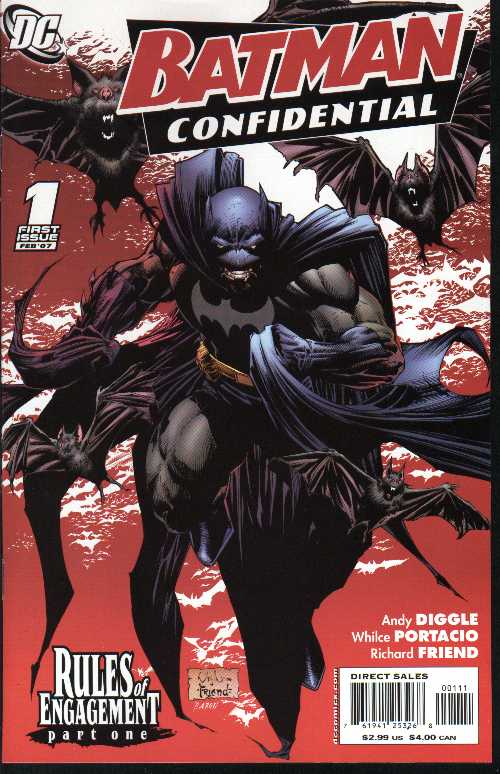 Later versions once again resurrected the concept of the Joker being a career criminal before he became a sociopathic villain. In these versions, the name Jack was used, and it was said that he had some contact with the Batman before taking on his new persona. In fact, in Batman Confidential it was suggested that it was his obsessions with the Batman that eventually led to the accident which forever changed him.
All of these elements informed Tim Burton’s adaptation of the story in the 1989 movie. Here, the Joker was portrayed as a petty thug named Jack Napier who worked for Rupert Thorn, the Gotham city crime lord. Then, after tangling with the Batman at a chemical plant, he suffered a disfiguring injury before falling into a chemical vat, which left his skin dyed and his face permanently scarred. The Joker therefore blamed Batman for his transformation, but would later come to learn that he had been the one who shot his parents when he was just a child.
Personally, I found this version to be genius in that it managed to capture the true insanity of the Joker. Faced with an image of himself that was twisted into a hideous smile, Napier could do nothing but laugh at the sick joke that had befallen him. From thence forth, he was determined to make others see the humor in it as well, right before he killed them! And by making him responsible for killing Bruce Wayne’s parents, the two were ultimately responsible for the others’ creation. Clearly, Burton interpreted the whole “flip sides of the same coin” thing quite literally!

However, Christopher Nolan took a different approach with his adaptation of the criminal mastermind. In the 2008 film The Dark Knight, we are given a version of things where we know nothing about the Jokers origins. On several occasions, he offers up explanations as to how he got his scars; but of course, the story keeps changing. No one can be sure which version is the truth and which is false. In one, he’s the victim of an abusive father who slashed his face. In another, he had a wife who gambled and had her face cut up by the Mob. His own scars were self inflicted out of grief so that he could resemble hers.
 This is apparently in keeping with the fact that no definitive explanation has ever been given as to how the Joker really became what he was. Over the years, many different explanations have been given and it’s unclear which are true. In the end, this was resolved by saying that the Joker frequently lies, or can’t keep all the facts straight in his head. As he says in The Killing Joke: “Sometimes I remember it one way, sometimes another… if I’m going to have a past, I prefer it to be multiple choice!”
Weapons of Choice:
 Though the Joker appears to be adept at firearms and somewhat versed in hand to hand combat, his preferred method of killing has to do with various “comedic” weapons. These include razor sharp playing cards, acid-spewing flowers, cyanide pies and lethal electric joy buzzers. Clearly, the man understands irony and is willing to go the extra mile for consistency.
In addition, he has a signature poison known as “Joker Venom”, a deadly poison that leaves his victims with a ghoulish rictus grin as they die while laughing uncontrollably. This venom comes in many forms, from gas to darts to liquid, and has been his primary calling card since his character’s inception.
All of this was featured in Tim Burton’s Batman, where it was revealed that the Joker was well versed in chemistry and was using this knowledge to create his Smile-X poison. By smuggling various chemical precursors into common consumer products, he was able to disseminate his poisons into Gotham city without anyone knowing. Once these different products were used in combination, people began to die, all of them with a massive grin on their faces!
 In Nolan’s version, the Joker retained his preference for simple weapons, but dropped the whimsy, poison and chemistry. As Ledger’s Joker said to a detective while in custody: “Do you want to know why I use a knife? Guns are too quick. You can’t savor all the… little emotions. In… you see, in their last moments, people show you who they really are.” Later, while free and in the company of the Russian mob, he added: “I’m a man of simple tastes. I enjoy dynamite, and gunpowder, and… gasoline!”
Between these two takes, the Joker retains one basic characteristic… Fear! Whereas a criminal with a gun is scary, a mad man with sharp objects, burning acid and explosive devices is downright terrifying!
Criminal Acts:
The Joker’s resume reads like that of a man who desperately wants to be the biggest maniac in town. Over the many years of his character’s existence, he has committed countless crimes, some whimsical and some downright brutal. All of these have been done for reasons which, in the words of the Batman: “make sense to him alone.”
In the Killing Joke, the Joker paralyzes Batgirl (aka. Barbara Gordon) by shooting her in the back. He also kidnaps Gordon and taunts him with photographs of his crime, hoping to drive him mad and thus prove his point that any man can go insane under the right circumstances. In “A Death in the Family”, the Joker also killed Jason Todd, the second Robin. This, he did with a bomb, but only after beating him senseless with a crowbar.
 During one of his many stays in Arkham Asylum, the Joker also managed to convert Harleen Quinzel, a psychiatrist who was sent in to examine him, into his willing helper. Convinced that the Joker might be faking insanity to avoid the death penalty, she sets out to unlock his past. In time, he earns her sympathy and convinces her to help him escape. Eventually, she is caught and her obsession with him leads her to seek him out and become Harley Quinn, his criminal sidekick.
He also went as far as to murder Sarah Essen Gordon, Commissioner Gordon’s second wife, after kidnapping her. Once Gordon took him into custody, he once again taunted him in the hopes of driving him mad and getting him to forsake his moral code. However, Gordon sticks to his code and only kneecaps him. True to form, the Joker quickly laments that he might not walk again, but then finishes with a maniacal laugh!
Of course, the list goes on. Given his many years of sadistic stunts, it would impossible to include them all in one post. Suffice it to say, he has been a constant source of (ahem) “entertainment” to Batman, Commissioner Gordon, and the Gotham Police Department.
Death:
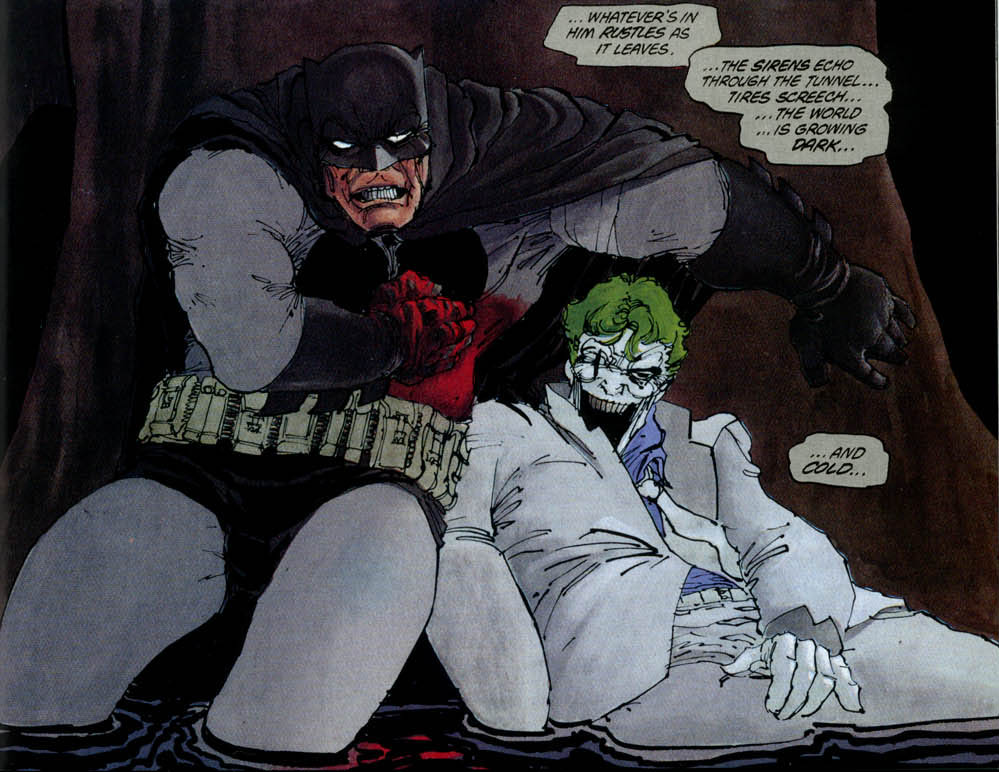 Though the Joker experienced near shaves with death on many occasions, he finally met his end in Frank Miller’s The Dark Knight Returns. It was here that, after a prolonged absence, the Batman came out of retirement to fight crime one last time. This soon inspired the Joker to awaken from his drug-induced slumber inside Arkham and begin creating havoc again.
It began with Joker once again pretending he was rehabilitated in order to gain parole from Arkham, and was followed by him releasing his toxic venom into a crowded talk show studio before making his escape. After many deaths and a chase that took them across the city and into an amusement park, the Batman finally cornered the Joker inside a tunnel and engaged him in mortal combat.
The Joker managed to stab him several times, but Batman eventually got the upper hand and snapped the Joker’s neck. However, this didn’t prove fatal, and a laughing Joker once again mocked Batman for not being able to go through with it. The Joker then took a deep breath and snapped his own neck the rest of the way. Thus, the Joker died as he lived… laughing, mocking and batshit crazy!
Final Thoughts:
What more is there to say? The Joker is just one of those characters who’s stuck with us over the years, and for good reason. Not only did he have all the right characteristics to make a fitting villain, he was also the perfect arch-nemesis for the Batman. Overall, I have to assume that he wasn’t the kind of character who was tailor made for the role, but an inspired invention that grew into the role over time and became a permanent feature before long.
To paraphrase cartoonist Berkeley Breathed, good characters aren’t just created, they wander in off the street looking for a meal and a bath and end up staying. In the Jokers case, I’m glad he stuck around. Much like the Batman, he’s probably the most realistic, dark and gritty personality to ever come out of the comic book world!
The rest, as they say, is insane cackling laughter… HAHAHAHAHAHAHAHA!
 Stories by Williams