
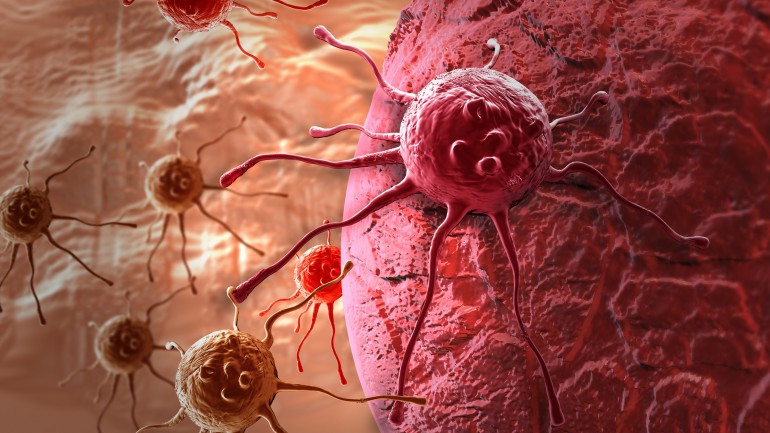
 When it comes to diseases and conditions that have long been thought to be incurable – i.e. cancer, diabetes, HIV – nanoparticles are making a big impact. In the case of HIV, solutions have been developed where gold nanoparticles can deliver bee venom or HIV medication to cells of the virus, while leaving healthy tissue alone. As for diabetes and cancer, the same concept has proven useful at both seeking out and delivering medication to the requisite cells.
However, a new breakthrough may be offering cancer patients something more in the coming years. In what appears to be a promising development, researchers at the University of California Davis (UC Davis) Cancer Center have created a multi-tasking nanoparticle shown to be effective both in the diagnosis of a tumor and attacking its cells – a flexibility that could lead to new treatment options for cancer patients.
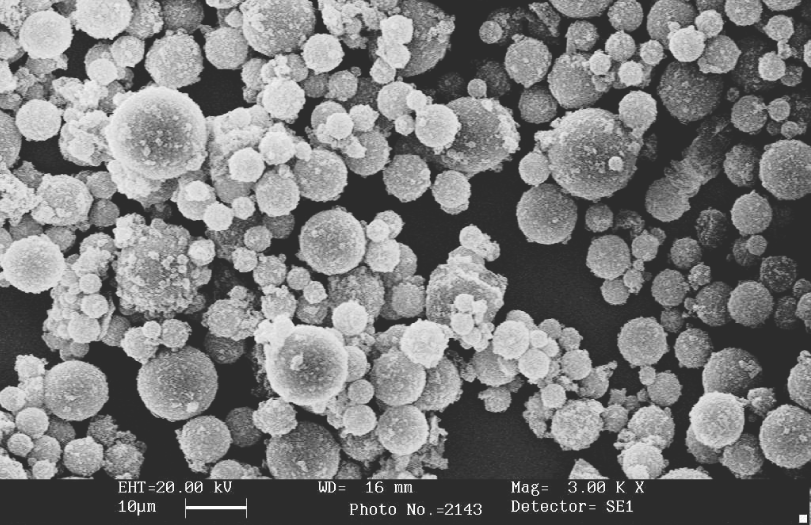 One of the big challenges in developing multitasking nanoparticles is that they are traditional designed with one purpose in mind. They are constructed using either inorganic or organic compounds, each with strengths of their own. Inorganic nanoparticles, such those made from gold, are effective in imaging and diagnostics. Organic nanoparticles, on the other hand, are biocompatible and provide a safe method of drug delivery.
The nanoparticles developed at UC Davis are made from a polymer composed of organic compounds porphyrin and cholic acid, which is produced by the liver. The researchers then added cysteine – an amino acid that prevents it from releasing its payload prematurely – to create a fluorescent carbon nanoparticle (CNP). The team then tested the new nanoparticle with a range of tasks, both in vitro and in vivo (aka. in a solution of cells and in living organisms).
 They found the particle was effective in delivering cancer-fighting drugs such as doxorubicin (commonly used in chemotherapy). In addition, they found that while applying light (known as photodynamic therapy), the nanoparticles release reactive molecules called singlet oxygen that destroy tumor cells, while heating them with a laser (known as photothermal therapy) provided another way for the particles to destroy tumors.
One notable finding was that the release of a payload sped up as the nanoparticle was exposed to light. The researchers claim this ability to manipulate the rate at which the particles release chemotherapy drugs from inside the tumor could help to minimize toxicity. This is a big plus considering that all known cancer treatments – i.e. chemotherapy, medication, radiation – all come with side effects and have a high risk causing damage to the patient’s healthy tissue.
 In relation to imaging and phototherapy, the nanoparticle remained in the body for extended periods and bonded with imaging agents. And because CNPs are drawn more to tumor tissue than normal tissue, it helps to improve contrast and light them up for MRI and PET scans. This effectively makes the UC Davis nanoparticle a triple threat as far as cancer treatments are concerned.
As Yuanpei Li, research faculty member from the UC Davis Cancer Center, explains it:
This is the first nanoparticle to perform so many different jobs. From delivering chemo, photodynamic and photothermal therapies to enhancing diagnostic imaging, it’s the complete package.
The team is now focusing on further pre-clinical studies, with a view to advancing to human trials if all goes to plan. And this is not the only breakthrough inolving cancer-fighting nanoparticles to be made in recent months. Back in April, scientists at MIT reported the creation a revolutionary building block technique that’s enabled them to load a nanoparticle with three drugs, and claim it could be expanded to allow one to carry hundreds more.
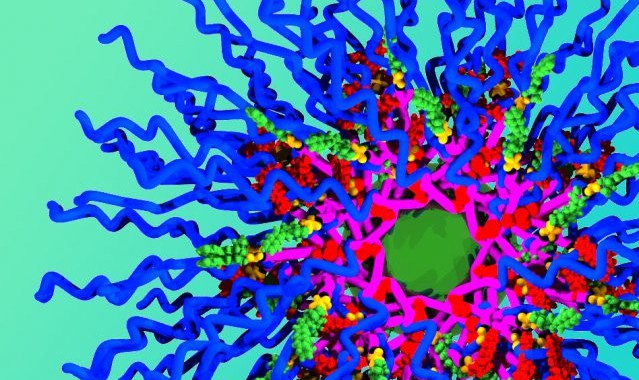 Typical nanoparticle designs don’t allow for scaling, since they call for building a nanoparticle first, then encapsulating the drug molecules within it or chemically attaching the molecules to it. Attempting to add more drugs makes assembling the final nanoparticle exponentially more difficult. To overcome these limitations, Jeremiah Johnson, an assistant professor of chemistry at MIT, created nanoparticle building blocks that already included the desired drug.
Called “brush first polymerization,” the approach allows the researchers to incorporate many drugs within a single nanoparticle and control the precise amounts of each. In addition to the drug, each tiny building block contains a linking unit enabling it to easily connect to other blocks, and a protective compound to ensure that the drug stays intact until it enters the cell.
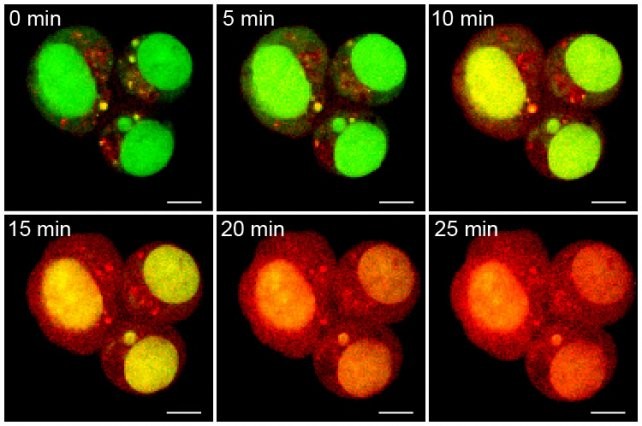 The approach not only allows different drug-containing blocks to be assembled into specific structures, but it also enables each drug to be released separately via different triggers. The team has tested its triple threat nanoparticles, containing drugs typically used to treat ovarian cancer – such as doxorubicin, cisplatin and camptothecin – against lab-grown ovarian cancer cells.
The results demonstrated the new nanoparticles’ ability to destroy cancer cells at a higher rate than those carrying fewer drugs. As Johnson explained it:
This is a new way to build the particles from the beginning. If I want a particle with five drugs, I just take the five building blocks I want and have those assemble into a particle. In principle, there’s no limitation on how many drugs you can add, and the ratio of drugs carried by the particles just depends on how they are mixed together in the beginning… We think it’s the first example of a nanoparticle that carries a precise ratio of three drugs and can release those drugs in response to three distinct triggering mechanisms.
In this case, the cisplatin is delivered the instant the particle enters the cell, as it reacts to the presence of an antioxidant found in the cells called glutathione. When the nanoparticle encounters a cellular enzyme called esterases it releases the second drug, camptothecin. Shining ultraviolet light triggers the release of the remaining doxorubicin, leaving behind only the biodegradable remnants of the nanoparticle.
 The researchers believe this approach can potentially be used to link hundreds of building blocks to create multidrug-carrying nanoparticles, and pave the way for entirely new types of cancer treatments, free from the damaging side effects that accompany traditional chemotherapy. The MIT team is currently working on making nanoparticles that can deliver four drugs, and are also engaged in tests that treat tumor cells in animals.
Until recently, the fight against cancer has been characterized by attrition. While treatments exist, they tend to be a balancing act – inflicting harm and poisoning the patient in small doses with the hope of killing the cancer and not the host. Smarter treatments that target the disease while sparing the patient from harm are just what is needed to turn the tide in this fight and bring cancer to an end.
Sources: gizmag.com, (2), nature.com, ucdmc.ucdavis.edu





 Stories by Williams