Classic Matrix Reloaded Parody!

The MTV Movie Awards are notorious for doing parodies of the top-grossing film every year. Just about all of them are funny, but this was one that I still think of from time to time. Years later, it still gives me a chuckle, especially the scenes where Wanda Sykes plays the Oracle and Will Ferrell does his take on the Architect.

“Watch the sass, Captain sassy pants.” Classic! Check it out!

New Skyfall Trailer!

Perhaps to follow up on Daniel Craig and the Queen’s big Olympic performance, Columbia Pictures has decided to release yet another trailer for the upcoming Bond movie Skyfall. But unlike the one that premiered after Craig and Queen Elizabeth II’s show, this one is way bigger and badder! Guess they thought the last one was underwhelming considering all it was competing with in London. I sure as hell thought so! And here it is, check it out!

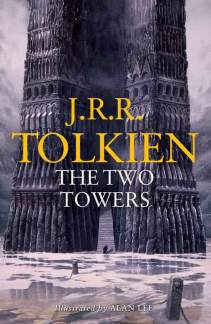
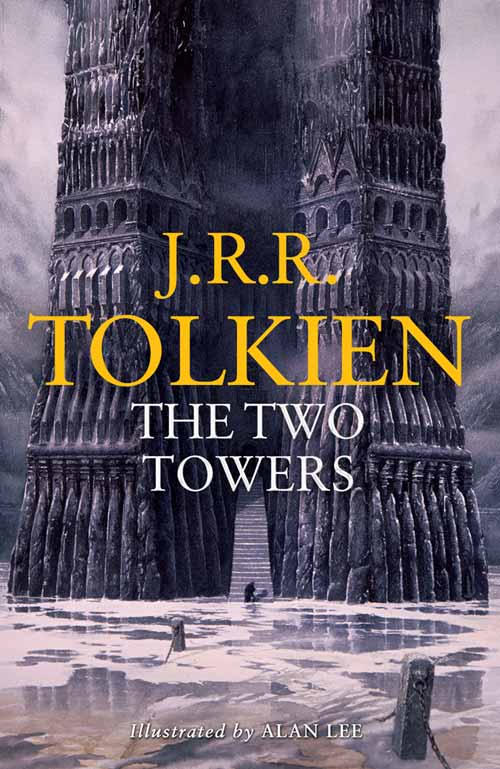
LOTR: The Two Towers

Welcome back! Last time, I took a much overdue trip down memory lane with the Fellowship of the Ring. Hope you liked the trip too! And now, we come to the second volume in the tale of Lord of the Rings, which just happens to be my favorite installment in the series.

In addition to being my first exposure to Tolkien’s work, it was also action-packed and brought the plot to a fuller fruition, leaving the reader at a crucial point where things are both poised on a razor’s edge, yet with the knowledge that the greatest actions are still yet to come.

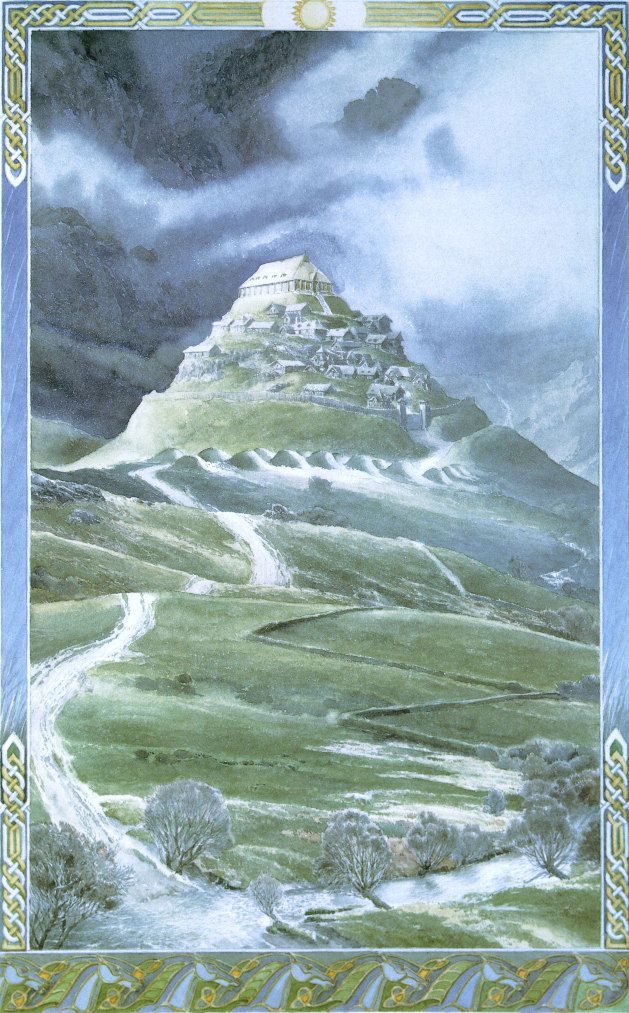
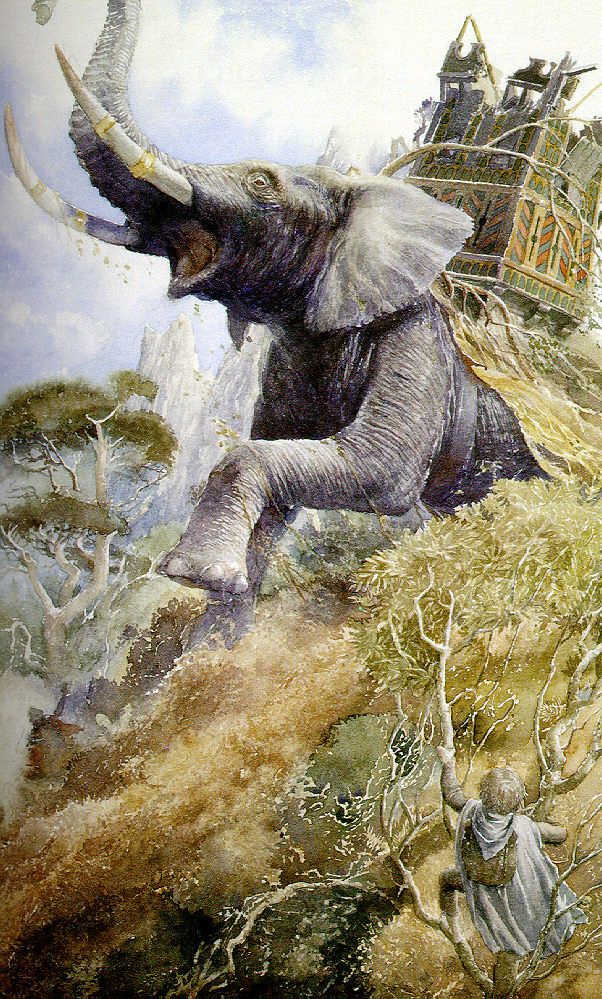
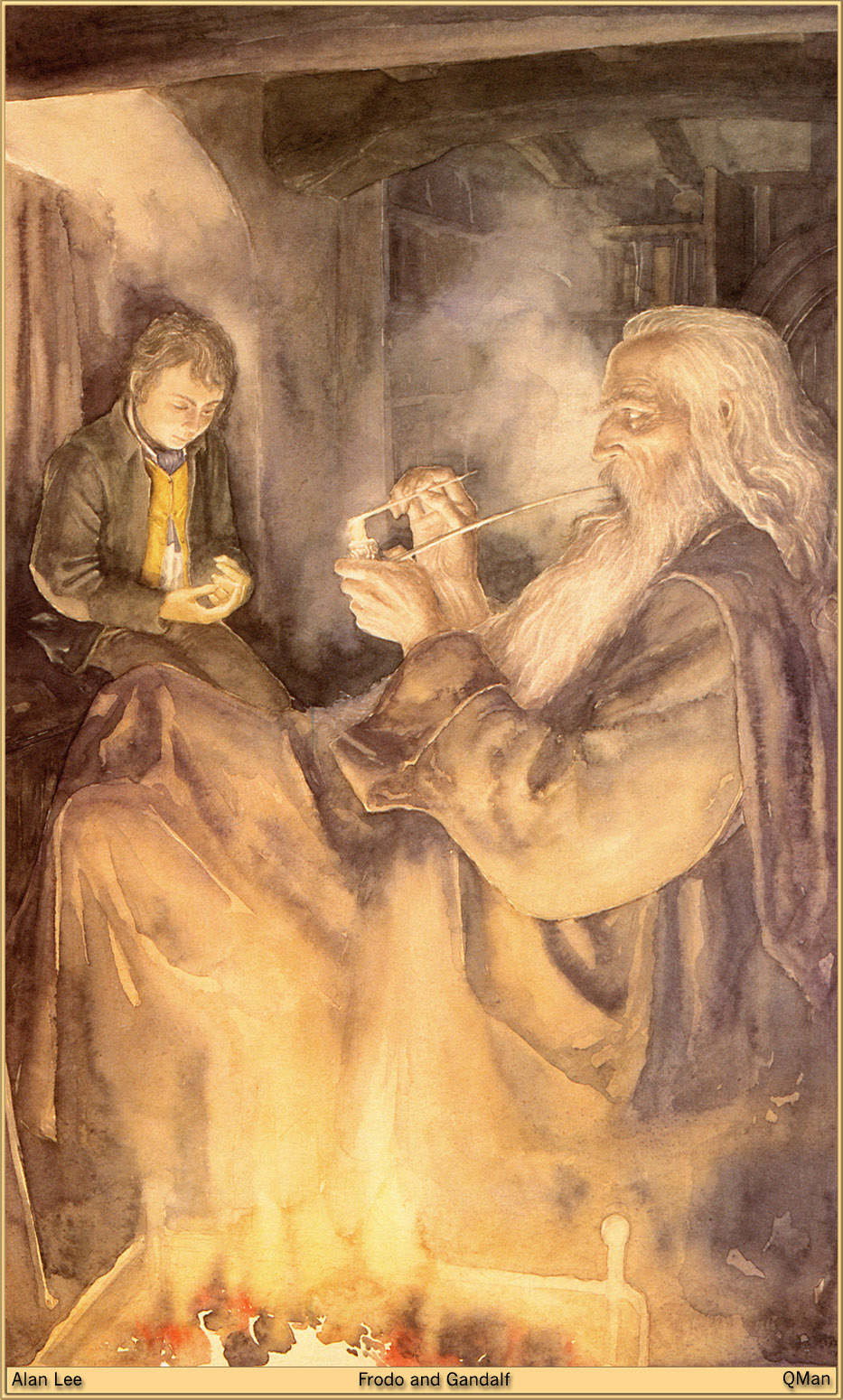
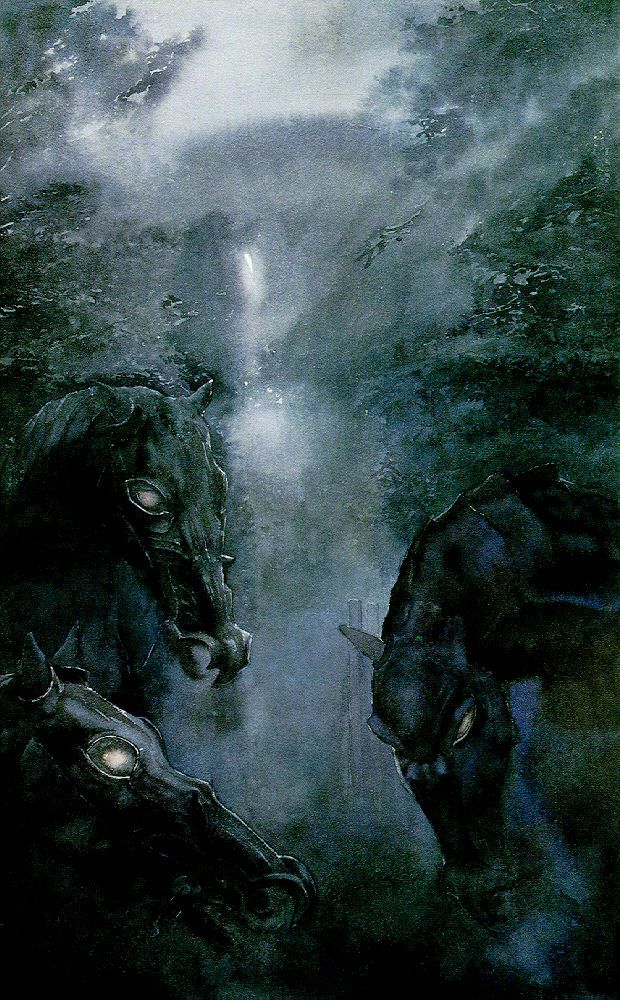
Oh, and I trust people noticed the artwork last time, which is the famed work of renowned Rings artist Alan Lee. In the full-length compendium of LOTR, where all six books appeared in a single volume, Lee was the man who provided the illustrations that brought Tolkien’s literary vision to life. I hope you all liked it last time, because there’s plenty more in this installment! I guess Lee felt particularly inspired by this volume…

Plot Summary:
Aptly named The Two Towers, the title of this volume refers to the that events contained within revolved around the towers of Isengard and Barad-dûr. This included the deployment of Saruman’s Orc armies against neighboring Rohan, and Sauron’s first movements towards Minas Tirith and the Kingdom of Gondor.

Book III: The Treason of Isengard
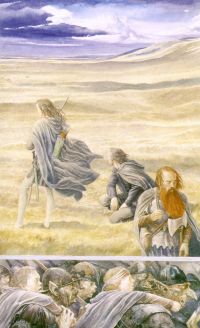
This book story picks up with the aftermath of the Fellowship’s dissolution. Upon returning to their camp, Aragorn learns that Frodo and Sam have set out alone, that Boromir has been killed in battle, and that Merry and Pippin have both been taken prisoner. He is joined by Gimli and Legolas, who both lament the breakup of their union, but are given heart when Aragorn declares that they yet have a purpose: to save Merry and Pippin from capture.

After committing Boromir’s body to a boat and setting it down the river Anduin, they set out in pursuit of the Uruk-hai. Meanwhile, Merry and Pippin begin to contemplate their escape. They notice that two camps exist amongst the Orc – the Uruk-hai of Isengard and the Uruks of Mordor. They take their time and exploit the differences between them, but are ultimately set free when the Riders of Rohan attack and eliminate the Orcs. They flee into Fangorn forest shortly before Aragorn, Gimli and Legolas meet Eomer and the Riders and learn of how they killed the company of Uruk-hai .

Meanwhile, Merry and Pippin are taken in by an Ent named Treebeard. After learning about the Ents, an ancient race of tree-creatures, they tell Treebeard of what’s happening outside his door and ask for his help. He agrees to hold a council with the most ancient of the Ents and discuss what their involvement, if any, will be. After lengthy discussions, Treebeard manages to convince the others that they must go to war since Saruman is cutting down their forest to fuel his engines of war.

Aragorn, Gimil and Legolas track Merry and Pippins into the forest, where they spot a white wizard whom they assume is Saruman. When they reach him, however, they realize it is Gandalf, that he returned to Middle Earth after his ordeal with the Balrog and is now far more powerful. They then ride together to Edoras and the Golden Hall to meet with Theoden, King of Rohan, to ask for his help.
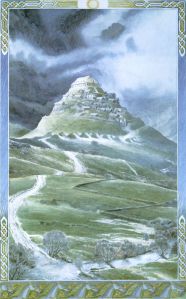
Once there, he finds that Theoden is a shell of his former self, and that his adviser, Grima Wormtongue, appears to be in control of the Kingdom. Gandalf reveals him of being Saruman’s spy, and unable to deny it, he spits on the floor and runs away. Theoden now realizes that the spell Saruman has been holding over him has now passed and he is once again strong and in control of his faculties. He agrees to help them and orders the Rohirrim (Riders of the Mark) to mobilize.

After rallying all available forces from Edoras, Theoden orders his army to march to the fortress of Hornburg in Helm’s Deep. Gandalf meanwhile rides out to find Erkenbrand and the rest of his riders, whom Saruman’s forces had previously routed. They ride to Helm’s Deep where they find the local garrison undermanned, but ready and willing to fight. After preparing the defenses, the entire host of Saruman’s Uruk-hai take the field and begin laying siege.
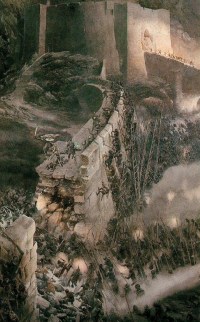
Initially, things go well for the defenders who are able to thwart attacks along the wall and against the Keep itself. However, things soon turn when Saruman’s forces deploy “devilry” to explode a hole in the wall. With the wall breached, the Uruk-hai surround and lay siege to the Keep, and all seems to have been lost. However, Aragorn addresses the Uruk-hai and warns them to withdraw before the sun rises; an offer they reject.

When the sun does rise in the east, Aragorn and the defenders of the Hornburg mount one last assault. The horn of Helm Hammerhand is blown, defeaning the Orcs, and the riders charge out to meet them. Just then, they see Gandalf emerge on the hills overlooking Helm’s Deep with Erkenbrand and the rest of the Rohirrim. They charge upon the Orcs faltering lines and break them, routing those that survive into the forest of Huorns, where they are slaughtered by vengeful Ents.

Together, Theoden, Gandalf, Aragorn and the rest ride to Isengard to confront Saruman. When they arrive, they find that an army of Ents have overrun Saruman’s defenses and have him cornerned in the tower of Orthanc. They are reunited with Merry and Pippin and all seems well. However, he warns them that Saruman still has much power and will try to use his “voice” to command them.

Despite Saruman’s arrogance and power, he is unable to sway Theoden into a peace settlement. Instead, Theoden demands Saruman’s surrender, and Gandalf urges him to renounce the power of the Ring and return to the light. When Saruman tries to walk away, Gandalf becomes angry and orders him back. In a display of his newfound power, he cast Saruman out of the Order of Wizards and the White Council and breaks his staff, thus destroying his power.

Grima, who is trapped inside with Saruman, throws something at Gandalf but misses. Pippin picks it up and is told to hand it over to Gandalf, as he knows that this object is one of the palantíri (seeing-stones). Pippin, unable to resist, looks into it the stone that night and encounters the Eye of Sauron. Luckily, he emerges unharmed and Gandalf realizes this might work to their advantage. Gandalf leaves with Pippin for Minas Tirith to oversee their preparations for the coming war while Théoden, Merry and Aragorn remain behind to muster Rohan’s forces to ride to Gondor’s aid.

Book IV: The Ring Goes East
After making their way across the Anduin River, Frodo and Sam begin walking through Emyn Muil, the impassable rocky mountains that seem to go on forever. They realize that Gollum is still following them, and lay in wait for him. Frodo manages to subdue Gollum with Sting, and they tie him up with elvish rope and take him prisoner. However, Frodo is pursuaded to let him go when Gollum agrees to help them find a way into Mordor.

Though Sam distrusts Gollum with a passion, Frodo feels sympathetic to him because his experience with the Ring mirrors Frodo’s. In time, Gollum also begins to trust in Frodo and remembers his old self and even his old name, Smèagol. Ultimately, Frodo hopes he can save him from the Ring’s influence.

After leading them out of Emyn Muil, he shows them the path through the Dead Marshes to avoid orc patrols. They learn that these Marshes are so named because they were the field of battle during the War of The Last Alliance. It was here that they defeated the forces of Sauron before moving on to lay seige to Barad-dur.

As such, the Marshes are littered with the bodies of dead men, elves and orcs, and haunted by their spirits. Gollum warns them not to state into the green lights, which are apparently the emanations of the dead themselves. Unfortunately, Frodo does just that and becomes drawn in, and is nearly lost in the process. Luckily, Gollum manages to save him, surprising both Sam and himself.

When they reach the Black Gate, they witness forces loyal to Sauron entering from the South. These men are called Southrons and are arriving by the thousands. Gollum warns them not to enter there and tells them of a secret entrance that lies the south through the province of Ithilien, which is still in the hands of Gondor.

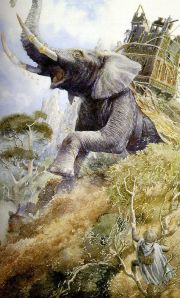
When they arrive, the see another company of Southron men accompanied by the massive war Oliphants. The company is attacked by a group of unseen Rangers and Gollum flees just before Frodo and Sam are captured. The Rangers are led by a Faramir, Boromir’s brother, who informs them of Boromir’s death.
Faramir and the Rangers lead Sam and Frodo into a secret hideout and begins questioning them. In the course of things, Sam accidentally reveals to Faramir that Frodo carries the One Ring. Much to their surprise though, Faramir doesn’t want to take it from them. Unlike Boromir, he understands the dangers of the Ring and approves of their plan to take it to Mount Doom where it will be destroyed.

Later that night, Gollum is found diving for fish into the sacred pool, the penalty for which is death. Faramir’s archers are about to kill him, but Frodo admits that he is there companion and he need him to to get into Mordor. Though Frodo has saved his life, Gollum appears to feel distraught and betrayed by the incident. The following morning Faramir gives them some provisions and sends them on their way, but warns them that Gollum may know more about the secret entrance (Cirith Ungol) than he has been telling them.
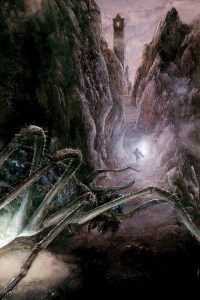
Gollum leads them past the city of Minas Morgul and up a long, steep staircase of the Tower of Cirith Ungol. At the base of it lies a long tunnel which he claims leads into Mordor, one which the orcs don’t know about. His betrayal is soon revealed when an enormous spider named Shelob sneaks up on them. Gollum attacks Sam and prevents him from warning him before he’s stung. Sam manages to fend off Gollum and back into the spider’s cave where he manages to scare off Shelob with the light of Erendil.

After seeing Frodo lifeless and pale, Sam assumes that Frodo is dead and becomes despondent. He debates abandoning the Quest in favor of chasing after Gollum and killing him. However, he resolves to finish the Quest himself and takes the Ring from Frodo’s body. Unfortunately, a group of Orcs show up and take Frodo’s body away, and reveal in the process that Frodo is not in fact dead, but only unconscious. This is Shelob’s way, he learns, which is to paralyze her victims with poison before draining their blood. The story ends with Sam resolving to travel to Minas Morgul and save Frodo!

Summary:
As I might have said already, this book was my favorite of the three. The action starts immediately with the introduction of the Rohirrim and the march to war. And of course, things didn’t let up with the seige at Helm’s Deep, the decision of the Ents to get involved, and the reigning in of Saruman. But at all times, the action is made all the more poignant by the fact that everything is steeped in ancient lore and genuine cultural influences. I for one couldn’t get enough of Rohan’s culture and its Anglo-Saxon nature, nor the constant intrigue Tolkien sowed into the plot with all the spying, lying, influence and plotting.

And then things calm down just a bit for Frodo and Sam’s journey, which is characterized by fear, suspicion, and an in-depth analysis of Gollum’s split personality. Here is perhaps one of the best elements of the series, where we find a creature so perverted by evil and twisted by centuries of isolation that he seems barely human. But at the same time, there is still a spark of humanity that burns within him, one which Frodo feels he must harness and breathe new life into.

And of course, there’s Frodo’s own transformation as he becomes more and more consumed by the Ring’s power. Though they are already bound by mutual necessity, it is clear that Frodo and Gollum are bound by shared experience a swell. This gives another one of the story’s arguably best elements, which is the way the reader is left hoping that Frodo can endure, and torn between hoping for Gollum and suspecting him of treachery. This is a perfect device, in that it mirrors the dichotomy between Sam and Frodo perfectly.

On top of all that, there was more development in terms of the stories deep background and geography of Middle Earth. Seeing the Southrons for the first time was very intriguing, and reminded me just how inspired Tolkien’s literary creations are. Whereas the people of Rohan were clearly inspired by the Anglo-Saxon example, the Southrons clearly represented the armies born of West Asia that threatened the real-life “Men of the West – the Persians, the Carthaginians, and the Saracen Turks.

Film Adaptation:
It is perhaps for this reason, or the fact that I read the book first this time, that I found the movie quite inferior. All throughout, they made extensive changes which I felt were obvious, transparent, and just plain unnecessar. For example, several scenes were added that never took place in the book for the simple reason that Peter Jackson and the script writer’s felt it needed more drama. Aragorn never fell on the way to Helm’s Deep, there was no pitch battle between Saruman’s riders and the Rohirrim, and the battle at Hornburg was hardly as hopeless as they made it out to be.

And let’s not forget the cheese element that was pervasive in the film. In this installment, Arwen and Elrond had no page time, and yet they forced them both in with all the subtlety of a sledgehammer. Really, what was the point of those long, drawn out scenes where she and her father are discussing the consequences of her life choices, aside from ensuring they still had screen time? Perhaps it’s just the fact that I know they weren’t in the book, but it just seemed annoying and forced. The first film seemed to excel for me by leaving stuff out, not adding stuff in.

And that scene at Helm’s Deep where Legolas rides a shield like it’s a skate board down the steps? I know they felt the need to throw the kids the bone, but that was just plain cheese! Much of the action was pervaded by that in fact, like when Gimli told Aragorn to “toss him”, an obvious reference to the terrible sport. Whereas in the first movie Gimli was a brusque and tough soul, by this movie his antics have degenerated into cheap comic relief, and Legolas’ stunts begin to border on the completely unrealistic.

But I aint done yet! There were also the million and one changes that they made to the script which I couldn’t help but notice, being a newly graduated Rings geek. For one, the confrontation at the Golden Hall was all wrong! Saruman was not exercising direct control over Theoden, Grima was the one whispering poison in his ear to keep him weak and complaint. That was far more realistic than the scene were Gandalf “shoves” Saruman out of him. And what’s more, the scene totally did away with the way Gandalf gets mad in the book, summons lightening, and scares the shit out of Grima. That was literary gold!

In fact, the best parts in the series are where Gandalf get’s mad and the whole world begins to shake. And they left that part out too, where Gandalf grows tired of Saruman’s bullshit and breaks his staff. Not only did they not even show it in this movie, they made the scene where it happens totally calm and boring. But that’s something for next review…

The next big change I saw was in how Theoden marched to war. In the book, he agrees and mobilizes his forces to go to Helm’s Deep because its a natural fortification that stands in the way of Saruman’s advance. But in the movie, he is hesitant and rides to Helm’s Deep because Edoras is “vulernable”. That made no sense because anyone who has access to a map of Middle Earth will see that Edoras is much farther away from Isengard than Helm’s Deep, and its a freaking walled city. How is it vulnerable? If anything, marching his people through the wilderness to an old fort that’s located practically on Isengard’s doorstep was stupid strategy. But that’s such a Rings geek point to make!

Oh, and the way the Elves marched to their rescue? Heartfelt, but never happened. Theoden had a garrison at Helm’s Deep, and though it was understaffed and made up of too many old men and youths – recall the line “too many winters or too few” – they stood against the Uruk-hai on their own. They were rescued in the end, but by Erkenbrand and the Rohirrim, who had not riden away out of anger at Theoden, but because they had been routed by the Uruks while fighting in the Westfold.

Still not done! There was also the extended part where Faramir decides to take the Ring and makes Frodo and Sam ride with them to Osgiliath. This never happened, and it totally pitched Faramir as some unappreciated child who was eager to earn his father’s respect. True, his father didn’t appreciate him, but his whole character was built on the fact that he was the wiser of the two brothers and knew how to resist the Rings allure. And that scene where he and his Lieutenant roll out the map to discuss strategy? So obvious! It was nothing more than an excuse to give the audience a gander at what Middle Earth looks like and illustrate their strategy. Obvious, but I guess it was necessary seeing as how many viewers hadn’t read the book.

And unlike the first movie, in this case, they cut out the ending instead of dipping into the next book to strengthen it up. This includes the portion where Gandalf, Aragorn and Theoden ride to Isengard and where Frodo is attacked by Shelob. Some would say they needed to make cuts for the sake of time, but that doesn’t hold seeing as how they added in scenes which never took place in the book. Cutting real material that was well worth watching just to make room for obligatory scenes of Arwen crying and the forced drama of Aragorn nearly dying just seems silly.

Okay, all done! Next up is the final installment, where things come together with climactic war scenes and the last, desperate attempt to destroy the Ring. Stay tuned for The Return of the King!

Winston Agonistes, Part V

Hello again and welcome to another installment of Winston Agonistes. I’ve decided to make this one of my last samples since, after this, things are going to get particularly suspenseful and revelatory. I want to save some surprises for the reader, after all! And rest assured, my people are also coming along with their stories.

In fact, Goran Zidar and Melanie Edmonds are now finished their respective stories, Terraformers and Swan Song. And Khaalidah is nearing completion of her story, Progenitor. And once Winston is complete, which won’t take much longer now, that will make 1/3 of our anthology actively accounted for.

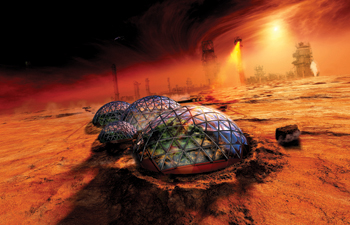
This next segment takes place, once more, in the settlement of Shangdu, which is inspired by the original in Northern China. What’s more, Winston will get to show off his impressive linguistic skills, being a synthetic and all.

A short podcar ride later and they were deposited directly in front of the palace complex, along a main thoroughfare that was connected to a series of side roads. Directly in front of the palace, Palace Security forces had erected barricades on either side of the street, holding back crowds of people who had turned out to witness the arrival of the capitol’s delegation.

In accordance with the diagrams Winston had studied, he noted that the palatial building itself was significantly smaller than the grounds that housed it. Being only a fraction of the overall estate, placed directly in the middle and slightly to the rear, it was the perfect representation of the original Shangdu’s original layout.

As the proceeded from the platform to the palace steps, Winston took in the layout of this section of the city. Winston knew from studying the settlement’s various maps that the roads in this area formed a perfect gridwork that corresponded to the palace’s dimensions. Within the many squares and rectangular spaces that lay between them, other important structures were situated as well.

To their left, the Collections building stood, the nexus of all information and materials that the colony had stored over the years. Every major settlement had one, for they served as a backup should the Nexus ever suffer a fatal error and shut down. Immediately next to it was the Hall of the Ancestors, an informal museum which was dedicated to preserving artifacts and displays from pre-colonial history. No comprehensive displays were publicly available, but he knew from recorded accounts that the collection went far beyond the East Asian sphere. Prior to their arrival, Shangdu’s patricians had amassed a great collection of terrestrial memorabilia.

Without looking, he knew that the Embassies lay to their right. Here too were informal structures which were serving an increasingly formal function. Though they did not constitute nation-states per se, the different settlements had been falling into the patterns of such behavior since their arrival. As he had observed to Mutlu before, old habits died hard.

The thought of this made his look the Councilor and await his pleasure. By now, he had had a chance to contemplate his request, made via Bhutto, and would be sure to indicate whether or not he would accompany their main party into the palace. They made it to the steps at last, amidst some minor fanfare from the crowds. Despite their reputation for austerity, the residents seemed relatively excited to be witnessing the arrival of people from another settlement.

Mayor Wu turned before they began to mount the steps. Behind him, a young woman appeared to be coming towards them with two palace guards. An intercept perhaps? Someone to relay an important message before he became inaccessible? Winston was unsure, but he noticed that her arrival coincided with Wu turning around to address them once more.

“I am honored to welcome you to our humble grounds. In accordance with your wishes, we have prepared an escorted tour for those who will not be in attendance.”

Winston became aware of the meaning of this as soon as the young woman reached the bottom step and approached him. The guards came to his side and seemed to be flanking him and the junior Councilors Beridze, Parsons and Rodrigo. All those who had been told they would not permitted to pass inside, which now included him, apparently.

He looked over to Bhutto, who now stood in a separate group next to Mutlu and flanked by the senior members of their delegation. The words “I’m sorry” formed on her lips. Winston smiled.

“I’m sure my staff would be most honored to witness your city firsthand,” Mutlu replied diplomatically. He barely cast a look in their direction as he and the other proceeded up the steps, leaving Winston and his new cadre alone.

The young woman was quick to assume the role of diplomat.

“Hello, sirs, and madam. On behalf of Shangdu’s Office of Cultural Affairs, I am honored to welcome you to our fine city. We have a sumptuous tour prepared for you and would be happy to answer any questions you have.”

Winston considered switching to Wú Yǔ, which her accent suggested was her native language. Cultural protocols did not specify if this would be taken as a slight or a courtesy. He decided not to deign until he asked. And the others did not appear to be offering any exchange, so he did.

“You’re is quite exquisite, ma’am,” he said with a slight bow. “Would you be offended if I chose to address you using your mother tongue?”

She seemed surprised by this. But a look of recognition took over her face when she surely recalled that she was dealing with a synthetic.

“Not at all,” she said, formally but flatly.

“Ah then, then permit me to say… nǐ de chéngshì shì zhuàngguān. Wǒ qídàizhuó wǒmen de fǎngwèn.”

A formal acknowledgment of their visit and the city’s beauty. The young lady smiled. She did not redden or laugh, which was a credit to her composure. If he could, he would take it as a compliment that they had chosen a person of experience to escort them.

“Ránhòu ràng wǒmen kāishǐ,” she said, which Winston understood to mean that they would now begin the tour.


The Future is Here: Real Mechas!

It’s official. Now you can buy a real mechanized suit of armor… provided you have 1.3 million dollars just lying around. Unveiling their latest invention this past weekend during this years Wonder Festival in Tokyo, Suidobashi Heavy Industry has created the world’s first fully operational mecha! It seems that all that anime was right after all.

Unlike their previous work – the giant robot named Vaudeville which could only move it’s arms – the new Kuratos model can moves its arms, torso, and even wheel itself around, though only at a modest speed of 10km/h. Still, beats the hell out of walking!

It also comes equipped with a full-on master-slave control system, a state-of-the-art display and targeting system, an integrated cockpit with display devices, and even some curious weapons! This includes an H2O rocket launcher, perfect those summer water-pistol fights, and two arm-mounted Gatling guns that are capable of firing 6000 BB’s a minute. Oddly enough, the gun’s controls are linked to the cockpits interactive display device which fires the gun when the pilot-controller smiles!

Oh God, that’s going to be hard to control! One minute, you’re walking along in downtown Tokyo, the next minute, you’ve triggered a shooting spree because you can’t stop thinking about that funny joke somebody told the night before. You ever try not laughing in church or some other public forum? Well, it’s a little like that, except with heavy firepower!

And given the nature of this invention, it’s only a matter of time before someone puts some serious money into weaponizing it. For the rich and world-weary, it’s also the perfect toy for alleviating stress and making an impression on those snooty neighbors. I don’t envy the traffic cops which have to pull them over and issue a ticket though!

And yes, it’s not exactly Macross or Full Metal Panic material, but once again, it’s a step in that direction. Soon enough, we may be seeing mechas designed for the military use and crowd control. I can see how those water rockets would prove useful, and if the BB guns were upgraded to fire rubber bullets instead of tiny, put-your-eye-out shards of metal, then so much the better. And Robocop would have his work cut out for him having to compete with SWAT mechas like these!

Below is a helpful instructional video provided by Suidobashi. Enjoy and try not laugh. It makes the robot open fire!

The Future is Here: Robotaxis and Podcars!

2010 Zagato 2getthere Podcar

Fans of Total Recall may recall the Johnnycab, a robot taxi service that helped Arny get to where he was going and flee his armed assailants. Well, as it turns out, personal automated podcars (aka. robotaxis) are not a thing of the future anymore. Yes, as it turns out, Masdar City in the United Arab Emirates has a taxi service that consists of a small fleet of autonomous taxis which run entirely on electricity.

Invented by a European company named “2GetThere”, the service accommodates somewhere in the vicinity of 25,000 people per month. As part of the growing project to create a self-sustaining city that runs on clean, renewable energy, these rails are consistent with the city’s ethos and are expected to pave the way for clean mass transit. Best of all, the 2GetThere models don’t have weird-looking animatronic robot busts sitting in the front seat to creep you out and provide needless comic relief!

But of course, the UAE is not the only place where robotaxis can be found, nor is 2GetThere the only company investing in this revolutionary technology. In San Jose, the so-called “Capital of Silicon Valley”, similar efforts are being made to create clean, sustainable transportation. In this case, it takes the form of the Personal Rapid Transit System; or as it is more widely known, Podcars.

The system involves a series of on-call, point to point transit cars which move about on main lines and intermediate stations to find the quickest route to a destination. Under normal conditions, this means of transit has been shown to be faster than other forms of mass transit or automobile. The “matrix”, or looped layout structure of the network, allows for high-volume and is also expected to lessen the burden on conventional transit systems.

Granted, both networks are in their infancy, but both the science and the planning behind them is sound and expected to take off in the near future. Much like mag lev and light rail train systems, they are part of a growing Eco-friendly attitude towards city planning and mass transportation which is anticipated to become the mainstay of urban development and renewal in the 21st century.

And of course, Google and other companies are also hard at work trying to bring us other designs and concepts. Amongst them are true self-driving cars, the kinds that may very well involve robot drivers. But in all likelihood, these will take the form of truly “smart” cars – i.e. the kind that can guide themselves, pick optimal routes, and avoid accidents and traffic congestion. Sad to think that the days of driving might actually be coming to an end. But hey, at least we might save the planet in the process!

Lord of the Rings: The Fellowship of the Ring

Hello all and happy July 29th! Or, as its known to many fantasy and sci-fi geeks, the day that The Fellowship of the Ring the first volume in the LOTR trilogy was published in 1954. Yes, I learned that just this morning, and thought it was the perfect excuse to finally do the review I’ve been putting off until now. I can only apologize for my negligence in this regard, but let’s face it, this book is kind of a big deal. With this trilogy, Tolkien effectively did for fantasy what Herbert would later do for sci-fi with Dune; that is to say, make people take it seriously.

And even if you’re not a fan of fantasy, you have to acknowledge the incredible debt owed to Tolkien. Not only did he provide a legitimate injection of mythos to the fantasy genre, establish a very real connection between ancient and modern, and provide archetypes which are still used to this very day. On top of all that, Tolkien gave the British people a sense of cultural lore that was all their own, which was precisely what he wanted.

In fact, Tolkien went so far as to say that his motivation in writing “faerie story” was to create a narrative which he felt had been previously missing in British culture. When one looks at ancient mythology, be it Norse, Greek, Roman, Native American or Indo-Aryan, one sees stories and legends that are tied to a culture and contain incredible power for its people. And while the British have their share, Arthurian myth for example, Tolkien felt that this smacked of a Judea-Christian prejudice and did not genuinely reflect the British temperament.

But of course, many literary critics went a step further and claimed that his books contained allegorical similarities to the conflict which had just passed in Europe. Though he began work on his voluminous masterpiece before the war began, much of it was completed during the war years and seemed to possess veiled references to the conflict. Think about it, the nations of Middle Earth (which included the “Men of the West”) were faced with a resurgent evil that came from the East.

The last time they faced it they had been successful, but the unsatisfactory conclusion of that conflict paved the way for a future war. Now, with the evil returning, the nations of Middle Earth found themselves in a weakened posture, but managed to succeed by comign together once more to thwart the evil, this time destroying it permanently. Hell, even the races of Middle Earth themselves could be said to be allegories for real nations – the Elves, Dwarfs and Men constituting the British, French and Americans respectively, while Hobbits were unmistakable representations of the British folk, the hardy little people who made all the difference.

But that is mostly speculation. In the end, Lord of the Rings is so richly detailed and deep that people have been able to discern countless metaphors, allegories and significant passages. In the end, it’s genius lies in the fact that it was both hugely inspired yet immensely original. So without further ado, let’s get down to dissecting the bad boy that started this whole phenomena!

Sidenote: the focus of this review will be the novel itself. Any notes on the movie adaptation come at the end, so don’t expect a running commentary on how the book differed from the movie. All artwork provided is that of Alan Lee, the illustrious illustrator of Tolkien’s work.

The Fellowship of the Ring:
The book opens with a note on Hobbits and a preamble indicating what took place in the previous book, The Hobbit. It also provides some deep background which includes notes on the people of the Shire, their customs, and how Bilbo Baggins came into possession of the One Ring. The story then opens with book I, the first in the six book volume that makes up the single tale of The Lord of the Rings.

Book I: The Ring Sets Out:
In the first chapter, the story returns us to the Shire where Bilbo is waiting up his 111th (or eleventy-first) birthday, while his adopted heir Frodo is coming of age at 33. Bilbo is sparing no expense for the occasion and has even invited Gandalf to attend, as he has some rather important news for him.

This, Gandalf soon learns, is that he intends to take a permanent holiday. He plans to leave everything to Frodo, but doesn’t seem to want to surrender his one prized possession: The One Ring. After a tense confrontation with Gandalf, who convinces to leave the Ring behind, Bilbo departs on his journey and the two promise to meet up again. When Frodo arrives at Bilbo’s house, he is ransacked by relatives who are looking for their share of Bilbo’s wealth.

After they all depart, Frodo is spoken to by Gandalf, during which time he tells him he plans to depart on his own business. He warns Frodo to keep a close watch on the Ring, as he fears the worst of it. Over the course of the next 17 years, he pops in to visit Frodo, and eventually comes to tell him the truth. The Ring, he claims, the One Ring forged by the Dark Lord Sauron to help him conquer Middle Earth.

This provides some additional background on the story, where Gandalf explains to Frodo all about the “War of the Last Alliance”, how Isildur took the Ring for himself, and how it fell from his posession to be lost for ages. He also explains how, in time, Bilbo found the Ring in a cave where a forlorn creature named Gollum had been living with it for centuries. It was this Ring that bestowed Bilbo’s legendary longevity, as it did Gollum while simultaneously poisoning his mind.

He comes at last to the point of the tale: Sauron has risen once again and is gathering his strength at Mordor. But before he can complete his conquest of Middle Earth, he needs the One Ring to which he is bound. Already, his forces found Gollum and learned from him that the Ring was in the Shire, in the possession of one named Baggins. Because of this, Frodo must leave and go to Rivendell, where he will be safe and the fate of the Ring can be determined.

Gandalf must set out on his own too, to consult with the head of his order Saruman at Isengard. He promises to meet up with Frodo again before the summer when Frodo will depart. Frodo’s friend and gardner, Samwise Gamgee, is found overhearing their conversation, and out of loyalty to Frodo, agrees to go with him. When the summer arrives, Gandalf does not show, but Frodo must leave and does so under the pretense that he is moving, and with the help of Meriadoc Brandybuck and Peregrine Took, they set out for the edge of the Shire.

Along the way, they hear of Black Riders that have come to the Shire and are asking after a Baggins. These are revealed to be the Nazgul (or Ringwraiths), “the most terrible servants of the Dark Lord”. With the help of a party of Elves and the Farmer Maggot, Frodo and his company reach the edge of the Shire and pass into the wilderness. Along the way, they meet more curious folk, such as Tom Bombadil, a strange Hobbit-like creature who seems to be immune to the Ring’s effects.

At last, they come to the town of Bree, where they take a temporary respite at the Inn of the Prancing Pony. After downing a few pints with the locals, Frodo accidentally reveals the Ring when he slips it on and disappears from sight. He is then pulled into a room by Aragorn, who reveals himself to be a friend of Gandalf’s and a friend in their quest. He shows them the sword of Elendil, the shattered remains of the blade that cut the ring from Sauron’s hand, and agrees to take them the rest of the way to Rivendell.

After several days of traveling through the wilderness, they come to the ruins on the hill of Weathertop. During the night, they are set upon by the Nazgul, and after cornering Frodo, the chief stabs him with a cursed blade. Aragorn manages to chase them off, but warns that Frodo must get to Rivendell with all haste, or he will become a Nazgul himself.

As they hurry along, they meet Glorfindel, an Elf warrior from Rivendell who agrees to takeFrodo there with all haste. The Nazgul, all nine of them joined together now, pursue them and attempt to follow them across the Ford of Brunien, the last remaining obstacle between Rivendell and the outside world. However, Elrond sends a wave down the river which smashes the Nazgul into the rocks and ensures Glorfindel’s and Frodo’s escape. However, Frodo collapses and appears to be near death.

Book II: The Ring Goes South
When Frodo awakens, he learns that he is in the House of Elrond in Rivendell, where he has been healed by Elvish magic. Elrond summons the Council which consists of Aragorn and representative of every race on Middle Earth. Frodo is invited to attend, where he presents the One Ring. Gandalf is there too, and explains that he was held up because of a betrayal. Saruman, head of his order, has apparently betrayed them because he desires the Ring for himself. He is not yet in the service of Sauron, and is amassing his own army of Orcs.

Together, they hatch the plan that the only way to defeat Sauron is to destroy the One Ring, which must be cast back into the fires of Mount Doom from which it was forged. Frodo volunteers to take the ring and thus becomes the Ring-Bearer, and Samwise once again vows to stay by his side. Completing the Fellowship are Aragorn and Boromir, son of the Steward of Gondor; Legolas, Prince of the Silvan Elves of Mirkwood; Gandalf; Gimli the Dwarf; and Merry and Pippin.

Together, they set out south along the Misty Mountain route. However, there attempts to cross are foiled due to snow and avalanches. They debate over what to do next, but it is agreed that they will pass through the mines of Moria instead. Aragorn seems to think this is a risky idea, but Gimli insists that his cousin Balin who rules there will give them safe passage and hospitality.

Once inside, they find the place littered with corpses and overrun by Orcs. Their company finds their way into a side room where Balin’s tomb is located, and where the Dwarves apparently made their last stand. Shortly therafter, the Orcs fall upon them and the company manages to make its way out. However, when they reach deeper into the mines and come upon a bridge leading to the surface, an even greater threat emerges: A Balrog of Morgoth, a creation of darkness and flame from the ancient world.

Gandalf stands against it, but soon finds himself pulled down into an abyss with it. Frodo and the rest of the Fellowship look on in horror, but are forced to flee as more Orcs swarm in to attack them. They make their way out of the mines and Aragorn laments that Gandalf didn’t heed his warnings about passing into the mines. For a long time now, it was feared that the Dwarves lust for Mithril (which was mined in Moria) caused them to dig too deep and disturb what lay down below.

Once free of the mountain, they make for the elf-haven of Lothlórien, where they are sheltered by the rulers Celeborn and Galadriel. As they take their rest, Galadriel speeks to Frodo and provides him with visions of what is to come. He offers her the Ring, which she considers momentarily, but then rejects. The quest falls to Frodo himself, he is told, and he must find a way to destroy it. Before setting out down river, they are given provisions and items for their quest, all of which will prove useful later on.

After setting down at water’s edge, the Fellowship begins to show cracks. After days of becoming edgier and moodier, Boromir finally confronts Frodo and tries to take the Ring from him. Frodo places the Ring on and escapes, and the others scatters to go and hunt for him. Frodo decides that the Fellowship has to be broken, and that he must depart secretly for Mordor. However, Sam finds him before he can leave and insists on coming with him. The two then set off again down river, just as a company of Orcs close in and threaten the camp!

Thus ends the first volume of the Lord of The Rings!

Summary:
Of the three books, I have to declare right off that this was my least favorite. But of course, that isn’t saying much given how impressed I was with book II and III. Nevertheless, I couldn’t help but feel that with this first volume, Tolkien wrote long-winded passages that really weren’t necessary. Of course I could see the point of them. They established background information and detailed the fictitious world in which the events took place.

Nevertheless, so much of Book I felt like interjections and asides that didn’t seem to contribute to the overall storyline. For example, Tom Bombadil’s role in the story has long been a subject of debate. As it was explained to me, he occupies the same category as the Ents and other mythical creatures, in that he is outside the regular events of the story. Whereas the Ents are indifferent to the Ring and the wars for Middle Earth because they are so old, he is also indifferent because the Ring has no power to sway him as it does other creatures.

But in the case of the Ents, they came to be directly involved in the war because they realized that they could not simply sit idly by and let things pass. Tom had no such compulsions or involvement, and aside from being mentioned briefly in Rivendell, has no more role in the story. And unlike certain features which come up during the long journey through the Wilderness, his inclusion also wasn’t a shout out to content from the Hobbit. So really, what purpose did he truly serve?

Second, there was the Fellowship’s journey through the Misty Mountains. It is implied that they are turned back by Saruman’s magic, but it is never established. What’s more, the dangers of going through Moria are hinted at ahead of time, but it appears Gandalf is okay with the idea even though he must have foreseen he would be the one to die. But in the end, it is Aragorn who later laments the decision and questions why Gandalf would be okay with it. It seemed to me that if Moria represented the riskiest choice, Gandalf should have been the one had doubts about it.

Last, there was the point at which the Fellowship breaks. In book I, we see the basic points, Boromir trying to steal the ring, and Frodo leaving with Sam before they Orc party strikes. But it’s not until book II that we realize that such a confrontation took place, that Boromir was killed, or that Merry and Pippin were taken prisoner. In this, and all other cases mentioned, the movie sought to show these things and explain them fully. Quite predictable, but in the case of this first story, I actually felt it worked. But of course that probably has something to do with the fact that this one time I saw the movie first. Were I a Rings geek prior to the first film (as I was for II and III), I might have taken issue with all these changes instead of approving of them.

So far, I feel I’ve been saying only negative things about this book. But let me be clear, it’s only because the story set such a high tone that I was surprised to find that there were any weaknesses at all in this volume. If anything, the flaws are the exception to the rule, which is that Tolkien managed to create a story and and entire world steeped in legend, lore and magic. His main characters are archetypical legends, calling to mind such heroes as Beowulf, Arthur, Lancelot and Merlin, and whose supporting characters call to mind the same kind of comic and tragic figures as Caliban, Launcelot Gobo, and King Lear’s Fool.

And of course, there are the legendary races in the story which continue to dominate the fantasy genre and popular consciousness alike. When it comes to stories, gaming, movies and television, the basic breakdown of Elves, Men, Dwarves, Orcs, Ogres, Goblins, Wizards and Dark Lords is still in effect. Willow was a movie built entirely on Tolkien’s foundation, Chronicles of Narnia, Harry Potter and The Golden Compass owed a huge debt to his work, and Warhammer, Dungeons and Dragons, and countless other games I can’t even name wouldn’t exist without him.

And the storyline itself is nothing short of genius. Embracing such themes as the “Decline of the West”, the rise of an old evil, the idyllic countryside, the world outside your door, and little people caught in a situation much bigger than themselves, the story was so layered that people could find no shortage of significance and meaning contained within. It’s little wonder then why it has remained so influential and enduringly popular!

Coming up next, The Two Towers and The Return of the King, in that order 😉

Whiskey Delta

Night_vision1“Ambulans mortuus: noun. Lit. “moving dead” (lat.). A viral strain that appeared in Western Hemisphere in the early 21st century. Origin unknown. Characterized by high fever and death in infected subjects, followed by reanimation and extremely violent behavior. No known cure.”

-Merriam-Webster Dictionary. 2021 Edition.

Green and black. Always the same. Nothing ever looked different through NVGs. No other hues, just different grades of green and black. Some brilliant, some muted, but it didn’t matter. At night, all that mattered was what moved, and these days, it moved en masse.

Dezba lowered his scope and rubbed his eyes. After minutes spent looking at the green and black, even pitch black looked good. Less eerie, less filtered, less fake. The arms also had a way of stiffening after holding up an A1 for minutes at a time.

The headset crackled, the voice calling on over the squad’s general frequency.

“Hold your position. Keep your eyes peeled.”

He heard a sigh from beside him. At the other side of the foxhole, Mill was also taking a break. In his case it was to stretch his neck.

“Are we even sure about this intel?”

“The Mage said it’s tight, so it’s tight,” he replied, repeating the mantra. That seemed to be enough, since Mill went right back to sighting down his gun again.

Bringing the scope back into place, he got another eerie view of the landscape. There were the glowing patches nearest them, bright from the moonlight, and only small slices of black where shrubs cast their shadows. He scanned slowly left and then right, checking out the side scenery. He spotted the other shining Humvees, the LAV, and the other foxholes that were cast in grey. Plenty of mottled green helmets and dark weapons profiles filled them.

Beyond them was the relative dead of night and the line of Ponderosa pines that was black except for the few spots where the canopy opened to let things through. Not much seemed to be going on in there, but they wouldn’t know that for sure until it chose to step into open…

He looked back to the roadway next; the thin stretch of dirt and gravel that the old man said was their spot. Others had dismissed him as a coot, somebody who had nothing better to do but tell stories of doom and apocalypse. But the Mage thought otherwise.

For months now, they’d been spotting Whiskey’s inside the perimeter. Somehow, somewhere, they were making it through to 2nd Rattlesnake’s territory. Preying on the livestock and scaring the good folks, making them think their children would be next. No one knew where they were getting through, but where that was, it had to be sealed.

This place, he reasoned was the perfect spot for the Whiskeys to be walking in. Inconspicuous, unimportant, and with a natural canopy that made it inaccessible to the UAV’s. No one suspected that the Whiskeys were capable of reasoning that out, but it made sense to the Mage. The man’s word was law so long as they they had to contend with the presence of those walking nightmares.

And so, 2nd Battalion was sent in. No mistakes, no mercy. The Rattlesnake would bight back hard tonight. Assuming, of course, there was anything to bite at.

The call came in. “Eyes up”.

Dezba’s raised his gun into position. His heart began to pound and his hands tightened around the grips. Slowly, he scanned the horizon. No signs of movement. Mill didn’t see any either.

“Where are they?”

“I don’t see em,” said Dezba.

“What, man, I thought you Hopi fuckers could smell an enemy a mile away.”

Dezba smiled. “Wrong nation, asshole.”

He scanned left. Something seemed to be moving by the tree line. He sucked in a breath and centered the scope there. Another stirring. The bushes at the edge were moving.

Damn coyotes, he thought. If they had come all this way because of some mangy little scavengers, plenty of people would be pissed. Not the least of which would be himself. And while they waited, the real hole in their line might very well be filling with Whiskeys, on their way in towards town to find fresh victims. Tonight might even be the night that the damn things escalated and grabbed someone’s kid.

“Contact,” the Captain’s said, deep and low. He had to be right. He never lowered his voice except in the presence of the enemy. Somehow, knowing they were out there made him speak cautiously, like he worried they’d hear him.

Mill began to scan around too, moving his weapon back and forth. There was no time to reprimand him for breaking the basic rule. You move your head, not your SAW. One of the first things they taught you in basic. Spot your target, then point and shoot. Waving was for FNGs and fucking civilians.

“Shit… where?” Mill whispered. Dezba was wondering himself. As if on cue, the next call came in.

“Eleven o’clock level, in the treeline, coming towards the dirt road.”

Dezba zeroed in with his scope. He nearly swore out loud when he saw the hovering pair of eyes float into his field of view. Somehow, those eyes… they always glowed green through NV. He had never seen anybody else’s eyes do that before. Even coyotes didn’t get that sheen, and they glowed just fine in ambient light. Something about those dead, milky globes just loved to show up on night vision though.

By now, they were making their way out of the forest and into the moonlight. He had to zoom out just to get an idea of how many there really were. Luckily, the LT had a count ready just then.

“Whiskey Deltas at five hundred meters. Count two dozen plus Tangos, more coming…”

Sure enough, more followed. They moved slowly, as usual, but were gradually converging on the dirt road. Just like the old man said. Seems he was a lot less crazy than people suspected, and the Mage had been right once more…

“Standby,” the Captain ordered. Dezba did a quick check just to make sure his safety was off. At times like this, leaving it on could was just as deadly as forgetting to put it on when stowing it. With what he knew to be an armed rifle, he watched the glowing ghouls walk until they reached the road. Well over two dozen passed from the treeline, and more were coming…

 “Standby,” the Captain repeated, a note of urgency creeping into his voice.

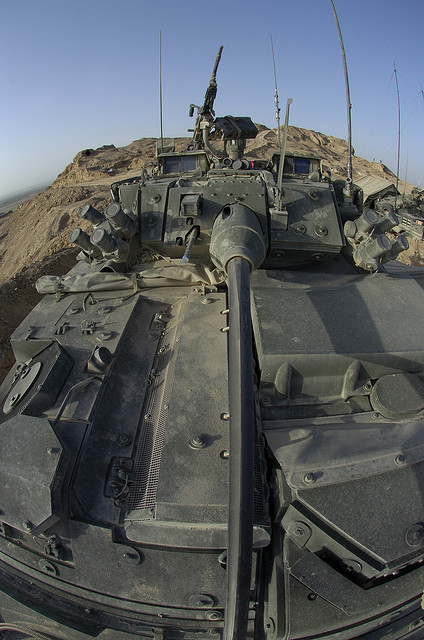
The LAV’s and Humvee’s began moving their turrets into position. Their motors humming happily as their guns and cannons to target the dirt road. He could imagine how the crews felt because he was feeling the same way. They all were. Every finger poised, every heart pounding…

“Get some,” came the order.

Their line erupted in a blaze of muzzle flashes and tracer fire. For several minutes, nighttime disappeared as white phosphorous and hot lead turns the entire filed into another starry sky. The field opposite began kicking up dirt and fleshy bits too. Through his scope, Dezba saw nothing but bright flashes, pausing between shots to make sure his crosshairs were poised over a still-moving Whiskey.

“Get some! Get some!” came the calls over the line. Every soldier screaming into an open line to announce a kill. Dezba watched another one drop. Movement from an arm sent him a few degrees to the right, until he watched it fall and hit the ground. A 20mm round had turned one of them into a limbless freak, but the damn thing was still moving. A well placed sniper round hit it square in the brain pan and sent it to the ground a second later.

“Cease fire! Cease fire!” came the order.

It took a second, but silence overtook them. The last of rifle fire burst like firecrackers in the night, then died out, replaced by the sounds of empty magazines being popped and fresh ones loaded.

“How you doing?” he asked Mill. Mill checked his ammo belt just to be sure.

“Good one-hundred rounds left on this drum.”

Dezba nodded and peered through his scope again. Everyone on the line did the same, staring through whatever Night Vision gear they had on them. All wanted to see what had become of the horde.

“Oh shit!”

Mill saw it through his goggles. Dezba saw it too through the scope.

Milky globes. More of them. Way more…

“Holy shit, why the hell have we stopped firing?”

“Be quiet!” Dezba ordered.

More still came. They didn’t appear too concerned about the pile up of bodies that lay directly in front of them. Only the smell of fresh flesh ever seemed to get them in the killing mood. And they seemed to have that now, judging by the way they were moving right at them…

“Standby…”

Dezba took a deep breath.

“Standby…”

Mill took one too.

“Count four dozen Whiskey Deltas. More on the way. Standby…”

It was the biggest group Dezba had ever seen. This was no mere breach in their perimeter. This was a big ol’ clusterfuck heading their way! Whoever the old man was, he’d be sailing high on a wave of credibility after this, assuming any of them made it home to tell!

“Standby…”

The horde seemed to be picking up speed now. They were onto the smell of fresh flesh. And at least a dozen more moved from the tree-line into the open field. That made at least sixty that were now on the roadway. They moved with a purpose now, just like they had seen in the footage. And at this rate, they’d be upon them in less than a minute. What the hell were they waiting for? They could already see the whites of their eyes!

He could hear voices yelling from the other foxholes, cries of disbelief and panic. And yet, they held their fire, waiting for the order. The Mage didn’t tolerate no wayward scum in his battalion.

“Get some!”

The Lieutenant didn’t even need the coms this time. He yelled it loud enough for everyone to hear from his Humvee, and everyone happily obliged. Their line opened up again and another hail of glowing metal began to litter the field with bodies. Between the constant drum of Mill’s Saw and Dezba’s own rifle firing in three round bursts, all his ears should have been able to register was the steady thump, thump, thump of the LAV’s cannons.

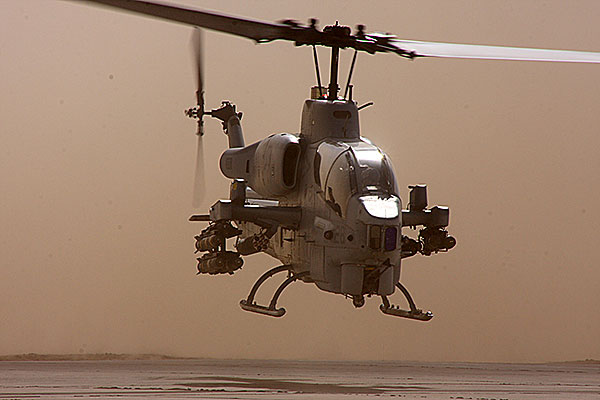
And yet, there was something else approaching. A different kind of thumping accompanied by the high pitched whine of jet engines.  Dezba looked to the sky but couldn’t see a thing with the trees over their heads. But he heard it, the unmistakable sound of Cobras. And soon, he could hear their guns mowing too! Everybody else seemed to as well, because a cheer began to go up all along the line.

The only ones who didn’t know what hit them were the Whiskey’s. They continued to run, right through a hail of metal which began to chew them to pieces. Given the size of the bullets and the rate at which they slammed into them, no head shots were necessary. Every bastard who was hit was down for good.

And that’s when they let the rockets fly. The Platoon hollered once more as the night was lit up by fiery HE rounds exploding into the Earth and turning anything still moving into mush. The yelling kept up even as the thunderclap subsided and the coms became active.

“Viper, be advised, Voodoos are on station and bringing in air support, over.”

 The Lieutenant signaled back, his voice grateful and jovial.

“Voodoo, this is Viper actual. Damn glad to see you guys, over.”

There was what sounded like a chuckle at the other end, followed by more of the airman’s measured tone.

“We have eyes on target area, Viper. No further movement or indications of infiltration. Returning to base, over.”

“Roger that, Voodoo, thanks for the assist!”

The sound of rotors began to fade into the distance. Dezba could hear himself breathing again and realized he was breathing pretty hard. His heart was moving pretty fast as well. It couldn’t be helped. What started as a simple tip had turned into the biggest firefight of his career; the biggest of anyone’s on the line, he guessed.

“Shit,” Mill said, pointing to the tree line opposite them. “Look at that.”

Dezba looked across the field, saw nothing except from some flaming bushes and plenty of chunked up Earth. Mill could tell he wasn’t seeing it.

“No, further man. Use the scope. I see fires over at the forest there.”

Dezba raised the Starlight and saw what he meant. From the looks of it, some of the Cobra’s fire had caught on some of the trees. Mainly underbrush was catching, but chances were, it would be a full flame-up by morning. The entire field of Ponderosa’s would be nothing but ash.

“Relax, Gordy,” he said. “Fire’s good. Fire cleans up a Whiskey’s mess. By morning, any undead fuckers in there will be toasted!”

Mill scoffed. “Too bad we can’t eat em!”

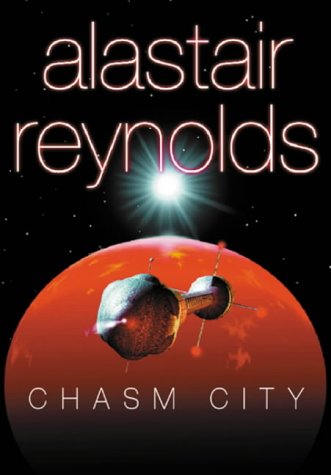
Chasm City

Next up in my review of Alastair Reynold’s Revelation Space universe is the prequel novel and setting piece known as Chasm City! Released in 2001, one year after Revelation Space and a year before Redemption Ark (I know, prolific, aint he?), the story takes place outside of the main trilogy, but details the setting and some of the characters who will play an important role in it.

As the name would suggest, the setting of this novel is the all-important location known as Chasm City itself. In Revelation Space, we got treated to an earful about this place since it is the undisputed hub of the known universe. Or at least it was before the Melding Plague, a terrible nanotechnological virus, turned the place into a twisted, gothic nightmare.

Background:
According to Reynold’s many descriptions of the place throughout the series, Chasm City was not only the capitol of Yellowstone (chief planet of the Epsilon Eridani system), it was also the center of the universe when it came to commerce, innovation and technological progress. It’s multi-tiered cities, contained within the “Mosquito Net” (i.e. habitation dome) were a marvel of nanotechnological achievement, living buildings that were capable of maintaining themselves.

The name itself referred to the fact that the city itself was built in a chasm which was open to the planet’s interior. From this chasm, large clouds of gas would erupt periodically, which the inhabitants used to fashion an atmosphere. In orbit, a huge array of satellites and orbital platforms had been installed, known as the “Glitter Band” due to their unrivaled beauty and the fact the wealthiest citizens maintained opulent homes in orbit.

And last, but not least, Chasm City was the home of the human faction known as the “Demarchists”, a name which is an amalgam of Democratic and Anarchy. These people were the most advanced factions in the universe, save for perhaps the Conjoiners, who used implant technology and wireless communications to create a society that needed no official offices or institutions. All decision making processes were run by direct democracy and the law maintained by police who enforced the public will. Sure, there were still offices and ranks, but the general trend was towards de-structurizing and an avoidance of hierarchy.

Plot Synopsis:
The first thread story opens on the planet known as Sky’s Edge, a planet in orbit of 61 Cygni A, where an enforcer named Tanner Mirabel is looking for a post-mortal noble named Argent Reivich. This man, we quickly learn, was responsible for the death of the wife of Tanner’s employer and is fleeing the planet for Yellowstone. Tanner and his friend pursue him, a chase which takes them into the depths of Chasm City and provides a first-hand look at the effects the Melding Plague has had and the illicit activities that have taken over the now fallen city.

In addition, two more threads open through a series of flashbacks and dream sequences. It is established early on that Tanner has been infected by an “indoctrination virus” – a sort of bio-engineered program which forces those who have it to experience religious visions. He interprets the dreams he has as a symptom, which are predictably concerned with the life of Sky Haussmann, the oft-revered and hated man who founded the colony of Sky’s Edge. This constitutes thread two of the story, where Tanner dreams of Sky’s childhood aboard the Flotilla that traveled to Sky’s Edge from Earth many centuries in the past, aboard generational ships where he was amongst the waking crew.

In the third thread, Tanner relives the traumatic events that led him to Yellowstone in pursuit of Reivich. Apparently, Tanner worked for a man named Cahuella, an arms dealer who is being pursued by Reivich because he sold arms to a rival family which used them to kill his parents. We also learn that Tanner loved Cahuella’s wife, a woman named Gritta. According to the flashbacks he experiences, it was while deploying to the jungles of Sky’s Edge, in an attempt to intercept Reivich, that the incident that led to Gitta’s death took place.

Upon reaching Chasm City, Tanner sees first hand what has become of the city. A once technological marvel, it has now degenerated into a dark and ugly, the buildings appearing as twisted, diseased trees. The Glitter Band has fallen into disrepair, and is now known as the “Rust Belt”. There is also a lucrative trade in what is referred to as “Dream Fuel”, which appears to render users temporarily immune to the Melding Plague. And last, there is the “Game” which Tanner becomes trapped in, where residents of the Canopy (those few still-privileged people who live close to the Mosquito Net) hunt people who live down in “The Mulch” (aka. down below).

After escaping the “gamers”, Tanner takes a female resident of the Canopy hostage and learns that she is part of the lucrative “Dream Fuel” trade. With her help, they travel deep into Yellowstone’s underground network and tunnels and find the source of it, which appears to be a giant, sentient slug. This begins to line up with some of the vision’s Tanner has been having involving Sky and the Flotilla, which continue to haunt his dreams.

Basically, Tanner is now aware that Sky took over control of the Flotilla after his father was murdered by an embedded agent. In a twist, Sky allowed this to happen because he was outraged to learn that his parents had taken him from another family that had died while in cryosleep. While in command of the fleet, he learned that they were being pursued by a strange, phantom ship. When they investigated, they discovered that it was an alien vessel that had morphed to look like one of their own. Inside – drumroll please – was a giant slug living in a big pool of Dream Fuel!

Yes, it seems that the fuel is in fact the organic secretions of the Slug, and that they are a sentient race that has been living in hiding ever since the emergence of a terrible alien threat that has been destroying all space-faring life. For those who have read Revelation Space at this point, it is clear the slug is referring to the Inhibitors. Hence why the Slug ship was following the Flotilla, it had hoped to remain inconspicuous by mimicking other species and their ships. The one currently being used to provide Dream Fuel is another, one which chose to hide deep within Yellowstone to avoid detection.

At the same time, Tanner becomes aware of one horrid fact. After remembering everything from the night where Gitta died, Tanner comes to the realization that it was he that killed her. In the course of their advance through the jungle to intercept Reivich, he and his men ambushed their camp and took Gitta hostage. Rather than let them get away, Tanner opened fire and accidentally killed her. However, he is confused because his memories end with Cahuella taking his own revenge by feeding Tanner to one of his giant snakes.

Nevertheless, Tanner gets back on Reivich’s trail and finally corners him in orbit. There, he finds the ruined body of Reivich who has been hooked up to a machine that was supposed to recor*d his consciousness and create an “alpha” (i.e. a living computer construct) of him. However, the process was rushed, and now Reivich’s body has been irreparably damaged. Close to death, he reveals another twist. It seems that he is not Tanner after all, but Cahuella himself! Small hints are given throughout the novel tot his effect, but he realizes that it is true when Tanner himself walks in!

Yes, it seems that Cahuella couldn’t deal with the anguish of losing his wife and decided to switch memories and appearances with Tanner while he was busy torturing him. However, Tanner managed to escape after Cahuella left and made his way to Yellowstone to get some payback of his own. The two fight, but eventually Cahuella realizes his body contains all kinds of enhancements, such as poisonous snakes’ teeth, which he used to overpower Tanner. Reivich dies too, and Cahuella is left with his many painful revelations.

Another painful revelation is the fact that the dreams he’s having or not the result of the indoctrination virus, but his own memories coming to the surface. It seems that he, Caheulla, is in fact Sky Haussmann himself, and that after sacrificing several innocent lives to get his own ship to 61 Cygni A ahead of the rest of the Flotilla. Because of this, the world was named Sky’s Edge, a sly reference (and criticism) of all he did to make it there first. After he set down, he was set upon by other groups of colonists who wanted him brought to justice. Contrary to popular belief, he wasn’t crucified publicly, but substituted himself with a look0alike and then slipped into the jungle to live out his life in a new persona (Cahuella).

Seeking redemption now, he returns to Chasm City and teams up with his lady friend in the hopes of making some changes. For one, the Dream Fuel trade is to be regulated and humane now, no more torturous extraction from the poor Slug. Second, the “Game” is reformed so that the hunt is for volunteers only, with plenty of rules and chances for the “hunted” to save themselves after they are caught. With all this in place, Tanner Mirabel, aka. Caheulla, aka. Sky Haussmann, settles in for a life he can live with and says goodbye to a life of revenge and running.

Summary:
To begin with the good points, this book was once again an intriguing and exciting romp through the Revelation Space universe. After that first installment, this book cashed in on all the buzz and interest he had created for his fictitious backdrops, such as Sky’s Edge and Chasm City, both very interesting place in their own right. It also detailed a number of elements that were brought up but not developed too much in the first novel, such as the game “Shadowplay”, which Ana Khouri was a member of. At the same time, it also discussed and delved into the dynamics of life and the wars on Sky’s Edge, which also came up in relation to Khouri’s character.

And of course, there was plenty more of the same interesting stuff that set’s Reynold’s universe apart. The concept of time dilation, post-mortality, alpha-level simulations, the Inhibitors, the Melding Plague, nanotechnology, cybernetic implants, and the “indoctrination virus”. All of these elements were brought up in Revelation Space or the subsequent novels to one degree or another, and it was good that Reynold’s side-stepped the trilogy in order to provide some more deep background and development for these concepts.

But above all, the primary focus of the novel, which was on Chasm City itself, was indispensable to this series. A once powerhouse of technology and civility, the Gothic, steampunk-themed environment is just so interesting and rich that it really had to have it’s own book. After reading about it in the first novel and seeing subsequent references to it later in the series, I just knew that Reynold’s would have to come back to it at some point. There was simply too much there for it to a passing mention, not to mention too much in the way of implied significance.

In addition to being an richly detailed environment that inspires so much mental imagery, Chasm City is a fitting metaphor for how technological progress can so easily go from being the stuff of dreams to the stuff of nightmares. It only makes sense that the urban center where all the greatest technological leaps of the future were developed – brain implants, man-machine interface, alpha-level constructs, clinical immortality, nanotech, biotech – that it is also be the place where it all came crashing down. And what did it was especially appropriate – a nano-virus which hit them where they were most vulnerable by perverting the very technology they were so dependent on.

As for the weaknesses, well, they are something that comes up a lot in Reynold’s works. For one, there are too many twists! Why, for example, was it necessary for Cahuella to take on Tanner Mirabel’s identity? Wasn’t it enough that the man who failed to save the woman he loved, who also had a bit of an elicit thing going with her, was out for revenge? And why for that matter did he also need to be Sky Haussmann. One hidden identity was enough, and given its importance to the storyline, it would have been enough for him to be Sky.

Think about it, the reviled and worshiped founded of the colony runs into the jungle and takes on the identity of a simple bounty hunter. Wouldn’t that have been better than assuming the identity of a high-profile arms dealer? And since he settled down to become a professional hunter in Chasm City anyway, wouldn’t him being Tanner all along provide more symmetry? And to explain the whole memory wipe thing, just say that he assumed the identity of Tanner completely to avoid any slip ups, or because he genuinely wanted a new lease on life. Playing it the other way was just plain weird.

Also, there are some other odd elements in the book, stuff that seemed less creative and more far-fetched than his usual story elements. For example, we see that in Chasm City, people rely on more than just “Dream Fuel” to protect themselves from the Melding Plague and prolong their lives now that they can no longer depend on nanotechnology. One of them is a genetic enhancement using Koi fish DNA. Seeing as how the Koi is quasi-immortal and will continue to grow so long as they have new environments to grow into, the residents of Chasm City decided to harness their genetic material in order to prolong their lives indefinitely.

In fact, Tanner/Cahuella/Sky is shown to a sort of shrine in one of the city’s thoroughfares where a massive, centuries-old  Koi is being kept in a tank and revered. And it struck me as just plain strange. Sure, this scene provides a sort of commentary on the vagaries of clinical immortality, but it still felt oddly out of place. So, for that matter, did the descriptions of the various people of the city who have used genetic enhancements to elongate their faces and skulls in unnatural shapes, as well as grow wings and other appendages. I get that in this universe, people can do some rather odd things with their biology, but why the hell would they want to? Much like hypercats, superchimps, the winged unicorns and other such creations from the series, it felt like Reynold’s is getting off-kilter and being weird for the sake of weird.

But other than that, the book is a worthy read and kind of required if you want to be able to make sense of the series. Like I said before, there were aspects of Redemption Ark that I didn’t get until well after I read this book, and since it’s placement in the series comes before the other books, it behooves the reader to tackle this one before moving on to the later books in the series.

Coming up next, Absolution Gap and the conclusion to Alastair Reynold’s lineup!

Opening Ceremonies, the Queen, and James Bond

I trust just about everyone caught the Opening Ceremonies on TV today. And even if you didn’t see it live, I imagine it’s only a matter of time before you catch the highlights on replay or Youtube. And I for one was seriously impressed!

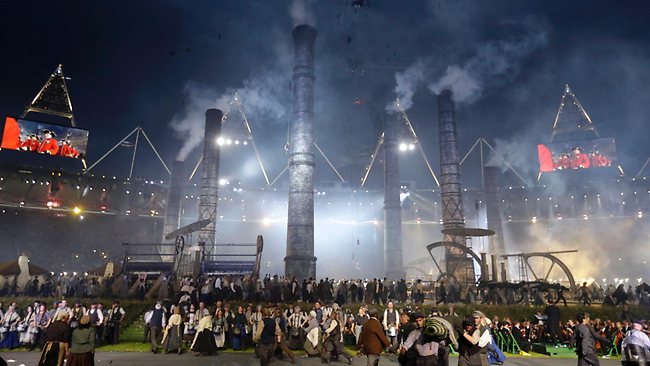
Between the amazingly-choreographed reenactment of the industrial revolution (under the watchful eye of veteran actor Kenneth Branagh), the Parade of Nations, the psychedelic display to the tune of “Come Together”, and the torch lighting display, followed by Paul McCartney playing “Hey Jude”, and the final volleys of fireworks from the perfectly designed stadium, the whole thing was a visual and auditory delight!

Seriously, it was like a watching a Steampunk writer’s wet dream crossed with an acid trip and topped off by a hit of ecstasy (drugs are wrong)! But what I, and I imagine most people liked most, was the display put on by Daniel Craig (aka. James Bond) and Queen Elizabeth II herself. I won’t indulge in the details since there are those who may not have seen it yet, but suffice it to say, it was the perfect combination of funny and awesome! And that Queen Elizabeth II is a damn good sport, apparently. The director said he never had to tell her anything twice.

I would be happy to include the video here, but unforunately, the Olympic Committee is block usage of their media. But one thing they don’t own the rights to is the new Skyfall trailer that premiered during the ceremonies. Click on the window below to check it out!