The Walking Dead – Season 4 Episode 10

The-Walking-Dead-season-4-wallpapers-7The second episode of the second half of the fourth season is here! Wow, that sound confusing when it spell it out like that. But as expected, this episode was pretty pivotal to the course of the season. Not only did it pick up where last week’s intro left off, it managed to round up the remaining members of the cast and account for all of their whereabouts. And there were even a few surprises along the way.

For one, Judith is alive. Yes, the baby that was alleged to have died in the midseason finale (though they left plenty of reasonable doubt as to that effect), was apparently rescued by Tyreese, Mika and Lizzie before they fled. Guess those kids weren’t such bad caretakers after all, and managed to also save a life after blowing a few people’s heads off!

And in another not-so-surprising twist, Carol has found her way back to the group and began leading them on. After making her rather abrupt departure in the first half of this season, she claims to have been drawn back by all the carnage caused by the Governor’s assault on the prison. Which puts her in a good position to help out now that the shit has really hit the fan.

Other than that, there were some entertaining tidbits and a few developments. But let’s not drag this out…

Inmates:

WD4_inmatesThe episode begins with Daryl and Beth fleeing from the prison together, trying to survive on their own while also looking for the other members of the group. As they search, we hear entries from Beth’s diary, which were made back when they first found the prison. At the time, she felt safe and worried about indulging in hope. for fear that it would lead to disappointment.

In another part of the forest, we catch up with Tyreese, Lizzie, Mika and Judith (who is alive after all) as they attempt to do the same. On the way, Tyreese has to leave the girls behind in order to help a father and son who are being attacked by Walkers, but cannot save them in time. The girls are almost overtaken too, but are saved by the timely intervention of Carol.

wd4_inmates2The father, who is dying from his bite wound, tells Carol and Tyreese to follow the train tracks because they lead to a safe place. They proceed along the tracks together, and Carol tells them she witnessed the attack on the prison, but lies by saying she was out on a supply run (as opposed to how she was exiled). They find a map nailed to a bridge post that speaks of a safe haven up ahead named Terminus.

Elsewhere, we find Maggie, Sasha and Bob together, dressing Bob’s wound and taking stock of their situation. Maggie decides to head off to find Glenn, against the wishes of the other two. They find the prison bus parked on the road, but everyone inside has turned. Maggie insists they let them off so she can see if Glenn is in there, and after clearing the bus out, they find no trace of him.

wd4_inmates3Cut to Glenn, who wakes up inside the prison after being knocked unconscious. Delirious and surrounded by Walkers, he wandered about in search of Maggie, but only finds that the prison has been overrun. Grabbing a set of protective gear, supplies, and his rifle, he fights his way through the yard, where he finds Tara hiding inside one of the gardens.

She appears to be semi-catatonic and doesn’t want to leave, saying that she “was a part of this”. But Glenn insists on taking her with him since he needs her help. Using Bob’s old liquor bottle, he fashions a Molotov Cocktail and hands her a knife, for when they run out of bullets. Using the cocktail as a distraction, they run out together and make it into the forest.

wd4_inmates5They find their way to the same stretch of road where Maggie and the others were before. Glenn learns for the first time from her that Hershel is dead, and he explains to her that he was Maggie’s father. They are then attacked by Walkers, and Glenn collapses after they killing the first few. Tara kills the last of them and looks up to see an army truck pull in ahead of her. Out step three people led by an armed man.

Summary:To be honest, this episode was surprising for me. Not because of the return of Carol or the revelation that Judith was still alive – those seemed a bit predictable really. It was the introduction of Abraham, Rosita and Eugene at the end which did it for me. These characters, who appearance represents a game-changer in the story, was something I was not expecting til the end of the season.

In the comics, they did not show up until Rick and all the other survivors found each other and were once again feeling like life was getting back to normal. However, it seems that the writers have chosen to introduce them now and make them a part of the whole “lost in the wilderness” part of the story. Once the groups are reunited, we can assume that the next big thing (won’t say what) will happen and the larger story will continue.

In short, I’m surprised they aren’t dragging that out as I expected they would. Other than that, the episode was good, though I was a bit disappointed with the other “surprises”. Reintroducing Carol was to be expected, but it kind of makes the way they wrote her out before seem superfluous. With her back, there’s likely to be some added drama as Tyreese finds out what she did. Not sure how they’ll resolve that one.

And as for Judith being alive – don’t get me wrong, it’s nice that they kept her alive. But again, this represents a major divergence from what happened in the original comic, where both Judith and Lori were killed and Rick needed to take a bit of a break from reality in order to cope. But having already put his character through that in the show, I guess they felt that would be repetitive.

I’m also glad they kept Tara in the picture, at least for the time being. After all the work they did introducing her and her family, and the way they alluded to her surviving last season, I figured she would still be around at this point. Though they did write her sister out with a single line of dialogue, I think it’s good they kept her. In addition to being a developed character at this point, she’s pretty hot!

As for the rest of the prison crew, the survivors of Woodbury that were integrated into the prison, it wasn’t too surprising that they eliminated the last of them. However, it does mean that the whole “who was leaving dead rats” at the fenceline may now be a dead issue. Not sure where they were going with that one, and now it seems like we may never know…

In any case, their seems to be plenty of potential for the remainder of the season, and I’m looking forward to see what they do with it and the how they go about integrating the new arrivals. Tune in next week!

News From Mars: Jelly Donut Rock Mystery Solved

mars_donut1In the course of investigating the surface of Mars, NASA has uncovered some rather interesting and curious rock formations. And if once in awhile those rocks should resemble something odd and Earth-like then one should expect the media maelstrom that follows. And the sudden appearance of what people referred to as the “jelly doughnut” rock in January was no exception to this rule.

Much the Martian “rat” discovered last summer, the appearance of the doughnut rock was met with all kinds of speculation. The rock – now dubbed “Pinnacle Island” – first appeared on January 8th in a series of pictures taken by the Opportunity Rover. Measuring only about 4 centimeters (1.5 inches) in diameter with a noticeable white rim and red center, the rock quickly picked up the nickname “jelly doughnut”.

mars_donutAccording to pictures taken just four days earlier by Opportunity, during which time it had not moved an inch, that area had been free of debris. In response, wild theories began to emerge, with some thinking it was an indication that rocks were falling from the sky. Others, looking to explain how something so odd in appearance could suddenly have appeared, claimed it was a heretofore undetected Martian surface beings.

Luckily, the ongoing work of mission scientists solved the by determining that the rock was actually created by an “alien invader” – the Opportunity Rover! Apparently, the mysterious rock was created when Opportunity unknowingly drove over a larger rock formation on Solander Point, where she is currently located. It then crushed the rock, sending fragments across the summit.
Opportunity-Route-map_Sol-3560_Ken-KremerOne piece, the ‘Pinnacle Island’ fragment, unwittingly rolled downhill where Opportunity caught it on camera a few days later. This explanation became apparent when the Opportunity was moved a tiny stretch and took some look-back photographs. Another fragment of the rock that was eerily similar in appearance to the ‘Pinnacle Island’ doughnut appeared, indicating that it had left a trail of such debris in its wake.

Ray Arvidson, Opportunity’s Deputy Principal Investigator, explained in a recent NASA statement:

Once we moved Opportunity a short distance, after inspecting Pinnacle Island, we could see directly uphill an overturned rock that has the same unusual appearance. We drove over it. We can see the track. That’s where Pinnacle Island came from.

Opportunity-and-Pinnacle-Island_Sol-3540_1_Ken-KremerTo gather some up-close clues before driving away, the rover deployed its robotic arm to investigate ‘Pinnacle Island’ with her microscopic imager and APXS mineral mapping spectrometer. According to Arvidson, the results revealed high levels of the elements manganese and sulfur which suggest that:

[these] water-soluble ingredients were concentrated in the rock by the action of water. This may have happened just beneath the surface relatively recently, or it may have happened deeper below ground longer ago and then, by serendipity, erosion stripped away material above it and made it accessible to our wheels.

The Solander Point mountaintop is riven with outcrops of minerals, including clay minerals, that likely formed in flowing liquid neutral water conducive to life – a potential scientific goldmine. Thus, the presence of such water-soluble minerals in this particular rock indicates quite strongly that the Opportunity brought it with her while rolling through the area.

mars-map

Meanwhile, on the opposite side of Mars, Opportunity’s younger sister rover Curiosity is trekking towards gigantic Mount Sharp and just crested over the Dingo Gap sand dune. She celebrated 500 days (Sols) on Mars on New Years Day, 2014. And a pair of new orbiters are streaking to the Red Planet to fortify Earth’s invasion fleet- NASA’s MAVEN and India’s MOM.

So expect more surprises from the Red Planet soon enough, which will include more information on surface conditions and the history of Mars’ atmosphere and how it disappeared. And maybe, just maybe, one of the rovers will uncover the existence of the long-sought after organic molecules – thus demonstrating unequivocally that life still exists on Mars.

Stay tuned!


Source: universetoday.com

News From Space: Hawkings’ U-Turn on Black Holes

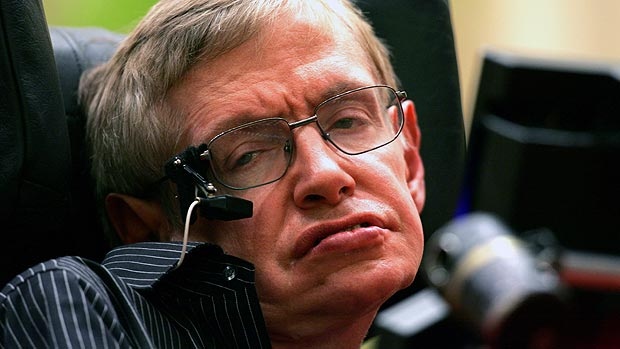
blackholeA recent paper published by Hawking, in which he reversed himself on several of his previous theories about black holes, has created quite a stir. In fact, his new found opinions on the subject have been controversial to the point that Nature News declared that there is no such thing as black holes anymore. This, however, is not quite what Hawking has claimed.

But it is clear that Hawking, one of the founders of modern theories about black holes, now believes that he he may have been when he first proposed his ideas 40 years ago. Now, he believes that black holes may NOT be the the final graveyard for matter that gets sucked in by the gravitational pull caused by a collapsing star, or that they prevent light from escaping.

stephen_hawkingBasically, he was wrong in how he attempted to resolve the paradox of black holes, because apparently they don’t exist. It all comes down to what is known as the “firewall paradox” for black holes.  The central feature of a black hole is its event horizon, the point of no return when approaching a black hole.  In Einstein’s theory of general relativity, the event horizon is where space and time are so warped by gravity that you can never escape.


This one-way nature of an event horizon has long been a challenge to understanding gravitational physics.  For example, a black hole event horizon would seem to violate the laws of thermodynamics, which state that nothing should have a temperature of absolute zero.  Even very cold things radiate a little heat, but if a black hole traps light then it doesn’t give off any heat and would have a temperature of zero.

quantum_entanglementThen in 1974, Stephen Hawking demonstrated that black holes do radiate light due to quantum mechanics. In quantum theory, the exact energy of a system cannot be known exactly, which means it’s energy can fluctuate spontaneously so long as its average remains constant. What Hawking demonstrated is that near the event horizon, pairs of particles can appear where one becomes trapped while the others escape as radiation.


While Hawking radiation solved one problem with black holes, it created another problem – aka. the firewall paradox. When quantum particles appear in pairs, they are entangled; but if one particle is captured by the black hole, and the other escapes, then the entangled nature of the pair is broken. In quantum mechanics, the particle pair would be described as in a “pure state”, and the event horizon would seem to break that state.

blackhole_birthLast year it was shown that if Hawking radiation is in a pure state, then either it cannot radiate in the way required by thermodynamics, or it would create a firewall of high energy particles near the surface of the event horizon.  According to general relativity, if you happen to be near the event horizon of a black hole you shouldn’t notice anything unusual.

In his latest paper, Hawking proposed a solution to this paradox by proposing that black holes don’t have event horizons. Instead they have apparent horizons that don’t require a firewall to obey thermodynamics, hence the declaration of “no more black holes” in the popular press. However, all these declarations may be a bit premature, as the problem Hawking’s sought to address may not exist at all.

black-holeIn short, the firewall paradox only arises if Hawking radiation is in a pure state. And in a paper presented last month by Sabine Hossenfelder of Cornell University shows that instead of being due to a pair of entangled particles, Hawking radiation is due to two pairs of entangled particles. One entangled pair gets trapped by the black hole, while the other entangled pair escapes.

The process is similar to Hawking’s original proposal, but the Hawking particles are not in a pure state, which means there’s no paradox to be had.  Black holes can radiate in a way that agrees with thermodynamics, and the region near the event horizon doesn’t have a firewall, just as general relativity requires.  So basically, Hawking’s proposal is a solution to a problem that doesn’t exist.

FTL_MEWith black holes, its always two step forwards, one step back. And this is hardly the only news in recent months when it comes to these mysterious and confounding phenomena. I imagine that the new theory from MIT, which states that wormholes may exist between black holes and be responsible for quantum entanglements (and resolve the problem of how gravity works) may also need revision next!

Too bad too. I was so looking forward to a universe where FTL wasn’t junk science…

Sources: universetoday.com, cbc.ca

The Future of Medicine: New Blood-Monitoring Devices

medtechNon-invasive medicine is currently one of the fastest growing industries in the world. Thanks to ongoing developments in the fields of nanofabrication, wireless communications, embedded electronics and microsensors, new means are being created all the time that can monitor our health that are both painless and hassle-free.

Consider diabetes, an epidemic that currently affects 8% of the population in the US and is growing worldwide. In October of 2013, some 347 million cases were identified by the World Health Organization, which also claims that diabetes will become the 7th leading cause of death by 2030. To make matters worse, the conditions requires constant blood-monitoring, which is difficult in developing nations and a pain where the means exist.

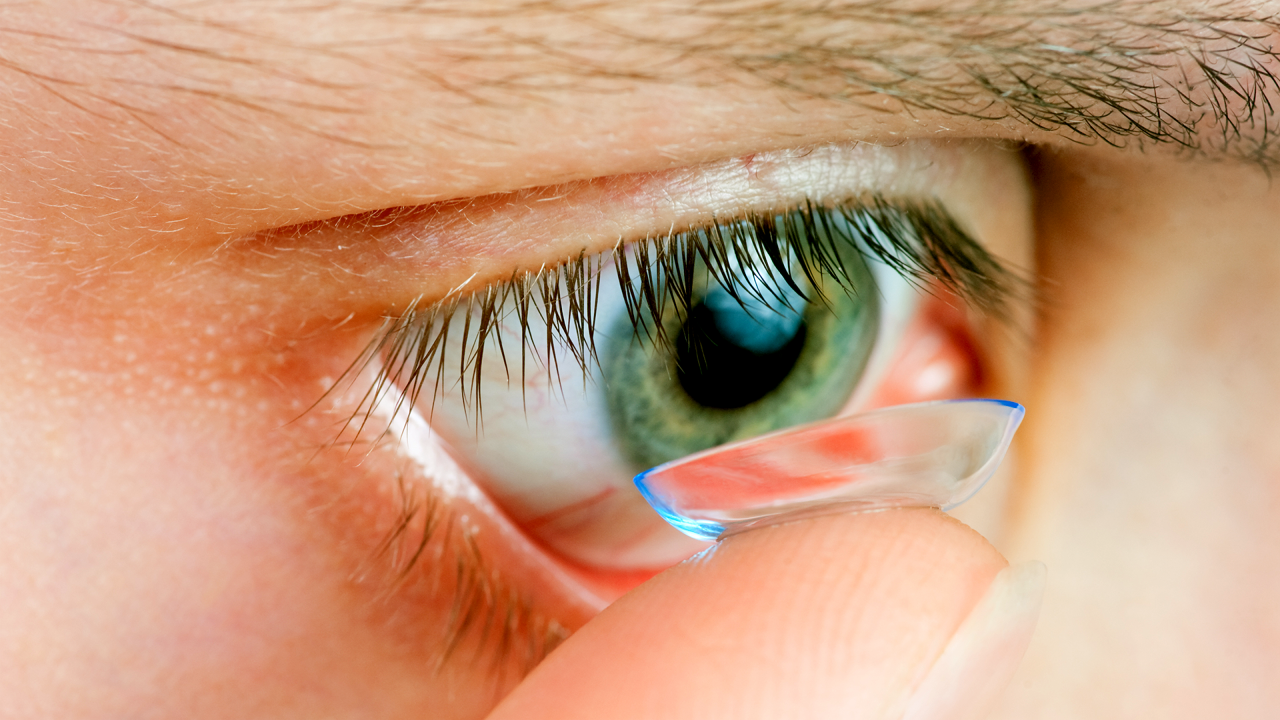
google_lensesHence why medical researchers and companies are looking to create simpler, non-invasive means. Google is one such company, which back in January announced that they are working on a “smart” contact lens that can measure the amount of glucose in tears. By merging a mini glucose sensor and a small wireless chip into a set of regular soft contact lenses, they are looking to take all the pin-pricks out of blood monitoring.

In a recent post on Google’s official blog, project collaborators Brian Otis and Babak Parviz described the technology:

We’re testing prototypes that can generate a reading once per second. We’re also investigating the potential for this to serve as an early warning for the wearer, so we’re exploring integrating tiny LED lights that could light up to indicate that glucose levels have crossed above or below certain thresholds.

And Google is hardly alone in this respect. Due to growing concern and the advancements being made, others are also looking at alternatives to the finger prick, including glucose measures from breath and saliva. A company called Freedom Meditech, for example, is working on a small device  that can measure glucose levels with an eye scan.

I_Sugar_X_prototype1Their invention is known as the I-SugarX, a handheld device that scans the aqueous humor of eye, yielded accurate results in clinical studies in less than four minutes. John F. Burd, Ph.D., Chief Science Officer of Freedom Meditech, described the process and its benefits in the following way:

The eye can be thought of as an optical window into to body for the painless measurement of glucose in the ocular fluid as opposed to the blood, and is well suited for our proprietary optical polarimetric based measurements. Based on the results of this, and other studies, we plan to begin human clinical studies as we continue our product development.

Between these and other developments, a major trend towards “smart monitoring” is developing and likely to make life easier and cut down on the associated costs of medicine. A smart contact lens or saliva monitor would make it significantly easier to watch out for uncontrolled blood sugar levels, which ultimately lead to serious health complications.

I_Sugar_X_prototype2But of course, new techniques for blood-monitoring goes far beyond addressing chronic conditions like diabetes. Diagnosing and controlling the spread of debilitating, potentially fatal diseases is another major area of focus. Much like diabetes, doing regular bloodwork can be a bit difficult, especially when working in developing areas of the world where proper facilities can be hard to find.

But thanks to researchers at Rice University in Houston, Texas, a new test that requires no blood draws is in the works. Relying on laser pulse technology to create a vapor nanobubble in a malaria-infected cell, this test is able to quickly and non-invasively diagnose the disease. While it does not bring medical science closer to curing this increasingly drug-resistant disease, it could dramatically improve early diagnosis and outcomes.

malaria-blood-free-detectorThe scanner was invented by Dmitro Lapotko, a physicist, astronomer, biochemist, and cellular biologist who studied laser weapons in Belarus before moving to Houston. Here, he and his colleagues began work on a device that used the same kind of laser and acoustic sensing technology employed on sub-hunting destroyers, only on a far smaller scale and for medical purposes.

Dubbed “vapor nanobubble technology,” the device combines a laser scanner and a fiber-optic probe that detect malaria by heating up hemozoin – the iron crystal byproduct of hemoglobin that is found in malaria cells, but not normal blood cells. Because the hemozoin crystals absorb the energy from the laser pulse, they heat up enough to create transient vapor nanobubbles that pop.

malariaThis, in turn, produces a ten-millionth-of-a-second acoustic signature that is then picked up by the device’s fiber-optic acoustic sensor and indicates the presence of the malaria parasite in the blood cells scanned. And because the vapor bubbles are only generated by hemozoin, which is only present in infected cells, the approach is virtually fool-proof.

In an recent issue of Proceedings of the National Academy of Sciences, Lapotko and his research team claimed that the device detected malaria in a preclinical trial on mice where only one red blood cell in a million was infected with zero false positives. In a related school news release, the study’s co-author David Sullivan – a malaria clinician a Johns Hopkins University – had this to say about the new method:

The vapor nanobubble technology for malaria detection is distinct from all previous diagnostic approaches. The vapor nanobubble transdermal detection method adds a new dimension to malaria diagnostics, and it has the potential to support rapid, high-throughput and highly sensitive diagnosis and screening by nonmedical personnel under field conditions.

At present, malaria is one of the world’s deadliest diseases, infecting hundreds of millions of people a year and claiming the lives of more than 600,000. To make matters worse, most the victims are children. All of this combines to make malaria one of the most devastating illness effecting the developing world, comparable only to HIV/AIDS.

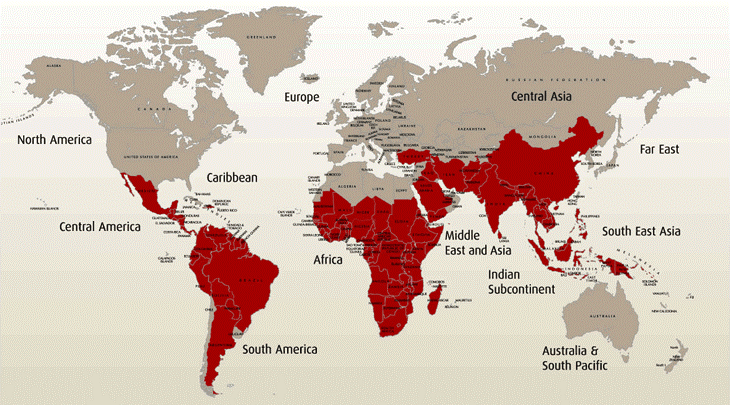
malaria_worldwideBy ensuring that blood tests that could detect the virus, and require nothing more than a mobile device that could make the determination quickly, and need only a portable car battery to power it, medical services could penetrate the once-thought impenetrable barriers imposed by geography and development. And this in turn would be a major step towards bringing some of the world’s most infectious diseases to heel.

Ultimately, the aim of non-invasive technology is to remove the testing and diagnostic procedures from the laboratory and make them portable, cheaper, and more user-friendly. In so doing, they also ensure that early detection, which is often the difference between life and death, is far easier to achieve. It also helps to narrow the gap between access between rich people and poor, not to mention developing and developing nations.

Sources: fastcoexist.com, news.cnet.com, businesswire.com, googleblogspot.ca, who.int

The Future of Warfare: Iron Man is Coming!

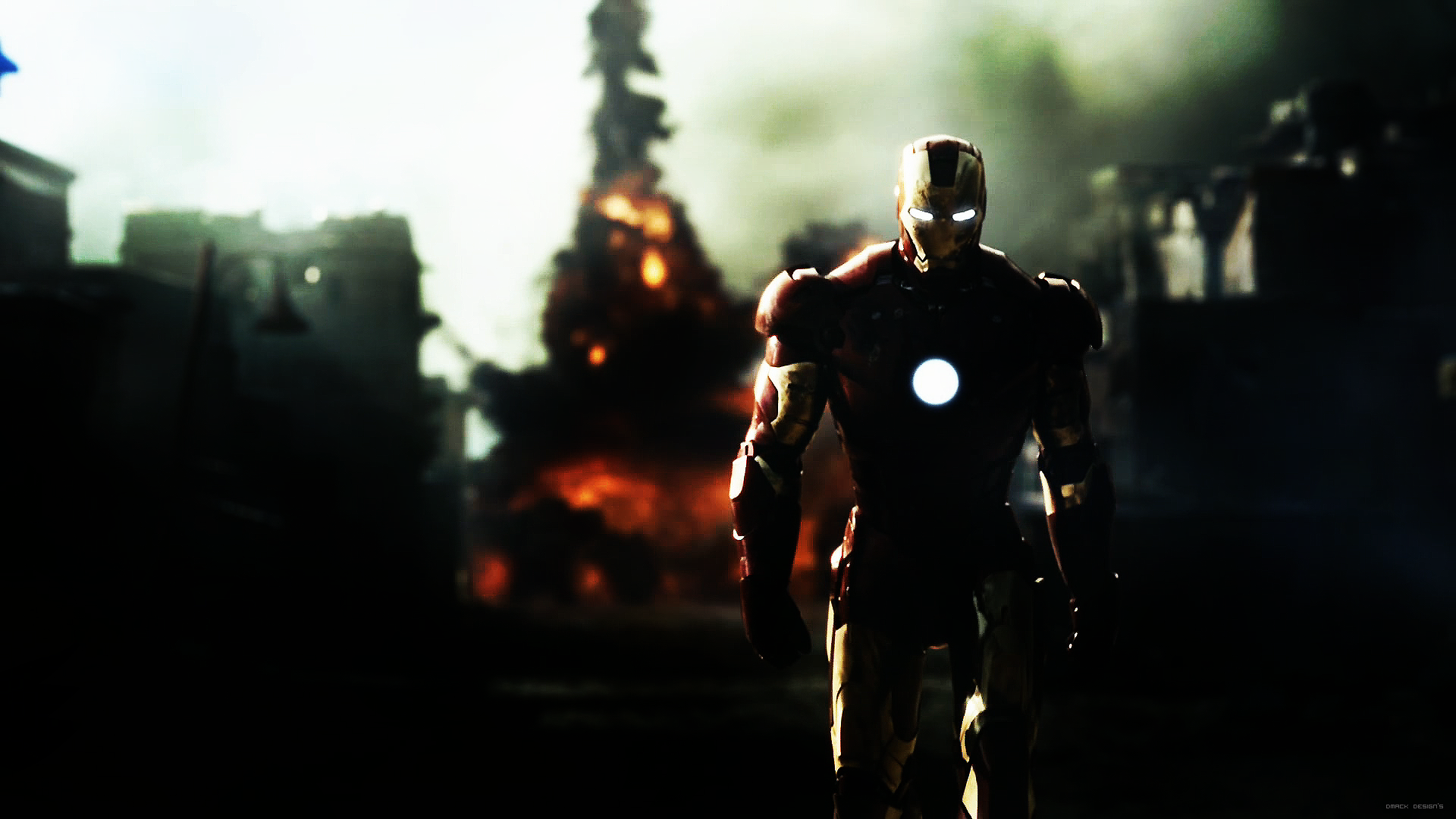
iron_man_suitsAccording to a report filed last Tuesday by the US Navy’s top SEAL, the ambitious plan to build a high-tech armored suit for elite commandos has entered a new phase. After years of development, the military is preparing to analyze three new design concepts, and will begin receiving prototypes of these “Iron Man” suits by the summer.

Adm. William McRaven, commander of U.S. Special Operations Command, said the military will receive the prototypes by June. This project, which was started last year, aims to revolutionize the capabilities and protection of Navy SEALs, U.S. Army Special Forces, and other elite commandos who perform some of the U.S.’s most dangerous and violent missions.

TALOSOfficially known as the Tactical Assault Light Operator Suit (TALOS) – named after the Greek automaton made by Zeus to protect Europa – the designs have already been nicknamed the “Iron Man” suit. Obviously, the name is a nod to all the futuristic technology that powers the suit, including a powered exoskeleton, liquid armor, built-in computers and night vision, and the ability to monitor vital signs and apply wound-sealing foam.

However, there’s a catch with the prototypes. According to McRaven, who addressed reporters at a special operations conference in Washington. the prototypes will be unpowered. As it stands, no known means exists to provide a powered armor suit with the kind of electricity it would need without resorting to a gas-powered generator, or connecting the suit to the local grid.

Warrior_Web_Concepts_WideAs he explained, the challenge of finding a way to power a suit that is portable and ergonomic remains:

Obviously if you’re going to put a man in a suit – or a woman in a suit – and be able to walk with that exoskeleton… you’ve got to have power. You can’t have power hooked up to some giant generator.

Essentially, this means that the days of a genuine “Iron Man” suit are still years away. Best-case scenario, the admiral wants the suit to be used in combat situations by August 2018. Still, he also emphasized the “astounding results” that has been observed in the project so far. The prototypes in assembly now will be evaluated, with the results incorporated into the suits the U.S. will eventually deploy to the battlefield.

ghost_recon_future_soldier-1920x1080It’s unclear what the total price of the project may be, but McRaven said he would like to offer a $10 million prize to the winner in a competition. That hasn’t happened yet, but it’s likely the cost of developing the suit would be many times that, most likely ranging into the billion-dollar bracket. But of course, McRaven thinks it will be worth every penny:

That suit, if done correctly, will yield a revolutionary improvement to survivability and capability for U.S. special operators… If we do TALOS right, it will be a huge comparative advantage over our enemies and give the warriors the protection they need in a very demanding environment.

The admiral said the project was inspired by a U.S. special operator who was grieving the loss of a comrade in combat.  Despite more than a decade of war in Iraq and Afghanistan, the U.S. still doesn’t have a way to adequately protect commandos who “take a door,” a reference to the controversial raids that kill and capture insurgents all over the globe.

iron_man_destructionAlready, SOCOM has predicted the suit will include futuristic liquid body armor that hardens when a magnetic field or electrical current is applied. This is the most futuristic aspect of the suit, giving the soldier flexibility, mobility, and providing superior protection against ballistic objects. It also will include wearable computers, communications antennae, and a variety of sensors that link it to its wearer’s brain.

By merging digital technology, wireless access to army communications, GPS satellites and databases, and upgraded targeting and protection into one package, a single commando unit will likely have the combat effectiveness of an entire platoon. And from all indications, it’s only a few years away. I imagine the US Special Forces will see a serious boost in recruitment once the suits are available.

And of course, there’s a concept video provided by the U.S. Army Research, Development and Engineering Command (RDECOM) showing what TALOS has to offer:


Sources: complex.foreignpolicy.com

The Future is Here: The Holodeck Video Trainer

VIPE1A current obsession of military planners is keeping up with the latest in battlefield challenges while also dealing with troop reductions and tightened budgets. Video games are one solution, providing soldiers with  training that does not involve real munitions or loss of equipment. Unfortunately, most of these games do not provide a real-world immersive feel, coming as close to the real thing as possible while still being safe.

Hence why the the Army Contracting Command enlisted the help of Northrop Grumman this past January to integrate their Virtual Immersive Portable Environment (VIPE) “Holodeck” into the US Army’s training program. Much like the CAVE2, a VR platform created by the Electronic Visualization Laboratory (EVL) at the University of Illinois, this latest holodeck is a step towards fully-realized VR environments.

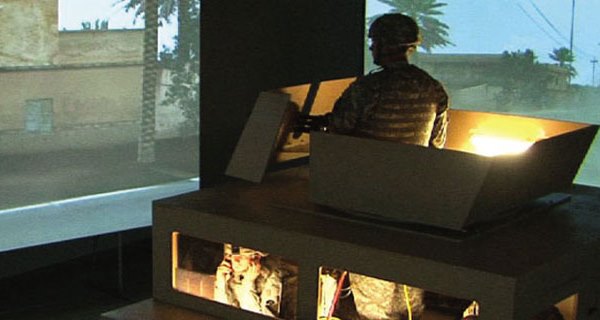
VIPE_HolodeckUsing commercial, off-the-shelf hardware combined with gaming technology, the VIPE Holodeck virtual training system provides users with a 360 degree, high-fidelity immersive environment with a variety of mission-centric applications. It can support live, virtual and constructive simulation and training exercises including team training, cultural and language training and support for ground, air and remote platform training.

Last year, the VIPE Holodeck took first place in the Federal Virtual Challenge – an annual competition led by the U.S. Army Research Laboratory’s Simulation and Training Technology Center – for the system’s Kinect integration navigation sensor, which gives users the ability to crawl, walk, run, stop, jump, and move side to side in the virtual environment.

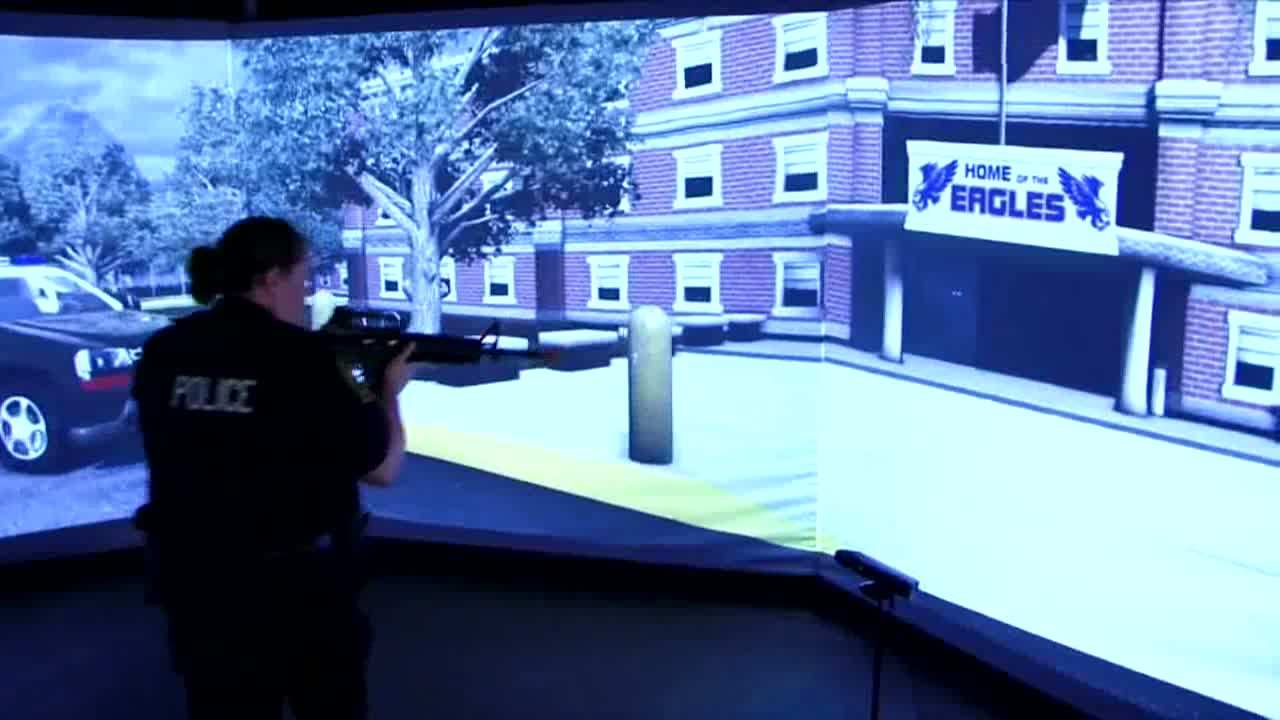
?????????????????????????????????According to Northrop, the VIPE Holodeck moves ahead of other virtual simulators thanks to its advanced situational training, where service members can walk through an area in the replicated virtual environment and prepare for what they may encounter in real life. This works not only for infantry and target practice, but for vehicle drivers and police officers looking to simulate various situations they are likely to encounter.

To enhance that training, operators can drop threats into the environment, including IEDs and enemy shooters, as well as signals that should tip them off to potential threats and see how they respond before they actually find themselves in that situation. This sort of versatile, multi-situational complexity is precisely what the Army is looking for.

VIPE3Brig. Gen. Michael Lundy, deputy commanding general at the Army Combined Arms Center, said during the AUSA Aviation symposium earlier this month:

For us to be able to execute realistic training — good training — we have to be able to bring that operational environment [into the virtual world]. We want to get away from having multiple environments, virtual gaming and instruction, and go to one synthetic environment, get to a lower overhead and integrate the full operations process … according to the common operating picture.

But looking ahead, the applications for this type of technology are virtually (no pun!) limitless, never mind the fact that we are realizing something directly out of Star Trek. Northrop says it’s also exploring options for VIPE as a stepping stone to live-training within the medical field, as well as law enforcement and first responders for situations such as live-shooter or hostage scenarios.

ESO2Immersive virtual reality also figures quite prominently in NASA’s and other space agencies plans for future exploration. Given that manned missions are expensive, time-consuming, and potentially dangerous, mission planners are investigating Telexploration as a possible alternative. Here, orbiters and rovers would transmit visual information in real-time, while VR decks would be used to give the appearance of being on location.

As Ryan Frost, Northrop’s program manager for the VIPE Holodeck, put it:

The great thing about virtual reality and gaming technology [is that] it’s moving so rapidly that really it has endless possibilities that we can do. If you can think it, we can create it, eventually.

And be sure to check out this video from Northrop Grumman showing the VIPE Holodeck in action:


Sources:
wired.com, northropgrumman.com

The Future of Transit: The Solar-Powered Jetliner

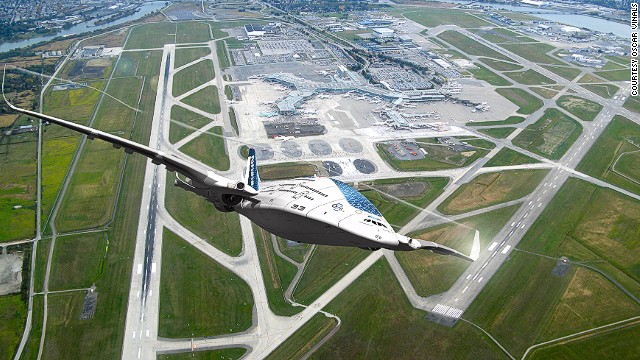
skywhale1Solar-powered airplanes have already proven feasible, but only in the sense of single-seat, turboprop powered plane.s When it comes to a long-range, commercial jet aircraft, the field remains pretty sparse so far. But thanks to a Spanish designer, and some unconventional thinking, “whale planes” that are eco-friendly and combine the convenience of air travel with the luxury of a cruise ship might soon be a reality.

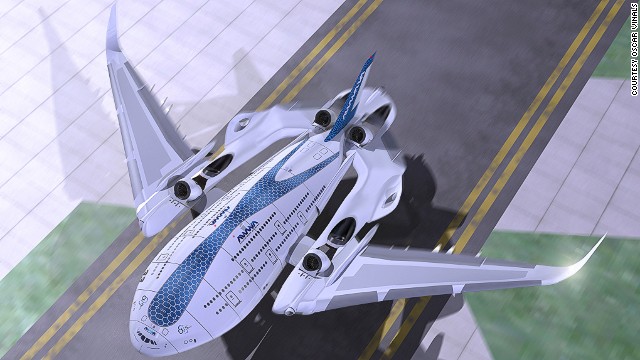
Oscar Viñals, from Barcelona, envisioned the “AWWA Sky Whale” concept plane as a mixture of today’s current designs and future concepts that don’t yet exist. The end result is like an Airbus A380, but with considerable expansion and designed to be powered by micro solar panels and four large hybrid electric engines that would rotate to ease takeoff and landing.

skywhale_specsIn addition to reducing noise and pollutants, it would also significantly reduce fuel burned during what is currently one of the least green modes of getting to a destination. Despite the introduction of more fuel-efficient and less polluting turbofan and turboprop engines, the rapid growth of air travel in recent years has contributed to increasing CO2 emissions in the upper atmosphere.

In fact, in the European Union alone, greenhouse gas emissions from aviation increased by a total of 87% between 1990 and 2006. In 2005, global aviation contributed roughly 5% to the overall “radiative forcing” effect that our annual emissions of CO2 have on Global Warning, but the added effects of water vapor and the disruption to cirrus cloud formations also enhances this role to a varying degree.

skywhale4One of the reasons aviation’s role in Climate Change is overlooked is because the focus tends to be on urban infrastructure and automobiles, which account for the vast majority of carbon emissions. But given the current trend of increasing travel, international economic development, and growth in tourist industries, aviation is likely to get a bigger slice of that pie down the road and clearer methods need to be devised.

Hence the concept for the Sky Whale, which Viñals imagines would come with other futuristic components . These include a self-healing skin with adaptable opacity, active wings that change shape as needed, and ceramic and fiber composite materials. He even has a plan for the plane to break apart on an emergency landing, with the wings separating from the fuselage to limit damage to the passenger compartment.

skywhale3The three-story aircraft, which could accomodate 755 passengers, would have a wingspan and height greater than any of today’s biggest carriers – 88 meters in comparison to the 80 meters on an Airbus A380-900 – making it the largest commercial aircraft in existence. However, the combination of active wings (which would also reduce drag) and the hybrid-electric systems would render it the most fuel efficient.

Another thing that Viñals imagines would make it into the design is virtual reality windows – aka. display glass that allows people to go online, watch movies, and experience in-flight entertainment simply by looking outside. Can’t imagine why this would be necessary, as the range of personal devices people are likely to have by this time ought to be entertainment enough. And failing that, the view should be enough to inspire!

skywhale5Naturally, much of this technology – particularly the healing smartskin – is still many years away. But judging by the reaction to his designs, there is definitely some hunger for innovation in how we fly. Given the range of ideas for mass transit (like the Hyperloop, podcars, etc.) and personal transit (robot cars, robotaxis), it’s only a matter of time before the way we fly becomes smarter, sleeker, and cleaner.

Sources: fastcoexist.com, cnn.com, gov.uk, europa.eu

Biomedical Breakthroughs: Bionerves and Restored Sensation

restoring_mobilityThese days, advances in prosthetic devices, bionic limbs and exoskeletons continue to advance and amaze. Not only are doctors and medical researchers able to restore mobility and sensation to patients suffering from missing limbs, they are now crossing a threshold where they are able to restore these abilities and faculties to patients suffering from partial or total paralysis.

This should come as no surprise, seeing as how the latest biomedical advances – which involve controlling robotic limbs with brain-computer interfacing – offer a very obvious solution for paralyzed individuals. In their case, no robotic limbs or bionic attachments are necessary to restore ambulatory motion since these were not lost. Instead, what is needed is to restore motor control to compensate for the severed nerves.

braingate1Thanks to researchers working at Case Western University in Ohio, a way forward is being proposed. Here, a biomedical team is gearing up to combine the Braingate cortical chip, developed at Brown University, with their own Functional Electric Stimulation (FES) platform. Through this combination, they hope to remove robots from the equation entirely and go right to the source.

It has long been known that electrical stimulation can directly control muscles, but attempts to do this in the past artificially has often been inaccurate (and therefore painful and potentially damaging) to the patient. Stimulating the nerves directly using precisely positioned arrays is a much better approach, something that another team at Case Western recently demonstrated thought their “nerve cuff electrode”.

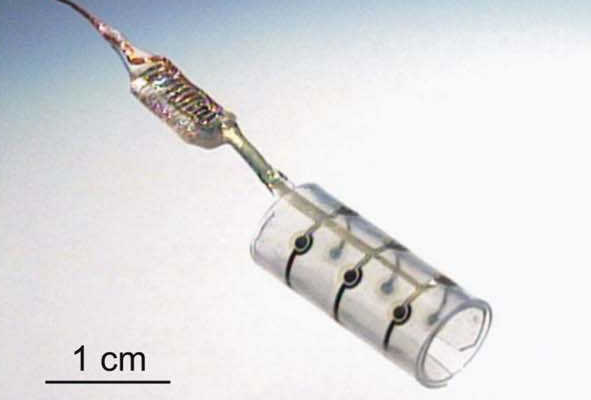
cuff-electrodeThis electrode is a direct stimulation device that is small enough to be placed around small segments of nerve. The Western team used the cuff to provide an interface for sending data from sensors in the hand back to the brain using sensory nerves in the arm. With FES, the same kind of cuff electrode can also be used to stimulate nerves going the other direction, in other words, to the muscles.

The difficulty in such a scheme, is that even if the motor nerves can be physically separated from the sensory nerves and traced to specific muscles, the exact stimulation sequences needed to make a proper movement are hard to find. To achieve this, another group at Case Western has developed a detailed simulation of how different muscles work together to control the arm and hand.

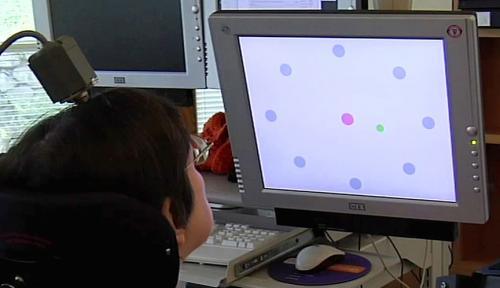
braingate2-img_assist_custom-500x288Their model consists of 138 muscle elements distributed over 29 muscles, which act on 11 joints. The operational procedure is for the patient to watch the image of the virtual arm while they naturally generate neural commands that the BrainGate chip picks up to move the arm. In practice, this means trying to make the virtual arm touch a red spot to make it turn green.

Currently in clinical trials, the Braingate2 chip is being developed with the hope of not only stimulating muscles, but generating the same kinds of feedback and interaction that real muscle movement creates. The eventual plan is that the patient and the control algorithm will learn together in tandem so that a training screen will not be needed at all and a patient will be able to move on their own without calibrating the device.

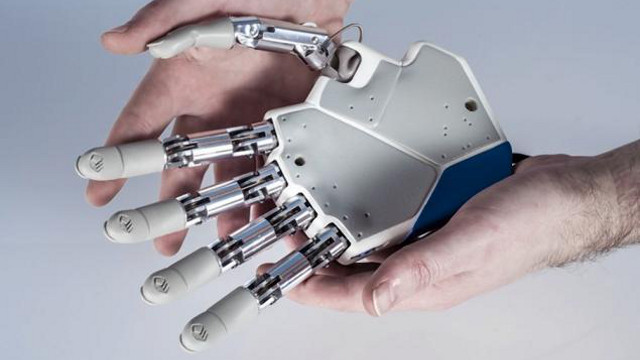
bionic-handBut at the same time, biotech enhancements that are restoring sensation to amputee victims are also improving apace. Consider the bionic hand developed by Silvestro Micerna of the École Polytechnique Fédérale de Lausanne in Switzerland. Unlike previous bionic hands, which rely on electrodes to receive nerve signals to control the hand’s movement, his device sends electronic signals back to simulate the feeling of touch.

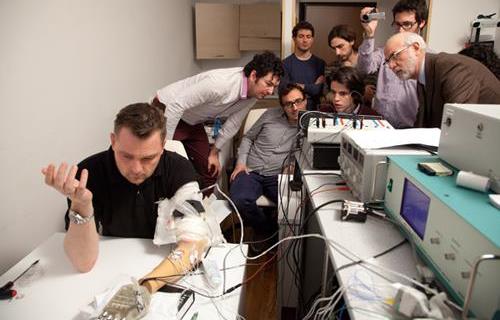
Back in February of 2013, Micerna and his research team began testing their bionic hand, and began clinical trials on a volunteer just last month. Their volunteer, a man named Dennis Aabo Sørensen from Denmark, lost his arm in a car accident nine years ago, and has since become the first amputee to experience artificially-induced sensation in real-time.

prosthetic_originalIn a laboratory setting wearing a blindfold and earplugs, Sørensen was able to detect how strongly he was grasping, as well as the shape and consistency of different objects he picked up with his prosthetic. Afterwards, Sørensen described the experience to reporters, saying:

The sensory feedback was incredible. I could feel things that I hadn’t been able to feel in over nine years. When I held an object, I could feel if it was soft or hard, round or square.

The next step will involve miniaturizing the sensory feedback electronics for a portable prosthetic, as well as fine-tuning the sensory technology for better touch resolution and increased awareness about the movement of fingers. They will also need to assess how long the electrodes can remain implanted and functional in the patient’s nervous system, though Micerna’s team is confident that they would last for many years.

bionic-hand-trialMicerna and his team were also quick to point out that Sørensen’s psychological strength was a major asset in the clinical trial. Not only has he been forced to adapt to the loss of his arm nine years ago, he was also extremely willing to face the challenge of having experienced touch again, but for only a short period of time. But as he himself put it:

I was more than happy to volunteer for the clinical trial, not only for myself, but to help other amputees as well… There are two ways you can view this. You can sit in the corner and feel sorry for yourself. Or, you can get up and feel grateful for what you have.

The study was published in the February 5, 2014 edition of Science Translational Medicine, and represents a collaboration called Lifehand 2 between several European universities and hospitals. And although a commercially-available sensory-enhanced prosthetic may still be years away, the study provides the first step towards a fully-realizable bionic hand.

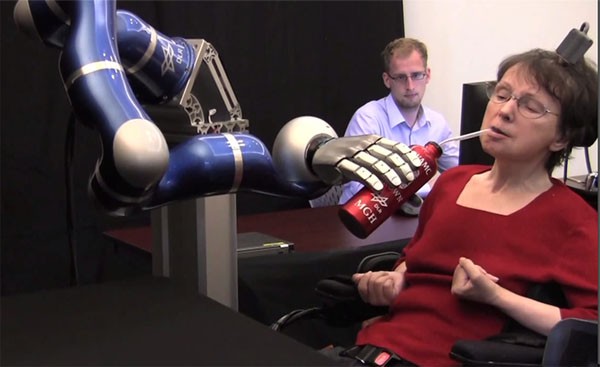
braingate_drinkassistYes, between implantable electronics that can read out brainwaves and nerve impulses, computers programs that are capable of making sense of it all, and robotic limbs that are integrated to these machines and our bodies, the future is looking very interesting indeed. In addition to restoring ambulatory motion and sensation, we could be looking at an age where there is no such thing as “permanent injury”.

And in the meantime, be sure to check out this video of Sørensen’s clinical trial with the EPFL’s bionic hand:


Sources:
extremetech.com, actu.epfl.ch, neurotechnology.com

Papa Zulu – Impending Release!

shutterstock_103Well, the day seems to finally be upon me. After six months of rereading, rewriting, and editing, Papa Zulu is set to be released in about a week’s time. While I was hoping to get it out in time for Valentine’s Day, a bit of deliberate irony on my part, I am pretty sure at this point that I will need a few extra days to make sure everything’s in order.

Wanting to avoid the same mistakes I made last time with early publication, I have opted for the slow road and I hope to maintain that until I’m sure the book is as polished as it can be. Needless to say, I am pretty happy with the end result and it has tested pretty well with those who’ve read it thus far. I’ve also taken the liberty of preparing advance copies for people who have agreed to give it an early review.

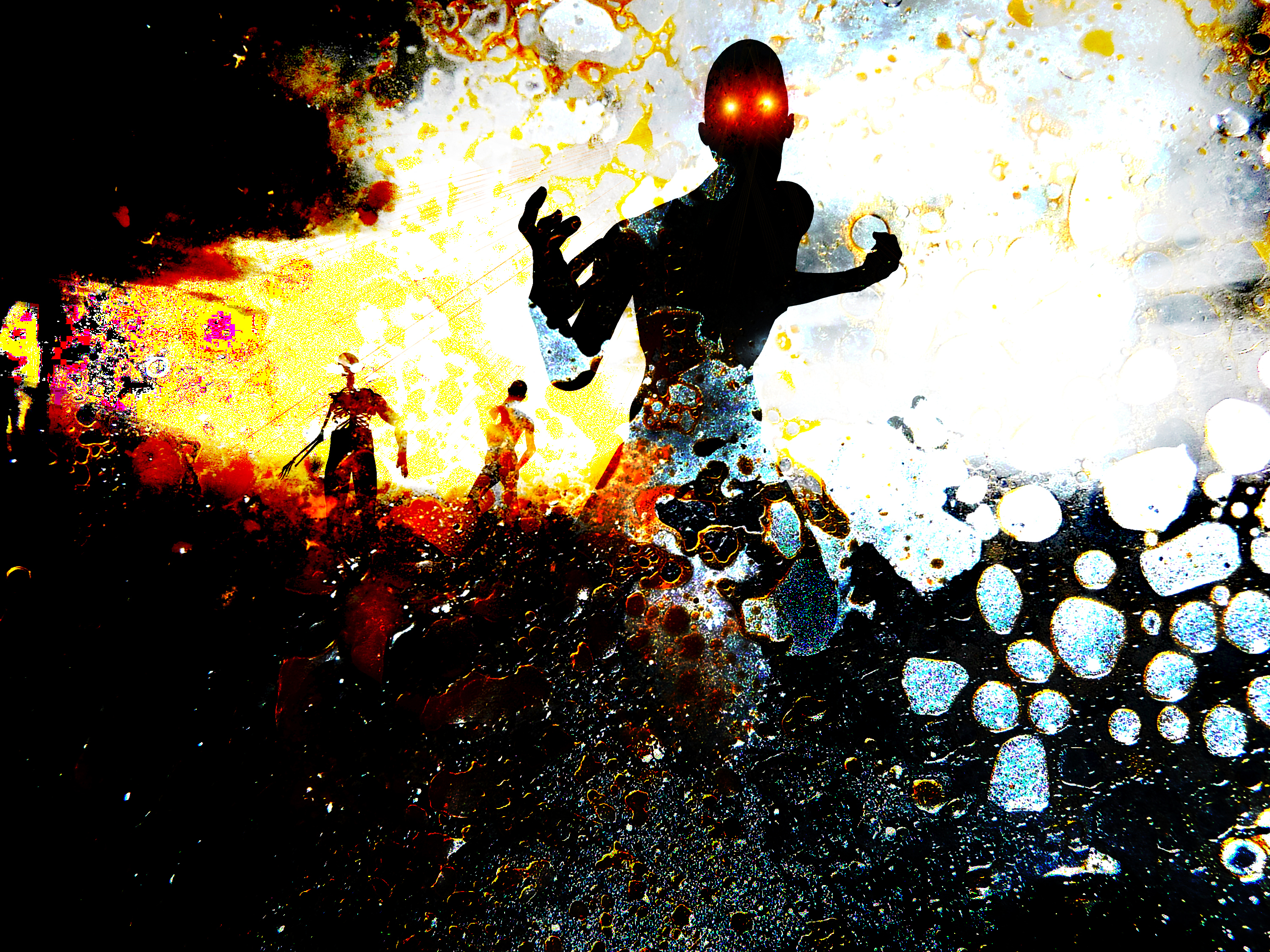
papa_zuluNeedless to say, the book picks up where the last left off, bringing new enemies into the fray and revealing new details about this post-apocalyptic world. Consistent with the Three Act Play scenario, the second book is where things go dark, the heroes are put in a harm’s way, and people die! If you want details, you’re going to have to red it…

So as you can imagine, I’m pretty excited! By this time next week, the long wait will be over and the sequel to Whiskey Delta will be published! And maybe then I will be able to get to penning the third installment without thinking I’m getting ahead of myself. In the meantime, I thought I’d share the cover art (above) and the promo trailer (below) one last time: