Game of Thrones – Season 3 Finale!

Game-of-Thrones-WallpaperThis is it! The third season climax, and the follow-up to the most bloody episode the show has ever produced! And naturally, the producers and writers weren’t done with us yet. As I’ve said repeatedly, there’s plenty of blood, intrigue, warfare, and at least one more wedding. And, to my surprise, the damn show featured some additional content from the Red Wedding, the stuff we only heard about in the book. Ugly, ugly stuff…

And after the past few episodes, there are a few threads that are coming together which need a good seasonal finish! These include Bran’s journey north, Arya’s ongoing attempts to get back to her family, Stannis and Melissandre’s campaign to make him king, Theon’s captivity, Jaime and Brienne’s escape from Harrenhal, and of course, the upcoming wedding! Alas, here’s what they chose to do about all that…

Mhysa:
got3_mhysa

The episode opens on the brutal and bloody scene that was the Red Wedding, where the Freys are mopping up the Stark forces and presenting Robb in a terrible mock display. Having cut off his head and sown the head of his direwolf on, they parade his body around on horseback chanting “King of the North!”. In  the yard, Arya (barely conscious) is forced to watch the display as Clegane carries her away.

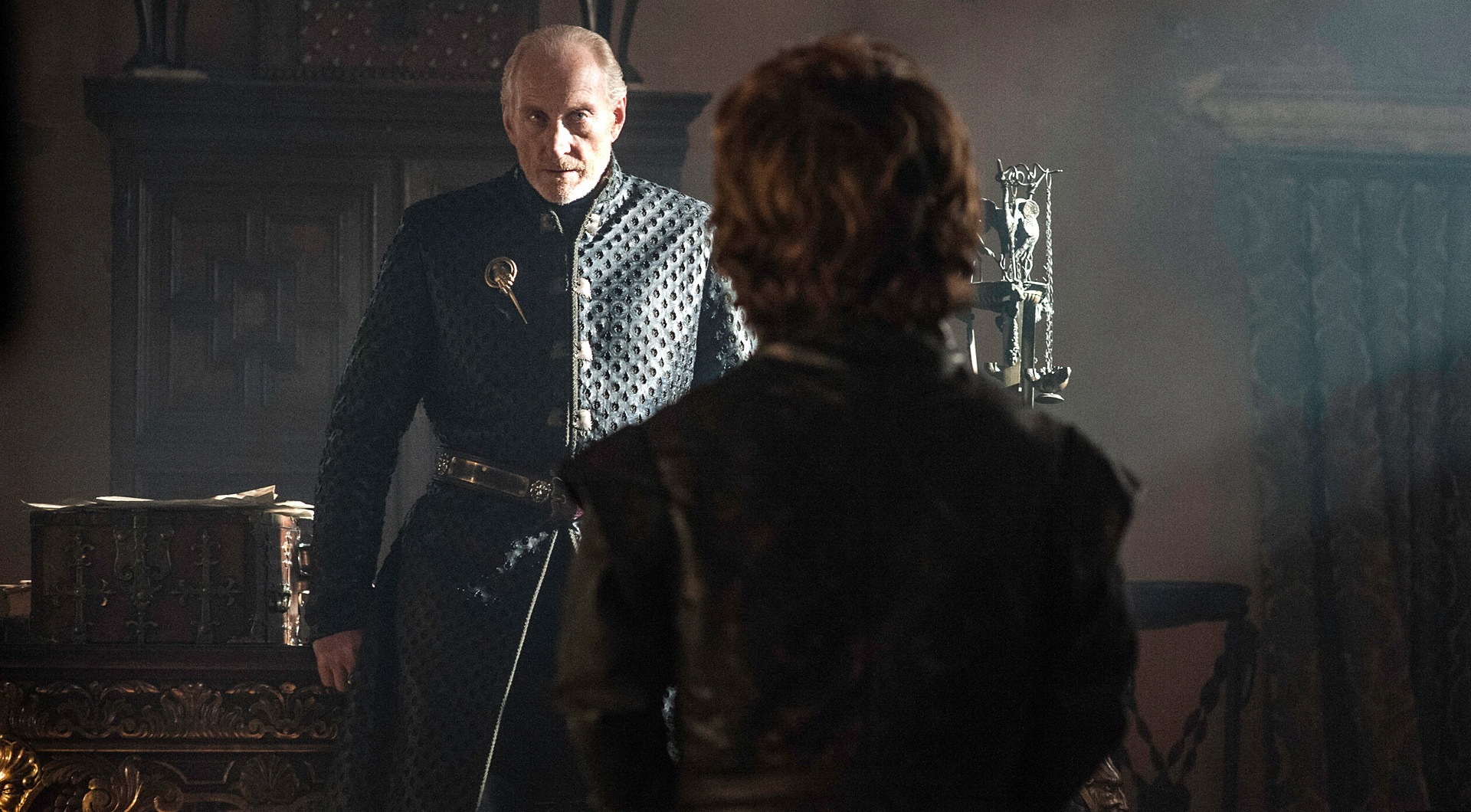
We then move to King’s Landing, where Tyrion is called to council by his father and learns of the news that Robb and Catelyn Stark are dead. Another argument breaks out between Joffrey and Tyrion, and threats are once again uttered. Afterward, Tywin and Tyrion speak privately where the former once again reiterates Tyrion’s need to produce an heir. Afterward, Jaime and Brienne comes at last to King’s Landing and he and Cersei have an amorous reunion…
got3_mhysa1

In the north, Bran, Hodor and the Reeds find their way to the Nightfort, just south of the wall. While they sleep, they begin to hear a terrible noise that they suspect is the ghost. However, it turns out to be Sam and Gilly, who have also just arrived at the Wall. Sam quickly realizes who Bran is and tells them he is John’s sworn brother. Bran asks for their help getting north, but Sam tells them they must all go to Castle Black. Bran and Jojen tell them he must go north, since only he has a chance at stopping the White Walkers.

Sam then shows them the blade he used to kill one, which Jojen identifies as Dragonglass. He distributes other heads from the collection he found, and tells them there are many more out there. They part company then, with Sam and Gilly heading to Castle Black, and Sam showing them to the tunnel they used so they may go north of the Wall.
got3_mhysa4

Not far away, Ygritte meets up with John Snow again. He tells her he must go home, despite his love for her. She manages to hit him with three arrow, but John still manages to ride away safely. He arrives at Castle Black shortly thereafter, wounded but alive, and is carried inside. At around the same time, Sam and Gilly come before Maester Aemon and tell him of what’s happened. Aemon grants asylum to Gilly and her son (whom she’s named Sam), and asks Sam to take letters calling for aide from every corner of the Realm…

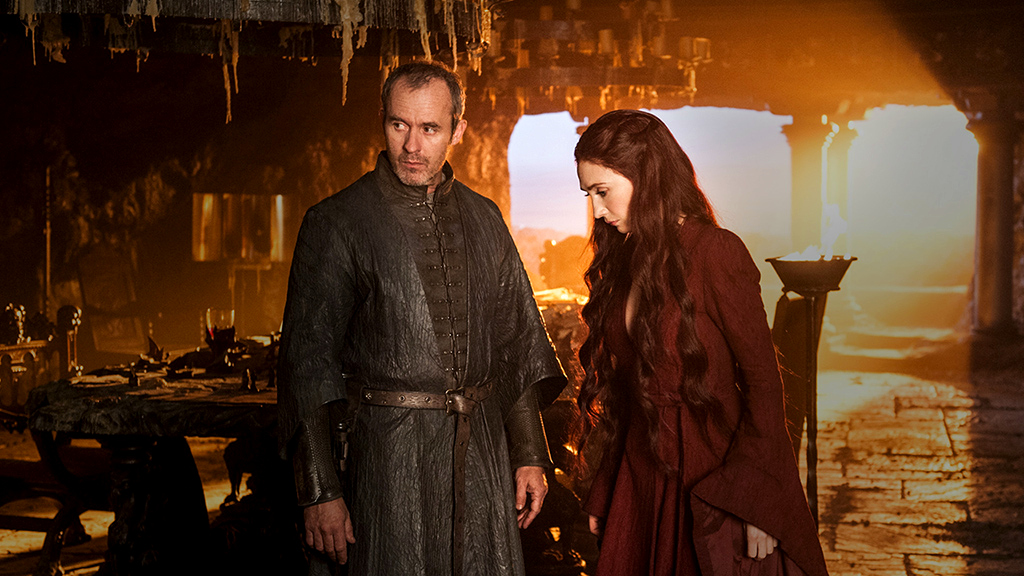
At Dragonstone, Stannis receives word of Robb’s death as well, and Melissandre claims this was due to her ritual. Stannis is now double convinced of the need to sacrifice Gendry. Making his way to the dungeon, Davos frees Gendry, sets him off in a lifeboat, and tells him to make for King’s Landing and never look back. Stannis sentences him to die, but Davos presents him with the letter from the Wall and tells him of the contents. Melissandre confirms the truth of it by looking into her fires, and Davos is spared.

got3_mhysa3

At the Twins, Walder Frey enjoys his victory and toasts the death of all the high lords who looked down at him and are now dead. They also celebrate their new positions – now that House Frey is gone Walder is to become warden of the Riverlands, while Bolton is to become warden of the north. The subject of Ramsay comes up, and it is revealed that he is the one who is now holding Theon…

We also get to see Theon at the Dreadfort, who is in the midst of suffering from Ramsay’s latest cruelty. In addition to removing one of his fingers and crippling a foot, he has apparently removed his manhood too now. After cruelly jesting about his latest act in front of him, Theon begs for death, but Ramsay claims they still need him. He also confers a new name on him since Theon no longer seems appropriate: Reek.

got3_mhysa2

We then move to the Iron Islands, where Balon Greyoy receives a letter from Ramsay. He issues an ultimatum, telling him to remove all his forces from the north. To make his point, he also sends the remains of Theon’s “favorite toy” – aka. his manhood, and threatens to send him more pieces unless he leaves. Balon is unmoved, and chooses to press on, but Asha defies him and says she is taking a ship and their best warriors and going to the Dreadfort to save him.

On the road, Arya and Clegane come upon a small camp of Frey men who are boasting about her mother’s death. Arya hears one of the men talking about how he stitched the wolf’s head on her brother, and approaches them. Offering one of the men the coin Jaqen H’gar gave her, she forces him to bend over to pick it up, and then stabs him in the neck. Clegane steps in to kill the others, and Arya retrieves her coin and remembers what H’gar told her about coming to Bravos.

got3_mhysa6

At Yunkai, Daenerys and her armies are welcomed by the people for the first time. Their greeting party consists of countless freed slaves, who begin chanting “Mhysa” to her as one. She learns that the name means “Mother” in Old Ghiscari, which the slaves have taken to calling her. She commands her dragons to fly and begins walking amongst the people, who lift her up and begin carrying her on their shoulders.

The episode ends with an aerial shot, showing Daenery’s dragons circling the crowd of thousands of freed people as they hold her above and chant her new name…

Summary:
Not a bad way to end the season, though I have to say I was a little disappointed. After the “Rains of Castamere” episode, I suspected they would end the season with the other major wedding and the first of many showdowns that take place at the Wall. But since they didn’t get into any of that, I’m forced to hold my tongue and avoid any spoilers until next season! Which, by the way, is not until sometime next year…

Sure, it’s a wise policy to keep all those good nuggets until season 4, but it did make for a pretty thin season finale. After the massive bloodfest last week, this episode felt like little more than winding up. What’s more, I know for a fact that much of this episode was mere padding – stuff that wasn’t even in the book and was just thrown in to pace things out. Everything from Theon’s captivity, Asha’s decision to rescue him, to and the many, many conversations between secondary characters. All filler.

But I can’t complain too much. Most of the scenes from this episode did provide relevant information and plot development. And they did bring the season down after a terrible 11th hour high. And some of the content, which was only conveyed through dialogue and narration in the book, was illustrated quite nicely here. I’m thinking mainly of the scene with Robb’s corpse. Though horrid, the production of that scene was quite good! Fucking Freys!

And though I’ve complained repeatedly about them throwing in the scenes with Theon, the part about Ramsay giving him his new “name” was kind of neat. Here too, we see material which doesn’t come up until book five, but which becomes highly relevant by then. I suppose filling in the backstory so we’re not lost later does kind of make sense…

Still, waiting a whole year for another season. It’s kind of criminal, really! Yes I know that a big-budget show like this doesn’t happen overnight, but remember the criminally long wait for this last season? Remember the kind of memes it inspired, like this gem:

got_memeThat’s right! But there might be a silver lining, like if Martin somehow produces the sixth book in the series between now and then… Ha! Yeah, right! See you next season!
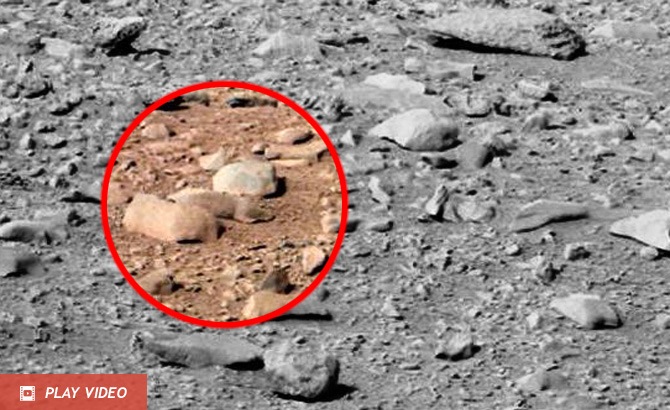
News From Mars: Curiosity Leaving “Mars Rat” Behind

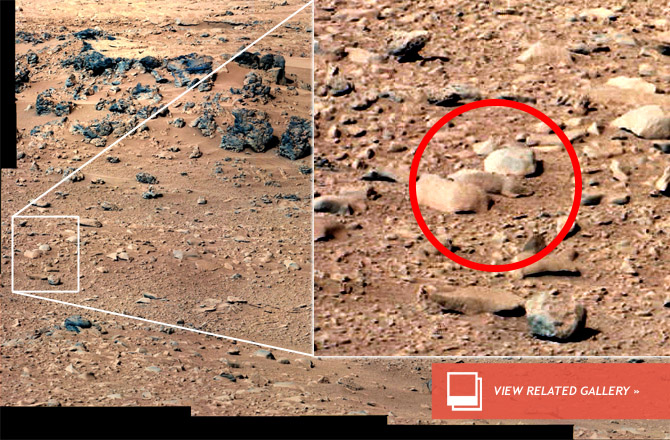
mars_ratIt seems that a new field of study was threatening to emerge with the “discovery” of what appeared to be a Martian rat. The technical term for it is Martian mammology, the study of mammals that are native to Mars. Luckily, proponents of this field did not manage to overpower the good people at NASA, who remain dedicated to serious scientific research. And now, the Curiosity rover is moving on to study bigger and better things.

Yes, the appearance of this would-be rodent did generate a lot of buzz on the internet of late, with some UFO buffs claiming that it may be an indigenous Red Planet lifeform or an Earth rodent Curiosity carried to Mars as part of a secret experiment. But Curiosity scientists were relatively certain that the rat, which was spotted in a zoomed-in portion of a photo taken by the rover in September 2012, was just a rock.

mars_rat1Curiosity deputy project scientist Joy Crisp, of NASA’s Jet Propulsion Laboratory in Pasadena, Calif., told reporters on Wednesday, June 5, what they believed the curiously-shaped rock was the result of:

Clearly, it results from, you know, a lot of things like wind erosion and mechanical abrasion and breakdown chemical weathering of the rocks, as to why they get these weird shapes.

Under the circumstances, NASA does not feel the need to conduct any further studies. And the window to do so will last just a few more weeks, as the Curiosity rover is set to begin an epic drive that will take it far away from the petrified rodent. At the moment, the robot is gearing up for a year-long trek that will take it to the base of Mount Sharp, a mysterious mountain that rises 5.5 km (3.4 miles) into the Red Planet sky.

mars_faceCuriously (no pun!), this is not the first time people have seen faced in the rock surfaces of Mars. Remember the elusive “Face on Mars”? Originally taken by the Viking 1 spacecraft in 1976, this low-resolution picture of the Cydonia region of Mars ignited the imaginations of people all over the world. For years, the face was mentioned in feature films, television series’, video games, comics, and even pop music.

Even after a series of high-resolution photos – taken some twenty years later by a succession of space craft – proved it to just be a simple rock formation, many people still insisted that the “face” was real and proved the existence of intelligent life on Mars. And such examples are hardly reserved to the Red Planet. Every year, there are stories of people witnessing “miracles” as divine visions appear to them in seemingly random objects, either of religious figures or personal heroes.

pareidoliaIt’s whats known as pareidolia, a psychological phenomenon which refers to the human brain’s tendency to spot familiar things in random images. According to Crisp, this is not necessarily a bad thing. In truth, she claims NASA scientists get amused when this happens:

It’s fun in a way, too, in that it will attract a lot of the public to look at the images and learn a little bit about Mars by pulling them in this way.

So much like people seeing the Virgin Mary in a wall-stain, Mother Teresa in a cinnamon bun, or the face of Jesus and/or Elvis in their grilled cheese sandwich, the Mars Rat is likely to be with us for awhile yet. Perhaps he’ll go beyond the current internet meme and start a trend, with t-shirts and apparel for all. All he needs is a slogan: “Mars Rat Says ‘That’s My Cheese!'” …I’ll work on it 😉

Source: space.com

News From Mars: Revelations on Radiation

mars_astronauts1As the projected date for a manned mission to the Red Planet approaches, the Mars Science Laboratory and Curiosity team continue to conduct vital research into what a human team of explorers can expect to find. Unfortunately, earlier last month, that research led to a discouraging announcement which may force NASA and a number of private companies to rethink their plans for manned missions.

Earlier in May, a number of scientists, NASA officials, private space company representatives and other members of the spaceflight community gathered in Washington D.C. for a three day meeting known as the Humans to Mars (H2M) conference. Hosted by the spaceflight advocacy group Explore Mars, the attendees met to discuss all the challenges that a 2030 manned mission would likely encounter.

mars_astronautsFor starters, the human race currently lacks the technology to get people to Mars and back. An interplanetary mission of that scale would likely be one of the most expensive and difficult engineering challenges of the 21st century. Currently, we don’t have the means to properly store enough fuel to make the trip, or a vehicle capable of landing people on the Martian surface. Last, and most importantly, we aren’t entirely sure that a ship will keep the astronauts alive long enough to get there.

This last issue was raised thanks to a recent confirmation made by the Curiosity rover, which finished calculating the number of high-energy particles that struck it during its eight month journey to Mars. Based on this data, NASA says that a human traveling to and from Mars could well be exposed to a radiation dose that is beyond current safety limits.

NASAsolar_radiationThis was performed with the rover’s Radiation Assessment Detector (RAD) instrument, which switched on inside as the cruise vessel began its 253-day, 560-million-km journey. The particles of concern fall into two categories – those that are accelerated away from our Sun and galactic cosmic rays (GCRs) – those that arrive at high velocity from outside of the Solar System. This latter category is especially dangerous since they impart a lot of energy when they strike the human body, can cause damage to DNA and are hard to shield against.

What’s more, this calculation does not even include time spent on the planet’s surface. Although Curiosity has already determined that planetary levels were within human tolerances, the combined dosage would surely lead to a fatal case of cancer for any career astronaut looking to take part in an “Ares Mission”. Cary Zeitlin from the Southwest Research Institute in Boulder, Colorado, and colleagues reported the Curiosity findings in the latest edition of Science magazine.

They claim that engineers will have to give careful consideration to the type of shielding that will need to be built into a Mars-bound crew ship. However, they concede that for some of the most damaging radiation particles, there may be little that can be done, beyond delivering them to Mars as quickly as possible. This presents an even greater challenge, which calls for the development of something better than existing propulsion technology. Using chemical propellants, Curiosity made the trip in eight months.

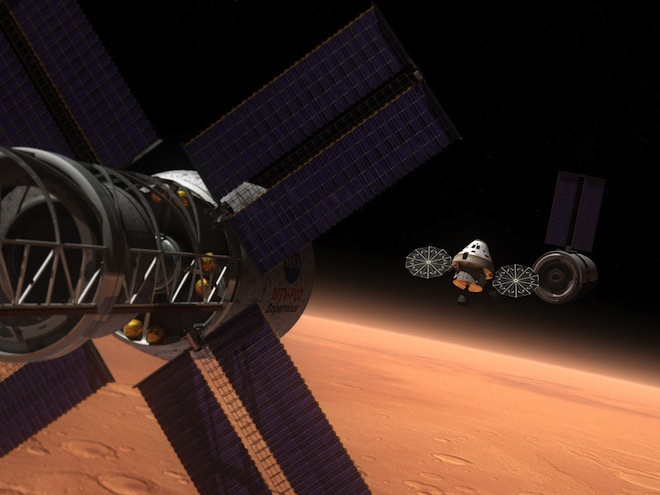
spaceX_elonmusk However, the good news is that at this juncture, nothing is technologically impossible about a manned Mars mission. It’s just a matter of determining what the priorities are and putting the time and money into developing the necessary tools. Right now NASA, other space agencies, and private companies are working to bring Mars within reach. And with time and further developments, who knows what will be possible by the time the 2020’s roll around?

Some alternatives include plasma and nuclear thermal rockets, which are in development and could bring the journey time down to a number of weeks. What’s more, SpaceX and other agencies are working on cheaper deliver systems, such as the grasshopper reusable rocket, to make sending ships into space that much more affordable. In addition, concepts for improving radiation shielding – like Inspiration Mars’ idea of using human waste – are being considered to cut down on the irradiation factor.

So despite the concerns, it seems that we are still on track for a Mars mission in 2030. And even if there are delays in the implementation, it seems as though a manned mission is just a matter of time at this point. Red Planet, here we come!

Sources: bbc.co.uk, wired.com

Latest Reviews!

Whiskey_Delta

Hey folks! It’s a new day and a new week. And during one of my many trips over to Amazon to see how my books were doing, I noticed that I picked up some additional reviews. As expected, they were a bit of a mixed bag, which seems to reflect the fact that the new edition is getting out there and earning its keep. On the other hand, some reviewers aren’t done with the 1st edition, and once again opinion is divided when it comes to how much they care about editing.

See for yourself. I’ve arranged the three latest in order from best to worst:

(5.0 out of 5 stars) fantastic read:
This was an absolutely fantastic read. Highly recommend for any fan of the zombie genre. There are some terrible spelling and grammatical errors, at least with the 1st edition, but nothing that detracted from the story nor made hard to read in my opinion.
Cannot wait to read more from this author!

-echOs

(4.0 out of 5 stars) Great Story and Characters:
Surprisingly good story of combat in a military responding to a frightening zombie infested world. Strong, consistent characterizations, great story lines, believable situations, and good use of humor. Delightfully without massive amounts of information regarding weapons and ammunition. An author worthy of continuing support. A 4 1/2 star book and a 5 star author. Kimohair

-Irish Kathleen

(2.0 out of 5 stars) Poorly written, not proof read and his editor simply didn’t do her job!!!!!
I thought this was the first book in the series no preface lended to my confusion – therefore the story starts off unfocused with no clear beginning! This is followed by a character development that is non-existent backed up with so many misspelt words that lends itself to drive the poor reader insane.

Sorry to say but each page has so many errors it makes it hard to follow the storyline, which is actually not bad. But makes reading this extremely frustrating.

In my not so humble opinion the writer did not do his homework in regards to military chain of command,terms and or squad tactics which was again frustrating.

Moreover for me his insistence on using abbreviated terms such as “mage” for major and his reliance on buzzwords such as “whiskey delta” is annoying to the point of nails on a chalkboard! This shows a lack of respect for the armed forces rank and an overall disregard to the readers intelligence.

I would suggest this writer spend some time with a seasoned older mentor while collaborating. Plus make sure you have a proof reader who actually reads your proofs – so you release something that is somewhat grammatically correct and free of spelling errors.

-Putty Tat “Tat”

Okay, so that was one stellar review, in spite of what I can only assume is the 1st edition’s share of editing mistakes, one good review without any mention of editing issues – assuming they read the 2nd edition – and the worst review I have received to date! In fact, this last one was originally one star out of five, but ol’ Putty there seemed fit to upgrade it two stars after a having a change of heart (said with only mild irony!)

So basically, it seems that things are looking up for this little work of indie fiction. Fingers crossed the sequel will be well received, consistently so!

The Future is Here: Liver-Cells Made With 3D Printer

bioprinterOngoing developments in 3D printing have allowed for some amazing breakthroughs in recent years. From its humble beginnings, manufacturing everything from 3D models and drugs to jewelry, the technology is rapidly expanding into the realm of the biological. This began with efforts to create printed cartilage and skin, but quickly expanded into using stem cells to create specific types of living tissues. And as it happens, some of those efforts are bearing some serious fruit!

One such example comes to us from California, where the San Diego-based firm Organova announced that they were able to create samples of liver cells using 3D printing technology. The firm presented their findings at the Experimental Biology conference in Boston this past April. In a press release, the company said the following:

We have demonstrated the power of bioprinting to create functional human tissue that replicates human biology better than what has come before.

3dstemcellsThe company’s researchers used a gel and “bioink” to build three types of liver cells and arranged them into the same kind of three-dimensional cell architecture found in a human liver. Although not fully functional, the 3D cells were able to produce some of the same proteins as an actual liver does and interacted with each other and with compounds introduced into the tissue as they would in the body.

This latest breakthrough places Organovo, indeed all biomedical research firms, that much closer to the dream of being able to synthesize human organs and other complex organic tissues. And they are hardly alone in narrowing the gap, as doctor’s at the University of Michigan made a similar advancement last year when they used a 3D printer to build a synthetic trachea for a child with a birth defect that had collapsed her airway.

bioprinted heartAs scientists get more familiar with the technology and the process of building shaped, organic cells that are capable of doing the same job as their natural counterparts, we are likely to be seeing more and more examples of synthetic organic tissue. In addition, its likely to be just a few more years before fully-functional synthetic organs are available for purchase. This will be a boon for both those looking for a transplant, as well as a medical system that is currently plagued by shortages and waiting lists.

And be sure to check out this CBC video of Keith Murphy, CEO of Organovo, explaining the process of bioprinting:


Sources:
cbc.ca, wired.com

Star Trek Into Darkness

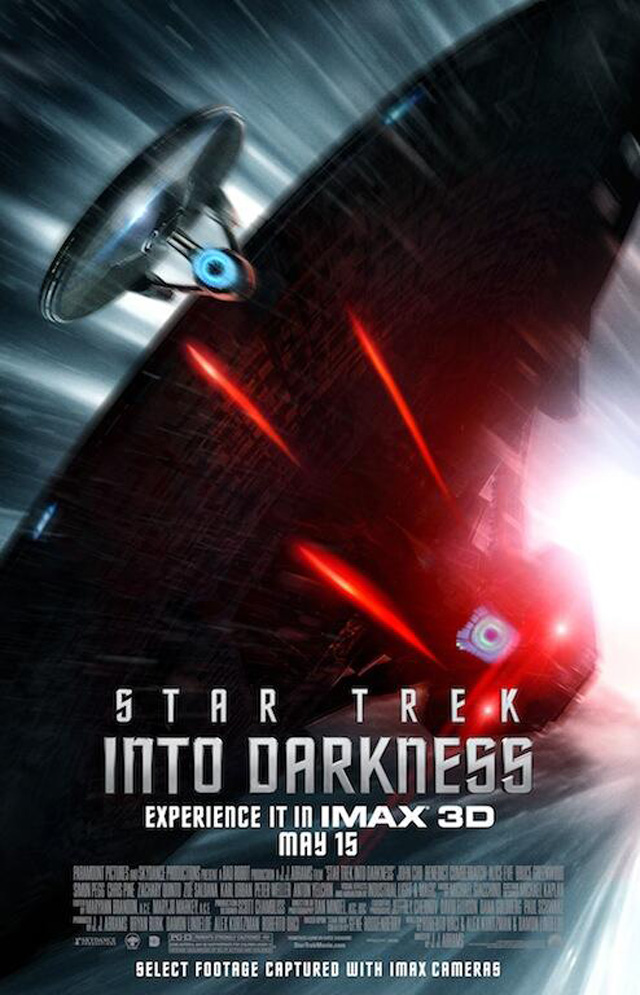
StarTrekIntoDarknessIMAXposterPTParamountHello folks! This weekend, I finally managed to get my butt to the movie theater to catch a summer blockbuster. It was the first time in months, perhaps a year, that the wife and I caught a movie on the big screen. And as my geekiness demanded, the movie we caught was the second installment in the J.J. Abrams relaunch of the classic franchise: Star Trek Into Darkness. And while I am obliged to provide a review, I am also bound by the spoiler code, so what I am about to say shall be as vague as I can possibly make it.

As I’m sure you all know, the second act in any series is meant to be the dark one. And while it is hard to top an event like the loss of an entire planet – Vulcan getting obliterated in the first film – this movie really did revolve around a certain downturn in the series. In addition to their being the concept of the enemy within, there is also the prospect of impending war, of vengeance overpowering good reason, and people sacrificing who and what they are in the process.

StarTrekIntoDarknessNot only did all this call to mind some of the larger ethical concerns arising out of the “War on Terror” – such as vengeance vs. justice, preemptive violence, and being rulec by fear – there was an even a dedication at the end of the film to all veterans who have served since September 11th, 2001. Apparently, this was because the makers knew the movie would be released in 2013, when many soldiers overseas would be returning home.

And of course, the movie was also an homage to the second installment in the original series. As I was forewarned going in, though not in any detail, this movie pays tribute to The Wrath of Khan in many places. While this was to be expected – I too suspected as much from several early hints – it did get a little tedious at times. After awhile, it didn’t so much feel like a wink and a nod as much as a repetitious pattern.

Still, the pace of the film, the big reveals, and the way it all played into the original story arc, but again with changes due to the temporal shift that took place in the first movie, all made for a very exciting and awesome experience. A couple of times I looked over to my wife and whispered “I knew it!”, and I quietly screamed my applause at the end. She laughed, I explained things to her, it was all good!

So if you haven’t seen it yet, and consider yourself a Trekkie, geek, fan of action sci-fi, or all of the above, get on out and catch this movie before the summer is out!

Cyberwars: Massive Government Surveillance Uncovered!

wire_tappingOn Friday, Washington DC found itself embroiled in controversy as revelations were made about the extent to which US authorities have been spying on Americans in the last six years. This news came on the heels of the announcement that the federal government had been secretly cataloging all of Verizon’s phone records. No sooner had the dust settled on that revelation that it became known that the scope of the Obama administration’s surveillance programs was far greater than anyone had imagined.

According to updated information on the matter, it is now known that The National Security Agency (NSA) and the FBI have been tapping directly into the central servers of nine leading U.S. Internet companies, extracting everything from audio and video chats, photographs, e-mails, documents, and connection logs that would enable their analysts to track foreign targets.

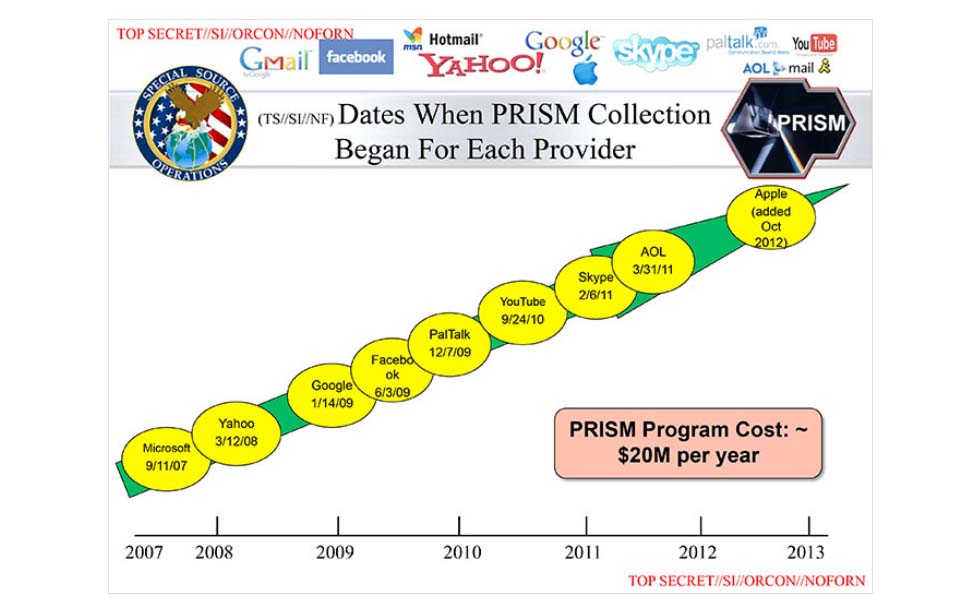
prism3This information was revealed thanks to a secret document that was leaked to the Washington Post, which shows for the first time that under the Obama administration, the communication records of millions of US citizens are being collected indiscriminately and in bulk – regardless of whether they are suspected of any wrongdoing. Equally distressing is the names being named: U.S. Service Providers such as Microsoft, Yahoo, Google, Facebook, PalTalk, AOL, Skype, YouTube, Apple.

The document further indicates that all of this has been taking place since 2007, when news disclosures, lawsuits and the Foreign Intelligence Surveillance Court forced then-president George W. Bush to look for new authority to justify his program warrantless domestic surveillance. It’s continuance and expansion under Obama has created a great deal of understandable intrigue, and not only because of promises made that “illegal wiretapping” would not take place under his watch.

prism1The joint FBI-NSA program responsible for mining all the data is known as PRISM, and it may very well be the first of its kind. While the NSA and FBI have a long history of monitoring suspects via phone records and computer activity, and are both accustomed to corporate partnerships that help it divert data traffic or sidestep barriers, such a vast program has never before been possible. In the current information age, there is an immense wealth of information out there, and where better to access all of this than in Silicon Valley?

Not long after the news broke in Washington, London’s Guardian reported that GCHQ, Britain’s equivalent of the NSA, also has been secretly gathering intelligence from the same internet companies through an operation set up by the NSA. According to the same leaked information, PRISM appears to allow the GCHQ to circumvent the formal legal process required in Britain to seek personal material such as emails, photos and videos from an internet company based outside of the country.

prism2But perhaps worst of all is the fact that this process is entirely above board, at least for the companies involved. Back in 2007, Congress passed the Protect America Act, and then in 2008 followed it up with the FISA Amendments Act, both of which immunized private companies that cooperated voluntarily with U.S. intelligence collection against prosecution. And late last year, when critics in Congress sought changes in the FISA Amendments Act, the only lawmakers who knew about PRISM were bound by oaths of office to hold their tongues.

An anticipated, a bi-partisan amalgam of Senators came out to defend the initial reports of phone record monitoring shortly after it was announced. In a rare display of solidarity that cut across party lines, Democrats and Republicans from both the Senate and House came forward to say that the program was justified, only spied on terrorists, and that law-abiding citizens need not worry.

National Security Agency - aerial view
National Security Agency – aerial view

Once again, the argument “if you’ve done nothing wrong, you’ve got nothing to fear” finds itself employed by people who do not want to voice criticisms about a government spying program. Echoes of the Bush administration and McCarthy era all over again. Needless to say, all of this has many people worried, not the least of which are people opposed to government intrusion and the protection of privacy for the past decade.

Ever since it became possible to “mine data”  from numerous online digital sources, there has been fear that corporations or governments might try to ascertain the habits and comings and goings of regular people in order to effectively monitor them. For some time now, this sort of monitoring has been somewhat benign, in the form of anticipating their spending habits and using targeted advertising. But always, the fear that something more sinister and totalitarian might emerge.

government-surveillanceAnd with the “War on Terror”, the Patriot Act, domestic warrantless wiretapping, the legitimization of torture, and a slew of other crimes the Bush administration was indicted in, people all over the world have become convinced that “Big Brother” government is just around the corner, if indeed it is not already here.

The fact that such processes have continued and even expanded under Obama, a man who originally pledged not to engage in such behavior, has made a bad situation worse. In many ways, it demonstrates that fears that he too would succumb to internal pressure were justified. Much as he was won over by the Pentagon and CIA to continue the war in Afghanistan and UAV programs, it seems that the constellation of FBI and NSA specialists advising him on domestic surveillance has managed to sway him here as well.

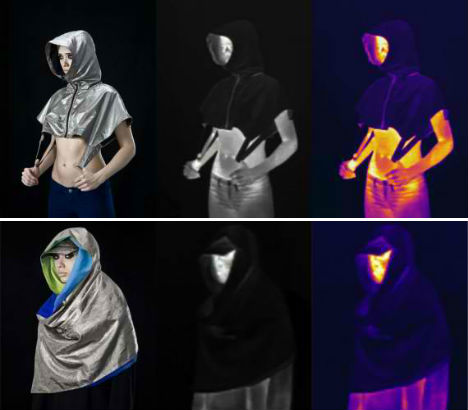
Stealth-Wear1One can only hope that this revelation causes the federal government and the Obama administration to reconsider their stances. After all, these are the same people who were convinced to stand down on the use of UAVs in oversees operations and to take measures that would ensure transparency in the future. We can also hope that the NSA and FBI will be required to once again have to rely on the court system and demonstrate “just cause” before initiating any domestic surveillance in the future.

Otherwise, we might all need to consider getting our hands on some stealth wear and personal cameras, to shield ourselves and create an environment of “sousveillance” so we can spy on everything the government does. Might not hurt to start monitoring the comings and goings of every telecommunications and Silicon Valley CEO while were at it! For as the saying goes, “who watches the watchers?” I’ll give you a hint: we do!

Also, be sure to check out the gallery of artist Adam Harvey, the man who pioneered “stealth wear” as a protest against the use of drones and domestic surveillance. To learn more about sousveillance, the concept of a society monitored by common people, check out Steve Mann’s (inventor of the EyeTap) blog.

Sources: washingtonpost.com, guardian.co.uk, policymic.com, ahprojects.com, eyetap.blogspot.ca


The Future of the Classroom

virtual_learning2As an educator, technological innovation is a subject that comes up quite often. Not only are teachers expected to keep up with trends so they can adapt them into their teaching strategies, classrooms,and prepare children in how to use them, they are also forced to contend with how these trends are changing the very nature of education itself. If there was one thing we were told repeatedly in Teacher’s College, it was that times are changing, and we must change along with them.

And as history has repeatedly taught us, technological integration not only changes the way we do things, but the way we perceive things. As we come to be more and more dependent on digital devices, electronics and wireless communications to give us instant access to a staggering amount of technology, we have to be concerned with how this will effect and even erode traditional means of information transmission. After all, how can reading and lecture series’ be expected to keep kid’s attention when they are accustomed to lighting fast videos, flash media, and games?

envisioning-the-future-of-education

And let’s not forget this seminal infographic, “Envisioning the future of educational technology” by Envisioning Technology. As one of many think tanks dedicated to predicting tech-trends, they are just one of many voices that is predicting that in time, education will no longer require the classroom and perhaps even teachers, because modern communications have made the locale and the leader virtually obsolete.

Pointing to such trends as Massive Open Online Courses, several forecasters foresee a grand transformation in the not too distant future where all learning happens online and in virtual environments. These would be based around “microlearning”, moments where people access the desired information through any number of means (i.e. a google search) and educate themselves without the need for instruction or direction.

virtual_learning3The technical term for this future trend is Socialstructured Learning = an aggregation of microlearning experiences drawn from a rich ecology of content and driven not by grades but by social and intrinsic rewards. This trend may very well be the future, but the foundations of this kind of education lie far in the past. Leading philosophers of education–from Socrates to Plutarch, Rousseau to Dewey–talked about many of these ideals centuries ago. The only difference is that today, we have a host of tools to make their vision reality.

One such tool comes in the form of augmented reality displays, which are becoming more and more common thanks to devices like Google Glass, the EyeTap or the Yelp Monocle. Simply point at a location, and you are able to obtain information you want about various “points of interest”. Imagine then if you could do the same thing, but instead receive historic, artistic, demographic, environmental, architectural, and other kinds of information embedded in the real world?

virtual_learningThis is the reasoning behind projects like HyperCities, a project from USC and UCLA that layers historical information on actual city terrain. As you walk around with your cell phone, you can point to a site and see what it looked like a century ago, who lived there, what the environment was like. The Smithsonian also has a free app called Leafsnap, which allows people to identify specific strains of trees and botany by simply snapping photos of its leaves.

In many respects, it reminds me of the impact these sorts of developments are having on politics and industry as well. Consider how quickly blogging and open source information has been supplanting traditional media – like print news, tv and news radio. Not only are these traditional sources unable to supply up-to-the-minute information compared to Twitter, Facebook, and live video streams, they are subject to censorship and regulations the others are not.

Attractive blonde navigating futuristic interfaceIn terms of industry, programs like Kickstarter and Indiegogo – crowdsources, crowdfunding, and internet-based marketing – are making it possible to sponsor and fund research and development initiatives that would not have been possible a few years ago. Because of this, the traditional gatekeepers, aka. corporate sponsors, are no longer required to dictate the pace and advancement of commercial development.

In short, we are entering into a world that is becoming far more open, democratic, and chaotic. Many people fear that into this environment, someone new will step in to act as “Big Brother”, or the pace of change and the nature of the developments will somehow give certain monolithic entities complete control over our lives. Personally, I think this is an outmoded fear, and that the real threat comes from the chaos that such open control and sourcing could lead to.

Is humanity ready for democratic anarchy – aka. Demarchy (a subject I am semi-obsessed with)? Do we even have the means to behave ourselves in such a free social arrangement? Opinion varies, and history is not the best indication. Not only is it loaded with examples of bad behavior, previous generations didn’t exactly have the same means we currently do. So basically, we’re flying blind… Spooky!

Sources: fastcoexist.com, envisioningtech.com

Video Breakdown of Fahrenheit 451

fahrenheit_451Hello all, and welcome to another glorious Friday! I feel fortunate today, due largely to the fact that yet another person who is dedicated to media literacy, science fiction, books and issues has chosen to get in contact with me and asked to be featured on this site. It’s always good to hear from people and know that what you are doing is garnering attention. But when they ask permission to share their message in your forum, well that’s just the bee’s knees!

F451Apparently. it was my tribute to Ray Bradbury which got this particular gentleman’s attention, and for good reason too. Through a site known as Academic Earth, where one can create and post educational videos on a variety of subject, Mr. Jack Collins created a video breakdown of Fahrenheit 451 that was both educational and insightful. In his brief but poignant segment, he takes a look at the major plot points, themes and motifs of Bradbury’s enduring classic.

To quote from his description of the video:

Ray Bradbury wrote his dystopian classic Fahrenheit 451 at the height of McCarthyism and Cold War paranoia. In the novel, Guy Montag is employed as a fireman who burns books. The whole of American society has descended into a zombie-like stupor of instant gratification, and books are seen as challenging and disruptive relics, which must be destroyed at any cost.

Today, with the increasing proliferation of surveillance equipment in American cities, the spread of digital books and the decline of attention spans the world over, Fahrenheit 451 remains a startlingly relevant work of fiction today. Watch this video and be instantly gratified (irony alert) with your knowledge of Bradbury’s most famous novel.

Trust me when I say it’s a fine educational short, one which I would definitely use if and when I got the chance to teach this novel. And after watching it, I couldn’t help but reflect upon a certain irony. More and more today, educators find themselves taking advantage of new media and video breakdowns in order to help students make sense of complex subject matter and lengthy texts. A few decades ago, they would simply be expected to read it, internalize it, and report on what they read.

One could easily argue that all this sort of trend really is a part of our society’s growing preoccupation with sound bites and easy accessibility. But then again, in our quest to maintain attention spans and promote thoughtfulness, we’d be fools to not take advantage of the very technology that is making it quicker and easier for people to do the opposite in the first place.

Enjoy the video! As you can tell, it got me thinking, and that’s not always the easiest thing for someone else to do 😉 Check out the video by following the link below, and be sure to comment!

academicearth.org/electives/tldr-fahrenheit-451/

New Movie Trailer: Man of Steel!

man-of-steel-logoWe are now just one week way from Man of Steel‘s official, theatrical release. And in honor of this final lap, the studio has chosen to release one last, beautifully produced, trailer. And unlike the other trailers, which focused on Clarke’s upbringing, his quest to find his true identity, or showcased how the people of Earth would react to his presence, this one is action and nothing but!

It starts with a fair bit of footage from Krypton, where we see more of the apocalyptic event that required that Clarke be sent away, and then moves to Earth, where the same forces that took his homeworld threaten to consume his adopted world. And it’s abundantly clear from this and the last trailer that in this relaunch, unlike the originals, that Zod is at the center of it all.

Krypton’s destruction was no mere accident, and the evil Kryptonians were not mere exiles. Interesting angle…

Enjoy the show, and let’s all be ready for when it comes out. This is one relaunch I actually intend to see!