Classic sci-fi books, reviews, and the best of from a dedicated fan and author!
Author: storiesbywilliams
Matt Williams is a professional writer, science fiction author, and science communicator who currently writes for Universe Today, Interesting Engineering, Stardom Space, and Stellar Amenities. He is also the Director of Media Communications for Mars City Design and a member of Enterprise in Space and Explore Mars. His novels, The Formist Series, are available at Amazon.com and through Castrum Press. He lives with his wife and family on Vancouver Island in beautiful British Columbia.
Patrick Stewart has to be one of the most awesome actors around, and not just because of his Shakespearean training. No, this is a guy who is equally at home being completely irreverent as he is serious, and I love him for it. So in honor of this guy, I thought I’d fish through the vast database known as the internet for some video of this man in action. Here’s a small smattering of the more hilarious stuff he’s done over the years!
Avery Bullock:
Personally, I can’t get enough of Stewart as Bullock, the borderline, cocaine addicted, and sexually masochistic director of the CIA. His antics are pure hilarity, insanity, and pure wackiness. I often wonder how Stewart feels about playing the role, and then think he must be a very silly man at heart.
Dune: This is one of Stewart’s many movie roles, where he played the grizzled swordmaster of House Atreides known as Gurney Halleck. Although the movie was an unmitigated commercial and critical disaster, Stewart brought his usual talent and class to the role and carried more than a few scenes.
Extras: I personally think this was the best case of Stewart parodying himself. That was what was so genius about the show, actors playing themselves but totally making fun of themselves in the process. And Stewart really went to town on this one, acting like a sexual deviant and spoofing on Star Trek all at once!
Family Guy: Seth MacFarlane loves this guy, as attested to by the video known as “I Love Patrick Stewart” (look it up). And here is a smattering of Stewart’s many appearances on the show, either as himself or in the persona of Captain Picard.
In keeping with their usual sarcastic wit and keen observations, the folks at HISHE have released another Star Wars spoof. And as usual, you have to admit, it does present a few inconvenient plot holes, contrived twists and continuity errors that didn’t quite make sense. Especially when one considers the problems arising out of them Star Wars prequels…
Basically, if Anakin didn’t know he had kids in the first place, why didn’t he react more angrily when the Emperor told him? Wouldn’t he have been like, “You don’t me I killed my wife? How did she have kids?” And why did Yoda and Obi-Wan let Luke risk his life to go face Vader? And why didn’t Vader using that little thing known as the Force to keep his son from attempting to fall to his death?
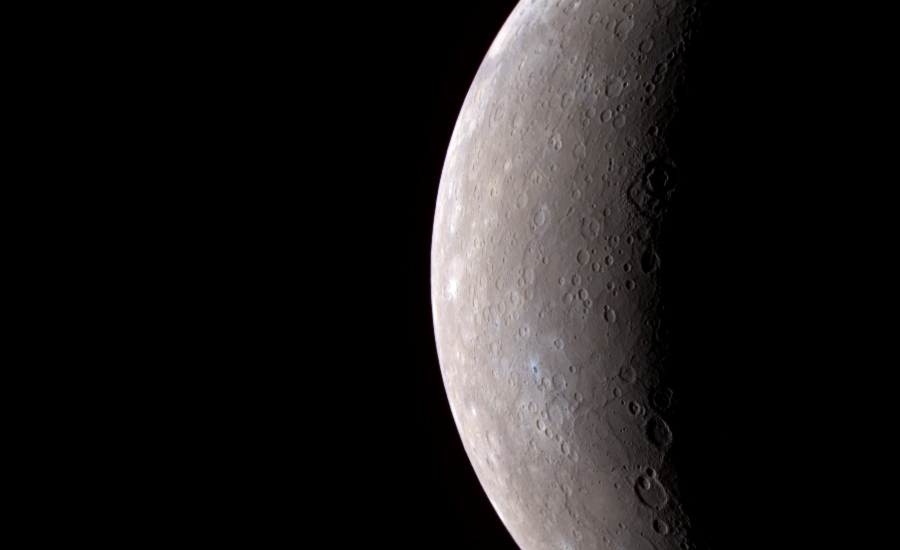
This weekend, amateur astronomers and stargazers will be treated to a rare sight: the conjunction of Mercury and Mars in the sky. This has proven to be quite the confusing spectacle in the past, as people have often misinterpreted the conjunction of the two planets as the appearance of Mercury’s moon. Much like the appearance of other “pseudo-moons”, it is a mistake that litters the history of astronomy.
The conjunction will appear tonight, on February 8th, during the closest conjunction of two naked eye planets in 2013. This month offers a chance to see the fleeting Mercury in the sky, and the conjunction with Mars will provide the opportunity to see how Mercury would look in the night sky if it did indeed have a moon.
To see the conjunction, be sure to find a site with a clear view of the western horizon, grab some binoculars, and begin watching the skies at about 15 minutes after local sunset. According to astronomers, this should coincide with February 8th at 17:00 Universal Time! Look for a reddish dot just above that bright star that hangs low in the sky, and you’ll have your two planets looking very much like they’re in orbit of each other.
But be quick about it, since you’ll only have a 15-30 minute window (depending on latitude) to snare the pairing before they follow the setting Sun below the horizon. Photographing the pair will be tricky, though not impossible, since they present a very low contrast against the bright background twilight sky. And just in case you’re not impressed with the sight itself, consider that with Curiosity and other rovers operating on Mars and the Messenger satellite orbiting Mercury, permanent robotic “eyes” are monitoring both!
Good luck and good gazing! And if you happen to snap a picture of the conjunction, don’t hesitate to send it my way. I’ll be sure to post it with the deets of the amateur professional who made it happen!
The field of robotics has been heated up in recent years. With autonomous killing machines being developed by the USAF, mind-controlled prosthesis for the disabled, juggling robots by Disney, a headless Kenshiro Robot and even 3D printable android, it seems like only a matter of time before Asimov’s Three Laws will need to be applied. Either that, or we might have a Robopocalypse on our hands.
But when you see this latest project in robotics, you might find it hard to imagine an apocalyptic scenario resulting. Forget Terminator, this seems more like something from the realm of Pinocchio or AI. That’s the feeling I get from Roboy, a concept that began back in May of 2012 when the University of Zurich’s Artificial Intelligence Lab committed to creating a fully humanoid robot by March of 2013.
For those doing the math, yes, that is roughly nine months. As if his size and proposed aesthetics weren’t enough, the creators even committed to a timeline that mirrored the time it takes to birth and actual child. And just to complete the illusion, they hope to cover the finished product in a soft, artificial skin. Talk about infanto-centric (assuming that’s even a word)!
But of course, the real breakthrough of Roboy is in the design itself, which borrows from the Kenshiro humanoid and the earlier Ecce model that both rely on artificial muscles to move. At this point, the robot is near completion and should be released next month during the Robots on Tour event in Zurich, Switzerland, providing everything arrives on schedule. At the moment, the long-term purpose of Roboy is to act as a prototype for service robots that will help elderly people remain independent for as long as possible.
I smell another movie reference there, one involving and old man and his friendly robot side-kick. Can you guess which one I am referring to here? Correct, it’s Robot and Frank! And with all the developments in robots happening right now, I’d say we need to do our homework and see all these movies, and reread Asimov’s Robot series while were at it!
And while you’re doing that, be sure to check out this video of the Roboy’s design in action:
It’s official! Terminator 5 have been announced and some rather interesting news items have been released this month as to who will be attached to it. For starters, the production team of Megan and David Ellison, who brought us such movies as Zero Dark Thirty, Killing them Softly and True Grit will be spearheading it.
In terms of writers, there’s Laeta Kalogridis, a frequent collaborator with James Cameron who helped produce Avatar and also co-wrote the Fantastic Voyage and Battle Angel films and was a writer on Shutter Island, Alexander, Night Watch and the Bionic Woman pilot. She will be paired with Patrick Lussier, the writer/director of Drive Angry and Dracula 2000 and an editor with many films under his belt.
But the biggest of all is that Mr. Terminator himself, Arnold Schwarzenegger, has apparently announced that he will be in the next Terminator movie as well. No telling exactly what role he will be filling, whether it will be an aging T-800 or as a regular human being. Then again, they makers might use his presence to do a little background on who the man was that inspired the original cyborg look.
Who knows? Point is, Arny made the announcement late last month, where he confirmed participation in not only this project, but also a new Conan movie. Wow, two relaunches at the same time. Who does he think he is? Sylvester Stallone? And in the end, it seems clear at least that in this particular cameo, he will not be appearing as a CG cyborg. Though to be honest, that was one of the least lame points of that movie…
It may seem like someone at Tokyo University drank their breakfast. I mean really, a robot without a head? How is supposed to mimic our facial expressions and creep us out with its glowing red eyes? But when you consider the purpose behind the Kenshiro muscle-bot, you begin to see the rather important method behind the design.
In recent years, various robotics companies have been able to create machines that mimic the animal kingdom – from hummingbirds, to turtles and even squirrels. However, few have managed to tackle the realm of human movement, and shown truly positive results. Hence the purpose of Kenshiro, human-like musculoskeletal robot that was revealed at the Humanoids conference back in December.
For years, the University has been toying with the design for a bio-inspired robot, adding more muscles and more motors with each new design. Standing at 158 centimeters and weighing in at 50 kilograms, Kenshiro basically mimics the body of the average Japanese 12-year-old male. And with 160 pulley-like “muscles” – 50 in the legs, 76 in the trunk, 12 in the shoulder, and 22 in the neck – the robot mirrors almost all the major muscles in a human and has the most muscles of any other bio-inspired humanoid out there.
And with all the progress being made in developing a fully-functional autonomous machine mind (see Google Neural Net), not to mention a face that can mimic human expressions (see the FACE), it may just be a matter of time before we need to start thinking about applying Asimov’s Three Laws of Robotics. Don’t want a Robopocalypse on our hands!
It’s no secret that in recent years, the technology behind 3D printing has been growing by leaps and bounds, and igniting a lot of imaginations in the process. And it seems that with every passing day, new possibilities are emerging, both real and speculative. Some are interesting, some are frightening, and some are just downright mind-blowing. Consider this small sampling of what’s emerged most recently and decide for yourself…
First off, it now seems that there is a design for an android that you can download, print and assemble in the comfort of your home – assuming you have access to a 3D printer. Designer Gael Langevin, who calls his project InMoov, has spent the last year perfecting the concept for a voice-controlled android that can be constructed from parts generated by a 3D printer. And not only that, he has made the entire project freely available via open source so that any DIY’er can print it on their own.
Starting with the android’s right hand, Langevin’s idea quickly took off and morphed into a the full-body concept that is now available. Designing the bot with Blender software and printing it on a 3D Touch using ABS plastic as the material, the end product is a fully animated machine that responds to voice control and can “see” and hold objects. And as you can see from the video below, it looks quite anthropomorphic:
Then came the announcement of something even more radical which also sounds like it might be ripped from the pages of a science fiction novel. Just yesterday, a team of researchers at Heriot-Watt University in Scotland announced that they used a new printing technique to deposit live stem cells onto a surface in a specific pattern. This is a step in the direction of using stem cells as an “ink” to fashion artificial organs from a 3D printer, which is their ultimate goal.
The process involves suspending the cells in a “bio-ink,” which they were then able to squeeze out as tiny droplets in a variety of shapes and sizes. To produce clumps of cells, they printed out the cells first and then overlaid those with cell-free bio-ink, forming spheroids, which the cells began grouping together inside. Using this process, they were able to create entire cultures of tissue which – depending on the size of the spheroids – could be morphed into specific types of tissue.
In short, this technique could one day be used to print out artificial tissues, such as skin, muscles and organs, that behave like the real thing. It could even serve to limit animal testing for new drug compounds, allowing them to be tested on artificially-generated human tissue. According to Jason King, business development manager at Roslin Cellab and one of the research partners: “In the longer term, [it could] provide organs for transplant on demand, without the need for donation and without the problems of immune suppression and potential organ rejection.”
And last in the lineup is perhaps the most profound use proposed for 3D printing yet. According to the European Space Agency, this relatively new technology could turn moon dust into moon housing. You read that right! It seems that a London-based design firm named Foster+Partners is planning to collaborate with the European Space Agency to build structures on the Moon using the regolith from the surface.
The process is twofold: in the first step, the inflatable scaffolding would be manufactured on Earth and then transported to the Moon. Once there, a durable shell composed of regolith and constructed by robotically-driven 3D printers would be laid overtop to complete the structures. The scheme would not only take advantage of raw materials already being present on the lunar surface, but offers a highly scalable and efficient model for construction.
Should the plan be put into action, a research expedition or colony would first be established in the southern polar regions of the Moon where sunlight is constant. From there, the scaffolding and components of the printing “foundry” would be shuttled to the moon where they would then be assembled and put to work. Each house, once complete, would be capable of accommodating four people, with the possibility of expansion should the need arise. For now, the plan is still in the R&D phase, with the company looking to create a smaller version using artificial regolith in a vacuum chamber.
Impressed yet? I know I am! And it seems like only yesterday I was feeling disillusioned with the technology thanks to the people at an organization – that shall remain nameless – who wanted to print out “Wiki-weapon” versions of the AR-15, despite the fact that it was this very weapon that was used by the gunman who murdered several small children in the town of Newton, Connecticut before turning the weapon on himself.
Yes, knowing that this technology could be creating life-saving organs, helpful androids and Lunar housing goes a long way to restoring my faith in humanity and its commitment to technological progress. I guess that’s how technology works isn’t it, especially in this day and age. You don’t like what it’s being used for, wait five minutes!
One of my favorite band of comedians and spoof artists – “Barely Political” – posted this video on their Youtube site recently. Perhaps best known for their song parodies performed by the band “The Key of Awesome”, they took a different path this time and decided to make some rather hilarious, satirical predictions of what the new Star Wars movie would look like.
Beginning with a shot at George Lucas, whom they portray as a bit of an overeating tyrant, they go on to predict what the original characters would look like in this day and age, take a few hosts at the prequel trilogy for its long, drawn out scenes of political intrigue and the stupid antics of Jar Jar, and top it all off with a little spoofing on how a Disney movie can’t go five minutes without incorporating a musical number.
Yeah, its all around fun watching! So enjoy and let’s hope the latest addition to the Star Wars saga steers well clear of all this 😉
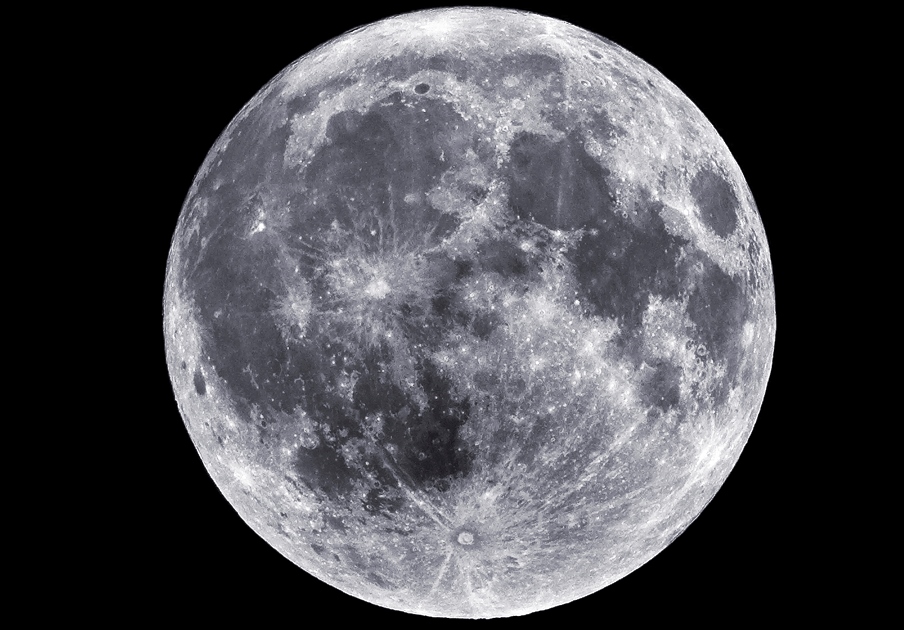
In an effort to demonstrate how laser communications work, and perhaps just to show off a little, a team of NASA engineers shot an image of the Mona Lisa to the moon by piggybacking it on laser pulses. The transmission occurred back in mid-January, and took place between NASA’s Goddard Space Flight Center here on Earth and the Lunar Reconnaissance Orbiter (LRO) some 386,000 km (240,000 miles) away. In addition to showcases how NASA regularly communicated with the orbiter, it also presented a possible means of communicating with a future moon colony.
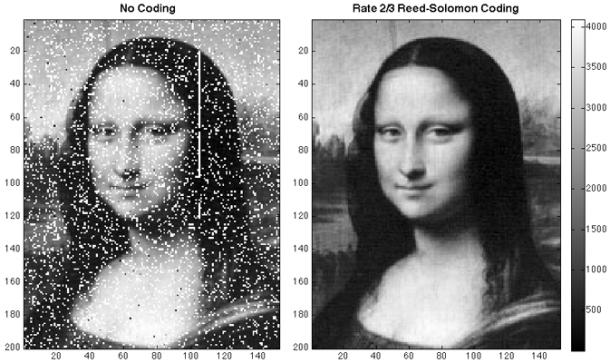
On any given day, scientists at the Goddard Space Flight Center use what is known as the Next Generation Satellite Laser Ranging Station to track the LRO’s position. Expanding on this, the staff reprogrammed the laser to send the massive work of art in the form of as massive JPEG file. This involved chopping the picture into a 152×200 pixel array, with each pixel assigned a gray-scale value and beamed up one at a time. All told, the process took some time, with image transmission speed clocked at about 300 bits per second.
It then fell to LOLO, the LRO’s Lunar Orbiter Laser Altimeter, to put the Mona Lisa back together based on the arrival times of the pixel data. All the while, LOLA continued to pursue its primary mission of mapping out the lunar terrain. The image was then beamed back to Earth via the LRO’s radio telemetry system, with only minor errors caused by turbulence in the atmosphere.
MIT’s David Smith, head of LOLA, had this to say about the event in a release:
“This is the first time anyone has achieved one-way laser communication at planetary distances. In the near future, this type of simple laser communication might serve as a backup for the radio communication that satellites use. In the more distant future, it may allow communication at higher data rates than present radio links can provide.”
According to NASA, the success of the demonstration could pave the way for lasers to be used for satellite communication, particularly with its Lunar Atmosphere and Dust Environment Explorer (LADEE) mission, which is set to launch this year.
No telling how DaVinci might react to the news of his classic portrait breaching the heavens and being beamed into space. However, given the man’s obvious love of his work and fascination with all things metaphysical and scientific, I think he would have been very happy. Perhaps if his enigmatic masterpiece were to be send into the cosmos as part of the search for extra-terrestrial life too. But that’s another day and another mission!
And be sure to check out the video below from the Goddard SFC explaining the process, courtesy of NASA:
It seems to be the trend these days. You take a predictions that was once the domain of science fiction and treat it as impending science fact. Then you recommend that before it comes to pass, we pre-emptively create some kind of legal framework or organization to deal with it once it does. Thus far, technologies which are being realized have been addressed – such as autonomous drones – but more and more, concepts and technologies which could be real any day now are making the cut.
It all began last year when the organization known as Human Rights Watch and Harvard University teamed up to release a report calling for the ban of “killer robots”. It was soon followed when the University of Cambridge announced the creation of the Centre for the Study of Existential Risk (CSER) to investigate developments in AI, biotechnology, and nanotechnology and determine if they posed a risk.
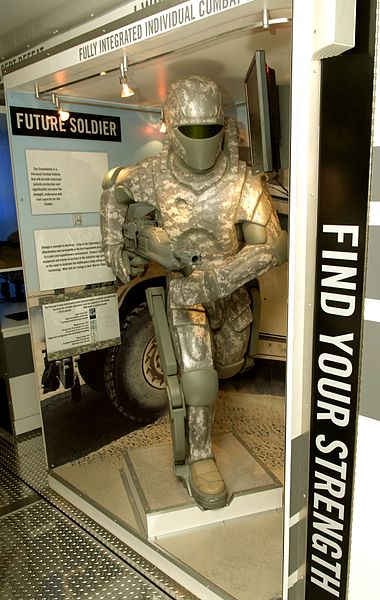
And most recently, just as the new year began, a report funded by the Greenwall Foundation examined the legal and ethical implications of using biologically enhanced humans on the battlefield. This report was filed in part due to advances being made in biotechnology and cybernetics, but also because of the ongoing and acknowledged efforts by the Pentagon and DARPA to develop super-soldiers.
The report, entitled “Enhanced Warfighters: Risks, Ethics, and Policy”, was written by Keith Abney, Patrick Lin and Maxwell Mehlman of California Polytechnic State University. The group, which investigates ethical and legal issues as they pertain to the military’s effort to enhance human warfighters, received funding from the Greenwall Foundation, an organization that specializes in biomedicine and bioethics.
In a recent interview, Abney expressed the purpose of the report, emphasizing how pre-emptive measures are necessary before a trend gets out of hand:
“Too often, our society falls prey to a ‘first generation’ problem — we wait until something terrible has happened, and then hastily draw up some ill-conceived plan to fix things after the fact, often with noxious unintended consequences. As an educator, my primary role here is not to agitate for any particular political solution, but to help people think through the difficult ethical and policy issues this emerging technology will bring, preferably before something horrible happens.”
What’s more, he illustrated how measures are necessary now since projects are well-underway to develop super soldiers. These include powered exoskeletons to increase human strength and endurance. These include devices like Lockheed Martin’s HULC, Raytheon’s XOS, UC Berkeley’s BLEEX, and other projects.
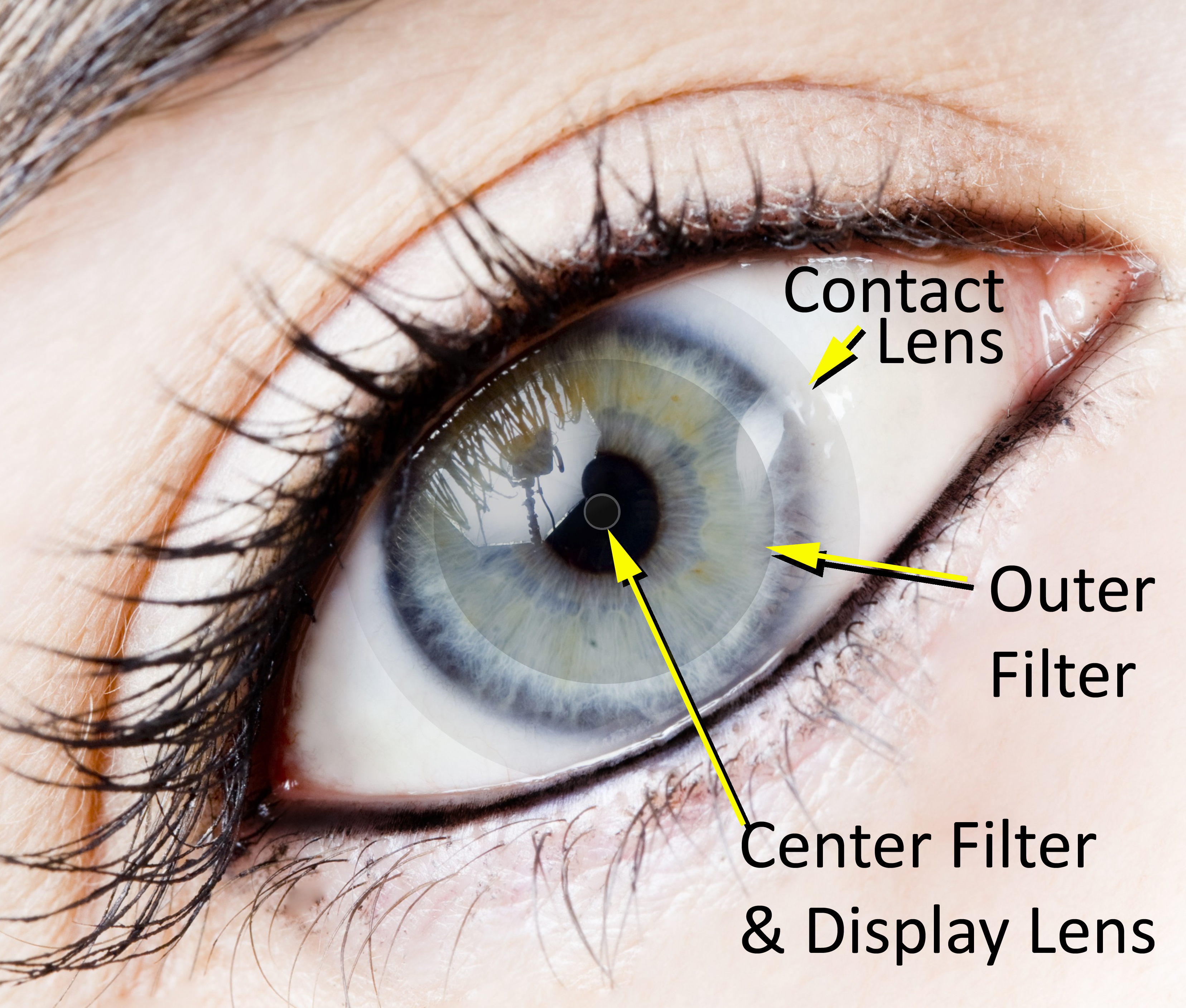
In addition, DARPA has numerous projects on the books designed to enhance a soldiers abilities with cybernetics and biotech. These include VR contact lenses, basic lenses that enhance normal vision by allowing a wearer to view virtual and augmented reality images without a headset of glasses. There’s also their Cognitive Technology Threat Warning System (CT2WS), which is a computer-assisted visual aid that instantly identifies threats by augmenting their visual faculties.
And in the cognitive realm, there are such programs as Human Assisted Neural Devices (HAND) that seeks to strengthen and restore memories and the Peak Soldier Performance (PSP) program that will boosthuman endurance, both physical and cognitive. But of course, since post-traumtic stress disorder is a major problem, DARPA is also busy at work creating drugs and treatments that can erase memories, something which they hope will give mentally-scarred soldiers a new lease on life (and military service!)
And of course, the US is hardly alone in this regard. Every industrialized nation in the world, from the EU to East Asia, is involved in some form of Future Soldier or enhanced soldier program. And with nations like China and Russia catching up in several key areas – i.e. stealth, unmanned aerial vehicles and aeronautics – the race is on to create a soldier program that will ensure one nation has the edge.
But of course, as Abney himself points out, the issue of “enhancement” is a rather subjective term. For example, medical advancements are being made all the time that seek to address disabilities and disorders and also fall into the category of “enhancement”. Such ambiguities need to be ironed out before any legal framework can be devised, hence Abney and his associates came up with the following definition:
“In the end, we argued that the best definition of an enhancement is that it’s ‘a medical or biological intervention to the body designed to improve performance, appearance, or capability besides what is necessary to achieve, sustain or restore health.”
Working from this starting point, Abney and his colleagues made the case in their report that the risk such enhancements pose over and above what is required for normal health helps explain their need for special moral consideration.
These include, but are not limited to, the issue of consent, whether or not a soldier voluntary submits to enhancement. Second, there is the issue of long-term effects and whether or not a soldier is made aware of them. Third, there is the issue of what will happen with these people if and when they retire from the services and attempt to reintegrate into normal society.
It’s complicated, and if it’s something the powers that be are determined to do, then they need to be addressed before they become a going concern. Last thing we need is a whole bunch of enhanced soldiers wandering around the countryside unable to turn off their augmented killer instincts and super-human strength. Or, at the very least, it would be good to know we have some kind of procedure in place in case they do!
What do you think of when you hear the word “super soldier”? Yeah, me too!











 Stories by Williams