Should We Be Afraid? A List for 2013

emerg_techIn a recent study, the John J. Reilly Center at University of Notre Dame published a rather list of possible threats that could be seen in the new year. The study, which was called “Emerging Ethical Dilemmas and Policy Issues in Science and Technology” sought to address all the likely threats people might face as a result of all developments and changes made of late, particularly in the fields of medical research, autonomous machines, 3D printing, Climate Change and enhancements.

The list contained eleven articles, presented in random order so people can assess what they think is the most important and vote accordingly. And of course, each one was detailed and sourced so as to ensure people understood the nature of the issue and where the information was obtained. They included:

1. Personalized Medicine:
dna_selfassemblyWithin the last ten years, the creation of fast, low-cost genetic sequencing has given the public direct access to genome sequencing and analysis, with little or no guidance from physicians or genetic counselors on how to process the information. Genetic testing may result in prevention and early detection of diseases and conditions, but may also create a new set of moral, legal, ethical, and policy issues surrounding the use of these tests. These include equal access, privacy, terms of use, accuracy, and the possibility of an age of eugenics.

2. Hacking medical devices:
pacemakerThough no reported incidents have taken place (yet), there is concern that wireless medical devices could prove vulnerable to hacking. The US Government Accountability Office recently released a report warning of this while Barnaby Jack – a hacker and director of embedded device security at IOActive Inc. – demonstrated the vulnerability of a pacemaker by breaching the security of the wireless device from his laptop and reprogramming it to deliver an 830-volt shock. Because many devices are programmed to allow doctors easy access in case reprogramming is necessary in an emergency, the design of many of these devices is not geared toward security.

3. Driverless zipcars:
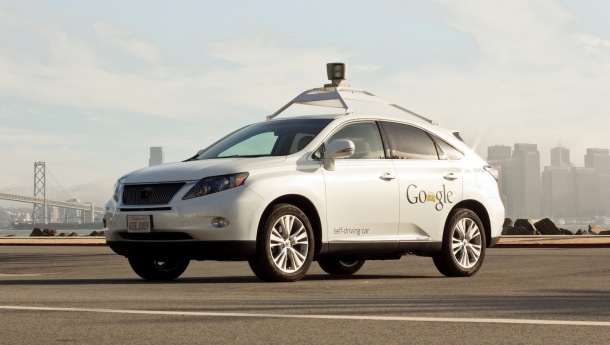
googlecarIn three states – Nevada, Florida, and California – it is now legal for Google to operate its driverless cars. A human in the vehicle is still required, but not at the controls. Google also plans to marry this idea to the zipcar, fleets of automobiles shared by a group of users on an as-needed basis and sharing in costs. These fully automated zipcars will change the way people travel but also the entire urban/suburban landscape. And once it gets going, ethical questions surrounding access, oversight, legality and safety are naturally likely to emerge.

4. 3-D Printing:
AR-153D printing has astounded many scientists and researchers thanks to the sheer number of possibilities it has created for manufacturing. At the same time, there is concern that some usages might be unethical, illegal, and just plain dangerous. Take for example, recent effort by groups such as Distributed Defense, a group intent on using 3D printers to create “Wiki-weapons”, or the possibility that DNA assembling and bioprinting could yield infectious or dangerous agents.

5. Adaptation to Climate Change:
climatewarsThe effects of climate change are likely to be felt differently by different people’s around the world. Geography plays a role in susceptibility, but a nation’s respective level of development is also intrinsic to how its citizens are likely to adapt. What’s more, we need to address how we intend to manage and manipulate wild species and nature in order to preserve biodiversity.This warrants an ethical discussion, not to mention suggestions of how we will address it when it comes.

6. Counterfeit Pharmaceuticals:

Syringe___Spritze___by_F4U_DraconiXIn developing nations, where life saving drugs are most needed, low-quality and counterfeit pharmaceuticals are extremely common. Detecting such drugs requires the use of expensive equipment which is often unavailable, and expanding trade in pharmaceuticals is giving rise to the need to establish legal measures to combat foreign markets being flooded with cheap or ineffective knock-offs.

7. Autonomous Systems:
X-47BWar machines and other robotic systems are evolving to the point that they can do away with human controllers or oversight. In the coming decades, machines that can perform surgery, carry out airstrikes, diffuse bombs and even conduct research and development are likely to be created, giving rise to a myriad of ethical, safety and existential issues. Debate needs to be fostered on how this will effect us and what steps should be taken to ensure that the outcome is foreseeable and controllable.

8. Human-animal hybrids:
human animal hybrid
Is interspecies research the next frontier in understanding humanity and curing disease, or a slippery slope, rife with ethical dilemmas, toward creating new species? So far, scientists have kept experimentation with human-animal hybrids on the cellular level and have recieved support for their research goals. But to some, even modest experiments involving animal embryos and human stem cells are ethical violation. An examination of the long-term goals and potential consequences is arguably needed.

9. Wireless technology:
vortex-radio-waves-348x196Mobile devices, PDAs and wireless connectivity are having a profound effect in developed nations, with the rate of data usage doubling on an annual basis. As a result, telecommunications and government agencies are under intense pressure to regulate the radio frequency spectrum. The very way government and society does business, communicates, and conducts its most critical missions is changing rapidly. As such, a policy conversation is needed about how to make the most effective use of the precious radio spectrum, and to close the digital access divide for underdeveloped populations.

10. Data collection/privacy:

privacy1With all the data that is being transmitted on a daily basis, the issue of privacy is a major concern that is growing all the time. Considering the amount of personal information a person gives simply to participate in a social network, establish an email account, or install software to their computer, it is no surprise that hacking and identity theft are also major conerns. And now that data storage, microprocessors and cloud computing have become inexpensive and so widespread, a discussion on what kinds of information gathering and how quickly a person should be willing to surrender details about their life needs to be had.

11. Human enhancements:
transhumanismA tremendous amount of progress has been made in recent decades when it comes to prosthetic, neurological, pharmaceutical and therapeutic devices and methods. Naturally, there is warranted concern that progress in these fields will reach past addressing disabilities and restorative measures and venture into the realm of pure enhancement. With the line between biological and artificial being blurred, many are concerned that we may very well be entering into an era where the two are indistinguishable, and where cybernetic, biotechnological and other enhancements lead to a new form of competition where people must alter their bodies in order to maintain their jobs or avoid behind left behind.

Feel scared yet? Well you shouldn’t. The issue here is about remaining informed about possible threats, likely scenarios, and how we as people can address and deal with them now and later. If there’s one thing we should always keep in mind, it is that the future is always in the process of formation. What we do at any given time controls the shape of it and together we are always deciding what kind of world we want to live in. Things only change because all of us, either through action or inaction, allow them to. And if we want things to go a certain way, we need to be prepared to learn all we can about the causes, consequences, and likely outcomes of every scenario.

To view the whole report, follow the link below. And to vote on which issue you think is the most important, click here.

Source: reilly.nd.edu

U.N. Launches Drone Investigation

Predator_drone_2In a move which will surely strike some as predictable and others overdue, the U.N. announced that it would begin an investigation into the legality of the US’s drone program. For years now, unmanned aerial vehicles have been the mainstay of the United States anti-terrorism efforts overseas, sparking controversy and leading to demands for more oversight and transparency. And as of this past Thursday, it will be the subject of a major international investigation.

Led by special rapporteur on counterterrorism and human rights Ben Emmerson, the investigation is expected to focus on the legal justification for America’s expansive drone program, which has largely remained secretive and unexamined. What’s more, Emmerson and his team are expected to examine exactly how much collateral damage and civilian deaths the use of drones has caused, which is a major point for those opposed to their use.

In a statement released from Emmerson’s office, he outlines the parameters of the issue and the investigation to be mounted as follows:

“The exponential rise in the use of drone technology in a variety of military and non-military contexts represents a real challenge to the framework of established international law. It is therefore imperative that appropriate legal and operational structures are urgently put in place to regulate its use in a manner that complies with the requirements of international law, including international human rights law, international humanitarian law (or the law of war as it used to be called), and international refugee law.”

Other groups were quick to chime in on the decision to launch an investigation, not the least of which were Americans themselves. For example, Dennis Blair, the former director of national intelligence under President Barack Obama and the current chairman of the Council on Foreign Relations, has urged the administration to make more of its drone policies public. “There’s been far too little debate [about the tactics of drone use] said Blair. “The United States is a democracy, we want our people to know how we use military force and that we use it in ways the United States is proud of.”

The American Civil Liberties Union, which has been waging a years-long effort to compel the Obama administration to release its internal legal considerations, also welcomed the U.N. investigation, and urged the U.S. to participate in it. Hina Shamsi, the director of the Union’s National Security Project, released a statement encompassing the ACLU’s position:

“Virtually no other country agrees with the U.S.’s claimed authority to secretly declare people enemies of the state and kill them and civilian bystanders far from any recognized battlefield. To date, there has been an abysmal lack of transparency and no accountability for the U.S. government’s ever-expanding targeted killing program.”

Naturally, the US is not the only nation under scrutiny in this investigation. And neither is the issue of civilian deaths the only focus. The use of drones has increased exponentially in recent years, thanks in no small part to extensive development of UAV technology in a number of countries. And with countries like China and Iran following suit, drone use is only expected to grow and expand. By Investigating the legality and implications of their use now, the potential exists to establish a framework before they become widespread.

Source: Huffingtonpost.com


NASA Considers Catching Asteroids

CometNASA is apparently considering playing a little catch and release with some giant rocks. Basically, they want to capture an asteroid and deposit in orbit around the Moon by the early 2020s. The announcement of this new plan was made earlier this month, and left many wondering if this has anything to do with the Obama administration’s long term plans for establishing an outpost on the dark side of the moon or sending a manned mission to a near-Earth asteroid.

This makes sense, since if NASA were to place an asteroid in orbit around the Moon, a crewed space craft could practice engaging with it without needing to move beyond the range of a rescue mission. What’s more, such a body would come in handy as a potential stopover base for spaceships looking to refuel and resupply before setting off on deeper space missions – particularly to Mars.

NASA_moonWhat’s more, capturing a near Earth asteroid and bringing it in orbit of the Moon is a safer, cheaper way to perform manned landings on object in the asteroid belt. The nearest proposed target is a space rock named 1999 AO10, an asteroid which is roughly a year’s trip away. Traveling to this body would expose astronauts to long-term radiation since they would be beyond Earth’s protective magnetic field, and would also take them beyond the reach of any possible rescue.

Researchers with the Keck Institute for Space Studies in California have confirmed that NASA is mulling over the plan to build a robotic spacecraft for just such a purpose. They also confirmed that the project would take six to ten years and would involve the launching of a slow-moving spacecraft propelled by solar-heated ions on an Atlas V rocket. After locating and studying the target asteroid, the robot would catch it in a bag measuring about 10 by 15 meters and bring it back towards the moon.

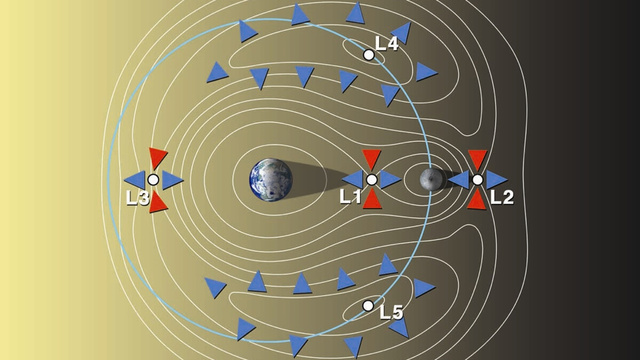
Altogether, the mission would take 6 to 10 years, and cost about 2.6 billion. If successful, it may cut costs when it comes time to place a base in orbit at Lagrange Point 2 – on the dark side of the moon – or when missions to Mars start heating up by 2030. Yes, at this point, I’m thinking the people at NASA are thanking their lucky stars (no pun!) that Obama was reelected back in November. Always good to have powerful friends, especially when they can sign multi-billion dollar checks!

Source: Wired.com, newscientist.com

The Future is Here: Information Encoded in DNA!

dna-computingScientists and researchers have been taking a closer look at DNA in recent years, and not just for the reasons you may know if. No, in addition to unlocking the human genome, some are considering DNA as a new means of data storage. When you think about it, DNA is already used as a storage device, specifically for containing all the information necessary to generate millions of species of plants and animals from a single cell. But as it stands, scientists are considering using artificially-generated DNA to handle the the growing storage needs of today’s information society.

In fact, this past Wednesday an international team of researchers led by Nick Goldman of the European Bioinformatics Institute (EBI) reported that they had managed to successfully store all 154 Shakespeare sonnets, a photo, a scientific paper, and a 26-second sound clip from Martin Luther King Jr.’s “I Have a Dream” speech on a sample of DNA so small it was barely discernible to the naked eye and able to fit into a tiny vial.

binaryMight sound like something out of science fiction, but in fact the process is really quite straightforward thanks to existing technology. Marrying elements of cellular biology to computing, the concept calls for converting digital information from binary code (1’s and 0’s) into the four-letter alphabet of DNA code. Once that code is compiled, synthetic strands of DNA are then created which are then “read” by a machine specifically programmed to recover the encoded information.

At present, the reading process took two weeks, but that’s expected to change in coming years. By accomplishing this act of DNA-writ storage, Goldman and his research team was able to show that the process is feasible. And given time, we could be looking at external hard drives that are little more than a tiny thimble full of genetic material, but which are capable of storing terabytes of information. And given that they themselves are composed of genetic material, it might even be possible to store these devices within our own living tissues. Biotechnological implants, people!

DNA-molecule2At the same time, Goldman and Ewan Birney – another member of the European Bioinformatics Institute – released a research paper which explained the potential of this means of data storage. In it, they stated that in the short term, DNA storage will be useful for storing large amounts of information for centuries, like national historical records or huge library holdings, provided it’s not accessed very often. However, they were also quick to point out that with time and development, it could be commercial viable and much more accessible.

biotech_alienThey also took the opportunity to address potential fears and ethical issues, saying that storage in a human being was not something they intended to pursue, and that encoded information would not be able to mix with a person’s normal DNA. According to the report, artificial DNA is specially encoded and therefore unable to combine with natural DNA, which does not use the same “programming language”.

Well… that is good news for those of us worried about a new form of genetic diseases huh, or the possibility that DNA archives could contain viruses capable of infected both our machinery and our bodies! But of course, the paper didn’t rule out that it would be possible to store information inside a person’s body using this new form of “biotechnology”. Once it’s perfected, it might even become the mainstay of consumers to buy bioelectronics that are stored within their very bodies. I mean, if it’s safe and won’t result in a new age of bio warfare, who’s to say it won’t become all the rage?

NJust one question: will this put us several steps closer to creating artificial humanoid AI’s, aka. Cylons? Just asking…

Source: CBC.ca

Of Search Terms and Hits

0427_Cyber_full_600Recently, I went by my traffic page to see just how many hits I was getting in recent days. Naturally, I was sure to take a gander at the referrals and search term portions of this page, just to see who was looking for what and who else might have led them to me in the first place. Needless to say, it was interesting, and pretty consistent with what I’ve been seeing in the last few months.

Ah, but then, I decided to look at the All-Time totals to see just how much of my traffic I owed to certain subjects. You can tell much about your own page and the impact it’s having by seeing what search term more than any other led people to you. And after looking over the grand totals, I thought I might list the top 15 and see what I could conclude from it.

So, here are the top 15 search terms which have led people to my site since it went online in March of 2011:

  1. Joker:  10,060
  2. The Joker:  4,813
  3. Bath Salts Zombie:  2,267
  4. Bath Salt Zombie:  1,585
  5. Predator:  1,010
  6. Moon:  918
  7. COD (Call of Duty):  887
  8. Bayonet:  820
  9. Tiananmen Square:  607
  10. Firefly Serenity:  607
  11. Firefly:  535
  12. Zombie Apocalypse:  511
  13. Zombie Weapons:  495
  14. Desert Eagle .50 cal:  442
  15. Futuristic Guns:  412

What to conclude from all of this? I’m not sure I want to think about it much. If I did, I might have to admit that maybe my site mainly appeals to gamers, gun enthusiasts and people who like reading about insane clowns, zombies and recreational cannibalism. Not exactly the reason I started writing this thing in the first place!

But then again, I could just as easily conclude that, like me, these people enjoy a good romp through nerd territory, complete with dystopian fiction, post-apocalypticism, cool weapons, cool games and cool franchises. And maybe, just maybe, they enjoy learning about history and engaging in some thoughtful discussion along the way.

Hey, a man can always dream, right? 😉

New Anthology Sample!

gliese 581Hi folks. Life has been pretty busy and distracting of late, but after a few busy weeks I find myself with some time on my hands once again the freedom with which to write. And so I have, specifically on my second contribution to the Yuva Anthology – the Prologue known as “The Torch”. Though the story is not yet complete, I am finally reaching the climax of the tale, where the main character Magid Muktari is arriving to meet his benefactor and the man who intends to make sure his dream of exoplanet colonization becomes a reality.

But of course, there is still the question of terms to consider, some details that need to be ironed out, and an explanation or two as to why this is all happening. But I won’t bore you with a big summation. Instead, I present you with the latest installments in the story where Muktari takes his first commercial flight into space and doesn’t much enjoy it! Relying on research I’ve been doing on Virgin Galactic, the “Skylon” engine, and other sources, this is basically my take on what commercial space flight will look like in the near future.

What’s more, the chapter includes some ideas on the subject of orbital living pods, habitation complexes, and private space stations which may also become a reality in a few decades. Yes, as the technology improves and more and more people find themselves going into space, to the Moon, and beyond, Earth’s orbit could become the new international waters, where just about anything is legal, people do their “off-world banking”, and the rich live and play in low-gravity environments. Enjoy the chapter and please feel free to offer any and all constructive criticisms or comments…

skylon

“Treat” was hardly the word Muktari would have used. After a strenuous take off, the plane pulled into a sharp ascent, engaged its hypersonic engines, and was soon breaking the sound barrier several times over. Thus far, the trip was conforming to his expectations, which could only mean things would get worse before they got better. For the duration of their ascent, he had only one thought on his mind.

Why am I doing this? Was entertaining a possible job offer really this important to him? Would a few years in Oslo and the North Atlantic be so bad by comparison? Of course it would, but that didn’t make this personal first any more pleasant.

Of course, it was obvious why Harding had such a place available to him. More and more, one heard of corporate offices being placed in orbit, where the laws were laxer and off world authority was still being established. Most financiers found that they had at least another few decades before the law caught up to them and some interplanetary body would be created that could monitor their floating financial holdings or havens.

Nevertheless, the idea of breaking orbit and enduring near-weightlessness was not something he thought too highly of. Heights had been known to give him vertigo. How would standing above an entire planet feel in comparison?

Things did not improve until they hit atmo, at which point, weightlessness returned all of the blood which had been pooling in his legs to his head . He grunted loudly as the transition hit him, making his headache feel all the more noticeable.

“Don’t drink much do you?” asked Natalia, seated across from him.

“No,” he replied heavily. “Ironically, I think I could use a drink right now.”

She smiled. Pressed the button on the side of her seat. “What can we get you? This flight comes with a full refreshment service.”

“Nothing, please. I doubt I could keep it down right now.” He raised his hand as he said this. The effort to bring it to face height was incredibly easy, and he began to stare at it and everything around him as the ship coasted into the upper atmosphere. Everything that wasn’t anchored in place seemed to be floating carelessly, as if underwater. The sight of it seemed ethereal, almost entirely incorporeal.

He looked out the cabin window and spotted the thin blue layer of the upper atmosphere that was slowly pulling away from them. He had heard of the effect of seeing the great blue marble from orbit, but had imagined it would feel somewhat differently. Looking down at it all, he did not feel particularly grandiose or tiny, as he’d been told to expect. He mainly felt empty, as if some sense of pathos was struggling to be realized within him. He didn’t understand why, nor did he particularly want to think about what it meant…

“Folks, we’re about to engage the third stage drive. Please hang on and remain seated.”

“Oh dear,” Muktari breathed, tightening his grip on the arm rests. Natalia raised her voice to be heard over the sound of the gentle warning bell that began to fill the cabin with its chimes.

“Don’t worry. It’s nothing like breaking orbit. You’ll barely feel it at all.”

She was right too. It was marginally better. As soon as the noise died down, they felt a push that pushed Muktari into his seat and pulled Natalia against her restraints. But the force was relatively calm compared to the concerted effort it took to get them from the ground into the lower atmosphere. It almost felt soothing by comparison, and ended quicker too.

When the engine cut out, they began to coast again and things once again seemed to float everywhere. Muktari leaned back once more and took a deep, cleansing breath.

“Better?” she asked.

“Oh, yes. I love the irony of it too.”

“Irony? What irony?”

He opened his eyes, saw the look of genuine confusion on her face. He considered explaining it to her, how the very man who seemed to be proposing that some segment of humanity break the bonds of Earth and travel to the stars was terrified of doing it himself. That in itself seemed like irony enough, but the deeper implications of that were not something he felt like discussing. It was not simply a joyous experiment, he knew, but a possible necessity.

Mankind would either slip the bonds of Earth forever, or risk perishing below as it became less and less hospitable.  How could he explain that to one such as her, someone still young and from all outward appearances, happy to be alive in her time?

“Never mind,” he said. “It’s a moot point. All that matters is, you’re father wants to see me and I’m obliging him. As I imagine all people do.”

“He does seem to have that effect on people.”

Muktari hummed thoughtfully. “And does he make them all go through the effort of coming topside to see him or does he deign to travel to meet them from time to time?”

Her eyes grew distant and she looked away as she answered. “Not for some time now.”

It was Muktari’s turn to look confused, but nothing more seemed forthcoming and he didn’t feel like asking. He was sure all things would be made plain enough once they reached Harding’s particular module. Then he could marvel over the engineering achievement of such a thing and stroke Harding’s ego by telling him he had never seen one up close. He was sure he would find that flattering enough, and might even choose to intrigue Muktari by describing it’s construction in detail to him. He was sure he would find any discussion of a module’s internal ecology quite interesting to.

After a moment of strained silence, Natalia smiled to him again and retrieved her Flexpad. For the duration of the flight, they said nothing more to each other. Only the occasional corrective burst from the retro rockets seemed to break the smooth monotony of their course. Earth disappeared out the port side window too and all he could see after that was a background of stars. Looking at the rotating star field was likely to trigger vertigo, so he simply closed his eyes and tried to rest until they arrived.

It wasn’t until sunlight broke through the window that he chose to open them again.

“Oh! Oh my!” he said, shielding them from the harsh light. Once more, he was suffering terribly from the effects of a single night of irresponsibility.

“Are you alright?” she asked.

“Yes, just let me know when the window’s adjusted.”

He heard her giggle. “It already has, so you’re safe. And you really should look. You can see it from here.”

“See what?”

“Curiosity,” she said plainly. That brought his eyes open. Anything with such an abstract name was something he had to see. Straining to adjust his eyes, he looked out the tinted window and waited for something other than the glowing ball in the background to become apparent to him.

And then it came to him. Twinkling in the night, it’s solar arrays stretching to the side like long, shining filaments, the small satellite hung before them. He could make out the hub in the center of it, discernible by its flashing status lights. As they neared, this bulbous middle section elongated and became a cylindrical structure, the lights flashing on it surface indicating that it was rotating. Only a small band at the very center of it remained steady, where the long arrays were mounted.

Towards the bottom end, where they seemed to be heading, a large aperture loomed. Bright lights shined out from within, and more blinking lights moved before his eyes as the doors on which they were mounted seemed to be sliding open to admit them.

Some more corrective bursts, and the entire thing shifted towards the nose of their craft. Slowly, Earth filled the window again and its yellow and green continents and shimmering skies were all that they could see. Another burst pushed him forwards against his restraints, and he felt them slowing.

And then, his window went grey. A long wall overtook them, metal, lighting and composite materials swallowing their ship and closing in behind them. More bursts, more corrective movements, and then a loud clang reverberated through the hall and he felt them come to a stop.

He felt blood trickle back into his feet and was struck by a slight dizziness. He lifted his arm again and noted the return of gravity, albeit just by a fraction. Clearly, the station was simulating barely a quarter g, if that much at all. He would find walking quite disorienting at first, then perhaps a bit adventurous. He would have to be careful.

Natalia’s voice was like a trumpeter call when she announced that it was time.

“Come on. I’ve arranged a short tour before we see my father. You’ll be quite interested to see what Curiosity has to offer.”

Muktari’s ears registered her voice like a harsh disturbance. At the moment, they were attuned to every noise in the ship, every din coming through the walls from the outside.  He could hear the sound of buzzing and whirring at work, coming through the walls fro somewhere to their fore. No doubt, a docking collar was extending from somewhere inside the bay and was busy mounting itself on the ship’s hatch.

“Are you coming?” she said, getting to her feet.

He very carefully undid his restraints, raised himself to his feet, and then sat back down.

“What are you doing?” she asked.

“I think I’ll wait. Don’t want to exit too soon. Decompression and all that.”

She didn’t laugh or giggle this time. After dealing with all his other hang ups, she appeared to be getting just the slightest bit tired of him. She extended her hand and addressed him the way a mother might address a child.

“I assure you, Doctor. No one is going to let you step off before the collar is fully fixed and pressurized. No one has ever died or suffered from asphyxiation while in my father’s care.”

She imbued his title with some degree of emphasis, he noticed. Perhaps she was seeking to remind him he was a man of science and such behaviors were supposed to be beneath him.

He shook his head. “Even so…”

She sighed once more and took hold of his hand. “Don’t worry,” she said calmly, but firmly. “I’ll be there with you in case anything bad happens. But I promise you, nothing will.”

He looked down at her hand, touching his, then to her face. Her eyes were insistent, but still soft and charming. And her hand felt warm against his, quite warm. Suddenly, he forgot about his dizzy spell and the remote chance he might die as he stepped off the craft. Even his headache seemed a distant memory right now…

US Navy’s Killer Drones! Dolphins Get a Repreive

knifefish-drone-640x353Yes, it seems the once heralded killer-dolphins of the US Navy are finally getting the pink slips, and not a moment too soon! With the Cold War now behind us, the use of water mammals as hunter-seekers – a controversial practice at the best of times – finally seems to be coming to an end. In the new age, an age of robots and unmanned vehicles, it seems the Navy will be taking a page from the US Air Force and replacing them with drone like the Knifefish (pictured above).

Designed by the Navy not only as a fiscally responsible and humane replacement for Dolphins, this new drone was also inspired by recent demands from the Pentagon to deal with the problems arising from tensions overseas.  Earlier this year, when Iran threatened to close down the Straight of Hormuz – the waterway between Oman and Iran where 17 million barrels of oil pass through every day – the Pentagon became worried. If such a channel were to be mined, clearing it would be dangerous, time consuming and costly work.

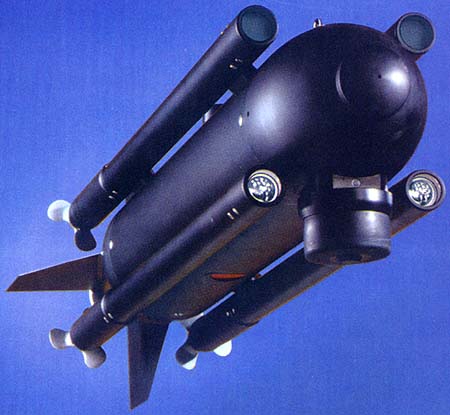
seafoxAlready, they had considered using the the German-made Seafox, a 1.2 meter (4 foot), 45 kilogram (100-pound) semiautonomous drone that is controlled using fiber optic cable. Unfortunately, the limits of this model and the cost ($100,000 per drone) led many to conclude that a more cost-effective option was necessary. Hence, the Knifefish, a 5.8 meter (19 foot) 770 kilogram (1700 pound) robot that has an extended range and improved capabilities.

For starters, it is powered by lithium-ion batteries that give it an operational life of up to 16 hours. It also uses a low-frequency synthetic aperture sonar that can penetrate beneath a soft sea floor, giving it the ability to distinguish mines mines from submerged debris with better accuracy. Mines will be able to be fingerprinted in real time by using resonance patterns obtained during imaging and comparing them to known signatures.

Granted, this is not exactly a cheaper option than importing Seafoxes, but given the benefits to mine sweeping in the Persian Gulf and other potential areas of conflict, the Pentagon considers it a worthy investment. Eight units have been ordered and will be built jointly by General Dynamics and Bluefin Robotics, at a total cost of $20 million. Naval divers are still expected to carry out many mine clearing operations themselves, but drones will reduce dive frequency and associated risk.

The key here is that the Knifefish drones will be responsible for identifying and mapping underwater mines, not destroying them. Responsibility for performing such acts will no doubt be a matter for international bodies and courts to negotiate, applying martime law and international treaties to the mix. Also, the Knifefish is also being proposed as a means for private companies to monitor underwater pipelines and offshore oil rigs. So in addition to aiding in the protection against terrorism or naval blockages, the Knifefish could be used to ensure environmental safety.

Source: Extremetech.com

NASA’s Next-Gen Spacesuit

NASA_suitIt’s like something Buzz Lightyear would be seen in, minus the death ray laser. It’s called the Z-1 spacesuit, a prototype that NASA hopes to incorporate into their equipment lineup by 2015. Not only does this new design offer a wide range of advantages compared with the space agency’s previous suit – the Extravehicular Mobility Unit (EMU) spacesuit – it also represents the first major overhaul in spacesuit technology since 1998.

For example, it boasts a rear-entry hatch which lets an astronaut put on the suit from the back, as opposed to putting on the top, bottom and helmet separately. This hatch also coincides with a feature known as the suit port, which allows the suit to be attached to the outside of a vehicle (such as a rover), thus allowing the astronaut to simply enter the suit from inside the vehicle. This is a big step from the current space suits which must be stored and put on internally.

I don't see a resemblance, do you?
I don’t see a resemblance, do you?

On top of that, the Z-1 excels in the areas of mobility and visibility. The former arises from the fact that the suit comes as a single piece rather than being made up of multiple segments. The larger, bubble dome helmet is what ensures that the astronauts has a better field of view. And finally, NASA plans to address the issue of life support through the portable PLSS 2.0 which condenses all life support systems into one package and does not need external components.

The PLSS 2.0 design also incorporates a massive bonus in the form of the Spacesuit Water Membrane Evaporator temperature regulator, which would actually make it possible for future astronauts to comfortably walk on extraterrestrial planets. According to NASA’s PLSS engineer Carly Watts, the PLSS 2.0 “can be used in a Martian environment. It can be frozen without damaging the unit, and it’s not particularly sensitive to contamination.” Good news for the astronauts heading to Mars in 2030, assuming the budget environment remains friendly after President Obama is no longer in power.

Check out this video of NASA Public Affairs Officer Brandi Dean talking with Cristina Anchondo, Z1 spacesuit test director, about the Z1 spacesuit at the Johnson Space Center.


Source: news.cnet.com

NASA Makes Appearance at 2013 Inauguration

2013_inaugural_nasaThe 2013 Inaugural Parade on January 21st – my birthday, fyi – was quite the sight to see. In addition to the President and First Lady, many floats, and thousands of onlookers, the good folks at NASA also made an appearance. Specifically, two floats featuring the Orion deep space capsule and the Curiosity Rover were part of the parade, passing in front of the White House and the official reviewing stand while President Obama, VP Joe Biden, their families and numerous dignitaries smiling and waving.

The life-sized models were greeted with plenty of fanfare and fair weather as they floated near the front of the procession, and it is estimated that over a million people were on hand to witness the event. NASA was the only federal agency to be asked to take part in the inaugural parade, which goes to show you how important the administration considers their efforts. But given all that NASA has accomplished as of late, that should come as no small surprise.

In the few short months since it landed, Curiosity has uncovered very compelling evidence that water once flowed on Mars, and the Orion capsule is expect to take astronauts back to the moon and father into space than ever before. What’s more, the Obama administration has already granted the funding for NASA to go ahead with its plans to establish an outpost on the Moon in the next few years, as well as a manned mission to the Mars by 2030. In short, NASA and the Obama administration are pretty tight; and if you ask me, both are stronger for it!

Check out the video below of the procession, or go to NASA Flickr page for more photos of the inaugural parade.


Source:
Universe Today.com

The Future is Here: The ASB Glassfloor!

GlassFloor_TitelIt looks like something out of Tron, doesn’t it? In truth, its LED lights underneath a glass surface, but the end result is nothing short of awesome, not to mention convenient. It’s known as the ASB Glassfloor, the latest creation from German manufacturer Germany’s ASB Systembau. Using a system where an aluminum substructure supports the surface and LED’s provide light lines, a gymnasium or sports arena can be converted from a volleyball court, to a basketball court, to a series of tennis courts by simply pushing a button.

What’s more, ceramic dots on the glass re-create the feel of a wooden surface, while special etchings diffuse the LED light and prevent glare from bothering athletes. And for those who worry that the entire thing will shatter as soon as the home team takes the floor, know that this “glass” is actually a high-tech tempered security variety that is actually more durable and longer lasting than a conventional wood floor, meaning it can bear the weight of multiple teams, and is even available in different colors.

And finally, the company also indicated that since the floor’s are basically one large display device, that they can be programmed to broadcast ads in certain spaces, and that the entire floor itself can be turned into a single screen. Hence, while the player’s are playing, people can also enjoy small ads running in the end zone or sidelines, just in case they felt sports weren’t saturated by enough product placements! And at halftime, the floor can put on a show, either on its own or with the help of cheerleaders and a marching band.

My, with all the new display technologies and high-tech surfaces coming out, one would think the entire future is going to be made of “smart glass” and inundated with images and texts. Seems nobody can be satisfied with a simple, non-augmented window or floor anymore. Oh well, it looks cool and that’s what matters!

ASBGlassFloor-3xTo see the Glassfloor in action, click on the gif image above, or watch the video below: