My Interview with AADYA Geo Talks!

My Interview with AADYA Geo Talks!

A few months back, I had the honor of appearing on AADYA Geo Talks, the podcast series launched by Bharti Sharma and the organization she founded – AADYA, whose name means “origin” in Hindi. As a geologist and world-traveller, Sharma launched this organization to promote knowledge about planetary and geoscience and create opportunities for collaborative research to address critical global challenges. 

During the interview, we talked about how I got into science journalism, my podcast series, and my science fiction writing. The interview lasted for more than an hour because she asked great questions about a range of wonderful topics (and she let me talk for as long as I wanted!) Here’s how she described our conversation:

“In this episode of AADYA Geo Talks, we explore the mind of a space journalist who has spent years unraveling the wonders of the universe. From the allure of dark matter to the search for extraterrestrial life, Matthew takes us on a journey through the most fascinating corners of space science. But here’s where it gets even more intriguing—science fiction has always fueled real-world space missions. “

Check it out, and watch it in segments if you need to! Also, visit the AADYA website to learn more about their education, outreach, and collaborative efforts.

Public Service Announcement!

The following is an appeal to public mental health and reason. Have you or someone you love been accused of suffering from TDS? If so, you are entitled to clarification on this condition and what sufferers experience. Here is the proper definition of TDS and recommendations on how you or someone you love can prevent and (if necessary) treat this condition.

Trump Derangement Syndrome: (noun) A condition where subjects lose their capacity for rational thought, empathy, and civility upon endorsing Donald J. Trump (hereafter, DJT). Other symptoms include paranoid delusions, belief in conspiracy theories, and retrograde amnesia – most notably, the loss of all memory pertaining to previous opinions and statements made about Trump.

Cases of collective TDS have also been noted, in which subjects experience a notable decline in their ability to reason and think intelligently due to exposure to DJT. Long-term symptoms include the repetition of false statements (without thought or reflection) made by DJT and his supporters.

Multiple instances have been reported, including references to DEI, CRT, BLM, ACA, DREAM, LGBTQ+, NWO, and other abbreviations. In all cases, subjects display complete and total ignorance of these concepts but vehemently condemn them and blame them for all the problems facing society – as well as the delusional belief that only DJT and his policies can protect them.”

Some common examples of conspiracy theories associated with DJT include (but are not limited to), White Genocide, Flat-Earth Theory, Replacement Theory, Creationism, False Flag operations, and a belief in something called “The Deep State.” Other well-documented delusions include the belief that:

  • Vaccines contain microchips
  • The 26+ women he raped or assaulted are “liars”
  • Immigrants are eating your pets
  • Democrats abort babies after they’re born
  • Democrats are “grooming children”
  • Schools are performing gender transition surgery
  • Trump won the 2020 election
  • The election was “stolen” by left-wingers, some now deceased
  • There’s a vast media conspiracy to hurt DJT
  • Elites are out to get Trump because he “drained the swamp.”
  • Ukraine started the war with Russia
  • Ukraine is losing the war with Russia
  • Ukraine is run by Nazis
  • Nazis are a left-wing political movement
  • Tariffs will correct “economic injustice”
  • Trump is the most “persecuted” president in U.S. history

Warning signs that you or someone you love may be suffering from DJT include (but are not limited to) using the following terms unironically:

  • “Left-wing conspiracy”
  • “Drain the swamp”
  • “Rigged!”
  • “Let’s go Brandon!”
  • “FoxNews rules”
  • “Deep State”
  • “Third Term”
  • “Lamestream media”

Luckily, DJT is a treatable condition, except in extreme cases where the subject suffers from additional personality disorders and/or mental illnesses – especially when combined with extravagant wealth. Treatment options include:

  • Turning off FoxNews
  • Turning off Newsmax, OANN, Breitbart, and other alt-right “news”
  • Unsubscribing from Truth Social
  • Unsubscribing from X
  • Leaving FB chat groups
  • Limiting time on social media and internet forums
  • Stepping outside and interacting with people different than you
  • Reading a book, especially one that’s not a right-wing polemic
  • Exposure therapy to gay, trans people, and people of color
  • Empathy workshops
  • White and male privilege checks
  • Listening to family members you cut ties with over Trump

This has been a public service announcement. Good night, and good luck! Seriously, GOOD LUCK!

Episode 97 of Stories from Space is Now Live!

Episode 97 of Stories from Space is Now Live!

For this week’s episode, I had a very special guest: Dr. Moriba Jah, a man with more titles, credentials, and honors than I could possibly fit into a single paragraph. Check out his website if you doubt me or just want to know what they all are. But to give you the TL: DR version, Moriba Jah is a Professor of Aerospace Engineering and Engineering Mechanics at The University of Texas at Austin. He’s a major advocate for the “stewardship” of Earth and space and a promoter of sustainable living in both.

He has worked extensively with NASA, the Air Force Research Laboratory, and several premier academic institutions. He is also well-traveled and has earned a wide following for his advocacy for sustainability and humanity’s future in space. If we are to live beyond Earth, he states, humanity must either evolve by means of augmentation (homo machina), or we will need to take Earth’s systems with us – meaning bioregenerative life support systems and living, or Terraforming.

He’s been interviewed and featured by so many outlets and in so many forums that I consider myself the luckiest podcaster to actually secure an interview with him. Follow the links to learn more and hear some truly quotable quotes!

Where to Listen:

Episode 96 of Stories from Space is now Live!

Episode 96 of Stories from Space is now Live!

Forgive me for the late announcement, folks, but life has been rather busy lately. In any case, the latest episode of SfS is out, and the subject is, “What discoveries has the James Webb Space Telescope made so far?” This is a subject that I’m rather fond of, given the many scientific breakthroughs that have come from Webb’s three General Observations cycles. They are now into number four, which I am covering for Universe Today. And this has made me want to take stock of everything this next-generation observatory has revealed about the Universe until now.

The breakthroughs it has allowed for can be broken down into three categories: galaxies that existed in the very early Universe, the first supermassive black holes (SMBHs), and exoplanet characterization. Check the links below to hear more!

Where to Listen:

Episode 95 – WTF is Happening at NASA? (Part II) – is Now Live!

Episode 95 – WTF is Happening at NASA? (Part II) – is Now Live!

In this two-part episode, I interviewed former NASA scientist and astrobiologist Keith Cowing, the creator and editor of NASA Watch and Astrobiology.com. In part I, we discussed the current state of things at NASA amid the DOGE shakeup (somewhere between uncertainty and total chaos). In this installment, we followed this up with a look at how NASA’s long-term plans, which have changed many times in the past twenty years. Follow the links below to learn more.

Where to Listen:

Episode 94 – WTF is Happening at NASA? (Part I) – is Now Live!

Episode 94 – WTF is Happening at NASA? (Part I) – is Now Live!

This week’s episode was a special treat! I sat down with former NASA scientist and astrobiologist Keith Cowing, the creator and editor of NASA Watch and Astrobiology.com. Keith’s extensive experience as an industry insider and a scientist has made him a trusted news source for millions of people, including myself. In his time, he witnessed many developments and advancements and played a major part in advancing the fields of astrobiology and space exploration.

He is a trained biologist, a specialist in payloads and biospecimen containment, and was part of the -Space Station Freedom Program. He is also very well-traveled, having been to Nepal and the Arctic Circle and even participated in centrifuge training and zero-g flights. I only got to hear a bit about all those experiences during our chat, but we got deep into discussing the current state of things at NASA. Our talk went so long, I had to break it into two segments to do it justice.

Follow the links below to hear Part I of our interview.

Where to Listen:

Episode 93 of Stories from Space is now Live!

Episode 93 of Stories from Space is now Live!

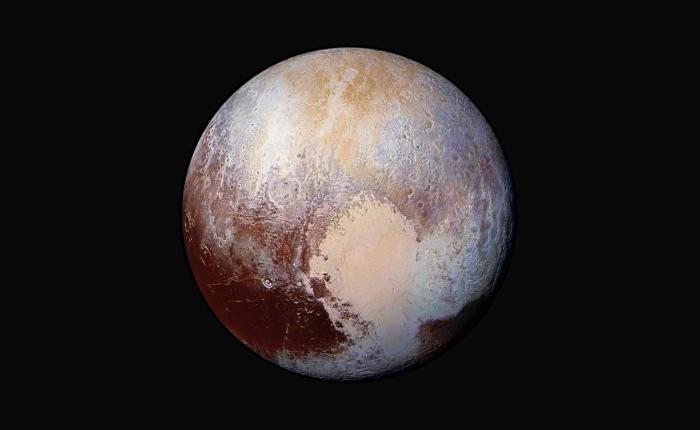
This week, I sat down with Dr. Will Grundy, an astronomer and planetary scientist with the Lowell Observatory—the place where Dr. Tombaugh discovered Pluto in 1930! Who better to speak to about Pluto and the “Great Planet Debate”? The debate began in the early 2000s with the discovery of many new objects orbiting beyond Pluto. It was “resolved” with the IAU decision of 2006 that defined a planet as a celestial body that:

(a) is in orbit around the Sun, (b) has sufficient mass for its self-gravity to overcome rigid body forces so that it assumes a hydrostatic equilibrium (nearly round) shape, and (c) has cleared the neighbourhood around its orbit.”

As you’ll see in this episode, the debate is far from over and can get pretty contentious. Planetary scientists, astrogeologists, and people from other disciplines have criticized the IAU’s rather narrow definition and believe that planethood should be extended to all the major bodies of our Solar System. Follow the links below to learn why…

Where to Listen:

Apollo, Vietnam, and Global Problems: A Question of Priorities

Apollo, Vietnam, and Global Problems: A Question of Priorities

Between 1961 and 1973, there was significant pushback from people who lamented the fact that so many resources were being directed toward sending astronauts to the Moon while poverty, social injustice, and inequality were still rampant. Neil Maher, a professor of history at the New Jersey Institute of Technology, addressed this in his 2017 book Apollo in the Age of Aquarius.

According to Maher, the Apollo space program was a source of division among Americans. Whereas supporters viewed it as a way of energizing a country that had lost its way, those opposed saw it as a huge waste of money that should have gone to solving societal problems. As Maher summarized it:

“There was a debate about what America was at the time. Was it a country to spend $20 billion to land two men on a dead rock in space or try to solve some of the problems closer to home on Earth? A lot of grassroots movements argued to use the [NASA] money to solve problems here.”

Continue reading “Apollo, Vietnam, and Global Problems: A Question of Priorities”

“But he’s Always Nice to ME” — The Problem with MAGA and America

“But he’s Always Nice to ME” — The Problem with MAGA and America

When ignorance, complacency, and selfishness come together, you have the death of empathy. A lack of empathy is how mass atrocities are able to happen.

The past few weeks have been a nightmare for many people in the U.S., not to mention those of us who live in the countries immediately bordering it. Naturally, at times like this, I worry about my family, friends, and colleagues who live in the U.S. and are forced to live through another Trump administration and the dumpster fire that follows him. They are horrified by what’s happening right now and asking how it could have possibly happened again.

Continue reading ““But he’s Always Nice to ME” — The Problem with MAGA and America”

Episode 92 of SfS is now Live! “The History and Future of Space Stations.”

Episode 92 of SfS is now Live! “The History and Future of Space Stations.”

Hello again, folks. It’s been a busy few months, what with the holidays and a few life-related events that have happened since. Unfortunately, I was unable to produce new episodes every week. Fortunately, that is now over, and I have not one but TWO new episodes ready to share! This week’s installment is dedicated to the history, development, and future of Space Stations. Cue the Blue Danube Waltz and the scene from 2001: A Space Odyssey!

As I explain in the episode, the concept of space stations is time-honored and can be traced back to the early 20th century and the work of famed Russian aerospace engineer Konstantin Tsiolkovsky, who is considered the “forefather of rocketry.” Like most ideas pertaining to the future of humanity in space, he made the first recorded mention of a pinwheel station in space that would simulate gravity and have a natural environment that could provide oxygen.

Like rockets that used liquid propellants and other advanced concepts Tsiolkovsky originally proposed, his work went on to inspire the other “forefathers of rocketry”—Hermann Oberth, Robert Goddard, and Robert Esnault-Pelterie—many of whom went on to propose their own concepts. By the latter half of the 20th century, these ideas would bear fruit in the form of the Salyut space stations, Skylab, Mir, and the International Space Station (ISS).

With the decommissioning of the ISS scheduled for 2030, several nations and commercial space interests are working on proposals for successor stations. What will they look like, and how might they enable the migration of human beings throughout the Solar System as Tsiolkovsy predicted? Follow the links below to find out!

Where to Listen: