The Walking Dead – Season 4, Episode 13

The-Walking-Dead-season-4-wallpapers-7This week on the Walking Dead… more pacing, more backstory, more filler! After last week’s bottle episode that focused entirely on Daryl Dixon and Beth Greene in the wilderness, we got a more balanced episode that saw more from that unlikely duo, plus some updates on Beth, Bob and Sasha as they continue to look for Glenn and proceed towards Terminus. And as usual, we got to hear a bit more about their pasts and got another earful about the need to “keep hanging on”.

Throw in some more kills and foraging, and you’ve got yourself another pacing episode as we near the season four conclusion. I know, it sounds like I’m being critical. But in honesty, I found it entertaining and enjoyable.

Alone:
wd4_13_1The episode opens with a flashback on Bob Crowley’s life before he reached the prison. This consisted of wandering through the woods, maintaining a thousand-yard-stare, and then getting picked up by Daryl and Glenn as they found him on the road. As is their custom, they asked him the two big questions: “How many Walkers have you killed?” and “How many people have you killed?” He then joins them, indifferent to what kind of people they might be since he’s sick of being alone.

Flash forward to the present where he, Maggie and Sasha are still searching for Glenn. After fending off a group of walkers in the mist, they proceed to the railroad tracks where they too find a sign showing them how to get to Terminus. Maggie insists they go to this town since she’s sure Glenn would have if he saw the sign, but Sasha thinks its a trap. Grudgingly, they stay together and follow the tracks to the destination.

wd4_13_3Meanwhile, Beth and Daryl continue to track through the woods and Beth is injured when she steps in a small trap. They proceed to a funeral home surrounded by a vast graveyard and put in their for the night, noticing that someone else seems to have taken up residence. As they eat and wait, they continue to bond. Beth is insistent that Daryl accept that there are still good people in the world, but realizes he does because of her.

As they wait for Beth’s leg to heal, a dog comes around to the house and tripping their string of cans. One night, it returns, and Daryl opens the door to find a herd of walkers fighting to get in. Daryl lures them to the embalming room in the basement where he uses surgical tools to kill them while Beth escapes out the back. When Daryl makes it to the road, he sees her bag lying on the ground and a car drive off.

wd4_13_4Daryl runs through the night, following the road, and finds his way to the tracks where he finally collapses. He is then found by a group of armed men who appear to want to scavenge his equipment. A standoff ensues as Daryl points his crossbow at their leader, a man named Joe. We recognize him as one of the gunmen who Rick run afoul of earlier, and he encourages Daryl to come with them and “hurt other people”.

During the night, Sasha suggest to Bob they abandon the search, find the nearest building, and hold up. The next morning, they a wake to find that Maggie has gone on without them. They head along the tracks, hoping to catch her, and find that she’s left a trail of carved messages telling Glenn to go to Terminus. They eventually find their way to a series of buildings and Sasha once again suggests they set down there, but Bob insists they continue.
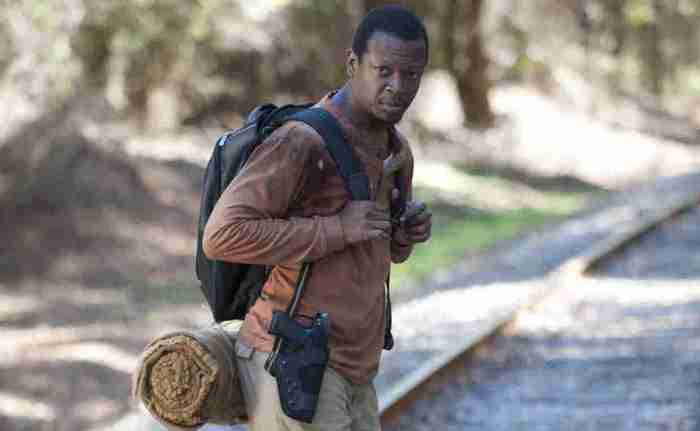
wd4_13-2Bob challenges Sasha to maintain hope that they find Tyreese and the others at Terminus; but sensing she won’t come, kisses her goodbye. He heads off alone again, and Sasha heads into the tall brick building. Looking out the window, she spots Maggie sleeping below. She accidentally knocks a window pane, which wakes up Maggie and causes Walkers to converge on her. Together, they manage to fight them off.

Maggie tells Sasha that she heard all she said, but that she was still waiting for Sasha and Bob to catch up since she needs them. They come together and eventually find Bob, and proceed on their way to Terminus. Somewhere else along the tracks, Glenn stops to read from a map that points the way to the same location…

Summary:
Compared to last week’s episode, this bit of filler proved to be more entertaining, thanks in no small part to the inclusion of Maggie, Bob and Sasha’s thread. It also managed to hint at what’s coming, thanks to the introduction of Joe and his party of  hunters/marauders. We already know from episodes past that they are some bad news, so I imagine Daryl will have his hands full in the near future.

I also enjoyed the shooting locations for this episode and the action sequences. Maggie really redefined the word badass with the way she used a street sign like it was a battleaxe, chopping and hewing her way through a horde of zombie heads. And that last shot, where she decapitated one of the biters? Holy crap, that was good! And of course, Sasha did pretty good too, wielding a sharpened stick like it was a combination spear/bo staff.

Alas, there were things I didn’t like much about this episode. For one, they seem to be running headlong towards a romantic entanglement between Beth and Daryl. I imagine there are some people out there clamoring for it to happen, but c’mon people! She’s still a child and Daryl is not the type to play the creepy old man! Still, the dynamic between them is very effective, and the budding relationship is touching. I just think it would be better if it didn’t get romantic!

And unlike other episodes, the title wasn’t so double-entendre-y this week. It was very much obvious, and harped on yet another theme that is growing tired on this show. Yes, the message of this week’s episode was more than clear: no one can make it out here alone. And of course this plays into the whole “we got to keep holding on” message that is played at least once an episode.

And what’s also a little bothersome is the fact that next week’s episode looks like more of the same. After hearing from Rick, Carl and James, Daryl and Beth, and now Maggie, Bob and Sasha, we’re about to get a bottle episode dedicated to Tyreese, Carol and the girls.

But there’s only three episodes left and they are already dropping hints as to how its going to wrap up. I predict a showdown between Rick and co. and Joe and his band of very bad men. But we’ll see soon enough!

The Future of Medicine: New Cancer Tests and Treatments

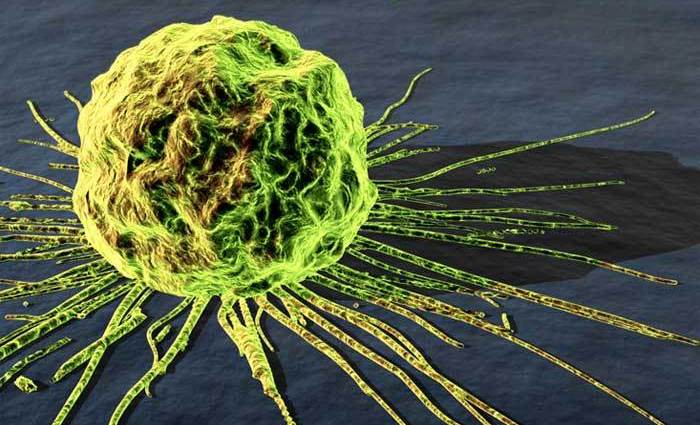
cancer_growingWhile a cure for cancer is still beyond medical science, improvements in how we diagnose and treat the disease are being made every day. These range from early detection, which makes all the difference in preventing the spread of the disease; to less-invasive treatments, which makes for a kinder, gentler recovery. By combining better medicine with cost-saving measures, accessibility is also a possibility.

When it comes to better diagnostics, the aim is to find ways to detect cancer without harmful and expensive scans or exploratory surgery. An alternative is a litmus test, like the one invented by Jack Andraka to detect pancreatic cancer. His method, which was unveiled at the 2012 Intel International Science and Engineering Fair (ISEF), won him the top prize due to the fact that it’s 90% accurate, 168 times faster than current tests and 1/26,000th the cost of regular tests.

cancer_peetestSince that time, Jack and his research group (Generation Z), have been joined by such institutions as MIT, which recently unveiled a pee stick test to detect cancer. In research published late last month in the Proceedings of the National Academy of Sciences, MIT Professor Sangeeta Bhatia reported that she and her team developed paper test strips using the same technology behind in-home pregnancy tests, ones which were able to detect colon tumors in mice.

The test strips work in conjunction with an injection of iron oxide nanoparticles, like those used as MRI contrast agents, that congregate at tumor sites in the body. Once there, enzymes known as matrix metalloproteinases (MMPs), which cancer cells use to invade healthy tissue, break up the nanoparticles, which then pass out through the patient’s urine. Antibodies on the test strip grab them, causing gold nanoparticles to create a red color indicating the presence of the tumor.

cancer_peetest2According to Bhatia, the technology is likely to make a big splash in developing countries where complicated and expensive medical tests are a rarity. Closer to home, the technology is also sure to be of significant use in outpatient clinics and other decentralized health settings. As Bhatia said in a press release:

For the developing world, we thought it would be exciting to adapt (the technology) to a paper test that could be performed on unprocessed samples in a rural setting, without the need for any specialized equipment. The simple readout could even be transmitted to a remote caregiver by a picture on a mobile phone.

To help Bhatia and her research team to bring her idea to fruition, MIT has given her and her team a grant from the university’s Deshpande Center for Technological Innovation. The purpose of the grant is to help the researchers develop a startup that could execute the necessary clinical trials and bring the technology to market. And now, Bhatia and her team are working on expanding the test to detect breast, prostate cancers, and all other types of cancer.

?????????????In a separate but related story, researchers are also working towards a diagnostic methods that do not rely on radiation. While traditional radiation scanners like PET and CT are good at finding cancer, they expose patients to radiation that can create a catch-22 situation where cancer can be induced later in life, especially for younger patients. By potentially inducing cancer in young people, it increases the likelihood that they will have to be exposed to more radiation down the line.

The good news is that scientists have managed to reduce radiation exposure over the past several years without sacrificing image quality. But thanks to ongoing work at the Children’s Hospital of Michigan, the Stanford School of Medicine, and Vanderbilt Children’s Hospital, there’s a potential alternative that involves combining MRI scans with a contrast agent, similar to the one Prof. Bhatia and her MIT group use in their peestick test.

cancer_braintumorAccording to a report published in the journal The Lancet Oncology, the researchers claimed that the new MRI approach found 158 tumors in twenty-two 8 to 33-year-olds, compared with 163 found using the traditional PET and CT scan combo. And since MRIs use radio waves instead of radiation, the scans themselves have no side effects. While the study is small, the positive findings are a step toward wider-spread testing to determine the effectiveness and safety of the new method.

The next step in testing this method will be to study the approach on more children and investigate how it might work in adults. The researchers say physicians are already launching a study of the technique in at least six major children’s hospitals throughout the country. And because the cost of each method could be roughly the same, if the MRI approach proves just as effective yet safer, radiation-free cancer scans are likely to be the way of the future.

cancer_georgiatechAnd last, but not least, there’s a revolutionary new treatment pioneered by researchers at Georgia Tech that relies on engineered artificial pathways to lure malignant cells to their death. This treatment is designed to address brain tumors – aka. Glioblastoma multiform cancer (GBM) – which are particularly insidious because they spread through the brain by sliding along blood vessels and nerve passageways (of which the brain has no shortage of!)

This capacity for expansion means that sometimes tumors developed in parts of the brain where surgery is extremely difficult – if not impossible – or that even if the bulk of a tumor can be removed, chances are good its tendrils would still exist throughout the brain. That is where the technique developed by scientists at Georgia Tech comes in, which involves creating artificial pathways along which cancer can travel to either more operable areas or even to a deadly drug located in a gel outside the body.

cancer_georgiatech1According to Ravi Bellamkonda, lead investigator and chair of the Wallace H. Coulter Department of Biomedical Engineering at Georgia Tech and Emory University:

[T]he cancer cells normally latch onto … natural structures and ride them like a monorail to other parts of the brain. By providing an attractive alternative fiber, we can efficiently move the tumors along a different path to a destination that we choose.

The procedure was reported in a recent issue of the journal Nature Materials. It involved Bellamkonda and his team implanting nanofibers about half the size of a human hair in rat brains where GBMs were growing. The fibers were made from a polycaprolactone (PCL) polymer surrounded by a polyurethane carrier and mimicked the contours of the nerves and blood vessels cancer cells like to use as a biological route.

cancer_georgiatech2One end of a fiber was implanted into the tumor inside the brain and the other into a gel containing the drug cyclopamine (which kills cancer cells) outside the brain. After 18 days, enough tumor cells had migrated along the fiber into the gel to shrink the tumor size 93 percent. Not only does Bellamkonda think his technique could be used to relocate and/or destroy cancers, he says he believes it could be used to help people live with certain inoperable cancers as a chronic condition.

In a recent statement, Bellakomba had this to say about the new method and the benefits its offers patients:

If we can provide cancer an escape valve of these fibers, that may provide a way of maintaining slow-growing tumors such that, while they may be inoperable, people could live with the cancers because they are not growing. Perhaps with ideas like this, we may be able to live with cancer just as we live with diabetes or high blood pressure.

Many of today’s methods for treating cancer focus on using drugs to kill tumors. The Georgia Tech team’s approach was engineering-driven and allows cancer to be treated with a device rather than with chemicals, potentially saving the patient many debilitating side effects. Part of the innovation in the technique is that it’s actually easier for tumors to move along the nanofibers than it is for them to take their normal routes, which require significant enzyme secretion as they invade healthy tissue.

cancer_georgiatech3Anjana Jain, the primary author of the study, was also principally responsible for the design of the nanofiber technique. After doing her graduate work on biomaterials used for spinal cord regeneration, she found herself working in Bellamkonda’s lab as a postdoctoral fellow and came up with the idea of routing materials using engineered materials. In a recent statement, she said the following of her idea:

Our idea was to give the tumor cells a path of least resistance, one that resembles the natural structures in the brain, but is attractive because it does not require the cancer cells to expend any more energy.

Extensive testing, which could take up to 10 years, still needs to be conducted before this technology can be approved for use in human patients. In the meantime, Bellamkonda and his team will be working towards using this technology to lure other cancers that like to travel along nerves and blood vessels. With all the advances being made in diagnostics, treatments, and the likelihood of a cure being found in the near future, the 21st century is likely to be the era where cancer becomes history.

Sources: news.cnet.com, (2), (3)

News From Space: Kepler Finds Many New Worlds!
exoplanets2Late last month, NASA announced the discovery of 715 more exoplanets, nearly doubling the number of planets beyond our Solar System. These newly-verified worlds orbit 305 stars, revealing multiple-planet systems outside of our own, with four of them within their stars habitable zones. It’s the single largest windfall of new confirmations at any one time, and its all thanks to a new verification technique employed by the Kepler space probe’s scientists.

Nearly 95 percent of these planets are smaller than Neptune, which is almost four times the size of Earth. What’s more, this latest batch of exoplanets puts the total number of those confirmed from about 1000 to just over 1700 – and increase of 70% that occurred overnight! This discovery marks a significant increase in the number of known small-sized planets more akin to Earth than previously identified exoplanets.

alien-worldJohn Grunsfeld, associate administrator for NASA’s Science Mission Directorate in Washington, had this to say in a press release:

The Kepler team continues to amaze and excite us with their planet hunting results. That these new planets and solar systems look somewhat like our own, portends a great future when we have the James Webb Space Telescope in space to characterize the new worlds.

Since the discovery of the first planets outside our solar system roughly two decades ago, verification has been a laborious planet-by-planet process. Now, scientists have a statistical technique that can be applied to many planets at once when they are found in the same planetary systems. From NASA’s Ames Research Center in Moffett Field, Calif, the Kepler research team used a technique called verification by multiplicity, which relies in part on the logic of probability.

Kepler78b1The Kepler space probe observes some 150,000 stars and has found a few thousand of those to have planet candidates. If the candidates were randomly distributed among Kepler’s stars, only a handful would have more than one planet candidate. However, Kepler observed hundreds of stars that have multiple planet candidates. Through a careful study of this sample, these 715 new planets were verified.

This method can be likened to the behavior we know of lions and lionesses – where the lions are the Kepler stars and the lionesses are the planet candidates. The lionesses would sometimes be observed grouped together whereas lions tend to roam on their own. If more than two large felines are gathered, then it is very likely to be a lion and his pride. Thus, through multiplicity the lioness can be reliably identified in much the same way multiple planet candidates can be found around the same star.

Kepler-telescope-580x448Jack Lissauer, c0-leader of the Kepler science team at NASA’s Ames Research Center, explains the difference this process ushers in:

Four years ago, Kepler began a string of announcements of first hundreds, then thousands, of planet candidates –but they were only candidate worlds. We’ve now developed a process to verify multiple planet candidates in bulk to deliver planets wholesale, and have used it to unveil a veritable bonanza of new worlds.

Of these planets, the vast majority are small, boosting the number of known small Earth-sized planets by a factor of 400%. Other jumps include a 600% increase is known Super-Earths (or Mini-Neptunes), a 200% boost for Neptune-sized planets, and just 2% for Jupiter-sized planets. The 305 solar systems are also quite similar to our own, with the planets orbiting along a flat plane in tightly-packed, nearly circular orbits.

kepler_graphAs noted, the Kepler scientists confirmed the existence of four planets situated within their solar system’s habitable zone. They are Kepler-174d, Kepler-296f, Kepler-298d and Kepler-309c, are less than 2.5 times the size of Earth, and all orbit around M and K stars. Kepler-296f is especially interesting, in that it orbits a star half the size and 5 percent as bright as our sun, and is either a gaseous planet composed of hydrogen-helium, or a water world surrounded by a deep ocean.

In the meantime, NASA has released this animated graph (shown above) to put all the discoveries into context. And while the discovery of only four potentially habitable planets amongst 715 (a mere 0.0056% of the total) may seem discouraging, each discovery brings us one step closer to a more accurate understanding of our place in the galaxy. The findings papers will be published March 10 in The Astrophysical Journal.

Sources: IO9, (2), nasa.gov

WordPress Tag!

wordpress_cloudMy thanks to Rami for tagging me in the latest round of WordPress Tag! This means I have to answer the following questions and then send some tags out of my own. So lets get this party started…

What are you currently working on?
Having finished with my second zombie book (Papa Zulu), I’m now working full-tilt to finish my anthology of science fiction short stories. It’s called Flash Forward, and contains short pieces of fiction that deal with subjects ranging from climate change, militarized borders, drone warfare, neural downloads, cybernetic augmentation, space travel, and cosmic evolution.

How does your work differ from other authors in the genre?
These days, most authors I know are writing in the dystopian sci-fi genre. Somehow, with the growth of the YA market and the popularity of books like The Hunger Games and Divergent, the whole dark future theme seems to be making a big comeback. But I want to deal with future scenarios that are in keeping with current trends, addressing the impending Technological Singularity, Climate Change, and how the interaction of these two forces will shape the coming decades and centuries.

Why do you write what you do?
Because I have this obsession with recreating the kind of things that inspire me. The books that have done the best job of that in the past were always works that captured the zeitgeist of the age, making predictions about the future in order to tell a story about the here and now. It’s been my hope for almost two decades now that I could create something that would do the same thing for others.

How does your writing process work?
My mind is constantly dreaming of things that inspire me and looking for new ideas. I try to feed it as best I can with research and the latest in science, tech, history and geopolitics, until such time as a breakthrough comes and I begin to plot it all out. Then, once I have a framework in place, I start field testing it out by writing the first few chapters and seeing if it has traction. Once that’s done, the story begins to evolve and take on a life of its own. Some don’t make it to fruition, but others do.

And now I tag three writers:
I nominate the following three people for the next round:

Goran Zidar

Emily Guido

Deirdra Alexander

Good luck!

NBC’s Community and Subtle References to Dystopia

Community-Poster-630x336You know me, I’m not really in the habit of reviewing television shows that don’t involve a science fiction plot or zombies. But Community is one of my favorite shows currently on TV, and this past week they did an episode that I found absolutely brilliant. Starting with the premise of a new social utility app that let’s people rank others, it then got into some serious dystopian lit territory!

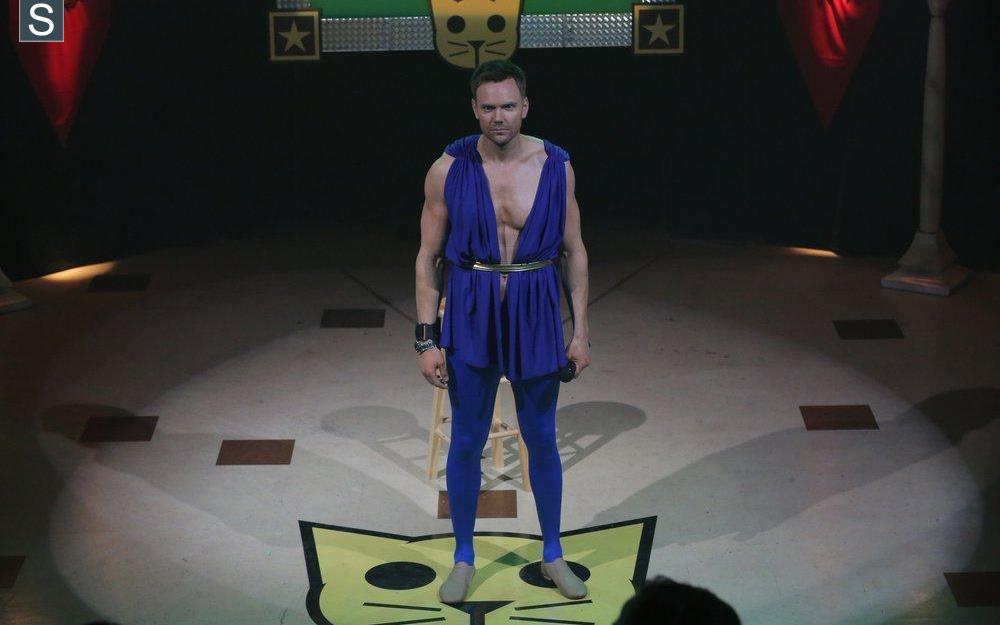
To break it down, the setting of the show – Greendale Community College – becomes the beta testing ground for an app called MeowMeow Beenz. This gives people the chance to rate each other the same way they would a movie or product online, and it becomes a big hit on the campus. Quickly, people realize that ratings made by people with five beenz (five kitty faces) carry more weight, and a social hierarchy is formed!

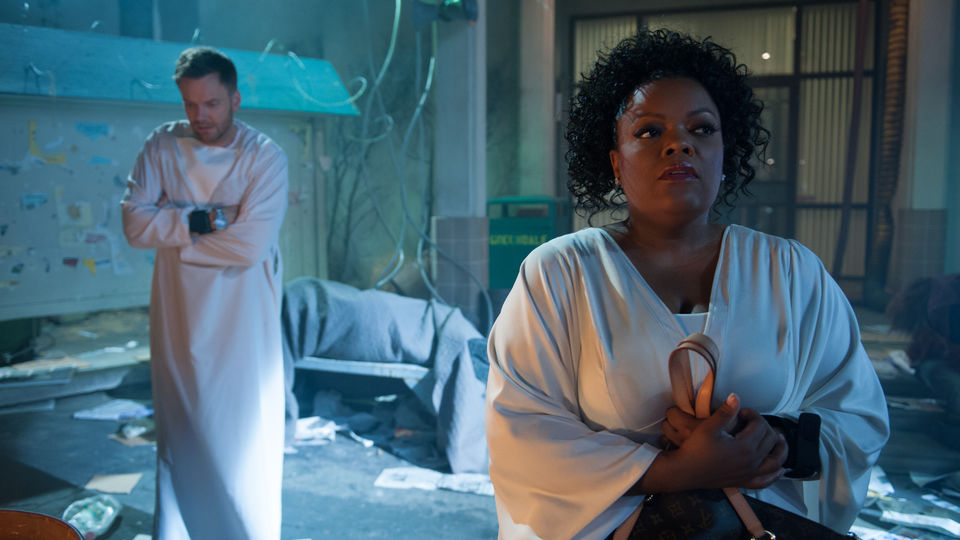
Community - Season 5That’s when all the dystopian imagery comes into play. The school is then rezoned based on people’s rating and everyone is forced to dress accordingly. The fives live in pastel covered room, wear white robes and futuristic looking devices, and are waited on hand and foot. Four’s dress like something out of Logan’s Run and live in the halls adjacent to them, where they aspire to become fives.

Threes and Two live in the “common area” where things are darkly lit, everyone dresses in grey coveralls, and the voice of dean informs them over the PA that “tranquility is advancement… a happy three is a future four”. And one’s are banished to the “outland”, which is the campus grounds that have now been redecorated with barbed wire, search lights, and fires in metal drums.

community_app2Eventually, the Fives try to appease the masses by holding a talent contest where the winner will receive Five status. Jeff and Britta, two of the show’s MCs plot to bring it down by getting Jeff to win and then denounce the rating system. But after he wins the contest – which is a clear allusion to American Idol and so many other reality TV tropes – he joins the Fives and tries to become its new leader.

Meanwhile, Britta – disillusioned by his betrayal – goes amongst the Twos and Threes and foments a revolution,  replacing the rule of the Fives with a system of revolutionary justice where the Ones run things. As the leader, she is called “the Mother of Ones”, and judges all the fives by “reducing them to Oneness” – i.e. reducing their status to make them the same as everyone else.

??????????????????????????????????????????????????????????????????????????????????????????????????????????????But in the end, Jeff points out the cruel irony that the app developers have played on them. It asks people to rate each other, but the beta test ended days ago and the app itself is already available and rated FIVE STARS. He tells everyone that they must rate this “unregistered Five” by erasing it, and they all do. Realizing it’s Saturday, everyone then leaves school and goes home to sleep.

I tell ya, it was brilliant! Not only did it capture the essence of so many 20th century dystopian epics – showing how a hierarchical system based on fear, greed, the promise of advancement and propaganda can so easily take over. It also captured the very dangers of a revolutionary movement which seeks to replace such a system with one of forced equality, led by a tyrannical mother/father figure.

we_zamyatinIt also managed to provide some fitting satire on reality TV, the very way it conforms to some of our earlier dystopian predictions, and how the drive to be popular and famous is responsible for a great deal of angst in America and the world. Top all that off with some stabs at Zuckerberg, Facebook, and social utility apps in general, and you’ve got yourself a kickass episode!

And at one point, there’s was even a subtle reference to Yevgeny Zamyatin’s WE, the classic novel that inspired Orwell to write 1984 and presumably, Huxley to write Brave New World (though he denied it). At one point, two of the show’s characters are hiding in an office, and label that reads D-503 is on the door. This just happens to be the designation of the main character in WE, as no one in the One State has actual names anymore.

This is the reason I love this show. Dan Harmon, the show’s producer, knows great television, has great writers, and loves being all meta! In fact, that’s something they repeatedly say in the show: “that’s meta!” If you haven’t caught this show yet, then do so. It stars Chevy Chase (until the most recent season), is on Netflix (Canada, but not in the US), and makes hundreds of clever movie and television references.

The Future of 3D Printing: Exoskeletons and Limbs

???????????????????????3-D printing is leading to a revolution in manufacturing, and the list of applications grows with each passing day. But more important is the way it is coming together with other fields of research to make breakthroughs  more affordable and accessible. Nowhere is this more true than in the fields of robotics and medicine, where printing techniques are producing a new generation of bionic and mind-controlled prosthetics.

For example, 3D Systems (a an additive manufacturing company) and EksoBionics (a company specializing in bionic prosthetic devices) recently partnered to produce the new “bespoke” exoskeleton that will restore ambulatory ability to paraplegics. The prototype was custom made for a woman named Amanda Boxtel, who was paralyzed in 1992 from a tragic skiing accident.

3d_amanda2Designers from 3D Systems began by scanning her body, digitizing the contours of her spine, thighs, and shins; a process that helped them mold the robotic suit to her needs and specifications. They then combined the suit with a set of mechanical actuators and controls made by EksoBionics. The result, said 3D Systems, is the first-ever “bespoke” exoskeleton.

Intrinsic to the partnership between 3D Systems and EksoBionics was the common goal of finding a way to fit the exoskeleton comfortably to Boxtel’s body. One of the greatest challenges with exosuits and prosthetic devices is finding ways to avoid the hard parts bumping into “bony prominences,” such as the knobs on the wrists and ankles. These areas as not only sensitive, but prolonged exposure to hard surfaces can lead to a slew of health problems, given time.

3d-printed-ekso-suit-frontAs Scott Summit, the senior director for functional design at 3D Systems, explained it,:

[Such body parts] don’t want a hard surface touching them. We had to be very specific with the design so we never had 3D-printed parts bumping into bony prominences, which can lead to abrasions [and bruising].

One problem that the designers faced in this case was that a paralyzed person like Boxtel often can’t know that bruising is happening because they can’t feel it. This is dangerous because undetected bruises or abrasions can become infected. In addition, because 3D-printing allows the creation of very fine details, Boxtel’s suit was designed to allow her skin to breathe, meaning she can walk around without sweating too much.

3d_amandaThe process of creating the 3D-printed robotic suit lasted about three months, starting when Summit and 3D Systems CEO Avi Reichenthal met Boxtel during a visit to EksoBionics. Boxtel is one of ten EksoBionics “test pilots”, and the exoskeleton was already designed to attach to the body very loosely with Velcro straps, with an adjustable fit. But it wasn’t yet tailored to fit her alone.

That’s where 3D Systems came into play, by using a special 3D scanning system to create the custom underlying geometry that would be used to make the parts that attach to the exoskeleton. As Boxtel put it:

When the robot becomes the enabling device to take every step for the rest of your life. the connection between the body and the robot is everything. So our goal is to enhance the quality of that connection so the robot becomes more symbiotic.

3D_DudleyAnd human beings aren’t the only ones who are able to take advantage of this marriage between 3-D printing and biomedicine. Not surprisingly, animals are reaping the benefits of all the latest technological breakthroughs in these fields as well, as evidenced by the little duck named Dudley from the K911 animal rescue service in Sicamous, Canada.

Not too long ago, Dudley lost a leg when a chicken in the same pen mauled him. But thanks to a 3-D printed leg design, especially made for him, he can now walk again. It was created by Terence Loring of 3 Pillar Designs, a company that specializes in 3D-printing architectural prototypes. After hearing of Dudley’s plight through a friend, he decided to see what he could do to help.

3D_buttercupfootUnlike a previous printed limb, the printed foot that was fashioned for Buttercup the Duck, Loring sought to create an entire limb that could move. The first limb he designed had a jointed construction, and was fully 3D-printed in plastic. Unfortunately, the leg broke the moment Dudley pit it on, forcing Loring to go back to the drawing board for a one-piece printed from softer plastic.

The subsequent leg he created had no joints and could bend on its own. And when Dudley put it on, he started walking straight away and without hesitation. Issues remain to be solved, like how to prevent friction sores – a problem that Mike Garey (who designed Buttercup’s new foot) solved with a silicone sock and prosthetic gel liner.

3D_Dudley2Nevertheless, Dudley is nothing if not as happy as a duck in a pond, and it seems very likely that any remaining issues will be ironed out in time. In fact, one can expect that veterinary medicine will fully benefit from the wide range of 3D printed prosthetic devices and even bionic limbs as advancement and research continues to produce new and exciting possibilities.

And in the meantime, enjoy the following videos which show both Amanda Boxtel and Dudley the duck enjoying their new devices and the ways in which they help bring mobility back to their worlds:


Amanda Boxtel taking her first steps in 22 years:


Dudley the duck walking again:


Sources: news.cnet.com, (2), (3), 3dsystems.com, 3pillardesigns.com

Breaking Moore’s Law: Graphene Nanoribbons

^Ask a technician or a computer science major, and they will likely tell you that the next great leap in computing will only come once Moore’s Law is overcome. This law, which states that the number of transistors on a single chip doubles every 18 months to two years, is proceeding towards a bottleneck. For decades, CPUs and computer chips have been getting smaller, but they are fast approaching their physical limitations.

One of the central problems arising from the Moore’s Law bottleneck has to do with the materials we used to create microchips. Short of continued miniaturization, there is simply no way to keep placing more and more components on a microchip. And copper wires can only be miniaturized so much before they lose the ability to conduct electricity effectively.

graphene_ribbons1This has led scientists and engineers to propose that new materials be used, and graphene appears to be the current favorite. And researchers at the University of California at Berkeley are busy working on a form of so-called nanoribbon graphene that could increase the density of transistors on a computer chip by as much as 10,000 times.

Graphene, for those who don’t know, is a miracle material that is basically a sheet of carbon only one layer of atoms thick. This two-dimensional physical configuration gives it some incredible properties, like extreme electrical conductivity at room temperature. Researchers have been working on producing high quality sheets of the material, but nanoribbons ask more of science than it can currently deliver.

graphene_ribbonsWork on nanoribbons over the past decade has revolved around using lasers to carefully sculpt ribbons 10 or 20 atoms wide from larger sheets of graphene. On the scale of billionths of an inch, that calls for incredible precision. If the makers are even a few carbon atoms off, it can completely alter the properties of the ribbon, preventing it from working as a semiconductor at room temperature.

Alas, Berkeley chemist Felix Fischer thinks he might have found a solution. Rather than carving ribbons out of larger sheets like a sculptor, Fischer has begun creating nanoribbons from carbon atoms using a chemical process. Basically, he’s working on a new way to produce graphene that happens to already be in the right configuration for nanoribbons.

graphene-solarHe begins by synthesizing rings of carbon atoms similar in structure to benzene, then heats the molecules to encourage them to form a long chain. A second heating step strips away most of the hydrogen atoms, freeing up the carbon to form bonds in a honeycomb-like graphene structure. This process allows Fischer and his colleagues to control where each atom of carbon goes in the final nanoribbon.

On the scale Fischer is making them, graphene nanoribbons could be capable of transporting electrons thousands of times faster than a traditional copper conductor. They could also be packed very close together since a single ribbon is 1/10,000th the thickness of a human hair. Thus, if the process is perfected and scaled up, everything from CPUs to storage technology could be much faster and smaller.

Sources: extremetech.com

News from Space: Crimean Crisis Highlights US Dependence

crimean_crisis3The crisis in the Crimea continues, with Russia and the Ukraine threatening military action and the US and its western allies threatening sanctions. In addition to anxieties about the likelihood of war and the conflict spilling over into other regions, the crisis has served to highlight other possible global repercussions. And interestingly enough, some of them have to do with the current balance of space exploration and research.

In essence, every aspect of the manned and unmanned US space program – including NASA, other government agencies, private aerospace company’s and crucially important US national security payloads – is highly dependent on Russian & Ukrainian rocketry. Thus, all of the US space exploration and launches are potentially at risk amidst the current crisis.

SoyuzCompared to the possibility of an outbreak of war that could engulf the Eurasian triangle, this hardly seems terribly consequential. But alas, quite a few people stand to suffer from seeing all rockets grounded in the Ukraine and Russia as a result of the current climate. Consider the ISS, which is entirely dependent on Earth-based rockets for resupply and personnel rotation.

As it stands, astronauts on the International Space Station (ISS) ride to space and back on regularly scheduled launches, and each new rocket carried fresh supplies of food and equipment. The Atlas V and Antares rockets, plus critical U.S. spy satellites that provide vital, real time intelligence, are just some of the programs that may be in peril if events deteriorate, or worse yet, spin out of control.

ISSThe threat to intelligence gathering operations would be especially critical, since it would hamper efforts to monitor the crisis. In short, the Crimean confrontation and all the threats and counter threats of armed conflicts and economic sanctions shines a spotlight on US vulnerabilities regarding space exploration, private industry and US national security programs, missions, satellites and rockets.

But the consequences of escalating tensions would hardly be felt by only one side. Despite what some may think, the US, Russian and Ukrainian space programs, assets and booster rockets are inextricably intertwined and interdependent, and all would suffer if anything were to shut it down. For instance, some 15 nations maintain participation and funding to keep the ISS and its programs running.

ISS_crewAnd since the forced retirement of NASA’s space shuttle program in 2011, America has been dependent on Russia for its human spaceflight capability. ISS missions are most often crewed by American astronauts and Russian cosmonauts. And under the most recent contract, the US pays Russia $70 million per Soyuz seat, and both they and the Ukraine’s space programs are dependent on this ongoing level of investment.

The fastest and most cost effective path to restore America’s human spaceflight capability to low Earth orbit and the ISS is through NASA’s Commercial Crew Program (CCP) seeking to develop private ‘space taxis’ with Boeing, SpaceX and Sierra Nevada. But until such time as long-term funding can be guaranteed, the current arrangement will persist.

maven_launchWhen NASA Administrator Chales Bolden was asked about contingencies at a briefing yesterday, March 4, he responded that everything is OK for now:

Right now, everything is normal in our relationship with the Russians. Missions up and down are on target… People lose track of the fact that we have occupied the International Space Station now for 13 consecutive years uninterrupted, and that has been through multiple international crises… I don’t think it’s an insignificant fact that we are starting to see a number of people with the idea that the International Space Station be nominated for the Nobel Peace Prize.

At the same time, he urged Congress to fully fund CCP and avoid still more delays:

Let me be clear about one thing. The choice here is between fully funding the request to bring space launches back to the US or continuing millions in subsidies to the Russians. It’s that simple. The Obama administration chooses investing in America, and we believe Congress will choose this course as well.

spacex-dragon-capsule-grabbed-by-iss-canadarm-640x424At a US Senate appropriations subcommittee hearing on Defense, which was held yesterday to address national security issues, SpaceX CEO Elon Musk underscored the crucial differences in availability between the Falcon 9 and Atlas V in this excerpt from his testimony:

In light of Russia’s de facto annexation of the Ukraine’s Crimea region and the formal severing of military ties, the Atlas V cannot possibly be described as providing “assured access to space” for our nation when supply of the main engine depends on President Putin’s permission.

So, continuing operations of the ISS and US National Security are potentially held hostage to the whims of Russian President Vladimir Putin. And given that Russia has threatened to retaliate with sanctions of its own against the West, the likelihood that space exploration will suffer is likely.

?????????????????????????????????????????????????????????????????????????????????????????????????????????????????????????????????????????????????????????????????????????????????????????????????????????????????????????????????????????????????????????????????????????????????????????????????????????????????????????????????????????????????????????????????????????????????????????????????????????????????The Crimean crisis is without a doubt the most dangerous East-West conflict since the end of the Cold War. Right now no one knows the future outcome of the crisis in Crimea. Diplomats are talking but some limited military assets on both sides are reportedly on the move today.

Star Wars – The Old Republic: Movie Shorts

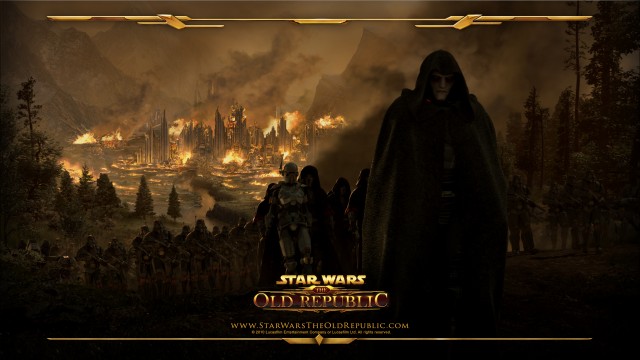
Star-Wars-The-Old-Republic-640x360It seems I’m always behind on these things! Yesterday, I came across this video entirely by accident, and realized it was one of the many movie shorts that certain parties had used to create a fan trailer for the upcoming Star Wars VII movie. Basically, its the intro movie for the MMORPG Star Wars: The Old Republic, and is a whole lot of eye-popping action porn!

A trailer which included all three SWTOR movies – The Return, Hope, and Deceived –  it has all the Star Wars action staples. These include Jedis and Sith battling it out with lighstabers, the smuggler with a Corellian ship, droids and armored soldiers fighting it out with blasters and detonators, and space-borne dogfights. And of course, the entire thing takes place to a classic John Williams score. Enjoy the movie!

Star Wars Tapestry Unveiled!

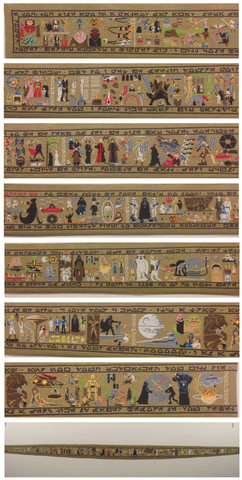
star-wars-prequelsFans of Star Wars are often able to pride themselves on their ability to recount the entire story, scene for scene and even word for word. But artist Aled Lewis took it  step further and hand-stitched a continuous tapestry. The creation process took six months, involved creating each scene on his laptop, and then transferring it in pixel format onto cloth and cross-stitching it in detail.

It is called “The Coruscant Tapestry”, a hand-stitched, 30 foot cotton thread illustration printed on Klostern fabric. The tapestry depicts the memorable moments from the “Star Wars” movies – from “A New Hope” to the way to “Revenge of the Sith” – in a way that is similar in style to that of The Bayeux Tapestry, which tells of the events that led to the Norman conquest of England.

starwars_tapestry1Click on the image above to get a closer look at the tapestry. And if you are in the area the awe-inspiring artwork is on display at Gallery 1988 in Los Angeles, and available to buy for just $20,000. I know, seems like a lot to spend on something pop-culture related; but then again, I’m not a collector!

Source: news.cnet.com