The Future of Building: Superefficient Nanomaterials

carbon-nanotubeToday, we are on the verge of a fabrication revolution. Thanks to developments in nanofabrication and miniaturization, where materials can be fashioned down the cellular (or even atomic) level, the option of making bigger and stronger structures that happen to weight less is becoming a reality. This is the goal of materials scientist Julia Greer and her research lab at Caltech.

As an example, Greer offers the The Great Pyramid of Giza and the Eiffel Tower. The former is 174 meters tall and weighs 10 megatons while the latter is over twice that height, but at five and half kilotons is one-tenth the mass. It all comes down to the “elements of architecture”, which allowed the Eiffel Tower to be stronger and more lightweight while using far less materials.

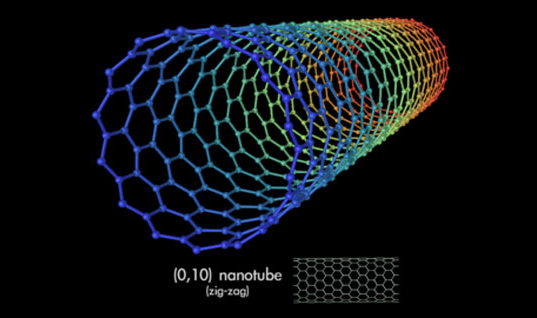
carbon_nanotube2Whereas the pyramids are four solid walls, the Eiffel Tower is skeletal, and vastly more efficient as a result. Greer and her colleagues are trying to make the same sort of leap on a nano scale, engineering hollow materials that are fantastically lightweight while remaining every bit as stiff and strong. Carbon nanotubes are one such example, but the range of possibilities are immense and due to explode in the near future.

The applications for this “Hierarchical Design” are also myriad, but its impact could be profound. For one, these ultralight wonders offer a chance to drastically reduce our reliance on fossil fuels, allowing us to make familiar goods with less raw stuff. But they also could also expand our idea of what’s possible with material science, opening doors to designs that are inconceivable today.

It’s all here on this video, where Greer explains Hierarchical Design and the possibilities it offers below:


Source: wired.com

New Video: Quantum Entanglement Explained

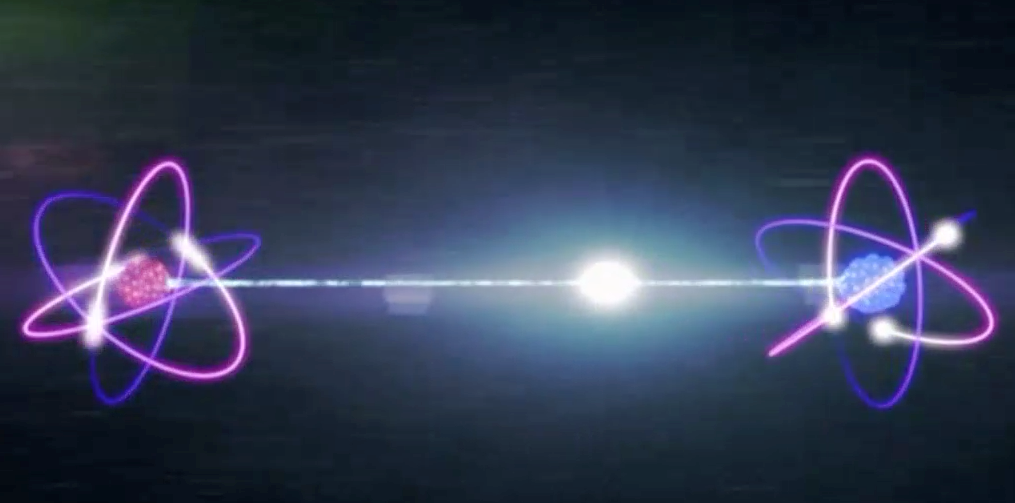
quantum-entanglement1If you’re like most people, the concept of quantum entanglements confuses and perplexes you. But considering its important to quantum science, the future of computing and (maybe, just maybe) space travel, it’s something we should all strive to understand. Luckily, this educational video produced by PHD Comics, and narrated by physicists Jeff Kimble and Chen-Lung Hung, explains it in easy-to-understand terms.

To break it down succinctly, quantum entanglement is the unusual behavior where elementary particles become linked so that when something happens to one, something happens to the other; no matter how far apart they are. This bizarre behavior of particles that become inextricably linked together is what Einstein supposedly called “spooky action at a distance.”

Understanding how this works may very well unlock the mysteries of the universe, shedding light on the unusual behavior of black holes, how gravity interacts with the other fundamental forces and yielding a Grand Unifying Theory/Theory of Everything (TOE)- and even let us circumvent “natural” barriers like the speed of light. So enjoy the video, and be sure to listen carefully. Simplified or not, this is still some pretty heavy stuff!


Source: universetoday.com

The Future is Here: Laser 3D Printing

pegasus-touch3D printing has really come into is own in recent years, with the range of applications constantly increasing. However, not all 3D printers or printing methods are the same, ranging from ones that use layered melted plastic to ones that print layers of metal dust, then fuse them with microwave radiation. This range in difference also means that some printers are faster, more accurate, and more expensive than others.

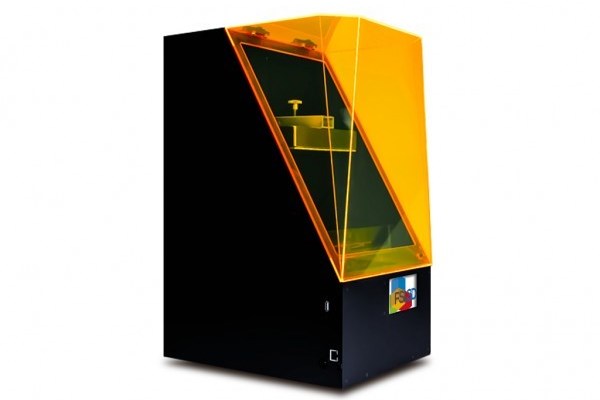
Take the Pegasus Touch as an example. Built by a Las Vegas-based company Full Spectrum Laser (FSL), this desktop 3D printer uses lasers to create objects faster and in finer detail than most other printers in its price range. Available for as little as US$2,000 via a Kickstarter campaign, its performance is claimed to be comparable to machines costing 50 times more.


pegasus-touch-8Instead of building up an object by melting plastic filaments and depositing the liquid like ink from a nozzle, the Pegasus touch uses what’s called laser-based stereolithography (SLA). This consists of using a series of 500 kHz ultraviolet lasers moving at 3,000 mm/sec to solidify curable photopolymer resin. As the object rises out of a vat of resin, the laser focuses on the surface, building up layer after layer with high precision.

To be fair, the technology has been around for many years. What is different with the Pegasus Touch is that FSL has shrunk the printer down and made it more economical. Normally, SLA machines are huge and cost in the order of hundreds of thousands of dollars. The Pegasus Touch, on other hand, measures just 28 x 36 x 57 cm (11 x 14 x 22.5 inches) and costs only a few thousand dollars.

pegasus-touch-4This affordability is due in part to the wide availability of Bluray players has made UC laser diodes much more affordable. In addition, FSL is already adept at making laser cutting and engraving machines, which has allowed the company to base the Pegasus Touch on modelling software and electronics already developed for these machines. This allows the device to operate at tolerances equivalent to a $100,000 machine.

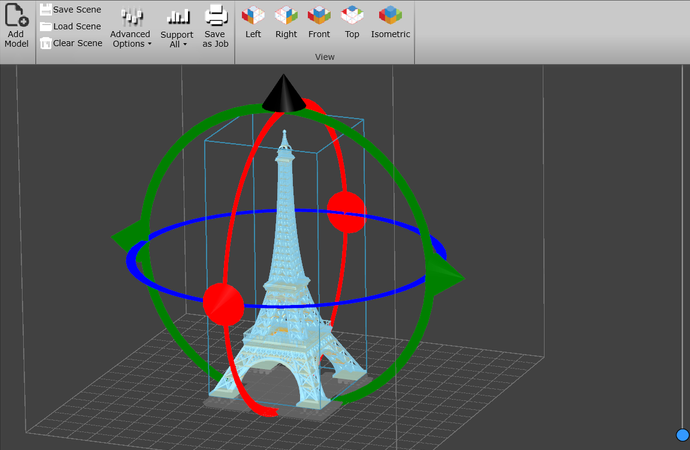
The device also has an on-board 1GHz Linux computer with 512 MB memory that can do much of the 3D processing computation itself, making a connected PC all but unnecessary. There’s also an internet-connected 4.3-in color touchscreen, which allows the user to access open-source models that are printer-ready, plus the machine comes with multi-touch-capable desktop software.

pegasus-touch-3It also has a relatively large build area of approximately 18 x 18 x 23 cm (7 x 7 x 9 inch), which is one of the largest in the consumer 3D printer market. The company also says that the Pegasus Touch is 10 times faster than a filament deposition modelling (FDM) printer, has finer control, and up to six times faster than other SLA printers, and can produces a better and more detailed finish.

The Pegasus Touch’s Kickstarter campaign wrapped up earlier this month and raised a total of $819,535, putting them well above their original goal of $100,000. For those who pledged $2000 or more, the printer was made available for pre-order. When and if it goes on sale, the asking price will be $3,499. Given time, I imagine the technology will improve to use metal and other materials instead of resin.

And of course, there’s a promotional video, showcasing the device at work:


Sources: gizmag.com, kickstarter.com, fsl3d.com

Papa Zulu’s First Sale!

shutterstock_102844133This past weekend, Papa Zulu went live on Amazon.com in paperback and ebook formats! I wanted to deliver the news the moment it happened, but as KDP and Createspace can take their time making books available to the public, I felt the need to hold off a little. However, that ended today when the book made its first sale. Yes, somebody out there is now the owner of an ecopy of Papa Zulu!

Granted, there are still a few kinks in the publication process. Right now, the ebook is only available on Amazon.ca, the store’s Canadian subsidiary, while the paperback is only available on Amazon.com. And neither are appearing on my Amazon author page. I can only assume my publishing services need to get their stuff together and expand its availability!

But in any case, I’ve gone ahead and posted the link for the ebook in the right hand column. If you liked the first one, be sure to check out the sequel. I’ve posted the respective links below to make it easier. And if you didn’t read the first one, didn’t like it, or just aren’t interested, then do what you like. I ain’t the boss of you!

Until next time, keep hammering those keys 🙂

Amazon.ca (ebook): amazon.ca

Amazon.com (paperback): amazon.com

Createspace store: createspace.com

News From Space: Asteroid Misses Earth (Again!)

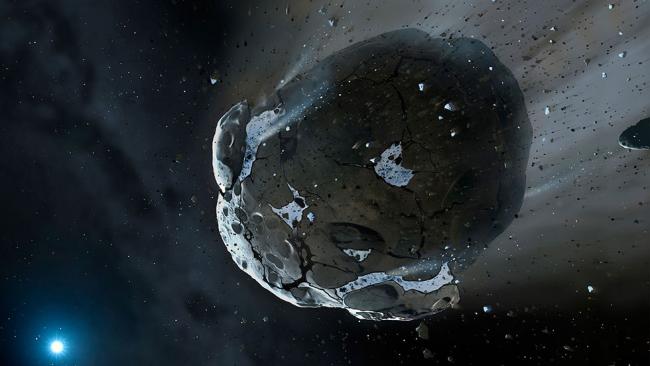
2000EM26_1Yesterday, an asteroid estimated to be the size of three football fields passed Earth by. Traveling at 43,000 kilometers per hour and passing at a distance of 8.8 lunar distances of Earth, the asteroid showed up just one year after a similar asteroid exploded over Russia and injured 1,200 people. The only problem was, the good people of Earth missed the show!

Slooh, an online “community observatory” that streams images from ground-based telescopes online during celestial events, was supposed to broadcast the approach of the asteroid as it raced past the planet, starting at 9 p.m. ET (2 a.m. MT).  Unfortunately, Slooh’s flagship observatory on Mount Teide in Spain’s Canary Islands was iced over and unable to catch the asteroid – named 2000 EM26 – as it passed us by.

2000EM26_2014_logoShortly thereafter, Slooh’s robotic telescope tried to snap pictures attempted to snap pictures of the asteroid but failed to capture an image at the predicted position. And now, the asteroid has gone missing in the deep sea of space, giving rise to the nickname “Moby Dick”. This means that either the asteroid’s predicted path was in error, or the object was much fainter than expected.

Paul Cox, Slooh’s technical and research director, said that the asteroid should be somewhere in the visible star field. And rather than accept failure at retracing its path, he and the other folks at Slooh are calling upon amateur astronomers to conduct a photographic search for it in the next few nights. Finding it is not just a matter of honor, but of determining how much the space rock has shifted over time.

2000EM26_2Since the asteroid was last observed 14 years ago for only 9 days, it isn’t too surprising that uncertainties in its position could add up over time, shifting its position and path to a different part of the sky by now. As Cox pointed out:

Discovering these Near Earth Objects isn’t enough. As we’ve seen with 2000 EM26, all the effort that went into its discovery is worthless unless follow­up observations are made to accurately determine their orbits for the future.  And that’s exactly what Slooh members are doing, using the robotic telescopes at our world­-class observatory site to accurately measure the precise positions of these asteroids and comets.

Naturally, there were some who worried that this elusive rock might threaten Earth, given its proximity to our own orbit and the fact that it’s path may have changed. But there is no reason to fear, as these changes are not likely to bring it into our path and it won’t be returning anytime soon. And before it does, we ought to have eyes on it again and be able to accurately chart its course.

2000EM26And above all, similar sized asteroids, including ones passing even closer to Earth, zip by every month. 2000 EM26 received a lot of coverage yesterday in part because it arrived close to the anniversary of the Chelyabinsk meteorite fall over Russia. And though it remains hidden for now, eyes are on the sky to find the asteroid again and refine its orbit.

Hopefully the beast won’t get away next time!


Sources: cbc.ca, universetoday.com

Making Tech Accessible: Helping Amputees in War-Torn Sudan

3Dprinting_SudanThe new year is just flying by pretty quickly, and many relevant stories involving life-changing tech developments are flying by even faster. And in my business and haste to deal with my own writing, I’ve sadly let a lot of stories slip through my fingers. Lucky for me that there’s no statute of limitations when it comes to blogging. Even if you cover something late, it’s not like someone’s going to fire you!

That said, here is one news item I’m rather of ashamed of having not gotten to sooner. It’s no secret that 3D printing is offering new possibilities for amputees and prosthetic devices, in part because the technology is offering greater accessibility and lower costs to those who need them. And one area that is in serious need is the developing and wartorn nation of Sudan.

robotic_hand2And thanks to Mick Ebeling, co-founder and CEO of Not Impossible Labs, 3D printed prosthetics are now being offered to victims of the ongoing war. After learning of a 14-year old boy named Daniel who lost both arms in a government air raid, he traveled to the Nuba Mountains to meet him in person. Having already worked on a similar project in South Africa, he decided to bring 3D printed prosthetics to the area.

Ebeling was so moved by Daniel’s plight that he turned to a world-class team of thinkers and doers – including the inventor of the Robohand, an MIT neuroscientist, a 3D printing company in California, and funding from Intel and Precipart – to see how they could help Daniel and kids like him. Fittingly, he decided to name it “Project Daniel”.

ProjectDaniel-Training-NotImpossibleAnd now, just a year later, Not Impossible Labs has its own little lab at a hospital in the region where it is able to print prosthetic arms for $100 a pop, and in less than six hours. Meanwhile, Daniel not only got his left-arm prosthetic in November, but he is currently employed at the hospital helping to print prosthetics for others children who have suffered the same fate as him.

Ebeling says the printed arm isn’t as sophisticated as others out there, but it did allow him to feed himself for the first time in two years. And while Daniel won’t be able to lift heavy objects or control his fingers with great precision, the prosthetic is affordable and being produced locally, so it also serves as an economically viable stand-in until the tech for 3D-printed prosthetics improves and comes down in cost.

Not-ImpossibleNot Impossible Labs, which has already fitted others with arms, says it hopes to extend its campaign to thousands like Daniel. It’s even made the design open source in the hopes that others around the world will be able to replicate the project, setting up similar labs to provide low-cost prosthetics to those in need. After all, there are plenty of war torn regions in the developing world today, and no shortage of victims.

In the coming years, it would be incredibly encouraging to see similar labs set up in developing nations in order to address the needs of local amputees. In addition to war, landmines, terrorism, and even lack of proper medical facilities give rise to the need for cheap, accessible prosthetics. All that’s really needed is an internet connection, a 3D printer, and some ABS plastic for raw material.

ProjectDaniel-Mohammad&Daniel-NotImpossibleNone of this is beyond the budgets of most governments or NGOs, so such partnerships are not only possible but entirely feasible. For the sake of kids like Daniel, it’s something that we should make happen! And in the meantime, check out this video below courtesy of Not Impossible Labs which showcases the printing technology used by Project Daniel and the inspiring story behind it.

And be sure to check out their website for more information and information on how you can help!


Source:
news.cnet.com, notimpossiblelabs.com

The Walking Dead – Season 4 Episode 10

The-Walking-Dead-season-4-wallpapers-7The second episode of the second half of the fourth season is here! Wow, that sound confusing when it spell it out like that. But as expected, this episode was pretty pivotal to the course of the season. Not only did it pick up where last week’s intro left off, it managed to round up the remaining members of the cast and account for all of their whereabouts. And there were even a few surprises along the way.

For one, Judith is alive. Yes, the baby that was alleged to have died in the midseason finale (though they left plenty of reasonable doubt as to that effect), was apparently rescued by Tyreese, Mika and Lizzie before they fled. Guess those kids weren’t such bad caretakers after all, and managed to also save a life after blowing a few people’s heads off!

And in another not-so-surprising twist, Carol has found her way back to the group and began leading them on. After making her rather abrupt departure in the first half of this season, she claims to have been drawn back by all the carnage caused by the Governor’s assault on the prison. Which puts her in a good position to help out now that the shit has really hit the fan.

Other than that, there were some entertaining tidbits and a few developments. But let’s not drag this out…

Inmates:
WD4_inmatesThe episode begins with Daryl and Beth fleeing from the prison together, trying to survive on their own while also looking for the other members of the group. As they search, we hear entries from Beth’s diary, which were made back when they first found the prison. At the time, she felt safe and worried about indulging in hope. for fear that it would lead to disappointment.

In another part of the forest, we catch up with Tyreese, Lizzie, Mika and Judith (who is alive after all) as they attempt to do the same. On the way, Tyreese has to leave the girls behind in order to help a father and son who are being attacked by Walkers, but cannot save them in time. The girls are almost overtaken too, but are saved by the timely intervention of Carol.

wd4_inmates2The father, who is dying from his bite wound, tells Carol and Tyreese to follow the train tracks because they lead to a safe place. They proceed along the tracks together, and Carol tells them she witnessed the attack on the prison, but lies by saying she was out on a supply run (as opposed to how she was exiled). They find a map nailed to a bridge post that speaks of a safe haven up ahead named Terminus.

Elsewhere, we find Maggie, Sasha and Bob together, dressing Bob’s wound and taking stock of their situation. Maggie decides to head off to find Glenn, against the wishes of the other two. They find the prison bus parked on the road, but everyone inside has turned. Maggie insists they let them off so she can see if Glenn is in there, and after clearing the bus out, they find no trace of him.
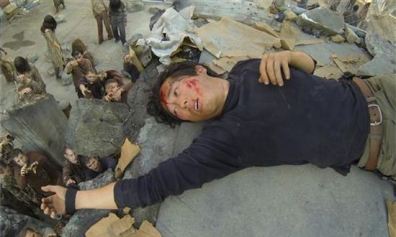
wd4_inmates3Cut to Glenn, who wakes up inside the prison after being knocked unconscious. Delirious and surrounded by Walkers, he wandered about in search of Maggie, but only finds that the prison has been overrun. Grabbing a set of protective gear, supplies, and his rifle, he fights his way through the yard, where he finds Tara hiding inside one of the gardens.

She appears to be semi-catatonic and doesn’t want to leave, saying that she “was a part of this”. But Glenn insists on taking her with him since he needs her help. Using Bob’s old liquor bottle, he fashions a Molotov Cocktail and hands her a knife, for when they run out of bullets. Using the cocktail as a distraction, they run out together and make it into the forest.

wd4_inmates5They find their way to the same stretch of road where Maggie and the others were before. Glenn learns for the first time from her that Hershel is dead, and he explains to her that he was Maggie’s father. They are then attacked by Walkers, and Glenn collapses after they killing the first few. Tara kills the last of them and looks up to see an army truck pull in ahead of her. Out step three people led by an armed man.

Summary:To be honest, this episode was surprising for me. Not because of the return of Carol or the revelation that Judith was still alive – those seemed a bit predictable really. It was the introduction of Abraham, Rosita and Eugene at the end which did it for me. These characters, who appearance represents a game-changer in the story, was something I was not expecting til the end of the season.

In the comics, they did not show up until Rick and all the other survivors found each other and were once again feeling like life was getting back to normal. However, it seems that the writers have chosen to introduce them now and make them a part of the whole “lost in the wilderness” part of the story. Once the groups are reunited, we can assume that the next big thing (won’t say what) will happen and the larger story will continue.

In short, I’m surprised they aren’t dragging that out as I expected they would. Other than that, the episode was good, though I was a bit disappointed with the other “surprises”. Reintroducing Carol was to be expected, but it kind of makes the way they wrote her out before seem superfluous. With her back, there’s likely to be some added drama as Tyreese finds out what she did. Not sure how they’ll resolve that one.

And as for Judith being alive – don’t get me wrong, it’s nice that they kept her alive. But again, this represents a major divergence from what happened in the original comic, where both Judith and Lori were killed and Rick needed to take a bit of a break from reality in order to cope. But having already put his character through that in the show, I guess they felt that would be repetitive.

I’m also glad they kept Tara in the picture, at least for the time being. After all the work they did introducing her and her family, and the way they alluded to her surviving last season, I figured she would still be around at this point. Though they did write her sister out with a single line of dialogue, I think it’s good they kept her. In addition to being a developed character at this point, she’s pretty hot!

As for the rest of the prison crew, the survivors of Woodbury that were integrated into the prison, it wasn’t too surprising that they eliminated the last of them. However, it does mean that the whole “who was leaving dead rats” at the fenceline may now be a dead issue. Not sure where they were going with that one, and now it seems like we may never know…

In any case, their seems to be plenty of potential for the remainder of the season, and I’m looking forward to see what they do with it and the how they go about integrating the new arrivals. Tune in next week!

News From Mars: Jelly Donut Rock Mystery Solved

mars_donut1In the course of investigating the surface of Mars, NASA has uncovered some rather interesting and curious rock formations. And if once in awhile those rocks should resemble something odd and Earth-like then one should expect the media maelstrom that follows. And the sudden appearance of what people referred to as the “jelly doughnut” rock in January was no exception to this rule.

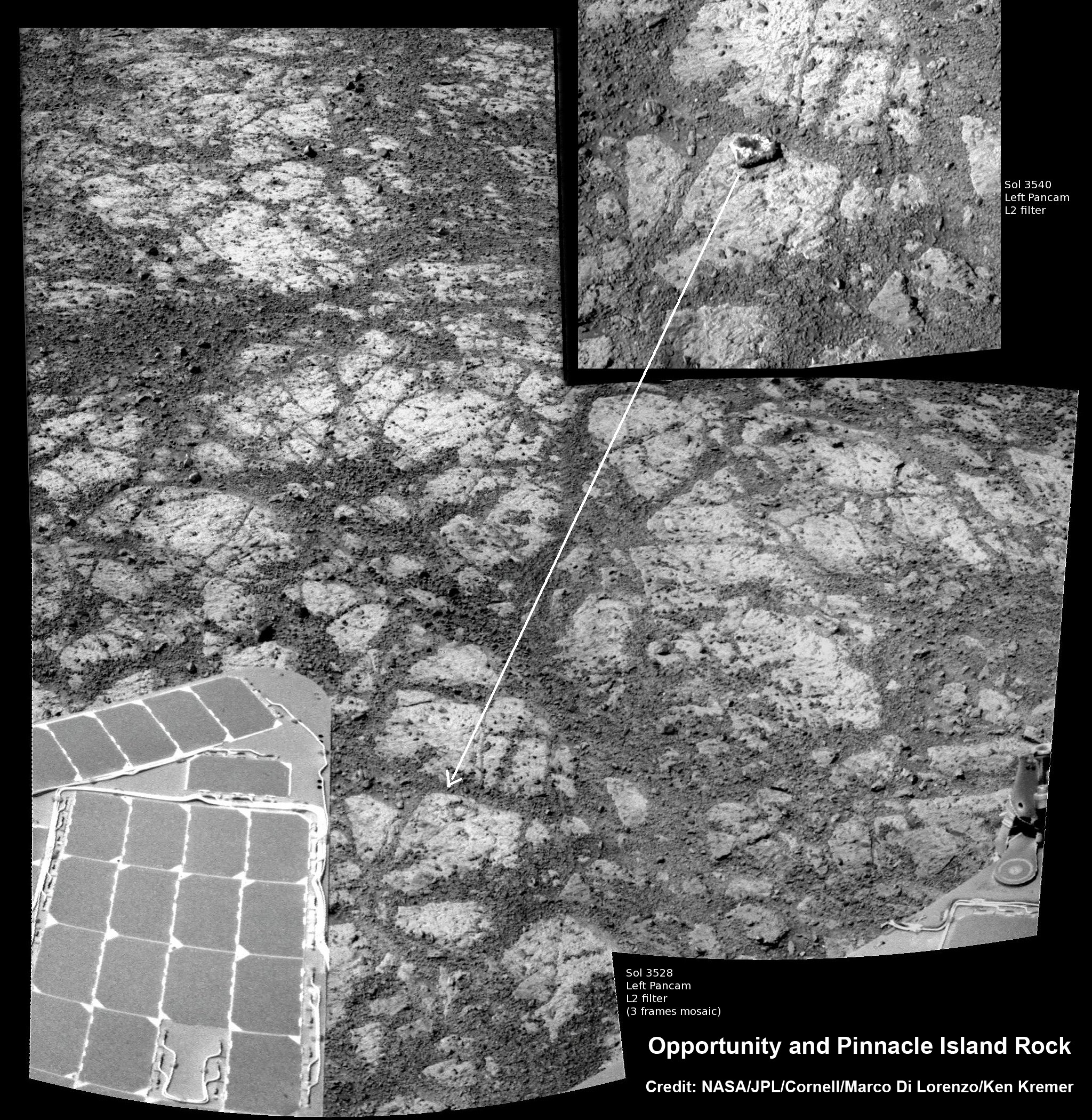
Much the Martian “rat” discovered last summer, the appearance of the doughnut rock was met with all kinds of speculation. The rock – now dubbed “Pinnacle Island” – first appeared on January 8th in a series of pictures taken by the Opportunity Rover. Measuring only about 4 centimeters (1.5 inches) in diameter with a noticeable white rim and red center, the rock quickly picked up the nickname “jelly doughnut”.

mars_donutAccording to pictures taken just four days earlier by Opportunity, during which time it had not moved an inch, that area had been free of debris. In response, wild theories began to emerge, with some thinking it was an indication that rocks were falling from the sky. Others, looking to explain how something so odd in appearance could suddenly have appeared, claimed it was a heretofore undetected Martian surface beings.

Luckily, the ongoing work of mission scientists solved the by determining that the rock was actually created by an “alien invader” – the Opportunity Rover! Apparently, the mysterious rock was created when Opportunity unknowingly drove over a larger rock formation on Solander Point, where she is currently located. It then crushed the rock, sending fragments across the summit.

Opportunity-Route-map_Sol-3560_Ken-KremerOne piece, the ‘Pinnacle Island’ fragment, unwittingly rolled downhill where Opportunity caught it on camera a few days later. This explanation became apparent when the Opportunity was moved a tiny stretch and took some look-back photographs. Another fragment of the rock that was eerily similar in appearance to the ‘Pinnacle Island’ doughnut appeared, indicating that it had left a trail of such debris in its wake.

Ray Arvidson, Opportunity’s Deputy Principal Investigator, explained in a recent NASA statement:

Once we moved Opportunity a short distance, after inspecting Pinnacle Island, we could see directly uphill an overturned rock that has the same unusual appearance. We drove over it. We can see the track. That’s where Pinnacle Island came from.

Opportunity-and-Pinnacle-Island_Sol-3540_1_Ken-KremerTo gather some up-close clues before driving away, the rover deployed its robotic arm to investigate ‘Pinnacle Island’ with her microscopic imager and APXS mineral mapping spectrometer. According to Arvidson, the results revealed high levels of the elements manganese and sulfur which suggest that:

[these] water-soluble ingredients were concentrated in the rock by the action of water. This may have happened just beneath the surface relatively recently, or it may have happened deeper below ground longer ago and then, by serendipity, erosion stripped away material above it and made it accessible to our wheels.

The Solander Point mountaintop is riven with outcrops of minerals, including clay minerals, that likely formed in flowing liquid neutral water conducive to life – a potential scientific goldmine. Thus, the presence of such water-soluble minerals in this particular rock indicates quite strongly that the Opportunity brought it with her while rolling through the area.

mars-map

Meanwhile, on the opposite side of Mars, Opportunity’s younger sister rover Curiosity is trekking towards gigantic Mount Sharp and just crested over the Dingo Gap sand dune. She celebrated 500 days (Sols) on Mars on New Years Day, 2014. And a pair of new orbiters are streaking to the Red Planet to fortify Earth’s invasion fleet- NASA’s MAVEN and India’s MOM.

So expect more surprises from the Red Planet soon enough, which will include more information on surface conditions and the history of Mars’ atmosphere and how it disappeared. And maybe, just maybe, one of the rovers will uncover the existence of the long-sought after organic molecules – thus demonstrating unequivocally that life still exists on Mars.

Stay tuned!


Source: universetoday.com

News From Space: Hawkings’ U-Turn on Black Holes

blackholeA recent paper published by Hawking, in which he reversed himself on several of his previous theories about black holes, has created quite a stir. In fact, his new found opinions on the subject have been controversial to the point that Nature News declared that there is no such thing as black holes anymore. This, however, is not quite what Hawking has claimed.
But it is clear that Hawking, one of the founders of modern theories about black holes, now believes that he he may have been when he first proposed his ideas 40 years ago. Now, he believes that black holes may NOT be the the final graveyard for matter that gets sucked in by the gravitational pull caused by a collapsing star, or that they prevent light from escaping.

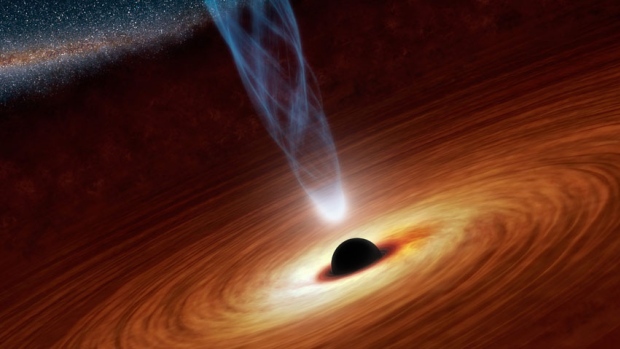
stephen_hawkingBasically, he was wrong in how he attempted to resolve the paradox of black holes, because apparently they don’t exist. It all comes down to what is known as the “firewall paradox” for black holes.  The central feature of a black hole is its event horizon, the point of no return when approaching a black hole.  In Einstein’s theory of general relativity, the event horizon is where space and time are so warped by gravity that you can never escape.


This one-way nature of an event horizon has long been a challenge to understanding gravitational physics.  For example, a black hole event horizon would seem to violate the laws of thermodynamics, which state that nothing should have a temperature of absolute zero.  Even very cold things radiate a little heat, but if a black hole traps light then it doesn’t give off any heat and would have a temperature of zero.

quantum_entanglementThen in 1974, Stephen Hawking demonstrated that black holes do radiate light due to quantum mechanics. In quantum theory, the exact energy of a system cannot be known exactly, which means it’s energy can fluctuate spontaneously so long as its average remains constant. What Hawking demonstrated is that near the event horizon, pairs of particles can appear where one becomes trapped while the others escape as radiation.


While Hawking radiation solved one problem with black holes, it created another problem – aka. the firewall paradox. When quantum particles appear in pairs, they are entangled; but if one particle is captured by the black hole, and the other escapes, then the entangled nature of the pair is broken. In quantum mechanics, the particle pair would be described as in a “pure state”, and the event horizon would seem to break that state.

blackhole_birthLast year it was shown that if Hawking radiation is in a pure state, then either it cannot radiate in the way required by thermodynamics, or it would create a firewall of high energy particles near the surface of the event horizon.  According to general relativity, if you happen to be near the event horizon of a black hole you shouldn’t notice anything unusual.

In his latest paper, Hawking proposed a solution to this paradox by proposing that black holes don’t have event horizons. Instead they have apparent horizons that don’t require a firewall to obey thermodynamics, hence the declaration of “no more black holes” in the popular press. However, all these declarations may be a bit premature, as the problem Hawking’s sought to address may not exist at all.

black-holeIn short, the firewall paradox only arises if Hawking radiation is in a pure state. And in a paper presented last month by Sabine Hossenfelder of Cornell University shows that instead of being due to a pair of entangled particles, Hawking radiation is due to two pairs of entangled particles. One entangled pair gets trapped by the black hole, while the other entangled pair escapes.

The process is similar to Hawking’s original proposal, but the Hawking particles are not in a pure state, which means there’s no paradox to be had.  Black holes can radiate in a way that agrees with thermodynamics, and the region near the event horizon doesn’t have a firewall, just as general relativity requires.  So basically, Hawking’s proposal is a solution to a problem that doesn’t exist.

FTL_MEWith black holes, its always two step forwards, one step back. And this is hardly the only news in recent months when it comes to these mysterious and confounding phenomena. I imagine that the new theory from MIT, which states that wormholes may exist between black holes and be responsible for quantum entanglements (and resolve the problem of how gravity works) may also need revision next!

Too bad too. I was so looking forward to a universe where FTL wasn’t junk science…

Sources: universetoday.com, cbc.ca

The Future of Medicine: New Blood-Monitoring Devices

medtechNon-invasive medicine is currently one of the fastest growing industries in the world. Thanks to ongoing developments in the fields of nanofabrication, wireless communications, embedded electronics and microsensors, new means are being created all the time that can monitor our health that are both painless and hassle-free.

Consider diabetes, an epidemic that currently affects 8% of the population in the US and is growing worldwide. In October of 2013, some 347 million cases were identified by the World Health Organization, which also claims that diabetes will become the 7th leading cause of death by 2030. To make matters worse, the conditions requires constant blood-monitoring, which is difficult in developing nations and a pain where the means exist.

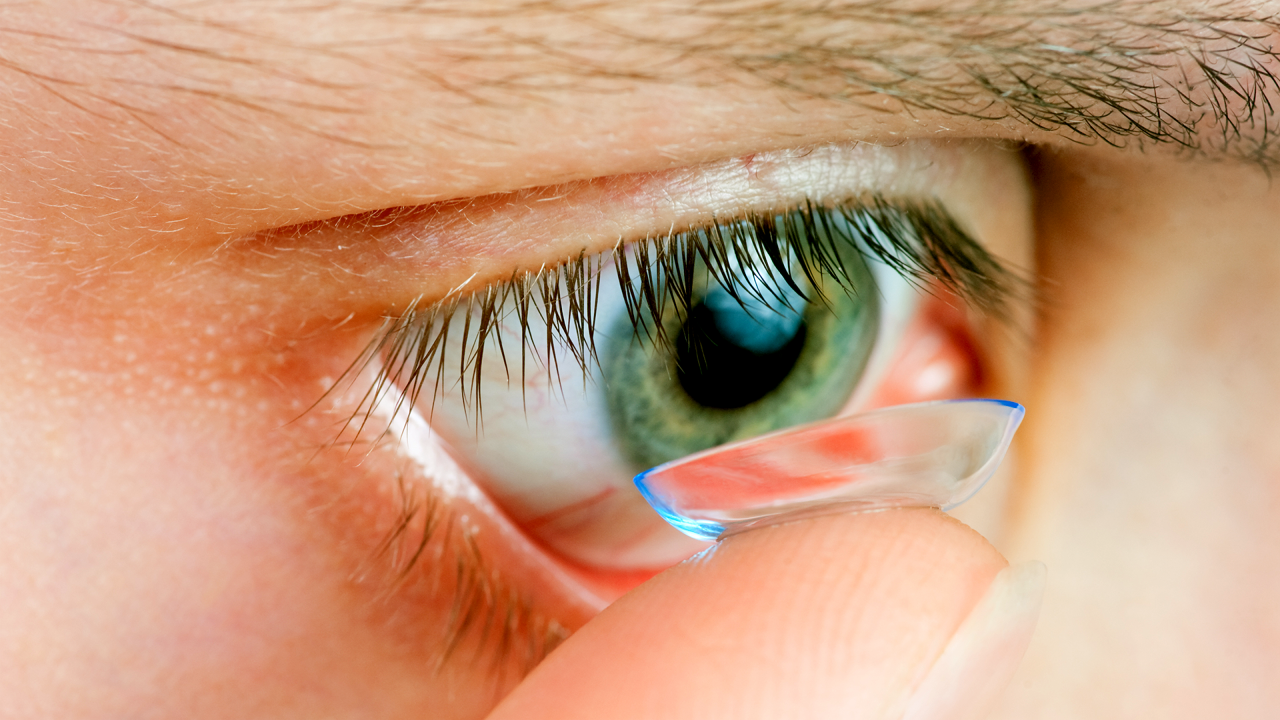
google_lensesHence why medical researchers and companies are looking to create simpler, non-invasive means. Google is one such company, which back in January announced that they are working on a “smart” contact lens that can measure the amount of glucose in tears. By merging a mini glucose sensor and a small wireless chip into a set of regular soft contact lenses, they are looking to take all the pin-pricks out of blood monitoring.

In a recent post on Google’s official blog, project collaborators Brian Otis and Babak Parviz described the technology:

We’re testing prototypes that can generate a reading once per second. We’re also investigating the potential for this to serve as an early warning for the wearer, so we’re exploring integrating tiny LED lights that could light up to indicate that glucose levels have crossed above or below certain thresholds.

And Google is hardly alone in this respect. Due to growing concern and the advancements being made, others are also looking at alternatives to the finger prick, including glucose measures from breath and saliva. A company called Freedom Meditech, for example, is working on a small device  that can measure glucose levels with an eye scan.

I_Sugar_X_prototype1Their invention is known as the I-SugarX, a handheld device that scans the aqueous humor of eye, yielded accurate results in clinical studies in less than four minutes. John F. Burd, Ph.D., Chief Science Officer of Freedom Meditech, described the process and its benefits in the following way:

The eye can be thought of as an optical window into to body for the painless measurement of glucose in the ocular fluid as opposed to the blood, and is well suited for our proprietary optical polarimetric based measurements. Based on the results of this, and other studies, we plan to begin human clinical studies as we continue our product development.

Between these and other developments, a major trend towards “smart monitoring” is developing and likely to make life easier and cut down on the associated costs of medicine. A smart contact lens or saliva monitor would make it significantly easier to watch out for uncontrolled blood sugar levels, which ultimately lead to serious health complications.

I_Sugar_X_prototype2But of course, new techniques for blood-monitoring goes far beyond addressing chronic conditions like diabetes. Diagnosing and controlling the spread of debilitating, potentially fatal diseases is another major area of focus. Much like diabetes, doing regular bloodwork can be a bit difficult, especially when working in developing areas of the world where proper facilities can be hard to find.

But thanks to researchers at Rice University in Houston, Texas, a new test that requires no blood draws is in the works. Relying on laser pulse technology to create a vapor nanobubble in a malaria-infected cell, this test is able to quickly and non-invasively diagnose the disease. While it does not bring medical science closer to curing this increasingly drug-resistant disease, it could dramatically improve early diagnosis and outcomes.

malaria-blood-free-detectorThe scanner was invented by Dmitro Lapotko, a physicist, astronomer, biochemist, and cellular biologist who studied laser weapons in Belarus before moving to Houston. Here, he and his colleagues began work on a device that used the same kind of laser and acoustic sensing technology employed on sub-hunting destroyers, only on a far smaller scale and for medical purposes.

Dubbed “vapor nanobubble technology,” the device combines a laser scanner and a fiber-optic probe that detect malaria by heating up hemozoin – the iron crystal byproduct of hemoglobin that is found in malaria cells, but not normal blood cells. Because the hemozoin crystals absorb the energy from the laser pulse, they heat up enough to create transient vapor nanobubbles that pop.

malariaThis, in turn, produces a ten-millionth-of-a-second acoustic signature that is then picked up by the device’s fiber-optic acoustic sensor and indicates the presence of the malaria parasite in the blood cells scanned. And because the vapor bubbles are only generated by hemozoin, which is only present in infected cells, the approach is virtually fool-proof.

In an recent issue of Proceedings of the National Academy of Sciences, Lapotko and his research team claimed that the device detected malaria in a preclinical trial on mice where only one red blood cell in a million was infected with zero false positives. In a related school news release, the study’s co-author David Sullivan – a malaria clinician a Johns Hopkins University – had this to say about the new method:

The vapor nanobubble technology for malaria detection is distinct from all previous diagnostic approaches. The vapor nanobubble transdermal detection method adds a new dimension to malaria diagnostics, and it has the potential to support rapid, high-throughput and highly sensitive diagnosis and screening by nonmedical personnel under field conditions.

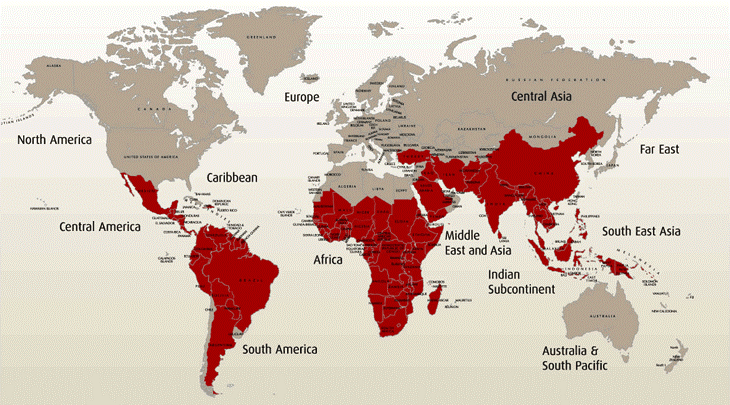
At present, malaria is one of the world’s deadliest diseases, infecting hundreds of millions of people a year and claiming the lives of more than 600,000. To make matters worse, most the victims are children. All of this combines to make malaria one of the most devastating illness effecting the developing world, comparable only to HIV/AIDS.

malaria_worldwideBy ensuring that blood tests that could detect the virus, and require nothing more than a mobile device that could make the determination quickly, and need only a portable car battery to power it, medical services could penetrate the once-thought impenetrable barriers imposed by geography and development. And this in turn would be a major step towards bringing some of the world’s most infectious diseases to heel.

Ultimately, the aim of non-invasive technology is to remove the testing and diagnostic procedures from the laboratory and make them portable, cheaper, and more user-friendly. In so doing, they also ensure that early detection, which is often the difference between life and death, is far easier to achieve. It also helps to narrow the gap between access between rich people and poor, not to mention developing and developing nations.

Sources: fastcoexist.com, news.cnet.com, businesswire.com, googleblogspot.ca, who.int