Alternate Histories…

When it comes to science fiction, alternate histories are a special kind of sub-genre. They explore the what ifs of history, challenge our notions of inevitability, and open up whole worlds based on what could have been. They are a source of fantasy and speculation on the one hand, offering the reader a chance to explore endless possibilities, and realism on the other, showing how a drastically different world can be entirely plausible.

Some might ask why this sort of thing would be considered sci-fi at all. Why not simply file it under the heading of historical fiction next to all those recreations or Dan Brown novels (Ha! Take that, Brown!)? Well, the answer is that, like time travel novels, there is a scientific basis for this kind of story. I’m sure everyone’s familiar with the Multiverse or Alternate Universes hypothesis. In essence, these theories arise out of quantum mechanics as well as pure fantasy, positing that there may be an unlimited number of alternate universes in which all possible realities have been realized.

So really, creating a world where things unfolded differently from our own is not only fun and creative, its also a relatively scientific approach. Who’s to say that this world doesn’t exist somewhere out there, in a different dimension of the universe as a separate quantum reality? Hell, there may very well be countless such realities paralleling our own. And imagining how and why things unfolded differently in any one of them is what makes them fun!

All that being said, let me get into some prime examples of Alternate History and what was good about them. For starters, the classic tale by Philip K. Dick and the world where the Allies LOST the Second World War.

Man In The High Castle:
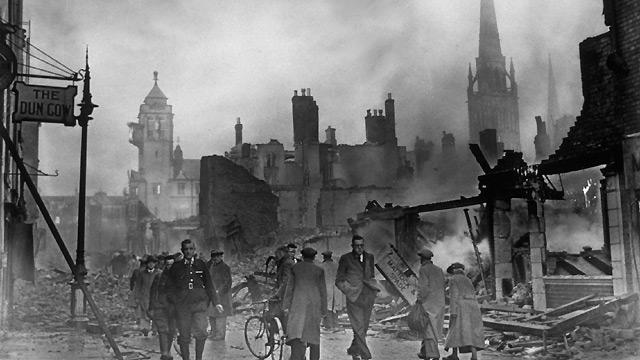
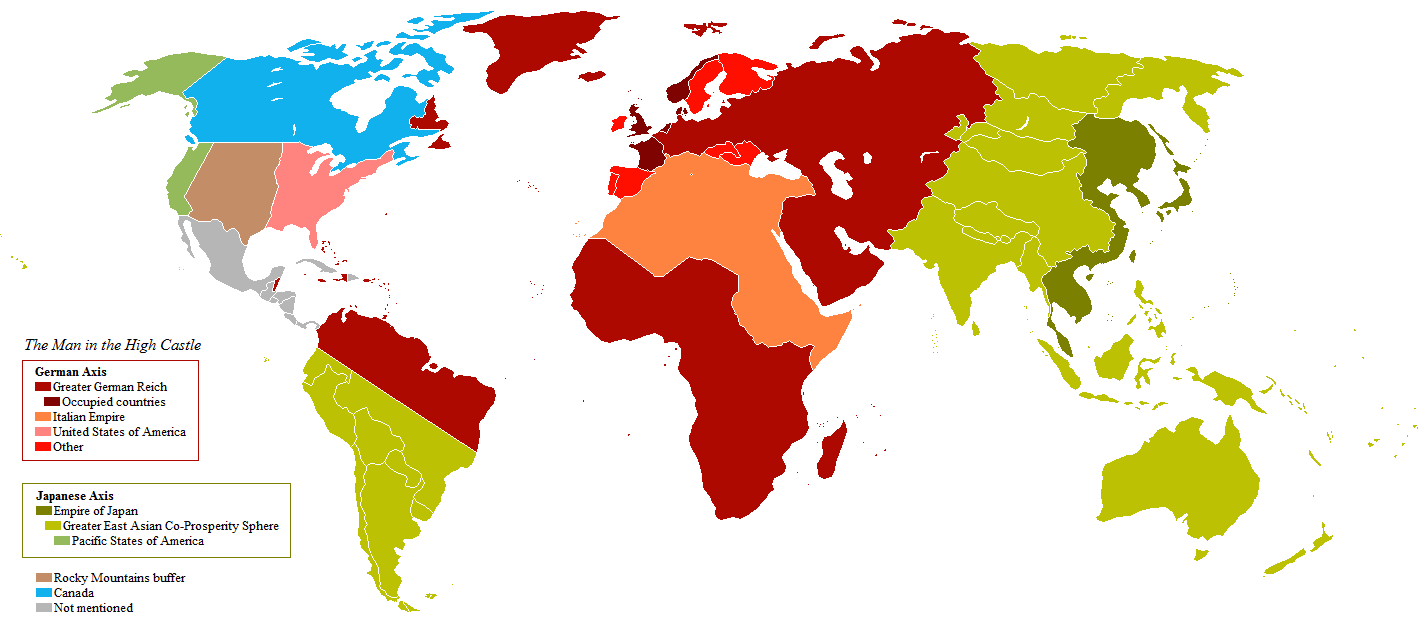
This story takes place in the US during the 1960’s where a different kind of Cold War is brewing between two superpowers. But unlike the world that WE know, in this world those superpowers are Japan and Germany. After losing the Second World War, the US was divided between these two powers, a loose federation of Midwestern states is currently unoccupied between them, and Jews, Africans and other “undesirables” have all but been exterminated. The rest of the world is similarly divided, falling into either the Greater German Reich, the Japanese Empire, the Greater East Asia Co-Prosperity Sphere, or the Italian Empire.

Man In The High Castle, Map

The reasons for this are made clear throughout. For one, the assassination attempt of FDR by Giuseppe Zangara’s in 1933 was successful. As a result, the US experienced a weak string of governments led by FDR’s VP John Nance Garner and then Republican John W. Bricker. Without FDR’s leadership, America never recovered from the Great Depression and was unable to offer military assistance to Britain and Russia or defend itself against Japan when WWII broke out. As a result, the Axis powers won and the US itself was conquered and divided by 1948.

In the world which resulted, the Mediterranean has also been drained, Africa has been sterilized through the worst manifestation of the Reich’s human experiments, and the Reich is sending people to the Moon and further into space. Technology has advanced quicker within the Reich, but at a tremendous cost in human terms, and the resulting impact on the Reich’s culture is evident everywhere. Madness and mass murder have become a permanent part of their psychology, which is part of the reason why they are planning on war again. The Japanese sphere is much more peaceful and phlegmatic by comparison, but technologically less advanced. In any coming conflict, they will be at a disadvantage and they know it!

Enter into this world a series of characters who represent the various facets of society. There’s the Japanese Trade missioner in San Francisco, Nobusuke Tagomi, Mr. Baynes, a Captain in Reich Naval Counter-Intelligence who poses as a Swedish Industrialist, Frank Frink, a secret Jew who is trying to start a jewelry business with his partner, Wyndam-Mason, an industrialist and the former boss of Frink, Robert Childan, an American antiquities dealer who sells his wares to Japanese customers who are interested in owning examples of pre-war Americana, and Juliana Frink, a Judo instructor and Frank’s ex-wife.

In the course of the story, we find that Baynes is traveling to San Francisco to meet with Tagomi, ostensibly as part of a trade mission, but really to deliver a warning. Germany is gearing up for war with Japan and plans on using nukes! Mason introduces the subject of the book known as The Grasshopper Lies Heavy, an alternate history that deals with the subject of how WWII could have been won. Frink and his partner begin manufacturing jewelry in the hopes of selling it through Childan, who does good business with antiquities but finds that innovative new things are not appealing to his Japanese customer base. And finally, we see that Juliana, after hooking up with a Reich secret agent, is traveling to middle America to find the author of Grasshopper, a man known by his signature – “Man In The High Castle”. The Reich wants this man dead, for obvious reasons.

By books end, Juliana kills the German agent once she discovers his identity and finds the man for herself. She learns that, in spite of the mystery surrounding him, he is actually a perfectly normal man who was inspired to create something groundbreaking. His inspiration for the book apparently came from the Oracle, an aspect of the I Ching which people use to ordain the future (and which plays a central role in this story). How he applies the Oracle to past events is never fully explained, but the point is clear. By book’s end Juliana realizes that they are living in the wrong reality. Germany and Japan were meant to have lost the war and the history was meant to unfold differently.

While difficult to follow at times, mainly because of the sort of stream of consciousness way PKD writes, this book was fascinating and is the perfect example of an alternate history. The plot device of the book, itself an alternate history, illustrates beautifully how history unfolded differently in this alternate universe and spares the reader from having to read through an intro that explains how it all happened. And aside from some debatable scenarios, like the draining of the Mediterranean, most of what goes on in it seems highly plausible.

Fatherland:
Another example of an alternate history in which the Axis once again won World War II, but did not conquer the New World. In addition to being a novel, it was a adapted into a TV movie starring Rutger Hauer, Miranda Richardson and Peter Vaughan. The author, Robert Harris, has done many works of historical fiction, including Enigma (also adapted into a movie), the Roman historical novel of Pompeii, and a trilogy centered on Cicero (Imperium, Lustra, and Conspirata). And though Fatherland does resemble Man in the High Castle in many respects, it is arguably more realistic and novel in its approach.

The story opens in the Greater German Reich in 1965 after a murder has taken place. Investigating this murder is Xavier March (played by Rutger Hauer in the movie), an investigator working for the Kriminalpolizei (Kripo). The victim is a high-ranking Nazi named Josef Bühler, and his death was meant to look like an accident. As he investigates further, he finds that Bühler’s death is linked to several deaths of high-ranking Nazis who lived through the war. In each case, their deaths are made to look like accidents.

At the same time, Charlotte “Charlie” Maguire, an American journalist, has come to the Reich to witness Adolf Hitler’s 75th birthday. This event is also being used by the Reich to heal the rift between the US and Germany, as there has been a state of detente between the two since Second World War. While in Germany, she is slipped a package from a stranger containing details about Bühler and begins looking into it herself. In time, March and Maguire meet up and begin exchanging information, hoping to discover the truth behind all the deaths.

In time, they come to uncover that the deaths are part of a cover-up conspiracy whereby the planners of the Holocaust are being eliminated one by one. This is being done in preparation for the meeting between Hitler and Josheph P. Kennedy (the president of the US in this story), basically to ensure that Germany’s crimes don’t get in the way of a new alliance. When the Gestapo get wind of their discovery, March is arrested and tortured, but Maquire escapes and heads for Switzerland with the proof they’ve found.

March is eventually freed with the help of the chief of Kripo, but quickly realizes his rescue was staged so he might lead them to Macquire. He instead heads for Auschwitz, which has been dismantled since the war, looking for some indication of what went on there. He soon finds bricks in the undergrowth, indicating the existence of old structures. Satisfied that it was real, he pulls out his gun and prepares for the inevitable.

The story not only does a good job of postulating what would have happened had Germany won the war (i.e. the Holocaust would have been covered up and disavowed by later generations in order to protect Germany’s reputation), but also on how this victory came to be. In addition to Reinhard Heydrich (the chief of Reich security during WWII) surviving his assassination attempt in 1942, the Germans also learned that the British had cracked their Enigma codes and changed them, thus being able to successfully cut off Britain with their U-boa ts and starve it into submission by ’44. In the East, the Germans also manage to defeat the Russians in the Caucasus in 42′, thus securing the Baku oil fields, cutting off Moscow from supply and finishing them off by 43′.

With victory in Europe complete, they then begin testing their own nuclear weapons and developing “V-3” intercontinental rockets by 46′. However, the US wins in the Pacific and drops their own nukes on Japan, ending the war there and leading to a state of Cold War between the US and Germany. Thus, in this alternate world, it is the US and Germany that are the global, nuclear superpowers rather than the US and USSR. The story also ends on a cliffhanger note, leaving the reader to wonder if war breaks out between the US and Germany and whether or not the main characters survive.

However, not all alternate histories revolve around WWII or even recent events. Some go much farther back in time, tackling pivotal events like the “discovery” of the New World, or the fall of Rome, or, in the case of Harry Turtledove, the outcome of the American Civil War. This is an especially good example of alternate history because of its apparent plausibility.

Guns of the South:
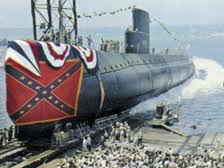
In this story, historian Harry Turtledove explores the very real possibility of what would have happened had the South won the war. It involves some South African ultra-nationalists (Afrikaner Weerstandsbeweging) traveling back in time to supply Robert E Lee’s army with AK-47’s and nitroglycerine tablets (to treat Lee’s heart condition), thus ensuring a Southern victory at Gettysburg and in the 1864 campaign. The motives for this aid are made clear in the course of the story when Lee finally questions the helpful men who’s accents and technology they find strange and intriguing.

In essence, the leader of the time travelers (known as the AWB, the anglicized version of which is “America Will Break”) tells Lee that in 2014, where they have come from, white supremacy has not endured and that in South Africa by their time, blacks have eclipsed whites as the dominant power. They feel that the only way white supremacy will survive is if the American South won the Civil War, thus ensuring that it would have a home in the US in the future. Lee accepts their help, and the Confederates eventually win the Civil War and the Union, England and France are forced to recognize the CSA.

What follows this is not only intriguing but highly plausible. Lee becomes president of the new south and abolishes slavery, in keeping with his views and the reality of the post-war situation. Not only is slavery untenable from a moral standpoint in his view, Lee knows that forcing former slaves to return to the plantations will only lead to violence and spur on black guerrillas who are now operating throughout the Confederacy. At his inauguration however, men from the AWB attempt to kill him with Uzis and end up murdering his wife, VP and several dignitaries. Lee then seizes their HQ and finds many more things from the future (like lightbulbs and books about the marginalization of racism in the future). He then successfully uses these books to convince his congressmen that slavery is obsolete and must be condemned. Abolition is thus passed in the South without incident.

The story ends with the Union, angered by British recognition and support of the South, invading Canada. Also, Lee is made aware of the fact that they are developing their own version of the AK-47 in case of future war. However, he remains convinced that the CSA will maintain its technological advantage, and will in time catch up with the North in terms of industry and be able to defend itself if worse comes to worse.

Having completed this one volume, Turtledove went on to create ELEVEN more books in the series, drawing out this alternate history thread and creating a very plausible timeline in the end. To sum it succinctly, the US enjoys mostly peaceful relations with the CSA for about fifty years, but angry over England and France’s support of the CSA, aligns itself with the new power in Europe at the end of the end of the 19th century – The German Empire! As the alliances take shape in the early 20th century, it’s Germany, Austria-Hungary and the USA versus Britain, France, Russia and the CSA. Neat huh? One can see without much effort how this will shake things up!

In the US too, politics change as the Republican Party is blamed for losing the war. It disappears and Lincoln, himself despised, ends up joining the Socialist Party, the only rival to the Democrats. With America and Germany as allies, cultural changes occur as well, such as fine mustaches becoming all the rage. This is in reference to Kaiser Wilhelm who was renowned for having a bushy soup strainer on his upper lip!

But its the wars where the real change occurs. When World War I comes around, America is immediately involved and the stalemate of trench warfare is seen running across the Mississippi river and also between Canada – part of the British empire – and the northern US. The black former slaves of the Confederacy, freed by President Robert E. Lee in the 1880s but then left to rot, rise in a Communist-backed revolt in 1915 but are ruthlessly crushed. In the end, the US army conquers Canada in 1917 with the use of tanks and breaks through the Confederate lines in Kentucky and Virginia. Russia is similarly brought out of the war by a revolution in this timeline, but not a Communist one. The US navy then turns its attention to Britain and puts up a blockage with starves it into submission. The USA and Germany have won the war.

Also similar to real history, the victorious powers impose harsh peace terms on the losers, complete with territorial losses, “war guilt” clauses, reparations, and disarmament. Politics thus become radicalised in the defeated powers – Britain, France and the Confederacy – and fascist parties gain control in all of them. The Second World War then arrives on schedule after a demagogue who is voted in in the CSA who resembles Hitler, though his hatred is aimed not at Jews but at blacks. The war opens with a Confederate blitzkrieg into Ohio that almost cuts the US in half, but in time, the weight of numbers begins to swing the balance the other way. Much like in the real WWII, the death camps run by the Freedom Party to exterminate the South’s blacks continue to run full blast, even as their armies are in full retreat.

Both sides are also racing for nuclear weapons, and some are used in the end – but Germany and the USA have more of them than Britain and the CSA, so the victors in the First World War win once again. And this time, the Confederacy is fully occupied and formally abolished. The United States is reunited after generations of disunity, but a genuine reunification will not come for many generations, if at all.

Thus, while some small changes in historical events led to some rather cataclysmic changes in Turtledove’s story, things pretty much meet up with real history in the end and come to resemble the world as we know it today. Russia is not Communist, and the Cold War of the post-WWII era is markedly different, but the general outlines are the same. So in a way, his story is just like PKD’s and Harris’ in that things diverge in the beginning but come back to what we, the readers, interpret as the normal course of history in the end. Hmmm, one might construe that their is a point in all this, a lesson if you will. And in that, they’d be right!

The Lesson of Alternate History(?):
This humble narrator would suggest that if there is a lesson to be learned from Alternate Histories, it is that the force of history is a powerful, weighty thing and that while small changes can have a big impact, the general pattern reasserts itself before too long. At least, that is what the authors in question appear to be saying. In PKD’s Castle, the story ends with the character of Juliana Frink realizing that Germany and Japan lost the war and that the author of the alternate history book wrote it for just that reason. Fatherland ends with every indication that the Holocaust will be revealed and that the US and Germany will remain enemies. And Turtledove’s Guns of the South, though it takes about half a billion words to get there, ends with WWI and II playing out pretty much the same as they did in real life.

But as I’m sure someone wise might have said (might have just been me!), books tell us far more about the author than the subject. It could be that history is a chaotic arbitrary process and the idea that it will meet up with us or overcome obstacles that are artificially put in place is an illusion. For all we know, causation and inevitability are things we impose based on a false consciousness, that we believe we are where we are meant to be because we have to. That idea is often explored in alternate history as well, where the characters believe that their own timelines are the “right” one and that if tampering took place, it was for ill. However, the stories always seem to end with things going back to the way they were meant to be. Everyone’s happy, or at least, a sense of balance is restored.

Either way, it tells us much about ourselves, doesn’t it? We are creatures who like to tamper with things, who like to ask “what if” and experiment with the natural order. But in the end, we also depend on that order and want to know that it will unfold as its meant to. Whether its an illusion or its real, its one of the many things without which, we would be lost!

Sidenote: Shameless plug, but it so happens I wrote some articles on the subjects of the multiverse and alternate universes. They are available at Universe Today.com, here are the links:
Multiverse Theory
Altnernate Universe

Legends of Dune Prequels

Last time around, I made a big deal about prequels and why they aren’t so good. And of course, the Dune prequels were featured pretty prominently in that post. However, what I came to realize shortly after writing it was that I’ve never dedicated a post to the prequel work of Brian Herbert and Kevin J Anderson and explained what it was that was so disappointing about them. Nowhere was this more apparent for me than with their Legends of Dune series, the hackish trilogy that was supposed to detail the seminal background event known as the Butlerian Jihad.

Sure, they’ve come up here and there in my rants, always in the context of how they effectively raped Frank Herbert’s legacy. But today I feel like zeroing in, applying the rules I devised for why these prequels fall short, and mentioning a few other things that bothered me to no end about them. So, without further ado, here’s the The Butlerian Jihad, the first book in the Legends of Dune series and one of several unoriginal Dune-raping series they created and why it sucked!

Dune, The Bulterian Jihad:
In my previous post, I outlined four basic reasons for why prequels can and often do suck. As I said, they are by no means scientific or the result of expertise, just my own observations. However, when it comes to the Dune books of Brian Herbert and KJA, they certainly do apply. Hell, it was the act of wading through their books that I was able to come up with these rules in the first place. They were: 1. No Surprises, 2. Sense of Duty, 3. Less is More and 4. Denying the Audience the use of their Imagination.

These things ran like a vein throughout the works of Brian and KJA, but were by no means the only problem with their books. In addition, there were also the problems of cardboard cut-out characters, heavily contrived plot twists, cliches, and an undeniable feeling of exploitation. Add to that some truly bad writing and the fact that the story felt like a complete misrepresentation of Herbert’s ideas and you can begin to see why Dune fans found these books so offensive. As one of them, I’m happy to ran about this whenever and wherever possible. So here goes!

1. Bad Characters
In the Preludes to Dune series, this problem was not so pronounced, nor was it a huge problem in the Dune sequels (Hunters of Dune and Sandworms of Dune). But in the Legends of Dune series, it was palatable! The characters were so one-dimensional, so predictable and so exaggerated that they became downright annoying to read. And of course, their dialogue was so wooden I thought I was sitting through that horrible “love scene” from Attack of the Clones. This was a clear indication that where the elder Herbert’s own characters and notes were not available, the two authors had to rely on their own instincts and took the cheap route.

Examples! Legends of Dune revolves around the characters of Serena Butler, Vorian Atreides, and Xavier Harkonnen on the side of good, Erasmus, Omnius and Agamemnon on the side of evil, and Iblis Ginjo, Tio Holtzmann and a host of others somewhere in the middle. And in each case, they are horribly over-the-top, too good, or too evil to stand. In addition, bad dialogue and writing counts for a lot. Even the characters who are not robots speak as if they are, their traits and attributes are openly announced, and nothing beyond their topical persona’s are ever revealed.

On the one hand, Serena Butler is a crusader for the abolitionist cause and a tireless leader for free humanity. After dedicating herself to ridding the free worlds of slavery, she then selflessly volunteers to lead a mission to liberate Geidi Prime (later home of House Harkonnen) when its clear her people think its a suicide mission. Afterwards, she becomes a willing figurehead in the holy war against the machines and puts aside the love of two men in order to be an effective leader. You might think this is just her public persona, but that’s all she’s got going on. Seriously, she has no other character traits beyond being the perfect heroine!

As if she wasn’t bad enough, you also get Xavier Harkonnen, a warrior who believes in endless self-sacrifice just like her, the perfect hero to her heroine. The entire series is filled with his rallying of troops, leading them into the fray, and coming to the rescue. All the while, he naturally struggles with his love for Serena, which is repeatedly frustrated due to the needs of the war. Vorian, on the other hand, is meant to be the Han Solo type, the bad boy who stands in contrast to Xavier’s good boy. But in this too, he is horribly predictable. Whereas Xavier is the honor and nobility hero, he is the daring and risky dude who also becomes a real ladies man. And of course, he loves Serena too, creating a predictable love triangle that somehow doesn’t manage to create a shred of conflict or complication.

Okay, now for the bad guys! Well… let’s start with the absurdly named Omnius, the machine hive-mind that runs things. He has little character to speak of, being a machine, but nevertheless fits the ideal of the evil, calculating AI perfectly. Naturally, he doesn’t understand humans, but hates them enough to want to kill them in droves. And of course he would like nothing better than to bring the whole universe under his “Synchronized” control (aka. he wants to conquer the universe). Clearly, KJA and Brian thought they were doing something clever here, using an unfeeling machine to explore the human condition. But really, the character and material felt like it was ripped right from reruns of Star Trek!

Erasmus, his only free-thinking AI companion, is similarly one-dimensional and stereotypical. He conducts “experiments” to better understand humanity, because of course he doesn’t understand them either. But the really weak character trait comes through with just how evil he is! In just about all cases, his experiments amount to senseless murder, flaying people, using their organs to make art, and studying their reactions with interest when he arbitrarily decides to kill someone. Oh, and did I mention he also murders Serena’ baby (and gives her a hysterectomy) once he becomes jealous of how much time she was spending with him? Seriously, Evil the Cat is not a good archetype to model your characters on!

Agamemnon and his Titans are also very evil, but in their case, a machine-like mentality can hardly be blamed. In addition to murdering billions of people in their drive for power, they hate free humanity, consider them vermin, and will stop at nothing to obliterate them. Naturally, they hate their machine masters too, but not nearly as much as their non-Cymeck brethren. Why, you might ask. Well, beyond saying that they were appalled by humanity’s decadence and reliance on machines, no reason is given. And it seems like a pretty weak reason to reprogram said machines to take over the universe and enslave everybody.

Really, if they were appalled by dependency on machinery, why not simply shut the machines down? Furthermore, if they were so bothered by how dependent people had come to be, what’s with all the machine enhancements they got going on? Each and every “Cymeck” in this story has cheated death by putting their brains inside of massive cybernetic housings. That sound like the actions of someone who doesn’t like machine dependency? Really, the only reason to do what they did (i.e. murder billions and try to take over the universe) would be because they were total sociopaths or megalomaniacs – i.e. really, REALLY evil! But don’t expect any logic from this story, mainly we are to accept that they are evil and move on.

And finally, Holtzman, who is supposed to be the brilliant inventor who created the Holtzman drive (the FTL drive that powers Guild Highliners), is a petty, greedy man who stole his inventions from his assistant, Norma Cenva. She, naturally, was a brilliant but naive girl who was always smarter than him, but continually got the short end of the stick. Iblis Ginjo is a slave leader who masterminds the rebellion on Earth, and becomes the sleazy defacto leader of the Jihad through wheeling and dealing that makes the reader feel enmity towards him.

Whoo! That was long, but I believe my point is clear. Basically, the characters were so simple and their purpose so obvious that it genuinely felt like the authors were trying to force an emotional reaction. The only thing worse was when they were trying to make us think, which were similarly so obvious that it just felt insulting! More on that later…

2. Contrived Plot:
The examples are too numerous to count, but I shall try to stick to the big ones and ignore the rest. First, in the preamble to the story, we are told that the Titans (the evil Cymeck people) took over the known universe by reprogramming all the thinking machines so they’d be able to control them. Okay, that seems a bit unlikely, but whatever. A dozen hackers managed to take over trillions of peoples lives by reprogramming the machines they were dependent on, whatever. But the real weakness was in the motivation. Why did they do this? Because they were upset with how dependent humanity had come to be on them. Meh, I’ve already said how this was stupid so I shant go into it any further.

But another weakness which comes to mind is this: if these “Titans” were so good with programming machines, how is that they let the big brainy AI (aka. Omnius) turn the tables on them? Didn’t they think it would be wise to program it with some safeguards, kind of like Azimov’s Three Laws? Not rocket science, you just make sure you tell the machines they can’t turn on their handlers. Simple! God, two crappy points and its still just the preamble! Moving on…

Next, the main character of Vorian Atreides breaks from his father and the Cymecks in the course of the book, which was a big turning point in the plot. But the reasons are just so… flaccid! After being a loyal and doting son for many decades, he decides to betray his father and his heritage in order to aid free humanity. Why? Because of one conversation with Serena Butler in which she suggests that he check out what his father’s done in his lifetime. Vorian explains that he’s read Agamemnon’s memoirs several times, but Serena recommends he check out Omnius’ own records, the ones which are not subject to distortion and personal bias. So he does, sees the undistorted truth, experiences a crisis for about five seconds, and then makes the decision to defect. Yes, this life-shattering experience, finding out his father is a mass murderer, is not followed by any denial, anger, or shooting of the messenger. He just accepts what he sees and turns his back on everything he’s believed in up until this point because of one conversation. Weak…

Also, the slave rebellion on Earth, the thing that touches off the whole Jihad, had some rather dubious inspiration. For starters, the humans knew of no organized resistance until Erasmus decided to make a bet with Omnius. He believed that humans could be inspired to revolt against their miserable lives if they were just given a glimmer of hope. So he began circulating letters claiming to be from “the resistance” to key people. When Iblis Ginjo got one, he decides to join and starts stockpiling weapons. Oh, and he manages to do this without the machines noticing. So, when the revolt begins, they have his weapons to fight with.

Where to start? For starters, are we really to believe that a coldly rational, superior AI would risk an open rebellion simply because of a BET? How stupid are they? Also, how was Ginjo able to acquire all these weapons without them ever noticing? Erasmus knew who he sent the letters to, did he not think it would be wise to monitor what they did afterwards? Sure, they claim that Ginjo explained his curious imports by saying that he had to requisition added materials to meet his construction quotas and managed to hide the weapons amongst them. Again I’d have to ask, how stupid are these machine masters of theirs?

Ah, but there’s more. Iblis gets further inspiration when he consults a Cogitor (see below) and asks it if a human resistance really exists. It replies that “anything is possible.” Of course, that’s how it answered all his questions, in keeping with the idea that Cogitors are somehow vague, ethereal beings. And yet, Ginjo gets the feeling that this answer was somehow loaded with subtext and implication. Yes, that’s how this part of the story was written. He gets a totally vague answer and assumes it means something truly meaningful, and thats all the inspiration he needs to start running guns and risking his life!

The rebellion is then fully incited when Erasmus – as mentioned earlier – kills Serena’s baby out of jealousy. This is especially hard to believe, and KJA and Brian even tacitly admitted as much in book two. Throughout the book, we are told that Earth is a slave planet where unspeakable horrors take place and the people are too miserable and beaten down to do anything about it. And yet, the death of one child causes billions of people to rise up and risk total obliteration. And they are able to do it because one slave master, motivated by a phony message – which was itself the result of a wager – was able to smuggle tons of weapons past the robot masters. Somehow, this just doesn’t seem like a likely explanation for a game-changing, cataclysmic event!

Finally, the climax of the story comes when the good guys decide that the best way to strike at Omnius is to nuke Earth. Yes, they’ve been debating for generations how to beat the machines… and apparently this is what they’ve come up with. “Really?” I wanted to say. This is how humanity triumphed over the evil machine menace, go nuclear? No startling new technology, no brilliant new strategy? If that’s all it would take, why didn’t they do it before? Well, according to the book, its because the idea seemed immoral to them. One dissenting character even asks, “Are you suggesting we become as bad as Omnius?” “No,” replies Xavier. “I’m suggesting we become WORSE than Omnius!” Wow. That… was… AWFUL!

Oh, it also at this point that they explain the origins of the name Butlerian “jihad”. On the Senate floor, once they have decided to nuke Earth, they openly say that in order to be effective, this must be more than a war. It must be a HOLY WAR. And that’s how the Butlerian Jihad got started! It was NOT the result of long term developments, changes, and forced adaptations. It was a decision made suddenly and deliberately. They just said in the thick of the moment, “Hey, lets call this a jihad! That sounds cool! Okay, jihad it is!” Not to nitpick, but as a historian I can tell you, this shit don’t happen! People don’t suddenly look around and say, “Hey, its the Enlightenment! Hey, its the Renaissance! Hey, its World War One!” These names are applied posthumously, usually by historians who are looking for labels to describe general phenomena.

I know, who the hell cares right? Point is, this more than anything is a clear demonstration of how contrived these stories are. Its as if the authors set out not to tell a story but to explain how everything happened and felt horribly compelled to do so. Remember point #2 of why prequels suck, aka. Sense of Duty? This is what inspired it, people!

3. Cliches:
What I especially loved about this book (dripping sarcasm implied) was the evil cyborg robots, named Cymecks. There’s an especially Herbertian plot device, a pulp sci-fi concept with a name that combines Cyborg and Mechanized (in case it wasn’t obvious enough already!) Even more fun was the Cogitors (play on the word Cognition), the disembodied brains of acetic thinkers who decided to achieve some measure of immortality by placing their brains in talks so they could live out their days just thinking. Hmmm, evil cyborgs and disembodied brains, where have I heard about these before? Every crappy bit of pulp sci-fi there is, that’s where!

Ah yes, and Serena Butler, the Virgin Mary meet Joan of Arc. As I said, she’s a war leader on the one hand and a holy icon on the other. This might have been a good angle, how she must maintain the illusion of purity (hence, no lovers), but it was squandered by the fact that in the story, she really IS a pure character! Selfless, dedicated and infinitely compassionate, she leads humanity and dies for them without a though for herself. Gag! As for the men who love her – Xavier and Vorian – they are perfect cliches as well. The one is the stalwart, perfect hero who never shies away from self-sacrifice, the other a Han Solo rip-off who’s bad boy charm barely conceals the fact that he too is excessively noble.

Then there’s the slavish robots! We are told well in advance that the whole Jihad was between free humans and thinking machines. And yet, aside from Erasmus, not a single robot thinks for themselves. They are all slaved to Omnius, the big, evil hive mind with a name that seems stolen out of the pages of a sci-fi comic or an episode of Buck Rogers. And if his name is not enough, the concept of a hive-mind who hates mankind and wants to conquer the universe is a similarly bland, overdone cliche that no respectable sci-fi author would touch with a hundred foot pole!

Which brings me to one group of characters I haven’t even mentioned yet – the Sorceresses of Rossak! These women, who boast the ability to conduct electricity, levitate, and have various other “magic” powers, are supposed to be the precursors of the Bene Gesserit. Wow… Okay, first of all, this is a perfect example of shit sci-fi; the kind of stuff you’d expect from Star Wars or an X-Men movie, but not DUNE! Second, last I checked, the Bene Gesserit were never able to shoot electricity from their fingertips or magically levitate! All their powers had to do with mental abilities like prescience and truthsense, which came from the spice. So really, where did these women get all these freakish abilities? In the course of reading this, I seriously expected someone to say “Feel the Force!” Of course, none of this is explained and no attempts are made to ground these characters in any sense of realism. It’s just another bad cliche in a book chock full of them!

Brian and KJA admitted that to create the Legends series, they had to rely on their own imaginations because Frank had not left detailed notes. However, it did not seem like they were relying on their own imaginations nearly as much as a conglomeration of bad ideas taken from B movies, TV shows and comics. Seriously, all these ideas have been done to death! This is not in keeping with Herbert at all, who not only created something original but highly plausible.

4. Exploitation:
All throughout this book and the others in the series, one can’t help but feel that the authors are deliberately and shamelessly exploiting Herbert’s legacy. Its no secret that Frank was a hugely influential author who left behind an enduring legacy and millions of fans. Each and every one of them was eager to see how the Dune saga wrapped up, and couldn’t help but wonder what the events in the story’s deep background were all about. It’s little wonder then why these two paired up and decided to pick up the mantle.

On the surface, that might have seemed like a noble and brave thing to do. However, the calculated way in which they went about it clearly demonstrated there were ulterior motives at work. To begin, they didn’t tackle the Dune 7 project first, the one that they claimed Herbert had left “copious notes” for. Instead, they returned us to the universe and the characters we were already familiar with with some teaser prequels. They then moved on to the earlier prequels, books that did not wrap up the series but covered the deep background instead. Here again, it seemed like we were being toyed with! Only then, after all those prequels, did they finally decided to tackle the conclusion, and they even managed to draw THAT one out by putting it into two volumes instead of one. As if all that wasn’t enough, there’s those terrible interquels that have “cash-in again” written all over them. I tell ya, it never ends!

In short, it was obvious what they were doing. Getting audiences hooked with some quick and easy books that took place right before events in the main novel, then pulling them in deeper with some stories that went further back, and only then doing what they promised which was finishing the damn saga off! And when that finally came, it was a horribly transparent ending that had nothing in common with Herbert’s work but tied shamelessly back to their own so-called contributions. As much as I disliked these books, I couldn’t help but feel sorry for these men, especially Brian. He above all set out to take on his father’s legacy, but somewhere along the line he took a wrong turn and ended up in cash-in junction where legions of his fathers loyal fans were waiting and demanding their money back!

5. Prequel Complex:
To finish, I’d like to refer back to rule one in why prequels suck. In short, these books really didn’t contain anything new. Just about every reference to places was meant to refer back to something in the original story, every characters was meant to tie to someone in the original text, and every development was meant to forecast how the universe we were familiar with came to be. It all felt forced, contrived, and quite unnatural. For one, things don’t get created all in one lifetime, as all the inventions and schools which exist in the original Dune universe were in this series.

Literally everything, from the Mentats, Guild, Foldspace technology, spice harvesting, the Fremen, the Ginaz swordmasters, the Tleilaxu, the Bene Gesserit, etc, were created within the pages of this series and then went on to exist (virtually unchanged) for ten thousand years! All I wanted to say in the course of reading this was, “that’s not how things happen!” Things are not created in one instant and then endure for ten thousand years, they develop gradually and change over time. Forecasting how things came to be is one thing, but completely explaining them just deepens the sense of duty and contrivance from which prequels suffer. Again, rule two man! RULE TWO!

6. Wrongness of the Whole Thing!:
Added to this was the undeniable feeling that they got it all wrong. In Herbert’s original stories, references to the Butlerian Jihad were few and far between. But when it did come up, Herbert clearly indicated that the rebellion was driven by people who’s lives were becoming dominated by machines and a machine mentality. By that, one gets the impression that the jihad was not a war in the literal sense but a moral crusade to rid the universe of something that was increasingly seen as immoral. In accordance, the “enslavement” of humanity seemed metaphorical, that it was really just a sense of dependency that the jihadis were fighting.

At no point was it even hinted at that the jihad was a war between evil machines and free humans, or that humans won it by nuking every thinking machine out of existence. But that was clearly Brian and KJA’s interpretation – that the “enslavement” of humans by machines was meant literally and the war was some super-righteous titanic struggle. Clearly, subtlety means nothing to these two, either that or they just didn’t see the cash value in telling a story that boasted a little irony and nuance. Instead, they opted for a cliched story of good vs. evil with a rah rah ending that would make even Michael Bay’s eyes roll.

Such an ending did not seem at all in keeping with Herbert’s legacy, that of realistic and hard sci-fi. It was much more in keeping with the work of KJA, a man who is famous for writing fan-fiction and pulp sci-fi, a man whose won only one award for his writing and it was for kid lit (A Golden Duck!). So really, putting the name Dune on this book was more of a legality or formality than anything else. In the end, its not a Herbert tale, its a KJA tale with the name Herbert attached. And as I’ve said many times before in reference to Dune, raping the legacy of a great and venerated man for the sake of your own fame or financial gain isn’t cool!

Okay, think I definitely said enough about that book. I mean, how many ways can you possibly say a story is crap? I found six but I can still think of material that’s just looking for a proper category to plug it into. Suffice it to say, the story was bad and I strongly recommend that fans of Herbert stay away from it at all costs. Those who haven’t need to be warned, and those who have already, let me just say that I feel your pain! And speaking of pain, I shall be back with volume two in this terrible saga, The Machine Crusade. Wish me luck…

The Dark Knight Returns

While I’m riding this comic book turned movie high, I must mention one of the best comic books around and definitely one of the best installments in the Batman franchise ever. And while this comic has not yet been made into a movie per se, I do believe large tracts of it have been used to create The Dark Knight Rises. I am, of course, referring to The Dark Knight Returns by Frank Miller.

To be fair, I’m not exactly a comic expert, but even I’m not that big a fan of Miller’s work. He has obvious woman issues and is not the best illustrator, and large parts of this comic were lifted from The Watchmen. But hell, it worked! If you’re going to steal, steal big. And the concepts of outlawing superheroes, forcing others to work for the government, a dictator president and an escalated Cold War all worked quite well within a Batman context. And trust me when I say, Dark Knight Rises will use this stuff! Read the review and you’ll see what I mean…

(Background—>):
Initially, the comic was the result of a collaboration between Miller and DC’s editor-director Dick Giordano (formerly the Batman group director). However, disagreements over deadlines forced Giordano to pull out, leaving Miller to complete the project alone. DC then published the full and final product in one volume with four parts which, despite its price, sold quite well.

(Plot Synopsis—>):
The story opens on a near-future Gotham city where things have gone to hell due to the absence of the Batman. The reason for his retirement is simple: superheroes have been outlawed, except for Superman who now works for the government. We learn that this was part of the deal, where he became a military asset in order to spare his former comrades the indignity of going to prison. As with Watchmen, this has led to an escalation of the Cold War and the creation of a dictator president (in this case, its Reagan or a clear look-alike).

In any case, Bruce Wayne (aka. Batman) is struggling with being retired. By turning his back on his former profession, he feels like he’s betrayed the promise he made to his parents decades back. In addition, the situation is getting so bad that he feels he has nothing to lose by returning. This worsening situation is portrayed with an allegorical heat wave that has gripped the city and is only getting worse.

Enter into this Harvey Dent, the former DA turned Two-Face who has had corrective surgery (courtesy of Bruce Wayne) and who’s doctors now claim is recovered. However, these doctors soon have egg on their face when a masked terrorist seizes Gotham’s two main business towers, clearly meant to resemble the WTO’s twin towers (it should be noted that this comic was written several years before Sept.11th 2001), and threatens to detonate a bomb.

Batman is successful in stopping the terrorist, who is clearly Dent, and finds that the surgery has not had the desired effect. Rather than correcting his split personality, it has only deepened it, making his look one way but feel another. Dent is placed back into psychiatric care, and the public is divided over Batman’s return. The media, in the form of talking heads and news reports, play a large role in this comic. And for the most part, they have bad things to say about Batman, claiming that in spite of his actions, he ultimately attracts a more deranged breed of psychotics and criminals.

His return also puts Superman in an awkward position since he will now be forced to come to Gotham and arrest him. However, as he is still occupied with a US-Soviet standoff taking place on the fictitious island of Corto Maltese, Batman has some time. Which he spends moving onto his next targets, the Mutants gang. Seems these thugs have taken over the streets, are thieving and murdering, and are led by a massive, psychotic freak. Oh yeah, and they operate out of the city’s dump. When Batman confronts them, he gets into it with the boss, but things go awry. After all, the boss is a mutant, is hugely strong and powerful, nearly impervious to pain, and a lot younger than Batman.

After several rounds, Batman begins to lose ground against the titanic thug and has his arm broken and shoulder torn by his claws. He is on the verge of blacking out when a young girl (dressed as Robin) jumps in and takes down the boss with a crowbar. She helps Batman escapes and the police show up shortly thereafter to arrest the boss. Seems Batman has a new sidekick, and makes it back to the Batcave to recuperate. However, the mutant boss lets everyone know from custody that he defeated the Batman and that he will wreak further vengeance on Commissioner Gordon and anyone else who gets in his way.

Across town, the spineless mayor comes out of hiding and blames the escalation on Batman. He further claims that he will step in and put an end to things by speaking with the mutant’s leader. However, this meeting turns bad when the mutant leader decides to kills the Mayor. He is placed back in prison, but Batman soon arranges it so he can escape. He then confronts him again, this time in a mud pit in the middle of the dump where he plans to beat him by outsmarting him. He also makes sure that every member of the mutant gang is there to watch, because he knows their reign of terror will only end if they see their leader defeated firsthand.

This time around, the fight is still a tough slog, but Batman utilizes his experience and his environment to his advantage. The mud slows the boss down, he manages to partially blind him with his own blood and the mud, then paralyze his limps with a nerve pinch and a broken elbow. He then gets him down into the mud where he latches onto one his legs and breaks it, immobilizing him completely. He then pounds him senselessly into the mud while the mutants look on in horror and awe. The mutants are beat and the city is safe, except that people are now forming a new gang that wants to emulate the Batman (echoes of The Dark Knight here!). Just like in DK, Batman is not too enthused about their existence and begins cracking down on them. Meanwhile, at Arkham, a dispirited and anesthetized Joker sees Batman on the TV, and comes back to life! Seems Batman’s resurgence is attracting his old enemies…

Meanwhile, on Corto Maltese, Superman’s actions have prompted the Soviets to up the ante. They fire an ICBM at the island, but rather than being a nuke, its a massive EM missile. Superman diverts it to a desert where it explodes and harms no civilians, but he is almost killed in the blast. A interesting point, since we know that Superman draws his power from the sun, it seems reasonable that an uncontrolled blast of EM radiation would harm him. And of course, it does! Also, Gotham and every other city in the area is hit by a massive black out. Chaos ensues, and Batman must travel to the prisons and take control of all the gang members who are escaping. Since many are Batman wannabees, he manages to recruit them to restore some order to the streets. The power comes on shortly thereafter, and once again, the media and experts debate the events. Most condemn Batman’s latest actions, even though he has helped to save many lives.

But Batman has his own theories. Mainly, he blames Superman for selling out to the government, and sees the escalation with the Soviets as a direct result. During a conversation before Superman sets off, he tells Wayne (they use each others’ real names!) that he will have to go up against him if he persists. Wayne replies by saying that he no intention of going back into retirement, and that if it comes to a confrontation “may the best man win”. Superman is incredulous, but he has his answer!

Back in Gotham, the Joker is finding new ways to create mayhem. Having convinced the same crop of doctors that he’s cured, he goes on a talk show where he is confronted by a Dr. Ruth look-a-like. After some innane psychobabble, he kills Ruth with a poisoned kiss and unleashes his smilex gas into the theatre, killing everyone. He then runs to an amusement park where he is intercepted by Batman, and more mayhem ensues. Batman finally corners him in a sewer where they have their final fight! The Joker stabs him a few times in the stomach, and Batman manages to cripple him by breaking his neck. The Joker then finishes it, snapping what’s left of his neck and killing himself. He dies laughing…

Again, Batman narrowly escapes, and Superman recovers enough to return to Gotham. After some preparations, Batman is prepared for his final fight! Getting himself into some powered armor, assembling his usual arsenal of tools, and enlisting the help of Green Arrow, someone else who resents Superman. He’s also sure to pop a pill, who’s purpose is as yet unclear. Then, he picks the location for their fight, the very street corner where Bruce Wayne’s parents were gunned down. The fight goes to plan, with Batman managing to hurt Superman in a number of ways (he’s still recovering from the EM missile attack) and stalling him long enough for Green Arrow to fire off his special package! A kryptonite tipped arrow!

Naturally, Superman catches the arrow, but the tip then explodes into a million tiny particles which he then becomes poisoned with. Severely weakened, Batman puts his hands around Superman’s throat and delivers his last words to him. Essentially, he tells them he sold them out, that he could never understand that the world doesn’t make sense, that his ideological purity makes him a pawn, and that he beat him! But then, Batman suffers from what appears to be a heart attack and collapses. The police arrive to see Superman kneeling over his old friends body, guarding it even though they were locked in mortal combat not a moment before.

The comic then moves to Batman’s funeral. Things are just wrapping up when Superman notices something. A faint sound coming from the ground, and someone suspicious looking standing nearby, waiting. In short, what he hears is heartbeats, the suspicious figure is the new Robin girl, and she’s waiting with a shovel. Remember the pill Batman took? Turns out it was a designer drug that imitates the appearance of death (little Romeo and Juliet there, but okay). His case contained a hidden oxygen supply, and everything was timed so Robin could dig him up before it ran out. Superman looks at her and winks. He’s onto them, but has decided to let his friend go.

Once he’s emerged, we see Batman moving to a new location with the new Robin and a set of accolades. From there, they will rebuild, create a new Batcave and start fighting crime anew. The public thinks he’s dead, but his spirit will live on through a new generation of masked crime fighters. Yeah! Batman forever!

(Synopsis—>):
A possible downside to this comic was Miller’s frequent use of media types and talking heads to advance the story. While it is interesting – and effective when it comes to providing transitions and pacing – the way it constantly helps advance the plot and provide background can get a little tiring at times. By volume four its like, we get it, Batman is a controversial media topic, and the so-called experts are morons! That, plus the fact that Miller really seemed to want to stack public opinion against Batman in the story got a little heavy-handed at times.

Still, it did manage to give some depth and a certain social context to the story. Not to mention realism, seeing as how any vigilante, no matter how effective, would not fail to stir up resentment and fear amongst those in power. All throughout the novel, it is made painfully clear that authorities condemn Batman because they don’t want to appear condoning, regardless of how needed he really is. At the same time, those same people seem to want to think that former villains have been successfully rehabilitated, if for no other reason than because they want to believe their methods are effective.

And I said, this book did seem to be borrowing pretty heavily from The Watchmen. However, these elements were well suited to the Batman universe, and given the fact that Dr. Manhattan was openly compared to Superman, it wasn’t like the borrowing was all one way. What was also well executed was the reason for Superman’s employment by the government. Not only was he doing it to protect his friends; according to Batman, it had much to do with his naivete and idealistic outlook. The boy from Smallville just couldn’t help but take orders, it was what he was born to do. And when society and the government turned on them, he effectively sold them out by agreeing to do their bidding.

This last element was something I especially liked about this graphic novel, the it explored the differences between Batman, Superman, and pitted them against each other. Fans of DC comics couldn’t help but have a big fangasm, but it was also highly appropriate. Whereas Superman had always been the clean-cut, cardboard cut-out superhero, Batman was always the darker, grittier, more realistic one. And in both cases, this was presented in very real terms, showing the upside and downside of these traits. Whereas Superman is seen by Batman as a fool and sell-out, the complete flip-side of how others see him, Batman is portrayed as a sort of social fascist in addition to be being a brave vigilante. This dichotomy serves to elevate the content and makes everything feel more realistic.

The Dark Knight Returns, ladies and gentlemen. Read it, love it, then look for traces of it in The Dark Knight Rises. I’m telling ya, it’s in there. Look for it!

New Ideas, New cover art, and Happy Birthday Pop!

So it’s been a pretty interesting month, and kind of productive (after a fashion). It seems that I can never maintain productivity in just one area, its always a few at a time and never quite consistently! I’ve described this before as literary ADHD, but I think OCD might also fit in there somewhere. One project gets all my attention for awhile, then I get bored and jump to another, or invent another entirely. I wonder if there’s a form of riddlin specially made for writers.

But before I go on, let me take this opportunity to say Happy Birthday to my Pops! How’s it feel to be… 40-ish? You’re only as old as you feel, right? In addition, hope you’re having fun in Tofino, sorry we couldn’t make it out.

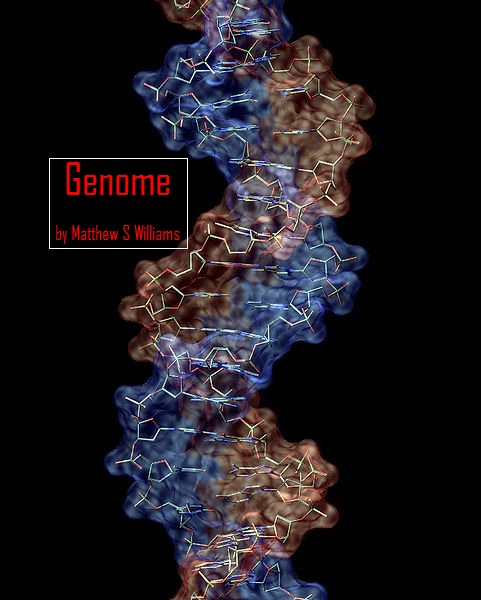
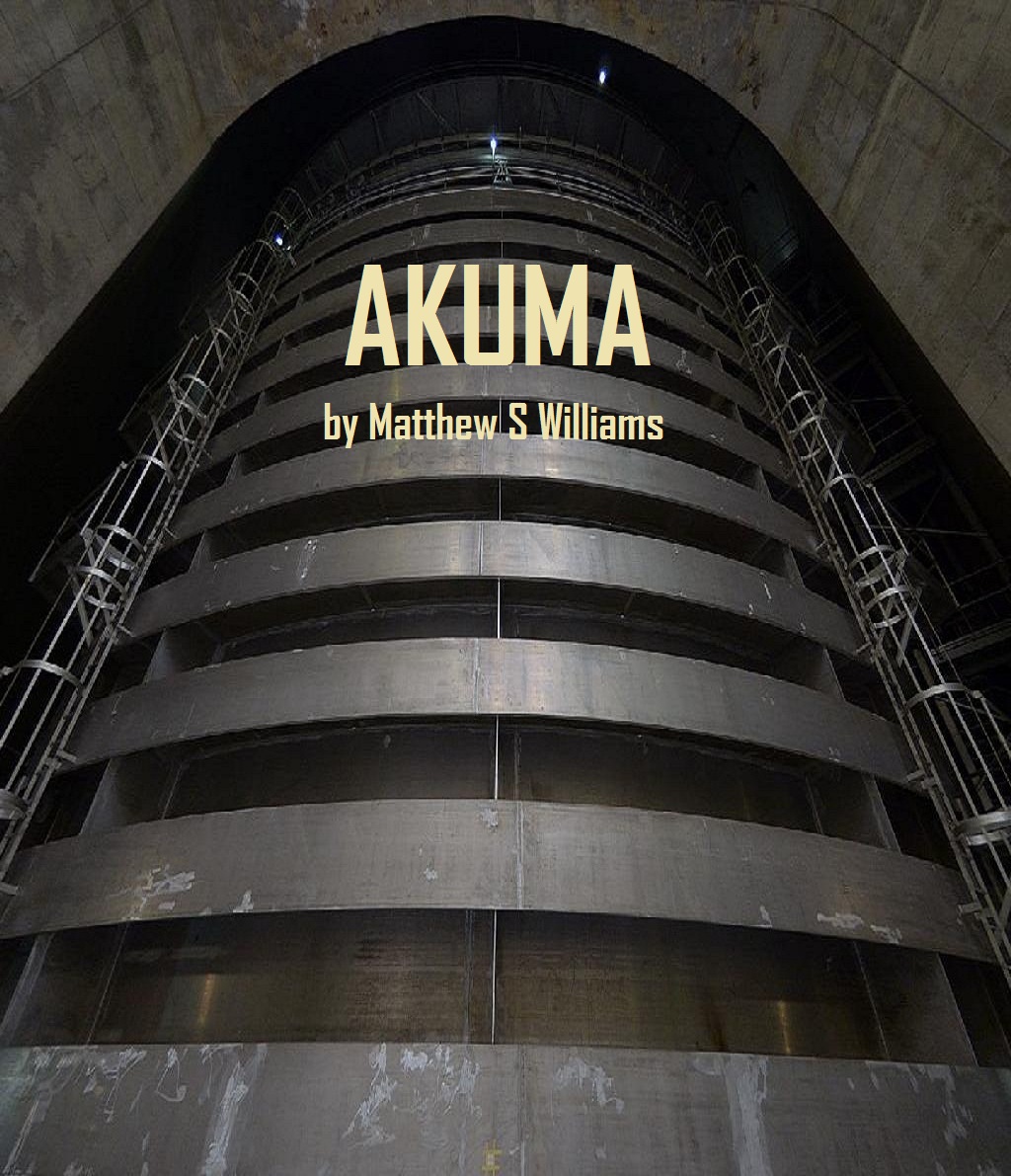
As for news from my end of the island, my running projects are coming along, slowly: Genome, Akuma, and Dataminers. I was really hoping to be done those at this point, especially consider I have been hit by a new idea which has been occupying more than its fair share of my attention of late. With all the talk of debt crises and the possibility of defaulting in the US and the EU, I got to thinking about what the long term consequences of that might be. As usual, convergence takes place! Something in the news combines with something you’ve been reading, and – boom! – you’ve got an idea about the near-future where a second Great Depression hits, politics get radicalized, and quasi-fascists take over! The working title for this one is Republic, and I’ve even managed to write out a tentative outline and most of Part I (not to mention the manifesto that is the centerpiece of the novel). While I still need to create an original cover for it, the working one I have says it all. Check out it and the new covers I’ve devised for my latest works below.

I’ve also gone back to writing articles for Universe Today, as always on the subject of particle physics, astronomy, and everything in between. And, along with the good folks over at authonomy.com (i.e. other newby writers), I’ve begun re-promoting both Source and Liability. And of course, I’ve spent much time training and gearing up for my TaeKwon-Do test which is tentatively scheduled for the end November. If all goes well, I will have instructor certification in not one, but two TKD federations. With that under my belt (no pun!) I will finally be able to open my own school! Oh, and that reminds me, congratulations Ryan on getting your personal trainer certificate! With luck, we could open a full-on fitness school together!

Data Miners (Opte cover)
Republic (working cover)
Genome cover
Akuma cover

Debate on Goodreads

As I am an avid fan of all things 1984, and an incurable instigator of debate, I decided to start a thread over on Goodreads about one of the biggest questions associated with it. In short, Can it Still Happen? I deliberately and connivingly selected this topic for the very reason that it brings up a ton of particulars, like why and how it happened in the book, why it didn’t happen in real life (although some think it did!), and what conditions are necessary to establish a permanent dictatorship that will arrest history. Already, people are getting into Huxley’s vision of the future and debating whether or not that proved more accurate, so naturally I’m directing them here since I asked just that question: 1984 vs. Brave New World

Here the thread for the discussion, already getting popular: Goodreads – 1984, Can it Still Happen?

Idoru!

The second installment in William Gibson’s “The Bridge” Trilogy. Looking back, I don’t feel like I did the first book justice with the rather short review I gave it. Not to say that my overall opinion of the book has changed, but I feel like there were elements and angles that I should have delved into a little more. But since this book took place within the same general framework as the first, I shall rectify that here! So much better than re-editing old posts, don’t you think?

Idoru:
What can I say about Gibson’s second “Bridge” novel? Well, for starters, I liked it! It was much more developed and intriguing than the first, to be honest. While Virtual Light was concerned with the sense of post-millennial shock, the disintegration of California and the US and the massive privatization thereof – calling to mind other books by Gibson and Stephenson’s Snow CrashIdoru dealt mainly with the concept of celebrity and the nature of modern media. Although it is set just a few years after the events in the first novel, far less attention is given this time around to either the Pacific west coast or Japan’s experience of the big earthquake. It’s still there, just operating in the background and popping up on occasion to set the scene.

In addition, Kowloon’s Walled City makes an even bigger appearance this time around. In the first book, it is listed as the inspiration for The Bridge – aka. the Golden Gate Bridge that has become a community unto itself. This time though, it has matured into a cyberspace VR construct where people port in and live out their lives in a virtual environment. Like the original Walled City, it is a place for hackers, Otaku, and cyberpunks, people who live on the fringes of society in this day in age. In keeping with all of Gibson’s pre-Bigend novels, this is indicative of the disappearance of the middle class and the emergence of cyber communities as a form of resistance. This tribalistic behavior, taken into the digital realm, is not so much political as it is cultural.

This is best exemplified by the character Chia Pet McKenzie, a teenager who also happens to be a member of the Lo/Rez fan club. Lo/Rez is a Japanese band, a clever pun on Low-res (i.e. low resolution), and the fan site is an international community that communicates via cyberspace. The concept of “nodal points” is also introduced via the character of Laney, a man who is apparently adept at finding these nodes in information patterns. After leaving a company named SlitScan, a media giant renowned for ruining celebrities by exposing their secrets, he is hired because his unique abilities make him useful to anyone looking to find these patterns. These two characters and the plot strands that involve them come together when Rez, half of Lo/Rez, announces he wants to marry Rei Toei, the Idoru (Japanese for Idol). The Idoru is a virtual creation, a holographic person, who is apparently achieved a measure of sentience. Laney is hired to find out, via Lo/Rez’s info, why he could be doing this and/or if anyone is manipulating him (like the Idoru’s people). Chia is similarly flown to Japan to determine the cause of this as well, but on behalf of the fan club. In any case, the two finally find a way to consummate their union by obtaining nanotechnology, apparently so they can fashion her a physical body. This, however, is left open, we never see if they pulled it off or not.

All of this calls to mind several familiar Gibson themes. For starters, the concept of data mining, which makes an appearance in many of his novels. According to Gibson, the character of Laney is a fictitious rendering of himself, his ability being a metaphor for what Gibson dose on a regular basis in order to predict the future. This seems clear enough given that the theme has come up again and again in Gibson’s works (Cayce Pollard, another main character, did much the same thing in Pattern Recognition). Also, there is the concept of AI’s, digital sentience, and the increasingly blurred line between artificial and authentic. In addition, the influence of the mass media, the culture of celebrity, and the massive influence these two things plays on our society is featured throughout this book. In short, it asks the question of why people are obsessed with celebrities, want to be them, what it takes to be one, and why we want to ruin them so badly! It is also quite Warholian in how it addresses how fame has changed over time and how it is the industry that seems to determine who is famous, why, and for how long.

Selling Points:
Overall, I could see why this book was hailed as the book that cemented Gibson’s reputation. There’s a lot going on in this book! One can see many layers of technological, cultural and social commentary, punctuated as always by Gibson’s love of sub-culture, street life, and cutting edge things. In fact, this book was quite influential in the way it predicted virtual personalities, which is something that became quite big in Japan on or around the time of the book’s publication. It was also rather prescient in the way it delved into the kinds of tribalism that have become incredibly common with the internet. On top of all that, his delving into the world of media, celebrity and the dividing line between what is real and fake (exemplified by the marriage of Rei Toei) was executed with his usual subtle genius. That was one of the things I liked best about this novel. At no point was someone saying “You can’t marry a program! It’s immoral, unnatural!” Nor was anyone arguing in favor of it by saying “Look at the world today! There IS no line between real and fake anymore!” Everyone was concerned, most people thought he’d either lost his mind or was being manipulated, but no one came right out and ANNOUNCED it. This is something that people like the makers of S1mOne, who were clearly imitating Gibson, did do (just look at that title! What an obvious binary reference!).

Weak Points:
For one, the open ending. That applied to more than just whether or not Rez and Rei Toei ever achieved a physical union. That much I could understand given that it was the idea of it that was important, the exploration of whether or not it would ever be possible for a human and digital person to cross that boundary. But it also applied to other aspects of the story as well. For one, Laney’s ex-boss shows up deep into the story to blackmail him, and she is apparently disappeared by Lo/Rez’s head of security. We never find out if he really did anything to her or if he just scared her off. The plot thread involving her just disappears like it had become inconvenient and Gibson wanted to get rid of it. Perhaps it comes up in book three, but here, it was like a final act cut-off. This is something this book has in common with Stephenson too, ironically enough; the quick, choppy endings!

And of course, some familiar old patterns also emerge in this book and have become apparent in this trilogy as well. The first pattern is one I’ve seen in every Gibson book I’ve read yet: having one man and one woman as main characters and either hooking them up, or pairing them off with secondary characters. Some examples include Chase and Molly in Neuromancer (who hooked up with each other), Hollis and Milgrim in Zero History (who had separate hook-ups), Chevette and Rydel in Virtual Light (together), and now Laney and Chia (separate). Mind you, I’m not calling this a weakness. In fact, most people would call it a convention; interesting stories need some degree of romance to keep them from being totally dry! But it does seem just the slightest bit repetitive this time around. He also switches main characters in the second book in this trilogy, which he did with the Bigend Trilogy too, but not the Sprawl one for some reason.

Overall, a good book and a fun, fascinating read. I definitely recommend it for anyone interested in classic sci-fi or who, like me, is interesting in charting the course of cyber/post-cyberpunk literature. You see? This is the kind of treatment Virtual Light should have gotten! I’ll be sure to be this thorough from now on!

Back to reviewing books!

Boy, its been awhile! It seems like so long ago I was reviewing “Virtual Light” and looking forward to doing the rest of the “Bridge Trilogy”. Well, I didn’t forget. In truth I was just about finished reading Idoru – the second book in the trilogy – but then I decided to leave it in Red Deer for some reason. I managed to get a new copy, but then, wouldn’t you know it, I bought the box set of A Song of Fire and Ice and then started reviewing someone else’s book for them too! Somedays, I tell you, I think I might have literary ADHD! So, given my obvious need for structure, I thought I might make a list of all the books I intend to read and review in the coming weeks and try to stick to it for once!

For starters, there’s Idoru, which I’m just finishing but need some time to digest. Not only is this an important book in Gibson’s “Bridge Trilogy”, it is apparently what cemented his fame as an author after Neuromancer so I wanna take my time with it. But I will say that as far as first impressions go, I can see what the critics meant when they said this. Whereas Gibson’s earlier books tended to deal with cyberspace and the dark underbelly of society in the information age, this one tackled the vagaries of celebrity and media in said same era.

A follow-up with All Tomorrow’s Parties will then be necessary to complete the trilogy, and because I already bought the book. Thank you Amazon for your slow but reliable delivery system! Then, I shall turn to my pile of Kindle books since I’ve been scooping them up ever since my friend from Red Deer (hey Chi!) bought me this iPad! I tell ya, the thing is not the best typing implement, but man is it good for reading! I actually get more done on it than with a conventional book, may the God of paperbacks forgive me (blessed be his cellulose appendages)!

Speaking of which, that would be where A Song of Fire and Ice by George R.R. Martin (“the American Tolkien”) comes in. After getting hooked like crack on the HBO miniseries of “A Game of Thrones” which covers the events in the first novel, I got myself the box set for my Kindle app. Well, truth be told, I bought the second book and THEN bought the box set on Kindle. Quite looking at me like I’m drugs, it was a deal I tell ya! And yes, I was hoping to buy them individually, but three books in paperback or all four on Kindle for roughly the same price, before the added cost of shipping and handling? You do the math! Besides, duplicates don’t really count if they’re not taking up space on a shelf, right?

However, all those must wait until I finish reading and reviewing a book by a fellow self-pub ebook author who goes by the name of Randy Attwood. His book Rabbletown: Life in These United Christian States of Holy America is an interesting look at fundamentalism in America and a new dark ages. This authors book came to my attention by way of my writers group, The Herscher Project, a few weeks back and I agreed to take his book on and give it its due. Look for my review in the coming days! I should also take this opportunity to mention that this same group will be putting out an anthology shortly, a collection of the group’s dystopian narratives from over the years. Look for it in ebook format when it comes out, and pay close attention to a little story called “Domicile 4.5”. I’ll give ya a hint, it’s by me 😉

“Fear is the Mind-Killer…”

“Fear is the Mind-Killer…”

Recently, when looking back at the best Dune lines from the miniseries, I forgot all about one, very important one. How could I? It’s only one of the most important lines in the Dune series, one that gets repeated in just about every book. And that line is… The Litany Against Fear! For those who don’t know, this is the invocation the Bene Gesserit’s and the Atreides make in order to ward off fear. And as I’m sure many Dune fans have done (at least I hope so!), I’ve even tried saying it once or twice. Doesn’t really work for me, but then again, it was a long shot at best.

Clearly, the idea behind the Litany is an acknowledgment that fear is dangerous, but also that the only way to overcome it is to embrace it. By allowing it to pass through you, yourself remaining but the fear gone, is to survive. To give in to it is to invite obliteration. Anyhow, the quoted version of this prayer was modified by from its original text by John Harrison for the purposes of adaptation. Here is how it appeared in the miniseries:

“I must not fear. Fear is the mindkiller. I will face my fear. I will let it pass through me. When it is gone, there will be nothing, only I will remain.”

Not bad, but here is how it appeared in full, in the original text of Dune:

“I must not fear. Fear is the mind-killer. Fear is the little-death that brings total obliteration. I will face my fear. I will permit it to pass over me and through me. And when it has gone past I will turn the inner eye to see its path. Where the fear has gone there will be nothing. Only I will remain.

Yep, its about twice as long. And when you’re acting, long speeches tend to make the audience lose interest. Curiously enough, David Lynch used the full text version when making the movie version of Dune. One would think that his time constraints would have made brevity all the more desirable. But then again, he relied on internal monologues to make this speech, as with most other things in his movie. Since the actors didn’t have to stand and deliver, just pull a face and let the voice over do its thing, they could kind of get away with it. And if the audience got bored… well, chances are they were bored to begin with! Or lost, his movie was good like that ;)!

1984: the year that wasn’t (Phew!)

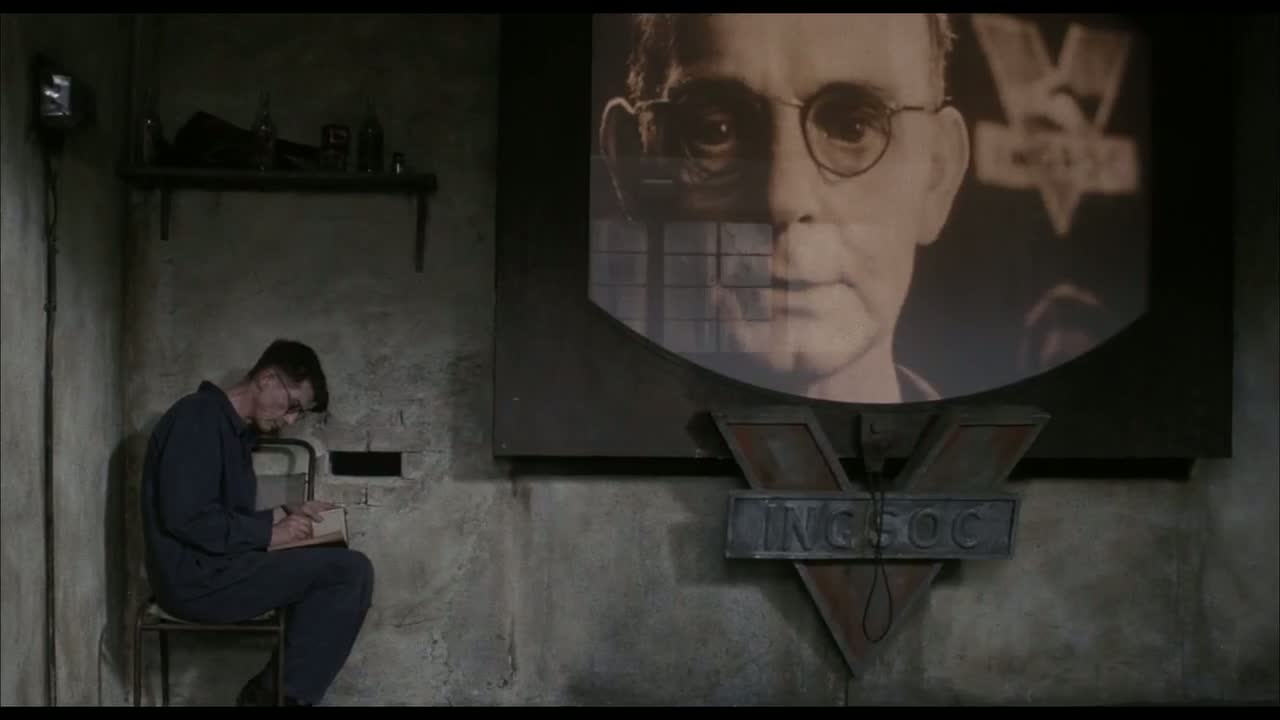
1984_John_HurtTo finish off this review of the two great satires that encapsulated the 20th century: 1984, George Orwell’s dystopian vision of a totalitarian future. As I’ve said many times in the course of this thread, there has been an ongoing debate as to which vision of the future came true, and it appears that Huxley’s was the one that proved to be more accurate. But as I said in the previous post, the era in which the books were written had much to do with their divergence of opinion. And ultimately, it was the course of history that proved Orwell wrong and vindicated Huxley. But then again, his book was a cautionary tale, something that was not meant to come true, right? Damn straight, so let’s move on…

And as I also spoke about in the previous post (at great length), Brave New World was written within the context of the 1920’s as a satire on Fordism, commercialism, mass-consumption, leisure, propaganda, and the American Way. Beginning in the early 20th century, shorter hours and better pay, coupled with aggressive marketing strategies that targeted the working class, were used to tame an increasingly unmanageable workforce, not to mention immigrants. In addition, it ensured the creation of a new consumer base, on that could fuel ongoing economic growth and industrial expansion. Win-win! Well, sort of… Then, as now, the most effective way to steer workers away from radical organizations and immigrants away from their traditional cultures was seen to be the combination of nationalism and commercialism, consumption advertised as a way to achieve the American Dream of prosperity and acceptance.

IngsocBut by Orwell’s time, a new demon had emerged that threatened to extinguish human freedom. The roaring twenties, a time when bribing the workers seemed both enlightened and possible, ended abruptly with Black Tuesday and the crash of the New York Stock Exchange. Mass unemployment, desperation, drought; all these led to the radicalization of society and the rise of totalitarian ideologies. For the first time since the Age of Revolution, human beings appeared willing to surrender their freedom in exchange for security and a better life. And with Liberal-Democracy largely discredited, people needed a new philosophy to look to for solutions. On the one hand, many intellectuals and workers found a likely candidate in the Soviet Union, the home of Marxist-Leninism and the global crusade against capitalism. On the other, people began to turn to a strange new – but no less radical – philosophy known as fascism. This polarization tore many countries apart, with different segments of society turning on each other to the point of civil war. This trend continued well into, and even after, World War II. The Age of Extremes was born!

Which brings us to George Orwell, an intellectual and writer who turned to socialism at a young age and saw it as the means to cure the ills of traditional liberal-democratic society. After years of championing reform in England, he joined the international brigades and went off to fight in the Spanish Civil War. Like many intellectuals who looked favorably to the Russian example, he quickly became disillusioned with Soviet Communism, witnessing firsthand its methods and motivations in the field. The Great Purges, in addition to leading to the death of millions of Russians, had the effect of alienating countless intellectuals who had turned to Russia for inspiration over the years. Those who had visited Russia were especially appalled. The liquidation of the Kulaks, the Show Trials, the Great Terror, the constant purging of political dissidents; all of this convinced people just how precious human freedom was, and how flawed social theories that promised utopia truly were.the_blitzDuring the war, Orwell became further disillusioned by the growing trend of authoritarianism in his own and other democratic countries. While he initially approved of the process of “socializing” the economy, a necessity in a time of total war, it soon became clear to him that the process of censoring information, controlling industry, and using war as a means to keep the population united and compliant could lead to totalitarianism at home. These themes were all central to 1984, a book that takes place in a futuristic London that very much resembles London during the time of “The Blitz”. And just like in World War II, England (renamed Airstrip One, part of the global state of Oceania) is at war with another global power named Eurasia. The war dominates the lives of the people, with all aspects of society being slaved towards the need for victory. Industry, security, information, education, and even record keeping; all of these are controlled by The Party, Orwell’s satirical rendition of the Communist Party of the Soviet Union, the only power in the one-party state that has been in power as long as anyone can remember.

In the novel, society is rigidly divided between the Inner Party, the executive branch who’s membership is secret, the Outer Party that is made up of bureaucrats and government workers, and the Proles, the proletariat who have no power or any understanding of how it is exercised. Four institutions dominate Oceania, the Ministry of Love (responsible for breaking the will of dissidents), the Ministry of Truth (responsible for misinformation and propaganda) and the Ministry of Peace (responsible for war), and the Ministry of Plenty (Responsible for rationing and controlled shortages). In keeping with this contradictory appraisal of all things, the three slogans which embody the state’s power are “War is Peace, Freedom is Slavery, Ignorance is Strength”. And above all else, the ever-watchful state is embodied by “Big Brother”, a frightening yet somehow comforting caricature who represents the police state, depicted as a man with cold, dark eyes and a big, black mustache (echoes of Joseph Stalin and the cult of personality).

ministry_of_truthAll of these institutions, the entire agenda of the party, is clearly dedicated to preserving its own power and the total control they have over people’s lives. The war is ongoing, the shortages and fear it inspires constant. Propaganda and monitoring, which includes telescreens and the “Moment of Hate” are inescapable. No one has a moment’s peace or privacy. The people are taught that the war has always been, and with always the same enemy, regardless of the fact that the enemy frequently changes. Thanks to the Party’s control over information, no one knows whats really happening or whether or not a war is even taking place beyond their borders. Thanks to the Party’s censorship of all records, no one knows the true course of history or how they got to where they are. When a person is purged, they simply disappear, and no one knows if they ever really existed thanks to the Party’s control of all census data. Hell, thanks to the Party, no one even knows if it is 1984 at all…

Enter the main character, Winston, a man who remembers something of what life was like before the revolutions and the ongoing war. He is searching for answers, a search which leads him to his love Julia, a woman who actually enjoys sex, contrary to what women are taught in Oceania. The two then meet up with a man named O’Brien, a member of the Inner Party who is apparently a member of the resistance as well. In Oceania, the resistance is a clandestine group that is led by a figure known as Goldstein, a man who embodies all things evil and treasonous as far as the state is concerned (echoes of the Nazi campaign against “The Jew”). Through O’Brien, Winston and Julia are given a taste of freedom and a copy of Goldstein’s manifesto which explains how the Party seized and exercises power. Satisfied with the who, the what, the where and when of it all, Winston is left with only one question: why? Why did the Party take power, why do they exercise it so brutally and repressively, and why do they want force humanity to live a constant state of war and fear? There has to be a reason, right? Right?

ministry_of_loveWell, as it turns out, there is. In the end, Winston and Julia are betrayed and sent to the Ministry of Love. Winston soon meets O’Brien again, and realizes he’s been had, that there is no resistance, and that O’Brien and the Inner Party were the ones who wrote Goldstein’s manifesto. After being tortured and forced to confess his treason, Winston is given the answer he seeks. The Party, O’Brien claims, is interested in power, power for its own ends, the power to tear up minds and remake them however they see fit. The main difference between the Party and others like it in the past is that the Party has no illusions of why it does what it does. Then, to complete the process of torture and brainwashing, O’Brien and the Ministry of Love force Winston to betray Julia rather than undergo his worst fear (in Winston’s case, being eaten alive by rats). When its all over, Winston ends up at the same cafe he saw in an old photograph, one which he was previously ordered to destroy. In this photo, some old Party members who were purged were seen sitting after clearly being tortured, and right before they were killed. In this way, we know that Winston is about to die, but not before he says good-bye to Julia, they confess that they sold each other out under the pressure of torture, and he undergoes the terrifying transformation to become what the Party wants him to be: a loyal and loving servant of Big Brother.

I tell ya, this book scared the crap out of me when I first read it! It was so gripping that I read the bulk of it in two sittings, (something unheard of for me) and took its many lessons to heart. Foremost amongst these was the message that human freedom is precious, that empathy and feeling are what make us human, and that the last thing we should do with our minds is surrender them to those who promise us deliverance from our suffering and an earthly paradise. I am thus far relieved that his predictions did not come true, for it is how 1984 came to be that is very important, and often overlooked in my opinion. In essence, Orwell feared that the process of total war would continue well into a third world war, that society would be destroyed by nuclear bombs and then overthrown by radical revolutions, and that the world would descend into a series of totalitarian regimes that had learned from the failures of others and could therefore not be overthrown as the others had. But lucky for us, World War III didn’t happen (yet), democratization and socialization spread in western nations, and the Cold War ended. Fears of a totalitarian future have been renewed since 9/11 and the “War on Terror”, but these fears have served to demonstrate how important and enduring Orwell’s vision was.

George-OrwellIn a way, Orwell was a more effective satirist than Huxley in that his vision did not come true. Which, after all, was why he wrote it, wasn’t it? The whole point of cautionary tales is that people avoid what they’re being cautioned about, right? RIGHT? Well yeah! Orwell sought to warn the people of his day what could very well be coming, what could come from the scourges of total war, the desire for security, revolutionary justice, and putting one’s faith in ideologies that promise an earthly utopia. In many respects, its a credit to him that people have to turn to Huxley’s vision to identify the sources of their oppression. It means he did his job!

So thank you George Orwell, and rest in peace knowing that the world is still safe from 1984… so far!

Brave New World Revisited

As a follow-up to my last post, I wanted to delve into the two great satire-epics in more detail. First up, the satire that came true: Brave New World! And as the title says, I would also like to include a little commentary on the thoughtful essay that capped off his thoughts about his magnum opus, its reception, its enduring legacy, and the themes it addressed. There were so many, so where do I begin?

For starters, the central premise in his work: that humanity would be controlled through amusement and pleasure, not fear or brutality. Without a doubt, his commentary was based on the age in which it was written (American society of the 1920’s), an age in which amusement was seen as the cure to all social ills. It might even ventured that if he wrote it a little later, say, during the 30’s and 40’s during the age of totalitarianism and total war, he might have thought differently. One could make this case, but whether by circumstance or design, he ended up being right. In the post-war era, with the death of Soviet Communism, the extension of democracy and the growth of the middle class throughout the industrialized world, it seemed that the forces of repression would need to be more creative if they were going to control the hearts of minds of the people. And, in many respects, they succeeded. With the advent of television, mass advertising, mass consumption, deregulation, globalization, outsourcing, the decline of job security, unions, public broadcasting, and the concentration of industry and information into fewer and fewer hands, personal freedom once again appears to be threatened by the forces of repression and conformity. In fact, in many ways, life today is beginning to resemble life in the 1920’s when Huxley wrote his book. Funky coincidence huh?

But enough background! Let’s get specific. Brave New World opens on the facility where selective breeding takes place under the watchful eye of Mustaffa Mond, one of the ten leaders of the world and the Director of Hatcheries and Conditioning. It is quickly made clear that in Huxley’s world, the World State as its known, all people are predetermined before they are even born. Those who do manual labor are specifically designed for it, their size, physical and intellectual capacities tailored to that purpose. Alphas are the top of the line people, tailored for intellectual work and management, Gammas and Epsilon’s perform the most menial tasks, and Betas and Deltas do all the stuff in between (middle-management and processing, I guess!) In this way, class conflict and expectations are eliminated, no one can feel unhappy with their vocation because they can expect nothing better, and to just to make sure readers are catching on to the subtlety of this assembly-line birthing process, the people in this future revere Henry Ford and cross their chest with a large T when uttering his name. Henry Ford, the man who invented the assembly line and the concept of unskilled labor, who reduced his workers to cogs in the machine, and then bought their loyalty by cutting their hours and increasing their pay. Some saw these as enlightened reforms and Ford as humanitarian; but other, smarter people, saw it for what it was: an attempt at making his workers passive consumers! And what was good for Ford was good for all industrial giants, America soon followed suit and the age of plenty was born! A fitting social commentary, but I’m getting off track here.

Another element that is used to control society are “Feelies”, and like many things in the novel, it took some historical context to teach me the true genius of this concept. You see, at the turn of the century, the relatively new phenomena known as motion pictures were called “movies” (get it?). When sound was incorporated, the term “talkies” came to be used. Sensing the trend, Huxley came up with the idea of “Feelies”, films where the audience were wired into the theater so they could feel everything happening to the actors. Clever! And then there’s the designer drug Soma, a chemically non-addictive substance that people are actually encouraged to use, the process of which is known as “going on holiday”. Whenever people are frustrated, sad, depressed, anxious, restless, or angry, they are encouraged through conditioning and slogans to take their Soma and bliss out. Echoes of antidepressants perhaps? Speaking of conditioning, Huxley sought to portray the forces of commercialism by once again taking things to the next level. In addition to signs, radio jingles, and pervasive ads, people are conditioned from an early age through sleep conditioning to consume, use Soma, and follow the rules of the World State. One such rule is that everyone belongs to everyone else, including in the Biblical sense. Yes, in this world, promiscuity is encouraged and orgies are commonplace, all to keep people satisfied and avoid the pitfalls of monogamous relationships, which include jealousy, infidelity, and crimes of passion.

Thanks to all these measures, society is kept controlled and everyone is happy. Well, almost (here comes the plot!) Enter into this world an Alpha named Bernard Marx (recalling the venerable Karl) who is unhappy with society since he does not fit in. His discontent with all things is often blamed on the fact that he is a bit stunted and maladjusted, the result of a mistake rumored to have happened while he was still in the test tube. His partner Lenina (as far as that is possible in a promiscuous society) is more the traditional sort, and the object of desire for multiple main characters. Together, they visit a Reservation, where the so-called Savages who do not belong to the world state reside. Here, they meet John, the lovechild of a former Alpha who got knocked up and was forced to live out her life on a Reservation in former Mexico. When they find him and speak of their world, which he knows about only through stories his mother told him, he decides to return with them. But, much to his chagrin, he does not fit in in this Brave New World either. Lenina and he are incapable of forging a relationship, despite mutual attraction, because of their different values. In John’s world, his views on love having been shaped largely by Shakespeare and traditional “Savage” values, love is monogamous and righteous. In Lenina’s, love is free and cheap, and to be shared openly.

By the end, all the non-conformists are forced to leave, Bernard and his free-thinking friend are forced to live in exile. Lenina goes back to the world she knows, having been rejected and even beaten by John, and John exiles himself to the countryside to live a simple life. But the forces of civilization won’t leave him alone, they chase him to his new dwelling at an abandoned lighthouse and demand he entertain them. Things get a little violet, the crowd is doused in Soma gas (a standard tactic during a riotous event in the World State), and John and the people engage in a drugged-inspired orgy. When he wakes up, he’s overcome with guilt, realizes he will never be left alone, and hangs himself. A sad and fitting ending, the boy who could not function in either the “civilized” or free world resorting to the only out he can think of. Between barbarism and insanity, death appears to be the only option.

In hindsight, Huxley said that he wished he could go back and revise Brave New World, offer some third options and potential solutions other than suicide. For example, he hoped that the idea of the colony of exiles could have been developed more, where free-thinking people could have come up with some solutions to the problems of insanity and barbarism, civilization and its discontents. But arguably, this way was much more effective. In the end, the point of how a “utopian society” crushes the will of sensitive, thinking individuals, how it does not suffer challengers or people do not see eye to eye with it. And lets not forget that good art needs to frighten and offend sometimes in order to make its point. Letting people down easy just waters down the message. At least I think so. So writers remorse aside, I’d say Huxley’s vision was well-rendered in his book and needs no revisions.

And its ingenious really, regardless of whether or not history has proven his vision to be the more accurate one. Because in truth, the totalitarian age, if it taught us anything, was that human beings cannot be forced into anything for long. In order for people to surrender their freedom, they need to be made to do so willingly, and that takes fear and/or the promise of something better. In addition, it also taught us that totalitarian regimes can only truly thrive in underdeveloped corners of the world where they benefit from ignorance, poverty, and a long history of abuse. And even then, they cannot last indefinitely. Modern, developed countries that boast high rates of literacy and take things like mass media for granted require a more subtle approach when it comes to tyranny and social control. Power can never be exercised by a single man, woman or institution, and it cannot be overt. It must take place behind the scenes, where prying eyes cannot easily go, and excesses and abuses cannot easily be proven. Similarly, punishment must be equally subtle, meted out in ways that are either covert or even appear to be benign or beneficial (aka. therapy, mental hospitals, doping, etc). And above all, measures must be taken to ensure that citizens are kept happy, or at least that the majority are kept happy while the rest are kept marginalized and divided. And last of all, there has to be ways to channel or dissuade discontent. Campaigns and institutions that put a happy face on bad things are a good example, as are offices that give the illusion of making a difference or fighting the system, when in fact they are serving it.

Brave New World, ladies and gentlemen! Not as good a read as 1984, but definitely more accurate and prophetic in terms of its vision. Take that, Henry Ford! You and your little Model T too!