The First Science Fiction Novel Ever?

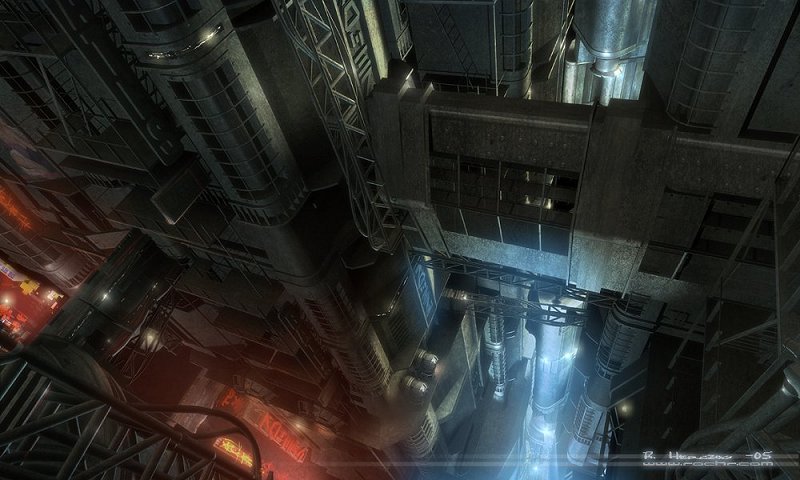
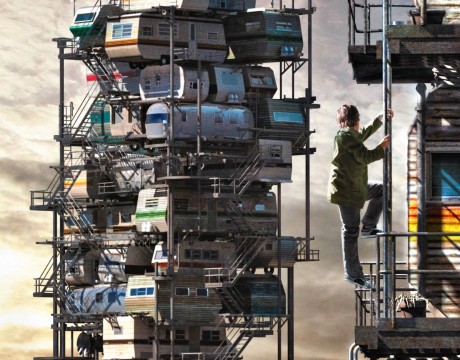
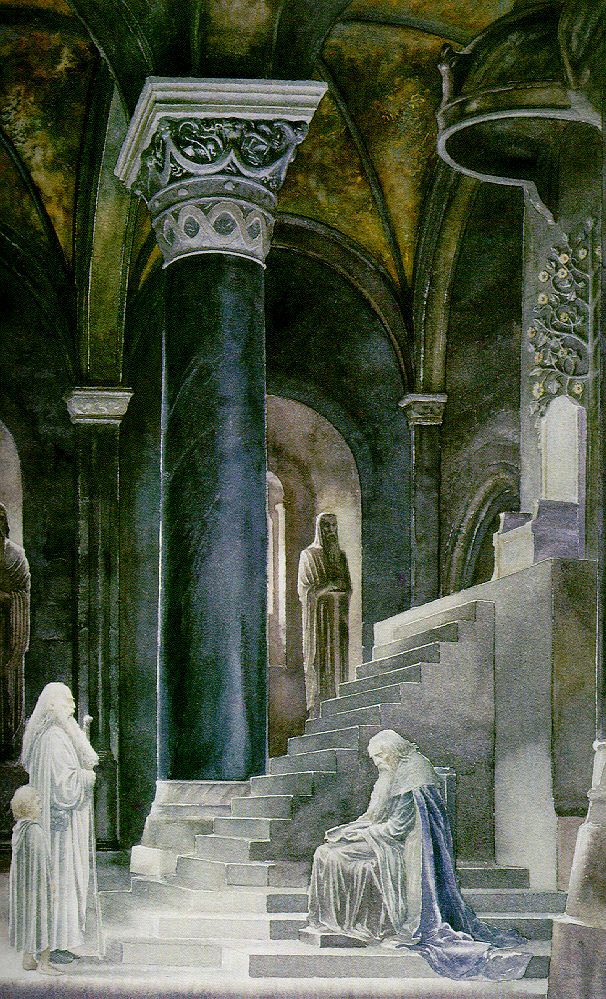
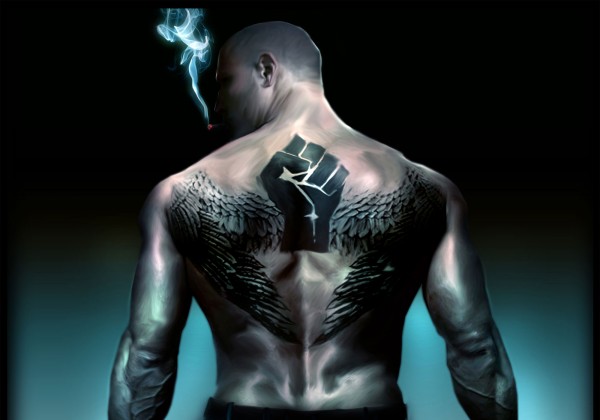
What do you think of when you hear the words Sci-Fi? Chances are, the words inspire images such as the one above, of nightmarish landscapes featuring clogged streets, flying cars, neon lights and massive skyscrapers. Or possibly you’re partial to the more utopian visions, with space travel, beautiful arcologies and happy shiny people who want for nothing and treat each other with peace and civility.

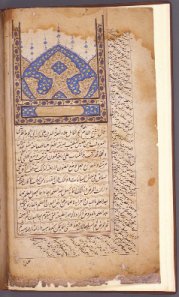
All good, but chances are, no one thinks of medieval literature from the Islamic world when they hear that term. Chances are no one thinks of anything other than the industrial age, of men like H.G Wells and Jules Verne. For most of us, these are the people who pioneered the field of science fiction, no doubt about it. But amongst scholarswho specialize in tracing literary genres to their roots, one book stands out as the possible progenitor of them all; a little known novel by the name of Theologus Autodidactus.

Outside of antiquarians and theologists, not many people have heard of this story, and up until a few weeks ago, I hadn’t either. So you can imagine my surprise when I learned about it. To me, science fiction was not something that could have predated the scientific revolution, or the age of industry when steam locomotives, steam ships, and a revolutionary understanding of the world and man’s place in it inspired flights of fancy which went well beyond our world. And yet, as it turns out, a manuscript which was written sometime in the 13th century by an Islamic scholar living in Egypt.

His pen name was Ibn al-Nafis (nee Ala-al-din abu Al-Hassan Ali ibn Abi-Hazm al-Qarshi al-Dimashqi), and he was what westerners would later refer to as a “Renaissance Man”. Not only was he an expert physician he also studied jurisprudence, literature and theology and became an expert on the Shafi’i school of jurisprudence before he died. In addition to writing many treatises on medicine, one of which was made famous for being the first in which pulmonary circulation of the blood was mentioned, he also wrote extensively on law and the world’s first coming of age tale/science fiction novel Al-Risalah al-Kamiliyyah fil Siera al-Nabawiyyah, which translated into Latin is known as Theologus Autodidactus.

Plot Summary:
Broken down succinctly, the story revolves around a protagonist named Kamil, an adolescent feral child who at the beginning of the story finds himself spontaneously transported to a cave on a deserted island. Almost immediately, it is clear that the boy is an autodidactic, a self-directed learner who has mastered several fields through independent learning.

Over time, he is met by several castaway who get shipwrecked on the island, learning and sharing from them. In time, the castaways band together to make a ship and agree to take Kamil with them back to civilization. As they return to the world of man, Kamil begins to see all the works of man, learns of philosophy, law and medicine remaining a self-directed learner all the while) and comes to several conclusions.

As he grows, he is taught the value of jurisprudence, religion, the necessity of the existence of God, and the value of the sciences, arts, and all other things that make man civilized. His own coming of age is reflected in explorations of the origin of man, the current state of the world, and predictions of the future. Towards the end, the plot develops from this coming-of-age scenario and begins to incorporate several new elements, such as the the end of the world, doomsday, resurrection and afterlife are predicted and scientifically explained using his own empirical knowledge of biology, astronomy, cosmology and geology.

Summary:
Ultimately, Ibn al-Nafis described his own work as a defense of “the system of Islam and the Muslims’ doctrines on the missions of Prophets, the religious laws, the resurrection of the body, and the transitoriness of the world”. Essentially, this meant presenting rational arguments for religious ideas, such as bodily resurrection and the immortality of the human soul, using both demonstrative reasoning and literary examples to prove his case. In this respect, he was not unlike Thomas Aquinas and a host of other western scholars from the High Middle Ages, men who would similarly try to defend reason based on faith and use empirical knowledge to defend the existence of a spiritual, universal order.

However, what set Ibn al-Nafis’ work apart was the way in which he expressed his religious, scientific and philosophical views through a fictitious narrator who went on to experience what the world had to offer. Rather than writing things in treatise form, which was the style for most philosophers of the day, he chose to do what only a select few of his contemporaries did and tell the story through a narrator who’s own journey illustrated one’s own journey of discovery. In that respect, he was like Voltaire, who’s fictional Candide had to venture out into the world in order to realize the truth about life and the order of things, though their conclusions were vastly different.

And finally, fact that he chose to speculate about what the future held, up to and including the apocalypse itself, is what makes this work classifiable as science fiction. Here, he was most comparable to men like H.G. Wells and Verne, men who looked to the future in the hopes of illustrating the current state of humanity and where it was likely to take them. And though these, and later generations of individuals, often had a negative appraisal of such things, Iban al-Nafis’ was arguably positive. His exploration was designed to affirm belief in the existence of something greater than material nature, but provable using the same basic laws.

I can’t imagine being able to find a copy of this book any time soon. It’s not like Amazon has copies on hold for anyone looking to a little cross-cultural antiquities reading. I checked, they really don’t! Still, I’d consider it a boon to find a translation and read the whole story for myself. What I little I learned can’t possibly capture the historic and cultural importance of the novel. Something to add to the reading list, right next to The Peach Blossom Spring and Beowulf!

Winston Agonistes, Finished!

It’s done! After weeks and weeks of writing, editing and running by my peers, my short story contribution for the Yuva Anthology is finally done. Entitled “Winston Agonistes”, the story tells the tale of synthetic human (i.e. AI) who is in the employ of the planetary government. His basic programming centers around the a social science known as Ethical Calculus, a means by which he is able to calculate the outcomes of decisions.

In any case, the story takes a turn when Winston meets another synthetic named Yohanley, an AI who’s been around a lot longer than him. At first, it seems that Yohanley intends to mentor him on what it means to be an artificial human. However, as time goes on, he realizes that Yohanley is in possession of a terrible secret, one which goes to the heart of the planet’s colonization efforts.

When Winston realizes what it is, he faces a terrible dilemma. Compelled to assess the outcomes of ethical decisions, he can see no outcome in which things turn out well. The only question is who it will endly badly for, himself and his mentor, or an entire species!

Expect more updates on the Yuva project soon, including samples from our newest writers, more artwork, and maybe even a surprise or two. The full anthology is due to be released in January 2013. Look for it online and (God willing) your local bookstore!

Mona Lisa Overdrive

Welcome back to the BAMA*! At long last, I’ve come to the end of William Gibson’s Sprawl Trilogy. For those who don’t remember, this began with Neuromancer and Count Zero many months ago. I had hoped to include this third and final review in short order, unfortunately other books got in the way. And by other books, I mean a tall stack that I’ve been reading, reviewing, and putting down to make room for even more! I tell ya, being a sci-fi reader/writer/reviewer can really burn your brain somedays!

Luckily, I concluded the book just yesterday and am ready to comment on it at last. And let me begin by saying that it’s very interesting, having read every novel that Gibson has written up until this point, to look back and see how his writing began and evolved over the years. It is also interesting to see how certain thematic elements which would appear in later trilogies – i.e. The Bridge and Bigend trilogies- made their first appearances.

Elements common to cyberpunk, such as high-tech and low liing, were common to all three books in this series, but were also an intrinsic part of Virtual Light, Idoru and All Tomorrow’s Parties. The stark divide between rich and the poor and the transformative power of wealth, so important to the Bigend Trilogy, was also to be found in these earliest works. And of course, stories focusing on freelancers who find themselves in the employ of enigmatic figures, and the power plays that go on behind the scenes between various brokers, were present in all of his novels to date.

However, after completing this novel, I can honestly say that I felt let down. Prior to reading it, I was told that it was the greatest of the Sprawl Trilogy, and the reviews claimed that it was Gibson’s “most engrossing story to date”. I came away feeling that it was less than engrossing and definitely not the best of the three. For one, it seemed lacking in much of the cool elements that made Neuromancer and Count Zero so very fun and intriguing.

However, before I get into all that, I should summarize what this book is about. Here goes…

Plot Synopsis:
The story, much like all of Gibson’s works, contains multiple threads that are interrelated and come together in the end. In the first, we see a Japanese girl named Kumiko, the daughter of a Yakuza boss who has decided to send her to London in the midst of a war between the various crime families.Her only companion is a construct named Colin, a personality that inhabits a portable Maas-Neotek biochip.

Once there, she makes the acquaintance of a freelancer named Sally Shears (aka. Molly Millions) who has been hired out by her father’s people to keep her safe. In addition, Sally is being blackmailed by Swain, the head of the London mob, who has ordered her to kidnap the famous simstim star Angie Mitchell and replace her with the a body double.

In thread two, we meet the intended double, a 16-year old prostitute named Mona from Florida who travels to New York with  Eddie (her pimp) after he closes some lucrative deal. However, when they arrive, Eddie is killed and Mona is forced to undergo the surgery that will make her look exactly like Angie, whom she knows from all her simstim movies and admires greatly. Angie’s back story, about how she was the daughter of the man who invented biochips and placed bioenhancements in her brain (all of which takes place in Count Zero) is all recounted, as is her failed relationship to Bobby (aka. “The Count”).

In thread three, we learn that Angie has returned from rehab after developing an addiction to a designer drug her company was supplying. After a brief stay in Malibu, she learns that it was someone in her inner circle who was giving her the drug in the hopes that it would alter her brain chemistry, thereby disrupting her ability to access cyberspace and communicate with the AI’s now living there (the lao, or Voodoo god personas the AI’s had taken on).

In the fourth and final thread, we are introduced to three residents who live together in an abandoned factory located in “The Solitude”, an uninhabited area in the Sprawl. Gentry is the defacto owner of the place, a cyberspace jockey preoccupied with the way it has changed since events in Neuromancer where AI’s began to permeate it. Slick is his roommate, a robotics enthusiast who builds giant battledroids with the help of his friend redneck friend Bird.

Things for them become interesting when Slick’s associate, Kid Afrika, drops off a man who’s permanently jacked into cyberspace and asks them to take care of him. He leaves the man (Bobby Newmark) and a registered nurse (Cherry) with instructions to keep them safe. After examining the aleph (a biochip with immense capacity) that he’s plugged into, Gentry learns that it is an approximation of the whole data of the matrix.This is where he has been living for the past few years after breaking up with simstim star Angie Mitchell.

In the course of the story, we also learn that Lady 3Jane has died and now inhabits the aleph as a construct. At some point, Bobby stole the aleph and now inhabits it with her. After checking in with her jockey friend, Tick, in London, Molly learns that 3Jane is behind the plot to kidnap Angie Mitchell and replace her, and begins to work to unravel these plans. She travels to New York to meet with the Finn, himself a construct now, and learns that since her operation to Straylight, things have been changing drastically in cyberspace.

Now, 3Jane is looking for revenge, and Angie is intrinsic to that plot. After recruiting Swain and key members of Angie’s entourage to help her, she attempts to conduct the kidnapping while Angie is in New York. However, Molly intervenes and grabs Angie and Mona, who is being set up to replace her, and begins to travel to the Solitude. Angie, under the influence of the lao, is directed to Factory to reunite Angie with Bobby.

Meanwhile, Kumiko, who is alone in London, goes to find Tick and find out what’s going on. Ever since Molly left, she is advised by her Maas-Neotek construct Colin to seek refuge from Swain. When she finds him, she too learns about how cyberpsace is changing and how a massive data profile has entered into the matrix (which turns out to be the aleph). When they jack in, they are pulled into the aleph with 3Jane who attempts to hold them prisoner.

Things come together when Molly arrives in the Factory and Sense/Net mercenaries begin to show up to take Angie back. Meanwhile, in the aleph, Colin comes to their rescue by neutralizing 3Jane’s control over the construct. He also reveals 3Jane[‘s motivations. In the wake of her death, after a life of pettiness, greed and obsessive control, she has become jealous of Angie Mitchell and her abilities. Molly, since they know each other from the Straylight run, is pretty much on her shit list as well!

In the end, Angie Mitchell and Bobby die together, but not before their personalities come together in the aleph, to be forever joined by 3Jane and the Finn. Mona is picked up Kid Afrika who assumes that she’s Angie Mitchell, and is taken off to take over her starlet life. Molly takes the aleph and travels off into the distance while Slick and Cherry get together and head off to start a new life together. And finally, Gentry, who refused to leave Factory, stays behind to contemplate the matrix’s growing complexity.

Meanwhile, a final mystery is resolved. Inside the aleph, Angie, Colin and Bobby are picked up by the Finn who explains how and why the Matrix changed. After Neuromancer and Wintermute at the end of the first novel, the combined AI indicated that there was another like him, a construct similar to the Matrix in Alpha Centauri. Apparently, after he went there, he came back changed and divided into the lao, and the Matrix itself changed. Now, the Finn is taking them there, to meet the alien cyberspace and all the mysteries it holds…

Summary:
As I may have said already, this book was my least favorite of the Sprawl Trilogy. That is not to say that I didn’t enjoy it, mind you. But it was diminished in that Gibson’s usual dark, gritty, and decidedly cyberpunk style – which ranges from opulent to gothic in its appraisal of technology and its impact on society – seemed to be watered down by a much cleaner narrative. In the end, it felt more like reading from the Bigend Trilogy, in that the settings and feel were quite similar.

Aside from taking place largely in London and New York, there was also a lot of buildup and not much in the way of action. And of course, the diversions into the fields of fashion, mass media and the cult of personality; these too felt like they would have been much more at home in the Bigend Trilogy. That was the trilogy that dealt with all these elements, whereas the Sprawl was all about the nitty-gritty, about cool gadgets, mercenaries, cyber-ninjas, deck jockeys, corporate bad guys, high-tech and low-life.

To top it all off, the ending felt quite abortive. Gibson is somewhat notorious for this, but whereas Neuromancer and Count Zero contained plenty of gun-toting and cyberspace runs, this book kept all the action til the very end. And at that point, it was complicated by a rather odd narrative structure and some pretty weak explanations. After learning that 3Jane was pulling all the strings and determined to wreak revenge, it seemed weak that it was all for the sake of punishing Angie out of jealousy.

If anything, I thought her motivations had to do with the Straylight run. That after fifteen years of waiting and plotting, she finally found Molly and decided to kill her and anyone else involved in changing the Matrix. To know that it was motivated by her jealousy of Angie’s abilities just rang hollow. In addition, I thought the usual motivations, like how the wealthy are constantly trying to cheat death, might have been a fitting motivation. I seriously thought at one point that her true intentions were to find herself a vessel, and Angie Mitchell proved to be the perfect choice due to the veves in her hand. Through these, 3Jane could simply download herself, provided she had her in custody and hooked up to the aleph… or something.

However, there was plenty of interest in between all that. While many chapters kind of dragged for me, I did enjoy the scenes where the history of the Tessier-Ashpool clan were reconstructed. The revelation about the Alpha Centauri matrix, which was only hinted at at the very end of the Neuromancer was also very cool. And the detailing of the lao and the evolution of the Matrix since Wintermute and Neuromancer came together, that too was interesting. In the end, I just wished there had been more of this.

And given that this novel did wrap up the previous two novels and brought closure to the whole Sprawl trilogy, I would highly recommend it. Regardless of whether or not it was the best or weakest of the three books, it is the final chapter and contains many important explanations and resolutions, without which the series would never be complete. On top of all that, it is hardly a weak read, and I know for a fact that many people consider it to be better than the others. So who am I to stand in anyone’s way of reading it?

Kudos to you William Gibson. I have now read every novel you wrote. I now move on to Burning Chrome and Johnny Mnemonic, plus any other bits of short fiction and thoughtful essays I can get my hands on. Despite all the little things I have come to criticize about your work, you remain one of the best and most important writers in this reader’s bookshelf! And if I really didn’t like you, why the hell do I model so much of my work on your prose? Like Aeschylus said of Homer, any work of mine dealing in cyberpunk and high-tech is pretty much the crumbs from your table!

Good day and happy reading folks!

Time Travel In Sci-Fi

Hey all. Have I said yet that it’s good to be back? Well, truth be told, it feels like I’ve only really got back into the swing of things in the past few days, and after a two week hiatus to boot. I also noticed that it’s been awhile since I’ve done a conceptual post, something dedicated to classic sci-fi and the concepts that make it so freakishly and enduringly cool!

And so I thought I’d tackle a very time (pun!) honored concept in science fiction today, that being the concept of time travel. Despite what many may think, the idea of going forwards or backwards in time is not a recent idea. It did not begin only after scientists theorized that time and space were expressions of the same phenomena – aka. relativity – nor with the development of quantum theory. However, these scientific discoveries did spur the concept on by introducing the idea of temporal paradoxesand the notion that there was such a thing as a space-time continuum resulting in multiple universes.

But I’m getting sidetracked here; and frankly, all this paradox and timelines stuff has been known to give me a headache! Instead, I’d rather look at some of the most renowned and celebrated instances of time travel in science fiction. Sidenote: As usual, I’ll be starting with literature and saving pop culture for another day. And of course, I won’t be covering everything, just the few examples that I think are the best.

Earliest Examples:
As already noted, the concept of being able to see into the past and future, with the purpose of changing the course of it, predates the idea of time travel as a scientific phenomena. In truth, it was often used in novels as a device to advance plot, character development, and offer moral instruction on the importance of choices and making the right ones.

A Christmas Carol:
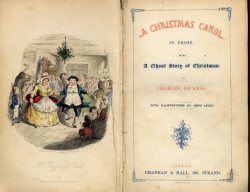
This was certainly the case in Charles Dickens’ classic tale of selfishness and redemption, where a miserly capitalist is shown both his past and future in order to help him mend his ways. Published in 1843, A Christmas Carol has gone through countless renditions and adaptations over the years, with names like Ebeneezer Scrooge, Bob Cratchit and Tiny Tim becoming household names that are synonymous with greed, pathos, and generosity of spirit.

Taking place on Christmas Eve, 1843, the story opens with a general description of Scrooge’s own life and success in the accounting trade, followed by an assessment of his character. Miserly, stingy, unsympathetic to the plight of the poor, his success is due in part to the fact that his business partner, a man much like him, has been dead for seven years, leaving everything to him.

After reluctantly letting his employee, Bob Cratchit, a poor but happy family man go home for the night, he is visited by the ghost of his former partner, Jacob Marley. Marley warns him that for his life of greed, he is suffering eternal punishment, and tells Scrooge that he will be visited by three ghosts who will show him the error of his ways and teach him the true meaning of Christmas. These ghosts, which are named the Ghost of Christmas Past, Present, and Future, all show Scrooge how his decisions to forsake love, family, and kinship for the sake of his money have left him lonely and heartbroken, which is the source of his cruelty. When he sees his future, which is a cold grave with no one to mourn or miss him, he realizes there is still time and vows to change his ways.

Encapsulating Dickens’ view of industrialization, class distinction, poverty and the exploitation of the English working class, Carol remains one of the best known examples of social commentary in English literature. It is also the first widely-known example where time travel was used as a plot device.

A Connecticut Yankee in King Arthur’s Court:
Published in 1889 and written by the venerable humorist Mark Twain, Yankee employs a great deal of Twain’s characteristic wit in order to dispel the 19th century notion that the Middle Ages were a time of romance and chivalry, instead showing them to be a time by ignorance, superstition and brutality.

The story begins when an engineer named Hank Morgen from Hartford, Connecticut suffers a head wound and finds himself inexplicably transported back in time to the court of Camelot. After realizing that he is living in the 6th century and, for all intents and purposes, the most technically proficient man on Earth, he begins using his skills and knowledge of the future to convince the people that he is a powerful magician.

As a result, he replaces Merlin as the chief sorcerer of the court and begins growing in fame and power. He then embarks on an industrialization program for England, establishing trade schools to teach modern concepts and English, thus elevating them from the Dark Ages. At his prompting, Arthur begins to travel the land and is convinced to make several enlightened reforms, including abolishing slavery and improving the lot of the peasants.

In the end, Hank is lured to the continent by the Papal authorities who naturally fear him. While he is gone, the Church issues an Interdict on his followers and activities, and Arthur and Lancelot go to war over Guinevere. As foretold by legend, Arthur dies at the hands of Sir Mordred before Hank can save him. Upon his return to England, a Papal Army comes for Hank and his followers, who end up fortifying themselves in Merlin’s Cave behind an electric fence and minefield while employing Gatling guns.

However, disease begins to set in and Hank himself is wounded and falls prey to illness. While lying in bed, his assistant sees Merlin casting a spell over him, one which he claims will make him sleep for 1300 years (putting him back in his own time). The story ends with the narrator, a man who is writing the tale down in the present, saying that Hank is lying unconscious on the floor of his factory, leading the reader to question whether or not it was all a dream.

An endorsement of rationalization, industrialization and Americanization, Twain’s tail not only challenges the notion that the Middle Ages were a time of ignorance, brutality and persecution, but shows how attempts to remedy the past, however well-intentioned, were doomed to fail. In a way, this proved to an ironic commentary on those who were reinterpreting the Middle Ages to suit their current woes about industrial civilization. To them, Twain would insist that it’s easy to glory a past you don’t have to live in!

The Time Machine:
As already mentioned, the concept of time travel was not new by the time that H.G. Wells wrote the book on the same subject. However, Wells was the first to approach it as a scientific phenomena and inspired just about all subsequent interpretations. Written in 1895, The Time Machine was one of several stories written by Wells that involved time travel. Much like his earlier story, The Chronic Argonauts, the story revolves around an inventor who builds a time machine for his own personal use.

Told from the point of the view of a man known only as “The Time Traveller”, the story consists of his account of his journeys into the distant future and what he encounters there. In his first journey, he travels to the year 802, 701 AD, where he discovers a world divided between two races of people – the Eloi and the Morlocks.

The former are a beautiful, elegant people, though they appear to have no real drive or curiosity, who live in Edenic communities. The latter are a race of brutish troglodytes who live underground and work the machinery that makes the Edenic world above possible. Every now and then, these people emerge to the surface at night to capture and eat one of the Eloi, an act of revenge against their oppressors.

After escaping from a near-death encounter with the Morlocks and retrieving his time machine, he travels ahead to roughly 30 million years from his own time. There he sees some of the last living things on a dying Earth, which appears to be covered by red lichens and populated only by crab-like creatures and butterflies. He jumps forward further by small increments and sees the Earth’s rotation gradually cease and the sun die, leaving the Earth a frozen heap where no life can live.

Clearly meant as a social commentary on class distinction in Britain of his day, The Time Machine was also a potential warning about the state of man. Taken to its extreme, the concept of industrialization and rationalization would lead to the production of two races of people – a leisure class with no discipline or survival skills and a class of brutalized, downtrodden workers who had gone backwards in terms of evolution. A fitting commentary on an age when the gap between the rich and poor was enormous, the former becoming rich of the work of the workers while they in turn lived in horrendous conditions.

The Modern Classics:
By the onset of the 20th century, time travel was becoming an increasingly popular concept for science fiction writers. Thanks to writer’s of the previous century, the purpose of using it for the sake of social commentary, allegory, or as a literary device for the sake of character development had become well established. Many of these were used effectively by authors to warn contemporary readers about the path human civilization was on. Another major development was the publication of Einstein’s “Theory of Relativity” in 1905 and the proposal of multiple universes (as an interpretation of Quantum Theory). These added a certain degree of scientific merit to the idea. As a result, books involving time travel also began to be used to describe such phenomena as temporal paradoxes and circular time.

By His Bootstraps:
Written in 1941 by Robert A. Heinlein, this short story was amongst the first to introduce the concept of a time circular paradox, where the past and future becoming intertwined. This idea is something which Heinlein would return to several times over the years, where time travel creates a self-fulfilling scenario that the character must repeat, either in the past or in the future.

The story begins when a man (Bob) who is working on his doctoral thesis on time-travel is met by a time-traveling interloper named “Joe”. Joe looks familiar and shows him the small gateway that he used to travel back, and invites Bob to come with him 1000 years into the future. Suddenly, a man who looks just like Joe shows up and begins fighting with him, during which Bob is knocked through the gate.

He awakens in the future, and learns from an old man named Diktor that aliens were the one who built the time machine so they could fashion humanity into slaves. Joe realizes a 20th century man could become king in this world and that the man who invited him was his future self. As such, he travels back through the gate to meet himself in his apartment, this time using his own name to convince his past self to time travel. As before, another version of himself which shows up to fight him and his past self is knocked through.

This time around, his past self meets with Diktor, but this time goes  back into the past to procure all the items a 20th century man will need to be a ruler. He procures these, then goes back for the third time, but sooner so he can arrive at a time before Diktor is around. When he gets there, he sets himself up as chief and begins tampering with the time travel device so he can see its makers. Once he does, he’s shocked by their appearance and his hair turns white. After years of waiting, he meets his past self which comes through the gate to meet him. The circular paradox is now complete, with Bob realizing that he IS Diktor (the future word for “chief”) at that he must send himself back to ensure his own future.

At once complicated and containing several overlapping elements, the story introduced audiences to the very cool and timeless concepts of time loops and paradoxes. On the one hand, we see a future which seems fated to come true, but could not possibly exist without the intervention of the main character. Hence the concept of the circular time paradox. After learning the truth, the main character must conspire to ensure that everything that has happened happens again… otherwise the future which he inhabits will no longer exist.

A Sound of Thunder:
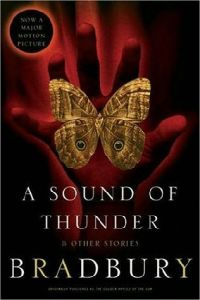
A short story which was first published by Ray Bradbury in 1952, A Sound of Thunder introduced readers to the concept of the “Butterfly Effect”. Beginning in 2055, the story opens on an era when time travel has been invented and is used for hunting safaris. The main characters are talking politics, remarking about how a fascist presidential candidate was defeated by a moderate.

The party then gets into their time machine and travels back in time several million years to hunt a Tyrannosaurus rex. Once they arrive, the travel guide (Travis) warns the hunters about the necessity of minimizing their effect on events, since any alterations to the distant past could snowball into catastrophic changes in the future. The hunters must also stay on a levitating path to avoid disrupting the environment and only kill animals which were going to die anyway.

When they find the T rex, one of the hunters (Eckels) loses his nerve and runs away. The two guides then kill the dinosaur seconds before a falling tree was meant to kill it, and go off in search for Eckels. After finding him and realizing that he ventured from the path, Travis orders him to remove the bullets from the T rex’s body (a necessary precaution) as penance. When they return to the present, they immediately notice subtle changes.

Words are spelt differently, people act differently, and the fascist candidate who had lost the election in their own time has been announced as the winner. Eckels removes his boot and discovers the culprit, a crushed butterfly that he stepped on while straying from the path. He begs the others to let him go back and make things right, but all that is heard in reply is the “sound of thunder” alluding to the fact the Travis shot Eckels.

In addition to being one of the most republished science fiction stories in history, this short story also introduced the concept of what would later be known as the Butterfly Effect, so named because of the butterfly featured in the story. As such, the story would go on to inspire countless similar science fiction tales over the course of the ensuing decades, serving as a cautionary tale about tampering with the laws of nature.

The End of Eternity:
Written by Isaac Asimov and released in 1955, Eternity is considered one of his best works, due to the way it dealt with the subject of time paradoxes. Striking a starkly different tone from his Robot and Foundation novels, the story is a mystery/thriller that deals with the subjects of time travel and social engineering.

It begins with the introduction of an organization known as Eternity that exists outside of time. Staffed by people from various time periods (known as Eternals), this group enters the temporal world at different points in time to make small alterations (called Reality Changes) that are designed to minimize human suffering over the course of history. They are also made up of “Technicians”, the people who execute those changes.

As the story opens, the main character, a Technician named Andrew Harlan, is tasked with going back and ensuring Eternity’s creation. His mission involves taking a young Eternal (Cooper) back in time with the “kettle”, i.e. the time machine, where he is to meet the historic inventor of Eternity (Vikkor Mallansohn) and teach him the principles of time travel so he can make it happen.

However, Harlan, embittered by Eternity politics and the fact that he is being denied contact with his lover (a non-Eternal named Noÿs), scrambles the time settings and sends Cooper to the wrong time. After his superior reasons with him and tells him of his own love affair with a non-Eternal, Harlan realizes he’s made a mistake and begins trying to find Cooper, whom he thinks he sent to the 20th century. Working on the theory that Cooper would have left an SOS behind in the past, he begins going through old artifacts. He discovers a message in a magazine from 1932 showing a Mushroom Cloud with the acrostic A-T-O-M. Since this predates the development of nuclear weapons, he determines that it must be a message.

Harlan then agrees to travel back in time to find Cooper, provided he can take his lover Noÿs with him. When they get there though, she reveals that she herself is an agent of Reality Change, from the centuries where Eternals cannot enter. She reveals that her own people prefer to watch time and not get involved, and that Eternity is denying human creativity and the development of space travel through their tampering. As such, they want to deny the creation of Eternity.

She tells him that all he need do is give up on finding Cooper and let her perform her mission, which is to help stimulate the development of nuclear science. Due to his own experiences with the Eternals, Harlan agrees that his organization may not be the best thing for humanity. He agrees to help her and the kettle disappears, indicating that Eternity no longer exists.

Slaughterhouse Five:
Written in 1969, Slaughterhouse Five is considered Kurt Vonnegut’s most influential work. Taking place during World War II, the story incorporates aspects of time travel and the larger questions of free will versus determinism. In addition, the themes of war and senseless slaughter run through the whole thing like a vein, with the setting, tone, and events aligning perfectly to convey a noire message to the reader.

The story opens with a disillusioned man named Billy Pilgrim, an American soldier who is taken prisoner during the Battle of the Bulge. He and other POW’s are taken to a slaughterhouse in Dresden which has fallen into disuse since the war began. During the subsequent fire-bombing of the city, in which the entire town is destroyed, both the POW’s and German soldiers take cover in the basement.

While in the basement, Billy becomes “unstuck in time”, moving forward and backward and experiencing events out of sequences. In one time jump, he is kidnapped by aliens and placed in a zoo with a B-movie actress who is meant to be his mate. He learns from the aliens, known as the Tralfamadorians, that they can see in four dimensions and see the full progress of their lives. As such, they cannot change the course of them, but can focus on individual moments.

As he continues to travel, he witnesses different moments from his own life and relives various fantasies. He sees himself in the snow before his capture, experiences moments from his post-war life in the US as a mundane family man during the 50s and 60s, and even witnesses his own death at the hands of a petty thief named Paul Lazzaro in the late 70’s.

He learns that his death is the result of a string of events which have already begun. The man who kills him turns out to be the friend of another POW named Weary, who died of gangrene as a result of his capture. This, he blamed on Pilgrim, who he hates for his anti-war attitudes and thinks was responsible for their capture. By the 70’s, when the US has become Balkanized and Billy joins a movement dedicated to warning people about the alien threat, Lazzaro shoots him in front of an audience. In this way, Billy realizes he has become just like the Tralfamadorians, in that he too can see his fate and now must decide how to go about changing it.

In many ways, Vonnegut was on the ground floor of the post-modern trend, thanks to his use of a non-liner narrative where things happen out of sequence and time seems jumbled and confused. The book was also hailed for its multi-layered nature, combining the ideas of fate, free will, cause and effect, with a fatalistic sense of human nature and war in the same narrative. The fact that it takes place inside a slaughterhouse when outside, fire bombs are consuming a city, also demonstrated a thematic consistency that did not go unnoticed.

Recent Examples:
With time and our evolving understanding of history has come many new and exciting examples of time-travel in sci-fi. For one, writers began to incorporate ideas from the growing field of alternate history, as well as refining their ideas of what time travel would involve from a scientific standpoint. From this point onwards, time-travel novelist would either maintain a sense of paradox with their writing, showing how tampering in the past led to the future, or would use the idea of altering the past to show just how easily can diverge from what we know today.

A Rebel in Time:
Written in 1983 by Harry Harrison, the author of Make Room! Make Room! (which became the basis of the movie Soylent Green), Rebel is one of several science fiction novels that presents an alternate history of the American Civil War in which the Confederacy won. However,this novel was the first to combine this idea with the concept of time travel, where it was intervention from the future that led to the divergence.

The story opens with a racist Colonel named Wesley McCulloch who is being investigated by a special military committee for buying up large quantities of gold. Troy Hamon, the black soldier charged with looking into his activities, determines that McCulloch also murdered three people to cover his plans, which includes the theft of an antique Sten gun.

In time, he realizes that McCulloch’s plans involve the use of an experimental time machine, and that he hopes to deliver the Sten gun and the gold to Confederate forces in the past. With this easily-producible automatic weapon and plenty of gold to fund the war, the Confederacy will win. Hamon pursues McCulloch into the past and must fight his way through Civil War America, braving prejudice and the war in order to stop the plot from achieving fruition.

Because of the way it combined time travel and attempts to alter the past with alternate history, Rebel went on to inspire such renowned stories as The Guns as the South by Harry Turtledove, as well as the entire Southern Victory Series. Though not as popular as straightforward alternate histories, it was demonstrative of how easily some of history’s most pivotal events could have played out very differently.

Outlander:
Written by Diana Gabaldon and Published in 1991, this novel is the first is a series of seven that are known as the Outlander Series. In addition to winning the RITA Award for “Best romance novel” of 1992, the series is renowned for merging historical fiction and romance with the concept of time travel, though in a way that is arguably more fantasy than sci-fi.

The story takes place shortly after WWII and centers on a British Army nurse named Claire Randall and her husband Frank, an Oxford history professor who briefly worked for MI6. Reuniting after the war, they decide to take a second honeymoon in Scotland, during which time they plan to research Frank’s family tree. While there, they hear of the local standing stones of Craigh na Dun and decide to attend an evening with some of the locals.

The next day, she returns to the stones and experiences a strange sense of disorientation. Upon waking, she hears a battle nearby and goes to investigate. She sees an English army fighting with the Scots and comes across the very ancestor Frank has been researching, Captain Randall. Convinced that this is a reenactment, Claire plays along and pretends to be a robbed Englishwoman.

Before she can go with him, a Scotsman knocks out Randall and takes Claire prisoner. They claim to be fugitives from the Red-Coats and ask for her help in tending to their wounded, and her skills as a nurse earn her their trust. Afterward, they begin running again, and Claire comes to the realization that she must be in the past given the brutality of the situation and the fact that the lights of Inverness do not appear where they should. This causes her much grief, and the man she helped heal, Jamie, begins to comfort her.

Confused and disoriented, she is brought to the seat of power of the Clan McKenzie and questioned by the laird. She in unable to convince them of her story, but is allowed to stay with them on the condition that she not try to leave. Having come to terms with her situation, she tries to find a way to return to Craigh na Dun where she hopes to be able to return to the present. Around the county, Claire comes to be known as an “Sassenach”, an “Outlander”, but earns some trust through her knowledge of medicine. In addition, it is becoming clear that she and Jamie are beginning to take a shine to each other.

She learns that the McKenzie’s are Jacobites who are resisting English rule, that Captain Randall is the one oppressing them, and that he is still looking for her. The laird’s brother, Dougal, proposes that Claire marry Jamie, as a means of making her a Scotswoman and ensuring her protection. She agrees, thinking this is the only way to ensure her safety for the time being, and also because she thinks Jaime is the most suitable man there. As a gesture of trust, he reveals to her that he has been using an alias since he’s a wanted man. Not a McKenzie by birth, his real name is James Fraser.

They marry and have sex for the first time, but Claire finds herself tormented by thoughts of Frank, who she knows must be worried sick over her. After a near-disastrous escape attempt in which Captain Randall nearly rapes her, she returns to life in Castle Leoch and grows closer to Jamie. However, due to local superstitions and the jealousy of others, she and a fellow healer named Geilis Duncan are accused of witchcraft and sentenced to public whipping. Naturally, Jamie comes to their rescue and they ride out into the wilderness. Claire realizes that Geilis is also from the future when she notices a vaccination scar.

Once safely away, Claire finally tells Jamie the truth and he decides to return her to Craigh na Dun. However, she cannot bring herself to leave and decides to stay with Jamie, realizing that her love of him is greater than her love of Frank. Jamie then returns with her to Lallybroch where he secretly reclaims his role as Laird. However, things turns bad when Jamie is betrayed by one of his own to Captain Randall who sentences him to hang for his Jacobite activities. Claire and her kinsmen organize a rescue, during which Captain Randall is killed. She and Jamie escape to a monastery in France to contemplate the future, and Claire learns that she is pregnant with their first child…

The novel remains a favorite amongst fantasy and historical fiction fans alike because of its interweaving of real history with fantasy and romance. As the series goes on, Gabaldon dabbled in further examples of crossing historical fiction with romance, with Claire going back and forth through time and completing the loop her travel has initiated. In this way, her travels are shown to be a paradoxical phenomena, creating the very future she comes from and necessitating that she go into the past again.

Pastwatch: The Redemption of Christopher Columbus:
Orson Scott Card, the same writer who created the Ender’s Game series, released this complicated tale of time travel and historical tampering in 1996. As the first in the Pastwatch Series, this installment deals with the most controversial historical figure and subject in history: Christopher Columbus and European contact with the Americas in the late 15th/early 16th century.

The book contains two interwoven narratives which converge towards the end of the book. The first opens in the late 15th century where Christopher Columbus is preparing for his long voyage across the ocean, while the second takes place in the future where the planet is doomed and civilization is on the verge of collapse. Entering into this is a group of researchers who haves developed a machine called the “TruSite II” which gives them the ability to view and record events in the past.

In time, their work leads to the development of time travel and the group decides to send back agents to alter the past. Focusing on Columbus, who’s actions led to centuries of genocide and exploitation, the group concludes that if he did not arrive in the New World, history and technological development would have proceeded more slowly and evenly, leading to a better future.

However, the team soon realizes that they are not the first to tamper with history. In an alternate timeline, Columbus was never obsessed with going westward and instead led a final crusade to Constantinople. Meanwhile, the Aztec Empire fell and was replaced by an iron-wielding Tlaxcalans, who went on to establish a more modern, centralized state in central Mexico and pushed their influence far beyond the old Aztec borders.

When Portuguese traders finally did make contact with the New World, the Tlaxcalans kidnapped them and acquired the knowledge of firearms. Though exposure to smallpox did have a dire effect, the sparse amount of contact did not lead to full-scale pandemics and the Tlaxcalans were able to develop a natural immunity. By the 16th century, the Tlaxcalans used their knowledge of improved ship technology to sail to Europe and conquer it at a time when it was politically fragmented.

This timeline led to the development of its own Pastwatch, to whom the conquest of Europe by the Tlaxcalans was seen as the most dire event in history. As such, they traveled back in time and fed the ambitions of Columbus in order to act as a buffer against this conquest. However, their own tampering produced an equally dire, but opposite outcome: the conquest of the New World by Europe. With this in mind, the main characters begin to strive for a balance, a timeline in which neither hemisphere was conquered and both Europeans and Native Americans could acheive contact peacefully.

Ultimately, they succeed and Columbus’ wife, one of the agents, reveals to him near the end of his days what would have happened had they not intervened. After learning of the terrible events he would have had a hand in, Columbus weeps for days. His name and his title have thus been “redeemed”. By the end, Card gives readers a glimpse of a 20th century that resulted from this balance, a harmonious world where East and West came together for trade and mutual benefit, leading to the creation of an advanced utopia. In this future, scientist unearth the skulls and the time capsule of the three agents and hear their warnings about possible futures.

As a historian, this book appealed to me on many levels. Not only did it address one of the most contentious and controversial issues in all of recorded history, it also dealt a reality that is rarely ever addressed. For centuries, historians and social scientists have been trying to decipher why modernity turned out the way it did, with certain civilizations superseding others and colonizing the known world. Many modern scholars remain trapped in the past on this subject, with several still subscribing to outdated and even racist theories of “culture” and ideology being the cause.

However, it should be plain to anyone who looks closely enough that one pivotal event, aside from various geographical and environmental factors, was the real cause of this disparity. This was none other than the discovery” of the New World in the late 15th century by the Spanish. Thanks mainly to smallpox, Europeans managed to embark on a  program of conquest, genocide and plunder and would meet minimal resistance in the process.

And thanks to the introduction of countless tons of gold, silver, pearls, cotton, coffee, tobacco, spices, tomatoes, potatoes, avocados, chocolate, vanilla, pumpkins, beans, rice, squash, and more to the European economy and diet, Europeans grew fat and rich and shot ahead of their previously more advanced neighbors (the Arabs, Indians and Chines). This fueled further expansion into Africa and Asia, and also led to the discovery of more resources that would fuel industrial growth – i.e. the Americas vast stores of coal, minerals, and oil.

By examining the what ifs of history, and positing that another outcome was possible and just as undesirable, Scott creates a narrative that is not only realistic and deals with extremely relevant subject matter, but also instructive in that it demonstrates the importance of cooperation over conquest, trade and understanding over genocide and assimilation. I often wonder what would have happened had Columbus died of a heart-attack before venturing, or his ships had been destroyed like Cortez’s. Better yet, if Cortez had been killed in battle and never made it back to Cuba. That man was a royal douche!

Timeline:
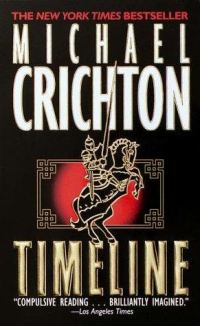
A tale of historians who travel back in time, Timeline, released in 1999, contains Michael Crichton’s usual combination of fact, action and adventure. In this case, he combines aspects of real history and questions about quantum and multiverse theory with scenes of medieval warfare, as told through the eyes of modern historians who travel back to the time which they are studying.

After a series of strange events in the Arizona desert and an archaeological site in France, the main characters –  a group of medieval historians – are summoned to the headquarters of ITC (the company that is funding their research) and learn of a startling fact. After building a quantum time machine, one of their professors used it to travel back to the 14th century. Apparently, he went to the very site they have had under excavation, but then failed to return.

The researchers  – Chris, Kate, and Marek – all agree to go back and search for him, dressing in period costume and taking a security detail with them. However, they are attacked as soon as they arrive in the past, which leads to an accident in which a grenade rolls through the space-time aperture and their time machine is destroyed on the other side. What’s more, the local lord takes Kate and Marek prisoner.

Alone and cut off from the future, Chris heads for Castelgard to confront the Lord Oliver and meets a boy along the way. Apparently, this “boy” is actually the Lady Claire in disguise, a woman who has escaped from  Lord Oliver’s custody. Once they reach the castle, Chris is taken and he and Marek are challenged to a joust, which they prove victorious in. However, this leads Lord Oliver to order their deaths, and they are forced to plan their escape.

It is also revealed that Lord Oliver is holding Johnston in his fortress at La Roque, mainly because he believes Johnston knows of a secret passage that is its only weakness. With an army led by the infamous French mercenary Arnaut de Cervole approaching, he is desperately preparing for the siege. Johnston helps Oliver develops Greek Fire, even though he knows Oliver is meant to lose the siege, while Chris, Marek, Kate and Claire use clues from the future to search for the secret passage themselves.

Chris also realizes that someone else from the future is tracking them, a knight named Robert de Ker. Eventually he is revealed to be Rob Deckard, an ITC employee and former marine driven insane from too many time trips. This is apparently a consequence of traveling to different possible universes, which can result in the displacement and mismatching of different cells in the body. In Rob’s case, it is his neurons which have become mismatched, causing him to have psychotic episodes.

In the end, they all break into La Roque and do battle with hum and Deckard, killing them both. Back home, the ITC manage to finally repair the device and try to bring the team home. However, Marek chooses to stay behind with Claire, having realized that he always wanted to live in the past. When the others return and realize that the company head, Mr. Doniger, has no regard for human life and plans to use the time travel device commercially, they send him to 1348, the year of the first Black Death outbreak. In the end, Chris and Kate get married and find the graves of Marek and Claire in France marked with a familiar epitaph.

The Time Travellers Wife:
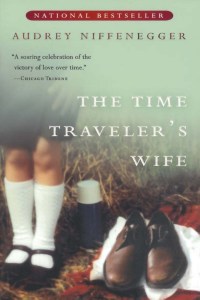
A slight twist on the classic story of time travel, this 2003 novel by Audrey Niffenegger explores the idea of time-travel as a genetic disorder. Inspired by Niffenegger’s own frustration with relationships, this novel is essentially a metaphor for the trials of true love. Classified as both science fiction and romance, the story is based on the themes of love, loss, free will, and communication, it also contains some rather interesting commentaries on existence and the nature of memory and experience.

As the title suggests, the story focuses on the life a man who suffers from Chrono-Displacement, a condition which causes him to involuntarily travel through time, and his wife, who is forced to endure stretches of time without him. The man, Henry, has been time-traveling for most of his life and apparently has no control over the process, though his destinations are largely places and times related to his own history. The trips are apparently tied to stress and other stimuli, making them unpredictable and undesirable.

His own timeline naturally converges with that of his wife, Clare, but at seemingly random points in her life. In each visit, their ages are mismatched, as are their memories of the other. Whereas Clare meets him in a natural chronological order, the visits are mismatched from Henry’s perspective. On one of his early visits (from her perspective), Henry gives her a list of the dates he will appear and she writes them in a diary. During another visit, he inadvertently reveals that they will be married in the future.

Once married, Clare has trouble bringing a pregnancy to term because of the genetic anomaly Henry may presumably be passing on to the fetus. After six miscarriages, Henry wishes to save Clare further pain and has a vasectomy. However a version of Henry from the past visits Clare one night and they make love, causing her to become pregnant with their daughter Alba. She too is diagnosed with Chrono-Displacement, but appears to have some control over it. Before she is born, Henry travels to the future and meets her when she is ten years old and learns that he died when she was five.

When he is 43, during what is to be his last year of life, Henry experiences a time slip which deposits him in a Chicago parking garage on a frigid winter night. Unable to find shelter and clothes (he always appears naked during a time slip) he suffers hypothermia and frostbite and has to have his feet amputated when he returns to the present. Henry and Clare both know that he will not survive many more time jumps. Then, on New Year’s Eve, 2006, Henry time travels into the middle of the Michigan woods in 1984 and is accidentally shot by Clare’s brother, a scene which was foreshadowed earlier in the novel. Henry returns to the present and dies in Clare’s arms.

Clare is devastated by Henry’s death and later finds a letter from Henry asking her to “stop waiting” for him, but which describes a moment in her future when she will see him again. The last scene in the book takes place when Clare is 82 years old and Henry is 43. She has been waiting for Henry, as she has done most of her life, and when he arrives they clasp each other for what may or may not be the last time. The story ends with it being implied that Clare dies in Henry’s arms, as he did in hers before.

Through the use of a non-linear narrative, Neffinenegger was able to effectively demonstrate the sense of yearning and loss that so often accompanies true love. In addition, her use as separate narratives was also an effective tool in that it demonstrated how different people can be in different places in a relationship at different times. Ultimately, every instance that Clare and Henry spend together is made sacred by the fact that neither of them knows how long they will have together, which illustrates beautifully the temporal nature of love itself. Or to put it another way, that story’s a sad, sad tale! Go hug the one you love right now! I’ll wait…

Summary:
And that’s all I got for now and my brain is fried from all this writing. Hence, I think I will leave the summaries and commentaries for another time (was that a pun? That sounded like a pun!) Besides, with this many examples, does anything really need to be said in the way of conclusions? Of course it does! The more examples you have, the more complex the patterns become. So expect some more on my time-travel series, coming real soon!

Yuva in 3D!

The credit goes to Mr. A.G. Claymore and his skills with 3D art. Thanks to him, we have the first glimpses of Gliese 581 g, aka. Yuva, in 3D. Using both the rough mock-up that I made months back using Microsoft Paint and some stock footage from NASA, this is what he produced.In this shot, you get a view of the “Light Side” of the tidally-locked planet, with the continent of Vogt looking up at ya! This is the largest landmass on the planet and the place where the capitol of Zarmina is located.

Below is the flip side of the planet, what would typically be known as the “Dark Side” (until an orbital mirror was put in orbit to reflect sunlight). Here, the principle continent being viewed is Udry, home to the Eastern Bloc and the capitol city of Shangdu.

Much of the geography and settlements are still being developed, and more details are being added with each new story. I tell ya, there’s something inherently satisfying about seeing a world take shape. And that goes for both the literary and visual aspects of creation. Even the creators themselves don’t know what the end result will look like. But thanks to these images, we all have a slightly better idea 😉

The Vacay Is Over!

Yes folks, tomorrow I got home and resume a normal life, which will consist of getting ready to go back to work at the local school and driving my sweetheart to work every morning. I have to say, and my wife agreed with me on this, we need a vacation after this vacation. Somehow, romping through the bush and thinking you might die of dehydration, followed by a week of house sitting a 92 year old woman and nine cats, just doesn’t seem conducive to relaxation.

On the plus side, I didn’t accomplish half of what I hoped to when it came to my reading and writing goals either. So at least there’s symmetry. If I recall correctly, my list looked something like this:

  • Finish editing Data Miners already!
  • Finish my contribution to the Yuva Anthology (Winston Agonistes)
  • Get more chapters done for Whiskey Delta
  • Write up a new chapter for Crashland (still need people to vote on that one!)
  • Proofread new submissions for Yuva (Amber, that’d be your story)
  • Get some TKD training in with the Comox Valley people
  • Sit around the deck drinking GandTs and using the Hot Tub

Well, item one was a total bust. Didn’t get one page of DM editing and ready for print. I fared slightly better one item two, finishing Winston Agonistes for the Yuva Anthology. In fact, a few thousand more words, and it should be complete. Man, I totally busted my self-imposed word limit of 5000 (it was 11, 161 last I checked)!

Third item, writing more chapters of Whiskey Delta, I totally did! In fact, I published chapters nine, ten and eleven of my zombie tale while here. As for Crashland, which only I wanted to do one chapter for? Not so much… Item five, I actually did twice, meaning two submissions were sent by the erstwhile Amber and I managed to read them both and offer some comments. Item six I managed to take care of this morning, and item seven I did like gangbusters!

As for my reading list… that went even less well. If I’m mistaken, I planned to finish Mona Lisa Overdrive, finish Second Foundation, get into We, and finish Martian Chronicles and A Feast For Crows if there was time. My progress? Almost finished Mona Lisa, made a little progress on Crows, and nix on the rest! Damn, I guess I’ll be carrying a heavy reading burden back with me to Victoria. And I hoped to do some reviews on these since I’ve been promising them for awhile now.

Ah well, as they say “The Best Laid Plans…” etc, etc. At least we had an adventure, not to mention the fact that we’ll be home, in our own beds, and not have to look forward to cats coming and going into our room all night long, demanding food, to be let out, or trying to use the damn litter box. I’m seriously reconsidering my love of cats, I tell ya! And I do have a surprise or two to look forward to when I get home so I’ll be pleased to push off tomorrow. It was also real nice to spend some time with my grandma, and she tells me she had fun too. So it’s sure to be a bittersweet goodbye 🙂

Hope everyone’s had a great summer and catch you real soon! I know, it goes so fast, but at least we can make some memories that we’ll be able to hold on to. And just think, the fall will be bringing many new and wonderful things. Pumpkin pie, pumpkin beer, ripe apples, our favorite tv shows, new movies, new friends, and new opportunities to witness new and exciting things. I look forward to it all…

What’s On…

If you’re like me, and suffer from what I assume is a form of literary ADD – where you can’t seem to commit to reading, or writing, one thing at a time – then it helps to take stock once in a while and make a list. At other times, its disconcerting, like whenever I check out my Goodreads account and see that a book I cracked over a year ago is still on my “Currently Reading” list.

But today I thought I’d combine that list with my list of upcoming reviews. As I’m sure I mentioned in a previous post or two, this vacay has been pretty good for scoring new books. I got some long 0verdue ones and managed to find at least one that has come highly recommended. To ensure that they don’t wind up in my pile, partially read and collecting dust, I thought I’d make a definitive list. That oughta help my ADD!

Editor’s Note: The author of this article is not a physician or psychiatrist and has no medical credentials whatsoever. He is thus in no position to diagnose, either in himself or others, any form of ADD or its hyperactive cousin, ADHD.

  1. Mona Lisa Overdrive – the final book in the Sprawl Trilogy by William Gibson. Due to diversions in reading The Hunger Games, Second Foundation and a slew of others, this book has remained opened far longer than it had to have been. I hope to finish it this or next week.
  2. Second Foundation – the third installment in the Foundation series, which I have been meaning to read for some time. As the (sort of) conclusion to the Foundation saga, and after reviewing the first two, it was only fitting that I find and tackle the third book. I say sort of because decades after finishing this third novel in the series, Asimov would finally cave to demands that he return to the series with three more books. Fans and publishers, what can you do?
  3. Martian Chronicles – this book I just picked up last week. After years of hearing great things and wanting to get into it, I finally procured a copy and began devouring it. I got half way through before the wife and I got back to civilization and it was forced to take its place in the queue. It’s a testament to Bradbury’s old school, accessible, yet still high-minded style that you can read through his works quickly and still feel like you’ve digested a lot. I look forward to finishing this one and borrowing freely from it 😉
  4. A Feast for Crows – my reading of this fourth installment in the Game of Thrones series has stalled for a few reasons. One, I got a little tired after the first three books, especially since all the main characters keep dying! Second, after three books of excitement and climactic battles, George RR Martin seemed to think that was needed was a book that contained all the scraps. Not a bad read by any measure, but it’s kind of like a serving of leftovers after three sumptuous banquets.
  5. We – the classic of classic by Yevgeny Zamyatin. Again, I cracked this book a long time ago and haven’t been able to get into it due to the myriad of books that have entered and left my reading pile in the interim.  I want nothing more than to finish it and give it its long overdue due! For crying out loud, this man practically invented the dystopian satire and inspired my heroes – Orwell and Huxley. If that doesn’t warrant a read, I don’t know what does!
  6. The Giver – here’s a book that my wife has been recommending for ages! Considered to be a classic of YA fiction, this novel is certainly a must-read for those looking to stay current on the genre. Having found a copy at my local Coles, right next to City of Ember, I decided it was time to have a looky-loo so that I knew what I was talking about next time I chose to include it in a review of current utopian/dystopian lit.
  7. Red Mars – holy crap has this one been on my shelf for a long time! I can’t tell you how many times I’ve picked it up and put it down. Which is really too bad. It’s definitely one of the more profound sci-fi books that I’ve ever read, but somehow, the style lends itself to a certain inaccessibility for me. I do enjoy reading it, but find that it doesn’t quite happen easily or organically. In that respect, Kim Stanley Robinson is not unlike William Gibson for me. I know I want to hear from them, and I do get through their books, but not with the ease and grace that I would something by Bradbury or Asimov.
  8. Ready Player One – this one I bought alongside The Giver because I thought it was time to invest in something new. I tend to be reserved about buying the works of new authors, mainly because I don’t invest time and money in something which might prove to be disappointing or a flavor of the month kind of thing. However, I said ‘screw it’ this time around and picked this one up. And lo and behold, I discovered that it is actually a quite famous read, with the entire back of the dust jacket dedicated to the heaps of accolades that have been piled on it. Not only was it a manager’s pick at the Coles, it also comes recommended by my peeps over Io9.com. Them folks know their sci-fi, so I’m glad I went with my gut and checked this one out!
  9. Starfire – this hard sci-fi novel, by Charles Sheffield, is actually one I picked up in a laundry room at the park where my wife and I were staying in Lund. We had just returned from camping, were in the process of returning to civility (with showers and other amenities) and realized we still didn’t have anything to read! So I took a gander at this one, and after seeing that it was endorsed by Kim Stanley Robinson, I gave it a chance. I only got about 70 pages in before we had to leave and I chose not to take it (having nothing to exchange), but I was wrapped up enough in the plot that I decided I’d get a copy as soon as I could. Still looking, might have to go Amazon or Kindle on this bad boy, but I don’t intend to let it slip. The plot, which involves the creation of a massive orbital shield after A/B Centauri goes supernova, is quite interesting, and constructed using the latest in astronomical data. Check it out if you can!

Well, that about does it for me. Nine books in the reading list, not so bad. I could think of some more but… seriously, who the hell wants that kind of responsibility 😉

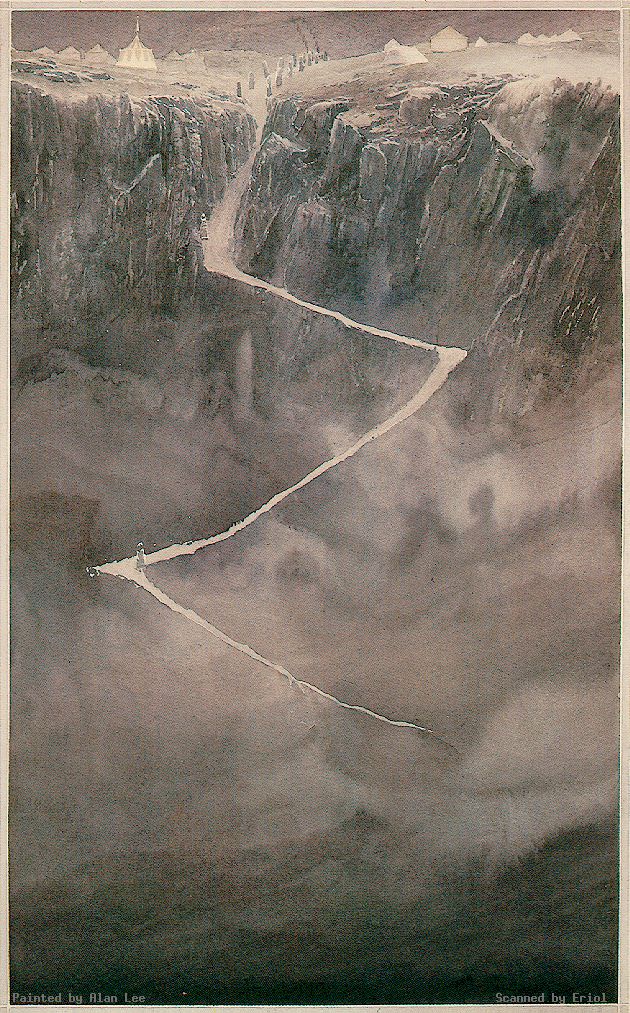
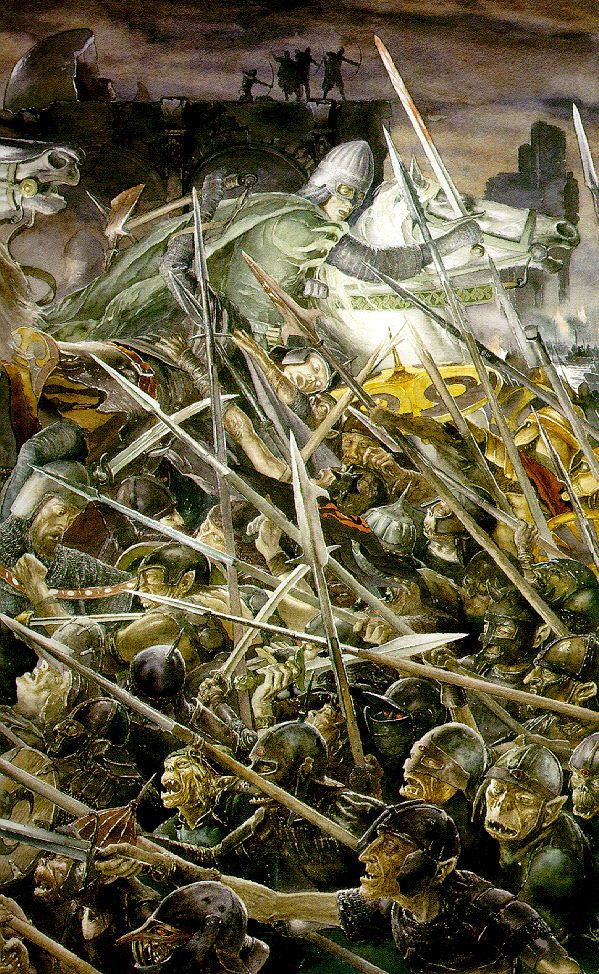
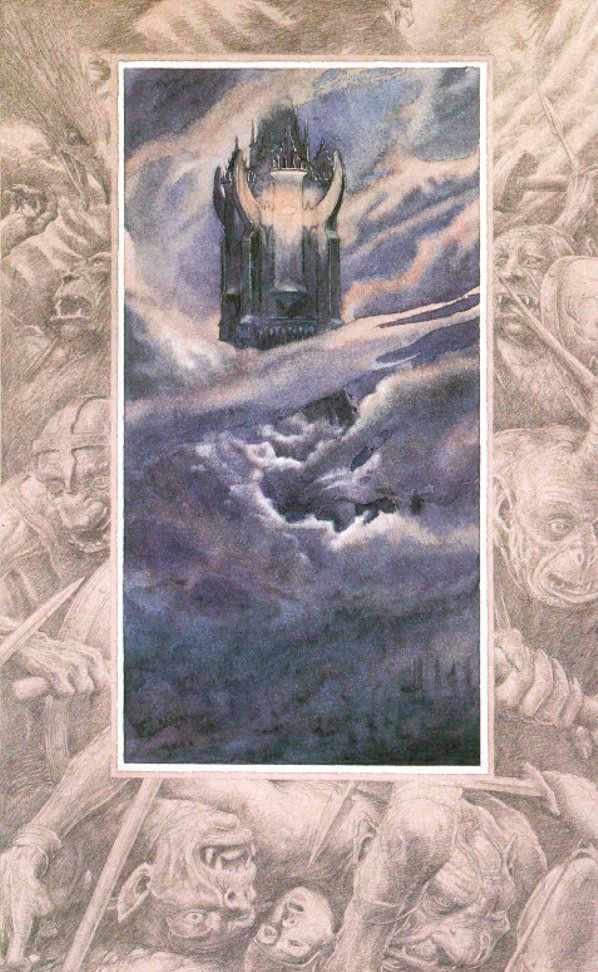
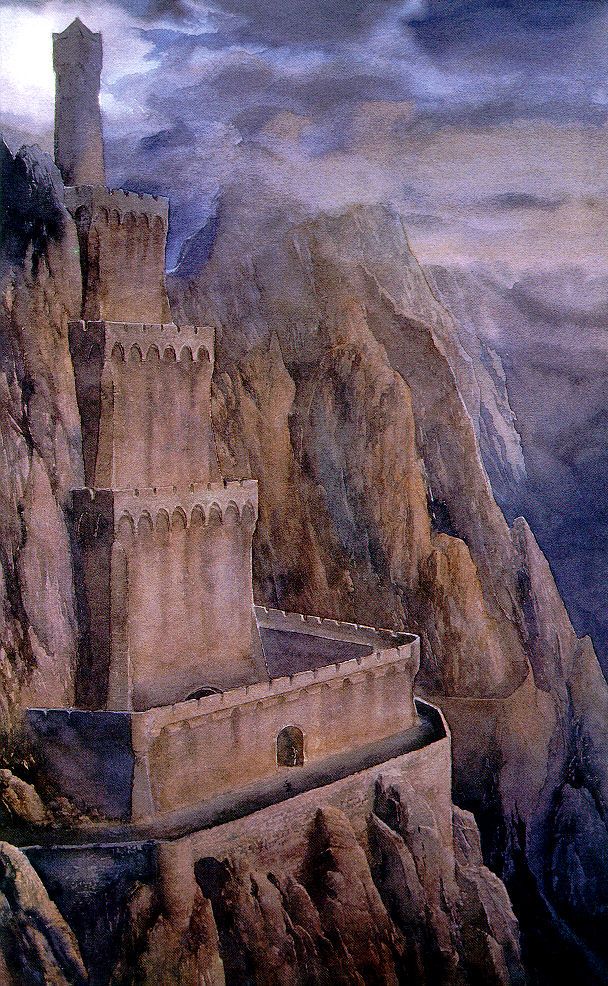
LOTR: The Return of The King

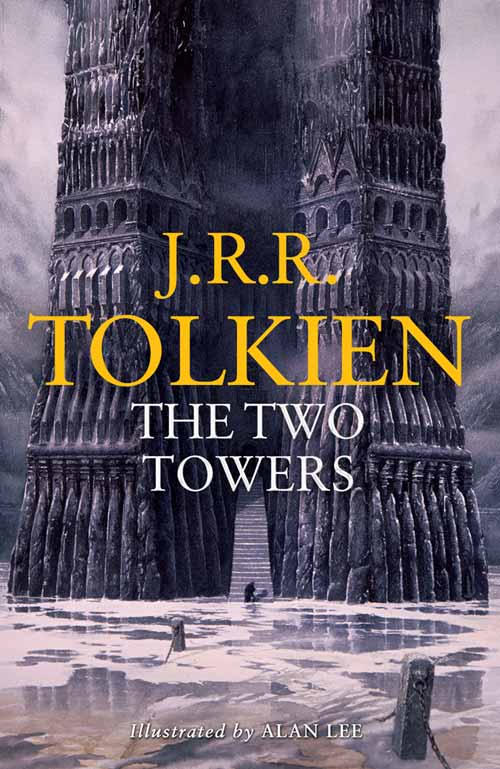
At long last, the third and final installment in the Lord Of The Rings series! It feels like such a long time ago that I read this book, and going over the salient points makes me want to re-read the entire series. By this point in things, I felt myself becoming so immersed in Tolkien’s mythical universe that I felt both saturated yet wanting. There was so much there to absorb, and yet the greater mysteries of his world still seemed unknown. No wonder I picked up the Silmarillion and devoured it shortly thereafter. Man that book was dense!

But of course, that was after the third and final installment. As I said last time, the second book really impressed the hell out of me. But it was tempered by the fact that the greatest battles and climaxes were yet to come. Frodo and Sam had yet to reach Mordor and Mount Doom, Gollum’s true role in the Quest was yet to be revealed, and the battle for Gondor and Middle Earth was yet to truly begin. I awaited on these with eager anticipation…

And then it came! The Battle for Middle Earth was joined! The War of the Ring came to its grand climax and was resolved for all time. And here’s the pertinent stuff and what I thought about it…

Plot Summary:
The book opens where the last left off, with Gandalf, Aragorn, Gimli and Legolas returning with Theoden to Edoras to rally their forces and plan for the enxt phase of battle. Though Saruman has been thoroughly defeated, there remains the danger from Mordor, where Sauron is still amassing his armies of Orcs, Southrons and Easterlings and preparing for his assault on Gondor.

At the same time, Sam must find Frodo and rescue him from the grasp of the Orcs. In the wake of Gollum’s betrayal, their Quest has hit a sort of intermission. Until he finds Frodo and returns the Ring to him, it cannot resume, for only Frodo is the true Ringbearer.

Book V: The War of the Ring
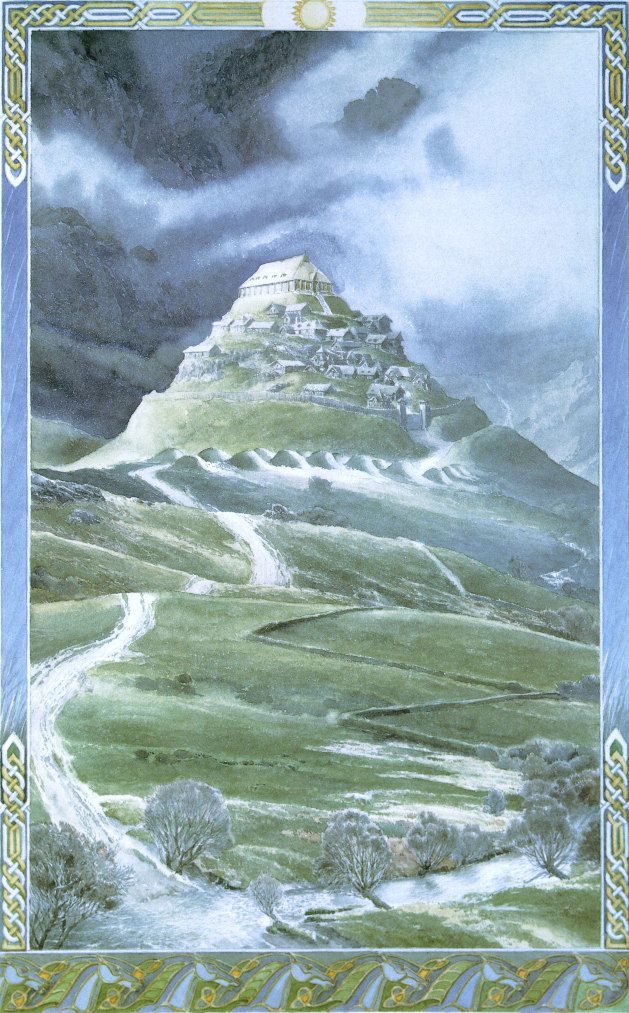
Gandalf and Pippin arrive at Minis Tirith to speak with Denethor, the Steward of Gondor, and warn him that an attack on the city is imminent. Denethor announces that he knows of Boromir’s death, and Pippin enters Denethor’s service as a repayment for the debt he owes to his son for saving his life. Now in the service of the tower guard, he is given a view of the fields of Pelenner and is able to bear witness to the approaching war.

Meanwhile, Osgiliath falls to the advancing Orcs and Denethor begins to fall into a dark mood. He orders Faramir, the lesser of his two heirs in his mind, the task of retaking it with his forces. Unfortunately, he is mortally wounded and his riders return broken. Denethor falls into a deep, dark state and believes his son is dead. He orders a funeral pyre built for the two of them and asks that they be burnt like the Kings of old as the city becomes encircled by a host of 200,000 Orcs.

To the north, Aragorn and his companions have traveled to the White Mountains to find the Paths of the Dead, a mountain hall where the oathbreakers from the War of the Last Alliance still dwell. Helped by his companions, Legolas and Gimli as well as the “Grey Company” – a group of Rangers from Arnor in the north – he sets out to recruit them.

As Aragorn departs on his seemingly impossible task, King Théoden musters the Rohirrim to come to the aid of Gondor. Merry, eager to go to war with his allies, is refused by Théoden several times. Finally Dernhelm, one of the Rohirrim, takes Merry up on his horse, and secretly rides with the rest of the Rohirrim.

At Minas Tirith, under the leadership of the Witch King of Angmar, the forces of Mordor break through the city’s gates. However, the Rohirrim show up and begin to ride them down. Gandalf arrives in the King’s Hall to confront Denethor and stop him from burning himself and his son.

Denethor cuts the cushion from his thrown and reveals the Palantir inside, and says he has seen visions of the battle which show their ultimate defeat with the arrival of a Corsair fleet from Umbar. Gandalf and Pippin manage to save Faramir from the fires but Denethor is consumed.

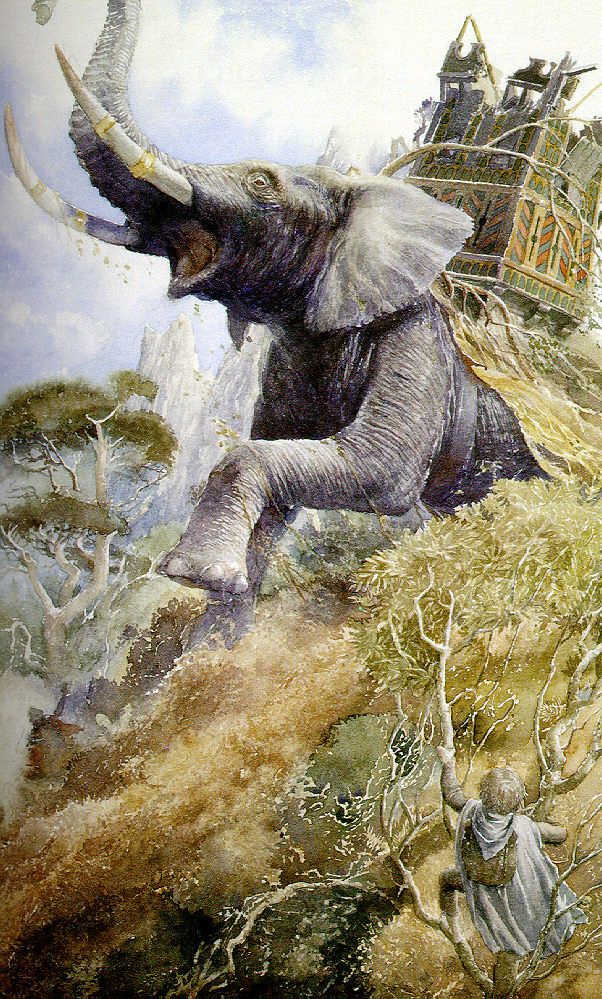
The battle appears is poised as the Riders of Rohan are engaged with Orcs and the Southron war Oliphants when the Corsairs arrive. Sauron’s forces initially rejoice at their appearance, but then realize the ships have been commandeered by Aragorn and the host of the Oathbreakers. With these ships and additional troops added to the fight, the host of Sauron is outflanked and near defeat.

However, the Witch King still manages to wound Theoden mortally before Dernhelm intervenes. Dernhelm is also wounded, and then saved when Pippin sticks his sword in the Ring wraith’s leg. Dernhelm removes her helmet and reveals that she is Eowyn, who then strikes the Witch King dead.

The siege is broken, but at a heavy cost. In addition to the death of many warriors, Theoden is dead, Eowyn and Pippin are both seriously wounded, and Faramir himself is still facing death. On top of all that, they know that Sauron is not yet defeated and they will not be able to thwart another attack.

Aragorn is called upon to heal them as well as Faramir. They recover, and Faramir and Eowyn become acquainted as they both convalesce. In time, she forgets her infatuation with Aragorn and learns to embrace Faramir’s gentle and wise nature.

Knowing that it is only a matter of time before Sauron attacks again, and that they do not have the strength to thwart him a second time, Aragorn and Gandalf propose a bold plan. They will attack the Black Gates in order to draw out the host of Mordor, thus clearing the way for Frodo and Sam to reach Mt. Doom unnoticed.

Upon their arrival, they are approached by the Mouth of Sauron, chief amongst his dark emissaries. He dictates punitive terms to the army of Men, and backs it up by claiming that Frodo is dead and shows them his effects as proof. They begin to despair, but Gandalf refuses to believe it, claiming that his is just another of Sauron’s deceptions. Were he in possession of the Ring, says Gandalf, he himself would be coming forward to meet them.

Having been refused, the Mouth of Sauron returns to the Gate and the host of Mordor falls upon them. They appear to be getting overrun, and Pippin is pinned under the body of a Troll after it is killed. All seems lost, just as the Great Eagles begin to come in and fight off the Ring Wraiths…

Book VI: The Return of the King
Sam finds Frodo’s body in the tower of Cirith Ungol. After fighting off his captors, Frodo awakens and takes the Ring from Sam. They descend the stairs into the land of Mordor and steal some Orcish armor and vestments so they can blend in with the host. However, they find the land largely empty as the armies are being called away to deal with a threat at the Black Gate.

Sam and Frodo are absorbed by the host temporarily, but manage to break away and make for the Mount Doom. With the land all but emptied and the eye fixed on the Black Gate, they make their final approach on the mountain itself. They pause temporarily to look back on all they’ve accomplished and the vast distance they’ve crossed, and realize that their Quest is almost over.

Once inside the mountain, and ready to cast the Ring into the Cracks of Doom, Frodo finally succumbs to the power of the Ring and declares he’s keeping it for himself. However, Gollum appears suddenly and tries to take it from him. He bites off Frodo’s finger and claims it, but loses his footing and falls into the Cracks, which consume him and the Ring together. Sauron and the Ring are at last destroyed!

At the Gates, Sauron appears as a dark shadow who tries to reach out and attack the Army of Men. However, his shadow is blown away by the wind, and his forces flee when they realize their master has been destroyed. The Southrons and Easterlings surrender and are given mercy, and the Great Eagles are flown in by Gandalf to pluck Frodo and Sam from the side of the mountain.

Back at Minas Tirith, Aragorn is crowned King and takes Arwen as his Queen. Faramir takes Eowyn as his wife and is given the title of Prince of Ithilien. The White Tree, which has been dying for some time, blossoms and begins to show signs of life. All of Gondor begins to sprout with trees after Aragorn plants and ancient seed, and Gandalf indicates that the Northern Kingdom, where Aragorn’s ancestors used to rule, will be reclaimed and rebuilt.

Frodo, Sam,  Merry and Pippin and are honored as heroes during the coronation ceremony. After a series of goodbyes, they return to the Shire, only to find it in ruins. They learn that Lotho Sackville-Baggins, one of Frodo’s relatives and usually referred to as “The Chief” or “The Boss”, has been oppressing the locals, but himself is being controlled by someone named Sharky. This man has imposed a program of deforestation and industrialization which has left the Shire scarred and near ruin.

After rallying the locals, they confront Lotho and Sharky’s men at the Battle of Bywater. Victorious, they march on Sharky’s hideout and confront Sharky himself, who turns out to be Saruman, accompanied by Grima. Apparently, the name Sharky is an Orcish word which means “old man”, which his Uruk-hai used to refer to him. Obstinate in defeat, Saruman abuses Grima and turns to leave. However, Grima stabs Saruman in the back and is himself felled by many arrows.

Time passes and everyone appears to have settled down happily. However, Frodo is unable to overcome the injuries he sustained at the hands of the Witch King. Eventually, he departs for the Havens where he meets with Gandalf, Bilbo Baggins, and many Elves, ending the Third Age. They sail into the West, to the lands of Aman, the “Undying Lands”, while Sam returns to the Shire where he is greeted by his wife and daughter, Rosie Cotton and Elanor, and delivers his final spoken words of the book: “Well, I’m back”.

Summary:
Though not as exciting to me as the second book, I nevertheless loved the third and final installment. Naturally, many critics and readers over the years have cited some weaknesses in the book, such as the extended ending where Frodo and his friends return to the Shire to save it from Saruman. This felt like an added climactic moment which occurred after the big one, which can seem a little out of place for a story, even one as epic as this one.

However, it was intrinsic in demonstrating Tolkien’s views on industrialization and labor relations. In short, he was a man who delighted in the natural world, and saw the intrusion of industry and an industrialized workforce as oppressive. And hell, you couldn’t beat the references: “The Boss”, the corrupt workmen, the smokestacks and the ruined countryside. It was like a worker’s pamphlet and a description of 19th century Manchester all rolled into one.

There were several more asides in this book, something Tolkien was famous for. And although they seemed like third act additions, they all seemed to be of particular importance to the author himself. For example, the scene where Theoden and the Aragorn are having an audience with the leader of the Pukel Men in order to find the path through the mountains, this was important in that it showed Tolkien’s views on native peoples, how they have been historically used and abused and were deserving of more respect.

The fact they are asking the help of people that Rohan usually hunts and goes to war with was also an interesting allegory. Much like how the British, French and American colonists called upon their Native neighbours for help in the French and Indian War, the War of Independence, and the War of 1812, Rohan is calling on people it typically considers to be enemies for help against a greater foe. As such, I found the scene quite interesting; and rather than detract from the overall narrative, I felt it added to the richness of Tolkien’s world. An editor would have surely told him to nix it, but that was something else about Tolkien. He refused to let editors tell him what to do, beyond mere spell checks and grammatical corrections.

In terms of the film adaptation, I once again had some issues with how it was done. But to be fair, I was a full-blown Rings geek at this point and saw the book as something akin to canon, so any changes were likely to be seen as just plain sacrilege. Still, it was awesome to witness the battle of Pelennor Fields on the big screen, not to mention seeing Minas Tirith rendered in visual form. These were the big climactic scenes to the story and I approved quite highly with how Jackson rendered it all.

When it came to the battle itself, there was the same conveyance of hopelessness and the feeling that everything was lost, right up until the reinforcements arrive and the day is saved! And personally, I can’t get enough of the scene where the Riders of Rohan start riding down the Orcs! Seeing those ugly bastards get their ranks clobbered was so pleasing after all the people they killed and evil shit they pulled! But of course, the battle got a little hokey after this, as Legolas begins doing his acrobatics and the ghost men show up to the fight.

This latter part wasn’t in the book; the Oathbreakers having done their part to secure the fleet in the first place. Having them also destroy all the Orcs inside the gates of Minis Tirith also made it look like the forces of Gondor did very poorly in the fight, which was really not the case in the book. Granted, they were losing, but their contribution on the fields helped turn the tide of battle and ensured that they still had plenty of foces to send to the Black Gate at the end.

Oh, and that farewell scene between Theoden and Eowyn. All I can say is “Ick!” “I’ve got to save you,” says she, to which he replies “You already have…” Not only was this ripped straight from Return of the Jedi, but it made no sense. How did she save him? Sure, she killed the Witch King, but he’s dying. She didn;’t redeem him the way Luke did his father. So where did the saving come in? What, did she save him from his sexist views? Great, but… you’re still dead, Theoden! Luckily, the fight with the Witch King overshadowed all of that for me. Sure, he too was a bit of a ripoff of Darth Vader, but who cares? He was badass!

Of course, Sam and Frodo’s part in this book was rather truncated. It is for this very reason that Peter Jackson chose to take material from Book IV and place it here, where it could be used to pad their story. However, this worked quite well in the book in that we were brought to a veritable climax when the Book V ended at the Black Gates. With so much hanging in the balance, Book VI manages to carry things on and not keep the reader waiting too long before showing the resolution and tying things up.

That was one thing I didn’t really approve of in the movie, which was the amount of padding they placed in Sam and Frodo’s part. Those who have read the books will know what I mean. The fact that they kept the scenes from Shelob’s Lair for this movie made perfect sense, but the additional parts which didn’t happen in the book – Gollum turning Frodo against Sam, Gollum attacking them twice after betraying them, Frodo falling and getting a vision of Galadriel to help him up – all seemed like needless filler. Oh, and don’t forget the extra added scenes of Arwen looking on and crying, again!

But other than that, zero complaints! Kudos to Peter Jackson for taking on the task of turning one of the best stories of high fantasy and mythos into a full-length movie series, complete with battle scenes that were awesome in their size and scale! And an even bigger kudos to Tolkien, for giving countless generations something which they have been able to enjoy, draw inspiration from, and feel all the richer for having read. Few people have had the same impact as this venerated author, and very few works have ever come to rival its scope and influence.

If you haven’t read it, do it now! Even if you don’t generally approve of fantasy, you’ll find something to love here. I guarantee it!

First Concept Art for the Neuromancer Movie

Some recent news on the Neuromancer front: In addition to Mark Wahlberg and Liam Neeson being confirmed as the leading actors, who will be filling the roles of Case and Armitage, some rather interesting concept art has been revealed. Apparently, the art is the work of Amro Attia, a designer who has worked with director Natali before, contributing to the design of the creatures in Splice.

The first is a concept of what Armitage would look like. The tatoo design, for those who have read the book, is a clear reference to Operation Screaming Fist, the mission which nearly cost him his life and left him scarred and traumatized. The perfect candidate to become Wintermute’s plaything.

The second is of Case himself, which appears to be from the opening scenes when he was down and out in Chiba City, looking for whatever work he could ever since his nervous system had been damaged, preventing him from jacking into cyberspace. Note the background, featuring dark, gritty city streets, neon displays, and plenty of Japanese language signs.

Granted, the news on this front is still speculative and no indication has been given that the project is full steam ahead, no turning back. Lord knows I’m pulling for it! Much like Dune and Lord of the Rings, Neuromancer is a classic which seems to have taken an eternity to adapt to the big screen, with several abortive attempts along the way.

Via: Bleeding Cool

LOTR: The Two Towers

Welcome back! Last time, I took a much overdue trip down memory lane with the Fellowship of the Ring. Hope you liked the trip too! And now, we come to the second volume in the tale of Lord of the Rings, which just happens to be my favorite installment in the series.

In addition to being my first exposure to Tolkien’s work, it was also action-packed and brought the plot to a fuller fruition, leaving the reader at a crucial point where things are both poised on a razor’s edge, yet with the knowledge that the greatest actions are still yet to come.

Oh, and I trust people noticed the artwork last time, which is the famed work of renowned Rings artist Alan Lee. In the full-length compendium of LOTR, where all six books appeared in a single volume, Lee was the man who provided the illustrations that brought Tolkien’s literary vision to life. I hope you all liked it last time, because there’s plenty more in this installment! I guess Lee felt particularly inspired by this volume…

Plot Summary:
Aptly named The Two Towers, the title of this volume refers to the that events contained within revolved around the towers of Isengard and Barad-dûr. This included the deployment of Saruman’s Orc armies against neighboring Rohan, and Sauron’s first movements towards Minas Tirith and the Kingdom of Gondor.

Book III: The Treason of Isengard
This book story picks up with the aftermath of the Fellowship’s dissolution. Upon returning to their camp, Aragorn learns that Frodo and Sam have set out alone, that Boromir has been killed in battle, and that Merry and Pippin have both been taken prisoner. He is joined by Gimli and Legolas, who both lament the breakup of their union, but are given heart when Aragorn declares that they yet have a purpose: to save Merry and Pippin from capture.

After committing Boromir’s body to a boat and setting it down the river Anduin, they set out in pursuit of the Uruk-hai. Meanwhile, Merry and Pippin begin to contemplate their escape. They notice that two camps exist amongst the Orc – the Uruk-hai of Isengard and the Uruks of Mordor. They take their time and exploit the differences between them, but are ultimately set free when the Riders of Rohan attack and eliminate the Orcs. They flee into Fangorn forest shortly before Aragorn, Gimli and Legolas meet Eomer and the Riders and learn of how they killed the company of Uruk-hai .

Meanwhile, Merry and Pippin are taken in by an Ent named Treebeard. After learning about the Ents, an ancient race of tree-creatures, they tell Treebeard of what’s happening outside his door and ask for his help. He agrees to hold a council with the most ancient of the Ents and discuss what their involvement, if any, will be. After lengthy discussions, Treebeard manages to convince the others that they must go to war since Saruman is cutting down their forest to fuel his engines of war.

Aragorn, Gimil and Legolas track Merry and Pippins into the forest, where they spot a white wizard whom they assume is Saruman. When they reach him, however, they realize it is Gandalf, that he returned to Middle Earth after his ordeal with the Balrog and is now far more powerful. They then ride together to Edoras and the Golden Hall to meet with Theoden, King of Rohan, to ask for his help.

Once there, he finds that Theoden is a shell of his former self, and that his adviser, Grima Wormtongue, appears to be in control of the Kingdom. Gandalf reveals him of being Saruman’s spy, and unable to deny it, he spits on the floor and runs away. Theoden now realizes that the spell Saruman has been holding over him has now passed and he is once again strong and in control of his faculties. He agrees to help them and orders the Rohirrim (Riders of the Mark) to mobilize.

After rallying all available forces from Edoras, Theoden orders his army to march to the fortress of Hornburg in Helm’s Deep. Gandalf meanwhile rides out to find Erkenbrand and the rest of his riders, whom Saruman’s forces had previously routed. They ride to Helm’s Deep where they find the local garrison undermanned, but ready and willing to fight. After preparing the defenses, the entire host of Saruman’s Uruk-hai take the field and begin laying siege.

Initially, things go well for the defenders who are able to thwart attacks along the wall and against the Keep itself. However, things soon turn when Saruman’s forces deploy “devilry” to explode a hole in the wall. With the wall breached, the Uruk-hai surround and lay siege to the Keep, and all seems to have been lost. However, Aragorn addresses the Uruk-hai and warns them to withdraw before the sun rises; an offer they reject.

When the sun does rise in the east, Aragorn and the defenders of the Hornburg mount one last assault. The horn of Helm Hammerhand is blown, defeaning the Orcs, and the riders charge out to meet them. Just then, they see Gandalf emerge on the hills overlooking Helm’s Deep with Erkenbrand and the rest of the Rohirrim. They charge upon the Orcs faltering lines and break them, routing those that survive into the forest of Huorns, where they are slaughtered by vengeful Ents.

Together, Theoden, Gandalf, Aragorn and the rest ride to Isengard to confront Saruman. When they arrive, they find that an army of Ents have overrun Saruman’s defenses and have him cornerned in the tower of Orthanc. They are reunited with Merry and Pippin and all seems well. However, he warns them that Saruman still has much power and will try to use his “voice” to command them.

Despite Saruman’s arrogance and power, he is unable to sway Theoden into a peace settlement. Instead, Theoden demands Saruman’s surrender, and Gandalf urges him to renounce the power of the Ring and return to the light. When Saruman tries to walk away, Gandalf becomes angry and orders him back. In a display of his newfound power, he cast Saruman out of the Order of Wizards and the White Council and breaks his staff, thus destroying his power.

Grima, who is trapped inside with Saruman, throws something at Gandalf but misses. Pippin picks it up and is told to hand it over to Gandalf, as he knows that this object is one of the palantíri (seeing-stones). Pippin, unable to resist, looks into it the stone that night and encounters the Eye of Sauron. Luckily, he emerges unharmed and Gandalf realizes this might work to their advantage. Gandalf leaves with Pippin for Minas Tirith to oversee their preparations for the coming war while Théoden, Merry and Aragorn remain behind to muster Rohan’s forces to ride to Gondor’s aid.

Book IV: The Ring Goes East
After making their way across the Anduin River, Frodo and Sam begin walking through Emyn Muil, the impassable rocky mountains that seem to go on forever. They realize that Gollum is still following them, and lay in wait for him. Frodo manages to subdue Gollum with Sting, and they tie him up with elvish rope and take him prisoner. However, Frodo is pursuaded to let him go when Gollum agrees to help them find a way into Mordor.

Though Sam distrusts Gollum with a passion, Frodo feels sympathetic to him because his experience with the Ring mirrors Frodo’s. In time, Gollum also begins to trust in Frodo and remembers his old self and even his old name, Smèagol. Ultimately, Frodo hopes he can save him from the Ring’s influence.

After leading them out of Emyn Muil, he shows them the path through the Dead Marshes to avoid orc patrols. They learn that these Marshes are so named because they were the field of battle during the War of The Last Alliance. It was here that they defeated the forces of Sauron before moving on to lay seige to Barad-dur.

As such, the Marshes are littered with the bodies of dead men, elves and orcs, and haunted by their spirits. Gollum warns them not to state into the green lights, which are apparently the emanations of the dead themselves. Unfortunately, Frodo does just that and becomes drawn in, and is nearly lost in the process. Luckily, Gollum manages to save him, surprising both Sam and himself.

When they reach the Black Gate, they witness forces loyal to Sauron entering from the South. These men are called Southrons and are arriving by the thousands. Gollum warns them not to enter there and tells them of a secret entrance that lies the south through the province of Ithilien, which is still in the hands of Gondor.

When they arrive, the see another company of Southron men accompanied by the massive war Oliphants. The company is attacked by a group of unseen Rangers and Gollum flees just before Frodo and Sam are captured. The Rangers are led by a Faramir, Boromir’s brother, who informs them of Boromir’s death.

Faramir and the Rangers lead Sam and Frodo into a secret hideout and begins questioning them. In the course of things, Sam accidentally reveals to Faramir that Frodo carries the One Ring. Much to their surprise though, Faramir doesn’t want to take it from them. Unlike Boromir, he understands the dangers of the Ring and approves of their plan to take it to Mount Doom where it will be destroyed.

Later that night, Gollum is found diving for fish into the sacred pool, the penalty for which is death. Faramir’s archers are about to kill him, but Frodo admits that he is there companion and he need him to to get into Mordor. Though Frodo has saved his life, Gollum appears to feel distraught and betrayed by the incident. The following morning Faramir gives them some provisions and sends them on their way, but warns them that Gollum may know more about the secret entrance (Cirith Ungol) than he has been telling them.

Gollum leads them past the city of Minas Morgul and up a long, steep staircase of the Tower of Cirith Ungol. At the base of it lies a long tunnel which he claims leads into Mordor, one which the orcs don’t know about. His betrayal is soon revealed when an enormous spider named Shelob sneaks up on them. Gollum attacks Sam and prevents him from warning him before he’s stung. Sam manages to fend off Gollum and back into the spider’s cave where he manages to scare off Shelob with the light of Erendil.

After seeing Frodo lifeless and pale, Sam assumes that Frodo is dead and becomes despondent. He debates abandoning the Quest in favor of chasing after Gollum and killing him. However, he resolves to finish the Quest himself and takes the Ring from Frodo’s body. Unfortunately, a group of Orcs show up and take Frodo’s body away, and reveal in the process that Frodo is not in fact dead, but only unconscious. This is Shelob’s way, he learns, which is to paralyze her victims with poison before draining their blood. The story ends with Sam resolving to travel to Minas Morgul and save Frodo!

Summary:
As I might have said already, this book was my favorite of the three. The action starts immediately with the introduction of the Rohirrim and the march to war. And of course, things didn’t let up with the seige at Helm’s Deep, the decision of the Ents to get involved, and the reigning in of Saruman. But at all times, the action is made all the more poignant by the fact that everything is steeped in ancient lore and genuine cultural influences. I for one couldn’t get enough of Rohan’s culture and its Anglo-Saxon nature, nor the constant intrigue Tolkien sowed into the plot with all the spying, lying, influence and plotting.

And then things calm down just a bit for Frodo and Sam’s journey, which is characterized by fear, suspicion, and an in-depth analysis of Gollum’s split personality. Here is perhaps one of the best elements of the series, where we find a creature so perverted by evil and twisted by centuries of isolation that he seems barely human. But at the same time, there is still a spark of humanity that burns within him, one which Frodo feels he must harness and breathe new life into.

And of course, there’s Frodo’s own transformation as he becomes more and more consumed by the Ring’s power. Though they are already bound by mutual necessity, it is clear that Frodo and Gollum are bound by shared experience a swell. This gives another one of the story’s arguably best elements, which is the way the reader is left hoping that Frodo can endure, and torn between hoping for Gollum and suspecting him of treachery. This is a perfect device, in that it mirrors the dichotomy between Sam and Frodo perfectly.

On top of all that, there was more development in terms of the stories deep background and geography of Middle Earth. Seeing the Southrons for the first time was very intriguing, and reminded me just how inspired Tolkien’s literary creations are. Whereas the people of Rohan were clearly inspired by the Anglo-Saxon example, the Southrons clearly represented the armies born of West Asia that threatened the real-life “Men of the West – the Persians, the Carthaginians, and the Saracen Turks.

Film Adaptation:
It is perhaps for this reason, or the fact that I read the book first this time, that I found the movie quite inferior. All throughout, they made extensive changes which I felt were obvious, transparent, and just plain unnecessar. For example, several scenes were added that never took place in the book for the simple reason that Peter Jackson and the script writer’s felt it needed more drama. Aragorn never fell on the way to Helm’s Deep, there was no pitch battle between Saruman’s riders and the Rohirrim, and the battle at Hornburg was hardly as hopeless as they made it out to be.

And let’s not forget the cheese element that was pervasive in the film. In this installment, Arwen and Elrond had no page time, and yet they forced them both in with all the subtlety of a sledgehammer. Really, what was the point of those long, drawn out scenes where she and her father are discussing the consequences of her life choices, aside from ensuring they still had screen time? Perhaps it’s just the fact that I know they weren’t in the book, but it just seemed annoying and forced. The first film seemed to excel for me by leaving stuff out, not adding stuff in.

And that scene at Helm’s Deep where Legolas rides a shield like it’s a skate board down the steps? I know they felt the need to throw the kids the bone, but that was just plain cheese! Much of the action was pervaded by that in fact, like when Gimli told Aragorn to “toss him”, an obvious reference to the terrible sport. Whereas in the first movie Gimli was a brusque and tough soul, by this movie his antics have degenerated into cheap comic relief, and Legolas’ stunts begin to border on the completely unrealistic.

But I aint done yet! There were also the million and one changes that they made to the script which I couldn’t help but notice, being a newly graduated Rings geek. For one, the confrontation at the Golden Hall was all wrong! Saruman was not exercising direct control over Theoden, Grima was the one whispering poison in his ear to keep him weak and complaint. That was far more realistic than the scene were Gandalf “shoves” Saruman out of him. And what’s more, the scene totally did away with the way Gandalf gets mad in the book, summons lightening, and scares the shit out of Grima. That was literary gold!

In fact, the best parts in the series are where Gandalf get’s mad and the whole world begins to shake. And they left that part out too, where Gandalf grows tired of Saruman’s bullshit and breaks his staff. Not only did they not even show it in this movie, they made the scene where it happens totally calm and boring. But that’s something for next review…

The next big change I saw was in how Theoden marched to war. In the book, he agrees and mobilizes his forces to go to Helm’s Deep because its a natural fortification that stands in the way of Saruman’s advance. But in the movie, he is hesitant and rides to Helm’s Deep because Edoras is “vulernable”. That made no sense because anyone who has access to a map of Middle Earth will see that Edoras is much farther away from Isengard than Helm’s Deep, and its a freaking walled city. How is it vulnerable? If anything, marching his people through the wilderness to an old fort that’s located practically on Isengard’s doorstep was stupid strategy. But that’s such a Rings geek point to make!

Oh, and the way the Elves marched to their rescue? Heartfelt, but never happened. Theoden had a garrison at Helm’s Deep, and though it was understaffed and made up of too many old men and youths – recall the line “too many winters or too few” – they stood against the Uruk-hai on their own. They were rescued in the end, but by Erkenbrand and the Rohirrim, who had not riden away out of anger at Theoden, but because they had been routed by the Uruks while fighting in the Westfold.

Still not done! There was also the extended part where Faramir decides to take the Ring and makes Frodo and Sam ride with them to Osgiliath. This never happened, and it totally pitched Faramir as some unappreciated child who was eager to earn his father’s respect. True, his father didn’t appreciate him, but his whole character was built on the fact that he was the wiser of the two brothers and knew how to resist the Rings allure. And that scene where he and his Lieutenant roll out the map to discuss strategy? So obvious! It was nothing more than an excuse to give the audience a gander at what Middle Earth looks like and illustrate their strategy. Obvious, but I guess it was necessary seeing as how many viewers hadn’t read the book.

And unlike the first movie, in this case, they cut out the ending instead of dipping into the next book to strengthen it up. This includes the portion where Gandalf, Aragorn and Theoden ride to Isengard and where Frodo is attacked by Shelob. Some would say they needed to make cuts for the sake of time, but that doesn’t hold seeing as how they added in scenes which never took place in the book. Cutting real material that was well worth watching just to make room for obligatory scenes of Arwen crying and the forced drama of Aragorn nearly dying just seems silly.

Okay, all done! Next up is the final installment, where things come together with climactic war scenes and the last, desperate attempt to destroy the Ring. Stay tuned for The Return of the King!