What more can I say? Just read the freaking article. It’s free…

Molly Wetta's avatarwrapped up in books

If I had a nickel for every time I have been asked to recommend a book that is “like The Hunger Games,” I could double my paycheck. It’s great that kids are excited about reading, but I hate that even though we have multiple copies of the most popular read-alikes, they are often checked out. Our dystopian/post-apocalyptic reading list hadn’t been updated in over a year, so at first I started to add to that, but I realized that it wasn’t capturing everything that attracted readers to The Hunger Games.

It was also difficult to organize. I’ve seen a few infographics on dystopian fiction, like this one from Goodreads that has lots of fun facts about the history of dystopian fiction and this one from E M Bowman that outlines the elements of dystopian fiction, they were highlighting ones that were already popular. There was a list compiled…

View original post 150 more words

Dystopan Literature Over Time

Came across this list on Goodreads, thanks largely to Molly Spring’s post (which I will reblog next since it’s pretty dawn awesome!). Basically, the table gives graphic representation to historical trends and the popularity of dystopian lit over the past few decades. Though it does preclude Yevengy Zamyatin’s We and Jack London’s The Iron Heel by a few years, it manages to pick up in the early 30′ with the creation of Brave New World.

Cataloging what led to the creation of that and all many subsequent dystopian classics, the creator of this infographic shows how our perceptions and tastes – as expressed through popular dystopian visions – have changed over time. In the end, the point seems to be that we’ve evolved from thinking simply that the state is the primary threat to human freedom in our world. Things like body image, reproductive rights, environmental issues, nuclear weapons, epidemics (both man-made and natural) and agism.

You might think that it’s making the point that people have more to worry about today than they did before. But personally, I just think it’s pointing out how the literature is evolving to focus on our own evolving sense of self and understanding of ourselves. You know the old saying, “the world isn’t any worse, you just understand it better?” Well, it’s a little like that. The literature isn’t any darker, just more complex. Quite the little romp too, if you ask me. 

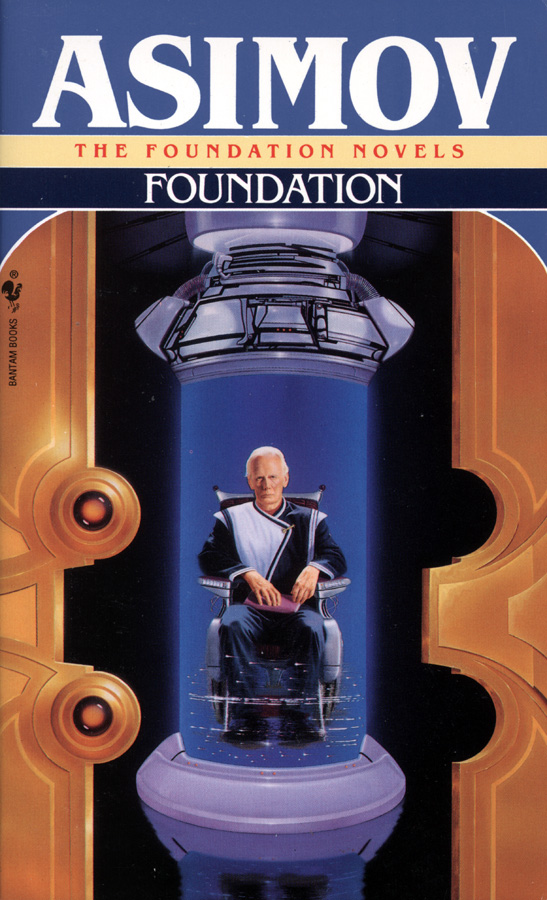
The Foundation Series

When it comes to science fiction, few authors have achieved the kind of notoriety and prolific ouput of Isaac Asimov. Amongst the greats of classic sci-fi, he considered one of the “Big Three”, along with arry Niven and Arthur C. Clarke. And when it comes to his many novels, short stories, articles and thoughtful essays, two series stand out above all else. The Robot series and, more importantly, the Foundation novels.

Not only did they get the ball rolling on many major sci-fi themes that would come up again and again over the years (such as the concept of a Galactic Empire), they once again brought commercial science fiction into the limelight by showing how hard science could be merged with real history to produce genuinely thought-provoking literature. This is a trend which seems to be necessary once every generation years or so, with Frank Herbert doing it again roughly a decade later. And in his case, much of the inspiration came from Asimov himself.

So in honor of that accomplishment, and to mark the occasion that I finally finished reading the original trilogy, I thought it was high time that I start reviewing the Foundation series, beginning with the book that started it all. So without further ado, here’s Foundation!

Plot Synopsis:
The story opens many thousands of years in the future, where humanity has spread to occupy the entire Galaxy and is governed by the Galactic Empire. For over 12,000 the Empire has stood, and appears to still be stable and powerful. However, a trend of decay has set in and some suspect that it’s only a matter of time before the Empire falls

One such man is Hari Seldon, a scientist who has perfected a form of psychology and mathematics known as psychohistory. Having calculated the exact date and sequence of events which will lead to the collapse of the Empire, he has also created an organization that will be dedicated to ensuring that the dark ages that naturally follow will be as brief as possible – one thousands years instead of the alternate 30,000.

Divided into five parts – each of which was published throughout the 1940’s and together in a single volume in 1951 – the story jumps forward in time from the starting point, 0 F.E. (Foundation Era), to several hundred years in the future. Several protagonists are employed, people who find themselves at the center of events in any given period. Each period involves the emergence of a “Seldon Crisis”, a calamity that was predicted by Seldon’s psychohistory in advance, and the requisite response by the Foundation to resolve it. The first story, which sets up the subsequent stories and crises, is aptly named:

The Psychohistorians: Told from the point of view of Gaal Dornick, a young mathematician who has travelled to the capitol world of Trantor to meet Seldon, the story moves from their introduction to Seldon’s arrest by the Committee of Public Safety. Named after the Revolutionary body that send countless French citizens to their death after the 1789 Revolution, this committee is made up of Imperial aristocrats who are angered by Seldon’s philosophy and want to see him silenced. However, not wanting to martyr him, they instead tell him and his Foundation to pack up and move to Terminus, a world on the edge of the Empire.

The story then concludes with Seldon telling Dornick that he knew this was coming, and that it was actually all part of the plan. By being able to set up the Foundation at the edge of the Empire, it will be in a perfect position to begin enacting its policies once the Empire begins its inevitable slide into decline and loses control of first the periphery, and then the core systems. Thus, the most important lesson about psychohistory is presented for the first time: like a prescient science, it predicts all things and all things happen in accordance with its laws.

The Encyclopedists: Fifty years later on Terminus, the Foundation scholars have begun work on the Encyclopedia Galactica, the complete compendium of scientific knowledge for when the Empire falls. Unfortunately, the Empire is surrounded by four independent kingdoms that are in danger of threatening Terminus. The mayor of the planet, Salvor Hardin, is the protagonist of this story, and believes that the only way to keep their neighbors at bay is to pit them against each other. He perceives an opportunity when the Kingdom of Anacreon, which hopes to place military bases on Terminus, reveals that the four kingdoms no longer have nuclear technology.

Later, Hardin’s own rivalry with the Board of Trustees (the people responsible for the Encyclopedia) come to a head when Seldon’s Vault – a mysterious chamber which opens whenever a “Seldon Crisis” is imminent – opens to deliver a message. According to Seldon’s hologram, the creation of the Encyclopedia was a ruse to hide Terminus’ real importance. The true goal of the Foundation is to further science in a galaxy as it becomes consumed by interplanetary strife. Realizing that they are no longer in control, the Board hands its political power to the Terminus City mayor who graciously accepts.

The Mayors: Beginning in 80 F.E., this story revolves around the Foundation’s efforts to bring technology to the Four Kindgoms. This has the effect of creating a priesthood of sorts in these states, reminiscent of early medieval Europe where Roman priests were dispatched to western European kingdoms to establish centers of learning. Salvor Hardin has been re-elected many times over the course of the decades but faces an impending problem as an “Action Party” threatens to overthrow him. Fearing that Anacreon is slowly overtaking them, they want power so the Foundation will fight back.

On Anacreon, it is also becoming clear that the young King Lepold I faces an internal threat from his uncle, Prince Regent Wienis. Before he can come of age, Wienis plans on seizing power for himself. Central to this plan is using a battleship the Foundation restored for Anacreon to attack and conquer the planet. On the night that Lepold is to be ordained, Wienis invited Hardin into his quarters and shares his plan with him. Hardin reveals that he too has a plan, a counter stroke which will neutralize the battleship and Wienis’ power.

After decades of seeing Foundation scientists as “holy men”, the public is incensed when they learn that Wienis is planning an attack on them. What’s more, all their technology, including the attacking battleship, becomes useless as the only people who know how to run them (the Foundation scientists) begin shutting them down. Wienis loses it and tries to kill Hardin, but his weapons cease working, and he takes his own life.

Upon his return to Terminus, Hardin is vindicated when Seldon’s vault opens to reveal that his plan was right. With this crisis behind them, the Action Party defers to the mayors and their authority is once again validated. In addition, the Four Kingdoms are now free to continue the advance of “Scientism”, which will extend their influence throughout the region and ensure the fulfillment of Seldon’s plan.

The Traders: Events in this section take place 135 F.E., at a time when the Foundation has begun sending out Trade representatives to distant worlds to share their technology with all neighboring planets in the quadrant. Master Trader Eskel Gorov, also an agent of the Foundation government, has traveled to the worlds of Askone to trade in nucleics. Gorov, however, is met with resistance by Askone’s governing Elders who abide by the taboo that certain technologies are morally proscribed.

Enter the protagonist, Trader and Foundation agent Linmar Ponyets, who is sent to Askone’s central planet to negotiate the release of Gorov, who has been arrested. After learning that the Elder’s Grand Master plans to have Gorov executed, Ponyets agrees to offer them a payoff in the form of a transmuter than can turn lead into gold. At the same time, Ponyets finds a willing ally in a young protegee named Councilor Pherl. While initially wary of Ponyets, he is convinced that the transmuter could help him to attain power and eventually become Grand Master himself.

Because of this, Gorov is released and travels back to Foundation space with Ponyets. Gorov is critical of Ponyets dealings, saying that it was unethical, but Ponyets counters with a quote by Hardin, wherein he said “Never let your sense of morals prevent you from doing what is right!”

The Merchant Princes: This last story, which takes place in 155 F.E., occurs against the backdrop of a powerful Foundation, which has subjugated the neighboring Four Kingdoms and expanded its commercial and technological empire throughout numerous stellar systems. However, it still faces challenges, this time around from a planet named Korell where three Foundation ships have disappeared. Fearing that a “Seldon Crisis” in coming, the Foundation assigns Master Trader Hober Mallow to investigate and determine the Korellian’s level of technology.

At the same time, the people who assign Mallow, Foreign Secretary Publius Manlio and the Mayor’s secretary, Jorane Sutt, foresee an opportunity to weaken the traders by creating an embarrassing diplomatic incident. To oversee their plan, they plant an agent aboard Mallow’s ship to spy on him. When they arrive on Korell, he invites a Foundation missionary on board their ship, a move which causes a mob to surround the ship. Since Foundation agents and technology are not allowed on Korell, this arouses Mallow’s suspicions.

Mallow hands the missionary over to the mob, in spite of the agents intervention, and the missionary dies. Surprisingly, he doesn’t seem too disturbed by this and even earns the chance to meet with Korell’s authoritarian ruler, Commdor Asper Argo, because of it. He appears friendly and welcomes Foundation technological gifts, though he refuses to allow Scientism on Korell. In accordance, Mallow agrees to continue trading with them but agrees to abstain from encouraging missionary work within the Republic of Korell.

Later, Mallow is also given a tour of the planet’s facilities, during which time he notices the presence of atomic technology bearing the emblem of the Empire. He concludes that the Empire is expanding into the periphery again and journeys alone to the planet Siwenna, which he believes may be the capital of an Imperial province. There he finds nothing but a desolate world and an impoverished patrician named Onum Barr, a former provincial senator who tells him how an a local rebellion led the Empire to devastate the planet and kill all but one of his sons.

Convinced there is nothing there to see, Mallow returns to Terminus where he faces trial for murder because of how he turned the missionary over to the Korellian mob. However, he is able to convince the court that the “missionary” was in fact a Korellian secret policeman who played a part in the conspiracy against the Traders manufactured by Sutt and Manlio. Acquitted, Mallow is received with delight by the population of Terminus, which will almost undoubtedly select him as Mayor in the elections scheduled to take place in the following year.

To prepare for the election, Mallow engineers the arrest of Sutt and Manlio, and eventually takes office. However, he is soon faced with tensions between the Foundation and Korell, which declares war on the Foundation, using its powerful Imperial flotilla to attack Foundation ships. Instead of counterattacking, Mallow takes no action, knowing that Korell has become accustomed to trade with the Foundation and the lack of said trade will cause deprivation and anger towards the government. In time, this will cause Korell’s war efforts to grind to a halt and the end of hostilities.

Thus ends book I of the foundation series, with the Foundation ascendent in a Galaxy that is becoming increasingly permeated by chaos and Seldon’s plan in effect on well underway.

Good Points:
As I said, this novel (if you’ll excuse the pun) really wrote the book on Galactic Empires and historically/socially relevant sci-fi. Inspired largely by Gibbon’s The History of the Decline and Fall of the Roman Empire, it advances the notion that all civilizations are basically organism, subject to the same laws as all living things. And like all organisms, they enjoy a period of growth, maturation, and then decline, culminating in their death. When that happens, their absence leaves a natural power vacuum characterized by chaos, strife, and a marked decline in all things “civilized” – aka. the arts, the sciences, learning, etc.

By taking a page from history, namely the attempts to preserve classical knowledge throughout the Middle Ages (which culminated in a rebirth of learning in the Renaissance) Asimov creates a fictional repeat of history in the distant future whereby the efforts of the preservers were enhanced with the help of foresight and a coordinated plan. Had such factors existed in the wake of Rome’s fall, it is entirely possible that the Dark Ages would have lasted for a significantly shorter amount of time.

On top of that, this book was is also very accessible and readable, in spite of the fact that it throws some rather deep scientific and intellectual content at the reader. And the way the stories are succinct, concise, and tie together so effectively makes for a read which is easy on top of it all. For an accomplished reader, it can be read in one sitting. I am hardly a speed reader, but even I found it a quick study.

Bad Points:
Conversely, some of the books selling points are also potential weaknesses. For one, its accessibility can be seen as a mark of simplicity. For example, the book is all about a science that deals with the masses, of how historical events are determined by the actions of billions, trillions and even quadrillions of people. And yet, in every story, everything seems to hinge on the actions of one person, the protagonist, and a few others.This seems a little contradictory, and intentional since it provides quick resolution to the plot.

Herein lies another weakness, which is that of contrivance. Many times throughout the novel, the way the characters tend to figure things out seems awfully convenient. In every story, you see the mayors, merchants and Foundationists pulling resolutions seemingly out of nowhere, knowing everything they need to in advance or just providing a perfect solution on the spot. Granted, it seems to make sense, but how they know to do this and how it always seems to work out does not seem wholly realistic.

And of course, the explanation is always there in the background, Hari Seldon predicted it using psychohistory and these people know that science so they are therefore prepared where others are not. This sort of advances a notion that the science itself is infallible, that human minds really can be reduced to mathematical formulae which is water-tight. If anything, I would say that predicting the behavior of billions gets more unpredictable the farther afield one looks, and that no science can ever be capable of predicting it with certainty. And we all know what became of those philosophies that tried – aka. Marxism, Hegelianism, and many other isms besides!

But of course, the concept of psychohistory is entirely fictitious and was really just a tentative argument that Asimov advanced, and for the sake of a fictional story no less. In order to make the story work, he had to create a universe in which a form of prescient foresight, made possible through the application of rigorous mathematics and psychology, was possible and accurate. In short, its just food for thought, not something to be taken seriously. And of course, Asimov did show that he was willing to break from this notion with the second book in the series, Foundation and Empire, where the “Plan” began to falter due to external, unaccounted factors.

So in the end, I have to recommend Foundation as required reading, not just for science fiction fans but for all people curious as to how many trends we’ve come to associate with speculative and satirical literature (including dystopian lit) got started. Granted, there were those who came before Asimov who made use of such themes and classical inspirations, but he was the one who brought such things into the public eye like few before him. And as a result, he would go on to have an immeasurable influence on those who followed in his wake.

Up next, Foundation and Empire, part two of the original trilogy, before fans and publishers practically forced him to write many, many more books in the series. Stay tuned!

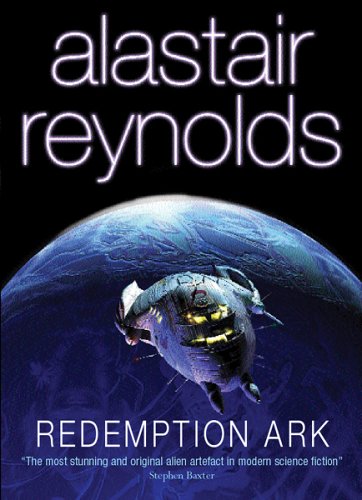
Redemption Ark

Continuing with the Alastair Reynold’s series is the second book in the Revelation Space universe, otherwise known as Redemption Ark. Released in 2002, just two years after the debut novel in the series, this book picked up where the previous story left off, continuing the story of the known universe, the Inhibitors, and the coming crisis where they would attempt to wipe out humanity.

While this alone was certainly a basis for an exciting novel, this second installment also included a lot of additional elements, such as a protracted war between the Demarchists and the Conjoiners, the inner workings of these and other factions, what life is like in the “Rust Belt” – the ring of satellites and orbital stations around Yellowstone – and some added secrets and twists that make it all more interesting.

Out of the three books that make up this trilogy – Revelation Space, Redemption Ark, and Absolution Gap – this one is definitely my favorite. While it was certainly no less interesting and detailed than the first, it was far less convoluted in terms of plot and expanded on some key elements. And ultimately, I found it more entertaining in terms of its pacing and action, and its characters were indeed more relatable than in the first.

Plot Synopsis:
The story opens in 2605 with a major discovery being made. After generations of being unheard from, Galiana (the woman who founded the Conjoiners) returns from deep space. Her vessel was apparently set upon by a mysterious force, square-sized segments of the ship are missing, and all aboard appear to be dead. All save for Galiana herself who is in cryosleep and appears to be suffering from the intrusion of an alien mind. After investigating the ship, Skade, a special operative for the Conjoiner faction, contact is made with Galiana herself.

It is then revealed that the alien force which attacked their ship, and now controls Galiana herself, was none other than the Inhibitors. They now are able to speak through her, and Galiana asks to be killed. Skade however puts her in suspended animation in the hopes that she can he helped, and so they can get more information out of the Inhibitor influence later… Skade herself appears to be communing with hidden voices, which belong to the Night Council, a super secret organization within the Conjoiner leadership that runs spec ops.

Fast forward to ten years later around Yellowstone, where a war is taking place between the Conjoiner faction and the Demarchists. After many generations of cooperation to restore Chasm City from the terrible effects of the Melding Plague, tensions have reached a crisis point and a constant state of war has been in effect ever since. Here we see Neville Clavain, a high-ranking military officer who defected to the Conjoiners centuries back.

In the course of a battle, Clavain comes into contact with a Yellowstone cosmonaut named Antoinette Bax, who nearly loses her ship while attempting to bury her father in the system’s gas giant, Tangerine Dream. After saving her ship, Clavain lets her know that if he sees her again, she’s dead, thus establishing that they most surely will! After taking down the Demarchist ship, he also finds a Hyperpig (a race of human-pig hybrids) who was apparently their prisoner. He also meets with Felka, Galiana’s gifted daughter whom he believes might be his as well.

Clavain is then brought to the Mother’s Nest, the Conjoiner hive, where he is asked to join the Conjoiners leadership, a decision he has been resisting until now. Skade informs him about the Inhibitors, and how there presence necessitates that they undertake a mission to reclaim the lost Conjoiner doomsday weapons. These weapons just happen to be the ones that appeared in the first novel, which are the current property of Volyova and the Nostalgia for Infinity.

The first step in the mission involves taking Clavain to see the fleet of advanced starships that the Conjoiners have been building in secret. Skade claims that the weapons and ships will be used to defend humanity against the Inhibitors, but Clavain is convinced that they will actually be used simply to evacuate the Conjoiners and abandon the rest of humanity. She confirms this when he begins a daring escape, saying only that “It’s a Darwinian universe, Clavain.” Clavain then travels to Yellowstone to defects to the Demarchists and spread the news of the Inhibitors, enlisting Antoinette Bax’s help to escape the pursuing Conjoiners under Skade. Told ya they’d see each other again!

Remontoire, a member of the Conjoiner leadership and old friend of Clavain’s pursues him to Yellowstone with Scorpio. However, once they reach Yellowstone, they are captured, along with Clavain and Antoinette, by a mysterious figure known as “H”. He takes them into his compound, which happens to the be the Mademoiselle old hangout, and tells them the truth of their situation. H reveals that many years previous, Skade participated in a raid into Chasm City to capture secrets that would lead to the development of inertia suppression technology.

He believes that at that time, she was subverted by the Mademoiselle herself, who happens to be the voice that’s inside her head. Clavain reveals Skade’s plans for the Conjoiner fleet and the cache weapons, and H agrees to help him beat Skade to them. H supplies ships and his own version of the inertial suppression technology, while Scorpio supplies an army of hyper-pigs for the pursuit. They name the ship the Zodiacal Light, in honor of a ship that holds significance to Scorpio.

Meanwhile, on Resurgam in 2665, Ilya Volyova and Ana Khouri have adopted aliases and are working on the planet. They have learned the Inhibitors have arrived and are busy dismantling several rocky moons and are moving the components towards the system’s gas giant, Roc. They begin collaborating with the local resistance leader, Thorn, who has been attempting to evacuate the planet by communicating with the Nostalgia, which is now under Captain Brannigan’s direct control. Thanks to the Melding Plague, he has now merged with the ship.

They begin the evacuation while the Inhibitors continue building their mysterious weapon, which appears to be a large gravitational device which they use to sheer the system’s sun to pieces. Unfortunately, their limited resources are only moving a few thousand people at a time. Volyova decides to deploy the Nostalgia’s cache weapons against the Inhibitor’s weapon to buy more time.

However, her efforts are upset a little when the Captain, in control of the ship and the weapons, attempts to use one to “commit suicide” by blowing the Nostalgia apart. Overwrought by guilt over everything he’s done to survive, he tries to end it all, but Volyova’s quick intervention stops him. By positioning her shuttle between the Nostalgia and the cache weapon, her shuttle is sliced in half and she is nearly killed. However, she is successful in getting the Captain to stop and he agrees to abide by her decisions.

Skade and Clavain then race to the Resurgam system employing various creative long-distance strategies against each other and pushing their vessels to higher and higher speeds. Eventually, Skade’s vessel is damaged in an attempt to exceed the speed of light. Clavain and crew arrive in the Zodiacal Light ready to recover the cache weapons. They begin communicating with the Nostalgia via a beta-level simulation of Clavain, but the efforts prove futile. Volyova refuses to hand them over and Clavain and friends are not willing to leave without them.

A shooting fight begins between the two sides when both ships come together. Clavain’s superior forces capture Nostalgia for Infinity, although Volyova is able to damage Zodiacal Light with one of the cache weapons. At a bit of a stalemate, Negotiations resume and the two sides come to terms. The evacuation is completed with the help of Clavain’s forces and the Nostalgia while Volyova, who is dying of her injuries, takes half of the cache weapons and attacks the Inhibitors in the Storm Bird, to no effect. Remontoire and Khouri remain in the system in the Zodiacal Light to try and contact Dan Sylveste in the Hades Matrix in hope that he will be able to supply information that can be used to fight the Inhibitors.

The Nostalgia then crosses paths with Skade’s ship again, which they rig to explode. But before this happens, Skade reveals the true plan and how they knew about the Inhibitors in advance. It seems that the Conjoiners began a project many centuries back known as Exordium, which involved the use of quantum computers to communicate across time and universes. This led them to the creation of the Conjoiner drives, but also to the Inhibitors impending attack. As a result, they began developing the cache weapons for the day when they showed up, but knew that even these wouldn’t be enough. This prompted them to develop the special fleet to escape to deep space.

In the end, Clavain and his team are unable to convince Skade that she’s being manipulated and learn that Galiana’s body is on Skade’s ship. But since she wants to die, he decides to detonate it once they are at a safe distance. Clavain mourns her death, since they were lovers, and the ship finds its way to a Pattern Juggler planet where they set down and begin building a tentative colony. Things seem bleak, until Felka reveals that she’s seen the planet before. Before dying, her mother showed her things, which included a vision of this place. She knows then that they are exactly where they need to be and takes heart from that. From this planet, they await the arrival of Khouri, Remontoire and the Zodiacal Light to catch up so they can continue the fight against the Inhibitors.

Good Points:
Like I said before, this book had a lot going for it that was new and interesting. One of the most important was the asides made by the Inhibitors themselves, which revealed their deeper intentions. Not only are they trying to inhibit the growth of space faring intelligence to prevent another Dawn War, but the inevitability of Andromeda’s Galactic Collision with the Milky Way is another reason. When this happens, the disturbance will cause untold destruction, especially to any civilizations inhabiting either galaxy. The only way to prevent trillions of deaths is to ensure that either no space-faring species are around at the time, or that one super-advanced one was in place to control the entire galaxy. Since the latter is so unlikely, they chose to opt for the former.

Also, the war between the Conjoiners and the Demarchists was an interesting touch. It provided some added excitement to the early chapters and some intrigue to the evolving story. Not that much was needed, given the plot involving the Inhibitors and the mounting crisis with them. Still, it was a nice addition. The glimpse inside Conjoiner society and the way they brought back characters from the earlier short stories, crossing them with this main plot line, also provided a lot of meat and consistency to the larger universe.

And last, there is the consistent theme of this novel. Whereas the first focused on revelation, this one was all about redemption. It was a fitting theme for the second book after everything that had taken place in the first. The misdeeds of Sylveste in his long search for answers, the crimes of Captain Brannigan in his quest for immortality, and even of Volyova in her drive to see his plans through. In the end, all things come together in this story with a drive to do something right in the midst of all the fear and chaos being wrought.

Which brings me to a part of the story which I am now kind of mixed on, meaning it was something I didn’t like about the story until after I realized the significance. The character of H, who appears on Yellowstone and provides some serious motivation to the plot. Initially, I had no idea who he was and saw his introduction as a total contrivance to the story. Not only did he know too much and have all the answers, he seemed to come out of nowhere. As plot twists go, this seemed like just another unnecessary one.

However, it was in reading Chasm City, a prequel to which was released between books one and two, that I realized who he was. Sky Haussmann, who is an important background character, was detailed in that novel and wound up on Yellowstone becoming an influential figure. It was he who killed the Mademoiselle and ended up inheriting her secrets and her empire, thereafter becoming known only as “H” to hide his identity. And it was fitting, since he too wanted redemption and found it by helping Clavain and his friends, and even attempted to commit suicide himself when it was all done.

Ah, which brings me to the weakness of this book, which bear some resemblance to all of Reynold’s other works.

Bad Points:
Once again, there are the excessive plot twists that just seem to keep coming and seem unnecessary. After all that is revealed in the early chapters, the book seemed perfectly packed with enough plot twists and revelations to keep the reader interested. However, in the later chapters, there are more which just seem to convolute things. For instance, Bax learns that her ship, Storm Bird, contains the AI of a man who was her father’s friend, and also a infamous because of an accident which apparently claimed his life. Facing death, and hoping to find a dignified end for his friend, he programmed the ship with his beta-level simulation to look after her. A nice story, a touching one even, but including it at that point in the story seemed too much and happened too late in the story.

Another is Exordium. While it was a very interesting concept and did provide some synthesis and some added background to the story, it was yet another 11th hour revelation that felt unnecessary. It was enough to know that Galiana had come back from deep space with a warning ten years previous, they really didn’t need to know about this generations back. That discovery alone would have been enough to motivate the creation of the secret fleet, the cache weapons and all the rest. And if time frames were an issue, Reynolds could have just made it happen sooner.

Last, but certainly not least, was the twist where it is revealed that the Night Council is in fact the Mademoiselle. What purpose did this twist serve, other than to involve the Mademoiselle from the first story? In that book, her agenda was clear. She was a Demarchist of great wealth and power who wanted Sylveste dead because of what he did to her. But now, what motivation did she have for infiltrating the Conjoiners or possessing the inertia suppressing technology? And, more importantly, what’s her agenda vis a vis the Inhibitors? Learning about them is understandable, but the agenda involving escaping into deep space and all, how’s that serve her interests? If anything, she would be trying to get her to help protect Yellowstone, where she presumably still is, not abandon it.

Really, it would have been much more plausible to actually have had a Night Council and have them being the motivating force behind Skade’s actions regarding the Inhibitors. It would have been a plausible angle involving covert conspiracies versus democratic considerations, like how the tiny executive council wants to save the Conjoiners and is keeping it a secret because they know the Council will object to such a selfish, Darwinian plan. These same people could become a problem later after Clavain and his friends defected, even coming after them later.

But like I said, this book was a worthy read, even more so than the first. It’s hard sci-fi and classic elements, and consistent themes of ancient aliens and worthy deeds in the face of impending doom – these all added up to a good story. And of course, Reynold’s usual stylistic touch, involving lots of cool technology, rich worlds, and his gothic, cyberpunk feel. It’s just cool! In keeping with why I picked it up in the first place, I highly recommend this book for those looking to learn more about current science fiction trends and what makes them popular.

An Interior Look at Yuva’s Spaceships

Rama16wikiI might have mentioned that things are coming together for my colleagues and I over at Grim5Next. After a few weeks, our story is really coming together. First drafts are coming in, ideas are germinating and being shared, and visuals are being made! Which brings me to the latest installments in the Anthology news cycle, after much time spent with my Windows Paint application, I have finally been able to prepare some cross sections of the ships in our story.

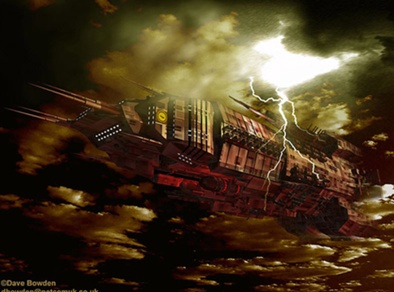
As already noted, we decided that for the purposes of our story, we wanted ships that could provide for crews during a long, sub-light journey through outer space. At the same time, they needed extensive cryo-facilities to ensure that thousands of colonists could be kept alive and preserved for the day when they would arrive at a new world. So basically, it would have to be a cross between a sleeper ship and a generation ship. This is what we came up with for a profile shot:

Note the segmented layout and extended middle section. This layout places the control module at the front with the bridge, navigation and whatnot, while the engine compartment, storage and shuttle bays are located at the rear. The middle section, which is an O’Neil Cylinder, is the habitation module, which rotates to provide artificial gravity. Here is where the crew sleep, eat, enjoy their leisure time, and ensure that they don’t suffer from the effects of muscular atrophy or osteoporosis.

And now, for the first time, here’s a peek at what it looks like inside. Each section was done separately to give it a maximum level of detail and ignite our collective imaginations. When complete, I hope to include them in the book to help our reader’s visualize what the interior layout of the ships would look like. Thus far, I’ve finished work on the aft and habitation sections, with the front end to follow soon. I was hoping to have them all done for today’s little unveiling, but man these things take time to generate!

CS_RearCS_Front

Upcoming Movies that Aren’t Reboots

Believe it or not, Hollywood actually has some movies that are now playing, or coming in the near future, that are not just reboots, reimaginings, or rehashings of old ideas. Much of this info comes from the online source Io9, and I have to say, I was quite impressed. To know that original ideas and long-overdue adaptations are actually in the works… wow. Still, don’t expect that this makes us even Hollywood! You’ve still wasted a ton of my and a good deal more people’s time and money!

Anyhoo, onto the list of coming or playing attractions:

Safety Not Guaranteed:


A time-traveller takes out an ad in the paper, looking for a companion to go back in time with him. A journalist, played by deadpan comedian Aubrey Plaza (of Parks and Recreation, Scott Pilgrim versus the World and Funny People), is tasked with finding a man who’s taken out the ad and determining just what his deal is. As time goes on, she becomes infatuated with the man because of his sincerity and the fact that he’s a true believer.

Produced by the same people who brought you Little Miss Sunshine and based on an actual ad, the movie explores the fine line between cynicism and realism, truth and belief. In the end, it remains a mystery whether or not the man is for real, and whether or not he is a harmless eccentric or a total nut! This movie has already been released and was screened at the 2012 Sundance Film Festival where it won the Waldo Salt Screenwriting Award.

The Prototype:


A story of a humanoid robot that contains the consciousness of its designer, a man obsessed with achieving the Singularity, as predicted by men like Ray Kurzweil. After a successful run where his mind is placed into “the prototype” robot, it escapes from its facility and is chased by government agents who believe it to be a malfunctioning military drone. Though it does look a tad cliche and over the top, it nevertheless explores some issues which are only increasing in relevance and getting closer and closer to being real.

Enders Game:
I’m not kidding! After decades of waiting, it seems that sci-fi geeks and Card fans will finally be getting a chance to see Ender adapted to the big screen. As someone who thoroughly enjoyed the original, but never got into the sequels, I can tell you that I will be waiting on this movie’s Nov. 2013 release date with eager anticipation.

According to the buzz, Director Gavin Hood (of Tstosi, Rendition and X-Men Origins:Wolverine) is taking great pains to keep it as loyal to the book as possible. In addition, such big names as Harrison Ford and Ben Kingsley are attached to play Colonel Graff and Mazer Rackham, and Asa Butterfield (of Hugo fame)will be playing the lead role of Ender Wiggin.

Life of Pi:
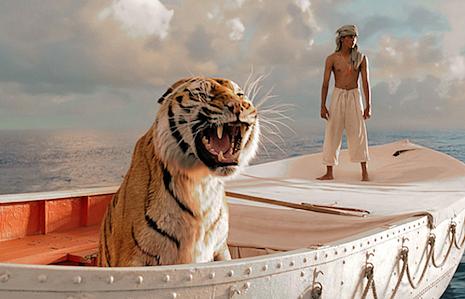
Now this is one I didn’t expect to see on the silver screen! Director Ang Lee, who brought us such hits as Crouching Tiger, Hidden Dragon, Brokeback Mountain and The Hulk will be directing this adaptation of Yann Martel’s magical novel about a boy, a lifeboat, and a handful of animals as they visit a strange island.

World War Z:
Not surprisingly, all this zombie-fanaticism of late has encouraged the good folks in LA LA land that it’s time to adapt one of the best zombie novels of all time. Written by Max Brooks, son of famed comedian Mel Brooks and master of all things zombie, the book tells the oral history of the Zombie War and was released as a follow-up to his satirical The Zombie Survival Guide.

According to the studio-related buzz, Marc Forster (Finding NeverlandThe Kite Runner, and Quantum of Solace) is slated to direct it, Michael Straczynski (creator of Babylon 5) is attached as a screenwriter, and actor Brad Pitt will be starring as the film’s protagonist. Clearly, these folks aren’t pulling punches with this adaptation. I look forward to seeing it sometime in 2013!

Hansel and Gretel: Witch Hunters
Look what you started, Abraham Lincoln: Vampire Hunter! Or was it you Snow White and the Huntsman with your decidedly violent take on a children’s classic? Perhaps it was Seth Grahame-Smith with his Pride and Prejudice and Zombies! I don’t know who’s to blame, but for some reason, it seems that fairy tales, classics of western lit and history are all getting the Buffy treatment these days.

But I digress, Jeremy Renner of The Avengers and the new Bourne Legacy movie stars alongside Gemma Arterton (Quantum of Solace and Clash of the Titans) in this sequel to the classic fairy tale. Apparently, the story takes place 15 years after the traumatic gingerbread house incident, and the now grown-up pair have become a leather-wearing witch hunting duo. Let’s just hope the producers of Van Hellsing don’t sue for plagiarism!

Neuromancer:
I almost jumped out of my seat when I read about this one, but then I noticed the production notes where it said that this movie hasn’t even been green-lighted yet. Ah well, fingers crossed it get’s made, because it would be about freaking time! Much like with Enders Game, fans of this sci-fi, cyberpunk classic have been waiting FOREVER to see a film adaptation! Several attempts have been made, but none have gotten off the ground.

But some details are forthcoming. For one, Vincenzo Natali, the brilliant Canadian writer/director who brought us Cube and Splice, is rumored to be the man who will direct this bad boy, should it ever get made. No other news yet, but my ear is firmly pressed to the ground and I will find out if it’s happening. Bank on it!

Snow Crash:
And another sci-fi movie that’s long overdue, but can never seem to get made! Well, it seems that writer/director Joe Cornish (Attack of the Block and The Adventures of Tin Tin) is set to adapt Neal Stephenson’s post-cyberpunk novel about the near future where America has been privatized, “franchulates” run everything, and a lone hacker named Hiro Protagonist investigates a potent new drug that infects users with a computer virus.

As a long0time fan of Stephenson’s, I for one will be awaiting this movie too with eager anticipation. In fact, I can scarcely believe that so many of my literary favorites are being adapted at the same time. One would think this was just a big tease, or some massive karmic payback!

Fingers crossed, people! Fingers crossed!

The Post-Apocalypse in Sci-Fi (Part II)

Akira:
This futuristic tale takes place in Neo-Tokyo, an ultra-modern city that was built on the ruins of the old after an incident touched off World War III. This is a major them in the movie Akira and manga it was adapted from. Throughout the entire story, there is a pervasive sense of shock and horror over the destruction of the old city, and a sense of dread that it might happen again very soon…

Enter into this story the characters of Kaneda and Tetsuo, two orphan boys who belong to a biker gang that is constantly engaged in battles with other gangs for control of the streets. Being children of the system after their parents died in the war, all they really have is each other and the other members of their biker gang. These surrogate families and their ongoing feuds provide a sense of community and an outlet for their pent-up energies, living in a world characterized by boredom and angst and haunted by a past filled with horror.

In addition, you have Colonel Shikishima, a man who witnessed WWIII and has dedicated himself to the rebuilding and ensuring that it never happens again. In addition to being a main character, he is representative of the generational gap in the story. As a stern, disciplined military man who was shaped by apocalyptic events, he is appalled by the sense 0f self-indulgence which he feels has set in with the younger generation.

And the apocalyptic nature of the story is something which is demonstrated over and over through intense scenes and nightmarish visions. In short, it’s an awesome take on the post-apocalyptic scenario, which could only come from firsthand experience.

Alas, Babylon:
This 1959 novel by Pat Frank is one of the first post-apocalyptic stories of the nuclear age and has remained a science fiction ever since. Taking place in small town in Central Florida, Fort Repose, the story opens with a veteran-turned-lawyer named Randy Bragg who gets a cryptic telegram from his brother who works for the Strategic Air Command. He informs his brother that he will be sending his wife and kids to stay with his Randy, and ends it with “Alas Babylon”, a biblical reference which his brother uses as a euphemism ford disaster.

In time, he learns that the bad news concerns a potential Soviet attack, which inevitably takes place after much escalation. After bringing his sister-in-law and her kids to their home, they are all awoken in the night to the sounds of Miami being bombed. They residents awake to witness a mushroom cloud forming over Tampa shortly thereafter, and the events which characterize the following 24 hours they come to name “The Day” – i.e. a one day war.

The story delves into the effects of “The Day”, which are felt differently by people in Fort Repose. Tourists are trapped in their hotels, convicts escape from jails and prisons, the local retirement homes are filled with panicked people, and just about everyone tries to withdraw their money from the local bank and buy up supplies. The only reliable means of news comes through short wave radio.

As chaos begin to set in, Randy begins to organize neighbors to provide housing, food, and water for themselves and organizes the community to defense itself against highwaymen. As an active Army Reserve officer, Randy learns that he has the legal right to exercise martial law, and an order comes in over the short wave from the acting Chief Executive (who is governing from a bunker in Colorado) for any surviving officers to form local militias.

In the end, military helicopters arrive to evacuate people, but are refused as the locals tell them that they want to stay in the new home they have built. They learn the war is over, that the USA prevailed, and that country is now being run from Denver. However, the victory came at a tremendous cost, Millions are dead, entire stretches of the country are irradiated and won’t be habitable for a thousand years, and the US is now a third-rate power that is dependent on third world countries for aid. Faced with this prospect, the people of Fort Repose settle in and decide to face the “thousand year” night that is coming.

This book not only introduced readers to the likely prospect of what would happen in the event of WWIII, it also presented a likely scenario of how that was going to happen. While it the Soviets were apparently planning an attack in the first place, it was an accident that touched everything off. And in the end, how people went about rebuilding and trying to restore some semblance of normalcy was quite classic. In addition to inspiring numerous generations of nuclear holocaust fiction, numerous apocalyptic franchises owe an allegiance to him, not the least of which is the re-imagined series of Battlestar Galactica.

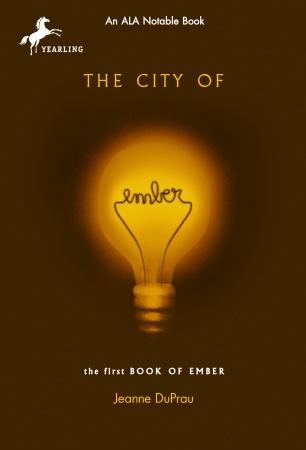
The City of Ember:
This post-apocalyptic story, written by Jeanne DuPrau in 2003, takes place in an underground city named Ember. After many years of continuous habitation, the city is slowly running out of power and supplies. Similar to in tone and structure to Suzanne Martel’s 1963 story The City Under Ground, this city was apparently built to ensure that humanity had a place to live and wait out the effects of nuclear war.

The story begins when a two protagonists, Lina Mayfleet and Doon Harrow, receive a message which is apparently left by “the Builders” containing clues that could lead them back to the outside world. This message was kept in a box that was passed down from mayor to mayor, with instructions that it be opened after two hundred years. Until recently, the box had been lost, but as soon as Mayfleet and Harrow find it, the race is on to decipher it and find a way to the surface.

In the end, the children follow the note’s instructions through a series of caves that lead them towards the surface. When they see the city from above, they realize that they are underground, something which they never knew before. This scene, which calls to mind Plato’s “Allegory of the Cave”, provides the story’s big revelation. The story then ends on a cliffhanger note with the girls trying to alert the other inhabitants of what they’ve found.

The Matrix:
The setting and back story of the Matrix revolve around two fundamental facts: One, that a terrible war between humanity and AI’s took place in the future; and two, that what is left of humanity lives underground due to the devastation wrought on the planet’s surface. Enter into this the concept of the Matrix, a simulated reality where humans are kept docile by being fed the lie that they live in the pre-millenial world, at a time when human’s were still in charge.

But of course, not all human beings are able to accept the program and experience a sort of existential crisis as a result. When Mr. Anderson, hacker alias Neo, is presented with the answers he so desperately seeks, he is horrified to learn the terrible truth. Not only was it the year significantly later than he thought, but the world as he knows it was destroyed long ago. All major cities reduced to rubble, the sky itself has been “scorched”, and the surface rendered a cold, uninhabitable shadow of its former self.

This is a crucial element of the Matrix, which is not just a sci-fi story set in a post-apocalyptic world, but a metaphor for truth and “false consciousness”. With reality so displeasing and harsh, there are many who would prefer the warm comfort of a simulated world, which just happens to be a recreation of happier, stabler times. The metaphor is not just thick, but multi-layered!

It is for this reason that the majority of human beings accept the programming of the Matrix, even if they are only aware of this acceptance on an unconscious level. It is also the reason why those who choose to opt out of it, due to an innate feeling that their reality isn’t real, is a choice which must be made many times over. As Cypher himself demonstrated in the first movie, not everyone has the stomach for the real world, and will willingly betray their comrades for a chance to be put back inside. Others however, find hope in the prophecy of “The One”, the person who’s arrival will herald the end of the war and peace for humanity at last… or so it seems!

The Omega Man:
Released in 1971 and starring (once again) Charlton Heston, this movie post-apocalyptic film is a classic amongst film buffs. Based on the 1954 novel, I Am Legend, this story has gone through many adaptations over the years and has been spoofed and imitated endlessly. Though the plot was updated for the most recent version (2007, starring Wil Smith), much of the elements – a post-apocalyptic world, a lone human survivor, fighting against mutants – have remained the same.

Essentially, the plot takes place in a world that has been devastated after a terrible plague was unleashed and wreaked havoc on the world. In the film versions, this involved biological warfare between the Soviet Union and China – or a mutated cure for cancer – but was only hinted at in the book. In any case, the story revolves around a man named Robert Neville, a doctor who seems to be the last man on Earth, hence the term “Omega Man”.

Though technically not the last living creature, Neville appears to be the last human being who has not succumbed to the most dreaded aspect of the plague – transformation into a flesh-eating mutant. Whereas most of humanity died after exposure, a small minority was converted, leaving an even smaller minority of infected to be hunted as prey. Living in a fortified apartment with an arsenal, Neville spends his days patrolling the abandoned city and killing members of “The Family” – the albino mutants who are hunting him.

At the same time, Neville is dedicated to finding other survivors who have not turned. Eventually, he is saved by one such group of people, but discovers that they are not immune as he is. He decides to treat others using his own blood as a serum, while at the same time escaping to the wilderness to start a new life while leaving the mutants to die in the city. Ultimately, Neville is forced to sacrifice himself to stop the Family from overtaking the rest of them, but the survivors make it out, carrying with them a vial of his blood.

Though significantly different from the original novel, all versions of the story deal with a world in which all of humanity has been wiped out by a biological agent, not nuclear war or a natural disaster.

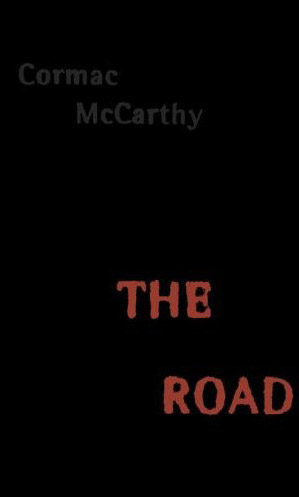
The Road:
This 2006 novel by Cormac McCarthy, which was adapted into a 2009 movie of the same name, takes place in a post-apocalyptic world where a father and son wander the landscape together. Though it is not specified what caused the destruction they are forced to witness and endure, what is clear is the effect it had on the survivors. Most people have given up hope in the ashen landscape, while others struggle to stay alive and some even turn to cannibalism to survive.

The plot involves an unnamed father and son who are venturing south towards the coast because they have realized that they will not survive the winter where they lived. Though the father is dying and they have barely any possessions to speak of, and the land in between is filled with horrors, the two keep going, fending off roving bands of cannibals and raiders and maintaining hope that the coast will be their deliverance.

All along, is father assures his son that they are the “good guys” who are “carrying the fire” through a dark terrible land. In the end, they find no refuge when they reach the sea and are forced to venture back inland, but the father finally succumbs to his illness and dies. He tells his son to maintain hope and to speak to him in his mind after he is gone, and the boy holds a vigil for days over his father’s body when he finally passes on.

With no idea what to do or where to go, he is eventually found by another family who claim to have been tracking them. The father of the group assures him he is one of the “good guys” and asks the son to join them. With no other options available to him, he agrees to join them and they set off together to find a new home.

Inspired by McCarthy’s own relationship with his son, and a great deal of speculation about what the apocalypse would look like, this story is a very personal take on the end civilization and the struggle to survive. Whereas a great deal of the survivors have resorted to unspeakable acts in order to stay alive, McCarthy redeems humanity by showing the lengths to which regular people will go to protect their families and ensure that good people live on when all the world goes to hell.

The Scarlet Plague:
Here we have a post-apocalyptic classic that predates the nuclear age. Written by Jack London and published in 1912, this story was the original “last man on Earth” scenario which inspired such works as I Am Legend and many others. In addition to being based on the idea of a plague wiping out nearly all of humanity, the stories resolution involves the main character imparting his knowledge to others to ensure that something survives when he is gone.

The story is set in San Francisco in the year 2073, sixty-years after a terrible epidemic, known as the Red Death,has depopulated the planet. Enter into this the story’s protagonist, a man named James Howard Smith, a survivors from the pre-plague era. As an aging man living in the San Francisco area, he is faced with the unpleasant question of what will happen when he dies. As one of the few people who is old enough to remember the pre-plague days, he possesses rare knowledge which will be lost.

Through Howard’s narrative, we learn how the plague spread throughout the world and of the struggles of the handful of survivors it left in its wake. This is apparently being told to his grandchildren, who he has decided to teach everything he knows to ensure that his knowledge will not be lost.

Much like the novels it helped inspire, the Scarlet Plague’s real value lies in its personal nature, relating how the struggle to survive goes beyond the mere physical. In the end, it is when people are facing death that what is most important in life is realized and affirmed. Or to put it is as Commander Adama did, “It’s not enough to survive. One must be worthy of survival.” Sorry! My mind keeps going back to BSG with all this post-apocalyptic talk. More on that one later…

The Terminator:
Central to the story of the Terminator franchise is “Judgement Day”, the day when humanity was nearly destroyed in a nuclear holocaust that was triggered by the sentient machine known as “Skynet”. This serves as the backdrop to the story, along with the ensuing war between the human resistance and the machines its spawned.

Though the majority of the story takes place in modern-day Los Angeles, a great deal of attention is dedicated to the war in the future and what life is like for those who survived Judgement Day. Kyle Reese described his life in the following way: “There was a nuclear war… There were survivors. Here, there. Nobody even knew who started it. It was the machines… I grew up after. In the ruins… starving… hiding from [Hunter-Killers]. Patrol machines built in automated factories. Most of us were rounded up, put in camps for orderly disposal. ”

Eventually, these camps were liberated by John Conner, the leader of the Resistance. After training and equipping the survivors, effectively turning them into a fighting force, Conner led them in a protracted war against the machines. For the most part, the resistance lived and operated out of underground facilities and went out at night to fight HK’s and Terminator’s, guerrilla-style. Survivors and refugees were gathered in these facilities, and their defenders were forced to constantly be on guard against infiltrators. Eventually, John Conner organized all his fighters into a massive offensive force and led them against the Skynet’s central HQ, destroying it and winning the war for humanity.

It was for this exact reason that the machines built their time machine and began sending Terminators back into the past. Since they could not defeat Resistance in the present, they reasoned that eliminating their commander before he was even born was their only recourse. This provides the set up for the entire franchise, with both the machines and the Resistance sending people back in time; the former to kill him and the latter to protect him and ensure that the war could be prevented.

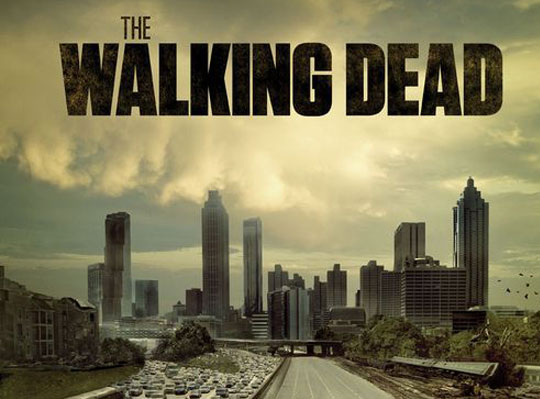
The Walking Dead:
Fans of this franchise will know instantly why I’ve chosen to include it on this list. Not only is it a gritty, realistic take on the zombie apocalypse, but it also manages to capture the essence of survival and the struggle to stay human when everything around you has fallen. Part of what makes this show so bang on is the fact that the character’s personal struggles go well beyond the need to stay alive.

In addition to finding food, ammo, and a place to set down, there’s also the constant battle to keep hope alive. This takes them at first to the CDC, where the expect to find answers, a cure, and some protection. But of course, all they find is a single scientist who can explain how the zombie illness works, but has no idea how to cure it.

And of course, the familiar and realistic themes of loss, suicide, procreation, betrayal, and brutalization play a central role to the development of the story. Everyone who has survived the zombie apocalypse has lost people near and dear to their heart. As a result, many people have a hard time going on, some of whom commit or actively contemplate suicide. Rick and Sarah, the show’s main protagonists, also face a tough choice when they realize she is pregnant. Essentially, they’re not sure it would a good idea to bring a baby into this post-apocalyptic world. Much like the decision to carry on, it often seems that embracing death would be a far more merciful decision.

Amongst the other main characters, there is also the extremely difficult choice between survival at all costs and maintaining one’s humanity. Whereas Shane seems to favor survival, and becomes a hardened, amoral man who will kill anyone who gets in his way, the elderly Dale is committed to not being pulled down into a world of misery and letting it change him. With everyone else, the decision is the same, with people falling to one side or the other and divisions setting in.

Space Anthology!

My apologies to all those expecting a post about zombies or post-apocalyptic stories. You see, my group and I are busy designing an entire world for our new anthology and we needed some mock-ups to help speed our imaginations to their goal. That’s been my obsession these last few days, that and visiting family. But alas, I have no idea how to post a PDF file to a Shaw Photo Share account, so I came here to do it instead. Behold… Our new Colony Ship!

The overall design is built around the concepts of a generation ship and a sleeper-ship, with the habitation module and the cryo-stasis bays in the center with the engine and shuttle bays at the rear and the command module at the front. And of course, for the people in the center area, the concept of an O’Neil Cylinder comes into play – a ship that utilizes a rotating section to generate gravity. And I think a long spine connecting it all together, which requires a cart since the gravity is at its lowest in the center, would also be cool.

Oh, and I should mention that we’ve selected a location for our story and done some additional mapping to give the setting a truly realistic feel. As already noted, the star system in question is Gliese 581, and the planet is 581 g, a real exoplanet that scientists believe could host life. And here is what it looks like, for our purposes anyway:

It’s called Yuva, a Turkish word which translates to “Home”. All the continents are named in honor of the scientists who helped discover Gliese 581’s planetary system. The rest, well, that’s all us baby! The polar continent, named New Gondwana, is named after the super-continent of Earth’s Precambrian period. And the vast stretches of sea are just tentative names that I thought seemed appropriate, given their position between the major landmasses. Note the color, which denotes levels of fertility, green being lush, grey being glacial, and yellow and light green being desert of savanna land.

The Post-Apocalypse in Sci-Fi

Thanks to the announcement of “Revolution”, and my impending lawsuit against NBC, JJ Abrams and anyone else who ripped me off, I’ve been thinking a lot about post-apocalyptic stories. This is a very fertile area, and some friends here once again had the foresight to mention examples in advance which I was sure to include. I tell ya, the more time I spend with people, talking about creative stuff, the more we seem to be on the same wavelength… creepy!

I sense another story in the making, so I better patent it soon lest someone try to steal it. You hear that NBC? PATENT PENDING! You too Abrams!

Anyhoo, here is a list of all the post-apocalytpic tales I was able to find from over the years. As usual, this list is just a sampling of some of the ones I and other people have read, watched, and generally enjoyed. In truth, there are far too many examples to list. So, also as usual, any additional suggestions are welcome.

A Boy and His Dog:
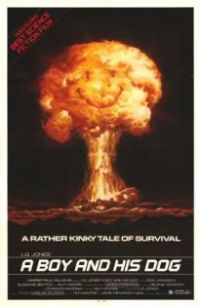
This novella, and the 1974 movie which it inspired, takes place in an alternate timeline where JKF survived his assassination attempt and history followed a different course. For starters, instead of the space race, western society focused on the advancement of other technologies, such as household androids, ESP, telepathy, and even animal intelligence.

This new tech race intensified the Cold War, which resulted in WWIII breaking out. This war lasted for many years and was fought with conventional weapons, until a peace was brokered by the Vatican in 1983. After 25 years of uneasy truce and economic turmoil, WWIV broke out in 2007 and nuclear weapons were used, leaving the Earth desolated and scarred. As such, the story takes place in 2024, where the survivors are forced to forage and fight for survival and men outnumber women by a significant margin.

The main character is Vic, a young man who lost both parents in the war and never received any real education or upbringing. As such, his only real concern is gratifying his sexual urges. His companion is a wise-cracking telepathic dog named Blood, the result of genetic engineering in the previous century. While he depends on Vic for food, Vic depends on him for guidance and education, which he accepts only reluctantly.

The plot revolves around the couple’s discovery of a place that is known in myth as “Over the Hill” or “The Promised Land”, an underground colony that survived the nuclear war. Vic finds himself lured in because, in spite of their self-sufficiency, the colonists need sperm donors to keep their reproductive cycle going. He learns that a totalitarian council rules the place and maintains authority by “disappearing” anyone who resists them.

After meeting a young woman named Quilla, he becomes embroiled in a conspiracy to overthrow the council. She asks him, “Do you know what love is?”, something which he has never before pondered. The two have a short-lived affair, which seems to be out of necessity since she soon needs to escape when their conspiracy is foiled and her friends killed. They escape to the surface to find that Blood has nearly starved in his absence. In a twist ending, it is implied that Vic kills Quilla and cooks her flesh to save Blood. He contemplates the question she asked him, and concludes that “A boy loves his dog.”

Chock of full of dark humor, irony and a pretty low appraisal of human nature, a Boy and His Dog remains a cult-classic amongst cinema buffs and fans of the post-apocalyptic genre. Though it was by no means as commercially successful, amongst its fans it is right up there with films like Mad Max and other such classics.

The Hunger Games:

Following in the tradition of such greats as Brave New World and 1984, The Hunger Games presents us with the a world where apocalyptic evens have given rise to dystopia. Though it not fully specified what these events entailed, it seems relatively clear that it involved nuclear war or some kind of global fallout, possibly economic in nature. It is for this reason that a tyrannical government has taken over control of the 12 districts in the future, ruling the nation of Panem with an iron fist.

Naturally, this oppression involves both police action and forced deprivation, with people in “the capitol” enjoying a lavish, comfortable life while people in the districts live in varying degrees of poverty. However, the truest symbol of the capitol’s power comes in the form of the Hunger Games, a death-match style tournament where every district must send two “tributes” – young people who either teens or pre-teens – to compete for the prize.

The story focuses almost entirely on Katniss Everdeen’s trials as she is unleashed in the arena, trying to survive against the other competitors while at the same time outwitting the game masters. Through all of this, we are made aware of the relationship between the Games and Panem’s odd social structure, where favoritism is common and it is treated as entertainment. We also see how it is used to keep the population of Panem divided, in a state of fear, and otherwise distracted.

Combining gladiatorial combat with the concept of making the oppressed fight each other for the scraps from the head table, the games act as a form of dystopian social control and are also a very apt metaphor for teenage angst and coming of age! In the end, even those who survive are forever marked and must still fear for their lives, knowing that they are never entirely beyond the grasp of the capitol or the rulers who fear and oppress them.

Mad Max:
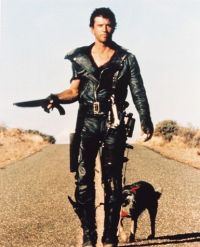
The franchise that made Mel Gibson’s career – may God have mercy on their souls! – Mad Max takes place in a post-apocalyptic Australia where law and order have broken down. As the franchise goes on, we learn that this was the result of a nuclear war which began after the world’s oil supplies ran out. As a result, gasoline is the most precious commodity of all, with roving bands of thugs and mercenaries fighting and raiding just so they can keep their vehicles running.

The story’s main character, Max Rockatansky, is part of the Main Force Patrol (MFP), a police force that is dedicated to maintaining order on the highways. After his family is murdered by gang members, he hijacks their fastest car and heads out on a personal mission of revenge. Having killed them all, he becomes a roamer, going from place to place in his V-8 Pursuit Special with only a dog as his companion.

In all subsequent movies, events focus on him becoming embroiled in adventures where he must help people in need, all the while looking out for himself as well. More often than not, his journeys take him to shantytowns that have been built around refineries, where small colonies of people are ruled by matriarchs, patriarchs, and are threatened by roaming hoards who want what they have.

In essence, Max’s journeys serve as a vehicle for the story which enable the audience to get a first hand look at what a post-apocalyptic landscape would look like. Key to this is the strange balance of modern and primitive, where gasoline engines, electrical appliances and guns co-exist with improvised weapons, brutal gangs, and lawlessness. All the while, you’ve got bands of people desperately seeking deliverance either in some fabled utopia or safe haven. In the end, the tone and feel of this movie set a new standard for apocalyptic movie making, one which has been imitated many times since.

On The Beach:
Next up is Nevil Shute’s classic tale of nuclear war and how Australia became the last remaining outpost of life and civilization. Published in 1957, during the height of the Cold War, this book was required reading when I was in school, and for good reason! Far from merely telling a tale of nuclear war and the fallout that resulted, it also delved into the psychology of the survivors, how they chose to live out their lives knowing that sooner or later, they would die like the rest.

Taking place in Australia, the story focuses on the lives of people and families who have relocated to the last safe place on Earth. This includes native Australians, ex-pats, and several American military officers who have fled south. Knowing that the Northern Hemisphere has been devastated and is now devoid of all life, the people initially resort to binge drinking and partying, but eventually turn to improving their lives through education, hobbies, and spending time with their families.

Things come to a head when a garbled Morse code reaches them from Seattle, prompting Towers (the American commander) and his fellow officers to mount a mission in their sub. When they arrive, they find that the signal, which is coming from an abandoned naval headquarters, is the result of a broken window sash swinging around and hitting a telegraph key. Their trip also determines that contrary to some hopes, radiation levels are not dissipating.

In the end, all services grind to a halt, people take their suicide pills, and Towers and his officers decide to sail their sub out to international waters and scuttle the ship. In the end, Towers chooses die still serving his country, and avoids having a romance with a woman (Moira) who loves him out of loyalty to his dead wife. The story ends with Moira watching from the beach, imagining him with her as she pops her suicide pill and dies.

What is most interesting about this story is not the plot per se, but the realistic tone it strikes. For starters, how the people of Australia and the government choose to confront the inevitability of death was told with a fair degree of understanding. Instead of looting, rioting, and generally resorting to barbarity, the people, by and large, choose to spend the time they have left enjoying themselves, being with family, and then ending it all painlessly. And the contrast between the people who chose to spend their time partying, versus the stalwart nature of Towers, was also a nice comparison, showing the range of reactions.

It is also interesting in how it speculates on how WWIII began. Rather than being the result of a stand-off between the US and the Soviets, the war began when second-parties, such as Albania and Italy, began bombing each other, forcing their allies to intervene. China and the Soviets even bombed each other when territorial disputes and the general chaos resulted in them invading one another. Thus, much like in WWI, we see a general state of war resulting from tangled alliances and arms races. Oh, the lessons of history…

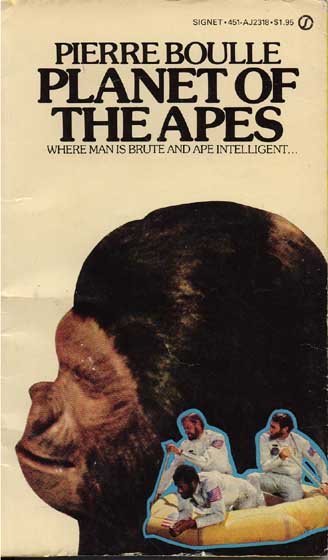
Planet of the Apes:
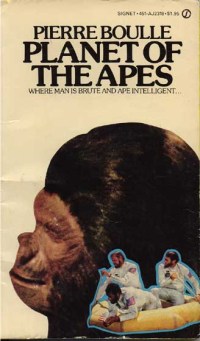
Originally a novel that was published in 1963, this book went on to be adapted into film twice, first in 1968 and again in 2001. The story tells the tale of a group of explorers who go into deep space on an exploratory mission, but who end up finding a world where chimpanzees are capable of speech, build cities, wear clothing, and hunt humans for sport. In the end, the explorers flee back to Earth, only to discover that a similar fate has befallen it as well.

Ultimately, the story is being told in a note left by the protagonist, which is uncovered by a young couple who are taking a vacation in their space ship. It is only at the very end that it is revealed that they are intelligent apes, and they conclude that no human could have written this note, as they are not believed to be intelligent enough.

Though different in terms of its overall plot, much of the original story survived the movie adaptation. Here, the explorers were scientists who entered cryogenic sleep, hoping to wake up in a future where mankind was more evolved. Instead, they wake up to find that they are (seemingly) marooned on a mysterious planet where humans live in a primitive state and intelligent apes rule.

When they are attacked, all of the protagonist’s (Taylor, played by Charlton Heston) friend are killed, leaving him alone in a compound where humans are experimented on. He finds an unlikely ally in an ape named Zira who seeks to prove that humans are intelligent and hence worthy of rights (echoes of animal rights activists). All the while, Dr. Zaius, a conservative scientists, expresses strong doubts, though it is clear he is trying to bury Zira’s evidence.

In time, Taylor escapes with the help of the two scientists – Zira and Cornelius – who sought to prove his intelligence, and they flee to the Forbidden Zone. This taboo area contains a cave where Cornelius claims to have found the remains of a non-simian civilization a year earlier. They are intercepted by Zaius and some soldiers, but they manage to convince him to enter the cave and see what lies within. There, they find a number of artifacts, including a set of dentures, a pair of glasses, a heart valve, and (the real prize of the collection!) a talking doll.

Zaius reveals that he already knew of this, and that the Forbidden ZOne was once a paradise that human beings turned into a wasteland. He lets Taylor and his new female companion go, but orders the cave be destroyed and Zira and Cornellius brought back to stand trial for treason. Taylor travels up the coast and eventually reaches the remains of the Statue of Liberty and realizes the awful truth. His party never left Earth at all, but has entered a future where human civilization fell, most likely after a nuclear war, and apes have evolved to take their place.

Between the novel and the film adaptations, the evolutionary allegory is clear. Due to its inherent barbarity, human civilization is destroyed, its people fall into decline, and nature is left selecting from its predecessors to fill the void. In a sense, Boulle and the film adaptations his book inspired were mocking the idea of humanity seeing itself as being at the top of the evolutionary pyramid. In another way, they were demonstrating that the very excesses that make humanity corruptible (i.e. vanity, anthropocentrism) are not reserved to them.

The Postman:
This science fiction novel, written in 1985 by David Brin, tells the story of a post-apocalyptic United States where warlords rule the countryside and terrorize the local people. Enter into this a drifter who stumbles across the uniform of an old US Postal Services letter carrier and begins using it and a letter bag to bring hope to a small community.

Initially, he trades the letters in his mail bag for supplies, not intending to take part in a forgery. However, the letters give people hope that there is a “Restored United States of America”, which eventually leads him to maintain the illusion. He then stumbles upon a facility in Oregon State University where scientists are apparently pretending that an AI they built is still working, as a means to maintain people’s hope that knowledge and science are being kept alive.

Together, they face off against a group of ultra-survivalists who are moving south through the region. The Postman and the scientists join forces to fight them, and in the end find that the survivalists are being beaten back from the south as well, by armies bearing the standard of the State of California. Apparently, the intersection of these symbols, the letter, the scientists, and the state flag, act as a synthesis to show the path towards rebuilding the shattered nation.

This book is not only a celebrated example of a post-apocalyptic tale of hope and redemption; it’s also a fitting commentary on politics and ideology in the modern age. Many times over, the super-survivalist Nathan Holn is parodied in the book, with the survivalists of the story being called Holnists. It is even suggested that it was the followers of Holn who destroyed the government in the not-too-distant future, not nuclear war, biological agents, or even economic fallout. So in the end,  we learn that the nation is wrecked by brutal and ignorant minds, and saved by a combination of true patriots, keepers of knowledge, and those motivated to help their fellow man.

The movie adaptation that was released in 1997 did very poorly, with many critics seeing it as the latest in a string of flops for Kevin Costner. Having not seen the movie, I can’t comment on its quality either way. All I know is, it’s a shame given the value of the source material.

Second Variety:
This short story by Philip K Dick, which was adapted into the movie “Screamers”, deals with the line between artifice and authenticity and is set in a post-apocalyptic world. Hence, much like Do Androids Dream Of Electric Sheep?, it is all about machines that can impersonate humans and what happens when technical progress gets away from us.

Though the movie was set on a distant world, the original story takes place on Earth, where World War III has taken place and Soviet forces occupy much of the US. This has prompted the US to develop a race of self-replicating robots that tunnel underground and pop up to slice the enemy to pieces. After many years of death and brutality, where the machines have turned the entire countryside into a mess, the US government has relocated to the moon, leaving what forces they have left on the ground in a series of bunkers.

The story begins when a unexpected message arrives in the US camp from the other side, asking for a ceasefire. The commander heads out to the enemy bunker to speak with the soldiers, who claim that new breeds of robots that can imitate humans have infiltrated them. Apparently, the underground facility that is making the machines has been producing all kinds of upgrades, consistent with its autonomous nature and aim to create better killing machines.

Suspicion soon turns everyone against each other, and eventually only the commander and a lone woman make it back to his bunker. There, he finds that humanoid-machines have taken over the base. They fight their way free, and the commander determines that they must fly to the Moon base and alert the government that the machines are threatening to take over Earth. When they make it to an emergency craft, the commander finds that it has only one seat and gives it to the woman. Shortly after she flies away, he is attacked by a group of robots, many of which look exactly like her…

Basically, this story tells the tale of how desperation led to the creation of a technology that was so effective, it threatened to completely destroy humanity, friend and foe alike. Much like nuclear devices and biological weapons, the “varieties” of killing machines proved to be a breed of weapon that was designed to fight a war, but eventually turned and consumed its own makers.

The Stand:
Stephen King’s classic tale of mankind’s fall and redemption, all taking place against the backdrop of the American countryside. Written in 1978, this story is based on the now classic concept of a government super-virus that got out and wreaked havoc on society, and those survivors who were left to pick up the pieces. Adding to this the theme of the Rapture and a post-apocalyptic war between good and evil, this book was steeped in metaphor and was a fitting allegory about good and evil and the eventual redemption of humankind.

The story begins when a government facility suffers a fatal accident with the release of an influenza virus, a strain of super flu that is 99% infectious and fatal. Once it gets out, society begins to fall to pieces as everyone, including the government agents responsible for containment, become infected and die. Those who are left behind begin to be contacted in their dreams by one of two people, an old lady and a strange man, each telling them to make their way to one of two places.

The old lady, named Mother Abagail, clearly represents good and is inviting people to form a commune in Boulder, Colorado. The man, named Randall Flagg (who clearly represents the Devil) is bringing people to Las Vegas, where they are arming for an eventual war. In time, the two sides come together after a terrorist attack leaves several dead and Mother Abagail suffers a heart attack and dies. She asks that the main characters walk to Las Vegas to confront the evil there. They do, and become prisoners upon their arrival.

However, things come to a head when the Trashman, one of Flagg’s minions, shows up in the city with an atomic bomb. Obsessed with fire and having suffered a psychotic break, he seems intent to detonate the bomb. The heroes experience a vision where a hand composed of white light and the voice of Mother Abagail appears to them, telling them they will be delivered. The bomb detonates, and Las Vegas and all of Flagg’s followers are killed.

The story ends with the surviving heroes bringing the first post-apocalyptic baby into the world, a baby which is apparently immune to the super flu. With evil vanquished and the knowledge that subsequent generations will survive the plague, humanity’s future seems safe at last.

And that’s the first installment. Tune in again soon for part II, featuring more examples of post-apocalyptic tales. As I said, suggestions are welcome. Get em in before its too late!

A Tribute to Alan Turing

Wouldn’t you know it? Today marks what would have been Alan Turing’s 100th birthday. This man was not only immensely influential in the development of computer science and cryptanalysis, he is also considered the father of Artificial Intelligence. In fact, words like “algorithm” and “computation” are traced to him, as was the development of the “Turing machine” concept which has helped computer scientists to understand the limits of mechanical computation.

However, his reputation goes far beyond the field of computer science. During World War II, he worked at the Government Code and Cypher School (GCCS) at Bletchley Park, Britain’s codebreaking centre. For a time, he was acting head up Hut 8, the section responsible for breaking the Enigma Code, Germany’s wartime cypher which they used to encrypt all their communications. Were it not for this achievement, the Allies may very well have lost the war.

Especially in the Atlantic, where German U-boats were causing extensive losses in Allied shipping, Turing’s work proved to be the different between victory and defeat. By knowing the disposition and orders of the German fleet, crucial shipments of food, raw material, weapons and troops were able to make it across the Atlantic and keep Britain in the war. Eventually, the broken codes would also help the Allied navy to hunt down and eviscerate Germany’s fleet of subs.

After the war, he worked at the National Physical Laboratory in London, where he created one of the first designs for a stored-program computer, the ACE (Automatic Computing Engine). He named this in honor of Charles Babbage’s Difference Engine, a mathematical machine built a century before. This machine was the culmination of theoretical work which began in the mid 30’s and his experiences at Bletchley Park.

In 1948, he joined the Computing Laboratory at Manchester University, where he assisted fellow mathematician and codebreaker Max Newman in the development of the Manchester computers. Their work would eventually yield the world’s first stored-program computer, the world’s first computer to use transistors, and what was the world’s fastest computer at the time of its inauguration (in 1962).

He then switched for a time to emergent and theoretical field of mathematical biology, a science which was concerned with the mathematical representation, treatment and modeling of biological processes, using a variety of applied mathematical techniques and tools. This field has numerous applications in medicine, biology, and the proposed field of biotechnology. As always, the man was on the cutting edge!

In terms of Artificial Intelligence, Turing proposed that it might be possible one day to create a machine that was capable of replicating the same processes as the human mind. The “Turing Test” was a proposed way of testing this hypothesis, whereby a human test subject and computer would both be subjected to the same questions in a blind test. If the person administering the test could not differentiate between the answers that came from a person or a machine, then the machine could be accurately deemed as an “artificial intelligence”.

Tragically, his life ended in 1954, just weeks shy of his 42nd birthday. This was all due to the fact that Turing was gay and did not try to conceal this about himself. In 1952, after years of service with the British government, he was tried as a criminal for “indecency”, homesexuality being considered a crime at the time. In exchange for no jail time, he agreed to submit to female hormone treatment, which is tantamount to “chemical castration”. After a year of enduring this treatment, he committed suicide by ingesting cyanide.

In 2009, Prime Minister Gordon Brown issued a formal apology on behalf of the British government for “the appalling way he was treated”. Between his wartime contributions and ongoing influence in the field of computer science, mathematics, and the emerging fields of biotechnology, and artificial intelligence, Turing has left a lasting legacy. For example, at King’s College in Cambridge, the computer room is named after him in honor of his achievements and that fact that he was a student there in 1931 and a Fellow in 1935.

In Manchester, where Turing spent much of his life, many tributes have been in his honor. In 1994, a stretch of the Manchester city intermediate ring road was named “Alan Turing Way” while a bridge carrying this road was widened and renamed the Alan Turing Bridge. In 2001, a statue of Turing was unveiled in Sackville Park, which commemorates his work towards the end of his life. The statue shows Turing sitting on a bench, strategically located between the University of Manchester and the Canal Street gay village.

The commemorative plaque reads ‘Founder of Computer Science’ as it would appear if encoded by an Enigma machine: ‘IEKYF ROMSI ADXUO KVKZC GUBJ’. Another statue of Turing was unveiled in Bletchley Park in 2007, made out of approximately half a million pieces slate and showing the young Turing studying an Enigma machine. A commemorative English Heritage blue plaque was also mounted outside the house where Turing grew up in Wilmslow, Cheshire.

In literature, Turing’s name and persona have made several appearances. The 1986 play, Breaking the Code, was about Turing’s life, went from London’s West End to Broadway and won three Tony Awards. The 1996, the BBC television network produced a series on his life, starring Derek Jacobi in the leading role. In 2010, actor/playwright Jade Esteban Estrada portrayed Turing in the solo musical, ICONS: The Lesbian and Gay History of the World, Vol. 4. And, my personal favorite, he was featured heavily in Neal Stephenson’s 1999 novel Cryptonomicon.

Rest in peace Alan Turning. Like many geniuses, you were ahead of your time and destroyed by the very people you helped to educate and protect. I hope Galileo, Socrates, Oppenheimer and Tupac are there to keep you company! You have a lot to discuss, I’m sure 😉