Remembering Ray Bradbury (1920 – 2012)

Ray Douglas Bradbury (August 22, 1920 – June 5, 2012)

Yesterday, one of the greatest sci-fi minds of the 20th center, Ray Bradbury, died at the age of 91 after a lengthy illness. His publisher, HarperCollins, were apparently the ones to break the news to the world. Best known for his seminal dystopian novel Fahrenheit 451, Bradbury quickly joined the ranks of authors like Orwell, Huxley, Clarke, and Asimov, in that he was a speculative author who’s predictions rapidly came true.

Amongst such things were the emergence of ATMs, wall-sized televisions, interactive entertainment, and live broadcasts of fugitive car chases. In addition to Fahrenheit 451, he also penned the Martian Chronicles, The Illustrated Man, and Something Wicked this Way Comes, and over 600 other works of fiction, articles and essays. As such, his influence and legacy are truly immeasurable.

So, in honor of this sci-fi great, whom I waited a very long time to read, I shall delve into his best known works and try to explain exactly why they were so enduring and influential. Let’s start with the book that earned him his reputation in the first place:

Fahrenheit 451 (1953):
This dystopian piece of speculative fiction takes place in the late 20th century, when American culture has degenerated into a form of brutal escapism. Nuclear war looms on the horizon, books have been banned, and for the majority of people, cocooning in their homes in front of their wall-sized monitors seems like the perfect distraction.

The story takes place from the point of view of a Fireman named Guy Montag, who’s job consists of located offenders and burning their books. This is the role of firemen in the future, who instead of fighting fires are responsible for starting them. Montag is unhappy with his life and suffering from a deep sense of disquiet.

Until one night when a young woman named Clarisse shakes up his worldview. Whereas most people in Montag’s world seemed numbed and dead, she is vital and alive, and questions just about everything. Shortly thereafter, she dies in a tragic accident, which shakes Montag’s world up even more.

He too begins questioning the rules, he steals books from jobs he is meant to pull, and begins reading them. Realizing he is now in violation of the law, he seeks out other offenders for answers. This brings him into contact with Faber, a former English professor that Montag knows can help. In time, Faber is convinced to bring him into this confidence and reveals that he is part of a circle that is dedicated to the preservation of written knowledge.

Eventually, Montag is found out and must flee. His boss, it seems, has known for quite for some time what he is up to but extended him some courtesy because he knows what he’s going through. More enlightened than the average person, Montag’s boss explains to him why books have been banned and why they must destroy them. Rather than the result of forced censorship, the process was entirely voluntary. People chose mindless entertainment, distraction and fast cars over reading, reflection and learning.

Montag’s escape from his house and the police becomes the subject of the evening news. He manages to elude the authorities and meets up with the reading circle down by the river. Interestingly enough, he flees the city just in time to witness being destroyed from a nuclear attack. It seems the build-up to Armageddon has finally ended and nuclear war has come. Montag leaves with the group, who’s mission now has become one of preserving civilization as well as literature.

What was enduringly brilliant about this book was not so much the predictions about technology or the emergence of book banning, but the reasons for it. Capturing the zeitgeist of his age, Bradbury essentially felt that a shocked and fearful society would seek escape by the most convenient means available to them. And whereas most dystopian novels involve ignorance and illiteracy being forced by a brutal regime, Bradbury believed that the process would be entirely voluntary. In this respect, he captured the same essence as Huxley, another dystopian critic who believed man’s appetite for distraction would be it’s undoing.

The Martian Chronicles (1950):
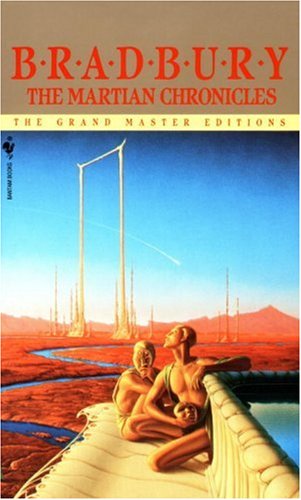
Though written before Fahrenheit 451, the MC gained notoriety more slowly, but eventually became recognized as one of the great works of science fiction. A collection of loosely based stories rather than a single novel, the book follows the future history of colonization on Mars, dealing with all kinds of speculative, existential and scientific questions.

The overall structure of the book comes in three parts, punctuated by two catastrophes. The first is the near-extinction of the Martians, while the second is the parallel near-extinction of the human race. In first part of the book takes place at the end of the 20th century and details mankind’s efforts to reach Mars, and the various ways in which the Martian natives keep them from returning. However, towards the end (in the story “—And the Moon be Still as Bright”) it is revealed the majority of the Martians have died as a result of a plague brought from Earth.

This opens Act II, taking place in the early 21st century, where humans begin colonizing the Red Planet. On occasion, they have the opportunity to make contact with the surviving Martians, but mainly are concerned with building a second Earth. However, many settlers begin to pack up and leave as looming nuclear war on Earth causes them to want to get back and be with their families. The outbreak of this war signals the end of Act II and the opening of the third act.

In the third and final act of the book, all contact has been lost with Earth when the nuclear war takes place. As the war passes, those humans who have survived on Mars have began building a distinct civilization and having children who have only known life on the Red Planet, effectively becoming Martian themselves. This prospect allows the book to return to its beginning, as it is suggested that new waves of colonists will soon be coming and conflicts are likely to emerge as a result.

This book was not only brilliant in that it addressed a great deal of scientific and existential questions that are sure to come when actual colonization begins (if ever). It also managed to capture a sense of timeless truth and lessons which come from real history, or the “Age of Discovery” as its known. These included the destruction of native inhabitants, the push-pull factors which lead to colonization, severance from the homeland, and eventual adaptation as new people begin to embrace the new environment as their home.

Much like KSR’s Mars Series, this book should be required reading if ever any Ares missions get underway!

The Illustrated Man (1951):
Much like the Martian Chronicles, this book is a collection of short stories linked by a common theme. Through its exploration of humankind, the recurring theme is one of conflict between cold mechanics and technology and the basic nature of human beings. Many of these stories have been adapted into film over the years and been used in schools as educational tools. Some examples include:

“The Veldt” – in this story, we see a family who’s children have become terribly attached to the houses’ high tech nursery. Like a holodeck from Star Trek, the children use this to create virtual environments – in this case, the predatory environment of the African veldt. When the parents threaten to take it away, the children lock them inside and they are apparently consumed by the lions. thought it is not outright said, it is implied that the children have reprogrammed the unit to become real and have been “feeding” people to it for some time.

“The Other Foot” – in this exercise in turnabout, we learn that Mars has been colonized solely by people of African descent. When they learn that a rocket is coming from Earth with white travelers, they decide to institute a system of racial segregation similar to that of the Jim Crow Laws of the American South, in retaliation for the wrongs of history. However, when the rocket lands the traveler tells them that most of the Earth has been destroyed in a nuclear war and the people realize that discrimination is harmful in all its forms. They rescind their discriminatory laws and welcome the new crew as equals.

“The Man” – A group of space explorers land on a planet to find the population living in a healthy state of bliss. Upon investigation, they discover that an enigmatic visitor came to them, who they eventually conclude was Jesus (or some other religious persona since He was never named). Some decide to spend the rest of their days rejoicing with the natives, while another decides to continue on in his spaceship in the hopes of catching up with this person. While he spends the rest of his days in hot pursuit, always one step behind and never quite catching up to him, the other learn that “he” is still on the planet with them. Hello metaphor!

The Exiles” – taking a page (no pun!) from Fahrenheit 451, this story revolves around the concept of burning books and the immeasurable nature of knowledge being lost forever. It begins with stating that numerous works of literature have been banned and burned on Earth. The fictional characters of these books are portrayed as real-life entities who live in a refuge on Mars. These characters are vulnerable however since once all the books on a character are destroyed, that character vanishes permanently. When the group of characters learn that some people are coming for them, they stage a counterattack, but are foiled by the astronauts who burn the last remaining books from Earth, unknowingly annihilating the entire colony.

“Marionettes, Inc.” – A man attempts to escape his marriage by replacing himself with a robot to fool his wife into thinking he hasn’t left and tells a friend about it. The man comes back and tells the robot to go back into the box, and the robot disobeys him saying he has fallen in love with the wife. The robot then proceeds to put the man in the box and replaces him for real. Sound familiar?

“The Illustrated Man” – The namesake of the book, this story involves an overweight carnival worker is given a second chance as a Tattooed Man, and visits a strange woman who applies skin illustrations over his entire body. She covers two special areas, claiming they will show the future. When the first is revealed, it’s an illustration of the man strangling his wife. Shortly after this comes to pass, the carnival workers run the man down, beat him, and look at the second area, which shows an illustration of the same beating they are doing. Can you say self-fulfilling prophecy?

Most of these stories would probably sound familiar in one way or anther, but that’s because they’ve been adapted, copied and referenced by countless pop culture sources. I myself recall watching “The Veldt” in school and being chilled by its eerie and dystopian tone. “Marionettes Inc.” has been adapted into comedy format numerous times, and the theme of prophecy and fulfillment in “The Illustrated Man” has inspired countless stories, not the least of which are The Butterfly Effect and perhaps even PKD’s Minority Report.

Something Wicked This Way Comes (1962):
A somewhat off-beat work for Bradbury, who’s works consist mainly of speculative sci-fi, this fantasy/horror novel has nevertheless become a household name for fans of the dark and weird. Set in modern a day Midwestern town, the story revolves around a visiting carnival and its mysterious director, Mr. Black.

Enter into this the story’s protagonists, two 13 year old boys, Jim Nightshade and William Halloway, who witness the arrival of the carnival and become immediately enthralled with it. They quickly realize that everyone who works there has been lured into Mr. Dark’s service through the promise of being able to live out their fantasies. For most people, these involve become younger, a gift he confers on several characters through his “magic” carousel.

In time, they come to realize that Mr. Dark holds these people under his sway and has a tatoo of each of them on his body, a symbol of his control. Charles Holloway, William’s father, looks into Mr. Dark’s past and realizes he can be defeated through love. It is unclear what this entails, but after the boy’s are kidnapped, he comes to the carnival and begins destroying it’s structures and Dark’s protectors by expressing laughter and joy. He and his son use the same tactic to eventually bring down Mr. Dark and bring Jim back from death, who was stuck on the carousel and rapidly aging.

Though different from most of his other works in terms of genre, this story did contain many elements which were present in his other stories. For example, the concept of the carnival and the tattooed man was the basis of “The Illustrated Man”. The nostalgic feel of the story was also to be found in his novel Dandelion Wine, and is often paired with this novel as presenting both the lighter and darker sides of childhood. And of course, the novels resolution, where good prevails through purity of heart, is to be found in many of Bradbury’s works.

Because of its focus on good versus evil, childhood, and coming of age, this story was to have a profound effect on several authors, the most notable of which is Stephen King. Citing Something Wicked as his inspiration, King attributed a debt to Bradbury for helping to write It and Dreamcatcher.

Final Thoughts:
In the end, Bradbury was known for many things: originality, depth, vision and genius. But the thing that sticks with the most about him was his views on the preciousness of literature and knowledge. Basically, he expressed several times over how when something is lost, it’s lost forever. I can only assume then that he would take great comfort in knowing that he left the literary legacy that he did. Though he may no longer be with us, his works will live on and serve to inspire many generations to come.

I think this is a lesson we could all draw from. Though our time on this Earth may be short, we have the ability to leave our mark and ensure that some trace of us stays behind. So make those footprints people, write those manuscripts, and most importantly, tell the people you love how you feel. Do not leave things unsaid or undone, because someday, we will be gone…

So than you, Mr. Bradbury, for your many, many contributions. You did it right, and now you go on to join the other greats of your time. Rest In Peace.

A Tribute to the Joker

the_joker-wallpaper-1366x768Soon enough, the third and final installment in Chris Nolan’s Batman franchise will be premiering. I can’t tell you how much I want to see it. Ever since The Dark Knight ended and it was clear the Joker would not be appearing in movie 3, I’ve been itching to see what they would do with it.

And from what I’ve seen, they are taking the proper route. Combining elements from the comic book The Dark Knight Returns with a real life or death, all or nothing feel, this movie might even top the last one in some respects. Don’t want to jinx it, just saying it’s sure to be good.

But I think I speak for more than just myself when I say that it’s a shame the Joker won’t be making it back for one last dance. We all know why he won’t, of course. For one, it would have been in bad taste to try and replace Ledger after his untimely death. What’s more, after the masterful performance he gave, no actor could be expected to fill the role. I mean, c’mon, you don’t ask to go on after the Beatles, it’s just plain silly!

So in honor of Ledger, and every other actor that has ever tried to bring life to this character, I’d like to do a post detailing this villain that has remained so popular over the years.

The Joker:
To put it simply, this character, this villain, is a work of genius. Designed to be one of the many villains the “caped crusader” did battle with, it wasn’t long before this smiling psychopath became Batman’s arch-nemesis and the chief pain in his ass. The reasons for this seems pretty clear, but just for fun I’ll get into them anyway. Basically, he was the perfect villain because people loved to hate him and found him so dark and yet so fun.

Persona:
For starters, his whole work up was immensely inspired. By adopting the whole insane clown thing, he combined the macabre with the innocent, which pretty much made him the stuff of nightmares. He killed, he maimed, and he tortured people sadistically, but he always did it with a smile on his face and a quick joke. He could be insane, yes, but he could also be brilliant and cunning. His method was madness, but it was concealed behind a sort of playful, laughable exterior.

This was in stark contrast to Batman’s tough and cold character and the permanent scowl he had etched on his face. As such, he was the perfect foil for Batman’s particular brand of heroism and social control. Whereas the dark knight was obsessed with order and stability, the Joker was malevolence and disorder personified. In a way, he played Lucifer to Batman’s God, messing with his designs and subverting his sense of right and wrong. And, like Lucifer, he knew how to turn the tables and get people to do his bidding. And whereas Batman never smiled, much like God, the Joker could be counted on to see the fun side of things, even in pain, suffering and death.

Origins:
Due to the many adaptations and interpretations of this character over the years – be they in print, television or cinema –  there are more than a few different origin stories. And they don’t always agree. However, certain common elements can be seen across all the different iterations. The earliest mention of his past indicated that he was a criminal named the Red Hood before he donned the clown makeup. This changed when he fell into a vat of chemicals while trying to escape from the Batman, an experience which left his skin permanently discolored.

This was expanded further in Alan Moore’s The Killing Joke, where he was shown to be a chemical engineer who quits his job at a chemical plant to become a standup comedian. After failing in this endeavor, he agrees to help two criminals break into the plant. Shortly before the robbery can take place though, he learns that his wife and son have died in a freak accident. He tries to back out of the crime but is strong armed by the other two thugs. And of course, the crime goes south and he is left disfigured. Between this and the loss of his family, he is driven insane and becomes the Joker.

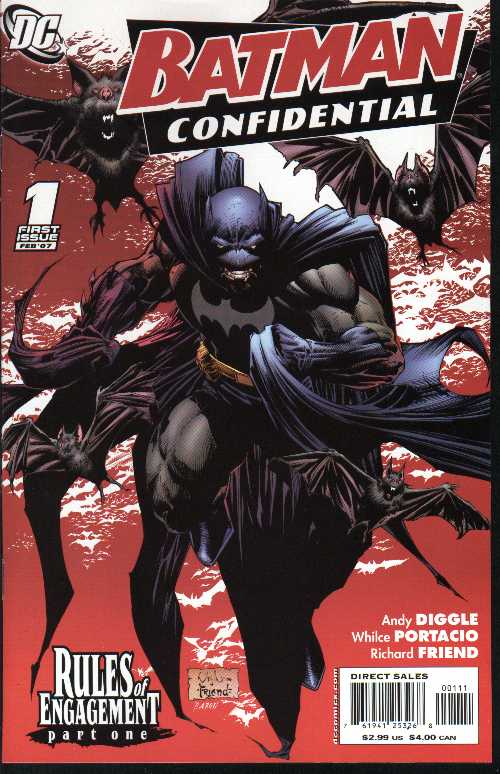
Later versions once again resurrected the concept of the Joker being a career criminal before he became a sociopathic villain. In these versions, the name Jack was used, and it was said that he had some contact with the Batman before taking on his new persona. In fact, in Batman Confidential it was suggested that it was his obsessions with the Batman that eventually led to the accident which forever changed him.

All of these elements informed Tim Burton’s adaptation of the story in the 1989 movie. Here, the Joker was portrayed as a petty thug named Jack Napier who worked for Rupert Thorn, the Gotham city crime lord. Then, after tangling with the Batman at a chemical plant, he suffered a disfiguring injury before falling into a chemical vat, which left his skin dyed and his face permanently scarred. The Joker therefore blamed Batman for his transformation, but would later come to learn that he had been the one who shot his parents when he was just a child.

Personally, I found this version to be genius in that it managed to capture the true insanity of the Joker. Faced with an image of himself that was twisted into a hideous smile, Napier could do nothing but laugh at the sick joke that had befallen him. From thence forth, he was determined to make others see the humor in it as well, right before he killed them! And by making him responsible for killing Bruce Wayne’s parents, the two were ultimately responsible for the others’ creation. Clearly, Burton interpreted the whole “flip sides of the same coin” thing quite literally!

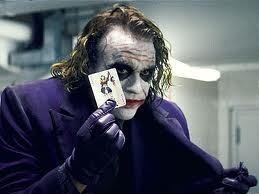
However, Christopher Nolan took a different approach with his adaptation of the criminal mastermind. In the 2008 film The Dark Knight, we are given a version of things where we know nothing about the Jokers origins. On several occasions, he offers up explanations as to how he got his scars; but of course, the story keeps changing. No one can be sure which version is the truth and which is false. In one, he’s the victim of an abusive father who slashed his face. In another, he had a wife who gambled and had her face cut up by the Mob. His own scars were self inflicted out of grief so that he could resemble hers.

This is apparently in keeping with the fact that no definitive explanation has ever been given as to how the Joker really became what he was. Over the years, many different explanations have been given and it’s unclear which are true. In the end, this was resolved by saying that the Joker frequently lies, or can’t keep all the facts straight in his head. As he says in The Killing Joke: “Sometimes I remember it one way, sometimes another… if I’m going to have a past, I prefer it to be multiple choice!”

Weapons of Choice:
smilexThough the Joker appears to be adept at firearms and somewhat versed in hand to hand combat, his preferred method of killing has to do with various “comedic” weapons. These include razor sharp playing cards, acid-spewing flowers, cyanide pies and lethal electric joy buzzers. Clearly, the man understands irony and is willing to go the extra mile for consistency.

In addition, he has a signature poison known as “Joker Venom”, a deadly poison that leaves his victims with a ghoulish rictus grin as they die while laughing uncontrollably. This venom comes in many forms, from gas to darts to liquid, and has been his primary calling card since his character’s inception.

All of this was featured in Tim Burton’s Batman, where it was revealed that the Joker was well versed in chemistry and was using this knowledge to create his Smile-X poison. By smuggling various chemical precursors into common consumer products, he was able to disseminate his poisons into Gotham city without anyone knowing. Once these different products were used in combination, people began to die, all of them with a massive grin on their faces!

In Nolan’s version, the Joker retained his preference for simple weapons, but dropped the whimsy, poison and chemistry. As Ledger’s Joker said to a detective while in custody: “Do you want to know why I use a knife? Guns are too quick. You can’t savor all the… little emotions. In… you see, in their last moments, people show you who they really are.” Later, while free and in the company of the Russian mob, he added: “I’m a man of simple tastes. I enjoy dynamite, and gunpowder, and… gasoline!”

Between these two takes, the Joker retains one basic characteristic… Fear! Whereas a criminal with a gun is scary, a mad man with sharp objects, burning acid and explosive devices is downright terrifying!

Criminal Acts:
The Joker’s resume reads like that of a man who desperately wants to be the biggest maniac in town. Over the many years of his character’s existence, he has committed countless crimes, some whimsical and some downright brutal. All of these have been done for reasons which, in the words of the Batman: “make sense to him alone.”

In the Killing Joke, the Joker paralyzes Batgirl (aka. Barbara Gordon) by shooting her in the back. He also kidnaps Gordon and taunts him with photographs of his crime, hoping to drive him mad and thus prove his point that any man can go insane under the right circumstances. In “A Death in the Family”, the Joker also killed Jason Todd, the second Robin. This, he did with a bomb, but only after beating him senseless with a crowbar.

During one of his many stays in Arkham Asylum, the Joker also managed to convert Harleen Quinzel, a psychiatrist who was sent in to examine him, into his willing helper. Convinced that the Joker might be faking insanity to avoid the death penalty, she sets out to unlock his past. In time, he earns her sympathy and convinces her to help him escape. Eventually, she is caught and her obsession with him leads her to seek him out and become Harley Quinn, his criminal sidekick.

He also went as far as to murder Sarah Essen Gordon, Commissioner Gordon’s second wife, after kidnapping her. Once Gordon took him into custody, he once again taunted him in the hopes of driving him mad and getting him to forsake his moral code. However, Gordon sticks to his code and only kneecaps him. True to form, the Joker quickly laments that he might not walk again, but then finishes with a maniacal laugh!

Of course, the list goes on. Given his many years of sadistic stunts, it would impossible to include them all in one post. Suffice it to say, he has been a constant source of (ahem) “entertainment” to Batman, Commissioner Gordon, and the Gotham Police Department.

Death:
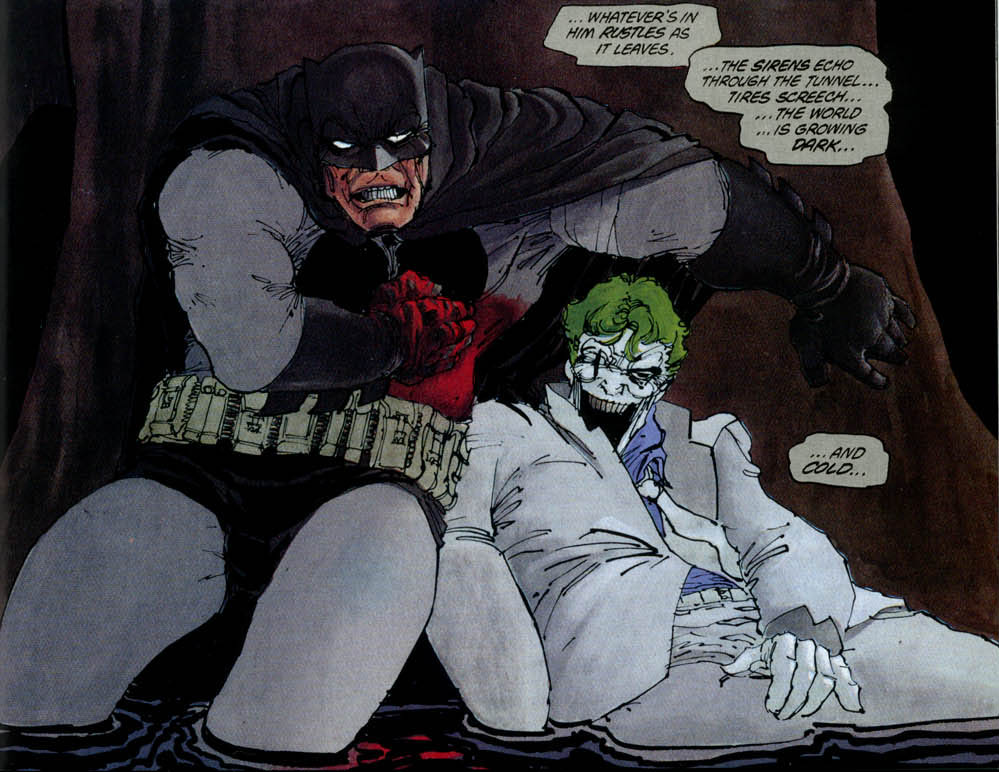
Though the Joker experienced near shaves with death on many occasions, he finally met his end in Frank Miller’s The Dark Knight Returns. It was here that, after a prolonged absence, the Batman came out of retirement to fight crime one last time. This soon inspired the Joker to awaken from his drug-induced slumber inside Arkham and begin creating havoc again.

It began with Joker once again pretending he was rehabilitated in order to gain parole from Arkham, and was followed by him releasing his toxic venom into a crowded talk show studio before making his escape. After many deaths and a chase that took them across the city and into an amusement park, the Batman finally cornered the Joker inside a tunnel and engaged him in mortal combat.

The Joker managed to stab him several times, but Batman eventually got the upper hand and snapped the Joker’s neck. However, this didn’t prove fatal, and a laughing Joker once again mocked Batman for not being able to go through with it. The Joker then took a deep breath and snapped his own neck the rest of the way. Thus, the Joker died as he lived… laughing, mocking and batshit crazy!

Final Thoughts:
What more is there to say? The Joker is just one of those characters who’s stuck with us over the years, and for good reason. Not only did he have all the right characteristics to make a fitting villain, he was also the perfect arch-nemesis for the Batman. Overall, I have to assume that he wasn’t the kind of character who was tailor made for the role, but an inspired invention that grew into the role over time and became a permanent feature before long.

To paraphrase cartoonist Berkeley Breathed, good characters aren’t just created, they wander in off the street looking for a meal and a bath and end up staying. In the Jokers case, I’m glad he stuck around. Much like the Batman, he’s probably the most realistic, dark and gritty personality to ever come out of the comic book world!

The rest, as they say, is insane cackling laughter… HAHAHAHAHAHAHAHA!

RIP Heath

Sci-Fi Drugs

The other night, I had one of those moments. It was a moment where I found myself thinking about a cool concept and realized that it would make a damn fine post. It’s also one that interests me quite a bit and has even influenced my own writing. So as quickly as I could, I hopped on my laptop (even though it was 2am) and began making a list of all the sci-fi drugs I knew!

To me, the reasons for including drugs as part of a sci-fi franchise are obvious. For one, drugs and drug cultures are very much a part of our society, so it’s only natural that a sci-fi author should have something to say about it. As Gibson said, all sci-fi is really about the time in which it is written, ergo fictionalized drugs in future settings are really a reflection on the attitudes of today.

On the other hand, creating fictitious drugs and inventing subcultures that use them are a good way to give a story some realistic background. Wherever and whenever a story takes place, you have to assume that they will have narcotic substances there, and what form they take and how they go about dealing with them tells you much about that culture.

Either way, it’s a subject that has fascinated me for quite some time. So here are some highlights from the wold of sci-fi drugs!

Can-D:
Here we have a designer drug that was created by none other than sci-fi great Philip K. Dick. As fans may know, this guy was somewhat of an expert on drugs, having taken part in the Californian drug counter-culture during the 60s and 70s. As a result, he had a lot to say about drug use, their impact, and drug policy.

In this particular case, the drug comes to us from the story of The Three Stigmata of Palmer Eldritch. Taking place in the 21st century, where global warming has sent millions of people off Earth to the hostile environments of the Solar System, people have turned to a combination of the drug Can-D and what are known as “layouts.”

Layouts are physical props intended to simulate a sort of alternate reality where life is easier than either the grim existence of the off-world colonies or life on Earth. By taking the drug in conjunction with the layouts, people are able to experience a sort of shared hallucinogenic state. This in turn has given rise to pseudo-religious cults that have grown up around the use of layouts and the drug, consisting of people who dream of better worlds than the one they are forced to endure.

Dancer:
To complete the semi-dystopian setting of his Bridge Trilogy, Gibson was sure to add a designer drug that was all the rage amongst Californians in the near future. The drug was named Dancer, a powerful and addictive hallucinogen that apparently came in the form of a red dust. People would take it orally, rub it on their gums, smoke it or snort it.

In short, Dancer was like a red cocaine, except that it caused hallucinations rather than manic behavior. People who consumed it would typically become euphoric and mellow, causing them to get all rhythmic and break into dance (hence the name). However, it was was also known to make people violent from time to time, which made it more akin to the the effects of PCP.

Inspired by California’s drug culture and the emergence of designer drugs in the early 90s, Dancer was clearly meant to serve as an allegory for multiple drugs, or as a prediction of what the next big craze could be.

Dust:
Fans of Babylon 5 ought to remember this one. Basically, the drug was a hot item on the black market because it had the ability to give users temporary telepathic powers. It was violently addictive, and known for giving a very powerful and unique high. However, in the course of trying to stop the Dust trade to B5, Psi Cop Bester acknowledged that the drug was originally created by the Psi Corps as a way of creating telepaths.

When they realized it didn’t work, the drug was abandoned, but made its way to the black market because of its obvious appeal. As a longtime fan of B5, I can honestly say it was elements like this that made me like the show. Not only was the concept and the name cool, the fact that it began as a government-sanctioned drug was also believable and clearly inspired by the history of many real-world drugs.

Neuroin:
Inspired by Philip K Dick’s short story, Minority Report was a quasi-dystopian future where the use of precognitives promised to eliminate all violent crime from society. But of course, there’s a dark side to all this, and it just happens to be linked to the underworld drug known as Neuroin, a powerful and addictive psychoactive substance.

Though it is never explained in any real detail, the name suggests that it is of the opiate family and possibly combined with a neural stimulant. In addition to being the drug of choice of the protagonist, it is also the very thing that created the precognitives in the first place. All three psychics were once children who suffered brain damage in utero as a result of their mothers’ neuroin use. Though damaged neurologically, a side effect was the development of precognitive powers, which the state began to use in order to engineer the process known as “PreCrime.”

Based on the film adaptation, the principal means of taking neuroin appears to be through a specialized inhaler. This would allude to the fact that neuroin was taken in vaporized form. In the end, this drug served as both a commentary on the dangers of escapism as well as a plot device. While neuroin was the reason for the precognitives existence, it was also how the main character chose to numb himself over the loss of his son.

Nuke:
The designer drug from Robocop 2, and one man’s attempt at achieving his dream of becoming a Jesus-like figure! Designed by Cain, Nuke was an extremely pleasurable and addictive substance that began making the rounds in Old Detroit by the second movie. Coupled with a Police strike and financial ruin, Nuke seemed to be the thing that would finally break Detroit and allow the greedy bastards at OCP to finally take over.

There are several kinds of Nuke, but by far the most popular variety comes in the form of the red sludge. This is known as Red Ramrod, and was followed shortly thereafter by White Noise, Blue Velvet, and Black Thunder. The color scheme alluded to Cain’s “patriotic” sentiments, as he was known to say that his drug was making “Made in America” mean something again.

Nuke comes only in liquid form and is taken by means of small needles that inject the drug directly into the bloodstream. Because of its highly pleasurable nature and chemical properties, only a few doses are needed before a person becomes hooked and will experience intense withdrawal if they don’t get a regular dose. A commentary on the emergence of designer drugs, it was also served as a means for making some tough observations on drug use and its effect on society.

Snow Crash:
This drug is, admittedly a little off the beaten path. Featured in the Neal Stephenson novel of the same name, Snow Crash was essentially an allegory for a system crash, but in neurological form. Taking the form of both an inhalant and a digital virus, the “drug” had the effect of rendering users docile, passive and babbling an idioglossia similar to speaking in tongues.

But of course, there was more to it than all that. Basically, Snow Crash was designed by an information tycoon named L. Bob Rife who wanted control over people’s minds and daily habits. Using a Sumerian tablet, he basically encoded the ancient “Enki virus” – a virus that altered humanity’s neurology and spawned modern languages. So really, he was looking to reverse the Babel myth, making humanity neurologically simpler and thus programmable.

In addition to being a commentary on the drug culture, Snow Crash was also an observation about the proliferation of computer viruses in the early 90s and an allegory on the similarities between ancient myth and modern technology. It was also pretty cool and weird!

Soma:
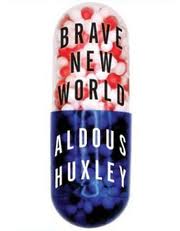
When it comes to designer drugs, Soma pretty much takes the cake. Derived from Aldous Huxley’s classic tale of dystopia and social engineering, Brave New World, Soma was the kind of drug that came with the label “good for what ails ya” and meant it literally. Designed to cure any and all emotional problems, the pill was mass produced and a key feature of the World State’s apparatus of social control.

Use of Soma is prescribed at a very young age to citizens of the World State, as soon as children are old enough to begin sleep conditioning. Slogans such as “a gram is better than a damn” are programmed into their minds so that they respond to emotional stress by simply popping a pill. This is often referred to as “taking a vacation”.

To illustrate the effects of the drug, Huxley relied on his own experience using mescalin and other drugs. Apparently, subjects using Soma would enter a dream-like state where everything became pleasant and agreeable, all their worries and unpleasant emotions melting away. This dream-like state could be discerned by observing a person’s eyes, which would become noticeably glazed.

In addition, though the state freely distributed the drug and there were no shortages, Soma was still designed to be non-addictive and with no harmful side effects. This, added to its effectiveness, made it the ultimate designer drug and a very effective means of social control. A commentary on the pharmaceutical industry of his day and on the drug culture of the 1920s and 30s, Soma remains the most popular example of a fictional sci-fi drug!

Spice:
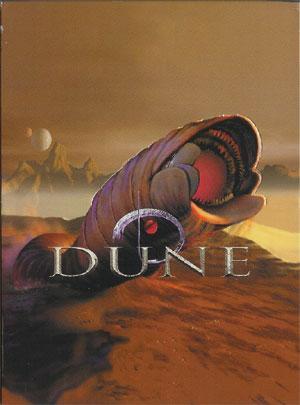
Then again, the spice melange is pretty damn popular too. However, as the only drug on this list that is not designed or synthesized, and is by definition an “awareness narcotic,” Spice is really in a category of its own. Taken from the Dune series, Spice was the most precious resource in the universe in more ways than one.

For starters, Spice could only be found on one planet, the desert world known as Arrakis. Mining Spice was also a highly hazardous duty, due to the inhospitable climate of Arrakis and the presence of Sandworms. And given its many benefits, which included prolonged life and expanded awareness, it’s little wonder why it was so damned expensive!

A clear allegory for oil, all life and commerce in the Imperium of Dune revolved around Spice in one way or another. The Guild Navigators used it to achieve their limited prescience and guide ships through foldspace. The Bene Gesserit used it to enhance their mental and physical acuity and make contact with their “Other Memory”. And every house used it to improve their health and longevity. In short, without Spice, all trade and commerce in the universe would end and countless people would die.

And of course, there never would have been a Paul Mua’dib or a Leto II, and humanity would have died as a result! That’s quite a drug them people got there!

Substance D:
Once again, we have a fictitious drug that comes to us straight from the mind of Philip K Dick. Featured in his 1977 book A Scanner Darkly about the drug subculture of California, Substance D was a powerful psychoactive drug that also went by the name “Slow Death.” The name proved apt, as the drug was not only violently addictive, but resulted in brain damage due to overuse.

According to the story, Substance-D was synthesized from the fictitious blue flower Mors ontologica, which is Latin for “death of being”. In the course of the story, the protagonist – an undercover narcotics agent – becomes addicted to the drug, suffers brain damage and is sent to one of the new recovery centers (“New Path”) to get clean.

In time, he is given the task of working on one of their many farms and learns that these places serve as grow ops for the flower. Hence, we see that “New Path” is the source of Substance-D, and is therefore benefiting from both the drug and the harmful effect it has on society. A commentary on strong-arm governments and the pharmaceutical industry perhaps?

Final Thoughts:
When it comes to fictionalized narcotics, a few basic features become evident. For one, fictional drugs can take one of two forms, being either of the organic or synthetic (i.e. designer) variety. Second, their use as part of a story’s background is meant to call attention to our current drug wars, warts and all. But above all, they seem to serve as a form of social commentary by pointing to the ongoing nature of temptation, escapism and repression. On the one hand, human beings will always be looking for escapes and ways to ease the burden of existence. On the other, we are always likely to feel the need to control the flow of narcotic substances and legislate what people can and can’t put in their bodies.

Finally, I found that just about all the authors here were taking a descriptive, rather than prescriptive, approach. Essentially, they were content to sit back and make observations on the whole issue of drug use and moral legislation, rather than making pronouncements. This would seem the preferable option considering that you can’t really offer a clear resolution without sounding either enabling or preachy. Some say that drug use destroys society, other say that people have the right to put whatever they want in their bodes. And then there are those who say that human weakness is a constant, and that criminalizing such a thing turns a flaw into a war. Complicated!

On a brighter note, all this talk puts me in mind of my own fictional creations. Years back, when I was coming up with the concept for my Legacies story, I spent a fair bit of time pondering what kind of drugs people would be using in the relatively distant future. I think I might just dedicate a page or a post to just that topic. In truth, I’d like to know what people think about my inventions. Look for it, it shall be coming soon!

Technology in the Dune Universe

Hello again techies and social studies experts! I’m sorry, I assume those are the only two kinds of people who would enjoy these posts 😉 Regardless, I love doing them, mainly because it gives me a chance to exercise a little critical thinking when it comes to some of the most popular franchises of science fiction.

And today, I thought I’d tackle the bid baddy of classic sci-fi, Mr. Frank Herbert himself. Whereas most writers in this expansive genre tend to take a highly positive or negative view, Herbert distinguished himself by being highly subtle, ambiguous and multilayered in his approach.

Far from saying technology would save humanity, or condemn it, he seemed to be arguing that it really wouldn’t alter our basic makeup and behavior. That, presumably, would only come with thousands of years of natural evolution, selective breeding and funky narcotics!

But I digress, here are some examples of the technologies that characterized the Dune universe:

Atomics:
stoneburnerEvery house in the Dune universe keeps a nuclear arsenal in reserve. However, since the Great Convention forbids their use in war, and anyone found in dereliction would guarantee their own obliteration, they are not employed. Everybody’s got em, nobody uses em! At least not anymore…

Their last known use occurred on Selusa Secundus many years before the events of the first novel. It was here that a rogue house employed several in an attempt to destroy House Corrin. The attempt failed and the house was eradicated, their name erased from history. Unfortunately, Selusa Secundus was left a radioactive ruin, hence why it was converted to serve as the Emperor’s prison planet.

However, one type of nuclear device is still legal under the Great Convention. Known as a Stone Burner, these devices emit powerful J-radiation that destroys eye-tissue, rendering everyone in the blast vicinity blind. However, their primary function is to burn through a planet’s crust. If they are powerful enough, they are able to burn clean through to a planet’s core and destroy them planet from within.

Axlotl Tank:
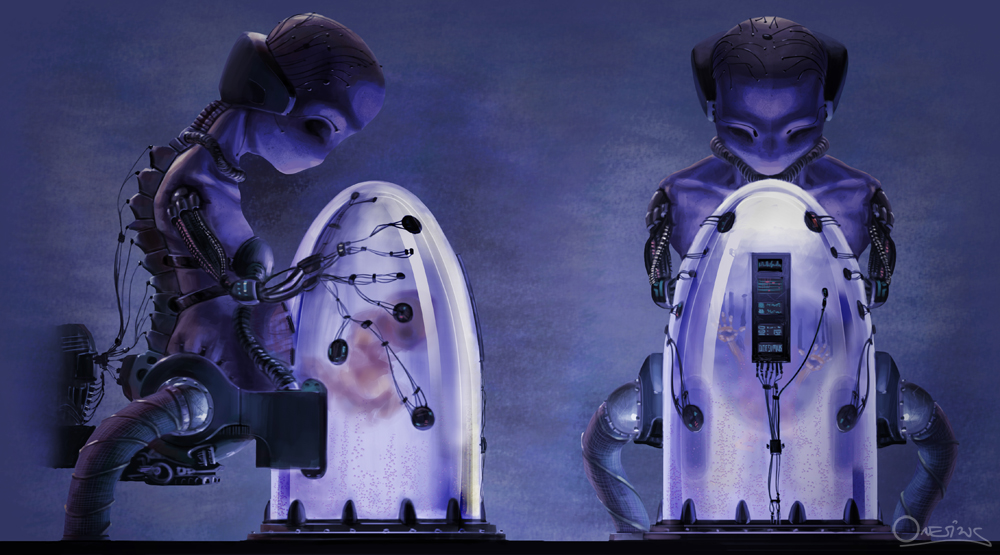
2007-8-18_DuneAxlotlTankThough widely used in the Dune universe, axlotl technology is also one of its most mysterious. A trade secret of the Tleilaxu, an axlotl tank is a “device for reproducing a living human being from the cells of a cadaver,” resulting in what is known as a ghola. In addition, the Tleilaxu Masters use these tanks in order to produce clones of themselves and keep their line going.

As the series progresses, axlotl tanks began being used to produce the spice melange, which had previously only been available on Arrakis. In time, it was also revealed that axlotl tanks were in fact Tleilaxu females, women whose bodies had been converted to grow gholas, clones and spice inside their wombs.

Guild Heighliner:
Dune_heighlinerThe principal means of interstellar transport in the Dune universe, a heighliner is a Guild ship that is capable of transporting massive amounts of people and cargo. Powered by the Holtzman Drive (see below) the ship is capable of “folding space” – jumping from one point in space-time to the next – instantaneously.

Each Guild Heighliner comes with its own navigator, a Guild mutant who uses their semi-prescient abilities to see through space and time to chart a safe rout for the ship to fly. The navigators do all this from inside their giant tanks where they remain immersed in spice gas.

Holtzman Drive:
foldspaceThis is the technology that allows Guild Heighliners to fold space, thus traveling instantaneously form one point in the universe to another. Using what is known as the “Holtzman Effect”, the same phenomena that powers personal shields as well as the catastrophic effect when one comes into contact with the beam of a lasgun.

Though it is never explained in detail, some hints are given throughout the series as to what principles of physics may be involved. For example, in Chapterhouse: Dune, an allusion was made to tachyon particles, the theoretical particle that can presumably travel faster than light.

Lasgun:
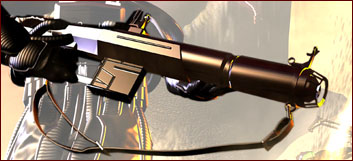
lasgunThe appendix of the first Dune novel, titled Terminology of the Imperium, defines Lasgun as follows:

continuous-wave laser projector. Its use as a weapon is limited in a field-generator-shield culture because of the explosive pyrotechnics (technically, subatomic fusion) created when its beam intersects a shield.

At one time, these directed energy weapons were the mainstay of Imperial armed forces. However, the development of shields meant that their use had to become more selective. Mounted on ships, ornithopters, and carried by infantry, lasguns remain a highly effective weapon, capable of cutting through any material.

No-Chamber/No-Ship:
ixian_noshipThis technology was first mentioned in God Emperor of Dune and took the form of a No-Chamber. This Ixian invention was basically a chamber that was cloaked in a stealth field which blocked it from prescient vision as well as more conventional means of detection.

After the death of Leto II, this technology was expanded to include No-Ships and even No-Globes. The former were basically heighliners which were equipped with no-fields and the Ixian machine which did the job of a Guild Navigator. In essence, these ships were not only sheilded from prescient vision, but were invisible to sensors and even the naked eye.

No-Globes were an even larger version of the technology, capable of covering an entire planet in a no-field and rendering it both invisible to prescience, invisible to the naked eye and undetectable. However, in Heretics of Dune and Chapterhouse: Dune, it is suggested that those of Atreides ancestry are capable of seeing through no-fields. This proved to be the case when Miles Teg was awakened to his abilities after being examined with an Ixian T-probe. His ghola also had this ability once he was awakened to his past memories.

Ornithopter:
dune_thopter1In the Dune universe, ornithopters (or ‘thopters) are the principle means of planetary transportation. Combining jet thrusters with articulated wings, the thopter is capable of vertical takeoff and landing, making it one of the most versatile flying machines ever invented.

Though most are used for commercial and personnel transport, thopters are also capable of being militarized, and often are. Armed missiles, bombs, lasguns, and even shields, they are most effective when used in an assault and/or supporting role.

Personal Shields:
Holtzmanshields-Dune1984The Terminology of the Imperium defines them as follows: the protective field produced by a Holtzman generator. This field derives from Phase One of the suspensor-nullification effect. A shield will permit entry only to objects moving at slow speeds (depending on setting, this speed ranges from six to nine centimeters per second) and can be shorted out only by a shire-sized electric field.

While these shields can be mounted on aircraft, vehicles and even large structures, the most common use is in the form of personal shielding units. These are worn by infantry for battle or for the sake of combat training in order to prevent serious injury. The introduction of this technology to the battlefield had a regressionary effect on warfare in that it forced troops to largely abandon energy and ballistic weapons in favor of hand to hand combat. Hence why swords and knives are commonly used in the Dune universe.

Stillsuit:
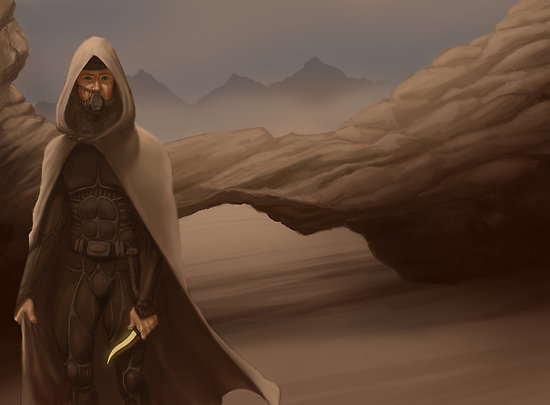
stillsuitThe trade secret of the Fremen! Stillsuits, as the name suggests, are a water reclamation and purification system that are worn by the desert-dwelling nomads whenever they are out on the sand dunes. Powered by the motion of it’s user, which includes foot-pumps mounted in the suit’s heels, the system turns all water loss – perspiration, urination, even feces – into usable water which they can draw from a tube near their mouth.

Given water’s scarcity on Arrakis, the purpose of these suits is clear. By preventing moisture loss and recycling it into useable water, they ensure that a person out in the open can sustain themselves indefinitely in the extremely dry and hot desert environment. As Doctor Kynes himself remarked: “With a Fremen suit in good working order, you won’t lose more than a thimbleful of moisture a day..”

Conclusions:
When it comes to science fiction franchises, one can tell a lot by the technology, big and small, that are all part of the background. And when looks over these examples of technology in the Dune universe, a few things become abundantly clear right away:

  1. The connection between environment and invention: Because the bulk of the story takes place on Arrakis, much of the technology we see was specifically adapted for desert use. Shields were useless in the desert environment, turbofans often broke down from dust and sand, and even massive crawlers were at risk of being consumed by Sandworms. In short, all the advanced technology of the Imperium was either useless or subject to hazards from the desert and its creatures. In the end, the most basic inventions, stillsuits and thumpers, were best suited to ensure survival. In short, those technologies who worked with the environment instead of against it were the most likely to work. More indications followed, such as how Paul’s father said to him that “On Caladan we ruled by sea and air power, but here on Arrakis, you need desert power.” On the one hand, this would seem to indicate that every planetary environment required its own balance of technology, Caladan being a sea planet meant ships and aircraft were the weapons of choice. On the other, he seemed to be alluding to the fact that rule on Arrakis required the allegiance of those who knew the desert best (i.e. the Fremen)
  2. Technology as regressive as well as progressive:This is something that I found particularly intriguing about the Dune universe, which was how it combined medievalism and futurism. On the one hand, humans have perfected interstellar travel and have colonized millions of planets throughout the galaxy. On the other, they fight with swords, knives, and live under a feudal system of government. As the story progresses, two reasons are given for why this is:
    1. After the Bulterian Jihad, the Great Convention established that no thinking machines or anything resembling them would ever be created again. As Leto II remarked in GEOD: “The target of the Jihad was a machine-attitude as much as the machines… Humans had set those machines to usurp our sense of beauty, our necessary selfdom out of which we make living judgments.” In short, the purpose of the Great Convention was not just to ban AI’s but the very mentality that had created them. Thenceforth, the very concept of industrial dependence was to be banned. And as Duncan Idaho later observed, such an economy was the basis for unlimited consumption and growing social equality. This ideal, borne of the Industrial Revolution, was also the cause of social chaos and the eventual rise of AI’s. By banning these and the system that ensured their creation, humanity was effectively going back to a time where feudal control by a small group of barons was basically necessary.
    2. The Great Convention also forbade the use of atomics. This meant that war had to be conventional from now on. The advent of shields also meant that energy weapons were no longer advisable, which meant that soldiers were further forced to adapt to conventional means of fighting – i.e. hand to hand combat. Swords, knives, and slow-pellet stunners were now mainstays of modern warfare, not by choice, but by necessity.

All of this leads to conclude that Frank Herbert was a freaking genius, or at least possessed a very complicated intellect. Whereas most science fiction and speculative writers tend to take a positive or negative view of technology, he preferred to take a very historic and ambiguous view of it. Setting his story in the distant future, one would immediately get the impression that humanity would be so highly evolved that it no longer resembled humanity of today.

However, Frank showed us a universe where humans were not only very much like they are today but also retained elements from our past. Much like the world of today, people are dependent on a single resource, are subject to petty rivalries, and a morally dubious system. But like the world of yesteryear, they are ruled by dukes, barons, emperors, and a system of entitlement and gross privilege and view democracy as a threatening sham.

One can only assume that Frank was making the point that human nature will not change as a result of technological innovation or space travel. Sure, AI’s and cybernetics might emerge down the road, giving humanity the ability to enhance their bodies and thought processes. But Frank’s take on this was that humans would naturally revolt against these once they came to the conclusion that they were needlessly complicated people’s lives.

So in the end, the only way out of being human was to create “mature humanity” as the Bene Gesserit said. This consisted of selective breeding and organic enhancement, relentlessly training people to strengthen their minds, bodies, and unlock the mysteries of the brain, eventually culminating in a person who could not only access their genetic memory, but merge space and time in their own mind. Interesting… and freaky!

Well, my mind is blown and I got nothing more to say. Stay tuned for something else, assuming I can overcome the effects of venturing into Frank’s head space. Man, it’s weird and awesome in there, kind of like a spice trance!

More Utopian Science Fiction

Boy this is fun, and like I said last time, overdue! For fans of literature and science fiction in particular, you really can’t do justice to a genre unless you examine its opposite as well. Not only is it fun and interesting, it kind of opens your eyes to the fact that we find a certain truth in the pairing of opposites.

For one, you come to see that they really aren’t that different. And two, that they essentially come from the same place. Much like light and dark, black and white, heaven and hell, extremes have more in common with each other than anything occupying the space between them. Is that quote? If not, it is now! MINE!

Last time, I buckled down to tackle the big names, the famous classics. Today, I thought I’d cast the net a little wider since there are a ton I missed and there really is no shortage of examples. Here’s what I got so far:

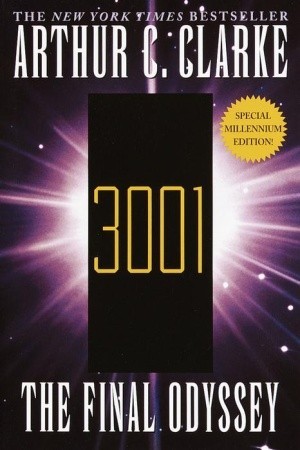
3001: The Final Odyssey:
The final book in Clarke’s Odyssey series, 3001 not only provided a sense of culmination to this epic story, but also gave Clarke the opportunity to share his predictions on where humanity would be by the 31st century. Released in 1997, it also contained a great deal of speculation about the coming millennium and what the 21st century would look like.

The story begins when, just shy of the millennial celebrations, the body of Frank Poole is discovered at the edge of the solar system. This astronaut, who died in the first novel, had been floating at the far edge of the solar system for almost a thousand years. His body is resurrected using the latest technology, and his reintroduction to society is the vehicle through which things are told.

As a fish out of water, Poole is made privy to all the changes that have taken place in the last 1000 years. Humanity now lives throughout the solar system, Earth and most planets are orbited by massive rings that connect to Earth through huge towers. Sectarian religion has been abandoned in favor of a new, universal faith, and the problems of overpopulation, pollution and war have all been solved.

Amongst humanity’s technological marvels are inertia drives on their ships (no FTL exists), a form of holodeck, genetically engineered work creatures, skull caps that transmit info directly into a person’s brain, data crystals, and of course the massive space habitation modules. Though the story was meant to be predictive for the most part, one cannot deny that this book contained utopian elements. Essentially, Clarke advanced his usual futurist outlook, in which humanity’s problems would be solved through the ongoing application of technology and progress.

Though I found it somewhat naive at the time of reading, it was nevertheless an interesting romp, especially where the predictive aspects came into play. And it also contained one of the best lines I’ve ever read, a New Years toast for the 21st century which I quoted on midnight on Dec. 31st, 1999: “Here’s to the 20th century. The best, and worst, century of them all!”

Brave New World:
I  know, BNW is listed as one of the quintessential dystopian novels of our time, and I even listed as such on my list of dystopian classics. However, one cannot deny that this book also contained very strong utopian elements and themes, and it was how these failed to remedy the problem of being human that ultimately made BNW a dystopia.

Set in the year 2540 CE (or 632 A.F. in the book), the World State is very much the product of utopian engineering. Literally all aspects of social control, which are largely benign, are designed to ensure that all people are born and bred to serve a specific role, cannot aspire beyond it, and are emotionally and psychologically insulated against unhappiness.

In short, people have exchanged their freedom for the sake of peace, order, and predictability. In fact, these ideals are pretty much summed up with the States motto: “Community, Identity, Stability.” Another indication is the popular slogan, “everyone belongs to everyone else”. And finally, the orgy porgy song provides some insight as well: “Orgy-porgy, Ford and fun, Kiss the girls and make them One. Boys at one with
girls at peace; Orgy-porgy gives release.”

Couldn’t have said it better myself. The goal of creating oneness and sameness to prevent things like greed, jealousy, war, and strife, is a constant theme in utopian literature, elevated to the form of high art in Huxley’s vision. And above all, the dream of a perfectly regulated, peaceful society, where individuality and difference have been purged, was accomplished through pleasure and not pain. This can best be summed up in an exerpt from Huxley’s letter to Orwell after 1984 was released:

“Within the next generation I believe that the world’s rulers will discover that infant conditioning and narco-hypnosis are more efficient, as instruments of government, than clubs and prisons, and that the lust for power can be just as completely satisfied by suggesting people into loving their servitude as by flogging and kicking them into obedience. In other words, I feel that the nightmare of Nineteen Eighty-Four is destined to modulate into the nightmare of a world having more resemblance to that which I imagined in Brave New World.”

I, Robot:
In the course of examining utopian literature, a term came up with made me stop and think… Robotocracy. Hence this next example which also contains some rather interesting utopian elements. As one of Asimov’s most recognized works, this collection of interlinked short stories tells of a future where intelligent robots make their debut and gradually become more and more integrated to society.

Ultimately, Asimov portrays AI’s as loyal and gentle creatures who not only improve the lot of humanity, but are incapable of harming their human masters. Whereas most speculative works of fiction dealing with AI’s are cautionary in nature, showing how entrusting our fate to machines will result in death, in this story, all of humanity’s fears prove baseless.

In time, the employment of robots and positronic master computers leads to the development of FTL, optimizes the world’s economy and production, and even prevents problems and conflicts which they can foresee. Human beings express reservation and fear, but in the end, the robotocracy proves to be sensible and caring, not cold and inhuman.

It was for this reason that I didn’t care for the film adaptation. Not only would a repressive, world-domination plan contradict the first and most important of the Three Laws (a robot may not harm, or through inaction, allow to be harmed, a human), it really didn’t contain any inherent logic. How would putting humans under house arrest ultimately ensure their protection? With all humans deprived of their most basic rights, revolution would be inevitable, leading to more death. Ah, whatever. At least the book was good.

Island:
Also written by Aldous Huxley, this novel (published in 1962) represented a possible resolution to the central problem he raised in Brave New World. Essentially, the protagonist of John the Savage committed suicide at the end because he could not reconcile himself to either world, one characterized by primitive freedom and the other by civilized sterility.

In the foreword section of the 1946 edition, Huxley expressed regret over the fact that he could not have given John a third option, which could have taken the form of the various exile communities where the thinking people who didn’t fit in with the “civilization” of the World State were sent.

Hence the setting of Island, a utopia created on the fictional island of Pala. Told from the point of view of a cynical journalist named Will Farnaby who gets shipwrecked on the island, the story was Huxley’s final book and a message to humanity about possible third options and the positive application of technology and knowledge.

As Huxley decribed it beforehand: “In this community economics would be decentralist and Henry-Georgian, politics Kropotkinesque co-operative. Science and technology would be used as though, like the Sabbath, they had been made for man, not (as at present and still more so in the Brave New World) as though man were to be adapted and enslaved to them. This last sentence is especially important in reference to Island. Here, drug use, trance states, contraception, assisted reproduction and slogans are all used voluntarily and serve the purposes of learning and social betterment. They are not employed as a means to pacify and control people.

What’s more, from a social perspective, Huxley characterized Pala’s prevailing philosophy as:  “a kind of Higher Utilitarianism, in which the Greatest Happiness principle would be secondary to the Final End principle – the first question to be asked and answered in every contingency of life being: “How will this thought or action contribute to, or interfere with, the achievement, by me and the greatest possible number of other individuals, of man’s Final End?”

The Culture Series:
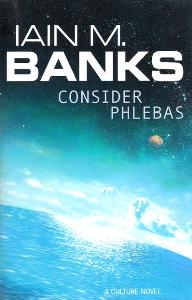
Created by sci-fi author Ian M. Banks, “The Culture” refers to the fictional interstellar anarchist, socialist, and utopian society that characterizes his novels. Encompassing ten novels – beginning with Consider Phlebas (1987) and concluding with The Hydrogen Sonata (slated for release in October 2012), Banks paints the picture of a universe where humanity has created a peaceful, stable and abundant society through the application of technology.

Told predominantly from the point of view of those who operate at the fringes of The Culture, the stories focus on the interactions of these utopian humans with other civilizations. Much in the same way as Star Trek follows the adventure of the Enterprise crew as they deal with alien cultures, often ones which are less developed or evolved, this provides a vehicle for examining humanity’s current predicament and providing possible solutions.

Overall, The Society is best characterized as post-scarcity, where advanced technologies provide practically limitless material wealth and comfort, where almost all physical constraints – including disease and death – have been eliminated, and the concept of possessions are outmoded. Through all of this, an almost totally  egalitarian, stable society has been created where compulsion or force are not needed, except as a means of self-defense.

At times however, The Culture has been known to interfere with other civilizations as a means of spreading their culture and affecting change in their neighbors. This has often been criticized as an endorsement of neo-conservatism and ethnocentrism on Banks part. However, Banks has denied such claims and many of his defenders claim that The Culture’s moral legitimacy is far beyond anything the West currently enjoys. Others would point out that this potential “dark side” the The Culture is meant to reflect the paradox of liberal societies at home and their behavior in foreign affairs.

The Mars Trilogy:
This ground-breaking trilogy by Kim Stanley Robertson about the colonization and terraforming of Mars is also a fine example of utopia in literature. taking place in the not-too-distant future, the trilogy begins with the settlement of the planet in Red Mars and then follows the exploits of the colonists as they begin transforming from a barren rock to a veritable second Earth.

Even though there are numerous dark elements to the story, including civil strife, internal divisions, exploitation and even assassination, the utopian elements far outweigh the dystopian ones. Ultimately, the focus is on the emergence of a highly advanced, egalitarian society on Mars while Earth continues to suffer from the problems of overpopulation, pollution and ecological disaster.

In addition, the colony of Mars benefits from the fact that its original inhabitants, though by no means all mentally stable and benevolent people, were nevertheless some of the best and brightest minds Earth had produced. As a result, and with the help of longevity treatments, Mars had the benefit of being run by some truly dedicated and enlightened founders. What’s more, their descendents would grow up in a world where stability, hard work, and a respect for science, technology and ecology were pervasive.

All of this reflects Robertson’s multifaceted approach to story writing, where social aspirations and problems are just as important as the technological and economic aspects of settling a new world. Much like the conquest and settlement of the New World gave rise to various utopian ideals and social experiments, he speculates that the settlement of new planets will result in the same. Technology still plays an important role of course, as the colonists of Mars have the benefit of taking advantage of scientific advancements while simultaneously avoiding the baggage of life on Earth. In the end, there’s just something to be said about a fresh start isn’t there?

The Night’s Dawn Trilogy:
Written by British author Peter F. Hamilton, The Night’s Dawn Trilogy consists of three science fiction novels: The Reality Dysfunction (1996), The Neutronium Alchemist (1997), and The Naked God (1999). Much like Robertson’s depiction of humanity in the Mars Trilogy, Hamilton explores humanity’s dark side at length, and yet the tone of his novels are predominantly optimistic.

Set in a distant 27th century, humanity has become divided between two major factions. On the one side there are the Edenists, an egalitarian, utopian society who employ biotech (“biteck” in their lingo) to create living, sentient space stations as well as machines. The use of “Affinity” – a form of telepathy – allows them to communicate with each other and their biteck, creating a sort of mass mentality which encompasses entire communities. Thiee Edenic government is what is known as the “Consensus”, a form of direct democracy that is made possible by telepathic link.

On the one side their are the Adamists, the larger of the two where human beings live with a limited religious proscription against technology. Biteck is forbidden, but nanotechnology, FTL and other advanced applications are freely used. Because the Adamists encompass anyone not in the Edenic camp, they are larger, but far less organized and cohesive than their counterparts.

Through all this, Hamilton attempts to show  how the application of technology and the merger between biological and artificial can create the kind of society envisioned by men like Thomas More, characterized by participatory government, collective mentality, and a consensus-oriented decision-making process. While both the Edenic and Adamist societies are still pervaded by problems, not the least of which is competition between the two, the ideals of betterment through technological progress are nevertheless predominant.

Revelation Space Series:
Another series which examines the beneficial aspects of technology, particularly where governance and equality are concerned, is the Revelation Space Trilogy by Alastair Reynolds. Comprised of the five novels Revelation Space (2000), Chasm City (2001), Redemption Ark (2002), Absolution Gap (2003) and The Prefect (2007).

Taking place in the distant future (circa. 2427 to 2727), the story revolves around a series of worlds that have been settled by several different factions of humanity. The two largest factions are known as the Demarchists and the Conjoiners, both of whom have employed advanced technology to create their own versions of an ideal society.

Though much of the books are dark in tone due to the discovery of a terrible nanotechnological virus (the “Melding Plague”) and the discovery of hostile ancient aliens (the “Inhibitors”), the series still does have some discernible utopian elements. For starters, the Demarchists take their name from the concept of “Democratic Anarchy”, and employ cybernetic implants, nanotech and wireless communications to achieve this.

Within the Demarchist metropolis of Chasm City, all citizens are permanently wired into a central server which allows them permanent access to news, updates, and the decision-making process. As a result, Demarchist society is virtually egalitarian and marks of social status, such as ranks and titles, do not exist. This changed with the spread of the Melding Plague however, causing the city’s structures to degenerate into a gothic nightmare and the class divide to become very visible.

Another important faction are the Conjoiners. These people, who were originally inhabitants with the Great Wall of Mars (above left picture), but who became a star-faring people after the war with the “Coalition for Neural Purity” drove them off Mars. To these people, cybernetic implants were taken a step further, giving every Conjoined person the ability to telepathically link with others, preserve their memories beyond death, prolong their life, and enhance their natural thinking process.

Thus, much like Hamilton and Banks, Reynolds speculates that the advent of nanotech, biotech, and space travel will result in the emergence of societies that are predominantly egalitarian, peaceful, and dedicated to consensus and direct democracy. I personally found these stories quite inspiring since it seems that in many ways, we are already witnessing the birth of such possibilities in the here and now.

Yep, this is still fun, if somewhat tiring and conducive to burnout! I think I’ll be taking a break from these literary-criticism pieces for a day or two, maybe getting back to pieces on robots and cool gear. However, in keeping with the format I used for dystopia, I still have one more utopian article left to cover. Look for it, it will be called “Utopia in Popular Culture!” See ya there…

More Giant Robots

Welcome back. I had a lot of fun with the last installment, so here’s another! Updated, expanded, and with plenty of additions. Ah, screw it! Let’s get to it.

Immortal:
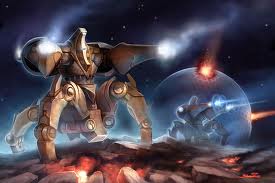
Back to the Starcraft universe for a sequel. Much like its predecessor, the Immortal was a vehicle for severely wounded Templars who still wanted to serve. Developed shortly after the Brood War, the Immortals replaced the aging Dragoon design and improved on it in many ways.

In terms of armaments, the Immortals boast two phased disruptor cannons which pretty much doubles their firepower. Their chassis are heavily armored and of course boast shields that can even withstand attacks from heavy artillery.

The Immortal’s one weakness is that their shields are only activated when they are hit by heavy munitions. In addition, their weapons are best for ranged attacks. This makes them somewhat vulnerable to close encounters with small arms fire and auto-cannons.

Mad Dog:
Another classic mech from the Battltech universe. Much like the Mad Cat from the last installment, the Mad Dog is another omnimech. It’s configuration, which appeared to Inner Sphere forces as a bird of prey, earned it the nickname “Vulture”.

Heavily armored with a n8 and a half ton ferro-fibrous shell, the Mad Dog is still fast and maneuverable, able to run at over 85 km/h. In its standard configuration, it carries two large pulse lasers in the arms, two medium ones (typically mounted underneath) and two shoulder mounted missile launchers.

Quick, powerful and versatile, the Mad Dog is well represented in the armies of every Outer Sphere Clan. In fact, the Mad Dog and Mad Cat are so close in design that they are often fashioned for the same mold. They often serve alongside each other for mutual support in the field of battle.

Madox-01:
When it comes to big, mechanized war machines, much like many cool inventions, the Japanese seem to have the market cornered. But what do you expect, they got their first and pioneered the whole concept. And this example is one of the many originals shows to popularize it.

Taken from Metal Skin Panic, the Madox-o1 was a prototype mech design built by the Japanese Self Defense Forces for use against tanks. Armed with a large caliber minigun, a chainsaw, a grappling claw, and can also carry an assortment of missiles. It is deployed by helicopters to a field of battle, but is also capable of running speedily to wherever it needs to go.

In the story, it becomes the property of a mechanic who climbs into the mech and “merges”, meaning that the machine comes to recognize him as its controller and won’t let him leave. As a result, Koji – the mechanic – is stuck with the machine and forced to defend himself when the authorities come looking for it. But in time, it is agreed that the best thing for all sides is if Koji works for the government and uses the machine for good. Everybody’s happy!

Metal Gear Ray:
Since these guys are so damn good at producing mech designs, I just had to return to the Metal Gear franchise! Picking up after the first game, this next example comes from its sequel: Sons of Liberty.

After the events in the first game, the world was apparently flooded with designs for the Metal Gear Rex. As a result, Ray began as a proposed countermeasure design, an amphibious design produced by the US Marine Corps. Because of this, Ray was the first Metal Gear that was both amphibious and not specifically designed for nuclear warfare.

Originally intended to be operated by a single pilot, the final Ray design was completely unmanned. Its primary armaments consisted of two machine guns, anti-tank and anti-ship missile banks, cluster bombs and a water jet cutter. Its smaller frame and lighter weight also meant it a lot speedier and more agile than its behemoth cousin, Rex.

MSZ-007 Gundam:
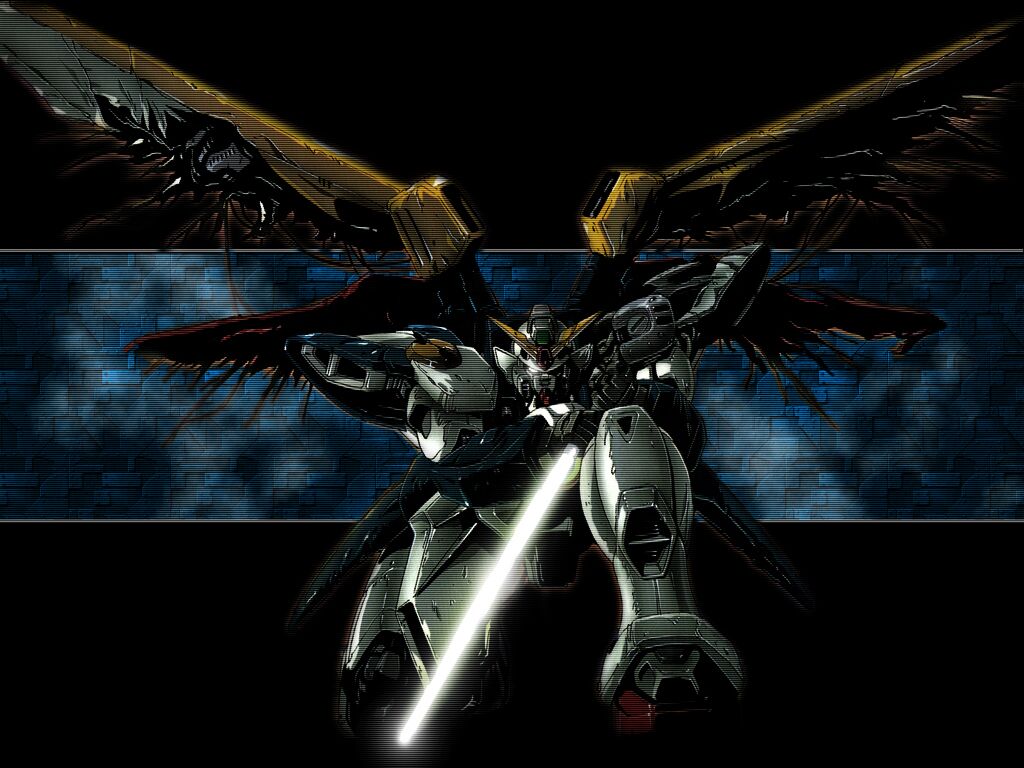
Speaking of anime and Japanese robots, the next examples comes from a similarly old-school show, Gundam! Known as the Mass Production type Z Gundam, this “Mobile Suit” is one of the more popular mechs from the series. And for good reason!

In addition to being able to fly on its own without having to transform into a fighter configuration, this mech also carries a beam rifle and can get into hand to hand combat with its pair of beam sabres. Just because you’re a futuristic robot suit doesn’t mean you can’t go samurai on your enemies asses!

In addition to being able to run at high speeds, its thruster packs provide a whopping 1.53 G (73900 kg) of thrust. This makes it capable of operating in air, space and on land. Its diverse weapons capabilities also mean it is able to perform ranged and hand to hand attacks. In short, its versatility makes it popular, and pretty damn cool to look at!

Robocop 2:
Also known as “Robocain”, this monster appeared in the sequel to Robocop and was intended as his successor. In the midst of the police strike in the second movie, OCP intended to fully replace the police force with cyborgs. All they needed was a human brain to make the prototype work… again.

Unfortunately, due to some tampering from a rather ambitious OCP exec, the brain came from former drug kingpin and Jesus wannabee Cain. Rather than protecting and serving, he saw this as an opportunity for quasi-godhood. Heavily armed, armored, and clearly nuclear powered by the symbol on the right side of the chest plate.

And who wouldn’t feel like a god with this kind of firepower? Though somewhat cumbersome and easy to trip up, the Robocain suit had all kinds of advantages. A rotary cannon was its main article, mounted on one arm, while a shoulder mounted autocannon added some punch. While its right hand was articulated, its left was little more than a hydraulic fist. Hard to describe, but if you’ve seen the movie, you’d understand.

At the end of the movie, Murphy and Cain get into it, with Murphy being heavily over-matched. In the end, he managed to defeat him by having his partner distract him with a vial of nuke (the designer drug he invented) and then jumped on his back and ripped his brain out of the head assembly. A grissly death, but a fitting one for a criminal madman with a god complex!

Tripod Walker:
I always say there is nothing like a classic, but when it comes to giant robots, this is the cat’s ass of classics! Taken from H.G. Well’s War of the Worlds, the tripod walker was the proposed design of what an alien attack machine would look like. Tall, tripedal, and using heat rays to annihilate everything in their paths, these robots served as an inspiration for countless other franchises and genres of sci-fi.

In the novel, Well’s describes his creation as follows: “Machine it was, with a ringing metallic pace, and long, flexible, glittering tentacles… Behind the main body was a huge mass of white metal like a gigantic fisherman’s basket, and puffs of green smoke squirted out from the joints of the limbs as the monster swept by me. And in an instant it was gone.”

From this basic description, movie makers and conceptual artists have through several renditions. The latest, which were featured in the Stephen Spielberg remake, were updated to look sleaker and more modern; in essence, less Steampunk-y. However, they retained the same basic design, consisting of a central “head”, three legs and a series of beam emitters mounted underneath.

Zentraedi Battlepod:
As artists concept, by VulnePro at deviantArta finale, it’s back to the Robotech universe with the Zentraedi Battlepod. Built by the alien race that are the main antagonists of the show, this battlepod is essentially a mass-produced infantry mech and the mainstay of the Zentraedi forces.

Known as the Regult within their own ranks, this mech is fast, maneuverable, and highly versatile, especially when compared to heavier mechs like the Tomahawk. It lightweight and chassis-mounted thrusters ensure that it can make high jumps and operate in zero gravity.

It’s weaponry is also more sophisticated than the average human design, which includes two quadruple-barreled medium beam cannons, two single barrel light cannons, and two light pulse beam cannons mounted on the back of the head.

However, the Battlepod has a discernible weakness, which is its light armor. Although this makes the pod faster and more maneuverable, especially in space, it is not capable of withstanding direct hits from autocannons, missiles or lasers. In the end, the Battlepod’s greatest quality is it’s quantity. Later generations would be upgraded to include heavier weapons and armor, but for the duration of the First Robotech War, Zentraedi forces were stuck with this one.

Well, that was fun, again! Bring on the suggestions, I still got a few to work through. See you next time!

Cool Ships (volume V)

Back again! More ships, more designs, more franchises too. Like I said last time, there’s just no limit when you get right down to it. And in the course of doing my homework on cool sci-fi concepts, I’ve found that there are hundreds of franchises out there that I’ve never even heard of before. Of those I have heard of, I always seem to miss a few obvious candidates. That’s the beauty of ongoing segments though. Here are the latest, with some suggestions thrown in too 😉

Colonial Raptor:
Another late entry from the Battlestar Galactica universe, the updated version. Designed for reconnaissance, transport, atmospheric and space flight, and capable of making short range FTL jumps, the Raptor is the workhorse of the Colonial fleet and one of its most versatile vessels. Ordinarily, the Raptor is operated by a crew of two, one pilot and one Electronic Countermeasures Officer. Given it’s size and shape, it cannot launch from a launch tube and must take off and land from a Battlestar’s forward launch bay.

Having served with the Colonial fleet for over 40 years, making its debut in the first Cylon War, the versatility and reliability of this craft have prevented it from being phased out by newer generations of Colonial ships. During the second Cylon War, Raptors were used regularly in order to dust off survivors from Caprica and other colonies. Relying on a fly-by-wire system, rather than the new defense network systems, it also proved invulnerable to the virus the Cylon’s used to cripple the fleet.

Cygnus:
Now here’s one that people probably won’t remember. In fact, I didn’t recall it either until I did some reading and realized I had seen the movie which featured it – The Black Hole – as a child and quite enjoyed it. Though a little Buck Rogers-y by modern standards, the concept and the movie and this ship still stand the test of time.

Released in 1979 by Walt Disney Pictures, The Black Hole was one of many movies that sought to take advantage of the sci-fi craze that Star Wars had unleashed. The plot centers on a derelict ship, known as the Cygnus, which is run by an android crew and a brilliant (albeit mad) scientist named Doctor Hans Reinhardt.

In addition to looking pretty cool, with its glowing transparent sections and old-school design, the Cygnus is apparently able to withstand the gravitational pull of black hole due to its ability to generate its own gravity well. In addition, its commander, Dr. Reinhardt, theorized that he would be able to fly it through a black hole and see once and for all what lay on the other side… It didn’t take, but still a cool idea!
Guild Heighliner:

Artist’s concept for a Guild Heighliner

Here’s one I couldn’t believe I had forgotten. In fact, I will accept any and all chastisements for my failure to include Dune craft in this series thus far. This can include physical beatings, just stay away from the nads… not quite done with those yet!

Anyhoo, when it comes to Dune ships, the Heighliner definitely takes the cake! Massive as all hell, this ship was the backbone of all commerce, diplomacy, travel and tourism in the Dune universe. Like all shipping, it was the exclusive property of the Spacing Guild and subject to their many controls, laws and whims.

Boasting Holtzman engines – a FTL drive system that was capable of “folding space” – the ship still required the services of a Guild Navigator. This person, a semi-prescient mutant due to years of living in a spice tank, would see a path through time and space and thus navigate the ship safely to its destination.

According to the original Dune, a single Heighliner was capable of lifting an entire planet’s worth of personnel, goods and supplies from one point in space to the next. As Duke Leto tells Paul in Part I of the story: “A Heighliner is truly big. Its hold will tuck all our frigates and transports into a little corner — we’ll be just a small part of the ship’s manifest.” Later in that same installment, House Harkonnen used a single Heighliner in order to lift an entire army to Arrakis for a surprise assault on the Atreides, and the cost was nothing short of punitive!

Given that the Heighliners are the sole means of commerce in a Empire as massive as that of the Dune universe, its little wonder why Heighliners are so freakishly big. Chartering one aint cheap, and if you do stowe aboard, you are expected to mind your business and wait until you arrive at your destination. Due to their high level of secrecy and sensitivity, no one is even allowed to venture beyond their own boarding craft when on a Heighlinger, and virtually no one outside of the Guild has ever seen a Guild navigator. Considered to be neutral territory by Imperial law, any and all acts of violence aboard Guild Heighliners carry stiff penalties.

Gunstar:
Ah, another childhood classic! Taken from the film The Last Starfighter, the Gunstar was the first line of defense of the Star League against the evil Xur and the Ko-Dan Armada. Sounds pretty cheesy, huh? Well, it was the eighties! And this was yet another Disney franchise that seemed to be riding in the Star Wars wake. Still, this movie was one the first to make extensive use of CGI (Tron being the only other) and had a none-too-bad storyline too boot!

Boasting multiple guns, missiles and a “Death Blossom” trick that is nothing short of devastating, the gun star is a rather unique and innovative design. Apparently, it was meant to be a class of ship that would never go out of style, merging functionality with lethality and being able to take on any class of enemy ship.

Every Gunstar is a two seater, with the starfighter (gunner) in front, and the navigator in the rear. While the navigator flies the ship, the gunner directs fire from a swivel chair, which gives them control over the ships moveable weapons batteries. Although it has no shielding to speak of, the hull is protected by armor plating which can withstand multiple direct hits. When cornered, it is also capable of unleashing the “Death Blossom” where it will begin to rotate at a furious speed and unleash gun and missile fire in all directions. This however, is considered a weapon of last resort, since it will drain the ship’s power supply completely.

Heart of Gold:
Now here’s an interesting, and highly improbably, entry! Coming to us straight out of The Hitchhikers Guide To The Galaxy, the SS Heart of Gold is rather unique in that it merged scientific theory with Douglas Adam’s notoriously quirky sense of humor.

Being a prototype vessel, it was the first ship ever in the universe to boast the “Infinite Probability Drive”. This drive system is essentially a Faster-Than-Light engine which is actually based in quantum theory. Essentially, the theory states that a subatomic particle is most likely to be in a particular place at a particular time, but that there is also a small probability of it being found very far from its point of origin. Thus, a body could travel from place to place without passing through the intervening space as long as it had sufficient control of probability.

Pretty cool huh? In the original radio series, the shape of the vessel was not specified. In the novelization of the series, it was described as a “sleek white running shoe”. For the sake of the movie, artists went with a tea-cup design, and added some brake lights for good measure. Originally built as part of a secret government project on the planet of Damogran, the ship was stolen by President Zaphod Beeblebrox during its launching ceremony and became the means through which the main characters began exploring the universe.

Minbari Cruiser:
Back once more to the B5 universe for another fine example of kick-ass shippery! Known officially as the Sharlin-class Warcruiser, this Minbari vessel is the mainstay of the Minbari fleet in the original series. Big, bold, stealthy, and packing a sh*tload of firepower, this vessel is veritable nightmare for all but the most powerful of races. Even Shadow vessels mind their business when some of these are in the field.

Making its appearance in season one of the show (episode 17: “Legacies”) and went on to become a regular feature. When Sheridan assumed command of the station in season two, the renegade cruiser Trigati was destroyed in the course of a standoff. After B5 broke away from Earth in season 3, a force of Sharlin cruisers arrived just in time to prevent the station from being captured by forces loyal to Clarke. Many went on to serve alongside Sherian and Delenn in the Shadow War and even went on to help liberate Earth from Clarke’s forces.

According to Delenn, Minbari ships do not rely on conventional engines like other ships. Instead, a system of gravitational and electromagnetic fields for propulsion, which have the added benefit of supplying artificial gravity. This frees up their ships from the needs of rotating sections and makes for a more effective combat platform. Sharlin cruisers also boast a significant amount of weaponry, which consists mainly of heavy beam cannons, but also includes missile launchers, neutron guns, and electro-pulse cannons.

During the Earth-Mimbari War, Earth Forces were completely outmatched by this class of Cruiser. In addition to being highly resistant to Earth force weapons, the Sharlin cruiser also boasted a stealth field which prevented Earth ships from being able to lock onto it. In the course of the war, only one human Captain ever survived combat with one, Captain John Sheridan. Relying on a phony distress signal and several well placed tactical nukes, Sheridan was able to lure the Black Star, the Minbari flagship, into a trap and destroy it. Though the Minbari considered it a cheap victory, Sheridan’s fame and renown quickly spread throughout the fleet.

During the battle of Sector 83, the Sharlin-class Cruiser proved an effective weapon against the Shadows. Although somewhat slow and providing a large target for Shadows, their powerful beam weapons were capable of destroying a Shadow ship unassisted. When protected by smaller, faster craft like the White Star, it proves to be a very effective combat platform.

Nebula-B Escort Frigate:
More Star Wars! God, I think I’m OD’ing on this franchise. But the sign says “Cool Ships” and this one is no exception. Known as the Nebula-class frigate, this ship is probably best remembered as the “Medical Frigate” which appeared in Empire and Jedi. 

Measuring some 300 meters long and designed to defend Imperial convoys from Rebel attacks, this ship was more famously used by the Rebellion as a hospital ship. During heavy fighting, Nebula-B’s would be on hand to pick up pilots that had ejected and provide them with life-saving assistance, ensuring that Rebel pilots could live to fight another day.

The most famous appearance of a Medical Frigate was during the Battle of Endor, when several medical frigates were on hand to service Rebel pilots who had been shot down by superior Imperial forces. It was also on board the Medical Frigate Redemption that Luke Skywalker received his prosthetic hand after losing it in a lightsaber duel to Vader.

In addition to providing escort and as a hospital ship, the Nebula-B was proved useful as a deep space scout and reconnaissance ship, due to its sophisticated sensors. During raiding missions or less intense combat operations, many also served as command ships given their speed and defensive capabilities. One weakness of the Nebula-B however was its thin fusilage. Though this made the ship an inexpensive vessel by most standards, it also made it a poor choice for heavy combat. Hence why it was relegated to support, scouting and medical roles.

The Nostromo:
You know, I really thought I covered this one already. I already mentioned how the Alliance Cruisers from Firefly appeared to be inspired by this baby. And it just makes sense that if you’re going to cover ships from the sequel, (the USS Sulaco and the Cheyenne Dropship) that you cover the original first. But alas, the Nostromo was somehow passed over by me, another act of wanton insensitivity! Beating shall continue until my attitude improves!

Okay, now that we got my punishment out of the way, allow me to pay this ship it’s due homage. The main set for the movie Alien, the USCSS Nostromo was a deep space commercial vessel which belonged to the Weyland-Yutani corp (much like everything else in this universe!).

Overall, the Nostromo was a curious design which made perfect sense from a space-faring point of view. Doing away with such things as streamlining and aerodynamic sleekness, the ship was well suited to deep-space travel and hailing. In addition, it was also taller than it was long, another common aspect to spaceships which are confined to the whole sea ship/airplane paradigm.

It’s massive refinery, which it towed behind, would process its manifest of mined ore while it made its way back to Earth from wherever it had been deployed. Thus, in addition to providing transport and amenities for a crew of miners and spacers, it was also a mobile refining platform that could deliver processed materials to factories rather than just unrefined ore.

While on return from the distant planet of Thedus, the Nostromo was rerouted to LV-426 where it picked up the alien organism known as a xenomorph. After all but one of the crew were killed the by creature, Ellen Ripley, the ship’s Warrant Officer, set the ship’s to self-destruct and escaped aboard the ship’s life craft with the crew cat, Jones. According to Weyland-Yutani execs, who were some pissed when she returned without her ship, the destruction of this vessel cost them 24 million in adjusted dollars. Damn penny-pinchers!

The Sathanas:
What do you call the most fearsome, intimidating and powerful ship in the universe, without being too obvious, that is? The Sathanas, that’s what! Being the Latin name for Satan, this title is very apt when applied to a massive juggernaut built by a race known as the the Shivans (i.e. Shiva, Hindu god of destruction).

This last entry, much like The Colossus and Deimos from my last list, comes to us from the game Freespace 2. Making its appearance midway through the game, this terrifying vessel was the most powerful space-faring ship ever encountered by the human race or its allies.

Boasting four massive beam cannons which are situated at the end of its claw like appendages, this ship best exemplifies the offensive fighting spirit. Jumping into a field of battle, it is capable of dealing devastating blows on a target head on, keeping its flanks and rear hidden from the enemy.

Above all, it is clear that the Shivan built the Sathanas to act as a terror weapon in addition to a capital ship. One look at its design confirms this, given its clawing appendages and thorny skin. Defeating this ship outright is quite difficult given its reinforced plating and terrible array of weapons. Disabling this ship, through EMP missiles and guns, is not much easier given the incredibly density of its hull and many redundant systems. In the end, the only way to beat it seems to be for lighter craft to take out its “claws” while heavier vessels strike at it from a distance. However, this still proves to be a suicidal mission given the Sathanas’ many missile and defensive batteries.

Ultimately, taking down this ship in the game is much like the real-life campaign to sink the Bismark. This dreadnought, which was the pride and joy of the German navy in WWII, also boasted massive weapons, a heavily armored hull and superior systems. In the end, the Royal Navy brought it down through a combination of luck, persistence, and careful engagements, taking their time to disable it and then closing in to pound it relentlessly! Hmmm. I guess good history makes for good gaming 🙂

Final Thoughts:/strong>
The suggestion box, as always, is still open. Thanks to Goran Zidar for suggesting the Gunstar, I knew I’d have to include it sooner or later and I’m glad someone asked. Anything else? I got another installment on the way, and probably a few more after that. No? Sigh, alright, bring on the beatings! No nads!

Game of Thrones, now appearing on South Park!

I guess it was just a matter of time. But it seems that Matt Stone and Trey Parker, creators of South Park, have finally decided to include a Game of Thrones pop-culture reference into their show. Despite how low-brow the humor can get, and an overabundance of toilet humor, I’ve always been drawn back to this show because of it’s ability to stay current.

In fact, after reviewing the whole of season 14, in which they mocked all the crap Jersey reality TV, cooking shows, the shake-weight, Tiger Woods, “sex addiction”, Nascar, Facebook, and BP, I became convinced that the show a certain hidden genius to it, like it was one of the most relevant sources of pop culture mockery and satire available to viewing audiences. Yeah, that impression kinda wore off…

In any case, I’m just glad they threw out some GOT references for all the geeks out there! Watch the clip, it’s quite funny if you’ve read the books or follow the series:

AI Graph

Inspired by what I learned from my little romp through the world of AI, I’ve come up with a graph that depicts the general rules I observed. Basically, there are two guiding principles to the world of AI’s and science fiction. On the one hand, there’s their capacity for emotion and second, there is their level of benevolence/malevolence towards humanity. As I noted in the last post, the two are very much interlinked and pretty much determine what purpose they serve to the larger story.

So… if one were to plot their regard for humanity as the x axis and their emotions as the y axis, you’d get a matrix that would look pretty much like this:

As usual, not a complete mock-up, just the examples that I could think of. I made sure to include the ones that didn’t make it into my previous posts (like HAL, how could I forget him?!) And even though I had no real respect for them as characters, I also included the evil robots Erasmus and Omnius from the Dune prequels.

P.S. Notice how the examples are pretty much evenly distributed? Unlike the Alien Graph where examples were concentrated in two quadrants (evil and advanced or good and advanced), here we have robots that run the gambit from emotional to stoic and evil to good in a nearly uniform pattern. Interesting…

A Review of Repo Men, the movie

The following are the core concepts of the novel The Repossession Mambo, by Eric Garcia (the same guy who brought us Matchstick Men and the Anonymous Rex series). It’s 2025. Thanks to a company known as “The Union”, society has been flooded with artificial organs and just about everyone has one. They have saved and prolonged many a life, and cost a mint! And if you fall behind on your payments, a Repossession agent will come to your house, slit you from your navel to your neck, and retrieve it.

In short, its a dystopian future where a single company an unrealistic amount of power – the power to save live, the power to take it away. Most people are struggling just to make ends meet and as a result, the debt-ridden masses struggle to make their payments and stay alive. Right out of the annals of classic sci-fi. And with all the other cyberpunk concepts that have been done, I’m surprised someone didn’t tackle the issue of artificial organs sooner.

And, let’s face it, the premise is very much in tune with our day in age, released at a time when homeowners and families are struggling to avoid foreclosure on their houses thanks to a series of bad mortgages (and re-mortgages) that they were sweet talked and pressured in taking them in first place. Yes, for people coming through the worst economic crisis since the Great Depression, and who are used to dealing with punitive cost of privatized health care, this movie was sure to resonate. A wonder then why it did so poorly at the box office!

Plot Synopsis:
As already noted, the story opens on the US in the near future. Artificial organs, joints, and even a neurological matrix, have revolutionized life by ensuring that the terminally ill, crippled and people near brain death can live on happily, assuming they can pay of course!

Small hints are given as to what is going on in the world at large, all of it quite familiar and relateable to today. On the one hand, there is loose talk of an ongoing debt crisis and a crippled economy. There’s also the passing mention of US soldiers gearing up to go into Nigeria in what has been deemed “Operation: Hope Springs Eternal” (a parody on “Operation: Restore Hope” or “Operation: Iraqi Freedom” perhaps?)

Into all this, we get Remy (Jude Law) who appears to be writing a manifesto of sorts. He opens it with a reference to Schrodinger’s Cat, which any fan of Big Bang Theory will instantly recognize. He wonders how anything could be considered both alive and dead in the same instant, clearly alleging that his story illustrates just that. The movie then opens in a flashback sequence, all things building towards his session in a slum with an antiquated typewriter.

Basically, Remy was a Repo Man who, alongside his age-old friend and army buddy Jake Freivald (Forest Whitaker), is considered the best in the business. However, Remy’s wife would prefer it if he transferred to sales and stopped doing the grisly work of harvesting people’s organs for money. He agrees, but also tells Jake he will do one last job. He is nearly killed when his equipment (a defibrillator) shorts out and nearly kills him. He wakes up in the hospital and is told that he will need an artificial heart now. His angry, panicked reaction tells us all we need to know about his feelings on that 😉 After years of watching others get screwed over by The Union, he now is facing that very thing himself.

Naturally, he tries to go back to Repo’ing since his wife has already left him and he needs the money. But somehow, he just can’t bring himself to do it anymore. What’s more, time is running out on him making his payments. During a final attempt, he goes into a “Nest” – a slum area where people go to flee The Union’s repo men – where he is attacked and knocked unconscious.

He awakens to find a woman named Beth (Alice Braga) – a lounge singer that he’s seen playing clubs before – living in one of the abandoned buildings and decides to help her. After standing watch as she goes through withdrawal, he agrees to help her since they are in the same boat. Seems she has mucho enhancements, including artificial joints, organs, eyes, and ears.

He breaks into the company storeroom and begins filing the bar codes off of all the spare parts they currently have. No bar codes, no scans will be able to detect that they have organs with are past due. However, Remy is caught by his friend and told to get out while he can. Back at their slum lair, Beth has set him up with an old typewriter she found. He sets to work banging out a “cautionary tale” about what he did and what he’s learned, until at last a repo man finds them and they are forced to kill him. Naturally, Remy outsmarts the man and he dies, but Beth is injured in the course of things. They are then forced to find a black market dealer who will fix her up, which takes them to another “Nest”.

Unfortunately, Jake finds them there and reveals to Remy that he is responsible for shorting out his defibrillator. By forcing him to meet the payments of an artificial organ, he figured his friend would never leave the business. The two fight, and in the course of it, Remy is knocked unconscious. What follows is a total mind-f*** which is comparable only to Inception! I shall break it down succinctly.

Basically, Remy wakes up to find that Beth incapacitated Jake. They then flee together and decide the only way they can resolve this is to break into corporate HQ, find the “Pink Door” where repo personnel make their returns, and physically scan their organs. After an over-the-top scene where Remy fights everyone between him and the “Pink Door” (which is ridiculously labeled as such), they break in and begin performing field surgery on themselves so they can scan the bar-codes.

Jake and their boss walk in a moment later, and Jake decides to switch sides and kills their boss. They blow up the repossession machine together and escape to the tropics, where Remy has apparently published his manuscript under the name The Repossession Mambo. However, this idyllic scene is interrupted when things begin to get fuzzy and some hiccups appear, as if it were all a recording…

Oh wait, it is! You see, in real life, Remy was rendered near brain-dead from the blow Jake gave him. The medics who arrived shortly thereafter hooked him up to one of the new neurological matrix’s in order to keep up his brain function. Hence, all this stuff about beating the company and escaping to the tropics was all a lie. Jake also tells them to leave Beth (unconscious but not dead) alone for him to deal with later. He then picks up Remy’s manuscript and notices the title, the same one featured in his little reverie.

I seriously wasn’t expecting that, but respected the movie more for the little dystopian twist at the end. It was in keeping with the whole tradition of cyberpunk tales, making sure that things like happy endings only happen in the movies… or not!

Final Thoughts:
I’ll be honest, this movie didn’t suck. It was very hard to take Jude Law seriously as a cynical, bad-guy, but for the most part, it was ably acted. It was also hard to believe that a former jarhead turned repo man, a man who for all intents and purposes seemed to like killing and didn’t care about the pain he caused, could maintain a marriage and a family. Somehow, these two sides of his personality didn’t fit. And lastly, the gore level, especially in that scene behind the “Pink Door” seemed gratuitous. It’s like, if they can invent scanners that can read a bar code through flesh and clothing, why do they need to slice opens their own bodies to scan the bar-codes for the big machine? I might have mentioned that the fight scene which brought them there was also pretty stupid, but of course, that was all in a dream! Technically, it doesn’t count 😉

But other than that, I actually liked this movie. It had plenty of thematic elements which landed for me. For one, there was the issue of a company pressuring people to sign-up for a product no one seemed to be able to afford. The scenes where we see the salespeople do their thing, or the boss’s BS about “you owe it to your family to do this” and “we can come up with a plan that fits your financial standing” were just too perfect. Tell me that wasn’t a parody of the banking industry, pressuring people into taking sub-prime mortgages when they could barely afford their current payments!

What’s more, the high costs of the new organs, which people had to turn to payment plans, credit, and whatever else to afford were clearly a reference to the health care crisis in America. People need life-saving procedures, have no choice but to sign up for them unless they want to die and leave their families behind. But in the end, its more than they can afford, and all the smarmy reassurances of the salespeople can’t change that very fact.

Yeah, it kind of bombed at the box office, but I’m thinking that rentals, DVD sales and Netflix might help it recoup its losses. And I strongly recommend people, at least those who aren’t turned off by blood and gore, take the time to watch it. If you’re a fan of dystopian sci-fi, you might just like it. And if you’re a writer of dystopian sci-fi (for example, me!) then you might just find it inspiring.

Repo Men:
Entertainment Value: 7/10 (not really a nail-biter, but definitely not boring)
Plot: 8/10
Direction: 7/10 (nothing special, but ably shot)
Overall: 7.5/10