Obama’s Reelection Breaks Social Media Records

News of Obama’s reelection has certainly been met with some strong emotions. In addition to the extreme laments of certain die-hard conservatives – Trump has called for revolution, Glenn Beck has told conservatives that “Doomsday is here”, and some going as far as to proclaim the death of God – a  number of social media records have been broken.

Amongst them was the Facebook photo of Obama embracing his wife, which received the most “Likes” than anything posted on the social media website. As of writing this article, it has reached a total of 4,394,634, beating out Justin Bieber, Gangnam Style, and countless photos of cute kittens.

The same photo was posted on Twitter, where it broke another record for the most retweeted picture ever. Here again, it beat out Bieber for the numer one spot, grossing 814,121 retweets versus Bieber’s compartively modest 223,598. Also of interest is Mitt Romney’s “Thank You” photo, which garnered 910,738 Likes, less than a quarter of Obama’s victory embrace. Once again, this gap would seem to demonstrate the importance of new media in the realm of politics, and how the Obama camp has the edge.

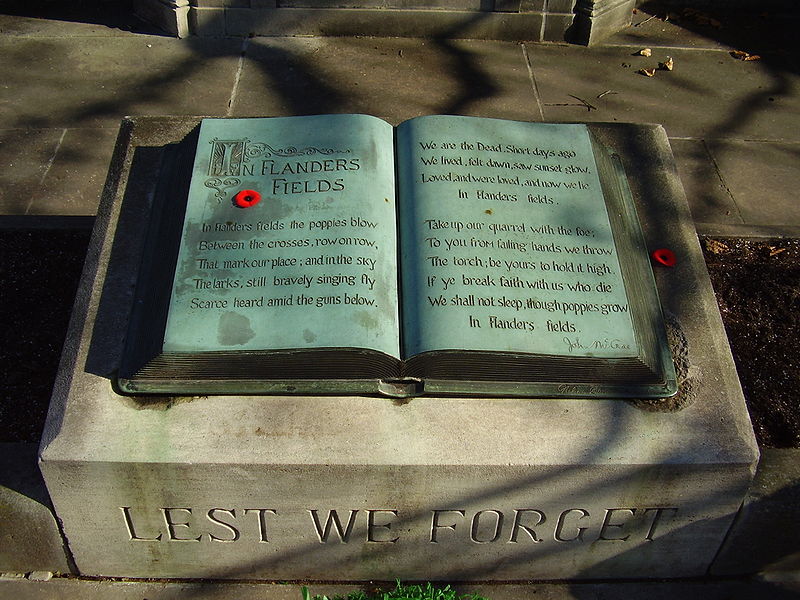
Remembrance Day 2012

On this day, at the 11th hour on the 11th month, we pause to remember all those who died in war. We pause to acknowledge the sacrifice of the many for the many more, who died defending freedom and this thing we call civilization from fear, oppression, genocide, hopelessness, brutality, and the scourge of war itself. And, as we have done several times now, my wife and I chose to honor the veterans by going down to the Legislature in Victoria, BC. There, massive crowds come to watch the parade, see the wreaths being laid, hear the speeches, and listen to the 21 gun salute.

And let me tell you, it was cold and rainy this year! But still, thousands of people still came out to pay their respects and show their support for the current generation of veterans and military personnel who are here at home or deployed overseas. As I’m sure most people know, Remembrance Day began as a way of commemorating those who died in the Great War, a somber anniversary that was made to coincide with Armistice Day. After four years of horror and endless conflict, the combatants agreed that the 11th hour of the 11th day of the 11th month would mark the end of hostilities.

Since that time, it has grown to commemorate those who have died in any war, as a tribute to the terrible lessons learned in World War I, but have since come to be repeated, either through necessity or the frailty of humanity, many times since. Known as Remembrance Day in the United Kingdom, Canada and Australia, Veteran’s Day in the US, and Armistice Day in New Zealand, France and Serbia; for much of the world it is simply a day to reflect on the greatest sacrifices, worst mistakes, and terrible horrors to ever be witnessed by history.

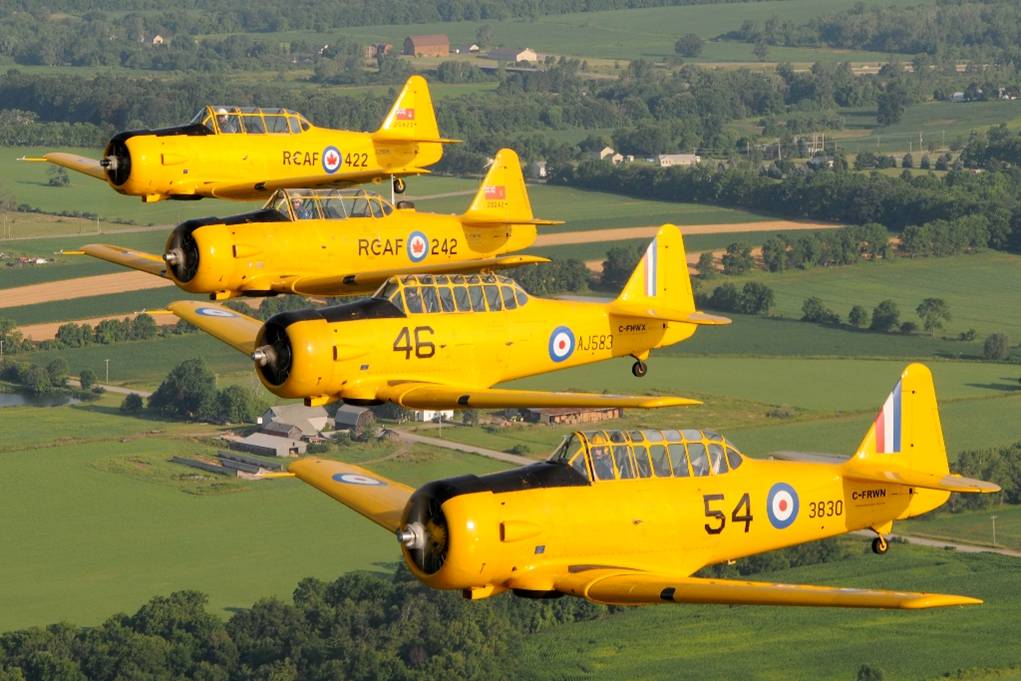
To mark the occasion, I thought I would take the time to honor two veterans who are very near and dear to my heart. They are my grandfathers, both of whom I’m named after: Grandpa Matthew Vincent Williams and Grandpa Stewart Beverley Wilson. Both men were pilots with the Royal Canadian Air Force, flying out of bases on Canadian soil, patrolling our coasts, and training pilots and instructors how to fight.

Stewart Beverley Wilson: Born in 1922, my maternal grandfather became a pilot and flight instructor who then went on to be a instructor of flight instructors while serving at CFB (Canadian Forces Base) Trenton in Southern Ontario. He was in his 20’s for the course of his service, barely a man himself, and was responsible for teaching other young men to train other pilots how to fly. He was part of the Commonwealth Air Training Program, a vast air training program in Canada designed to ensure that Britain and the Commonwealth had enough pilots to defend the skies during the Battle of Britain, and then to take part in the Allied air offensive for the rest of the war. Afterwards, he and his family settled in Brantford, but he continued to serve as a flight instructor.

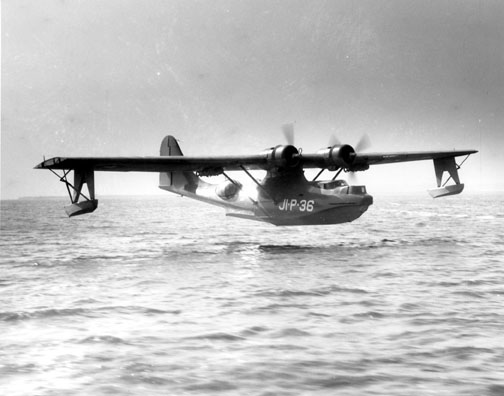
Matthew Vincent Williams: Born in 1912, my paternal grandfather enlisted in the RCAF with the hopes of becoming a pilot. However, due to his eyesight, he was instead trained as a gunner and navigator. Stationed in British Columbia, in part because he had recently become a father (one of my uncles). His tour took him to Jericho Beach in Vancouver, as part of the Western Air Command where he flew personnel in and out of the city and Vancouver Island. During the course of the war, his aircraft – a PBY Canso – sunk a Japanese submarine off the coast with depth charges while on patrol. Though he hoped of settling in the west, he returned to Ontario in Aug of 1945 to take care of his mother and settled into Hamilton. He remained in the Glider Program for many years before retiring.

Thank you all and wishing you a sober, reflective and peaceful Remembrance Day/Veteran’s Day/Armistice Day, wherever you may be. Let us hope that with every conflict and every act of sacrifice since the Great War ended, that we’ve learned something about the futility of war and the needless nature of aggression and conflict. And here’s to the day when we can settle our differences without bloodshed or violence.

Lest We Forget

Obama Wins!

Yeah, I know I promised not to get into politics much on this site, but that’s a promise I’ve broken enough times now that I feel no one will be particularly surprised or disappointed. And as we all know, there are certain occasions which require us to break our usual set of rules and offer comment. And this is one occassion that I’m happy to talk about, even though it really didn’t come as that much of a surprise.

OBAMA HAS BEEN REELECTED!

That news is so positive that it deserves its own line and in all caps! And yes, all indications seemed to point to him winning a second term, but like many supporters, I was kind of holding my breath last night as the initial returns came in. It was a lucky thing that I had TKD class night, and that it was a sparring class. It was just the positive distraction I needed! And by the time I came home, I had heard that enough returns were in and that enough states were called that Obama could be declared the winner! It still took some time before all the votes were tabulated and it was also revealed that he carried the popular vote, but by then, the good news was complete!

And, as behooves me on this site, I can’t help but wonder (and speculate) how this will impact on our future. Needless to say, I am a lot more encouraged than I was a year ago, back when Obama was struggling to try and get a budget approved by a Congress that refused to even consider one unless be included steep austerity measures and made tax cuts permanent. It seemed that the GOP, which was fast becoming dominated by the Tea Party, had effectively been cornered by the same forces they helped create. It seemed entirely likely at this point that the government might actually fall, or at least it’s economy would collapse. Of course, disaster was averted, but not without consequences in the short term (the downgrading of America’s investment rating).

I seriously began to wonder at this point if a hard swing to the right was in our collective future. With Europe beginning to slip to the right thanks to their economy, immigration issues and the ongoing problems of climate change, all this news from south of the border began to trouble me. If both the EU and the US were to fall under the grips or right-wing parties, we would be seeing a political climate not unlike that of the 1930’s. Back then economic collapse had led to the rise of Fascism all over Europe, not just in Germany and Italy as is often maintained. And in this day and age, we could expect that to be followed by serious humanitarian crisis as the various states of the EU began deploying gunships to the Mediterranean to sink boats filled with refugees and began clamping down on ethnic minorities at home.

Unlike in the 1930’s, where the targets of discrimination and even wholesale murder were people of Jewish descent, followed by Roma, gays and lesbians and Slavs, this time around,t he likely targets were likely to be people from North Africa, the Middle East, and West Asia. Meanwhile, we could expect similar sentiments to take root in the US against people of Latino descent. We had already seen much of this take place during the Bush administration with the building of the border along the US-Mexico border and attempts to pass anti-illegal immigrant legislation. And in more recent years, it achieved a sort of breakout with the passage of SB 107 in Arizona – which made it perfectly legal for police to arrest any Latino resident who could not produce documentation of residence.

Initially, I was angry and nervous. It seemed to me that the GOP was intent on bringing the house down, that their commitment to make Obama fail that they did not care what happened to their country in the process. As long as it happened on his watch, they figured he would get the blame. But at the same time, I kind of pitied them as well. It was clear that they had unleashed a tidal wave that they couldn’t control, and were trapped in it as much as they were riding it. After the 2008 election, they had become the party of “libertarianism”, condemning big government, spending, taxes, and any and all legislation on the economy. Unfortunately, this put them at odds with just about everything they needed to support to help the economy recover.

Needless to say, things got better, and the election seemed to be cinched in advance by a number of factors. First, there was the fact that during the primaries, all the GOP candidates seemed hamstrung by all the extreme right-wing sentiments they were expected to endorse. one of these were likely to play well with all the moderates and undecideds. Second, there was Romney’s embarrassing gaffs as he traveled abroad and alienated everyone on his tour. He attempted to prove that he was a man who could handle foreign relations, but proved the exact opposite. Then there was Paul Ryan, a right-winger who proved to be at once too popular with his base and too extreme with the voters who sought the approval of. And finally, there was Hurricane Sandy, which made him look like a flip-flopper when it came the importance of such federal agencies as FEMA.

All the while, Obama was looking sturdy, even though he was being hampered by the terrorist attack in Benghazi, his initial performance in the debates, and the ongoing question of the economy. However, when the chips were down, he showed himself to be a man who could be counted on, and even won over such die-hards as New Jersey Governor Chris Christie. Between that and the fact that economy was beginning to recover on his watch, the election seemed in the bag.

And to quote Obama’s victory speech, “The best is yet to come.” I certainly hope so. It’s not just a question of recovery int he short run. There are a lot of things at stake here, not the least of which is the future of America and indeed the world. For the last thirty years now, there has been a struggle for the heart and soul of America, at the core of which seems to be the issue of decline. America, like it or not, is no longer in ascendance, and is faced with the myriad problem of global climate change which may exacerbate that problem very soon. If the nation and the world is to survive and come through as winners, then enlightened reform and stable leadership are what’s needed. The last thing that can be allowed to happen is a hard swing to the right, more austerity measures, and more of the same.

It has always been the reaction of empires and civilizations that have found themselves in decline to react with stringent conservative measures – more war, more sacrifice, more repression, more religious zeal – and that has only ever hastened the problem. That might sound a bit dramatic, but I’m a historian, so trust me when I say that I know what I’m talking about. And as Ronald Wright says, “Every time history repeats itself, the price goes up.” Despite the persistence of old boundaries, our world has become a global state, interconnected like never before in our history. We stand or fall together, and cannot afford to act selfish, regressionist, or that our needs super cede those of others.

So I say congratulations America on making the right choice. Enlightened reform won out against old world thinking and denial. Now let’s all get to work on making things happen and check the ideological obstructions at the door!

The Birth of an Idea: Fascis Ardens!

Inspiration is a funny, fickle thing! As I’m sure anyone who’s ever attempted to write knows, ideas seem to come when you least expect them. On the one hand, a person can go months without coming up with an original idea. And then, just like that, inspiration can strike suddenly and without warning. You find yourself not only coming up with an idea, but the concept for a full-length novel!

That’s what happened to me this weekend. Myself and my wife were preparing to head up island to see her family. I was contemplating books that deal with the concept of alternate history, and how ones that deal with alternate outcomes to World War II and the Civil War seem to be especially popular. In the former case, you have The Man In the High Castle by Philip K Dick and Fatherland by Robert Harris, two seminal novels that address what would have happened had Germany won the war.

In the latter case, you have stories like A Rebel In Time by Harry Harrison and The Guns of the South by Harry Turtledove, which merge time travel and alternate history to examine what would have happened if The South had won the Civil War.

In both novels, the plot revolves around a single or group of White Supremacists who use a time machine to bring modern guns to the Confederate Army. This allows the South to prevail, which they hope will prevent the rise of the Civil Rights movement, the end of Apartheid, and other equality movements.

That’s when it hit me! Why the heck hasn’t anyone done an alternate history story where White Supremacists go back in time to make sure Germany won the Second World War? Sounds like something that ought to have been done by now; but to my knowledge, no one’s tackled it yet. I got to thinking long and hard about it, about the plot, characters and potential twists. Eventually, I had what I felt was the bare bones of an idea. It varies slightly from the premise I just mentioned, but in ways I think work! I plan to call it…

Fascio
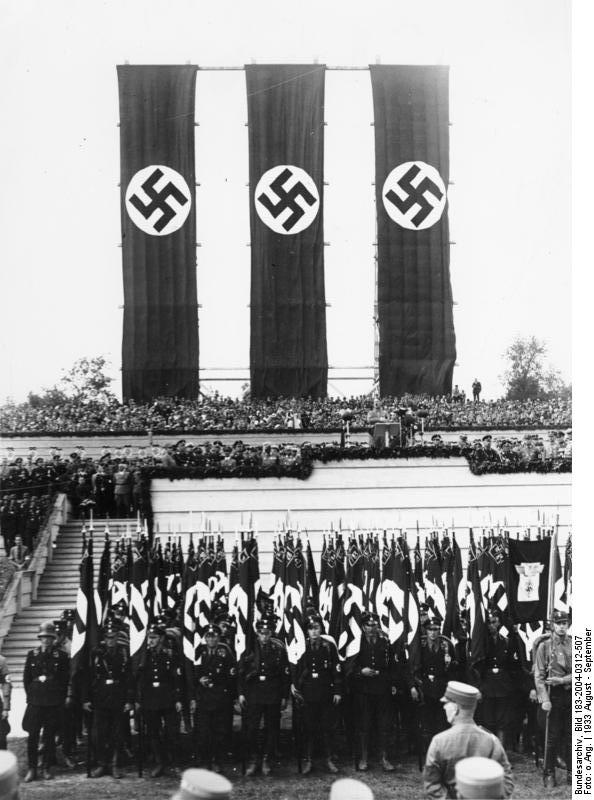
For those familiar with the Fascist movement of the 20th century, the concept of the Fascio is probably a familiar one. This was basically just a bundle of sticks with an axe tied on that was set afire at public gatherings. The ritual dates back to Ancient Rome, where the burning of these ceremonial bundles was meant to symbolize lighting the way to the future. Italian Fascists, under Mussolini, especially loved this ancient ritual, which they used to draw a connection to the past as much as to point to the future. Like all Fascist rituals, it was an inherent contradiction, more regressive than progressive in nature. But hey, the Fascists didn’t do logic…

Plot:
The story opens in 2050, where the world is reeling from the worst ravages of climate change and Fascist parties are once again taking hold of Europe and North America in response to numerous humanitarian crises. Two young history enthusiasts, believing that the worst is coming, decide to take advantage of an experimental new technology: Time Travel!

Using a machine they gain access to, the duo plan to travel back in time to Germany in 1920, where they plan to find a despondent young military officer named Hitler. Using futuristic technology, they plan to kill him without leaving a trace, and return to the future where things are surely to be much better.

Unfortunately, the time machine sends them to 1941 by accident. Unsure that they will be able to use the machine again in the future, they resolve to kill Hitler during the height of World War II, before he can enact the Final Solution and invade Russia. Relying on their knowledge of history and advanced technology, they manage to kill Hitler at his headquarters weeks before the Battle of Britain was to end and Operation Barbarossa (the invasion of Russia) began. After making a hasty retreat, they jump in the return module and set course of the future.

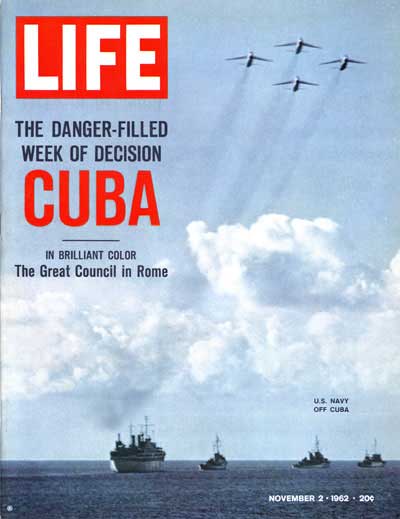
However, once again the machine drops them off in the wrong year. Rather than traveling 109 years into the future, they arrive in 1962, at roughly the same time as the Cuban Missile Crisis from their own timeline, and find a world starkly different than the one they read about in history books. Rather than finding a world dominated by the two superpowers of the United States and the Soviet Union, two different but equally menacing empires are in place. On the one side, there’s the Pan-American Alliance, led by the US, and on the other, the Axis Forces.

After combing through some records at the local library, they learn the terrible truth: assassinated Hitler in 1941, rather than ending the Second Word War, led Germany to victory. Without Hitler’s questionable and erratic leadership, Germany avoided making several mistakes which were directly attributable to him. For one, Germany did not give up the Battle of Britain a few weeks shy of victory. By choosing to maintain their operations against the RAF and its coastal airfields, they eventually overcame Britain’s air defenses. This allowed them to come to a cease fire agreement which took Britain out of the war.

Then, in 1942, they invaded Russia and were successful in capturing Moscow, Leningrad and Stalingrad, all within the space of a year. This led to the creation of Germania, an Empire which reached from Northern France to the Ural Mountains. In the Mediterranean, Italy became the dominant power, with possessions in the Balkans and all across North Africa. The US still went to war with Japan in the Pacific, where they were victorious, but in Europe, the Nazis and their Fascist allies were never defeated.

Thus the world was divided into two major power blocs. The US, Canada, Mexico and all of South America joined together and maintained alliances with India, Japan, China and Australia to safeguard against expansion into Asia and the Pacific. Germany, Italy, and their subservient allies came together to dominant Eurasia and set their eyes on the Middle East, Africa, and further East. Both sides developed nuclear weapons, and by 1960, tensions had reached an all-time breaking point.

Hence, the two historians bear witness to a different “Missile Crisis”, which still takes place in 1962, but was between the Axis and Allies, and actually took place. When the bombs begin to fall, they die, since the future they left is now erased from existence. In their last few moments, they realize the folly of tampering with timelines. Such things are just too complicated for people to handle!

And I was thinking about a possible epilogue chapter where the two main characters meet each other in the alternate future they have now created. The world they live in is a post-apocalyptic landscape, roughly ninety years since World War III, where life is hard and people live by a new form or “Iron Rule” – the rule of survival at all costs. Not sure, we’ll see…

So that’s my latest idea, a time traveling alternate future addressing World War II and the rise of neo-fascism in today’s world. I humbly submit to my followers for their approval. So tell me, what do you think?

The 50th Anniversay of JFK’s Moon Speech

Well wouldn’t you know it? It’s been only a day since a somber anniversary came and went, and already another one is upon us. Yes, it was 50 years ago today that John F. Kennedy, then-president of the United States, made his famous Moon Speech. Of the many speeches that were issued during the height of the Cold War and the Space Race, this one stands out in people’s minds as one of the most inspiring and iconic.

Though Kennedy did not live to see the fruition of the space program he helped spearhead, his words encapsulated the drive and determination that made the Appollo Moon Landing possible. Much like Neil Armstrong’s “One Small Step For Man” speech, this speech is one that continues to inspire, regardless of how much time has passed.

The full transcript appears below:

President Pitzer, Mr. Vice President, Governor, Congressman Thomas, Senator Wiley, and Congressman Miller, Mr. Webb, Mr. Bell, scientists, distinguished guests, and ladies and gentlemen:

I appreciate your president having made me an honorary visiting professor, and I will assure you that my first lecture will be very brief.

I am delighted to be here, and I’m particularly delighted to be here on this occasion.

We meet at a college noted for knowledge, in a city noted for progress, in a State noted for strength, and we stand in need of all three, for we meet in an hour of change and challenge, in a decade of hope and fear, in an age of both knowledge and ignorance. The greater our knowledge increases, the greater our ignorance unfolds.

Despite the striking fact that most of the scientists that the world has ever known are alive and working today, despite the fact that this Nation¹s own scientific manpower is doubling every 12 years in a rate of growth more than three times that of our population as a whole, despite that, the vast stretches of the unknown and the unanswered and the unfinished still far outstrip our collective comprehension.

No man can fully grasp how far and how fast we have come, but condense, if you will, the 50,000 years of man¹s recorded history in a time span of but a half-century. Stated in these terms, we know very little about the first 40 years, except at the end of them advanced man had learned to use the skins of animals to cover them. Then about 10 years ago, under this standard, man emerged from his caves to construct other kinds of shelter. Only five years ago man learned to write and use a cart with wheels. Christianity began less than two years ago. The printing press came this year, and then less than two months ago, during this whole 50-year span of human history, the steam engine provided a new source of power.

Newton explored the meaning of gravity. Last month electric lights and telephones and automobiles and airplanes became available. Only last week did we develop penicillin and television and nuclear power, and now if America’s new spacecraft succeeds in reaching Venus, we will have literally reached the stars before midnight tonight.

This is a breathtaking pace, and such a pace cannot help but create new ills as it dispels old, new ignorance, new problems, new dangers. Surely the opening vistas of space promise high costs and hardships, as well as high reward.

So it is not surprising that some would have us stay where we are a little longer to rest, to wait. But this city of Houston, this State of Texas, this country of the United States was not built by those who waited and rested and wished to look behind them. This country was conquered by those who moved forward–and so will space.

William Bradford, speaking in 1630 of the founding of the Plymouth Bay Colony, said that all great and honorable actions are accompanied with great difficulties, and both must be enterprised and overcome with answerable courage.

If this capsule history of our progress teaches us anything, it is that man, in his quest for knowledge and progress, is determined and cannot be deterred. The exploration of space will go ahead, whether we join in it or not, and it is one of the great adventures of all time, and no nation which expects to be the leader of other nations can expect to stay behind in the race for space.

Those who came before us made certain that this country rode the first waves of the industrial revolutions, the first waves of modern invention, and the first wave of nuclear power, and this generation does not intend to founder in the backwash of the coming age of space. We mean to be a part of it–we mean to lead it. For the eyes of the world now look into space, to the moon and to the planets beyond, and we have vowed that we shall not see it governed by a hostile flag of conquest, but by a banner of freedom and peace. We have vowed that we shall not see space filled with weapons of mass destruction, but with instruments of knowledge and understanding.

Yet the vows of this Nation can only be fulfilled if we in this Nation are first, and, therefore, we intend to be first. In short, our leadership in science and in industry, our hopes for peace and security, our obligations to ourselves as well as others, all require us to make this effort, to solve these mysteries, to solve them for the good of all men, and to become the world’s leading space-faring nation.

We set sail on this new sea because there is new knowledge to be gained, and new rights to be won, and they must be won and used for the progress of all people. For space science, like nuclear science and all technology, has no conscience of its own. Whether it will become a force for good or ill depends on man, and only if the United States occupies a position of pre-eminence can we help decide whether this new ocean will be a sea of peace or a new terrifying theater of war. I do not say the we should or will go unprotected against the hostile misuse of space any more than we go unprotected against the hostile use of land or sea, but I do say that space can be explored and mastered without feeding the fires of war, without repeating the mistakes that man has made in extending his writ around this globe of ours.

There is no strife, no prejudice, no national conflict in outer space as yet. Its hazards are hostile to us all. Its conquest deserves the best of all mankind, and its opportunity for peaceful cooperation many never come again. But why, some say, the moon? Why choose this as our goal? And they may well ask why climb the highest mountain? Why, 35 years ago, fly the Atlantic? Why does Rice play Texas?

We choose to go to the moon. We choose to go to the moon in this decade and do the other things, not because they are easy, but because they are hard, because that goal will serve to organize and measure the best of our energies and skills, because that challenge is one that we are willing to accept, one we are unwilling to postpone, and one which we intend to win, and the others, too.

It is for these reasons that I regard the decision last year to shift our efforts in space from low to high gear as among the most important decisions that will be made during my incumbency in the office of the Presidency.

In the last 24 hours we have seen facilities now being created for the greatest and most complex exploration in man’s history. We have felt the ground shake and the air shattered by the testing of a Saturn C-1 booster rocket, many times as powerful as the Atlas which launched John Glenn, generating power equivalent to 10,000 automobiles with their accelerators on the floor. We have seen the site where the F-1 rocket engines, each one as powerful as all eight engines of the Saturn combined, will be clustered together to make the advanced Saturn missile, assembled in a new building to be built at Cape Canaveral as tall as a 48 story structure, as wide as a city block, and as long as two lengths of this field.

Within these last 19 months at least 45 satellites have circled the earth. Some 40 of them were “made in the United States of America” and they were far more sophisticated and supplied far more knowledge to the people of the world than those of the Soviet Union.

The Mariner spacecraft now on its way to Venus is the most intricate instrument in the history of space science. The accuracy of that shot is comparable to firing a missile from Cape Canaveral and dropping it in this stadium between the the 40-yard lines.

Transit satellites are helping our ships at sea to steer a safer course. Tiros satellites have given us unprecedented warnings of hurricanes and storms, and will do the same for forest fires and icebergs.

We have had our failures, but so have others, even if they do not admit them. And they may be less public.

To be sure, we are behind, and will be behind for some time in manned flight. But we do not intend to stay behind, and in this decade, we shall make up and move ahead.

The growth of our science and education will be enriched by new knowledge of our universe and environment, by new techniques of learning and mapping and observation, by new tools and computers for industry, medicine, the home as well as the school. Technical institutions, such as Rice, will reap the harvest of these gains.

And finally, the space effort itself, while still in its infancy, has already created a great number of new companies, and tens of thousands of new jobs. Space and related industries are generating new demands in investment and skilled personnel, and this city and this State, and this region, will share greatly in this growth. What was once the furthest outpost on the old frontier of the West will be the furthest outpost on the new frontier of science and space. Houston, your City of Houston, with its Manned Spacecraft Center, will become the heart of a large scientific and engineering community. During the next 5 years the National Aeronautics and Space Administration expects to double the number of scientists and engineers in this area, to increase its outlays for salaries and expenses to $60 million a year; to invest some $200 million in plant and laboratory facilities; and to direct or contract for new space efforts over $1 billion from this Center in this City.

To be sure, all this costs us all a good deal of money. This year¹s space budget is three times what it was in January 1961, and it is greater than the space budget of the previous eight years combined. That budget now stands at $5,400 million a year–a staggering sum, though somewhat less than we pay for cigarettes and cigars every year. Space expenditures will soon rise some more, from 40 cents per person per week to more than 50 cents a week for every man, woman and child in the United Stated, for we have given this program a high national priority–even though I realize that this is in some measure an act of faith and vision, for we do not now know what benefits await us.

But if I were to say, my fellow citizens, that we shall send to the moon, 240,000 miles away from the control station in Houston, a giant rocket more than 300 feet tall, the length of this football field, made of new metal alloys, some of which have not yet been invented, capable of standing heat and stresses several times more than have ever been experienced, fitted together with a precision better than the finest watch, carrying all the equipment needed for propulsion, guidance, control, communications, food and survival, on an untried mission, to an unknown celestial body, and then return it safely to earth, re-entering the atmosphere at speeds of over 25,000 miles per hour, causing heat about half that of the temperature of the sun–almost as hot as it is here today–and do all this, and do it right, and do it first before this decade is out–then we must be bold.

I’m the one who is doing all the work, so we just want you to stay cool for a minute. [laughter]

However, I think we’re going to do it, and I think that we must pay what needs to be paid. I don’t think we ought to waste any money, but I think we ought to do the job. And this will be done in the decade of the sixties. It may be done while some of you are still here at school at this college and university. It will be done during the term of office of some of the people who sit here on this platform. But it will be done. And it will be done before the end of this decade.

I am delighted that this university is playing a part in putting a man on the moon as part of a great national effort of the United States of America.

Many years ago the great British explorer George Mallory, who was to die on Mount Everest, was asked why did he want to climb it. He said, “Because it is there.”

Well, space is there, and we’re going to climb it, and the moon and the planets are there, and new hopes for knowledge and peace are there. And, therefore, as we set sail we ask God’s blessing on the most hazardous and dangerous and greatest adventure on which man has ever embarked.

Thank you.

Hey, and is it turns out, this is my 500th post! I’m honored that this personal milestone coincided with an anniversary of such significance! If only Neil were still around, he would certainly have something to say about this momentous occasion. RIP JFK, and you too Neil. And here’s to the dream you both made a reality!

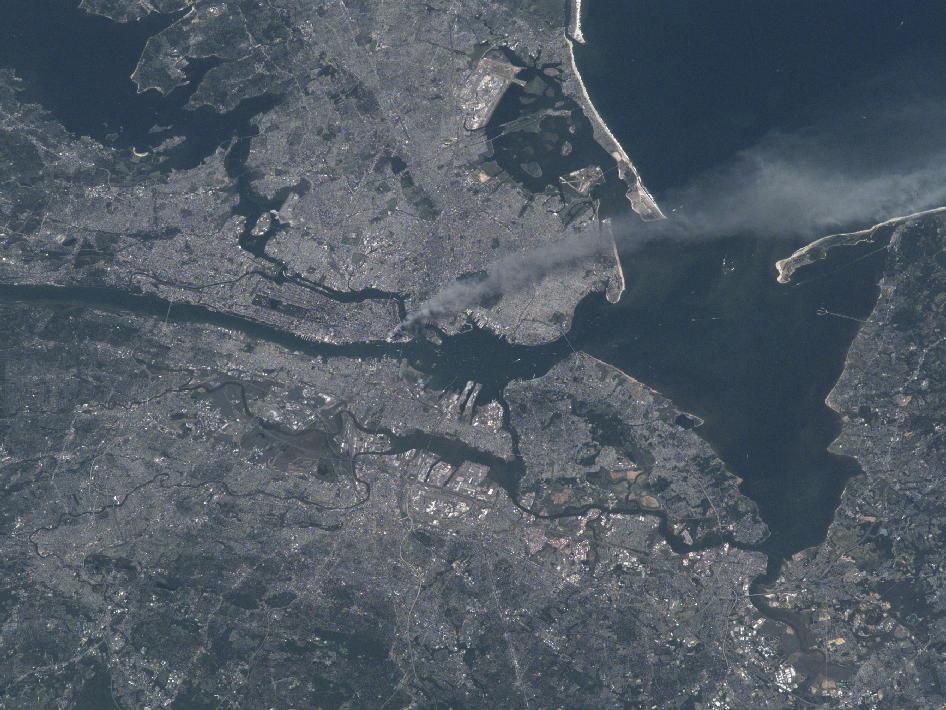
Astronaut Frank Culbertson On 9/11

The following is a letter composed by Captain Frank Culbertson (retired), the Expedition Three Commander who was aboard the ISS on 9/11 and saw the carnage from a unique vantage point – from space! Having bared witness to one of the most auspicious and terrible events in the history of his country, he composed a latter describing what it was like on the day of and during the days that followed. He was unable to get back home in the wake of the attack, and therefore had to continue to watch from orbit as he and his crew – much like the people of Earth – carried on as best they could.

The full transcript appears below, and thanks to Dr. Sci-Fi for turning me on to it. I especially enjoyed your 9/11 post. It was good to hear from someone else as they described what they were doing on that fateful day.

September 12, 2001; 19:34 hours

I haven’t written very much about specifics of this mission during the month I’ve been here, mainly for two reasons: the first being that there has been very little time to do that kind of writing, and secondly because I’m not sure how comfortable I am sharing thoughts I share with family and friends with the rest of the world.

Well, obviously the world changed today. What I say or do is very minor compared to the significance of what happened to our country today when it was attacked by …. by whom? Terrorists is all we know, I guess. Hard to know at whom to direct our anger and fear…

I had just finished a number of tasks this morning, the most time-consuming being the physical exams of all crew members. In a private conversation following that, the flight surgeon told me they were having a very bad day on the ground. I had no idea…

He described the situation to me as best he knew it at ~0900 CDT. I was flabbergasted, then horrified. My first thought was that this wasn’t a real conversation, that I was still listening to one of my Tom Clancy tapes. It just didn’t seem possible on this scale in our country. I couldn’t even imagine the particulars, even before the news of further destruction began coming in.

Vladimir came over pretty quickly, sensing that something very serious was being discussed. I waved Michael into the module as well. They were also amazed and stunned. After we signed off, I tried to explain to Vladimir and Michael as best I could the potential magnitude of this act of terror in downtown Manhattan and at the Pentagon. They clearly understood and were very sympathetic.

I glanced at the World Map on the computer to see where over the world we were and noticed that we were coming southeast out of Canada and would be passing over New England in a few minutes. I zipped around the station until I found a window that would give me a view of NYC and grabbed the nearest camera. It happened to be a video camera, and I was looking south from the window of Michael’s cabin.

The smoke seemed to have an odd bloom to it at the base of the column that was streaming south of the city. After reading one of the news articles we just received, I believe we were looking at NY around the time of, or shortly after, the collapse of the second tower. How horrible…

I panned the camera all along the East Coast to the south to see if I could see any other smoke around Washington, or anywhere else, but nothing was visible.

It was pretty difficult to think about work after that, though we had some to do, but on the next orbit we crossed the US further south. All three of us were working one or two cameras to try to get views of New York or Washington. There was haze over Washington, but no specific source could be seen. It all looked incredible from two to three hundred miles away. I can’t imagine the tragic scenes on the ground.

Other than the emotional impact of our country being attacked and thousands of our citizens and maybe some friends being killed, the most overwhelming feeling being where I am is one of isolation.

Next day….

I guess the fatigue and emotional strain got the best of me. I couldn’t stay awake and continue to write. Today was still difficult, but we started getting more information, plus we had the honor of talking directly with the Center Director, Roy Estess, who assured us that the ground teams would continue to work and ensure our safety, as well as the safe operation of the Station. We also heard from our Administrator, Mr. Goldin, who added that the partners in the Program are all totally committed to continuing safe operations and support. These were never questions for me. I know all these people! The ground teams have been incredibly supportive, very understanding of the impact of the news, and have tried to be as helpful as possible. They have all been very professional and focused though I can’t imagine the distraction of this type of news coming in and the thought that government buildings might be at risk. They never skipped a beat, even when relocating control centers. And a group of senior personnel and friends gave us a pretty thorough briefing on what was known and what was being done in the government and at NASA on Tuesday afternoon, which was very helpful and kind of them to do in the midst of all the turmoil. The Russian TsUP has also been supportive and helpful, trying to uplink news articles when our own assets were inoperable, and saying kind words…

My crewmates have been great, too. They know it’s been a tough day for me and the folks on the ground, and they’ve tried to be as even keeled and helpful as possible. Michael even fixed me my favorite Borscht soup for dinner. And they give me plenty of room to think when I needed it. They are very sympathetic and of course outraged at whoever would do this.

I know so many people in Washington, so many people who travel to DC and NYC, so many who are pilots, that I felt sure I would receive at least a few pieces of bad news over the next few days. I got the first one today when I learned that the Captain of the American Airlines jet that hit the Pentagon was Chic Burlingame, a classmate of mine. I met Chic during plebe summer when we were in the D&B together, and we had lots of classes together. I can’t imagine what he must of gone through, and now I hear that he may have risen further than we can even think of by possibly preventing his plane from being the one to attack the White House. What a terrible loss, but I’m sure Chic was fighting bravely to the end. And tears don’t flow the same in space…

It’s difficult to describe how it feels to be the only American completely off the planet at a time such as this. The feeling that I should be there with all of you, dealing with this, helping in some way, is overwhelming. I know that we are on the threshold (or beyond) of a terrible shift in the history of the world. Many things will never be the same again after September 11, 2001. Not just for the thousands and thousands of people directly affected by these horrendous acts of terrorism, but probably for all of us. We will find ourselves feeling differently about dozens of things, including probably space exploration, unfortunately.

It’s horrible to see smoke pouring from wounds in your own country from such a fantastic vantage point. The dichotomy of being on a spacecraft dedicated to improving life on the earth and watching life being destroyed by such willful, terrible acts is jolting to the psyche, no matter who you are. And the knowledge that everything will be different than when we launched by the time we land is a little disconcerting. I have confidence in our country and in our leadership that we will do everything possible to better defend her and our families, and to bring justice for what has been done. I have confidence that the good people at NASA will do everything necessary to continue our mission safely and return us safely at the right time. And I miss all of you very much. I can’t be there with you in person, and we have a long way to go to complete our mission, but be certain that my heart is with you, and know you are in my prayers.

Humbly,
Frank

September 14, 2001; 22:49

An update to the last letter… Fortunately, it’s been a busy week up here. And to prove that, like our country, we are continuing on our intended path with business as usual (as much as possible). Tonight the latest addition to the station, the Russian Docking Compartment will be launched from Baikonur, Kazakhstan. On Saturday night (US time), it will dock with us, at a port never used before on the nadir side of the Service Module. This new module will give us another place to dock a Progress or Soyuz and will provide a large airlock with two useable hatches for conducting EVA’s in Russian Orlan suits, which we will do a few of before we come home.

The problem before in dealing with this week was too little news. The problem now is too much. It came all at once when email was restored, and there’s not enough time to read it all! Plus it’s too hard to deal with all of it at once. But I appreciate getting it, and I really appreciate the great letters of support and friendship I am receiving.

We are doing well on board, getting our work done, and talking about things. Last night we had a long discussion over dinner about the significance of these events, the possible actions to follow, and what should be done. After dinner, Michael made a point of telling me that every email he received from friends in Russia said specifically to tell me how sorry they were that this happened, extending their condolences, and asking how I was doing. Vladimir taught me the Russian word for “condolences” after talking to the previous CDR, Yuri Usachev, on the phone in Star City. (Both the Russian and the English words are much too long to pronounce easily.) Very kind people.

For the last two days, the Russian MCC has been good enough to transmit live broadcasts of radio news about the event and associated stories, to make sure I was well informed. Every specialist who has come on the line to discuss a procedure or a problem has at some point extended greetings to me with kind words. Tonight the Russian capcom told us that because of the special day of remembrance in the US, all day people had been bringing flowers and lining all the walls of the US embassy in Moscow, and this evening they were lighting candles in the street outside the embassy. How the world has changed.

People everywhere seem to recognize the senselessness and horror in this attack. And the tremendous loss. Moscow has dealt with these kind of problems in the last few years with apartment and subway bombings, so they are as anxious to get rid of this threat as we are. But the bottom line is that there are good people everywhere who want to live in peace. I read that a child asked, “America is so good to other countries, we always help everyone, how can they hate us so much?”

I hope the example of cooperation and trust that this spacecraft and all the people in the program demonstrate daily will someday inspire the rest of the world to work the same way. They must!

Unfortunately, we won’t be flying over the US during the time people are lighting candles. Don’t know if we could see that anyway. We did, however, see a very unusual and beautiful sight a few minutes ago: the launch of our Docking Compartment on a Soyuz booster. We were overtaking it and it came into view about three minutes after its launch from Baikonur as the sun hit our station, so it was still in the dark. It looked like a large comet with a straight, wide tail silhouetted against the dark planet beneath. Despite some bad lighting for a while as the sun hit our window at a low angle, I managed some video of it as first we passed the rocket, and then watched it begin to catch up as it gained altitude and speed. I filmed until main engine cutoff and booster separation occurred just as we approached sunrise on the Himalayas. An unforgettable sight in an unforgettable week…

Life goes on, even in space. We’re here to stay…
Frank

The First Science Fiction Novel Ever?

What do you think of when you hear the words Sci-Fi? Chances are, the words inspire images such as the one above, of nightmarish landscapes featuring clogged streets, flying cars, neon lights and massive skyscrapers. Or possibly you’re partial to the more utopian visions, with space travel, beautiful arcologies and happy shiny people who want for nothing and treat each other with peace and civility.

All good, but chances are, no one thinks of medieval literature from the Islamic world when they hear that term. Chances are no one thinks of anything other than the industrial age, of men like H.G Wells and Jules Verne. For most of us, these are the people who pioneered the field of science fiction, no doubt about it. But amongst scholarswho specialize in tracing literary genres to their roots, one book stands out as the possible progenitor of them all; a little known novel by the name of Theologus Autodidactus.

Outside of antiquarians and theologists, not many people have heard of this story, and up until a few weeks ago, I hadn’t either. So you can imagine my surprise when I learned about it. To me, science fiction was not something that could have predated the scientific revolution, or the age of industry when steam locomotives, steam ships, and a revolutionary understanding of the world and man’s place in it inspired flights of fancy which went well beyond our world. And yet, as it turns out, a manuscript which was written sometime in the 13th century by an Islamic scholar living in Egypt.

His pen name was Ibn al-Nafis (nee Ala-al-din abu Al-Hassan Ali ibn Abi-Hazm al-Qarshi al-Dimashqi), and he was what westerners would later refer to as a “Renaissance Man”. Not only was he an expert physician he also studied jurisprudence, literature and theology and became an expert on the Shafi’i school of jurisprudence before he died. In addition to writing many treatises on medicine, one of which was made famous for being the first in which pulmonary circulation of the blood was mentioned, he also wrote extensively on law and the world’s first coming of age tale/science fiction novel Al-Risalah al-Kamiliyyah fil Siera al-Nabawiyyah, which translated into Latin is known as Theologus Autodidactus.

Plot Summary:
Broken down succinctly, the story revolves around a protagonist named Kamil, an adolescent feral child who at the beginning of the story finds himself spontaneously transported to a cave on a deserted island. Almost immediately, it is clear that the boy is an autodidactic, a self-directed learner who has mastered several fields through independent learning.

Over time, he is met by several castaway who get shipwrecked on the island, learning and sharing from them. In time, the castaways band together to make a ship and agree to take Kamil with them back to civilization. As they return to the world of man, Kamil begins to see all the works of man, learns of philosophy, law and medicine remaining a self-directed learner all the while) and comes to several conclusions.

As he grows, he is taught the value of jurisprudence, religion, the necessity of the existence of God, and the value of the sciences, arts, and all other things that make man civilized. His own coming of age is reflected in explorations of the origin of man, the current state of the world, and predictions of the future. Towards the end, the plot develops from this coming-of-age scenario and begins to incorporate several new elements, such as the the end of the world, doomsday, resurrection and afterlife are predicted and scientifically explained using his own empirical knowledge of biology, astronomy, cosmology and geology.

Summary:
Ultimately, Ibn al-Nafis described his own work as a defense of “the system of Islam and the Muslims’ doctrines on the missions of Prophets, the religious laws, the resurrection of the body, and the transitoriness of the world”. Essentially, this meant presenting rational arguments for religious ideas, such as bodily resurrection and the immortality of the human soul, using both demonstrative reasoning and literary examples to prove his case. In this respect, he was not unlike Thomas Aquinas and a host of other western scholars from the High Middle Ages, men who would similarly try to defend reason based on faith and use empirical knowledge to defend the existence of a spiritual, universal order.

However, what set Ibn al-Nafis’ work apart was the way in which he expressed his religious, scientific and philosophical views through a fictitious narrator who went on to experience what the world had to offer. Rather than writing things in treatise form, which was the style for most philosophers of the day, he chose to do what only a select few of his contemporaries did and tell the story through a narrator who’s own journey illustrated one’s own journey of discovery. In that respect, he was like Voltaire, who’s fictional Candide had to venture out into the world in order to realize the truth about life and the order of things, though their conclusions were vastly different.

And finally, fact that he chose to speculate about what the future held, up to and including the apocalypse itself, is what makes this work classifiable as science fiction. Here, he was most comparable to men like H.G. Wells and Verne, men who looked to the future in the hopes of illustrating the current state of humanity and where it was likely to take them. And though these, and later generations of individuals, often had a negative appraisal of such things, Iban al-Nafis’ was arguably positive. His exploration was designed to affirm belief in the existence of something greater than material nature, but provable using the same basic laws.

I can’t imagine being able to find a copy of this book any time soon. It’s not like Amazon has copies on hold for anyone looking to a little cross-cultural antiquities reading. I checked, they really don’t! Still, I’d consider it a boon to find a translation and read the whole story for myself. What I little I learned can’t possibly capture the historic and cultural importance of the novel. Something to add to the reading list, right next to The Peach Blossom Spring and Beowulf!

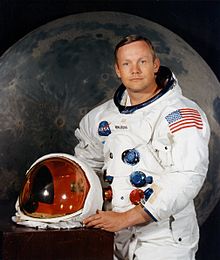
Remembering Neil Armstrong

“That’s one small step for man… one giant leap for mankind.”

-Neil Armstrong, July 20th, 1969

This iconic statement is the most famous to ever be uttered by a human being and still serve to inspire hope and fire the imagination, even after 43 years. Today, the world has lost one of the greatest historical figures of the 20th century, the man who was the first to walk on the moon and speak the words that signaled the beginning of a new era.

Yes, after decades of living large and inspiring countless people all over the world, Neil Armstrong passed away at the age of 82. According to statements made by the Armstrong family earlier today, Neil died following complications from heart-bypass surgery he underwent earlier this month, just two days after his 82nd birthday on August 5.

Best known for being the commander of Apollo 11, the NASA mission that sent a manned spacecraft to the moon, Neil will forever be remembered for doing what countless people have dreamed of doing since the dawn of time. After years of training, planning, development and testing, he and astronaut Edward “Buzz” Aldrin became the first to not only slip the bonds of Earth’s gravity, but the first to walk on a celestial body that was not Earth.

This achievement, great in its own right, was also of extreme historical significance. Taking place during the height of the Cold War, only six years after the Cuban Missile Crisis, Armstrong’s first steps on the moon provided a generation beguiled by arms races and fear with a sense of accomplishment and pride. His words, which were spoken on behalf of, and directed to, all of mankind even helped bridge the gap between East and West. Though there was a race on to see who could reach the Moon first, all of humanity shared in the celebration that a man, any man, had actually attained what many thought was unattainable.

And although he never retired from the public eye after that momentous achievement, Neil was nevertheless a very private man compared to his peers. Whereas Edward Aldrin and astronauts like John Glenn and Harrison Schmitt went on to become public figures, doing guest appearances on TV shows and running for political office, Neil did very little to draw attention to himself. This was, according to his closest friends and family, because of his intensely private nature.

In fact, according to James Hansen, author of “First Man: The Life of Neil A. Armstrong,” Neil was often confounded by all the attention and accolades he received as a result of his historic accomplishments. As Hansen stated in an interview with CBS, “All of the attention that … the public put on stepping down that ladder onto the surface itself, Neil never could really understand why there was so much focus on that.” Wow. Humility on top of everything else, that’s the way to go!

Apparently, attempts were even made to try and coax Armstrong into running for public, but he repeatedly refused. Instead, Neil spent his post-Apollo 11 career committed to furthering the fields of aviation and space explorations from behind the scenes and never once tried to exploit his fame. In fact, his last known public appearance was in November of 2011 when he appeared before Congress to received the the Congressional Gold Medal (pictured above).

I think I speak for us all when I say he will be missed, and definitely not forgotten. I think I speak for us all when I say that the remembrance ceremonies and honors conferred on his name will be tremendous! Ironic, considering Neil probably would have refused them all 😉 RIP Neil Armstrong. May you forever walk amongst the stars!

***As a side note, I would also like to say that I hope the various conspiracy theorist of the world, the people who insist that this historic achievement was a hoax, or that it was actually filmed in a studio, take the time to bow their heads and hold their tongues. We are all entitled to our opinions, but such conspiracy theories are not only an insult to history and the intelligence of people who witnessed the event, its also an insult to this man’s memory. Please take this day to focus on something else, like the conspiracy behind putting fluoride in the water, Area 51, or 9/11 being an inside job, k? Many thanks, weirdos!***

The 70th Anniversary of the Dieppe Raid

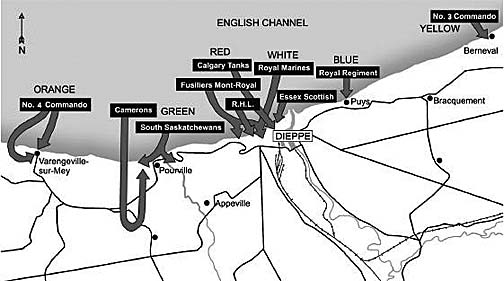
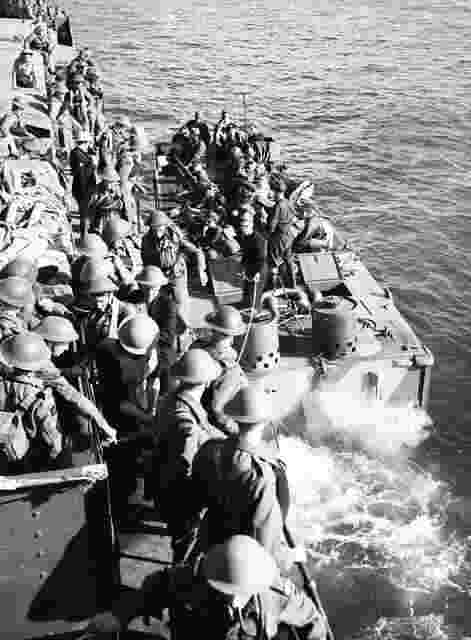
Here in Canada, few historical events from World War II inspire as much anger, sadness, and remembrance than the anniversary of the Dieppe Raid. It was 70 years ago today that Canadian Forces, in what was to be the first offensive of the war, attacked the European coastline near the small French town of Dieppe. The raid, as it was classified, was a total failure, resulting in 913 dead, almost 3000 captured, and countless more wounded. Out of the nearly 5000 men who went in, less than half made it home.

Earlier today, I read some articles that spoke of the surviving veterans, the youngest of whom is 90, as they arrived at Dieppe to take part in the commemorative ceremonies.

Countless French people welcomed them by hanging Canadian flags from their balconies and volunteering to show them about town. For the locals, honoring the veterans who fell while trying to liberate their town has become a way of life, similar to the Belgian people of Ypres and the Dutch who honor how Canadian forces liberated their country in 1944.

Naturally, when these veterans tell their stories again to reporters or the many who wabted to hear them, they conveyed some rather mixed emotions. There were moments of anger and pride intermixed with a general tone of lament, and in that respect, they are joined by all Canadians who remember. Even now, 70 years later, there is still ample speculation about the Dieppe raid.

Taking place in 1942, during the height of the war when the Allies were still on the losing end, the planned raid on Dieppe represented the culmination of many hopes, fears, and political considerations. For over a year, Soviet leader Joseph Stalin had been asking – in fact, pleading – with the Allies for a Second Front in Europe that would take pressure off the Russian forces. Ever since the Germans moved into his country roughly a year before, Russians were dying by the millions and the Red Army was struggling to hold them back.

At the same time, the Allies had been contemplating plans for the liberation of France ever since it had been overrun two years earlier. For the British and French, the memories of the summer of 1940, beginning with the invasion of Belgium, the outflanking maneuver through the Ardennes Forest, the fall of Paris and the evacuation of Dunkirk, were still phantoms they wanted to dispel. With Germany pushed out of France, the Allies would have a major ally back in the fight and put an end to Germany’s expansion, which had continued unabated since the war began.

And last, the Canadian Armed Forces were desperate to get into battle, hoping to demonstrate some of the same zeal that had popularized their forces in World War I. And with the US finally entering the war on the Allied side, there was an added push to score a victory before the Yanks got in and claimed all the glory 😉 A commando-style raid against a section of the Atlantic Wall seemed like just the thing to bolster morale and show the world that the Canadian Expeditionary Force was still a force to be feared!

Ultimately, the raid was a failure for numerous reasons, all of which proved intrinsic to helping the Allies draft Operation Overlord – the invasion of Normandy – roughly two years later. First off, the raid had little support to speak of. Aside from the 5000 men and tanks heading onto the coastline, their were very ships ships and aircraft standing by to blast German positions and take on the coastal defenses.

Second, the planners did not take into account the challenging terrain along the beaches. Rather than being sandy shores, they were composed of tiny little rocks which played havoc with tank treads, making them virtually useless. As a result, the Canadian soldiers found themselves running into German machine guns and mortar positions with no cover or support.

Third, the plan was changed over and over again so that less and less forces would be committed to the fold. This led many to question whether the raid would even have enough men or firepower to achieve their mission. However, Allied planners dismissed these objections by emphasizing that the attackers would have the element of surprise. That was not the case though, since Allied Command had been publicizing the attack for some time before it happened.

In short, the mission was the perfect recipe for failure, leading some to speculate that that had been the goal all along. With Stalin pleading for a Second Front and the Allies unable to convince him that they were not ready, some claimed that Dieppe was meant to fail as a way of illustrating their point.

In addition, new evidence is being brought to light that suggests that the raid was a diversion for a covert operation that involved commandos attacking the secret German naval headquarters in the town in order to capture a working model Germany’s new four-rotor Enigma machine and their most recent code books. At the head of this operation, so the argument runs, was Mr. Ian Fleming himself, the man who would later create James Bond.

A very interesting interpretation, and which explains quite clearly why the raid was so publicized. In keeping with Allied counterintelligence plays, it was customary to let the Germans know exactly what they were doing in the hopes that they would chomp at the bit and not realize it was a feint to cover their true aims.

What’s more, if this latter interpretation should prove to be true, it would mean that politics and incompetence was not the reason for the Dieppe Raid. Instead, it would have been a vital intelligence mission which went wrong for a number of reasons. However, this still would not change the fact that the operational planning suffered from the fact that the raid failed to take into accounts some key problems. Nor would it change the outcome.

In any case, some good did come out of the operation. Four months after the raid, the Allies managed to crack the 4-wheel Enigma code and went back to winning the intelligence war. In addition, Soviet Forces began to defeat the Germans on all fronts and initiated the slow process of pushing them back into their old stomping grounds. And in the Mediterrenean and North Africa, the German Navy and Afrika Corps began to get their asses kicked.

But most importantly of all was the operation that would succeed where Dieppe had failed. Taking on June 6th of 1944 in the Normandy region of France, Operation Overlord was the largest invasion in history, and several key factors had been adapted from the Dieppe Raid. In addition to committing all kinds of men, materiel, ships, and planes to a cohesive, multi-phased invasion plan, the Allies also conducted a vast counter-intelligence operation well in advance to trick the Germans into thinking that their real invasion force would be coming in the Pas de Calais region.

So today, like all good Canadians, I wish to honor the veterans who are currently overseas, receiving their well-deserved honors and recounting the historic Dieppe Raid that they took part in so many years later. I’d also like to salute those soldiers who are no longer with us, many of whom were wounded, captured and forced to spend the rest of the war in army hospitals and German POW camps. And I would especially like to pay tribute to those who didn’t make it back, who died on those rocky shores as the result of either politics and ineptitude, or desperation and intrigue.

Even after 70 years, surely we must be learning something from all this…